Skip to content
Custom Splash Pad for Kids Manufacturer
Durable PVC Splash Pads Designed and Manufactured by EPN
EPN is a manufacturer specializing in PVC and composite material products, producing splash pads, dog pools, snow tubes, inflatable punching bags, and other outdoor products.
Our production system integrates PVC material preparation, automated cutting, high-frequency welding, airtightness testing, and packaging, allowing us to maintain stable product quality.
With a minimum order quantity of 50 pieces, fast sampling, and flexible customization options, EPN supports brands, distributors, and retailers developing splash pad products for different markets.
- Minimum Order Quantity: 50 pcs
- Sample Time: 5–10 days
- Production Lead Time: 20–30 days
- 100% product inspection before shipment
- Global shipping: Express / Air / Sea
Splash Pad Designs and PVC Products Manufactured by EPN
EPN specializes in manufacturing PVC and composite material products used in outdoor recreation, seasonal toys, pet products, and inflatable sports equipment. In addition to kids splash pads, our factory produces a wide range of related PVC products such as dog splash pads, inflatable dog pools, snow tubes, punching bags, and inflatable water toys.
With our integrated production system including PVC material preparation workshops, high-frequency welding machines, automated cutting equipment, inflatable structure testing stations, and packaging workshops, EPN is able to develop and manufacture many different types of PVC-based products.
Below are some of the most common products produced by our factory.

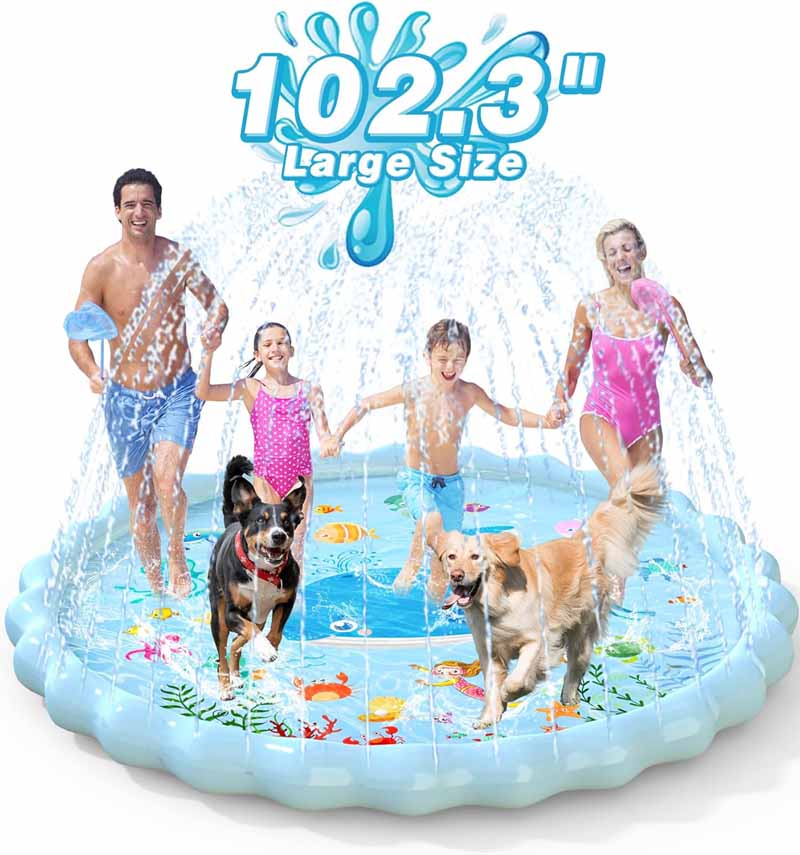
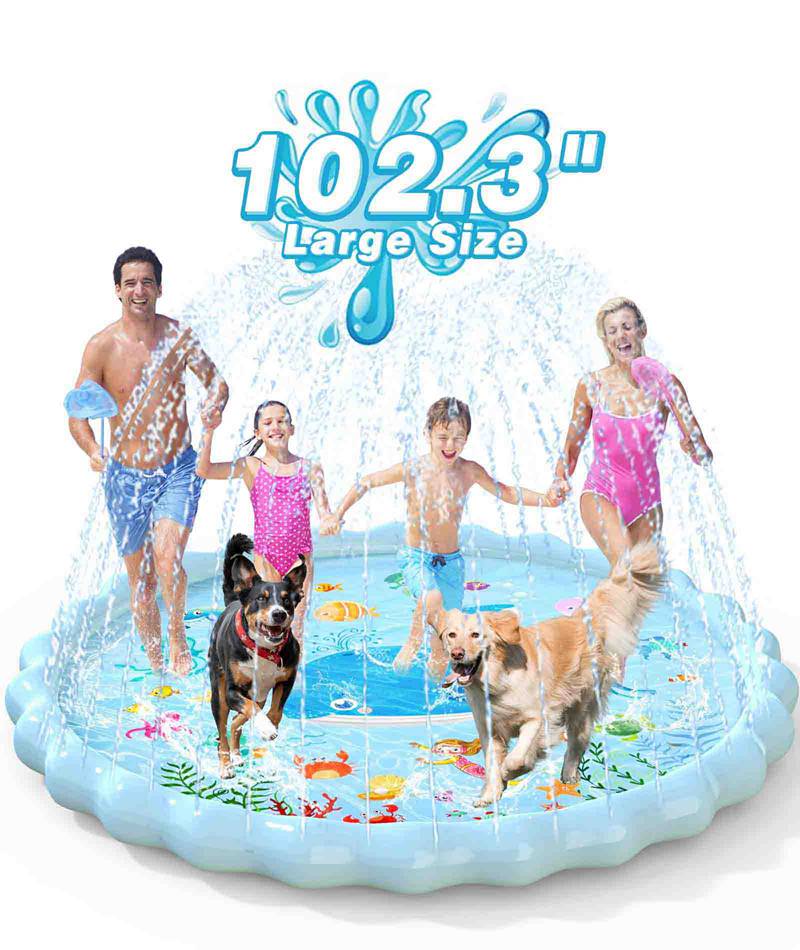
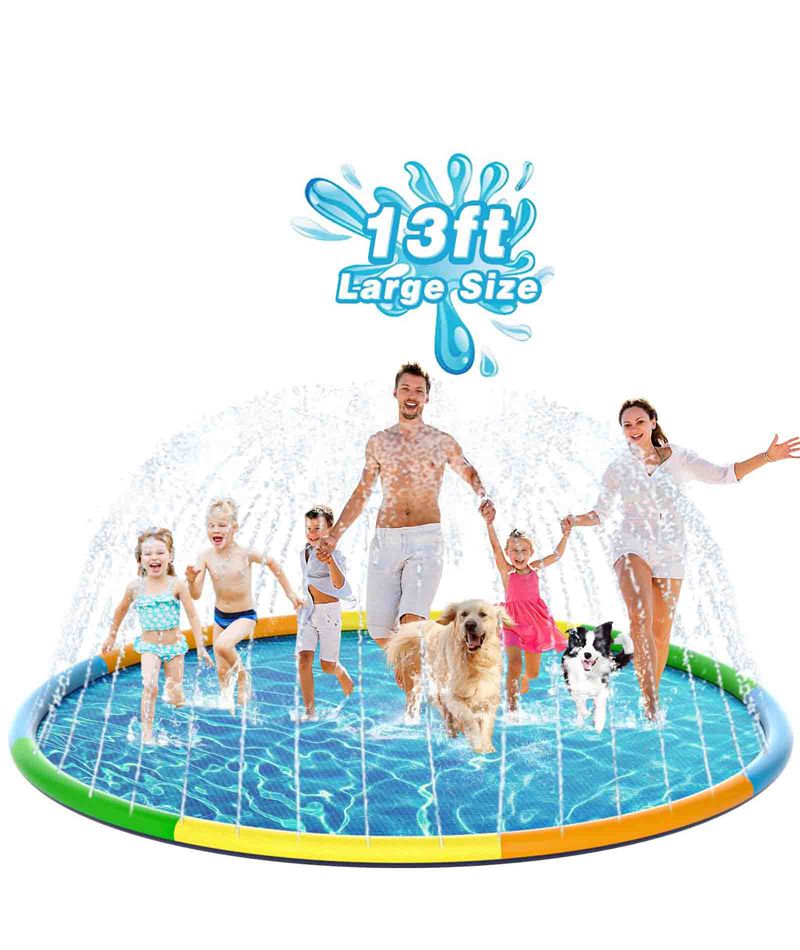
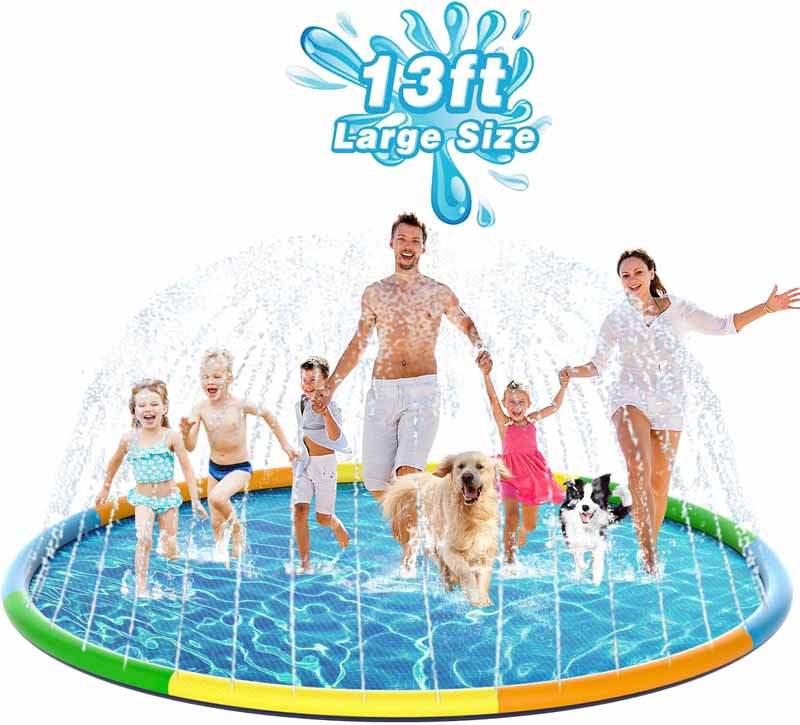
Round Kids Splash Pad
Round splash pads are the most common splash pad design used in backyard water play. The circular shape allows water pressure to distribute evenly along the sprinkler ring.
A typical round splash pad consists of a continuous circular water channel connected to a garden hose, allowing water to spray inward toward the center.
Typical product features include:
colorful printed cartoon graphics
• anti-slip play surface
• evenly distributed sprinkler holes
• reinforced hose connector
Common diameters range from 100 cm to 280 cm, depending on the intended play area.
At EPN, round splash pads are manufactured using high-frequency welding machines and automated cutting equipment, ensuring consistent structural quality.

Dog Splash Pad
Dog splash pads are designed specifically for pets to cool down during hot weather. Compared with children’s splash pads, pet versions are often produced using thicker PVC materials to withstand scratching and more active movement.
Typical characteristics include:
- durable PVC surface
• reinforced outer ring structure
• simplified printed graphics
• strong hose connection port
Typical sizes range from 120 cm to 180 cm in diameter.
EPN manufactures dog splash pads using reinforced welding seams and airtightness testing equipment to improve durability during outdoor use.

Flower Edge Splash Pad
Flower-shaped splash pads feature a decorative scalloped edge that improves visual appeal for children.
This design is often used for kids outdoor toy collections and summer retail programs.
Typical product features include:
flower petal shaped outer ring
• colorful cartoon graphics
• balanced sprinkler hole layout
• reinforced hose connector
Common diameters range from 120 cm to 300 cm.
At EPN, flower splash pads are produced using precision PVC cutting equipment and high-frequency welding technology to maintain accurate shape geometry.

Square Splash Pad
Square splash pads are designed to better utilize backyard space, especially in rectangular patios or garden areas.
Unlike circular splash pads, square designs allow sprinkler holes to be positioned along four straight sides.
Typical product features include:
square outer sprinkler channel
• balanced corner reinforcement
• evenly spaced water spray holes
• durable hose connector port
Typical sizes range from 120 × 120 cm to 220 × 280 cm.
EPN manufactures square splash pads using automated cutting machines to ensure accurate panel dimensions.

Irregular Shape Splash Pad
Irregular-shaped splash pads are designed for brands that want a unique visual appearance.
Common shapes include:
star shapes
• cloud shapes
• animal silhouettes
Typical product features include:
custom printed graphics
• creative outer edge geometry
• distributed sprinkler holes
• reinforced hose connector
Typical diameters range from 120 cm to 170 cm.
EPN develops irregular splash pads using custom cutting patterns and controlled welding processes.

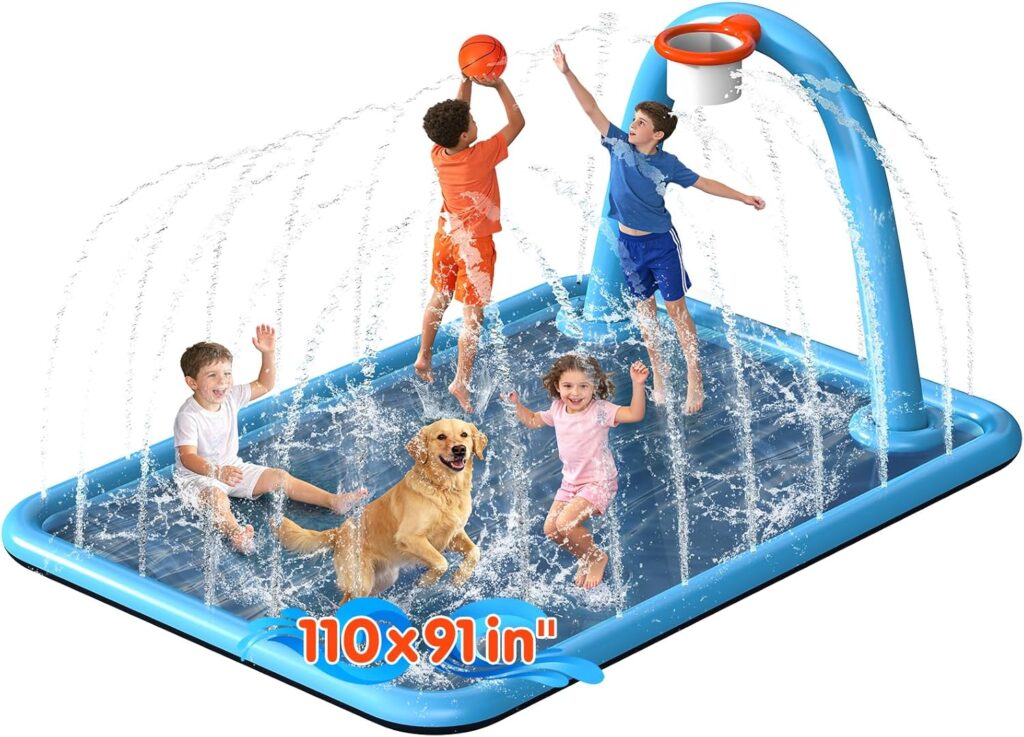
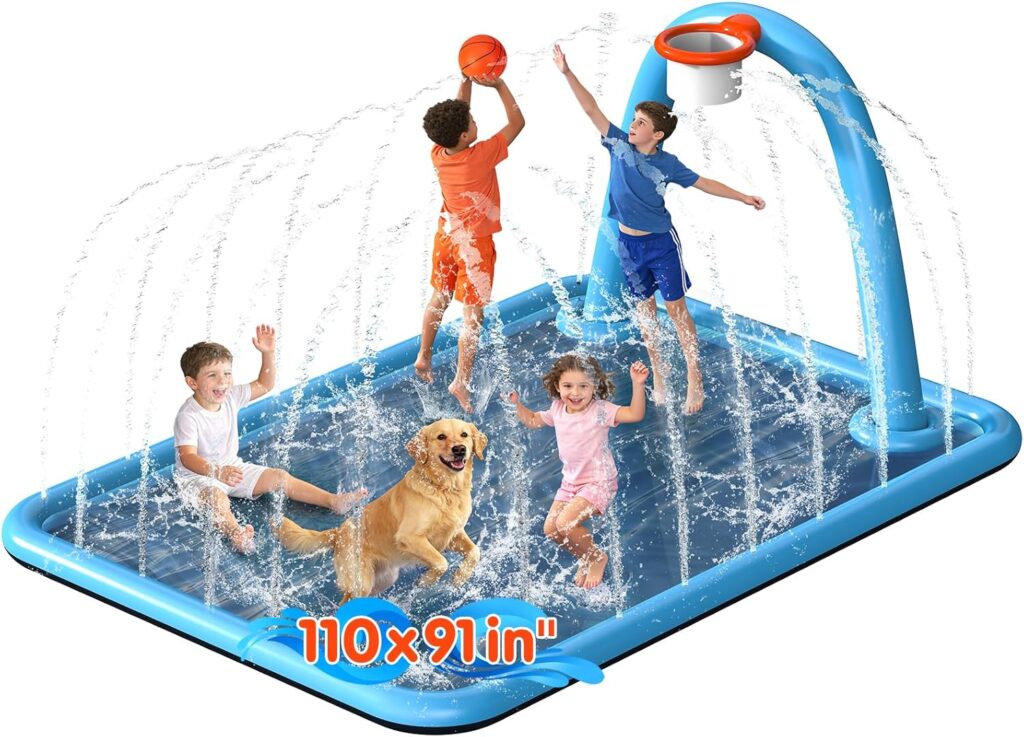
Splash Pad with Basketball Hoop
Splash pads with basketball hoops combine water play and simple sports activities.
Children can run through the spray while throwing lightweight balls into the hoop.
Typical product structure includes:
splash pad base with sprinkler ring
• inflatable basketball hoop
• lightweight plastic balls
Typical diameters range from 150 cm to 280 cm.
At EPN, the hoop structure is manufactured using reinforced PVC welding techniques to maintain stability.

Splash Pad with Soccer Goal
Soccer splash pads integrate a small inflatable soccer goal into the splash pad structure.
Children can kick soft balls toward the goal while running through the water spray.
Typical product features include:
splash pad base with sprinkler ring
• inflatable soccer goal frame
• lightweight play balls
Typical diameters range from 150 cm to 280 cm.
EPN manufactures soccer splash pads using reinforced seam welding and structural inspection equipment.

Splash Pad with Sprinkler Arch
Sprinkler arch splash pads include an inflatable arch frame that sprays water downward.
Children can run through the arch while the splash pad base provides additional spray.
Typical product features include:
inflatable sprinkler arch structure
• splash pad base with spray ring
• evenly distributed water holes
Typical widths range from 180 cm to 260 cm.
At EPN, sprinkler arches are manufactured using multi-chamber PVC structures for stability.

Splash Pad with Slide
Splash pads with slides combine a small inflatable slide with a water spray base.
Water spray reduces friction and makes sliding safer for children.
Typical product features include:
inflatable slide structure
• splash pad landing area
• reinforced climbing surface
Typical product lengths range from 250 cm to 400 cm.
EPN manufactures slide splash pads using multi-layer PVC welding structures to support repeated use.

Animal Character Splash Pad
Animal-themed splash pads include decorative inflatable animal figures that spray water.
Common character designs include:
dolphins
• whales
• turtles
• octopus
Typical product features include:
inflatable decorative sprayers
• splash pad base with sprinkler holes
• colorful cartoon graphics
Typical diameters range from 130 cm to 170 cm.
EPN produces animal splash pads using precision welding processes to maintain consistent spray performance.

Interactive Game Splash Pad
Interactive splash pads combine water play with simple backyard games.
Children can play tossing games or target games while running through the water spray.
Typical product features include:
splash pad base with sprinkler ring
• inflatable target elements
• lightweight throwing toys
Typical diameters range from 140 cm to 180 cm.
EPN manufactures these products using reinforced PVC structures designed for repeated outdoor use.

Inflatable Water Slide
Inflatable water slides are popular outdoor summer toys designed to combine sliding and water play. They create a fun backyard water activity where children can climb, slide, and splash safely.
A typical water slide consists of an inflatable sliding surface connected to a water sprinkler system, allowing water to flow across the slide and reduce friction during sliding.
Typical product features include:
inflatable climbing and sliding structure
• integrated sprinkler system
• reinforced landing splash pool
• durable PVC sliding surface
Typical product lengths range from 250 cm to 500 cm, depending on the product design and intended play area.
At EPN, inflatable water slides are manufactured using multi-layer PVC materials, reinforced welding seams, and structural inspection equipment, ensuring stability and durability during repeated outdoor use.
Engineering Structure of a Kids Splash Pad
Although a splash pad may appear simple, its durability and performance depend on careful structural design. A well-engineered splash pad must maintain stable water spray pressure, strong welding seams, and a safe play surface for children. Polyvinyl Chloride (PVC) is widely used in inflatable recreational products because of its durability, flexibility, and water resistance.
At EPN, splash pads are developed using a combination of PVC material engineering, sprinkler hole distribution design, and high-frequency welding technology.
Our production facilities include automated cutting equipment, high-frequency welding machines, inflatable structure inspection stations, and airtightness testing instruments, allowing us to manufacture splash pads with consistent structural quality.
Main Structural Components of a Splash Pad
A typical kids splash pad consists of several functional sections that work together to create the water spray effect while maintaining product durability.
1 — Central Play Surface
The central area of the splash pad is the main play zone where children stand, run, and sit while water sprays around them.
Typical design features include:
- wide circular play surface
• printed cartoon graphics
• flexible PVC structure
This area must remain flat and stable during use so children can move comfortably.
EPN manufactures splash pad surfaces using precision PVC cutting machines, ensuring consistent product dimensions across different production batches.


2 — Outer Sprinkler Ring
The outer ring of the splash pad is responsible for creating the water spray effect. Small sprinkler holes are evenly distributed along this ring, allowing water to spray upward and inward toward the center of the splash pad.
Key engineering considerations include:
- sprinkler hole spacing
• water pressure distribution
• ring structure stability
Typical sprinkler rings contain 40 to 100 water holes, depending on the splash pad diameter.
At EPN, sprinkler hole placement is calculated based on product size and typical household water pressure levels, helping maintain consistent spray performance.
3 — Reinforced Edge Welding
The edge of the splash pad experiences the highest structural stress during use because the sprinkler ring holds water pressure. To improve durability, EPN uses high-frequency welding technology to seal the PVC layers together.
Advantages of high-frequency welding include:
- strong seam bonding
• waterproof sealing
• consistent welding quality
This method is widely used in the manufacturing of inflatable water products and PVC recreational equipment.


4 — Hose Connector Port
The hose connector allows the splash pad to connect directly to a standard garden hose.
Typical connector components include:
- reinforced PVC connection area
• threaded plastic hose adapter
• leak-resistant sealing structure
Because this area receives constant water pressure, EPN reinforces the connector section using extra PVC layers and precise welding seams.
This reduces the risk of leakage during long periods of use.
5 — Sprinkler Hole Layout
Sprinkler holes are a critical design element because they determine how water flows through the splash pad. If the holes are spaced unevenly, water spray may become unstable.
Typical sprinkler hole specifications include:
| Splash Pad Diameter | Typical Hole Count |
|---|---|
| 120 cm | 40–60 holes |
| 150 cm | 60–80 holes |
| 170 cm | 80–100 holes |
| 200 cm | 100+ holes |
At EPN, sprinkler hole distribution is adjusted during the design stage to maintain balanced water spray height across the entire ring.


Structural Design Advantages at EPN
Splash pads manufactured by EPN benefit from several structural engineering practices:
- balanced sprinkler hole distribution
• reinforced welding seams
• precise material cutting
• airtight structure inspection
Our production process uses equipment such as:
- high-frequency welding machines
• automated PVC cutting equipment
• inflatable structure inspection stations
• airtightness testing instruments
These facilities allow EPN to produce splash pads with consistent performance and structural reliability.
PVC Material Options Used in Splash Pads
The durability and performance of a splash pad depend heavily on the PVC material used during manufacturing. Splash pads must withstand constant water pressure, outdoor temperature changes, and repeated folding after use.
At EPN, splash pads are manufactured using high-performance PVC and composite materials prepared in our internal material workshop. This allows us to control material thickness, flexibility, and consistency before production begins.
By combining suitable PVC materials with high-frequency welding technology and precise cutting equipment, EPN produces splash pads that maintain structural stability during repeated outdoor use. Different splash pad sizes and designs require different PVC thickness levels. The material thickness affects durability, flexibility, and overall product weight.

Standard PVC Material
Standard PVC material is commonly used for smaller splash pads designed for toddlers or limited backyard spaces.
Typical characteristics include:
- flexible material structure
• lightweight product design
• suitable for small diameter splash pads
Standard PVC thickness usually ranges from 0.25 mm to 0.30 mm.
This material is often used for splash pads between 100 cm and 140 cm in diameter.
At EPN, standard PVC sheets are processed using automated cutting machines to maintain accurate product dimensions.

Reinforced PVC Material
Reinforced PVC is commonly used for medium-sized splash pads designed for multiple children.
Compared with standard PVC, this material provides:
- improved tear resistance
• stronger welding seams
• better durability for outdoor use
Typical thickness ranges from 0.30 mm to 0.35 mm.
This material is widely used for splash pads between 150 cm and 170 cm in diameter.
Because reinforced PVC requires stronger welding precision, EPN uses high-frequency welding machines to ensure consistent seam strength.

Heavy-Duty PVC Material
Heavy-duty PVC materials are used for large splash pads designed for family play areas or high activity levels.
Typical advantages include:
- stronger resistance to stretching
• improved structural stability
• longer service life
Heavy-duty PVC thickness typically ranges from 0.40 mm to 0.45 mm.
This material is recommended for splash pads 180 cm or larger.
EPN manufactures heavy-duty splash pads using reinforced welding seams and structural inspection equipment to ensure durability.
PVC Thickness Reference for Splash Pads
| Splash Pad Diameter | Recommended PVC Thickness |
|---|---|
| 100–120 cm | 0.25–0.30 mm |
| 140–150 cm | 0.30–0.35 mm |
| 160–170 cm | 0.35–0.40 mm |
| 180–200 cm | 0.40–0.45 mm |
These material selections are based on splash pads produced by EPN for different product sizes and usage scenarios.
Download Splash Pad Technical Specification Guide
This engineering guide prepared by the EPN technical team explains splash pad structure design, PVC material thickness standards, sprinkler system layout, welding specifications, and quality inspection procedures used during manufacturing.

Material Performance Characteristics
PVC materials used in splash pads must balance strength, flexibility, and safety.
Typical material characteristics include:
- flexible surface suitable for folding
• resistance to tearing under water pressure
• compatibility with high-frequency welding
• stable performance under outdoor temperature conditions
Before production begins, PVC sheets used by EPN undergo material inspection procedures to verify thickness consistency and surface quality.

Drop-Stitch Reinforced PVC (For Structural Stability)
Drop-stitch reinforced PVC is sometimes used in splash pad components that require greater structural stability, especially in products that include inflatable play structures or raised elements.
This material consists of two PVC layers connected by thousands of internal polyester threads, which help maintain a consistent shape under air pressure.
Typical characteristics include:
- improved dimensional stability
• higher resistance to deformation
• stronger internal structure
Although drop-stitch structures are more commonly used in inflatable paddle boards and air platforms, similar reinforced PVC constructions can also be applied to special splash pad designs with inflatable play elements.
At EPN, reinforced PVC structures are processed using precision cutting equipment and controlled welding processes, ensuring the layers remain securely bonded.

Laminated PVC Composite Material
Laminated PVC composite materials combine multiple layers of PVC film and reinforcement fabric, improving both durability and structural strength.
This type of material is often used in products that require higher resistance to stretching and outdoor wear, such as:
- large splash pads
• inflatable sports equipment
• snow tubes and winter products
Typical advantages include:
- increased tear resistance
• stronger welding compatibility
• improved durability for outdoor use
Because EPN operates an internal PVC material preparation workshop, laminated PVC sheets can be prepared and inspected before entering the production stage.
This allows our engineering team to maintain consistent material thickness and structural strength across different product types.

Material Selection for Different Product Types
Different splash pad designs may require different material structures.
| Product Type | Typical Material |
|---|---|
| Kids Splash Pad | Standard PVC |
| Interactive Splash Pad | Reinforced PVC |
| Large Family Splash Pad | Heavy-Duty PVC |
| Dog Splash Pad | Reinforced PVC |
These material selections help balance product durability, cost efficiency, and product weight.
Key Design Details That Improve Splash Pad Durability and Performance
While splash pads may appear simple, their long-term durability and water spray performance depend heavily on the details of their structural design. Factors such as edge reinforcement, sprinkler hole distribution, hose connection structure, and surface texture all influence how the product performs during real outdoor use.
At EPN, splash pads are designed and manufactured using a combination of material engineering, precision cutting, and high-frequency welding technology (High-frequency welding is widely used in the manufacturing of inflatable PVC structures and water recreation equipment.). Our production facilities include automated PVC cutting equipment, high-frequency welding machines, inflatable structure inspection stations, and airtightness testing instruments, allowing each structural detail to be produced with consistent quality.
By focusing on these design elements during development and production, EPN ensures that splash pads maintain stable water spray, reliable seams, and a safe play surface for children.
Reinforced Edge Construction
The outer edge of a splash pad is the most structurally stressed area of the product. When water flows into the sprinkler ring, pressure builds along the edge, making strong welding seams essential for durability.
At EPN, splash pads are manufactured using double-layer edge welding, which improves the bonding strength between PVC layers. This method creates a continuous sealed seam that helps prevent leakage and structural separation.
Typical edge welding specifications include:
| Parameter | Typical Value |
|---|---|
| Welding Width | 8–12 mm |
| PVC Layer Structure | Double Layer |
| Welding Method | High-Frequency Welding |
Because EPN uses high-frequency welding machines, the PVC layers are fused together under controlled pressure and heat, producing strong and consistent seams across the entire edge ring.


Sprinkler Hole Distribution Design
The sprinkler holes located along the outer ring are responsible for producing the water spray effect. Proper hole distribution ensures that water sprays evenly across the entire splash pad surface.
If the hole spacing is uneven, certain sections may produce weak spray while others create excessive water pressure.
During the design stage, EPN engineers determine the number and spacing of sprinkler holes according to the splash pad diameter and expected household water pressure.
Typical sprinkler hole configurations include:
| Splash Pad Diameter | Typical Hole Count |
|---|---|
| 120 cm | 40–60 holes |
| 150 cm | 60–80 holes |
| 170 cm | 80–100 holes |
| 200 cm | 100+ holes |
Each hole is carefully positioned to maintain consistent spray height and balanced water distribution.
Reinforced Hose Connector Structure
The hose connector is one of the most critical functional components of a splash pad because it must withstand constant water pressure during operation.
To improve reliability, EPN designs the connector area with reinforced PVC layers and precision welding seams.
Typical connector structure includes:
- reinforced PVC mounting area
• threaded plastic hose adapter
• leak-resistant sealing ring
This structure helps reduce the risk of water leakage while maintaining stable water flow into the sprinkler ring.
During production, connector areas are inspected using airtightness testing equipment to ensure proper sealing performance.


Anti-Slip Surface Design
Children often run and jump on splash pads while water is spraying, which makes surface texture an important safety factor. To improve traction, splash pad surfaces can include light textured patterns or printed graphics that increase surface friction.
Typical splash pad surface designs include:
- printed cartoon patterns
• textured PVC surface
• flexible multi-layer PVC structure
At EPN, splash pad surfaces are produced using precision cutting equipment and controlled printing processes, ensuring the graphics remain aligned with the overall product layout.
Balanced Water Pressure Design
A splash pad must maintain stable water pressure to create a consistent spray effect. This balance is influenced by several structural factors including:
- sprinkler hole diameter
• hole spacing
• hose connector flow rate
• splash pad diameter
If the structure is not properly designed, water pressure may become uneven, resulting in irregular spray patterns.
During product development, EPN engineers adjust these parameters to ensure stable performance under typical household water pressure levels.
Typical design parameters include:
| Parameter | Typical Range |
|---|---|
| Sprinkler Hole Diameter | 0.8–1.2 mm |
| Water Pressure Compatibility | 2–4 bar |
| Spray Height | 30–60 cm |
These parameters help create a consistent water spray pattern suitable for children’s outdoor play.


Detail Manufacturing Advantages at EPN
The precision of splash pad details depends heavily on manufacturing equipment and quality control procedures.
At EPN, splash pads are produced using several specialized production systems, including:
- automated PVC cutting equipment
• high-frequency welding machines
• inflatable structure inspection stations
• airtightness testing instruments
These systems allow EPN to maintain consistent structural quality and reliable product performance across different splash pad designs.
Optional Accessories for Splash Pad Products
A well-designed splash pad product is not limited to the PVC structure itself. Accessories play an important role in ensuring that the product can be installed easily, maintained properly, and packaged for efficient retail distribution.
At EPN, splash pads are developed as complete product solutions rather than standalone items. Our manufacturing system integrates PVC processing, accessory preparation, and packaging production, allowing us to deliver coordinated product kits ready for shipment.
Because EPN operates PVC material workshops, production facilities, and packaging departments, accessories can be prepared and assembled alongside splash pads during the final packaging stage.
Hose Connector and Water Inlet Adapter
The hose connector is one of the most essential accessories for a splash pad because it allows the product to connect directly to a household water source. Without a reliable connector, the splash pad cannot maintain stable water flow or spray performance.
To ensure compatibility with common garden hose systems, splash pads manufactured by EPN are designed to work with standard threaded hose connectors used in residential outdoor environments.
A typical connector assembly includes:
- threaded garden hose adapter
• reinforced PVC mounting area
• sealing washer to reduce leakage
Because this component experiences constant water pressure during operation, EPN reinforces the connector area with additional PVC layers and precision welding seams.
Typical connector specifications include:
| Parameter | Typical Value |
|---|---|
| Connector Size | 3/4 inch standard |
| Material | ABS or reinforced plastic |
| Connection Type | Threaded garden hose |
| Pressure Compatibility | 2–4 bar |
Before packaging, connector assemblies are inspected to ensure proper sealing and connection stability.


Repair Patch Kit
Although splash pads are designed to withstand outdoor play, minor punctures may occasionally occur due to sharp objects or rough surfaces. Providing a repair patch kit allows users to quickly repair small damages and continue using the product.
For this reason, splash pads manufactured by EPN can include a small PVC repair patch kit that enables simple repairs without specialized tools.
Typical repair kits include:
- small PVC repair patches
• adhesive patch material
• basic repair instructions
The repair patches are usually produced from the same PVC material used in the splash pad, ensuring proper adhesion and compatibility.
Including repair patches can significantly extend the product’s usable life while reducing unnecessary product returns.
Storage Bag
Once a splash pad is drained and dried, proper storage helps maintain the product’s condition between uses. A storage bag makes it easier for users to keep the splash pad organized and protected when it is not in use.
Storage bags are particularly useful for families who frequently move splash pads between indoor storage areas and outdoor play spaces.
Typical storage bag features include:
- lightweight polyester or nylon fabric
• drawstring or zipper closure
• compact folding capacity
Because splash pads are flexible PVC products, they can be folded into relatively small volumes once fully drained.
At EPN, storage bag sizes can be adjusted according to the splash pad diameter so that the folded product fits comfortably inside the bag.


Instruction Manual
Clear instructions help users install and operate the splash pad safely and efficiently. Because splash pads involve water flow, hose connections, and outdoor play environments, proper guidance improves both product performance and user experience.
Each splash pad project manufactured by EPN can include a printed instruction manual prepared during the packaging stage.
Typical instruction manuals contain information such as:
- how to connect the splash pad to a garden hose
• recommended water pressure range
• installation steps before first use
• cleaning and storage instructions
Instruction manuals can also include product safety reminders and maintenance tips to help extend product lifespan.
Because EPN operates a packaging and printing workshop, instruction manuals can be designed to match the overall product packaging style.
Retail Packaging Solutions
For many brands and retailers, packaging is an important part of the overall product presentation. Good packaging protects the splash pad during transportation while also helping the product stand out in retail environments.
EPN provides several packaging solutions that can be customized depending on product size, distribution channels, and branding requirements.
Common packaging formats include:
- printed color box packaging
• compact polybag packaging
• export cartons for bulk shipments
Because EPN operates its own printing and packaging facilities, packaging graphics, barcodes, and product information can be coordinated with the splash pad design.
Typical packaging specifications include:
| Packaging Type | Application |
|---|---|
| Color Box | Retail shelf display |
| Polybag Packaging | Compact packaging |
| Export Carton | Bulk shipping |
This integrated packaging capability helps simplify the supply chain for splash pad projects.


Accessory Integration in Production
During the final stage of production, splash pads and accessories are assembled together into complete product packages. This step ensures that each unit contains the correct components before shipment.
Accessory sets are prepared in advance so that packaging workers can efficiently combine them with the splash pad during the final packing process.
Typical splash pad accessory sets include:
| Component | Function |
|---|---|
| Hose Connector | Connects splash pad to water supply |
| Repair Patch | Allows minor repairs |
| Instruction Manual | Provides usage guidance |
| Storage Bag | Facilitates product storage |
Before shipment, EPN performs packaging inspection procedures to verify that every product package includes the correct accessories.
Manufacturing and Supply Advantages at EPN
One advantage of working with EPN is that splash pad production and accessory preparation are managed within an integrated manufacturing system. This reduces coordination issues that can occur when products and accessories are sourced separately.
Our production facilities include:
- PVC material preparation workshop
- automated cutting equipment
- high-frequency welding machines
- packaging and printing workshop
- inflatable structure inspection stations
Because these operations are coordinated internally, EPN is able to deliver splash pad products with consistent packaging, reliable accessory configuration, and stable production quality.
Custom Logo and Branding Options for Splash Pads
For many brands and retailers, splash pads are not only seasonal outdoor products but also an opportunity to build strong brand recognition. Custom graphics, logos, and themed designs help create visually distinctive products that stand out in competitive markets.
At EPN, splash pads can be produced with a wide range of custom branding options, including logo printing, themed graphics, and retail-ready packaging designs. Our production system integrates PVC material processing, precision printing methods, and packaging development, allowing branding elements to be applied directly during manufacturing.
Because EPN operates high-frequency welding machines, PVC cutting equipment, and printing facilities, splash pad graphics can be aligned precisely with the product structure while maintaining consistent quality across production batches.
Silk Screen Logo Printing
Silk screen printing is one of the most widely used methods for applying logos to splash pads. This technique works particularly well for designs with limited colors and simple shapes.
The printing process involves pressing ink through a fine mesh screen onto the PVC surface, creating a clear and durable printed layer.
Typical advantages include:
- strong color coverage
• good durability during outdoor use
• cost-effective production for larger order quantities
Silk screen printing is often used for brand logos, safety markings, and simple decorative graphics.
At EPN, silk screen printing is integrated into the splash pad production process so that logos can be applied before final assembly and packaging.
Typical printing specifications include:
| Parameter | Typical Value |
|---|---|
| Color Layers | 1–4 colors |
| Printing Area | Central play surface |
| Durability | Suitable for outdoor use |


Heat Transfer Printing
Heat transfer printing is used when splash pad graphics require more detailed patterns or gradient colors. This method allows more complex designs compared with traditional screen printing.
During the heat transfer process, the printed design is transferred from a film layer onto the PVC surface using controlled heat and pressure.
Typical characteristics include:
- higher graphic resolution
• smooth surface finish
• stable adhesion to PVC material
Heat transfer printing is often used for cartoon illustrations, themed graphics, and larger decorative areas.
At EPN, heat transfer printing is coordinated with the splash pad cutting layout so that graphics align properly with the sprinkler ring and play surface.

Digital Printing for Full Graphics
Digital printing is suitable for splash pads that require full-surface artwork or complex multi-color illustrations. This technique allows designers to apply large-scale graphics directly to the PVC material.
Unlike traditional printing methods, digital printing does not require individual color screens. Instead, designs are printed directly onto the material using specialized printing equipment.
Typical advantages include:
- unlimited color possibilities
• complex illustrations and gradients
• flexible design adjustments
This method is commonly used for splash pads with cartoon themes, animal graphics, or educational patterns.
At EPN, digital printing layouts are prepared during the product development stage to ensure that graphics fit accurately within the splash pad structure.

Product Safety and Instruction Printing
In addition to brand logos, splash pads may also include printed safety reminders and usage instructions directly on the product surface. These markings help users operate the product safely and maintain proper installation.
Typical printed information may include:
- water connection instructions
• safety reminders for children
• product identification markings
Printing safety information directly onto the splash pad surface helps ensure that these instructions remain visible even if packaging materials are discarded.
Because EPN manages product printing and packaging development, safety markings can be integrated into the product design during production.
Logo Placement Areas on Splash Pads
Splash pad graphics and logos can be placed in different areas depending on the design layout and branding goals.
Common logo placement areas include:
- central play surface
• outer sprinkler ring
• connection area near the hose port
Each placement option is evaluated during the design stage to ensure the logo remains visible without interfering with the sprinkler system.
Typical branding layout examples include:
| Logo Position | Visibility |
|---|---|
| Center Area | High visibility during use |
| Outer Ring | Visible in product photos |
| Near Hose Port | Subtle branding area |


Branding Integration in Manufacturing
Branding elements must be coordinated carefully with the splash pad manufacturing process. Graphics should align with the product structure, and printing methods must be compatible with PVC materials.
At EPN, the branding process is integrated with several production stages, including:
- PVC material preparation
• graphic layout development
• precision cutting and welding
• printing and packaging preparation
This integrated workflow allows splash pad products to maintain consistent graphic alignment and branding quality across production batches.
Splash Pad Size Options and Custom Shape Development
Splash pads are produced in different sizes depending on the intended usage environment, the number of children playing on the surface, and the desired water spray coverage area. Selecting the correct size is important because splash pad diameter directly affects sprinkler hole distribution, water pressure balance, and overall product stability.
At EPN, splash pads are developed using precision PVC cutting equipment, high-frequency welding machines, and engineering design evaluation, allowing different sizes and shapes to be produced with consistent structural quality. Our production system supports both standard splash pad sizes and custom product dimensions for different retail programs.
Because EPN operates internal PVC material preparation workshops and automated cutting equipment, splash pad sizes can be adjusted during the product development stage without affecting production efficiency.

Small Splash Pads (Toddler Size)
Small splash pads are commonly designed for toddlers or younger children who need a compact and safe water play area. These products are typically used in smaller backyards or patio spaces where installation space is limited.
Because the product diameter is relatively small, sprinkler hole distribution must be carefully controlled to maintain stable spray height across the ring.
Typical Size Range
| Diameter | Recommended Age | Typical Use |
|---|---|---|
| 100 cm | 1–3 years | Small backyard play |
| 110 cm | 2–4 years | Toddler water play |
| 120 cm | 2–5 years | Compact outdoor play area |
Small splash pads generally use 0.25–0.30 mm PVC material to maintain flexibility and lightweight product structure.
At EPN, sprinkler holes are arranged using controlled spacing to ensure consistent spray performance even with limited water pressure.

Medium Splash Pads (Standard Family Size)
Medium-sized splash pads are among the most common products in the backyard water toy category. These sizes provide enough play space for several children while still fitting comfortably within typical residential outdoor areas.
Because these splash pads are used more actively, the structural design must balance spray coverage, material durability, and stable edge welding.
Typical Size Range
| Diameter | Recommended Users | Typical Use |
|---|---|---|
| 140 cm | 1–2 children | Backyard play |
| 150 cm | 2–3 children | Family outdoor play |
| 160 cm | 2–4 children | Outdoor summer activities |
Medium splash pads typically use 0.30–0.35 mm reinforced PVC materials to improve durability.
At EPN, these splash pads are produced using high-frequency welding machines and automated cutting equipment, ensuring accurate dimensions and strong seam integrity.

Large Splash Pads (Multi-Child Play Area)
Large splash pads provide a wider play area and are often designed for families with multiple children or group outdoor activities. These products are popular for backyard gatherings, daycare centers, and outdoor play programs.
Because the diameter increases significantly, sprinkler hole layout and water pressure distribution must be carefully engineered.
Typical Size Range
| Diameter | Recommended Users | Typical Use |
|---|---|---|
| 170 cm | 3–4 children | Family play |
| 180 cm | 4+ children | Group outdoor play |
| 200 cm | Multiple children | Large backyard activities |
Large splash pads usually require 0.35–0.45 mm heavy-duty PVC materials to maintain structural stability.
At EPN, these larger products are manufactured using reinforced edge welding and structural inspection equipment, ensuring that the outer ring maintains consistent water pressure during use.

Extra-Large Splash Pads (Expanded Play Area)
Some splash pads are designed to provide a much larger water play zone, especially for outdoor events or extended family gatherings. These extra-large splash pads can create a wider sprinkler area while maintaining shallow water play conditions.
Because of their size, engineering evaluation is required to ensure that water spray height remains consistent around the entire ring.
Typical Size Range
| Diameter | Recommended Use | Installation Area |
|---|---|---|
| 220 cm | Large family play | Backyard lawn |
| 250 cm | Outdoor events | Garden area |
| 300 cm | Group play zones | Recreational spaces |
Extra-large splash pads require heavy-duty PVC material and reinforced welding seams to support increased water pressure.
EPN evaluates sprinkler hole quantity, hose connector flow rate, and material thickness during the design stage to ensure stable performance.

Custom Splash Pad Shapes
Although round splash pads are the most common structure, custom shapes can be developed to create more distinctive product designs. Unique shapes are often used to attract attention in retail environments or to match specific product themes.
Because splash pads rely on balanced water flow along the outer ring, shape development requires engineering evaluation to maintain stable spray distribution.
Common Custom Shapes
| Shape | Design Theme | Typical Use |
|---|---|---|
| Star Shape | Space or adventure themes | Kids outdoor toys |
| Flower Shape | Garden themed products | Backyard play |
| Animal Shape | Cartoon characters | Children’s water toys |
Custom shapes require adjustments in sprinkler hole spacing and ring structure design to maintain balanced water pressure.
At EPN, our engineering team works with product designers and production technicians to ensure that custom shapes can be manufactured using PVC cutting technology and high-frequency welding processes.
Size Development Capability at EPN
Splash pad size development is closely connected to manufacturing capability. Adjusting the diameter or shape of a splash pad affects material consumption, sprinkler hole layout, and welding structure.
At EPN, splash pads are produced using:
- automated PVC cutting equipment
• high-frequency welding machines
• inflatable structure inspection stations
• airtightness testing instruments
These production systems allow our factory to maintain consistent structural quality across splash pads of different sizes and shapes.

Product Design and Rendering Support
Developing a splash pad product typically begins with an idea, artwork concept, or market requirement. Transforming that concept into a manufacturable product requires coordination between product designers, engineers, and production teams.
At EPN, product development is supported by an internal team responsible for graphic layout preparation, product structure evaluation, and sample development. Because our factory integrates PVC material preparation workshops, precision cutting equipment, and high-frequency welding machines, product concepts can be converted into physical samples efficiently.
By combining design support with manufacturing expertise, EPN helps customers develop splash pad products that are both visually attractive and structurally reliable.

Concept Development and Graphic Layout
Product development usually begins with a concept idea or visual reference. This may include a simple sketch, a graphic theme, or an example of an existing product that needs to be improved or redesigned.
During the concept development stage, the design team at EPN evaluates the artwork layout and determines how the graphics will fit within the splash pad structure. This process helps ensure that visual elements align correctly with the sprinkler ring, central play surface, and hose connector area.
Typical concept development parameters include:
| Design Element | Description |
|---|---|
| Product Theme | Cartoon, animal, educational graphics |
| Artwork Layout | Placement on splash pad surface |
| Color Scheme | Multi-color printed designs |
| Logo Position | Center area or outer ring |
When preparing graphic layouts, EPN designers also consider the splash pad diameter and sprinkler hole placement. Graphics must be positioned so that sprinkler holes do not interfere with important visual elements.
Because splash pads are manufactured using precision PVC cutting equipment, artwork layouts are aligned with the production cutting pattern to maintain consistent design positioning.

Product Dimension Planning
Once the visual concept is confirmed, the next step is determining the product dimensions. Splash pad diameter influences sprinkler hole distribution, material thickness, and overall water spray coverage.
At EPN, the engineering team evaluates the product size together with the material structure to ensure the splash pad performs properly during outdoor use.
Typical size planning parameters include:
| Parameter | Typical Range |
|---|---|
| Splash Pad Diameter | 100–200 cm |
| Sprinkler Hole Count | 40–100 holes |
| PVC Thickness | 0.25–0.45 mm |
| Spray Height | 30–60 cm |
Dimension planning also determines how the splash pad will be cut and welded during production. Because EPN uses automated cutting equipment and high-frequency welding machines, product dimensions can be controlled accurately across different production batches.
Proper dimension planning ensures that the splash pad maintains balanced water pressure and stable spray performance.

Product Rendering and Visual Mockups
Before physical sampling begins, product renderings can be created to visualize the final splash pad design. These renderings allow designers and customers to review the layout, colors, and structure before manufacturing the prototype.
Renderings typically show the splash pad from multiple angles, including the central play area, sprinkler ring, and hose connector location.
Typical rendering outputs include:
| Rendering Type | Purpose |
|---|---|
| Flat Artwork Layout | Shows graphic design placement |
| 3D Product Rendering | Simulates finished product appearance |
| Packaging Preview | Visualizes retail packaging |
During rendering preparation, EPN designers ensure that the artwork proportions match the actual splash pad dimensions and sprinkler ring structure.
This step helps reduce design errors before the sampling stage, improving development efficiency.

Sample Development and Prototype Testing
After the design and rendering stages are completed, a physical sample is produced to verify the product structure and functionality. Sampling allows both the design and engineering teams to evaluate whether the splash pad performs correctly.
At EPN, splash pad samples are produced using the same PVC materials, welding processes, and production equipment used for mass manufacturing.
Typical sample development specifications include:
| Stage | Typical Duration |
|---|---|
| Artwork Confirmation | 1–2 days |
| Rendering Preparation | 1–3 days |
| Sample Production | 5–10 days |
During sample testing, several aspects of the splash pad are evaluated:
- water spray performance
• seam strength and welding quality
• sprinkler hole distribution
• connector sealing performance
These tests help ensure that the splash pad design is ready for mass production.

Design and Engineering Collaboration at EPN
Product development works best when designers and engineers collaborate closely. Splash pads require coordination between graphic layout, structural design, and manufacturing processes.
At EPN, product design projects are supported by teams responsible for:
- graphic layout development
• material selection evaluation
• product dimension planning
• manufacturing feasibility assessment
Because these teams work within the same production system, design decisions can be evaluated quickly before entering the sampling stage.
Typical design support capabilities include:
| Capability | Description |
|---|---|
| Graphic Layout | Artwork placement on splash pad surface |
| Structural Evaluation | Engineering review of product design |
| Sample Development | Prototype production |
| Manufacturing Planning | Preparation for mass production |

Product Development Infrastructure at EPN
One advantage of working with EPN is that design support is integrated with manufacturing capabilities. Instead of separating design and production stages, our development process connects both functions within the same workflow.
Our facilities include:
- PVC material preparation workshops
• automated PVC cutting equipment
• high-frequency welding machines
• inflatable structure inspection stations
• airtightness testing instruments
This integrated system allows EPN to convert product concepts into manufacturable splash pad products with consistent structural quality.
Splash Pad Manufacturing Process
Manufacturing a durable splash pad requires a combination of material preparation, precise cutting, controlled welding, and structural testing. Each step in the production process plays an important role in ensuring that the final product performs reliably during outdoor use.
At EPN, splash pads are manufactured using an integrated production system that includes PVC material preparation workshops, automated cutting equipment, high-frequency welding machines, and inflatable structure inspection stations. By controlling these steps internally, our factory is able to maintain consistent production quality across different splash pad designs.
The manufacturing process used at EPN combines both engineering planning and specialized equipment, allowing splash pads to be produced efficiently while maintaining strong structural integrity.

Step 1 — PVC Material Preparation
The first stage of splash pad production involves preparing the PVC material that will form the main structure of the product. Material quality is important because it directly affects durability, flexibility, and resistance to water pressure.
At EPN, PVC sheets are prepared and inspected in our internal material preparation workshop before entering the cutting stage.
Typical material preparation parameters include:
| Parameter | Typical Range |
|---|---|
| PVC Thickness | 0.25–0.45 mm |
| Material Type | Flexible PVC |
| Surface Finish | Smooth or textured |
During this stage, technicians check the material for thickness consistency and surface quality. Proper material inspection helps ensure stable welding performance and reduces the risk of defects during later manufacturing stages.

Step 2 — Precision PVC Cutting
After material preparation, PVC sheets are transferred to the cutting stage where product components are cut according to the splash pad design layout. Accurate cutting is essential for maintaining proper product dimensions and ensuring that the sprinkler ring and central play surface align correctly.
At EPN, cutting operations are performed using automated PVC cutting equipment, allowing consistent production across large batches.
Typical cutting specifications include:
| Cutting Parameter | Typical Value |
|---|---|
| Cutting Accuracy | ±1–2 mm |
| Component Types | Center panel, ring panels |
| Cutting Method | Automated blade cutting |
Precision cutting ensures that each splash pad component fits correctly during the welding stage. Proper alignment helps maintain the circular structure of the splash pad and improves seam strength.

Step 3 — High-Frequency Welding
High-frequency welding is the primary method used to assemble PVC components into the final splash pad structure. This process uses controlled heat and pressure to bond PVC layers together at the molecular level.
EPN uses high-frequency welding machines designed for manufacturing inflatable products and water play equipment.
Typical welding parameters include:
| Welding Parameter | Typical Range |
|---|---|
| Welding Width | 8–12 mm |
| Welding Method | High-frequency welding |
| Seam Type | Continuous sealed seam |
This welding process creates strong and watertight seams along the splash pad edges and sprinkler ring. Reliable welding ensures that the splash pad maintains its shape and structural integrity during repeated use.

Step 4 — Sprinkler Hole Formation
Once the splash pad structure has been assembled, sprinkler holes are created along the outer ring. These holes allow water to spray upward when the splash pad is connected to a garden hose.
The number and spacing of sprinkler holes are determined during the product design stage to ensure balanced water spray.
Typical sprinkler hole specifications include:
| Splash Pad Diameter | Typical Hole Count |
|---|---|
| 120 cm | 40–60 holes |
| 150 cm | 60–80 holes |
| 170 cm | 80–100 holes |
| 200 cm | 100+ holes |
At EPN, sprinkler holes are positioned carefully to maintain consistent water spray height across the ring. Proper hole distribution helps avoid uneven spray patterns during use.

Step 5 — Connector Installation
After the sprinkler holes are prepared, the hose connector assembly is installed. This component allows the splash pad to connect to a standard garden hose and provides the water supply needed for the sprinkler effect.
The connector area is reinforced to withstand continuous water pressure.
Typical connector specifications include:
| Parameter | Typical Value |
|---|---|
| Connector Size | 3/4 inch |
| Material | Reinforced plastic |
| Connection Type | Threaded hose adapter |
At EPN, the connector area is reinforced with additional PVC layers and precision welding, improving durability and reducing the risk of leakage.

Step 6 — Air Pressure and Leak Testing
Before a splash pad can be packaged, it must pass several structural inspection procedures. Testing helps ensure that seams, connectors, and structural components perform correctly.
EPN uses inflatable structure inspection stations and airtightness testing equipment to verify product integrity.
Typical inspection procedures include:
| Test Type | Purpose |
|---|---|
| Leak Test | Check seam sealing |
| Pressure Test | Evaluate structural stability |
| Visual Inspection | Confirm graphic alignment |
These inspections help detect manufacturing issues before shipment. Splash pads that do not meet quality requirements are corrected or reprocessed before packaging.

Step 7 — Cleaning and Packaging
Once testing is completed, splash pads are cleaned, folded, and prepared for packaging. This stage ensures that the products are ready for retail distribution or bulk shipment.
At EPN, packaging preparation is supported by our printing and packaging workshop, allowing product packaging and accessories to be assembled together.
Typical packaging components include:
| Component | Function |
|---|---|
| Instruction Manual | Product usage guidance |
| Repair Patch | Minor repairs |
| Storage Bag | Product storage |
| Color Box | Retail packaging |
Before shipment, packaging inspections are performed to ensure that each splash pad includes the correct accessories and packaging materials.

Step 8 — Packing and Shipment Preparation
After individual splash pads are cleaned and packaged, the next stage is packing and shipment preparation. This step ensures that the finished products are organized safely for transportation and distribution.
At EPN, packaged splash pads are placed into export cartons according to the required packing configuration. The packing method is determined based on product size, accessory configuration, and shipping method.
Typical carton packing parameters include:
| Packing Item | Typical Specification |
|---|---|
| Carton Type | Corrugated export carton |
| Units per Carton | 10–20 pcs depending on size |
| Carton Protection | Inner polybag or protective layer |
| Labeling | Carton marks and product labels |
During the packing process, technicians verify that each carton contains the correct quantity of products and accessories. Cartons are then sealed and prepared for palletization or container loading.
Proper carton packing helps protect splash pads from compression, moisture, and handling damage during transportation. Once packing is completed, the shipment is arranged according to the selected logistics method, such as express delivery, air freight, or sea freight.
Quality Control and Product Testing
Manufacturing a durable splash pad requires a combination of material preparation, precise cutting, controlled welding, and structural testing. Each step in the production process plays an important role in ensuring that the final product performs reliably during outdoor use.
At EPN, splash pads are manufactured using an integrated production system that includes PVC material preparation workshops, automated cutting equipment, high-frequency welding machines, and inflatable structure inspection stations. By controlling these steps internally, our factory is able to maintain consistent production quality across different splash pad designs.
The manufacturing process used at EPN combines both engineering planning and specialized equipment, allowing splash pads to be produced efficiently while maintaining strong structural integrity.

Incoming Material Inspection
Quality control begins with inspecting the PVC materials before production starts. Because splash pads rely on flexible PVC sheets for their structural strength, verifying material quality is essential for preventing defects later in the manufacturing process.
At EPN, PVC materials are checked in our material preparation workshop before entering the cutting stage. Technicians examine each material batch to ensure that the material meets the required thickness, flexibility, and surface condition.
Typical material inspection parameters include:
| Inspection Item | Typical Standard |
|---|---|
| PVC Thickness | 0.25–0.45 mm |
| Surface Condition | No scratches or defects |
| Material Flexibility | Suitable for folding and welding |
Proper material inspection ensures that the PVC sheets will perform well during the cutting, welding, and assembly stages. Identifying material inconsistencies early helps reduce manufacturing defects and improves overall product reliability.

Welding Seam Inspection
Welding seams are one of the most critical structural components of a splash pad. The sprinkler ring and outer edge must remain fully sealed to maintain water pressure and prevent leakage during operation.
At EPN, welding seams are inspected after the high-frequency welding stage to verify that the PVC layers are properly fused. Technicians perform visual inspection and manual checks to confirm that seams are continuous and evenly bonded.
Typical welding inspection parameters include:
| Inspection Item | Typical Standard |
|---|---|
| Seam Width | 8–12 mm |
| Bonding Quality | Continuous welding line |
| Edge Integrity | No separation or bubbles |
These inspections ensure that splash pads maintain strong structural seams capable of withstanding water pressure and repeated outdoor use.

Sprinkler Hole Quality Check
The sprinkler holes located along the outer ring control the water spray pattern of the splash pad. If these holes are not positioned correctly or if their diameters vary significantly, the water spray may become uneven.
At EPN, sprinkler holes are inspected after drilling to verify their position and diameter consistency. This step helps ensure that water spray remains balanced across the entire splash pad ring.
Typical sprinkler hole inspection parameters include:
| Inspection Item | Typical Standard |
|---|---|
| Hole Diameter | 0.8–1.2 mm |
| Hole Distribution | Even spacing along ring |
| Spray Alignment | Uniform spray direction |
Proper sprinkler hole inspection helps maintain stable water spray performance and consistent product functionality.

Hose Connector Leak Testing
The hose connector must maintain a reliable seal during operation because it receives constant water pressure from the garden hose. A weak connector seal could lead to water leakage and reduced spray performance.
At EPN, splash pads undergo connector leak testing using specialized inspection equipment to confirm that the connection area is properly sealed.
Typical connector inspection parameters include:
| Inspection Item | Typical Standard |
|---|---|
| Connector Seal | No leakage |
| Pressure Range | 2–4 bar |
| Thread Compatibility | Standard hose connection |
Testing the connector ensures that splash pads maintain stable water flow and proper sprinkler operation during outdoor use.

Air Pressure and Structural Testing
Even though splash pads are not fully inflatable products, their structure still needs to maintain stability under water pressure. Structural testing helps verify that seams, connectors, and material layers perform correctly.
At EPN, products are evaluated using inflatable structure inspection stations and airtightness testing equipment. These systems allow technicians to detect small leaks or structural weaknesses before packaging.
Typical testing procedures include:
| Test Type | Purpose |
|---|---|
| Pressure Testing | Evaluate seam strength |
| Leak Testing | Detect air or water leaks |
| Structural Inspection | Confirm product stability |
These tests help confirm that splash pads meet the required durability and structural reliability standards before shipment.

Final Product Inspection
Before splash pads are packaged and prepared for shipment, a final inspection is conducted to verify that the product meets both structural and visual quality standards. This step ensures that the finished product matches the approved design and packaging specifications.
At EPN, technicians examine the splash pad surface, printed graphics, connectors, and accessories during the final inspection stage. Any product that does not meet quality requirements is corrected or removed from the shipment batch.
Typical final inspection items include:
| Inspection Item | Purpose |
|---|---|
| Graphic Alignment | Verify print accuracy |
| Surface Condition | Check for defects |
| Accessory Set | Confirm included components |
| Packaging Quality | Ensure proper packaging |
This final step ensures that every splash pad shipped from the factory meets EPN’s internal quality control standards and packaging requirements.
Minimum Order Quantity, Sampling, and Production Lead Time
When developing a splash pad product, understanding the minimum order quantity, sampling schedule, and production lead time is important for planning product launches and seasonal inventory. Splash pads are typically produced using PVC welding processes, which require coordinated preparation of materials, printing layouts, and production schedules.
At EPN, splash pad projects are supported by an integrated manufacturing system that includes material preparation workshops, automated cutting equipment, high-frequency welding machines, and packaging facilities. Because these production stages are managed internally, our team is able to organize sampling and production timelines efficiently.
By combining structured production planning with flexible manufacturing capacity, EPN supports both new product development projects and regular seasonal production orders.

Minimum Order Quantity (MOQ)
The minimum order quantity determines the smallest production batch that can be manufactured efficiently. For splash pad products, MOQ is influenced by factors such as material preparation, printing setup, and welding production.
At EPN, the minimum order quantity for most splash pad models is 50 pieces, which allows brands and distributors to test new designs without committing to large initial inventory volumes.
Typical MOQ reference:
| Product Type | Minimum Order Quantity |
|---|---|
| Standard Splash Pad | 50 pcs |
| Custom Printed Splash Pad | 50 pcs |
| Large Splash Pad Models | 50 pcs |
Maintaining a MOQ of 50 pieces allows EPN to optimize material usage, printing preparation, and welding machine setup while still supporting flexible product development for smaller production runs.

Sampling and Prototype Development
Before starting mass production, most splash pad projects begin with a prototype sample. Sampling allows both the design team and the customer to verify the product structure, printed graphics, and water spray performance.
At EPN, samples are produced using the same PVC materials, cutting processes, and welding equipment used during full-scale production. This helps ensure that the prototype accurately represents the final product.
Typical sampling timeline:
| Sampling Stage | Typical Time |
|---|---|
| Artwork Confirmation | 1–2 days |
| Design Preparation | 2–3 days |
| Sample Production | 5–10 days |
For projects that involve new accessories or structural modifications, sampling may take slightly longer. In such cases, additional engineering adjustments may be required to optimize sprinkler hole layout and connector placement.

Mass Production Lead Time
After the sample is approved, mass production begins according to the confirmed design specifications. Production scheduling depends on factors such as order quantity, printing complexity, and current factory workload.
At EPN, splash pad production is organized through coordinated workflows involving PVC cutting, welding, assembly, testing, and packaging stages.
Typical production timeline:
| Order Quantity | Typical Production Time |
|---|---|
| 50–300 pcs | 20–25 days |
| 300–1000 pcs | 25–30 days |
| 1000+ pcs | 30 days depending on schedule |
Because splash pads require multiple manufacturing stages, maintaining consistent production scheduling helps ensure stable product quality across all units.
EPN uses automated cutting equipment and high-frequency welding machines to maintain efficiency and consistent product structure during mass production.

Shipping and Delivery Options
Once production and quality inspection are completed, splash pads are prepared for shipment according to the selected delivery method. Shipping options depend on order quantity, destination, and delivery timeline requirements.
EPN supports several international shipping methods that allow products to be delivered to different global markets.
Typical shipping methods include:
| Shipping Method | Typical Use |
|---|---|
| Express Delivery | Small shipments and urgent orders |
| Air Freight | Medium-sized orders |
| Sea Freight | Large bulk shipments |
Delivery Considerations
Our logistics team works with international freight partners to organize shipping documentation and coordinate transportation schedules. Packaging and carton preparation are handled in our internal packaging workshop to ensure products are protected during transit.
Trade Terms and Payment Options
To support international cooperation, EPN provides several commonly used trade terms and payment options. These flexible arrangements allow different business partners to select the transaction structure that best suits their procurement process.
Typical trade terms include:
| Trade Term | Description |
|---|---|
| EXW | Ex Works |
| FOB | Free On Board |
| DAP | Delivered At Place |
| DDP | Delivered Duty Paid |
Payment options supported by EPN include:
- T/T bank transfer
- PayPal
- credit card payments
- Alibaba Trade Assurance
- Alipay
- Western Union
Transaction Considerations
Providing multiple payment options helps simplify international transactions and allows projects to proceed smoothly during both the sampling and mass production stages.

Frequently Asked Questions About Splash Pad Manufacturing
When developing splash pad products, many companies have questions about materials, production timelines, customization options, and quality standards. Understanding these factors helps simplify the product development process and ensures that the final product performs reliably in the market.
At EPN, our team works closely with brands, distributors, and product developers to support splash pad projects from concept design to final shipment. The following questions address many of the common topics discussed during splash pad development.
Q1. What are inflatable pool pillows used for?
The minimum order quantity for most splash pad products manufactured by EPN is 50 pieces. This quantity allows efficient material preparation and production scheduling while still providing flexibility for new product launches or test orders.
Because EPN manages PVC material preparation, automated cutting, and welding processes internally, we are able to support relatively small production batches compared with many large factories.
Q2. How long does it take to produce a splash pad sample?
For standard splash pad products, sample production usually takes 5–10 days after the design and artwork are confirmed.
If the project involves special accessories, structural adjustments, or new tooling, the sampling process may require 10–15 days. At EPN, samples are produced using the same materials and equipment used for mass production, including high-frequency welding machines and precision cutting equipment.
Q3. What is the typical production lead time?
Mass production for splash pads typically requires 20–30 days, depending on order quantity and production schedule.
During this time, splash pads move through several manufacturing stages including PVC cutting, welding, sprinkler hole preparation, quality inspection, and packaging. Because EPN operates an integrated production system, these stages are coordinated within the same factory.
Q4. Can splash pads be customized with logos and graphics?
Yes, splash pads can be customized with logos, graphics, and themed artwork.
EPN supports several printing methods including silk screen printing, heat transfer printing, and digital printing, allowing splash pads to feature brand logos, cartoon graphics, or educational patterns. Logo placement can be positioned on the central play area or the outer sprinkler ring depending on the design.
Q5. What materials are used for splash pads?
Splash pads are typically manufactured using flexible PVC materials, which provide durability, water resistance, and flexibility during outdoor use.
At EPN, PVC materials are prepared in our internal material workshop and inspected before entering production. The material thickness commonly used for splash pads ranges from 0.25 mm to 0.45 mm, depending on the product size and design.
Q6. What sizes are available for splash pads?
Splash pads can be manufactured in a wide range of sizes depending on the intended usage environment.
Typical splash pad diameters include 100 cm, 120 cm, 150 cm, 170 cm, and 200 cm. Larger sizes can also be developed for special projects. Because EPN uses automated cutting equipment, splash pad dimensions can be adjusted during the design stage.
Q7. How does the splash pad sprinkler system work?
Splash pads operate by connecting a garden hose to the water connector installed on the product. When water flows through the outer ring, it exits through small sprinkler holes distributed along the edge.
At EPN, sprinkler holes are positioned according to the splash pad diameter to ensure balanced spray distribution and stable water pressure across the ring.
Q8. What accessories are usually included with splash pads?
Most splash pad products include several accessories designed to improve usability and product maintenance.
Common accessories include:
- hose connector adapters
• repair patches
• instruction manuals
• storage bags
EPN also provides custom packaging and accessory configurations depending on the project requirements.
Q9. How are splash pads tested before shipment?
Before shipment, splash pads undergo several quality inspection procedures to verify structural integrity and functionality.
At EPN, inspection procedures may include seam welding inspection, sprinkler hole verification, connector leak testing, and final visual inspection. These tests help ensure that the splash pad performs correctly when connected to a water source.
Q10. What shipping options are available?
EPN supports multiple shipping methods depending on the order quantity and delivery timeline.
Available logistics options include:
- express courier delivery
• air freight
• sea freight
Our logistics team can coordinate transportation and documentation to support international shipments.
Q11. Can EPN help develop new splash pad designs?
Yes. EPN works with product designers and brands to develop new splash pad concepts.
Our development process includes graphic layout preparation, engineering evaluation, and sample production. Because design and manufacturing teams operate within the same system, product development can move efficiently from concept to prototype.
Q12. Are factory visits supported?
Yes, factory visits can be arranged.
EPN welcomes partners who would like to visit the factory and review our production equipment, welding processes, and quality inspection systems. Virtual factory tours can also be arranged through video meetings.
Q13. What payment methods are available?
EPN supports several payment options for international cooperation.
Available payment methods include:
T/T bank transfer
• PayPal
• credit card payments
• Alibaba Trade Assurance
• Alipay
• Western Union
These options allow flexible transactions for both sampling and mass production stages.
Q14. What trade terms are supported?
To support international trade, EPN provides several commonly used shipping terms.
Typical trade terms include:
EXW (Ex Works)
• FOB (Free On Board)
• DAP (Delivered At Place)
• DDP (Delivered Duty Paid)
These options allow partners to choose the shipping arrangement that best fits their logistics planning.
Q15. What types of PVC products can EPN manufacture?
In addition to splash pads, EPN manufactures a variety of PVC and composite material products.
Our product categories include:
- kids splash pads
• dog splash pads
• dog pools
• snow tubes
• fabric-covered snow tubes
• inflatable punching bags
• sprinkler arches
• pool pillows
Because EPN specializes in PVC processing and inflatable structure manufacturing, we are able to support a wide range of water play and outdoor recreational products.

Real Manufacturing Case Studies from EPN
Over the past several years, EPN has supported a wide range of companies developing PVC outdoor products, including splash pads, dog pools, snow tubes, and inflatable recreational equipment. These projects often involve product redesign, structural optimization, and manufacturing process improvements.
The following case studies demonstrate how EPN collaborates with product brands and distributors to solve real production challenges and scale products successfully in competitive markets.

Case 1 — Amazon Private Label Program: Rapid Scaling with Quality Stability (USA)
Client Type: Amazon FBA brand
Project Scope: Private-label inflatable baby bathtub series
Initial Volume: 1,200 units
Scaled Volume: 45,000+ units / season
Challenge
The client initially sourced low-cost inflatable bathtubs but faced high return rates (>6.5%), frequent seam leaks, and odor complaints. These issues negatively affected listing performance, customer reviews, and advertising efficiency on Amazon.
Because the products were manufactured by several small suppliers with inconsistent material quality, the brand struggled to maintain stable product performance across batches.
EPN Solution
After reviewing the product structure and manufacturing process, the engineering team at EPN proposed several improvements:
- Re-engineered PVC formulation with odor-reduction additives
- Increased wall thickness from 0.38 mm → 0.52 mm
- Optimized seam welding width and pressure control
- Redesigned drainage structure to improve water evacuation
- Implemented 100% leak testing before packaging
The products were then manufactured using EPN’s high-frequency welding machines and airtightness testing equipment, ensuring stable quality across production batches.
Results
The improvements significantly increased product reliability and customer satisfaction.
- Return rate reduced from 6.5% → 1.2%
- Customer rating increased from 3.8 → 4.6 stars
- Seasonal sales volume grew 38× within two seasons
The brand continues to work with EPN to expand its inflatable product line.

Case 2 — Backyard Splash Pad Program for a Retail Chain (Europe)
Client Type: European seasonal retail distributor
Project Scope: Kids splash pad product line
Initial Order: 3,500 units
Annual Volume: 25,000+ units
Challenge
The distributor planned to launch a splash pad product line for summer promotions across multiple retail stores. However, their previous supplier struggled to maintain consistent water spray performance and stable printing quality across batches.
In addition, packaging damage during shipping caused product returns at the retail level.
EPN Solution
EPN worked with the distributor’s product development team to improve both the product structure and packaging system.
Key improvements included:
- Rebalanced sprinkler hole distribution to stabilize spray height
- Adjusted PVC thickness to 0.35 mm for improved durability
- Introduced reinforced hose connector welding
- Redesigned carton packaging to improve shipping protection
- Conducted batch-level spray testing and seam inspection
The splash pads were manufactured using automated PVC cutting equipment and high-frequency welding machines in EPN’s production facilities.
Results
The redesigned splash pad product line performed successfully during the retailer’s summer sales program.
- Product return rate reduced by over 60%
- Retail sell-through increased significantly during peak season
- The distributor expanded the splash pad program to additional European markets
The project has continued for four consecutive seasons, with increasing annual order volumes.

Case 3 — Outdoor Dog Pool Product Line for Pet Brand (North America)
Client Type: Pet product brand
Project Scope: Dog pools and dog splash pads
Initial Volume: 2,000 units
Current Volume: 30,000+ units annually
Challenge
The pet brand wanted to expand its outdoor summer product line with durable dog pools and splash pads. However, early prototypes sourced from another supplier experienced frequent sidewall deformation and weak seam bonding, especially when used by large dogs.
The brand needed a manufacturing partner capable of improving structural strength while maintaining flexible PVC materials.
EPN Solution
EPN’s engineering team reviewed the product structure and implemented several manufacturing improvements.
Key technical adjustments included:
- Upgraded PVC material thickness to 0.45 mm reinforced layers
- Strengthened high-frequency welding seam width
- Redesigned foldable wall structure for improved stability
- Introduced reinforced corner welding points
- Added multi-stage leak testing and structural inspection
Production was carried out using EPN’s PVC processing workshop, automated cutting equipment, and welding systems, ensuring consistent structural performance.
Results
The redesigned products achieved significantly improved durability in outdoor environments.
- Customer complaints related to seam leakage dropped dramatically
- Product ratings increased to 4.5+ stars across major marketplaces
- The brand expanded its summer pet product line using EPN as the manufacturing partner
Today, EPN continues to manufacture both dog pools and splash pads for this brand’s seasonal product lineup.
Start Your Splash Pad Project
If you are planning to launch or expand a splash pad product line, our engineering and production team can support your project from concept to manufacturing.
EPN specializes in producing PVC and composite recreational products, including splash pads, dog pools, snow tubes, inflatable punching bags, and seasonal outdoor equipment.
With our integrated manufacturing system—including PVC material preparation, automated cutting, high-frequency welding, structural inspection, and packaging facilities—we support projects ranging from small pilot orders to large-scale retail production.
Our team communicates fluently in English and responds quickly through email, WhatsApp, or WeChat.

Private label splash pad manufacturing with custom size, material, logo, and packaging.
Evaluate splash pad material, welding quality, and spray performance before placing a bulk order.
Explore Other PVC Product Manufacturing Solutions
EPN manufactures a wide range of PVC recreational and seasonal products.
If you are exploring additional product opportunities, you may also be interested in the following manufacturing pages: