Skip to content
Dog Paddling Pool Manufacturer | Heavy-Duty PVC Pet Pools by EPN
Custom foldable and inflatable dog paddling pools designed for durability, claw resistance, and real outdoor use.
EPN manufactures PVC dog paddling pools using reinforced materials and stable structural design to handle daily use from pets. With in-house material processing, welding production lines, and sampling workshops, products are developed to balance durability, cost, and practical use.
- Claw-resistant PVC structure for repeated use
- Foldable and portable designs for easy storage
- Reinforced side walls for better shape retention
- Custom size, thickness, and branding available
- MOQ starts from 50 pcs with fast sampling (5–10 days)
About EPN — PVC Product Manufacturer with Integrated Production
EPN is a manufacturer specializing in PVC and composite material products, with experience in developing items such as kids punching bags, splash pads, pet pools, and other inflatable structures.
Unlike suppliers that rely on multiple external sources, EPN operates an integrated system covering PVC material preparation, product manufacturing, accessories coordination, and packaging. This allows better control over product consistency, structural performance, and production timelines.
With an in-house sampling workshop and multiple production lines, EPN supports both small-batch development and scalable production. Projects typically start from 50 pcs, with samples completed in 5–10 days and mass production arranged within 20–30 days. During development, most products are refined through sampling and testing to improve stability, durability, and overall performance.
Key Capabilities Overview
| Capability | Details |
|---|---|
| MOQ | Starting from 50 pcs |
| Sample Time | 5–10 days (standard), 10–15 days (custom) |
| Production Time | 20–30 days |
| Manufacturing Scope | Material → Production → Testing → Packaging |
| Quality Control | 100% inspection before shipment |
| Communication | Email, WhatsApp, WeChat, video calls |

Manufacturing Strength
EPN’s manufacturing capability is built on a coordinated system rather than isolated processes. By connecting material control, production, and packaging, it becomes easier to maintain consistency across batches and reduce common issues such as air leakage, structural instability, or packaging mismatch.
In practice, this integrated setup allows:
- More stable material performance during welding
- Faster adjustments during sampling and production
- Better alignment between product and packaging

Development Approach
At EPN, product development is typically carried out together with customers. Instead of producing a fixed design, structure, material, and configuration are adjusted based on actual usage scenarios and cost targets.
From project experience:
- Around 60–70% of products are optimized after initial sampling
- Most improvements focus on stability, material balance, and packaging efficiency
EPN combines material control, production capability, and development support within one system. This approach helps ensure that products are not only manufacturable, but also stable, consistent, and suitable for real market use.
Who We Work With — Typical Customers for Dog Paddling Pools
EPN works with a wide range of customers across pet product, outdoor, and seasonal categories. Although their business models differ, most projects focus on three core priorities: product durability, cost efficiency, and clear market positioning.
Instead of offering a fixed product, EPN typically adjusts structure, material thickness, and packaging based on how the product will be used and where it will be sold. This allows each project to better match its target market and reduce unnecessary cost or performance issues.

E-commerce Brands and Online Sellers
Projects for e-commerce brands are usually driven by shipping efficiency and product differentiation. In practice, this means the product must not only perform well, but also fit within optimized packaging dimensions to reduce logistics costs.
At EPN, these projects often involve foldable panel structures, anti-slip base design, and reinforced edges to balance durability and weight. Packaging is also developed together with the product to improve space efficiency. From project data, packaging optimization can reduce shipping cost by approximately 10%–20%, which is especially important for Amazon and direct-to-consumer sales.

Retailers and Pet Product Distributors
Retail and distribution projects focus more on consistency and reliability across multiple shipments. Products need to maintain the same structure, appearance, and performance over time, while packaging must be suitable for shelf display.
At EPN, this is supported through integrated production and standardized specifications. Material consistency and controlled production processes help reduce variation between batches, while internal packaging coordination ensures that product dimensions and retail packaging remain aligned. This is particularly important for chain stores and long-term supply programs.

Pet Product Brands and Developers
Some customers approach EPN with a concept, sketch, or reference product rather than a finalized design. These projects typically require more development work, including adjustments to structure, material thickness, panel reinforcement, and overall size.
In most cases, products go through 1–2 rounds of sample refinement before final confirmation. Based on EPN experience, around 60–70% of projects require structural or material adjustments after initial sampling, often to improve stability or durability. Because sampling and production are handled within the same system, these adjustments can be implemented more efficiently.

Seasonal and Promotional Buyers
Seasonal and promotional projects are usually time-sensitive and cost-driven. Products need to be developed and produced within a shorter timeline while still meeting basic durability requirements.
EPN supports these projects with flexible production scheduling and faster sampling cycles. By coordinating material preparation, production, and packaging internally, lead times can be managed more predictably. In these cases, the focus is on achieving a practical balance between cost, production speed, and acceptable performance for short-term or event-based use.
Types of Dog Paddling Pools We Manufacture
Dog paddling pools are not a single standardized product. Different structures are developed based on usage scenarios, durability requirements, and cost targets. Factors such as dog size, activity level, and frequency of use all influence the final product design.
At EPN, dog paddling pools are developed through real-use testing and production experience. Instead of offering a fixed structure, we adjust panel design, material thickness, and reinforcement based on how the product will be used, whether for daily backyard use, portable travel, or high-intensity activity.

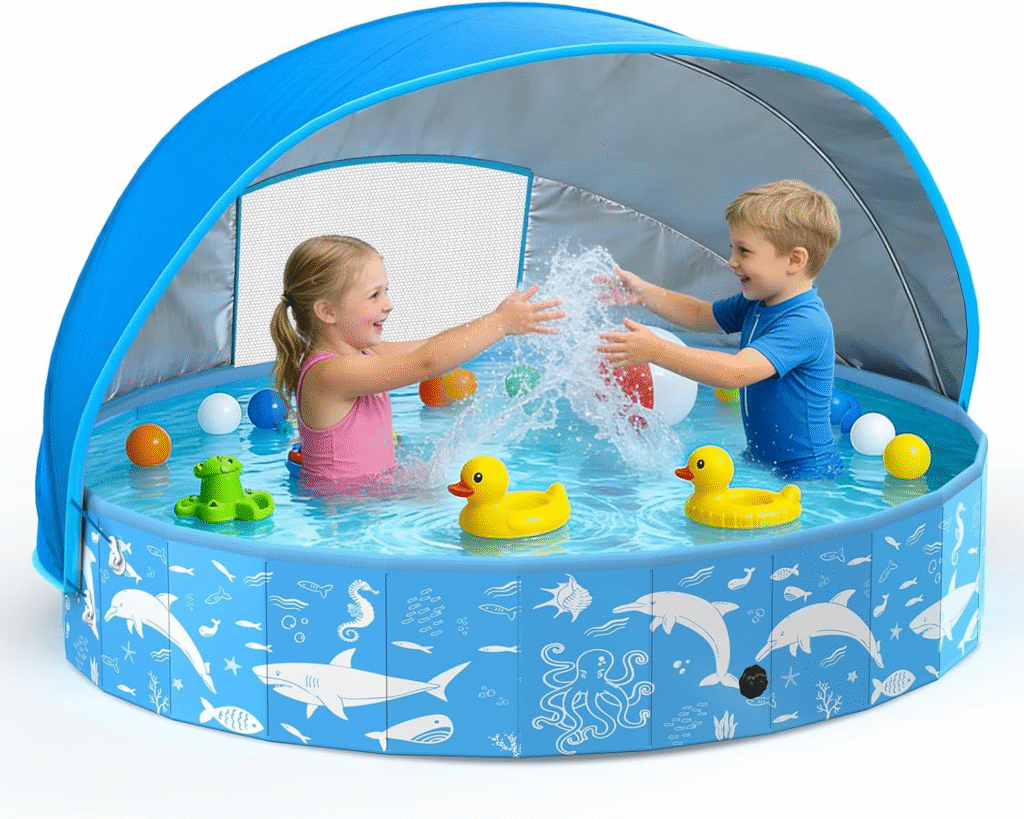
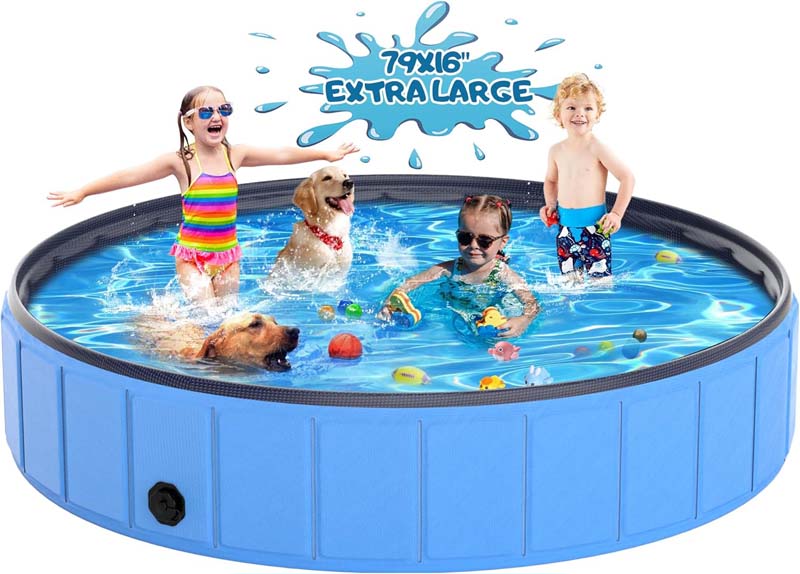
Foldable Dog Paddling Pool
Foldable pools are the most widely used design due to their balance between durability, stability, and storage convenience. They use reinforced side panels, typically supported by PP boards, allowing the pool to maintain its shape without inflation.
At EPN, panel thickness, spacing, and PVC layers are adjusted based on pool diameter and dog size. Anti-slip inner surfaces and reinforced bottom panels are often added to improve safety and wear resistance.
- Best for: daily home use
- Suitable for: medium to large dogs
- Key advantage: stable structure + easy storage

Inflatable Dog Pool
Inflatable dog pools are designed for portability and compact storage. The structure relies on air chambers, making them lightweight and easy to transport.
At EPN, inflatable designs are reinforced with thicker PVC or layered construction in high-contact areas. Welding strength and air chamber layout are optimized to improve durability and reduce air leakage risk.
- Best for: travel and temporary use
- Suitable for: small to medium dogs
- Key advantage: lightweight + compact packaging

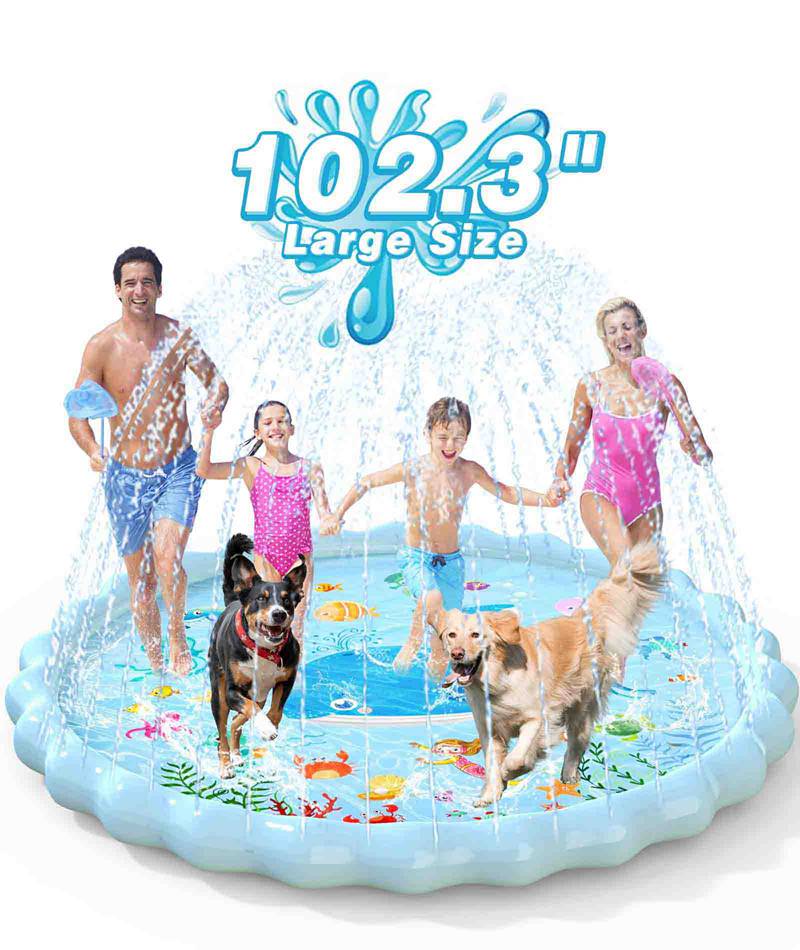
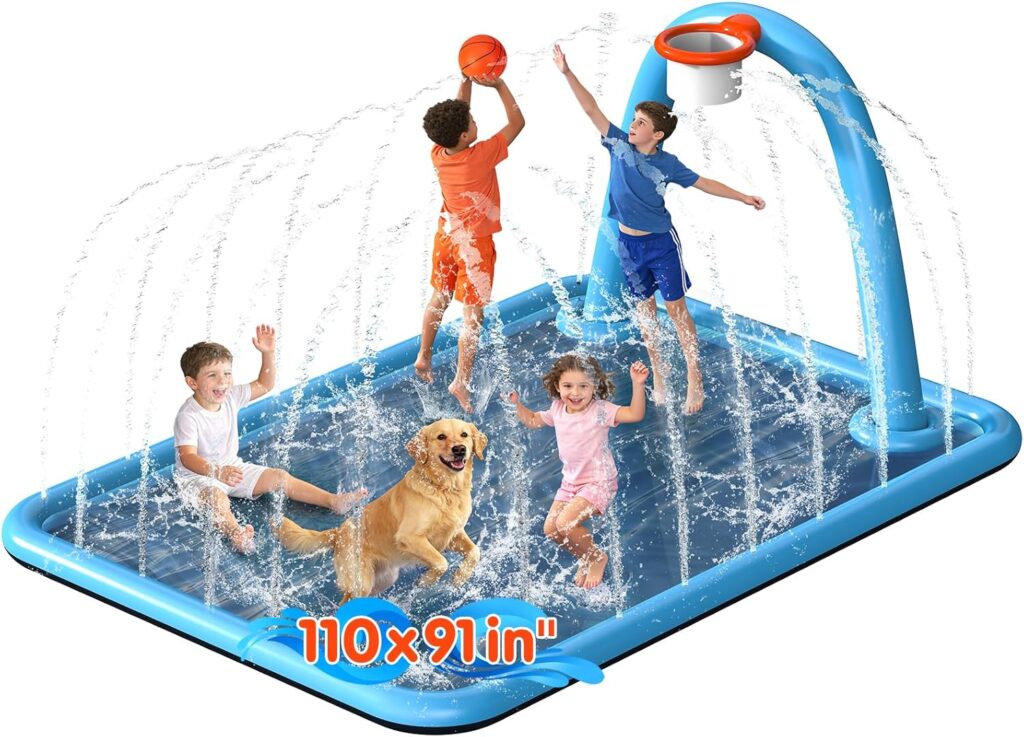
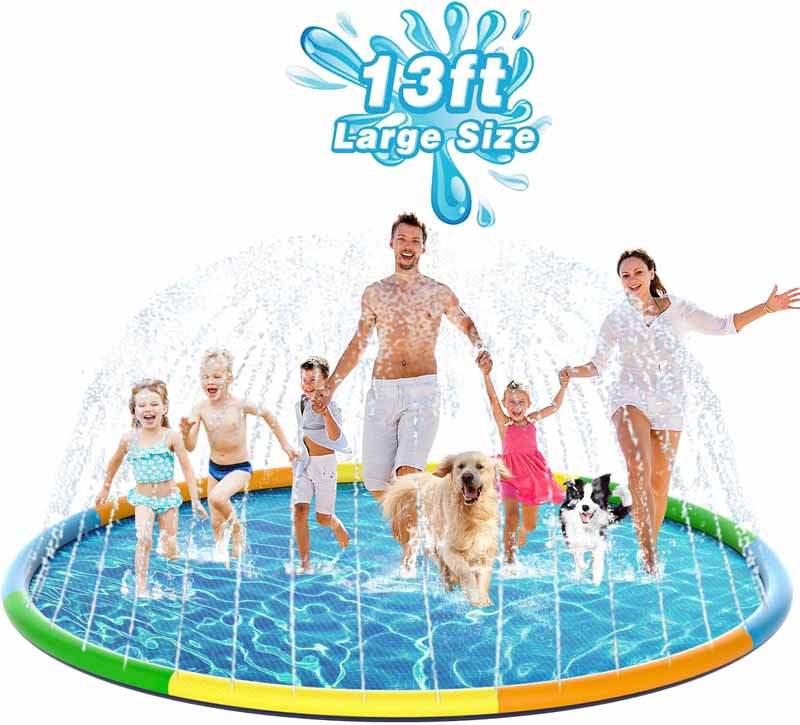
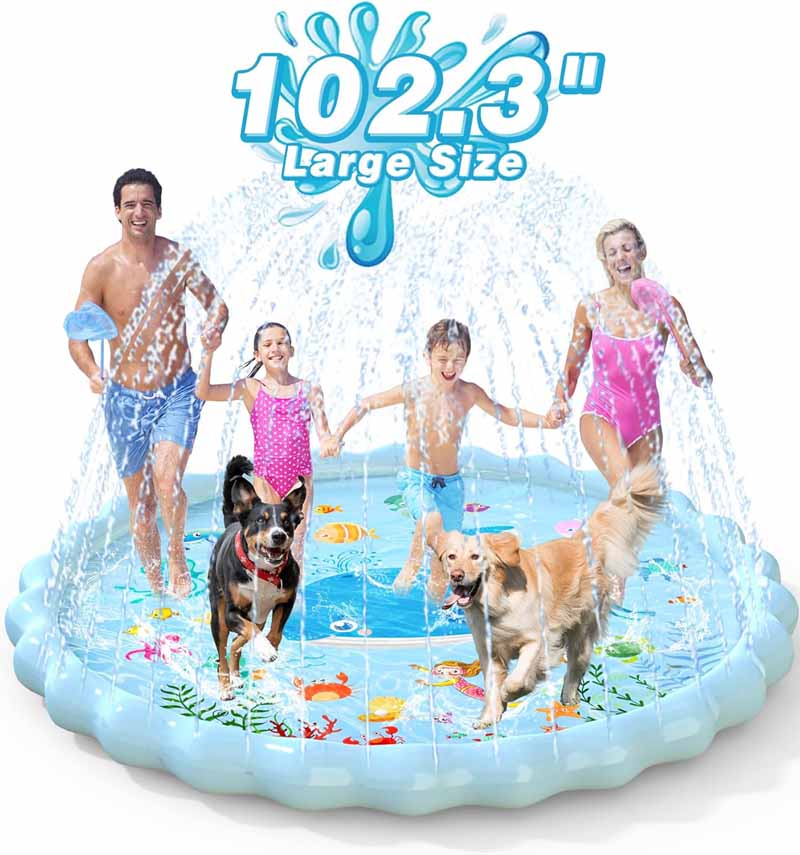
Sprinkler Dog Pool
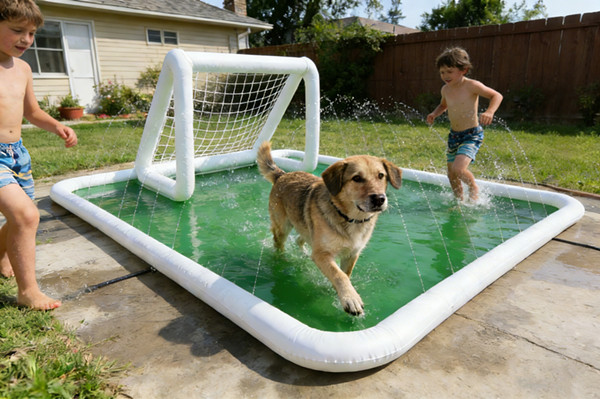
Sprinkler dog pools combine a shallow water base with a spray system connected to a garden hose, creating an interactive cooling environment.
At EPN, sprinkler hole spacing, angle, and diameter are carefully designed to ensure even water distribution. Reinforced hose connectors and ring structures improve durability and prevent leakage.
- Best for: summer outdoor activity
- Suitable for: pets and children
- Key advantage: interactive play + cooling function

Heavy-Duty Reinforced Dog Pool
Heavy-duty pools are designed for large dogs and high-intensity use. These products use thicker PVC materials (typically 0.5–0.6 mm+) combined with reinforced seams and structural support.
At EPN, stress points such as corners, base connections, and folding lines are strengthened to handle repeated use and higher loads.
- Best for: large breed dogs
- Suitable for: long-term outdoor use
- Key advantage: maximum durability

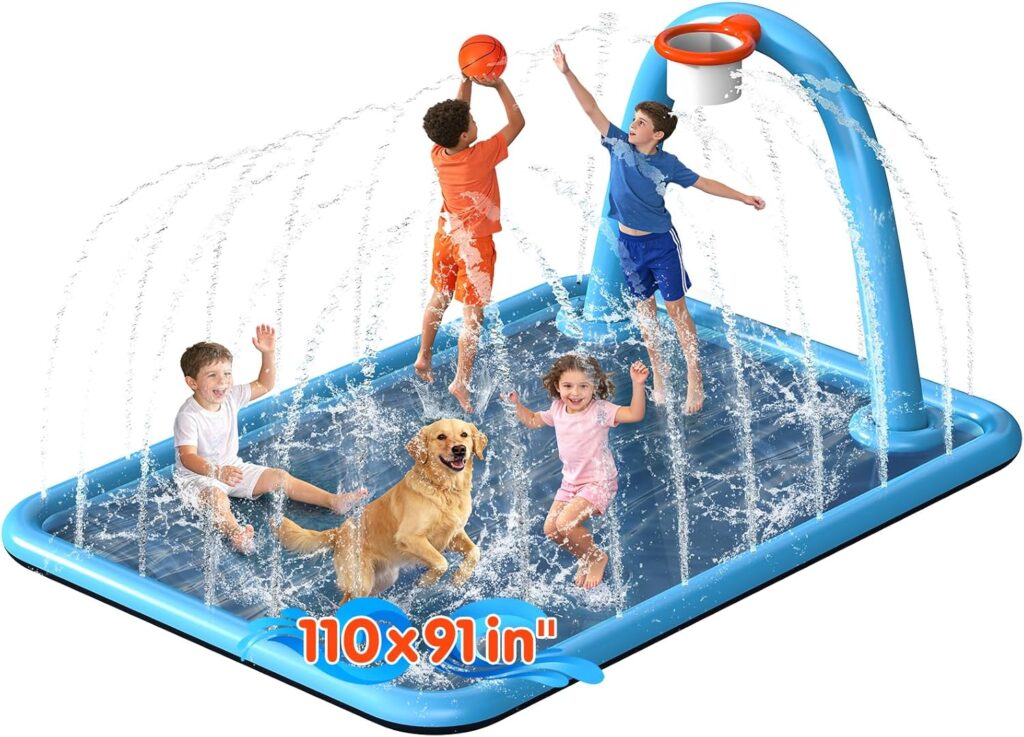
Dog Pool with Sprinkler (Hybrid Design)
This type combines the stability of a traditional pool with an integrated sprinkler system, offering both soaking and interactive water play.
At EPN, hybrid designs require careful coordination between structure and water flow. Reinforcement is added to hose connection areas, and water pressure is balanced to avoid deformation.
- Best for: multifunctional outdoor use
- Suitable for: families with pets and kids
- Key advantage: dual functionality (pool + splash pad)

Collapsible Travel Dog Pool
Collapsible travel pools are designed for portability, with lighter materials and simplified panel structures. Compared to standard foldable pools, these focus more on compact storage and ease of transport.
At EPN, these designs optimize folding patterns and reduce panel weight while maintaining basic structural stability.
- Best for: travel and camping
- Suitable for: small to medium dogs
- Key advantage: ultra-portable design

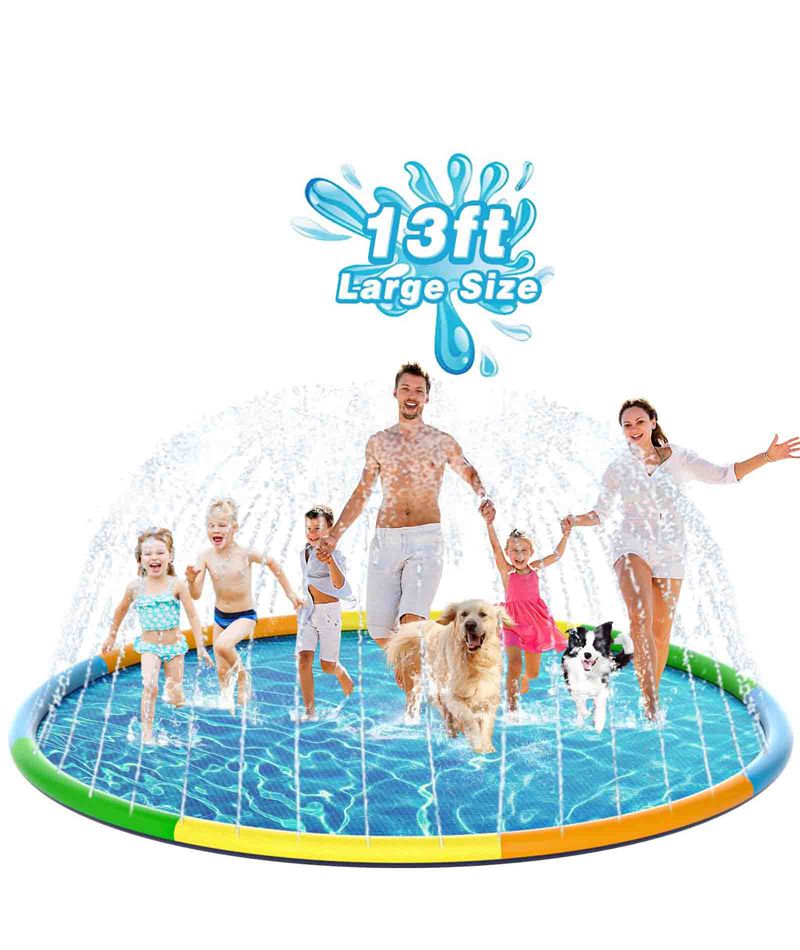
Extra-Large Multi-Dog Pool
Extra-large pools are developed for households with multiple dogs or larger play areas. These products require stronger structural support and careful load distribution.
At EPN, larger diameters are combined with thicker materials and reinforced panel systems to maintain stability under increased water pressure.
- Best for: multiple dogs or large spaces
- Suitable for: backyard installations
- Key advantage: larger capacity + stable structure

Themed / Seasonal Dog Pools
Some products are designed for seasonal sales or promotional campaigns, featuring custom graphics, shapes, or functional elements.
At EPN, full-surface printing and customized shapes are integrated into production, allowing branding and product design to align with marketing needs.
- Best for: e-commerce promotions
- Suitable for: seasonal products
- Key advantage: strong visual differentiation
Comparison Table
| Type | Structure | Material Range | Durability | Best Use | Key EPN Optimization |
|---|---|---|---|---|---|
| Foldable | PP panel + PVC | 0.45–0.6 mm | High | Daily use | Panel structure + anti-slip base |
| Inflatable | Air chambers | 0.4–0.5 mm | Medium | Portable | Reinforced welding |
| Sprinkler | Spray ring | 0.3–0.5 mm | Medium | Summer play | Even spray design |
| Reinforced | Thick PVC | 0.5–0.6 mm+ | Very High | Large dogs | Stress reinforcement |
| Hybrid (Pool + Sprinkler) | Combined | 0.45–0.6 mm | High | Multi-use | Connector reinforcement |
| Travel | Lightweight foldable | 0.4–0.5 mm | Medium | Travel | Compact folding |
| Extra-Large | Reinforced large panel | 0.5–0.6 mm+ | Very High | Multi-dog | Load distribution |
| Themed | Custom structure/print | 0.4–0.5 mm | Medium | Seasonal | Full-surface printing |
Why Dog Paddling Pools Require Different Design Than Regular Pools
Dog paddling pools are not just smaller versions of standard inflatable pools. The way pets use these products creates very different stress conditions on materials and structure.
In actual use, dogs tend to step, scratch, jump, and push against the side walls. Water movement inside the pool also adds pressure on seams and bottom panels. If the design is not adjusted for these factors, problems such as leakage, deformation, or early wear can occur within a short time.
At EPN, design adjustments are usually made during the sampling stage based on real usage scenarios rather than only appearance.
Claw Resistance and Material Wear
One of the most critical differences between dog pools and regular pools is surface wear caused by claws. Unlike human use, where pressure is distributed, dog claws create localized stress points that can quickly damage thin materials.
In most EPN projects:
- Entry-level pools use 0.4–0.45 mm PVC
- Standard retail models use 0.45–0.5 mm PVC
- Large or active dog use requires 0.5–0.6 mm+ PVC
From production observations, thinner materials may show visible wear within a few weeks of regular use, while thicker PVC significantly improves resistance. However, increasing thickness also affects folding performance and cost, so the design must balance these factors.


Structural Stability Under Water Pressure
When a pool is filled, water creates constant outward pressure on the side walls. Combined with dog movement, this can cause deformation if the structure is not properly supported.
At EPN, structural stability is improved through panel-supported designs, reinforced side walls, and optimized height-to-diameter ratios. These adjustments help distribute pressure more evenly and reduce the risk of shape distortion.
In testing, unsupported inflatable structures tend to lose shape after repeated use, while reinforced or panel-supported designs maintain stability over time, especially for medium to large dogs.
Bottom Reinforcement and Ground Contact
The bottom of the pool is exposed to continuous pressure, surface friction, and movement during use. This is one of the most common areas where failure occurs in low-quality products.
EPN typically uses double-layer bottom panels, thicker PVC compared to side walls, and anti-slip textures to improve durability and safety. These adjustments help reduce wear when the pool is placed on concrete, tiles, or rough outdoor surfaces.
From practical use cases, reinforced bottoms significantly extend product lifespan, especially in outdoor environments where friction is higher.


Drainage and Water Flow Design
Drainage is a practical but often underestimated factor in product design. Poor drainage systems can make the product difficult to use and increase the risk of leakage around valve areas.
At EPN, drain valves are positioned based on pool size and structure, with reinforced connection points to improve sealing performance. Both side and bottom drainage options are used depending on the product type.
Well-designed drainage systems allow faster water release and reduce stress on seams during emptying, which helps improve long-term durability.
PVC Material Selection for Dog Paddling Pools
Material selection is one of the most critical factors affecting the durability, stability, and lifespan of dog paddling pools. Unlike standard inflatable products, dog pools must withstand claw pressure, repeated movement, water load, and outdoor exposure at the same time.
At EPN, material selection is not fixed to a single specification. Instead, PVC thickness, formulation, and surface treatment are adjusted based on product size, dog weight, usage frequency, and target market. In most projects, material decisions are finalized after sample testing rather than at the initial design stage.
Material Options and Thickness
| Thickness | Typical Use | Durability | Flexibility | EPN Application Insight |
|---|---|---|---|---|
| 0.3–0.4 mm | Light-use / promotional | Low | High | Limited use, not suitable for active dogs |
| 0.45 mm | Standard retail | Medium | Good | Entry-level retail products |
| 0.5 mm | High-use / mainstream | High | Balanced | Most commonly used in EPN projects |
| 0.55–0.6 mm | Large dogs / heavy use | Very High | Lower | Reinforced designs for durability-focused products |

Flexibility vs Strength Balance
PVC thickness directly affects durability, but increasing thickness also reduces flexibility. This impacts how easily the product can be folded, stored, and transported.
At EPN, this balance is achieved not only through thickness selection but also through material formulation. By adjusting the composition of PVC, it is possible to maintain sufficient flexibility while improving tear resistance. In many projects, a well-optimized 0.5 mm material performs better than thicker but less flexible alternatives, especially for foldable structures.

Surface Resistance and Wear Performance
Dog claws create concentrated pressure points that can quickly wear down weak surfaces. This is one of the main differences between dog pools and standard inflatable pools.
At EPN, surface durability is improved through:
- Thicker PVC layers in high-contact areas
- Reinforced bottom panels
- Optional textured surfaces to reduce slipping
From production feedback, products with reinforced surfaces show significantly lower wear rates during repeated use compared to standard smooth PVC designs.

Welding Stability and Material Consistency
Material consistency plays a key role in welding performance. Variations in thickness or formulation can lead to weak seams, which are one of the most common causes of air or water leakage.
Because EPN operates its own PVC material workshop, thickness and formulation are controlled more consistently across batches. This improves welding stability and reduces defect rates during production.
From internal production data, consistent material quality helps reduce welding-related defects and improves overall product reliability.

Environmental Resistance
Dog paddling pools are often used outdoors, where they are exposed to sunlight, temperature changes, and rough surfaces.
At EPN, material selection for outdoor products may include:
- UV-resistant PVC formulations
- Thicker bottom layers for ground contact
- Reinforced seams to handle expansion and pressure changes
These adjustments help extend product lifespan, especially in outdoor environments.

Practical Material Selection Strategy
In real projects, material selection is usually based on a combination of dog size, usage intensity, and price positioning.
Typical EPN recommendations:
- Small dog / light use → 0.45 mm PVC
- Medium to large dogs → 0.5 mm PVC
- Heavy-duty / active use → 0.55–0.6 mm PVC
From project experience:
- Around 70% of retail products use 0.5 mm PVC as a balanced solution
- Thicker materials are mainly used for durability-focused or large-dog designs
Material specifications are typically confirmed after sample testing to ensure performance meets expectations. PVC material selection is not only about choosing a thickness, but about balancing durability, flexibility, welding performance, and cost.
Structure and Engineering Details of Dog Paddling Pools
The structure of a dog paddling pool plays a critical role in determining how the product performs under real usage conditions. Even when using the same PVC material, differences in structure design can lead to significant variations in stability, durability, and overall lifespan.
Unlike standard inflatable pools, dog pools must handle dynamic pressure from water, repeated movement from pets, and concentrated stress at specific points such as edges and corners. At EPN, structural design is developed based on these real-use conditions, with adjustments made during sampling and testing to improve performance rather than relying on a fixed design.

Foldable Panel System
Most dog paddling pools manufactured by EPN use a foldable panel structure supported by PP boards. This design allows the pool to maintain its shape without relying on air pressure, making it more stable during use.
Panel thickness and spacing are adjusted based on pool size and target dog weight. Larger pools require stronger panel support to prevent outward deformation under water pressure. At the same time, the folding structure is designed to remain flexible enough for storage and transportation.
From EPN production experience, panel-supported structures provide more consistent performance than fully inflatable designs, especially for medium to large dogs.

Side Wall Reinforcement
Side walls are constantly exposed to outward pressure from water and lateral force from pets pushing against them. Without proper reinforcement, these areas are prone to deformation or seam failure.
At EPN, side wall strength is improved through multi-layer welding and reinforced edge seams. In high-stress areas, additional welding passes or material layers are applied to distribute pressure more evenly.
Testing shows that reinforced side walls significantly reduce deformation and improve long-term stability, especially in larger pools or active use scenarios.

Base Structure and Load Distribution
The base of the pool carries continuous load from both water weight and pet movement. It is also exposed to friction from ground surfaces such as concrete, tiles, or rough outdoor terrain.
EPN typically uses thicker PVC material for the base compared to the side walls, combined with anti-slip textures to improve stability. Reinforced corner joints are also applied to reduce stress concentration where side walls meet the base.
From practical use, base reinforcement is one of the most effective ways to extend product lifespan and reduce wear-related issues.

Corner and Joint Engineering
Corners and connection points are often the weakest areas in a pool structure. These locations experience concentrated stress when the pool is filled and when pets move inside.
At EPN, corner areas are reinforced through additional material layers and optimized welding patterns. Smooth transitions between panels and base structures help reduce stress concentration.
In production data, poorly reinforced corners are one of the most common causes of early failure, while reinforced joint design significantly improves durability.
Accessories and Configuration Options for Dog Paddling Pools
Accessories and configuration details are not just optional add-ons. They directly affect product usability, perceived value, shipping efficiency, and final cost. In many cases, these elements are adjusted after sample testing to better match real usage conditions and market positioning.
At EPN, accessories are selected as part of the overall product design rather than treated as separate components. Factors such as pool size, usage scenario, target price, and sales channel (e-commerce vs retail) all influence the final configuration.

Drain Valve System
Drain valves are a standard feature in most dog paddling pools, but their design has a direct impact on usability and product reliability.
At EPN, both bottom and side drainage options are available depending on pool size and structure. Larger pools often use wider valves to improve drainage speed, while reinforced valve connections are applied to reduce leakage risk.
From production experience, poorly reinforced valves are one of the most common failure points. Strengthening the valve area during manufacturing significantly improves long-term performance and reduces after-sales issues.

Carry and Storage Solutions
For foldable dog pools, storage and portability are important considerations, especially for e-commerce customers.
EPN commonly integrates carry bags, elastic straps, and optimized folding structures to make storage easier. Panel size and folding sequence are designed together to ensure the product can be compactly packed without damaging the structure.
From project data, optimized folding and packaging can reduce carton size by approximately 10–20%, which directly lowers shipping costs, particularly for online sales.

Repair Kits and After-Sales Support
Repair kits are commonly included in retail and e-commerce products to handle minor damage during use. These typically include PVC patches and adhesive.
At EPN, repair kits are integrated into packaging design rather than added later. This ensures that they are properly sized, easy to use, and aligned with the product material.
From EPN project data, over 80% of e-commerce orders include repair kits, as they help reduce return rates and improve customer satisfaction.

Hose Connectors and Extended Functionality
Some dog paddling pool designs include hose connectors to improve filling convenience or create hybrid products with sprinkler features.
At EPN, connector placement and reinforcement are carefully designed to ensure stable water flow and prevent leakage. This type of configuration is commonly used in products that combine dog pools with splash pad functionality, especially for summer outdoor use.
Retail Packaging Solutions
For many brands and retailers, packaging is an important part of the overall product presentation. Good packaging protects the dog paddling pool during transportation while also helping the product stand out in retail environments.
EPN provides several packaging solutions that can be customized depending on product size, distribution channels, and branding requirements.
Common packaging formats include:
- printed color box packaging
- compact polybag packaging
- export cartons for bulk shipments
Because EPN operates its own printing and packaging facilities, packaging graphics, barcodes, and product information can be coordinated with the dog pool design.

Configuration Table
| Component | Function | Impact on Product | EPN Optimization |
|---|---|---|---|
| Drain Valve | Water drainage | Affects usability and leakage risk | Reinforced connection + size optimization |
| Carry System | Storage & portability | Reduces handling difficulty | Folding optimization + compact packing |
| Repair Kit | After-sales support | Reduces returns | Integrated packaging design |
| Hose Connector | Water input / spray | Adds functionality | Reinforced placement & sealing |
| Anti-slip Base | Safety & stability | Improves user experience | Textured PVC surface |
Logo and Branding Options for Dog Paddling Pools
Branding plays a key role in product differentiation, especially in competitive pet product markets where visual identity often influences purchasing decisions. The way a logo is applied affects not only appearance, but also durability, production consistency, and alignment with packaging.
At EPN, branding is integrated into the manufacturing process rather than added as a separate step. By coordinating printing, material selection, and packaging within the same system, it becomes easier to maintain consistency and reduce common issues such as color mismatch or misaligned graphics.

Silk Screen Printing
Silk screen printing is one of the most widely used methods for dog paddling pools, especially for standard retail products. It is suitable for simple logos with 1–4 colors and provides strong adhesion on PVC surfaces.
At EPN, silk printing is integrated into production lines, allowing consistent application across batches. This method is cost-effective for larger quantities and maintains stable performance even with repeated use and exposure to water.
In practice, silk printing is often selected for projects that prioritize durability and cost control.

Heat Transfer Printing
Heat transfer printing is used for more complex designs, including gradients, detailed graphics, and multi-color branding. It provides higher visual quality and is commonly used for branded or premium products.
At EPN, heat transfer processes are adjusted based on material type and surface finish to ensure proper adhesion and long-term durability. Compared to silk printing, it offers greater design flexibility but comes at a slightly higher cost.
This method is typically chosen when visual impact and brand presentation are key priorities.

Full-Surface Printing
Full-surface printing allows graphics to cover the entire product, creating strong visual differentiation. This is commonly used for themed designs, seasonal products, or promotional campaigns.
At EPN, full-print designs are aligned with packaging and product structure during development. This helps ensure that patterns remain consistent across panels and folds, avoiding visual distortion.
Because this method involves more complex production steps, it is often used in projects where branding plays a central role in marketing.

Embossed Logo
Embossed logos are integrated directly into the material, creating a subtle and durable branding effect without the need for color printing.
At EPN, embossing is applied during material processing, ensuring long-term durability and resistance to wear. This method is often used for minimalistic branding or when a clean, non-printed look is preferred.
MOQ, Lead Time, and Shipping Options
Production planning for dog paddling pools depends on product complexity, order quantity, and logistics requirements. Clear timelines and flexible order structures are important for keeping projects on schedule and reducing uncertainty.
At EPN, production is organized through an integrated system covering sampling, manufacturing, and packaging. This allows better control over lead time and helps avoid delays caused by coordination between multiple suppliers.
Production Timeline
| Stage | Typical Time | Key Focus |
|---|---|---|
| Requirement Confirmation | 1–3 days | Product specs, size, structure, materials |
| Sample Production | 3-7 days | Real material + structure verification |
| Sample Adjustment | 2–5 days | Refinement based on testing feedback |
| Mass Production | 15–25days | Stable batch production |
| Total Project Cycle | ~25–35days | From idea to shipment |

Timeline Control in Practice
In many projects, delays are not caused by production itself, but by unclear specifications or late-stage changes.
At EPN:
- Most projects require 1–2 rounds of sample adjustment
- Around 60–70% of products are refined after initial sampling
- Early confirmation of structure and material helps reduce overall lead time
Because sampling and production are handled within the same system, adjustments can be implemented more efficiently compared to multi-supplier setups.

Minimum Order Quantity (MOQ)
The standard MOQ at EPN is:
50 pcs per design
This structure allows:
- Small-batch testing before scaling
- Lower initial investment for new products
- Flexibility for e-commerce and product development projects
For larger orders, production can be scaled across multiple lines to maintain lead time stability.

Shipping Options and Logistics Strategy
Shipping methods are selected based on order size, urgency, and cost considerations:
- Express (DHL / UPS / FedEx): suitable for samples and small urgent orders
- Air freight: used for medium-volume shipments with tighter timelines
- Sea freight: the most cost-effective option for bulk orders
At EPN, packaging is often optimized during development to improve loading efficiency. From project data, optimized packaging can reduce shipping costs by approximately 10–20%, especially for large-volume shipments.

Trade Terms and Global Shipping
EPN supports multiple international trade terms to match different customer needs:
- EXW – factory pickup
- FOB – standard export shipping
- DAP / DDP – door-to-door delivery options
Flexible trade terms help simplify logistics planning, especially for customers without established shipping arrangements.

Payment Methods
To support different transaction preferences, EPN accepts:
- PayPal
- T/T (bank transfer)
- Credit card
- Alibaba Trade Assurance
- Alipay
- Western Union
Payment structures can be adjusted depending on order size and project stage.
Quality Control and Testing for Dog Paddling Pools
For dog paddling pools, most quality issues do not come from major defects, but from small inconsistencies in material, welding, or structure that only appear after repeated use. These problems are often not visible at the beginning, which makes early-stage control especially important.
At EPN, quality control is applied throughout the entire production process rather than only at the final stage. By combining material control, process monitoring, and multi-stage testing, potential issues can be identified earlier and corrected before they affect the final product.

Material Inspection
Quality control begins at the material level, where consistency directly affects durability and welding performance. Instead of relying on external sourcing, EPN operates its own material workshop, allowing better control over thickness, flexibility, and surface quality.
Before production starts, materials are checked to ensure they meet design requirements, including:
- PVC thickness and uniformity
- Surface condition and finish
- Flexibility and consistency for welding
This step helps reduce variation between batches and provides a stable foundation for the entire production process.

Cutting Accuracy and Component Preparation
After materials are prepared, components are cut using automated equipment. Accurate cutting is essential to ensure proper alignment during welding and assembly.
At EPN, dimensions are verified after cutting, and components are checked before entering the welding stage. This reduces misalignment issues and helps maintain consistency across products, especially in larger production runs.

Welding Control and Seam Strength
Welding is one of the most critical stages in production, as seam quality directly affects durability and leakage performance. Poor welding is one of the most common causes of product failure in the market.
At EPN, welding parameters such as temperature, pressure, and timing are monitored during production. High-stress areas, including edges, corners, and valve connections, are reinforced through additional welding or layered material.
From production experience, consistent welding control significantly improves seam strength and reduces long-term failure risk.

Air Tightness and Leakage Testing
After assembly, each product undergoes air tightness testing to verify structural integrity. This stage is essential for identifying potential leakage issues before shipment.
At EPN, products are inflated and monitored for pressure stability, while seams and valve areas are carefully checked. Dedicated testing stations and pressure monitoring tools are used to ensure accuracy.
This stage is one of the most effective points for detecting hidden defects that may not be visible during earlier inspections.

Functional Testing and Usability Check
Beyond structural integrity, products are also evaluated for functional performance to ensure they meet real usage requirements.
Typical checks include:
- Structural stability under load
- Folding performance and recovery
- Drain valve functionality and sealing
These tests help confirm that the product performs as expected in actual use conditions, not just in static inspection.

Final Inspection and Packaging Verification
Before shipment, all products go through a final inspection to ensure consistency and completeness. This includes both product quality and packaging accuracy.
At EPN:
- Product appearance and surface quality are checked
- Accessories are verified against specifications
- Packaging is confirmed to match product dimensions
100% of products are inspected before shipment, which helps reduce defects reaching the end market. Quality control is not a single step, but a coordinated system that connects material, production, and testing. Small inconsistencies in any stage can affect long-term performance.
Custom Development Process for Dog Paddling Pools
Developing a dog paddling pool is not a single-step task, but a structured process that connects product definition, material selection, sampling, and production. Without a clear workflow, projects can face delays, unexpected cost increases, or performance issues after production
Step 1 — Requirement Discussion
Every project begins with understanding the basic idea and target requirements. In many cases, customers provide a reference product, a concept, or a price target rather than a finalized design.
At EPN, this stage focuses on aligning expectations and identifying key parameters, including:
- Product type and structure
- Target size and usage scenario
- Price positioning and market channel
Communication is handled directly through email, WhatsApp, or video calls, allowing faster clarification and fewer misunderstandings.
Step 2 — Specification Confirmation
Once the concept is clear, technical specifications are defined to create a workable design. This stage connects idea with manufacturability.
Typical specifications include:
- Dimensions and structure design
- Material thickness and formulation
- Accessories and configuration options
At EPN, these details are confirmed together to ensure that structure, material, and cost are aligned before sampling begins.
Step 3 — Cost Evaluation and Quotation
After specifications are defined, a cost evaluation is carried out based on actual production factors rather than estimates.
Key factors include:
- Material consumption and thickness
- Structural complexity and reinforcement
- Accessories and packaging requirements
This step helps ensure that the quotation reflects real production conditions and reduces the need for major adjustments later.
Step 4 — Sample Production
Sampling is the first stage where the product is physically realized. At EPN, samples are produced using actual materials and production processes rather than simplified prototypes.
Typical timeline:
- Standard designs: 5–10 days
- Custom structures or special requirements: 10–15 days
Because sampling is done within the production system, the results closely match the final product.
Step 5 — Testing and Adjustment
After sampling, the product is evaluated under real usage conditions to identify potential issues. This stage is where most improvements are made.
Common adjustments include:
- Increasing bottom thickness for better wear resistance
- Reinforcing side walls for improved stability
- Adjusting folding structure for packaging efficiency
From EPN project data:
- Around 60–70% of projects require at least one adjustment
- Most products are finalized within 1–2 rounds of sampling
Making these changes before mass production helps avoid larger issues later.
Step 6 — Mass Production
Once the sample is approved, production is arranged based on confirmed specifications. Because all key elements are already validated, production can proceed more smoothly.
Typical production timeline:
- 20–30 days, depending on order size and complexity
Integrated production at EPN helps maintain stable output and consistent quality across batches.
Step 7 — Inspection and Shipment
Before shipment, products go through final inspection to ensure quality and completeness. This includes both product performance and packaging verification.
At EPN:
- 100% of products are inspected before shipment
- Accessories and packaging are checked against specifications
- Shipping is arranged based on customer requirements (EXW, FOB, DAP, DDP)
This final stage ensures that products are ready for delivery and market use.
Timeline Overview
| Stage | Typical Time | Key Outcome |
|---|---|---|
| Sample Production | 3–7 days | Initial product validation |
| Adjustment | 2–5 days | Performance optimization |
| Mass Production | 15–25 days | Stable batch output |
| Total Cycle | ~20–30 days | From idea to shipment |
Case Studies — Dog Paddling Pool Projects
Every dog paddling pool project comes with different requirements depending on target market, usage conditions, and cost expectations. In many cases, the final product is not defined at the beginning, but improved through sampling, testing, and structural adjustment.
The following examples are based on real development and production experience at EPN, showing how small changes in material, structure, and packaging can significantly improve product performance and cost efficiency.

Case 1 — Improving Durability for Large Dogs
Background
A customer developed a foldable dog paddling pool for medium to large dogs using a 0.45 mm PVC structure. The product performed well initially, but during testing and early use, signs of wear appeared on the bottom panel, especially when used on rough outdoor surfaces.
Analysis
At EPN, this issue was identified as a combination of material thickness limitation and ground friction rather than a structural failure. The bottom area was exposed to continuous pressure and movement, making it more vulnerable than side walls.
Solution
Instead of redesigning the entire structure, targeted adjustments were made:
- Bottom thickness increased to 0.55 mm PVC
- Anti-slip texture added to improve grip and reduce friction
- Reinforcement applied at key stress points
Result
After adjustment, the product showed significantly improved wear resistance and stability. The updated design passed repeated testing without further issues, and no additional changes were required before mass production.

Case 2 — Reducing Shipping Cost Through Structural Optimization
Background
A project targeting e-commerce sales faced high logistics costs due to oversized packaging. The original folding structure resulted in large carton dimensions, which increased shipping expenses, especially for international delivery.
Analysis
At EPN, the issue was identified as a packaging and folding design problem rather than a product size issue. The structure itself was functional, but not optimized for transport efficiency.
Solution
Adjustments focused on improving packing efficiency without affecting product performance:
- Folding sequence redesigned for more compact storage
- Panel dimensions slightly adjusted to reduce overall packed size
- Packaging layout optimized to improve carton utilization
Result
These changes reduced carton size and improved loading efficiency, resulting in a 15–20% reduction in shipping cost. Product performance and usability remained unchanged, making the product more competitive in e-commerce channels.

Case 3 — Improving Structural Stability Under Water Pressure
Background
A customer reported that the pool walls were deforming after being filled with water, especially when used by active dogs. The issue affected both appearance and user experience.
Analysis
EPN identified that the deformation was caused by insufficient structural support and an imbalanced height-to-diameter ratio, which increased outward pressure on the side walls.
Solution
Instead of increasing material thickness alone, structural improvements were applied:
- Side panels reinforced to improve rigidity
- Height-to-diameter ratio adjusted to better distribute pressure
- Additional reinforcement added at connection points
Result
After these adjustments, the pool maintained its shape more consistently under load. Stability improved significantly, and the product performed reliably during repeated use.
Case 4 — Reducing Leakage Risk at Valve Area
Background
In one project, minor leakage was observed around the drain valve after repeated use. Although not immediately critical, it affected long-term product reliability.
Analysis
The issue was traced to insufficient reinforcement around the valve connection, where stress concentration occurs during drainage and handling.
Solution
EPN applied targeted improvements:
- Reinforced material layers around the valve area
- Optimized welding pattern for better sealing
- Adjusted valve positioning to reduce stress during use
Result
Leakage was eliminated during subsequent testing, and the improved design maintained stable performance across multiple production batches.
Frequently Asked Questions About Dog Paddling Pool Manufacturing
Q1. What is the minimum order quantity (MOQ)?
The standard MOQ at EPN is 50 pieces per design, which allows flexible product testing and lower initial investment. This is especially suitable for new product launches or market validation before scaling to larger volumes.
Q2. How long does it take to develop a new product?
A typical project cycle takes around 30–45 days, including sampling and production. Samples are usually completed within 5–10 days, while mass production takes 20–30 days, depending on product complexity.
Q3. Can you customize size, structure, and material?
Yes, all key aspects can be customized, including dimensions, panel structure, PVC thickness, and accessories. Most projects start with a reference product or idea, and specifications are refined during sampling.
Q4. What PVC thickness is recommended for dog pools?
For most applications, 0.5 mm PVC is the most commonly used option, balancing durability and flexibility. Smaller or light-use products may use 0.45 mm, while heavy-duty designs for large dogs often use 0.55–0.6 mm+.
Q5. How do you ensure product durability?
Durability is achieved through a combination of material selection, structural design, and multi-stage quality control. At EPN, reinforced seams, thicker bottom panels, and 100% inspection before shipment help ensure consistent performance.
Q6. Do you provide samples before mass production?
Yes. Samples are produced using actual materials and production processes, so they accurately represent the final product. Most projects require 1–2 rounds of adjustments before final confirmation.
Q7. What are the most common issues in dog pools?
Typical issues include leakage at seams or valves, bottom wear due to insufficient thickness, and structural deformation. These are usually identified and resolved during the sampling stage at EPN.
Q8. Can you help reduce shipping costs?
Yes. Packaging and folding structures are often optimized during development. From project experience, carton size optimization can reduce shipping costs by approximately 10–20%, especially for e-commerce shipments.
Q9. What shipping methods are available?
Shipping options include express for samples, air freight for medium orders, and sea freight for bulk shipments. Trade terms such as EXW, FOB, DAP, and DDP are supported depending on customer requirements.
Q10. What payment methods do you accept?
EPN accepts multiple payment methods, including PayPal, T/T (bank transfer), credit card, Alibaba Trade Assurance, Alipay, and Western Union. Payment terms can be adjusted based on project size.
Q11. How do you control product quality?
Quality control is applied throughout production, including material inspection, welding monitoring, air tightness testing, and final inspection. Multi-stage inspection helps reduce leakage-related defects by over 30%.
Q12. Can you match product branding and packaging?
Yes. Because EPN has in-house printing and packaging capabilities, product graphics and packaging can be aligned more consistently. This reduces color mismatch and improves overall presentation.
Q13. How many sample revisions are usually needed?
In most projects, 1–2 rounds of sampling adjustments are sufficient. Around 60–70% of products require at least one refinement, typically related to structure or material optimization.
Q14. Can we visit your factory?
Yes. EPN supports both on-site factory visits and video tours. This helps customers better understand production processes and quality control systems.
Q15. How do we start a project with EPN?
Most projects start with a simple idea, reference product, or target price. You can share basic information, and EPN will help define structure, material, and configuration, followed by sampling and production.

Start Your Dog Paddling Pool Project with EPN
Whether you are looking for ready-to-sell products or planning to develop a custom dog paddling pool, EPN supports both flexible sourcing and full product development.
With integrated manufacturing, fast sampling, and stable production timelines, we help turn ideas into reliable products while keeping cost and quality under control.
If you need ready-to-sell products for quick market entry, you can explore our available items:
If you are developing your own product, we can support you from concept to production:
- Custom size, structure, and material
- Branding and packaging integration
- MOQ starting from 50 pcs
- Sample in 5–10 days, production in 15–20 days
If you want to test product quality before placing a bulk order, we provide sample support based on your requirements.
- Real production materials
- Structural and performance testing
- 1–2 rounds of refinement if needed
Explore More Product Categories
If you are sourcing multiple products or planning a broader product line, you can also explore our other product categories: