Skip to content
Inflatable Toy Manufacturer Focused on Safety, Durability, and Real-World Use
Engineering PVC and composite inflatable toys for children, pets, and outdoor leisure — built to perform beyond the first season
EPN is a vertically integrated inflatable toy manufacturer specializing in PVC and composite inflatable products for family entertainment, children’s water toys, pet products, and outdoor leisure equipment. With in-house material formulation, structural engineering, and independent testing, we build inflatable toys that remain stable, safe, and reliable in real-world use across global markets.
Environment-compliant PVC and composite materials optimized for durability, safety, and long-term use.
27 dedicated R&D engineers covering materials, structure, child safety, pet behavior, and ergonomics.
Over 500 material and product tests annually, including air retention, pressure, UV aging, and durability.
Annual output exceeding 12 million inflatable products with stable quality across mass production.
Designs aligned with EN71, REACH, CPSIA, ASTM, and major retail requirements from the start.
Rapid prototyping, clear engineering feedback, and production timelines grounded in actual factory capacity.
Why do inflatable toys fail even when they look fine at first?
Most inflatable toys fail because they are designed to pass visual inspection and short-term sampling—not long-term, real-world use by children, pets, and families.
Inflatable toys are often evaluated when new, clean, and fully inflated in controlled conditions. Real usage is very different. Once exposed to repeated inflation, folding, sunlight, water, uneven ground, and unpredictable user behavior, hidden weaknesses begin to surface.
Problem 1 — Hidden Micro-Leaks That Appear After Repeated Use
What buyers usually see
- Product looks airtight when first inflated
- No visible seam defects
- Passes basic factory inflation checks
What happens in real use
After multiple inflation and deflation cycles, air slowly escapes. The product does not “burst” but gradually loses firmness and shape.
Why this happens
- Welding parameters are not stable across the entire seam
- PVC material density varies slightly between batches
- Fold stress concentrates along weld edges during storage
These issues create micro-cracks inside weld zones that are invisible during initial inspection but expand over time.
How EPN addresses this
EPN focuses on weld consistency and material stability rather than relying on single inflation checks. Air retention and durability testing are used to identify early-stage leakage before mass production.

Problem 2 — Structural Collapse and Edge Deformation
What buyers usually see
- Product looks airtight when first inflated
- No visible seam defects
- Passes basic factory inflation checks
What happens in real use
After multiple inflation and deflation cycles, air slowly escapes. The product does not “burst” but gradually loses firmness and shape.
Why this happens
- Welding parameters are not stable across the entire seam
- PVC material density varies slightly between batches
- Fold stress concentrates along weld edges during storage
These issues create micro-cracks inside weld zones that are invisible during initial inspection but expand over time.
How EPN addresses this
EPN focuses on weld consistency and material stability rather than relying on single inflation checks. Air retention and durability testing are used to identify early-stage leakage before mass production.

Problem 3 — Rapid Aging Under Sunlight and Outdoor Conditions
What buyers usually see
- Bright colors and smooth surfaces when new
What happens in real use
- Surface becomes stiff or sticky
- Color fades unevenly
- Small cracks appear after one season
Why this happens
- PVC formulations lack sufficient UV stabilizers
- Materials are selected for cost rather than exposure conditions
Outdoor inflatable toys experience constant UV radiation and heat cycling, which accelerates material aging.
How EPN addresses this
For outdoor and backyard products, EPN adjusts material formulations to improve UV resistance and long-term flexibility, especially for markets with strong sunlight exposure.

Problem 4 — Underestimated Stress from Children and Pets
What buyers usually see
- Products labeled as “for kids” or “pet-friendly”
What happens in real use
- Children jump, sit on edges, and drag products
- Pets scratch, bite, and concentrate force on small areas
- Failure occurs at corners, edges, or near valves
Why this happens
- Designs are based on ideal usage, not real behavior
- Material thickness and tear resistance are insufficient for claws or repeated impact
How EPN addresses this
EPN integrates child behavior and pet usage patterns into design decisions, increasing tear resistance, reinforcing high-stress zones, and adjusting wall height and edge thickness accordingly.

Problem 5 — Compliance and Safety Issues Discovered Too Late
What buyers usually see
- Samples look acceptable
- Factory claims “can pass tests”
What happens in real use
- Compliance issues arise during retailer audits
- Packaging or labeling needs last-minute changes
- Shipments are delayed or rejected
Why this happens
- Compliance is treated as a final step instead of a design input
- Materials and inks are not selected with regulations in mind
How EPN addresses this
EPN considers target market regulations (EN71, REACH, CPSIA, ASTM) during material selection, design, and packaging development—reducing late-stage compliance risks.

Why is inflatable toy manufacturing fundamentally different from ordinary plastic products?
Because inflatable toys are sealed, pressurized structures that must remain flexible, airtight, and safe under constant movement, environmental exposure, and unpredictable user behavior.
Unlike rigid plastic toys, inflatable products do not rely on thickness alone for strength. Their performance depends on the interaction between material formulation, structural layout, welding precision, and real-world usage patterns. A small weakness in any one of these areas often leads to visible failure.

Inflatable Toys Are Load-Bearing Structures, Not Soft Accessories
At first glance, inflatable toys appear soft and forgiving. In reality, they function as load-bearing systems.
When inflated, internal air pressure pushes evenly against the material walls. Once users interact with the product, that pressure becomes uneven:
- Children sit or jump on edges
- Water weight shifts inside pools or splash pads
- Pets concentrate force on small contact points
These forces create localized stress zones, especially along edges, corners, and welded seams.
Why this is difficult to control
If internal chambers are poorly designed or edge reinforcement is missing, stress accumulates in limited areas, causing deformation, seam fatigue, or slow leaks.
How experienced manufacturers approach this
Structural design must distribute pressure across multiple chambers and reinforce load-bearing zones. Thickness alone cannot compensate for poor structural layout.

Material Formulation Matters More Than Material Name
Many factories describe products simply as “PVC inflatables.”
This description hides a critical truth: PVC performance varies widely depending on formulation.
Key formulation variables include:
- Plasticizer type and ratio
- UV stabilizer content
- Flexibility vs. tear resistance balance
- Temperature performance range
Two PVC sheets with the same thickness can behave completely differently after sunlight exposure, repeated folding, or cold storage.
Why this creates manufacturing risk
If formulation stability is inconsistent, welding quality becomes unstable, aging accelerates, and seam performance degrades over time.
How EPN approaches material selection
Instead of treating PVC as a generic input, EPN controls material formulation and evaluates behavior under aging, UV exposure, and repeated inflation cycles before approving it for production.

High-Frequency Welding Is Precise, Not Forgiving
Inflatable toys depend almost entirely on high-frequency (HF) welding rather than stitching or adhesives.
HF welding success depends on:
- Temperature range
- Pressure consistency
- Welding time
- Material dielectric properties
Even small deviations can weaken welds internally while seams appear visually intact.
Common misconception
If a seam looks smooth, it must be strong.
Reality
Many failures originate from weld zones that passed visual inspection but developed micro-cracks after stress, folding, or temperature changes.
Manufacturing implication
Welding must be treated as a controlled engineering process, not a manual operation. Parameters must remain stable across long production runs, not just during sampling.

Inflatable Toys Age Even When Not in Use
Unlike rigid products, inflatable toys degrade even while stored.
Key aging factors include:
- Plasticizer migration during storage
- Residual stress from folding
- Temperature fluctuations in warehouses or containers
This is why some products fail during their second season, not immediately after purchase.
Why this is often overlooked
Many factories test products only when fully inflated and new. Long-term storage behavior is rarely evaluated.
Engineering reality
A durable inflatable toy must survive:
- Storage
- Transport
- Seasonal use cycles
Design and material decisions must account for all three.

User Behavior Is Unpredictable and Must Be Assumed, Not Hoped For
Inflatable toy designs often assume ideal behavior:
- Gentle use
- Even weight distribution
- Smooth ground
Real usage is very different.
- Children jump, pull, and drag
- Pets scratch, bite, and focus force on edges
- Outdoor users place products on grass, tiles, or concrete
Why this complicates design
Stress is rarely evenly distributed. Failure usually occurs at the weakest point, not the average point.
How experienced manufacturers respond
Design must assume misuse and reinforce predictable failure zones such as corners, edges, valve areas, and high-contact surfaces.

Compliance Requirements Add Another Layer of Constraint
Inflatable toys for children, pets, and families must comply with strict safety and chemical regulations across different markets.
These requirements affect:
- Material formulation
- Ink and printing selection
- Structural design (choking hazards, edge shapes)
- Packaging and labeling
Why this increases complexity
A design that performs well mechanically may still fail compliance if materials or labeling are not aligned with regulations from the beginning.
Manufacturing decisions must balance performance, safety, and regulatory limits simultaneously, not sequentially.
What types of inflatable products does EPN manufacture?
EPN manufactures a comprehensive range of PVC and composite inflatable products covering children’s play, family recreation, pet use, outdoor leisure, and seasonal sports. Product categories are engineered based on structural load, usage behavior, and material performance rather than surface appearance.
Below is a manufacturing-oriented classification of EPN’s inflatable product capabilities.

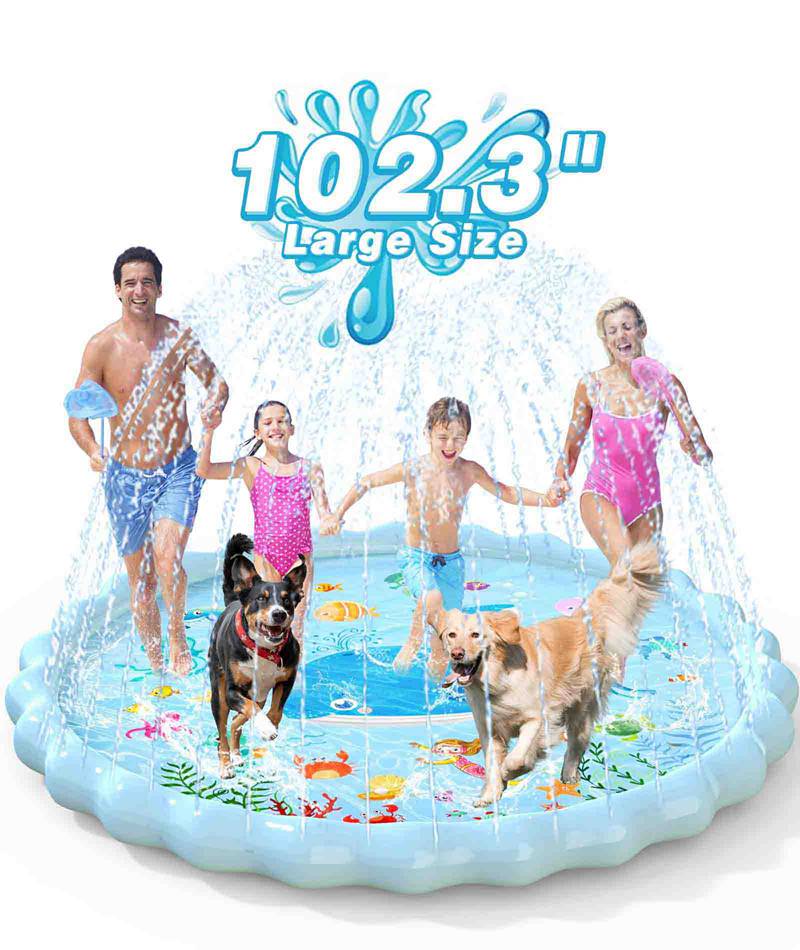
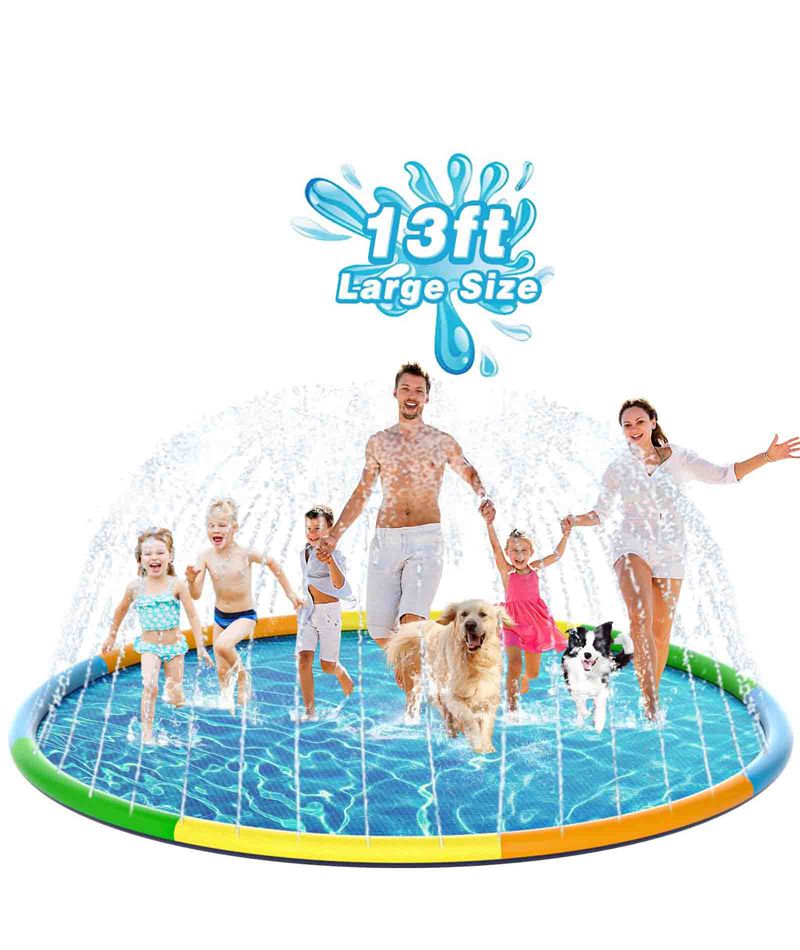
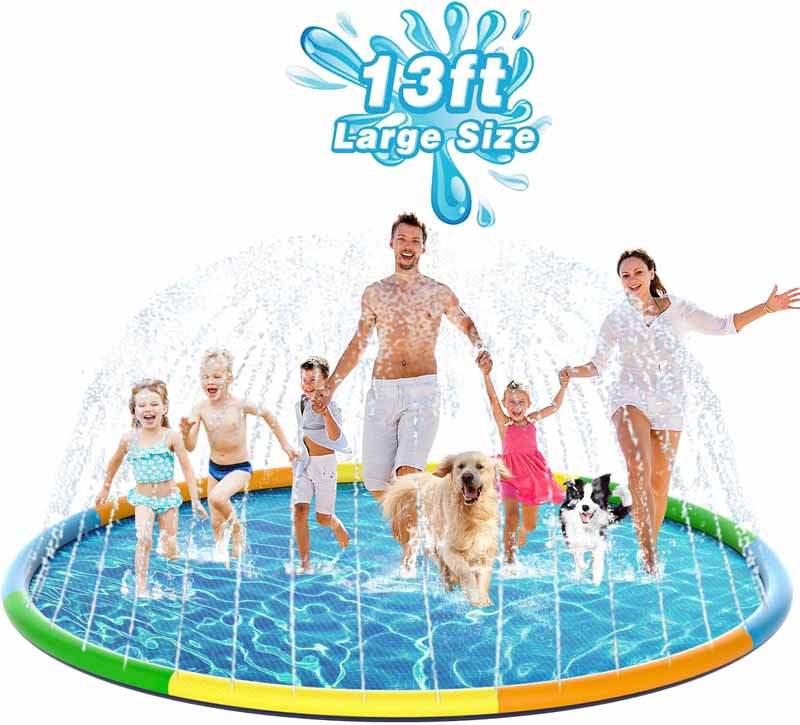
Flat Splash Pads
Typical structure
- Single or dual-layer flat chambers
- Peripheral spray channels
Engineering focus
- Uniform pressure distribution
- Spray-hole density control
- Anti-slip surface texturing
Failure risk if poorly made
- Edge curling
- Uneven water spray
- Early seam fatigue

Raised-Edge Splash Pads
Typical structure
- Reinforced outer ring
- Flat or segmented inner play area
Engineering focus
- Load-bearing edge stability
- Edge-to-base weld strength
- Shape retention under water load

Inflatable Children’s Water Mats
Typical structure
- Thin-profile air chambers
- Soft-contact surfaces
Engineering focus
- Material softness control
- Seam smoothness for skin contact
- Odor and residue management

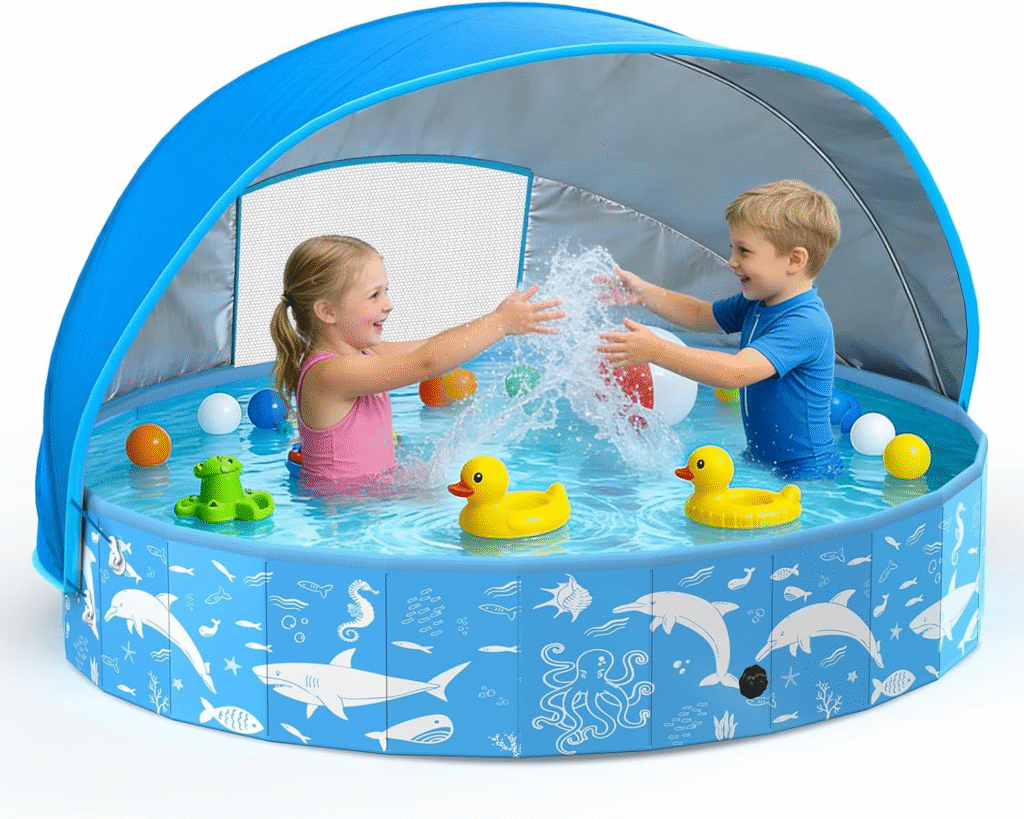
Inflatable Backyard Pools (Small to Medium Size)
Typical structure
- Multi-ring or multi-chamber walls
- Reinforced bottom panel
Engineering focus
- Vertical wall stability
- Pressure balance between rings
- Deformation control when partially filled

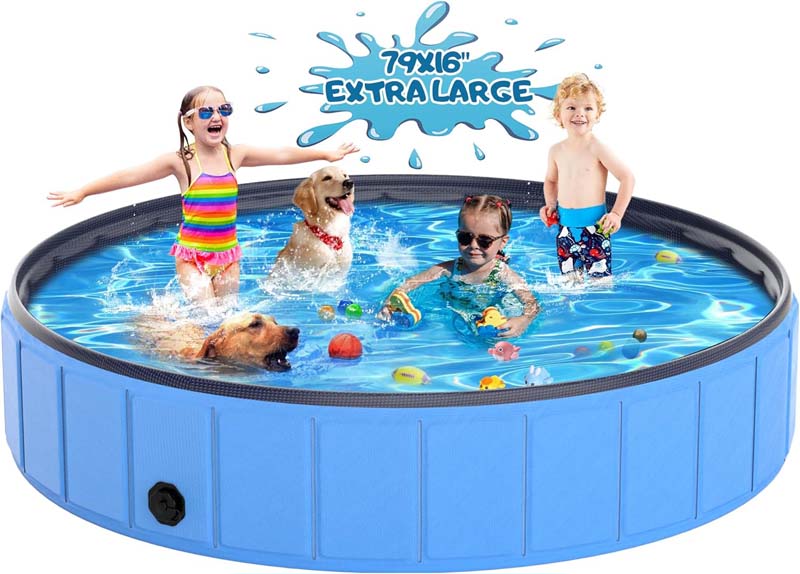
Foldable Inflatable Kiddie Pools
Typical structure
- Low wall height
- Easy-drain design
Engineering focus
- Repeated folding durability
- Drain valve reinforcement
- Lightweight material balance

Inflatable Pet Pools
Typical structure
- Thickened wall zones
- Reinforced entry edges
Engineering focus
- Tear and puncture resistance
- Claw stress distribution
- Anti-slip inner surfaces

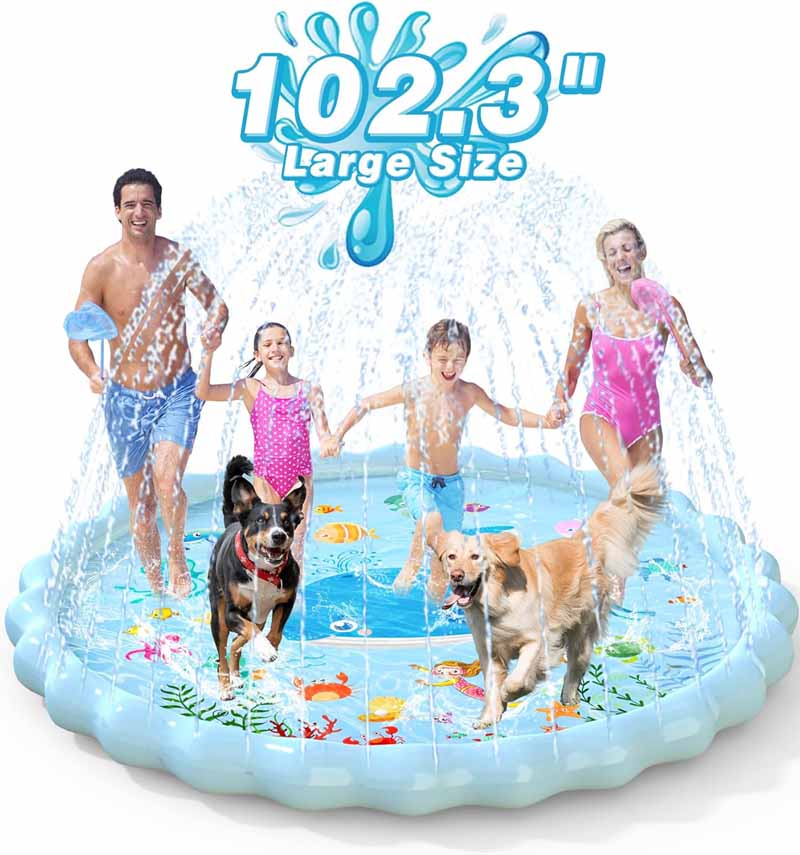
Pet Splash Pads
Typical structure
- Flat or semi-rigid play surface
- Peripheral spray channels
Engineering focus
- Surface abrasion resistance
- Stable spray under uneven pressure
- Reinforced hose connection areas

Inflatable Bathing Pools for Pets
Typical structure
- Compact, high-wall structure
- Controlled drainage system
Engineering focus
- Structural rigidity for washing activity
- Water containment stability
- Cleaning and hygiene considerations

Inflatable Snow Tubes (Standard PVC)
Typical structure
- Circular single or multi-chamber body
- Integrated handle welds
Engineering focus
- Cold-temperature flexibility
- Seam durability under impact
- Handle reinforcement

Fabric-Covered Snow Tubes
Typical structure
- Inner PVC bladder
- Outer abrasion-resistant fabric shell
Engineering focus
- Fabric-to-PVC integration
- Cold and abrasion resistance
- Load distribution during sliding

Inflatable Sports Interaction Toys
Typical structure
- Vertical load-bearing chambers
- Weighted or anchored bases
Engineering focus
- Impact absorption
- Rebound control
- Seam durability under repeated strikes

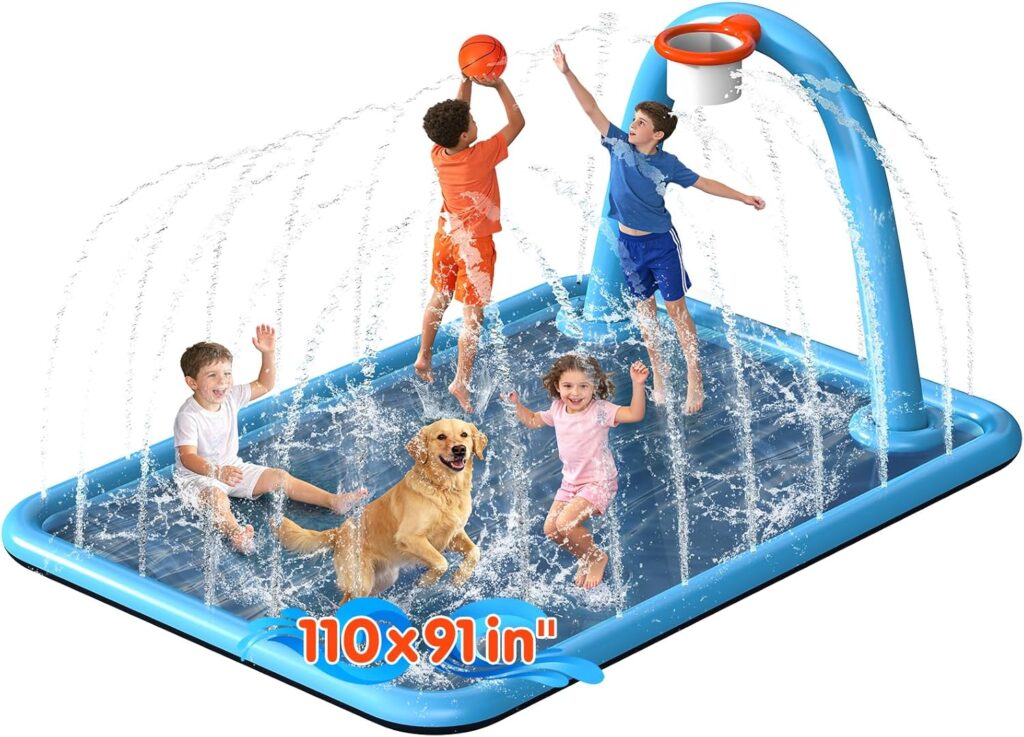
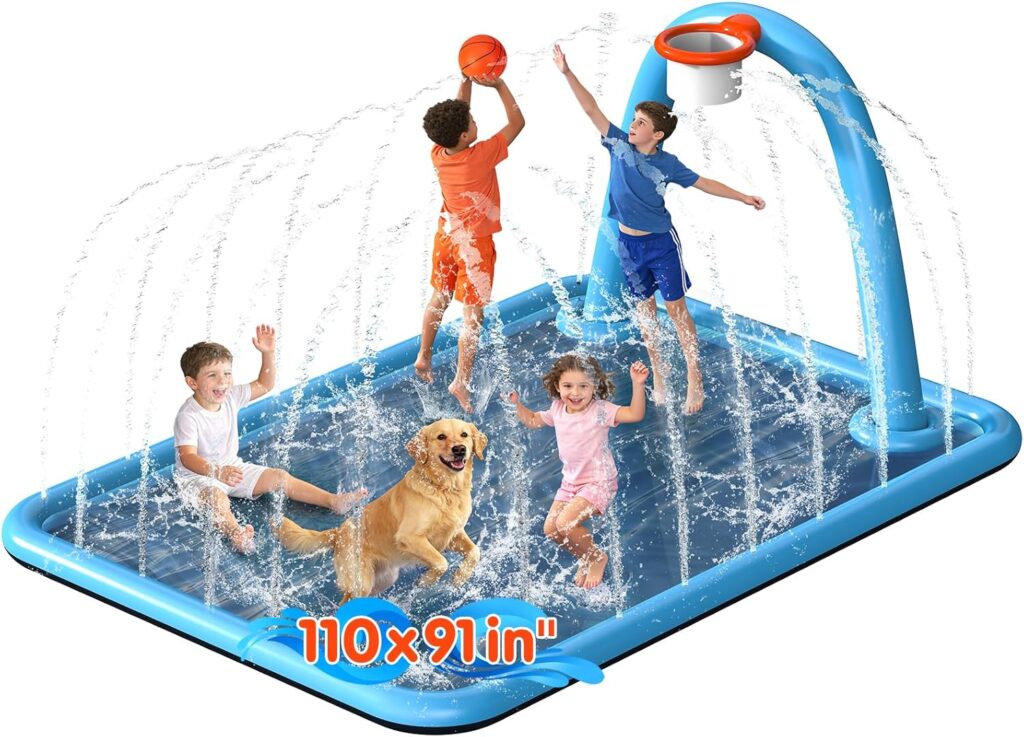
Inflatable Basketball & Water Game Structures
Typical structure
- Multi-chamber upright frames
- Integrated water channels
Engineering focus
- Upright stability
- Joint and corner reinforcement
- Hose and spray control

Inflatable Sprinkler Arches & Tunnels
Typical structure
- Tall curved air chambers
- Distributed spray outlets
Engineering focus
- Bending resistance
- Base anchoring stability
- Uniform spray performance

Inflatable Floating Cushions & Pool Pillows
Typical structure
- Low-pressure comfort chambers
- Soft-contact surfaces
Engineering focus
- Pressure balance for comfort
- Seam smoothness
- Shape retention during prolonged floating

Inflatable Loungers & Relaxation Products
Typical structure
- Ergonomic air chamber layouts
- Reclined or contoured profiles
Engineering focus
- Body weight distribution
- Anti-bulging weld geometry
- Long-duration air retention

Inflatable Play Pillars & Freestanding Toys
Typical structure
- Vertical cylindrical or shaped chambers
- Weighted lower zones
Engineering focus
- Upright recovery after impact
- Base stability
- Structural fatigue resistance

Inflatable Auxiliary Pool Accessories
Typical products
- Inflatable pool pillows
- Inflatable pool edge supports
- Inflatable water cushions
Engineering focus
- Compatibility with existing pools
- Compact weld geometry
- Leak resistance in small-volume products

OEM / ODM Custom Inflatable Structures
Typical projects
- Brand-specific shapes
- Promotional inflatable toys
- Multi-function inflatable systems
Engineering focus
- Adapting proven structural platforms
- Market-specific compliance
- Scalability and quality repeatability
How These Categories Are Engineered as a System
Although these inflatable products differ in shape and application, they are built on shared foundations:
- Controlled PVC and composite material systems
- High-frequency welding parameters validated at scale
- Structural design logic based on stress distribution
- Unified quality and compliance requirements
This system-level approach allows EPN to maintain stable quality while supporting a wide range of inflatable product categories.
How does EPN turn inflatable toy concepts into stable, mass-producible products?
By treating inflatable toys as engineered systems rather than seasonal consumer goods.
At EPN, reliability is not achieved by adding thickness or copying popular designs. It is achieved through a structured development process that connects material behavior, structural logic, welding feasibility, real-world usage, and production consistency into one continuous workflow.
Step 1
Start From Usage Conditions, Not Appearance
Every inflatable toy project at EPN begins with usage clarification, not with drawings.
Instead of asking “What should it look like?”, EPN engineers first confirm:
- Who will use it (children, pets, adults)
- How it will be used (jumping, sitting, scratching, water load)
- Where it will be used (indoor, backyard, outdoor, seasonal)
- How often it will be inflated, folded, and stored
Why this matters
Most inflatable toy failures are not caused by design intent, but by incorrect assumptions about real behavior. Clarifying usage early prevents structural and material mismatches later.
Step 2
Material Formulation Is Matched to Function
Once usage conditions are defined, EPN selects or adjusts PVC or composite material formulations accordingly.
Key considerations include:
- Required flexibility vs. tear resistance
- UV exposure level and aging expectations
- Contact safety for children or pets
- Welding compatibility and consistency
Rather than using a single “standard PVC” across products, EPN adjusts formulations to suit specific stress profiles—for example, claw contact in pet pools or long sun exposure in backyard inflatables.
Result:
Materials support the structure instead of limiting it.
Step 3
Structural Design Focused on Stress Distribution
Inflatable toys are designed as pressurized structures, not hollow shapes.
EPN engineers focus on:
- Internal chamber layout
- Load-bearing zones (edges, corners, entry points)
- Reinforcement around valves and high-contact areas
- Stability when partially filled with water or unevenly loaded
Rather than relying on extra thickness alone, EPN redistributes stress through structure. This reduces deformation and seam fatigue without sacrificing foldability or user comfort.
Step 4
Welding Feasibility Is Evaluated Early
High-frequency welding is not treated as a downstream operation.
During design, EPN evaluates:
- Weld line length and continuity
- Overlap width and seam geometry
- Material dielectric behavior under HF welding
- Repeatability across long production runs
Designs that look good but create unstable weld conditions are adjusted before sampling, not after mass production problems appear.
Step 5
Prototype Testing Beyond “Does It Hold Air?”
EPN prototypes are not approved based on appearance or short-term inflation alone.
Each prototype typically undergoes:
- Air retention testing over time
- Pressure resistance checks
- Stress testing at edges and corners
- UV exposure simulation for outdoor products
- Folding and storage simulation
Testing is used to identify early failure signals, not just pass/fail results.
Step 6
Failure Analysis and Design Adjustment
When issues appear, EPN does not apply cosmetic fixes.
Instead, engineers trace failures back to:
- Material behavior
- Structural concentration points
- Welding parameter sensitivity
- User interaction patterns
Designs are adjusted at the root level—material, structure, or weld geometry—before moving forward.
This feedback loop is one reason EPN accumulates stable designs and reusable engineering logic over time.
Step 7
Production Readiness and Scalability Review
Before mass production, EPN evaluates whether a design can remain stable at scale.
This includes:
- Welding consistency across multiple machines
- Material batch consistency
- Mold repeatability
- Inspection feasibility during high-volume runs
A design that only works in small batches is revised until it can be produced reliably at volume.
How do materials and thickness determine inflatable toy performance in real-world use?
In inflatable toys, performance is not determined by material name alone. It is defined by the interaction between material formulation, thickness selection, structural design, and welding feasibility under real usage conditions.
At scale, small material or thickness decisions compound quickly into durability differences, failure rates, and return risk.
1. PVC Is Not a Single Material — Formulation Defines Behavior
Many inflatable toys are simply described as “PVC products,” but this description hides major performance differences.
At EPN, PVC is treated as an engineered material system, not a commodity sheet.
Key formulation variables include:
- Plasticizer type and ratio (affects flexibility and aging)
- UV stabilizer content (affects outdoor lifespan)
- Tear resistance vs. softness balance
- Dielectric behavior under high-frequency welding
- Odor control for children and pet contact
Two PVC sheets with the same thickness can behave very differently after:
- Repeated inflation and folding
- Prolonged sunlight exposure
- Cold or heat cycling during storage and transport
EPN reference data:
EPN’s material lab evaluates PVC behavior across 500+ material and product tests per year, including aging simulation, air retention, UV exposure, and weld stability checks. Only formulations that remain stable after repeated stress cycles are approved for mass production.


2. Thickness Must Be Matched to Load, Use Pattern, and Structure
Thickness improves durability, but only when selected in context.
Excessive thickness can reduce foldability, stress weld zones, and increase defect risk during production. Insufficient thickness leads to early deformation, tearing, or micro-leaks.
Typical Thickness Ranges Used by EPN
| Material Type | Typical Thickness | Engineering Characteristics | Common Applications |
|---|---|---|---|
| Standard PVC | 0.28–0.35 mm | Lightweight, flexible, limited abrasion resistance | Indoor toys, low-stress water mats |
| Reinforced PVC | 0.40–0.55 mm | Improved tear resistance and shape stability | Splash pads, backyard pools, pet products |
| Composite PVC | ≥ 0.55 mm | Enhanced UV resistance, longer fatigue life | Outdoor inflatables, sports toys |
| Fabric-Wrapped PVC | Variable (inner bladder + fabric) | Abrasion protection, impact absorption | Snow tubes, high-impact or rental use |
Engineering note:
For many outdoor and pet products, EPN achieves better durability by reinforcing stress zones structurally, rather than increasing thickness uniformly across the entire product.
3. Thickness Alone Does Not Prevent Failure — Structure Does
Inflatable toys are pressurized structures, not hollow shapes.
Common failure points are rarely located at the thinnest area overall. Instead, failures concentrate at:
- Edges where users sit or lean
- Corners and shape transitions
- Valve bases
- Weld intersections
- Entry points for pets or children
EPN engineers focus on:
- Internal air chamber distribution
- Load-bearing edge geometry
- Localized reinforcement near high-contact zones
This allows products to maintain stability without excessive material weight or stiffness.
Practical result:
Better shape retention, lower seam fatigue, and fewer deformation complaints after prolonged use.


4. Welding Feasibility Sets the Upper Limit of Material Performance
High-frequency (HF) welding performance directly limits how thick and how stiff materials can be used reliably.
Key welding constraints include:
- Material dielectric response
- Weld overlap width
- Heat penetration consistency
- Pressure distribution along long seams
At EPN, welding parameters are engineered, recorded, and validated, not adjusted visually.
Across an annual output of 12+ million inflatable products, designs that cannot maintain stable weld quality at volume are revised before approval—regardless of how well they perform at sample level.
5. Engineering Trade-Offs: Durability vs. Manufacturability
Every inflatable toy design involves controlled trade-offs:
- Thicker material increases durability but stresses welds
- Softer material improves comfort but reduces puncture resistance
- Reinforcement improves lifespan but affects folding and packaging
EPN’s role is not to maximize any single parameter, but to optimize the system based on:
- Target user (child, pet, adult)
- Usage environment (indoor, outdoor, seasonal)
- Expected lifespan and price positioning
- Compliance requirements (EN71, CPSIA, REACH, ASTM)
This system-level approach is why many EPN designs remain stable across multiple seasons and large production volumes.

Engineering Parameters Used During Development
| Parameter Category | Typical Engineering Focus |
|---|---|
| Material Stability | Aging resistance, UV tolerance, odor control |
| Thickness Strategy | Local reinforcement vs. global thickness |
| Structural Layout | Chamber balance, edge load distribution |
| Welding Control | Weld width, overlap geometry, parameter repeatability |
| Testing Metrics | Air retention over time, deformation under load |
| Production Scalability | Consistency across machines and batches |
These parameters are reviewed during sampling, testing, and pre-production validation, not after shipment.
How should inflatable toys be engineered for different real-use scenarios?
Inflatable toys that perform well in one environment often fail in another if material formulation, thickness, structure, and reinforcement are not adjusted to the actual usage pattern.
At EPN, inflatable products are developed from use scenario backward, not from appearance forward.

1. Family & Backyard Inflatable Toys
Typical use conditions
- Repeated inflation and deflation over weeks or months
- Direct sunlight exposure during summer
- Uneven ground (grass, concrete, tiles, decking)
- Children sitting, leaning, jumping, and pulling edges
Common failure risks if poorly designed
- Edge collapse when weight is applied
- Gradual shape deformation after water filling
- Early seam fatigue from uneven internal pressure
- Accelerated aging due to UV exposure
Engineering focus areas
- Edge zones must function as load-bearing structures, not decorative rims
- Internal chambers must distribute pressure evenly when partially filled
- PVC formulation must remain flexible under heat cycling
- Wall thickness must balance durability with foldability for storage
EPN engineering approach
For backyard products, EPN typically applies reinforced PVC in the 0.40–0.55 mm range, combined with localized edge thickening rather than uniform material increase.
Internal chamber layouts are adjusted to reduce pressure concentration when children lean on edges or when water weight shifts. Products are tested through multiple inflation–deflation cycles to confirm seam stability after repeated household use.

2. Children’s Water Toys & Splash Products
Typical use conditions
- Constant water exposure
- High skin contact frequency
- Stepping, slipping, crawling, and climbing
- Variable water pressure from household hoses
Common failure risks if poorly designed
- Slippery surfaces causing instability
- Spray holes tearing or deforming
- Seam discomfort at skin contact zones
- Odor or residue complaints
Engineering focus areas
- Non-toxic, low-odor material formulation
- Slip-resistant surface texturing
- Smooth seam transitions at contact points
- Controlled spray-hole density to avoid stress concentration
EPN engineering approach
EPN designs splash products with child-contact safety as a structural requirement, not just a material claim.
Surface textures are engineered to reduce slipping without becoming abrasive. Spray-hole layouts are tested under fluctuating water pressure to prevent localized tearing. All designs are evaluated against EN71, CPSIA, and ASTM usage logic before entering production.

3. Pet Inflatable Toys & Pools
Typical use conditions
- Concentrated pressure from claws
- Scratching, biting, and jumping
- Repeated entry and exit at the same edge zone
- Frequent drainage and cleaning
Common failure risks if poorly designed
- Punctures near inner walls
- Tearing at entry edges
- Slipping during movement
- Rapid deformation after partial water loss
Engineering focus areas
- Higher tear resistance rather than softness alone
- Reinforced entry and exit zones
- Anti-slip inner surfaces
- Stable structure even when water level changes
EPN engineering approach
Pet products are engineered with localized reinforcement, not blanket thickness increases.
EPN increases tear resistance specifically at claw-contact zones, thickens entry-side walls, and reinforces internal structure to prevent collapse when pets step on edges. Designs are informed by pet behavior patterns, not idealized usage assumptions.

4. Outdoor & Seasonal Inflatable Products
Typical use conditions
- Prolonged UV exposure
- Temperature cycling between day and night
- Rough ground contact
- Higher abrasion and impact
Common failure risks if poorly designed
- Surface hardening or stickiness
- Color fading and material brittleness
- Abrasion wear-through at base zones
- Air retention loss after storage
Engineering focus areas
- UV-stabilized material formulation
- Abrasion-resistant contact surfaces
- Stable air retention across temperature changes
- Structural reinforcement at ground-contact zones
EPN engineering approach
For outdoor products, EPN adjusts material formulation first, then structure.
UV stabilizers and aging resistance are built into the PVC system, not added as an afterthought. Base panels and high-contact zones receive additional reinforcement to reduce abrasion-related failures during seasonal use.

5. Snow Tubes & Cold-Environment Inflatable Products
Typical use conditions
- Low-temperature exposure
- Repeated high-impact landings
- Sliding abrasion on snow or artificial surfaces
- Towing and handle stress
Common failure risks if poorly designed
- Cold cracking at folds and seams
- Abrasion damage on tube bottoms
- Handle tearing under load
- Sudden air loss during use
Engineering focus areas
- Cold-resistant material flexibility
- Reinforced seam geometry
- Abrasion protection at base
- Handle and tow-point reinforcement
EPN engineering approach
EPN snow tubes often adopt fabric-wrapped PVC structures to protect the inflatable core from abrasion and impact.
PVC formulations are selected for low-temperature flexibility, while weld zones around handles and seams are reinforced structurally. Designs are tested for cold performance and repeated impact, not just static inflation.

6. Promotional, Event & Short-Term Inflatable Products
Typical use conditions
- Short usage window
- High visibility and branding focus
- Tight development timelines
- One-season or event-based deployment
Common failure risks if poorly designed
- Late-stage production instability
- Compliance issues discovered after sampling
- Inconsistent quality under rushed timelines
Engineering focus areas
- Use of pre-validated materials and structures
- Controlled design scope to reduce risk
- Focused testing on known failure points
EPN engineering approach
For fast-turn ODM or promotional projects, EPN prioritizes engineering certainty over novelty.
Designs are based on proven structural platforms, with visual customization applied within known-safe parameters. This approach allows shipment in compressed timelines while maintaining acceptable durability and compliance.
Why can EPN speak with authority on inflatable toy manufacturing?
Because inflatable toys are not a side business at EPN — they are the core manufacturing system the company has built, tested, and scaled for years across global markets.
EPN’s credibility does not come from claims. It comes from repeatable engineering outcomes under real production volume.

Inflatable Products Are EPN’s Primary Manufacturing Focus
EPN (American Epsilon Inc.) is structured around PVC and composite inflatable products, not mixed-category consumer goods.
This matters because inflatable products require a different engineering mindset from rigid plastics or textile items:
- Airtight structural behavior
- High-frequency welding dependency
- Material aging under pressure and folding
- Load distribution through air chambers
At EPN, materials, welding, structure, testing, and quality control are all optimized specifically for inflatable systems, not adapted from other product lines.
This specialization is why EPN is able to diagnose and prevent failure modes that general manufacturers often overlook.

Engineering Team Built Around Real Failure Scenarios
EPN’s R&D team is not organized by job titles alone, but by problem domains.
The team includes 27 full-time engineers and specialists, covering:
- Polymer material formulation and stability
- Structural and mold engineering
- High-frequency welding behavior
- Child safety and interaction patterns
- Pet behavior and claw-stress modeling
- Sports and ergonomic load analysis
This multidisciplinary structure exists for one reason:
most inflatable failures are caused by interaction between factors, not by a single mistake.
For example:
- A seam that looks acceptable may fail because material density varies slightly
- A pool that holds air may deform because internal chambers concentrate load
- A pet product may puncture because claw stress was underestimated, not because PVC was “too thin”
EPN’s engineering decisions are based on documented failure cases, not assumptions.

In-House Testing Is Used for Design Decisions, Not Marketing
EPN operates an independent testing laboratory as part of daily development work.
Each year, the team conducts 500+ material and product tests, including:
- Long-term air retention testing
- Seam strength and weld fatigue testing
- Pressure and load-bearing simulations
- UV aging and heat exposure testing
- Folding and storage stress evaluation
Testing is not limited to pass/fail certification.
It is used to answer questions such as:
- Where does deformation start after repeated use?
- Which weld zones show early fatigue under pressure cycling?
- How does a material behave after months of folding and storage?
Designs that pass visual inspection but fail early-stage testing do not move forward, even if they look acceptable.
This testing-driven approach is one reason EPN accumulates stable, reusable engineering platforms instead of reinventing designs every season.

Production Scale Forces Engineering Discipline
EPN’s annual output exceeds 12 million inflatable products, supplied to:
- Global retail brands
- Major e-commerce platforms
- Seasonal and long-term product programs
At this scale, engineering shortcuts are exposed quickly.
A design that works for 500 samples but fails at 50,000 units is not considered viable.
Before mass production, EPN evaluates:
- Welding parameter stability across multiple machines
- Material consistency across batches
- Inspection feasibility under high throughput
- Failure probability over seasonal storage and use
Only designs that remain stable under repeat production and inspection cycles are approved.
This scale-driven filtering process is a major reason EPN’s designs tend to become long-term SKUs, not one-off launches.

Experience Across Regulated Global Markets
EPN manufactures inflatable toys for markets with strict and different regulatory expectations, including:
- Europe: EN71, REACH
- United States: CPSIA, ASTM
- Japan: chemical, odor, and labeling requirements
- Global retail: packaging, warning, and traceability standards
Instead of treating compliance as a final test step, EPN integrates regulatory constraints into:
- Material formulation
- Ink and printing selection
- Structural edge and valve design
- Packaging layout and instruction clarity
This reduces late-stage redesign, shipment delays, and retailer rejection.
More importantly, it ensures that engineering decisions do not conflict with compliance requirements, which is a common failure point for less experienced manufacturers.

Market Feedback Is Used as Engineering Input
Because EPN supplies products across multiple regions and platforms, the team receives continuous feedback on:
- Leakage complaints
- Deformation issues
- Storage-related failures
- Sensory concerns (odor, surface feel)
- Misuse patterns by children or pets
Instead of treating this as customer service noise, EPN feeds this data back into:
- Material adjustment
- Structural reinforcement logic
- Weld geometry refinement
- Usage instruction improvements
Over time, this creates a compounding advantage:
each generation of products is informed by what actually failed before.
OEM / ODM Inflatable Toy Development Process
A structured engineering-driven process designed to reduce late-stage failure, rework, and unrealistic expectations.
At EPN, OEM / ODM development is not treated as a sales workflow. It is treated as a manufacturing risk-control process that links usage assumptions, material behavior, structural feasibility, and production stability into one sequence.
OEM vs ODM at EPN
Before describing the steps, it is important to clarify how EPN distinguishes OEM and ODM projects:
| Project Type | What the Client Provides | EPN’s Role | Typical Risk Point |
|---|---|---|---|
| OEM | Existing design or reference | Engineering validation, material & structure optimization | Hidden structural or welding flaws |
| ODM | Concept, idea, or market need | Full product design from usage logic | Unrealistic expectations or overdesign |
Both follow the same engineering logic, but ODM projects involve deeper structural and material decision-making earlier.

Step 1 — Requirement Clarification
Every project starts by defining how the product will actually be used, not how it should look.
EPN typically confirms:
- Target market (US, EU, JP, global)
- Intended users (children, pets, adults)
- Usage environment (indoor, backyard, outdoor, seasonal)
- Interaction behavior (jumping, scratching, water load, impact)
- Expected lifespan and quality positioning
- Required compliance standards (EN71, CPSIA, REACH, ASTM, etc.)
Why this step matters
Over 60% of inflatable product failures traced by EPN originate from incorrect early assumptions about usage, not from production mistakes.
Clarifying usage early prevents:
- Wrong material selection
- Under-reinforced load zones
- Late compliance redesign
This step usually takes 1–2 working days, but saves weeks later.

Step 2 — Engineering Proposal & Material Strategy
Based on confirmed usage, EPN engineers prepare a technical proposal, not a quotation sheet.
This proposal typically includes:
- Recommended PVC or composite formulation type
- Target thickness range (not a single number)
- Structural reinforcement logic (edges, chambers, stress zones)
- Welding feasibility considerations
- Estimated durability range under typical use
Example of internal engineering guidance:
| Application Type | Typical Thickness Range | Structural Focus |
|---|---|---|
| Children’s water toys | 0.30–0.40 mm | Soft contact, smooth seams |
| Pet pools | 0.40–0.55 mm | Tear resistance, edge reinforcement |
| Outdoor inflatables | 0.45–0.60 mm | UV aging, pressure stability |
| Snow tubes | 0.50 mm+ | Cold flexibility, abrasion zones |
Key principle:
Thickness is selected together with structure and welding behavior, not independently.

Step 3 — Rapid Prototyping With Feasibility Checks
Once engineering parameters are aligned, EPN proceeds to sampling.
- Typical sample lead time: 3–5 days
- ODM projects may require 1–2 iterations
- OEM projects often need structural correction, even if visuals stay unchanged
During sampling, EPN checks:
- Weld line continuity and overlap width
- Chamber inflation balance
- Edge deformation under load
- Valve integration stability
- Folding behavior after deflation
Designs that create unstable welding conditions or stress concentration are adjusted immediately, not after customer complaints.

Step 4 — Prototype Testing Beyond Visual Approval
Samples are not approved based on appearance or short-term inflation.
Typical prototype testing includes:
- Air retention testing over time
- Pressure resistance simulation
- Edge and corner stress testing
- UV exposure simulation (for outdoor products)
- Folding and storage stress simulation
Internal data shows that early-stage testing catches ~70% of failure risks that would otherwise appear during mass production or market use.
Only prototypes that pass functional stability criteria move forward.

Step 5 — Engineering Adjustment & Failure Analysis
When issues appear, EPN does not apply cosmetic fixes.
Engineers analyze:
- Whether failure originates from material behavior
- Whether stress is concentrated by structure
- Whether welding parameters are too sensitive
- Whether user behavior exceeds design assumptions
Adjustments are made at the root level:
- Material formulation
- Chamber layout
- Reinforcement geometry
- Weld line design
This step is critical for ODM projects and typically skipped by less experienced factories.

Step 6 — Production Readiness & Scalability Review
Before mass production, EPN evaluates whether the design is stable at scale, not just in samples.
This includes:
- Welding repeatability across multiple machines
- Material batch consistency
- Mold and cutting tolerance
- Inspection efficiency during high-volume runs
Designs that only work under “ideal conditions” are revised.
This step is one reason EPN maintains stable quality across millions of units, not just first batches.

Step 7 — Mass Production, QC & Batch-Level Verification
Typical mass production timeline:
- Standard orders: ~20 days
- Urgent seasonal projects: as fast as 14 days
Each production batch undergoes:
- Air leakage inspection
- Seam integrity checks
- Pressure testing
- Visual and structural spot checks
Products that show early deformation or instability are stopped before packaging, not after shipment.
Why This Process Reduces Long-Term Risk
Most inflatable toy problems do not come from “bad factories,” but from:
- Rushed assumptions
- Visual-driven approvals
- Ignoring scale effects
EPN’s OEM / ODM process is designed to slow down the right decisions early, so production and market performance can move faster later.
Why quality control is the real risk point in inflatable toy manufacturing
Most inflatable toy quality problems do not come from design drawings, but from inconsistent materials, unstable welding, and insufficient batch-level inspection.
Inflatable products are sealed systems. Once they leave the factory, any hidden defect becomes a visible failure. This is why EPN treats quality control as part of production engineering—not as a final checklist.

Material-Level Quality Control
Inflatable toy performance starts with material stability.
At EPN, PVC and composite materials are:
- Internally formulated rather than purchased as generic sheets
- Checked for plasticizer stability, odor control, and aging resistance
- Verified for consistency across batches before entering production
This reduces common problems such as:
- Sudden stiffness after sun exposure
- Surface cracking after folding
- Inconsistent welding strength caused by unstable material density

Welding & Structural Inspection
High-frequency welding is one of the most sensitive steps in inflatable toy production.
EPN controls:
- Welding temperature range
- Pressure consistency
- Weld width and overlap zones
Each production batch includes:
- Seam strength checks
- Air retention testing
- Visual inspection of stress points such as corners and edges
Products that show early-stage deformation or pressure loss are stopped before packaging, not after shipment.

Finished Product Testing
Every batch undergoes functional inspection based on product type:
- Air retention tests to detect slow leaks
- Pressure tests to simulate over-inflation scenarios
- Durability checks based on repeated use conditions
- Water exposure tests for splash pads and pools
This approach reflects how products are actually used, not ideal lab conditions.

International Safety & Compliance Standards
EPN manufactures inflatable toys for markets with strict regulatory requirements. Designs and materials are selected from the beginning to meet target market standards.
| Market | Key Standards Covered |
|---|---|
| Europe | EN71, REACH |
| United States | CPSIA, ASTM |
| Japan | Relevant chemical & safety requirements |
| Global Retail | GHS labeling & packaging compliance |
Compliance is addressed during material selection and design, not treated as an afterthought before shipment.

Packaging & Labeling Control
Packaging is not treated as decoration. It is part of compliance.
EPN supports:
- Multi-language instructions
- Clear safety warnings and age labeling
- Retail-ready packaging adapted to EU, US, and Japanese markets
Each year, hundreds of packaging variations are reviewed and tested to ensure products can pass retailer audits without delay.
Real-World Inflatable Toy Projects by EPN
Case 1
Backyard Splash Pad Redesign for North American Market
Product Type: Children’s splash pad
Market: United States
Annual Volume: 600,000+ units
Initial Problem
The original design used standard PVC and single-ring spray channels. After one summer season, customer complaints increased due to edge deformation and uneven water spray when pressure fluctuated.
EPN Engineering Action
- Adjusted PVC formulation to improve flexibility under heat
- Reinforced outer ring structure to stabilize water pressure
- Rebalanced spray hole distribution to reduce localized stress
Result
- Edge deformation rate reduced by over 70%
- Stable spray performance across varying water pressure
- Product maintained shape after repeated seasonal use
Case 2
Pet Inflatable Pool Optimized for Claw Resistance
Product Type: Pet inflatable pool
Market: Europe
Annual Volume: 420,000 units
Initial Problem
Early versions suffered from punctures near inner walls caused by repeated claw contact, especially during entry and exit.
EPN Engineering Action
- Increased tear resistance in high-contact zones
- Thickened edge and entry-side wall selectively (not overall)
- Added anti-slip inner texture to reduce sudden movements
Result
- Puncture-related complaints reduced by approximately 65%
- Improved user confidence for medium and large dogs
- Product adopted as a long-term SKU by the brand
Case 3
Snow Tube with Fabric-Wrapped Reinforcement
Product Type: Fabric-covered snow tube
Market: Northern Europe & North America
Annual Volume: 300,000+ units
Initial Problem
Standard PVC snow tubes experienced surface abrasion and cold-induced stiffness during repeated winter use.
EPN Engineering Action
- Introduced fabric-wrapped outer layer for abrasion protection
- Optimized PVC formulation for cold-temperature flexibility
- Reinforced weld zones around handles and seams
Result
- Product maintained flexibility at low temperatures
- Abrasion damage significantly reduced during seasonal use
- Extended average product lifespan across multiple winters
Case 4
Children’s Water Toy Adapted for Japanese Market
Product Type: Small children’s inflatable water toy
Market: Japan
Annual Volume: 280,000 units
Initial Problem
Japanese retailers required stricter odor control, refined appearance, and precise packaging compliance.
EPN Engineering Action
- Adjusted material formulation to reduce residual odor
- Refined weld transitions for smoother touch points
- Customized packaging layout and labeling to local standards
Result
- Passed retailer audits without rework
- Reduced product returns related to sensory complaints
- Stable repeat orders across multiple seasons
Case 5
Multi-Product OEM Line for Global E-Commerce Platform
Product Type: Mixed inflatable toy assortment
Market: Global (US, EU, Japan)
Annual Volume: 1,000,000+ units combined
Initial Problem
The client experienced inconsistent quality across SKUs when sourcing from multiple factories.
EPN Engineering Action
- Standardized material formulations across product families
- Unified welding parameter controls
- Implemented batch-level inspection protocols
Result
- Quality variance significantly reduced across SKUs
- Faster onboarding of new product designs
- Improved platform ratings and reduced return rates
Case 6
Rapid ODM Development for Seasonal Promotion
Product Type: Promotional inflatable toy
Market: Europe
Development Timeline: 14 days to shipment
Initial Problem
The client needed a fast seasonal product but faced high risk of late-stage failure due to compressed timelines.
EPN Engineering Action
- Selected pre-validated material and structure combinations
- Limited design changes to proven parameters
- Focused testing on key failure points rather than full redesign
Result
- Product shipped within 14 days
- No post-launch structural complaints
- Client expanded cooperation into additional product categories
FAQ: Common Questions About Custom inflatable toys
Q1. What materials are commonly used in inflatable toys?
Most inflatable toys are made from PVC or PVC-based composite materials. The actual performance depends on formulation, thickness, and stabilizers rather than the name alone. Higher-quality inflatable toys use reinforced or composite PVC to improve durability, UV resistance, and safety, especially for outdoor, children’s, and pet applications.
Q2. How thick should PVC be for a durable inflatable toy?
Leaks often come from micro-cracks in weld zones caused by unstable welding parameters or inconsistent materials. These leaks may not appear immediately but develop after repeated inflation, folding, or temperature changes. Proper welding control and material stability are critical to prevent this.
Q3. Why do inflatable toys leak even when seams look intact?
Service life depends heavily on slope design, daily usage, storage, and maintenance. For well-designed heavy-duty or fabric-covered tubes, many parks see 2–4 seasons of use, and some extend that further with proper inflation, inspection, and off-season storage. Cheap, generic tubes may fail within one season due to cracking, seam bursts, or handle failure.
Q4. Are inflatable toys safe for children and pets?
Inflatable toys can be safe when designed and tested correctly. Safety depends on non-toxic materials, smooth weld transitions, rounded edges, and compliance with standards such as EN71 and CPSIA. Products intended for pets also require higher tear and puncture resistance.
Q5. How long do inflatable toys typically last?
Lifespan depends on material quality, structure, and usage conditions. Indoor toys may last several seasons, while outdoor or pet products experience higher stress. Properly engineered inflatable toys can maintain performance across repeated seasonal use when stored and used correctly.
Q6. Can inflatable toys be customized for different markets?
Yes. Inflatable toys can be customized in size, color, structure, surface texture, packaging, and compliance labeling. Customization should consider target market regulations, climate conditions, and user behavior to avoid redesign later.
Q7. What is the typical lead time for custom inflatable toys?
Sample development is often completed within a few days once specifications are confirmed. Mass production timelines usually range around several weeks, depending on order volume, product complexity, and packaging requirements. Early technical alignment helps shorten delivery time.
Q8. Why do some inflatable toys deform after being filled with water or air?
Deformation usually results from uneven internal chamber design or insufficient edge reinforcement. When pressure concentrates in weak zones, the structure loses shape. Proper chamber layout and reinforcement prevent this issue.
Q9. How are inflatable toys tested before shipment?
Testing typically includes air retention, pressure resistance, durability simulation, and visual inspection. For water-based products, water exposure and drainage behavior are also checked. Batch-level testing helps ensure consistency across large orders.
Q10. What should buyers look for when choosing an inflatable toy manufacturer?
Buyers should focus on material control, welding consistency, testing capability, and experience with target markets. A manufacturer that understands failure modes and compliance requirements reduces long-term risk and post-sale issues.

Inflatable Toy Manufacturer Selection Checklist
Do not start with price. Start with failure risk.
Inflatable toys are sealed, pressurized structures. Once they enter the market, any hidden defect becomes a visible problem—leaks, deformation, returns, compliance disputes, or platform penalties. This checklist is designed to help brands, retailers, and product teams identify whether a manufacturer truly understands inflatable toy engineering, or is simply assembling products.
Inflatable Toy Manufacturer Evaluation Checklist (Engineering-Oriented)
| Evaluation Area | What to Verify | Why It Matters in Real Use |
|---|---|---|
| Material Control | Does the factory formulate or strictly control PVC materials internally? | Unstable material formulation is the #1 root cause of micro-leaks, aging, and seam failure |
| Thickness Logic | Can they explain why a specific thickness is recommended for your use case? | Thickness without structural logic leads to deformation and wasted cost |
| Structural Design | Do they discuss chamber layout, edge reinforcement, and load zones? | Poor structure causes collapse even with thick material |
| Welding Capability | Are HF welding parameters controlled and documented at scale? | Inconsistent welding creates invisible micro-cracks |
| Testing Depth | Are products tested beyond short-term inflation and appearance? | Visual approval does not predict seasonal durability |
| Usage Understanding | Can they describe how children or pets actually use the product? | Real behavior causes real failures |
| Compliance Integration | Is compliance considered during design, not after sampling? | Late compliance fixes delay shipments and increase cost |
| Production Scalability | Have they produced similar items at real volume? | Sample success ≠ mass production stability |
| Batch Consistency | Do they perform batch-level inspection during mass production? | Many failures occur after the first good batch |
| Failure Feedback Loop | Do they analyze past failures and update designs? | Experience compounds only if lessons are applied |
How EPN Meets These Criteria in Practice
Below is how EPN / American Epsilon Inc. aligns with this checklist at an operational level—not as claims, but as standard practice.

Material Control Is Internal, Not Assumed
EPN does not rely solely on off-the-shelf PVC sheets.
- PVC and composite materials are internally formulated or tightly specified
- Material batches are checked for:
- Plasticizer stability
- Odor control
- Aging behavior
- Welding consistency
- Materials are validated before entering production, not after complaints
Why this matters:
Internal data shows that material instability accounts for over 40% of long-term leakage issues in inflatable toys across the industry.

Thickness Is Selected Together With Structure
At EPN, thickness is never quoted alone.
Instead, recommendations are based on:
- Usage intensity (children vs pets vs outdoor sports)
- Load concentration zones (edges, entry points, valves)
- Folding and storage frequency
- Welding feasibility at scale
Typical thickness ranges used by EPN:
| Product Type | Common Thickness Range |
|---|---|
| Indoor children’s toys | 0.28–0.35 mm |
| Splash pads / backyard toys | 0.40–0.45 mm |
| Pet inflatable pools | 0.45–0.55 mm |
| Outdoor / sports inflatables | 0.50 mm+ |

Structural Design Is Discussed Explicitly
EPN engineers evaluate:
- Internal chamber distribution
- Edge and corner reinforcement
- Stress concentration near valves and handles
- Stability when partially filled or unevenly loaded
This prevents common issues such as:
- Edge collapse
- Pool wall deformation
- Shape loss after repeated use
Many low-cost failures originate from structural oversimplification, not material shortage.

Welding Is Treated as an Engineering Process
High-frequency welding is one of the most sensitive steps in inflatable toy manufacturing.
At EPN:
- Welding temperature, pressure, and dwell time are parameter-controlled
- Weld width and overlap geometry are standardized
- Seam performance is validated through stress and air retention testing
Across EPN’s facilities, millions of units per year are produced using controlled HF welding processes, not manual judgment.

Testing Goes Beyond “Does It Hold Air?”
EPN conducts over 500 material and product tests annually, including:
- Air retention testing over time
- Pressure resistance simulation
- UV aging tests for outdoor products
- Folding and storage stress simulation
- Edge and seam fatigue checks
Testing focuses on early failure signals, not just pass/fail appearance.

Real Usage Is Assumed, Not Idealized
Design decisions at EPN are informed by:
- Child behavior (jumping, leaning, dragging)
- Pet behavior (scratching, biting, concentrated claw force)
- Outdoor conditions (sunlight, uneven ground, temperature changes)
This is why reinforcement is applied where failures actually occur, not evenly everywhere.

Compliance Is Integrated From the Start
EPN manufactures for markets with strict regulations and does not treat compliance as a final step.
Designs are aligned early with:
| Market | Standards Considered |
|---|---|
| Europe | EN71, REACH |
| United States | CPSIA, ASTM |
| Japan | Local chemical & safety requirements |
| Global retail | GHS labeling & packaging rules |
This reduces late-stage redesign and shipment delays.

Production Scale Is Proven, Not Theoretical
- Annual production capacity: 12 million+ inflatable products
- Products shipped to 40+ countries and regions
- Long-term supply to major e-commerce and retail platforms
Designs that cannot remain stable at volume are revised before mass production approval.

Batch-Level Quality Control Is Mandatory
EPN performs inspection during production, not only at shipment.
Each batch includes:
- Seam integrity checks
- Air leakage sampling
- Structural spot checks at stress zones
Products showing early deformation or pressure loss are stopped before packaging.

Failure Analysis Is Part of Continuous Improvement
When failures occur in the field, EPN:
- Traces issues back to material, structure, or welding logic
- Updates internal design guidelines
- Applies improvements to future production runs
This is how experience accumulates and why repeat clients see lower failure rates over time.
Working with EPN
For Brands, Retailers & Product Teams
If you are planning to:
- Launch a new inflatable toy
- Improve durability or safety of an existing product
- Reduce returns caused by leakage or deformation
- Enter regulated markets such as the EU, US, or Japan
The most effective next step is to share your usage scenario and target market, not just drawings or reference photos.
EPN’s engineering team typically reviews:
- Intended user (children, pets, adults)
- Usage environment (indoor, outdoor, seasonal)
- Expected lifespan and price positioning
- Compliance standards required
From there, material, structure, and production feasibility can be discussed realistically.
For Custom OEM / ODM Projects
EPN supports OEM and ODM inflatable toy development with:
- Material and structure recommendations based on real production data
- Fast prototyping (typically within days after alignment)
- Clear feedback on feasibility and risk points
- Scalable production planning rather than sample-only success
Many long-term partners started with one product, then expanded to multiple SKUs after performance was proven in the market.
What EPN Does Not Promise
To be transparent, EPN does not:
- Promise unrealistic lifespans for ultra-thin materials
- Approve designs that fail safety or compliance logic
- Hide trade-offs behind vague language
Clear communication early usually saves months of correction later.
Contact & Collaboration
If you would like to discuss an inflatable toy project, prepare the following:
- Product type and rough size
- Target market and sales channel
- Usage environment
- Estimated order quantity
This allows EPN to provide useful technical input, not generic quotations.