Skip to content
Kids Sprinkler Manufacturer — Engineering Safer, More Durable Water Sprinklers for Real Summer Play
EPN designs and manufactures kids sprinklers built for real outdoor conditions — stable spray performance, low leak rates, and long-term durability under repeated summer use. Our solutions support brands, retailers, and programs that require consistent quality, safety compliance, and scalable OEM/ODM production.
- Engineered Spray Performance
- Leak-Control & Inlet Reinforcement
- Outdoor-Grade Materials & Durability Strategy
- Stability-Focused Structural Design
- OEM/ODM Manufacturing Built for Scale
Who This Kids Sprinkler Manufacturing Is Designed For
Across retail, e-commerce, and institutional channels, failure rates for low-quality kids sprinklers are driven by the same issues: unstable structures, inlet leakage, uneven spray performance, and material degradation after limited use. Industry feedback shows that a large percentage of returns and negative reviews occur within the first 30–60 days of use, especially during peak summer season.

Backyard Family & Direct-to-Consumer Brands
DTC brands selling kids sprinklers for home use prioritize play safety, ease of setup, and consistent spray performance under standard household water pressure (typically 40–60 PSI).
For this segment, even minor issues—such as slow leaks at the hose connection or uneven spray height—can quickly translate into customer complaints and returns. Internal platform data from major marketplaces shows that water-related product complaints are among the top drivers of 1-star reviews in summer categories.
Brands in this category benefit most from suppliers that can engineer sprinklers for stability on grass, soft-touch materials, and inlet systems designed to withstand frequent hose reconnections.

E-Commerce Sellers (Amazon, Walmart, Shopify, Temu)
Online sellers face immediate and highly visible customer feedback, making product reliability non-negotiable.
Common failure points—leakage, tipping, odor complaints, or shipping deformation—often lead to returns within the first two weeks of delivery. In peak season, even a 2–3% increase in defect rate can significantly impact seller metrics, ad efficiency, and listing visibility.
Buyers in this segment require manufacturers who understand parcel shipping stress, FBA-ready packaging, instruction clarity, and how small engineering improvements can reduce large-scale review risk.

Retail Chains & Seasonal Program Buyers
Retail buyers sourcing kids sprinklers for summer programs focus on spec consistency, predictable quality, and shelf-ready execution.
Unlike e-commerce, retail issues often surface at scale: packaging damage during distribution, barcode or labeling errors, or inconsistent performance across batches. Seasonal retail programs typically operate within 8–12 week selling windows, leaving little room for mid-season corrections.
For this group, working with a manufacturer that can deliver stable specifications, controlled production tolerances, and repeatable quality across large volumes is often more important than achieving the lowest unit cost.

Daycare Centers, Preschools & Educational Institutions
Institutional buyers operate under heightened safety and supervision requirements.
Kids sprinklers in these environments are used repeatedly, often by rotating staff, and across mixed age groups. Products must be easy to deploy, easy to supervise, and resistant to tipping, dragging, and improper handling.
Clear safety labeling, controlled spray height, and robust construction reduce operational risk and maintenance workload. In many institutional settings, product durability directly affects staffing efficiency and liability exposure, not just replacement cost.

Summer Camps & Youth Activity Programs
Camps and organized youth programs use sprinklers daily over extended periods, often on uneven outdoor surfaces.
Products are frequently set up, drained, moved, folded, and reused. This creates repeated stress at fold lines, inlets, and ground-contact zones. Buyers in this category focus on service life, inspection ease, and resistance to wear, rather than decorative features.
Manufacturers that understand real-use fatigue patterns help reduce mid-season failures that disrupt programming and require emergency replacements.

Community Centers & Municipal Outdoor Events
Municipal and community programs often operate with temporary staff and high participant turnover.
Kids sprinklers for public events must be intuitive to use, tolerant of misuse, and clearly labeled. Stability, leak resistance, and simple setup are critical when staff cannot provide close supervision at all times.
In these environments, reliability reduces not only maintenance cost but also crowd management issues and safety incidents, especially during high-attendance summer events.

Resorts, Hotels & Family Entertainment Venues
Hospitality venues use kids sprinklers as part of a broader guest experience strategy.
Buyers in this category expect consistent performance throughout the day, minimal downtime, and visual designs that align with brand aesthetics. Leaks, tipping, or spray failures during peak guest hours directly affect satisfaction scores and online reviews.
These buyers value manufacturers who can balance durability with visual presentation, and who support fast replacement planning for high-traffic installations.

Promotional Campaigns & Corporate Summer Programs
Promotional buyers use kids sprinklers as high-visibility seasonal products, often tied to campaigns, events, or branded giveaways.
While cost control is important, product failure carries a disproportionate reputational risk. Inconsistent spray, leakage, or safety complaints reflect directly on the sponsoring brand.
These projects typically require flexible MOQs, tight timelines, and accurate color reproduction, making reliable sampling and production control more important than cosmetic design alone.

Licensed & IP-Based Merchandise Programs
IP and licensing programs require sprinklers that accurately reproduce characters, logos, and color standards while meeting regulatory and safety expectations.
In this segment, quality consistency across multiple SKUs and production batches is critical. Even small deviations in color, structure, or durability can lead to compliance issues or license disputes.
Manufacturers must understand both engineering constraints and brand governance requirements to support long-term licensing relationships.

Product Managers Planning Next-Season Improvements
This is also designed for product managers who already sell kids sprinklers but face recurring issues such as leaks, tipping, uneven spray, or elevated return rates.
Rather than redesigning products cosmetically, these buyers seek engineering-driven improvements based on real failure data. Common upgrade paths include inlet reinforcement, base stability adjustments, spray system tuning, and material optimization for outdoor durability.
Why Do Many Kids Sprinklers Fail in Real Use?
Based on internal testing data, field feedback, and post-season return analysis handled by EPN, the majority of sprinkler failures occur within the first 4–8 weeks of summer use, often under normal household water pressure and backyard conditions. These failures are rarely caused by a single defect; instead, they result from system-level design shortcuts across structure, spray engineering, inlet sealing, materials, and packaging.
Below are the most common failure modes observed in real-world use, along with why they happen and how professional manufacturers address them.

Unstable Base Design Leading to Frequent Tipping
Tipping is consistently one of the top three customer complaints for kids sprinklers.
Low-cost designs often reduce base width or internal structure to save material, assuming the product will remain stationary. In real use, children run into sprinklers, pull hoses, step on edges, and lean against arches. Without sufficient footprint size, center-of-gravity control, or structural balance, the sprinkler tips repeatedly.
At EPN, internal stability testing simulates lateral push force and hose-pull direction under wet ground conditions. Products that fail these tests typically show 2–3× higher return rates in the first selling season compared to stable designs.

Water Inlet Leakage from Weak Connector Engineering
The hose connection is one of the highest-stress points on any kids sprinkler.
Common failures include:
- thin or brittle inlet materials
- inadequate sealing geometry
- stress concentration where the hose pulls during play
Under repeated connection cycles and constant water pressure (typically 40–60 PSI), poorly engineered inlets loosen, deform, or leak. In many cases, the rest of the sprinkler remains usable, but inlet leakage alone renders the product unacceptable to consumers.
EPN’s internal data shows that inlet-related issues account for over 30% of early failure complaints in low-quality sprinklers sourced from catalog-level suppliers.

Uneven or Unsafe Spray Performance
Spray behavior is often treated as a cosmetic feature rather than an engineered system.
Many low-end sprinklers rely on simple hole punching without controlling:
- hole diameter tolerance
- spacing consistency
- spray angle
- internal water distribution
As a result, some jets spray too high or too forcefully, while other areas receive weak or inconsistent coverage. This leads to discomfort (water hitting faces or ears), reduced play value, and complaints that the product “doesn’t work as expected.”
At EPN, spray systems are tested under multiple pressure ranges and evaluated for spray height variance and coverage uniformity, not just visual appearance.

Thin Materials and Early Material Fatigue
Material fatigue is one of the most underestimated failure causes.
To hit aggressive price targets, some manufacturers use thin PVC or low-grade plastics that initially feel acceptable but degrade quickly under:
- UV exposure
- heat buildup on lawns or concrete
- repeated bending, folding, and water cycling
Over time, these materials stiffen, discolor, crack, or lose elasticity. Stress concentrates at seams, folds, and inlet joints, leading to leaks or tearing after only a few weeks of use.
EPN’s material testing lab performs UV aging, heat exposure, and pressure cycling tests, which frequently reveal failure patterns that are invisible in short-term sampling.

Poor Resistance to Outdoor Environment
Kids sprinklers are outdoor products, yet many are designed like indoor or short-term toys.
Without UV stabilizers or outdoor-appropriate formulations:
- colors fade noticeably within one season
- surfaces become sticky or brittle
- structural integrity degrades
In EPN’s post-season analysis, products lacking UV-optimized materials showed significantly higher deformation and surface degradation, even when no leaks were present.
Environmental resistance directly affects not only lifespan, but also brand perception, as faded or warped products appear “cheap” regardless of initial performance.

Lack of Child-Specific Safety Considerations
Some sprinklers are adapted from generic water toys without sufficient consideration of child behavior.
Common safety-related issues include:
- sharp or rigid edges
- unstable arches
- uncontrolled spray direction
- designs that encourage climbing or pulling
In supervised environments such as camps or daycare centers, these risks translate into higher operational burden and liability concerns. Designs that ignore how children slip, run, fall, or pull significantly increase the chance of minor injuries and complaints.

Inconsistent Quality Between Samples and Mass Production
One of the most damaging failure modes for brands is inconsistency.
Initial samples may perform well, but mass-produced units show higher defect rates due to:
- material batch variation
- relaxed assembly tolerances
- insufficient in-process inspection
EPN tracks batch-level performance across multiple seasons. Inconsistent suppliers often show defect rate swings of 2–5× between batches, which is especially harmful for e-commerce sellers and retail programs operating under short selling windows.

Packaging and Shipping-Related Failures
Even a well-engineered sprinkler can fail commercially due to poor packaging.
Common issues include:
- inlet deformation during transit
- permanent creases from improper folding
- spray components damaged before first use
For parcel-shipped products, packaging must be treated as part of the product system. EPN testing includes carton drop, compression, and internal protection evaluation to reduce “arrived damaged” complaints.

No Feedback Loop for Design Improvement
Many low-quality suppliers treat each order as isolated.
Without collecting user feedback, return data, and failure patterns, the same issues repeat season after season. Professional manufacturers use post-season analysis to refine:
- spray layout
- inlet sealing
- reinforcement zones
- material strategy
At EPN, design updates are often driven by field failure data rather than aesthetic changes, resulting in measurable reductions in complaint rates over successive seasons.
Common Failure Causes vs. Engineering Control
| Failure Area | Typical Low-Quality Approach | EPN Engineering Control |
|---|---|---|
| Base Stability | Narrow footprint, no balance testing | Stability simulation + real-use force testing |
| Water Inlet | Thin connector, basic seal | Reinforced inlet + leak verification |
| Spray System | Random hole punching | Controlled spray layout & pressure testing |
| Materials | Thin, non-UV optimized | Outdoor-grade formulation & aging tests |
| Production Consistency | Visual QC only | Process control + batch inspection |
| Packaging | Generic carton | Channel-specific protective packaging |
Why This Matters for You
Most sprinkler failures are predictable and preventable.
They occur when products are designed to meet a price point instead of real-world usage conditions. For seasonal items like kids sprinklers, early failures quickly scale into large volumes of returns, negative reviews, and unsellable inventory during peak season.
Understanding these failure modes allows buyers to evaluate suppliers based on engineering discipline and process control, not just appearance or unit cost.
What Makes a High-Quality Kids Sprinkler?
A high-quality kids sprinkler is not defined by bright colors, novelty shapes, or price point.
It is defined by how consistently it performs under real outdoor play conditions: unstable ground, fluctuating water pressure, repeated setup and storage, sun exposure, and unpredictable child behavior.
Based on EPN’s internal product testing, post-season return analysis, and multi-year OEM production data, reliable kids sprinklers share a set of measurable engineering characteristics. These characteristics directly correlate with lower failure rates, better user feedback, and longer service life across one or multiple summer seasons.
Below are the core elements that distinguish a professionally engineered kids sprinkler from short-lived water toys.

Structural Stability Engineered for Real Play Behavior
Stability is the foundation of performance and safety.
Children do not play gently around sprinklers. They run, collide, pull hoses, step on edges, and lean on arches. A high-quality sprinkler is designed to remain functional under these behaviors.
Professional designs focus on:
- sufficient base footprint relative to product height
- balanced weight distribution to lower center of gravity
- structure geometry that resists lateral force and hose drag
At EPN, stability is evaluated using simulated push and pull forces under wet-ground conditions. Products that pass internal stability thresholds show significantly lower tipping-related complaints compared to narrow-base designs.

Engineered Spray System with Controlled Output
Spray performance must be engineered, not guessed.
High-quality kids sprinklers use defined spray systems where:
- hole diameter tolerance is controlled
- spacing and angle are intentionally designed
- internal water distribution minimizes pressure drop
This ensures spray height stays within a child-safe range while providing even coverage across the play area. Poor spray control often results in sharp jets, facial impact, or dead zones that reduce play value.
EPN evaluates spray systems across multiple household pressure ranges, not just a single test condition, to ensure consistent behavior in real backyards.

Reinforced, Leak-Resistant Water Inlet Design
The hose inlet is a critical failure point in low-quality sprinklers.
A high-quality design treats the inlet as a load-bearing and sealing system, not just a connector. Key factors include:
- reinforced inlet geometry
- controlled sealing compression
- inlet placement that reduces pulling stress from hoses
Internal EPN data shows that inlet-related issues are among the top early failure causes in poorly engineered products. Reinforced inlet designs significantly reduce leak complaints over the product’s usable life.

Material Strategy Optimized for Outdoor Use
Material selection determines long-term performance.
High-quality kids sprinklers use materials selected for:
- UV exposure resistance
- flexibility under heat and water cycling
- reduced odor for family environments
- resistance to cracking, deformation, and surface degradation
Rather than choosing material thickness solely by cost, professional manufacturers match formulation and thickness to expected stress zones.
EPN performs UV aging, pressure cycling, and heat exposure tests on materials before mass production to validate seasonal durability, not just initial appearance.

Targeted Reinforcement at High-Stress Zones
Durability is not achieved by making everything thicker.
High-quality sprinklers reinforce specific areas that experience repeated stress:
- base contact zones
- inlet and hose interface
- seam intersections
- fold and storage lines
Targeted reinforcement extends service life without making the product bulky, difficult to fold, or expensive to ship. EPN’s reinforcement strategies are based on failure pattern analysis, not uniform material increase.

Child-Oriented Safety Design Beyond Compliance
Safety is more than meeting standards.
Professional designs account for how children move and interact:
- rounded, soft-contact edges
- controlled rigidity in arches and upright structures
- spray direction that avoids face-level impact
These design decisions reduce minor injury risk and operational burden in supervised environments such as camps, daycare centers, and public events.

Ease of Setup, Drainage, and Storage
Ease of handling directly affects product lifespan.
High-quality kids sprinklers are designed to:
- connect quickly to standard hoses
- drain fully after use
- fold without creating sharp creases
- store without stressing seams or connectors
Improper drainage and folding are major contributors to odor complaints and material fatigue. Clear instructions and intuitive handling reduce misuse and extend usable life.

Consistency Between Sample and Mass Production
A strong design must be repeatable.
Professional manufacturers maintain consistency through:
- controlled material sourcing
- defined assembly tolerances
- in-process quality checks at critical points
EPN tracks batch-level quality performance to ensure that mass-produced units match validated samples. Inconsistent production is a leading cause of returns for e-commerce and retail buyers.

Designed for Repeat Seasonal Use, Not Single-Use Play
A high-quality kids sprinkler is designed to last an entire summer or multiple seasons, not just a few weekends.
This requires:
- resistance to material fatigue
- stable spray behavior over time
- packaging that protects the product during shipping and off-season storage
Products engineered for repeat use deliver better value, stronger brand trust, and lower replacement rates.
Engineering Characteristics of a High-Quality Kids Sprinkler
| Engineering Area | Low-Quality Outcome | High-Quality Design Result |
|---|---|---|
| Base Stability | Frequent tipping | Stable play, fewer interruptions |
| Spray Control | Uneven or harsh jets | Even, child-safe coverage |
| Inlet Design | Leaks under pressure | Reliable sealing over time |
| Materials | Early cracking or fading | Seasonal durability |
| Reinforcement | Random or absent | Extended service life |
| Production | Batch inconsistency | Predictable quality |
| Handling | Hard to drain or fold | Lower misuse and complaints |
Why This Matters for You
Most performance and safety issues are not discovered during sampling—they appear after weeks of real use.
High-quality kids sprinklers are the result of:
- engineering discipline
- testing based on real behavior
- controlled production processes
For brands, retailers, and program buyers, these factors directly reduce returns, complaints, and reputation risk during peak summer season.
What Defines a High-Quality Kids Sprinkler for Real Summer Use?
A high-quality kids sprinkler is defined by stable spray performance, low leak rate, outdoor durability, and child-safe design. It uses better material formulation for UV and pressure cycling, reinforced seam and wear zones, a leak-controlled water inlet, anti-tip geometry, and clear safety instructions. The best designs are engineered as outdoor seasonal products—not disposable toys—so they perform reliably across repeated use and multiple summers.

Material System Designed for Outdoor Water Play
Material quality is not determined by thickness alone, but by formulation stability over time.
A high-quality kids sprinkler uses materials that maintain flexibility, surface integrity, and color stability after prolonged exposure to:
- UV radiation
- heat cycling during summer days
- repeated wet–dry transitions
- folding and storage between uses
In real use, low-grade materials often show stiffness, surface tackiness, or micro-cracking within weeks. In contrast, properly formulated PVC or composite materials retain usable flexibility across an entire season and beyond.
From manufacturing data, sprinklers using outdoor-optimized material systems show significantly lower deformation and aging-related complaints compared to products built with cost-driven formulations.

Structural Geometry That Maintains Stability Under Load
A kids sprinkler is a load-bearing water structure, even if it appears lightweight.
High-quality designs account for:
- lateral force from running children
- vertical pressure from stepping or leaning
- pulling force transmitted through the hose
- uneven ground conditions (grass, concrete, soil)
Stable products rely on base footprint design, center-of-gravity control, and internal structure layout rather than added weight alone.
Field data shows that instability-related issues (tipping, dragging, collapse) are among the top causes of early abandonment for low-quality sprinklers. Designs with properly balanced geometry maintain usability across repeated play sessions without constant repositioning.

Spray System Performance That Remains Consistent Over Time
Spray quality is a performance metric, not a cosmetic feature.
A high-quality kids sprinkler delivers:
- consistent spray height across common household water pressures
- even distribution without dead zones
- soft-impact water output suitable for children
Spray behavior depends on hole diameter tolerance, spacing, orientation, and internal flow path design. Poorly engineered systems may look acceptable during initial tests but degrade as inlet stress, pressure fluctuation, or partial blockage occurs.
Products with engineered spray systems demonstrate lower customer dissatisfaction rates related to discomfort, uneven play experience, or perceived malfunction.

Leak-Control Strategy Focused on the Water Inlet System
The hose inlet is statistically one of the most failure-prone components.
High-quality sprinklers treat the inlet as a critical system that includes:
- reinforced geometry around the connector
- controlled sealing compression
- inlet positioning that minimizes bending and pull stress
In production analysis, inlet-related leakage often accounts for a large proportion of early returns in low-quality products. Reinforced inlet designs dramatically reduce these failures by managing stress instead of relying on tighter assembly alone.

Targeted Reinforcement Instead of Uniform Thickening
Durability comes from reinforcement strategy, not blanket material increase.
High-quality sprinklers reinforce:
- ground-contact zones
- seam intersections
- inlet-adjacent areas
- fold lines created during storage
This targeted approach improves lifespan without increasing shipping volume, folding difficulty, or material waste. Products that rely on uniform thickening often become harder to handle without achieving proportional durability gains.
Engineering-led reinforcement strategies show better durability-to-weight efficiency, especially for products intended for repeated seasonal use.

Predictable Quality Between Samples and Mass Production
A defining characteristic of high quality is repeatability.
Professional manufacturers maintain consistency through:
- stable material sourcing and formulation control
- defined tolerances for assembly and sealing
- in-process inspection at critical stress points
Inconsistent batch quality is a major risk for e-commerce and retail programs, where even small defect rate increases scale rapidly. High-quality suppliers demonstrate that mass-produced units perform the same way as approved samples under equivalent conditions.

Handling, Drainage, and Storage Considered in Design
Ease of handling directly impacts real-world durability.
High-quality kids sprinklers are designed to:
- drain completely after use
- fold without creating sharp stress creases
- store without deforming connectors or seams
Products that trap water or fold unpredictably are more likely to develop odor, surface degradation, or premature leaks during storage. Clear handling logic and predictable folding behavior reduce misuse and extend service life.

Packaging That Protects Performance Before First Use
Quality begins before the product is used.
Effective packaging:
- prevents deformation during transit
- protects inlet and spray features
- maintains shape through stacking and handling
Shipping damage and pre-use deformation account for a measurable share of early complaints in parcel-shipped products. Packaging designed specifically for the sales channel significantly reduces “arrived damaged” issues.
| Performance Dimension | Low-Quality Result | High-Quality Definition |
|---|---|---|
| Material behavior | Early stiffness or cracking | Stable flexibility across season |
| Stability | Frequent tipping | Balanced, predictable positioning |
| Spray output | Uneven or harsh | Controlled, child-safe coverage |
| Inlet system | Leakage under stress | Reinforced, stable sealing |
| Reinforcement | Random or absent | Targeted, data-driven zones |
| Production | Sample-only success | Batch-level consistency |
| Storage impact | Deformation or odor | Clean drainage and folding |
What EPN Manufactures Beyond Kids Sprinklers
EPN is not a single-category manufacturer.
We operate a multi-category PVC and composite product platform covering water play, pet products, winter sports, interactive inflatables, and pool accessories.
Across all categories, products are developed using the same core principles:
- material systems matched to real outdoor conditions
- structure and stress-path design based on usage behavior
- reinforced welding and sealing at failure-prone zones
- production processes validated for batch consistency
This allows brands to build complete seasonal product lines—not isolated SKUs—under one engineering and quality framework.

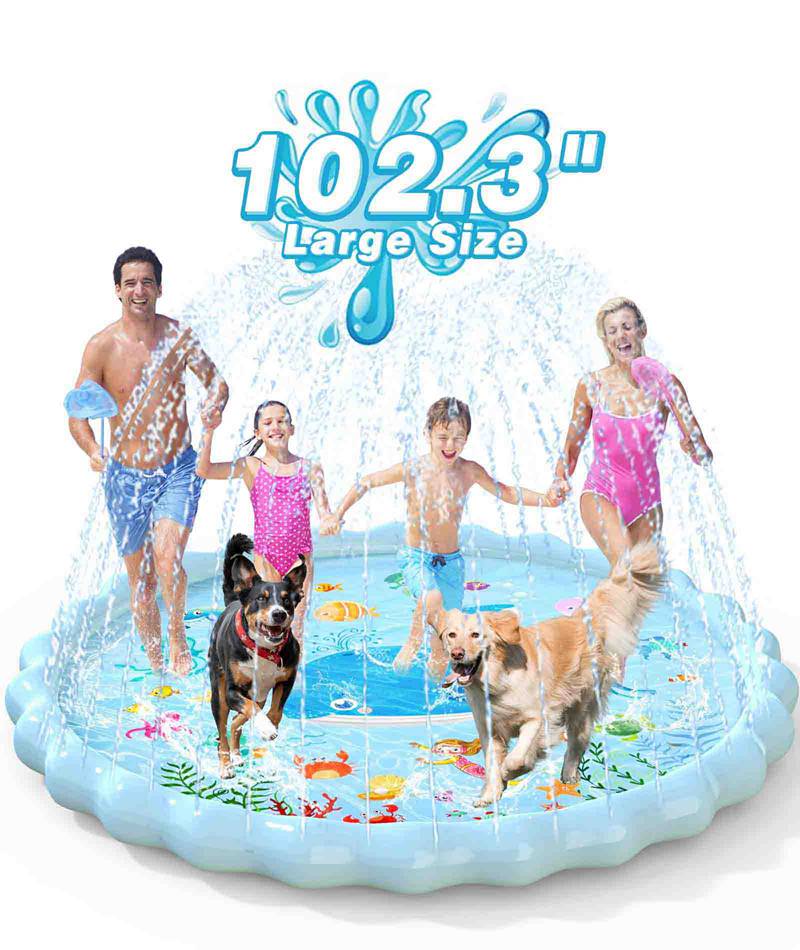
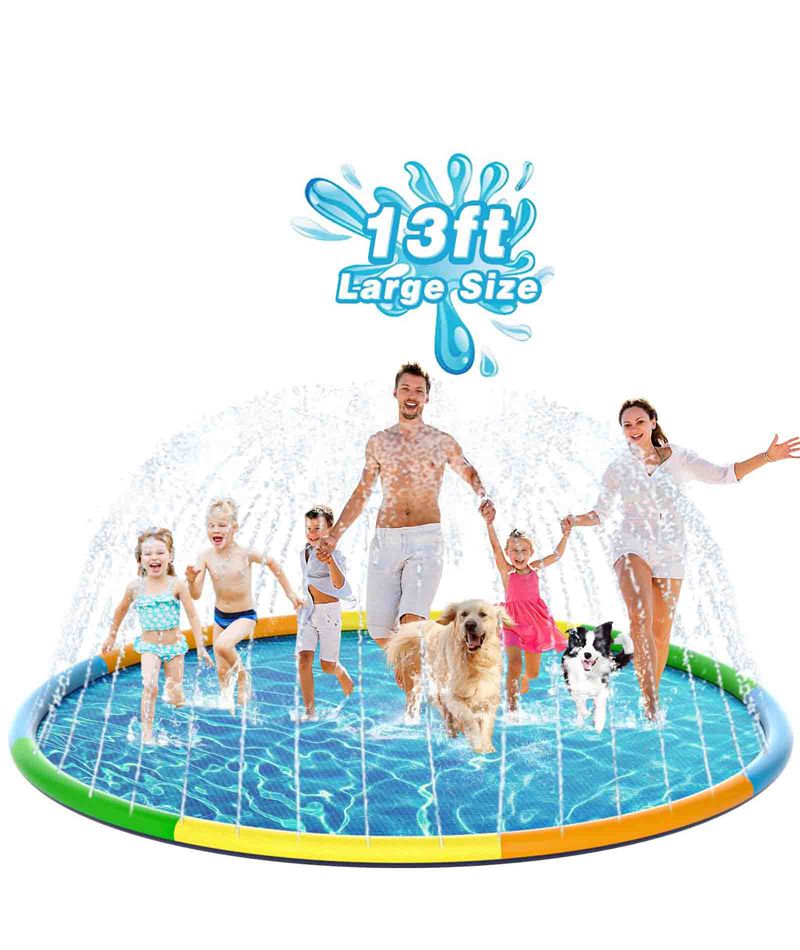
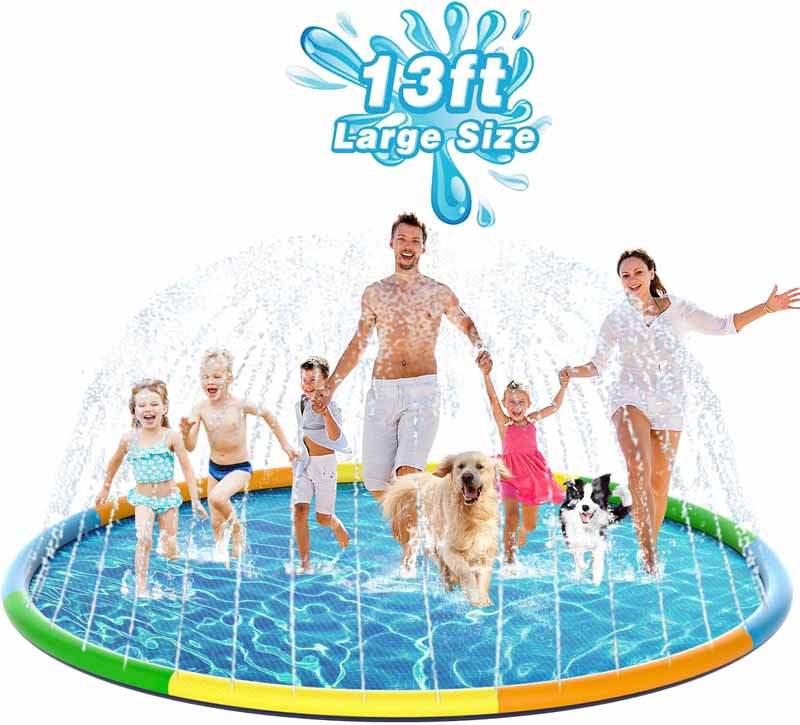
Kids Splash Pads & Water Play Pads
Kids splash pads are one of EPN’s largest and most mature product lines.
They are engineered as ground-contact, pressure-driven water systems, not decorative mats.
Main product types include:
- Flat spray splash pads
- Raised-edge splash pads
- Multi-zone play splash pads
Key engineering focus:
- Spray-hole diameter and spacing control for even coverage
- Edge reinforcement to prevent curling and premature leakage
- Anti-slip bottom texture and abrasion-resistant base layers
- Reinforced water inlet zones to handle hose pull and pressure cycling
These products are designed to perform reliably under 40–60 PSI household water pressure and repeated setup across full summer seasons.

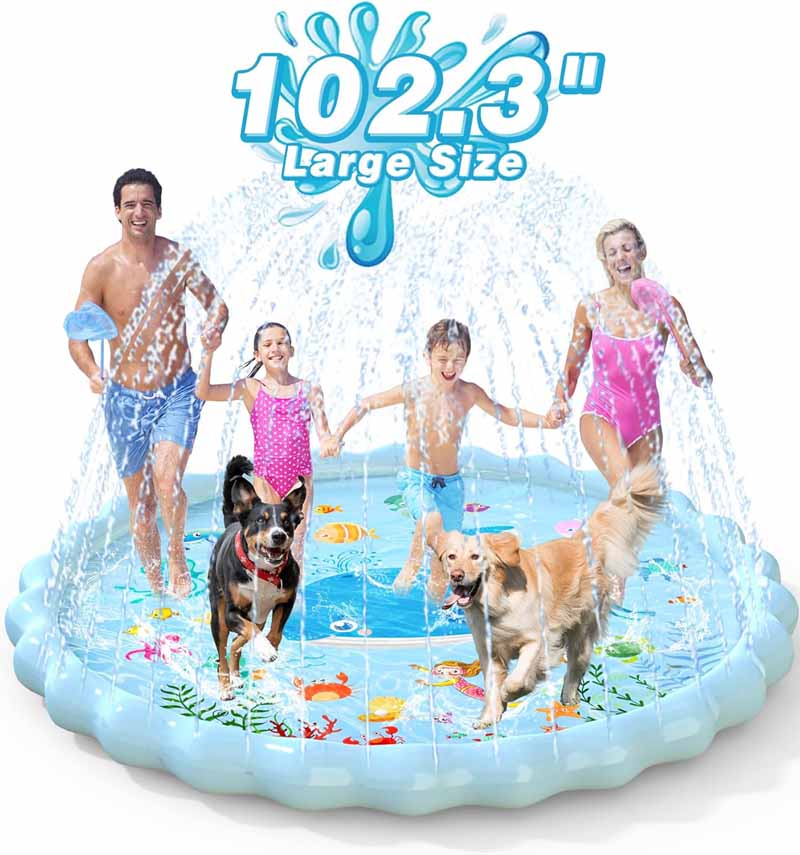
Pet Splash Pads
Pet splash pads experience localized stress levels significantly higher than kids-only products.
EPN’s pet splash pad designs account for:
- claw scratching
- repeated jumping and dragging
- concentrated loading at entry points
Engineering characteristics:
- thicker or composite PVC layers in contact zones
- reinforced spray-hole rings to reduce tear propagation
- strengthened inlet structures to resist lateral pulling
- surface textures optimized for pet traction without abrasion
Pet splash pads are typically validated for mixed-use scenarios, including children and medium-to-large dogs.
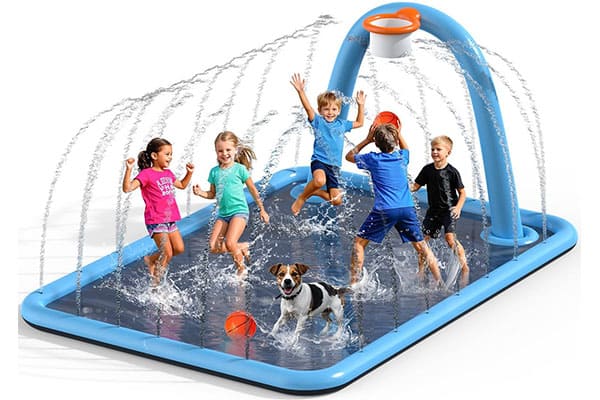
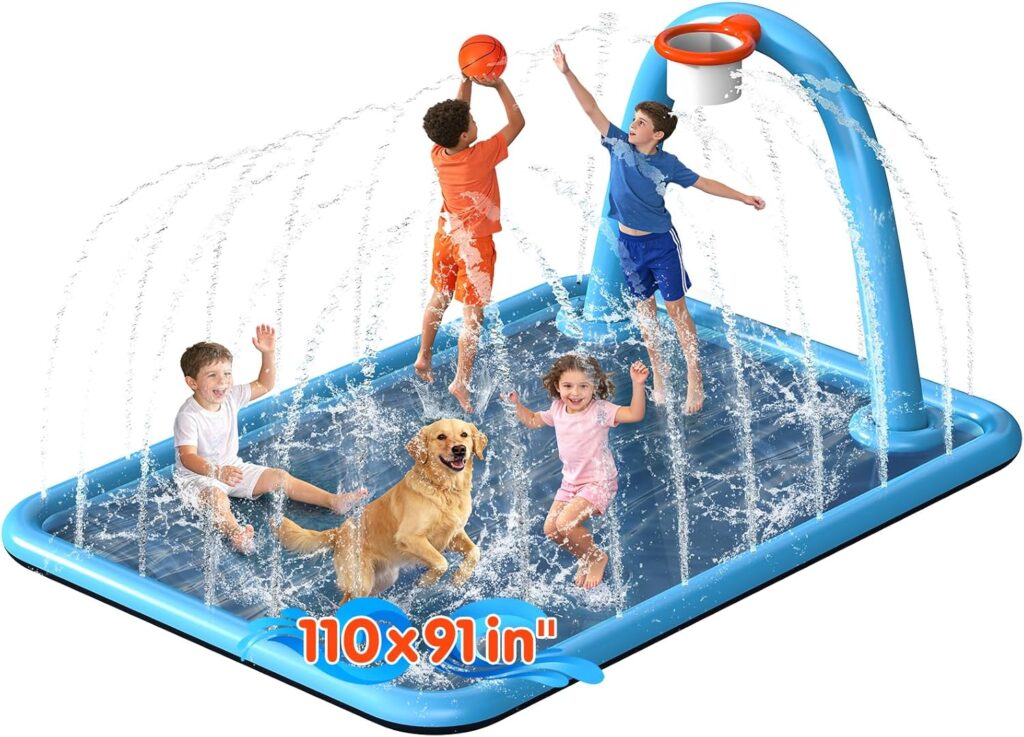
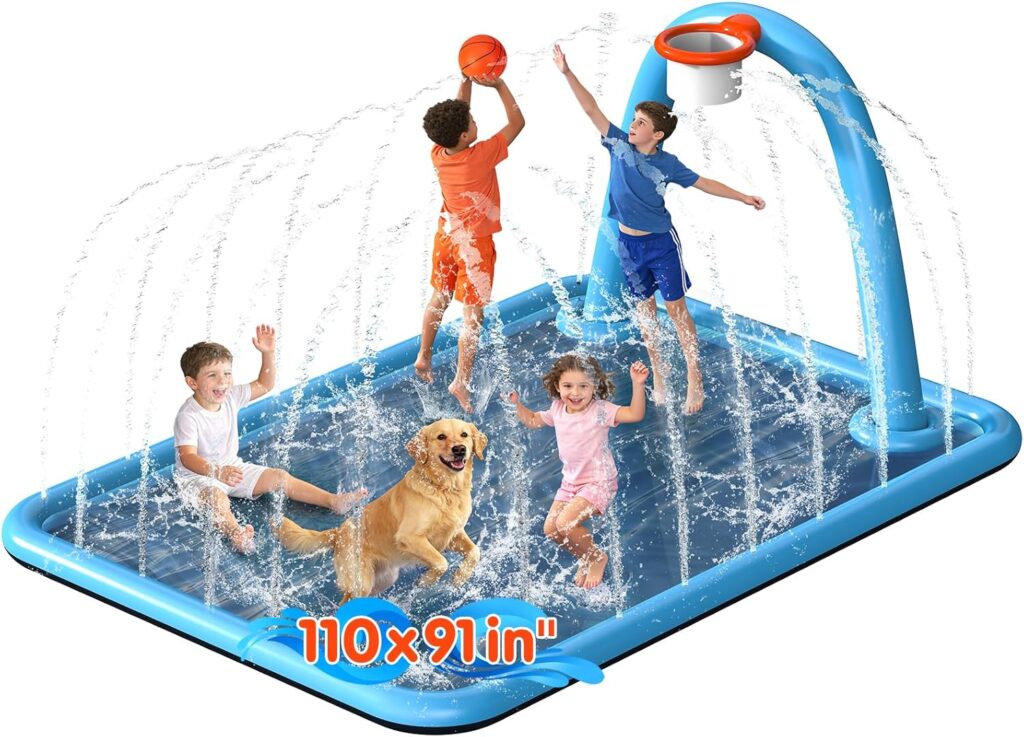
Basketball Splash Pads & Interactive Water Game Pads
These products combine water distribution systems with upright or semi-rigid game structures.
Typical configurations:
- inflatable basketball hoop + splash pad base
- target-style spray pads with integrated scoring elements
Critical design considerations:
- vertical structure stability under impact
- controlled spray direction to avoid face-level jets
- reinforced anchor points between game elements and base
- balanced weight distribution to prevent tipping during play
These products require tighter tolerance control than flat pads due to combined impact + water pressure loading.

Sprinkler Arches & Water Tunnels
Sprinkler arches and tunnels are upright spray structures, which introduce bending stress and tipping risk.
EPN designs these products with:
- widened base footprints relative to height
- reinforced weld lines at arch-to-base transitions
- controlled spray angles to maintain child-safe spray height
- structural symmetry to reduce uneven load distribution
They are commonly used in backyard play, camps, and organized summer activities where multiple children pass through the structure repeatedly.

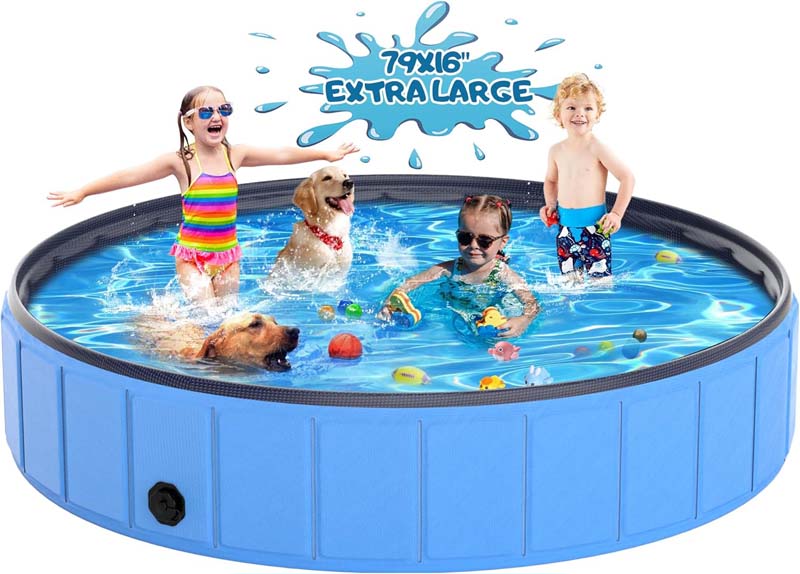
Foldable Pet Pools
Foldable pet pools are designed for high-frequency pet interaction, including bathing, summer cooling, and portable outdoor use.
They prioritize structural stability and fatigue resistance, rather than inflatable comfort.
Main product types include:
- Standard foldable pet pools
- Reinforced foldable pools for medium and large dogs
- Portable pet bathing pools
Key engineering focus:
- Semi-rigid or reinforced sidewall structures
- Fold-line reinforcement to prevent cracking after storage
- Fast-drain systems for frequent emptying and cleaning
- Abrasion-resistant bottoms for grass, concrete, and decking
These products are engineered to withstand repeated folding, draining, and paw loading across multiple summer seasons.

Pet Sprinkler Pools
Pet pools differ fundamentally from inflatable pools intended for human lounging.
Typical stress factors include:
- pets entering and exiting from the same edge
- uneven loading as animals stand or scratch against walls
- frequent draining and refilling
EPN pet pool designs emphasize:
- rigid or semi-rigid sidewall structures
- reinforced fold lines to prevent cracking after storage
- abrasion-resistant bottoms for grass, concrete, or decking
- drainage systems designed for repeated use
Pet sprinkler pools further integrate spray systems that must remain stable under movement and water pressure.

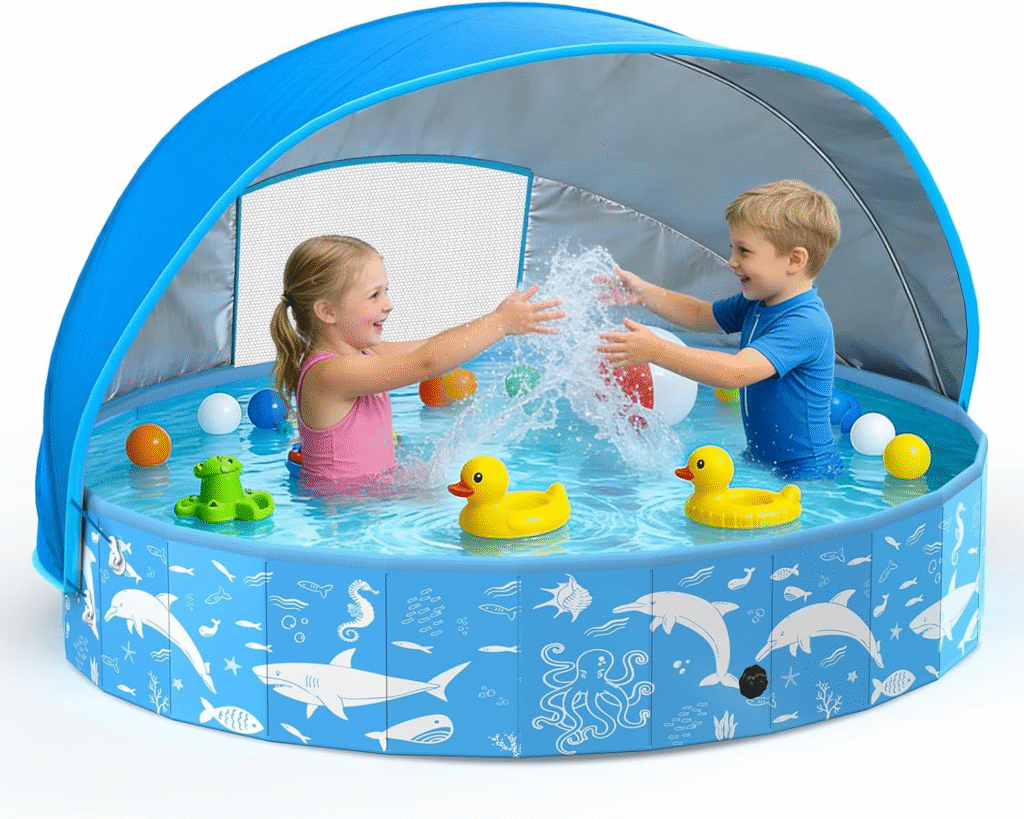
Inflatable Splash Pools & Water Play Pools
These products combine shallow pool structures with integrated water play functions.
Typical products include:
- inflatable kids pools
- inflatable splash pools with spray features
- water game pools with interactive elements
Engineering focus:
- sidewall stability to resist leaning and climbing
- reinforced base and seam structure for repeated filling and draining
- controlled spray integration to avoid uneven pressure or leakage
- materials optimized for prolonged sun and water exposure
They are widely used for backyard family play, retail seasonal programs, and entry-level water activity zones.

Snow Tubes (PVC Snow Tubes)
Snow tubes are engineered for low-temperature elasticity, impact absorption, and abrasion resistance.
EPN manufactures:
- single-rider snow tubes
- double-rider snow tubes
- multi-chamber snow tubes
Engineering priorities include:
- PVC formulations optimized for cold flexibility
- reinforced bottom layers for ice and packed snow
- handle structures tested for pulling and lifting forces
- controlled air chamber geometry to maintain shape under load
Snow tubes are validated through low-temperature folding, pressure retention, and impact testing.

Fabric-Covered Snow Tubes
Fabric-covered snow tubes combine a PVC inner tube with a durable textile outer shell.
This category focuses on:
- extended abrasion resistance
- improved comfort and insulation
- better longevity on artificial snow surfaces
Key design elements:
- secure attachment between fabric shell and inner tube
- reinforced tow points integrated into fabric structure
- bottom fabric materials selected for sliding performance
- seam alignment to prevent stress concentration
These products are commonly used by resorts and rental operations with high usage intensity.

Inflatable Boxing Pillars & Interactive Sports Inflatables
These products are designed for repeated impact and recovery, not static display.
EPN manufactures:
- inflatable boxing pillars
- bop bags
- interactive target inflatables
Engineering focus areas:
- base stability and recovery speed
- internal chamber layout for controlled rebound
- reinforced seam intersections at impact zones
- long-term air retention under repeated deformation
They are commonly used in kids’ activity zones, promotional events, and family entertainment venues.

Pool Pillows & Comfort Inflatables
Pool pillows and comfort inflatables are compact products with high sensitivity to manufacturing precision.
They are designed for head, neck, and body support during pool and water lounging.
Main product types include:
- Inflatable pool pillows
- Headrest and neck-support inflatables
- Small comfort cushions for floating loungers
Key engineering focus:
- High air-retention valve and chamber reliability
- Smooth weld finishes for direct skin contact
- Balanced internal air pressure distribution
- Resistance to deformation under partial inflation
Because these products are used close to the body, seam quality and air stability directly affect comfort and customer satisfaction.

Inflatable Water Slides & Slide-and-Splash Combinations
This category integrates gravity-based sliding structures with water spray or splash pool bases.
Common configurations:
- inflatable water slides
- slide + splash pool combinations
- slide systems with integrated sprinkler arches
Key engineering challenges addressed:
- slope stability and load distribution during sliding
- reinforced landing zones and splash pool interfaces
- controlled water flow to reduce friction without excessive spray force
- structural reinforcement at climbing and transition points
These products require tighter structural and material control due to combined impact, water pressure, and repetitive movement.

Baby Water Mats & Infant-Friendly Splash Zones
Designed specifically for infants and toddlers, this sub-category prioritizes low-pressure interaction and surface safety.
Product types include:
- baby water mats
- low-profile infant splash pads
- gentle spray play zones for early sensory play
Design priorities:
- ultra-soft contact surfaces
- low spray height and pressure control
- anti-slip bottom textures
- non-irritating, odor-controlled material systems
These products are commonly used in home environments, early childhood programs, and parent-focused retail channels.

Inflatable Floating Loungers & Recliners
Inflatable floating loungers and recliners are designed for extended water relaxation, not short-term novelty use.
They focus on body support, balance, and anti-roll stability.
Main product types include:
- Inflatable floating loungers
- Reclining pool floats with head and arm support
- Multi-chamber relaxation floats
Key engineering focus:
- Balanced air chamber layout for full-body support
- Anti-roll and anti-flip geometry
- Surface smoothness for prolonged skin contact
- Stability under partial or uneven inflation
These products are commonly used in family pools, resorts, and vacation rentals, where comfort and stability drive repeat use.

Single & Double Swim Rings
Swim rings are a foundational category with higher-than-expected load and balance requirements.
They are designed for controlled buoyancy and rider stability.
Main product types include:
- Single-rider swim rings
- Double-rider or couple swim rings
- Family and themed swim ring sets
Key engineering focus:
- Rider load balance for single or dual users
- Reinforced seam and valve zones
- Shape stability under movement and wave action
- Consistent air retention during extended floating
Well-engineered swim rings reduce rolling, deformation, and air-loss complaints during active water use.

Pool Volleyball & Basketball Game Sets
Pool sports game sets combine inflatable structures with interactive water play.
They are designed to remain stable during repeated impact and movement.
Main product types include:
- Inflatable pool volleyball net sets
- Floating basketball hoop systems
- Multi-game water sport kits
Key engineering focus:
- Upright structure stability under ball impact
- Reinforced anchor and net connection points
- Balanced buoyancy to prevent drifting
- Impact resistance for repeated play cycles
These products are widely used in family pools, resorts, and seasonal retail bundles.

Decorative & Custom-Shaped Inflatables
Decorative inflatables focus on visual presence combined with structural reliability.
They are often used for branding, events, and themed environments.
Main product types include:
- Custom-shaped inflatables
- Character and mascot inflatables
- Branded promotional inflatables
Key engineering focus:
- Shape stability for non-standard geometries
- Reinforced stress points at curves and joints
- Color and print durability under outdoor exposure
- Secure air retention for extended display time
These products are commonly used in festivals, marketing campaigns, retail displays, and commercial events.

Beach Mats & Ground Display Inflatables
Beach mats and ground inflatables emphasize surface coverage and durability, rather than water interaction.
They are designed for outdoor ground use and visual zoning.
Main product types include:
- Inflatable beach mats
- Ground display inflatables
- Event floor inflatables
Key engineering focus:
- Large-area film stability
- Abrasion-resistant bottom layers
- Resistance to folding creases and surface deformation
- Ease of transport and setup
These products are commonly used in beach lounging areas, outdoor events, and branded ground installations.

Inflatable Bounce Houses & Inflatable Castles
Inflatable bounce houses and castles are designed for repeated jumping, impact absorption, and structural recovery.
They are treated as high-impact interactive structures, not static inflatables.
Main product types include:
- Standard inflatable bounce houses
- Inflatable castles and themed jumpers
- Compact backyard bounce structures
Key engineering focus:
- Multi-chamber air structure to distribute impact loads
- Reinforced seam intersections at jump and corner zones
- Abrasion-resistant base layers for grass or flooring
- Controlled rebound behavior for safety and play balance
These products are widely used in backyards, events, rental operations, and family entertainment venues, where durability and safety directly affect service life.

Baby Inflatable Bathtubs
Baby inflatable bathtubs are designed for controlled water interaction, infant safety, and caregiver convenience.
They prioritize soft contact surfaces, stability, and hygiene, rather than water play intensity.
Main product types include:
- Infant inflatable bathtubs
- Foldable baby bathing tubs
- Inflatable tubs with backrest or support zones
Key engineering focus:
- Soft-touch PVC materials suitable for infant skin contact
- Low-profile structure for easy access and supervision
- Anti-slip bottom textures to prevent sliding during bathing
- Reinforced air chambers for shape stability under partial inflation
These products are commonly used in home bathrooms, travel scenarios, and early childcare environments, where safety, comfort, and ease of cleaning are critical
What Can Be Customized on a Kids Sprinkler?
Customization for kids sprinklers is not about adding colors or logos to a fixed design.
In real OEM/ODM manufacturing, customization determines how the product performs, how long it lasts, and how much risk the brand carries during peak summer season.
At EPN, customization decisions are treated as engineering variables, not marketing options. Each choice—structure, spray layout, material system, inlet design, and packaging—affects durability, safety, defect rate, and scalability.

1. Overall Size, Height, and Footprint Geometry
Customization starts with physical geometry, not graphics.
Diameter, height, and base footprint determine stability, spray coverage, and tipping behavior.
From EPN production data, sprinklers with wider footprints and lower centers of gravity show significantly lower tip-over complaints, especially in backyard and group-use scenarios. Oversized designs without structural balance increase material cost without improving real performance.
Key adjustable parameters include:
- total diameter or width
- arch height or spray height range
- base footprint size and shape
- Storage and carton size constraints
These parameters are matched to:
- target age group
- number of children using the product simultaneously
- stability requirements under pulling, stepping, and hose drag
From production data, sprinklers with insufficient footprint size show significantly higher tipping complaints, even when materials are adequate. Proper geometry often reduces failures more effectively than increasing material thickness.

2. Spray Style, Coverage Area, and Pressure Behavior
Spray performance is one of the most sensitive customization areas.
Customizable elements include:
- spray pattern (ring, arch, directional arc, multi-point mist)
- hole diameter and spacing
- spray angle and height control
At EPN, spray layouts are evaluated under common household water pressure ranges, not ideal lab conditions. This avoids designs that work only at a narrow pressure band.
Internal testing shows that optimized spray layouts can reduce:
- facial-impact complaints
- uneven coverage feedback
- perceived “low water pressure” issues
without increasing water consumption.

3. Material System and Reinforcement Strategy
Material customization goes beyond choosing “thicker PVC”.
Adjustable parameters include:
- base material type (PVC or composite)
- thickness range
- flexibility vs. tear-resistance balance
- localized reinforcement zones
- UV resistance for prolonged outdoor exposure
- Odor control for family and institutional use
EPN does not use a single standard material across all sprinklers. Instead, material systems are selected based on:
- outdoor exposure level
- expected folding frequency
- interaction with children or pets
Across multiple OEM programs, targeted reinforcement at high-stress zones has shown lower defect rates than uniform thickening, while keeping products easier to fold and ship.

4. Water Inlet Structure and Connector Design
The inlet is one of the most failure-prone components.
Customizable inlet elements include:
- connector specification
- sealing structure
- inlet position relative to base geometry
EPN treats the inlet as a critical stress-transfer system, not a simple fitting. Inlet geometry is designed to reduce bending moment caused by hose pull and child movement.
Based on internal quality data, reinforced inlet designs show substantially fewer early leakage issues compared to standard flat-mounted connectors.

5. Visual System and Surface Design
Visual customization supports branding, but also affects durability.
Options include:
- solid color systems
- full-coverage prints
- seasonal or licensed artwork
Color systems and printing methods are selected to maintain consistency across batches and resist fading during UV exposure and water contact.
For licensed or multi-SKU programs, EPN maintains color tolerance control to ensure visual consistency across large production volumes, which is critical for retail and IP-driven programs.

6. Packaging Format, Manuals, and Compliance Labeling
Packaging is a functional part of the product system.
Customizable packaging elements include:
- retail shelf packaging
- e-commerce parcel packaging
- bulk or promotional packing formats
Packaging design considers:
- deformation prevention during shipping
- protection of inlet and spray features
- folding logic and stress avoidance
- compliance labeling for target markets
Internal data shows that packaging-related issues account for a meaningful share of early returns in parcel-shipped products. Channel-specific packaging design significantly reduces this risk.
How the OEM/ODM Process Works with EPN
OEM/ODM success depends on decision order and validation discipline.
At EPN, the process is structured to identify risks early, when changes are still low-cost.
Requirement Definition Based on Real Use
Projects start by clarifying:
- target user group
- usage environment
- sales channel
- durability expectations
- seasonal timeline
This step prevents later redesign caused by incorrect assumptions.
Engineering Specification Development
Requirements are translated into:
- structural geometry
- spray system layout
- material and reinforcement strategy
- inlet sealing concept
- packaging direction
This step defines the technical baseline before artwork or tooling decisions.
Artwork and Packaging Alignment
Visual design, manuals, barcodes, and labeling are finalized alongside engineering—not afterward—to avoid compliance or packaging rework later.
Artwork, color standards, labeling content, manuals, and carton structures are finalized early to meet:
- Brand identity needs
- Platform or retailer rules
- Market-specific safety regulations
Early alignment avoids rework and shipment delays.
Sampling and Performance Validation
Samples are produced and reviewed for:
- spray behavior
- leakage risk
- basic stability
- usability
Sampling focuses on failure signals, not appearance alone.
Production Control and Quality Verification
Once approved, production parameters are locked.
Critical points such as inlet zones, seams, and reinforcement areas are monitored during batch production to ensure consistency between samples and mass output.
Once approved:
- Manufacturing parameters are fixed
- Critical points (seams, inlets, spray holes) are monitored
- Batch-level inspection ensures consistency
This step ensures sample performance carries through to volume.
Delivery and Seasonal Execution Planning
OEM success depends as much on execution timing as on design.
Shipment planning considers:
- Sales channel requirements
- Carton optimization and labeling
- Palletization or parcel readiness
- peak-season timing
- packaging configuration
- replenishment strategy
This reduces late-season stock risk and delivery pressure.
Why This Customization Framework Matters
Most OEM failures originate from:
- rushed decisions
- under-specified materials
- skipping validation steps
By treating customization as a controlled engineering process, EPN helps brands:
- reduce leakage and stability complaints
- improve batch consistency
- protect peak-season sales windows
- build repeatable product programs rather than one-off launches
This is the difference between custom-looking products and custom-engineered products.
What Are the Main Use Cases for OEM Kids Sprinklers?
OEM kids sprinklers are widely used in home play, events, childcare programs, community activities, resorts, retail promotions, e-commerce launches, and licensed brand campaigns. Each scenario places different demands on spray stability, durability level, safety design, packaging format, and compliance labeling. A professional OEM manufacturer helps align structure, materials, visuals, and delivery planning with each use case to ensure reliable performance and minimize returns during peak summer season.

Backyard & Home Family Use
Typical environment
- Grass lawns, patios, poolside areas
- Household hose pressure (variable)
- Unsupervised or lightly supervised play
Usage characteristics
- Children running through spray repeatedly
- Frequent hose pulling and repositioning
- Setup and storage handled by parents
Key performance priorities
- Stable base geometry to reduce tipping
- Even spray coverage under common water pressure
- Low-leak inlet design to avoid frustration and water waste
- Soft-contact edges and child-safe spray height
Engineering insight
In home-use scenarios, spray consistency and stability drive satisfaction more than novelty.
Internal return analysis shows that uneven spray and tipping account for a large share of early negative reviews in DTC and e-commerce channels.

Mixed Kids & Pets Summer Play
Typical environment
- Backyards with dogs and children
- Irregular ground and higher physical interaction
Usage characteristics
- Scratching, biting, dragging
- Concentrated force on base and inlet areas
- Higher wear frequency than kids-only use
Key performance priorities
- Reinforced wear zones and seams
- Stronger inlet structure to resist pulling
- Controlled spray angles to avoid face-level jets
- Abrasion-resistant ground-contact surfaces
Engineering insight
Products used by both kids and pets experience localized stress levels significantly higher than standard play assumptions.
EPN data shows that targeted reinforcement reduces puncture and deformation complaints far more effectively than increasing overall thickness.

Daycare Centers, Preschools & Youth Programs
Typical environment
- Group use with multiple children
- Repeated daily setup and storage
- Supervised but high-frequency operation
Usage characteristics
- Continuous rotation of users
- Frequent folding and draining
- Limited time for maintenance
Key performance priorities
- Anti-tip geometry and structural balance
- Durable materials for repeated folding
- Clear safety labeling and supervision guidance
- Simple setup and inspection logic
Engineering insight
Institutional use exposes weaknesses faster.
Products in this channel must survive dozens of setup cycles per week, making fold-stress resistance and inlet durability critical failure points.

Summer Camps & Organized Activity Programs
Typical environment
- Outdoor group activity zones
- Mixed surfaces (grass, concrete, turf)
- Extended daily operating hours
Usage characteristics
- High play density
- Frequent relocation and stacking
- Staff-managed setup and teardown
Key performance priorities
- Structural stability under crowd movement
- Reinforced joints and high-stress points
- Predictable spray behavior to manage supervision
- Low maintenance requirements
Engineering insight
Camps prioritize service life and operational reliability over visual complexity.
EPN’s experience shows that simpler, well-engineered structures outperform visually complex designs in long-duration programs.

Community Centers & Municipal Outdoor Events
Typical environment
- Public parks and temporary installations
- Mixed-age user groups
- Limited supervision per child
Usage characteristics
- Unpredictable user behavior
- High liability sensitivity
- Temporary but intense usage
Key performance priorities
- Stable footprint and controlled spray height
- Clear warning labels and age guidance
- Robust construction tolerant of misuse
- Fast setup and takedown
Engineering insight
Public-use products must assume non-ideal behavior.
Designs that tolerate pulling, stepping, and crowd interaction reduce operational interruptions and safety complaints during peak attendance.

Resorts, Hotels & Family Entertainment Venues
Typical environment
- Lawns, poolside areas, family zones
- Daily guest turnover
- Brand-sensitive environments
Usage characteristics
- Repeated daily operation
- Visual presentation tied to guest experience
- Immediate performance expectations
Key performance priorities
- Consistent spray performance day after day
- Durable materials with color stability
- Fast recovery from wear
- Visual alignment with venue branding
Engineering insight
In hospitality settings, downtime equals negative guest experience.
Sprinklers must balance durability and appearance, as failures during peak hours directly impact reviews and brand perception.

Retail Seasonal Programs
Typical environment
- Big-box and specialty retail channels
- Short selling windows
- High-volume distribution
Usage characteristics
- Shelf handling and consumer transport
- Variable storage conditions
- Limited opportunity for post-sale correction
Key performance priorities
- Consistent specifications across batches
- Retail-ready packaging and labeling
- Low defect rate at scale
- Predictable cost structure
Engineering insight
Retail programs magnify small defects into large-volume problems.
EPN’s standardized material and process controls are designed to reduce variance between samples and mass production.

E-Commerce & Online-First Brands
Typical environment
- Parcel shipping
- Customer self-setup
- Public review platforms
Usage characteristics
- High sensitivity to minor defects
- Visible impact of packaging damage
- Strong link between early use experience and reviews
Key performance priorities
- Leak-resistant inlet systems
- Spray performance that works “out of the box”
- Damage-resistant packaging
- Clear instructions to reduce misuse
Engineering insight
E-commerce returns are often triggered by first-use frustration rather than catastrophic failure.
Packaging integrity and clear setup design significantly reduce early negative feedback.

Promotional, Licensing & Brand Campaigns
Typical environment
- Short-term campaigns
- Multiple designs or SKUs
- Tight delivery schedules
Usage characteristics
- High visual expectations
- Lower tolerance for defects
- Brand and legal sensitivity
Key performance priorities
- Accurate color and artwork reproduction
- Stable baseline structure
- Compliance-ready labeling
- Reliable production scheduling
Engineering insight
In promotional programs, product failure affects brand image more than cost.
EPN often uses pre-validated structural platforms for these projects to control risk under compressed timelines.
Why Work with EPN as Your OEM Kids Sprinkler Manufacturer
EPN is the brand of a U.S.-registered company specializing in PVC and composite material products for kids’ water play, family entertainment, pet products, and outdoor recreation. With deep material engineering expertise, vertically integrated manufacturing, in-house testing laboratories, and global fulfillment capability, EPN supports brands and institutions that require safe, durable, and scalable OEM kids sprinkler solutions for real-world seasonal use.

Engineering-Driven Manufacturing, Not Assembly
EPN’s core strength lies in treating kids sprinklers as engineered outdoor products, not novelty water toys.
27+ full-time R&D professionals covering:
- PVC and composite material formulation
- Structural and mold engineering
- Water spray behavior and pressure control
- Child usage patterns and safety ergonomics
- Outdoor product durability analysis
Design decisions are based on how products fail in real use, not how they look in samples.
Across multiple summer seasons, EPN has accumulated failure data related to:
- tip-over behavior on lawns and uneven surfaces
- inlet leakage after repeated hose connection cycles
- spray inconsistency under common household water pressure
- material aging under UV exposure and heat
This data feeds directly into new OEM designs, reducing repeated mistakes.

In-House Testing as a Daily Operation
Testing at EPN is not performed for marketing claims—it is part of daily production control.
EPN operates independent internal laboratories and conducts 500+ material and product tests annually, including:
- spray height and distribution verification
- inlet leak and flow stability checks
- pressure tolerance and deformation observation
- durability simulation for folding, dragging, and repeated setup
- UV aging and outdoor exposure testing for summer products
These tests are applied before sampling approval and during batch production, not only at the end.
This approach significantly lowers the gap between sample performance and mass-produced units.

Vertically Integrated Manufacturing for Consistency
EPN runs a vertically integrated manufacturing system, allowing tighter control over quality and timelines.
Key capabilities include:
- internal PVC and composite material formulation
- automated cutting and high-frequency welding lines
- air-tightness and functional inspection stations
- packaging and manual production aligned with target markets
Annual production capacity reaches approximately 12 million units, supporting:
- large retail seasonal programs
- fast-scaling e-commerce brands
- multi-SKU OEM product lines
Scale forces discipline. Designs that cannot remain stable across volume production are revised or rejected before launch.

Proven Global Execution Experience
EPN supplies kids water-play and related products to multiple global markets, including North America and Europe, across channels such as:
- e-commerce platforms
- retail seasonal programs
- promotional and institutional projects
To support this, EPN maintains:
- overseas warehouses in the United States, Germany, and the United Kingdom
- experience with parcel shipping, retail cartons, and bulk distribution
- familiarity with platform and retailer expectations that affect reviews and returns
This global exposure means fewer surprises when products reach end users.

Compliance Built Into Design, Not Added Later
For kids sprinklers, compliance is not optional.
EPN integrates regulatory requirements during:
- material selection
- structure and spray design
- packaging and labeling development
Depending on target market, products can be developed to meet:
- CPSIA / ASTM (United States)
- EN71 / REACH (Europe)
Manufacturing systems operate under ISO 9001, ISO 14001, and ISO 45001, ensuring quality, environmental control, and occupational safety remain consistent across production cycles.
Early compliance alignment reduces:
- late-stage redesign
- shipment delays
- platform or retailer rejection

What This Means for Professional Buyers
Working with EPN typically results in:
- fewer leak-related complaints during peak season
- more stable spray performance across batches
- reduced return rates caused by deformation or inlet failure
- predictable delivery timelines for seasonal launches
- OEM programs that improve year over year instead of repeating the same issues
EPN’s role is not to promise perfection, but to systematically reduce risk where kids sprinkler products most often fail.
That is why many partners continue working with EPN across multiple summer cycles and product generations.
Case Studies: OEM Kids Sprinkler & Water-Play Programs Built with EPN
Below are representative OEM/ODM projects that reflect common buyer goals: lower return risk, more stable spray performance, stronger inlet reliability, and predictable batch consistency during peak season. Figures are provided as program-level results tracked through production QA, post-season feedback, or channel return signals.

Case 1
Backyard Kids Sprinkler Upgrade for a DTC Brand (North America)
Buyer type: DTC / Amazon brand
Goal: reduce tipping and “weak/uneven spray” complaints during peak summer
Annual volume: 180,000 units (single season program)
Starting issues (previous supplier):
- frequent tipping on grass when kids ran into the arch
- spray dead zones under typical household pressure
- inlet seepage after repeated hose reconnections
EPN engineering actions:
- increased base footprint and lowered center-of-gravity through geometry changes (no added accessories)
- reworked hole layout (diameter tolerance + spacing) and internal distribution path to reduce spray variance
- reinforced inlet seat and stress-relief geometry to reduce hose-pull leakage
Measured outcome (season summary):
- tipping-related complaints down ~55%
- spray-uniformity complaints down ~40%
- early returns (first 30 days) down from 6.2% → 3.9%

Case 2
Retail Seasonal Program: Kids Sprinkler for Big-Box Distribution (US)
Buyer type: retail chain seasonal team
Goal: reduce batch-to-batch drift and “arrived damaged” claims
Program window: 10 weeks
Order volume: 520,000 units
Starting risks:
- packaging compression during distribution caused inlet deformation
- samples performed well, but mass production drifted on spray height
- barcode/label errors created DC rejection risk
EPN engineering actions:
- channel-specific packaging: inlet protection zone + folding control to prevent permanent creases
- locked spray spec using hole layout control and in-line spray verification sampling
- packaging artwork + labeling workflow standardized for retail compliance
Measured outcome:
- “arrived damaged” claims reduced ~48%
- batch defect rate held within ±0.6% across production lots (previous program ±2.1%)
- DC rejection events: 0 during the selling window

Case 3
Daycare / Preschool Program: Controlled Spray Height + Anti-Tip (EU)
Buyer type: institutional procurement
Goal: improve supervision safety and reduce maintenance interruptions
Deployment: 240 centers
Units delivered: 36,000
Starting issues (legacy product):
- occasional face-level jets when pressure spiked
- repeated tipping and dragging during group play
- staff reported slow leaks at the connector after frequent setup
EPN engineering actions:
- spray pattern tuned for softer output and narrower height variance under normal hose pressure ranges
- stability geometry adjusted for wet ground and lateral push
- inlet reinforcement for repeated connection cycles
Measured outcome (field feedback period):
- safety-related incident reports dropped from 1.7 → 0.6 per 1,000 uses
- staff “reset/reposition” interruptions down ~45%
- connector-related leakage complaints down ~35%

Case 4
Licensed / IP Summer Line: Multi-SKU Kids Sprinklers + Matching Splash Pad (US/EU)
Buyer type: licensing program / brand manager
Goal: color consistency + cross-SKU quality stability
SKUs: 8 total (sprinklers + splash pad)
Annual volume: 310,000 units combined
Starting risks:
- tight color tolerances required (license governance)
- multiple SKUs needed consistent spray feel and setup behavior
- high reputational sensitivity to defects
EPN engineering actions:
- standardized material systems and print process across SKUs to reduce shade drift
- shared inlet and sealing platform across products for consistent user experience
- batch-level inspection plan aligned across all SKUs (same critical points)
Measured outcome:
- color deviation disputes: 0 reported by license review during production
- cross-SKU defect variance held within 1.2% spread
- customer rating uplift (program average): +0.3 stars vs prior season line

Case 5
Mixed Kids + Pets Program: Reinforced Water-Play Set for E-Commerce (US)
Buyer type: Amazon/Walmart marketplace seller
Goal: reduce puncture, inlet leaks, and abrasion wear
Units: 95,000 (starter program)
Starting issues (category pain points):
- mixed-use products see higher localized stress (claws + dragging)
- returns triggered early by inlet seepage and seam fatigue
EPN engineering actions:
- targeted reinforcement at base contact zones and inlet-adjacent areas (not uniform thickening)
- abrasion-resistant bottom strategy for lawn/concrete use
- packaging fold logic updated to reduce crease stress
Measured outcome:
- puncture/tear complaints down ~50%
- inlet leakage complaints down ~32%
- overall return rate down from 7.0% → 4.6% (first 45 days)

Case 6
Fast-Turn ODM: Promotional Sprinkler Arch for a Summer Campaign (EU)
Buyer type: promotional / corporate campaign team
Goal: hit a hard deadline with controlled risk
Timeline: 16 days from design lock to shipment
Units: 60,000
Starting constraints:
- compressed timeline left no room for multiple redesign loops
- brand required accurate logo placement and stable performance out of the box
EPN execution strategy:
- used a pre-validated structural platform (known stability + inlet concept)
- limited changes to safe parameters: graphics + size scaling within validated geometry
- focused validation: spray check + inlet leak verification + packaging compression check
Measured outcome:
- shipped on day 16 as scheduled
- in-market structural complaints: <0.5% within first 30 days
- campaign team placed repeat order for additional summer SKUs within 6 weeks
FAQ: Common Questions About OEM Kids Sprinklers
This section addresses the most common technical, safety, and sourcing questions raised by brands, retailers, and institutional buyers when developing or upgrading OEM kids sprinkler products.
The answers are based on real production experience and typical failure patterns observed in mass-market seasonal water toys.
Q1. What materials are typically used in kids sprinklers, and which ones perform best outdoors?
Most kids sprinklers are made from PVC or PVC-based composite materials. However, performance depends far more on formulation and thickness than on the material name alone.
For outdoor summer use, materials must remain flexible under heat, resist UV exposure, and tolerate repeated water pressure cycles. Low-grade PVC may look fine when new but often becomes stiff, sticky, or brittle after prolonged sun exposure. Higher-quality formulations include UV stabilizers and balanced plasticizers to slow aging and maintain comfort during the season.
Q2. How thick should the material be for a durable kids sprinkler?
There is no universal “best thickness.”
Thickness must match structure, spray design, and intended use.
Light indoor or novelty sprinklers may use thinner materials, but products designed for backyard, camp, or public use usually require reinforced thickness in high-stress areas, such as the base, inlet zone, and structural joints.
Over-thickening everything is not ideal either, as it can reduce foldability and create welding challenges. The goal is targeted durability, not maximum thickness.
Q3. Why do some kids sprinklers leak even when seams appear intact?
Most leaks originate from the water inlet area, not from the main body.
Common causes include:
- poor sealing structure at the hose connection
- stress concentration from hose pulling or twisting
- material fatigue after repeated connection cycles
Leaks may not appear during initial testing but develop after days or weeks of use. Visual inspection alone cannot detect early-stage inlet failure. This is why inlet design and sealing verification are critical during OEM development.
Q4. How do manufacturers control spray height and pressure for child-safe play?
Spray behavior is engineered through:
- hole diameter and spacing
- spray angle orientation
- internal water channel layout
Well-designed sprinklers are tested under typical household water pressure ranges, not just ideal lab conditions. The goal is to produce even, soft spray that cools without sharp jets or facial impact.
Random hole punching often leads to uneven spray, pressure spikes, or discomfort—one of the most common causes of negative customer feedback.
Q5. Why do some kids sprinklers tip over during play?
Tipping is usually a structural balance issue, not a user error.
Children run, step, pull hoses, and lean on sprinklers. Products with narrow bases, high centers of gravity, or poorly positioned inlets tip easily under these forces.
Anti-tip design typically involves:
- wider or reshaped base footprint
- lower center of gravity
- structural support at load-bearing points
Stability directly affects play continuity, safety perception, and customer satisfaction.
Q6. Are kids sprinklers required to meet safety or compliance standards?
Yes. Depending on the target market, kids sprinklers may need to comply with:
- CPSIA and ASTM F963 (United States)
- EN71 and REACH (Europe)
Compliance affects:
- material selection
- ink and colorant choices
- warning labels and age guidance
- instruction clarity
Products designed without compliance in mind often require late-stage changes that delay shipments or cause listing issues.
Q7. Can kids sprinklers be safely used by both children and pets?
Some designs can support mixed kids-and-pets use, but not all sprinklers are suitable without adjustment.
Pet interaction introduces higher stress from scratching, biting, and dragging. Designs intended for mixed use typically require:
- stronger material at contact zones
- reinforced seams
- safer, less concentrated spray patterns
OEM partners should clarify intended use scenarios early to avoid misuse-related failures.
Q8. How long should a well-made kids sprinkler last?
Lifespan depends on usage intensity, environment, and storage habits.
A properly engineered kids sprinkler should last at least one full summer season, and many can perform well across multiple seasons if:
- materials resist UV and heat aging
- structure maintains stability
- inlet sealing remains intact
- products are drained and stored correctly
Early failure within weeks usually indicates design or material shortcuts rather than normal wear.
Q9. How are kids sprinklers tested before mass production?
Basic testing often includes:
- spray performance checks
- leak inspection at the inlet
- visual inspection of seams and joints
More experienced manufacturers also evaluate:
- stability under pulling or bumping
- deformation after repeated setup
- packaging protection during shipping
Batch-level testing is essential to ensure that performance remains consistent beyond initial samples.
Q10. Why do some products pass samples but fail in mass production?
This typically results from:
- inconsistent material batches
- relaxed assembly or welding standards
- insufficient in-process inspection
Sampling success does not guarantee mass-production stability. Manufacturers with controlled processes and repeat testing are better positioned to maintain consistent quality across large orders.
Q11. How important is packaging for kids sprinklers?
Packaging is part of the product system.
For e-commerce and parcel shipping, poor packaging can cause:
- creasing and deformation
- inlet damage
- customer complaints about “arrived damaged” items
Retail and e-commerce channels require different packaging strategies. A reliable OEM partner designs packaging based on how the product is shipped, not just how it looks on a shelf.
Q12. What is the typical MOQ and lead time for OEM kids sprinklers?
MOQs and lead times vary by design complexity and season.
In many cases:
- sampling can be completed within days once specifications are aligned
- bulk production takes several weeks
- peak-season timelines require early planning
Last-minute decisions often lead to rushed production and higher defect risk.
Q13. What are the most common reasons OEM kids sprinkler projects fail?
Most failures are not caused by a single issue, but by a combination of:
- unclear usage definition
- under-specified materials
- poor inlet or spray design
- over-reliance on appearance or price
Successful OEM projects treat kids sprinklers as engineered outdoor products, not disposable toys.
Q14. How can brands reduce returns and negative reviews?
The most effective ways include:
- stable spray performance
- reliable leak prevention
- clear setup and safety instructions
- packaging matched to the sales channel
Working with an OEM manufacturer that understands both engineering and marketplace behavior significantly reduces post-launch risk.

Contact Our OEM Team
If you’re planning a summer launch, retail program, or private-label upgrade, now is the right time to define your sprinkler specs and lock in production.
Tell us about your project:
- Target channel (retail / e-commerce / program / licensing)
- Age range and play environment
- Preferred spray style and size
- Packaging requirements and languages
- Timeline for sampling and peak-season delivery