Skip to content
Strong-Seam Splash Pad for Backyard Water Games
A large round sprinkler splash pad made for kids, supervised dogs, and shared family play.
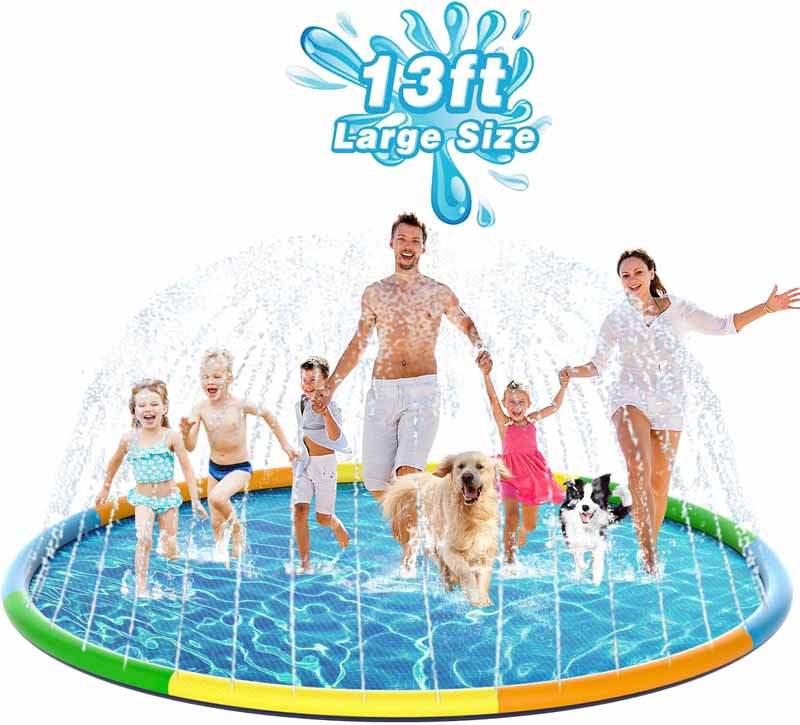
The EPN Strong-Seam Splash Pad turns a flat lawn or backyard area into an easy summer water zone. Connect it to a standard garden hose, adjust the faucet pressure, and create inward-facing spray for walking, splashing, sitting, and simple outdoor games.
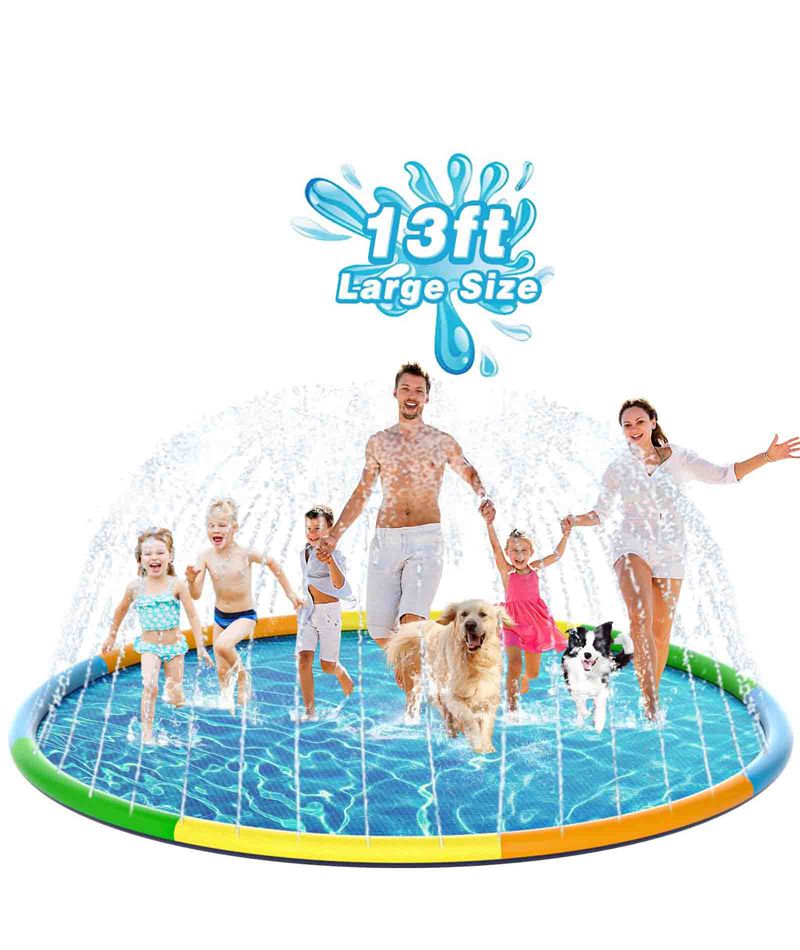
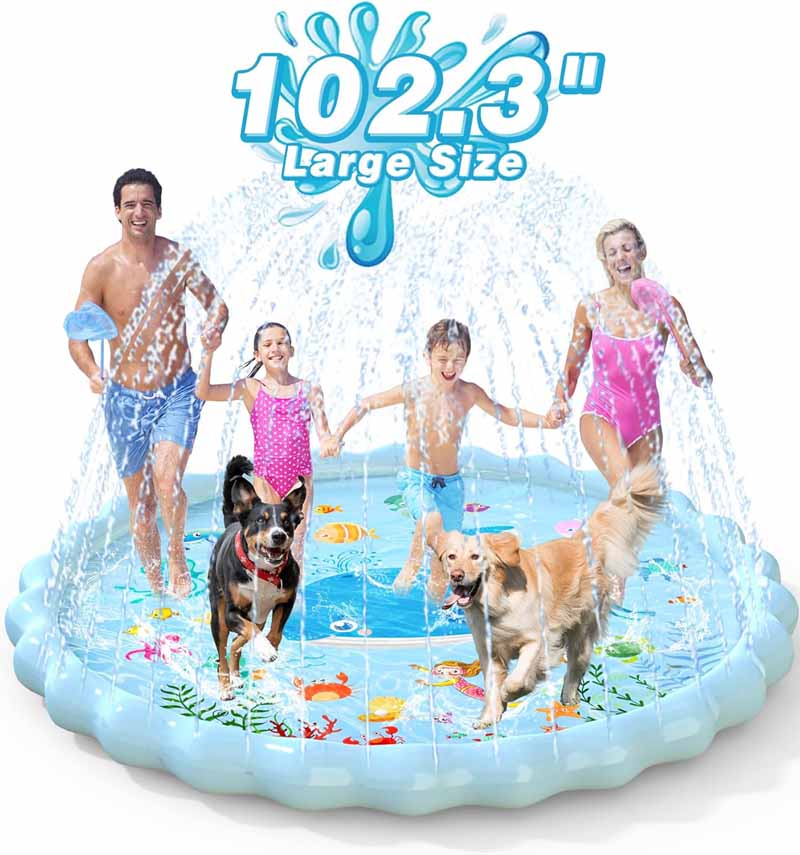
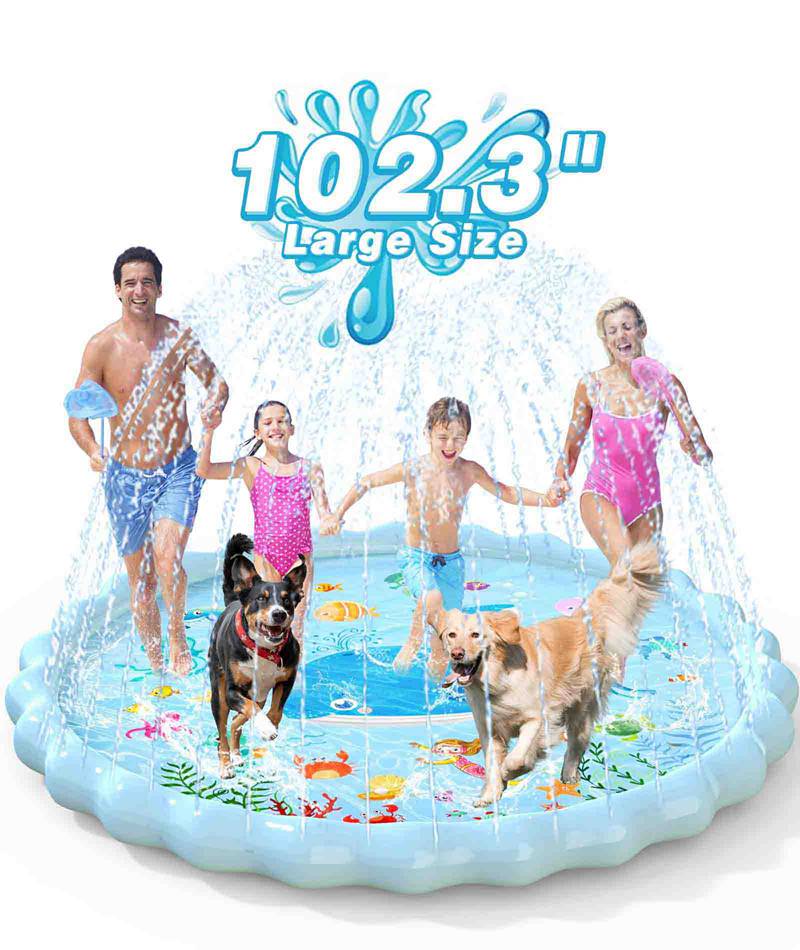
- Available in selected 90.5 in, 102.3 in, 13 ft, and 16.4 ft round sizes
- Made for children ages 3 and up with continuous adult supervision
- Suitable for calm, supervised dogs with trimmed nails
- Thick PVC provides a more substantial feel during outdoor use
- Reinforced edge construction supports the outer water ring
- Textured center surface helps improve wet-foot grip
- Perimeter spray height changes with garden hose pressure
- Includes a standard garden hose connection adapter
- No air pump or permanent installation required
- Foldable for drying and compact seasonal storage
Made for Repeated Summer Play
A backyard splash pad regularly comes into contact with wet grass, bare feet, changing water pressure, direct sunlight, repeated draining, and seasonal folding. These conditions place more stress on the outer water ring, hose inlet, spray openings, and folded edges than a single afternoon of light use.

EPN splash pads combine a thick PVC body with reinforced outer construction to support normal backyard activities throughout the warmer months. The material remains flexible enough to unfold and store, while the outer ring is built to hold water as pressure moves around the perimeter.
Everyday handling also affects how long a splash pad remains usable. Gradual water pressure, level ground, a relaxed hose line, and complete drying can reduce unnecessary strain around the most frequently used areas.
For better long-term care:
Remove stones, branches, roots, and hard objects before setup
Allow the outer ring to fill before increasing the spray height
Keep children from standing or jumping on the raised edge
Drain the water before lifting or repositioning the pad
Dry the upper and lower surfaces before folding
Store the pad away from direct heat and sharp tools
With practical setup and care, the splash pad can support regular lawn play, family weekends, birthday activities, and warm-weather cooling throughout the summer.
Why Seam Construction Matters
The outer water ring does more than form the shape of the splash pad. It carries water around the full perimeter, supports the spray openings, and handles pressure every time the garden hose is turned on.

Keeps the Water Ring Stable
A properly sealed edge helps the outer ring fill evenly instead of forming soft or uneven areas. Better stability also helps the pad remain flatter during normal backyard use.
- Supports the round shape of the water ring
- Helps reduce sagging around individual sections
- Keeps the spray openings in a more consistent position

Supports More Even Spray
Water must travel around the entire perimeter before reaching every spray opening. Stronger seam construction helps maintain a steady path so that one side does not receive noticeably more water than another.
- Encourages more balanced water distribution
- Helps reduce low or inactive spray areas
- Supports inward-facing streams around the play zone

Handles Repeated Draining and Folding
The outer edge is moved every time the pad is lifted, drained, dried, and stored. Wider folds and careful handling help prevent repeated stress from building along one narrow crease.
- Supports normal seasonal setup and storage
- Reduces unnecessary pulling around the edge
- Works best when the pad is completely dry before folding

Protects High-Stress Areas
The hose inlet, nearby seams, and perimeter ring receive more pressure than the flat center area. Keeping the hose relaxed and increasing water pressure slowly helps protect these areas during use.
- Avoid twisting or pulling the hose connection
- Do not lift the pad while the outer ring is full
- Reduce the water flow if the edge begins to bulge
EPN Splash Pad Details
Available sizes, thicknesses, patterns, and included accessories may vary between Amazon listings. Check the selected option before ordering.

| Product Detail | Description |
|---|---|
| Main Use | Backyard water games, lawn play, summer cooling, parties, and supervised play with children or pets |
| Available Sizes | Selected listings may include 90.5 in, 102.3 in, 13 ft, or 16.4 ft formats |
| Material | Thick PVC construction; selected options may use approximately 0.5 mm thickened PVC |
| Outer Edge | Reinforced or welded seam construction around the water ring |
| Center Surface | Textured surface intended to provide more wet-foot grip than smooth plastic sheeting |
| Spray Direction | Small openings around the outer ring direct water toward the center |
| Water Connection | Connects to a standard garden hose |
| Spray Adjustment | Water height changes according to faucet pressure |
| Recommended Surface | Flat grass or another clean, smooth, level outdoor area |
| Storage | Drain completely, rinse, dry both sides, fold loosely, and store in a dry location |
Thick PVC for Active Backyard Use
Material thickness affects how a splash pad feels while it is being unfolded, filled, walked on, drained, and stored. Very thin plastic may wrinkle quickly, shift more easily on wet ground, or develop narrow creases after repeated folding.
A thicker PVC body provides a more substantial base beneath the center play area. It also adds support around the outer water ring, spray openings, and hose connection, where regular movement and water pressure are concentrated.
During setup, the added material structure helps the pad spread more evenly across flat grass. During use, it provides a firmer surface than lightweight plastic sheeting while remaining flexible enough to drain and fold after the water is turned off.
Thicker PVC does not remove the need for careful handling. Sharp stones, rough concrete, untrimmed pet nails, hard toys, and excessive water pressure can still damage the surface. Proper ground preparation remains one of the most important steps before each use.

For better material care:
Allow the PVC to relax naturally after unfolding
Smooth large folds without pulling hard on the outer edge
Use the pad on clean grass or another suitable level surface
Keep sharp footwear and hard outdoor toys outside the play area
Avoid storing the PVC under heavy equipment
Let both sides dry fully before folding
Reinforced Edges Help Maintain Steady Spray
The outer edge must remain sealed while water travels around the full circular ring. Reinforced construction and welded seams help the ring hold its shape as it fills under normal garden hose pressure.

When water reaches each part of the ring at a similar rate, the small spray openings can produce a more consistent inward pattern. If one section remains soft, twisted, or pressed against uneven ground, the nearby streams may stay lower or point in a different direction.
The hose inlet also affects how evenly the ring fills. A stretched hose can pull one side of the connection away from the pad, while a sharply bent hose can restrict water flow before it reaches the perimeter. Positioning the inlet toward the faucet reduces this tension.
For a steadier spray pattern:
Place the full outer ring on level ground
Check that no part of the edge is folded underneath
Keep the hose relaxed instead of pulling it tight
Turn on the faucet slowly
Wait for water to move around the full perimeter
Raise the spray height only after the ring looks even
Reduce the flow if one side begins to bulge or lift
A stable edge and gradual water adjustment help keep the play area more predictable for children moving through the streams.
Inward Spray Keeps Water Near the Play Area
Water sprays from the outer ring toward the center of the pad, creating a focused play zone instead of sending water across the surrounding lawn. Children can step through the streams, sit in the shallow center, or move around the circular edge during simple water games.

Low Water Pressure
Low pressure creates shorter and gentler streams that are easier for younger children to approach. It also gives the outer ring time to fill evenly without a sudden increase in pressure around the seams.
Start at the lowest practical setting and allow children to become familiar with the water before raising the spray. This setting is also useful for calm cooling breaks or supervised pet use.
Medium Water Pressure
Medium pressure provides enough height for walking through the spray, sitting in the center, collecting soft toys, or playing gentle water games. It is often the most practical setting for everyday family use.
Watch the outer edge while adjusting the faucet. The ring should remain flat and evenly shaped without twisting, lifting, or developing oversized bulges.
Higher Water Pressure
A higher setting creates taller streams for older children and more active backyard games. Water pressure should still remain within normal household use and should never be increased only to make the spray look unusually high.
Reduce the flow immediately if the outer ring becomes distorted or the hose inlet begins pulling to one side. Taller spray also requires more open space and closer adult supervision.
Textured Surface for Wet-Foot Play
Water makes every outdoor play area more slippery. EPN splash pads use a textured center surface to provide more grip than completely smooth plastic sheeting, but the ground below, spray height, number of players, and type of activity still affect movement.

Flat grass usually provides a softer base and helps keep the pad from resting directly on a hard surface. A clean patio may also work, but water can spread beyond the outer ring and make surrounding areas slippery. Children should enter and leave the pad at a controlled pace.
Crowding can also increase the chance of bumps and falls. Leave enough open room for each child to turn, walk, and sit without pushing into another player. For larger groups, divide play into smaller turns.
Before setup:
Choose a flat and level area
Remove stones, sticks, mulch, roots, and hard toys
Keep the pad away from steps and sharp furniture
Make sure the hose does not cross a running path
Begin with a low spray height
Limit fast running when several children are playing
Keep an adult close enough to respond immediately
Children should avoid pushing, diving, jumping onto the outer ring, or bringing scooters and wheeled toys into the water area.
More Ways to Use a Backyard Splash Pad
A larger play area gives children room to change activities without leaving the splash pad. Simple games can be adjusted according to the available space, spray height, age group, and number of children.

More Room to Move
A wider center area gives children and supervised dogs enough room to move without gathering around the same small wet spot. It also makes it easier for adults to organize different activities across the pad.
- Children can walk, turn, and collect soft toys with more space
- Calm dogs can enter, leave, or rest away from stronger streams
- Players are less likely to crowd one narrow section of the ring
More Ways to Play
The open center supports more than sitting and splashing. Families can change activities during the same play session without preparing another large outdoor toy.
- Walk or run carefully through the inward-facing streams
- Collect floating toys or play gentle relay games
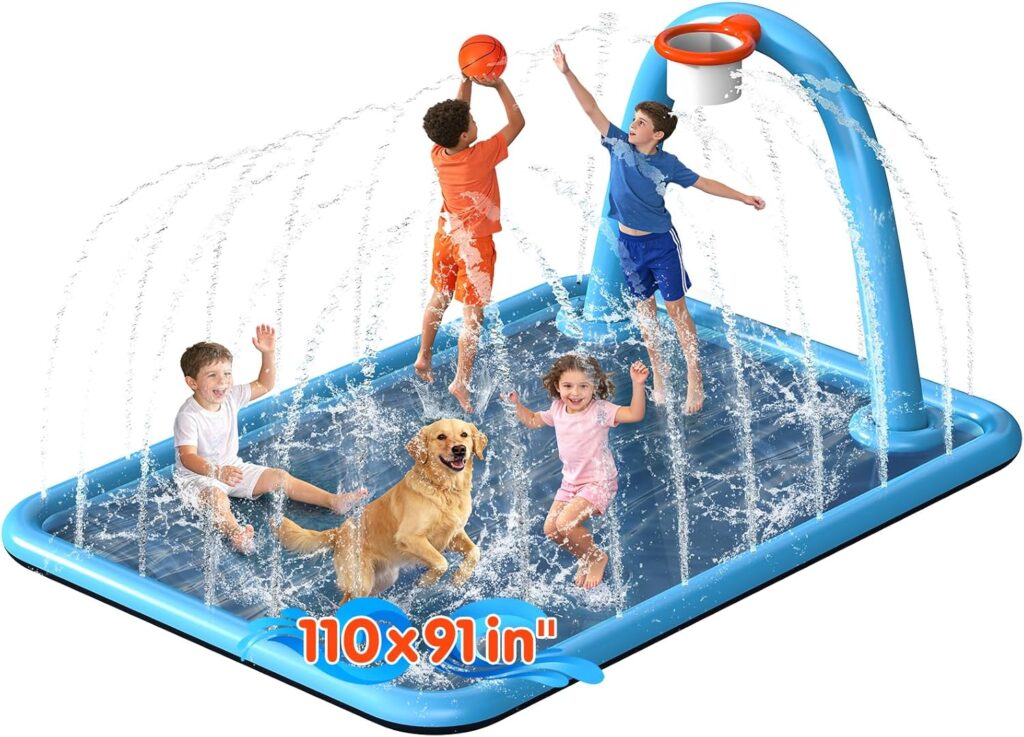
- Add soft waterproof balls, rings, or lightweight targets
Better for Shared Use
A larger splash pad works well when siblings, friends, visiting relatives, or supervised pets join the activity. Extra room allows different ages and play styles to use separate areas.
- Suitable for siblings and summer playdates
- Creates a clear water-play zone during birthdays or barbecues
- Gives children and supervised pets more independent movement space
Made for Children Ages 3 and Up
The open circular layout gives children room to step, sit, and move through shallow water without the depth of a traditional pool. Younger children often feel more comfortable when the spray begins low and rises gradually.

Children of different ages may use the same splash pad in different ways. Younger players may prefer sitting near shorter streams or collecting soft toys from the center. Older children may enjoy walking games, gentle relays, or taller spray.
When several ages play together, begin with a lower setting and set clear boundaries. Faster activities can be saved for separate turns so that smaller children are not surrounded by running players.
For more manageable family play:
Maintain continuous adult supervision
Use low pressure for children who are new to sprinkler play
Increase the water height only when everyone is comfortable
Limit the number of players according to the available space
Keep running speeds controlled
Stop pushing, rough play, and climbing on the outer ring
Take regular breaks for water, sunscreen, and rest
Drain the pad immediately after the activity ends
A splash pad is a water toy and should never be treated as a substitute for adult supervision.
Supervised Cooling for Dogs
Selected EPN splash pads can provide a shallow cooling area for calm dogs during warm weather. Pet use requires extra care because claws, chewing, digging, and sudden movement can place additional stress on the PVC surface and outer seams.

For a dog using the pad for the first time, begin with the water turned off or set very low. Allow the dog to walk across the dry center, smell the hose, and move away without being forced to stay. The spray can then be raised slowly once the dog appears comfortable.
Some dogs prefer standing near the lower streams, while others may sit in the shallow center. Stop the activity if the dog becomes anxious, begins scratching, or tries to bite the moving water around the edge.
Before pet use:
- Trim sharp nails
- Check the surface for sticks or stones
- Introduce the spray gradually
- Keep the water at a comfortable height
- Stop chewing, scratching, or digging
- Do not allow the dog to pull the hose connector
- Rinse away hair and dirt after use
- Inspect the surface before children return
When both children and pets use the pad, separate turns are easier to supervise and reduce crowding. For frequent pet play or larger dogs, an EPN dog pool with a sprinkler may provide a more suitable structure.
Set Up in Four Simple Steps
Correct setup helps the outer water ring fill evenly and reduces unnecessary pulling around the hose inlet. Take a few minutes to inspect the area before turning on the water.

Step 1: Prepare the Ground
Choose a clean, level area with enough room around the full outer ring. Walk across the setup area and remove stones, branches, exposed roots, hard toys, sharp mulch, and other objects that could press into the PVC.
Flat grass is usually the most comfortable option. A smooth patio may also work when it is clean, level, and not excessively slippery once wet.

Step 2: Unfold the Splash Pad
Place the pad with the textured surface facing upward and allow the PVC to relax naturally. Smooth out larger folds using your hands without pulling hard on the outer edge or forcing the material flat.
Position the hose inlet toward the faucet so the garden hose can reach it without stretching across the play area.

Step 3: Connect the Garden Hose
Secure the garden hose to the inlet or included adapter. Keep the hose line relaxed and slightly curved rather than pulling directly against the connection point.
Check that the inlet is not twisted underneath the outer ring. A sideways pull can place unnecessary pressure on the connection while the ring fills.

Step 4: Adjust the Water Pressure
Turn on the faucet slowly and watch the water travel around the full perimeter. Wait until the outer ring fills evenly before increasing the spray height.
Raise the pressure gradually until the streams suit the age group and planned activity. Reduce the flow if the ring twists, bulges, lifts from the ground, or becomes uneven.
Choose the Right Backyard Location
Placement affects play comfort, water drainage, surface stability, and the condition of the outer seams. Flat grass is often the easiest option because it provides a softer base and allows water to spread into the surrounding lawn.

Before using a grassy area, check for exposed roots, dry branches, stones, sprinkler heads, and uneven patches. Recently cut grass may also leave small clippings on the underside, so the pad should be rinsed and dried after use.
A smooth patio may work when the surface is clean and level. However, runoff can collect around the outer ring and make nearby walking areas slippery. Keep the pad away from steps, doors, outdoor outlets, extension cords, and hard furniture.
Avoid placing the pad on:
Gravel or loose stones
Rough or cracked concrete
Sharp landscaping mulch
Sloped ground
Exposed tree roots
Hot surfaces that have been under direct sunlight
Areas where water collects near a building
Leave enough room around the full perimeter for adults to walk without stepping on the raised edge. Position the hose outside the main route and direct runoff toward a lawn or suitable drainage area.
How to Protect the Outer Seams
Reinforced seams are made for normal backyard use, but correct handling still makes an important difference. Water pressure, hose position, ground preparation, and storage habits all affect the outer ring.

Increase Water Pressure Slowly
Allow water to travel around the complete ring before raising the spray height. A gradual start reduces sudden pressure around one section of the outer edge.
- Begin with the faucet at a low setting
- Watch for sections that are not filling evenly
- Stop increasing the flow if the edge begins to distort
Keep the Hose Connection Relaxed
A stretched or twisted garden hose can pull continuously against the inlet. Position the splash pad so that the hose reaches naturally without crossing the main play route.
- Avoid sharp bends near the adapter
- Do not lift or reposition the pad by the inlet
- Check the connection after children enter the play area
Keep Hard Objects Outside the Pad
Shoes, chairs, scooters, sharp toys, and heavy outdoor equipment can press against the PVC and seams. Prepare a separate dry area for items that are not suitable for water play.
- Use only soft and lightweight water toys
- Keep garden tools away from the setup area
- Prevent children from standing on the outer ring
Drain Before Moving
A water-filled outer ring is heavier and places more strain on the seams. Turn off the faucet, disconnect the hose, and wait for the ring to empty before lifting the pad.
- Lift the pad from several points when possible
- Do not pull one corner across rough ground
- Remove remaining water before folding
Dry Both Sides Before Folding
Moisture trapped inside folds can lead to odor, surface sticking, and difficult storage. Dry the upper surface first, then turn the pad over carefully.
- Check underneath the outer edge
- Allow extra drying time after humid weather
- Never seal a damp pad inside a storage container
Basic Splash Pad vs. Strong-Seam Splash Pad
Color and price are easy to compare, but seam construction, material thickness, spray direction, and storage behavior usually become more important after repeated use.

| Feature | Basic Splash Pad | Strong-Seam Splash Pad |
|---|---|---|
| Outer Ring | Lightweight sealed edge | Reinforced or welded edge made for normal water pressure |
| Material Feel | Thin and light | Thicker PVC with a more substantial feel |
| Spray Pattern | May become uneven if the ring loses shape | More consistent inward spray when correctly connected |
| Best Use | Occasional short play sessions | Repeated backyard play, parties, and family activities |
| Ground Preparation | Still requires a clean surface | Requires flat ground and removal of sharp debris |
| Water Control | Hose pressure changes spray height | Gradual pressure adjustment helps protect the outer ring |
| Storage | Can crease when folded tightly | Best stored dry with broad, loose folds |
Plan the Right Size for Your Yard
A larger splash pad gives children more room to move, but the listed diameter is only part of the total space needed. The setup area should also include walking room around the outer ring, space for the garden hose, and a suitable direction for runoff.

Before ordering, measure the full flat area rather than estimating from the lawn size. Chairs, tables, fences, steps, trees, and garden beds can reduce the usable space even when the yard appears large.
A smaller format may work well for one or two children, compact lawns, and short weekday play sessions. Larger formats are more suitable for siblings, visiting friends, birthday activities, and families who want different games taking place at the same time.
Check the following before choosing a size:
Measure the available flat ground
Leave walking space around every side
Keep the outer ring away from walls and hard furniture
Check that the garden hose reaches without stretching
Consider how many children will play at one time
Leave separate room for towels, shoes, and dry items
Confirm where the water will drain
Prepare enough storage space for the folded pad
For group play, a larger center can reduce crowding, but the number of players should still remain appropriate for the available movement space.
Backyard Party Play Without a Large Pool
A splash pad can create an active summer play area without the filling time, water depth, and storage space required for a traditional backyard pool. It connects directly to a garden hose, provides shallow water in the center, and drains after the activity ends.

For birthdays, barbecues, and weekend gatherings, place the splash zone where adults can see the full area. Keep food, phones, speakers, electrical cords, and gift tables in a separate dry space.
A simple three-zone layout works well:
- Water area for the splash pad and soft water toys
- Dry area for towels, shoes, drinks, and sunscreen
- Shaded rest area for breaks between turns
When several children attend, divide them into smaller groups rather than placing everyone on the pad at once. Short turns provide more room for movement and make it easier to adjust activities for different ages.
Party preparation may include:
- Dry towels for each child
- Drinking water
- Sunscreen
- A shaded seating area
- Soft waterproof balls or rings
- Non-slip footwear outside the pad
- A separate place for food and electronics
- Continuous adult supervision
Turn off the water during snack breaks and drain the pad when the activity is finished. Keeping the play area organized makes cleanup easier and prevents wet tra
Drain, Dry, Fold, and Store
Correct care after each use helps protect the PVC surface, hose inlet, outer seams, and folded areas. Do not leave the splash pad filled with water or folded while damp for long periods.

Dry Both Sides
Leave the upper side open until surface moisture has disappeared. Turn the pad over carefully and allow the underside, folded areas, and outer edge to dry fully.
Drying time may take longer during humid weather or after use on wet grass. Check the underside by hand before preparing the pad for storage.
Rinse the Surface
Use clean water to remove grass, soil, sunscreen, food residue, leaves, and pet hair. Pay extra attention to the textured center, hose connection, and areas where debris may collect beside the outer ring.
A soft cloth can be used for light marks. Avoid stiff brushes, sharp cleaning tools, and harsh chemicals that may damage the PVC surface.
Dry Both Sides
Leave the upper side open until surface moisture has disappeared. Turn the pad over carefully and allow the underside, folded areas, and outer edge to dry fully.
Drying time may take longer during humid weather or after use on wet grass. Check the underside by hand before preparing the pad for storage.
Fold Along Broad Lines
Begin with the pad completely empty and dry. Fold it gently without pressing narrow creases through the hose inlet or repeatedly forcing the same line across the outer seam.
Changing the fold direction occasionally can help prevent one area from carrying all the storage pressure.
Store in a Cool, Dry Area
Place the folded splash pad on a shelf or inside a clean storage bin away from direct sunlight, heaters, sharp tools, heavy objects, and rodents.
Do not place heavy equipment on top of the folded PVC. Keep the hose adapter and instructions together so the pad is ready for the next warm-weather session.
EPN Experience with PVC Outdoor Equipment
EPN is part of American Epsilon Inc. and develops PVC and composite items for outdoor recreation, family activities, pet cooling, and seasonal pool care.
Working across different outdoor categories requires attention to many of the same construction areas found in a splash pad, including PVC thickness, welded seams, water inlets, valves, folding points, and storage conditions.
The EPN outdoor range includes:
- Kids splash pads
- Large family splash pads
- Soccer splash pads
- Dog pools with sprinklers
- Inflatable snow tubes
- Pool cover pillows
- PVC maintenance and repair supplies
Splash pads depend on a stable water ring and a secure hose connection. Dog pools need wall support and drainage. Pool pillows require sealed inflatable construction, while snow tubes must remain flexible in cold conditions. These different uses build practical experience with PVC structures exposed to water, pressure, movement, folding, and seasonal storage.
EPN focuses on clear setup instructions, practical backyard use, and care steps that can be followed throughout the season.

Details That Support Everyday Use
Small construction details affect how the splash pad connects, fills, sprays, drains, and stores. Each area has a different function during normal backyard use.

Reinforced Outer Edge
The perimeter seam helps the water ring remain closed and evenly shaped while the garden hose is running. A stable edge also keeps the spray openings in a more consistent position around the circular play zone.
Correct pressure remains important. The edge should look firm and even rather than heavily stretched or lifted from the ground.
Garden Hose Inlet
The inlet directs water from a standard garden hose into the outer ring. A secure connection helps reduce dripping and prevents the adapter from loosening as the ring fills.
Position the inlet toward the faucet before setup. This keeps the hose from stretching across the center or pulling sideways against the connection.
Textured Center Surface
The center area uses a textured finish to provide more wet-foot grip than a completely smooth plastic sheet. It also creates a defined area for sitting, stepping, collecting toys, and gentle water games.
The surface should still be placed on flat ground. Texture can help with grip, but it cannot remove every slipping risk during active water play.
Inward Spray Openings
Small openings along the outer ring direct the streams toward the center. This keeps more water inside the play area and reduces unnecessary spray across surrounding furniture, paths, or garden beds.
Spray direction may change slightly if the pad is folded, twisted, or placed on uneven ground. Flatten the ring and adjust the pressure gradually before use.
Flexible PVC Body
The PVC construction remains flexible enough to unfold for setup and fold again after drying. This allows the pad to be stored without requiring permanent backyard space.
Avoid forcing the material into a very small package. Wider folds place less concentrated pressure on the outer seams and hose connection.
Open Circular Layout
The center contains no large inflatable structure or permanent obstacle. Children can move between lower and higher streams, sit in the shallow water, or change activities during the same session.
The open shape also makes it easier for adults to see the full play area from nearby seating or shaded spaces.
What Families Value During Summer Play
A practical splash pad should be easy to prepare, flexible enough for different activities, and manageable after the water is turned off.

Quick and Simple Setup
Families can prepare a backyard water area without inflating a large structure or waiting for a deep pool to fill. Most of the setup involves choosing level ground, unfolding the pad, and connecting the garden hose.
- No separate air pump is required
- Water height is controlled at the faucet
- The pad can be moved when it is fully drained
Flexible Play for Different Ages
The same splash pad can provide gentle streams for younger children and taller spray for more active play. Families can also change games without replacing the main water toy.
- Low streams support calm introductory play
- Medium streams work for walking and soft toy games
- Larger sizes provide room for siblings and small groups
Easier End-of-Day Care
After use, the water ring can be emptied without the maintenance required for a deep pool. Rinsing and drying the pad immediately also helps keep it ready for the next session.
- Drains faster than a large filled pool
- Folds after both sides are fully dry
- Stores on a shelf or in a clean storage bin
Related EPN Outdoor Products
EPN offers several outdoor products for different seasons, play styles, and family needs. These options can be used alongside a splash pad or selected for more specific backyard activities.

Designed for everyday summer water play, the kids splash pad connects to a standard garden hose and creates inward-facing spray around an open center area. It works well for lawn play, cooling breaks, and simple family activities.

The soccer splash pad combines sprinkler play with a sports-themed setup. Children can kick soft balls, move through the spray, and take part in simple backyard games during parties, playdates, or weekend gatherings.

A dog pool with a sprinkler provides a more pet-focused water area for regular cooling and supervised outdoor play. The structured pool wall and wider water space may be more suitable for larger dogs or families planning frequent pet use.

A pool cover pillow supports seasonal above-ground pool preparation during colder months. It reflects EPN’s experience with PVC construction beyond summer toys and provides an option for families maintaining outdoor pools throughout the year.
Frequently Asked Questions
What makes splash pad seams stronger?
Reinforced edge construction, welded sealing, and thicker PVC help the outer water ring remain closed and stable under normal garden hose pressure.
Can the splash pad connect to a standard garden hose?
Yes. Connect the hose securely, begin with low pressure, and increase the flow gradually until the desired spray height is reached.
Why does the spray height look uneven?
Uneven ground, a twisted hose, incomplete ring filling, or excessive pressure can affect the spray. Flatten the pad and restart with lower water flow.
Is a splash pad suitable for backyard water games?
Yes. The open center supports splashing, walking games, soft ball play, cooling breaks, and supervised party activities.
Can children and dogs use the same splash pad?
Selected options may support both. Trim dog nails, prevent chewing or digging, supervise closely, and check the surface before children return.
How can seam leaks be reduced?
Use flat ground, remove sharp debris, avoid excessive pressure, never drag the filled pad, and dry it completely before storage.
Can the splash pad be placed on a patio?
A smooth, clean, level patio may work. Avoid rough concrete, sharp edges, steep slopes, and surfaces that become dangerously slippery.
How should the splash pad be stored?
Drain the ring, rinse the surface, dry both sides, fold along broad lines, and store away from heat and sharp objects.
Is a splash pad easier to maintain than a kiddie pool?
A splash pad usually drains and stores faster. A kiddie pool holds deeper water and may require more filling, cleaning, and supervision.
Can the spray height be adjusted?
Yes. Lower hose pressure produces gentler streams, while gradually increasing the flow raises the spray height.
Ready for Stronger Backyard Water Play
EPN splash pads combine thick PVC, reinforced edge construction, inward-facing water streams, a textured center surface, and simple garden hose setup. The open play area works well for hot afternoons, family gatherings, birthday activities, lawn games, and supervised pet cooling.
Choose a size that fits the available ground space, prepare a clean and level surface, and begin with low water pressure. After play, drain the outer ring, dry both sides, and fold the pad loosely for storage.