Skip to content
Best Backyard Water Games for Kids Who Love Sports
# Your Trusted Inflatable Supplier In US

Some kids are happy to splash for five minutes. Other kids need movement. They want to kick, throw, run, score, race, pass, and make up challenges with friends or siblings. For children who already love sports, a normal sprinkler or small pool may not hold attention for long. They need water play that feels like a real game.
The best backyard water games for kids who love sports combine cooling, movement, simple rules, and repeat play. Soccer splash games, basketball water games, relay races, target tosses, and team challenges can help children stay active outdoors without needing a full-size pool or complicated backyard setup.
For parents, the real value is practical. A good water game should be easy to set up, simple to supervise, quick to drain, and interesting enough for children to ask for again. For retailers, distributors, and custom project customers, sports-style water toys also carry strong seasonal value because they connect several family needs at once: summer cooling, screen-free play, birthday activities, backyard parties, and active outdoor fun.
A strong backyard water game does not need to be oversized. One flat splash pad, one soft ball, one garden hose, and one clear goal can turn a hot afternoon into a soccer challenge, shooting contest, relay race, or family tournament. The better question is not only which water toy looks fun. It is which one children will actually use again after the first day.
What Backyard Water Games Do Kids Like?
Kids usually like backyard water games that are easy to understand, active, and repeatable. For children who love sports, the best games often include a clear goal, light competition, quick turns, and enough movement to feel exciting. Kicking, throwing, aiming, racing, and team challenges usually hold attention longer than simple splashing.
Why Sports Kids Love Water Games
Sports-minded kids often enjoy water games because they give familiar movements a summer twist. A soccer kick feels more exciting when the ball rolls across a wet play surface. A simple toss becomes more fun when water spray is part of the challenge. A short race feels different when children are trying to move quickly while staying cool.
The important point is that water alone does not always keep children engaged. Many kids enjoy the first few minutes of splashing, but they may lose interest if there is no task, score, or challenge. Sports water games work better because they give children something to do after the first burst of excitement.
A good backyard water game should answer one simple question for the child: “What am I trying to do?” If the answer is clear, children join faster and stay involved longer. That is why games like “score five goals,” “hit the target,” “fill the bucket,” or “beat the timer” often work better than open-ended water play.
Parents do not need to create strict rules. Simple rules usually work best. Children should be able to understand the game in less than one minute and start playing almost immediately. Once they enjoy the first round, they often change the rules on their own, make teams, count points, or invent harder challenges.
Sports-style backyard water games are especially useful for:
- Kids who get bored with basic sprinklers or passive water toys
- Families who want screen-free outdoor play after school or on weekends
- Children who already enjoy soccer, basketball, running, aiming, or team play
- Siblings with different ages and different energy levels
- Birthday parties, BBQs, playdates, and family gatherings
- Retailers looking for seasonal water toys with more than one use scene
A water game becomes more valuable when children can play it in several ways. One day it may be a soccer challenge. Another day it may become a target toss or relay game. That flexibility is one reason sports water toys can feel more useful across a full summer season.
What Makes Water Games Fun
A backyard water game usually works well when it has four parts: movement, cooling, challenge, and quick restart. Movement keeps kids active. Cooling makes outdoor play more comfortable in hot weather. Challenge gives them a reason to try again. Quick restart keeps the game from slowing down.
Parents often focus on the size of a water toy, but size alone does not decide whether kids will keep playing. A large product with no clear activity may be exciting at first and then forgotten. A smaller setup with a goal, target, hoop, or relay rule may be used again and again because children know how to turn it into a game.
For sporty kids, the best backyard water games often include short rounds. A 2-minute shooting challenge or a 5-goal soccer game can feel more exciting than 20 minutes of unstructured play. Short rounds also help when several children are playing because each child gets more turns.
| Game Feature | Why Kids Like It | Parent Benefit |
|---|---|---|
| Clear goal | Kids know what to do quickly | Less time explaining rules |
| Short rounds | Children get more turns | Easier to manage groups |
| Light competition | Makes the game exciting | Keeps kids involved longer |
| Adjustable distance | Works for different ages | Siblings can play together |
| Team option | Adds cooperation and cheering | Better for parties and playdates |
| Easy reset | Kids can restart quickly | Less work for parents |
The strongest games are usually flexible. A soccer splash game can be played alone, with siblings, or in teams. A target toss can be made easier for younger kids or harder for older kids. A relay race can work for two children or a larger group.
Families comparing sports splash pads should also pay attention to material and structure. A product made with stronger PVC, stable edges, and balanced spray holes can support more active play than a basic splash mat. For more detail on material quality, EPN’s guide on what material is best for a splash pad gives a useful starting point.

Which Kids Need Active Games
Active water games are especially helpful for children who get bored quickly with passive toys. Some kids enjoy sitting in a kiddie pool, but others want to move almost immediately. They may prefer running, kicking, scoring, racing, or competing with siblings. For these children, a backyard water game should feel more like a sports activity than a simple cooling toy.
Age also matters. Younger children usually need slower games, shorter distances, and softer rules. Older children often enjoy scoring systems, timed rounds, and team challenges. If the same water play setup can support both, parents get more value from one product.
| Age Range | Better Game Style | Suggested Round Time | Parent Tip |
|---|---|---|---|
| Ages 3–4 | Gentle toss, soft kick, splash walk | 3–5 minutes | Keep rules very simple |
| Ages 5–6 | Goal kicking, target toss, mini relay | 5–8 minutes | Use close targets and soft balls |
| Ages 7–8 | Timed shots, team relays, score games | 8–12 minutes | Add points or team rounds |
| Ages 9+ | Sports challenges, tournaments, trick shots | 10–20 minutes | Let kids help set the rules |
Mixed-age play needs extra thought. A 4-year-old and a 9-year-old should not always compete from the same distance or with the same scoring rules. Younger children can stand closer to the goal, use larger targets, or get extra turns. Older children can take shots from farther away, use a timer, or help younger players.
For families, the best backyard water games are not just the ones kids like on the first day. They are the ones children can return to throughout summer with new rules, new teams, and new challenges.
Which Backyard Water Games Work Best?
The best backyard water games are the ones children can understand quickly, play safely under adult supervision, and repeat without complicated setup. For sports-loving kids, soccer splash games, basketball water games, relay races, target toss games, and team challenges usually work best because they combine cooling, movement, scoring, and group play.
Soccer Water Games
Soccer water games are one of the easiest backyard water activities to set up because they only need a soft ball, a safe play area, and a clear goal. Kids already understand the basic idea: kick the ball, aim for the goal, and try to score. When water spray is added, the game feels more exciting without making the rules harder.
For younger children, soccer water games can stay very simple. Parents can place a soft ball near the splash area and ask children to kick it into a wide goal or between two safe markers. For older children, the game can become more challenging with timed rounds, farther shooting lines, team scoring, or parent-child penalty kicks.
A soccer splash pad works especially well because it gives the activity a clear play zone. Children know where to stand, where the goal is, and where the water play happens. This helps prevent the game from spreading across the whole yard and makes supervision easier.
Soccer water games can support:
- Close-range kicks for younger children
- Penalty shootouts for siblings
- Parent goalkeeper rounds for family play
- Team goals for birthday parties
- Trick-shot challenges for older kids
- Light practice for kids who already enjoy soccer
| Soccer Water Game | Best For | Suggested Players | Round Time | Setup Level |
|---|---|---|---|---|
| Penalty kick splash | Quick backyard play | 1–4 kids | 3–5 minutes | Easy |
| First to 5 goals | Siblings or friends | 2–4 kids | 5–8 minutes | Easy |
| Parent goalkeeper | Family play | 1–3 kids + adult | 5–10 minutes | Easy |
| Team mini match | Playdates or parties | 4–8 kids | 8–12 minutes | Medium |
| Trick shot round | Older kids | 1–4 kids | 5–10 minutes | Easy |
For EPN, soccer-style water play is a strong direction because it adds more value than simple splashing. A sports splash pad needs stable edges, even spray, reliable hose connection, and a surface designed for repeated summer use. These details matter more when children are stepping, kicking, turning, and restarting the game many times in one afternoon.
Families using a soccer splash pad on a lawn should check the ground before play. A flat grass area usually feels more comfortable for kicking and stepping, but stones, sticks, and uneven ground should be removed first. EPN’s article on can you use a splash pad on grass fits naturally with backyard soccer water play.
Basketball Water Games
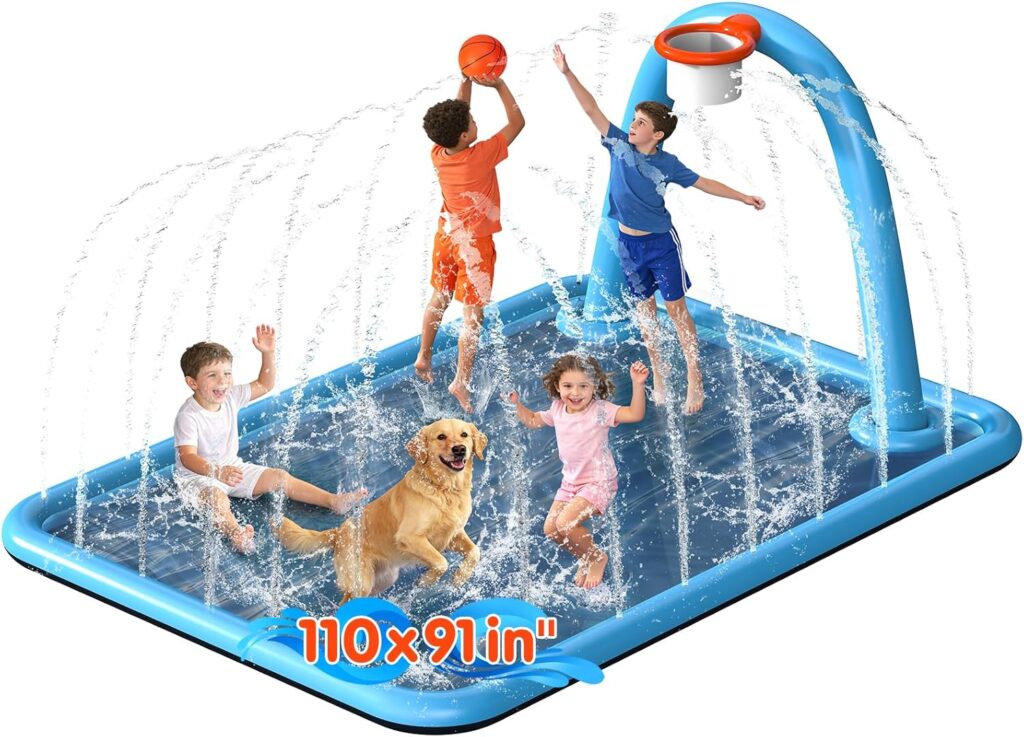
Basketball water games are a good choice for families who want active play but do not have a large backyard. Compared with soccer or relay games, basketball-style water games can work in a smaller area because children mainly stand, aim, shoot, retrieve, and rotate turns.
This type of game is especially useful for children who enjoy scoring and personal challenges. A simple shooting game can become more interesting with different distances, timed rounds, or point zones. Younger children can shoot from close range, while older children can move farther back or try harder angles.
Parents can also use basketball water games to reduce waiting during group play. Each child can take three shots, then move to the back of the line. For parties, a 30-second or 60-second shooting round works well because children do not need long instructions and everyone gets a turn quickly.
| Basketball Water Game | Best For | Suggested Players | Round Time | Parent Tip |
|---|---|---|---|---|
| 3-shot challenge | Quick play | 1–5 kids | 2–4 minutes | Let each child take 3 turns |
| First to 10 points | Siblings | 2–4 kids | 5–8 minutes | Use simple scoring |
| Timed shooting | Parties | 2–8 kids | 30–60 seconds each | Rotate fast |
| Distance challenge | Older kids | 1–4 kids | 5–10 minutes | Add close, middle, far lines |
| Parent-child team shots | Family play | 2–6 players | 5–10 minutes | Pair adults with younger kids |
The most important detail is equipment choice. Soft, lightweight balls are better for water play. Hard balls, heavy items, or sharp-edged targets should be avoided in wet areas. The surface should also be clear of patio furniture, planters, grills, and steps so children have enough room to move safely.
Relay Water Games
Relay water games work well when several children are playing together. They are active, easy to organize, and suitable for birthdays, playdates, family gatherings, and school break afternoons. Unlike soccer or basketball, relays do not require strong sports skills, so more children can join comfortably.
A relay game can be as simple as carrying a sponge from one bucket to another, filling a cup before the other team, or passing a wet towel down a line. These games are especially good for mixed-age groups because the rules are simple and the distance can be adjusted.
For younger children, keep the relay short and slow. A 6-foot walking relay may be enough. For older children, parents can add timing, team points, or extra steps. The goal is to make the game exciting without turning the yard into a slippery running track.
| Relay Game | Best Age Range | Suggested Players | Round Time | Why It Works |
|---|---|---|---|---|
| Sponge transfer | 4–10 | 2–8 kids | 3–5 minutes | Easy, low-cost, good for teams |
| Cup fill race | 5–12 | 2–10 kids | 4–6 minutes | Adds a clear goal |
| Towel pass | 4–8 | 3–8 kids | 3–5 minutes | Good for younger kids |
| Bucket balance walk | 6–12 | 2–8 kids | 5–8 minutes | Slower but challenging |
| Splash pad relay | 5–10 | 2–8 kids | 5–8 minutes | Combines water zone and movement |
Relay games work best when parents prepare the path before play starts. The route should be flat, short, and free of obstacles. If children are playing near a splash pad, the relay can begin outside the wet zone and finish at the water area, so the movement stays controlled.
Target Water Games
Target water games are simple, flexible, and useful for families with different age groups. Kids can throw soft balls, water-safe rings, sponges, or lightweight beanbag-style toys toward safe targets. The target can be a hoop, a bucket, a circle on the ground, or a wide goal area.
These games are helpful because they allow children to play at their own pace. Not every child wants to race. Some children enjoy aiming, adjusting, and trying again. Target games also work well when the yard is small or when parents want a calmer activity between more active rounds.
| Target Distance | Suggested Age | Points | Game Feel |
|---|---|---|---|
| 3–5 feet | Ages 3–5 | 1 point | Easy and confidence-building |
| 6–8 feet | Ages 5–8 | 2 points | Balanced challenge |
| 9–12 feet | Ages 8+ | 3 points | More difficult |
| Moving target | Ages 9+ | Bonus point | Best for older kids |
Target games are also useful for parties because they do not require much explanation. Children can step up, throw three times, count points, and rotate. This keeps the group moving and prevents long waiting lines.
Team Water Challenges
Team water challenges are often the most memorable because they turn a backyard game into a shared event. Children enjoy choosing teams, counting points, cheering, and trying to beat the next round. For sporty kids, team play can make water games feel more like a real match.
The best team challenges are short and clear. A game like “first team to score 5 goals” or “first team to fill the bucket” is easier than a long list of rules. Short rounds also help parents manage energy levels, especially during hot weather.
Team challenges can combine several game types:
- Soccer goal round
- Basketball shooting round
- Sponge relay round
- Target toss round
- Parent-child bonus round
- Kids vs adults final round
| Challenge Round | Players Needed | Suggested Time | Best For |
|---|---|---|---|
| Soccer goals | 2–8 | 5 minutes | Active kids |
| Basketball shots | 2–8 | 3 minutes | Small yards |
| Sponge relay | 4–10 | 5 minutes | Mixed groups |
| Target toss | 2–8 | 4 minutes | Different ages |
| Kids vs adults | 4+ | 5–10 minutes | Family play |
Team games also help children who may not be the most athletic. A child can help by passing, cheering, carrying water, or taking a closer shot. This makes the game feel more inclusive and less stressful.

How Do Sports Water Games Keep Kids Moving?
Sports water games keep kids moving by turning cooling time into active play. Instead of only standing in water, children kick, throw, aim, pass, run short distances, balance, and work with teammates. The best games feel like play, but they also support coordination, confidence, outdoor movement, and screen-free summer routines.
Kicking Games for Kids
Kicking games are one of the easiest ways to add movement to backyard water play. Children do not need advanced soccer skills to enjoy them. A soft ball, a clear target, and a safe water play area can create a simple game that works for many ages.
For younger kids, kicking games should stay slow and close. They can stand a few feet from the goal and practice gentle kicks. The goal is not power. The goal is confidence, balance, and basic coordination. When children kick while standing near light spray, they naturally adjust their feet, look at the target, and try again.
Older children usually want a bigger challenge. They may enjoy timed rounds, farther shooting lines, or team scoring. A parent can create simple zones so the same game works for different ages.
| Age Range | Kicking Distance | Best Game Style | Suggested Round Time |
|---|---|---|---|
| Ages 3–4 | 3–5 feet | Gentle goal kick | 3–5 minutes |
| Ages 5–6 | 5–8 feet | First to 3 goals | 5–8 minutes |
| Ages 7–8 | 8–12 feet | Timed scoring round | 8–10 minutes |
| Ages 9+ | 12+ feet | Team match or trick shot | 10–15 minutes |
Kicking games also help parents control the energy level. Instead of letting kids run everywhere in the yard, the game gives them a clear action and direction. They kick, reset, take turns, and repeat. That structure makes the activity feel active without becoming chaotic.
For a sports splash pad, the product design matters. A stable play surface, balanced spray, and secure hose connection help the game feel smoother. If the spray is uneven or the edge collapses easily, kids may stop focusing on the game and start reacting to the product. A well-designed splash pad keeps the attention on play.
H3: Throwing Games for Kids
Throwing games are useful because they keep kids active without requiring too much running. This makes them a good choice for smaller yards, younger children, mixed-age groups, or hot afternoons when parents want movement but not overexertion.
A simple throwing game can use soft balls, water-safe rings, sponges, or lightweight toys. Children can aim at buckets, hoops, ground circles, or safe target zones. The game can be made easier or harder by changing the distance, target size, or scoring system.
For sporty kids, throwing games provide a clear sense of progress. They can see whether the throw lands closer to the target. They can adjust their aim, try again, and improve round by round. This repeated action helps build hand-eye coordination in a relaxed way.
| Target Zone | Distance | Points | Best For |
|---|---|---|---|
| Close target | 3–5 feet | 1 point | Younger kids |
| Middle target | 6–8 feet | 2 points | Most children |
| Far target | 9–12 feet | 3 points | Older kids |
| Bonus target | Varies | 5 points | Party games |
Parents can also use throwing games as a calmer break between faster activities. After a soccer splash round or relay race, children can switch to a target toss game. This keeps them engaged while lowering the intensity for a few minutes.
Running Games for Kids
Running games can be fun, but they need more control in a water play area. Wet surfaces change how children move, so backyard running games should use short distances, clear paths, and simple rules. The best option is not a long race across the yard. It is a short, controlled activity that keeps children moving without encouraging reckless speed.
Relay games are often better than open running because they give kids a defined route. A child runs or walks from one point to another, completes a task, and returns. This structure helps parents supervise more easily.
Good running-style water games include:
- Sponge relay
- Cup transfer race
- Short splash pad relay
- Water bucket walk
- Cone-free shuttle race
- Parent-child team relay
| Game Type | Movement Level | Best Age Range | Parent Note |
|---|---|---|---|
| Walking relay | Low to medium | Ages 3–6 | Good for younger kids |
| Sponge relay | Medium | Ages 4–10 | Easy for groups |
| Cup transfer race | Medium | Ages 5–12 | Clear goal, simple setup |
| Short shuttle race | Medium to high | Ages 7+ | Needs open space |
| Team water race | Medium to high | Ages 8+ | Best with close supervision |
Parents should avoid setting up running games near patio steps, furniture, grills, planters, or hard corners. A clear play zone matters more than a large play zone. A shorter, safer route is better than a longer route with obstacles.
Balance and Coordination
Sports water games also help children practice balance and coordination. These skills are often part of play without children noticing. A child stepping carefully near spray, kicking a ball toward a goal, tossing to a target, or passing during a relay is using body control.
Water makes movement feel different. Children may slow down slightly, adjust their feet, and pay more attention to where they step. This can be useful, as long as the game is designed for safe, supervised play. The goal is not to make the surface slippery. The goal is to create light movement challenges that feel fun and manageable.
| Game Type | Main Movement Skill | Example |
|---|---|---|
| Soccer splash game | Foot-eye coordination | Kicking toward a goal |
| Target toss | Hand-eye coordination | Throwing into zones |
| Relay race | Balance and pacing | Carrying water carefully |
| Basketball water game | Aim and upper-body control | Shooting into a hoop |
| Team challenge | Reaction and cooperation | Passing, waiting, and scoring |
Parents do not need to explain these skills to children during play. The benefits come from repeating the movement naturally. A child may kick ten times, throw fifteen times, and run several short rounds in one play session without feeling like they are exercising.
Active Play Without Overdoing It
One concern parents often have is whether children will get too excited during water games. Active play is good, but summer heat, wet surfaces, and group energy need sensible limits.
The best backyard water games use short rounds with breaks. A 5-minute soccer round, a 3-minute target toss, or a 4-minute relay can be enough. After each round, children can drink water, rest in the shade, or switch to a lower-intensity game.
| Play Block | Activity | Time |
|---|---|---|
| Warm-up | Gentle splash or free play | 5 minutes |
| Game 1 | Soccer or basketball challenge | 8–10 minutes |
| Break | Water drink and shade | 3–5 minutes |
| Game 2 | Relay or target toss | 8–10 minutes |
| Cool-down | Light splash play | 5 minutes |
This rhythm keeps the afternoon fun without pushing children too hard. It also makes the play session easier for parents to manage. Parents should watch for signs that children need a break, such as slowing down, arguing more, stepping away from the game, or asking for shade.
Are Splash Pads Good for Sports Games?
Splash pads are good for sports games because they create a shallow, open, and flexible water play area. Kids can kick, throw, aim, pass, and move around without needing deep water. For sporty children, a splash pad often works better than a small pool because it supports active play instead of only sitting, soaking, or standing in water.
Splash Pad Water Games
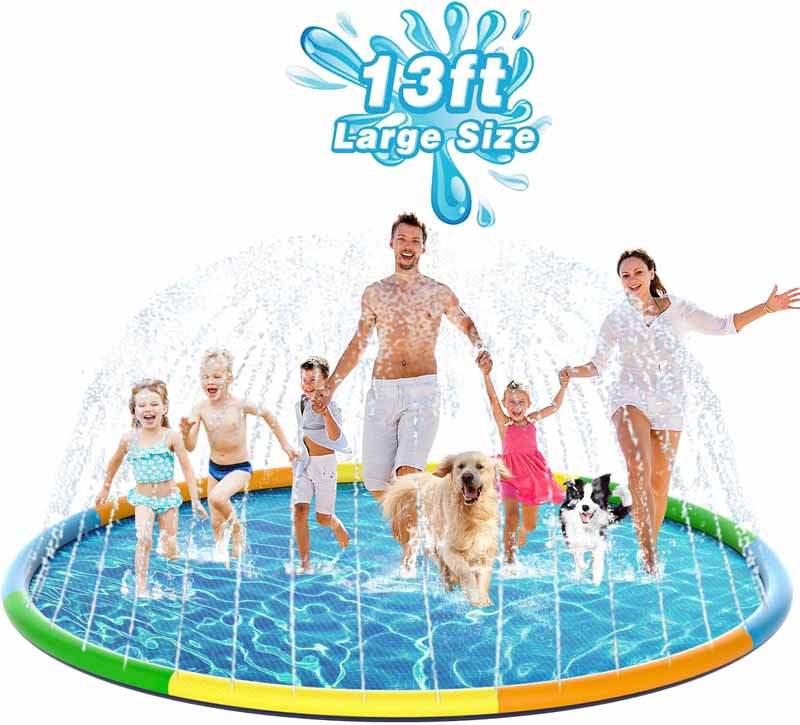
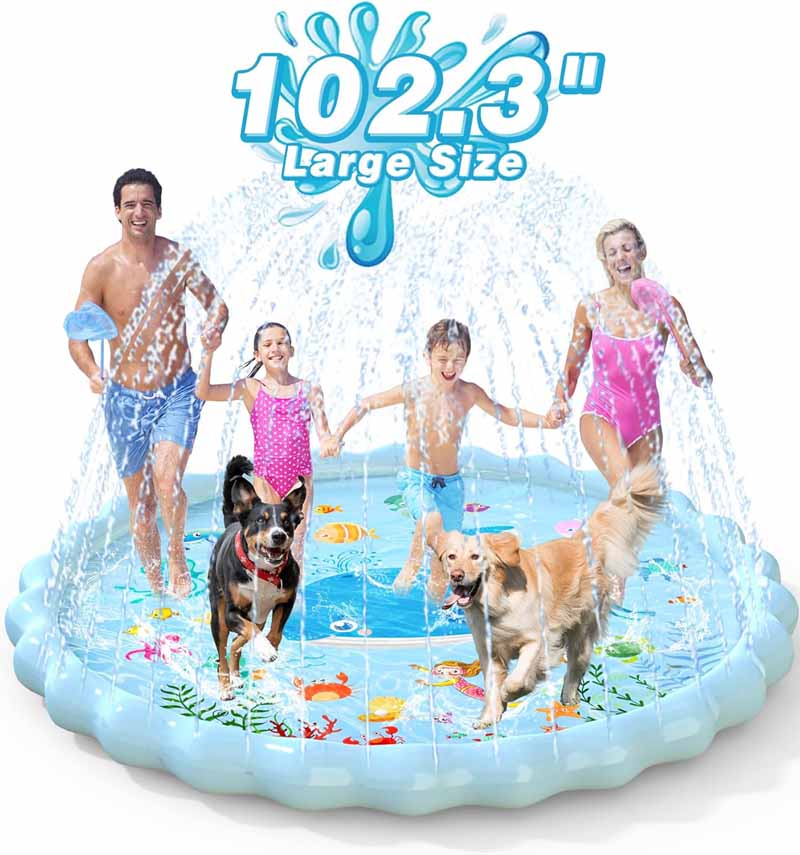
A splash pad can turn a simple backyard into a sports play zone because it gives children both water and space. The water keeps the game cool and fun, while the flat surface makes it easier to move, kick, toss, and restart each round.
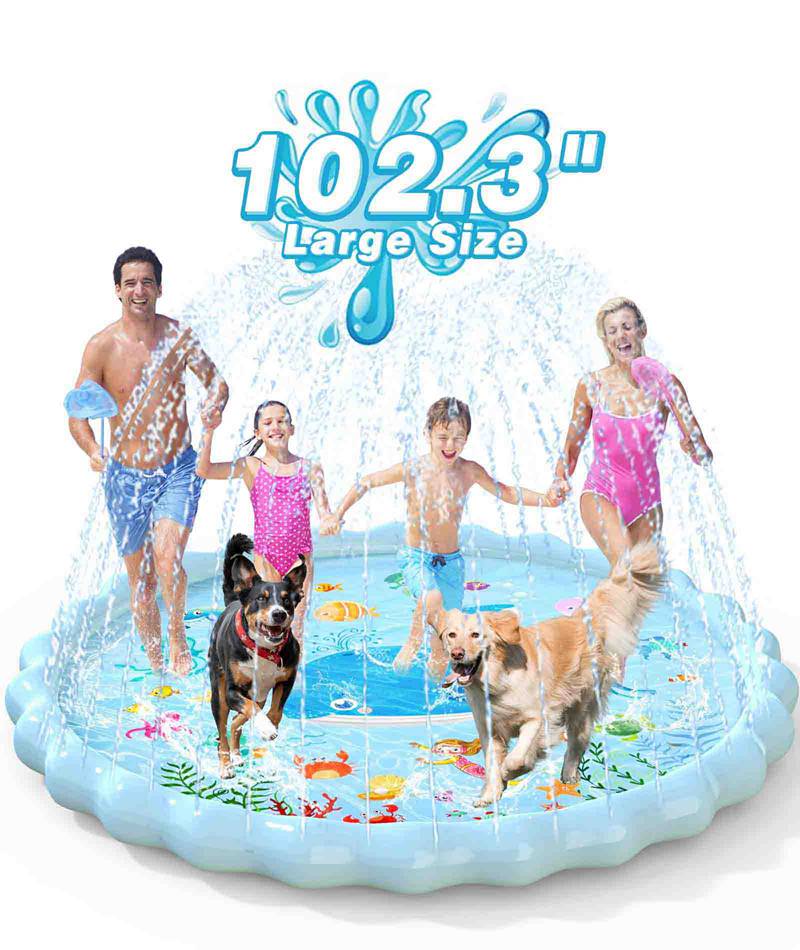
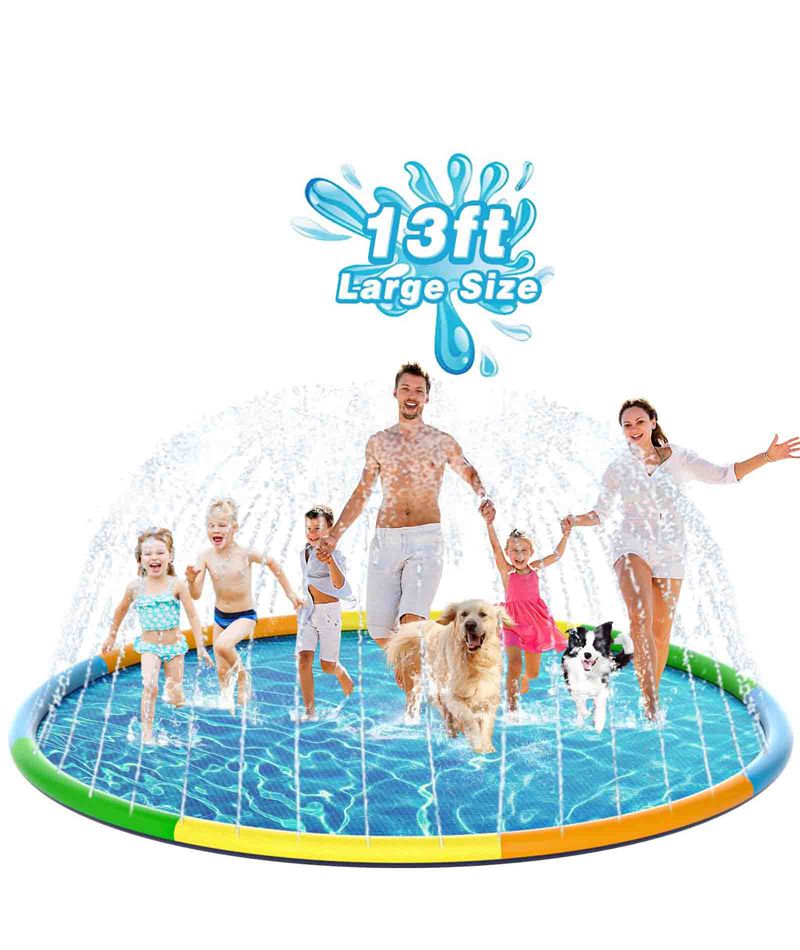
For sports-loving kids, this matters. Many children enjoy splashing for a few minutes, but they stay interested longer when there is a clear activity. A splash pad can support soccer kicks, target tosses, basketball-style shooting games, relay stations, and family team challenges. The product becomes more than a cooling mat. It becomes the center of the game.
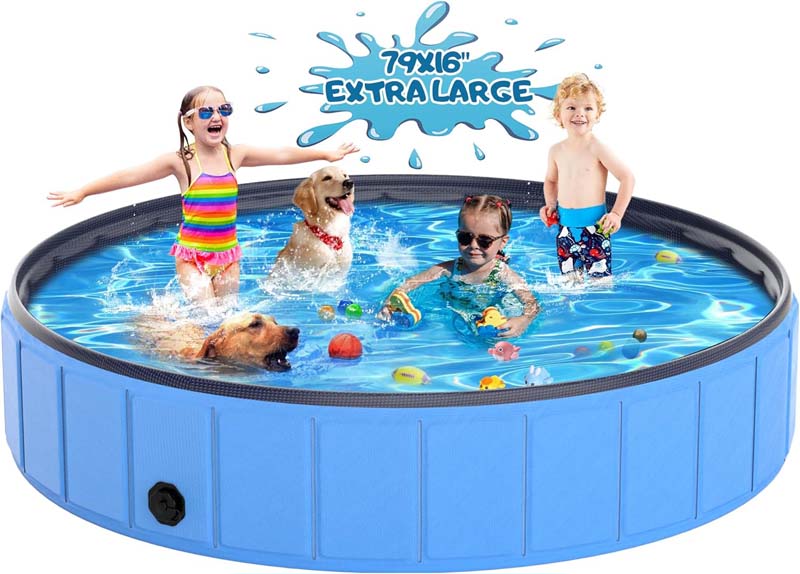
Compared with a kiddie pool, a splash pad usually gives kids more freedom to move. A kiddie pool works well for sitting and soaking, but it does not support kicking, running short relays, or team-based games in the same way. A splash pad keeps the water shallow and spread out, which makes it more practical for supervised sports play.
| Play Need | Splash Pad | Kiddie Pool |
|---|---|---|
| Kicking games | Easier to set up | Limited space |
| Target toss | Works well | Can work, but less open |
| Relay games | Better movement area | Not ideal |
| Sitting and soaking | Less suitable | Better choice |
| Quick drainage | Usually easier | Takes longer |
| Group play | More flexible | Can feel crowded |
| Storage | Foldable and flat | Bulkier depending on style |
A splash pad is not automatically better for every family. If a child only wants to sit and soak, a small pool may be enough. But for kids who like sports, games, and movement, a splash pad usually offers more ways to play.
Why Shallow Water Helps
Shallow water is one reason splash pads work well for sports games. Children do not need deep water to feel cool. A thin layer of water, steady spray, and wet play surface can be enough for summer backyard fun.
For parents, shallow water also makes the play format easier to manage. Children can step in and out quickly. The water can be turned off from the hose. The product can drain after play. This is useful for families who want a water toy that can be used for 20–40 minutes without creating a large cleanup job.
Shallow water also helps keep the focus on movement. In a deeper kiddie pool, children often sit, pour water, or splash in place. On a splash pad, they are more likely to move around, chase a ball, aim at a goal, or take turns in a game.
| Age Range | Better Splash Pad Activity | Water Level / Spray Suggestion |
|---|---|---|
| Ages 3–4 | Gentle splash walk, soft toss, close goal kick | Low spray |
| Ages 5–6 | Simple soccer goals, target toss, mini relay | Low to medium spray |
| Ages 7–8 | Timed scoring, team relay, basketball toss | Medium controlled spray |
| Ages 9+ | Team match, trick shot, water tournament | Medium controlled spray |
The key is control. The water should add fun, not overwhelm the game. Parents can start with low pressure, watch how children respond, and increase the flow gradually if the spray feels too weak.

Sports Splash Pad Features
A sports splash pad should be built for more movement than a basic water mat. Kids may step, turn, kick, throw, and restart games many times in one play session. Because of that, parents should pay attention to the material, edge stability, spray pattern, hose connection, and storage design.
A good sports splash pad should have a clear play area, stable edge, even spray, and a connection point that does not leak heavily under normal use. If the edge collapses too easily, the play area feels unstable. If spray holes are uneven, one side may get too much water while another side stays dry. If the hose connection is weak, the game may stop often for adjustment.
| Feature | Why It Matters for Sports Games | What Families Notice |
|---|---|---|
| Stable edge structure | Helps the pad hold shape during play | Fewer interruptions |
| Even spray holes | Keeps water flow more balanced | More consistent play experience |
| Reinforced hose connection | Reduces stress near the water inlet | Less leaking and adjusting |
| Low-odor PVC | Better first-use experience | More comfortable family use |
| Surface texture | Helps children feel more stable | Better for supervised movement |
| Foldable design | Easier to dry and store | More repeat use |
| Suitable size | Gives kids room to move | Better for sports play |
For EPN, these details are part of product development, not only appearance. EPN works with PVC and composite outdoor recreation products across splash pads, pet pools, inflatable pools, water toys, floats, snow tubes, and pool pillows. This range gives the team practical experience with water pressure, material flexibility, outdoor surfaces, repeated folding, and seasonal storage.
For splash pad products, EPN pays close attention to spray distribution, edge structure, water connection areas, material feel, and repeated outdoor use. These points matter because families do not judge a water toy only on the first setup. They judge it after children have played on it several times.
Families who want to understand why some water toys fail early can read EPN’s guide on why some splash pads leak easily, especially when comparing hose connection design, seam strength, and edge structure.
H3: Soccer and Basketball Play
Sports splash pads are especially useful when the design supports a clear game. Soccer and basketball are two of the easiest sports to bring into backyard water play because children already understand the basic rules.
For soccer-style splash pads, a goal area gives kids something to aim for. The game can start with simple kicking and later become a team match, penalty shootout, or timed scoring challenge. The water adds excitement, but the goal keeps the activity focused.
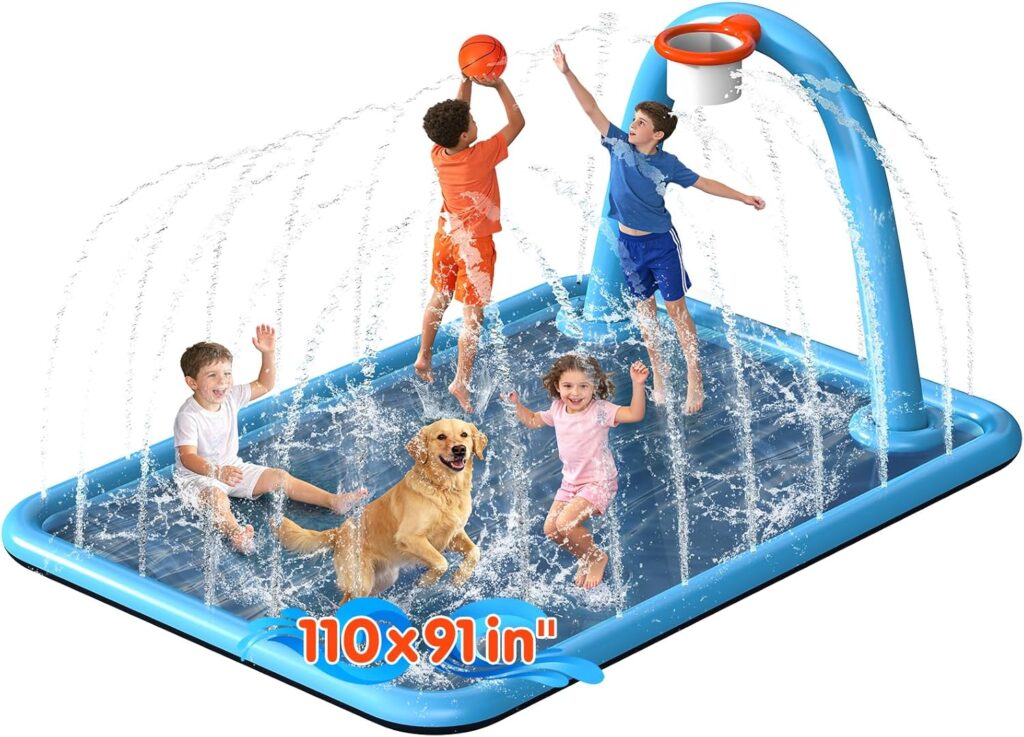
For basketball-style splash games, children can shoot from different distances, count points, or compete in short timed rounds. This is helpful for smaller yards because the game does not require a large running area.
| Sports Game | Best Product Feature | Best Use Scene |
|---|---|---|
| Soccer splash kick | Goal area and open flat surface | Active kids, siblings, parties |
| Penalty shootout | Clear target and enough standing room | Family play |
| Basketball splash shot | Hoop or target point | Smaller yards |
| Timed scoring | Easy reset and safe ball return | Parties and group play |
| Team challenge | Larger play area | Playdates and birthdays |
The strongest sports water games are not complicated. A child should be able to understand the activity quickly. If the game needs too much explanation, younger kids may lose interest before play begins.
Cleaning and Storage
A splash pad is more likely to be used again when cleanup is easy. Parents often stop using summer toys when they are difficult to drain, dry, or store. This is why cleaning and storage should be part of the buying decision, not an afterthought.
After sports water games, the surface may have grass, dirt, small leaves, or footprints. A quick rinse helps remove debris before storage. The product should dry before folding, especially if it will be stored for several days.
| Cleanup Step | Estimated Time | Why It Matters |
|---|---|---|
| Turn off hose | 30 seconds | Stops water pressure |
| Let water drain | 2–4 minutes | Makes the product easier to move |
| Rinse surface | 1–2 minutes | Removes grass and dirt |
| Wipe or air-dry | 5–10 minutes | Helps reduce trapped moisture |
| Fold gently | 1–2 minutes | Reduces material stress |
| Store in shade | Less than 1 minute | Helps protect from long sun exposure |
Parents should avoid folding the product tightly in the same sharp lines every time. Gentle folding or loose rolling can help reduce stress on the material. The product should be stored in a cool, dry place away from direct sunlight when not in use.
For more detail on repeat-use design and storage habits, EPN’s guide on how to choose a splash pad that lasts more than one summer gives families a practical way to compare products before purchase.
How Can Parents Set Up Water Games?
Parents can set up backyard water games by choosing a flat surface, matching the game to the child’s age, controlling water pressure, and keeping the play area clear. A good setup should feel simple for adults and exciting for kids. The best water games are not always the biggest ones, but the ones families can repeat safely and easily throughout summer.
H3: Safe Backyard Surfaces
The surface under a water game affects comfort, safety, and product life. Before connecting the hose or letting children play, parents should check where the game will happen. A flat lawn is often the most comfortable choice because it feels softer under bare feet and gives children more room to move. However, grass still needs a careful check before setup.
Small stones, sticks, dry branches, mulch, roots, and hard toys can sit under the product and create pressure points. These objects may feel uncomfortable when children step on them, and they may also shorten the life of a splash pad or inflatable water toy. Parents should walk the area first, remove sharp debris, and feel for uneven spots before placing the product.
| Surface Type | Best For | What to Check First | Parent Note |
|---|---|---|---|
| Grass lawn | Soccer splash games, relays, family play | Stones, sticks, roots, uneven ground | Usually the most comfortable choice |
| Patio | Target toss, basketball shots, gentle play | Slippery surface, hard edges, drainage | Avoid fast running |
| Decking | Small games, supervised play | Gaps, splinters, water pooling | Use only if the surface is smooth |
| Artificial turf | Kicking games, target play | Heat level, seams, drainage | Check surface temperature first |
| Rough concrete | Not ideal for active water play | Abrasion, sharp texture | Better to avoid if possible |
For sports water games, parents should also look at the surrounding area. Keep the product away from grills, patio furniture, garden tools, steps, glass doors, sharp planters, and pool edges. A clear border around the game can make supervision much easier.
Age-Based Game Setup
A good backyard water game should match the child’s age and confidence level. Younger children usually need shorter distances, lower water pressure, slower movement, and simpler rules. Older children may enjoy scoring, timed rounds, team play, and more challenging targets.
Parents can often use the same product for different age groups by changing the rules. A soccer splash pad, for example, can work for a younger child who kicks from 3 feet away and an older child who shoots from 10 feet away. A target toss game can use a large close target for younger kids and smaller farther targets for older kids.
| Age Range | Better Game Setup | Suggested Play Time | Setup Tip |
|---|---|---|---|
| Ages 3–4 | Gentle splash, soft toss, close goal kick | 10–15 minutes | Keep water pressure low and stay close |
| Ages 5–6 | Mini soccer goals, target toss, short relay | 15–25 minutes | Use short rounds and easy scoring |
| Ages 7–8 | Timed shots, team relays, basketball toss | 20–35 minutes | Add points or simple team rules |
| Ages 9+ | Sports challenges, trick shots, team matches | 30–45 minutes | Let kids help design the rules |
Parents should also consider heat and energy levels. A child may be excited at first but need a break after several active rounds. Water play feels cooling, but kids are still moving, running, and using energy. Short breaks with drinking water and shade are important during summer play.
Easy Water Pressure Tips
Water pressure can change the whole experience of a backyard water game. If the pressure is too low, the game may feel flat. If it is too high, the spray may become uncomfortable, the product may feel unstable, or younger children may step away from the play area.
The safest approach is to start low and adjust slowly. Parents should turn on the hose gently, check the spray height, and watch how children react. If kids are smiling, moving comfortably, and staying in the play area, the pressure is probably right. If they keep covering their faces, stepping away, or avoiding one side of the pad, the spray may be too strong or uneven.
| Water Pressure Level | Best For | Suitable Age | What Parents Should Watch |
|---|---|---|---|
| Low spray | Toddlers, gentle splash, soft toss | Ages 3–5 | Children stay relaxed and comfortable |
| Low to medium spray | Soccer kicks, target games, mini relays | Ages 5–8 | Spray does not hit faces too strongly |
| Medium spray | Team games, older kids, party play | Ages 7+ | Surface remains stable and not too slippery |
| High spray | Usually not needed for sports play | Older kids only with caution | Can waste water and reduce control |
Parents should also check the hose connection during play. If the inlet leaks heavily, the spray may become weaker or uneven. A secure connection helps keep the game consistent. For sports-style water toys, this detail matters because children notice when one side stops spraying or the play area loses shape.
EPN pays attention to water inlet design, spray distribution, and edge structure when developing splash pad products. For families, these technical details show up in simple ways: steadier spray, fewer interruptions, and a smoother play session.
Simple Game Zones
A backyard water game is easier to manage when the play area is divided into simple zones. This does not require cones, signs, or complicated equipment. Parents can use the splash pad, a towel, a soft ball, or the edge of the lawn to create clear areas.
A useful setup may include:
- A water zone where the splash pad or sprinkler area sits
- A waiting zone where children stand before their turn
- A scoring zone such as a goal, hoop, bucket, or target
- A rest zone with towels, shade, and drinking water
- A dry zone where shoes, phones, and snacks stay away from water
| Zone | Purpose | Helpful Item |
|---|---|---|
| Water zone | Main play area | Splash pad or water toy |
| Waiting zone | Turn-taking area | Towel or grass marker |
| Scoring zone | Goal or target area | Soft goal, hoop, bucket, target |
| Rest zone | Break and hydration | Shade, towel, water bottle |
| Dry zone | Keep belongings safe | Chair, storage bin, table |
For families with several children, zones reduce crowding. Instead of everyone running into the water at the same time, children can rotate through the game. This is especially useful during birthday parties or playdates.
Common Setup Mistakes
Most backyard water game problems come from small setup mistakes. These are easy to avoid once parents know what to watch for.
Common mistakes include:
- Setting up on rough or uneven ground
- Turning the hose to high pressure too quickly
- Using hard balls or sharp toys
- Placing the play area too close to steps or furniture
- Letting too many children crowd the same small space
- Skipping water breaks during hot weather
- Folding the product while it is still wet
- Leaving the product in direct sun after play
These mistakes may seem minor, but they can affect both safety and product life. A hard object under the pad can create wear. High water pressure can make spray uncomfortable. Crowding can lead to pushing or falls. Wet storage can create odor.
EPN designs PVC and composite outdoor products with these real-use details in mind, including water connection areas, spray layout, folding behavior, material feel, and repeated outdoor handling. When the product and setup both work well, backyard water games become easier to repeat all summer.
What Backyard Water Games Fit Parties?
Backyard water games that fit parties should be easy to explain, quick to rotate, and suitable for different ages. Soccer splash games, basketball shots, relay races, target tosses, and family team challenges work well because children can join fast, take turns often, and stay active without needing complicated rules.
Birthday Water Games
Birthday parties need water games that keep children involved without making parents manage every second. The best birthday water games are short, clear, and easy to repeat. A child should be able to understand the rule in less than one minute and start playing right away.
For a sports-themed backyard birthday, soccer splash games are one of the easiest choices. Children can line up, take turns kicking a soft ball into a goal, and count points. Younger kids can stand closer to the goal, while older kids can shoot from farther away. If the party has mixed ages, this simple distance adjustment makes the game feel fairer.
| Birthday Game | Best Age Range | Suggested Players | Round Time | Why It Works |
|---|---|---|---|---|
| Soccer splash kicks | Ages 4–10 | 2–6 kids | 3–5 minutes | Easy to understand and active |
| Basketball shot round | Ages 5–12 | 2–8 kids | 30–60 seconds each | Fast turns and simple scoring |
| Sponge relay | Ages 4–10 | 4–10 kids | 4–6 minutes | Good for teams and mixed ages |
| Target toss | Ages 3–10 | 2–8 kids | 3–5 minutes | Works for small yards |
| Kids vs adults round | Ages 5+ | 4+ players | 5–10 minutes | Adds family fun |
For birthday parties, parents should avoid games that require long explanations, hard equipment, or too much running on wet surfaces. The goal is to keep the party moving, not to create a strict sports competition.
Summer Team Games
Summer team games are ideal for backyard parties because they give children a shared goal. Instead of everyone running in different directions, teams can move through simple game stations. This makes the party feel more organized while still keeping the atmosphere relaxed and fun.
A good party setup can include three to five water game stations. Each station should have one simple task: score a goal, make a shot, fill a bucket, hit a target, or finish a short relay. Children rotate between stations every few minutes. This format works especially well for birthdays, BBQs, school break gatherings, and neighborhood playdates.
| Party Station | Main Activity | Suggested Time | Best For |
|---|---|---|---|
| Soccer station | Kick into a goal | 5 minutes | Active kids |
| Basketball station | Shoot into a hoop or target | 5 minutes | Smaller yards |
| Relay station | Sponge or cup transfer | 5–8 minutes | Larger groups |
| Target station | Toss soft items into zones | 5 minutes | Mixed ages |
| Splash break | Free splash play | 5 minutes | Cooling down between rounds |
A simple scoring system might look like this:
| Action | Points |
|---|---|
| Soccer goal | 1 point |
| Far soccer goal | 2 points |
| Basketball shot | 1 point |
| Far basketball shot | 2 points |
| Relay win | 3 points |
| Target center hit | 2 points |
| Teamwork bonus | 1 point |
The teamwork bonus is helpful for parties because it rewards sharing, cheering, and helping younger players. This keeps the game more inclusive and reduces pressure on children who are less competitive.
Family Sports Challenges
Family sports challenges are one of the easiest ways to make a backyard water party feel memorable. Children often enjoy seeing adults join the game, especially when parents, grandparents, aunts, uncles, or older siblings are willing to play along.
A family challenge does not need to be difficult. A parent-child penalty kick round, kids vs adults basketball shots, or a family sponge relay can make the party feel more personal. Children usually remember these shared moments more than a perfectly arranged setup.
Good family challenge ideas include:
- Kids vs adults soccer splash match
- Parent-child penalty kicks
- Family basketball shootout
- Sibling target toss
- Cousin relay race
- Adults-only funny round
- Birthday child bonus shot
- Family team water challenge
| Family Challenge | Best Use | Suggested Players | Parent Tip |
|---|---|---|---|
| Kids vs adults soccer | Birthday parties, BBQs | 4+ | Let kids choose team names |
| Parent-child shots | Smaller gatherings | 2–6 | Pair young kids with adults |
| Family relay | Larger gatherings | 4–12 | Keep the route short |
| Birthday child challenge | Birthday party highlight | 1 birthday child + group | Give the birthday child bonus turns |
| Funny adult round | End of party | Adults only or adults vs kids | Keep it relaxed and playful |
Family games also help slow down the party when children become too excited. A structured family round gives everyone a shared focus and helps reduce scattered running.
Playdate Water Games
Playdates need a different kind of water game than larger parties. Usually there are fewer children, and the goal is to keep them engaged without over-planning. The best playdate water games are flexible, repeatable, and easy for children to adjust by themselves.
For two or three children, soccer splash games, target tosses, and short relay challenges work well. A large team game may not be needed. Instead, children can take turns setting small challenges: “Can you score from here?” “Can you hit the target three times?” “Can we fill the bucket before the timer ends?”
| Playdate Size | Best Game Type | Suggested Time | Why It Works |
|---|---|---|---|
| 2 kids | Soccer kicks, target toss | 15–25 minutes | Easy turn-taking |
| 3–4 kids | Mini relay, basketball shots | 20–30 minutes | Small group competition |
| 5–6 kids | Team goals, water challenge | 25–40 minutes | Enough players for teams |
| Mixed ages | Target toss, close/far goals | 20–30 minutes | Adjustable difficulty |
For EPN sports water products, playdate use is important because families often want one product that works beyond a single birthday party. A sports splash pad that can be used for two kids on a weekday and six kids on a weekend has stronger practical value.
Choosing Party-Friendly Water Toys
Not every water toy works well for parties. Some products are fine for one or two children but become crowded or unstable when several kids use them. Party-friendly water toys should be easy to enter and exit, quick to reset, and durable enough for repeated turns.
For sports-themed parties, the best product features include:
| Feature | Why It Matters for Parties |
|---|---|
| Clear activity design | Kids know what to do quickly |
| Open play area | Easier for turns and movement |
| Stable edge | Helps the product hold shape during group play |
| Even spray | Keeps the water experience consistent |
| Soft sports accessories | Safer for group games |
| Quick drainage | Easier cleanup after the party |
| Foldable storage | More practical after seasonal use |
A sports splash pad can be a strong party choice because it covers several summer needs at once:
- Cooling for hot weather
- Active play for energetic kids
- A clear game area for easier supervision
- Soccer or basketball-style challenges
- Group rotation for birthdays and playdates
- Quick drainage after the party
- Foldable storage after seasonal use
EPN develops outdoor PVC and composite products with repeated family use in mind. For party-friendly splash pads and sports water toys, product details such as spray distribution, edge structure, hose connection, material feel, and foldable storage all affect the real experience.
How Do You Choose the Right Sports Water Toy?
The right sports water toy should match the child’s age, yard size, play style, and expected use frequency. Parents should look for safe shallow play, durable material, easy setup, controlled water flow, and enough activity value to keep children interested beyond the first use.
Size and Play Space
Size is one of the first things families notice, but bigger is not always better. A product should fit the yard and leave enough open space around it. Children need room to move safely, especially during kicking or relay games.
For smaller yards, basketball-style games, target tosses, and compact splash pads may work better. For medium yards, soccer splash pads and short relay games are often more useful. Larger yards can support multiple stations or team play.
| Yard Space | Suitable Game Type | Product Direction |
|---|---|---|
| Small patio or small lawn | Tossing, shooting, gentle splash | Compact splash pad or hoop-style water toy |
| Medium backyard | Soccer kicks, relays, target games | Sports splash pad |
| Large backyard | Team games, party stations, water tournament | Larger sports water play setup |
| Shared family yard | Mixed-age games | Adjustable, multi-use water toy |
Parents should measure the play area before buying. A product may look manageable online but feel crowded in a real backyard if furniture, fences, garden beds, or grills are nearby.

Material and Structure
Material quality matters because backyard water toys face repeated stress. Children step on them, water pressure fills the edges, the sun heats the surface, and the product is folded after use. A weak product may look fine at first but fail after repeated summer play.
PVC thickness, seam strength, connection design, and surface feel all affect performance. For sports-style water games, the product should support movement, not just still splashing. Low-odor material is also important because families often notice smell during first use, especially when the product has been stored in packaging.
EPN focuses on PVC and composite outdoor products, with material matching based on different use scenarios. For children’s water toys, the focus includes low odor, softness, sun exposure stability, and safe play comfort. For pet and high-frequency outdoor products, the focus shifts more toward wear resistance, support, and repeated contact.
Repeat Use Value
A good sports water toy should not be a one-day product. Parents usually want something that can be used during weekdays, weekends, playdates, birthdays, and family gatherings.
Repeat use value depends on three things:
- Children still enjoy the activity after the first use.
- Parents can set it up without too much work.
- The product can handle repeated use, drying, folding, and storage.
This is where sports water games have an advantage. A plain splash toy may feel the same every time. A sports splash pad can become many different games depending on the rules. One day it is a soccer challenge. Another day it is a relay station. On a party weekend, it becomes part of a team tournament.
For retailers and custom product projects, repeat use value also matters. Products that solve more than one family need are easier to position: cooling, outdoor play, sports practice, birthday fun, screen-free activity, and family interaction.
Why Choose EPN for Sports Water Products?
EPN is part of American Epsilon Inc., a U.S.-registered company focused on PVC and composite outdoor recreation products. For sports water products, EPN brings together product design, material testing, manufacturing, packaging, and OEM/ODM support for family, pet, outdoor, and seasonal markets.
Product Development Strength
EPN develops more than one type of outdoor toy. The product range includes kids splash pads, pet splash pads, basketball splash pads, water slides, inflatable pools, pet pools, floating toys, water hammocks, snow tubes, pool pillows, and other seasonal recreation products.
This matters because different outdoor products face different types of stress. A kids splash pad needs comfortable contact and steady spray. A pet pool needs stronger wear support. A snow tube needs low-temperature flexibility. A pool pillow needs pressure support. Experience across these categories gives EPN a broader understanding of material behavior and outdoor use.
EPN has 27 R&D team members and more than 18 designers, covering material development, structure, mold design, child play design, pet use behavior, sports ergonomics, packaging, and visual localization. The team completes more than 1,500 design projects each year and supports over 1,000 new product launches annually.
For customers looking for sports-style water products, this means more options:
- Ready-made branded product orders
- Custom size development
- Custom color and pattern design
- Sports theme development
- Packaging and label customization
- Multi-language instruction materials
- Low MOQ trial orders
- Small-batch testing
- Step-by-step volume production
Testing and Quality Focus
Sports water toys need testing that reflects real use. It is not enough for a product to look good when new. It should also perform after water pressure, sun exposure, folding, stepping, dragging, and storage.
EPN carries out more than 500 material and product performance tests annually. For splash pad and outdoor water products, testing may include:
- Water pressure stability checks
- Spray distribution review
- Seam strength testing
- Folding fatigue simulation
- Outdoor UV exposure simulation
- High-temperature aging checks
- Low-temperature flexibility checks
- Surface wear review
- Hose connection inspection
- Product structure evaluation after repeated use
These checks support more stable product development and help reduce problems that families often dislike, such as uneven spray, weak seams, strong odor, unstable edges, and difficult setup.
EPN’s factory also supports ISO 9001, ISO 14001, and ISO 45001 management systems. Product and material projects can be aligned with requirements such as REACH, CPSIA, ASTM, RoHS, and other market-specific standards based on project needs.
OEM and ODM Support
For retailers, distributors, and e-commerce sellers, sports water toys are not only about product function. Market fit also matters. Colors, patterns, packaging, labels, instructions, size options, and seasonal positioning can all affect sales.
EPN supports OEM and ODM projects, including product size adjustment, pattern and color customization, sports theme development, packaging design, multi-language instruction materials, retail box customization, label and barcode support, low MOQ trial orders, small-batch testing, and step-by-step volume production.
| Project Need | EPN Support |
|---|---|
| New seasonal water toy | Product concept, size, and function adjustment |
| Sports splash pad project | Soccer, basketball, target, or relay-style design |
| Retail packaging | Box design, labels, instructions, market adaptation |
| Online marketplace launch | Product positioning and visual direction support |
| Test order | Low MOQ and small-batch trial support |
| Fast project schedule | Sampling often 3–5 days for suitable projects |
| Standard production | Usually around 20–30 days depending on project details |
| Urgent order | Around 14 days when conditions match |
This is valuable for seasonal products because timing matters. Summer water toys need to reach the market before demand peaks. A supplier with product development, packaging, production, and shipping coordination can help reduce project delays.
Conclusion
The best backyard water games for kids who love sports are active, simple, and easy to repeat. Soccer splash games, basketball water games, relay races, target tosses, and family team challenges give children a reason to move while staying cool in summer.
For parents, the most useful water games are not always the biggest or most complicated. A strong backyard setup should be safe for supervised shallow play, easy to connect, quick to drain, simple to store, and interesting enough for children to use again. Games that include scoring, teamwork, and movement often have stronger repeat value than passive water toys.
For retailers, distributors, and brand owners, sports water products also offer strong market potential. They connect several family needs in one product: summer cooling, outdoor activity, screen-free play, birthday entertainment, sports interest, and backyard convenience.
EPN, part of American Epsilon Inc., develops PVC and composite outdoor recreation products for family, pet, and seasonal use. With 27 R&D team members, 18+ designers, more than 500 annual tests, and experience across splash pads, pet pools, inflatable pools, floating toys, snow tubes, and pool pillows, EPN can support both ready-to-sell branded products and custom OEM/ODM projects.
Families can choose EPN sports water products for active summer play. Retailers and project customers can contact Epsilon for product details, sample options, quotation, packaging customization, and sports water toy development support.
Get A Fast quote
Here, bringing your inflatable concepts to life is no longer a challenge—it’s a collaborative journey where American Epsilon helps families, outdoor enthusiasts, and global brands transform creative ideas into safe, certified, and market-ready inflatable solutions.


Partner With Epsilon
Whether you are a family looking for safe backyard fun or a brand seeking large-scale OEM/ODM solutions, American Epsilon Inc. guarantees every inflatable is built with safety, durability, and excitement in mind. With flexible low MOQs, strategically placed warehouses in the U.S., Canada, U.K., and Germany, plus 24/7 professional support, we ensure smooth delivery and reliable service worldwide.
Ready to bring your inflatable ideas to life? Request free samples, fast prototypes, and customized designs today—your trusted inflatable journey starts here.