Skip to content
What Makes a Dog Splash Pad Durable?
# Your Trusted Inflatable Supplier In US

A dog splash pad may look like a simple backyard water toy, but dogs quickly reveal whether it is truly made for repeat use. A child may sit in the center and enjoy the spray. A dog usually behaves very differently. It may run in from the side, step on the raised water ring, chase the spray, turn with wet paws, scratch at moving water, and carry grass or small dirt onto the surface. That is why durability depends on more than a large size or a colorful print. A long-lasting dog splash pad needs strong PVC, reinforced edge bonding, controlled water pressure, a stable surface, and enough space for real pet movement.
A durable dog splash pad is usually made with thick, flexible PVC, reinforced seams, a stable outer spray ring, and a surface that can handle repeated paw contact. For most homes, durability comes from four things working together: material strength, edge construction, correct water pressure, and proper ground setup. A weak point in any one of those areas can lead to early leaks, surface wear, or poor spray performance.
For pet owners, the real question is not whether the pad works on the first afternoon. The better question is whether it can handle repeated summer use: after walks, during hot weekends, before bath time, and when children and pets share the backyard. A good dog splash pad should lie flat, spray evenly, drain easily, fold without cracking, and feel reliable enough to use more than once.
Picture a hot afternoon after a long dog walk. The grass is warm, the dog is panting, and the family wants a quick way to help the pet cool down. A well-made dog splash pad turns that moment into easy outdoor play. A weak one turns it into a leaking edge, a twisted hose connector, or another seasonal item that gets replaced too soon.
What Makes a Dog Splash Pad Last?
A dog splash pad lasts longer when the material, edge structure, water flow, and daily setup all work together. Thick PVC helps the surface handle paw pressure. Reinforced edges reduce leak risks. A stable spray ring keeps water pressure from building unevenly. The longest-lasting option is not simply the thickest one; it is the one that matches the dog’s size, play style, water pressure, and backyard surface.
Why Dog Splash Pad Material Matters
Material is the first thing that decides whether a dog splash pad feels reliable or disposable. A pad may look wide, bright, and fun in photos, but once a dog starts using it, the material is tested in a very different way. Dogs step on the edge, run through the middle, turn with wet paws, scratch at moving water, and sometimes drag grass or small dirt particles onto the surface.
For that reason, a dog splash pad needs material that can handle both water pressure and paw movement. PVC is commonly used because it is waterproof, flexible, foldable, and suitable for hose-connected outdoor play. But PVC quality can vary a lot. A thin sheet may feel soft when new, but it can stretch near the outer water ring, crease after repeated folding, or wear faster when placed on rough ground.
For stronger dog splash pads, PVC thickness is often around 0.40–0.55 mm. This range gives the pad more body than very thin water mats while still keeping it flexible enough for folding and storage. For small dogs, a medium-thickness pad may be enough if the dog plays gently. For medium and large dogs, especially dogs over 40 lb, a thicker PVC structure is usually more practical because paw pressure becomes much higher when the dog runs, stops, or turns quickly.
The material also needs to stay stable in warm outdoor conditions. Summer use often means sunlight, hot lawns, wet paws, and repeated drying. Lower-quality material may become stiff, sticky, or more prone to crease marks after being left outside. Better PVC should stay flexible enough to unfold smoothly and strong enough to resist daily backyard wear.
A quick material check starts before the hose is connected. A reliable dog splash pad usually feels firm in the center, stable around the water ring, and flexible enough to unfold without deep curling. The hose inlet should feel secure rather than thin or loose, and the surface should feel suitable for wet paws instead of overly slick. These details are small, but they often tell families more about durability than the printed design.
For EPN dog splash pads, material selection is based on real pet use rather than only appearance. The goal is to balance thickness, flexibility, lower odor, foldability, and surface stability, so families can use the pad through repeated summer play instead of treating it as a one-time backyard toy.
For a broader look at how material affects outdoor water products, families can also read What Material Is Best for a Splash Pad, which explains why PVC selection matters for summer play, storage, and long-term use.
How Dog Splash Pad Thickness Helps
Thickness helps a dog splash pad handle daily pressure, but it should not be treated as the only sign of quality. A thicker pad can offer better resistance against paw pressure, light surface wear, folding stress, and edge movement. However, if the seams are weak or the water pressure is too high, thickness alone cannot prevent leaks.
For dog use, thickness matters most in three areas: the center play surface, the outer water ring, and the folded storage points. The center surface needs to handle wet paws and repeated stepping. The outer ring needs to hold water pressure while dogs step near or directly on it. The folded areas need enough flexibility to avoid sharp crease damage after repeated storage.
Dog size makes a big difference. A 15 lb small dog may only create light pressure when walking across the splash pad. A 70 lb Labrador, Golden Retriever, or German Shepherd can create much stronger force when running into the spray. When that force pushes the PVC against grass, patio texture, or small debris, thin material can wear faster.
| Dog Size | Common Play Behavior | Recommended Splash Pad Feature | Durability Risk |
|---|---|---|---|
| Under 25 lb | Light walking, standing, gentle splashing | Medium PVC thickness, stable surface | Low risk if ground is smooth |
| 25–40 lb | Short running, turning, edge stepping | Thicker PVC and reinforced edge | Moderate surface and seam stress |
| 40–70 lb | Faster movement, repeated paw pressure | Thick PVC, wider play area, stable spray ring | Higher wear if pad is too small |
| 70 lb+ | Heavy stepping, strong turns, edge pressure | Large size, strong edge bonding, low-medium water pressure | High risk if ground is rough or pressure is too high |
| Multiple dogs | Crowding, repeated movement in the same areas | Extra space and stronger surface structure | Higher risk of scratches and edge stress |
A thicker dog splash pad can also feel more stable underfoot. That matters because dogs may become nervous if the surface bunches, slides, or feels flimsy. A stable surface helps pets move more naturally and may reduce sudden scratching or jumping.
Still, the right thickness should stay flexible. A splash pad that is too stiff may not unfold flat, may be harder to store, and may form strong crease lines. The best design uses PVC that is thick enough for durability but flexible enough for normal family storage.
For families using the splash pad several times a week during summer, a stronger PVC structure is usually worth it. The pad may be connected, drained, folded, and reopened many times across one season. A thin pad may work for occasional gentle play, but frequent pet use needs more support.
What Daily Use Does to a Dog Splash Pad
Many splash pads fail not because of one dramatic accident, but because of repeated small stresses. A dog steps on the water ring every day. The hose connector gets pulled slightly during setup. The pad is folded while still damp. A small stick remains under the surface. Water pressure is turned too high because the family wants taller spray. Each action may seem minor, but together they can shorten product life.
A durable dog splash pad should be designed for repeat use. It needs to handle wet paws, light claw contact, hose pressure, folding, draining, and warm-weather exposure. Structure matters as much as material. If the edge bonding is too narrow, the outer ring may leak. If the spray holes are uneven, one side may carry more pressure. If the connector area is weak, twisting from the hose can create stress.
In many homes, a dog splash pad is not used for one single occasion. It comes out after a hot walk, during backyard play, before bath time, when kids and pets share the yard, or during weekend gatherings. These short but frequent sessions create the kind of repeated use that reveals weak material, poor seam design, or bad water pressure control.
| Use Condition | What Happens to the Pad | What Helps It Last |
|---|---|---|
| Dog steps on the edge | Water pressure shifts inside the ring | Reinforced edge and low-medium pressure |
| Dog runs across the center | Surface takes repeated paw force | Thicker PVC and smooth ground |
| Hose pulls sideways | Connector area carries tension | Secure inlet design and straight hose placement |
| Pad stays wet after use | Material may stick or smell | Drain and dry before folding |
| Pad is placed on rough ground | Underside faces abrasion | Use smooth grass or clean flat surface |
| Pad is left in sun for days | PVC may age faster | Store after use in a cool, dry place |
For EPN, long-lasting design means paying attention to these small but common moments. A dog splash pad should not be built only for a first product photo. It should be built for the way families actually use it across summer.
Which Dog Splash Pad Material Is Better?
PVC is usually the better material for a dog splash pad because it is waterproof, flexible, foldable, and strong enough for hose-connected backyard water play. A good dog splash pad should use thick PVC with a stable surface, reinforced edge support, lower-odor performance, and enough flexibility to fold without cracking or becoming stiff after regular summer use.

Lorem ipsum dolor sit amet, consectetur adipiscing elit. Ut elit tellus, luctus nec ullamcorper mattis, pulvinar dapibus leo.
Why PVC Works for Dogs
PVC works well for a dog splash pad because it can hold water, form a spray ring, and still stay flexible enough for home storage. A dog splash pad needs to do several jobs at the same time. The outer ring has to carry water pressure. The spray holes need to send water inward. The center area needs to stay flat enough for dogs to stand, turn, and play. PVC is one of the few practical materials that can support all of these needs in one foldable outdoor product.
For pet owners, convenience matters. A dog splash pad should not require tools, inflation pumps, complicated parts, or large storage space. Most families want to unfold it, connect a garden hose, adjust the water pressure, let the dog play, then drain and fold it after use. PVC supports that simple routine because it is waterproof, lightweight enough to move, and flexible enough to store after summer.
The key is choosing the right PVC quality. A thin PVC mat may look similar in photos, but it can feel weak when water pressure fills the edge. It may also stretch more easily around the water ring or crease after repeated folding. A stronger PVC structure, often around 0.40–0.55 mm for outdoor splash pad use, gives the product more support while still allowing it to fold for storage.
PVC is also better suited than many fabric-based materials for spray-style dog water play. Fabric may feel soft, but it cannot create a stable water channel by itself. Rigid plastic may be strong, but it is difficult to fold and not practical for families that need seasonal storage. PVC gives a useful balance between strength, water resistance, flexibility, and shipping convenience.
For dog use, PVC also needs to be comfortable enough for repeated paw contact. A splash pad that feels too hard may not lie flat well and can be less pleasant for pets. A splash pad that feels too soft may bunch, wrinkle, or twist under movement. The best PVC dog splash pad should feel firm, flexible, and stable at the same time.
EPN uses PVC and composite material experience across water toys, pet products, inflatable items, and outdoor seasonal products. For dog splash pads, the material goal is not only to make the pad waterproof. It should also support real backyard use: wet paws, repeated folding, warm weather, hose pressure, and frequent family setup.
What Makes Dog Splash Pad Surface Strong?
A strong dog splash pad surface should resist light claw wear, stay stable under wet paws, and avoid becoming too slippery during play. The surface does not need to feel rough, but it should not feel overly slick either. A light texture can help dogs feel more stable when walking through shallow water and inward spray.
Many families first look at PVC thickness, but the top surface is just as important. Dogs do not move in neat, straight lines. They turn quickly, stop suddenly, chase water, and sometimes paw at the spray. If the surface is too smooth, wet paws may slide more easily. If the surface is too thin, the same pressure points can wear faster, especially under medium and large dogs.
A reliable surface usually feels flat, firm, and lightly textured after the pad is unfolded. It should settle on the ground without deep raised folds, because raised creases can make dogs trip or step harder in one spot. It should also have enough body to support paw pressure without feeling loose or wrinkled. For medium and large dogs, this matters even more because their weight creates stronger contact between the PVC and the ground underneath.
Surface strength is also closely related to setup. Even a strong PVC surface can wear faster if it is placed on gravel, rough concrete, dry mulch, or sharp lawn debris. When a 50–70 lb dog runs across the pad, small stones or sticks underneath can create pressure points that slowly damage the underside. That is why smooth grass is usually the best setup surface for daily dog water play.
| Surface Type | Effect on Dog Splash Pad Material | Best Practice |
|---|---|---|
| Smooth grass | Lowest wear risk for daily use | Best choice for most dog splash pads |
| Clean patio | Acceptable if smooth and cool | Check for rough texture before use |
| Wooden deck | Depends on board condition | Avoid splinters, screws, and sharp gaps |
| Rough concrete | Higher underside abrasion | Not ideal for frequent dog play |
| Gravel | High puncture and wear risk | Avoid for PVC splash pads |
| Mulch | Hidden sharp pieces may damage PVC | Not recommended |
For a quick home check, pet owners can run a hand across the ground before setting up the pad. If the surface feels sharp, gritty, hot, or uneven, it is probably not suitable for a dog splash pad. Smooth grass gives the PVC a softer base, reduces underside wear, and helps dogs feel more comfortable during play.
A stronger surface also helps nervous or first-time dogs. If the pad shifts, wrinkles, or feels too slick, some dogs may jump, scratch, or avoid the water. When the surface lies flatter and feels more secure, pets are more likely to walk naturally through the spray. EPN pays attention to this type of real pet behavior when developing dog splash pads, because durability is not only about resisting damage. It is also about making the pad comfortable enough for repeated summer use.
Is Thicker PVC Always Better for a Dog Splash Pad?
Thicker PVC usually helps a dog splash pad last longer, but the thickest material is not always the best choice. A splash pad also needs flexibility, foldability, seam strength, and a stable water-ring design. If the PVC is thick but too stiff, the pad may be harder to unfold flat and may form deep creases after storage. If the PVC is thick but poorly bonded, leaks can still happen around the edge.
For pet use, the best material is balanced. It should be thick enough to resist paw pressure, but flexible enough for families to fold and store after play. The center area should feel stable under wet paws, while the outer ring should still fill smoothly under low to medium water pressure. Seam quality matters just as much as the PVC sheet itself, because the strongest material will not perform well if the edge bonding is weak.
Customers often focus on one number, such as PVC thickness, but real durability is easier to judge by how the pad behaves during setup. A reliable dog splash pad should unfold without severe curling, lie flat after a short time on the ground, and feel secure around the hose connector. When water begins to flow, the outer ring should fill evenly instead of twisting, ballooning, or becoming overly tight. The surface should also feel stable when wet, especially if the pad will be used by medium or large dogs.
For example, a 0.50 mm PVC splash pad with strong seam bonding may perform better than a thicker pad with weak edges. A medium-thick pad placed on smooth grass may also last longer than a heavier pad used on rough concrete. This is why material thickness should be considered together with edge design, water pressure, ground setup, and storage habits.
| Material Feature | Good for Durability | Possible Problem |
|---|---|---|
| Thin PVC | Easy to fold and lightweight | More likely to stretch, crease, or wear under active dogs |
| Thick PVC | Better paw pressure resistance | Must still be flexible enough for storage |
| Stiff PVC | May feel strong at first | Can be harder to lay flat and fold |
| Flexible PVC | Easier setup and storage | Needs enough thickness to avoid flimsy feel |
| Reinforced PVC edge | Better water-ring stability | Works best with controlled water pressure |
| Textured surface | Better wet paw feel | Texture should not be too rough for comfort |
For small dogs and occasional use, a medium-thickness splash pad may be enough. For medium dogs, large dogs, or families using the pad several times a week, a thicker and better-reinforced PVC design is usually the smarter choice. EPN does not treat thickness as the only durability point. For dog splash pads, material performance comes from thickness, flexibility, edge bonding, water pressure control, and surface stability working together.
How Can You Tell If the Material Feels Reliable?
Customers can often judge material quality before the first use. A reliable dog splash pad should feel stable in the hands, unfold without severe curling, and show a clean, even edge structure. The printed design may attract attention, but the real signs of durability are usually found in the material feel, seam area, surface texture, and water inlet.
A practical first check is simple. When the pad is unfolded, the center should relax instead of holding deep raised creases. The edge should look even and feel firm enough to support water flow. The seam area should look clean, not loose or uneven. Around the hose connector, the material should feel reinforced rather than thin or easy to pull.
After water starts running, the material should continue to feel controlled. The edge should not twist sharply, balloon unevenly, or become overly tight. The spray should come from the ring in a fairly even direction. If one section rises much higher than the rest, water pressure may be uneven or too high.
Odor can also affect the customer experience. A slight new-material smell can happen with many PVC products, but a very strong, harsh odor may reduce comfort, especially around children and pets. For family and pet products, lower-odor material is more suitable because the pad is used outdoors at close range and often in warm weather.
Another useful sign is fold recovery. After unfolding, good PVC should gradually relax and flatten. If it keeps deep fold lines, curls badly, or feels brittle along the creases, the material may not be ideal for repeated seasonal use.
For families, reliable material means less worry. The dog can play, the hose can stay connected, and the pad can be packed away after use without feeling like it may tear at any moment. For EPN, that is the standard a dog splash pad should work toward: practical strength, easy handling, and comfort for repeated backyard play.
How Do Dog Splash Pad Leaks Happen?
Dog splash pad leaks usually happen when the outer water ring, seam line, hose connector, or spray holes are placed under too much stress. Common causes include high water pressure, rough ground, long dog nails, repeated edge stepping, twisted hose connections, and folding the pad while wet. A stronger structure can reduce leak risks, but correct setup and daily use are just as important.
Why Do Dog Splash Pad Edges Matter?
The edge is where most dog splash pad leak problems begin. It may look like a simple raised ring, but it does several jobs at once. It holds the water flow, supports the spray holes, keeps the pad shape stable, and takes pressure when dogs step on or near the perimeter. When the edge is weak, too narrow, or poorly bonded, the whole pad becomes more likely to leak.
For dog use, the edge faces more stress than many people expect. A child may sit in the center of the pad, but a dog often runs in from the side and steps directly on the water ring. Some dogs also chase the spray and place their front paws on the outer edge. Each time this happens, water inside the ring shifts suddenly. That quick pressure change pushes against the seam line.
A stronger edge should have a wider bonding area, stable heat-press construction, and evenly placed spray holes. The edge should fill smoothly when water enters, without twisting, ballooning unevenly, or feeling overly tight. If one side rises much higher than the rest, the water pressure may be uneven or too strong.
Pet owners can often spot edge problems early. Weak spray on one side, slight water seepage near a seam, uneven swelling, or an edge that folds inward during use can all signal stress around the water ring. These small signs matter because repeated use under stress can turn a minor weak point into a visible leak.
For EPN dog splash pads, edge durability is treated as one of the most important design points. The outer water ring must be strong enough for normal pet water play, especially when dogs step near the perimeter. A stable edge helps reduce leak risks, supports a more even spray, and gives families a better summer play experience.
Families who want to understand more about leak risks can also read Why Some Splash Pads Leak Easily, which explains common leak points and practical prevention habits for backyard water products.

How Does Water Pressure Affect Dog Splash Pads?
Water pressure is one of the most common reasons a dog splash pad starts leaking earlier than expected. Many families think higher spray means better play, so they turn the hose on fully. The problem is that full pressure can put too much force on the outer ring, seam line, spray holes, and hose connector.
A dog splash pad is designed for controlled water flow, not maximum hose pressure. In most homes, low to medium water pressure is enough to create enjoyable inward spray and shallow water play. Dogs usually do not need very tall spray to have fun. Many dogs actually prefer gentler water because it feels less startling and easier to chase.
When water pressure is too high, the outer ring may become overly swollen. The spray holes may stretch. The seam line may carry more tension. The hose connector may pull at an angle. If a dog steps on the water ring at the same time, the pressure inside the ring can shift quickly and create even more stress.
| Water Pressure Level | What You May See | Leak Risk | Best Use Advice |
|---|---|---|---|
| Low pressure | Gentle inward spray, soft edge shape | Low | Best for small dogs, puppies, nervous dogs, and first use |
| Medium pressure | Stable spray, playful water height | Moderate-low | Best for most daily backyard use |
| Medium-high pressure | Taller spray, tighter edge ring | Moderate | Use only for short supervised play |
| Full hose pressure | Overfilled ring, hard edge, strong spray | High | Not recommended for regular use |
| Sudden pressure changes | Spray jumps or ring pulses | Higher | Adjust hose slowly and avoid quick valve changes |
The safest setup starts with low pressure. Once the water ring fills, pressure can be increased slowly until the spray reaches the center play area. If the edge feels hard, looks swollen, or begins to twist, the hose should be turned down. A steady spray is better for durability than a tall, forceful spray.
Water pressure also affects dog behavior. A strong spray can make some dogs jump, bark, dig, or run harder. That extra movement increases paw pressure on the surface and edge. A gentler spray often creates calmer play and helps the splash pad last longer.
Why Can Hose Connectors Leak?
The hose connector is another common leak point because it is where outside force enters the splash pad. The connector has to handle water pressure, hose weight, twisting, pulling, and repeated setup. If the hose is connected at an angle or dragged during use, the connector area may become stressed.
Many connector leaks are caused by setup habits rather than the pad itself. For example, if the hose is stretched too tightly across the yard, it can pull the inlet sideways. If the hose is twisted, the connector may carry uneven pressure. If someone moves the pad while the hose is still attached, the inlet can be pulled or bent.
A reliable dog splash pad should have a secure inlet area, but users still need to protect it during setup. The hose should lie naturally on the ground without pulling the connector. The pad should be positioned first, then connected. It should not be dragged into place after the hose is attached.
A better setup routine keeps the hose relaxed, straight, and close enough to the pad that it does not pull sideways. Overtightening the connector is also not helpful; it can strain the fitting and washer. After use, the hose should be disconnected gently, and the connector area should not be folded sharply during storage.
A small amount of dripping at the hose thread may come from a loose connection or worn washer. That is different from a true material leak. If water is leaking from the seam around the inlet, the connector area may be under too much pressure or may need product inspection.
For EPN splash pad development, the inlet structure is an important part of durability. A good connector area should feel stable, easy to attach, and suitable for repeated garden hose use. Still, even a well-designed inlet can be damaged if the hose is pulled sharply or left under tension.
Do Dog Nails Cause Splash Pad Leaks?
Dog nails can contribute to leaks, especially when nails are long, sharp, or uneven. A dog splash pad is made for normal paw contact, but it is not meant to resist digging, biting, or aggressive scratching in one spot. Nail care is one of the simplest ways to extend product life.
The risk depends on the dog’s size and behavior. A small dog with trimmed nails may create little surface stress. A large dog with long nails can create much more pressure, especially when running or turning on wet PVC. The risk becomes higher if the pad is placed on rough ground, because the nail pressure pushes the material down into the surface below.
Nails usually do not cause a large hole immediately unless the dog scratches hard or catches the material at an angle. More often, the damage builds gradually. Small surface marks appear first. Then high-use areas may become thinner. If the same spot is scratched repeatedly, it can eventually turn into a leak.
| Dog Nail Condition | Surface Risk | Owner Action |
|---|---|---|
| Short, smooth nails | Lower risk | Good for regular splash pad use |
| Long nails | Higher pressure on PVC | Trim before frequent summer play |
| Sharp or split nails | Higher scratch risk | Smooth or file before use |
| Digging behavior | High damage risk | Stop play and redirect the dog |
| Chewing behavior | Very high damage risk | Do not allow chewing on the edge or connector |
Pet owners should trim nails before heavy summer use, especially for medium and large dogs. It also helps to watch the dog during the first few play sessions. Some dogs simply walk and splash. Others try to dig at the moving water. If a dog starts scratching strongly at the spray or edge, owners should pause play and redirect the dog.
A durable dog splash pad can handle normal paw movement better than a thin water mat, but it should not be treated as claw-proof or chew-proof. Clear product instructions should explain realistic use, because accurate expectations help reduce customer frustration and after-sales issues.
What Does Ground Damage Look Like?
Some leaks that look like product failure are actually caused by the surface underneath the pad. When a dog steps or runs, the PVC is pressed against the ground. If the ground has gravel, sharp sticks, dry mulch, rough concrete, or hidden debris, the underside can become scratched or punctured.
Ground-related damage often appears on the bottom surface or in the center play area rather than directly along the seam. It may look like small pinholes, scratch marks, thin worn spots, or tiny cuts. These problems are more common when the pad is used on rough patios, rocky lawns, gravel paths, or areas with hard debris.
A smooth grass lawn is usually the best setup surface because it provides a softer base. Before placing the pad, owners should remove sticks, stones, pinecones, garden tools, hard pet toys, and sharp mulch pieces. A quick check can prevent many leak problems.
| Ground Surface | Leak Risk | Why It Matters |
|---|---|---|
| Smooth lawn | Low | Softer base for paws and PVC |
| Clean, smooth patio | Medium-low | Works if surface is cool and not abrasive |
| Wooden deck | Medium | Splinters, screws, and gaps may damage material |
| Rough concrete | Medium-high | Abrasion can wear the underside |
| Gravel | High | Small stones create puncture points |
| Mulch | High | Hidden sharp pieces can cut or scratch PVC |
If the pad is placed on a slope, water may also collect unevenly. One side of the ring may carry more pressure, which can add stress to the seam. A flat area helps both water distribution and product life.
For customers, the easiest rule is simple: if the ground feels rough to the hand, it is probably too rough for a dog splash pad. A few minutes of ground preparation can save the product from early leaks.
How Can You Tell Where a Leak Comes From?
When a dog splash pad leaks, customers often want to know whether it is a product issue or use-related damage. The location and shape of the leak can give useful clues. While each case should be checked carefully, certain patterns are common.
A seam leak near the outer ring may be related to bonding, pressure, or repeated edge stepping. A connector leak may come from twisting, overtightening, or hose tension. A small hole in the center may be caused by sharp ground debris or claw scratching. A stretched spray hole may suggest pressure that was too high.
| Leak Location | Possible Cause | What to Check |
|---|---|---|
| Outer seam | Edge pressure, high water flow, weak bonding | Was the hose on full pressure? Did dogs step on the ring often? |
| Hose connector | Twisted hose, pulling, loose washer, inlet stress | Was the hose straight and relaxed? |
| Center surface | Ground debris, nail scratches, rough setup area | Was the pad used on grass, patio, gravel, or mulch? |
| Spray hole area | Overpressure or stretching | Was spray very tall or uneven? |
| Fold line | Storage stress | Was the pad folded wet or tightly compressed? |
| Underside | Abrasion or puncture | Were sticks, stones, or rough surfaces present? |
A useful support process should ask about water pressure, setup surface, dog size, nail condition, and use frequency. Not every leak has the same cause.
EPN pays attention to both product structure and real-use instructions because durability depends on both sides. A stronger pad helps reduce leak risks, but customers also need clear guidance on water pressure, ground setup, pet supervision, and storage. When product design and correct use work together, a dog splash pad is much more likely to last through regular summer play.
What Dog Splash Pad Size Is Best?
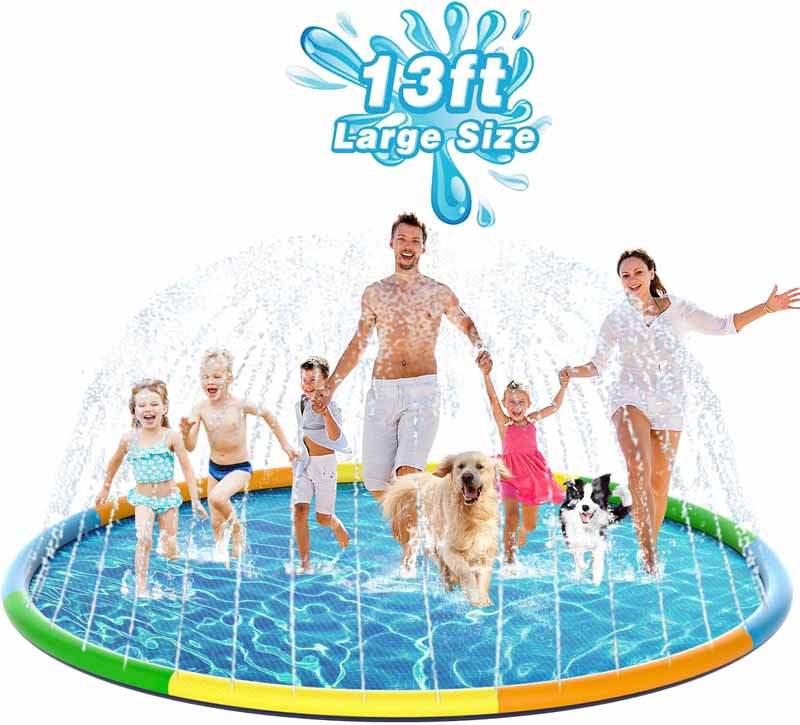
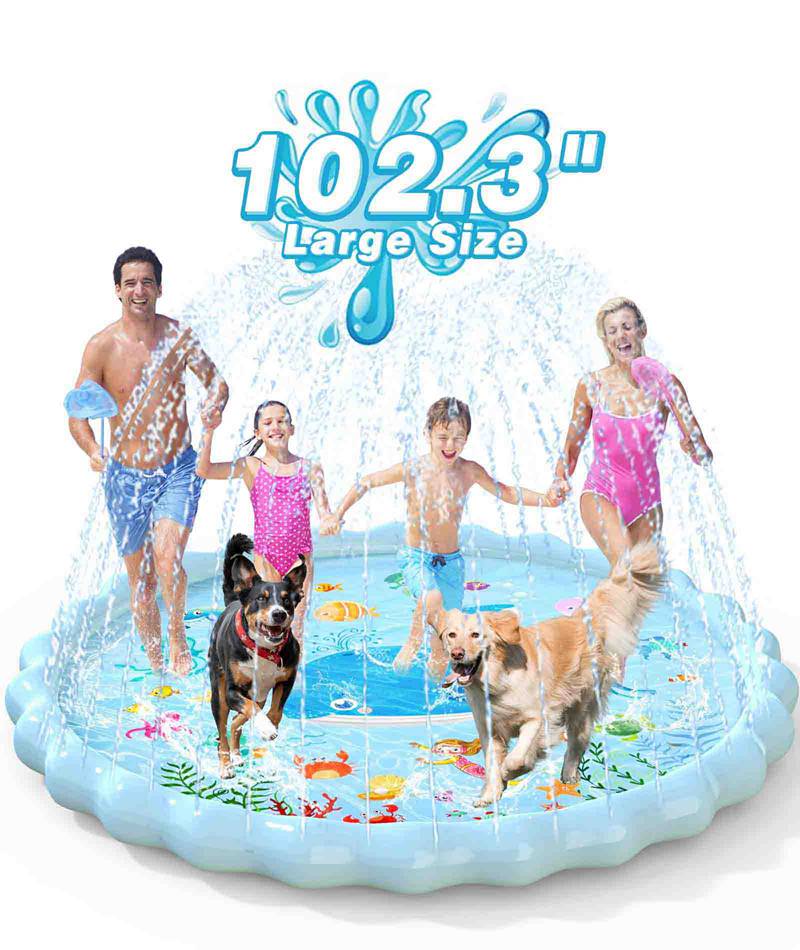
The best dog splash pad size depends on the dog’s weight, body length, energy level, and available backyard space. A larger pad usually works better for medium and large dogs because it gives them more room to turn, cool down, and play without stepping on the water ring too often. The right size should fit the dog, the yard, and the way the family plans to use it.
Why Does Dog Splash Pad Space Matter?
Space matters because dogs do not use a splash pad in a still and careful way. They walk in from the side, chase the spray, turn around quickly, step on the edge, shake water off, and sometimes run back and forth across the same area. If the dog splash pad is too small, all of that movement happens in a tight space. That can make the pad less comfortable for the dog and may also increase wear on the center surface and outer water ring.
A larger dog splash pad gives the dog more natural movement space. Instead of stepping on the raised water ring every few seconds, the dog can move across the center area, turn more easily, and enjoy the water without constantly stressing the edge. This is especially important for dogs that like to run into the spray or circle around the pad before settling down.
For smaller dogs, a compact or medium-size dog splash pad may be enough. A small dog under 25 lb usually does not need a very large play area unless more than one pet will use it. For medium dogs between 25 and 60 lb, a larger pad is usually more practical because these dogs need more turning room. For large dogs over 60 lb, size becomes even more important. A large dog on a small splash pad will often step directly on the water ring, which can increase seam pressure and reduce product life.
The right size also depends on how the pad will be used. Some families only want a quick cooling spot after walks. Others want a backyard water play area for dogs and children together. Some may use it during summer parties, weekend barbecues, or pet playdates. A dog splash pad used for shared family play should be larger than one used by a single small dog.
A practical size choice should give the dog enough room to stand, turn, and take several steps without leaving the center area immediately. If the dog can only stand still but cannot turn comfortably, the pad is probably too small for active play.
| Dog Size | Common Weight Range | Suggested Pad Choice | Best Use Situation |
|---|---|---|---|
| Small dog | Under 25 lb | Small to medium dog splash pad | Light cooling, gentle play, one-pet use |
| Medium dog | 25–60 lb | Medium to large dog splash pad | Daily summer play, turning, walking, spray chasing |
| Large dog | 60–90 lb | Large dog splash pad | More center space, less edge stepping |
| Extra-large dog | 90 lb+ | Large or extra-large dog splash pad | Short supervised use with more space |
| Two dogs | Any mixed size | Large or extra-large dog splash pad | Reduces crowding and repeated paw pressure |
| Kids and dogs | Family use | Large splash pad | Better shared movement and easier supervision |
Space around the pad is also important. The splash pad should not be placed tightly against patio furniture, fences, grills, garden tools, or sharp landscaping. A clear walking area around the pad helps dogs enter and exit safely and reduces the chance of the edge being dragged or caught on nearby objects.
For many family backyards, leaving at least 2–3 ft of open space around the splash pad is a practical goal. More space is better for large dogs or multiple pets. If the pad is 67 inches wide, the actual setup area should be larger than 67 inches because people and pets need space to move around it. If the pad is 87 inches, 95 inches, or larger, the yard should still have enough free space around all sides.
A bigger dog splash pad is not always better if the yard is too small. If the pad is forced into a tight area, the hose may bend, the edge may fold, or people may step on it while walking around. The best size is the one that gives the dog enough play room without making the setup feel crowded.

How Do Big Dogs Use Splash Pads?
Big dogs use splash pads with more force than small dogs. That does not mean they are rough on purpose. Their body weight alone creates more pressure on the material. When a 70 lb dog runs, stops, or turns on a wet surface, the splash pad takes much more force than it would from a 15 lb dog walking slowly through the spray.
A large dog also has a longer body and wider turning radius. If the dog splash pad is too small, the dog may not be able to move comfortably in the center. Instead, the dog’s paws will land on the outer water ring more often. That matters because the outer ring is already holding water pressure. When a large dog steps on it, the water inside shifts suddenly and puts extra stress on the seam.
Large dogs may also bring more debris onto the pad. Wet paws can carry grass, dirt, small stones, or pieces of mulch. If those particles get trapped between the paw and PVC surface, they can create small abrasion marks over time. This is why a larger pad, smoother ground, and trimmed nails all work together to improve durability.
For large breeds such as Labradors, Golden Retrievers, German Shepherds, Huskies, Boxers, and similar active dogs, the splash pad should feel roomy rather than barely large enough. These dogs often enjoy moving through water instead of simply standing still. A pad with more center space helps reduce repeated pressure on one area.
For large dogs, the most useful design features are a wider center area, stronger PVC surface, reinforced outer ring, secure hose connection, and enough surrounding space for safe entry and exit. Water pressure should also stay controlled. Medium pressure is usually enough. Tall spray may look exciting, but it can make some dogs jump harder or run faster. More movement can mean more stress on the pad. A lower, steady spray is often better for both comfort and product life.
| Big Dog Behavior | What It Does to the Pad | Helpful Size Feature |
|---|---|---|
| Runs into the spray | Repeated paw pressure on center surface | Larger center area |
| Steps on the outer ring | Shifts water pressure inside the edge | Wider pad and reinforced edge |
| Turns quickly | Creates side pressure and surface friction | More open movement space |
| Plays with children | More mixed movement patterns | Family-size splash pad |
| Shakes and exits quickly | May drag water and debris across surface | Clear open space around the pad |
| Uses pad often in summer | Repeated folding, setup, and paw contact | Thick PVC and easy storage design |
Big dogs can absolutely enjoy splash pads, but the product should be selected with their size and movement in mind. A pad that works for a small dog may not be enough for a large active pet. For this reason, EPN dog splash pad designs focus not only on diameter, but also on material strength, edge stability, and practical backyard use.
Is a Bigger Dog Splash Pad Always Better?
A bigger dog splash pad can be better for movement, but it is not always the right choice for every home. The best size depends on how much open space the family has, where the hose is located, how many pets will use the pad, and how easy the product will be to drain, dry, and store after use.
A very large pad gives dogs more room, but it also needs more setup space. If the backyard is small, a large splash pad may cover too much walking area. It may also be harder to position flat if the ground is uneven. If the pad sits partly on grass and partly on patio, the surface may not support the product evenly. Uneven support can affect spray performance and increase stress on one side.
Storage is another point customers should consider. Larger splash pads are still foldable, but they take more time to drain and dry. Families who plan to use the pad often should choose a size they can manage comfortably. If a product is too large for the available space or daily routine, it may not be used as often, even if it looks impressive online.
For small dogs, a huge pad may not be necessary unless children or multiple pets will join. For one calm small dog, a medium-size pad can be easier to set up and store. For large dogs or two-dog households, a larger pad makes more sense because it reduces crowding and repeated edge stepping.
| Backyard Space | Suitable Dog Splash Pad Choice | Use Note |
|---|---|---|
| Small patio or compact yard | Small to medium pad | Best for one small dog and short cooling sessions |
| Medium lawn | Medium to large pad | Good balance for most dogs and family use |
| Large backyard | Large or extra-large pad | Better for big dogs, kids, and summer play |
| Narrow side yard | Choose carefully | Avoid placing the pad where dogs must turn sharply |
| Party setup area | Large pad with open surroundings | Keep away from grills, furniture, and sharp objects |
| Shared kids-and-pets area | Family-size pad | Use with supervision and controlled water pressure |
The pad should also match the hose location. A hose pulled too tightly across the yard can stress the connector. The best setup allows the hose to reach the pad naturally without pulling sideways. If the only available hose location forces the pad into an awkward corner, a smaller size may actually work better.
Bigger is useful when it gives the dog more safe movement. Bigger is not useful when it creates tight setup, uneven ground support, difficult drying, or hose tension. The right size should make the product easier to use, not harder.
How Should Families Choose a Dog Splash Pad Size?
Many customers buy a dog splash pad because they want one product that works for pets, children, and backyard summer activities. In that case, size should be chosen more carefully. A family-use dog splash pad needs room for different movement patterns at the same time. Children may sit or walk in the center, while dogs may enter from the side and chase the spray.
For shared use, a larger splash pad is usually safer and more comfortable because it reduces crowding. Dogs and children should not be forced into a small space where they constantly bump into each other or step on the edge. The pad should have enough center area for play and enough space around it for adults to supervise.
A family-use pad should also have a stable surface and controlled water spray. Very high spray may excite dogs and children, but it can make the play area more chaotic. Low to medium spray is usually better for shared play. It keeps the experience fun without making dogs jump too aggressively.
A family choosing between sizes can look at three practical details: how many dogs or children will use the pad at the same time, whether the yard has a flat open area, and whether the hose can reach the pad without pulling. A calm small dog and one young child may only need a medium pad. A large dog, two children, or a weekend playdate setup usually needs a larger play area to reduce crowding and repeated edge pressure.
| Use Group | Better Size Choice | Why It Works |
|---|---|---|
| One small dog | Small to medium | Easy setup and enough cooling space |
| One medium dog | Medium to large | More room for turning and spray play |
| One large dog | Large | Less edge stepping and better comfort |
| Two small dogs | Medium to large | Reduces crowding |
| Large dog plus child | Large | More space for supervised shared play |
| Multiple kids and pets | Large or extra-large | Better movement flow and lower pressure on one area |
EPN dog splash pads are developed with family and pet use in mind, so size planning is connected to material strength and structure. A larger pad should not only be wider. It should also have a stable spray ring, reinforced edges, and PVC that can handle repeated paw movement.
For customers, the best dog splash pad size is the one that feels natural in real use. The dog should have room to move. The family should have room to supervise. The hose should connect without pulling. The pad should drain and fold without becoming a burden. When all of these details work together, the size is right.
For more backyard placement guidance, Can You Use a Splash Pad on Grass gives practical setup tips for lawn use, ground preparation, and surface protection.
How Can a Dog Splash Pad Last Longer?
A dog splash pad lasts longer when it is used on smooth ground, filled with low to medium water pressure, cleaned after play, dried before folding, and stored away from heat and sharp objects. Dog nails, ground debris, hose tension, and careless storage are the main reasons many splash pads wear out faster than expected.
Why Does Ground Setup Matter?
Ground setup is one of the easiest ways to extend the life of a dog splash pad. Many early leaks and scratches do not start from the top surface. They start from underneath, where the pad is pressed against sticks, stones, rough concrete, gravel, or dry mulch. When a dog runs or turns, its body weight pushes the PVC down into whatever is below it. A small stone that looks harmless can become a pressure point under a 50 lb or 70 lb dog.
Smooth grass is usually the best surface for a dog splash pad. It gives the PVC a softer base, reduces underside abrasion, and feels more comfortable for pets. Before placing the pad, owners should take one or two minutes to clear the area. Remove sticks, small rocks, pinecones, garden tools, hard pet toys, sharp mulch pieces, and anything that could press into the material.
Patio use can work, but it needs more care. A concrete patio may look clean, but the texture can be rough enough to wear the underside after repeated dog movement. In summer, concrete can also become very hot. If the ground is too hot for bare feet or dog paws, it is not a good place for a PVC splash pad. Heat can make the material softer and may speed up outdoor aging if the pad is left there for long periods.
A flat surface also helps the spray ring work better. If the pad is placed on a slope, water may collect on one side and the outer ring may fill unevenly. This can create more pressure on one section of the seam. A level area helps water move more evenly through the ring and keeps the center play area more comfortable.
| Setup Surface | Durability Level | Customer Note |
|---|---|---|
| Smooth grass lawn | Best | Most suitable for daily dog water play |
| Clean flat patio | Good with care | Check heat and rough texture before use |
| Wooden deck | Medium | Avoid splinters, screws, and sharp gaps |
| Rough concrete | Risky | May wear the underside faster |
| Gravel | Not recommended | Small stones can create puncture points |
| Mulch or wood chips | Not recommended | Hidden sharp pieces may scratch or cut PVC |
| Sloped ground | Not ideal | Water pressure and spray may become uneven |
A simple hand test helps. Run a hand across the ground before laying down the splash pad. If the surface feels sharp, gritty, hot, or uneven, it may damage the pad during pet play. A few minutes of setup can prevent many problems later.
How Should You Store a Dog Splash Pad?
Storage has a major effect on how long a dog splash pad lasts. Many products are not damaged during play. They are damaged afterward, when they are folded wet, left in direct sun, dragged across the lawn, or stored under heavy outdoor items. Good storage protects the PVC, seam lines, hose connector, and printed surface.
After each use, the water should be turned off slowly. Then the hose should be disconnected gently instead of pulled away. The pad should be drained before being moved. Lifting or dragging the pad while water is still inside the outer ring can put extra stress on the seams and connector area.
The pad should be dry before folding. Folding it while wet can trap moisture between layers. Over time, this may cause odor, surface sticking, or marks on the PVC. If the family uses the pad often, a simple routine works best: drain it, wipe off heavy water, let it air-dry in shade for a short time, then fold it loosely.
Folding should not create sharp crease lines. A tight fold may save space, but it can create repeated stress in the same area. A loose fold or roll is usually better for seasonal storage. The hose connector area should not be bent sharply or pressed under heavy objects.
| Storage Step | Better Habit | Why It Helps |
|---|---|---|
| After play | Drain water fully | Reduces water weight on seams |
| Before folding | Dry the surface | Helps prevent odor and sticking |
| Folding method | Fold loosely, avoid sharp creases | Reduces stress marks |
| Connector care | Keep inlet area straight | Prevents bending and cracking |
| Storage place | Cool, dry indoor space | Protects from heat and sunlight |
| Weight on top | Avoid heavy items | Prevents pressure marks |
| Dog access | Store out of reach | Prevents chewing damage |
A dog splash pad should not be left outside for days when it is not being used. Sunlight, heat, rain, dirt, and lawn equipment can all shorten product life. Even outdoor PVC products perform better when they are cleaned, dried, and stored properly after use.
For winter storage, make sure the pad is completely dry before packing it away. Store it in a garage, closet, storage box, or dry utility room where it will not be crushed. Avoid leaving it in freezing, damp, or very hot spaces for long periods. Seasonal storage is simple, but it makes a clear difference when the product is opened again next summer.
Families comparing long-term durability can also read How to Choose a Splash Pad That Lasts More Than One Summer, which covers storage, material aging, and repeat-use design in more detail.
How Does Water Pressure Help or Hurt Durability?
Water pressure can make the splash pad more fun, but too much pressure can also shorten its life. Many families turn the hose on fully because they want a taller spray. For dogs, that is usually unnecessary. Most pets enjoy low to medium spray because it feels gentler, easier to chase, and less startling.
High water pressure puts more stress on the outer ring, seam line, spray holes, and hose connector. When the ring becomes too tight or swollen, the material is under more tension. If a dog steps on the water ring at that moment, the pressure inside shifts quickly. Repeated pressure spikes can increase the chance of seam wear or leaks.
The best method is to start with low water pressure and slowly increase it until the spray reaches the center area. The spray should look steady, not violent. The edge should feel filled but not hard. If the outer ring looks overfilled, twists badly, or sprays unevenly, the hose pressure should be reduced.
| Water Pressure | Spray Feel | Durability Impact | Best Use |
|---|---|---|---|
| Low | Gentle spray | Lowest seam stress | Puppies, small dogs, cautious pets |
| Medium | Fun and steady | Best balance | Most daily dog play |
| Medium-high | Strong spray | More edge stress | Short supervised use only |
| Full pressure | Tall, forceful spray | Higher leak risk | Not recommended for regular use |
Water pressure also changes dog behavior. A strong spray may make some dogs jump, bite at the water, dig, or run harder. That extra movement increases paw pressure on the PVC surface. A lower spray often keeps play calmer and helps the dog stay comfortable.
For EPN dog splash pads, stable water flow is more important than extreme spray height. A good dog splash pad should create a fun cooling area without forcing the seams or connector to handle unnecessary pressure.
How Does Dog Nail Care Protect the Surface?
Dog nails are one of the most practical details customers should think about before using a splash pad. A durable dog splash pad can handle normal paw movement, but long or sharp nails can still scratch the surface, especially when the dog runs, turns, or paws at the spray.
Nail risk depends on dog size and behavior. A small dog with smooth nails may create very little wear. A large active dog with long nails can create much more pressure. If that dog runs on wet PVC, turns quickly, or scratches at the water, the surface may show marks faster. The risk becomes higher if the pad is placed on rough ground because the PVC is squeezed between nail pressure and the surface underneath.
Trimming nails before frequent summer use is a simple way to protect both the dog and the pad. Nails do not need to be extremely short, but they should not be long, sharp, cracked, or split. Smooth nails are less likely to catch the material.
| Nail Condition | Risk to Splash Pad | Suggested Action |
|---|---|---|
| Short and smooth | Low | Good for regular play |
| Slightly long | Medium | Trim before repeated use |
| Sharp tips | Medium-high | File or smooth before play |
| Cracked or split nail | High | Avoid play until trimmed or checked |
| Digging behavior | High | Stop and redirect the dog |
| Chewing edge or connector | Very high | Do not allow use as a chew toy |
Some dogs like to dig at moving water. If the dog starts scratching strongly in one spot, play should be paused. Owners can redirect the dog with a toy, lower the water pressure, or encourage walking through the spray instead of digging at it. This matters because repeated scratching in one area can wear down even a stronger PVC surface.
Clear nail care and supervision are not extra steps for careful owners only. They are part of normal use for pet water products. A splash pad can be durable and still need basic pet-use care.
How Does Cleaning Keep the Pad Usable?
Cleaning is not only about appearance. Dirt, grass, sunscreen residue, pet hair, and small debris can affect how the pad feels and how it stores. If the pad is folded with dirt or grit on the surface, those particles may rub against the PVC layers during storage. Over time, this can create surface marks or make the pad feel less clean when reopened.
After use, the pad should be rinsed with clean water if it has visible dirt, grass, or mud. A soft cloth can be used to wipe the surface. Strong cleaners are usually not needed for normal backyard use. Harsh chemicals, stiff brushes, or abrasive pads should be avoided because they may damage the surface or printed design.
If the pad has been used by dogs and children together, cleaning becomes more important. Pet hair, grass, and mud can collect in shallow water. A quick rinse helps keep the product more pleasant for the next use.
A simple cleaning routine can stay easy: turn off the hose slowly, disconnect it gently, drain the pad fully, rinse away visible grass or dirt, wipe the center surface if needed, let the pad dry in shade, and fold it loosely once dry. This routine takes only a few minutes and helps prevent dirt, moisture, and surface grit from being packed into the folded material.
If the pad has a mild new-material smell when first opened, placing it in a shaded, ventilated outdoor area before use may help. Avoid leaving it under harsh direct sun for a long time just to remove odor, because prolonged UV exposure can age many PVC products.
For families, easy cleaning affects repeat use. If the splash pad is simple to rinse, dry, and store, it is more likely to become part of summer routines instead of being used once and forgotten.

What Daily Habits Make the Biggest Difference?
A dog splash pad lasts longer when families build a few simple habits around every use. The product does not need complicated maintenance, but it does need reasonable care. Most problems come from repeated small mistakes: rough ground, full water pressure, long nails, wet folding, dragging, or outdoor storage.
Daily care is mostly about protecting the weak points: the underside, center surface, outer ring, seam lines, spray holes, and hose connector. Smooth ground protects the underside. Low to medium water pressure protects the edge. Trimmed nails reduce surface scratches. Dry storage helps prevent odor, sticking, and crease stress. None of these habits are difficult, but together they make a real difference.
| Common Mistake | What Can Happen | Better Habit |
|---|---|---|
| Using full hose pressure | Edge and seam stress | Use low to medium pressure |
| Setting up on gravel | Punctures or underside wear | Use smooth grass |
| Leaving pad outdoors | UV and heat aging | Store after use |
| Folding while wet | Odor, sticking, crease stress | Dry before folding |
| Dragging with water inside | Seam and connector strain | Drain first |
| Letting dogs dig at spray | Surface scratches | Redirect play |
| Bending connector in storage | Inlet stress | Keep connector area flat |
For EPN, long-lasting dog splash pad design starts with material and structure, but real product life also depends on how families use it. A well-made pad gives owners a stronger starting point. Good daily habits help that strength last through the season.
A dog splash pad should be easy enough to use often and strong enough to handle normal pet play. When setup, water pressure, nail care, cleaning, and storage are handled properly, the pad can stay more reliable, more comfortable, and more enjoyable for summer backyard routines.
Why Choose an EPN Dog Splash Pad?
An EPN dog splash pad is designed for real backyard pet play, not only for a good first impression. It combines PVC material experience, reinforced structure design, water pressure control, surface stability, and seasonal storage needs. For families, that means easier setup and better repeat use. For business customers, it means stronger product development, packaging support, and custom project flexibility.
How Does EPN Test Dog Splash Pads?
A dog splash pad needs to handle more than water. It has to handle paws, claws, hose pressure, folding, sunlight, ground contact, and repeated summer use. That is why EPN looks at dog splash pads as outdoor pet products, not just flat water toys.
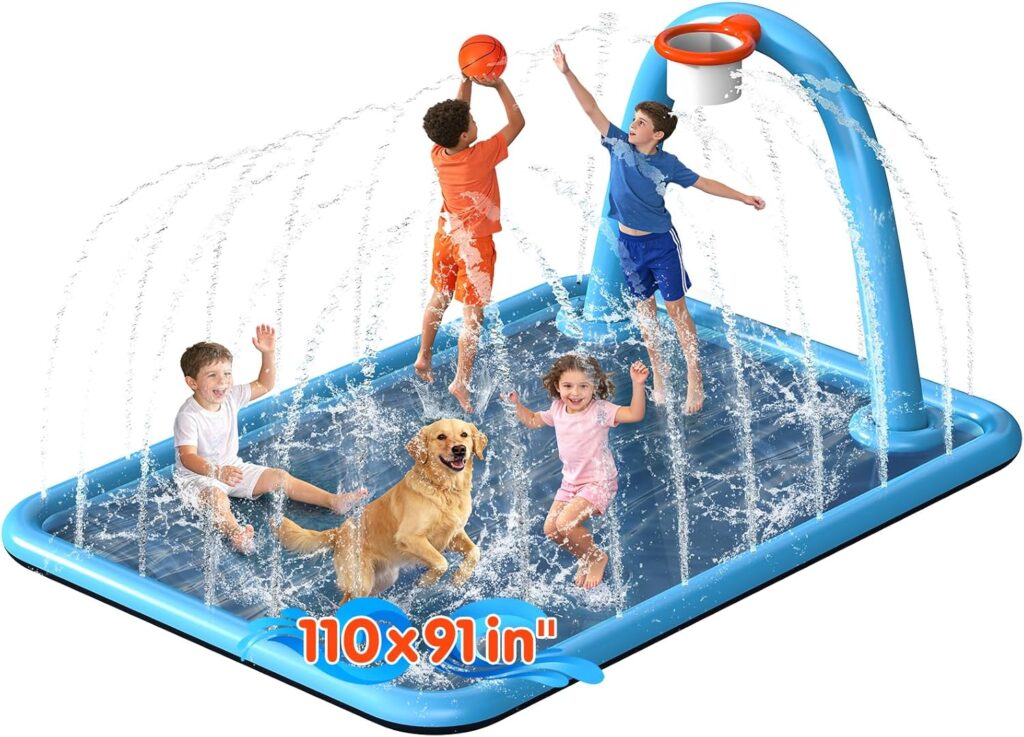
EPN belongs to American Epsilon Inc., a U.S.-registered company focused on PVC and composite products for family recreation, pet supplies, outdoor leisure, and seasonal water play. The company works across children’s splash pads, pet splash pads, basketball splash pads, inflatable pools, pet pools, water hammocks, floating islands, snow tubes, pool pillows, and other seasonal products. This product range matters because dog splash pad durability often depends on experience from several product types, including water sealing, edge bonding, spray design, foldable PVC structures, and outdoor use testing.
EPN has 27 R&D staff and more than 18 designers covering material development, product structure, pet-use behavior, outdoor play, packaging, and local market adaptation. Each year, the team carries out 500+ material and product performance tests and completes 1500+ design projects. For dog splash pads, repeated testing helps improve details that customers may not notice at first but will feel during use.
For dog splash pads, testing often focuses on the parts that face the most daily stress: the outer water ring, seam area, spray holes, hose connector, folding points, and center surface. Water pressure stability matters because uneven filling can stress one side of the pad. Folding performance matters because seasonal products are opened and stored many times. Outdoor aging checks matter because summer heat and sunlight can affect PVC flexibility over time.
EPN also pays close attention to heat-press bonding. For a splash pad, the edge is one of the highest-stress areas because it carries water and creates the spray. If the bonding area is too narrow or unstable, the water ring may become a weak point. EPN works on reinforced edge structures, balanced spray-hole placement, and stable inlet design so the pad can perform better in normal backyard conditions.
| EPN Durability Focus | Why It Matters for Dog Use | Customer Benefit |
|---|---|---|
| PVC thickness selection | Dogs create stronger paw pressure than children | More stable surface for repeat play |
| Reinforced edge design | Dogs often step on the water ring | Lower risk of edge stress and early leaks |
| Spray-hole layout | Uneven spray can create uneven pressure | Better water distribution and play comfort |
| Hose connector support | Hose pulling can stress the inlet | Easier setup and more reliable connection |
| Folding performance | Seasonal products are folded often | Easier storage and fewer crease problems |
| Outdoor aging checks | Summer heat and sunlight affect PVC | Better seasonal use performance |
| Pet-use wear review | Nails and paw movement create surface stress | More practical for real dog play |
For sellers and distributors, this testing mindset also has business value. A dog splash pad may sell during a short summer season, but reviews and after-sales issues can affect the product long after the season starts. If the product is weak, complaints can come quickly. If the product feels stable, easy to use, and durable enough for repeat play, it has a better chance of building customer trust.

Why Does EPN Fit Dogs and Families?
EPN dog splash pads are designed around the way families actually use summer water products. A dog splash pad may be used after walks, during hot afternoons, at weekend backyard gatherings, or as a shared play space for children and pets. These uses require strength, easy setup, and safe handling.
For pet owners, the most important details are usually practical. They want to know whether the pad will leak easily, whether the surface feels too slippery, whether it can handle their dog’s size, whether the hose connection is simple, and whether it can be folded away without cracking. A good dog splash pad should answer these concerns through design, not just product claims.
EPN focuses on the details families notice after repeated use: a flatter surface under wet paws, controlled spray rather than aggressive water height, a water ring that can handle normal edge stepping, a material that works in warm outdoor conditions, and a foldable structure that does not make storage difficult. These details are especially important when dogs and children use the splash pad together.
A very high spray may look exciting, but it can make the play area more chaotic. A controlled spray is often better for family use because it helps dogs stay calmer and makes supervision easier. For many homes, the best dog splash pad is not the one with the tallest water spray. It is the one that can be used comfortably again and again.
EPN also understands that dogs are not all the same. A small dog under 25 lb may only need a gentle cooling area. A medium dog between 25 and 60 lb may need more surface stability and turning room. A large dog over 60 lb needs stronger PVC, more space, and better edge support. Dog splash pad design should consider size, weight, movement style, and use frequency.
| User Situation | What Customers Care About | How EPN Design Helps |
|---|---|---|
| Small dog cooling | Gentle spray, easy setup, low stress | Controlled water flow and foldable design |
| Medium dog play | Paw pressure, turning space, surface grip | Stable PVC surface and practical sizing |
| Large dog use | Edge stepping, material strength, space | Reinforced ring and stronger PVC options |
| Kids and dogs together | Supervision, comfort, shared space | Larger layouts and steady spray pattern |
| Frequent summer use | Repeat setup, draining, storage | Flexible PVC and seasonal storage design |
| First-time pet water play | Dog comfort and safe introduction | Low to medium spray control |
| Backyard party use | More movement and mixed users | Wider play area and stable structure |
For families, this kind of design means the product can become part of a summer routine. It can be used after a hot walk, before bath time, during weekend play, or when pets need a cooling activity in the yard. The easier the product is to use and store, the more likely customers are to use it often.
What Can Business Customers Customize with EPN?
For business customers, choosing an EPN dog splash pad is not only about selecting an existing product. EPN also supports OEM and ODM development for brands, retailers, Amazon sellers, distributors, and seasonal product customers that need market-ready pet water play products.
Dog splash pads can be customized in many practical ways. A brand may need a larger size for family use, a stronger material option for active dogs, or a different visual style for a specific retail channel. Packaging, warning labels, local language instructions, hose connector options, color direction, and bundle planning can also be adjusted based on market needs.
For new projects, EPN can usually support samples in 3–5 days depending on product type and material readiness. Standard production often takes around 20–30 days, while urgent projects may be supported in about 14 days when the design, material, packaging, and order conditions are suitable. This is useful for seasonal categories because summer products often have tight launch windows.
| Custom Need | EPN Support Area | Why It Matters |
|---|---|---|
| New pet product launch | OEM/ODM development | Helps brands test new seasonal items |
| Amazon product line | Size, packaging, labels, instructions | Supports platform-ready selling |
| Retail project | Box design and barcode layout | Improves shelf and warehouse readiness |
| Multi-market sales | Language and compliance adaptation | Fits U.S., European, and other markets |
| Brand differentiation | Pattern, color, structure adjustment | Helps avoid generic product appearance |
| Small trial order | Low MOQ and sample support | Reduces early project risk |
| Fast seasonal timing | 3–5 day sample and 20–30 day production | Helps meet summer selling windows |
For Amazon sellers, durability and presentation are both important. A dog splash pad needs to look attractive in images, but it also needs to perform well after customers receive it. Product quality affects reviews, returns, refunds, and repeat purchases. EPN’s ability to combine material selection, structure design, packaging, and production coordination helps sellers build a stronger seasonal product line.
For retailers and distributors, stable supply and consistent product quality matter just as much. EPN’s annual production capacity can reach up to 12 million units across product categories, and its product network covers 180+ countries and regions. This gives business customers more confidence when planning seasonal inventory, regional distribution, or multi-channel sales.
How Does EPN Support Safer Market Entry?
Launching a dog splash pad is not only about having a product ready. Business customers also need packaging, product information, warning statements, label layout, carton details, and channel-ready presentation. These parts affect listing quality, customer understanding, warehouse handling, and retail acceptance.
EPN supports packaging and local market adaptation for different sales channels. For pet and family water products, clear instructions are especially important. Customers need to know how to set up the pad, how to adjust water pressure, where to place it, how to care for dog nails, how to dry and store it, and what surfaces to avoid. Good instructions can reduce misuse and improve customer satisfaction.
Clear packaging can guide customers toward smoother grass, low to medium water pressure, trimmed dog nails, supervised play, proper draining, dry storage, and safe use around children and pets. It can also explain why gravel, rough concrete, sharp objects, chewing, and full hose pressure may shorten product life. These practical details help customers understand how to use the splash pad correctly from the first day.
EPN can also support compliance-oriented packaging preparation for different markets, including product labels, warning content, instruction sheets, and documentation alignment based on customer channel needs. For children’s and pet-related products, this kind of preparation helps business customers enter markets more smoothly.
| Market Entry Need | Why It Matters | EPN Support |
|---|---|---|
| Clear use instructions | Reduces misuse and complaints | Manual and label content support |
| Warning information | Helps customers use safely | Packaging text and layout adaptation |
| Multi-language markets | Improves customer understanding | Localized packaging and instructions |
| Amazon readiness | Supports listing and warehouse flow | Label, carton, and packaging coordination |
| Retail presentation | Affects shelf appeal and clarity | Color box and product display design |
| Seasonal launch timing | Summer products need fast action | Sampling and production coordination |
For business customers, this support can reduce the time spent managing separate suppliers for product, packaging, labels, and instructions. EPN can help connect these steps into one more efficient project process.
Why Is EPN a Strong Choice for Pet Water Play Lines?
A dog splash pad can be a single summer item, but it can also be part of a broader pet water play collection. Many customers who buy a dog splash pad may also be interested in pet pools, dog sprinkler pools, foldable dog baths, outdoor cooling toys, or family splash pads. For brands and retailers, building a connected product line can create stronger seasonal sales than relying on one item alone.
EPN’s product range gives business customers more room to build that kind of line. The company develops and manufactures PVC and composite products across pet, family, outdoor, and seasonal categories. This means a dog splash pad can be planned together with related items such as pet pools, children’s splash pads, basketball splash pads, inflatable pools, water hammocks, floating islands, and pool accessories.
A connected summer pet line can cover different use cases: quick dog cooling, outdoor bathing, deeper wading, family backyard play, and seasonal promotional bundles. A dog splash pad can target active spray play, while a foldable dog pool can support bathing and soaking. A larger family splash pad can serve kids and pets together. When these products share design language, packaging style, and brand positioning, the product line feels more complete.
| Product Line Idea | Customer Use Case | Business Value |
|---|---|---|
| Dog splash pad | Quick cooling and spray play | Easy seasonal entry item |
| Foldable dog pool | Bathing, soaking, outdoor cooling | Broader pet care use |
| Dog sprinkler pool | Water play with deeper side support | Higher perceived value |
| Kids splash pad | Family backyard play | Cross-sell to parents |
| Summer pet bundle | Splash pad plus small accessories | Better gift and promotion potential |
| Retail display set | Multiple summer water products | Stronger shelf presence |
For families, the value is simple: products that make summer more comfortable, fun, and convenient. For business customers, the value is a supplier that can help turn one idea into a more complete product plan.
EPN is a strong choice for customers who need more than a basic dog splash pad. The company can support material decisions, product structure, custom design, packaging, sampling, production, and market adaptation. That makes it suitable for brands and sellers who want a dog water play product that feels practical, durable, and ready for real summer use.
How Can Customers Order EPN Dog Splash Pads?
EPN supports both branded dog splash pad orders and customized pet water play projects. Customers can choose from existing product options or discuss custom development based on target market, dog size, retail channel, packaging style, and seasonal launch schedule.
For ready-to-sell product orders, customers can request available sizes, material options, packaging details, and shipment information. For custom projects, EPN can review target price range, product dimensions, PVC thickness preference, packaging needs, order quantity, market region, and launch timeline before suggesting a suitable product direction.
The most helpful inquiry usually includes the target market, sales channel, preferred size, expected dog size or user group, material expectations, packaging type, order quantity, delivery schedule, and any labeling or compliance needs. With these details, EPN can respond faster and recommend a more practical solution.
For seasonal products, early planning is especially important. Summer items often need to be sampled, photographed, packaged, shipped, and listed before the main sales period begins. EPN can help customers develop dog splash pads that fit real use, not only catalog needs. Whether the goal is a durable pet cooling mat, a family backyard water toy, a custom Amazon listing product, or a larger summer pet line, EPN can support the project from product idea to market delivery.
Final Thoughts
A durable dog splash pad is not decided by one feature alone. Thicker PVC helps, but it still needs reinforced edges, controlled water pressure, a stable surface, enough play space, and proper care after use. For families, these details make the difference between a splash pad that feels like a one-week toy and one that becomes part of a regular summer routine.
The most important points are practical. Choose a dog splash pad that matches the dog’s size and energy level. Use it on smooth grass or a clean flat surface. Start with low to medium water pressure. Keep dog nails trimmed. Drain and dry the pad before folding. Store it away from heat, sharp objects, and direct sunlight when it is not in use.
For brands, retailers, and online sellers, durability also affects customer trust. A better dog splash pad can help reduce avoidable complaints, improve repeat use, and support a stronger summer pet product line. EPN combines PVC material experience, reinforced structure design, product testing, packaging support, and OEM/ODM customization to help customers develop dog splash pads that are practical for real backyard use.
Contact Epsilon to request EPN dog splash pad product details, discuss branded product orders, or start a custom pet water play project for your market.
Get A Fast quote
Here, bringing your inflatable concepts to life is no longer a challenge—it’s a collaborative journey where American Epsilon helps families, outdoor enthusiasts, and global brands transform creative ideas into safe, certified, and market-ready inflatable solutions.


Partner With Epsilon
Whether you are a family looking for safe backyard fun or a brand seeking large-scale OEM/ODM solutions, American Epsilon Inc. guarantees every inflatable is built with safety, durability, and excitement in mind. With flexible low MOQs, strategically placed warehouses in the U.S., Canada, U.K., and Germany, plus 24/7 professional support, we ensure smooth delivery and reliable service worldwide.
Ready to bring your inflatable ideas to life? Request free samples, fast prototypes, and customized designs today—your trusted inflatable journey starts here.