Skip to content
Scratch-Resistant Dog Splash Pads: Do They Matter?
# Your Trusted Inflatable Supplier In US

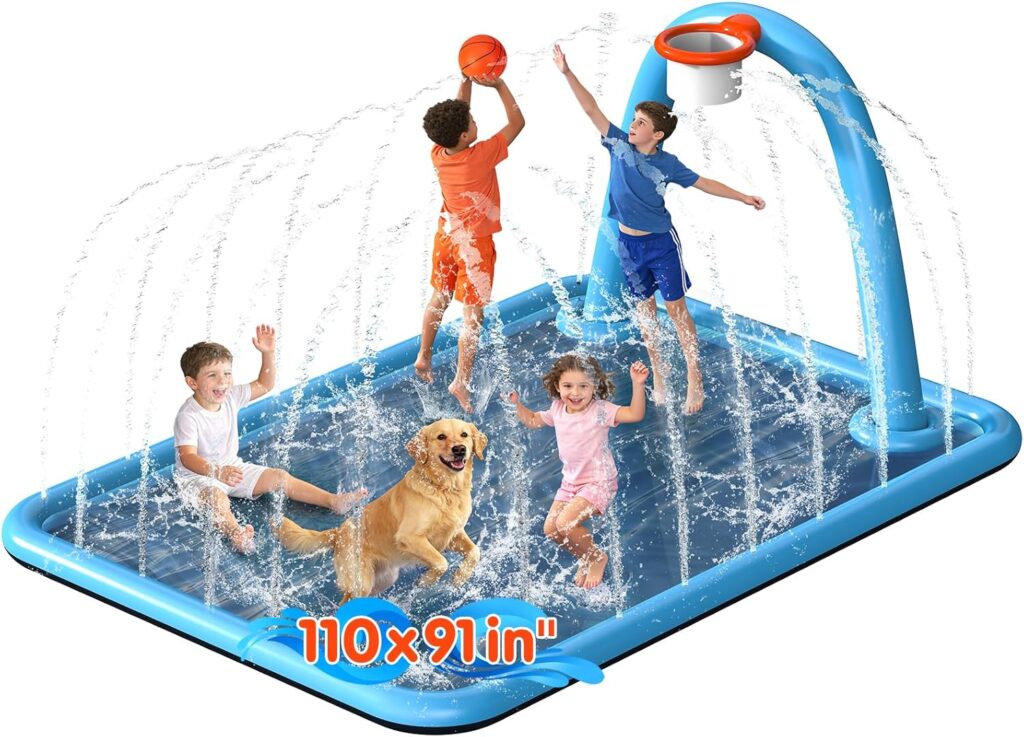
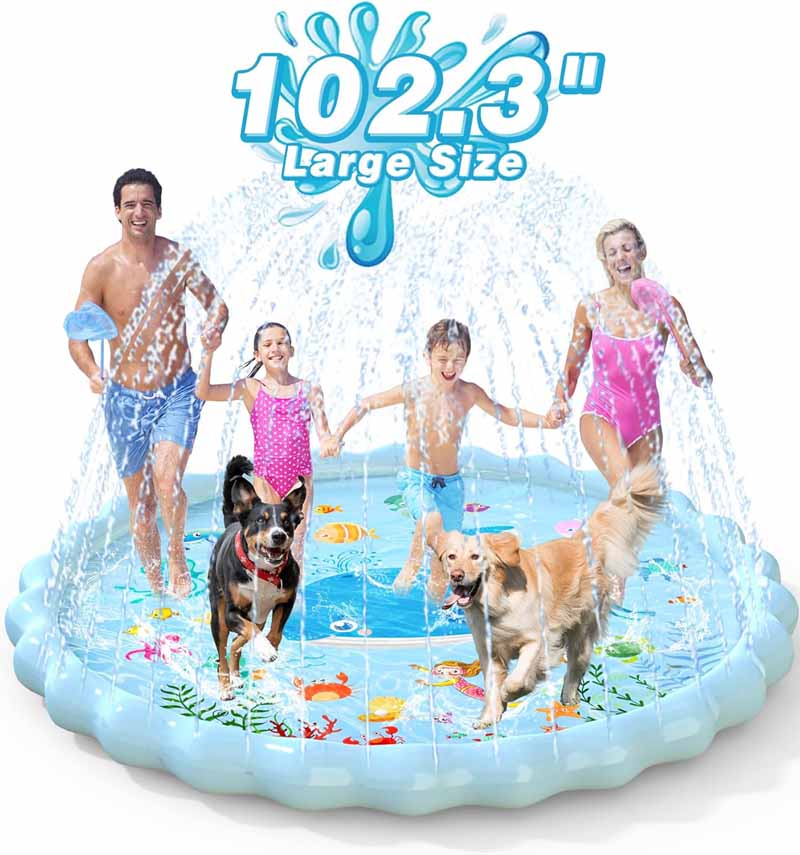
A dog splash pad looks like one of the easiest backyard water toys to use. You unfold it, connect a garden hose, adjust the water pressure, and let the outer ring spray water inward. For children, that may already be enough. For dogs, the question is more serious. Dogs do not only step on the surface. They run, turn, paw at moving water, chase the spray, press their nails into the PVC, and sometimes scratch the same spot again and again when they get excited.
Scratch-resistant dog splash pads do matter because dogs create more concentrated pressure on PVC surfaces than children usually do. A stronger pad can reduce shallow scratches, claw marks, slipping, seam stress, and early leaks. It cannot stop every kind of damage, but thicker PVC, a non-slip texture, reinforced edges, and proper setup can make backyard water play safer and longer-lasting.
The value is not only whether the pad survives one afternoon. Families care about whether it can be used again next weekend, during a hot week, or throughout the summer. A dog may weigh 50–90 lb, and that weight lands through four paws. If the nails are long or the surface underneath is rough, the risk of damage rises quickly. Scratch resistance should not be treated as a small extra feature. For pet families, it can be the difference between a fun summer routine and a water toy that leaks after only a few uses.
Think about the moment when a dog first discovers the spray. One paw touches the water. Then the dog jumps back, runs forward, paws at the stream, and spins across the mat. That playful energy is exactly why dog splash pads need stronger materials and smarter structure.
What Are Scratch-Resistant Dog Splash Pads?
Scratch-resistant dog splash pads are backyard water play mats designed to better handle normal paw contact, short dog nails, repeated stepping, light claw drag, and outdoor summer use. They are usually made with thicker PVC, a textured non-slip surface, reinforced water-filled edges, and stable hose connections. They are not indestructible, but they are built to reduce common surface damage caused by dogs during supervised play.
A regular splash pad may work well for young children, but dogs create a different type of stress. Their weight is concentrated through four paws, and their nails can press into the surface when they run, turn, jump, or paw at moving water. A scratch-resistant dog splash pad gives families more confidence when dogs join backyard water play, especially during hot afternoons, weekend use, or shared play with kids.
For pet families comparing water toys, scratch resistance should be judged together with PVC thickness, surface grip, edge strength, ground setup, and dog behavior. A pad does not need to feel hard or bulky to be stronger. It needs the right balance of flexibility, support, water pressure stability, and surface comfort.
For more background on material choice, the guide on what material is best for a splash pad explains why PVC quality, thickness, and flexibility affect outdoor water play performance.
Why Dogs Need Stronger Pads
Dogs do not use splash pads in the same calm and predictable way as toddlers. A child may sit, crawl, walk, or run across the surface. A dog may chase the spray, stop suddenly, dig at moving water, turn quickly, or press down hard with the front paws. These small actions can create more friction than many families expect.
The pressure is also more concentrated. A medium or large dog may weigh 40–80 lb, but that weight lands through small paw areas. When the dog moves quickly, the pressure becomes sharper because the nails add narrow contact points. This is why a pad that looks thick enough for kids may still feel less suitable for active dogs.
A stronger dog splash pad is most useful when the dog is heavier, more active, or using the pad often. Dogs over 40 lb, dogs that paw at moving water, and homes where kids and pets share the same mat usually need more than a thin seasonal water toy. A backyard with dry grass, firm soil, or patio-style setup also makes material and structure more important.
Dog activity matters as much as dog size. A 30 lb energetic dog may create more surface wear than a 60 lb calm dog. Families should think about how the dog plays, not only how much the dog weighs.
| Dog Type | Surface Pressure | Scratch Risk | What to Look For |
|---|---|---|---|
| Small calm dog under 25 lb | Low | Low | Basic PVC thickness and clean ground |
| Medium dog 25–55 lb | Medium | Medium | Textured surface and stronger PVC |
| Large dog 55–90 lb | High | Medium to high | Reinforced edge and thicker PVC |
| Active pawing dog | High | High | Non-slip texture and close supervision |
| Multiple dogs | High | High | Larger size and stronger seam structure |
A small calm dog may be fine with a lighter design. But if the dog is large, energetic, or plays often, scratch resistance becomes a practical feature, not just a line on the packaging.
What Scratch Resistance Means
Scratch resistance means the pad is better prepared for normal surface contact from dogs. It helps reduce light claw marks, shallow abrasions, nail drag, and early wear from repeated stepping. For dog splash pads, scratch resistance usually comes from the complete design rather than one single feature.
A better scratch-resistant dog splash pad usually combines thicker PVC, a non-slip surface, reinforced seams, a stable outer water ring, and a reliable hose connector. PVC thickness helps with paw pressure. Surface texture reduces sliding. Reinforced seams lower the risk of edge leaks. A stable water ring keeps the spray more even. The hose connector also matters because pulling or twisting near the inlet area can lead to leaks over time.
PVC thickness is important, but it should not be the only detail customers check. For outdoor water play products, PVC in the 0.40–0.55 mm range is often more suitable for repeated family and pet use than very thin material. However, a thick pad with poor seam bonding can still leak. A thick pad used on gravel can still puncture. A thick pad with a slippery surface can still cause paw sliding and claw scratches.
A better question is, “Is the whole pad designed for the way dogs actually move?” That includes the top surface, bottom contact area, water-filled edge, hose connection, spray direction, folding method, and storage habit.
EPN develops dog splash pads with real-use thinking. For pet water play products, EPN focuses on PVC material matching, wear resistance, surface stability, reinforced structure, and repeated outdoor performance. The goal is to make the pad feel stable enough for dogs, comfortable enough for family use, and practical enough for repeated summer play.
What It Does Not Mean
Scratch-resistant does not mean damage-proof. It means the pad is better prepared for normal paw contact, light claw drag, repeated stepping, and short periods of active backyard play. A dog with trimmed nails walking, turning, or lightly pawing at the spray is the kind of use a stronger splash pad is designed to handle.
The limit appears when the pressure becomes sharper or more aggressive. Chewing the outer ring, digging in one spot, dragging the mat across concrete, or placing it over gravel can still damage PVC. These problems are not really about scratch resistance. They are use conditions that can affect almost any soft outdoor water mat.
| Normal Dog Use | Higher-Risk Use |
|---|---|
| Short nails touching the surface during play | Long sharp nails digging into the PVC |
| Light pawing at moving water | Aggressive digging in one spot |
| Walking, standing, and turning on clean grass | Dragging the wet pad across patio or concrete |
| Weekend backyard use with supervision | Leaving the pad outdoors for days without drying |
| Low-to-medium water pressure | Overfilling the outer ring with excessive pressure |
For families, the best result comes from combining a stronger splash pad with better habits. Trim the dog’s nails before play, place the pad on clean flat grass, start with low water pressure, watch the first few minutes, and let the pad dry before folding. These small steps usually matter more than one single product claim.
Why Dog Splash Pads Get Damaged
Dog splash pads usually get damaged because several small risks happen together: long nails, rough ground, high water pressure, weak seams, dragging, chewing, sun exposure, and wet storage. Most leaks do not happen from one obvious accident. They often start as small scratches, pressure marks, or seam stress that slowly become bigger after repeated backyard use.
For dog owners, the most important point is that paw scratches are only one part of the problem. A splash pad can also be damaged from underneath, from the outer water ring, from the hose connector, or from the way it is stored after play. A stronger pad helps, but daily setup habits are just as important as material thickness.
If a family has already experienced leaking on a previous mat, the guide on why some splash pads leak easily gives more detail on seam pressure, water channels, and setup mistakes.

Dog Nails and PVC
Dog nails are one of the most common reasons splash pads show surface marks. A dog’s paw is soft, but the nail creates a narrow pressure point. When the dog walks slowly, that pressure may not be a problem. When the dog runs, turns, jumps, or paws at the spray, the nails can drag across the PVC surface.
The risk becomes higher when nails are long, sharp, cracked, or freshly cut without smoothing. Long nails can press into the surface when the dog pushes forward. Sharp nail edges can leave thin lines on the mat. If the dog repeats the same movement in the same area, those lines can slowly become weak spots.
Dog weight also matters. A 15 lb dog and a 75 lb dog do not create the same pressure. Larger dogs put more force into each step, especially when they are excited by moving water. Active breeds may also turn faster and paw harder than calm dogs.
| Dog Condition | Damage Risk | What It Means for the Splash Pad |
|---|---|---|
| Short rounded nails | Low | Safer for repeated water play |
| Long nails | Medium to high | More surface pressure and nail drag |
| Sharp or cracked nails | High | Higher chance of surface marks |
| Large dog over 55 lb | Medium to high | More pressure on PVC and seams |
| Dog that paws at water | High | Repeated friction in the same area |
| Multiple dogs playing together | High | More crowding, turning, and edge pressure |
A simple nail check before use can prevent many problems. If the dog’s nails click loudly on hard flooring, they may be long enough to increase wear on the pad. For summer water play, nails should be trimmed and lightly smoothed when possible. This protects the splash pad and also helps dogs stand more comfortably on wet surfaces.
Rough Ground Risks
Many families focus only on the dog’s nails, but the ground under the splash pad is just as important. The bottom layer of the pad sits directly against grass, soil, patio, or deck boards. If there are small stones, dry sticks, sharp mulch, exposed roots, or rough concrete underneath, the pad can be damaged from below.
This is especially risky when a dog steps on top of the same area. The sharp object underneath pushes upward while the dog’s paw presses downward. That creates pressure from both sides. Even a thick PVC surface can be weakened if this happens repeatedly.
Grass is usually the best surface, but it still needs to be checked. Summer grass can become dry and stiff. Lawns may also hide small rocks, pinecones, broken toys, garden clips, or hard soil bumps. A splash pad should never be placed directly on gravel or rough ground.
| Ground Surface | Risk Level | Customer Advice |
|---|---|---|
| Clean flat lawn | Low | Best choice for dogs and kids |
| Soft artificial grass | Low to medium | Check for heat and sharp seams |
| Smooth patio | Medium | Use only if clean and smooth |
| Wooden deck | Medium | Check for splinters, screws, and gaps |
| Dry hard soil | Medium to high | Add a smooth ground mat underneath |
| Rough concrete | High | May scrape the bottom surface |
| Gravel or sharp mulch | Very high | Not recommended |
A good setup routine should take less than two minutes. Clear the area, run your hand or foot across the surface, remove sharp debris, and make sure the pad lies flat. For large dogs or frequent use, placing a smooth protective layer under the splash pad can reduce bottom-side wear.
High Water Pressure
Water pressure is another reason dog splash pads get damaged. Many people turn the hose up too high because they want taller spray. While stronger spray may look more exciting, it can also increase stress on the outer ring, seam lines, spray holes, and hose connector.
A splash pad works by filling the outer edge with water. If the pressure is too high, the edge can become overly firm or uneven. This may stretch the seams, pull at the connector, or cause some spray holes to shoot too aggressively. Dogs may also become more excited when the spray is strong, which can lead to more jumping, pawing, and sudden turning.
The safest approach is to start low and adjust slowly. The edge should fill evenly, the spray should point inward, and the ring should feel stable rather than overfilled. For most dogs, low to medium spray is enough for cooling and play.
| Water Pressure | What Happens | Best Use |
|---|---|---|
| Low pressure | Gentle spray, less edge stress | Small dogs, first-time use, hot-day cooling |
| Medium pressure | Better spray height, still controlled | Most family and dog play |
| High pressure | Strong spray, higher seam stress | Use carefully and only if the edge stays stable |
| Excessive pressure | Bulging, twisting, connector strain | Avoid |
Customers should watch the outer ring during the first few minutes. If one side bulges, the connector twists, or the spray becomes uneven, reducing the pressure is better than forcing a taller spray. A stable spray pattern is better for dogs and better for the pad.
Chewing and Dragging
Chewing and dragging are different from scratching. Scratch-resistant PVC is designed to reduce normal paw-related wear, not to survive biting or pulling. If a dog bites the outer water ring, the teeth can puncture the material much faster than nails. If the dog grabs the edge and pulls, the seam can be stretched.
Some dogs also try to drag the pad after play, especially if they are excited or treat it like a toy. Cleanup can create similar damage when the pad is wet and heavy. Pulling it across grass, patio, or decking may scrape the bottom surface and stress the bonded areas.
The safer habit is to stop chewing early and avoid moving the pad while it is still full of water. If the dog starts biting the edge, pause the play and redirect attention with a separate water-safe toy. After play, turn off the hose, let the pad drain, then lift it gently from more than one side instead of pulling from one corner.
This matters because many early leaks happen after play, not during play. A pad may survive the dog’s movement, then get damaged when it is pulled across the yard while still wet. Careful cleanup can add value over a full summer season.
Sun, Heat, and Wet Storage
Outdoor water toys also face weather-related wear. PVC products are often used under strong summer sunlight, and repeated UV exposure can affect material feel over time. Heat can make the surface softer during use, while long-term exposure may slowly reduce flexibility. This is one reason splash pads should not be left outside for days when not in use.
Wet storage is another common issue. If the pad is folded while still damp, water can stay trapped between layers. This may lead to odor, sticking, mildew, or stress marks along fold lines. If dirt or grass is folded inside the pad, it can also rub against the surface during storage.
A better after-use routine is simple: turn off the hose, let the pad drain, rinse away grass or dirt, air dry before folding, fold loosely along natural lines, and store it in a cool dry place. For families using a dog splash pad several times per week, this routine is especially important. The product may only be in use for 20–40 minutes at a time, but storage conditions last for days.
| After-Use Step | Why It Matters |
|---|---|
| Let the pad drain | Makes it lighter and easier to lift |
| Rinse off grass or dirt | Prevents trapped debris from rubbing the surface |
| Air dry before folding | Reduces odor, mildew, and sticking |
| Fold loosely along natural lines | Reduces sharp crease stress |
| Store in a cool dry place | Helps protect PVC between uses |
Good storage helps the pad stay cleaner, flatter, and easier to reuse. It also reduces the chance of crease stress that can appear after repeated folding.
Weak Seams and Poor Structure
Some dog splash pads fail because the structure is not strong enough for real pet use. The surface may look acceptable, but the seams, outer ring, hose connector, or spray holes may not be built for repeated pressure. When dogs step near the edge, the water-filled ring compresses and shifts. If the seam area is narrow or poorly bonded, leaks can start there.
The hose connector is another stress point. If the hose is heavy, twisted, or pulled during play, the inlet area can bend. Over time, this can weaken the connection area. A stable connector design helps reduce this problem.
A better-structured pad usually has smooth seam lines, a reinforced outer edge, a stable water-filled ring, inward-facing spray holes, and a secure hose connection. These details may look small in product photos, but they strongly affect how the pad performs after repeated play.
EPN focuses on these structure details in splash pad development. For dog and family water play products, EPN considers edge stability, reinforced bonding, water pressure balance, inlet reliability, and repeated outdoor use. The result is a pad designed for real backyard movement, not only a clean product photo.
Which Dog Splash Pads Last Longer?
Dog splash pads usually last longer when they combine thicker PVC, a stable non-slip surface, reinforced seams, a strong outer water ring, balanced inward spray, and a secure hose connection. The longest-lasting option is not always the thickest one. A good dog splash pad needs the right balance of material strength, flexibility, paw comfort, water pressure control, and easy storage.
For families with dogs, durability should be judged by how the pad performs after repeated use, not just how it looks when new. A splash pad may look strong in product photos, but real backyard use includes dog nails, water pressure, hot sunlight, wet grass, folding, drying, and storage. These small stresses happen again and again. Over time, they decide whether the pad lasts for a few afternoons or stays useful through the summer.
Customers who want a broader durability checklist can also read how to choose a splash pad that lasts more than one summer, which covers material, seams, storage, and repeat-use factors.

Thicker PVC Matters
PVC thickness is one of the first details customers should check because it directly affects surface strength. A thicker PVC layer gives the pad more material to resist light claw drag, paw pressure, and small abrasions from outdoor play. For dog splash pads, very thin material may work for occasional child use, but it is more likely to show wear when dogs step, turn, or paw on the surface repeatedly.
For repeated family and pet use, PVC in the approximate range of 0.40–0.55 mm is often a more practical direction than very thin vinyl-style material. This range can give the pad better surface strength while still allowing it to fold and store without becoming too stiff. EPN develops splash pad products with PVC thickness matched to the intended use, including children’s play, pet use, backyard water play, and high-frequency seasonal use.
However, thicker PVC does not automatically mean a longer-lasting splash pad. If the seam bonding is weak, the pad may still leak. If the hose connector is poorly supported, the inlet area may still fail. If the surface is slippery, dogs may slide and drag their nails more often. If the pad is used on gravel, even thick PVC can be punctured from underneath.
| Material Feature | Why It Matters | What Customers Should Look For |
|---|---|---|
| PVC thickness | Helps resist paw pressure and light claw marks | Thicker PVC suited for pets and repeated outdoor use |
| Flexibility | Helps the pad lay flat and fold without cracking | Material should not feel stiff or brittle |
| Surface feel | Affects paw grip and comfort | Light texture, not overly smooth or rough |
| Bottom contact | Protects against ground friction | Use on clean grass or add a smooth base layer |
| Seasonal storage | Affects reuse after folding | Material should dry and fold without deep crease stress |
Thickness is important, but it should support the whole design. A longer-lasting dog splash pad needs material, seam, surface, and edge structure to work together.
Non-Slip Texture Helps
A non-slip texture helps a dog splash pad last longer because it reduces sliding. When dogs slip on a wet surface, their nails drag across the PVC. This creates friction marks and increases the chance of shallow scratches. When the dog feels stable, the paws land more naturally, and the surface takes less scraping from sudden turns.
This is especially important for active dogs. Dogs that chase moving water often turn quickly, stop suddenly, or paw at the spray. If the center surface is too smooth, each movement can turn into claw drag. A textured surface gives the paws more control, which helps both safety and durability.
The texture should be balanced. A very rough surface may feel uncomfortable for children sitting on the pad or for dogs with sensitive paw pads. A very smooth surface may become slippery as soon as water collects. A good dog splash pad should feel stable under wet paws while still being comfortable for shared family use.
| Surface Type | Dog Movement | Wear Risk | Best Use |
|---|---|---|---|
| Very smooth PVC | More sliding | High | Light child use only |
| Light textured PVC | Better paw control | Lower | Dogs and family use |
| Rough surface | Strong grip but less comfort | Medium | Not ideal for kids or sensitive paws |
| Wet slippery center | More claw drag | High | Reduce water pressure and check setup |
A stable surface also makes dogs more confident. Some dogs hesitate when the mat feels slippery. Others react by jumping or scrambling, which can increase scratch risk. Better grip keeps movement calmer and more controlled.
Strong Edges Reduce Leaks
The outer edge is one of the most important parts of a dog splash pad. It holds water, supports the spray holes, and helps shape the play area. When the water is turned on, the edge becomes a pressure zone. When dogs step near it, that pressure changes. If the edge is weak, leaks can start around the seam, spray holes, or hose connection.
A longer-lasting dog splash pad should have a stable outer ring that fills evenly and does not twist easily. The seam should look smooth and consistent. The spray holes should point inward. The hose connection should stay secure without pulling the edge into a distorted shape.
Weak edges often lead to small seam leaks, uneven spray height, twisting when water pressure increases, or stress near the connector. These issues may not appear during the first few minutes of use, but repeated setup and active dog play can make them worse.
| What to Check | Good Sign | Warning Sign |
|---|---|---|
| Outer ring filling | Fills evenly around the pad | One side bulges or stays flat |
| Spray direction | Sprays inward toward the center | Sprays outward or unevenly |
| Hose connector | Stays stable and aligned | Twists, pulls, or leaks |
| Seam area | Smooth and consistent | Wrinkled, thin, or uneven |
| Edge firmness | Stable but not overfilled | Too hard, stretched, or distorted |
EPN pays close attention to edge structure in splash pad development. For pet and family water play products, EPN focuses on reinforced bonding, edge stability, water pressure balance, and reliable inlet structure. These details help the pad perform better during repeated setup, use, and storage.
Better Size Reduces Stress
Size affects how long a dog splash pad lasts. A pad that is too small may force dogs to turn sharply in a tight space. Sharp turns create more paw friction. A larger pad gives dogs more room to move, stand, cool down, and change direction without constantly pressing on the same area.
For families with children and dogs, size becomes even more important. If the pad is crowded, dogs may step near the edge more often. Kids may sit in the center while dogs move around them. This can create repeated pressure zones and increase the chance of scratches, slipping, or edge stress.
A larger pad does not automatically mean better quality, but it can reduce concentrated wear when the material and structure are strong enough.
| User Situation | Suggested Direction | Why It Helps |
|---|---|---|
| One small dog | Compact to medium pad | Enough space for light cooling |
| One medium dog | Medium to large pad | More room for turning |
| One large dog | Large pad | Reduces tight movement and edge stepping |
| Two dogs | Large or extra-large pad | Less crowding and paw overlap |
| Kids and dogs together | Large family-size pad | More comfortable shared play |
| Active water chasing | Larger open center | Reduces repeated pawing in one small area |
Customers should also compare the dog’s body length with the play area. A dog should be able to stand, turn, and step away from the spray without immediately hitting the edge. If the dog keeps stepping on the outer ring, the pad may be too small for that play style.
Stable Water Pressure Extends Use
Water pressure is another major factor in how long a dog splash pad lasts. A stronger splash pad should be able to handle normal hose pressure, but that does not mean the hose should always be turned to maximum. Excessive pressure can stress the outer ring, seams, spray holes, and connector area.
High spray may look exciting, but dogs often become more active when water shoots higher. This can lead to jumping, pawing, and sudden turns. The product is then dealing with both stronger water pressure and stronger dog movement at the same time.
A longer-lasting setup usually uses low-to-medium pressure. The spray should be high enough to keep dogs interested but not so strong that the edge becomes hard, bulging, or unstable.
| Water Pressure Level | Effect on Pad | Effect on Dog Play |
|---|---|---|
| Low | Less seam stress | Gentle cooling, good for first use |
| Medium | Balanced spray and structure | Best for most dogs |
| High | More edge pressure | More excitement and movement |
| Excessive | Risk of bulging or connector stress | Can trigger jumping and pawing |
Customers should adjust water pressure slowly. Start low, wait for the outer ring to fill evenly, then increase only as needed. If the edge feels too firm or the spray becomes uneven, reduce pressure. A stable spray pattern is better for product life than the tallest possible water stream.
Easy Storage Protects the Pad
A dog splash pad can be strong during play but still get damaged during storage. Folding the pad while wet, dirty, or twisted can create odor, sticking, mildew, and crease stress. If small debris is trapped inside the folds, it may rub the PVC surface every time the pad is moved.
A longer-lasting pad should be easy to drain, dry, fold, and store. The routine does not need to be complicated: turn off the water, let the outer ring drain fully, rinse away grass or dirt, allow the pad to air dry, fold it loosely, and store it away from sharp tools, heavy boxes, and direct sunlight.
| Storage Habit | Long-Term Effect |
|---|---|
| Dry before folding | Reduces odor, sticking, and mildew |
| Remove dirt first | Prevents trapped debris from rubbing PVC |
| Fold gently | Reduces stress lines |
| Store indoors or shaded | Helps protect material from unnecessary aging |
| Avoid heavy items on top | Prevents pressure marks and creases |
Storage matters because most families use splash pads seasonally. A product may be used for 30 minutes at a time, but stored for days, weeks, or months. Good storage helps the pad come out flatter, cleaner, and easier to reuse.
How to Use Dog Splash Pads Safely
Dog splash pads are safest when they are used on clean flat ground, with trimmed dog nails, controlled water pressure, and close supervision. A stronger splash pad can reduce surface scratches and leaks, but safe use still depends on daily habits. For dogs, the key is to prevent slipping, chewing, sharp pressure, overexcitement, and unnecessary stress on the outer water ring.
Safe use does not need to be complicated. Most problems can be avoided by checking the setup area, starting with low water pressure, watching the dog’s first few minutes of play, and drying the pad properly after use. This matters even more when the splash pad is shared by children and dogs, because movement becomes less predictable.
For families setting up a splash pad on lawn, can you use a splash pad on grass gives more practical setup advice for grass condition, slope, debris, and ground protection.
Trim Nails First
Dog nails should be checked before splash pad use, especially during summer when dogs may play outside more often. Long nails increase pressure on the PVC surface and make slipping more likely. When a dog turns quickly on a wet pad, long nails can drag across the surface and leave shallow marks.
If the dog’s nails make a clear clicking sound on hard floors, they may be long enough to increase wear on the splash pad. This does not mean the dog cannot play, but it does mean the owner should trim or smooth the nails before repeated use.
| Nail Condition | Pad Risk | Dog Comfort | Recommended Action |
|---|---|---|---|
| Short and rounded | Low | Good | Safe for normal play |
| Slightly long | Medium | Usually acceptable | Trim before frequent use |
| Sharp after cutting | Medium | May catch on wet surface | Lightly file the edges |
| Long and clicking | High | Less stable movement | Trim before use |
| Cracked or split | High | May be uncomfortable | Avoid active play until checked |
For families with more than one dog, check each dog separately. One dog with long nails can damage the pad even if the others are well-groomed. If a large dog and small dog play together, use the larger or more active dog as the standard for safety preparation.
Pick Flat Ground
The safest place for a dog splash pad is a flat, clean lawn. Soft grass gives dogs better footing and helps protect the bottom layer of the pad. However, grass still needs to be checked before setup. Small stones, dry sticks, sharp mulch, roots, pinecones, and broken outdoor toys can hide under the mat and cause pressure damage.
Before placing the splash pad, clear the area by hand, broom, or leaf blower. Then press your palm lightly across the ground. If you feel sharp points, hard bumps, or rough debris, the pad may feel them too once a dog steps on top. This quick check can prevent many bottom-side punctures.
Avoid placing a dog splash pad on gravel, rough concrete, sharp decking, or uneven soil. These surfaces increase bottom abrasion and make slipping more likely. Smooth patio can work for light use, but it should be clean and not hot. In summer, patio, deck, and artificial grass can heat up quickly, so touch the surface before setting up the pad.
| Ground Surface | Safety Level | What to Check |
|---|---|---|
| Clean flat grass | Best | Remove sticks, stones, and hard debris |
| Soft artificial turf | Good to medium | Check surface heat and seams |
| Smooth patio | Medium | Make sure it is cool and not rough |
| Wooden deck | Medium to low | Check splinters, screws, gaps, and heat |
| Dry hard soil | Low | Use a smooth ground mat underneath |
| Rough concrete | Not ideal | High abrasion and slipping risk |
| Gravel or sharp mulch | Avoid | High puncture risk |
A prepared play area makes setup easier. If the family uses the splash pad several times per week, choose one regular spot in the yard and keep it clear. This reduces setup time and helps the pad lie flatter each time.

Control Water Pressure
Water pressure should be adjusted slowly. Many families turn the hose too high at the beginning because they want taller spray, but strong pressure can create several problems. It may make the outer ring too firm, stress the seams, pull at the hose connector, and make dogs more excited than necessary.
Start with low pressure and let the outer ring fill evenly. Watch the spray direction. The water should spray inward toward the center, not shoot unevenly or push the edge out of shape. Once the ring is stable, increase pressure only if needed.
For most dogs, low to medium spray is safer and more comfortable than high spray. Small dogs may prefer gentle water. Large dogs may enjoy stronger spray, but the edge should still look stable. If the outer ring bulges, twists, or becomes overly tight, reduce pressure right away.
| Water Pressure | Best For | Safety Notes |
|---|---|---|
| Low pressure | Small dogs, first-time use, gentle cooling | Lowest seam stress and calmer play |
| Medium pressure | Most dogs and family use | Good balance of spray and control |
| High pressure | Short supervised play only | More edge stress and more dog excitement |
| Excessive pressure | Not recommended | May cause bulging, connector strain, or uneven spray |
Water pressure also affects dog behavior. Taller spray may encourage jumping, pawing, and sudden turns. If the dog starts digging at the spray or biting the edge, lower the pressure or pause the play. A calm spray pattern usually keeps dogs cooler and safer than a dramatic spray height.
Watch the First Few Minutes
The first few minutes of play tell a lot about whether the setup is safe. Some dogs step onto the splash pad calmly. Others jump, bark, paw at the water, or try to bite the spray. Watching the dog’s reaction helps prevent damage and keeps the experience positive.
During the first use, keep the play short and controlled. Let the dog explore instead of forcing it onto the pad. Some dogs may need time to understand the sound of running water and the feeling of spray under their paws. If the dog seems nervous, lower the pressure and allow it to approach slowly.
| Play Session | Suggested Length | Best Use |
|---|---|---|
| First-time introduction | 5–15 minutes | Let the dog get used to water spray |
| Small dog cooling | 10–20 minutes | Gentle supervised play |
| Active medium dog | 15–30 minutes | Watch for pawing and slipping |
| Large energetic dog | 10–25 minutes | Use breaks to reduce edge stress |
| Kids and dogs together | 10–20 minutes at a time | Keep movement controlled |
Safe play usually looks calm and flexible: the dog can walk, stand, sniff, chase light spray, and step away when needed. Play should pause if the dog bites the outer ring, digs in one spot, slides repeatedly, crowds small children, or pulls at the hose connector. The goal is not to limit fun. The goal is to keep play controlled enough that the pad can be used again and again.
Keep Kids and Dogs Safe Together
Many families use dog splash pads as shared backyard water toys. Kids enjoy the spray, and dogs enjoy the cooling water. Shared play can work well, but it needs more space and closer supervision.
Children and dogs move differently. Kids may sit in the center, crawl, or run across the spray. Dogs may chase water, turn quickly, or step over children without realizing it. If the pad is too small or the spray is too strong, crowding can happen quickly.
For shared play, a larger splash pad and low-to-medium water pressure are usually safer. Children should not sit directly on the outer water ring, block the dog’s exit, or encourage rough chasing. Dogs should have room to leave the pad when they want a break. Soft water-safe toys are fine, but food treats on the splash pad can create crowding and excitement.
A dog splash pad should not replace supervision. Even a friendly dog can accidentally knock over a small child when excited. A larger play area, calmer spray, and short sessions help make the experience safer for everyone.
Clean and Store After Use
Safe use does not end when the hose is turned off. Cleanup and storage have a major effect on product life. A splash pad that is folded wet, dirty, or twisted may develop odor, sticking, mildew, or crease stress. If grass, dirt, or tiny stones are trapped inside the folds, they can rub the PVC during storage.
After each use, turn off the water and let the pad drain fully. Do not drag the pad while it is still wet and heavy. Lift it gently from more than one side if it needs to be moved. Rinse away dirt, grass, and paw debris. Then let it air dry before folding.
| Step | What to Do | Why It Helps |
|---|---|---|
| 1 | Turn off the hose | Reduces pressure before handling |
| 2 | Let water drain | Makes the pad lighter and safer to move |
| 3 | Rinse the surface | Removes grass, dirt, and paw debris |
| 4 | Air dry fully | Reduces odor, mildew, and sticking |
| 5 | Fold loosely | Avoids sharp crease stress |
| 6 | Store in a cool dry place | Protects PVC between uses |
Storage location matters. Keep the splash pad away from sharp garden tools, heavy boxes, direct sunlight, and extreme heat. If possible, store it indoors, in a garage, shed, or shaded dry area. Do not leave it outside for days after play, especially in strong sun or heavy rain.
How EPN Builds Dog Splash Pads
EPN builds dog splash pads around real backyard use: dog paws, moving water, summer heat, folding, storage, and repeated play. Instead of only focusing on size or pattern, EPN pays attention to PVC material matching, surface grip, edge stability, hose connection strength, spray balance, and long-term outdoor performance. These details help reduce common problems such as slipping, surface wear, uneven spray, seam leaks, and early product failure.
A dog splash pad needs to work in a less predictable environment than a regular children’s water mat. Dogs may run across the surface, step on the water-filled edge, paw at the spray, or turn quickly when excited. That is why EPN designs pet-use splash pads with stronger material logic and practical structure, not just bright graphics.
Pet-Friendly PVC Design
EPN dog splash pads start with PVC material selection. For pet water play, the material needs to be strong enough for paw contact but still flexible enough to lie flat on grass and fold after use. If the PVC is too thin, it may show surface wear quickly. If it is too stiff, it may crease, lift at the edges, or feel uncomfortable under paws.
For dog splash pads and outdoor water play products, PVC in the approximate 0.40–0.55 mm range is often a more practical direction for repeated family and pet use. EPN matches PVC thickness according to product size, user group, structure, and target play scenario. The goal is not simply to make the pad heavier. The goal is to create a better balance between durability, flexibility, spray performance, and storage convenience.
Pet-friendly PVC design also needs to consider odor, surface comfort, and outdoor exposure. A dog may stand, sit, sniff, or drink near the spray area. Children may also share the same pad. For this reason, EPN pays attention to low-odor material direction, smooth surface feel, and family-use comfort.
| Design Point | Why It Matters for Dogs | Customer Benefit |
|---|---|---|
| Matched PVC thickness | Helps resist normal paw pressure and light claw drag | Better durability during repeat use |
| Flexible material | Helps the pad lie flat and fold more easily | Easier setup and storage |
| Low-odor direction | More suitable for family and pet use | Better first-use experience |
| Stable surface feel | Reduces slippery movement | More comfortable dog play |
| Outdoor-use material matching | Supports use under water, sun, and lawn conditions | Better summer usability |
For customers, this means the pad is not only made to look durable. It is designed around how dogs actually move on wet PVC. For business customers, this also gives more room for product positioning, because material thickness, surface feel, and usage guidance can be matched to different markets and price levels.
Stronger Edge Structure
The outer edge is one of the most important parts of a dog splash pad. It holds water pressure, supports the spray holes, and shapes the play area. When the hose is turned on, the edge fills with water and creates inward spray. When a dog steps near the edge, that structure is compressed and released again and again.
If the edge is weak, several problems can appear: uneven spray, seam leaks, edge twisting, water pressure loss, or stress near the hose connector. For dog use, the edge must be more stable because pets often enter and exit across the outer ring instead of carefully stepping into the center.
EPN focuses on edge stability through reinforced bonding, wider connection areas, pressure balance, and practical water-channel structure. These details help the splash pad hold shape during normal use and reduce unnecessary stress around the seam line.
| Edge Performance | Good Sign | Warning Sign |
|---|---|---|
| Water filling | Edge fills evenly | One side inflates harder than others |
| Spray direction | Water sprays inward | Spray shoots outward or unevenly |
| Seam appearance | Smooth and consistent | Wrinkled, thin, or uneven seam areas |
| Edge stability | Stable under low to medium pressure | Bulging, twisting, or collapsing |
| Dog entry | Edge compresses and returns normally | Edge folds or shifts too much |
For families with large dogs, edge strength matters even more. A large dog may step directly on the outer ring while entering or leaving the pad. Stronger edge design helps reduce pressure-related damage in these high-contact areas.
Safer Surface Grip
A dog splash pad should not feel slippery when wet. If dogs slide, their nails drag across the surface, increasing the risk of shallow scratches. Slipping can also make some dogs nervous, causing them to jump or scramble harder. This can create more wear on the pad and make the play experience less comfortable.
EPN focuses on surface stability for pet-use products because grip affects both safety and durability. The surface should help dogs stand, turn, and walk more naturally. At the same time, it should remain comfortable for children who may sit or play on the pad.
The best surface is not extremely rough. A very rough surface may irritate paws or feel uncomfortable for kids. A very smooth surface may become slippery once water collects. The goal is balanced traction: enough texture to reduce sliding, but not so much that it feels harsh.
| Surface Feel | Dog Experience | Product Impact |
|---|---|---|
| Too smooth | More slipping and paw drag | Higher scratch risk |
| Light texture | Better grip and comfort | Better for family and dog use |
| Too rough | Strong grip but less comfort | May not suit kids or sensitive paws |
| Wet and unstable | Nervous movement, jumping, slipping | More stress on PVC surface |
EPN’s approach is to match surface texture with real movement. Dogs do not only stand still. They turn, step back, move forward, and react to water. A stable surface helps the product handle those movements in a more controlled way.
Balanced Spray Design
Spray performance is another part of durability. Many customers only notice whether the spray is high or low, but the direction and balance of the spray also matter. If the spray holes are uneven, some parts of the edge may carry more pressure than others. If water sprays outward too much, the play area becomes less controlled. If the outer ring twists, the spray may become inconsistent.
EPN pays attention to multi-point spray-hole layout and water pressure balance. The goal is to create inward spray that feels fun while keeping the edge stable under normal hose pressure. A good dog splash pad should not require extreme water pressure to create an enjoyable cooling effect.
| Spray Factor | Better Design Goal | Why It Matters |
|---|---|---|
| Spray direction | Inward toward the center | Keeps water play controlled |
| Spray height | Adjustable through hose pressure | Fits small, medium, and large dogs |
| Spray balance | More even around the edge | Reduces pressure concentration |
| Edge support | Stable during spraying | Helps reduce seam stress |
| Water use | Fun without excessive pressure | More practical for backyard use |
For small dogs, low spray is usually enough. For medium and large dogs, low-to-medium spray can provide better cooling while reducing excessive jumping. High pressure may look exciting, but it can increase seam stress and make dogs more energetic. EPN’s spray design direction supports controlled play rather than simply chasing the tallest spray height.
Tested for Outdoor Use
A dog splash pad may look good when new, but real quality shows after repeated use. Outdoor water toys face several conditions at the same time: sun exposure, water pressure, paw movement, lawn contact, folding, drying, and storage. EPN uses testing to understand how these conditions affect product performance.
Epsilon’s R&D system includes 27 R&D personnel and an independent testing environment. Across PVC and composite product categories, the company performs more than 500 material and product performance tests each year. For dog splash pads, relevant testing can help evaluate surface wear, seam reliability, water pressure stability, hose connection performance, and repeated folding.
| Test Area | What It Helps Check | Customer Problem It Helps Reduce |
|---|---|---|
| Water pressure stability | Whether the outer ring stays stable | Bulging, twisting, uneven spray |
| Seam strength | Whether bonded areas hold under pressure | Edge leaks and pressure loss |
| Surface abrasion | Whether paw contact causes early wear | Scratches and surface marks |
| Pet claw abrasion | How the surface handles normal paw movement | Nail-related damage |
| Hose connection reliability | Whether inlet areas resist pulling and pressure | Leaks near connector |
| UV exposure | How material reacts to sunlight | Outdoor aging and brittleness |
| High-temperature aging | How heat affects flexibility | Cracking or stiffness after use |
| Folding fatigue | How storage affects material and seams | Crease stress and weak fold lines |
These tests connect directly to customer complaints. If a splash pad leaks at the seam, that is often a bonding or pressure issue. If spray becomes uneven, that may be related to edge shape or hole layout. If the surface wears quickly, material and texture need review. Testing helps identify these problems before they become repeated customer issues.

Built for Repeat Summer Play
Many families do not buy a dog splash pad for one afternoon. They want an easy summer routine. A good splash pad should come out quickly, connect to a hose without trouble, provide cooling play, drain after use, and store without becoming messy or difficult.
EPN designs dog splash pads with repeat use in mind. That means the product should not only be strong during play. It should also be practical before and after play. A repeat-use pad should unfold without excessive curling, attach securely to the hose, fill evenly, spray inward, stay stable under wet paws, drain smoothly, and fold for seasonal storage.
For families, these details make the product easier to use often. If setup feels difficult, the pad may stay in storage. If cleanup feels messy, families may avoid using it again. If the pad feels fragile, dog play becomes stressful instead of relaxing.
Custom Options for Business Customers
EPN also supports OEM and ODM development for business customers who need pet splash pads, children’s splash pads, backyard water toys, and seasonal outdoor products. This is useful for Amazon sellers, retailers, wholesalers, distributors, and brands that want to build a product line around durability, family use, or pet cooling.
Customization can cover product size, shape, PVC thickness direction, surface texture, pattern design, packaging style, label content, instruction sheets, hose connector structure, and market-specific language materials. For retail and e-commerce channels, these details can be adjusted around product positioning, shipping needs, local compliance, and customer education.
EPN’s development and supply chain system supports sample making, packaging adaptation, production coordination, and multi-market delivery. Standard samples can often be completed in 3–5 days, while regular production usually takes around 20–30 days depending on product type, packaging, order size, and process complexity.
For business customers, this means the product can be developed around actual market needs. Some channels may need a larger dog splash pad for family backyards. Some may need stronger packaging for retail shelves. Some may need clear Amazon-style product education around PVC thickness, nail care, water pressure, and storage. EPN can support these needs from product concept to finished delivery.
Are Scratch-Resistant Dog Splash Pads Worth It?
Scratch-resistant dog splash pads are worth it for families with active dogs, large dogs, multiple pets, or regular summer water play. They are also worth considering when children and dogs use the same backyard play area. A stronger pad can reduce early surface wear, slipping, seam stress, and leak risk, especially when it is used on clean ground with trimmed nails and controlled water pressure.
The value depends on how the pad will be used. A small calm dog that only steps through the spray a few times each summer may not need the strongest option. A 60 lb dog that chases water every weekend needs a more durable design. Scratch resistance matters most when the product is expected to be reused, not treated as a one-day summer toy.
Best for Active Dogs
Scratch-resistant dog splash pads are most valuable for active dogs. These dogs do not simply stand in the water. They chase the spray, paw at moving streams, jump across the center, step on the outer ring, and turn quickly when excited. Each movement creates pressure on the PVC surface.
The more active the dog is, the more important surface strength becomes. A dog that paws at the same spray area for 10 minutes can create more wear than a calm dog using the pad several times. Large active dogs create even more stress because their body weight adds pressure to every movement.
Scratch-resistant designs are most useful for dogs that chase water, paw at moving spray, weigh over 40 lb, or play in homes with more than one pet. They are also worth considering when children and dogs use the same pad, because shared play creates more movement and more pressure near the edges.
| Dog Behavior | Scratch-Resistant Pad Value | Reason |
|---|---|---|
| Walks calmly through water | Medium | Basic durability may be enough |
| Stands and cools down | Medium | Surface grip still helps |
| Chases spray | High | More turning and claw drag |
| Paws at water | High | Repeated friction in one area |
| Jumps in and out | High | More edge and seam pressure |
| Bites the edge | Low protection | Scratch resistance does not prevent chewing damage |
Scratch resistance is not the answer to every dog behavior. It helps with normal paw movement, but it cannot fully protect the pad from biting, dragging, or aggressive digging. For dogs that chew everything, supervision is still the most important protection.
Better for Summer Use
Scratch-resistant dog splash pads make more sense when the pad will be used repeatedly. Many families do not buy a dog splash pad for one afternoon. They use it after walks, during heat waves, on weekends, during backyard gatherings, or when kids and pets need easy outdoor activity.
A stronger pad may cost more at first, but the value improves when it survives more play sessions. Customers should think in terms of cost per use, not only the price on the product listing.
| Product Type | Estimated Use Case | Main Risk | Value Outlook |
|---|---|---|---|
| Thin basic splash pad | 1–3 light uses per season | Surface scratches, weak edge | Low-cost, limited use |
| Standard family splash pad | Monthly use with kids or small dogs | Slipping, seam wear | Good for light family play |
| Scratch-resistant dog splash pad | Weekly summer dog use | Needs nail and ground care | Better long-term value |
| Reinforced pet-focused splash pad | Large dogs, multiple dogs, frequent play | Higher upfront cost | Best for high-use households |
If a family uses a pad only twice, a cheaper option may feel acceptable. If the pad is used 15–30 times across a summer, durability becomes much more important. A stronger product can reduce the frustration of leaks, returns, cleanup problems, and short product life.
Summer weather also affects value. During hot months, dogs may need more frequent cooling. A splash pad gives dogs a way to cool down without filling a deep pool. It also lets families create a play space in the backyard without complicated setup. For many pet owners, that convenience is part of the value.

Worth It for Shared Family Play
A scratch-resistant dog splash pad is also worth considering when kids and dogs play together. Shared use creates more movement, more foot traffic, and more chances for the dog to step near the edge or turn quickly. A larger, stronger pad gives everyone more space and reduces concentrated wear in one small area.
Kids and dogs do not move in the same way. Children may sit, crawl, run, or splash in the center. Dogs may chase the spray, step around the edge, or move quickly between people. When the pad is too small or too thin, shared use can increase friction, slipping, and seam pressure.
For shared play, customers should look for a larger play area, thicker PVC, non-slip surface texture, reinforced outer ring, inward spray pattern, and easy water pressure control. A pad that works for both dogs and children should feel stable, not overly soft or slippery. The center should stay shallow and comfortable. The spray should be fun but not too aggressive.
When a Basic Pad May Be Enough
Scratch-resistant dog splash pads are useful, but not every family needs the strongest option. A basic or standard splash pad may be enough if the dog is small, calm, and only uses the pad occasionally. Customers should not overbuy if the use case is light.
A family with a small dog under 25 lb, short smooth nails, soft clean grass, and only occasional summer use may not need a reinforced pet-focused pad. In that situation, a standard splash pad with decent seam quality and a safe surface may be enough. The need changes when the dog becomes larger, more active, or the pad becomes part of a weekly routine.
| Family Situation | Scratch-Resistant Pad Needed? | Recommendation |
|---|---|---|
| Small calm dog, rare use | Not always | Standard pad may work |
| Medium dog, weekend use | Yes, helpful | Choose stronger PVC and texture |
| Large active dog | Yes | Choose pet-focused reinforced design |
| Multiple dogs | Strongly recommended | Choose larger size and stronger seams |
| Kids and dogs together | Recommended | Choose larger non-slip design |
| Dog chews edges | Not enough by itself | Supervision and behavior control needed |
Scratch resistance is valuable, but it works best when it matches the dog’s size, behavior, and use frequency.
What Customers Should Check
Customers should check more than the words “heavy duty” or “durable.” Many splash pads use similar claims, but the details decide whether the product is suitable for dog use. A stronger product should clearly explain material, structure, safety, and care.
The most important details are PVC thickness, surface texture, edge structure, spray direction, hose connection, size, ground guidance, nail guidance, storage instructions, and realistic use limits. These details matter because most customers are not only buying a water toy. They are trying to avoid common problems: leaking, slipping, tearing, short life, and difficult cleanup.
| Customer Question | Why It Matters |
|---|---|
| Will it hold up with my dog? | Directly related to scratch resistance and PVC strength |
| Will my dog slip? | Related to surface texture and water pressure |
| Will it leak at the edge? | Related to seam and outer ring structure |
| Can kids use it too? | Related to size, comfort, and shared play |
| How strong should the water pressure be? | Related to safety and product life |
| Can I fold and store it easily? | Related to repeat use and seasonal storage |
| What ground should I use it on? | Related to bottom-side puncture prevention |
Customers should be careful with products that only show fun lifestyle photos but provide little information about material, setup, or care. The best dog splash pads combine clear product design with realistic use instructions.
Worth It for Business Customers
Scratch-resistant dog splash pads are also valuable for retailers, Amazon sellers, distributors, and outdoor product brands. Pet owners often search for stronger water toys because they worry about dog nails, leaks, slipping, and product life. A pet-focused splash pad can answer these concerns more directly than a basic children’s splash pad.
For business customers, the value is not only the product itself. It is also the story behind the product. A scratch-resistant dog splash pad can support stronger listing content, clearer image modules, better comparison charts, and more useful customer education.
A strong product story can be built around thickened PVC for dog and family use, non-slip surface for wet paw movement, reinforced edge for better pressure stability, inward spray for controlled backyard play, easy hose setup, foldable seasonal storage, and practical care guidance for nails, ground setup, water pressure, and drying.
EPN supports OEM and ODM development for pet splash pads, children’s splash pads, backyard water toys, and other seasonal PVC products. Business customers can discuss product size, PVC thickness direction, surface texture, pattern design, packaging style, label content, instruction sheets, and market-specific materials. This is useful for brands that want to develop a stronger pet summer product line instead of selling a basic one-size-fits-all water mat.
Conclusion: Do Scratch-Resistant Dog Splash Pads Matter?
Scratch-resistant dog splash pads matter because dogs bring a different kind of pressure to backyard water play. Their nails, body weight, quick turns, and playful pawing can affect PVC surfaces, seams, water-filled edges, and hose connection areas. A stronger pad cannot prevent every possible problem, but it can reduce common damage from normal supervised play.
For families, the best dog splash pad is not simply the thickest option. It should combine thicker PVC, a stable non-slip surface, reinforced edges, balanced inward spray, a reliable hose connector, and easy storage. It should also be used correctly. Trim nails before play, choose clean flat ground, start with low water pressure, supervise dogs, drain the pad after use, and let it dry before folding.
For summer routines, these details matter. A dog splash pad should be easy to set up, comfortable for paws, safe for children, and strong enough for repeated backyard use. When the material and structure are matched to real dog behavior, families can spend less time worrying about leaks and more time enjoying the water play.
EPN dog splash pads are developed with practical outdoor use in mind. From PVC material selection and surface stability to reinforced structure, water pressure performance, and repeated-use testing, EPN focuses on the details that affect long-term use. As part of American Epsilon Inc., EPN also supports branded product ordering and customized OEM/ODM development for pet splash pads, children’s splash pads, backyard water toys, and seasonal outdoor products.
If you are sourcing EPN branded dog splash pads for summer sales, or planning a custom scratch-resistant dog splash pad line for Amazon, retail, wholesale, or regional distribution, Epsilon can support product selection, sample development, packaging adaptation, localized materials, and project quotation. Contact Epsilon to discuss available models or custom project requirements.
Get A Fast quote
Here, bringing your inflatable concepts to life is no longer a challenge—it’s a collaborative journey where American Epsilon helps families, outdoor enthusiasts, and global brands transform creative ideas into safe, certified, and market-ready inflatable solutions.


Partner With Epsilon
Whether you are a family looking for safe backyard fun or a brand seeking large-scale OEM/ODM solutions, American Epsilon Inc. guarantees every inflatable is built with safety, durability, and excitement in mind. With flexible low MOQs, strategically placed warehouses in the U.S., Canada, U.K., and Germany, plus 24/7 professional support, we ensure smooth delivery and reliable service worldwide.
Ready to bring your inflatable ideas to life? Request free samples, fast prototypes, and customized designs today—your trusted inflatable journey starts here.