Skip to content
Thick vs Thin Splash Pads : What Really Matters
# Your Trusted Inflatable Supplier In US

A thick splash pad sounds like the easy choice. It feels stronger in the hand, looks more durable in product photos, and gives parents more confidence before turning on the garden hose. But thickness is only one part of the story. A splash pad can use thicker PVC and still leak early if the seams are narrow, the hose connector is weak, or the spray holes create uneven pressure. A thinner splash pad can also work well for light toddler play if it has a stable edge ring, smooth PVC, balanced spray, and is used on clean grass.
The better question is not simply whether thick or thin splash pads are better. The better question is whether the splash pad matches the way it will actually be used.
A good splash pad depends on PVC thickness, seam strength, spray design, hose connection quality, size, surface choice, and cleaning habits. For most families, a practical splash pad should feel stable underfoot, spray inward from the outer ring, resist daily folding, and handle normal garden hose pressure without early edge leaks or connector problems.
That is where many low-cost splash pads disappoint. They may look similar online, but after several afternoons on grass, patio, dog paws, or uneven ground, the difference becomes obvious. One family may only need a soft toddler splash pad for short backyard play. Another may need a stronger pet-friendly splash pad for repeated summer use. A retailer or private-label seller may need a product line that can hold up through seasonal demand, platform reviews, and repeat orders. Thickness matters, but it is not the whole answer.
What Makes Splash Pads Thick?
Splash pads are usually called thick or thin based on the PVC material used for the main surface and outer spray ring. A thicker splash pad usually has better resistance to wear, dragging, pet paws, and repeated pressure. However, real durability also depends on seam width, spray hole layout, hose inlet design, water pressure control, and the surface under the pad.
Splash Pad Thickness
Splash pad thickness usually refers to the PVC sheet used in the water mat or spray ring. In the consumer market, many family splash pads fall between 0.25 mm and 0.50 mm, depending on the product size, use scene, and price level. Some pet-focused or larger backyard splash pads may use stronger PVC direction or reinforced areas to handle more active movement.
The number matters because it tells you how much material is between the user and the ground. A 0.25 mm splash pad may feel light and easy to fold, but it can be more sensitive to stones, rough patio texture, dog nails, and repeated dragging. A 0.40–0.50 mm splash pad usually feels more stable and better suited for repeated summer use.
That said, a higher thickness number should not be treated as a full quality guarantee. A splash pad is not just one flat sheet. It includes an outer water channel, spray holes, a hose inlet, heat-sealed seams, and folding areas. If any of these points are weak, the item can fail even when the PVC feels heavy.
For EPN splash pads, thickness is matched to the use scene. Kids’ water play products need softness, low odor, and sun stability. Pet splash pads need better wear resistance and support. Larger lawn splash pads need edge stability and water distribution. Material selection should start with real use, not only a thickness claim.
PVC Is Not Everything
PVC thickness is important, but it should never be the only standard. Two splash pads with the same PVC thickness can perform very differently after several weeks of use. One may lie flat, spray evenly, and fold cleanly. Another may twist at the edge, leak near the connector, or spray too high on one side and too low on another.
A splash pad usually fails when several small problems happen together. The PVC may be a little too thin, the seam may be too narrow, the hose may pull at the inlet, or the pad may be placed over rough grass. One weak point is manageable. Several weak points together can shorten the product life quickly.
That is why families should look at the full structure, not only the material number. For a closer look at material choices, families can read our splash pad material guide to understand how PVC thickness, softness, odor control, and seam structure work together. A better splash pad usually gives stronger daily value for:
- Parents who want a water toy that can last more than a few afternoons
- Families with siblings who need more space and stronger edge stability
- Pet owners who need better resistance to paws and repeated stepping
- Amazon sellers who want fewer leakage complaints during peak summer
- Retail and private-label customers who need clearer product differences
The most important quality points usually work together:
| Quality Point | What It Affects | Why It Matters |
|---|---|---|
| PVC thickness | Wear resistance and body feel | Helps the pad resist ground friction and pressure |
| Seam width | Edge leak resistance | Helps the water ring hold pressure |
| Hose inlet | Setup reliability | Reduces leaking where water enters |
| Spray hole layout | Spray height and direction | Keeps water flowing evenly inward |
| Edge ring stability | Shape during use | Helps the pad stay open and balanced |
| Bottom surface | Friction resistance | Reduces scratches from grass, patio, or debris |
| Folding behavior | Storage life | Reduces stress from repeated use |
A strong splash pad should feel balanced, not just heavy. If the PVC is thick but the spray holes are uneven, the water may shoot outside the play area. If the connector is weak, water may leak before the main surface shows any damage. If the edge ring is poorly sealed, pressure can build unevenly and stress the seam.
How Thickness Is Measured
Splash pad thickness is usually measured in millimeters. A product described as 0.35 mm PVC means the PVC sheet is about 0.35 millimeters thick. The difference between 0.35 mm and 0.50 mm may look small on paper, but in real use it can affect weight, folding feel, edge support, bottom wear, and resistance to pressure points.
A thinner splash pad is usually lighter, easier to fold, and easier to store. That can be useful for toddlers, small patios, or short play sessions. A thicker splash pad usually feels more stable and more suitable for active kids, pets, or larger lawn spaces.
Here is a practical comparison:
| PVC Thickness Direction | Better For | Main Advantage | Main Risk |
|---|---|---|---|
| Around 0.25 mm | Light toddler play, occasional use | Easy to fold and store | More sensitive to rough ground |
| Around 0.30–0.35 mm | Small family use | Better balance of weight and comfort | Needs careful surface setup |
| Around 0.40–0.45 mm | Repeated backyard use | More stable feel and better wear resistance | Slightly heavier to fold |
| Around 0.50 mm or reinforced | Pets, larger pads, active play | Stronger support and durability | May feel less flexible if poorly designed |
A thickness number becomes more useful when it is connected to real use. A 0.30 mm splash pad may be enough for a toddler who plays for 20 minutes on clean grass. The same thickness may feel weak if two older children run across it every weekend or if a dog steps on the same area repeatedly.
| Use Situation | Better Thickness Direction | Reason |
|---|---|---|
| 1 toddler, short play | Light to medium PVC | Easier to fold and gentle underfoot |
| 2–3 children | Medium PVC | Better balance for movement and repeated use |
| Dogs or pets | Medium-thick to thicker PVC | Better resistance to paws and turning pressure |
| Patio use | Medium-thick PVC | More protection from hard surface friction |
| Playdates or parties | Thicker or reinforced design | More users and more movement |
| Retail or private label | Tested material range | Reduces complaint risk after launch |
For B2B projects, thickness also affects pricing, positioning, packaging weight, shipping cost, and customer expectations. A low-cost seasonal splash pad may use lighter PVC for entry-level markets. A premium family or pet splash pad may use thicker PVC, reinforced seams, and improved packaging to support higher perceived value.
EPN can adjust material thickness, colors, patterns, packaging, labels, and structure through OEM and ODM development. That makes it easier for brands, distributors, and platform sellers to build different product levels for different markets.

Splash Pad vs Sprayground
A splash pad and a sprayground are often used like similar words, but they are not always the same thing. A home splash pad usually refers to a portable PVC water play mat that connects to a garden hose. A sprayground usually refers to a public water play area with ground nozzles, drainage, pumps, and sometimes treated or recirculated water.
The difference matters because users often search for splash pad safety, hygiene, and illness risk after hearing about public water play facilities. Public spraygrounds may involve many children, shared surfaces, and complex water systems. A home splash pad is usually used by one family or a small group, filled with fresh tap water, then drained and dried after play.
The care routine is also different. A home splash pad does not need to operate like a swimming pool, but it still needs basic hygiene. Families should avoid using it when a child has diarrhea or stomach illness, stop children from drinking the water, rinse the surface after use, and dry the pad before folding.
For product pages and retail packaging, the distinction should be clear. A home splash pad is a portable backyard item for supervised outdoor play, not a public water facility. That simple clarification helps customers understand both the benefits and the responsibilities of use.
Are Thick Splash Pads Better?
Thick splash pads are often better for repeated use, active children, dogs, and rougher backyard surfaces. They usually offer stronger wear resistance and a more stable feel. But thicker is not always better if the pad becomes too stiff, difficult to fold, or poorly sealed. The best splash pad balances thickness, flexibility, seam strength, spray control, and daily usability.
Why Thickness Helps
Thickness helps because splash pads deal with more stress than many people expect. Children run across the surface, sit in the center, step on the edge, drag toys, pull the hose, and sometimes fold or twist the pad during play. Pets create even more pressure through claws, turning movement, repeated stepping, and body weight.
A thicker PVC layer gives the material more body. It can reduce early tearing, improve resistance to surface wear, and make the splash pad feel less flimsy when water is flowing through the outer ring. That is especially useful for larger splash pads because a bigger surface has more contact with the ground and gives children more room to move.
For daily backyard use, the difference is often not seen on the first day. It appears after repeated setup, folding, drying, stepping, and storage. A splash pad used once a month may not need the same structure as one used three or four times a week during summer.
| Use Frequency | Customer Situation | Better Product Direction |
|---|---|---|
| 1–2 times per month | Occasional toddler play | Light to medium PVC, easy folding |
| 1–2 times per week | Regular family backyard use | Medium PVC, stable seams, balanced spray |
| 3+ times per week | Active summer use | Medium-thick PVC, reinforced inlet, stronger edge |
| Pet use | Dogs cooling or playing outdoors | Thicker PVC direction, wear resistance, larger size |
| Retail seasonal sales | High customer expectation | Tested structure, clear care instructions, better packaging |
“Thick” should not be used as a simple marketing word. The product should explain what the thickness is solving: ground friction, repeated stepping, edge pressure, pet paws, or longer seasonal use.
For EPN, thickness is treated as one part of a complete PVC structure. Material strength, heat-sealed edges, inlet design, spray distribution, folding performance, and use instructions all need to support each other.
When Thick Feels Stiff
A very thick splash pad can feel strong, but it may also feel stiff. That can create problems in daily use. Families need to unfold the pad, connect the hose, drain the water, dry the surface, and fold it away. If the material is too rigid, storage becomes harder and crease lines may become more obvious over time.
For toddlers, too much stiffness can also reduce comfort. A toddler may sit, crawl, squat, or walk slowly across the pad. The surface should feel smooth and friendly, not like a hard plastic sheet. For this reason, a toddler splash pad should not be judged by thickness alone.
A splash pad is not only a durability item. It is also a barefoot play surface. Children may sit, crawl, kneel, or walk across it for a long time. If the material feels too stiff, too wrinkled, or too slippery, the user experience becomes weaker even when the PVC is thick.
Parents usually notice comfort in three moments:
- When children first step onto the pad
- When the spray starts and the surface becomes wet
- When the pad is folded and stored after play
If the pad feels too hard, curls at the edges, or keeps strong fold marks, it may not feel premium in daily use. EPN splash pad development keeps this balance in mind: enough material strength for repeated use, but enough flexibility for children and parents to handle comfortably.

Best Splash Pad for Kids
The best splash pad for kids should be soft, stable, easy to control, and strong enough for repeated backyard use. Children do not need the thickest possible design. They need a water play area that feels safe, sprays evenly, and can be set up without frustration.
For kids, the most useful details include:
| Feature | Why It Matters for Kids |
|---|---|
| Smooth PVC surface | More comfortable for sitting and walking |
| Inward spray | Keeps water play centered |
| Adjustable spray height | Allows parents to control intensity |
| Stable outer ring | Reduces twisting and uneven spray |
| Low-profile center | Supports shallow water play |
| Easy drainage | Makes cleanup faster |
| Clear storage routine | Helps the pad last longer |
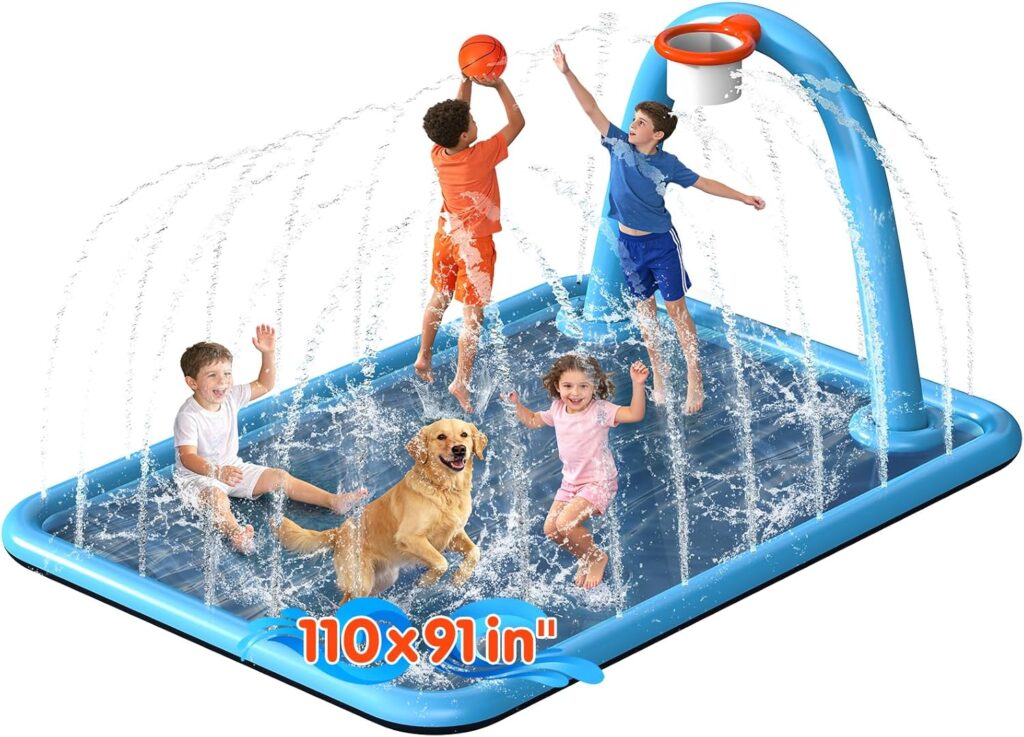
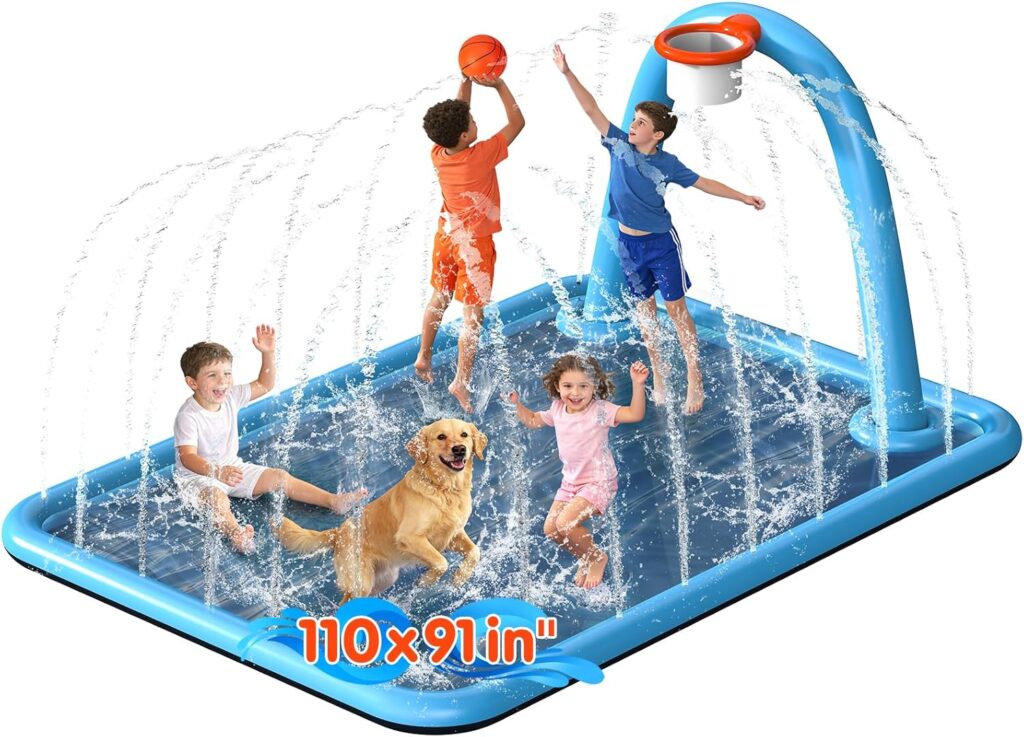
For toddlers, a medium size can be better than a very large pad because parents can supervise more closely. For siblings or playdates, a larger pad gives children more room to move without crowding the spray edge. For children who enjoy running games, a rectangular or sports-themed splash pad may offer a better play experience than a small round mat.
Water pressure should also match the child’s age. Lower spray works better for toddlers. Older kids may enjoy higher spray, but the tap should still be adjusted slowly. Turning the water on full power from the start can stress the edge ring and make the experience less comfortable.
EPN kids splash pads are developed around family use, smooth surface feel, stable spray direction, and convenient setup with a standard garden hose. These details make the pad easier for parents and more enjoyable for children.
Best Splash Pad for Dogs
A dog splash pad needs a different design logic from a kids splash pad. Dogs do not play gently. They step with more pressure, turn quickly, scratch at the surface, and may jump in and out repeatedly. For pet use, thickness matters more because the pad must resist claw contact, ground friction, and repeated body weight.
A pet splash pad should focus on:
- Thicker PVC direction
- Better wear resistance
- Stable seam construction
- Smooth surface for easy rinsing
- Enough space for turning
- Controlled spray height
- Clean ground setup
- Stronger edge stability
Dog size also matters. A small dog may only need a medium splash pad for cooling and light play. A larger dog needs more standing space and a stronger surface. If the pad is too small, the dog may constantly step on the edge ring, increasing seam stress. If the pad is placed on rough concrete or gravel, the bottom may wear faster.
Pet owners should also trim nails before use and avoid leaving the pad outdoors for days. PVC can handle outdoor play, but it should not be treated as a permanent floor covering.
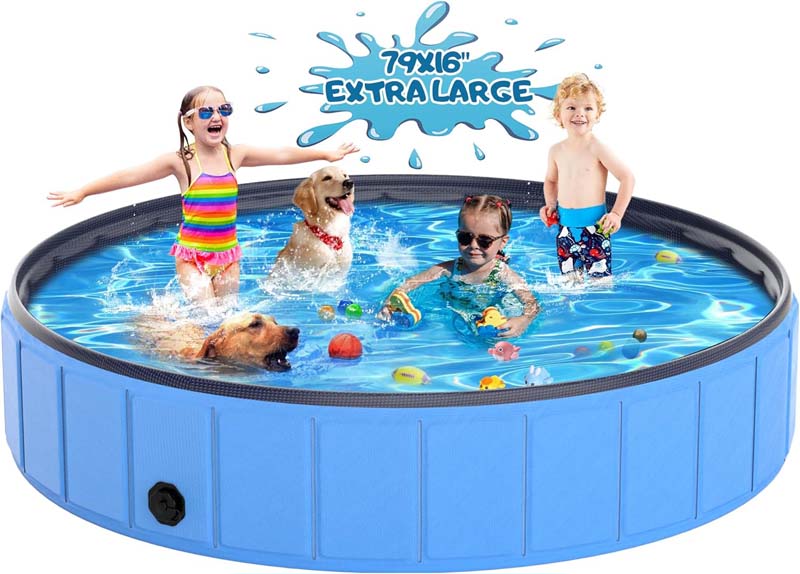
For EPN, pet splash pads and pet pools are important PVC product categories. Compared with children’s water toys, pet products require more attention to wear resistance, support, cleaning, and repeated stepping. That makes material selection and structural testing especially important for pet-focused brands and summer retail projects.
Why Thin Splash Pads Leak
Thin splash pads usually leak because the material, seams, spray holes, and hose inlet cannot handle repeated water pressure, ground friction, or active movement for long. Thin PVC may stretch more easily, but many leaks actually begin at the edge ring, heat-sealed seams, connector area, or small puncture points caused by rough surfaces.
Thin PVC Risks
Thin PVC does not automatically mean poor quality. A lighter splash pad can work for short toddler play on clean grass. The problem appears when the pad becomes part of regular summer life: kids run across it every afternoon, parents fold it while it is still damp, dogs step in the same area again and again, and the bottom rubs against hidden stones or patio texture.
A thinner splash pad has less material depth to absorb pressure points. If a child steps on a small pebble under the pad, the pressure is concentrated in one tiny area. If the pad is dragged across concrete, the bottom layer takes more abrasion. If a dog turns quickly with nails on the surface, the PVC may weaken even before a visible hole appears.
Most early leakage complaints come from ordinary backyard habits, not extreme damage. Customers may not realize that these small actions can weaken a splash pad over time:
- Dragging the pad across patio or dry grass instead of lifting it
- Placing it over hidden stones, mulch, roots, or sprinkler heads
- Turning the water pressure to maximum before the ring fills evenly
- Folding the pad while the surface is still wet, sandy, or dirty
- Letting pets play before trimming sharp nails
- Leaving the pad outside in direct sun for several days after use
These problems are especially common with thinner splash pads because there is less material margin. A thicker PVC structure gives more protection, but it still needs proper surface setup and care.
Families dealing with early edge leaks may also find our splash pad leak guide useful before deciding whether the issue comes from the seam, hose inlet, pressure, or ground surface.
Splash Pad Seam Strength
Many splash pad leaks start at the seam, not in the center. The outer ring holds water pressure and directs spray inward. That means the seam area carries pressure, movement, folding stress, and sometimes stepping pressure from children or pets.
If the heat-sealed seam is too narrow, uneven, or stressed by repeated folding, weak points can appear. Once a small opening forms, water begins to escape from the edge. A thicker surface cannot fully solve the issue if the seam itself is poorly made.
A stronger seam should have:
- Even heat sealing
- Enough bonding width
- Smooth edge finish
- Strong inlet connection area
- Stable corners or curves
- Resistance to folding stress
- Consistent sealing around the full spray ring
Most splash pad leaks do not start randomly. They usually appear in a few high-stress areas. These areas should be checked first when customers report water loss or weak spray.
| Leak Area | Common Cause | What Users Can Check |
|---|---|---|
| Hose inlet | Loose adapter, missing washer, pulling hose | Check gasket and tighten evenly |
| Outer seam | Weak sealing or excess pressure | Reduce water pressure and inspect edge |
| Spray hole line | Uneven pressure or small tear | Check if one side sprays too strongly |
| Bottom surface | Stone, gravel, rough patio | Check ground before setup |
| Fold line | Repeated folding while wet or dirty | Dry fully before storage |
For private-label sellers, these leak points should be reviewed before approving samples. A sample should not only look good when opened. It should be tested with water pressure, repeated folding, hose connection, and basic ground friction.
EPN pays close attention to seam structure because splash pads face water pressure, movement, heat, folding, and storage. The edge ring is often stepped on, pulled by the hose, bent during drying, and exposed to sun. A stable seam helps the product keep its shape and reduces early leakage complaints.

Water Pressure Problems
Water pressure is one of the most misunderstood splash pad issues. Many families think stronger water pressure means more fun. In reality, too much pressure can stress the outer ring, create uneven spray, and increase the chance of leaks at the seam or connector.
Most home splash pads are designed to work with normal garden hose pressure. The spray height should be adjusted slowly by turning the tap up or down. If the water is turned on fully from the beginning, the outer ring may fill too quickly. On a lighter pad, that sudden pressure can push stress toward the weakest part of the ring.
Low pressure can also create problems. If the spray only rises slightly, the reason may be a kinked hose, long hose distance, low household water flow, blocked connector, or uneven ground. In that case, forcing the tap to maximum may not solve the issue and may only increase stress on the inlet.
A better splash pad should not need extreme pressure to work. Balanced spray holes and a stable water channel are more important than high water force.
| Step | Water Pressure Action |
|---|---|
| Start | Turn the tap on slowly |
| First 30 seconds | Let the edge ring fill evenly |
| Adjustment | Increase pressure gradually |
| During play | Keep spray height comfortable |
| If spray is uneven | Check hose, connector, and ground before increasing pressure |
This habit protects the splash pad and gives children a better play experience. It also helps reduce after-sales confusion for sellers, because many “low spray” or “leak” complaints are related to setup rather than material failure.
Hose Connection Leaks
The hose connection is a small part, but it affects the whole experience. Many leaks blamed on thin material actually come from the inlet area. This part has to handle twisting, pulling, pressure changes, and repeated setup.
A weak hose connection may leak because the thread does not fit well, the gasket is missing, the adapter is not tightened evenly, or the inlet area is not reinforced enough. Sometimes the garden hose itself is the issue. Old hoses with damaged threads or worn washers can leak even when the splash pad is fine.
Before assuming the pad is defective, users should check:
| Check Point | What to Look For |
|---|---|
| Hose thread | Loose, worn, or mismatched thread |
| Washer gasket | Missing, cracked, or poorly seated washer |
| Adapter fit | Cross-threading or uneven tightening |
| Water pressure | Too much pressure too quickly |
| Hose position | Pulling or twisting near the inlet |
| Inlet area | Bending or stress during play |
For product development, the connector area deserves more attention than many brands give it. It is touched during every setup and takedown. It also sits at the pressure entry point. For EPN splash pad projects, connector reliability, inlet structure, and spray distribution are reviewed because they directly affect customer satisfaction.
A strong splash pad should survive play, but it should also survive the everyday routine of connecting, adjusting, draining, drying, and folding.
How to Compare Splash Pads
To compare splash pads, look beyond the product photo. Check PVC thickness, seam structure, spray direction, hose connection, size, surface use, cleaning needs, and whether the pad is designed for children, pets, or mixed family use. The best splash pad is not always the thickest one. It is the one built for lawn debris, hose pressure, pet paws, drying habits, and summer storage.
Practical PVC Range
For most home splash pads, PVC thickness often falls around 0.25 mm to 0.50 mm. Some premium or pet-focused designs may use stronger material, reinforced sections, or heavier PVC depending on size and use case.
A light toddler splash pad used occasionally on soft grass does not need the same material strength as a large dog splash pad used every weekend. A summer item for one child is different from a backyard play item for siblings, pets, and parties.
| PVC Direction | Better For | Main Benefit | What to Check |
|---|---|---|---|
| Lighter PVC | Short play, toddlers, easy folding | Lower weight and simple storage | Ground must be clean |
| Medium PVC | Family lawns, repeated use | Good balance of comfort and strength | Seam quality still matters |
| Thicker PVC | Dogs, active kids, larger sizes | Better wear resistance | Folding feel and weight |
| Reinforced design | Premium use, retail projects | Stronger product positioning | Cost and package weight |
A strong product page should not only say “thickened PVC.” It should explain why the thickness matches the use. A dog splash pad should talk about paw contact and wear resistance. A kids splash pad should talk about comfort, spray control, and smooth play. A garden splash pad should talk about ground contact, folding, and summer storage.
EPN’s strength is not only making PVC goods. The value is matching material structure to category needs. The company develops kids splash pads, pet splash pads, basketball splash pads, water slides, pet pools, inflatable pools, snow tubes, boxing columns, water arches, and pool pillows. Each category needs a different balance of flexibility, pressure resistance, low odor, UV exposure, and wear performance.
Right Splash Pad Size
Splash pad size affects comfort, safety, water use, spray control, and how many children or pets can play at once. Many families focus on thickness first, but size can matter just as much. A pad that is too small may feel crowded. A pad that is too large may need more space, more water flow, and more drying time.
A good size depends on age, number of users, yard space, and pet use.
| Splash Pad Size | Better For | Use Notes |
|---|---|---|
| 40–60 inches | Toddlers, small patios, quick play | Easy to supervise and store |
| 60–80 inches | 1–2 children, small lawns | Good for daily family use |
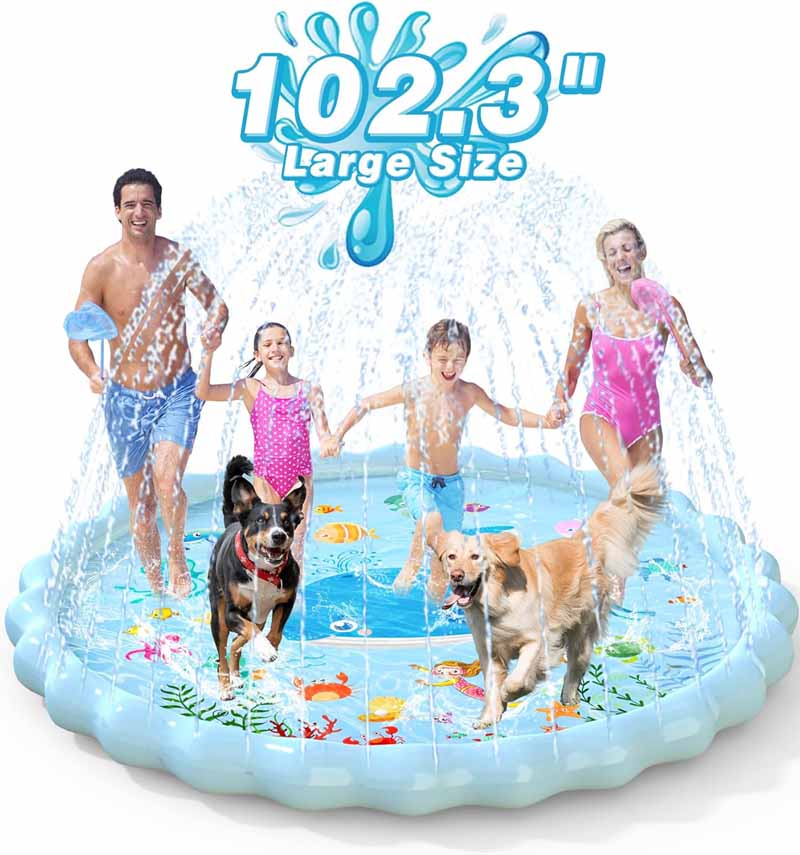
| 80–100 inches | Siblings, active play, larger lawns | Needs open flat space |
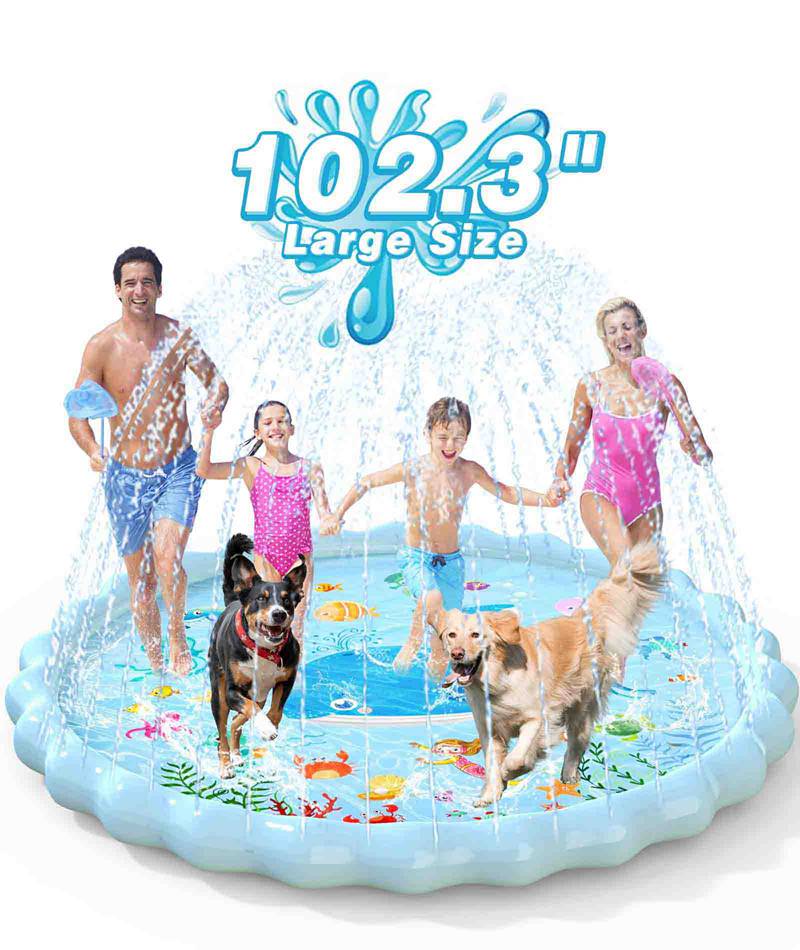
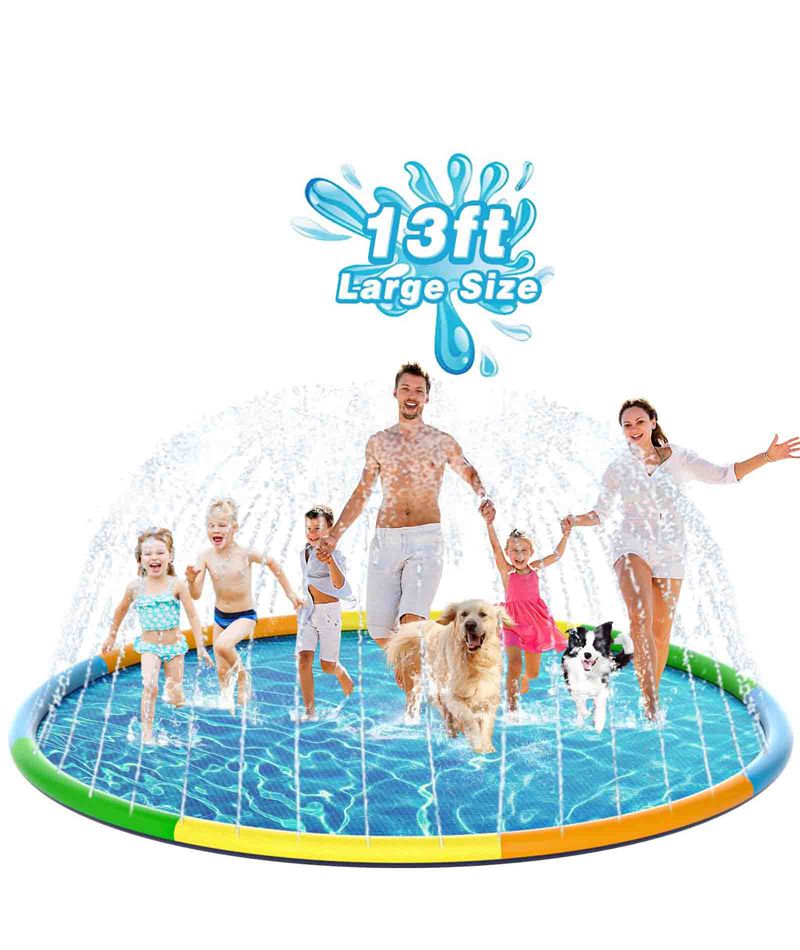
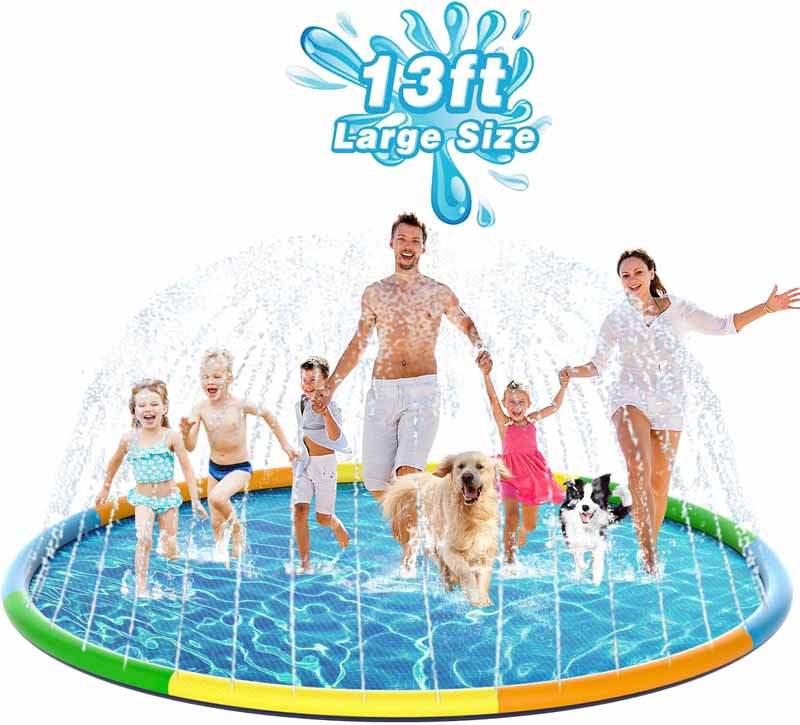
| 100+ inches | Playdates, pets, larger gardens | Better with stronger PVC and seams |
| Rectangular large pads | Running games, sports themes | Needs stable spray distribution |
A practical rule is to choose size by movement, not only by age. A toddler who sits and splashes needs less space than two older children running through spray. A dog needs turning space, not just standing space.
| User Type | Suggested Size Direction | What to Prioritize |
|---|---|---|
| 1 toddler | 40–60 inches | Close supervision, gentle spray, easy drainage |
| 1–2 young children | 60–80 inches | Daily play, easy folding, balanced spray |
| 2–3 children | 80–100 inches | More movement space, stronger seams |
| Playdates | 100+ inches | Open lawn space, stable water distribution |
| Small dog | 60–80 inches | Cooling area, smooth surface, easy cleaning |
| Medium or large dog | 80–100+ inches | Turning space, thicker PVC, wear resistance |
| Sports play | Rectangular or themed pad | Running space, strong edge, even spray |
A common mistake is buying the biggest splash pad without checking the space. The pad should sit fully open, away from steps, garden tools, rough concrete, thorny plants, and patio edges. Adults also need walking space around the pad for supervision.
For toddlers, bigger is not always better. A smaller or medium splash pad can be easier to control, easier to drain, and safer for close supervision. For dogs, the pad should allow the pet to stand, turn, and cool down without constantly stepping on the outer ring. For families with multiple children, a larger pad helps reduce crowding.
Quality Details
Quality is often visible in small details. A better splash pad usually looks cleaner around the seams, lies flatter on the ground, sprays more evenly, and connects more securely to the hose. These details may not look dramatic in a product photo, but they matter after repeated use.
When comparing splash pads, look for signs of practical design:
- Smooth heat-sealed edges
- Reinforced inlet area
- Balanced spray holes
- Inward spray direction
- Stable outer ring
- Low-profile center play area
- Clear setup and storage instructions
- Surface guidance
- Material information that matches the use case
A poor splash pad may still look bright and fun online. The real issue appears when water pressure rises. The edge may twist, spray holes may shoot unevenly, the connector may leak, or the pad may wrinkle under movement.
For retailers and private-label brands, small quality details have direct business impact. Splash pads are seasonal products, and user feedback arrives quickly once summer begins. If a pad leaks early, smells strong, fails at the connector, or feels too thin for pets, returns and negative reviews can build fast.
EPN’s product development process supports material selection, structure design, packaging, labels, and localized product presentation. This helps brands and sellers move beyond surface appearance and build a more reliable summer water play line.

Better Spray Design
A splash pad should spray inward from the outer ring in a controlled and even way. This sounds simple, but spray design is one of the biggest differences between a low-quality pad and a better-designed one.
If spray holes are not balanced, one side may spray too high while another side barely works. If the holes are too large, water may lose pressure too quickly. If the holes are angled poorly, water may shoot outside the play area instead of creating a comfortable sprinkler effect toward the center.
A better spray design should create:
| Spray Detail | Better Result |
|---|---|
| Inward spray angle | Keeps water inside the play zone |
| Even hole spacing | Supports balanced spray height |
| Controlled hole size | Reduces sudden pressure loss |
| Stable ring channel | Helps water move evenly |
| Adjustable pressure response | Lets parents control spray height |
For toddlers, lower spray is usually better. It feels less intense and allows children to sit, crawl, or walk through the water comfortably. For older kids, slightly higher spray can create more excitement. For pets, gentle water is often better at first, especially for dogs that are new to splash pads.
Spray height should be adjustable by water pressure, not fixed at one extreme. Parents should be able to control the experience with the garden tap. A well-designed splash pad gives them that control without forcing them to choose between “barely sprays” and “too strong.”
Surface Matters
The ground under a splash pad can decide how long it lasts. A thick PVC splash pad may still be damaged on sharp gravel. A thinner pad may last longer than expected on clean grass if it is used carefully. Thickness helps, but surface preparation is one of the easiest ways to protect the material.
The best surfaces include:
- Clean soft lawn
- Smooth patio
- Flat garden area
- Outdoor mat underlayer
- Debris-free backyard space
The riskiest surfaces include:
- Gravel
- Sharp mulch
- Rough concrete
- Uneven stone
- Areas with thorns or sticks
- Ground with hidden small rocks
Grass is popular because it feels soft and family-friendly. But grass still needs checking. Small stones, dry twigs, sprinkler heads, and uneven roots can sit under the pad and create pressure points. Patio surfaces are easier to clean but may create more friction, especially if children run or drag toys on the pad. For families setting up on hard outdoor surfaces, our splash pad patio setup tips explain how to reduce friction, slipping, and bottom wear before play starts.
| Step | What to Do | Why It Helps |
|---|---|---|
| Ground check | Remove stones, sticks, and sharp debris | Reduces puncture risk |
| Setup | Open the pad fully before adding water | Reduces fold stress |
| Hose position | Keep the hose relaxed | Protects the inlet |
| Water start | Begin with low pressure | Protects the edge ring |
| After play | Drain completely | Prevents dirty water buildup |
| Storage | Dry before folding | Reduces odor and mildew |
Many thickness complaints are really surface problems. A stronger pad gives more protection, but good setup habits still matter.
Which Splash Pad Should You Choose?
The best splash pad depends on who will use it, where it will be placed, and how often it will be used. For toddlers, comfort and gentle spray matter most. For lawns, size and ground stability matter. For pets, thicker PVC and wear resistance are more important. A good splash pad should match the real use scene, not just look attractive in photos.
Best for Toddlers
For toddlers, the best splash pad should feel gentle, stable, and easy for parents to control. Thickness still matters, but it should not make the pad too stiff or uncomfortable. A toddler may sit, crawl, squat, or walk slowly across the pad, so the surface should feel smooth and the water should stay shallow.
A toddler splash pad should focus on:
- Soft surface feel
- Gentle inward spray
- Shallow water play
- Stable edge shape
- Moderate size
- Easy drainage
- Close supervision
- Simple cleaning routine
Very high spray may look exciting in photos, but younger children may find it too strong. A splash pad with inward spray from the outer ring is usually easier to manage because parents can adjust the water pressure and create a softer play environment.
Parents often care less about technical wording and more about whether setup is simple. A good splash pad should not require tools, complicated parts, or long preparation.
Before first use, parents should check:
- Is the pad placed on flat, clean ground?
- Is the hose washer included and properly seated?
- Is the garden hose connected straight, not twisted?
- Are the spray holes facing inward?
- Is the water pressure started slowly?
- Is the child comfortable with the spray height?
- Is the pad drained and dried after play?
These small steps can prevent many common complaints. A splash pad that is easy to understand from the first use feels more reliable and creates a better family experience.
For EPN branded products and OEM/ODM projects, clear printed instructions, simple icons, and short care tips can improve customer satisfaction. Many problems come from unclear setup rather than actual material failure.
Best for Lawns
For lawn use, the best splash pad should balance size, bottom strength, seam stability, and easy drying. A clean grass surface is one of the most common places to use a splash pad, but grass is not always perfectly smooth. Hidden stones, sprinkler heads, dry roots, sticks, and small garden debris can create pressure points under the PVC.
A lawn splash pad should lie flat and keep its outer ring stable when water starts flowing. If the pad wrinkles or shifts too much, children may step on folded areas, increasing wear. A medium-thick or thicker PVC design can help, especially for larger pads used by siblings or multiple children.
Lawn size also matters. A small patio-style pad may feel crowded on a large backyard, while a very large splash pad may waste space and water in a small garden. Families should leave extra walking room around the pad so adults can supervise and children do not run directly into fences, flower beds, or patio edges.
For garden and lawn splash pads, EPN can support different shapes and sizes, including round family pads, rectangular sprinkler pads, sports-themed splash pads, and customized outdoor water play designs for brand or retail projects.
Best for Pets
For pets, especially dogs, the best splash pad should be stronger than a basic toddler pad. Dogs place more pressure on the surface, move with claws, and may step repeatedly in the same spots. A pet splash pad should use a more durable PVC direction, stable seams, and a size that lets the dog stand, turn, and cool down without crowding the edge.
Thickness matters more for dogs because of paw pressure and surface wear. But pet owners should still remember that no PVC splash pad is indestructible. Sharp nails, rough concrete, chewing, dragging, or gravel can damage even a stronger pad. The goal is not to find a pad that can survive anything. The goal is to choose a pad designed for real pet behavior and then use it correctly.
For pet use, check these points:
| Pet Use Detail | Why It Matters |
|---|---|
| Thicker PVC direction | Better resistance to paw pressure |
| Stable edge ring | Reduces twisting during movement |
| Smooth surface | Easier to rinse after play |
| Proper size | Lets pets turn and cool down |
| Controlled spray | Helps nervous dogs adjust |
| Clean ground setup | Reduces bottom wear |
| Trimmed nails | Lowers scratch risk |
Some dogs love running through the water. Others prefer standing near the spray edge or lying in the shallow center. A lower spray setting is often better at first. Turning the water pressure too high may scare nervous pets or create too much movement in the outer ring.
EPN’s pet-focused PVC products are developed with stronger daily-use needs in mind. For pet splash pads and pet pools, the product direction pays more attention to wear, support, repeated stepping, and easy cleaning compared with simple novelty water toys.

Are Splash Pads Sanitary?
Splash pads can be sanitary when they are used with clean water, drained after play, cleaned regularly, and dried before storage. The biggest hygiene problems usually come from standing water, shared public use, poor cleaning, or children and pets using the pad while sick. A home splash pad is easier to control than a public water play area, but it still needs basic care.
For home splash pads, the water usually comes from a garden hose and is not meant to be stored for long periods. That is different from a public sprayground or water park feature, where water may be collected, filtered, treated, and recirculated. Because home splash pads are portable, families can empty them after use, rinse the surface, and let the PVC dry before folding.
Good splash pad hygiene is not complicated:
| Habit | Why It Helps |
|---|---|
| Use fresh tap water | Reduces standing water exposure |
| Do not let kids drink the water | Lowers stomach illness risk |
| Drain after each play session | Prevents dirty water from sitting |
| Rinse off grass and dirt | Keeps the surface cleaner |
| Dry before storage | Helps reduce odor and mildew |
| Avoid use when sick | Reduces germ spread |
Cleaning does not need to be complicated, but it should be consistent. A home splash pad is easier to manage than a public sprayground because the family controls the water source, play time, users, and storage routine.
For better daily hygiene, the routine can be simple:
- Rinse the pad after every play session
- Remove grass, mud, sunscreen residue, pet hair, and food crumbs
- Drain standing water instead of letting it sit overnight
- Air dry both the center and edge ring before folding
- Store the pad in a cool, dry place away from direct sun
- Avoid use when a child or pet is sick
| Use Situation | Cleaning Level |
|---|---|
| One child, short play | Drain, rinse, air dry |
| Multiple children | Rinse surface and check the edge ring |
| Pet play | Remove hair, dirt, and paw marks |
| Food or party use | Clean residue before folding |
| After stomach illness | Stop use and clean carefully before next play |
| End of season | Wash, dry fully, fold loosely, store indoors |
Norovirus and Splash Pads
People often ask whether you can get norovirus from a splash pad. The careful answer is yes, stomach illness can spread through contaminated water when people are sick, water is swallowed, or the play area is not cleaned properly. The risk is discussed more often with public splash pads and spraygrounds, but home splash pads still need common-sense hygiene.
Norovirus spreads easily through contaminated hands, surfaces, food, and water. In a splash pad setting, the concern is usually fecal contamination. If a child has diarrhea, has a diaper leak, or plays too soon after illness, germs can enter the water. If another child swallows that water or touches their mouth afterward, illness can spread.
This does not mean families should avoid home splash pads. It means they should use them responsibly.
Practical rules are simple:
- Do not use the splash pad when a child has diarrhea.
- Do not allow water drinking from the splash pad.
- Take bathroom breaks during play.
- Change diapers away from the water play area.
- Drain and rinse the pad after use.
- Clean the pad before storage.
- Let the pad fully dry before folding.
Public spraygrounds carry different concerns because many children share the same space, and some systems may recirculate water. A home PVC splash pad gives families more control. They choose the water source, users, play time, cleaning method, and storage routine.
For brands and retailers, hygiene education is part of practical customer support. Clear use and care instructions can lead to fewer setup complaints and cleaner daily use. EPN can support localized instructions, warning labels, packaging text, and care guidance for different markets and product types.
Make Splash Pads Last Longer
To make splash pads last longer, focus on setup, water pressure, cleaning, drying, and storage. A stronger PVC splash pad gives better durability potential, but daily habits decide how much of that potential the user actually gets. Most early damage comes from rough surfaces, excessive water pressure, poor drying, dragging, or folding the pad while dirty.
A simple care routine adds real value:
| Step | What to Do | Why It Matters |
|---|---|---|
| Before use | Check the ground | Prevents punctures and scratches |
| Setup | Unfold fully before adding water | Reduces seam stress |
| Water control | Start with low pressure | Protects the edge ring |
| During play | Avoid sharp toys and rough shoes | Reduces surface wear |
| After use | Drain completely | Prevents dirty water buildup |
| Cleaning | Rinse grass, mud, and pet hair | Keeps the surface fresh |
| Drying | Air dry before folding | Reduces odor and mildew |
| Storage | Store in a cool dry place | Protects PVC from heat and sun |
The most common mistake is leaving the splash pad outside for days after play. Sun, heat, grass moisture, insects, dirt, and changing temperatures can all affect PVC over time. Even a durable splash pad should be treated as a seasonal outdoor item, not a permanent backyard floor.
Water pressure is another important habit. A splash pad should not be forced to perform like a high-pressure sprinkler system. If the spray is too low, check the hose, connector, water flow, and possible blockage before turning the tap to full power. If the spray is too high, reduce pressure to protect the edge and keep children comfortable.
For families, good care means more play sessions from the same pad. For retailers and brand owners, clear care instructions can reduce returns and improve reviews. That is why EPN supports not only manufacturing, but also packaging, instructions, labels, and user-friendly care communication.
Build Better Summer Water Products with EPN
Thick vs thin splash pads are not just a material debate. For families, the real question is whether the splash pad can handle children, pets, lawns, hoses, cleaning, storage, and repeated summer play. For brands, retailers, distributors, and cross-border sellers, the question goes deeper: can the product deliver consistent seams, reliable connectors, tested PVC structure, clear packaging, and ready-for-market value?
EPN, under American Epsilon Inc., focuses on PVC and composite-material products for family recreation, children’s toys, pet supplies, outdoor leisure, and seasonal sports. The product range includes kids splash pads, pet splash pads, basketball splash pads, water slides, inflatable pools, kids pools, pet pools, water arches, inflatable floats, snow tubes, boxing columns, and pool pillows.
For business customers, splash pad development is not only about choosing a material. A successful seasonal item must balance cost, package size, product feel, compliance information, visual design, and after-sales risk. The right structure helps reduce common complaints before the product reaches the customer.
EPN can help customers define the product from several angles:
| Project Need | EPN Support Direction |
|---|---|
| Entry-level family splash pad | Cost-controlled PVC, simple packaging, easy setup |
| Premium kids splash pad | Stronger PVC, better edge stability, upgraded design |
| Pet splash pad | Wear-resistant material, larger size, easy-clean surface |
| Sports splash pad | Rectangular layout, themed pattern, stronger spray control |
| Retail seasonal program | Packaging, labels, carton planning, batch production |
| Amazon private label | Product copy direction, warning labels, platform-ready packaging |
| Multi-market launch | English, German, French, Spanish, and other local materials |
For splash pad projects, EPN can support:
- Material thickness planning based on use scene
- Kids, pets, family, sports, and garden splash pad development
- Round, rectangular, themed, and custom shapes
- PVC and composite material matching
- Reinforced seam and inlet structure review
- Spray hole layout and water distribution optimization
- Low-odor and outdoor-use material direction
- OEM and ODM customization
- Color, pattern, packaging, and label customization
- Multi-language instructions and retail packaging
- Small test orders and staged production planning
- Support for Amazon, retail, distributor, and seasonal product projects
For custom splash pad projects, customers can discuss:
| Custom Area | Available Direction |
|---|---|
| Material | PVC thickness, reinforced areas, low-odor direction |
| Size | Toddler, family, pet, lawn, rectangular, oversized |
| Shape | Round, rectangular, sports-themed, custom outline |
| Design | Printed pattern, color theme, seasonal style |
| Structure | Seam width, hose inlet, spray hole layout |
| Packaging | Retail box, gift box, platform-ready packaging |
| Labels | Amazon, retail, warehouse, barcode, warning labels |
| Instructions | English, German, French, Spanish, and other languages |
| Order Plan | Test order, small batch, seasonal bulk order |
| Market Use | Amazon, retail, wholesale, distributor, private label |
EPN’s product development process is built for both product quality and market speed. With dedicated R&D support, design resources, testing capability, mature mold experience, and coordinated production supply, EPN can help customers move from concept to sample, from sample to production, and from production to market launch with fewer delays.
For brand customers, the advantage is flexibility. A splash pad can be developed for toddlers, pets, large lawns, sports themes, giftable summer sets, or retailer-exclusive seasonal lines. For distributors and sellers, the advantage is product depth. Instead of relying on one generic summer item, customers can build a complete water play category around splash pads, pet pools, inflatable pools, water slides, sprinkler toys, and related PVC outdoor products.
If you are looking for EPN branded splash pads for family or pet summer use, Epsilon can help you choose a suitable product direction based on size, material, and use scene. If you are planning a private label, wholesale, retail, or OEM/ODM project, Epsilon can also support custom specifications, packaging, colors, patterns, and product development for your target market.
A better splash pad is not only thicker. It is better matched, better sealed, better tested, easier to use, and easier to trust. That is what matters when customers open the package, connect the hose, and expect one simple thing: a summer afternoon that works.
Get A Fast quote
Here, bringing your inflatable concepts to life is no longer a challenge—it’s a collaborative journey where American Epsilon helps families, outdoor enthusiasts, and global brands transform creative ideas into safe, certified, and market-ready inflatable solutions.


Partner With Epsilon
Whether you are a family looking for safe backyard fun or a brand seeking large-scale OEM/ODM solutions, American Epsilon Inc. guarantees every inflatable is built with safety, durability, and excitement in mind. With flexible low MOQs, strategically placed warehouses in the U.S., Canada, U.K., and Germany, plus 24/7 professional support, we ensure smooth delivery and reliable service worldwide.
Ready to bring your inflatable ideas to life? Request free samples, fast prototypes, and customized designs today—your trusted inflatable journey starts here.