Skip to content
Best Splash Pad Features for Weekend Family Fun
# Your Trusted Inflatable Supplier In US

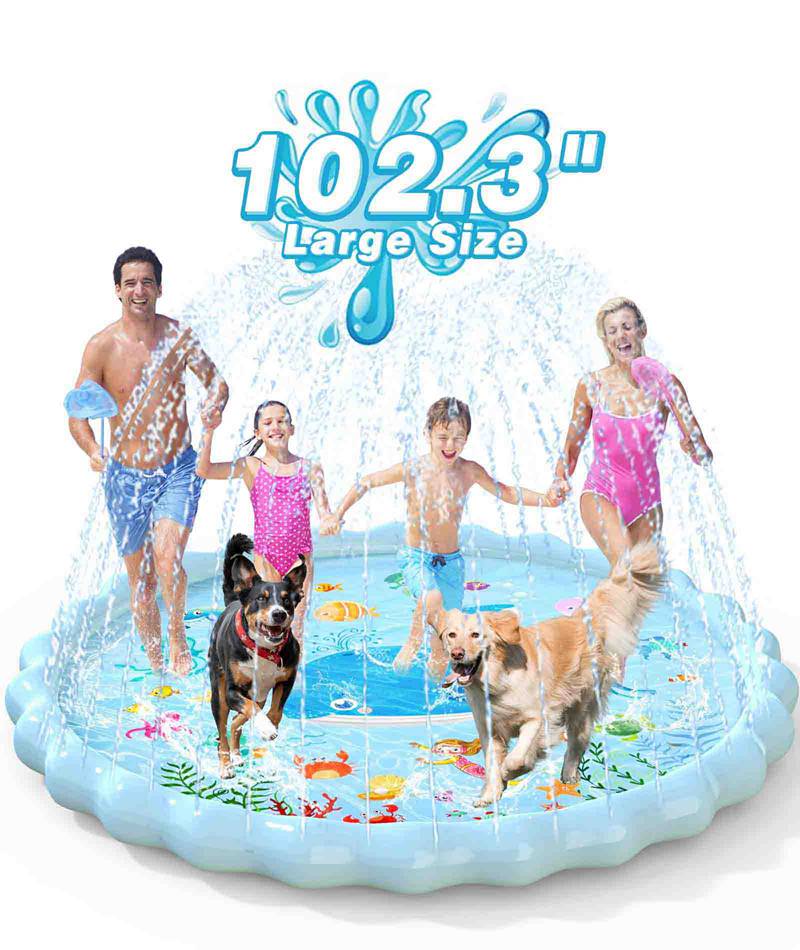
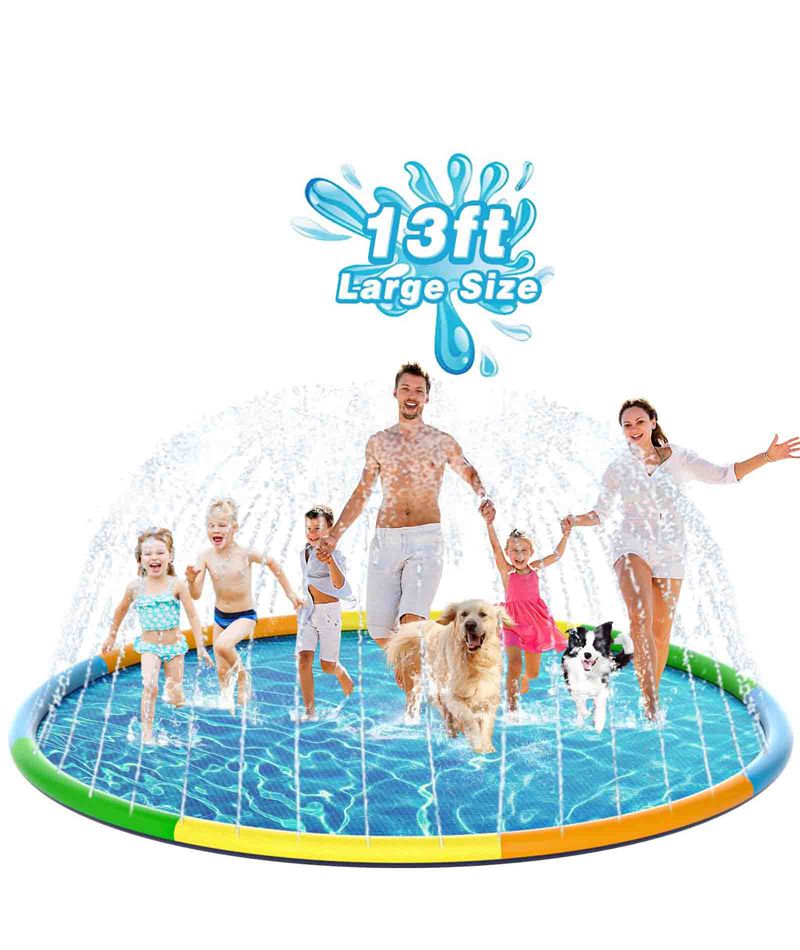
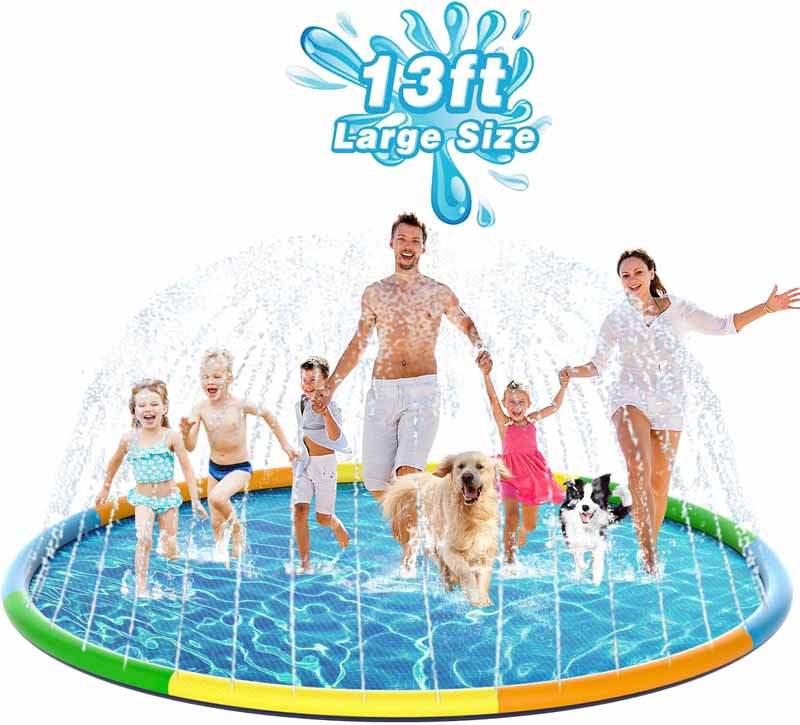
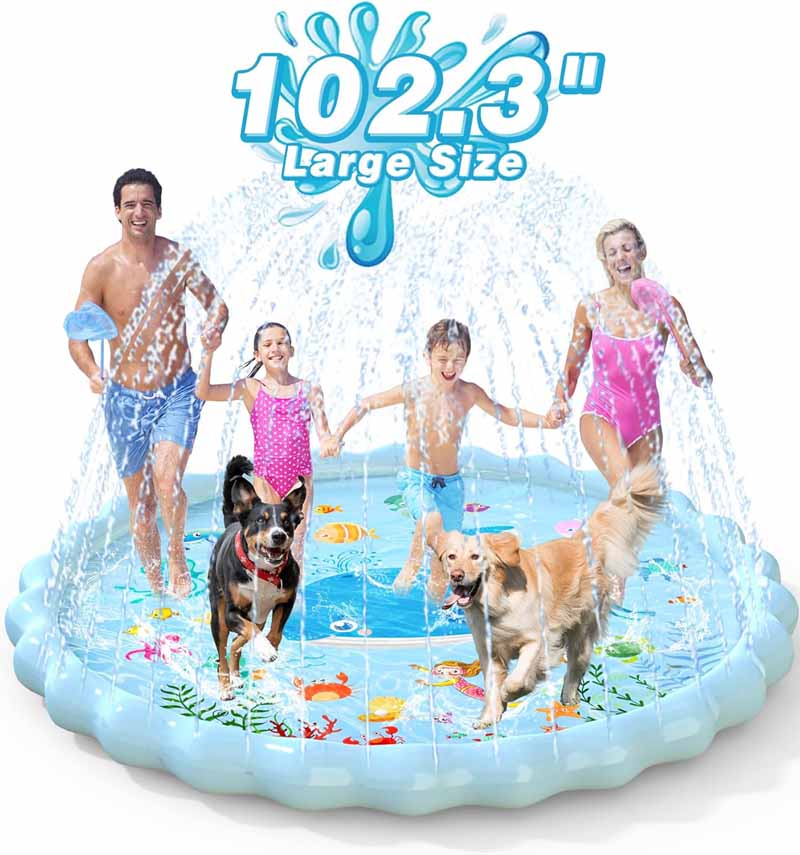
A fun weekend at home often starts with a simple problem: the kids want to play outside, the weather is hot, and parents do not want to spend the whole afternoon setting up a large pool or driving to a crowded water park. A splash pad solves that problem in a simple way. It connects to a garden hose, creates a shallow water play area, and gives children a place to run, splash, sit, kick, and cool down under parent supervision.
The best splash pad features for weekend family fun include durable PVC material, a non-slip play surface, reinforced edges, adjustable spray height, a secure hose connection, grass-friendly setup, easy cleaning, and compact storage. A strong family splash pad should be comfortable for bare feet, stable during water play, easy for parents to set up, and durable enough for repeated summer weekends.
A splash pad may look like a simple backyard toy, but families quickly notice the difference after several uses. A well-made splash pad sprays evenly, stays flat on grass, dries without strong odor, and folds away without taking over the garage. A weak one may wrinkle, leak, slide, or become hard to clean. For parents, the real value is not only the first afternoon of fun. It is whether the same splash pad can become part of many summer weekends.
What Splash Pad Features Matter Most?
The most important splash pad features are durable material, safe surface texture, stable edge structure, adjustable spray, fast hose setup, and easy storage. Families should choose a splash pad based on real weekend use: how many children will play, where it will be placed, how often it will be used, and how easy it is to clean afterward.
Splash Pad Features
Weekend family play is different from a short weekday water break. Children may use the splash pad for 20 minutes after school, but on weekends the same pad may be used for several hours during a barbecue, birthday party, family gathering, or pet play day. During that time, the product may face running feet, changing water pressure, grass contact, sunlight, folding, cleaning, and sometimes pet use.
That is why splash pad features should be judged by practical use, not only by color or size. A good splash pad should help parents solve more than one problem. It can offer shallow water play for toddlers, shared space for siblings, cooling fun for dogs, and a simple outdoor activity for family gatherings.
For EPN, a splash pad is not only a printed PVC mat with water holes. It is a backyard-use product that needs material strength, spray control, safe surface texture, stable seams, and easy storage.
Family Fit
A splash pad should match the family using it. A toddler playing alone does not need the same size as three siblings playing together. A family with dogs needs stronger material than a toddler-only household. A small patio yard needs a more compact option than a large suburban lawn.
| Family type | Better splash pad choice | Key reason |
|---|---|---|
| One toddler | 60–70 inch splash pad | Easier supervision and gentler play |
| Two young children | 70–90 inch splash pad | More space without taking over the yard |
| Three or more children | 90–118 inch splash pad | Better for group movement and games |
| Kids and pets | Larger pad with thicker PVC | Reduces crowding and improves durability |
| Small backyard | Medium size with compact folding | Easier storage and setup |
| Weekend parties | Larger pad with stable spray | Better for shared summer play |
A larger splash pad can feel more exciting, but size should still match the available space. Parents should leave room around the pad for towels, shoes, water bottles, and adult supervision. A slightly smaller pad on a clean, open lawn is often better than a large pad crowded near furniture, fences, or garden tools.
Splash Pad Packing List
Even when the splash pad is used at home, a simple packing list makes the day easier. Parents do not need to overprepare, but keeping the right items nearby prevents small interruptions.
Useful items include:
- Towels for children and pets
- Sunscreen for outdoor play
- Water bottles for hydration
- Dry clothes for after play
- Soft water shoes if nearby ground is hot or rough
- Waterproof bag or laundry basket for wet clothes
- Soft balls, floating toys, or plastic cups
- Pet towel for dog use
- Shade umbrella for longer afternoon play
- Small chair or mat for adult supervision
A few things should stay away from the splash pad: cleats, hard shoes, sharp toys, sticks, stones, metal pet accessories, hard chew toys, garden tools, heavy outdoor furniture, and electrical cords. These can damage the PVC surface or make the play area less safe.
Useful Numbers
A few numbers help parents compare splash pads more clearly.
| Feature | Practical family range | Why it matters |
|---|---|---|
| Splash pad size | 60–118 inches | Supports different yard sizes and child counts |
| PVC thickness | 0.40–0.55 mm | Better balance of durability and foldability |
| Setup time | 3–5 minutes | Makes weekend use easier |
| Cleaning time | 5–10 minutes | Helps parents keep the pad fresh |
| Best surface | Clean, flat grass | Softer and safer for children |
| Spray setting | Low to medium | Better for mixed ages |
| Storage condition | Fully dry, shaded place | Helps reduce odor and material stress |
These numbers do not replace common sense, but they give families a practical starting point. A splash pad that fits these ranges is usually easier to use repeatedly during summer weekends.
Which Splash Pad Features Last Longer?
Longer-lasting splash pad features include medium-thick PVC, reinforced seams, stable water channels, low-odor material, flexible folding, UV resistance, and strong hose connection design. Durability depends on both material quality and daily use habits, including where the pad is placed, how water pressure is controlled, and how well it is dried before storage.

PVC Material
PVC is commonly used for splash pads because it is flexible, waterproof, printable, foldable, and suitable for sealed water-channel structures. For families, that means the splash pad can create a sprinkler effect while still being light enough to fold and store after use.
A good PVC splash pad should feel flexible but not flimsy, smooth but not slippery, and thick enough for repeated foot contact. It should have a low odor after airing and rinsing, and the surface should be easy to wipe clean after outdoor play. Children often stand, sit, crawl, and splash directly on the material, so comfort matters as much as strength.
The material should not feel like thin plastic film. Very thin material may look acceptable at first, but it can wrinkle more easily and may be less stable during active play. At the same time, very heavy material is not always better if it becomes hard to fold or store.
EPN works with PVC and composite materials across children’s water toys, pet pools, inflatable products, floating products, and seasonal outdoor items. For splash pads, the material must balance comfort, sealing strength, water pressure performance, folding, and storage.
PVC Thickness
PVC thickness is one of the easiest details for customers to understand. For family weekend use, 0.40–0.55 mm is a practical range because it gives better support than very thin material while still keeping the pad foldable.
| PVC thickness | Suitable use | Customer concern |
|---|---|---|
| Below 0.30 mm | Light occasional toddler play | May wear faster |
| 0.30–0.40 mm | Short seasonal use | Better than thin plastic but limited for active play |
| 0.40–0.55 mm | Family weekend use | Good balance of durability and storage |
| Above 0.55 mm | Large or pet-focused designs | Needs better folding and seam control |
Thickness should always be judged together with seam quality. A thicker splash pad can still fail if the edge is poorly sealed. A thinner splash pad may feel acceptable for gentle toddler use but may not be the best choice for siblings, pets, or weekend parties.
For most families, the better question is not “What is the thickest splash pad?” The better question is “Does the material thickness match the way my family will use it?”
Seam Quality
Seam quality affects both durability and water performance. The edge ring of a splash pad holds water pressure and supports the spray holes. If the seam is weak, narrow, or uneven, the pad may lose shape, spray unevenly, or become more likely to leak.
Good seam design helps the edge fill more evenly, reduces stress near the hose inlet, and supports more consistent spray height. Parents can often notice poor seam design during setup. If one side bulges much more than another, if the edge twists, or if spray is strong in one area but weak in another, water may not be moving evenly through the structure.
For EPN splash pad development, seam strength is one of the most important engineering details. The seam is not only a connection point. It is part of the water system.
Outdoor Resistance
Splash pads are used outdoors, so the material must deal with sun, water, heat, and repeated drying. A pad left on grass during summer afternoons may face high surface temperature and direct sunlight for several hours.
Outdoor resistance includes UV stability, heat resistance, flexible folding after drying, low odor after repeated use, and a surface texture that does not become sticky. Printed patterns should also hold up through seasonal play without making the product look worn too quickly.
Storage also affects durability. A wet splash pad folded into a hot garage may develop odor or sticking. A pad stored with grass and dirt inside may be harder to clean next time. For long-term use, families should think of durability as a partnership between product design and care habits. Strong material helps, but drying and storage matter too.
What Splash Pad Features Keep Kids Safer?
The safest splash pad features include a non-slip surface, shallow play area, rounded edge structure, adjustable spray, clean water use, and proper setu on soft ground. Adult supervision is still necessary, but better design helps reduce common problems such as slipping, harsh spray, rough ground contact, and unstable play surfaces.

Non-Slip Surface
A non-slip surface is one of the most important safety-related features. Water naturally makes surfaces slippery, and children often move quickly when they are excited. A textured center helps improve grip when kids walk, sit, crawl, turn, or splash.
The surface should be lightly textured, comfortable for bare feet, easy to rinse, and not too rough for toddlers. Non-slip does not mean children cannot fall. Parents should still set clear rules, especially when several children are playing together. Running, pushing, and rough chasing should be limited.
The goal is to create a surface that feels more secure under wet feet. For toddlers, that feeling matters because they are still developing balance and confidence.
Water Shoes
Kids can play barefoot on a clean splash pad placed on soft grass. Barefoot play often feels natural and comfortable. However, water shoes can be useful when the area around the splash pad is hot, rough, or shared with many children.
Water shoes are helpful when the splash pad is near hot pavement, dry lawn patches, patio stone, public play areas, or ground with small debris. Shoes should have soft soles and good grip. Hard shoes, cleats, rough sandals, and shoes with sharp edges should not be used on a PVC splash pad because they may damage the surface.
For home use, the best approach is simple. Clean grass usually works well for barefoot play. Rough surroundings call for soft water shoes.
Hygiene and Water Safety
Home splash pads normally connect to fresh garden hose water, which is different from public splash pads that may use recirculating systems. Even so, families should keep good water habits.
Recommended hygiene habits:
- Use fresh water for each play session
- Do not allow children to drink from the splash pad
- Drain water after play
- Rinse the surface after use
- Dry fully before folding
- Store in a clean, shaded place
- Rinse again after pet use
- Avoid leaving standing water for long periods
Some parents ask about Legionnaires’ disease and splash pads. The main concern with Legionnaires’ disease is breathing contaminated water droplets from water systems where bacteria have been allowed to grow. A clean home splash pad using fresh hose water and proper drying habits is much lower concern than a poorly maintained public water feature.
For public splash pads, parents should look for clean facilities, good drainage, no strong odor, and visible maintenance. For home splash pads, the key is fresh water, draining, rinsing, and drying.
Spray Control
Spray control affects both comfort and safety. Young children usually enjoy gentle spray more than strong jets. Older children may like medium spray for active games. If the spray is too high or too sharp, toddlers may avoid the play area or get water directly in the face.
| Use case | Better spray level | Reason |
|---|---|---|
| Toddlers | Low | More comfortable and less intimidating |
| Ages 4–6 | Low to medium | Supports walking and simple games |
| Ages 7–10 | Medium | Better for active play |
| Pets | Low first | Helps dogs adjust slowly |
| Mixed-age play | Start low | Safer for younger children |
Parents should turn on the water slowly and adjust the spray gradually. Maximum pressure is rarely necessary. A steady, comfortable spray is better for longer play.
How Do Splash Pad Features Affect Water Play?
Splash pad features affect water play by changing spray height, water direction, play space, surface comfort, and the types of activities children can enjoy. A well-designed splash pad supports gentle toddler play, sibling games, backyard water activities, pet cooling, and easy parent supervision.
Spray Pattern
Spray pattern determines whether a splash pad feels fun or frustrating. Inward spray keeps water focused toward the play area. Outward spray wastes water and can make surrounding grass muddy faster. Uneven spray may cause children to crowd into one side of the pad.
A better spray pattern should create soft arcs toward the center, keep water flow balanced from multiple sides, and avoid harsh jets aimed at children’s faces. The edge structure should stay stable under medium pressure instead of twisting or collapsing.
If one side sprays higher than another, parents should check whether the pad is flat, whether the hose is twisted, or whether the lawn slopes. Small setup changes can often improve spray balance.
Water Pressure
Water pressure should be adjusted slowly. Too much pressure can create high spray, edge bulging, or unstable movement. Too little pressure may create weak spray and less play value.
| Pressure issue | What families may notice | Better action |
|---|---|---|
| Too low | Weak spray | Increase pressure slowly |
| Too high | Harsh spray or edge bulging | Reduce faucet flow |
| Uneven spray | One side higher than another | Check slope and hose twist |
| Connector stress | Hose pulls the pad | Relax hose tension |
| Center flooding | Water gathers on one side | Check ground level |
Many families get the best experience at low to medium water pressure. The tallest spray is not always the best spray. Comfort and stability matter more for family use.

Water Games
A splash pad becomes more valuable when families use it for different games. Simple games help children stay active and make the pad useful for more than one weekend.
Fun water activities at home include:
- Splash and freeze
- Soft ball toss
- Color hunt with floating toys
- Counting cups
- Backyard soccer splash
- Animal walk games
- Obstacle paths with cones or towels
- Parent-and-child target games
- Pet cool-down walks
These games work best when the pad has enough space, a comfortable surface, and adjustable spray. Parents do not need complicated rules. Short, simple activities are easier to supervise and reset.
Parent Supervision
A splash pad is easier to supervise than a deep pool, but children still need adult attention. Kids can slip, bump into each other, fight over toys, or run outside the play area.
A safer setup gives parents a full view of the splash pad, keeps towels and water bottles nearby, removes electrical cords and sharp toys, and leaves soft ground around the play area. Spray height should stay controlled, and children should understand basic rules about pushing, rough running, and crowding near the hose connector.
The best splash pad features make supervision easier by keeping the play area predictable. Stable edges, even spray, and clear setup all help parents manage the day more comfortably.
Can Splash Pad Features Work on Grass?
Yes, splash pad features often work best on clean, flat grass because grass is softer, cooler, and more protective than rough hard surfaces. A prepared lawn helps protect the bottom of the pad, improves comfort underfoot, and creates a safer play area for children.
Grass Setup
Grass is usually the best surface for a home splash pad. It is softer than concrete, cooler than pavement, and more forgiving if a child sits or slips.
A good grass setup should use a flat lawn area with short grass, no sticks, no stones, no mulch under the pad, no sprinkler heads, and no garden tools nearby. The hose should connect without pulling the pad sideways. Parents should also leave enough space around the pad so children can enter, exit, and dry off safely.
Long grass can hide sharp debris, so a quick walk-through before setup is worth it. A few minutes of checking can prevent punctures, scratches, and discomfort.
Surface Comparison
Different surfaces affect both safety and product life.
| Surface | Comfort for kids | Risk to pad | Recommendation |
|---|---|---|---|
| Clean grass | High | Low | Best choice |
| Artificial turf | Medium to high | Medium | Check heat first |
| Smooth patio | Medium | Medium | Use with care |
| Rough concrete | Low | High | Avoid for regular use |
| Gravel | Low | Very high | Avoid |
| Wood deck | Medium | Medium to high | Check splinters and gaps |
| Sloped lawn | Medium | Medium | May cause uneven water pooling |
Grass works well because it protects both children and the splash pad. Rough surfaces increase friction and may shorten product life.
Yard Size
Yard size affects the right splash pad choice. Parents should consider both pad size and walking space.
| Yard type | Better splash pad size | Why it works |
|---|---|---|
| Small patio yard | 60–70 inches | Easier to place and store |
| Medium backyard | 70–90 inches | Good for one or two children |
| Large lawn | 90–118 inches | Better for siblings and playdates |
| Pet-friendly yard | Larger size | More space for dogs and kids |
| Party use | Larger pad | Better for group movement |
A splash pad should not be squeezed into a tight area. Children need room to enter, exit, and dry off safely.
Ground Prep
Ground preparation is one of the easiest ways to protect the splash pad. Before use, the pad should be spread flat, the hose direction should be checked, and the connector should be free from tension. Hard toys and sharp outdoor objects should be moved away from the play area.
After use, the pad should be drained and lifted carefully instead of dragged across the grass. If there is mud or grass on the bottom, rinse it before drying. Both sides should be dry before folding.
Good ground prep helps the splash pad last longer and makes weekend play smoother.
What Splash Pad Features Make Cleanup Easy?
Splash pad features that make cleanup easy include fast draining, a smooth rinseable surface, foldable PVC, flexible seams, and compact storage. Families are more likely to use a splash pad often when setup, cleaning, drying, and storage fit naturally into a weekend routine.
Fast Setup
A family splash pad should be easy for one adult to set up. A standard garden hose connection is usually the simplest and most practical option. In many home settings, setup should take about 3–5 minutes.
A simple setup process is enough: choose a clean, flat area, remove sharp debris, unfold the splash pad fully, connect the garden hose, turn on water slowly, adjust spray height, and check edge stability before active play. If a splash pad takes too long to prepare, parents may use it less often.
Easy Cleaning
Cleaning should be quick enough to do after every play session. A smooth PVC surface helps because dirt, grass, sunscreen residue, and pet hair can be rinsed away more easily.
After play, families should turn off the hose, drain water, rinse the surface, wipe muddy areas, and rinse again if pets joined the play. The pad should air dry before folding. Wet storage can cause odor, sticking, and unpleasant buildup. Drying may take longer than rinsing, but it is one of the most important care steps.

Drying and Storage
A foldable splash pad is only convenient if it dries and stores easily. The pad should be placed in open air until both sides are dry. If the bottom is wet, flip it over before folding.
Better storage habits include:
- Dry fully before folding
- Keep grass out of folds
- Store in shade
- Avoid sharp tools nearby
- Do not place heavy objects on top
- Avoid long-term direct sun storage
- Keep away from pets that may chew it
Compact storage is one of the biggest advantages of PVC splash pads. Families can keep the pad in a garage, patio box, closet, or outdoor storage bin after it is fully dry.
Seasonal Care
At the end of summer, a splash pad should be cleaned and dried carefully before long-term storage. The hose inlet, seams, spray holes, top surface, and bottom surface should all be checked before the pad is packed away.
Seasonal care matters because a splash pad may sit unused for months. If it is stored clean and dry, it is more likely to open well the next season.
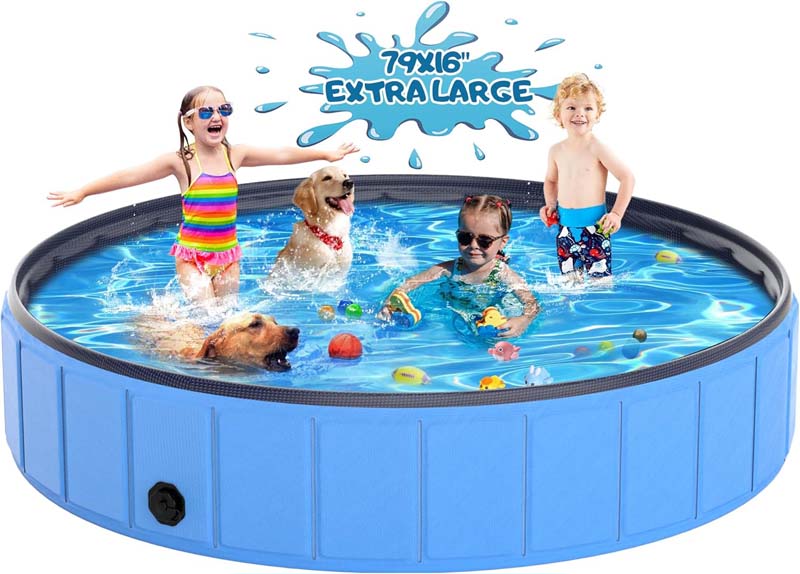
Which Splash Pad Features Work for Pets?
Pet-friendly splash pad features include thicker PVC, reinforced seams, non-slip texture, stable edges, low spray control, a larger play area, and an easy-rinse surface. Dogs can enjoy splash pad play with children, but supervision and proper setup are important.
Pet Use
Many dogs enjoy water during hot weather. A splash pad can help pets cool down without needing a deep pool. It also gives families a shared play area for kids and dogs.
Pet use creates different pressure than child use. Dogs may step harder, scratch with nails, bite at water, or push against the edge. Larger dogs create more stress on the surface than toddlers. For that reason, pet-friendly use works best on grass, with low water pressure at the start, trimmed dog nails, no hard toys, and close supervision.
A splash pad can be great for pet cooling, but it should not be used as a chew toy or digging surface.
Pet-Friendly Material
Pet-friendly splash pads need stronger material and easier cleaning.
| Feature | Why it helps pets |
|---|---|
| Thicker PVC | Handles paw pressure better |
| Reinforced seams | Helps maintain edge shape |
| Non-slip texture | Gives dogs better footing |
| Low spray option | Helps nervous pets adjust |
| Larger play area | Reduces crowding |
| Easy-rinse surface | Removes hair and dirt faster |
Families with medium or large dogs should avoid very thin splash pads. A stronger design is more suitable for shared child-and-pet use.
Kids and Dogs
Kids and dogs can share a splash pad, but the play area needs simple rules. There should be no rough chasing, no biting the splash pad edge, no hard toys on the pad, and no unsupervised play. Water pressure should start low, and pets should have room to leave if they feel uncomfortable.
A larger splash pad helps reduce crowding. Gentle spray is also better because it keeps the environment calmer for both children and pets.
Protecting the Pad
Protecting the splash pad from pet damage starts before play. Trim dog nails if needed. Remove sharp collars and metal accessories. Keep sticks, chew toys, and hard balls away from the surface.
During play, watch for biting near the edge or spray holes. Some dogs become excited by moving water and may try to chew. Reducing pressure can help make the water less intense.
After pet use, rinse and dry the pad before folding. Pet play should not be stored away wet or dirty.
Build Better Weekend Water Play with EPN
The best splash pad features for weekend family fun are not only about bright colors, large size, or tall spray. The real value comes from how well the splash pad fits everyday family life. Parents need a product that sets up quickly, feels safe under bare feet, works well on grass, gives kids enough room to play, adjusts to different ages, handles pets when needed, and stores neatly after use.
Families should look for durable PVC around 0.40–0.55 mm, non-slip texture, reinforced edges, adjustable spray, a secure garden hose connection, grass-friendly design, easy-rinse surface, compact folding, low-odor material, and practical size options for toddlers, siblings, pets, and weekend gatherings.
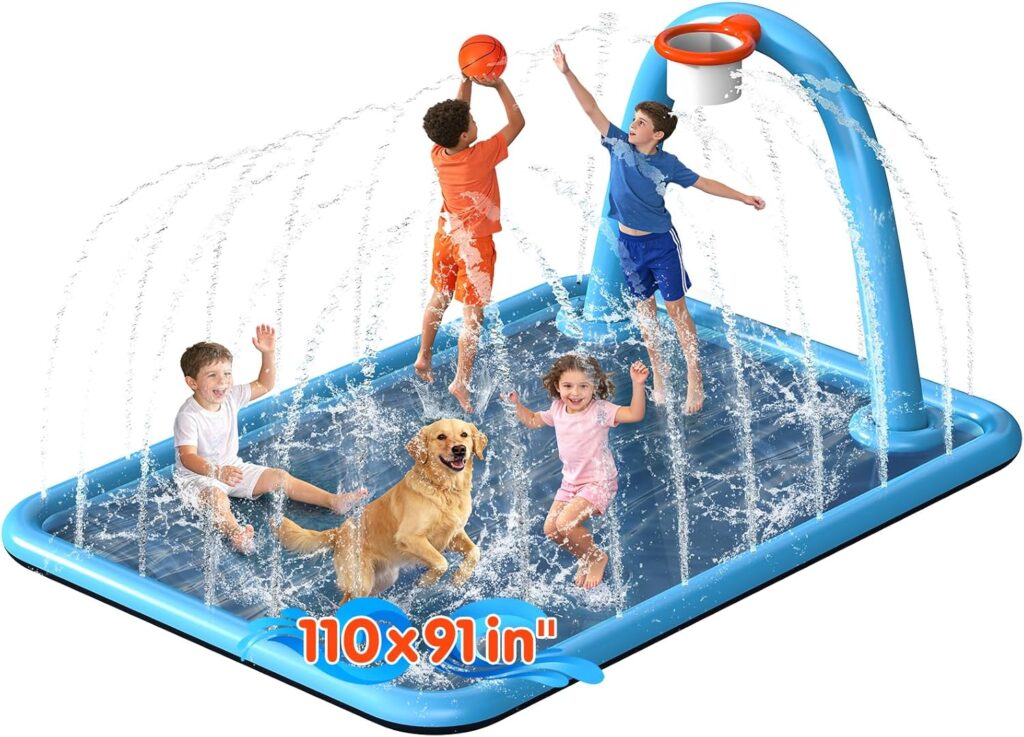
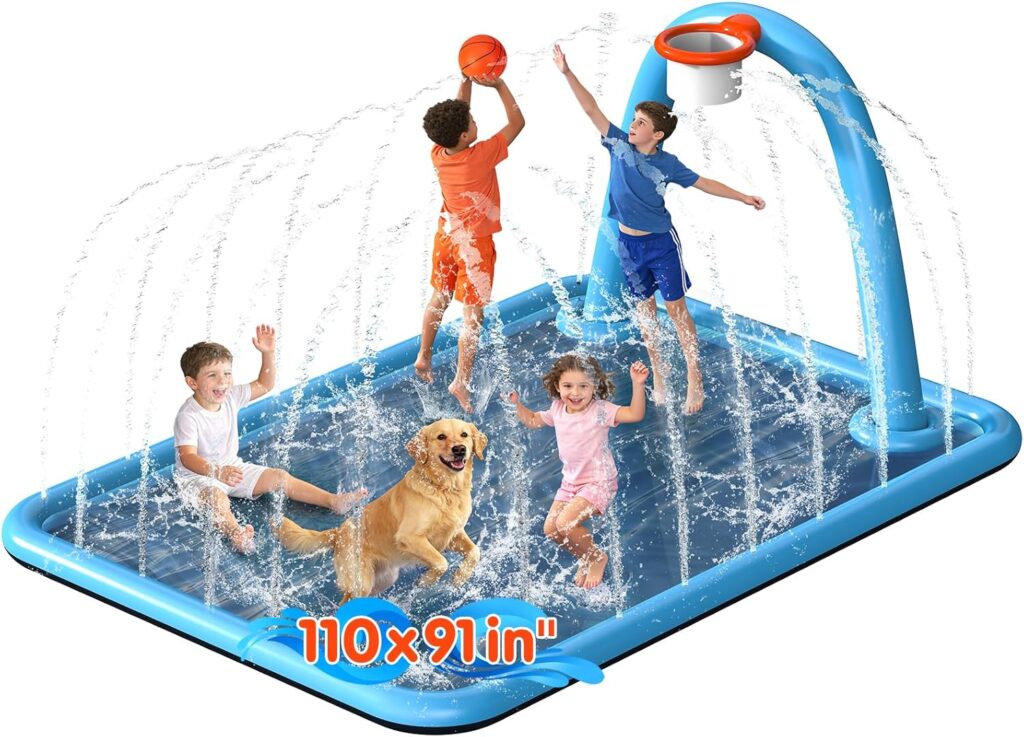
EPN, under American Epsilon Inc., develops PVC and composite-based products for family recreation, children’s water play, pet cooling, outdoor leisure, and seasonal use. The product range includes splash pads, pet splash pads, basketball splash pads, water slides, inflatable pools, pet pools, floating water products, snow tubes, pool pillows, and other outdoor products.
EPN’s product development is supported by material research, structural design, product testing, packaging design, and multi-market experience. For splash pad projects, the team pays attention to PVC thickness, spray distribution, seam strength, hose connection, folding performance, outdoor durability, low-odor material, and user-friendly storage.
For families, EPN branded splash pads offer a practical way to create backyard water play without the complexity of a large pool. For retail teams, online sellers, distributors, and private-label brands, Epsilon can support custom splash pad development with flexible size, material, design, packaging, and delivery options.
Custom splash pad options can include:
- Splash pad size adjustment
- PVC thickness selection
- Pattern and color design
- Child-focused or pet-friendly structure
- Spray hole layout
- Hose connector design
- Retail box packaging
- Multilingual instructions
- Barcode and label support
- Marketplace, retail, or warehouse-ready packaging needs
- Small trial orders and larger seasonal production plans
If you are looking to order EPN branded splash pads or develop a custom splash pad for your market, contact Epsilon with your target size, usage scenario, order quantity, packaging needs, design direction, and delivery timeline. The team can help evaluate the right material, structure, spray design, and product plan for family weekend fun, pet-friendly backyard play, retail programs, and seasonal outdoor sales.
Get A Fast quote
Here, bringing your inflatable concepts to life is no longer a challenge—it’s a collaborative journey where American Epsilon helps families, outdoor enthusiasts, and global brands transform creative ideas into safe, certified, and market-ready inflatable solutions.


Partner With Epsilon
Whether you are a family looking for safe backyard fun or a brand seeking large-scale OEM/ODM solutions, American Epsilon Inc. guarantees every inflatable is built with safety, durability, and excitement in mind. With flexible low MOQs, strategically placed warehouses in the U.S., Canada, U.K., and Germany, plus 24/7 professional support, we ensure smooth delivery and reliable service worldwide.
Ready to bring your inflatable ideas to life? Request free samples, fast prototypes, and customized designs today—your trusted inflatable journey starts here.