Skip to content
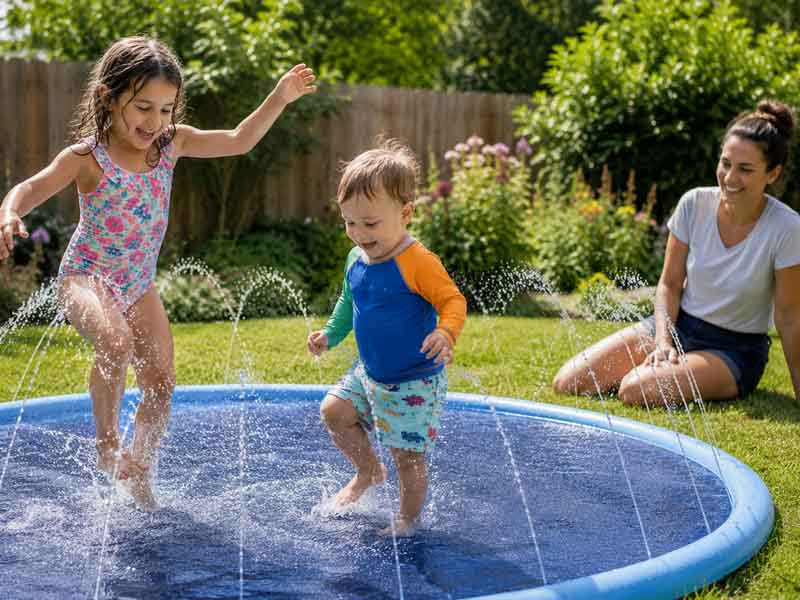
A splash pad looks like one of the easiest summer toys to buy. Parents see a colorful design, a large printed size, and a promise of quick backyard fun. It feels like a simple choice: connect the hose, turn on the water, and let the kids play. But many problems do not show up in the product photo. They show up on real grass, under real water pressure, with children running, sitting, slipping, dragging toys, and asking to use it again the next day. A splash pad that looks good online may feel too small for siblings, too slippery on patio, too thin for pets, or too weak around the hose inlet after repeated use.
The most common splash pad buying mistakes are choosing only by price, ignoring PVC thickness, trusting photos more than measurements, using the wrong ground surface, turning water pressure too high, overlooking non-slip texture, and forgetting hygiene, drainage, pet use, and storage. A good splash pad should match the child’s age, yard surface, family size, water pressure, and expected summer use.
The best splash pad is not always the biggest, cheapest, or brightest one. It is the one that works in an ordinary backyard without making parents redo the setup every time. It should lie flat, spray evenly, feel comfortable under bare feet, drain without creating a muddy mess, and fold away after drying. When parents understand what usually goes wrong, choosing the right splash pad becomes much easier.
What Splash Pad Buying Mistakes Happen Most?
Most splash pad buying mistakes happen before the first setup. Parents often compare price, size, and photos, but they miss the details that decide real backyard performance. A stronger splash pad should be checked for PVC thickness, seam width, hose inlet strength, surface texture, yard fit, water control, drainage, and storage.
Splash Pad Mistake: Buying by Price
A low price is tempting, especially when several splash pads look almost the same online. The problem is that the most important differences are usually not visible in the first photo. A lower price may come from thinner PVC, smaller hose parts, narrow sealed edges, weaker inlet reinforcement, or less stable spray holes.
A cheaper splash pad may still work for light one-child use. It may be fine for a few short play sessions on soft grass. But families who expect repeated summer use need to think beyond the first weekend. Children step on the outer ring, sit on the wet surface, drag toys across the mat, and sometimes pull the hose by accident. Dogs add even more pressure through claws, sudden running, and chewing behavior.
A better buying decision starts with practical checks. Parents should look at PVC thickness, surface texture, seam width, hose inlet stability, spray direction, and whether the splash pad is intended for kids only or kids plus pets. Reviews that mention edge leaks, weak spray, peeling seams, or inlet problems should be taken seriously because those issues often appear after repeated use, not during the first play session.
For EPN splash pads, material selection and structure are part of the design focus. The goal is not only to create a colorful backyard water toy, but to make the splash pad more practical for family play, summer weekends, pet use, folding, drying, and storage.
Splash Pad Mistake: Ignoring the Yard
A splash pad does not perform on a clean product photo background. It performs on real grass, patio stone, outdoor turf, uneven soil, and sometimes near garden furniture, toys, dog bowls, and hoses. Many parents buy without checking the actual place where the splash pad will sit.
The yard can affect safety, spray quality, and product life. Long grass may hide sticks, stones, roots, or sharp weeds. Rough concrete may rub the bottom surface. A sloped lawn may push water to one side and make the spray uneven. Poor drainage may create mud around the edge. If the hose is too short, the inlet may be pulled sideways during use.
A good backyard setup usually needs short, clean, level grass, with at least 2–3 feet of extra walking space around the splash pad. The hose should reach the product without pulling on the inlet, and water should drain away from doors, steps, and high-traffic walking paths.
Ignoring the yard often leads to problems that look like product defects. A thin splash pad on rough ground may wear quickly. A large splash pad on sloped grass may spray unevenly. A mat placed near a muddy exit zone may become slippery. A few minutes of yard preparation can prevent many of these issues.
Splash Pad Mistake: Trusting Photos Only
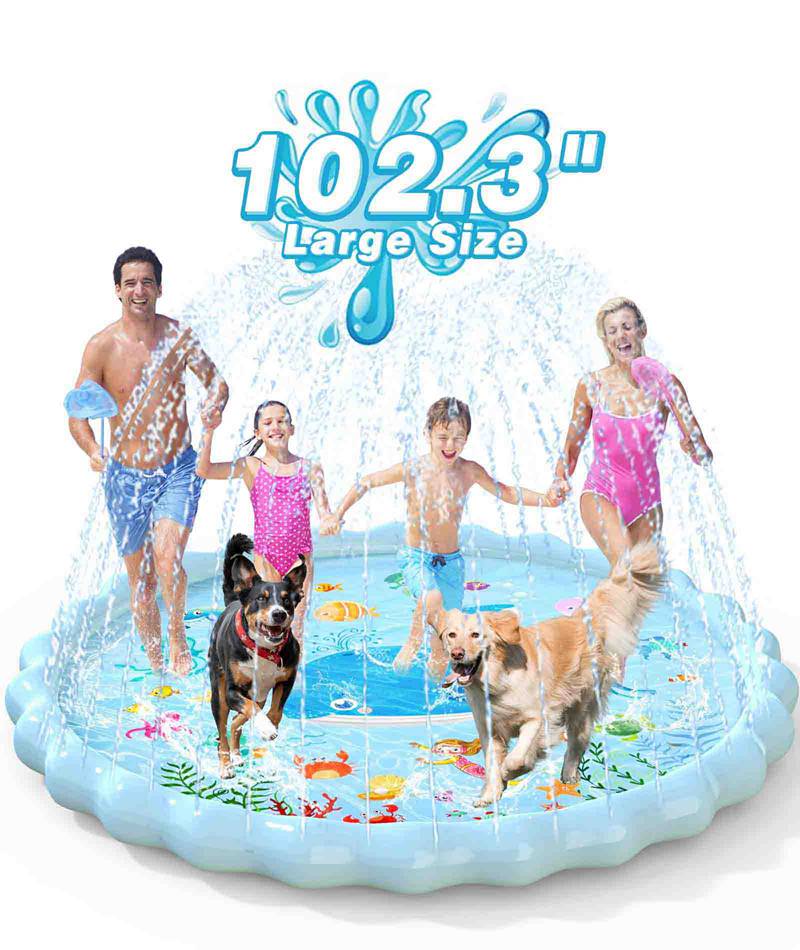
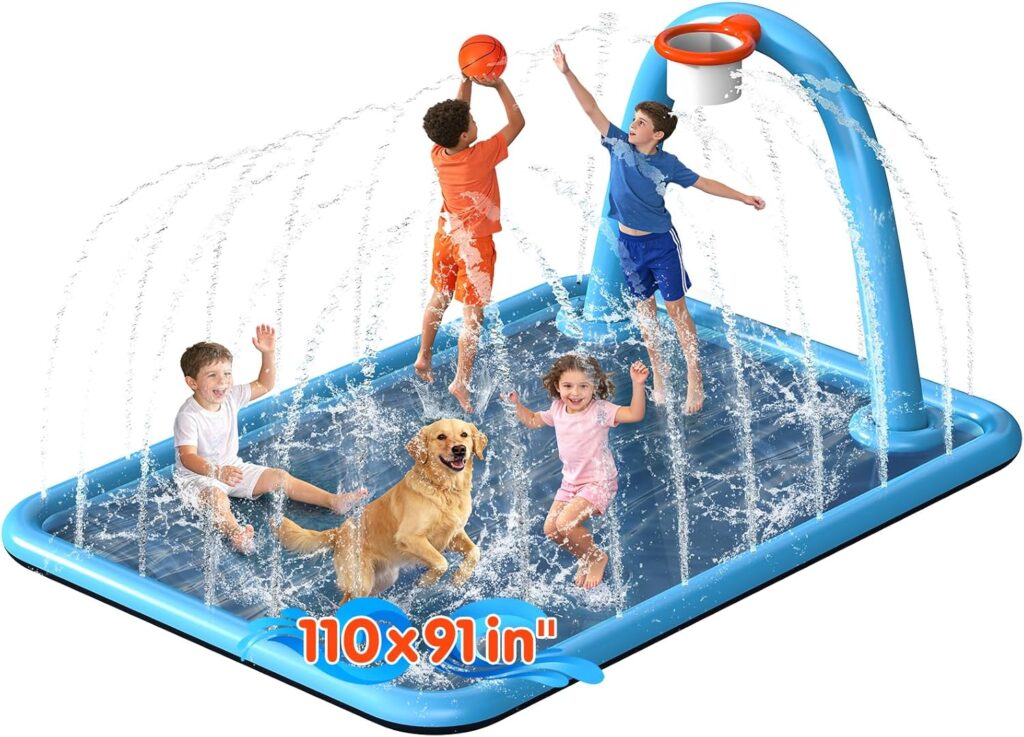
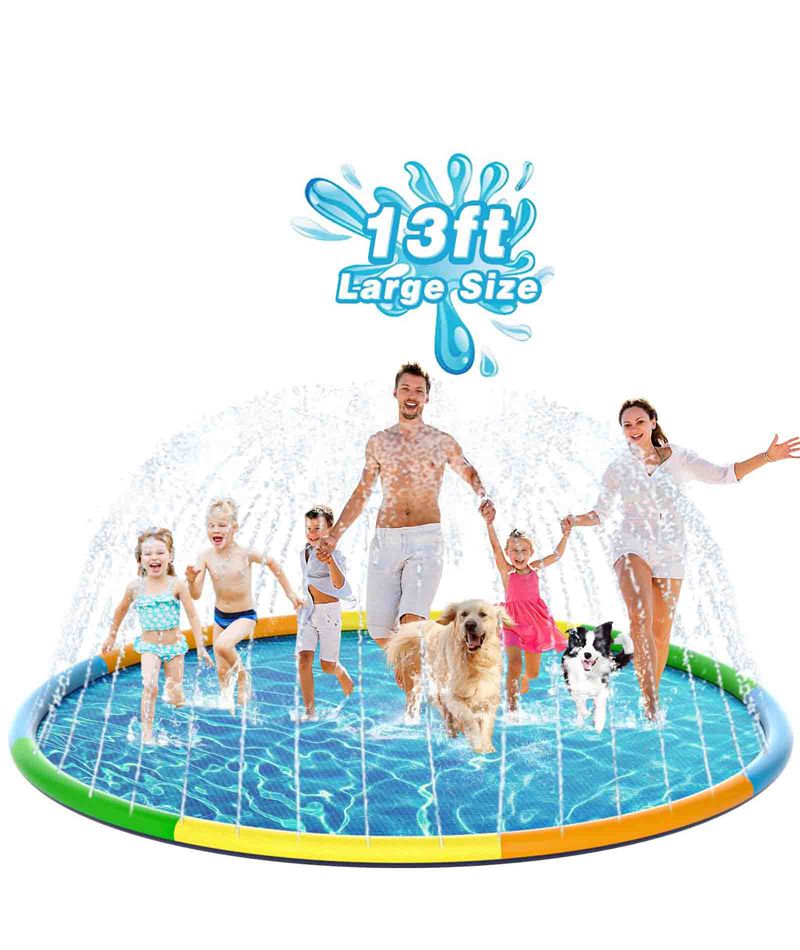
Photos can make a splash pad look larger than it feels. Camera angle, child age, lens distance, and styling can all affect how big the product appears. The printed size may include the outer spray ring, while the actual open play area is smaller.
Parents should focus on usable play space. A splash pad with a wide outer ring, raised edge, or large printed graphics may have less open center space than expected. For toddlers, sitting space matters. For siblings, turning space matters. For dogs, open movement space matters.
A practical way to check size is to mark the diameter on the lawn before ordering. Use a hose, rope, or tape to outline the area. Then imagine how the splash pad will be used. A toddler sitting in the center, two siblings running around the spray ring, or a dog joining the play will all change how much space feels comfortable.
| Buying Detail | Common Mistake | Better Choice |
|---|---|---|
| Price | Choosing the cheapest splash pad | Compare material, seams, inlet, and use scene |
| Size | Trusting photos only | Mark the real diameter on the lawn |
| Yard surface | Ignoring grass, slope, or patio texture | Use clean, level, smooth ground |
| Water pressure | Turning the faucet too high | Start low and adjust gradually |
| Surface grip | Assuming wet PVC is always safe | Choose textured non-slip surface |
| Pet use | Letting dogs use any kids’ splash pad | Choose thicker PVC and supervise play |
| Storage | Folding while wet | Drain, rinse, dry, then fold loosely |
What Splash Pad Material Matters?
Splash pad material matters because it affects leak resistance, comfort, odor, surface grip, fold recovery, and service life. Parents should check PVC thickness, flexibility, texture, seam quality, and inlet reinforcement. For repeated backyard use, 0.40–0.55 mm PVC usually offers better durability than very thin material, especially for siblings, pets, and frequent summer play.

Splash Pad Mistake: Choosing Thin PVC
Thin PVC can look fine when the splash pad is new. It may feel lightweight, easy to unfold, and convenient to store. But thin material has less margin for repeated stress. Children do not only stand on a splash pad. They run, step, turn, sit, slide, jump lightly, drag toys, and push against the edge. Dogs may add claw pressure and sudden movement.
For occasional light use, thinner PVC may be acceptable. For repeated summer use, families should look for stronger material. Many durable backyard splash pads use PVC around 0.40–0.55 mm. This range gives better resistance to common outdoor stress while still allowing the mat to fold and store.
Thin PVC is more likely to struggle when the splash pad is used every weekend, more than one child plays at the same time, dogs step on the surface, the ground underneath is dry or uneven, or water pressure is often turned high. Tight folding and dragging the mat across grass can also shorten product life.
EPN develops PVC and composite products across children’s water play, pet products, floats, pools, and seasonal outdoor items. That broader material experience helps match thickness and flexibility to real family use instead of choosing material only for low cost.
Splash Pad Mistake: Ignoring PVC Quality
PVC thickness is important, but quality is not only about thickness. A splash pad can be thick and still feel stiff, strong-smelling, or uncomfortable under bare feet. Good splash pad material should feel flexible, low odor, stable in outdoor use, and comfortable for children who sit close to the surface.
Parents should pay attention to how the material behaves after use. Does it lie flat after being folded? Does it recover without sharp white crease marks? Does it feel too slippery when wet? Does the surface become too hot on patio? Does it hold odor after storage?
Good PVC quality matters most for toddlers who sit and crawl, families that use the splash pad several times per week, pet households, hot climates, and small yards where the splash pad may sit near patio or hard ground. A family water toy should not feel like a one-day item. It should be easy to use, clean, dry, and bring back out again.
EPN splash pads are designed with low-odor material, outdoor stability, flexibility, and repeated folding in mind. These details help make the product more comfortable for children and more practical for parents.
Splash Pad Mistake: Overlooking Seams
Seams are one of the most important parts of a splash pad. The outer ring holds water pressure. The sealed edge keeps the spray channel stable. The inlet area handles hose movement. If these areas are weak, leaks often appear near the edge or connector.
Parents should not only look at the printed design. They should look at the structure. A wider sealed edge gives more bonding area. A reinforced inlet helps reduce twisting damage. A balanced spray ring helps distribute pressure more evenly. Rounded stress points are also better than sharp corners that concentrate force.
EPN focuses on seam stability, inlet strength, and spray distribution because many splash pad problems happen where water pressure and movement meet. A stronger seam may not look exciting in a photo, but it matters every time the faucet turns on.
| Material Factor | Light-Use Splash Pad | Stronger Family-Use Splash Pad |
|---|---|---|
| PVC thickness | Often thin and lightweight | Often around 0.40–0.55 mm |
| Surface feel | May be smooth and slippery | Textured for better wet grip |
| Odor | May smell stronger when new | Lower-odor material preferred |
| Seam width | Narrow sealed area | Wider and more stable sealing |
| Hose inlet | Basic connector area | Reinforced inlet zone |
| Fold recovery | May crease more easily | Better recovery after storage |
| Best use | Short occasional play | Repeated backyard summer use |
Which Splash Pad Size Fits Best?
The right splash pad size depends on child age, number of children, yard space, water use, and storage needs. Bigger is not always better. A good splash pad should provide enough open play space while still being easy to set up, drain, dry, fold, and store after use.
Splash Pad Mistake: Too Small for Toddlers
Toddlers do not need the largest splash pad. They need a comfortable surface, lower spray, and enough space to sit or step without feeling overwhelmed. A small splash pad may seem suitable, but it can feel crowded if the spray hits too close to the face or if the child cannot move away from the water stream.
For toddlers, water height and surface feel matter more than total diameter. The spray should start low, usually around ankle-to-knee height, and increase only if the child enjoys it. The surface should have texture because toddlers squat, crawl, stand, and sit repeatedly.
The best toddler splash pad setup is calm at first. Let the child touch the spray, step slowly, and build confidence before increasing water pressure. A gentle inward spray, a soft surface feel, a textured top, and clean grass underneath can make the first few play sessions more comfortable.
Splash Pad Mistake: Too Crowded for Siblings
A splash pad that works for one child may feel crowded with siblings. Two children do not simply use twice the space. They run in different directions, bring toys, sit in the center, chase water streams, and step on and off the mat. If the space is too small, play becomes less comfortable and less safe.
Families with 2–4 children should look for a larger open play zone, not only a larger printed number. A wide center area is often more useful than a busy design with too many raised or decorative parts. Children need room to turn, step, and move without pushing each other.
If an older child and toddler play together, parents should choose a size that allows different speeds. Older kids may run and kick water, while toddlers may sit or walk slowly. The splash pad should support both without forcing everyone into the same small wet area.
Splash Pad Mistake: Too Large to Store
Large splash pads look exciting, but they can become annoying if they are hard to dry, fold, and store. A bigger mat needs more water, more space, more drying time, and more storage room. If parents fold it while wet or force it into a small bin, the material and seams may wear faster.
Before choosing the largest option, parents should think about the full routine. Can one adult set it up alone? Is there enough space to dry it flat? Can it be folded without sharp creases? Does the hose reach without pulling the inlet? Will water drain away from the house? Is there a clean, dry place to store it?
A slightly smaller splash pad that is easy to use may deliver more real play days than an oversized one that feels like work. Parents should buy for their routine, not only for the product photo.
| Family Use | Better Size Focus | What to Avoid |
|---|---|---|
| 1 toddler | Gentle spray and soft surface | High spray and crowded design |
| 2 young children | Medium open center | Small mat with limited movement space |
| 3–4 children | Larger play zone | Weak seams under active play |
| Kids plus dog | Thicker PVC and wider surface | Thin toddler-only mat |
| Small yard | Easy setup and drainage | Oversized pad that blocks walking space |
| Playdates | Stronger seams and bigger surface | One-child splash pad |

How Should a Splash Pad Be Set Up?
A splash pad should be set up on clean, level, smooth ground with controlled water pressure and safe drainage. Short grass is usually the best surface for home use. Rough patio, sharp debris, mulch, stones, sloped ground, and poor drainage can increase slipping, bottom wear, seam stress, and early damage.
Splash Pad Mistake: Using Rough Ground
Rough ground can damage a splash pad from underneath. Small stones, dry sticks, roots, mulch pieces, and patio edges can press into the PVC when children step or sit. The damage may not appear immediately, but repeated pressure can create weak spots over time.
Parents should inspect the ground before every setup. Walk across the area, remove sharp objects, and feel the surface by hand if needed. If using grass, mow it short enough that hidden debris can be seen. If using patio, check for rough edges and heat.
Clean grass is usually the most forgiving choice because it provides a softer base and reduces bottom friction. Gravel, mulch, broken concrete, sharp artificial turf seams, dry thorny grass, exposed roots, sloped soil, standing water, and rough deck boards are poor setup surfaces for splash pads.
Splash Pad Mistake: Skipping a Base Layer
A base layer can help protect the bottom of a splash pad, especially on patio, dry soil, rough lawn, or artificial turf. It does not need to be complicated. A smooth outdoor mat, clean ground cloth, or soft artificial turf layer can reduce abrasion and help the splash pad lie flatter.
The base layer should be larger than the splash pad footprint. It should not wrinkle sharply or trap stones underneath. Parents should avoid thin plastic sheets that become slippery or rough tarps with hard creases.
A protective layer cannot fix very thin material or poor seams, but it can improve setup quality. For repeated family use, surface protection and stronger splash pad construction work together.
Splash Pad Mistake: Forgetting Drainage
Water needs somewhere to go. If the splash pad is placed in a low area, water may collect around the edge. This can create mud, slippery stepping zones, and messy cleanup. Poor drainage also makes drying slower.
Drainage affects safety and product life. A splash pad that stays wet too long may develop odor. Dirt and grass may stick to the bottom. If folded while wet, trapped moisture can make storage unpleasant.
A better drainage plan means setting up away from doors, steps, and patio furniture, keeping the exit area from becoming muddy, allowing water to flow away from the main play path, rinsing dirt off after use, drying both top and bottom before folding, and storing the splash pad in a clean, dry place.
| Surface Type | Setup Rating | Best Practice |
|---|---|---|
| Short clean grass | Best for most homes | Remove debris and check slope |
| Long grass | Use with caution | Mow and inspect hidden objects |
| Smooth patio | Possible with protection | Use a soft base layer |
| Rough concrete | Not ideal | Add a thicker protective mat |
| Artificial turf | Often workable | Check heat and sharp seams |
| Mulch or gravel | Avoid | High puncture risk |
| Sloped ground | Avoid if possible | Causes pooling and uneven spray |
What Splash Pad Water Issues Matter?
Water pressure controls spray height, comfort, seam stress, and water use. Too much pressure may strain the splash pad and scare younger children. Too little pressure can create weak or uneven spray. Parents should start low, adjust slowly, and check the hose, inlet, spray holes, and ground level before children begin playing.
Splash Pad Mistake: Too Much Pressure
High water pressure does not always mean better play. For toddlers, high spray can feel cold, loud, and uncomfortable. It may hit the face or make the surface feel chaotic. For the splash pad, high pressure can stress the outer ring, seams, and hose inlet.
Parents should begin with low pressure and watch the splash pad fill. The spray should fall inward and stay balanced. If one side bulges, the spray shoots outward, or the inlet twists, the pressure may be too high.
The goal is not the tallest spray. The goal is safe, balanced, repeatable water play. Toddlers usually do better with ankle-to-knee height spray. Older children may enjoy medium spray, but only when the mat stays stable and the surface does not become too slippery.
Splash Pad Mistake: Uneven Spray
Uneven spray can happen for many reasons. It does not always mean the splash pad is damaged. A kinked hose, low faucet pressure, uneven ground, folded edge, blocked spray hole, or twisted inlet can all affect water distribution.
Parents should first straighten the hose, check the connector, move the splash pad to flatter ground, smooth the outer ring, and let folded edges relax for several minutes. If the spray is too weak, the faucet can be opened slightly. If one side bulges, pressure should be reduced.
If spray remains uneven after these checks, the splash pad may have poor internal distribution or weak construction. EPN focuses on balanced spray distribution because even water flow improves play comfort and reduces stress on one area.
Splash Pad Mistake: Poor Hose Setup
A hose connection seems simple, but it can cause many problems. If the hose pulls sideways, the inlet may bend. If the connector is loose, water may leak before reaching the spray ring. If the hose crosses the play area, children may trip.
A clean hose setup should look relaxed. The hose should reach the splash pad without pulling. It should run along the side, not through the play zone. The connector should be tightened without overbending the inlet.
Before children step onto the splash pad, parents should turn on the water and watch the first minute of spray. That short check can prevent most setup-related problems.
| Water Problem | Likely Cause | Better Fix |
|---|---|---|
| Spray too high | Faucet opened too far | Lower water pressure |
| Spray too low | Low pressure or kinked hose | Straighten hose and adjust faucet |
| One side weak | Uneven ground or folded edge | Move to level ground |
| Inlet leaking | Loose connector or hose pull | Reconnect and reduce tension |
| Spray holes blocked | Dirt or mineral particles | Rinse and clear gently |
| Outer ring bulging | Pressure too high | Turn faucet down |
Are Splash Pads Safe?
Splash pads can be safe for kids when parents choose the right material, set them up correctly, supervise actively, and keep the play water clean. Safety depends on surface grip, water pressure, ground condition, hygiene, drainage, child age, pet use, and whether children are stopped from drinking spray water.
Splash Pad Safety for Kids
A home splash pad is a low-water play option, but low water does not remove every risk. Children can slip, trip over a hose, swallow spray water, collide with siblings, or become uncomfortable under high spray. The safest setup is simple, clean, and controlled.
Parents should use clean household water, set up on level ground, start with low spray, keep the hose outside the play path, and stop children from drinking spray water. If the surface becomes muddy or slippery, play should pause until the area is safe again. Toddlers should stay within close reach.
Home portable splash pads are usually different from public splash pads because many connect to fresh water and drain after play. Still, hygiene matters. Clean water, active supervision, and dry storage are the three easiest habits for safer family use.
Splash Pad Mistake: Slippery Surfaces
Wet play always increases slipping risk. A textured non-slip surface helps, but no surface is completely slip-proof. Children may run too fast, step off the wet edge, or lose balance when turning. Sunscreen, mud, soap, grass, and pet hair can also reduce grip.
Parents should check both the top surface and the ground below. A textured splash pad on clean grass is usually safer than a smooth splash pad on wet patio. If using a hard surface, a stable underlayer helps reduce shifting. Water shoes may help older children, but toddlers still need close supervision.
EPN splash pads are developed for family use, where children may sit, stand, turn, and move across wet PVC. Surface texture, material flexibility, and setup stability all matter for a safer play experience.
Splash Pad Germs: Norovirus Risk
Parents often ask whether norovirus can spread from a splash pad. The answer depends on water cleanliness and how the splash pad is used. Germs that cause stomach illness can spread when contaminated water is sprayed, touched, or swallowed. Public splash pads carry higher concern when water is recirculated or poorly maintained. Home splash pads are usually lower risk when fresh water is used and the mat is drained after play.
Good hygiene is simple. Children with diarrhea should not use the splash pad. Kids should not drink spray water. Bathroom breaks should happen before play. Swim diapers should be changed away from the play area. The splash pad should be rinsed after use, dried before folding, and cleaned before children use it again after pets.
The goal is not to make parents worry. The goal is to keep water play clean and simple.
Splash Pad Mist: Legionnaires Risk
Legionnaires’ disease is linked to breathing in mist that contains Legionella bacteria. Most parent concerns come from reading about public water systems, fountains, cooling towers, or poorly maintained recirculating splash areas. A small portable splash pad connected to fresh household water is different, but stagnant warm water should still be avoided.
The garden hose is often the overlooked detail. If a hose sits in the sun with water inside, the first water released may be warm and stagnant. Parents should flush the hose briefly before connecting it to the splash pad. After play, the splash pad should be drained and dried instead of left with standing water.
Fresh water, quick hose flushing, full draining, dry storage, and clean connectors are simple habits that help keep backyard splash play safer.
Splash Pad Safety for Dogs
Dogs can enjoy water play, but they use splash pads differently from children. They may run suddenly, dig, chew edges, scratch with claws, or step repeatedly on one area. A splash pad designed only for gentle toddler play may not hold up under frequent dog use.
Parents with pets should choose thicker PVC, stronger seams, and a wide open play area. Dog nails should be trimmed. Chewing should not be allowed. Large dogs should be introduced slowly, especially if they become excited around water.
For families with both kids and dogs, cleaning between uses matters. Pet hair, dirt, and grass can build up on the surface. A quick rinse and full dry routine helps keep the splash pad more comfortable for children.
Splash Pad Mistake: No Supervision
A splash pad is not a set-and-forget toy. Adults should stay close enough to adjust water pressure, move the hose, stop rough play, and help younger children. Supervision also prevents product damage. Children may drag sharp toys across the mat, pull the hose connector, or step on folded edges. Dogs may chew the outer ring if play becomes too exciting.
Good supervision protects both children and the splash pad. Parents should watch for slipping, water swallowing, rough running, hose tripping, sun exposure, and signs that a child is cold or uncomfortable. Short play sessions with breaks are often better than long uncontrolled play.
| Safety Question | Practical Answer |
|---|---|
| Are splash pads safe for kids? | Yes, with clean water, level ground, low pressure, and adult supervision |
| Can kids get sick from splash pads? | Germs can spread if water is contaminated or swallowed |
| Can norovirus be a concern? | Yes, especially with contaminated recreational water |
| Can Legionnaires’ disease be a concern? | Mainly with poorly maintained misting or recirculating systems |
| Are splash pads safe for dogs? | Yes, if material is thick enough and play is controlled |
| Is non-slip texture enough? | It helps, but supervision is still required |
What Splash Pad Costs Should Parents Know?
Splash pad cost depends on whether the family chooses a portable PVC splash pad or a permanent built-in splash pad. Portable splash pads are seasonal backyard toys with simple hose setup. Built-in splash pads may require plumbing, concrete, drainage, pumps, filtration, electrical work, and professional installation, making them much more expensive.

Splash Pad Cost: Portable vs Built-In
Many parents search splash pad cost and find confusing answers because two different products share the same name. A portable splash pad is a foldable PVC water play mat. It connects to a garden hose and can be stored after summer. A built-in splash pad is a permanent outdoor installation similar to a small water-play feature.
For most families, a portable splash pad is the more practical option. It gives children water play at a much lower cost, requires no construction, and can be moved or stored. A built-in splash pad may make sense for large homes, rental properties, daycares, community areas, or commercial outdoor projects, but it needs more planning and maintenance.
| Cost Factor | Portable PVC Splash Pad | Built-In Splash Pad |
|---|---|---|
| Setup | Connects to garden hose | Requires construction |
| Water system | Direct household water | Plumbing, pumps, or filtration may be needed |
| Storage | Fold and store | Permanent installation |
| Maintenance | Rinse, dry, fold | Ongoing water system care |
| Space | Flexible yard use | Dedicated outdoor area |
| Cost level | Low compared with construction | Often thousands to tens of thousands |
| Best for | Families wanting seasonal play | Long-term property or commercial projects |
Splash Pad Buying Checklist
Parents can avoid most splash pad problems by checking a few details before ordering. A good splash pad should match the family’s real use scene instead of only matching a photo.
A strong buying checklist should include PVC thickness around 0.40–0.55 mm for repeated family use, low-odor material, textured non-slip surface, wide sealed outer ring, reinforced hose inlet, balanced inward spray, suitable size, clean setup surface, easy drainage, dry storage, and pet-ready strength if dogs will join.
Families who plan to use a splash pad often should not treat it as a one-day toy. Material, setup, and storage all affect long-term value.
Splash Pad Mistake: Ignoring Long-Term Use
Some families buy a splash pad for one hot weekend. Others want it for the whole summer. These are different needs. Long-term use means repeated folding, water pressure, UV exposure, grass friction, child movement, drying, and storage. A splash pad that looks fine on day one may not be built for week six.
Parents should think in play sessions, not only purchase price. If a splash pad is used 20 times in one summer, comfort and durability matter much more than saving a few dollars. A stronger splash pad that lasts through regular play may offer better value than a low-cost option that fails early.
For retailers, distributors, and custom product customers, long-term performance also affects reviews, returns, and repeat orders. American Epsilon Inc., the company behind EPN, supports branded and custom splash pad projects with material selection, size planning, pattern design, packaging, labeling, and structural adjustment. With experience in PVC and composite water-play products, Epsilon can help customers create splash pads for family play, pet use, retail shelves, online channels, and seasonal outdoor programs.
Choose a Splash Pad That Works Beyond the First Weekend
The biggest splash pad buying mistake is treating every splash pad as the same. A splash pad is not only a summer toy. It is a wet play surface, a water-pressure system, a backyard setup, a hygiene routine, and a repeated-use product for children, pets, and family weekends.
A better choice starts with practical questions. Where will the splash pad be used? How many children will play at the same time? Will dogs join the play? Is the surface grass, patio, or artificial turf? Can the spray be adjusted low enough for toddlers? Is the PVC thick enough for repeated play? Are the seams wide and stable? Can the splash pad be dried and folded without stress? Does the hose connection look strong enough for repeated setup? Will the family actually use this size often?
For families, EPN splash pads are designed to support everyday backyard water play with attention to PVC thickness, low-odor material, non-slip texture, reinforced structure, balanced spray, and easy storage. For retailers, brand owners, distributors, and custom project customers, American Epsilon Inc. can support private-label and OEM/ODM splash pad development, including material selection, product sizing, structure adjustment, packaging design, multilingual labeling, and production planning.
Whether you want to order EPN branded splash pads for family use or request a custom splash pad for your own market, Epsilon can help build a product that looks good, feels comfortable, and stands up to real summer use. Contact Epsilon to request product details, wholesale pricing, sample options, or a customized splash pad solution.