Skip to content
Best Kids Splash Pad for Ages 3–5
# Your Trusted Inflatable Supplier In US

A kids splash pad for ages 3–5 should feel exciting for children but simple for parents. At this age, children are not just touching water with their hands. They run through spray, sit in the center, step on wet edges, chase siblings, and change direction without warning. A splash pad that looks fun in a photo may still disappoint if the surface is too slick, the spray is too strong, the PVC is too thin, or the hose connector starts leaking after a few uses.
The best kids splash pad for ages 3–5 should be soft, shallow, non-slip, easy to control, and made from durable PVC that supports repeated stepping, folding, and outdoor use. A 67–95 inch splash pad usually works well for one or two preschool children. A 97–118 inch size is better for siblings, playdates, and larger lawns. Key features include adjustable spray, textured PVC, reinforced edge seams, a secure hose connection, easy drainage, and full drying before storage.
For parents, the real test is not the first five minutes after opening the box. It is the third hot weekend, the second backyard playdate, and the moment children ask to use it again before lunch. A well-designed splash pad should turn water play into a low-stress summer routine: clear the grass, connect the hose, start with low pressure, watch the spray rise, and let children cool down within sight. EPN, a brand under American Epsilon Inc., designs kids water play products around real family use, from PVC feel and spray balance to folding, storage, and repeated backyard play.
What Makes a Kids Splash Pad Better?
A better kids splash pad matches how preschool children actually play. It should keep water shallow, provide a soft textured surface, allow gentle spray, and stay stable under repeated movement. Parents should look beyond color and size. Grip, PVC thickness, hose connection, drainage, and edge strength affect daily use more than printed patterns alone.
Why a Kids Splash Pad Fits Ages 3–5
Ages 3–5 are a strong fit for splash pad play because children at this stage want more movement than a water table provides, but they may not be ready for deeper pool play without close support. A splash pad gives them an open, shallow play area where they can run, step, sit, splash, and cool down quickly.
For preschool children, shallow surface water is a major advantage. The best kids splash pad should not create deep pooling in the center. Water should move across the surface and spray inward from the edge, giving children active water play without turning the mat into a small pool.
A good design supports several common play styles:
- A 3-year-old may sit near the center and touch the spray.
- A 4-year-old may walk around the edge and step through water streams.
- A 5-year-old may run, chase siblings, and invent simple backyard games.
- Two children may need enough room to move without bumping into each other.
- A parent may need enough open space nearby to supervise and adjust water pressure.
For EPN kids splash pads, the design direction is practical: enough spray to feel fun, enough surface grip to support movement, and enough material strength for repeated summer use.
Are Kids Splash Pads Safe?
Kids splash pads can be safe for toddlers and preschool children when adults supervise closely and the setup is handled correctly. The safest use comes from a mix of product design and parent routine. A good splash pad should have a textured surface, low-to-medium spray, shallow water, and clear space around the play area.
Safety problems often come from small details. A strong spray may surprise younger children. A smooth plastic surface may feel slippery when sunscreen and water mix. A hose crossing the play path can become a trip point. A pad placed over roots, rocks, or sticks may feel unstable and can increase wear on the PVC.
Before water play starts, parents should check:
- The ground is flat and clear.
- The hose does not cross the running path.
- The spray height starts low.
- Children understand not to drink the water.
- Towels, toys, and chairs are away from the edge.
- An adult stays close enough to step in quickly.
- The splash pad is drained and dried after play.
A kids splash pad is not a substitute for supervision. For ages 3–5, adult attention matters every minute. The right product can reduce common risks, but the safest play comes from a calm setup, gentle water pressure, and a parent who is watching the play area.
What Parents Want in a Kids Splash Pad
Parents usually want a splash pad that solves real summer problems. They want children to cool down without filling a large pool. They want a product that connects to a garden hose without leaking. They want a surface that does not feel slippery. They want a pad that dries, folds, and stores without turning into a wet plastic mess.
A strong kids splash pad should answer practical questions before parents need to ask them.
| Parent Concern | What to Check | Better Choice |
|---|---|---|
| Will children slip? | Surface texture | Non-slip PVC texture |
| Will it leak? | Edge seams and hose inlet | Reinforced rim and secure connector |
| Is the spray too strong? | Water pressure control | Low-to-medium adjustable spray |
| Will it last? | PVC thickness and seam design | About 0.40–0.55 mm PVC |
| Is cleanup hard? | Drainage and drying | Easy-drain structure |
| Is storage easy? | Foldability | Flexible PVC that folds flat |
| Does it smell strong? | Material quality | Low-odor PVC for warm-weather use |
| Can siblings use it? | Size and open play area | 80–118 inch range based on child count |
A kids splash pad should be fun for children and repeatable for parents. If setup is simple and cleanup is manageable, families are more likely to use it throughout summer instead of only once or twice.
Which Kids Splash Pad Size Works Best?
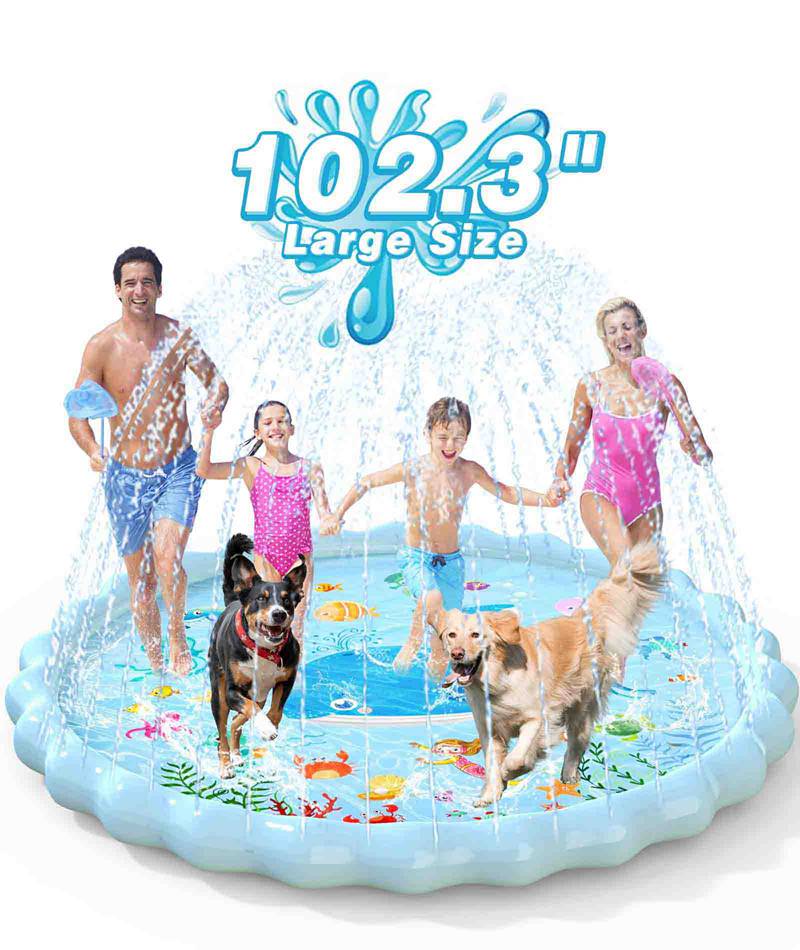
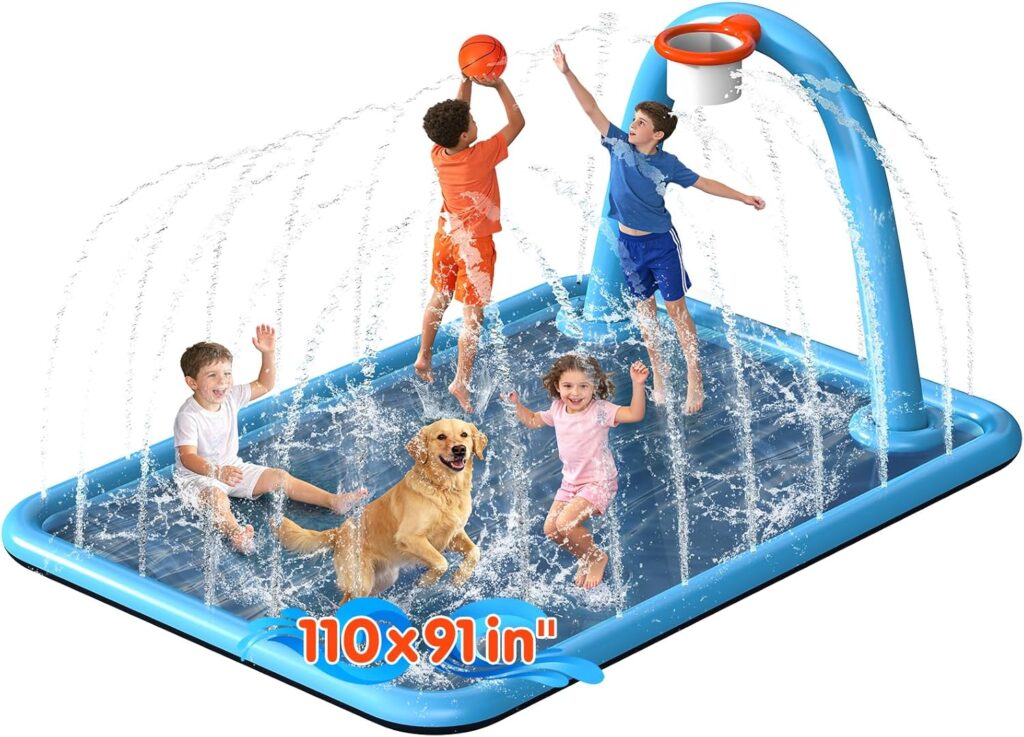
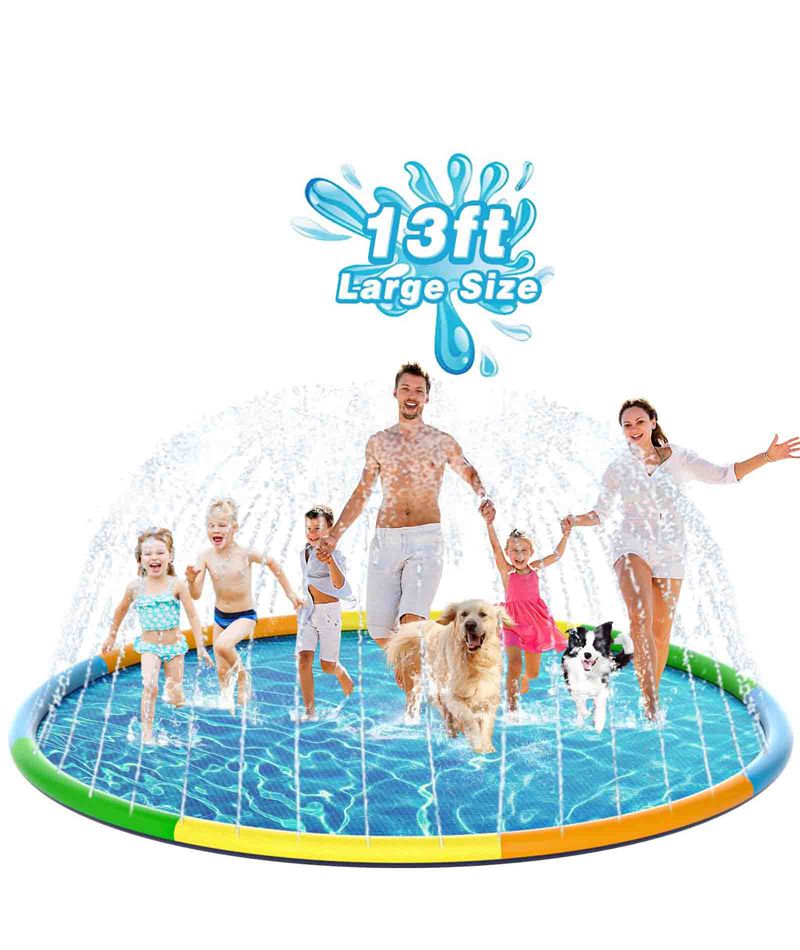
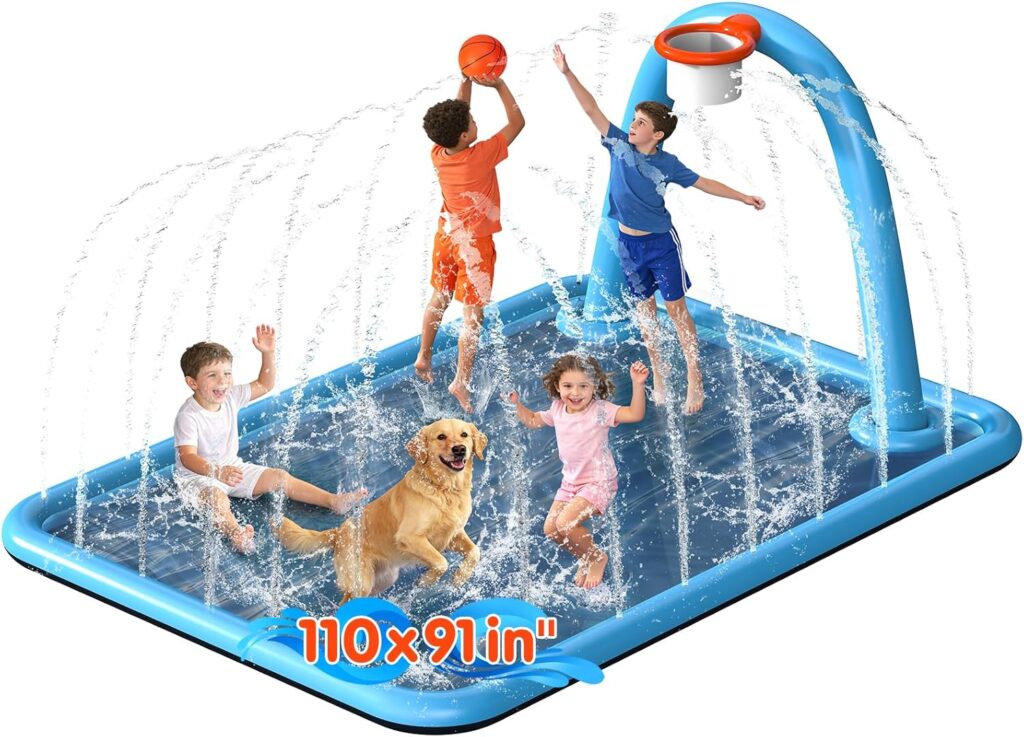
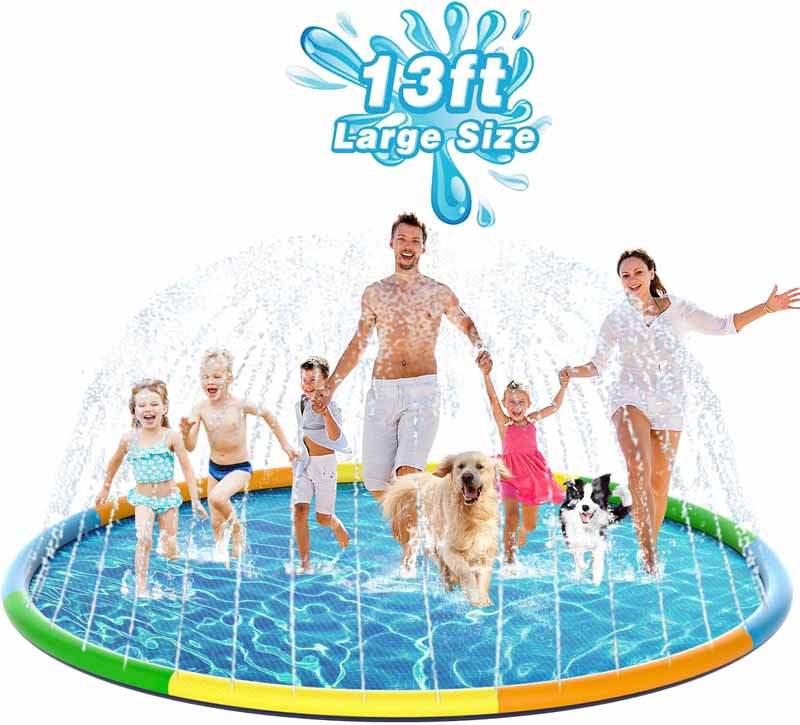
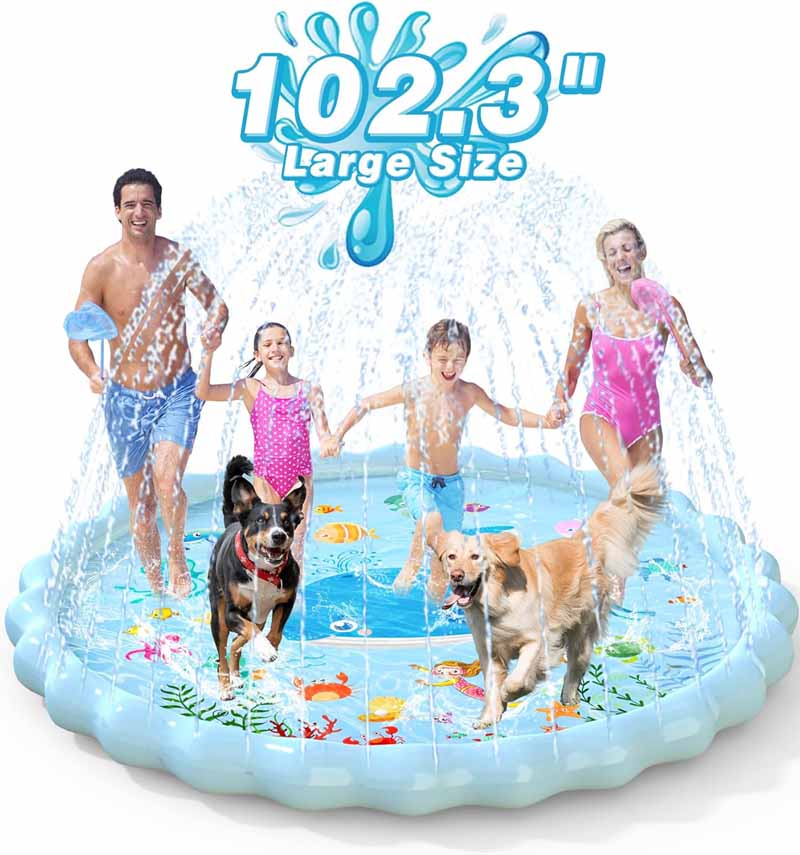
The best kids splash pad size depends on the number of children, available yard space, and water pressure. A 67–75 inch pad can work for one child. An 80–95 inch pad is better for two children. A 97–118 inch pad gives more room for siblings or playdates, but it needs more flat space and steady hose pressure.
Is a Bigger Kids Splash Pad Better?
A bigger kids splash pad can be better, but only when the backyard and water pressure support it. Parents often assume the largest size will create the most fun. In real use, an oversized pad on a narrow lawn can cause problems. Children may run too close to furniture, the hose may stretch across the play area, or the spray may become weak because the water pressure is not enough for the full edge.
For ages 3–5, usable space matters more than printed size. A child needs room to step, turn, sit, and move off the pad safely. Parents also need space to stand nearby, adjust the hose, and place towels away from the wet area.
A mid-size kids splash pad is often the most practical choice for daily backyard play. It gives preschool children enough room without making drainage and storage difficult. A larger pad works better for families with multiple children, regular weekend playdates, or a wide open lawn.
A simple rule works well: choose the largest size that still leaves 2–3 feet of clear space around the pad.

How to Pick Kids Splash Pad Size
Size should match the real play scene. One preschool child who likes sitting in water spray does not need the same size as three children running together. Parent effort also increases with size. Larger pads may take longer to drain, dry, and fold. Smaller pads are easier to handle but can feel crowded when children become more active.
| Use Case | Suggested Size | Best Fit | Setup Note |
|---|---|---|---|
| One child | 67–75 in | Small yard, patio, quick play | Easy to set up and dry |
| Two children | 80–95 in | Daily backyard play | Good balance of space and control |
| Three or more children | 97–118 in | Siblings, playdates, weekend use | Needs more open space |
| Small patio | 67–80 in | Limited outdoor area | Keep hose path clear |
| Open lawn | 95–118 in | More movement and group play | Check spray consistency |
| Preschool party | 100–118 in | Short group play sessions | Extra supervision needed |
Parents should also think about age spread. A 3-year-old and a 5-year-old may use the same splash pad differently. A 3-year-old may prefer gentle spray and sitting play. A 5-year-old may want more space for running games. A slightly larger pad can help the product stay useful as children grow.
For EPN, size planning is connected to spray layout and edge structure. A larger splash pad needs more than a bigger surface. It needs balanced spray holes, stable edge filling, and a reliable hose connection.
Kids Splash Pad or Water Table?
A water table and a kids splash pad serve different needs. A water table is calmer. A splash pad is more active. Parents choosing between the two should consider age, movement level, outdoor space, and how much supervision the activity requires.
A water table works well for younger toddlers because play happens at hand level. Children can scoop, pour, float toys, and explore water without running. It uses less space and gives parents more control. For many 1–3-year-olds, that can be a better first water play choice.
A kids splash pad works better for many children ages 3–5 because it supports full-body play. Children can run through spray, step around the edge, sit in the center, and cool down faster during hot weather.
| Option | Best Age Range | Play Style | Water Level | Best For |
|---|---|---|---|---|
| Water table | 1–3 years | Scooping, pouring, sensory play | Very shallow | Younger toddlers |
| Kids splash pad | 3–5 years | Running, stepping, splashing | Surface water | Active preschoolers |
| Kiddie pool | 3+ years | Sitting, soaking, toy play | Deeper than splash pad | Closely supervised soaking |
| Sprinkler only | 4+ years | Running through spray | No play surface | Older confident children |
For families with children of different ages, both options can work together. A younger child can use a water table while older siblings play on the splash pad nearby. That setup gives each child a water activity that fits their stage.
What Kids Splash Pad Material Matters?
Kids splash pad material matters because preschool children touch the surface with bare feet, hands, knees, and sometimes their whole body. Flexible PVC is practical for water play, but quality depends on thickness, odor control, texture, seam strength, and folding performance. For repeated summer use, about 0.40–0.55 mm PVC is a useful range.
Is PVC Good for a Kids Splash Pad?
PVC is widely used for kids splash pads because it is flexible, waterproof, printable, and foldable. A family splash pad needs to lie flat on grass, hold water pressure around the edge, and fold for storage after drying. PVC supports these needs when the right thickness and structure are used.
For ages 3–5, the material should feel soft enough for bare feet but not so thin that it wrinkles, stretches, or tears easily. Preschool children do not step gently every time. They run, twist, sit, kneel, and sometimes drag toys across the surface. The material needs to handle movement without feeling stiff or fragile.
Low odor is also important. Summer water toys are often used in warm weather and stored in garages, closets, or outdoor boxes. A strong plastic smell can reduce parent confidence and make first use less comfortable. Low-odor PVC improves the opening experience and makes repeat use more pleasant.
EPN works with PVC and composite materials across children’s water toys, pet water products, inflatable pools, water floats, snow tubes, pool pillows, and other seasonal products. That broader material experience supports splash pad development around softness, foldability, water pressure, and outdoor durability.
How Thick Should a Kids Splash Pad Be?
PVC thickness affects how a splash pad feels, folds, and holds up under repeated use. Very thin PVC may be lighter and cheaper, but it can crease more easily, feel less stable, and become more vulnerable when used on grass with tiny debris. For repeated summer play, about 0.40–0.55 mm PVC is a practical range.
Thickness alone does not guarantee durability. A thick pad with weak seams can still leak. A thick pad with a poor hose connector can still fail around the inlet. A well-designed splash pad combines material thickness with reinforced edges, connector support, spray-hole balance, and proper folding behavior.
| Feature | Weak Design Risk | Better Design Direction |
|---|---|---|
| Thin PVC | Faster wear, creasing, puncture risk | About 0.40–0.55 mm PVC |
| Weak seams | Edge leaks under pressure | Wider sealed edge structure |
| Poor connector | Water leaks at inlet | Reinforced hose connection |
| Uneven spray holes | One side sprays too high | Balanced inward spray layout |
| Smooth surface | Higher slip risk | Textured non-slip surface |
| Hard folding lines | Cracking after storage | Flexible material recovery |
| Poor drainage | Odor and wet storage | Easy-drain layout |
Parents who want a splash pad to last more than one summer should look at the full structure, not only the size. A reliable kids splash pad is built through material, sealing, water flow, surface texture, and storage design working together.

How Epsilon Tests Kids Splash Pads
American Epsilon Inc. has 27 R&D team members and more than 18 designers supporting product design, packaging design, graphic design, and sales region adaptation. The company performs 500+ material and product performance tests each year across PVC and composite-material product lines.
A kids splash pad faces many stresses during one summer. It may sit under strong sun, fill and drain many times, fold after drying, touch grass, carry repeated footsteps, and handle changing hose pressure. Testing needs to reflect those real conditions.
Epsilon product testing may focus on:
- Water pressure stability during active spray.
- Edge seam strength under repeated filling.
- Hose connector reliability.
- Folding and unfolding performance.
- UV exposure and warm-weather aging.
- Surface wear from repeated stepping.
- Spray-hole consistency.
- Odor and material comfort.
- Storage behavior after drying.
- Packaging performance for online delivery.
For stores, distributors, and customers planning custom splash pad projects, these tests help reduce complaints related to leaking, uneven spray, hard setup, or short service life. Families may never see the testing process, but they feel the result when the pad connects smoothly, sprays evenly, and still works after repeated use.
How Safe Is a Kids Splash Pad?
A kids splash pad is safer when the water stays shallow, the surface has grip, the spray stays gentle, and the pad is cleaned after use. Parents should use fresh water, avoid stagnant water, keep sick children away from shared water play, and supervise closely. For ages 3–5, safety depends on both product design and daily habits.
Do Kids Splash Pads Need Grip?
Yes. Grip is one of the most important features for ages 3–5. Wet feet, sunscreen, grass, and fast movement can make any water play surface feel slippery. A textured kids splash pad surface gives children better contact underfoot than a smooth plastic surface.
Grip does not mean children can run without limits. It means the surface is better prepared for normal preschool movement. Children may step sideways, turn quickly, squat near the spray, or sit down suddenly. A textured surface helps make those movements feel more stable.
The base underneath the splash pad also matters. A non-slip surface cannot fix a sloped lawn, hidden stones, or uneven roots. Parents should clear the ground before setup and avoid placing the pad over hard points.
A safer setup includes:
- Flat grass or a smooth clean patio.
- No sharp debris under the pad.
- Hose placed away from running paths.
- Low water pressure at the start.
- No pushing or rough games.
- Adult supervision within close range.
- Full drainage after play.
For EPN splash pads, surface feel and water control are important because a comfortable child moves more naturally, and a confident parent is more likely to use the product again.
How High Should Kids Splash Pad Spray Be?
For ages 3–5, spray should feel fun but not aggressive. Tall spray can look exciting, but it may not be comfortable for younger children. Water hitting the face too strongly can make a child step back quickly, cry, or avoid the pad.
Parents should turn on water slowly. Start with low pressure, let children feel the spray, and adjust only when they are comfortable. The right spray height usually stays around lower body height for preschool children. It should create excitement without covering their face every time they walk near the edge.
Spray height also affects product durability. Too much pressure can strain the rim, seams, or connector. If the edge looks overfilled or the connector begins leaking, the pressure may be too high. The goal is steady, balanced inward spray, not maximum height.
A good spray setup should feel like this:
- Water rises evenly around the edge.
- Spray lands inward, not outward toward dry areas.
- Children can walk through it without covering their face.
- The edge stays stable without swelling too much.
- The connector stays tight and does not drip heavily.
- Parents can adjust the faucet easily.
A controllable spray system is especially important for families with children of different ages. A lower setting may work for a 3-year-old, while a slightly stronger setting may suit a 5-year-old.
Can Kids Splash Pads Spread Germs?
Kids splash pads can spread germs when water is contaminated. The risk is higher in shared public splash areas where many children use the same water system. At home, parents can reduce risk with simple habits: use fresh water, drain after play, rinse the surface, dry before folding, and store the pad properly.
Children should not drink splash pad water. They should not place their mouth over spray holes or the hose connector. If a child is sick, has diarrhea, or recently had a stomach illness, shared water play should be avoided. Swim diapers can help with accidents, but they do not make shared water fully clean.
For home use, cleaning should be easy enough to repeat every time.
| Cleaning Step | Why It Helps |
|---|---|
| Use fresh hose water | Reduces stale water exposure |
| Drain after each session | Prevents standing water |
| Rinse grass and dirt away | Keeps the surface cleaner |
| Dry before folding | Reduces odor and moisture buildup |
| Store in a cool dry place | Helps protect PVC |
| Keep sick children out of shared play | Reduces germ spread |
| Wash hands after play | Supports better hygiene |
A kids splash pad does not need a complex care routine. It needs consistency. Fresh water in, water out after play, clean surface, full drying, and proper storage.
Is a Kids Splash Pad Right for a 2-Year-Old?
A 2-year-old may not be ready for active splash pad play, especially if the spray feels strong or the child is still unsteady. Some 2-year-olds enjoy sitting near gentle spray with close supervision. Others do better with a water table, a shallow baby pool with minimal water, or parent-held pool play.
The choice should depend on balance, confidence, and comfort with moving water. If a child runs without watching their feet, tries to drink water, or gets scared when spray hits the face, a calmer option may be better.
For 2-year-olds, parents can consider:
- Water table for scooping and pouring.
- Very shallow baby pool with close supervision.
- Parent-held pool play.
- Small sprinkler at very low pressure.
- Splash pad only with gentle spray and close supervision.
- Short play sessions of 10–20 minutes in warm weather.
Float toys, inflatable rings, and water wings should not be treated as safety equipment. They may support play, but they do not replace a nearby adult. For children under 3, the safest water play is close, simple, shallow, and easy to control.
How to Use a Kids Splash Pad on Grass?
Grass is one of the best home surfaces for a kids splash pad when it is flat, clean, and free from sharp debris. It gives a softer base than concrete and helps water drain after play. Parents should spread the pad fully, connect the hose tightly, start with low pressure, then drain and dry the pad before storage.
Is Grass Good for a Kids Splash Pad?
Grass works well for most backyard splash pad setups. It is softer than concrete, cooler underfoot, and more forgiving when children step off the pad. It also helps water spread into the yard instead of pooling on a hard surface.
The main issue is ground quality. Grass can hide small stones, sharp sticks, roots, sprinkler heads, or uneven areas. These can create pressure points under the PVC. A splash pad placed over a root or stone may feel uncomfortable and may wear faster over time.
A clean grass setup should include:
- Flat lawn with no sharp debris.
- Hose access without crossing the main play path.
- Open space around the pad.
- No nearby grills, furniture edges, or garden tools.
- Enough sunlight or airflow for drying after use.
- No steep slope where water collects on one side.
Parents should avoid muddy spots because dirt can stick to the underside and make cleaning harder. If the grass is too uneven, a smaller splash pad may perform better than a large one.
How to Set Up a Kids Splash Pad
A kids splash pad should be easy enough for one adult to set up. Most home splash pads connect to a garden hose and use water pressure to raise the rim and create spray. The best setup process is slow and controlled.
| Step | Action | Time Needed | Detail |
|---|---|---|---|
| 1 | Clear the ground | 1–2 min | Remove stones, sticks, toys, and sharp debris |
| 2 | Spread the pad flat | 1 min | Smooth out folds before water enters |
| 3 | Connect the hose | Under 1 min | Tighten the connector without forcing it |
| 4 | Start water slowly | Under 1 min | Let the rim fill gradually |
| 5 | Adjust spray | 30 sec | Keep spray gentle for ages 3–5 |
| 6 | Drain after play | 2–5 min | Let water flow away from the play area |
| 7 | Rinse and dry | 5–15 min | Dry fully before folding |
Setup often takes about 3–5 minutes before play begins. Drying time depends on sunlight, shade, wind, and how much water remains on the surface. Folding a wet pad can trap moisture and cause odor.
EPN designs kids splash pads with simple home setup in mind because families often use water toys for short, spontaneous play sessions. A product that takes too long to prepare is less likely to become a daily summer favorite.

How to Keep a Kids Splash Pad Clean
A clean kids splash pad feels better, smells better, and lasts longer. Cleaning does not need to be complicated. The most important habit is draining and drying after every play session.
During play, sunscreen, grass, soil, leaves, and small outdoor particles can collect on the surface. If water is left standing, the pad may develop odor or become unpleasant to unfold later. After play, rinse visible dirt away and let both sides dry if the underside is wet.
A practical cleaning routine:
- Drain all water after play.
- Rinse away grass, dirt, and sunscreen residue.
- Wipe the hose connector area if dirt collects there.
- Let the pad dry flat before folding.
- Fold loosely along natural lines.
- Store away from sharp objects.
- Keep in a cool, dry place.
For frequent summer use, parents may do a deeper clean once a week with mild soap and water. Harsh cleaners are usually unnecessary and may affect printing or material feel. Always rinse well and dry fully before storage.
Which Kids Splash Pad Should Parents Choose?
Parents should choose a kids splash pad that balances safety, comfort, durability, size, and easy cleanup. The best choice for ages 3–5 has textured PVC, controlled spray, strong seams, secure hose connection, and a size that fits the yard. Size and color matter, but daily usability matters more.

Best Kids Splash Pad Features
The best kids splash pad features are the ones parents notice during repeated use. A pad should not only make children excited when it opens. It should also make parents feel confident after multiple afternoons of water play.
Key features worth choosing:
- Textured non-slip surface for wet feet.
- PVC thickness around 0.40–0.55 mm for repeated use.
- Reinforced edge seams to hold water pressure.
- Secure hose connector to reduce inlet leaks.
- Inward spray holes for controlled water play.
- Low-to-medium adjustable spray height.
- Easy drainage for faster cleanup.
- Foldable structure for seasonal storage.
- Low-odor material for warm-weather use.
- Rounded open play area with fewer trip points.
EPN splash pads are developed around these practical points. American Epsilon Inc. works across PVC and composite-material products, including children’s water toys, pet water products, inflatable pools, water floats, splash pads, pool pillows, and seasonal outdoor products. The same engineering experience supports products that need to handle water pressure, folding, outdoor exposure, and repeated family use.
Kids Splash Pad Features to Avoid
Some features may look attractive in product photos but create problems during daily use. Parents should be careful with designs that focus too much on dramatic spray, oversized claims, or complex shapes without clear material and structure support.
Features to avoid or check carefully:
| Feature | Possible Problem |
|---|---|
| Very high spray claims | May be too strong for ages 3–5 |
| Oversized design with weak pressure support | Uneven spray or slow edge filling |
| Thin PVC | More wear from stepping and folding |
| Smooth plastic surface | Higher slip risk when wet |
| Hard raised accessories | More trip or bump points |
| Poor hose connector | Leaks at the water inlet |
| Hard-to-drain shape | Longer cleanup and drying time |
| Strong plastic odor | Less comfortable for family use |
| Weak edge seams | Leaks after repeated pressure |
Parents should also avoid choosing a splash pad only because it looks big. A large pad with weak edge structure may be less useful than a smaller one with better spray control and stronger seams.
For ages 3–5, simple often works better. Open space, soft material, stable spray, and easy cleanup create more value than overdesigned shapes.
How to Choose a Kids Splash Pad
The best way to choose a kids splash pad is to match the pad to the child, yard, and parent routine. Start with age and movement level. A cautious 3-year-old may need lower spray and a smaller open area. An active 5-year-old may enjoy a larger pad with more room to run. Siblings need more space than one child.
Next, check the backyard. A small patio may need a compact pad. A wide lawn can support a larger size. The hose should reach without crossing the main play area. There should be enough open space around the edge for adults to supervise.
Then check product structure:
- PVC thickness around 0.40–0.55 mm.
- Textured non-slip surface.
- Reinforced edge.
- Secure hose connector.
- Inward and even spray.
- Easy drainage.
- Foldable storage.
- Low odor.
| Family Need | Better Choice |
|---|---|
| One child, small space | 67–75 inch kids splash pad |
| Two preschool children | 80–95 inch kids splash pad |
| Playdates or siblings | 97–118 inch kids splash pad |
| Child dislikes face spray | Low-pressure adjustable spray |
| Parent wants fast cleanup | Easy-drain, foldable structure |
| Repeated summer use | Thicker PVC and reinforced seams |
| Younger toddler at home | Water table or very shallow play |
| Seasonal product planning | Stable structure with strong packaging |
| Custom brand development | Size, pattern, color, and packaging options |
The best kids splash pad for ages 3–5 is not simply the biggest or most colorful one. It is the one that works smoothly in a real backyard: easy to set up, comfortable underfoot, stable under water pressure, simple to clean, and fun enough for children to ask for again.
FAQ
Are kids splash pads safe for toddlers?
Kids splash pads can be safe for toddlers and preschool children when adults supervise closely, the water stays shallow, the spray is gentle, and the surface has texture. Younger toddlers may need calmer water play, such as a water table or shallow baby pool with close supervision.
Can kids splash pads spread Legionnaires’ disease?
The main risk comes from contaminated or poorly maintained water, especially in shared public water play areas. For home kids splash pads, use fresh hose water, drain after each play session, avoid stagnant water, dry before storage, and teach children not to drink the water.
What is better, a kids splash pad or water table?
A water table is better for younger toddlers who enjoy scooping, pouring, and standing play. A kids splash pad is better for ages 3–5 because it allows running, stepping, splashing, and cooling down during hot weather.
What should a 2-year-old use in the pool?
A 2-year-old should use very shallow, closely supervised water play. Good choices include a water table, shallow baby pool with minimal water, or parent-held pool play. Active splash pad play may work only when spray is very gentle and an adult stays close.
What size kids splash pad is best?
A 67–75 inch kids splash pad works for one child. An 80–95 inch pad is better for two children. A 97–118 inch pad gives more room for siblings or playdates if the yard has enough flat open space.
Can you put a kids splash pad on grass?
Yes. Grass is one of the most practical surfaces for a kids splash pad. Choose flat grass, remove sharp debris, keep the hose away from running paths, and dry the pad fully before folding.
How thick should a kids splash pad be?
For repeated summer use, PVC around 0.40–0.55 mm is a practical range. Parents should also check seam strength, hose connector quality, spray-hole layout, surface texture, and drainage.
Bring Better Kids Splash Pads to Your Summer Lineup
A kids splash pad is more than a warm-weather toy. For families, it can turn a hot backyard into a simple water play area within minutes. For customers planning summer water play products, material quality, safety, packaging, and delivery timing can all affect how well the splash pad performs after purchase.
EPN, under American Epsilon Inc., supports kids splash pad products for family water play, outdoor recreation, seasonal sales, and custom development. With experience in PVC and composite-material products, Epsilon can support product selection, material adjustment, size planning, color design, pattern development, packaging customization, and production support for online and retail sales.
For standard EPN orders and custom splash pad projects, Epsilon can support the key details customers usually care about before placing an order:
| What You Can Request | What Epsilon Can Support |
|---|---|
| Product size | Compact backyard styles, mid-size family styles, and larger playdate sizes |
| Material choice | PVC thickness, surface feel, low-odor material direction, and reinforced edge structure |
| Spray design | Inward spray layout, spray-hole balance, and hose connection adjustment |
| Visual design | Color, pattern, theme, and packaging style based on customer group or sales region |
| Packaging | Gift box, instruction sheet, labels, barcode area, and online sales packaging |
| Sample support | Common sample timeline around 3–5 days depending on project details |
| Production support | Common production cycle around 20–30 days depending on product type and order scope |
| Quality focus | Water pressure, seam strength, folding, UV exposure, and repeated-use checks |
For EPN branded kids splash pads, customers can choose from available summer water play options for seasonal ordering. For custom splash pad projects, Epsilon can help adjust size, PVC thickness, spray layout, color direction, artwork, packaging, and hose connection details based on the target age group, customer needs, and sales region.
To start a kids splash pad order or custom project, contact Epsilon with the preferred size, target age range, order quantity, packaging needs, destination market, and expected delivery schedule. The team can help prepare a practical splash pad solution for families, outdoor play, summer promotions, and custom brand projects.
Get A Fast quote
Here, bringing your inflatable concepts to life is no longer a challenge—it’s a collaborative journey where American Epsilon helps families, outdoor enthusiasts, and global brands transform creative ideas into safe, certified, and market-ready inflatable solutions.


Partner With Epsilon
Whether you are a family looking for safe backyard fun or a brand seeking large-scale OEM/ODM solutions, American Epsilon Inc. guarantees every inflatable is built with safety, durability, and excitement in mind. With flexible low MOQs, strategically placed warehouses in the U.S., Canada, U.K., and Germany, plus 24/7 professional support, we ensure smooth delivery and reliable service worldwide.
Ready to bring your inflatable ideas to life? Request free samples, fast prototypes, and customized designs today—your trusted inflatable journey starts here.