Skip to content
What Makes a Kids Splash Pad Safer for Younger Children?
# Your Trusted Inflatable Supplier In US

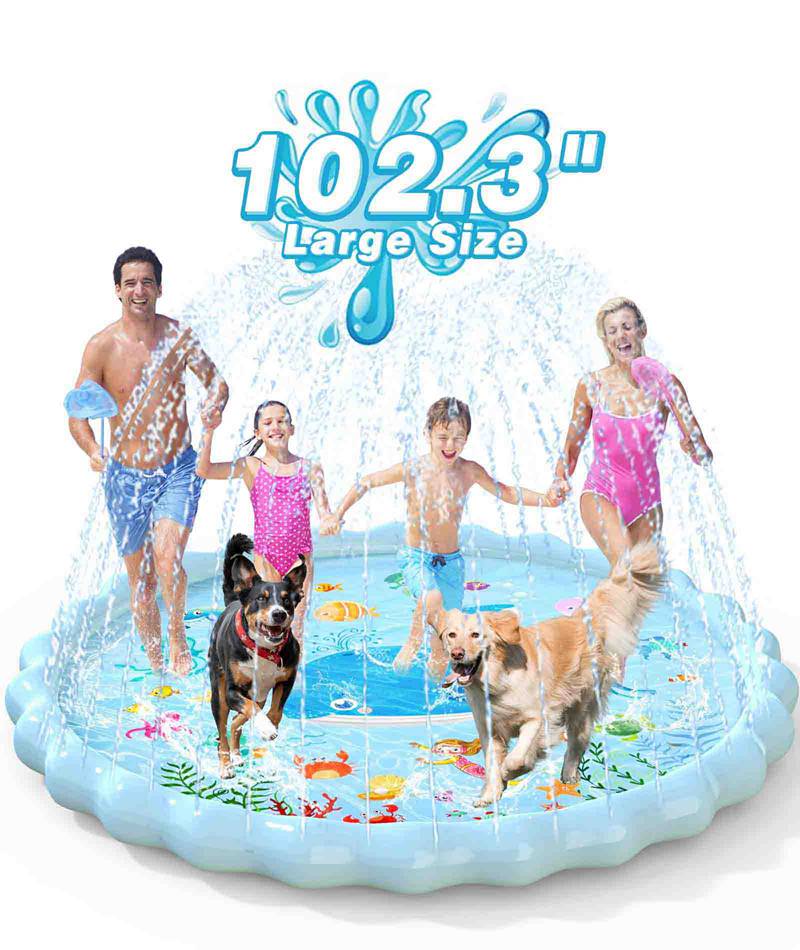
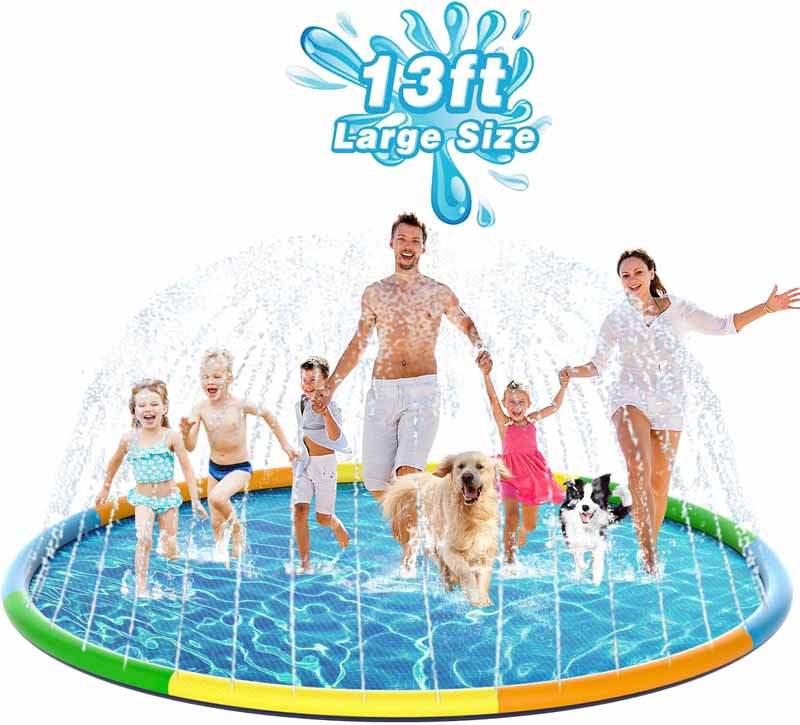
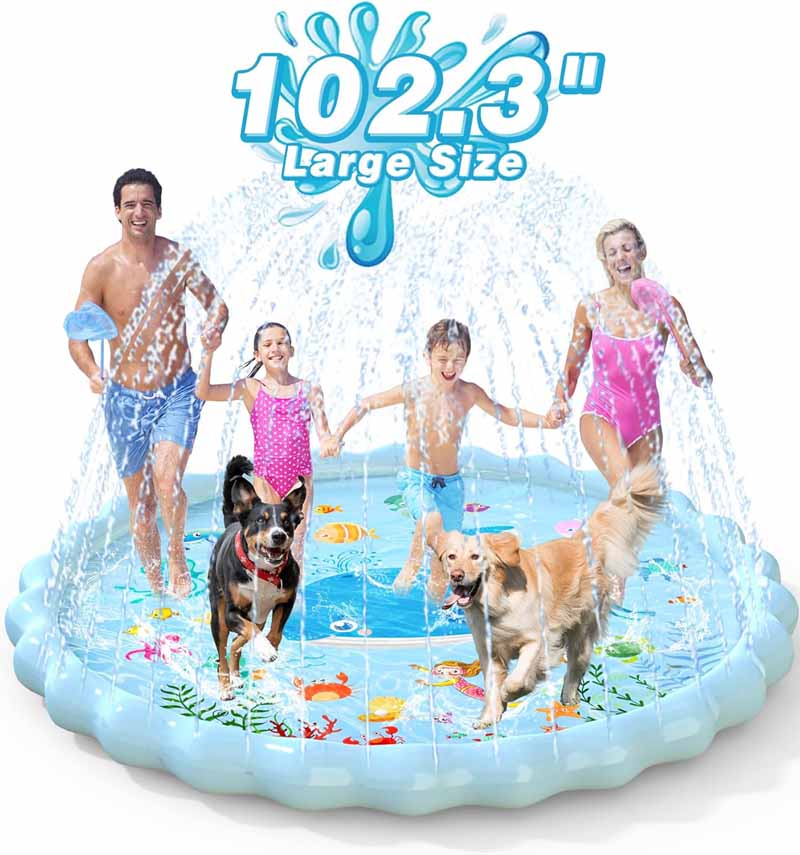
A kids splash pad looks like one of the easiest summer toys to set up: connect a garden hose, turn on the water, and let children enjoy the spray. For younger children, though, safer water play depends on more than a colorful print or a large play area. Parents need to think about how the surface feels under bare feet, whether the spray is gentle enough, whether the edge stays stable, how the hose sits on the lawn, and how quickly an adult can reach the child if they slip, sit down suddenly, or become startled by water.
A safer kids splash pad combines soft PVC, a textured surface, low adjustable spray, stable seams, rounded edges, clean water habits, and close adult supervision. For younger children, the safest choice is not the largest pad or the one with the highest spray. It is the one that helps children move steadily, play comfortably, and stay within easy reach of an adult.
Parents often compare splash pads with kiddie pools, sprinklers, and inflatable water toys. The real difference is how children interact with them. A toddler may squat, crawl, sit, stand, turn, and run toward a parent within the same few minutes. A preschooler may enjoy chasing water but still lack the balance of an older child. A 1-year-old may only need gentle water play while sitting beside an adult. Because of these real behaviors, kids splash pad safety should be judged by surface grip, water control, age fit, setup space, and daily cleaning habits.
EPN, under American Epsilon Inc., develops PVC and composite water-play products for family, pet, outdoor, and seasonal use. For kids splash pads, EPN focuses on practical backyard details: low-odor PVC, textured contact surfaces, reinforced edges, stable hose connection areas, and balanced spray holes. These are the details parents notice after several weekends of use, when the question becomes simple: does the splash pad still feel safe, clean, stable, and easy to use?
What Makes a Kids Splash Pad Safer?
A kids splash pad is safer for younger children when it reduces slipping, sudden spray shock, unstable edges, and crowded movement. The most important safety details are textured grip, soft material, rounded edges, even water flow, and low spray control. These features help younger children stand, sit, turn, and splash with better balance.
What Kids Splash Pad Grip Helps?
Grip is one of the first safety details parents should check. A wet surface will always feel different from a dry floor, so a kids splash pad should not rely on smooth PVC alone. A textured surface gives small feet more contact points and helps children feel steadier when they walk, sit, stand up, or step over the edge.
For younger children, grip matters during ordinary movement, not only fast running. Many small slips happen when a child squats to touch the water, turns toward a parent, moves from wet grass back onto the pad, or stands up after sitting. A flat center area is also important because wrinkles, folds, and raised spots can create tripping points.
A better grip design is especially useful for toddlers who sit and stand repeatedly, preschoolers who turn quickly during play, children playing barefoot on wet PVC, and families using the splash pad on grass. Still, a textured surface does not mean children can run without limits. Parents should encourage walking, sitting, hand splashing, and slower play for younger children.
Which Kids Splash Pad Edge Is Better?
The edge of a kids splash pad affects how safely children enter, exit, and move around the play area. A lower rounded edge is usually easier for younger children to step over than a tall or stiff border. Smooth edge shaping also reduces hard contact points if a child kneels, sits, or bumps into the side.
A stable outer ring matters because water pressure can change how the pad sits on the ground. If the edge twists, curls, or lifts, it may become a tripping point. Wider seams and reinforced heat-sealed areas help the edge hold shape during repeated play.
Parents should look for an edge that feels low enough for small feet to cross, rounded enough to reduce harsh contact, stable enough to avoid curling under water pressure, strong enough to resist seam leaks after repeated use, and soft enough for sitting or kneeling near the side.
EPN splash pad designs focus on R-angle cushioning, wider seam construction, reinforced edge areas, and stable water inlet zones. These details may not be the loudest visual feature, but they matter during real backyard play. A smooth, stable edge helps children move naturally and helps parents feel more confident during setup.

How Kids Splash Pad Spray Should Work?
Water spray should feel fun, not startling. For younger children, low to medium spray is usually safer and more comfortable than high spray. Strong water jets can hit the face, surprise a toddler, or cause a child to step backward suddenly. That sudden backward step is one of the moments when slipping can happen.
A safer kids splash pad should allow parents to control spray height through hose pressure. The best approach is to start low before children step onto the pad, then increase gradually only if the child feels comfortable. For many younger children, ankle-to-knee spray is enough to create excitement without overwhelming them.
| Child Age | Better Spray Height | Safer Play Style |
|---|---|---|
| Around 1 year | Very low edge spray | Parent-assisted sitting and hand play |
| Ages 1–3 | Ankle height to low calf height | Sitting, standing, gentle splashing |
| Ages 3–5 | Ankle to knee height | Walking, turning, controlled play |
| Ages 6+ | Low to medium spray | More active play with rules |
| Mixed ages | Match the youngest child | Separate fast play from toddler play |
Even spray distribution is also important. If one hole sprays much harder than the others, children may avoid that spot or react suddenly when water hits them. Balanced spray holes create a more predictable play zone, especially for younger children still learning how to move on wet surfaces.
Are Kids Splash Pads Safe for 1 Year Olds?
A kids splash pad may be used near a 1-year-old only with very close adult supervision, very low spray, and short play time. Many home splash pads are designed for ages 3+, so parents should always check the product age label before use.
For a 1-year-old, splash pad use should be gentle and parent-led. The child may sit near the spray, touch water with hands, or enjoy a short sensory play moment. It should not involve running children, high spray, crowded play, or older siblings moving quickly through the same space.
For children around 1 year old, safer use means the adult stays within arm’s reach, spray is set very low, play time stays short, the child does not drink splash pad water, older children are not running nearby, and the pad is placed on clean, flat grass. The real safety layer for a 1-year-old is not the splash pad alone. It is the adult’s position, attention, and control of the play environment.
| Safety Detail | Better Choice for Younger Children | Why It Matters |
|---|---|---|
| Surface | Textured PVC | Helps reduce slipping on wet areas |
| Center area | Flat and stable | Helps children sit, stand, and turn |
| Edge | Low and rounded | Easier for toddlers to step over |
| Spray | Low and adjustable | Reduces face spray and sudden reactions |
| Hose | Outside the walking path | Helps reduce tripping |
| Supervision | Close and active | Allows fast response if a child slips |
| Play group | Fewer children at once | Reduces bumping and crowding |
Which Kids Splash Pad Material Is Safer?
A safer kids splash pad material should feel soft, resist tearing, hold seams well, and stay comfortable in warm weather. For repeated backyard use, PVC around 0.40–0.55 mm is a practical range because it supports stepping and water pressure while still allowing foldable storage.
What Kids Splash Pad Thickness Works?
Material thickness affects how stable a splash pad feels during play. Very thin material may wrinkle, fold, or tear more easily. When younger children step on a wrinkled area, the surface may shift under their feet. When water pressure builds near a weak seam, the edge may lose shape or leak.
For many home kids splash pads, PVC around 0.40–0.55 mm offers a practical balance. It is thick enough to support repeated stepping, sitting, and hose pressure, but still flexible enough for folding and storage. PVC near 0.5 mm often feels more stable than very thin seasonal mats, especially when used on grass.
Thickness alone does not make a splash pad safer. A thick pad with weak seams can still fail. A safer design combines suitable PVC thickness, strong heat-sealed seams, reinforced water inlet areas, stable edge structure, flexible surface feel, folding durability, and better outdoor stability under sun and water use.
Parents usually care about thickness because it affects whether the pad lies flat after unfolding, whether the edge holds water pressure evenly, whether the surface feels stable under small feet, and whether the material can support reuse throughout summer.
Is Kids Splash Pad Odor Important?
Odor is a real customer concern. Younger children sit close to the pad, touch the surface with wet hands, and may play in direct sunlight. A strong chemical smell can make parents uncomfortable, even if the pad looks attractive.
A low-odor kids splash pad is more comfortable for warm-weather play. Some packaging smell may appear after opening because PVC products are folded and sealed during shipping. Parents can reduce mild packaging smell by unfolding the pad outdoors before first use. However, a harsh smell that does not fade should be taken seriously.
Parents usually connect odor with comfort, trust, and child contact. A good water-play item should not make families hesitate before letting children sit, kneel, or splash on it. Opening and airing the pad before first use, rinsing the surface, avoiding wet storage, and keeping the pad away from long-term direct sun when not in use can all help maintain a more comfortable play experience.
EPN children’s water play products focus on low odor, flexibility, and sunlight stability. These details help the pad feel more suitable for real family use, especially when children play close to the surface.
Which Kids Splash Pad Standards Matter?
Parents often look for safety-related information before choosing a kids splash pad. They may check whether a brand mentions CPSIA, ASTM, EN71, REACH, or other market-related requirements. These terms matter because children’s products need clearer material and use expectations than ordinary outdoor items.
A safer kids splash pad should make safety information easy to understand. Families should not need to guess whether the pad is suitable for children, water play, sun exposure, folding, and repeated contact with skin.
For retail and custom projects, standards also matter during product development. Material selection, labeling, instructions, packaging, warnings, and market requirements should be considered early. A water toy that looks good but lacks proper documentation may create problems later.
EPN supports product and material alignment with CPSIA, ASTM, REACH, RoHS, and EN71 directions for different markets. For custom splash pad projects, Epsilon can also support packaging, labels, instructions, and multilingual adaptation based on sales channel and regional needs.
| Material Factor | What Parents Care About | Stronger Choice |
|---|---|---|
| PVC thickness | Will it tear or wrinkle easily? | About 0.40–0.55 mm for many backyard pads |
| Surface texture | Will children slip? | Textured contact surface |
| Odor | Is it comfortable for younger children? | Low-odor PVC with proper airing |
| Seams | Will it leak at the edge? | Wider reinforced heat-sealed seams |
| Flexibility | Can children sit comfortably? | Soft but stable PVC |
| Sun exposure | Will it weaken quickly outdoors? | Better sunlight stability |
| Storage | Will it fold and reopen well? | Flexible structure with folding durability |
How to Set Up a Kids Splash Pad Safely?
A kids splash pad is safer when it is placed on flat grass, away from sharp objects, steep slopes, hard edges, and loose hose paths. Parents should check the ground, control water pressure, leave clear space around the pad, and keep the hose outside the main play area.
Where Should a Kids Splash Pad Go?
Flat grass is usually the best home surface for a kids splash pad. Grass feels softer than concrete, helps support the pad, and gives children a more forgiving area around the play zone. Before setup, parents should remove stones, sticks, sharp mulch, garden tools, toys, and hidden roots.
A rough setup area can create problems even if the splash pad itself is well made. Sharp objects can puncture the material. Uneven ground can create wrinkles. Slopes can make children and water move faster downhill. Hard patio edges can increase injury risk if a child slips near the side.
A simple ground check can make a big difference. Parents can walk the area, look closely at the grass, and feel for hard points before placing the pad down. Better setup locations include flat lawn areas, open backyard space, spots away from patio corners, and places close enough for adults to supervise comfortably without stretching the hose across the play path.
Avoid placing a kids splash pad on gravel, sharp mulch, cracked concrete, rough decking, steep slopes, or areas with hidden roots.

How Much Kids Splash Pad Space?
A kids splash pad needs open space around it because younger children do not always stay inside the spray area. They may step backward, run toward a parent, chase water, or move off the edge without looking down.
When possible, keep at least 2–3 feet of clear space around the splash pad. More space is better if multiple children are playing. Parents should avoid placing chairs, coolers, shoes, balls, or garden items directly next to the edge.
Clear space helps in three ways. First, it reduces the chance of bumping into hard objects. Second, it gives children more room to slow down after stepping off the wet surface. Third, it helps adults move around the pad quickly if a child needs help.
For smaller yards, the better choice may be a medium splash pad with safe clearance instead of the largest size that barely fits. A large pad squeezed tightly between furniture and patio edges may feel less safe than a smaller pad placed cleanly on open grass.
Do Kids Splash Pad Hoses Matter?
The hose connection is small, but it can affect safety and play quality. A loose hose connector can leak near the edge, making one area more slippery. A hose stretched across the walking path can become a tripping hazard. Sudden pressure changes can make the spray jump higher than expected.
A safer setup keeps the hose flat, straight, and outside the main running area. Parents should connect the hose before children step onto the pad, then turn on the water slowly. The connector should stay stable and should not pull the pad edge out of shape.
A good hose area should be easy to connect, positioned away from children’s feet, stable under water pressure, less likely to twist the edge, less likely to leak into one slippery spot, and simple for parents to turn off quickly.
EPN splash pad designs pay attention to standardized water inlet modules, stable connector areas, and multi-hole spray distribution. These details help reduce setup frustration and support a more controlled play experience.
| Setup Step | Suggested Time | What to Check |
|---|---|---|
| Ground check | 3–5 minutes | Stones, sticks, roots, sharp objects |
| Pad placement | 1–2 minutes | Flat position and clear edges |
| Hose connection | 1 minute | Tight fit and safe hose path |
| Spray test | 30–60 seconds | Low pressure first |
| Clear-space check | 1–2 minutes | Furniture, toys, shoes, hard corners |
| After-use rinse | 5 minutes | Dirt, grass, sunscreen, pet hair |
| Dry and fold | 5–10 minutes | No standing water before storage |
What Kids Splash Pad Size Is Safer?
A safer kids splash pad size depends on the child’s age, number of children, yard space, and adult reach. Bigger is not always safer. Younger children need enough room to move without crowding, but the full play area should still be easy for an adult to see and reach quickly.
Which Kids Splash Pad for Ages 1–3?
For ages 1–3, smaller or medium splash pads are usually easier to manage than oversized models. Children in this age range may sit, crawl, squat, stand suddenly, or step off the edge without looking. They need low spray, short sessions, and close adult support.
Many home splash pads are labeled for ages 3+, so parents should always check the product age guidance. If a younger toddler plays near a splash pad, it should be calm, short, and closely supervised.
A safer setup for ages 1–3 includes low water pressure, one child or very few children at once, no running, no older children chasing nearby, a parent within arm’s reach, short play time with breaks, a clean surface before sitting play, and water kept away from the child’s mouth.
For children under 3, splash pad play should feel more like gentle sensory play than active water games. A quiet first experience can help younger children enjoy water without fear or slipping.
Which Kids Splash Pad for Ages 3–5?
Ages 3–5 usually enjoy more movement, but they still need a controlled play area. A medium kids splash pad often works well for one or two younger children because it gives enough room for walking, turning, sitting, and splashing without making supervision difficult.
A larger splash pad can work if the yard is open and the spray stays low. The problem comes when families choose the largest size only because it looks more exciting. Large surfaces can invite running and chasing, especially when siblings or friends join.
For preschoolers, parents should think about whether the child can move without crowding, whether the adult can reach the child quickly, whether the spray is low enough, whether the edge is easy to cross, whether the surface is textured, whether the pad is away from hard objects, and whether older children follow safe play rules.
For ages 3–5, size should support comfort and control. A child does not need the highest spray or biggest layout to have fun. A safer pad gives enough room to explore while staying manageable for adults.
How Many Kids Splash Pad Players?
The number of children on the pad can change the safety level quickly. Two preschoolers walking and splashing is very different from six children chasing each other through water. Crowding increases slipping, bumping, pushing, and falls.
Younger children need more space per child because they stop suddenly, sit down without warning, and do not always understand how close they are to others. Mixed-age play needs extra care because older children run faster and turn harder.
Parents should set simple rules before turning on the water: no pushing, no jumping near the edge, no sitting on spray holes, no pulling the hose, no spraying water directly into faces, no rough chasing when toddlers are nearby, and stop play if the pace becomes too fast.
If children start bumping into each other, climbing over the edge repeatedly, or slipping while chasing, the group is too active for the space. A safer routine may involve shorter turns, fewer children, or separate play times by age.
Are Kids Splash Pads Safer Than Pools?
Kids splash pads are often easier to manage than pools because they usually create shallow surface play instead of deep standing water. That can reduce some water-depth concerns in a backyard setting. However, shallow water play still needs adult supervision.
Splash pads and pools have different risks. Pools involve deeper water, drowning risk, barriers, gates, and stricter swimming rules. Splash pads involve wet surfaces, face spray, water swallowing, hygiene, crowding, and slipping. A splash pad may feel easier for younger children, but it should never be treated as a no-supervision toy.
For many families with toddlers and preschoolers, a splash pad can be a practical summer choice because water depth stays very shallow, spray height can be controlled, setup can happen on flat grass, play can be stopped quickly by turning off the hose, storage is easier than a pool, and cleaning is simpler.
The adult’s role stays the same: stay close, watch continuously, and stop play if conditions become unsafe.
Which Kids Splash Pad Shape Is Better?
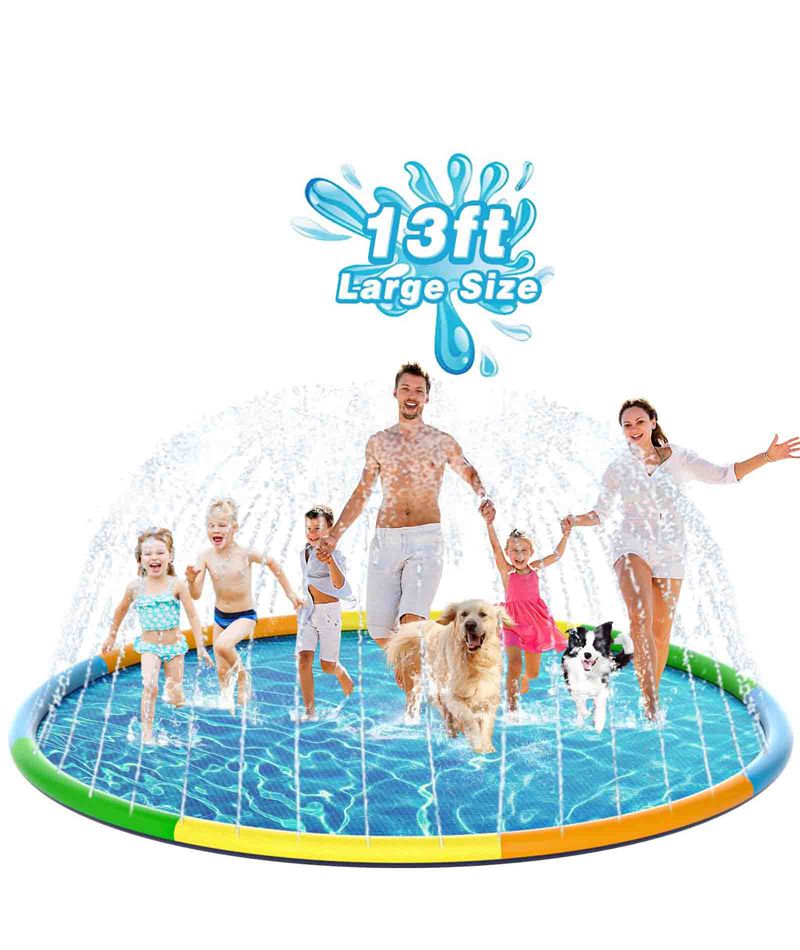
Round and square kids splash pads can both work well when designed and placed correctly. A round splash pad is simple for open lawn play and creates a natural circular spray pattern. A square splash pad may fit better near patios, garden layouts, or straight backyard areas.
For younger children, shape matters less than safety details. A well-placed square pad with good grip and low spray is safer than a round pad squeezed against patio furniture. A round pad with stable edges is better than a square pad with weak seams or uneven spray.
| Yard Type | Better Shape Option | Reason |
|---|---|---|
| Open lawn | Round or large round pad | Easy placement and circular play |
| Narrow grass area | Square pad | Fits straighter yard lines |
| Patio-side lawn | Square pad | Easier alignment near straight edges |
| Small backyard | Medium round or square pad | Easier supervision |
| Multi-child play | Larger pad with clear space | Reduces crowding if supervised |
| Toddler play | Smaller or medium pad | Easier adult reach |
| Child Age | Better Splash Pad Setup | Spray Level | Supervision Style |
|---|---|---|---|
| Around 1 year | Parent-assisted sitting or hand play | Very low | Within arm’s reach |
| Ages 1–3 | Small or medium pad, short sessions | Low | Very close and constant |
| Ages 3–5 | Medium pad for walking and splashing | Low to medium | Close and active |
| Ages 6+ | Larger pad with play rules | Medium and controlled | Active adult watching |
| Mixed ages | More space and fewer children | Low to medium | Extra close around younger kids |
How to Use a Kids Splash Pad Safely?
A kids splash pad should be used with active adult supervision, low starting water pressure, clean water habits, and regular surface checks. Children should not drink splash pad water, play while sick with diarrhea, or use a damaged pad with leaks, peeling, sharp tears, or unstable spray.
What Kids Splash Pad Rule Matters Most?
The most important rule is active adult supervision. Not material thickness. Not spray height. Not even a textured surface. Those details help, but the adult’s attention is the main protection for younger children.
Active supervision means the adult is close, watching continuously, and ready to respond. It does not mean checking from inside the house or glancing up from a phone. For infants and toddlers, the adult should stay within arm’s reach. If the adult needs to leave, water play should stop.
This rule is especially important during backyard gatherings. When several adults are present, everyone may assume someone else is watching. A safer habit is to name one adult as the water watcher for a set period, then switch if needed.
A simple family rule works well: water on means adult watching, adult away means water off, toddlers stay within arm’s reach, phones stay away during supervision, and play stops when children become tired or too rough.

Do Kids Splash Pads Need Supervision?
Yes, kids splash pads need supervision every time, especially for younger children. Shallow water can still create slipping, falling, water swallowing, and hygiene concerns. Diaper-age children also need extra attention because accidents can contaminate the surface and water flow.
Supervision should match the play situation. One calm preschooler playing with a parent nearby is very different from a group of children at a summer party. More children means more movement, more noise, and more chances for sudden bumps. Mixed-age play needs even more attention because older children may not realize how easily toddlers lose balance.
Parents should also watch for signs that a child is getting tired. Tired children slip more easily, stop listening to rules, and react more slowly. Shorter play sessions with breaks are often safer than one long session.
| Play Time | Parent Action |
|---|---|
| First 2 minutes | Test spray height and surface grip |
| Every 5 minutes | Check child comfort and crowding |
| Every 10–15 minutes | Offer a short break |
| After bathroom use | Wash hands before returning |
| After play | Drain, rinse, dry, and store |
Can Kids Splash Pads Spread Germs?
Kids splash pads can spread germs when water becomes contaminated. Public splash pads can be more complex because some systems may recirculate water and require proper treatment. Home splash pads usually use fresh hose water, but hygiene still matters because children may sit, splash, touch the surface, and accidentally swallow water.
Parents often ask whether norovirus can spread through splash pad water. Germs can spread when contaminated water gets into a child’s mouth. Other recreational water illnesses can also be a concern when water is not clean. The safest habit is to prevent children from drinking splash pad water and to keep sick children out of water play.
Good hygiene habits are simple: do not let children drink splash pad water, do not let children put their mouth over spray holes, keep children with diarrhea away from water play, take bathroom breaks before returning, change diapers away from the splash area, wash hands after bathroom breaks, drain and rinse the pad after every use, and avoid leaving standing water overnight.
For home use, clean habits are usually easy to manage. Fresh water, short sessions, regular draining, and full drying before storage can reduce odor, residue, and surface buildup.

How to Clean a Kids Splash Pad?
Cleaning a kids splash pad should be simple enough to repeat after every use. After play, turn off the water, drain the pad, rinse away grass, dirt, sunscreen, leaves, and pet hair, then let the surface dry before folding. Do not store the pad wet.
A 10-minute rinse, dry, and fold routine helps keep the surface cleaner and supports longer product life. Drying is especially important because folded moisture can create odor. Storage should be in a cool, dry place away from long-term direct sunlight.
For families with pets, cleaning matters even more. Dog hair, paw dirt, and backyard debris can collect on the surface. If children and pets share the outdoor play area, parents should rinse more carefully and check for scratches or residue before the next use.
| Step | What to Do | Why It Helps |
|---|---|---|
| Drain | Empty water after play | Reduces standing water |
| Rinse | Wash away dirt and sunscreen | Keeps surface cleaner |
| Wipe if needed | Clean sticky or muddy spots | Reduces slipping |
| Dry | Air dry before folding | Helps prevent odor |
| Fold | Fold along natural lines | Reduces stress on seams |
| Store | Keep in a cool, dry place | Protects material between uses |
When to Replace a Kids Splash Pad?
A damaged kids splash pad should not be ignored. Replace or repair it if there are seam leaks, sharp tears, heavy peeling, unstable spray, or edge areas that no longer hold shape. A small leak may seem harmless, but it can change water pressure, create slippery spots, or make the edge curl.
Before each season, parents should inspect the water inlet, edge seams, spray holes, and center surface. During summer, a quick check before use is enough: look for rough tears, feel for slippery residue, and make sure the spray pattern looks even.
Signs a splash pad needs attention include seam leaks, uneven spray without a hose issue, an edge that no longer fills evenly, sticky or peeling surface areas, sharp raised tears, a loose hose inlet, or a pad that no longer lies flat.
EPN tests splash pad designs through water pressure stability, UV exposure, folding, seam strength, and repeated-use simulations. The goal is steady performance through real backyard use, not just a good first setup. Still, every family should stop using a pad once damage affects safety.
| Daily Safety Habit | Why It Matters | Easy Parent Rule |
|---|---|---|
| Stay close | Fast response if a child slips | Within arm’s reach for toddlers |
| Start low | Reduces surprise spray | Turn hose slowly |
| Prevent drinking water | Reduces germ exposure | No mouths on spray holes |
| Take bathroom breaks | Protects water cleanliness | Change diapers away from pad |
| Drain after play | Reduces standing water | Never store wet overnight |
| Inspect damage | Prevents tripping and leaks | Check seams and inlet before use |
FAQ About Kids Splash Pad Safety
Are kids splash pads safe for 1 year olds?
A kids splash pad may be used near a 1-year-old only with very close adult supervision, very low spray, and short play time. Parents should check the product age label first because many home splash pads are designed for ages 3+. For a 1-year-old, gentle hand splashing near an adult is safer than active play.
Are kids splash pads safer than pools?
Kids splash pads are usually shallower than pools, which can make them easier to manage in many backyard settings. They still carry risks such as slipping, water swallowing, face spray, and germs. Pools have deeper water risks and often require stricter barriers and rules. The safer choice depends on age, supervision, water depth, setup, and cleanliness.
Can kids splash pads spread norovirus?
Kids splash pads can spread germs if water becomes contaminated. Parents should not allow children to swallow splash pad water or put their mouth over spray holes. Children with diarrhea should not use splash pads. For home use, draining, rinsing, and drying the pad after each session helps keep the play surface cleaner.
What is the top kids splash pad safety rule?
The top rule is active adult supervision. For infants and toddlers, an adult should stay within arm’s reach and watch continuously. A splash pad may have soft material, low spray, and a textured surface, but it still needs close adult attention.
What age is best for a kids splash pad?
Many home splash pads are best for ages 3+ with adult supervision. Younger children may enjoy gentle water play nearby, but they need low spray, short sessions, fewer children around them, and closer adult support. Parents should always check product age guidance before use.
Can a kids splash pad be used on grass?
Yes, flat grass is one of the best home surfaces for a kids splash pad. It feels softer than concrete and helps the pad sit more comfortably. Parents should remove stones, sticks, sharp roots, toys, and garden tools before setup. Avoid steep slopes, gravel, and hard patio edges.
What makes a kids splash pad less slippery?
A textured surface, flat setup area, clean water flow, and water shoes can help reduce slipping. Parents should also rinse away sunscreen, grass, mud, and pet hair after use because buildup can make wet surfaces more slippery.
Build Safer Summer Water Play with EPN
A safer kids splash pad is built from small details working together: soft PVC, textured grip, low spray, stable seams, rounded edges, safe setup, clean water habits, and close adult supervision. For younger children, the safest splash pad is not the largest one or the one with the highest water spray. It is the one that helps children play steadily, stay comfortable, and stay close enough for an adult to respond quickly.
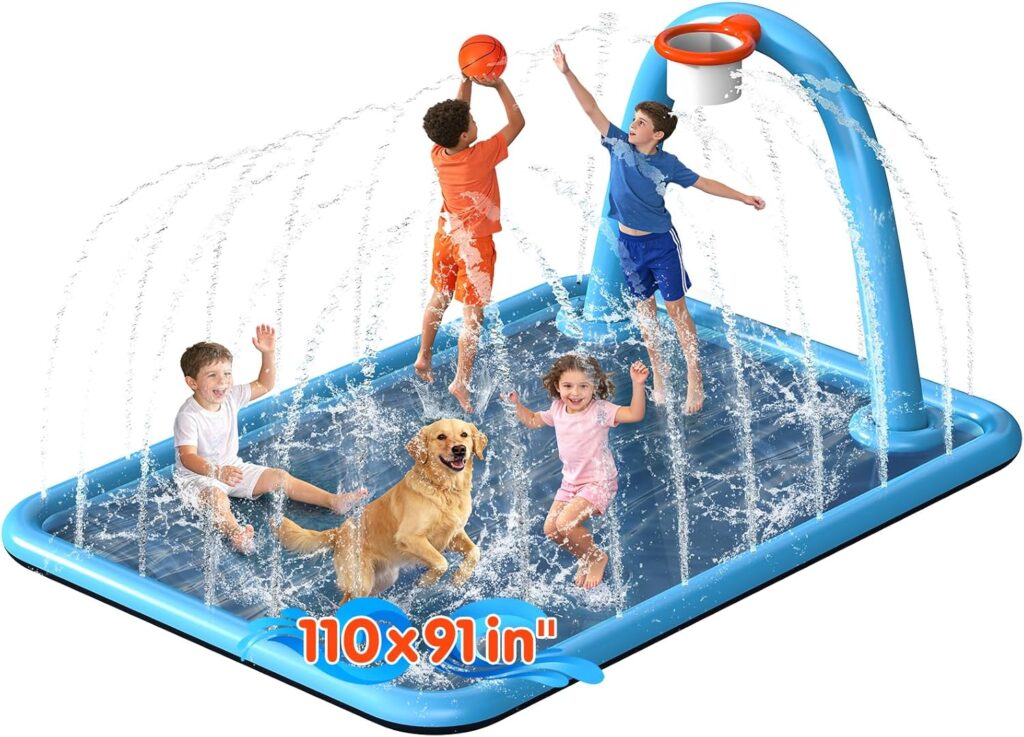
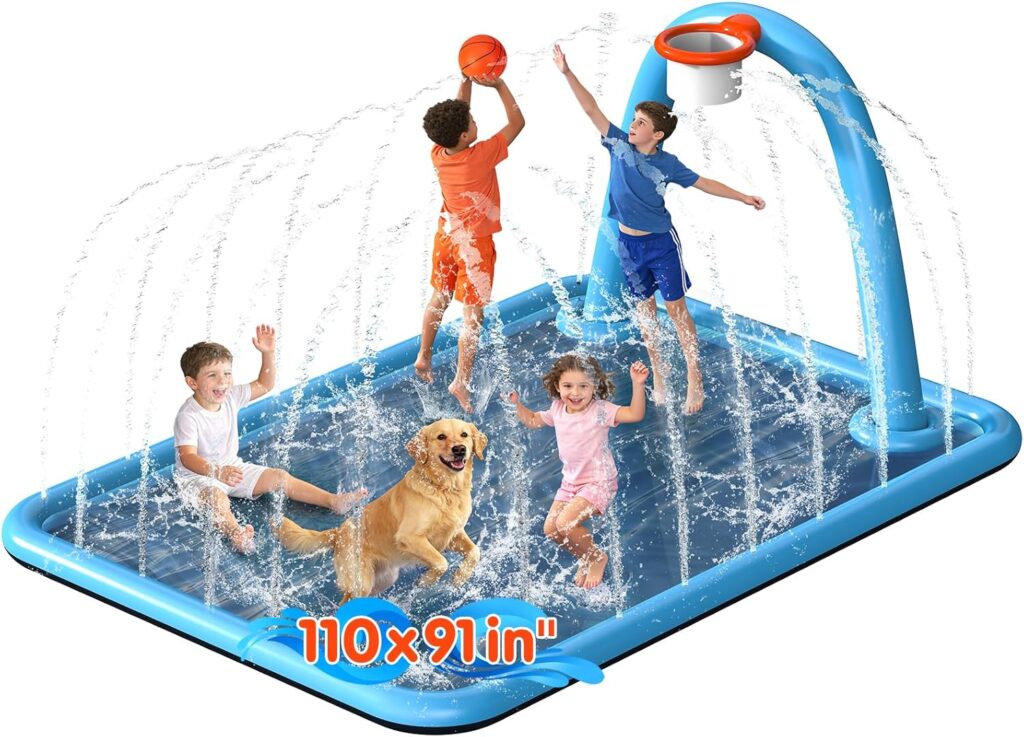
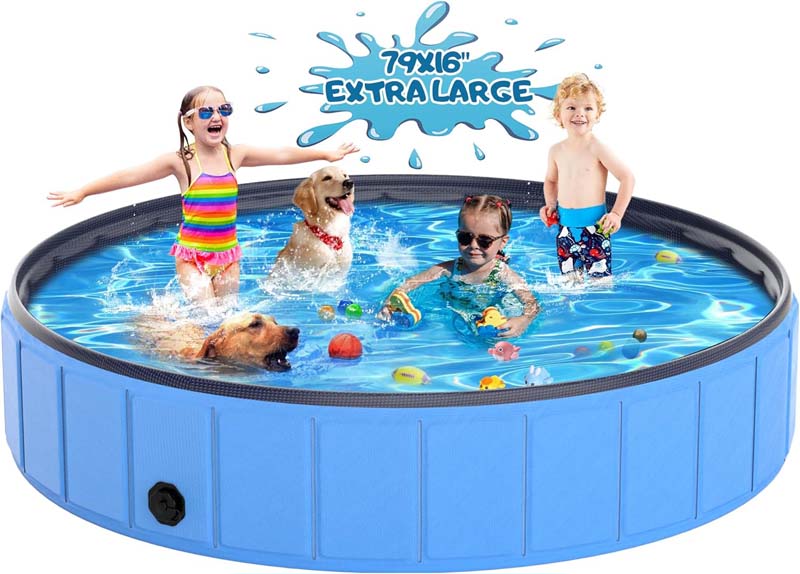
EPN, under American Epsilon Inc., develops PVC and composite water-play items for family, outdoor, pet, and seasonal use. The product range includes kids splash pads, pet splash pads, basketball splash pads, water slides, inflatable pools, kiddie pools, pet pools, light-up pools, water hammocks, floating islands, swim rings, snow tubes, sprinkler arches, and pool pillows.
For families, EPN focuses on the details that make backyard water play easier to repeat: low-odor PVC, textured surfaces, reinforced seams, rounded edges, adjustable spray, foldable storage, and standard garden hose setup. These details help parents spend less time adjusting the product and more time watching children enjoy summer play.
For brands, retailers, and seasonal product teams, Epsilon can adjust a splash pad around real project needs:
| Project Need | Available Direction |
|---|---|
| Product size | Small, medium, large, round, square, custom dimensions |
| Material feel | PVC thickness, surface texture, low-odor options |
| Structure | Edge design, seam reinforcement, inlet position |
| Spray design | Hole layout, spray direction, water distribution |
| Visual design | Color, pattern, theme, seasonal artwork |
| Packaging | Retail box, gift box, label, instruction manual |
| Market support | U.S., U.K., Germany, Europe, and other sales channels |
| Order plan | EPN branded items, private-label projects, trial orders, volume production |
With 27 research and development staff, 18+ designers, 500+ annual material and product tests, 1500+ design projects per year, and annual production capacity up to 12 million units, American Epsilon Inc. can support splash pad projects from early idea to finished production.
If you are planning a summer water play collection, looking for ready-to-order EPN splash pads, or developing a safer private-label kids splash pad, Epsilon can help with material selection, structure design, packaging, testing, and production planning. Contact Epsilon to order EPN branded splash pads or request a custom quotation for your next kids water play project.
Get A Fast quote
Here, bringing your inflatable concepts to life is no longer a challenge—it’s a collaborative journey where American Epsilon helps families, outdoor enthusiasts, and global brands transform creative ideas into safe, certified, and market-ready inflatable solutions.


Partner With Epsilon
Whether you are a family looking for safe backyard fun or a brand seeking large-scale OEM/ODM solutions, American Epsilon Inc. guarantees every inflatable is built with safety, durability, and excitement in mind. With flexible low MOQs, strategically placed warehouses in the U.S., Canada, U.K., and Germany, plus 24/7 professional support, we ensure smooth delivery and reliable service worldwide.
Ready to bring your inflatable ideas to life? Request free samples, fast prototypes, and customized designs today—your trusted inflatable journey starts here.