Skip to content
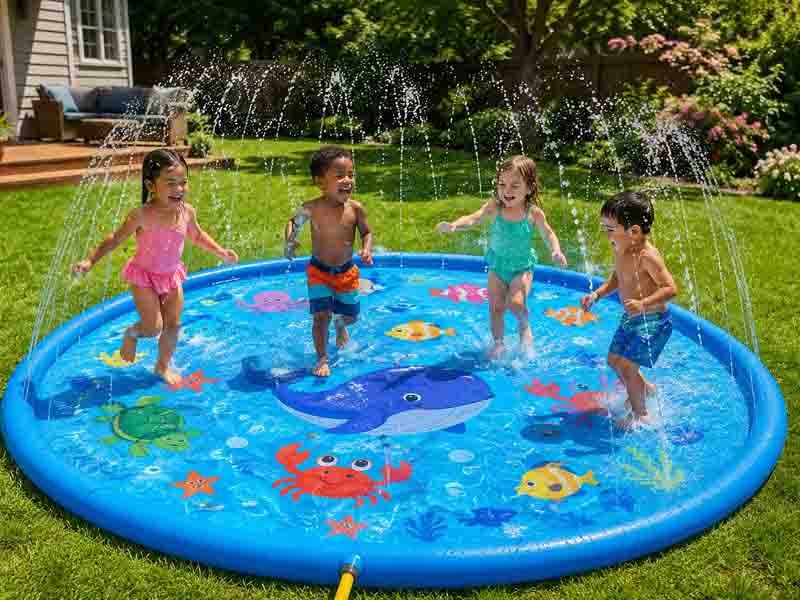
A kids splash pad looks like one of the easiest summer toys to choose. Parents see a colorful water mat, a garden hose connection, and children laughing in the spray. But when two, three, or four children play together, the small details become much more important. Size affects whether children have enough room to move. PVC thickness affects how the mat handles repeated stepping and folding. Surface texture affects how steady wet feet feel. Spray design affects whether every child enjoys the water or only one side gets enough spray.
The best kids splash pad for multiple children should have enough play space, thicker PVC, a textured surface, stable welded edges, even spray coverage, adjustable water pressure, easy drainage, and simple storage. For 2–4 children, a 90–118 inch splash pad usually gives a better play experience than a smaller 68–80 inch mat, especially when toddlers and older children play together.
Many families notice the difference after the first hot afternoon. A small splash pad may look cute before water is added, but the play area can feel crowded once children start sitting, stepping, turning, and chasing spray. A better choice is not only the biggest size available. It is the splash pad that fits the yard, supports group play, handles repeated summer use, and stays easy enough for parents to set up again.

What Kids Splash Pad Size Works Best?
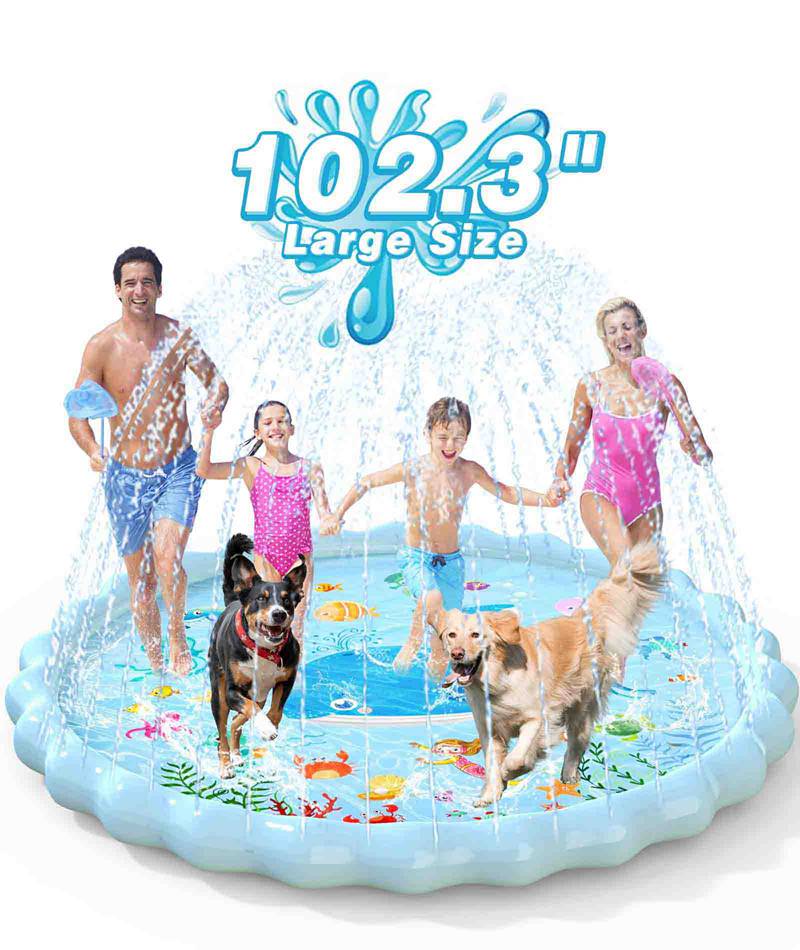
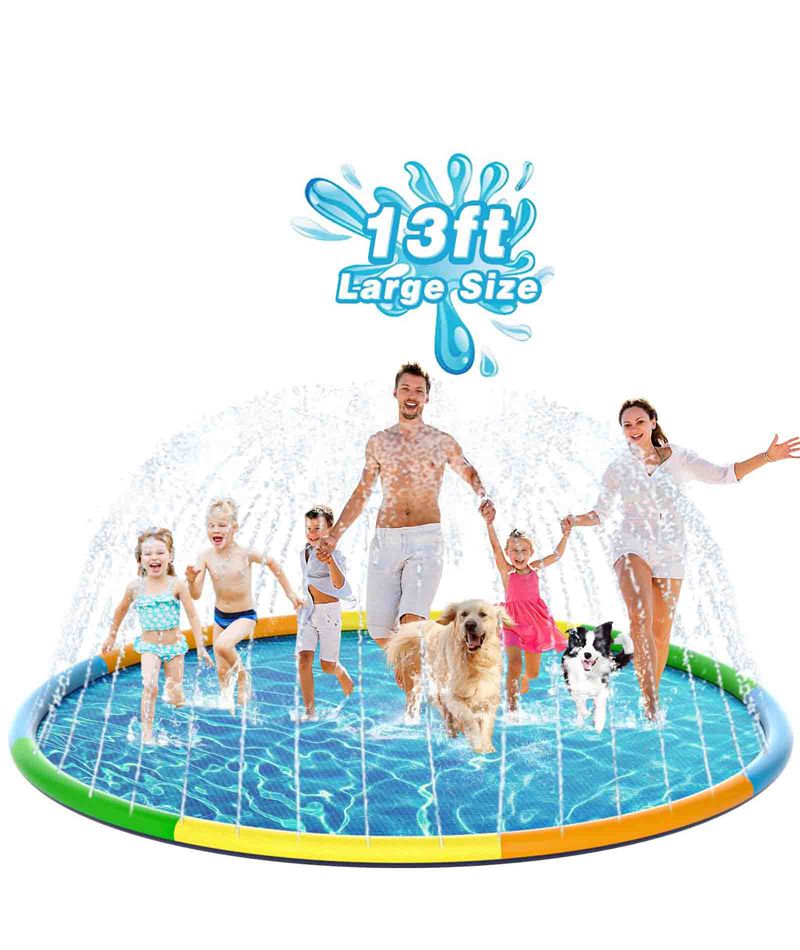
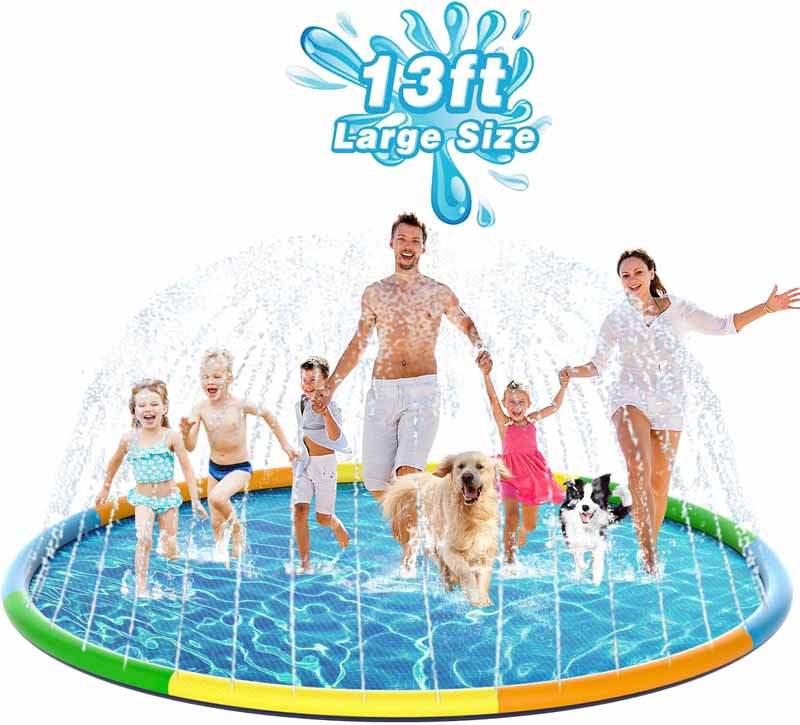
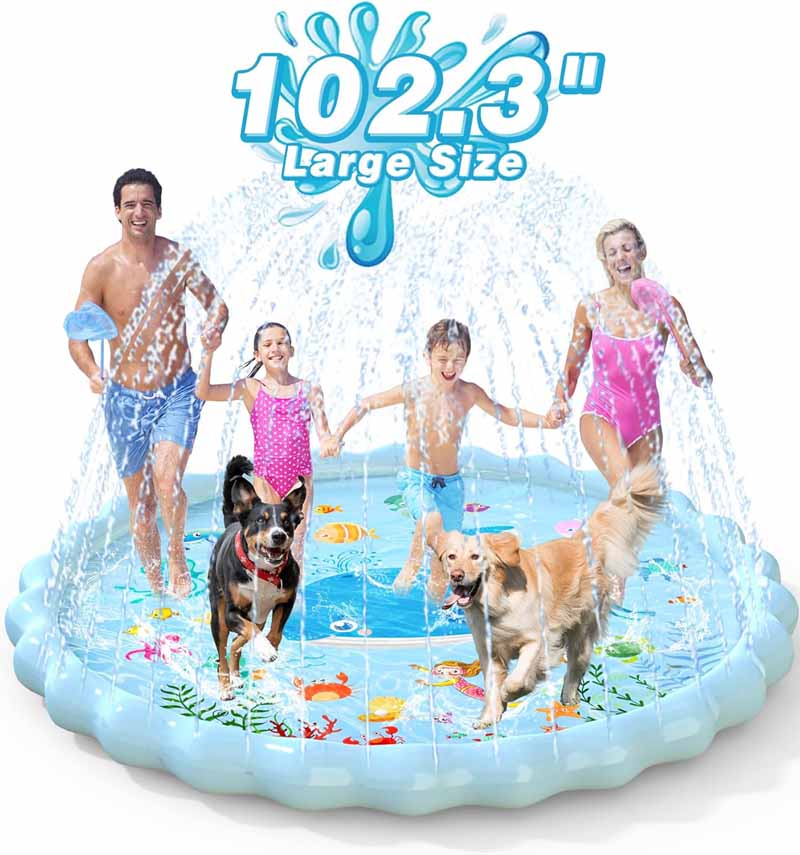
A kids splash pad for multiple children should be large enough for sitting, stepping, turning, and splashing without crowding the spray edge. For 2–4 children, 90–118 inches is usually a more practical size range than 68–80 inches. The right size also depends on age, yard space, hose pressure, and how active the children are.
Size is usually the first detail parents compare, but it is also easy to misjudge. The size shown on a listing usually refers to the full outside diameter or full outside length. Once the raised water edge fills, part of that area becomes the spray ring, so the center play space is smaller than the total measurement.
For one toddler, a smaller splash pad can still work well. It is easier to place, drain, dry, and fold. But group play creates more movement. Children sit in the center, step into the spray, move around the edge, bring small toys, and run from wet grass back onto the mat.
A larger splash pad helps create separate play zones. One child can sit in the shallow middle. Another can walk through the spray. A younger child can enjoy gentle water while an older sibling moves around the edge. More space reduces crowding and makes play easier to manage.
Water pressure also affects size choice. A larger splash pad needs enough hose flow to push water around the full edge. If the hose pressure is weak, a very large mat may spray unevenly. The better choice balances size, yard space, and spray performance.
| Children Using the Kids Splash Pad | Practical Size Range | Better Fit |
|---|---|---|
| 1 toddler | 60–68 inches | Short play, small patios, first-time water play |
| 1–2 young children | 68–80 inches | Light backyard play, compact yards |
| 2–3 children | 90–100 inches | Sibling play, shared summer use |
| 3–4 children | 100–118 inches | Active group play, larger lawns |
| 4+ children | 118 inches or larger | Parties, play dates, close supervision |
A larger splash pad is especially useful for:
- Families with more than one child
- Toddlers and older siblings playing together
- Children who like running through water
- Backyard play dates with cousins or neighbors
- Parents who want a water toy that can be reused across the season
Kids Splash Pad Size
A good kids splash pad size should match real movement, not only the number of children. One calm toddler may need little room. Two active preschoolers may need much more. Three children of different ages often need a larger mat because their play styles are different.
For everyday family use, 90 inches is often a more comfortable starting point for two or more children. A 100–118 inch splash pad gives children more space to sit, stand, turn, and move around the spray edge. Parents should also check whether the listed size includes the raised outer ring, because the spray ring takes up part of the total surface.
Kids Splash Pad Space
A kids splash pad needs more room than the mat itself. A practical setup should leave at least 2–3 feet of open area around the edge. That extra space gives children room to step off the mat, helps keep the hose away from the main walking path, and gives adults a better position for supervision.
Flat grass is usually one of the most comfortable surfaces for backyard splash pad use. It feels softer under the mat and lets runoff drain more naturally. Before setup, parents should remove sticks, stones, sharp mulch, garden tools, hard toys, and anything that could press into the PVC.
Kids Splash Pad Age Fit
A kids splash pad for mixed ages should be larger and easier to control. Toddlers often sit, crawl, squat, and play with water using their hands. Preschoolers may walk in circles, step into the spray, and bring cups or toys onto the mat. Older children may run faster, jump more, and want stronger spray.
When different ages play together, the younger child usually needs a calmer center area. The older child needs more room around the edge. A larger splash pad helps create those zones without adding complicated rules.
Kids Splash Pad Group Play
Group play changes the job of a kids splash pad. A splash pad for one child only needs to feel fun. A splash pad for several children needs to feel fair. If only one side sprays well, children gather there. If the center area is too small, children step on the raised edge.
A better group-play splash pad spreads water around the edge evenly. Children can move around the mat instead of fighting for one strong spray area. For siblings, cousins, neighbors, and weekend backyard play, group comfort matters more than the lowest price.

Which Kids Splash Pad Material Lasts?
A long-lasting kids splash pad should use thicker PVC, strong welded seams, reinforced edges, and low-odor material. For frequent backyard use, PVC around 0.45–0.55 mm usually gives a stronger feel than thin seasonal material. Material strength becomes more important when several children step, fold, drag, and reuse the same splash pad throughout summer.
Material is where many splash pads look similar online but perform differently in real yards. A bright ocean print or colorful animal design may catch attention first, but long-term use depends more on PVC thickness, seam quality, water pressure resistance, and edge structure.
A kids splash pad for multiple children faces more stress than a mat used by one toddler. Children step on wet PVC, sit in the center, press near the spray edge, pull small toys across the surface, and move in different directions. Parents unfold, fill, drain, dry, fold, and store the mat many times during the season.
PVC thickness is not the only factor, but it is a useful starting point. Thin material can work for occasional light use, but it may feel less stable under repeated stepping. A more durable material range, such as around 0.45–0.55 mm depending on the model, is usually more suitable for family splash pads that will be used many times.
Seam quality matters just as much. Splash pads often develop problems at stress points, not in the middle of the flat surface. The hose inlet, welded edge, corners, spray holes, and folded seam areas deserve more attention. Wider bonding areas and stable heat welding help reduce weak spots.
| Material Detail | Why It Matters for Multiple Children | What to Check |
|---|---|---|
| PVC thickness | Helps the mat handle repeated stepping and folding | Around 0.45–0.55 mm is a more durable range for frequent use |
| Welded seams | Helps reduce leaks around bonded areas | Look for clean, even, wide seam lines |
| Reinforced edge | Supports water pressure and spray holes | Edge should rise evenly under pressure |
| Hose inlet | One of the most stressed areas | Connection should feel secure and stable |
| Surface texture | Helps wet feet feel more stable | Avoid overly glossy play surfaces |
| Low-odor PVC | Improves first-use comfort | Air out and rinse before use |
Material quality is especially important for:
- Families who plan to use the splash pad several times per week
- Homes with more than two children
- Backyards with active running and stepping
- Parents who want one splash pad to last through the season
- Retailers looking for fewer complaints about leaks and weak seams
- Custom projects that need stronger repeat-use performance
Kids Splash Pad PVC
PVC thickness affects how sturdy a kids splash pad feels under wet feet. When several children use the same mat, the PVC needs to handle body weight, water pressure, folding, and ground contact. Thin PVC may feel light and easy to fold, but it can feel less reliable during active group play.
For repeat summer use, parents can look for stronger PVC construction. Around 0.45–0.55 mm is a useful thickness range for backyard water toys that need more durability. The exact thickness may vary by model, but very thin splash pads are usually better for occasional use than for frequent sibling play.
Kids Splash Pad Seams
Seams are one of the most important parts of a kids splash pad. The outer ring fills with water and builds pressure before the spray comes out. That means the welded edge carries both water force and foot contact. If the seam is weak, narrow, or poorly bonded, leaks may appear early.
Parents can inspect seam quality before first use. The seam should look clean and even. The edge should not show gaps, bubbles, rough bonding, or uneven folding marks. Around the hose inlet, the connection area should feel firm because that area receives pulling force from the hose.
Kids Splash Pad Edge
The raised edge of a kids splash pad controls the spray. Water fills the edge, moves around the ring, and exits through small spray holes. If the edge fills unevenly, the spray pattern becomes uneven. If the edge feels weak, children may step on it and create pressure points.
A better edge should rise smoothly when water flows in. It should not twist, collapse, or bulge heavily near the hose connection. The spray should move toward the center rather than shooting randomly outward. For multiple children, a stable edge helps share the water more evenly.
Kids Splash Pad Odor
Low-odor material matters because children play close to the splash pad surface. They sit, crawl, touch the print, and may put wet hands near their face. A strong plastic smell can make the first-use experience less comfortable and may reduce parent confidence.
A new PVC splash pad should be opened outdoors before first use. Parents can unfold it, let it air out, rinse the surface with clean water, and allow it to dry briefly. That simple step helps reduce packaging odor and prepares the surface for children.
How Safe Is a Kids Splash Pad?
A kids splash pad is safer when it has a textured surface, stable edges, clean water habits, and close adult supervision. Shallow water does not remove risk. Children can still slip, bump into each other, trip over a hose, or swallow sprayed water. Safe use depends on flat placement, moderate water pressure, clean water, drainage, drying, and clear play rules.
Safety starts before the hose turns on. A splash pad should be placed on flat ground with enough open space around it. Sharp debris should be removed. The hose should lie to the side, not across the main walking path. Water pressure should start low and increase gradually only after children are comfortable.
Surface grip is important because wet PVC can feel slick, especially when children move quickly. A textured surface helps wet feet feel more stable. It does not make the splash pad risk-free, but it improves the feel underfoot compared with a smooth, glossy mat.
Hygiene also belongs in the safety conversation. A home kids splash pad is different from a public spray pad. A backyard splash pad usually uses fresh hose water and is drained after play. A public spray pad may involve a larger water system, more users, and more facility maintenance.
Children should not play on a splash pad when they are sick, especially with stomach illness. They should be reminded not to drink water from the spray. After use, the splash pad should be drained, rinsed when dirty, and dried before storage.
| Safety Concern | Practical Risk | Better Habit |
|---|---|---|
| Slipping | Wet feet on PVC | Use textured surface and supervise closely |
| Crowding | Children gather near one spray area | Choose a larger splash pad with even spray |
| Hose tripping | Hose crosses walking area | Place hose to the side |
| Dirty water | Children play while sick or swallow water | Use clean water and set play rules |
| Wet storage | Odor and trapped moisture | Drain, rinse, dry, then fold |
| High spray pressure | Younger children may be startled | Start low and adjust slowly |
Safe splash pad play works better when parents keep rules simple:
- Place the splash pad on flat ground
- Keep the hose away from running paths
- Start with low water pressure
- Keep snacks away from the water area
- Do not allow rough pushing or jumping
- Drain the water after play
- Dry both sides before folding
- Store the splash pad in a clean, dry place
Kids Splash Pad Grip
Grip is one of the most important safety details for group play. When one child is sitting and another child is walking, the surface needs to feel steady. A textured surface gives wet feet more contact than a flat glossy surface. That helps children feel more balanced when they stand, turn, and step through water.
Parents should still treat a splash pad as a wet play area. Children should not sprint across it, push each other, or jump onto it from a deck or patio. For younger children, lower spray pressure can make movement calmer.
Kids Splash Pad Hygiene
A kids splash pad can stay cleaner when families use clean water and follow a simple cleanup routine. Home splash pads are usually easier to manage than public spray areas because parents control the water source, the number of children, and the cleaning process.
Before play, the mat should be placed on clean ground. Shoes, dirty toys, food, and pet waste should stay away from the water area. Children should use the bathroom before play, and diaper changes should happen away from the splash pad. After play, drain the water, rinse visible dirt, and let both sides dry.
Kids Splash Pad Germs
Shared water play can spread germs if children swallow water, play while sick, or leave dirty water sitting. Even shallow water can carry dirt from feet, grass, hands, and outdoor surfaces. For families with several children, small hygiene habits make a big difference.
The most practical rules are easy to remember:
- Use clean hose water
- Keep food away from the splash pad
- Do not let children drink spray water
- Do not allow sick children to join shared water play
- Drain the splash pad after use
- Rinse dirt before drying
- Store only after both sides are dry
Kids Splash Pad Legionnaires
Legionnaires’ disease is linked to inhaling contaminated mist from water systems where bacteria can grow. The risk is more often discussed with poorly maintained public water features, hot tubs, cooling systems, or other water systems that may create mist from stagnant or recirculated water.
For a backyard kids splash pad, the focus should stay practical and calm. Use fresh hose water. Do not leave water sitting in the mat after play. Do not store the splash pad wet. Keep the hose end off dirty ground when possible. A clean, drained, dry splash pad is easier to use and more comfortable for the next play day.

How Does a Kids Splash Pad Spray?
A kids splash pad sprays when hose water fills the outer edge and exits through small spray holes toward the center. For multiple children, the spray should be even, adjustable, and comfortable. A good splash pad should have a secure hose connection, balanced spray holes, stable edge pressure, and water control that works for toddlers and older children.
Spray design affects how children use the space. If the spray is even, children spread out. If one side sprays much higher, children crowd that side or avoid the weaker area. A large splash pad with poor spray balance may feel smaller than a medium-size splash pad with better water distribution.
Parents often ask whether a spray pad and splash pad are the same. In home shopping, the words are often used together. A backyard kids splash pad usually means a portable PVC mat connected to a garden hose. A spray pad often refers to a public or fixed water play area with built-in jets, ground sprays, or water features.
Hose pressure controls spray height. Low pressure is better for toddlers and cautious children. Medium pressure works well for most mixed-age play. Higher pressure can be exciting for older children, but too much pressure may feel harsh, create uneven spray, or stress the edge ring.
| Hose Pressure Level | Spray Feel | Better For | Watch Out For |
|---|---|---|---|
| Low | Short and gentle | Toddlers, first-time play | May not fill large pads evenly |
| Medium | Balanced and comfortable | Daily family play | Best starting point for most children |
| Medium-high | Taller spray | Older children, active play | Check that spray stays even |
| Too high | Harsh or uneven | Not ideal for younger children | May stress edge and hose inlet |
Spray design matters most when:
- Several children need to share one mat
- Parents want lower spray for toddlers
- Older children want more active water play
- The yard has uneven water pressure
- The splash pad is larger than 90 inches
- Families want the full surface to feel useful
Kids Splash Pad Meaning
A kids splash pad is a portable outdoor water play mat. Most home models are made from PVC and connect to a standard garden hose. Water fills the outer ring, then sprays inward through small holes, creating a shallow water play area for children.
A kids splash pad is not the same as a swimming pool. It usually holds less standing water, sets up faster, and folds away after drying. That makes it useful for families who want summer water play without filling a large pool.
Kids Splash Pad vs Spray Pad
A kids spray pad often refers to a fixed water play area, especially in parks, public spaces, hotels, or community facilities. These areas may include ground jets, water arches, fountains, and recirculated water systems. They are built into the ground and maintained by a facility.
A kids splash pad for home use is usually portable and foldable. It connects to a garden hose and can be drained, dried, and stored after play. Families can control who uses it, when it is cleaned, and how it is stored.
| Feature | Home Kids Splash Pad | Public Spray Pad |
|---|---|---|
| Installation | Portable | Fixed |
| Water source | Garden hose | Facility water system |
| Storage | Fold after drying | Permanent |
| Users | Family or invited children | Many public users |
| Cleaning control | Managed by family | Managed by facility |
| Better use | Backyard play | Public recreation |
Kids Splash Pad Spray
Spray quality can decide whether children enjoy the splash pad. If water sprays evenly around the edge, each child gets access to the water. If spray is weak in one area and strong in another, children may gather in one spot. That can make play feel crowded.
Even spray depends on several details: spray-hole placement, water pressure, edge structure, hose flow, and ground level. A flat setup helps water move around the ring evenly. A twisted edge or sloped yard can make one side spray differently.
Kids Splash Pad Pressure
Water pressure should be adjusted based on age and comfort. Parents should start with low pressure, especially when young children are trying the splash pad for the first time. Once children feel comfortable, the hose can be opened more to raise the spray.
Too much pressure is not always better. High spray can be exciting, but it can also startle toddlers, push water outside the play area, or make the edge ring feel overfilled. A controlled spray height gives families more flexibility.
A practical pressure routine works well:
- Start with low water flow
- Wait for the edge to fill
- Check whether spray is even
- Increase pressure slowly
- Lower pressure if children seem uncomfortable
- Turn off the hose before moving or draining the mat
Which Kids Splash Pad Is Worth Buying?
A kids splash pad is worth buying when it fits the yard, gives children enough space, uses durable PVC, has a textured surface, sprays evenly, drains easily, and stores without trouble. For multiple children, long-term value comes from repeat use. The best splash pad should make summer play easier, not create extra work after every use.
Price matters, but the cheapest splash pad is not always the best value. A low-cost mat may work for one afternoon, but repeated use can reveal weak spray, thin material, poor drainage, or difficult storage. Families with multiple children usually need a stronger balance of size, structure, and convenience.
Setup should be simple. Parents should not need a pump, tools, or a long process. A good splash pad unfolds, connects to a hose, fills the edge, and starts spraying within a few minutes. Fast setup matters because summer play often happens between meals, after school, or during a short hot afternoon window.
Drainage should also be easy. A larger splash pad holds more water in the edge and across the surface. Moving it while full can stress seams and make cleanup harder. Parents should turn off the hose, let the water drain, and only lift the mat after most water has emptied.
EPN kids splash pads are developed around real backyard use: children playing together, parents wanting fast setup, and families needing a water toy that can be reused during summer. American Epsilon Inc. also supports OEM and ODM projects for brands, retailers, online sellers, and seasonal outdoor product programs that need custom size, print, packaging, and specification options.
| What to Compare | Better Choice for Multiple Children |
|---|---|
| Size | 90–118 inches for 2–4 children |
| Surface | Textured, not overly glossy |
| Material | Stronger PVC range, around 0.45–0.55 mm depending on model |
| Edge | Stable raised ring with even spray |
| Hose connection | Secure inlet with simple setup |
| Cleaning | Easy to drain and rinse |
| Storage | Folds after drying without sharp creases |
| Use value | Comfortable enough for repeat summer play |
A strong kids splash pad should work well for:
- Parents who want a quick backyard activity
- Families with siblings close in age
- Homes with toddlers and older children playing together
- Grandparents preparing summer play for visiting children
- Retailers building a seasonal outdoor water toy collection
- Online sellers looking for a practical summer item with repeat-use value
- Brands that need custom size, artwork, packaging, or material planning
Kids Splash Pad Setup
A kids splash pad should be easy enough to use on an ordinary weekday. Parents with several children do not want a toy that needs long preparation. The setup should feel simple: choose the spot, unfold the mat, connect the hose, turn on the water, and adjust spray height.
A smooth setup process usually looks like this:
- Choose flat grass or a clean outdoor surface
- Remove stones, sticks, and sharp objects
- Unfold the splash pad completely
- Place the hose to the side
- Connect the hose securely
- Start with low water pressure
- Let the edge fill evenly
- Adjust spray height slowly
Kids Splash Pad Drainage
Drainage protects both the splash pad and the person cleaning it up. Water adds weight. A large mat can become heavy when the edge and surface are still full. Pulling or dragging it too early can stress seams, corners, and the hose inlet.
After play, turn off the hose and let the water pressure drop. Allow the edge to empty naturally. If water remains in the center, gently lift one side after the mat feels lighter. Avoid dragging the wet splash pad across rough ground. Rinsing before drying also helps remove grass, mud, and outdoor dust.

Kids Splash Pad Storage
Storage affects how long a kids splash pad stays pleasant to use. Folding the mat while wet can trap moisture between layers. That can create odor, surface marks, and a poor opening experience next time. Drying both sides is one of the easiest ways to extend the life of the splash pad.
In warm weather, 20–30 minutes of air-drying may be enough when the mat is placed where air can move across it. After drying, fold along natural lines instead of forcing sharp creases. Store the splash pad away from sharp tools, heavy objects, and direct heat.
Kids Splash Pad Choice
The best kids splash pad for multiple children should solve real family problems. It should be large enough for shared play, strong enough for repeated use, safe enough for wet feet, and easy enough for parents to manage.
A smart choice should answer these questions:
- Does the size match the number of children?
- Is there enough yard space around the mat?
- Is the PVC strong enough for repeat play?
- Are the seams and edge well made?
- Does the surface have texture?
- Can spray height be adjusted?
- Does water spray evenly around the edge?
- Is the hose connection easy to use?
- Can the mat drain without heavy lifting?
- Can it dry and fold without frustration?
Choose EPN for Kids Splash Pad Orders and Custom Projects
A kids splash pad for multiple children needs more than a bright design. It needs the right size, a stable spray edge, durable PVC, a comfortable surface, practical drainage, and storage that does not create extra work for parents. The best splash pad should help families create easy summer play in the backyard without turning cleanup into a problem.
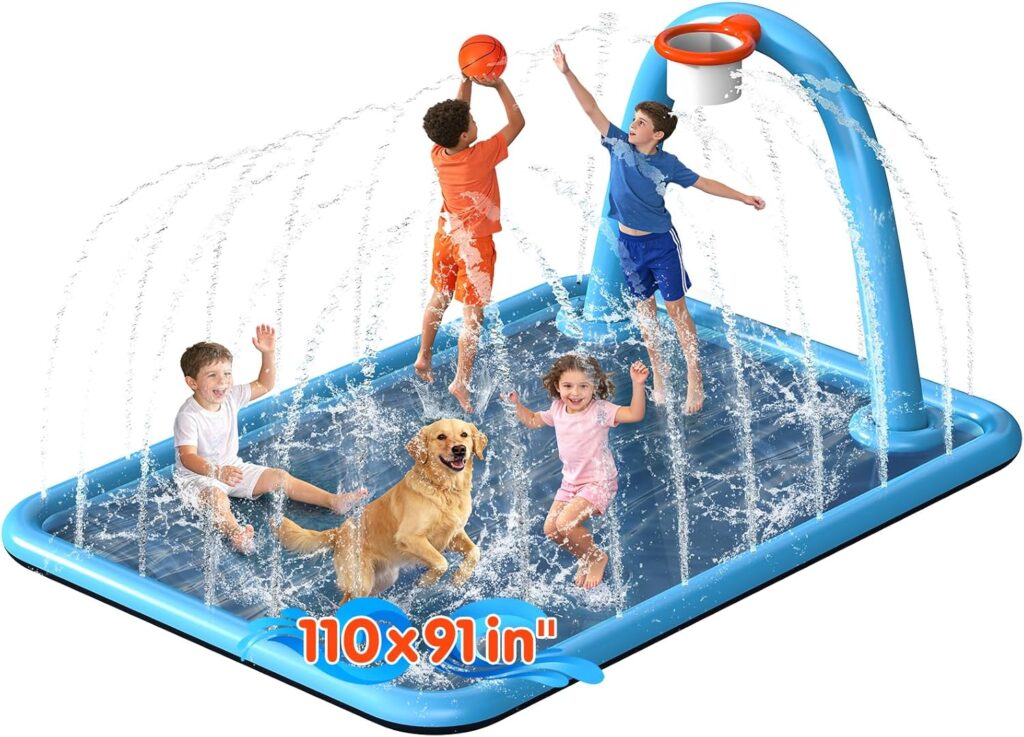
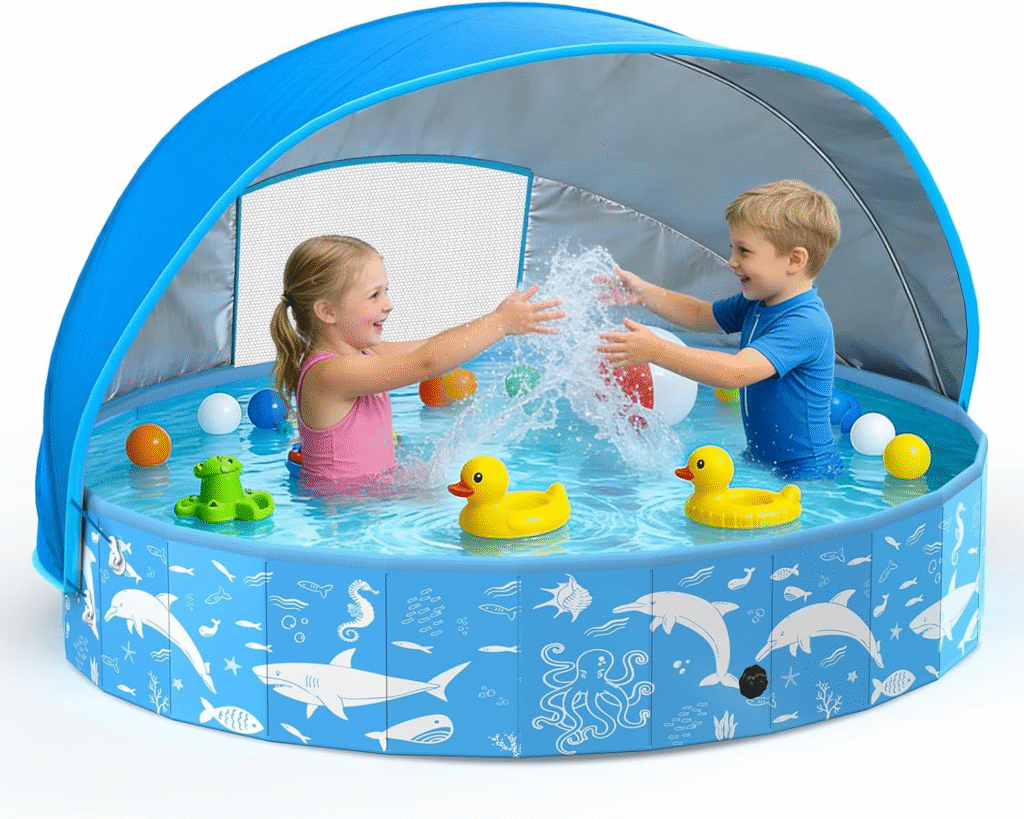
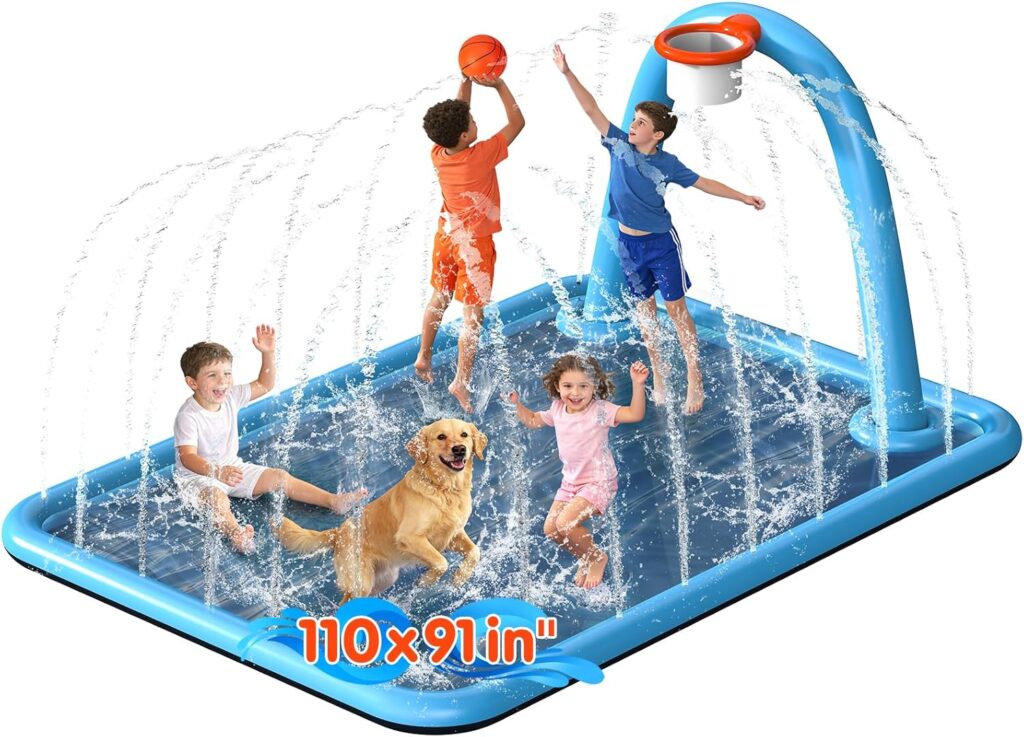
EPN, under American Epsilon Inc., focuses on PVC and composite outdoor recreation products for family entertainment, children’s toys, pet products, outdoor leisure, and seasonal sports. EPN develops and supplies kids splash pads, pet splash pads, basketball splash pads, water slides, inflatable pools, children’s pools, pet pools, canopy pools, water loungers, inflatable floats, snow tubes, pool pillows, and more seasonal outdoor products.
For families, EPN offers practical splash pad choices designed around real backyard use. For business partners, Epsilon supports OEM and ODM projects with size adjustment, color design, pattern development, packaging localization, labeling, low MOQ testing, sample planning, and staged production.
Epsilon’s development and manufacturing support includes:
| Epsilon Capability | Project Value |
|---|---|
| 27 R&D members | Material, structure, mold, child play, pet use, and ergonomic support |
| 18+ designers | Product design, packaging design, graphic design, and localization |
| 500+ annual tests | Material and product performance evaluation |
| 1,500+ design projects yearly | Fast seasonal product development |
| 1,000+ new products yearly | Strong product extension capability |
| 12 million annual capacity | Support for seasonal volume and multi-market supply |
| 3–5 day sample schedule | Faster early confirmation for regular items |
| 20–30 day production schedule | Practical planning for regular mass production |
| U.S., Germany, and U.K. storage support | Better regional supply planning |
EPN can support different project needs, including:
- Ready-to-order kids splash pad selection
- Custom splash pad size development
- PVC thickness and structure adjustment
- Spray hole and edge design discussion
- Ocean, animal, sports, or custom pattern design
- Retail packaging and label development
- Amazon, Walmart, retail, and distributor project support
- Low MOQ testing for new seasonal items
- OEM and ODM splash pad programs
- Multi-market supply planning
If you need ready-to-order EPN kids splash pad products, Epsilon can support product selection and seasonal supply discussion. If you are planning a custom kids splash pad for an online store, retail program, promotional line, or private label project, Epsilon can help with size, PVC thickness range, spray design, print artwork, packaging, labeling, sample planning, and quotation support.
A strong kids splash pad should be fun for children and practical for parents. EPN is ready to support branded product orders and custom splash pad projects for brands, retailers, and online sellers looking for reliable outdoor water play products.