Skip to content
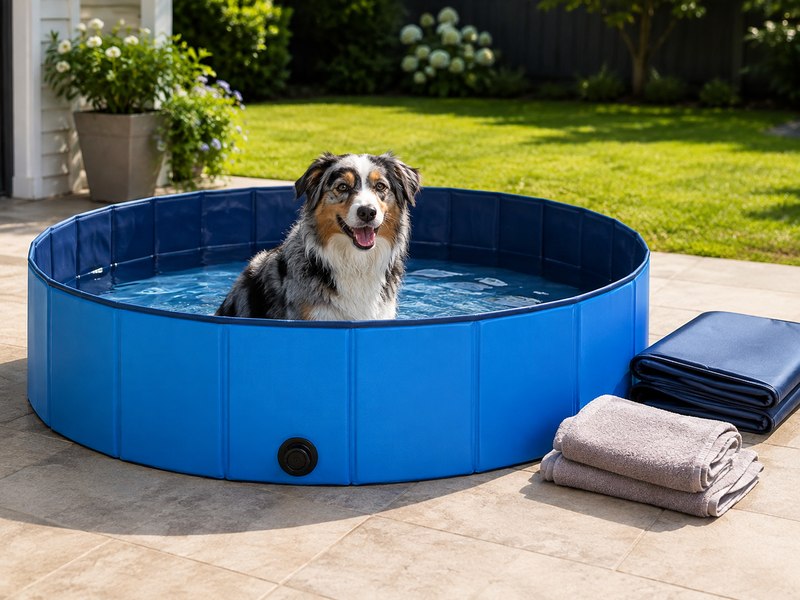
A foldable dog pool is designed to make summer play easier, but storing it carelessly can shorten its useful life. Many pool problems that appear in spring—unpleasant odors, sticky PVC layers, cracked fold lines, distorted wall panels, or a leaking drain valve—actually begin months earlier when the pool is packed away.
The challenge is that a pool can look empty while still holding moisture around its seams, textured bottom, drain fitting, and flexible panel joints. It can also look clean while dog hair, body oils, mud, and soap remain in areas that are difficult to see.
To store a foldable dog pool correctly, drain and clean it thoroughly, dry both sides and every fold, inspect and repair damage, fold it along the original panel joints, and place it in a dry, temperature-stable location. Keep it away from sunlight, heaters, chemicals, pests, sharp tools, and heavy objects that could compress the valve or support panels.
Proper storage is not only about saving space. It protects the pool’s material, structure, drainage system, non-slip surface, and overall usability. A careful storage routine also makes the first setup of the next season much faster.
Imagine opening the garage on the first warm weekend of spring. One pool unfolds smoothly and smells clean. Another has stuck layers, dark spots, and a drain cap that no longer sits straight. The difference often comes down to what happened during the final hour of use the previous year.

What Should You Do Before Foldable Dog Pool Storage?
Before storage, completely empty the foldable dog pool, remove visible debris, inspect the PVC surface and support structure, and complete any necessary repairs. Preparing the pool before cleaning and folding prevents small punctures, trapped water, damaged valves, and loose seams from becoming more serious during several months of storage.
How Do You Drain a Foldable Dog Pool?
Drain the pool on a level, safe surface and guide remaining water toward the outlet. Removing the last pockets of water is essential because they are the most likely to become trapped between folded panels.
Open the drain valve completely and allow the main volume of water to flow away naturally. Position the outlet so water does not collect near foundations, basement entrances, electrical equipment, garden beds, or areas where muddy runoff may create a slipping hazard.
When the water level becomes shallow, gently raise the side opposite the valve. This helps direct the remaining water toward the outlet without twisting the pool. Large pools may require two people so the bottom can be lifted evenly.
Avoid dragging a full or partly full pool. Water adds considerable weight, and pulling the pool across concrete, gravel, wooden decking, or exposed roots can create friction damage on the bottom. Even a thick PVC or composite floor may develop abrasion if a small stone is trapped underneath.
After the main flow stops, press gently around low areas and panel joints. Water may remain in shallow depressions created by uneven ground or the pool’s folded structure. Use a clean cloth or sponge to remove the final puddles rather than assuming they will disappear during folding.
The drain valve should remain open temporarily after emptying. This allows water inside the outlet channel and around the seal to escape before cleaning begins.
How Do You Inspect a Foldable Dog Pool?
Inspect the bottom, walls, seams, panel joints, and drain valve under good lighting. Focus on areas exposed to claws, repeated folding, water pressure, and contact with rough outdoor surfaces.
Begin with the interior bottom. Look for punctures, deep scratches, raised areas, pale stress marks, or sections where the non-slip texture appears worn. Surface scratches may be cosmetic, but an opening that catches a fingernail deserves closer attention.
Continue along the lower wall, where dogs commonly push off, turn, or place their paws. Large and active dogs can repeatedly load the same section of the pool, particularly near the edge used for entering and exiting.
Check the flexible joints between support panels. These areas are intended to bend, but they can still show wear after repeated use. The joints should remain flexible without exposed internal material, cracking, or unusual stiffness.
Inspect every seam by sight and touch. A healthy seam should remain flat and consistently bonded. Warning signs include lifting edges, small gaps, uneven thickness, bubbling, or an area that feels softer than the surrounding structure.
Finally, examine the outside bottom. Damage caused by stones, rough concrete, or hidden debris may be easier to see from underneath than from inside the pool.
Should You Repair a Foldable Dog Pool Before Storage?
Repair small punctures and surface cuts before folding the pool. A clean, open, and fully accessible pool provides better conditions for patch placement and proper adhesive curing.
A minor hole may not seem urgent after the final use of the season, but storage pressure can extend the damaged area. If the cut sits on a fold line, repeated bending may enlarge it. Dirt can also enter the opening and make a future repair less reliable.
Use a patch and adhesive compatible with the pool’s PVC or composite material. Clean the damaged area thoroughly and allow it to dry before applying the repair. The patch should extend beyond the visible damage so that the bond is distributed over a wider area.
Keep the repaired section flat during curing. Do not fold the pool, place objects on it, or expose the patch to water until the repair product has reached its stated curing time. A patch folded too early may wrinkle, shift, or bond to another surface.
Some damage should not be treated as a simple home repair. These cases include:
- Large seam separation
- Cracked or distorted support panels
- A loose drain valve base
- Tears extending through several material layers
- Repeated leakage from the same repaired area
When a structural part is involved, contact the seller or manufacturer for the correct repair method, replacement component, or product assessment.
How Do You Check the Foldable Dog Pool Valve?
Clean and inspect the drain valve before storage, making sure the cap, threads, gasket, and surrounding PVC remain undamaged. The valve must also be positioned safely during folding.
Remove hair, sand, grass, and soap from the valve opening. Fine debris caught in the threads can prevent the cap from closing evenly during the next use. Wipe the sealing surface with clean water and a soft cloth.
Look closely at the PVC around the valve base. Whitening, stretching, cracking, or an uneven connection may indicate that the fitting has been pulled or compressed. The valve should remain firmly connected without rotating loosely in the pool wall.
Inspect the cap and gasket. The threads should engage smoothly without needing excessive force. A twisted or flattened gasket may no longer seal evenly. Replacement is usually easier before the next season than after the pool has already been filled.
Allow the valve to dry while open. Once the surrounding area is completely dry, close the cap lightly to keep dust and insects out. Do not overtighten it, because long-term pressure can affect the threads or sealing ring.
| Part to Inspect | Good Condition | Warning Sign |
|---|---|---|
| Valve base | Firm and evenly connected | Loose, stretched, or cracked |
| Cap threads | Turn smoothly | Cross-threaded or difficult to close |
| Gasket | Flat and flexible | Twisted, hardened, or missing |
| Drain opening | Clean and dry | Hair, grit, or trapped water |
| Surrounding PVC | Smooth and unchanged | Whitening or stress marks |

How Do You Clean a Foldable Dog Pool for Storage?
Clean the foldable dog pool with mild soap, warm water, and a soft cloth or nonabrasive brush. Remove loose hair first, then wash the bottom, wall panels, seams, and drain area. Rinse thoroughly so no cleaner, pet residue, mud, or body oils remain before the drying process begins.
Which Cleaners Are Safe for a Foldable Dog Pool?
Use a mild, PVC-compatible cleaner that removes dirt without attacking the coating, printed surface, seams, or flexible material. Strong solvents and abrasive products should be avoided.
A small amount of mild dish soap mixed with warm water is often suitable for routine cleaning. The water should be comfortably warm rather than hot. Very high temperatures may soften some materials or affect printed finishes.
Apply the cleaning solution with a microfiber cloth, soft sponge, or soft-bristled brush. Work in small sections so the soap does not dry on the surface. This approach also allows you to see whether dirt has been removed before moving to the next area.
When using a cleaner for the first time, test it on a small, less visible section. Stop using it if the surface becomes sticky, faded, unusually soft, or discolored.
Avoid cleaners containing aggressive solvents or strong degreasers unless the manufacturer specifically approves them. Products that may damage PVC and composite pool materials include acetone, paint thinner, gasoline, abrasive powders, rigid scouring pads, and highly concentrated chemical cleaners.
Bleach also requires caution. Using too much may affect color, coatings, seams, and printed graphics. It should not be treated as the default solution for routine pet pool cleaning.
How Do You Remove Hair From a Foldable Dog Pool?
Remove loose dog hair before washing because wet hair clings to textured surfaces, gathers in panel folds, and can block the drain outlet.
Allow the pool to drain, then sweep or wipe away loose fur while the surface is still mostly dry. A rubber squeegee, soft handheld brush, damp microfiber cloth, or low-suction vacuum attachment can help collect hair efficiently.
Pay special attention to the non-slip bottom. Textured patterns improve footing for dogs, but their raised and recessed areas can hold fine hair. Brush in more than one direction so the tool reaches the full pattern.
Do not push large amounts of fur through the drain valve. Wet hair can gather inside the outlet and slow drainage. Remove visible clumps by hand and wipe around the valve opening.
Open each wall panel during cleaning. Fur may remain between collapsed sections, especially if the pool was folded briefly between uses. Check the outside as well, because wet hair can transfer from the dog’s coat to the exterior wall when it enters or exits.
For households with long-haired or shedding dogs, a quick hair removal after each use can make the final seasonal cleaning much easier.
How Do You Remove Odors From a Foldable Dog Pool?
Remove odors by cleaning away their source rather than covering them with fragrance. Dog saliva, body oils, grooming products, damp hair, and organic debris commonly cause persistent smells.
Start with the bottom and lower walls, where most residue collects. Apply a fresh cleaning solution and allow it to remain on the surface briefly before wiping. Do not let the solution dry.
Clean the corners, flexible panel joints, textured floor, drain base, and underside. These hidden areas are more likely to hold residue than the broad, visible surfaces.
If the odor remains after rinsing, repeat the washing process with clean water and a fresh soap solution. Reusing dirty water spreads oils and debris instead of removing them.
The storage bag or container should also be checked. A pool can be perfectly clean but develop an odor again if it is returned to a dirty or damp bag.
Fragranced sprays are not a substitute for cleaning. They may temporarily mask the smell while leaving organic residue behind. Strong scents can also be unpleasant for dogs, whose sense of smell is much more sensitive than a person’s.
When dark or fuzzy spots are present, treat them as possible mold growth rather than a basic odor problem. Follow the product’s care instructions and test any treatment on a small area first.
How Do You Rinse a Foldable Dog Pool?
Rinse from the upper wall toward the drain until the water runs clear and the surface no longer feels slippery. Soap left behind can attract dirt and create residue during storage.
Use moderate water pressure. A very concentrated pressure washer stream is unnecessary and may damage weakened seams, printed graphics, or areas that have already experienced surface wear.
Open every panel joint while rinsing. Soap commonly remains in the spaces between wall sections and around reinforced edges. Run clean water through these areas and wipe them again if necessary.
Remove the drain cap and rinse the outlet separately. Hair and soap can remain around the inner edge even when the rest of the pool appears clean.
The following order keeps rinsing controlled:
- Rinse the upper wall panels
- Open and rinse every flexible joint
- Rinse the bottom from the far side toward the drain
- Clean the drain opening and cap
- Turn the pool over and rinse the exterior bottom
- Remove remaining water with a clean cloth
Do not rely on rainfall to finish the job. Rainwater can add pollen, dust, leaves, and dirt splashed from the ground. It can also extend drying time and leave the underside wetter than before.

How Do You Dry a Foldable Dog Pool Completely?
Dry the interior, exterior, seams, panel joints, and drain components before folding. Wipe away standing water, keep the walls open for airflow, and turn the pool over during drying. Do not store it until every surface feels dry, including corners and folds that may still feel cooler than surrounding material.
How Long Should a Foldable Dog Pool Dry?
Drying time depends on pool size, airflow, humidity, temperature, surface texture, and how much water is removed by hand. Physical inspection is more reliable than following a fixed number of hours.
A small pool wiped thoroughly on a warm, breezy day may dry within a few hours. A large pool placed in shade during humid weather may require most of the day or longer.
Begin by using absorbent towels or microfiber cloths to remove visible droplets. Manual wiping can significantly reduce drying time, particularly around seams and the textured bottom.
Turn the pool over when the interior is dry enough to handle. The underside often remains damp because it has been resting against grass, concrete, or a ground mat. Even when the top looks dry, moisture may still be trapped beneath it.
| Drying Conditions | Planning Time | Recommended Action |
|---|---|---|
| Warm, dry, and breezy | 2–4 hours | Rotate once and inspect every fold |
| Mild with moderate airflow | 4–8 hours | Wipe seams and turn the pool |
| Cool, shaded, or humid | 8–24 hours | Move to a covered, ventilated space |
| Rainy or very humid | More than 24 hours | Dry indoors with safe airflow |
| Pool not wiped first | Several extra hours | Remove droplets before air-drying |
These times are planning references, not guarantees. Continue drying whenever a seam, corner, or panel joint feels damp or noticeably cooler than the surrounding surface.
How Do You Dry Foldable Dog Pool Seams?
Open every seam and panel joint so air can reach areas that would otherwise remain covered. These narrow sections usually dry more slowly than the broad bottom.
Use a dry microfiber cloth to press gently into corners and along reinforced seams. Do not pull, stretch, or separate bonded material. The purpose is to absorb water resting on the surface, not test the seam’s strength.
Keep the wall panels upright or slightly separated. Smooth, lightweight objects may be used to prevent them from collapsing inward, but the objects must have rounded edges and should not create tension.
Change the pool’s position during drying. Water moves toward the lowest edge, so a seam facing downward may continue collecting moisture. Rotating the pool exposes that area to air and sunlight.
Touch is important. A wet seam may look dry while still feeling cool. Compare it with the center of a dry panel. If there is a clear temperature difference, additional moisture may remain.
The drain base also needs extra time. Keep the cap open during most of the drying process so water inside the channel can evaporate.
Is It Safe to Fold a Damp Dog Pool?
A damp dog pool should not be folded for long-term storage. Moisture trapped between PVC layers can create odors, staining, mold growth, and surfaces that stick together.
Once folded, airflow becomes extremely limited. Water that might evaporate quickly from an open pool can remain between compressed layers for days or weeks. Organic residue from mud, dog hair, saliva, and body oils makes the problem worse.
A damp pool may not show visible mold immediately. The first warning may be a sour smell when the storage container is opened. Sticky surfaces, faded marks, or dark spotting can appear later.
Layers that stick together should never be pulled apart forcefully. Strong pulling may damage a printed surface, coating, fold joint, or repair patch. The pool should be moved to a moderate temperature and separated slowly.
When storage cannot be completed on the same day, leave the pool open in a protected, ventilated area. It is safer to delay folding than to seal moisture inside.
In humid climates, check the pool again several hours after it first appears dry. Moisture can remain in panel joints and reappear as the pool changes position.
Should You Dry a Foldable Dog Pool in Direct Sunlight?
Mild sunlight can support drying, but long exposure to intense heat and UV is unnecessary. Air movement and access to both sides are more important than maximum temperature.
Choose a clean, warm location with partial shade and good ventilation. A covered patio, ventilated garage, or indoor utility area can work well. If the pool is placed on grass, turn it over or move it because ground moisture can keep the bottom wet.
Avoid leaving a dark-colored pool under intense midday sun for several hours. Surface temperatures can become much higher than the surrounding air, and different sections may heat unevenly.
Do not use a hair dryer, heat gun, portable heater, or other concentrated heat source. High temperatures applied to one small area can affect PVC flexibility, printed coatings, seams, or repair adhesive.
A household fan can improve airflow when placed at a safe distance. The fan should not blow dust, chemical fumes, or outdoor debris toward the clean pool.
Never hang a large wet pool from one corner. Its weight can place unnecessary stress on the seam and wall structure. Lay it flat or support it across several broad points.
How Should You Fold a Foldable Dog Pool?
Fold the pool along its original panel joints after it is clean, repaired, and fully dry. Keep the folds broad, protect the drain valve, and avoid forcing the pool into an excessively small package. Proper folding reduces stress on PVC coatings, support panels, seams, and fixed drainage components.
Should You Follow the Original Fold Lines?
Follow the existing fold pattern whenever possible because it reflects where the flexible wall joints are designed to bend. Avoid creating new sharp creases across rigid panels.
Place the dry pool on a smooth, clean surface. Remove stones, screws, twigs, pet toys, and other hard objects before beginning. A small item trapped inside the fold can press into the PVC for months.
Allow the walls to collapse naturally. Align neighboring support panels and fold at the flexible section between them. If the pool resists, stop and check whether a panel, thick seam, or valve is being forced in the wrong direction.
Keep the bottom liner flat as the walls are folded inward. Wrinkles in the bottom can become deep compression lines when the package is stored under pressure.
Large pools are easier to fold with two people. One person can align the panels while the other smooths the bottom and guides each fold. This also reduces the need to drag the pool across the ground.
Taking a photograph during the first unpacking can provide a useful reference for the original factory folding sequence.
How Do You Protect the Foldable Dog Pool Valve?
Position the drain valve between flat, protected sections so it does not become the highest or lowest pressure point in the folded package.
Before folding, confirm that the valve is clean, dry, and lightly closed. The cap should be secure enough to exclude dust, but it should not be tightened with excessive force.
Fold the surrounding panels slowly and check where the valve lands. It should not sit directly under the edge of a rigid support panel. A concentrated load in this position could press the fitting into the surrounding PVC.
A clean, soft cloth may be placed loosely around the valve for cushioning. Avoid tape, newspaper, damp fabric, or colored material that could transfer residue or ink.
After folding, press gently across the outside of the package. If the valve is easy to feel as a hard raised point, reopen the final fold and adjust its position.
Do not place the folded pool with the valve facing downward on a hard shelf. Long-term weight from the pool itself may create stress around the fitting.
How Tight Should Foldable Dog Pool Folds Be?
The folded pool should be compact but not highly compressed. Tight straps, heavy boxes, and containers that are too small can create deep creases and distort structural components.
Do not kneel or stand on the pool to remove air. This places sudden pressure on the wall panels, seams, and drain valve. It may also trap debris against the surface.
When a strap is needed, use a broad, soft strap and tighten it only enough to keep the pool from opening. Thin cords and narrow plastic ties can create concentrated pressure lines.
Avoid tightly wrapping the pool in plastic film. This can trap unnoticed moisture and may become difficult to remove after a long storage period.
The folded pool should maintain a stable, even shape without twisting or bulging. It should fit into its bag or container without being forced.
Heavy objects should not be stacked on top. Even when the PVC remains undamaged, rigid or semi-rigid support panels may develop a curve that prevents the pool from standing evenly during future use.
Should You Roll or Fold a Foldable Dog Pool?
Pools containing rigid or semi-rigid wall panels should generally be folded at the panel joints rather than rolled. Rolling can curve the supports and create uneven pressure.
A fully flexible pool may be suitable for loose rolling, but the manufacturer’s instructions should determine the method. Product construction matters more than the amount of storage space available.
Panel-supported dog pools are designed to create upright walls without inflation. Their wall structure relies on multiple support sections connected by flexible material. Folding at these joints allows the rigid sections to remain flat.
Tight rolling can force the supports into shapes they were not designed to hold. It may also place the drain fitting in the center of a compressed package, where surrounding pressure is difficult to control.
Regardless of the method, never leave stones, toys, repair tools, or drain accessories inside the pool. Store small parts in a separate labeled pouch.
For private-label and custom dog pool projects, foldability should be considered during development. EPN can adjust panel dimensions, fold positions, drain placement, material thickness, and packaging size to create a more practical storage experience.

Where Should You Store a Foldable Dog Pool?
Store the folded dog pool in a clean, dry, temperature-stable area away from sunlight, heaters, chemicals, pests, moisture, and sharp tools. Indoor storage is generally the safest. Garages, basements, and sheds can also work when temperature, humidity, ventilation, and physical protection are carefully managed.
Which Foldable Dog Pool Storage Location Is Best?
A climate-stable indoor closet, utility room, or clean storage area offers the best protection. The pool should remain above the floor and free from heavy pressure.
Temperature stability is valuable because repeated heating and cooling can affect flexible materials over time. Indoor storage also reduces exposure to condensation, pests, outdoor dirt, and accidental damage from tools.
Place the pool on a broad shelf or flat platform. Direct contact with concrete floors should be avoided in basements and garages because concrete may feel damp or cold, even when no standing water is visible.
Keep the storage area away from paint, fuel, pesticides, fertilizers, solvents, pool chemicals, and strong household cleaners. A spill may damage the material, while fumes can leave an odor that is difficult to remove.
Accessibility also matters. The pool should not be hidden beneath furniture, equipment, or many heavy boxes. A product that is difficult to retrieve is more likely to be pulled, dragged, or damaged during removal.
| Storage Area | Main Benefit | Main Risk | Overall Suitability |
|---|---|---|---|
| Indoor closet | Clean and temperature-stable | Limited space | Excellent |
| Utility room | Easy access and protection | Possible nearby appliances | Excellent |
| Dry basement shelf | Cool and sheltered | Humidity or condensation | Good |
| Insulated garage | Convenient for outdoor items | Seasonal temperature changes | Good |
| Uninsulated garage | Available storage space | Heat, freezing, and chemicals | Limited |
| Outdoor shed | Keeps large items outside | Pests, heat, and moisture | Use with caution |
| Vehicle or trailer | Convenient for travel | Extreme heat and compression | Short-term only |
| Open outdoor area | Requires no indoor space | Rain, UV, dirt, and pests | Not recommended |
Can You Store a Foldable Dog Pool in a Garage?
A garage is suitable only when it remains dry, relatively temperature-stable, and free from chemical exposure. The pool should be stored in a protected container on a raised shelf.
Consider summer heat first. A closed garage can become much hotter than the outdoor air, especially near a sun-facing metal door. Avoid placing the pool in the hottest upper corner or inside a vehicle.
In winter, check for condensation near exterior walls and concrete floors. The pool should not rest directly against a cold wall, because moisture can collect between the wall and the storage container.
Store it away from gasoline, motor oil, paint thinner, fertilizers, and sharp automotive or garden tools. A lidded plastic container protects against dust and pests, but the pool must be completely dry before the lid is closed.
Before unfolding a pool stored in a cold garage, move it to a moderate indoor temperature. Allow the material to warm naturally before opening the folds. Cold PVC and composite coatings may feel less flexible and should not be forced.
Inspect the garage during seasonal weather changes. A dry autumn storage location may become damp during winter.
How Do You Store a Foldable Dog Pool for Winter?
For winter storage, clean, dry, inspect, repair, and fold the pool before placing it in a protective bag or smooth-sided container. Check it occasionally during the off-season.
Store the drain cap, repair patches, product instructions, hose adapters, and other accessories in a separate labeled pouch. This prevents small hard parts from pressing against the PVC and makes them easier to locate in spring.
Choose a container large enough to hold the pool without force. The internal surface should be smooth, with no exposed fasteners or sharp plastic edges.
Do not seal moisture-absorbing chemicals directly against the pool. Some products may leak or release residue. A dry room and adequate ventilation provide more reliable protection than placing unknown substances inside the container.
Inspect the pool once or twice during winter. Look for condensation, pests, unusual odors, a leaning package, or heavy objects that have been added to the shelf.
A simple storage label can include:
- Date cleaned and stored
- Location of any repaired area
- Missing or replaced accessories
- Recommended spring inspection date
This information is especially helpful for households or businesses managing several pool sizes.
How Do You Protect a Foldable Dog Pool From Pests?
Use a clean container with a secure lid and keep food, birdseed, pet treats, and nesting materials away from the storage area.
Rodents may chew flexible PVC or composite surfaces. Insects may enter an open drain valve, fabric bag, or loose fold. Garages, basements, barns, and sheds have the highest risk.
Clean the shelf and surrounding floor before storing the pool. Cardboard, old fabric, and paper can provide nesting material, so they should not be piled around the container.
Raise the container above the floor. This makes moisture and pest activity easier to detect and reduces contact with cold concrete.
Do not place chemical pest-control products directly inside the pool bag. They may leak, transfer strong odors, or leave residues that must later be removed before a dog can use the pool.
Physical protection is usually the best first step: a secure container, clean storage area, sealed food supplies, and periodic inspection.
If chew marks appear on the container, move the pool and address the pest problem before further damage occurs.
How Do You Prepare a Foldable Dog Pool for Reuse?
Warm the stored pool gradually, unfold it slowly, inspect all surfaces, rinse away storage dust, and test it with shallow water before allowing a dog to enter.
Begin by checking the storage container for moisture, pest activity, unusual odors, or chemical spills. A problem outside the pool may provide an early warning before it is opened.
Move a cold pool indoors or into mild outdoor conditions. Do not unfold it immediately after removal from a freezing shed or garage. Allow the material to regain flexibility.
Open each fold slowly. If two surfaces are sticking together, do not pull them apart with sudden force. Let the pool warm, support both layers, and separate them gradually.
Inspect the following areas:
- Bottom surface
- Flexible panel joints
- Reinforced seams
- Drain valve and gasket
- Previous repair patches
- Support panel shape
Rinse the pool and place it on a flat surface cleared of stones, roots, tools, and sharp debris. Add only a shallow layer of water at first. Watch the drain valve and seams for several minutes.
Once the pool sits evenly and no leakage is found, continue filling it to the normal level.
Conclusion
Knowing how to store a foldable dog pool correctly can prevent many of the problems that make an otherwise usable pool difficult to set up the following season. The process begins before the pool is folded. It must first be drained completely, inspected for damage, and cleaned with a mild product that is suitable for its PVC or composite surface.
Drying deserves particular attention. Water can remain around textured bottoms, seams, panel joints, repair patches, and drain fittings after the broad surfaces appear dry. Folding the pool too early creates an enclosed environment where odors, mold, staining, and sticky layers may develop.
The folding method should follow the product’s structure. Pools with rigid or semi-rigid supports should bend at the flexible joints between panels. Sharp new creases, excessive compression, and pressure on the drain valve should be avoided. The smallest possible folded package is not always the safest one.
A suitable storage location remains clean, dry, and reasonably temperature-stable. Indoor closets and controlled storage rooms usually provide the best conditions. Garages, basements, and sheds require additional attention to humidity, summer heat, freezing temperatures, chemicals, pests, and heavy objects.
For retailers, distributors, private-label companies, and pet product brands, easy storage is also part of good product design. Wall panel dimensions, PVC thickness, composite structure, fold positions, reinforced seams, valve placement, packaging size, and included instructions all influence how easily customers can clean, fold, store, and reuse a dog pool.
EPN, part of American Epsilon Inc., develops and manufactures PVC and composite products for pet, family, outdoor, and seasonal use. Its product development capabilities support adjustments to dog pool size, material thickness, support structure, drainage components, non-slip surfaces, colors, graphics, packaging, labels, and multilingual instructions.
EPN also supports OEM and ODM development, low-MOQ test orders, sample production, retail packaging, and multi-market compliance preparation. Brands planning a foldable dog pool collection can work with EPN to develop products that perform reliably during use and remain practical for customers to maintain between seasons.
A dog pool may spend only a few months each year filled with water, but the way it is stored during the remaining months still determines how well it performs when summer returns.