Skip to content

A dog pool and a dog bath tub can look surprisingly similar when viewed online. Both hold water, both may have relatively low walls, and some foldable PVC pet pools are specifically designed to handle more than one task. Yet the experience of using them can be very different. One gives a dog space to cool down, splash, turn around, and enter or leave freely, while the other is primarily a controlled workspace for washing, rinsing, and grooming.
A dog pool is generally better for summer cooling, splashing, shallow water play, and occasional outdoor bathing, while a dog bath tub is better for frequent washing and grooming. A foldable dog pool can often handle both jobs at home, but a dedicated bath tub usually offers better working height, controlled drainage, easier access to the coat, and more convenient handling during regular baths.
Consider the same large dog on two different days. On a hot Saturday afternoon, it may happily step into a backyard pool, lie in several inches of water, chase a toy, then walk out when it has had enough. After a muddy walk, that same dog may need its legs, belly, paws, chest, and coat thoroughly washed. Suddenly, floor space matters less than drainage, traction, reach, and how long the owner must stay bent over. Looking at those real-life situations makes the choice much clearer than comparing product names alone.
What Is the Difference Between a Dog Pool and a Dog Bath Tub?
A dog pool is designed mainly around cooling, wading, splashing, and free movement, while a dog bath tub is designed around controlled washing and grooming. Their uses can overlap, particularly with foldable PVC pools, but their priorities differ. Dog pools usually favor larger usable floor areas and compact storage, while bath tubs place more emphasis on access, working height, drainage, and keeping the dog comfortably within reach.
Different Jobs Shape the Design
The most useful way to compare these products is to think about what happens after the dog steps inside. In a pool, the animal may turn several times, sit, lie down, paw at the water, interact with toys, or repeatedly enter and leave. That behavior favors open floor space, relatively accessible walls, a stable base, and a structure that can withstand movement in different directions.
Bathing is much more controlled. The dog usually remains within a smaller working area while the owner wets the coat, shampoos the body, handles individual paws, rinses the underside, and removes loose dirt or hair. A tub therefore does not need the same turning radius as a recreational pool. What matters more is whether the owner can comfortably reach every part of the dog without constantly following it around the container.
This difference becomes more obvious as dogs get larger. A 60- or 70-pound dog may have plenty of room in a wide floor-level pool, but washing it there can require repeated kneeling and bending. The same dog may have less movement space in a purpose-built tub, yet the actual washing process becomes significantly easier because the working position and water management are better controlled.
| Feature | Dog Pool | Dog Bath Tub |
|---|---|---|
| Primary purpose | Cooling, wading, play | Bathing, washing, grooming |
| Typical position | Floor level | Floor level or elevated |
| Movement space | Usually larger | More controlled |
| Entry style | Low or moderate step-over wall | Step-over, door, or platform |
| Drainage | Side drain valve | Hose or plumbing-style outlet |
| Foldable storage | Common | Depends on design |
| Outdoor recreation | Very suitable | Limited |
| Frequent grooming | Possible but less convenient | Better suited |
| Multi-purpose use | High | Moderate |
The two categories therefore overlap without being identical. A waterproof foldable basin may be capable of holding both play water and bathwater, but being capable of a task does not mean the product is optimized for that task every week.
Dog Pools Prioritize Movement
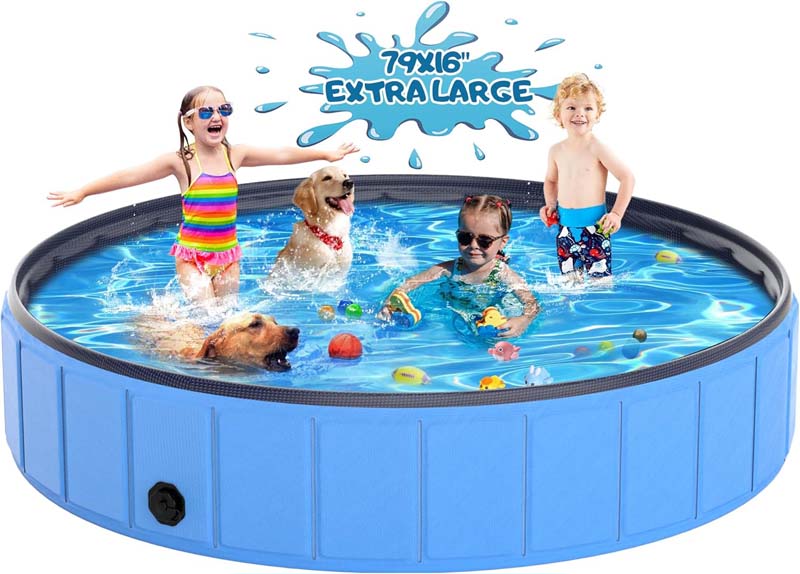
A practical dog pool needs to remain stable while a dog pushes against the wall, changes direction, lies down, steps over the edge, or suddenly jumps after a toy. These actions create sideways and downward forces that are very different from the relatively static load created by standing water. This is one reason many foldable pet pools use segmented rigid wall inserts enclosed inside flexible waterproof material rather than relying entirely on inflatable air chambers.
The panel-supported structure allows the pool to stand without inflation and fold after draining. It also avoids making the entire wall dependent on air pressure. If an inflatable chamber is punctured, its shape can change quickly, whereas a properly supported foldable wall keeps its basic geometry without needing an air seal. That makes the format convenient for households that want quick setup during summer and compact storage afterward.
The floor deserves equal attention. A dog’s weight is concentrated through four relatively small paw areas, and those forces increase when the animal turns, scratches, or pushes off. Textured PVC can provide more grip than a completely smooth wet surface, although no material should be treated as absolutely slip-proof. Seam quality, panel edges, drain reinforcement, floor construction, and the surface beneath the pool can matter just as much as the nominal PVC thickness.

A bath tub solves a different physical problem: keeping the dog close enough for the person bathing it to work efficiently. During a full wash, the owner may need to reach the back, neck, chest, belly, inner legs, paws, tail, and areas behind the ears. If the dog can constantly circle a large basin, a spacious container may actually make washing harder rather than easier.
Elevated tubs address this by bringing the dog closer to a comfortable working height. For people who bathe dogs frequently, reducing repeated bending can make a noticeable difference over time. Larger grooming tubs may also use doors or lower entry sections so a heavy dog can walk in instead of being lifted over a tall wall. This becomes particularly useful for older dogs or owners who cannot safely lift substantial weight.
Drainage also becomes more controlled. Instead of simply releasing water beside the container, a bath tub may direct wastewater through a hose toward an appropriate drain. That matters because bathwater can contain shampoo, loose hair, mud, skin oils, and debris. The trade-off is that a rigid or elevated tub usually takes more permanent space and is less convenient to move or store.
Can One Replace the Other?
For many households, a foldable dog pool can replace a dedicated bath tub when bathing is occasional. A wide pool with stable walls, adequate floor traction, and an accessible drain can work well for rinsing a muddy dog or providing an outdoor bath every few weeks. The same product can then return to its main role as a cooling or water-play area during warmer weather.
The limitation becomes clearer when washing is frequent. Kneeling beside a low pool a few times each summer may be acceptable, while doing it every week can become frustrating. Long-haired dogs, working dogs, show dogs, or pets that regularly return home covered in mud may justify equipment designed specifically around washing efficiency.
The reverse substitution is less practical. A bath tub can obviously hold water, but many elevated or narrow tubs do not provide enough floor area for active splashing or recreational movement. For households that want one product to cover several activities, a foldable dog pool is generally more versatile. For households where bathing itself is the repeated task, a dedicated tub has the stronger advantage.
Which Is Better for Swimming, Cooling, and Bathing?
A dog pool is usually the better choice for cooling, splashing, and recreational water use because it provides more space for voluntary movement. A bath tub is usually better for frequent washing because it keeps the dog closer to the owner and often provides more controlled drainage. When baths are occasional, a stable foldable pool can perform both roles without requiring the household to store a second large pet product.
Cooling and Summer Water Use
For cooling, usable surface area is often more valuable than maximum depth. Many dogs do not need to swim in order to enjoy a pool. They may stand in several inches of water, lower their belly into the pool, lie down briefly, or move between the pool and a shaded area. A broad floor gives the dog more control over how much contact it has with the water.
Water depth should be adjusted to the individual animal rather than automatically filled to the top of the wall. Puppies, short-legged dogs, senior dogs, inexperienced swimmers, and dogs with limited stamina may be more comfortable in shallow water. Larger, confident dogs may enjoy deeper filling, but not every dog naturally understands swimming. Current canine safety guidance continues to recommend gradual introduction to water and close supervision rather than assuming swimming ability from breed or size alone.
Pool placement matters as well. The ground should be reasonably level and free from sharp stones, broken branches, exposed screws, metal fragments, or rough projections. Once a pool contains dozens of gallons of water, a small object underneath can become a concentrated pressure point. Shade, fresh drinking water, regular breaks, and attention to signs of fatigue remain necessary even when the dog has access to a cooling area.

Water Play Needs More Floor Space
Recreational water use creates more movement than bathing. Dogs may chase floating toys, paw at the surface, turn quickly, step in and out repeatedly, or interact with another dog. Those actions put repeated loads on the floor-to-wall connection and on individual wall sections, so construction quality matters in ways that are not always obvious from a product photograph.
For larger dogs or multi-dog households, usable interior area deserves more attention than the outside diameter printed in a listing. Thick wall structures, inward folds, or poorly supported sections can reduce the space that the dog actually uses. A large product that looks impressive when empty can still feel crowded if two dogs cannot turn without repeatedly bumping into each other.
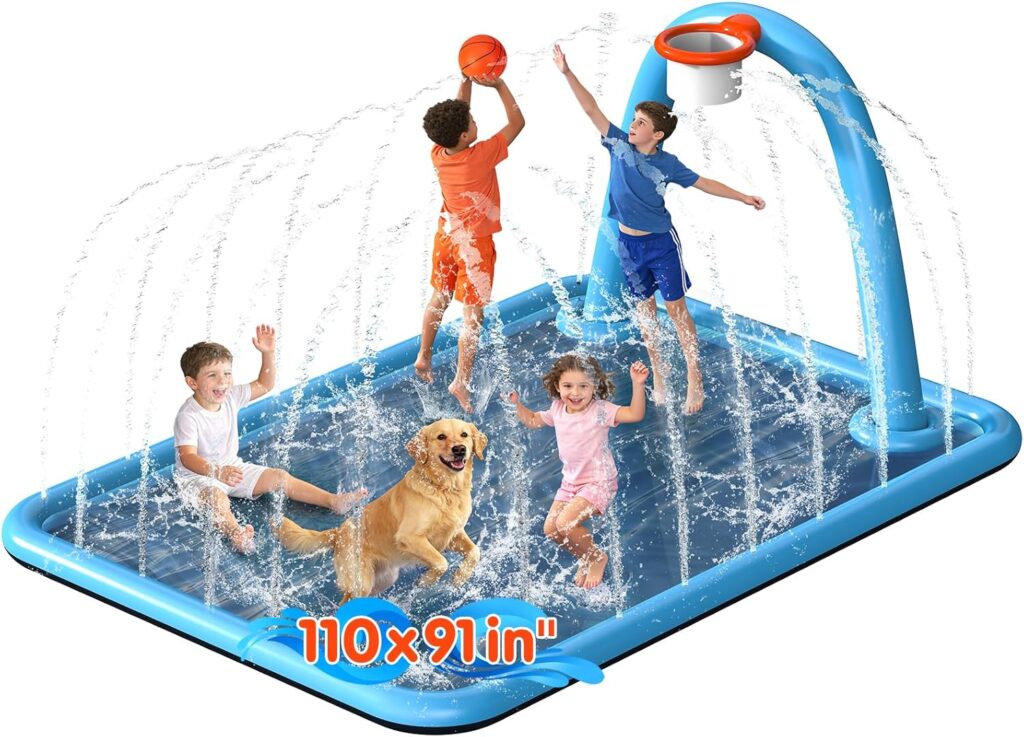
Sprinkler-style pet pools provide another option for dogs that prefer running through moving water rather than sitting in a deeper basin. These designs combine a shallow play area with perimeter spray, creating a different type of interaction. In PVC leisure-product development, this requires attention not only to waterproofing but also to inlet construction, spray distribution, wall stability, floor traction, and drainage.
Frequent Bathing Changes the Priorities
During bathing, freedom of movement becomes less important than reach. The owner needs to wet the coat thoroughly, distribute shampoo, clean the paws and underside, and rinse until residue has been removed. If the dog continually walks away inside a large pool, extra floor area may work against the person doing the washing.
Bathing frequency also changes the value of working height. Spending fifteen minutes bent over a low pool once every month may be manageable. Repeating the same posture fifty times a year is a different experience. The more frequently a household washes its dog, the more useful an elevated or purpose-built bathing station becomes.
Stable footing is particularly important during washing because shampoo and loose hair can make wet surfaces more slippery. Veterinary bathing guidance recommends comfortable warm water and a non-slip surface to help dogs remain steadier during the process. Slowly introducing a nervous dog to the bathing area before turning on the water can also reduce resistance.
When a Pool Works Well for Bathing
A dog pool can still make an excellent occasional outdoor washing area when the setup is planned properly. Before filling it, check whether the dog can step over the wall comfortably, whether the floor provides adequate grip, whether the water temperature is suitable, and where the bathwater will drain afterward. These practical details affect the experience far more than whether the product label includes the words “bath tub.”
Outdoor hose water can be unexpectedly cold depending on weather and plumbing conditions. Testing the temperature first is a small step that can make bathing more comfortable, especially for a dog that is already hesitant. Gentle water flow is usually easier for a nervous animal to accept than suddenly spraying the head or ears. VCA similarly advises warm water and gradual introduction for dogs learning a bathing routine.
Drainage should also be considered before shampoo is applied. Soapy water should not be released toward doorways, electrical equipment, neighboring property, or smooth walking surfaces where people could slip. When these issues are addressed, a foldable pool can serve as a practical summer play area most of the time and become a temporary washing station whenever needed.
How Do Size, Materials, and Drainage Compare?
Dog pools generally prioritize a wider usable floor, flexible waterproof construction, compact folding, and simple gravity drainage. Dog bath tubs prioritize a controlled working area, rigid support, and more directed wastewater removal. Size should be chosen from body length, shoulder height, mobility, and intended activity rather than weight alone, while material quality should be judged by the entire structure instead of a single thickness specification.
Choosing Size by the Dog’s Body
Weight can help narrow down product options, but it does not describe the dog’s shape. Two dogs weighing 50 pounds can have very different body lengths, shoulder heights, leg lengths, and turning requirements. A compact muscular dog may fit comfortably in a smaller pool, while a long-bodied or tall dog at the same weight may need considerably more floor space.
For recreational use, the dog should have enough room to stand naturally, turn around, sit, and lie down without constantly pressing against the walls. Owners planning to let two dogs use the pool together should allow additional space rather than relying only on a combined weight recommendation. A pool that technically supports both dogs may still be unpleasant if their movement is restricted.
Bath tubs can be more compact because the dog does not need to circle freely, but it should still be able to stand in a normal position. Entry height must be considered separately. A healthy medium-sized dog may easily cross a twelve-inch wall, while an older, short-legged, or mobility-limited dog may struggle with the same obstacle.

Material Thickness Is Only One Detail
Foldable dog pools commonly combine flexible PVC surfaces with rigid internal support panels. That format allows the sidewall to remain upright when the pool is filled while still folding into sections for storage. PVC is well suited to this application because it can provide a waterproof, cleanable, flexible surface, but the finished product depends on much more than the raw sheet material.
A specification around 0.5 mm PVC may sound substantial for a household pet pool, but thickness should never be treated as a complete durability rating. A thicker sheet cannot compensate for weak welding, poorly finished panel edges, vulnerable corners, or an under-reinforced drain. Conversely, careful seam construction and sensible stress distribution can improve the performance of a structure without simply adding more material.
From a manufacturing perspective, the most important inspection points include floor-to-wall welding, panel positioning, repeated folding areas, surface texture, drain reinforcement, printing adhesion, and resistance to abrasion during use and transportation. For customized pet-pool projects, EPN can adjust dimensions, wall construction, colors, graphics, packaging, and related structural details around the intended market rather than treating every pet pool as the same product with different artwork.
Drainage Matters More Than It Looks
Water becomes heavy very quickly. One U.S. gallon of water weighs about 8.34 pounds, so even a moderate fill produces a load that should be removed through a drain rather than by lifting or dragging the entire product. A pool containing 50 gallons holds roughly 417 pounds of water before the dog and the pool itself are included.
| Water Volume | Approx. Water Weight |
|---|---|
| 10 gallons | 83 lb |
| 20 gallons | 167 lb |
| 30 gallons | 250 lb |
| 50 gallons | 417 lb |
| 75 gallons | 626 lb |
| 100 gallons | 834 lb |
This is why a low side drain is a practical structural feature rather than a minor convenience. It allows most of the load to leave by gravity before the pool is moved. The final amount of water may sit below the opening, so users often need to lift one section slightly only after the majority of the water has already drained.
Bath tubs tend to use hoses or plumbing-style outlets because wastewater needs to reach a specific drain. The most appropriate system therefore depends on the environment: open gravity drainage works well for many backyard cooling applications, while controlled hose drainage is more useful for repeated washing in garages, utility rooms, or grooming areas.
Storage Affects Long-Term Convenience
A foldable pool earns much of its usefulness after the water is gone. Seasonal households often want something that can be taken out on warm weekends and disappear into a shed, garage, closet, or vehicle afterward. That flexibility is a major advantage over many rigid tubs, but it also means the product should be cleaned and dried before extended storage.
Hair, mud, shampoo residue, and organic debris should be rinsed away before folding. Moisture trapped between folded surfaces can create unpleasant odors or staining even though the PVC itself is waterproof. The pool should also be folded along its designed wall sections rather than forced into new sharp creases that place unnecessary stress on the material.
Rigid drain fittings deserve extra care. Heavy boxes or equipment should not be stored directly on top of the fitting because concentrated pressure can damage the surrounding flexible area. A bath tub has the opposite challenge: it may be easier to clean and leave in place, but the owner must be willing to dedicate permanent floor space to it.
Which Is Safer and More Comfortable for Your Dog?
Neither product is automatically safer. A pool offers more freedom but requires active supervision around water, while a bath tub provides more control but may feel restrictive to a nervous dog. Stable footing, appropriate water depth, easy entry and exit, comfortable water temperature, secure placement, and gradual introduction all matter more than whether the product is marketed as a pool or a tub.
Stable Footing Builds Confidence
Wet surfaces can change how confidently a dog stands and moves. During play, an excited dog may turn sharply or jump toward the edge. During a bath, a nervous dog may spread its legs, brace against the wall, or repeatedly try to climb out. In both situations, slipping can make the animal more anxious and increase the chance of frantic movement.
A textured floor can improve grip, but it should not be interpreted as completely slip-proof. Shampoo, mud, algae, loose hair, and worn surface texture can all reduce traction. Veterinary bathing guidance specifically recommends considering a non-slip mat or stable bathing surface because secure footing can help dogs feel steadier during washing.
The ground below a flexible pool is equally important. Stones, exposed fasteners, sharp deck edges, and rough concrete projections should be removed or covered before filling. A protective ground layer may be useful on abrasive surfaces, provided it remains flat. Maintaining the dog’s nails can also reduce scratching loads when the animal becomes excited.

Entry and Exit Should Feel Natural
A product can be large enough once the dog is inside and still be unsuitable if entry is difficult. Wall height needs to be considered alongside shoulder height, leg length, age, confidence, and mobility. Young athletic dogs may cross a moderate wall easily, while senior animals or short-legged breeds may hesitate even when the interior space is generous.
For larger bathing tubs, a walk-in door or access ramp can be particularly useful because lifting a heavy wet dog can be difficult for both the owner and the animal. The same principle applies to recreational pools. If the dog repeatedly scrambles over the wall or needs to be lifted every time it enters, a lower-entry design may be a better match.
A useful test can be done before adding water. Let the dog inspect the empty product and watch how naturally it steps inside, turns, stands, and exits. That short observation often reveals more about suitability than a generic breed label or weight range.
Water Safety Still Requires Supervision
A shallow backyard dog pool is less demanding than a deep human swimming pool, but supervision is still important whenever dogs are around water. Not every dog is a natural swimmer, and even experienced swimmers can become tired. Current AKC and PetMD guidance recommends gradual introduction, easy access to an exit, rest breaks, and close human supervision.
Water depth should therefore match the purpose of the session. A dog using the pool for cooling may need only a few inches. There is no benefit in creating a deep swimming environment if the animal simply wants to stand or lie in shallow water. Owners should watch for loss of coordination, repeated escape attempts, unusual fatigue, or a dog that suddenly becomes less confident.
Fresh drinking water should also remain available nearby so the dog is not encouraged to drink repeatedly from the play water. When the session is over, heavily contaminated water should be drained rather than left standing outdoors for long periods where debris, hair, insects, and dirt can accumulate.
Bath Comfort Depends on the Routine
A dog that loves splashing outdoors may still dislike baths because the two experiences feel completely different. In a pool, the dog usually decides when to enter, where to stand, and when to leave. During bathing, the owner controls the water, touches sensitive areas, lifts paws, applies shampoo, and may prevent the dog from walking away.
A calmer routine begins before the first rinse. Allowing the dog to investigate an empty tub, rewarding calm behavior, introducing water gradually, and using a stable non-slip surface can make the experience more predictable. VCA recommends gradual introduction to the bathing area and comfortably warm water, particularly for puppies or dogs learning the routine.
Sound also matters. Water striking a rigid plastic basin can seem louder than water outdoors, while hoses and drains can create unfamiliar noises. Product design can improve traction and access, but patient handling is what turns those features into a comfortable bathing experience.
Which Should You Choose for Your Dog and Home?
Choose a dog pool when cooling, water play, portability, foldable storage, and occasional bathing are the main priorities. Choose a dog bath tub when regular washing, easier access, controlled drainage, and owner ergonomics matter more. If one product needs to cover several household uses, a well-designed foldable dog pool usually offers greater flexibility, while a dedicated tub becomes more valuable as bathing frequency increases.
Start With Where You Will Use It
Backyards naturally favor dog pools because filling, splashing, and drainage are easier to manage outdoors. The pool can be connected to a garden hose, positioned on a suitable surface, used for cooling or play, and folded away when the season changes. Families with enough outdoor space can therefore get several functions from one relatively simple product.
A garage, utility room, mudroom, or dedicated pet-washing area changes the priorities. In those environments, an elevated bath tub with hose drainage may provide more value because recreation is no longer the main goal. Indoors, water control also matters more because a dog shaking after a rinse can spread water well beyond the edge of the basin.
Apartment users need to think carefully about both setup and cleanup. A large pool may technically fit on a balcony or bathroom floor but still be difficult to fill, drain, dry, and store. A compact foldable basin or portable raised tub may be more practical than choosing the largest size available.

Let Bathing Frequency Decide
Frequency is one of the simplest ways to choose between the two categories. If a dog receives only occasional full baths, a floor-level pool may be completely adequate. Kneeling for fifteen minutes every few weeks may not justify dedicating space and money to a specialized washing station.
Weekly bathing changes the equation. More than fifty washing sessions per year means repeated bending, rinsing, hair removal, drain management, and cleanup. Small ergonomic advantages accumulate, and an elevated tub becomes easier to justify. Long-haired pets, working dogs, show dogs, and dogs that spend significant time outdoors are more likely to benefit from a dedicated setup if regular washing is part of their normal routine.
The same logic applies when selecting products for commercial or private-label programs. A seasonal backyard pool and a frequently used grooming product should not be specified in exactly the same way. Expected use affects material structure, wall support, drainage, access, packing, and how the product should be tested before production.
Consider Storage Before Buying
Storage is often overlooked because product photographs show the item only while it is open. A rigid tub may perform beautifully during bathing yet become an obstacle during the other 99 percent of the week. Households without a dedicated grooming area should measure not only the intended setup location but also the space where the product will live between uses.
Foldable PVC pools have a strong advantage here. Once clean and dry, they can often be collapsed into panel-width sections and stored in a garage, shed, closet, storage box, or vehicle. This makes them useful for camping, holiday homes, RV trips, outdoor events, and seasonal backyard use.
Portability still needs to be evaluated realistically. Larger pools contain more wall panels and more flexible material, so a foldable product is not automatically lightweight. Drain hoses, frames, ramps, covers, and accessories can also increase the packed volume of a bath setup. Convenience depends on the entire system, not simply whether one component folds.
Make the Choice Around the Main Task
The strongest purchasing decision comes from identifying the activity that happens most often. A family trying to help a dog cool down during summer has different needs from an owner who shampoos a long-haired dog every Sunday. There is no advantage in paying for specialized grooming features if they are rarely used, just as there is little benefit in choosing a huge recreational pool when the real problem is uncomfortable weekly bathing.
| Main Need | Better Starting Choice | Main Reason |
|---|---|---|
| Summer cooling | Dog Pool | More open water area |
| Splashing and play | Dog Pool | Greater movement freedom |
| Occasional outdoor bath | Dog Pool | Multi-purpose use |
| Weekly bathing | Dog Bath Tub | Better working access |
| Professional grooming | Dog Bath Tub | Drainage and ergonomics |
| Camping or travel | Foldable Dog Pool | Easier transport and storage |
| Senior or mobility-limited dog | Low-entry pool or accessible tub | Easier entry |
| Limited storage | Foldable Dog Pool | Compact between uses |
| Multiple dogs playing together | Large Dog Pool | More usable floor area |
| Frequent muddy cleanups | Dog Bath Tub | More controlled washing |
For many ordinary households, a foldable dog pool provides the broadest balance. It can serve as a cooling area, shallow play space, paw-washing station, and occasional bath without permanently occupying part of the home. When the product uses stable supported walls, practical drainage, suitable PVC construction, and an appropriately textured floor, it can handle several seasonal tasks with relatively simple setup.
A dedicated tub becomes more compelling when washing itself is the repeated problem. That is the point where working height, walk-in access, hose drainage, and grooming control provide more value than extra play space. The best product is therefore not the one with the longest feature list; it is the one whose design matches what the dog and owner actually do most often.
Conclusion
Dog pools and dog bath tubs overlap enough to make comparison confusing, but their priorities are quite different once they are used in real life. A dog pool is primarily a recreational water product: it gives the dog room to cool down, wade, splash, play, and move in or out voluntarily. A dog bath tub is primarily a washing station: it places more emphasis on access, drainage, containment, and making the owner’s work easier.
For households that bathe occasionally and use outdoor water activities frequently, a foldable dog pool will usually deliver more overall value because it can perform several jobs and then be stored when not needed. For households that wash a dog weekly, manage long or dense coats, or regularly deal with muddy pets, a purpose-built bath tub can make the routine noticeably easier.
Whichever option fits your home, look beyond product names and marketing claims. Measure the dog and the available space, consider entry height, inspect the floor and wall construction, plan the drainage route, and think about where the product will dry and be stored. Most importantly, introduce water gradually and supervise the dog during recreational use. When those practical details match the way your household actually lives, choosing between a dog pool and a dog bath tub becomes much simpler.
Can You Use a Dog Pool as a Dog Bath Tub?
Yes. A stable foldable dog pool can work very well for occasional bathing, particularly outdoors. The most important features are adequate floor traction, enough room for the dog to stand naturally, an entry height the animal can manage, and a drain that lets bathwater leave without moving the filled pool. The main disadvantage is working height, because most dog pools remain on the ground and require more bending than a raised bathing station.
Is a Dog Pool Better Than a Regular Bathtub for Dogs?
A dog pool can be more convenient when washing a large, muddy, or active dog outdoors because hair, splashing, and dirty water remain outside the bathroom. A household bathtub may be easier during colder weather because warm water and indoor drainage are already available. The better choice depends on the dog’s size, local climate, available outdoor space, bathing frequency, and whether the owner can comfortably lift or guide the dog into the household tub.
What Size Dog Pool Should I Buy?
Choose a pool that allows your dog to stand, turn, sit, and lie down without constantly pressing against the walls. Body length and shoulder height are more informative than weight alone because dogs with similar weights can have very different proportions. For cooling and active water play, additional floor area is usually more useful than extra depth. Senior and short-legged dogs also need a wall height they can cross without difficult jumping.
Are Foldable PVC Dog Pools Durable?
A well-constructed foldable PVC dog pool can handle repeated household use, but durability cannot be judged from PVC thickness alone. Seam welding, internal wall support, panel edges, floor structure, drain reinforcement, folding zones, nail condition, and the surface beneath the pool all influence performance. Even a substantial PVC floor can be damaged when used over sharp gravel or dragged while full, so correct setup, draining, cleaning, and storage remain important.
How Deep Should Water Be in a Dog Pool?
There is no single ideal depth for every dog. For cooling and wading, several inches may be enough for many animals, while larger confident dogs may enjoy deeper water. Puppies, senior dogs, short-legged breeds, and inexperienced swimmers should usually begin in shallow water. Dogs should be introduced gradually rather than forced into deeper water, and close supervision is recommended because swimming ability and endurance vary substantially between individual dogs.
Do Dog Pools Need a Drain Valve?
A drain valve is highly practical because water becomes too heavy to move safely very quickly. Ten gallons weighs about 83 pounds, and fifty gallons weighs roughly 417 pounds. Draining most of that weight before moving the product reduces unnecessary stress on the floor, seams, and sidewalls. A low side valve also makes routine emptying easier, which matters because a pool that is difficult to drain is less likely to be cleaned and stored properly after use.
Is a Dog Bath Tub Worth It for a Large Dog?
A dedicated bath tub can be worthwhile when a large dog is washed frequently because elevated working height, walk-in access, more controlled movement, and hose drainage can make the job considerably easier. If the dog only receives occasional outdoor baths and spends much more time cooling or playing in water, a large foldable pool may provide better overall value. The deciding factor is usually bathing frequency rather than the dog’s size by itself.
Get A Fast quote
Here, bringing your inflatable concepts to life is no longer a challenge—it’s a collaborative journey where American Epsilon helps families, outdoor enthusiasts, and global brands transform creative ideas into safe, certified, and market-ready inflatable solutions.


Partner With Epsilon
Whether you are a family looking for safe backyard fun or a brand seeking large-scale OEM/ODM solutions, American Epsilon Inc. guarantees every inflatable is built with safety, durability, and excitement in mind. With flexible low MOQs, strategically placed warehouses in the U.S., Canada, U.K., and Germany, plus 24/7 professional support, we ensure smooth delivery and reliable service worldwide.
Ready to bring your inflatable ideas to life? Request free samples, fast prototypes, and customized designs today—your trusted inflatable journey starts here.