Skip to content


A kids splash pad can cost about the same as a few takeout meals, or it can approach the price of a much larger seasonal backyard toy. Current U.S. listings show portable splash pads from roughly $12 at the low end to about $100 for oversized or more elaborate models, with many mainstream hose-connected products clustering around the $20–$50 range. Walmart currently lists a 48-inch splash mat at $11.96, Target shows several common products around $29.99, and 10- to 12-foot specialty models can reach roughly $70–$100. Prices move with promotions, season, size, seller, and availability, so these figures should be treated as a 2026 market snapshot rather than permanent price rules.
The more useful question is not simply, “How much is a splash pad?” It is, “How much should my family spend for the way we will actually use it?” A household with one preschooler playing five times during summer has a very different value equation from a family with siblings using the pad several times a week. Size, open play space, water delivery, PVC construction, seam design, connector quality, maintenance effort, storage, and expected frequency of use all influence whether a $20, $40, or $70 product represents good value.
Viewed through more than two decades of practical PVC and composite recreational-product experience, one lesson matters more than any single specification: durability is a system, not a number printed on a listing. PVC thickness can matter, but so can heat-sealed joints, inlet construction, stress concentration, folding behavior, ground conditions, water pressure, cleaning, drying, and storage. A technically honest price guide therefore should not tell families to “buy the thickest” or “buy the biggest.” It should show how to match spending to the full use cycle.
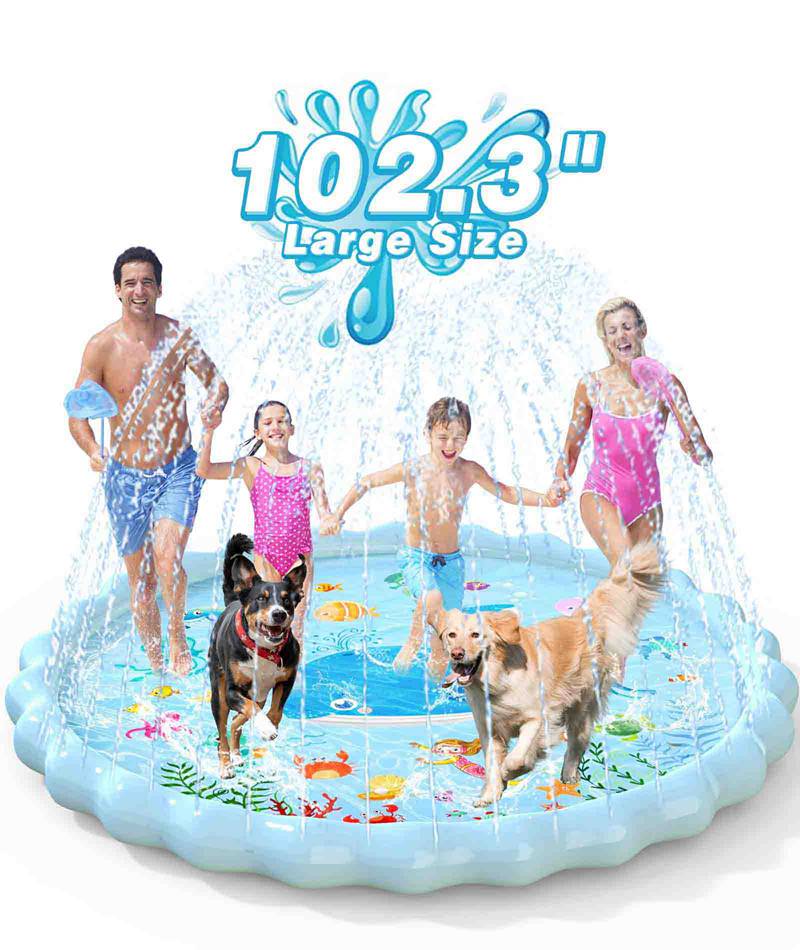
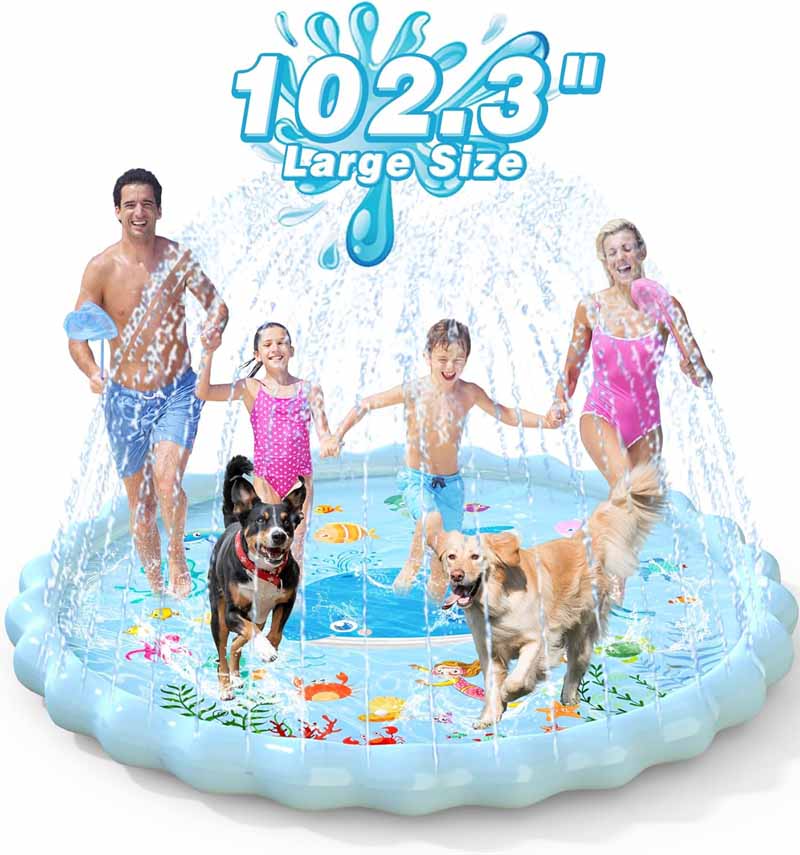
The same principle appears in the product fact library used for this guide. One confirmed family splash-pad example measures about 102.3 inches, or 8.5 feet, in diameter, is intended for children ages three and older, uses flexible PVC with heat-sealed construction, connects to a standard garden hose, and does not require an air pump. Its standard PVC water-play surface is not described as a dedicated non-slip surface, and its exact child capacity, spray height, lifespan, and water consumption are not fixed promises because those outcomes depend on real use conditions.
This article focuses on portable backyard kids splash pads, meaning foldable or compact seasonal products connected to a household hose. It does not treat a permanent residential splash pad as the same purchase. Permanent systems may use buried plumbing, drains, electronic controls, manifolds, nozzles, hard surfacing, and installation work. Rain Deck currently lists residential splash-pad kits from about $2,014 for a six-nozzle pool tie-in kit to more than $6,000 for some stand-alone configurations, before considering every site-specific installation expense.
- Evidence — Permanent residential splash-pad kit pricing: This source is useful for understanding the category difference. It shows why a $30 portable backyard sprinkler mat should never be compared directly with a permanently installed residential splash-pad system.

1. How Much Does a Kids Splash Pad Usually Cost?
For a portable kids splash pad in the United States, a practical shopping range in 2026 is roughly $12 to $100, although many ordinary family models are considerably narrower than this full range. Current listings provide useful anchors: a small 48-inch Banzai splash mat is listed at $11.96 at Walmart, several 67- to 70-inch products appear around $20–$30, and oversized 10- to 12-foot formats can reach approximately $70–$100.
These numbers do not mean a $12 product is a bargain for every family or a $100 product is excessive. A small splash mat uses less material, occupies less package volume, costs less to transport, and may be perfectly adequate for one younger child. A 10- or 12-foot product requires much more material and can involve a more complex perimeter structure, greater package weight, additional manufacturing steps, or extra play features. Price becomes meaningful only when it is compared with what physically changes.
A Practical 2026 Splash Pad Price Guide
| Typical Price Level | What You Commonly Find | Usually Makes Sense For | What to Examine Before Paying |
|---|---|---|---|
| Under $20 | Compact splash mats and simple sprinkler designs | Occasional use, one younger child, small yard, first splash-pad purchase | Exact dimensions, age guidance, connector, repairability |
| $20–$35 | Mainstream 60–70 inch family splash pads | Regular backyard use by one or two children | Open play area, seams, spray design, setup and drying |
| $35–$60 | Larger formats, upgraded layouts or additional features | Siblings, repeated summer play, more frequent use | Whether extra money improves usable space or construction |
| $60–$100+ | Oversized 10–12 ft models, specialty designs or substantial accessories | Larger lawns, group play, families prioritizing space | Actual footprint, storage, age guidance, functional value of extras |
The ranges above are shopping bands, not formal industry classifications. Retailers can discount seasonal water toys heavily near the end of summer or raise promotional activity around Memorial Day, July 4, and other warm-weather shopping periods. A product listed at $49.99 one week may appear at $29.99 another week without any change in its PVC, structure, or performance. For this reason, shoppers should compare the current price with recent normal pricing whenever possible rather than assuming a sale badge proves exceptional value.
- Evidence — Current mainstream and sale-price examples: Target’s current splash-pad results include several products around $29.99, an ocean-themed 67-inch product on sale below $20, and larger specialty products at higher price points.
- Evidence — Current low-cost example: Walmart currently lists a 48-inch Banzai Jr. splash mat at $11.96, providing a useful real-world reference for the low-price end of the market.
Portable and Permanent Splash Pads Are Different Purchases
If a search result says a splash pad costs thousands of dollars, it is probably discussing a built-in residential or commercial system rather than the foldable toy most parents mean by “kids splash pad.” Permanent systems may include drains, buried pipework, control equipment, nozzles, manifolds, concrete or specialty surfacing, electrical work, and construction labor. Portable PVC splash pads usually rely on household hose pressure and can be folded after use. Mixing both categories in one price average produces a number that is useless for family shopping.
2. What Should You Get at Each Splash Pad Price Level?
A helpful way to understand splash-pad cost is to stop thinking of each price as a quality grade. Instead, ask what additional function appears when the price rises. More money can legitimately buy more PVC area, a wider center zone, larger water channels, a different spray layout, stronger supporting details, repair accessories, or a more involved play structure. It can also buy nothing more than a licensed character, unusually elaborate artwork, premium packaging, or marketplace markup.
Under $20: Good Value When Your Needs Are Simple
An under-$20 splash pad can be a sensible purchase when the child will use it occasionally, the available yard is modest, or the family wants to find out whether sprinkler play will hold the child’s interest. Current low-cost retail examples show the category is not limited to unknown products. Walmart’s $11.96 example is a recognizable 48-inch splash mat with a standard garden-hose attachment, which demonstrates how a basic format can reach a very low retail price.
The compromise is usually scale. A four-foot mat cannot offer the movement area of an eight- or ten-foot product. For a young child who likes sitting, touching spray, playing with cups, and stepping in and out, that may be completely acceptable. If siblings are expected to chase each other, cross the center, or bring buckets and balls into the activity, the same footprint may begin to feel crowded regardless of how attractive the price looked online.
$20–$35: The Mainstream Family Zone
The $20–$35 tier is currently one of the most visible portions of the retail market. Target shows multiple MINNIDIP splash pads at $29.99, while other 60- to 70-inch products sit near the same level. This is often a reasonable starting budget for a family buying its first normal-size backyard sprinkler mat because there are enough competing products to compare dimensions, design, connection method, age recommendation, and included components rather than choosing solely on price.
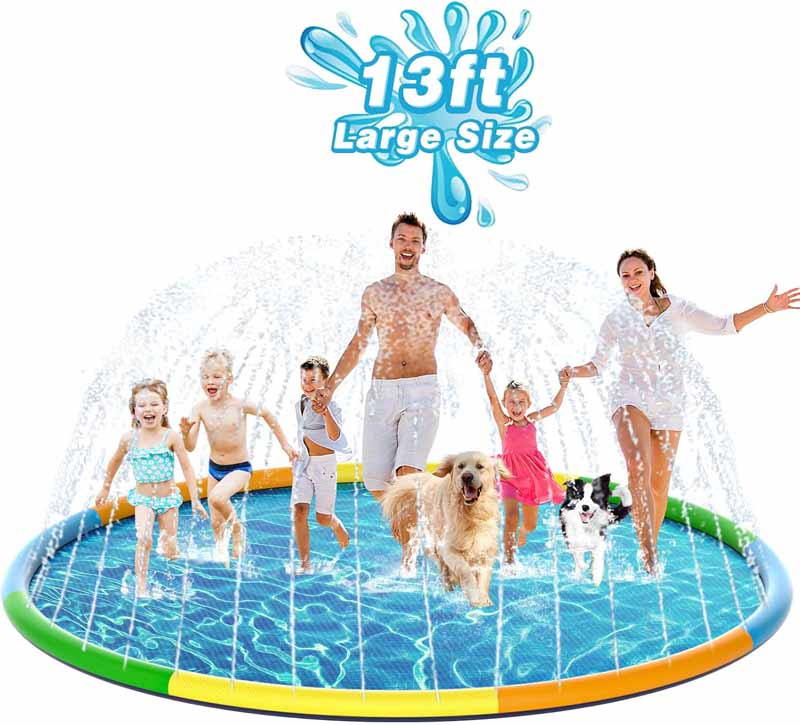
At this level, avoid judging scale from lifestyle images. Camera height, wide-angle lenses, child age, perspective, and digital composition can make a 67-inch mat appear far larger than it will feel on the lawn. Product dimensions are a better starting point. The user research behind this guide repeatedly identifies uncertainty about actual play space as a major concern among multi-child households and families hosting playdates.
$35–$60: More Money Should Solve a Real Problem
Once a product enters the $35–$60 range, there should be a clear practical reason for the higher price. For one family, the reason may be a wider center area. For another, it may be a more suitable shape, simpler hose routing, a different water pattern, useful repair components, or construction designed around repeated folding and seasonal handling. If the only visible upgrade is more artwork or a large collection of accessories nobody expects to use, the extra money may not improve household value.
A family that uses a $50 splash pad twenty-five times during the summer spends about $2 of product cost per session before water and minor maintenance. A family that buys a $20 pad but only bothers setting it up three times spends about $6.67 per session. This simple comparison shows how convenience and repeated use can matter as much as the shelf price. The calculation does not prove one product will last longer; it shows how household behavior changes economic value.
$60–$100+: Oversized and Specialized Products Need More Scrutiny
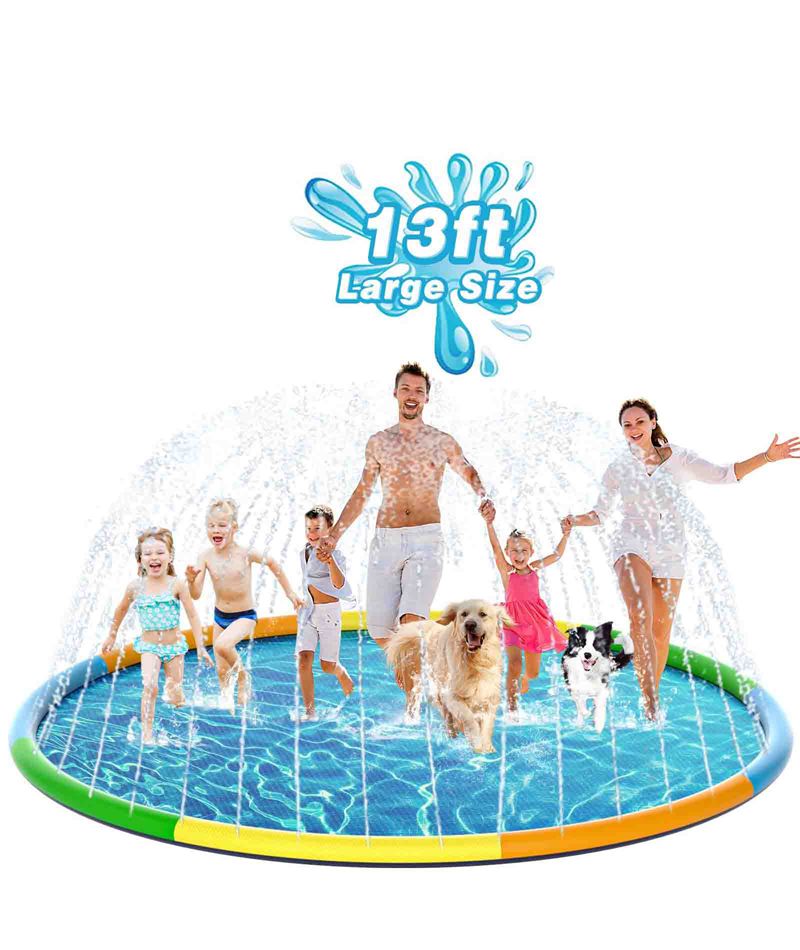
At the upper end, current products include 10-foot splash pads at approximately $99.99 and a 12-foot Walmart product at about $69.99. Larger products naturally require more material and can create much more activity area, but shoppers should still ask whether the children need the full footprint. A ten-foot circle occupies about 78.5 square feet of theoretical area, while a five-foot circle occupies only about 19.6 square feet. The area is roughly four times larger even though the diameter is only twice as large.
- Evidence — Oversized 12-foot market example: Walmart currently lists a 12-foot WOW splash pad at $69.99, with a previous displayed price of $99.99, illustrating both the cost of oversized formats and the importance of seasonal pricing.

3. What Actually Makes One Kids Splash Pad Cost More?
From a PVC product-development perspective, the cost of a splash pad comes from a combination of material area, film specification, printing coverage, tooling, cutting, welding operations, connector components, spray-hole layout, accessories, packaging, testing, freight, retailer margin, and expected return risk. Consumers do not need to become manufacturing engineers, but understanding a few of these cost drivers makes it easier to identify whether a higher price is connected to something useful.
Size Can Increase Cost Faster Than Diameter Suggests
Circular products are easy to underestimate because shoppers naturally compare diameter rather than area. A 60-inch splash pad is five feet across and has about 19.6 square feet of theoretical circular area. A 102.3-inch splash pad is about 8.5 feet across and creates approximately 57.1 square feet of theoretical full-circle footprint. The diameter increases by about 70%, but the circular area is nearly three times as large.
This does not mean the 102.3-inch product provides 57.1 square feet of verified open child play space. The outside sprinkler ring occupies part of the circle. It does mean far more material is involved in the footprint, which helps explain why large-format products may cost more to manufacture, print, weld, pack, and ship. The confirmed 102.3-inch product facts use this distinction carefully and do not convert outside diameter into an unsupported child-capacity claim.
PVC Thickness Is Important, but It Is Not a Complete Durability Score
One of the most common shopping shortcuts is “thicker PVC equals better splash pad.” Material gauge can influence feel, weight, resistance to some puncture conditions, stiffness, folding behavior, production cost, and how a structure responds under water load. Still, an experienced PVC developer would never inspect thickness alone. The seam joining two PVC panels, the inlet design, stress around rigid fittings, fold locations, film formulation, weld width, temperature control during production, and end-use environment can matter just as much.
The confirmed product example used in this article is manufactured from 0.28 mm PVC with heat-sealed construction, but its product fact library specifically advises against turning 0.28 mm into a consumer-facing superiority claim. The more useful description is flexible PVC construction with heat-sealed sections forming the outer water channel. The same source explicitly avoids “puncture-proof,” “never leaks,” and dedicated “non-slip” claims because the physical facts do not support absolutes.
This is also useful guidance for retailers or brands planning a custom PVC water-play product. Choosing a material specification should happen alongside the target diameter, water path, connection position, expected retail band, printing area, folding method, packaging size, testing plan, and intended age group. Adding thickness without checking these other variables can increase cost and shipping weight without solving the dominant design problem.
Hose Connections Can Affect Value More Than Their Component Cost Suggests
The hose inlet occupies only a small portion of the product, but it can become one of the highest-stress locations because a relatively rigid connector is joined to flexible material while a water-filled hose pulls from the outside. A stretched hose, missing washer, cross-threaded joint, or sideways load can create leaking even when the PVC body is undamaged. Good setup instructions and a well-supported inlet can therefore improve daily value without adding a dramatic visual feature.
A practical first-use check is to connect the hose while the pad is still dry, leave enough hose slack so it does not pull sideways, open the faucet slowly, and watch the fitting before children enter the play area. If water drips between threaded components, inspect the washer and reseat the connection before assuming the PVC product has failed. If water appears through a cracked fitting or from the sealed PVC around the inlet, stop use and inspect the actual component.
- Video — Garden Hose Washer Replacement: This short maintenance demonstration shows how a small washer affects sealing at a threaded hose connection. It is useful when water appears between ordinary hose fittings and helps families separate a missing or worn washer from a structural splash-pad leak.
If a hose still leaks after the washer and threading are checked, the next useful step is to look at alignment. Water-filled hoses become heavier and can pull strongly against a connector when stretched tightly across the lawn. Routing the hose along the edge of the activity zone rather than across the child walkway can reduce both connector stress and a potential tripping route.
- Video — Stopping Garden Hose Connection Leaks: This demonstration focuses on ordinary hose-joint leakage and makes the basic troubleshooting principle easy to see before blaming the entire water-play product.
Features Worth Paying For Are Usually Functional
| Often Worth Paying More For | Not Automatically Worth Paying More For |
|---|---|
| More usable play area | Decorative artwork by itself |
| Dimensions appropriate for the household | “Premium” or “pro” wording |
| Well-planned heat-sealed structure | A thickness number without structural context |
| Reliable hose inlet and clear connection instructions | Character licensing alone |
| Spray layout suited to intended play | More spray holes without evidence of better distribution |
| Repairability or useful patch components | Accessories children are unlikely to use |
| Easy drainage and realistic storage | Oversized packaging |
| Clear age, setup and care information | Vague durability promises |
The point of the table is not to say decoration has no value. A whale, dinosaur, rainbow, ocean, or sports theme may genuinely make a child more interested in using the toy repeatedly. Repeated use has economic value. The distinction is between emotional value the family actually wants and a feature added only because it makes the listing look more impressive.
4. How Much Should You Spend for Your Family?
The user research supporting this page identifies several very different family situations: households with one or more children over age three, families without pools, parents trying to reduce complicated summer setup, multi-child households, birthday-party hosts, playdate organizers, gift purchasers, vacation-home users, and small supervised activity groups. Their problems overlap, but the best spending decision changes because each group values space, time, storage, water access, or frequency differently.
A Family-Based Budget Framework
| Household Situation | Practical Starting Range | Spend More When | Save Money When |
|---|---|---|---|
| One child, occasional use | $15–$30 | The child needs more movement space or the family will use it frequently | A compact layout already fits the play style |
| One or two children, regular use | $25–$45 | Larger open space or better everyday setup matters | The children mostly sit, pour and splash rather than run |
| Siblings and frequent play | $35–$70 | Crowding is likely and the pad will be reused often | Yard size limits any benefit from going larger |
| Playdates and parties | $40–$100 | Group movement, visibility and open layout matter | A separate sprinkler activity already serves the group |
| Gift purchase | Decide after checking the home | The family has adequate lawn, hose and storage | Yard or seasonal suitability is uncertain |
These are decision ranges rather than safety standards or guarantees. Comfortable group capacity cannot be established from price or outside diameter alone. The confirmed 102.3-inch product example is described as suitable for siblings, friends, and shared backyard water play, but the source correctly avoids guaranteeing an exact number of children because child age, body size, movement, toys, supervision, and available center area change the experience.
One Child Does Not Automatically Need a Large Splash Pad
For one younger child, a smaller model can provide better value because it is easier to place, rinse, dry, fold, and store. If the child’s preferred play involves sitting near the spray, filling a cup, identifying pictures, stepping through water slowly, and spending twenty minutes outside, extra diameter may not add enough benefit. The family can keep the budget low and redirect money toward sunscreen, a shade solution, towels, or another outdoor activity.
If the same child is older, highly active, or enjoys running from one side of the pad to the other, a larger open layout may increase repeated use. The key is to spend on behavior already observed rather than assuming “bigger” creates more fun for every child. A price guide becomes useful when it prevents both underspending on a product that feels cramped and overspending on space the household cannot use.
Siblings Change the Economics
Two or more children can make a larger splash pad more valuable because crowding is no longer just a comfort issue. Children may compete for the strongest spray position, chase one another across the center, leave buckets in walking areas, or move at different speeds. The underlying user research specifically identifies crowding, conflicting spray preferences, disputes over play positions, and increased supervision difficulty as recurring challenges for multi-child households.
A family should not solve this by choosing the largest product that mathematically fits the grass. The better approach is to mark the approximate footprint, include the hose, add the children’s normal water toys, and walk around the proposed area as the supervising adult. A slightly smaller pad with clear access on all sides may work better than an enormous pad squeezed between a patio edge, planter, fence, and outdoor furniture.
Playdates and Birthday Parties Need a Supervision Plan, Not Just a Large Pad
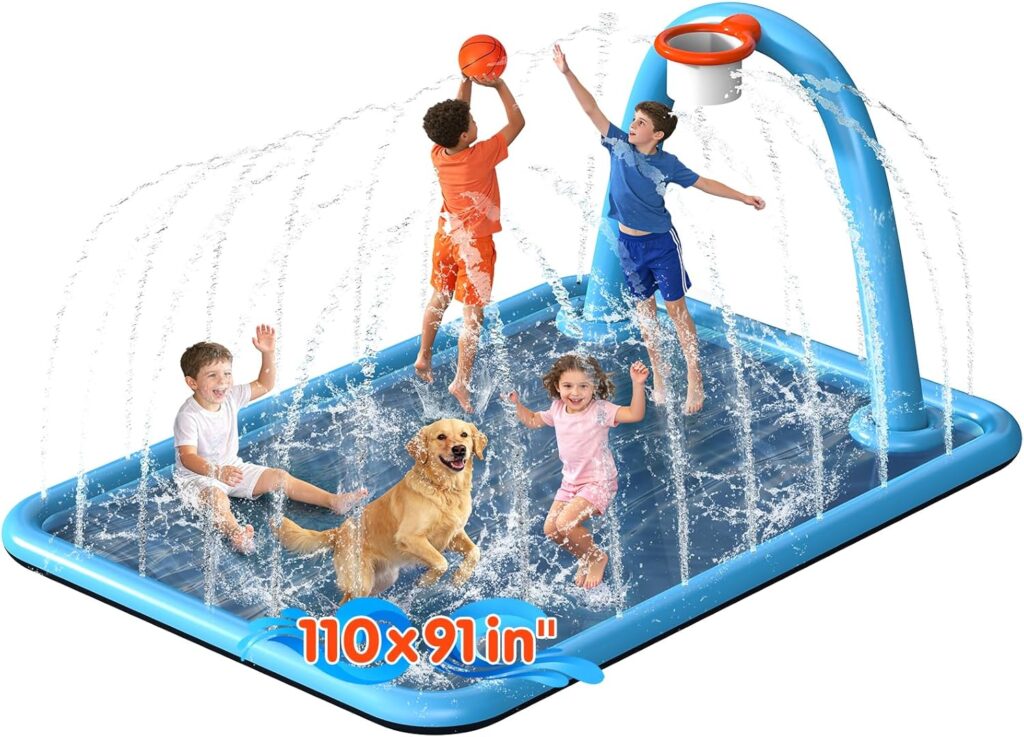
When several children gather, the budget question expands beyond the product. The host needs space for children entering and leaving, towels, wet shoes, drinks, dry clothing, adult visibility, and a hose route. The most expensive pad does not solve poor site organization. A broad open design can be more useful for a group than a feature-heavy pad containing arches, goals, hoops, or raised components that consume movement space.
Before play begins, assign one adult to active water supervision instead of assuming everyone at the party is watching. CPSC’s Pool Safely program uses the Water Watcher concept for this reason: one responsible adult focuses on children around water rather than combining supervision with phones, cooking, photography, or conversations. CPSC’s current guidance emphasizes close and constant supervision around water because drowning can happen quickly and quietly.
- Video — Anatomy of a Water Watcher: Use this short CPSC resource beside party and playdate planning. It clearly explains why assigning one specific adult is more reliable than having several adults assume someone else is paying attention.
- Downloadable Resource — Pool Safely Water Watcher Card: Families can print this card and use it during birthdays, neighborhood gatherings, pool days, or other supervised water activities. It is a practical external resource rather than an interactive page feature.
Gift Buyers Should Check the Yard Before Increasing the Budget
A $60 splash pad can be a poor gift when the recipient has no accessible hose, no flat outdoor area, or nowhere to dry a large wet PVC product. The user research specifically identifies those uncertainties among grandparents, relatives, and friends buying summer gifts. Before selecting an oversized model, confirm the child’s age, likely warm-weather use, yard space, hose availability, and seasonal storage. A $25 product suited to the home is far more useful than a larger item chosen only because the package looks impressive.
5. How to Compare Splash Pad Size and Price Fairly
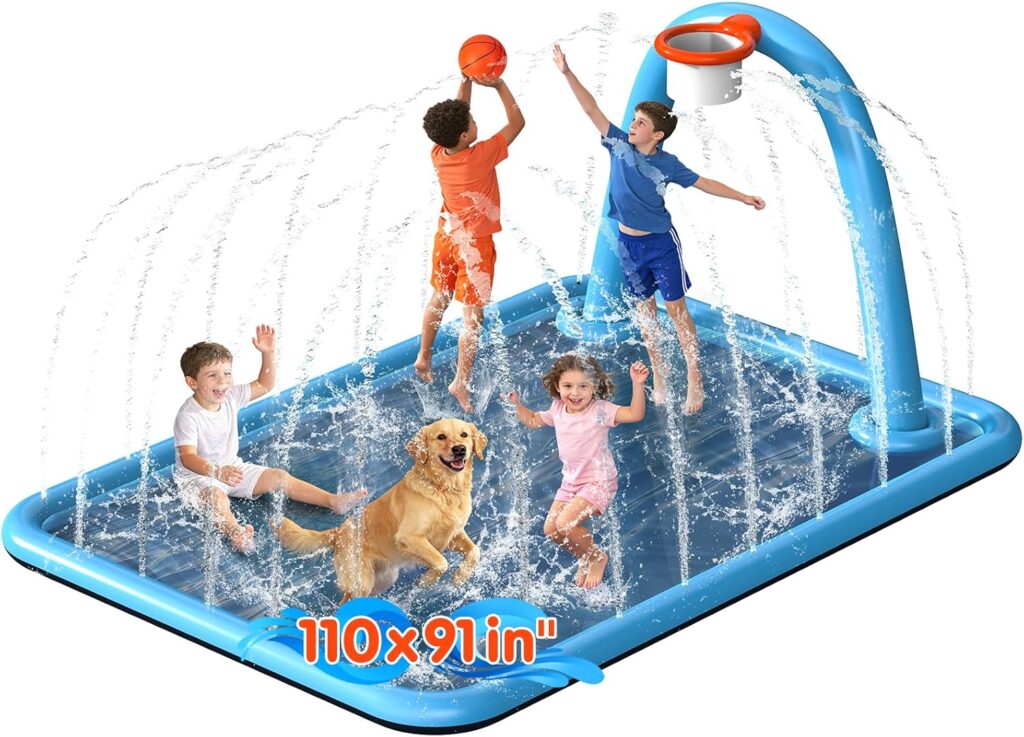
Size is one of the easiest splash-pad features to quantify, but it is also one of the easiest to misread. A listed diameter tells you the outside footprint, not the exact open center area. A ring-style sprinkler pad uses part of its outside footprint for the water-filled perimeter structure. If a model adds an arch, inflatable animal, hoop, goal, or other feature, some of the footprint may also be occupied by structure rather than free movement space.
Start With Geometry Instead of Marketing Labels
For a circular splash pad, use the standard formula:
Area = π × radius²
The radius is half of the stated diameter. A 60-inch pad is five feet in diameter and has a radius of 2.5 feet, creating about 19.6 square feet of theoretical circular area. A 67-inch pad creates about 24.5 square feet. A confirmed 102.3-inch pad creates about 57.1 square feet, while a 120-inch, or ten-foot, circle reaches approximately 78.5 square feet.
These numbers are useful because area grows much faster than the diameter number suggests. They are not verified child-play-space measurements because perimeter rings and other structures occupy part of the theoretical circle. The product fact library explicitly makes this distinction for the 102.3-inch model and does not convert the 57.1-square-foot mathematical footprint into an unsupported claim of 57.1 square feet of clear center space.
- External Tool — Circle Area From Diameter Calculator: Enter the advertised diameter to calculate theoretical area. Use the result to compare outside scale, then inspect the product design to estimate how much of the circle is actually available for free movement.
Calculate Price per Square Foot as One Comparison Lens
Suppose a hypothetical 67-inch circular pad costs $25. Its theoretical area is about 24.5 square feet, producing a purchase price of roughly $1.02 per theoretical square foot. Now suppose a 102.3-inch circular model costs $45. Its 57.1-square-foot outside footprint produces a figure of roughly $0.79 per theoretical square foot. The larger pad costs $20 more but may actually cost less relative to its total outside area.
This calculation does not prove the larger model is a better product. It says only that the additional retail price is accompanied by a substantial increase in surface area. Construction quality, center-ring geometry, connector design, artwork, age guidance, water behavior, and storage remain separate questions. Price-per-square-foot is useful because it prevents a household from describing every large product as “expensive” without considering how much physical scale was added.
Measure the Yard Before Ordering
The easiest way to prevent a sizing mistake is to reproduce the footprint before the box arrives. Convert the advertised diameter to feet, divide by two to get the radius, select the proposed center point, and use a soft tape or piece of string to mark the circle. Remove every marker before actual setup so no stake, pin, or hard object remains under the PVC.
Walk around the marked circle from the supervising position. Check the distance to concrete steps, raised garden edging, tree roots, grills, tables, planters, electrical equipment, toys, and the outdoor faucet. Then route the garden hose along the edge. CPSC’s general playground checklist is not a splash-pad installation standard, but its advice to inspect play environments for sharp points, rocks, tree stumps, and tripping hazards provides sensible supporting logic for preparing a children’s backyard activity area.
- Evidence / Site-Preparation Reference — CPSC Public Playground Safety Checklist: Use its sharp-edge and tripping-hazard checks as general environmental guidance while remembering it was written for playgrounds, not as a splash-pad installation specification.
Use Digital Measurement Only as a Planning Aid
Families with irregular lawns can also measure approximate outdoor dimensions digitally before using a tape measure. Google Maps and Google Earth allow distance and area measurements, which can be useful for deciding whether an eight-, ten-, or twelve-foot circle is even plausible in the selected portion of the yard. Digital measurement should not replace an in-person inspection because aerial imagery cannot show every root, slope, small obstacle, or current furniture position.
- External Tool — Google Maps Distance Measurement: Use this for a first-pass estimate of backyard length or width, then confirm the real setup area physically before purchase.
6. What Is the Real Cost per Use of a Kids Splash Pad?
A seasonal backyard toy should be judged by how often it is realistically used, not only by how much it costs on checkout day. Families often focus on saving $10–$20 and then overlook the much larger difference between an item used three times and one used thirty times. This is especially relevant to busy parents, whose willingness to unfold, connect, supervise, drain, dry, and store a product strongly affects whether it becomes part of the summer routine. The user research identifies setup and cleanup burden as a repeated barrier for this exact group.
Calculate Product Cost per Use
The simplest formula is:
Cost per use = purchase price ÷ actual number of uses
A $20 pad used four times costs $5 per use. A $45 pad used twenty times costs $2.25 per use. A $70 pad used thirty-five times costs $2 per use. None of these calculations predicts durability; they simply show how use frequency changes the meaning of price.
A useful shopping exercise is to estimate how many realistic play sessions the family will have rather than imagining perfect summer weather every day. Consider school, work, vacation, rain, drought restrictions, sports schedules, and the child’s actual interest in outdoor water activities. Families living in short summer climates may reasonably place more weight on lower purchase price, while households with long warm seasons can justify spending more on frequently used outdoor equipment.
- External Tool — Cost Per Use Calculator: Enter the purchase price and expected number of sessions to compare two or three products without building an interactive calculator on your own page. The tool uses the standard total-cost-divided-by-uses method.
Calculate Cost per Season Separately
Cost per season is useful once a splash pad has survived its first summer or when a family is comparing past purchases. Divide the total product-related cost by the number of seasons actually used. A $30 pad used for one summer has a $30 product cost per season. A $55 pad used for two summers has a $27.50 cost per season. A $75 pad used for three summers would be $25 per season.
These examples should never be converted into lifespan promises. PVC recreational products experience very different conditions from household to household. A smooth, debris-free lawn is different from rough paving. A product dried completely in shade after use experiences different storage conditions from one folded while damp and left in a hot shed. Normal summer use is different from dragging a water-filled pad across concrete. Long-term value therefore depends on use and care as well as original construction.
Add Only Real Ownership Costs
A fair total-cost calculation can include:
- Purchase price
- A hose or extension hose if genuinely required
- Replacement washers or compatible connector parts
- Repair patches
- Water used during operation
- Replacement cost if the first product genuinely fails
- Storage container if the household needs one
Do not artificially inflate ownership cost with items already used for other household activities. Existing towels, a garden hose already used for watering, ordinary outdoor storage, sunscreen, and children’s swimwear do not suddenly become splash-pad-specific purchases. The goal is a useful household estimate, not an accounting exercise designed to make one product category appear unusually expensive.

7. What Hidden Costs Should You Include in Your Splash Pad Budget?
Water is the most obvious ongoing cost, but it is also one of the most frequently oversimplified. There is no responsible universal statement such as “every splash pad uses 100 gallons per hour.” Water flow depends on faucet pressure, dynamic pressure during use, hose diameter, hose length, fittings, restrictions inside the connector, spray-hole arrangement, perimeter-channel geometry, and how far the faucet is opened.
The confirmed 102.3-inch product example follows the same technical logic. Its spray height is controlled through household water flow rather than by an integrated pump, so actual spray behavior can vary from one home to another. Its product facts specifically advise against promising a fixed spray height or exact water consumption because different household supply conditions produce different results.
Estimate Water Flow Before Estimating Cost
The most useful formula is:
Water used = actual flow rate × play time
If a household measures five gallons per minute through a particular setup and runs the water for thirty minutes, the mathematical total is 150 gallons. This is only an example, not a typical splash-pad consumption claim. Another home may have a completely different rate, and attaching a splash pad creates resistance that changes the free-hose flow.
Washington State University provides a garden-hose flow calculator based on hose diameter, supply pressure, and hose length. WSU specifically states that its calculation assumes a free-flowing hose end, not a sprinkler or another attached device, so the result should be used for understanding the hose system rather than presented as a certified splash-pad flow rate.
- External Tool — WSU Garden Hose Flow and Time Calculator: Use the tool to understand how hose size, pressure, and length influence theoretical free-hose flow. For the best splash-pad estimate, measure the actual household setup because the connected product adds flow resistance.
A Five-Gallon Bucket Test Is Often More Useful Than Guessing
Families can measure free-hose flow with a known container and a stopwatch. If a five-gallon bucket fills in fifty seconds, divide five gallons by 50/60 minutes. The result is approximately six gallons per minute. Repeat the test two or three times and use the average. This remains a free-hose measurement rather than the actual flow through the splash pad, but it gives a household-specific reference point when troubleshooting weak spray.
If flow seems low, inspect whether other fixtures are running, the hose is unusually long, the hose is kinked, or a fitting is restricting the path. Increasing faucet pressure endlessly is not a good troubleshooting method because every product has its intended operating conditions. Start low, allow the perimeter channel to fill, then increase gradually until the spray pattern is suitable for supervised play.
Convert Water Flow Into Local Cost
EPA reports that outdoor water use averages more than 30% of total household use nationally and can reach around 60% in arid regions, illustrating how outdoor water conditions vary sharply across the United States. This statistic does not describe splash pads specifically, but it explains why one national dollar estimate would be misleading.
Use the rate shown on the household water bill:
Water cost = gallons used ÷ 1,000 × local cost per 1,000 gallons
If the utility bills in cubic feet, hundred cubic feet, or another unit, use the utility’s conversion information. Some areas also add sewer charges or tiered pricing, while drought restrictions may limit outdoor recreational use at certain times. The responsible approach is to check local rates and restrictions rather than quoting one national “cost per hour.”
- Evidence — EPA WaterSense outdoor-use statistics: EPA’s current data provide national context for household outdoor water use and regional variation.
Cleanup Time Is Also Part of Value
Busy parents often stop using outdoor equipment not because it costs too much but because the after-use routine becomes annoying. A splash pad should be evaluated from storage box to storage box: carrying it outside, inspecting the ground, unfolding, connecting the hose, supervising, shutting off water, draining, rinsing when needed, air-drying, and folding. The user-group research repeatedly identifies cleanup and drying as real barriers to frequent use.
The confirmed product facts recommend closing the water supply, draining the perimeter, cleaning as needed, allowing the PVC to dry completely, and folding the pad for seasonal storage. A product priced slightly higher but easy enough for the household to use repeatedly may produce better real value than a cheaper product that stays wet, takes up inconvenient space, or rarely comes out of storage.
8. Is a Cheap Kids Splash Pad Worth It?
A cheap splash pad can absolutely be worth buying. Price is not a moral ranking and it is not a durability certificate. A small household with one young child may be wasting money by purchasing a giant $90 product when a $20 mat provides all the activity the child wants. The better question is whether the inexpensive product meets the required size, age, setup, repair, and storage conditions without forcing the family to accept compromises that matter every time it is used.
When the Cheapest Option Can Be the Smartest Option
A low-cost model makes particular sense when:
- Only one child normally uses it.
- Summer water play is occasional.
- Yard space is limited.
- The family is testing whether the child enjoys sprinkler play.
- Compact storage matters more than group capacity.
- The child prefers seated splash play rather than running games.
- The product will be used only during a short warm-weather season.
In these situations, paying double for more diameter may create little additional value. The family should instead verify the product’s actual measurements, age recommendation, connection method, care instructions, and return conditions. A small product that is used ten times can provide much better value than a giant model brought out twice.
When Paying More Becomes Rational
More money makes sense when the family can point to a repeated problem the higher-priced model solves. Siblings may need more open area. Frequent use may justify more attention to seams and connector design. A large lawn may support a wider pad without creating awkward access. Playdate hosts may value an open layout where several children can move while adults maintain visibility. These are functional reasons, not abstract claims about “premium quality.”
One useful rule is: identify the improvement before accepting the price increase. If moving from $30 to $50 provides much more usable area, a better-fitting shape, more suitable connection, or a genuinely useful repair kit, the difference may be reasonable. If the main upgrade is licensed artwork or decorative accessories, decide whether the children value those elements enough to justify the premium.
Repairability Can Change the Economics
PVC water-play products can sometimes be repaired when the problem is a small puncture in an accessible flat area. A patch can potentially extend useful life and reduce replacement cost. A small surface puncture should not be confused with a major seam separation, cracked connector, or structural failure, however. Those conditions may need different action, and a simple patch demonstration should never be presented as a universal repair solution.
- Video — Basic Vinyl/PVC Patch Technique: Bestway’s visual repair guide demonstrates the general process of cleaning a small damaged area and applying a patch. Use it as a simple technique reference for minor flat-surface damage, not as evidence that every seam or connector failure can be repaired at home.
From a PVC engineering perspective, repairability deserves more attention than dramatic “indestructible” marketing language. Flexible outdoor products are exposed to rocks, thorns, rough storage, dragging, pets, hard objects, and repeated folding. A realistic product design accepts that localized damage can occur and considers whether simple damage can be identified and repaired without replacing an otherwise functional product.

9. Safety, Setup, and Maintenance Change the Real Value
A splash pad is a water-play product for children, so a price discussion that ignores supervision and site conditions is incomplete. A product can be inexpensive and still provide good value when it is used correctly, while an expensive product does not remove normal water-play risks. Families should be skeptical of price premiums built primarily around broad words such as “safe,” “non-slip,” or “heavy duty” unless the listing explains the specific design or evidence supporting the claim.
Do Not Treat a Wet PVC Surface as Risk-Free
The confirmed product example in this guide uses a standard PVC water-play surface and does not claim a special non-slip or anti-slip structure. Its recommended setup is a flat, clean lawn with adult supervision and orderly play. This is a more useful expectation than assuming any wet play surface eliminates slipping.
Before setup:
- Choose a flat, clean outdoor area.
- Remove stones, sharp twigs, thorns, hard debris, and toys.
- Keep the hose away from the main walking route.
- Begin with modest water flow.
- Keep running, pushing, and rough chasing under control.
- Stop use when damage or unsafe conditions are found.
- Follow the manufacturer’s age and use instructions.
Close Adult Supervision Is More Important Than the Product Price
CDC states that drowning can happen quickly and quietly and recommends designating a responsible adult to closely and constantly supervise children whenever they are in or near water. A portable splash pad does not usually contain swimming-pool depth, but the broader principle remains valuable: adults should not assume that shallow or sprayed water makes supervision optional.
The American Academy of Pediatrics similarly emphasizes active supervision around children and water. Its parent-facing video explains practical water-safety habits and helps families understand the difference between being physically nearby and actively watching.
- Video — How to Keep Children Safe in and Around Pools: This American Academy of Pediatrics resource is primarily pool-focused, but its explanation of attentive adult supervision is relevant whenever families plan supervised backyard water play.
A good routine is to decide who is supervising before turning on the water. The supervising adult should have a clear view of the entire activity area and avoid combining the role with cooking, scrolling on a phone, lengthy conversations, or going inside for supplies. For groups, adults can rotate the role rather than expecting one person to supervise indefinitely.
- Video — Pool Safely: Simple Steps Save Lives: This CPSC Pool Safely video gives families an easy visual overview of basic water-safety habits. Use it as broader safety education rather than as splash-pad-specific operating instructions.
- Downloadable Resource — Pool Safely Consumer Educational Brochure: This official brochure can be offered beside the safety section for families who prefer a printable reference covering multiple water-safety steps.
Drying Is a Maintenance Step, Not Just a Storage Preference
CDC advises that small inflatable or plastic kiddie pools and water slides be emptied, cleared of debris, rinsed, and allowed to air-dry after use. A hose-connected splash pad is not identical to a kiddie pool or water slide, so the CDC page should not be misrepresented as a splash-pad-specific maintenance standard. Still, its drain-rinse-air-dry routine provides useful external support for the basic hygiene principle of not storing children’s water-play surfaces while dirty and wet.
The product-specific facts used for this guide recommend a similar practical sequence: shut off the water, disconnect the garden hose, drain the outer water channel, remove dirt as needed, allow the PVC to become fully dry, then fold the product for storage. Proper drying does not guarantee a particular lifespan, but it reduces avoidable problems related to trapped moisture, dirt, and poor seasonal storage.
- Evidence — CDC maintenance guidance for small inflatable/plastic children’s water-play products: Read the scope carefully; the page specifically discusses kiddie pools and water slides and is used here only for applicable drainage, cleaning, and air-drying principles.
10. Splash Pad vs. Kiddie Pool vs. Sprinkler: Which Gives Better Value?
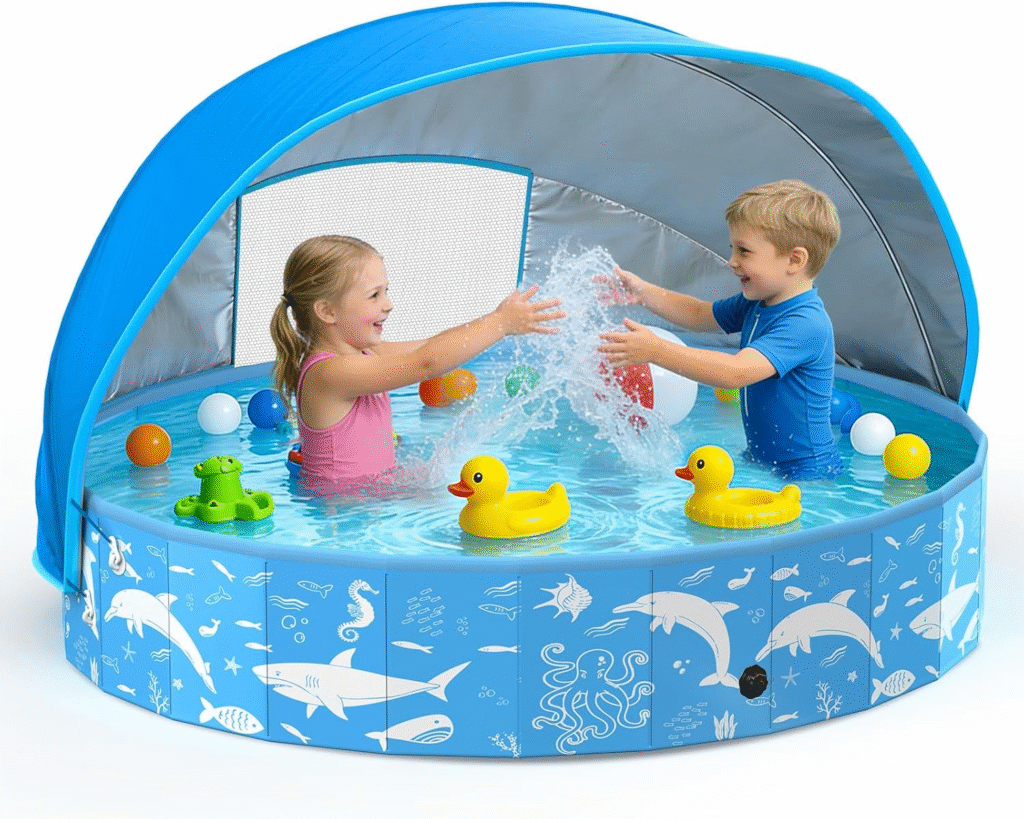
Families without a swimming pool often compare three inexpensive ways to create backyard water play: a hose sprinkler, a portable splash pad, and a small kiddie pool. None is automatically the best value because each produces a different experience. A sprinkler is excellent for running through moving water. A splash pad combines moving spray with a defined play surface. A kiddie pool provides a deeper standing-water experience suitable for sitting, pouring, and water toys but usually involves more filling and water management.
| Household Priority | Portable Splash Pad | Kiddie Pool | Basic Sprinkler |
|---|---|---|---|
| Lowest purchase cost | Low to moderate | Low to moderate | Often low |
| Defined play surface | Strong | Strong | Limited |
| Moving spray | Strong | Usually limited | Strong |
| Standing water depth | Usually shallow | Greater | None |
| Fast hose-based setup | Strong | Filling takes time | Strong |
| Compact seasonal storage | Usually good | Depends on pool type | Very good |
| Group movement | Depends on size | Depends on dimensions | Depends on lawn |
| Drain/dry effort | Moderate | Often more involved | Low |
| Best for active running play | Good with adequate space | Limited | Strong |
| Best for seated water play | Moderate | Strong | Limited |
Choose a Splash Pad When You Want a Defined but Flexible Play Zone
A portable splash pad makes sense when the household wants moving water without maintaining a deep pool and likes having a clear play zone on the lawn. Setup is often simple: unfold, connect to a hose, start with low flow, adjust the water, and begin supervised play. The confirmed 102.3-inch product example requires no air pump for its sprinkler function and becomes active through household water entering the perimeter ring.
For families without a permanent pool, the user research shows the main appeal is the balance among water-play experience, setup convenience, seasonal storage, and household budget. A splash pad can therefore be good value even when it costs more than a simple sprinkler, provided the defined play surface and shared center area are features the family will actually use.
Choose a Kiddie Pool When Standing Water Is the Main Activity
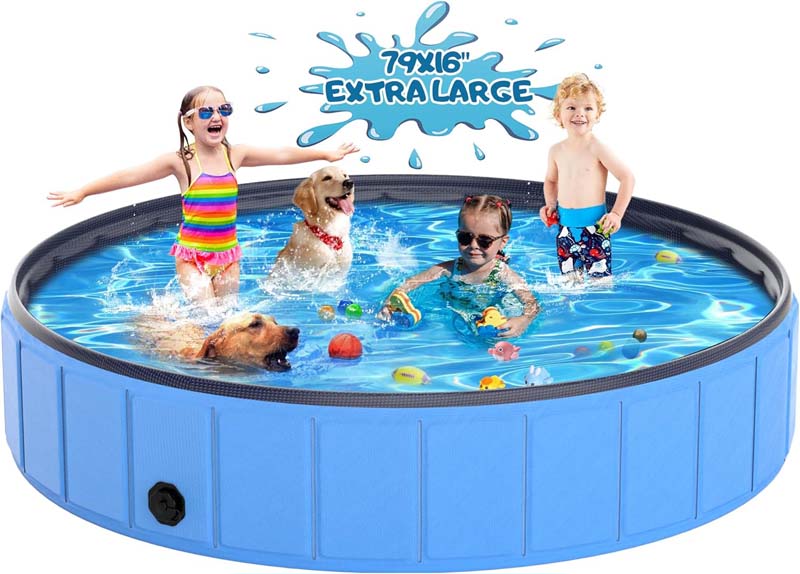
A kiddie pool may be better for a child who prefers sitting in water, floating toys, scooping, pouring, and stationary sensory play. The tradeoff is more attention to filling, emptying, hygiene, and water supervision. CDC notes that small inflatable and plastic kiddie pools do not have the same filtration and disinfection systems as full swimming pools, which is one reason it recommends regular emptying, cleaning, rinsing, and air drying.
The comparison should not describe a splash pad as a “safer pool replacement.” These products offer different water depths and play patterns, and children still require supervision around water. A family should choose based on the activity it wants, not on a marketing promise that one entire product category removes normal water-play risk.
Choose a Basic Sprinkler When Simplicity Is the Goal
If children mainly want to run across grass and get wet, a basic lawn sprinkler may produce the best value. It usually has little to dry, requires minimal storage, and does not need a large PVC surface. Families already using a sprinkler successfully should not feel pressure to buy a splash pad simply because it looks more elaborate.
A splash pad becomes more compelling when the family specifically wants a defined surface, a perimeter spray pattern, theme graphics, a shared activity zone, or a central place for cups and water toys. Those are meaningful experience differences; they are not universal reasons everyone should spend more.
11. How to Decide What a Kids Splash Pad Is Worth to Your Family
A useful purchasing decision can be completed without an online quiz or recommendation generator. A tape measure, the product specifications, a recent price check, your water setup, and a realistic estimate of summer use provide most of the information a household needs. The goal is to reduce the decision to repeatable facts instead of letting discount badges, lifestyle photos, or broad words such as “giant,” “heavy duty,” and “premium” make the choice.
Step 1: Define the Normal User, Not the Biggest Possible Party
Ask who will use the product on an ordinary warm afternoon. If the answer is one child most of the time, size the purchase around one child rather than the six cousins who visit once each year. If two siblings use outdoor toys together every weekend, treat shared space as a normal requirement. This distinction prevents both unnecessary spending and frustrating undersizing.
Step 2: Measure the Full Outdoor Footprint
Record the manufacturer’s actual unfolded dimensions, convert them to feet if necessary, and mark the size on the lawn. For round products, calculate the radius and theoretical area. Then add the hose route, adult path, towel area, entry point, and nearby obstacles. The largest pad that technically fits between two boundaries is not always the best pad for that location.
For the confirmed 102.3-inch example, the outside diameter is approximately 8.53 feet and the radius is about 4.26 feet. Its full mathematical circle is approximately 57.1 square feet before accounting for the sprinkler perimeter. These figures are appropriate for yard planning, but they do not establish exact open-center area or guaranteed user capacity.
Step 3: Decide Which Features Solve a Real Household Problem
Write down the three most important requirements. They might be:
- Enough room for siblings
- No separate air pump
- Simple garden-hose connection
- Compact storage
- Ocean-themed artwork
- Gentle adjustable spray
- Repair patch included
- Open center area
- Suitable dimensions for a narrow lawn
Use this list to compare products before considering secondary features. If a $55 product solves all three needs and a $35 product solves only one, the higher price may be rational. If both solve the same needs, buying the less expensive option is reasonable.
Step 4: Calculate Realistic Cost per Use
Estimate the number of times the family is genuinely likely to bring the product outside. Then divide purchase cost by those sessions. Add meaningful ownership costs only when necessary. If two models produce similar cost per use, return to usability, yard fit, repair options, and maintenance. The calculation is a decision aid, not a command to buy whichever number is smallest.
Step 5: Inspect Construction Claims With Context
When comparing PVC products, look for information about the material, joined sections, perimeter structure, connector, repair process, and care instructions. Do not assume one thickness number settles every durability question. A flexible water-filled product contains transitions between soft film, sealed joints, rigid components, and repeated folds. Each transition can become an engineering concern, especially when water pressure or external pulling loads are present.
For brands or retailers developing a customized PVC splash pad rather than purchasing a finished consumer model, the same logic should drive product planning. The available manufacturing fact base supports customization of suitable splash-pad projects through dimensions, shape, artwork, colors, PVC specifications, spray-hole positioning, connector location, accessories, instructions, packaging, and related structural decisions after technical evaluation. Customization has the most value when it solves a defined consumer problem instead of adding features merely to make the specification sheet longer.
Step 6: Read Reviews for Patterns, Not Isolated Drama
One complaint about low spray does not prove a product has weak water performance because the household may have low supply pressure, an unusually long hose, or another fixture running. One report of a puncture does not prove weak PVC because the product may have been placed over gravel. One five-star review immediately after unboxing does not prove long-term durability either.
Look for repeated comments describing the same failure under similar conditions, preferably with the exact model and size identified. Pay particular attention to recurring observations about seams, connectors, usable size, drainage, drying, and actual spray behavior. Then compare those patterns with the product specifications and your household conditions.
Step 7: Make the Final Decision Using Total Value
Before checkout, the family should be able to answer:
- What is the exact unfolded size?
- Does the product physically fit the yard?
- Is the stated age appropriate?
- How much open play area appears available?
- Does it work with the household hose?
- Is spray controlled through water pressure?
- What does the manufacturer say about PVC and construction?
- Is the current price typical or promotional?
- Are useful repair materials included?
- How will the product be drained and dried?
- How many summer sessions are realistic?
- What repeated problems appear in recent reviews?
- Is adult supervision practical in the chosen location?
If several of these questions remain unanswered, paying more is not the solution. The better move is to gather the missing information before ordering.
Conclusion: A Good Splash Pad Budget Is Built Around Use, Not Hype
A portable kids splash pad currently can cost roughly $12 to $100 in the U.S. market, with many familiar family products sitting around the $20–$50 range. This wide spread exists because splash pads differ greatly in outside dimensions, material area, play structure, accessories, branding, construction, and retailer pricing. It does not create a simple ladder where every additional dollar buys proportionally better quality.
For one child using water toys occasionally, a compact $15–$30 pad can be an excellent choice. For siblings playing together throughout summer, moving into a larger $35–$70 format may produce better value because open space becomes a repeated need rather than a luxury. Oversized $70–$100 products are easier to justify when the household has the lawn, storage, group use, and warm-weather routine to benefit from their additional scale.
From a long-term PVC product perspective, the strongest value indicators are rarely the loudest claims on the package. Look at usable space, heat-sealed structure, hose connection, realistic water behavior, repairability, site preparation, cleaning, drying, storage, and expected frequency of use. PVC thickness belongs in the analysis, but it should not be treated as a complete durability score. A technically honest product should also avoid absolute promises about leaks, punctures, spray height, child capacity, or lifespan when those outcomes depend heavily on real household conditions.
The final rule is simple: the best-value splash pad is not the cheapest pad or the most expensive pad. It is the one your family can fit, set up, supervise, maintain, and use often enough to justify its total cost. When a product provides the right amount of play space and the right level of convenience for your normal summer routine, paying a little more can make sense. When an upgrade adds features your children will rarely use, saving the money is the better decision.
Frequently Asked Questions
How much should I spend on a kids splash pad?
For many U.S. families, $20–$50 is a practical starting budget because a large portion of mainstream portable splash pads currently sits around this range. Families with one child and occasional summer use may be satisfied below $20–$30, while households wanting substantially larger formats for siblings or frequent group play may move into the $40–$100 range. The amount should follow yard size, expected use, and functional features rather than a belief that higher price always equals better quality.
Is a $20 kids splash pad too cheap?
A $20 splash pad is not automatically too cheap. Low-cost products can work well for one younger child, limited yard space, short play sessions, or families trying sprinkler play for the first time. Before ordering, verify the complete dimensions, recommended age, hose connection, construction information, care instructions, and return policy. A $20 product used frequently can offer excellent value, while a more expensive product that is inconvenient to set up may provide worse cost per use.
Is a more expensive splash pad more durable?
Not necessarily. Retail price can include larger size, additional PVC area, licensed graphics, accessories, packaging, shipping cost, seller margin, or promotional positioning. Physical durability depends on several interacting factors, including PVC formulation and gauge, seam design, heat-sealing consistency, connector support, ground conditions, repeated folding, water pressure, storage, and accidental damage. Compare construction details and repeated user feedback rather than using price as a durability rating.
Does PVC thickness matter when choosing a splash pad?
PVC thickness matters, but it is only one part of the structure. A thicker film may change weight, feel, resistance to some forms of wear, flexibility, and production cost. It cannot compensate automatically for poorly designed seams, a stressed inlet, bad ground preparation, or inappropriate storage. Experienced PVC product evaluation considers material, sealed joints, connection points, geometry, water load, folding behavior, and intended conditions together rather than ranking products using gauge alone.
How large should a splash pad be for multiple children?
There is no reliable universal diameter-to-child-capacity formula. A larger diameter generally creates more theoretical surface area, but part of the footprint may be occupied by the water-filled perimeter, arches, hoops, animals, goals, or other features. Children also differ in size, age, movement, and play style. For siblings or friends, compare the open center area, mark the footprint on the lawn, and leave enough surrounding room for adult access and the garden hose.
How much water does a kids splash pad use?
There is no single gallons-per-hour figure applicable to every splash pad. Water consumption varies with supply pressure, hose diameter, hose length, faucet setting, connector restriction, perimeter-channel design, and spray-hole layout. The most useful household method is to measure actual flow and multiply it by play duration, then apply the local utility rate. Families in drought-prone areas should also check current outdoor-water restrictions before recreational use.
Is a splash pad worth the money compared with a sprinkler or kiddie pool?
It depends on the type of play the family wants. A basic sprinkler can be the cheapest and simplest choice for children who mainly want to run through water. A kiddie pool is better suited to sitting, scooping, and deeper standing-water play but usually requires more filling, draining, and cleaning. A splash pad sits between the two, combining moving spray with a defined play surface and foldable seasonal storage. It is worth the extra cost when those features match the household’s normal summer routine.