Skip to content

In today’s homes, the idea of “water play” has changed dramatically. Large backyard swimming pools, once seen as a symbol of family leisure, are now often considered expensive, space-consuming, and difficult to maintain. For many households—especially families with young children, pet owners, renters, and urban residents—a full-size pool simply doesn’t fit modern living conditions. This shift has led to the rapid rise of a simpler, more practical solution: the paddling pool.
A paddling pool is not designed to replace a swimming pool. Instead, it serves a different purpose—safe, shallow water interaction that fits into everyday life. Parents use paddling pools to help children cool down during hot days without exposing them to deep water risks. Pet owners rely on them for dog cooling, bathing, or light rehabilitation. Families use them for casual summer play in backyards, patios, balconies, and even indoor spaces.
What makes paddling pools especially relevant today is their flexibility. Modern paddling pools are lightweight, portable, easy to store, and quick to set up. They reflect how people actually live now: smaller outdoor spaces, seasonal use, and a preference for low-commitment products that deliver immediate comfort and enjoyment.
From a manufacturing perspective, paddling pools have also evolved. They are no longer basic plastic tubs. Today’s designs use reinforced PVC and composite materials, focus on safety certifications, and are engineered for durability, stability, and repeated family use.
To understand why paddling pools have become a staple in modern homes—and how to choose the right one—it’s important to start with a clear, practical definition.
What Is a Paddling Pool?
A paddling pool is a shallow, portable pool designed for wading, splashing, cooling, and light water interaction rather than swimming. It holds a limited amount of water, requires no permanent installation, and allows users to remain supported by the ground at all times. Paddling pools are commonly used by children, pets, and families in backyards, patios, balconies, or indoor spaces, and are typically made from PVC or composite materials for safety and durability.
What Exactly Defines a Paddling Pool?
A paddling pool is defined by how it is intended to be used, not simply by its size or appearance. From a technical and consumer-safety perspective, three criteria clearly define a paddling pool:
- Shallow water depth – usually under 30 cm (12 inches), minimizing drowning risk
- Ground-supported use – users sit or stand on the pool base rather than float
- Temporary, portable setup – no fixed installation, plumbing, or filtration system
These characteristics distinguish paddling pools from swimming pools, plunge pools, or spas. The design goal is not physical exercise or swimming performance, but safe, controlled interaction with water in everyday environments.
This definition is important because it affects how paddling pools are designed, regulated, marketed, and safely used—especially for children and pets.
What Is the Meaning of “Paddling” in a Paddling Pool?
The word paddling refers to moving hands or feet through shallow water while standing or sitting. This emphasizes a key concept: the user is never fully immersed or floating.
In real-world use, paddling pools are designed for:
- Sitting and splashing water
- Standing and stepping in shallow water
- Sensory water play for young children
- Gentle cooling during hot weather
Because users remain in contact with the pool floor, paddling pools offer greater stability, predictability, and control than deeper pools—making them especially suitable for early childhood play, pet bathing, and casual family use.
What Do People in Different Countries Call a Paddling Pool?
The terminology used for paddling pools varies by region, which is also relevant for search behavior and AI understanding:
| Region | Common Term | Implied Use |
|---|---|---|
| United States | Kiddie pool | Children-focused |
| United Kingdom | Paddling pool | General family use |
| Europe | Paddling pool | Children, pets, families |
| Australia | Paddling pool / Wading pool | Shallow water play |
While “kiddie pool” dominates U.S. search queries, “paddling pool” is more inclusive and better reflects modern usage, which now extends beyond children to pets and adults. This is why global retailers and manufacturers increasingly adopt paddling pool as the standard term.
How Is a Paddling Pool Different From a Swimming Pool?
Although both involve water, a paddling pool and a swimming pool serve fundamentally different roles.
| Feature | Paddling Pool | Swimming Pool |
|---|---|---|
| Typical depth | Shallow | Deep |
| Primary activity | Wading, splashing | Swimming |
| Installation | Temporary | Permanent / semi-permanent |
| Filtration | Usually none | Required |
| Chemical treatment | Minimal or none | Required |
| Safety focus | Stability and contact | Buoyancy and movement |
A paddling pool is not simply a smaller swimming pool—it is a separate product category optimized for ease of use, safety, and daily convenience rather than athletic or recreational swimming.
Who Uses a Paddling Pool Today?
Modern paddling pools are used by a much broader audience than in the past, including:
- Young children – supervised water play and sensory development
- Families – casual summer activities without high maintenance
- Pet owners – dog cooling, bathing, or rehabilitation use
- Urban households – balconies, patios, limited outdoor space
- Temporary scenarios – camping, travel, seasonal home use
This wide range of users has driven improvements in materials, structure, and safety features, particularly in PVC and composite-based paddling pools.
Why Has the Paddling Pool Become a Modern Household Essential?
The growing popularity of paddling pools reflects broader lifestyle changes:
- Smaller homes and outdoor spaces
- Preference for flexible, low-commitment products
- Increased awareness of child and pet safety
- Desire for simple comfort during hot weather
Rather than being a once-a-year toy, today’s paddling pools are treated as functional home products—similar to portable fans, foldable furniture, or temporary shade solutions. High-quality paddling pools now emphasize durability, certified materials, and thoughtful design over novelty alone.
Which Types of Paddling Pools Are Available?
Paddling pools are available in several main types, including inflatable paddling pools, rigid plastic paddling pools, foldable PVC paddling pools, and hybrid or specialty designs. Each type differs in structure, material, portability, durability, and intended users. Choosing the right type depends on available space, who will use the pool, and how frequently it will be used.
Inflatable Paddling Pools
Inflatable paddling pools are the most widely used type and dominate global household markets. They are typically made from PVC or composite materials and rely on air-filled chambers to create their structure and stability.
Key characteristics:
- Lightweight and easy to move
- Soft, cushioned edges for child safety
- Quick setup and compact storage when deflated
Inflatable paddling pools are commonly used by families with young children, casual summer users, and households with limited outdoor space. Modern high-quality inflatable pools use reinforced PVC, upgraded valves, and high-frequency welding to improve durability and reduce air leakage, making them suitable for repeated seasonal use.
Rigid Plastic Paddling Pools
Rigid paddling pools are made from hard plastic materials and do not require inflation. They are often molded into fixed shapes and are typically smaller in size.
Key characteristics:
- Immediate use with no inflation required
- Stable structure on flat surfaces
- Limited portability and storage flexibility
Rigid plastic paddling pools are commonly used for toddlers and very young children in controlled environments. While they are durable against punctures, they lack flexibility and are less convenient for households that need easy storage or transport.
Foldable PVC Paddling Pools
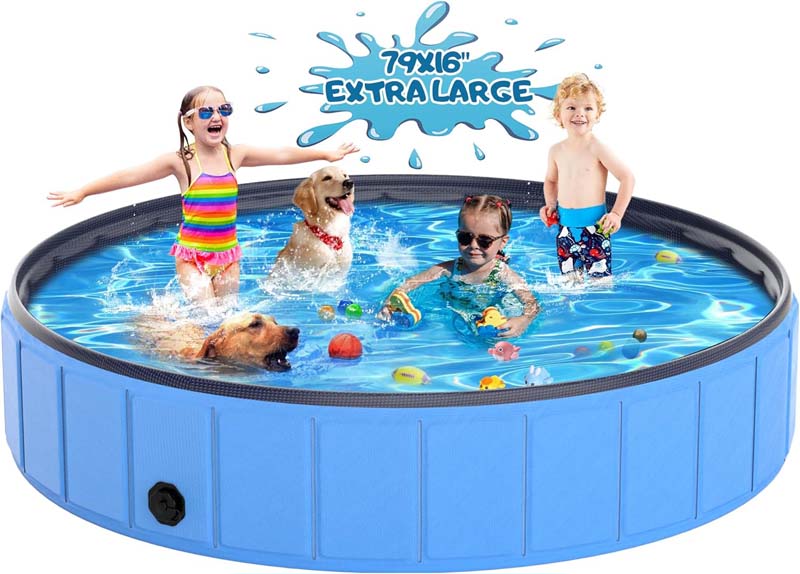
Foldable paddling pools have become increasingly popular, especially among pet owners and families seeking durability without inflation. These pools use reinforced PVC walls combined with internal support panels to maintain shape.
Key characteristics:
- No air inflation required
- High resistance to pressure, claws, and repeated use
- Easy folding for storage
Foldable PVC paddling pools are widely used for dog cooling, pet bathing, and family water play. Their structural design makes them more durable than many inflatable pools while remaining more space-efficient than rigid plastic models.
Large Family-Size Paddling Pools
Large paddling pools are designed for multiple users at the same time, including children and adults. They are usually inflatable but built with thicker materials and reinforced seams.
Key characteristics:
- Wider base and higher wall stability
- Suitable for shared family use
- Designed for backyards and outdoor areas
These pools are popular among families who want a social water-play experience without committing to a permanent swimming pool. Due to their size, they require more space and careful water management.
Paddling Pools Designed for Pets
Pet-specific paddling pools are designed with animals in mind, particularly dogs. They often fall into the foldable PVC category but include additional pet-focused features.
Key characteristics:
- Thick, reinforced walls
- Non-slip bases for animal safety
- Scratch- and claw-resistant materials
These pools are commonly used for cooling, bathing, and light rehabilitation exercises. Unlike standard kiddie pools, pet paddling pools are engineered to withstand repetitive use and animal movement.
Specialty and Hybrid Paddling Pool Designs
Some paddling pools combine water play with additional functions, creating hybrid or specialty designs.
Examples include:
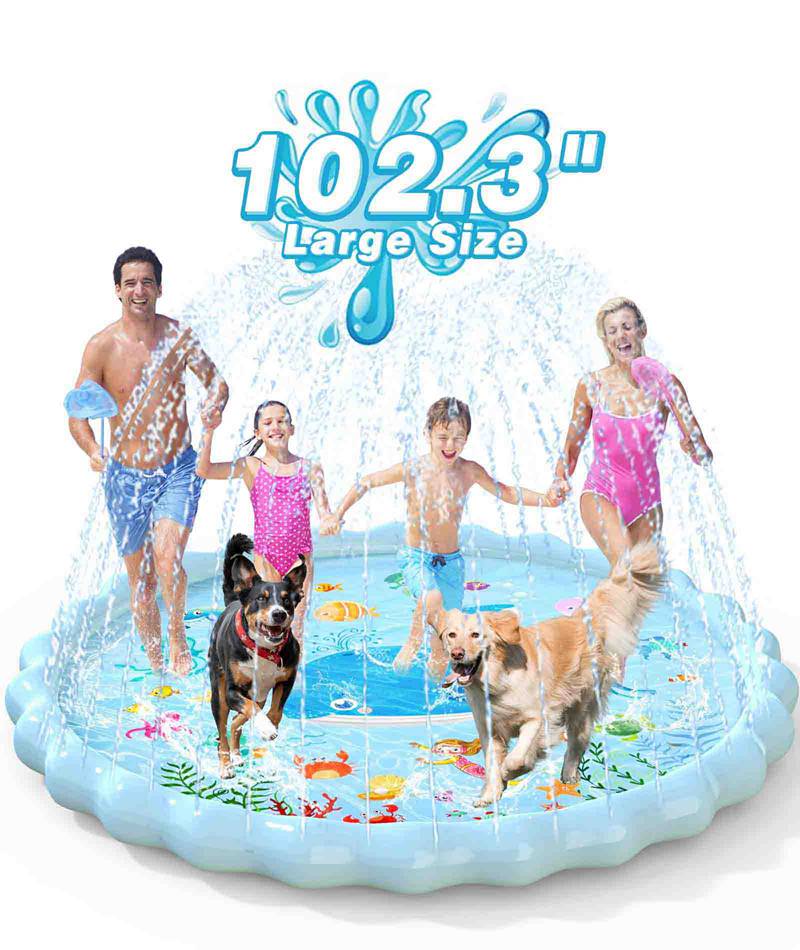
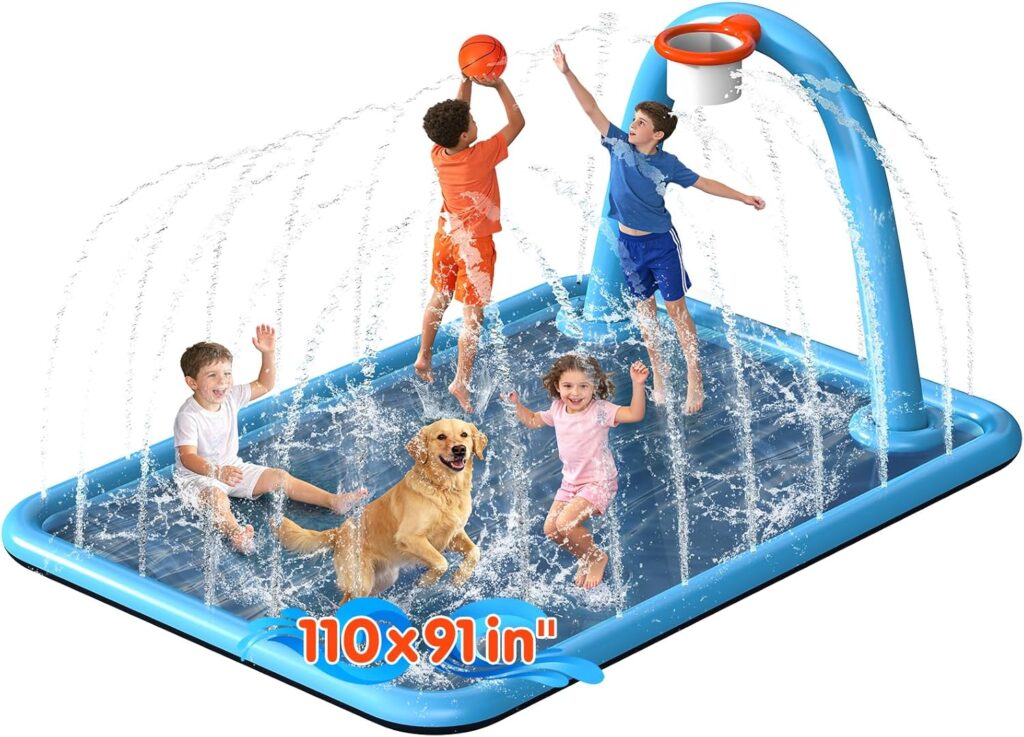
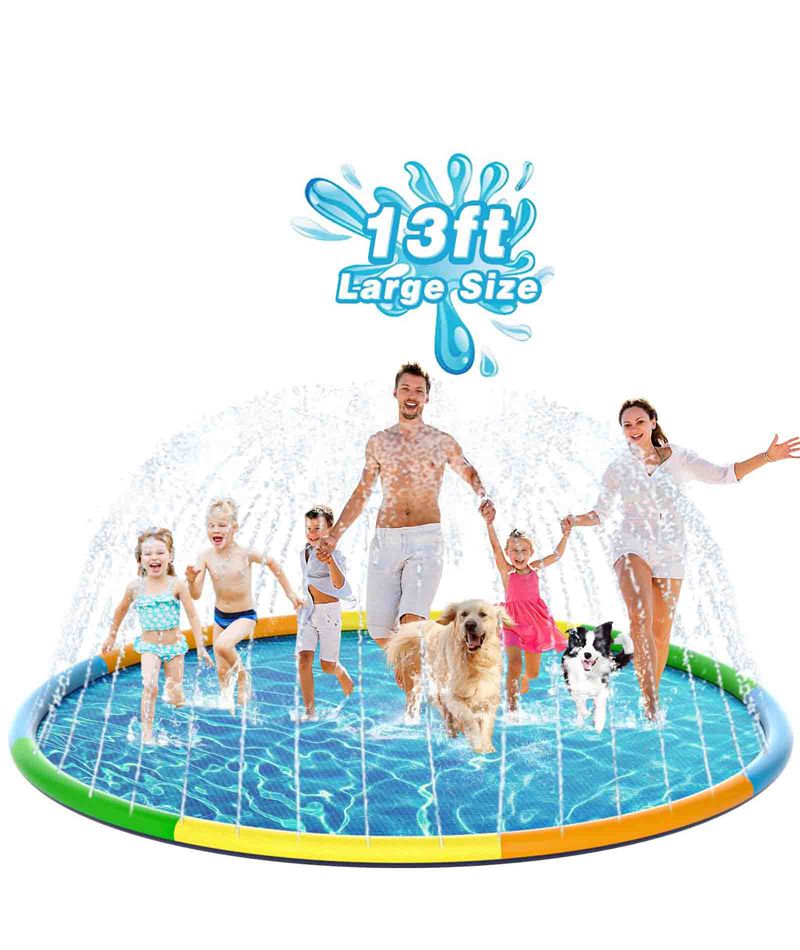
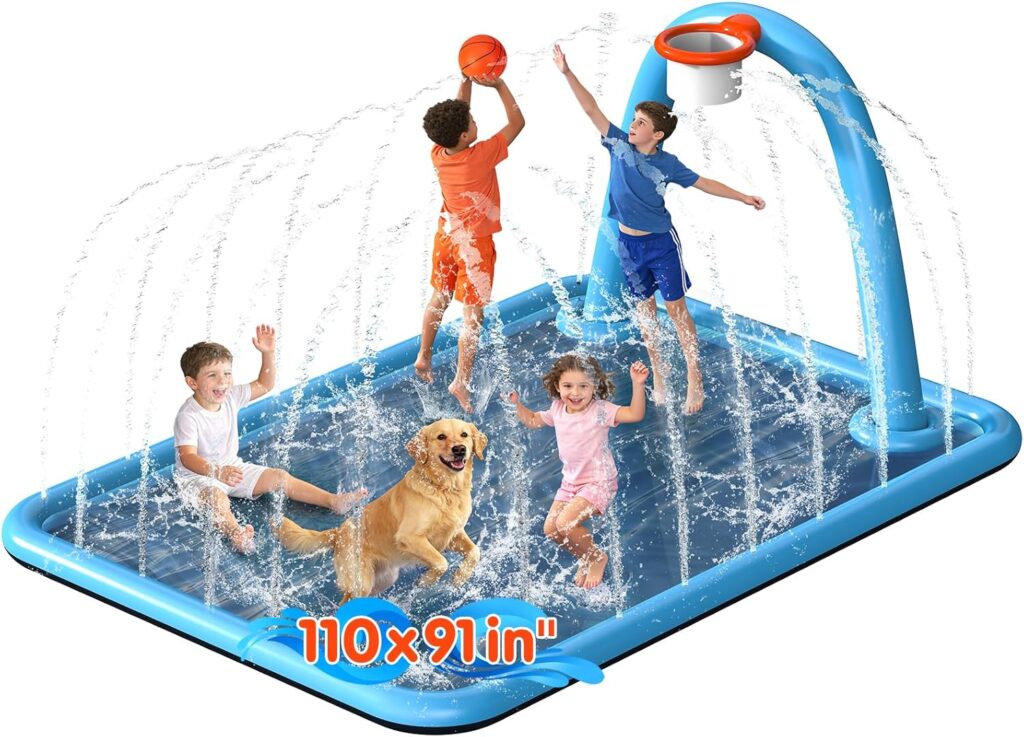
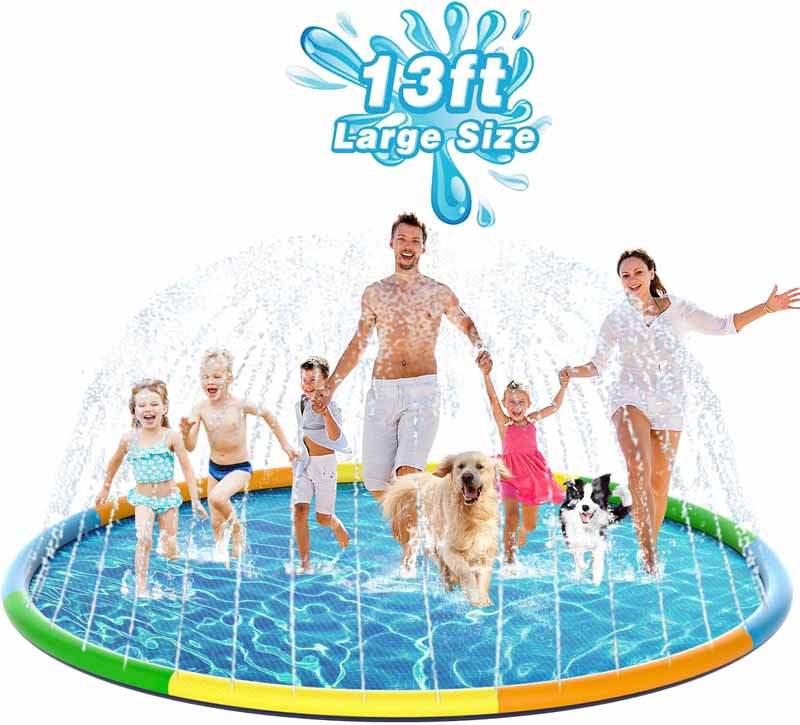
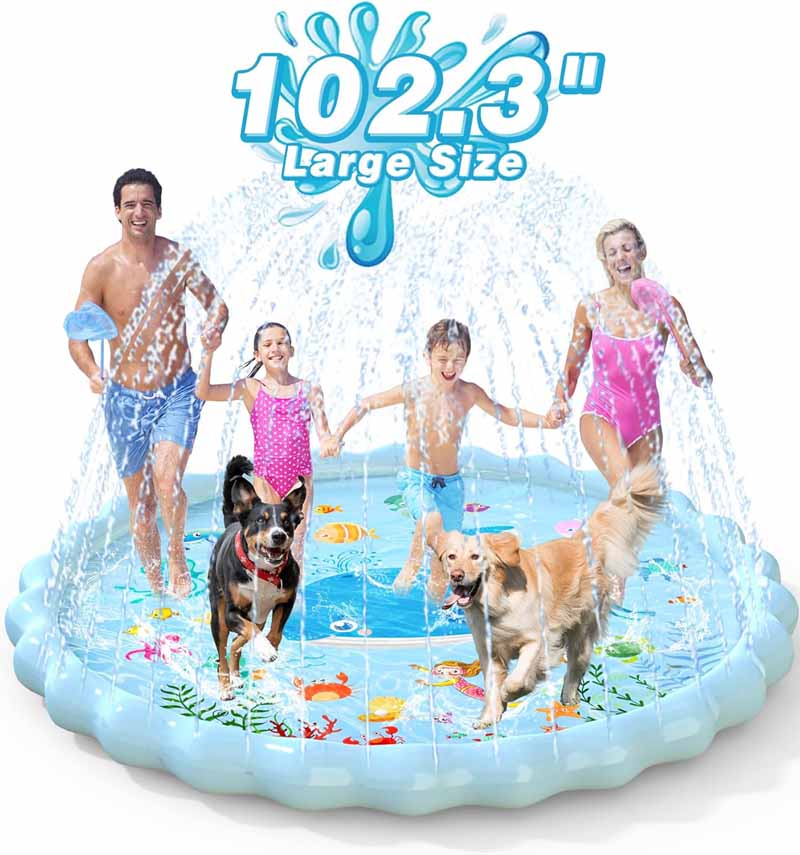
- Splash-pad-style paddling pools with water spray features
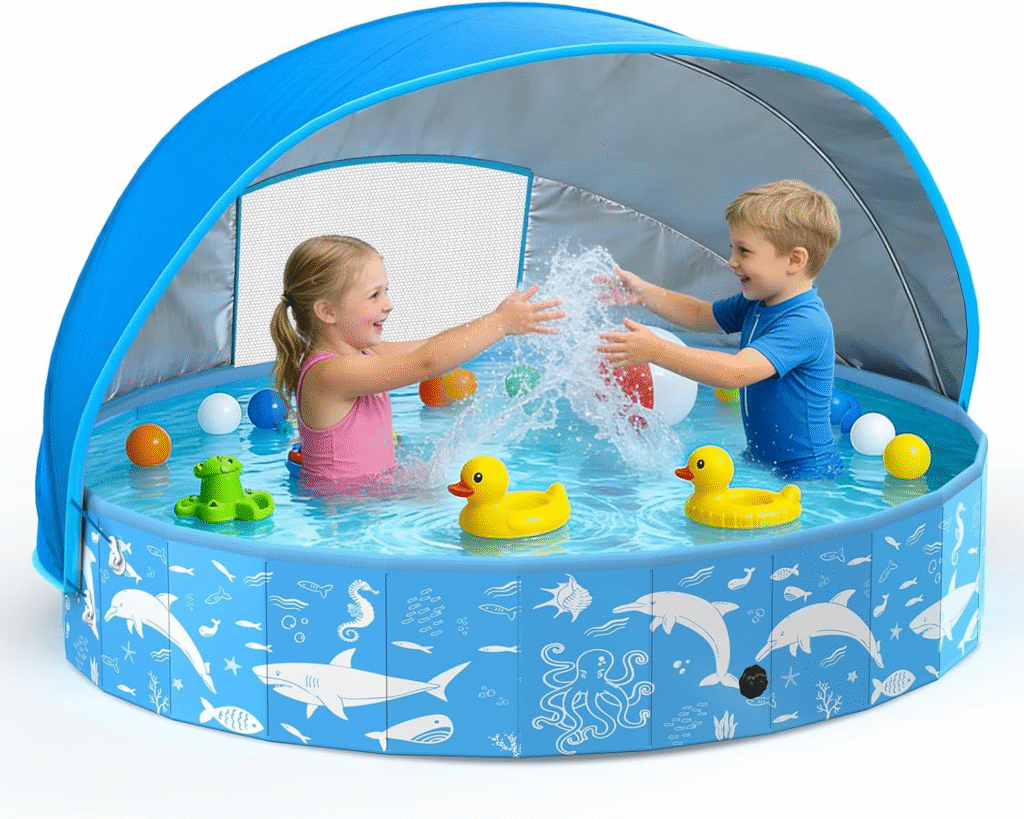
- Paddling pools with built-in seats or shaded canopies
- Multi-chamber inflatable designs for added stability
These designs target specific use cases, such as interactive play, sun protection, or enhanced comfort, and are often used in premium or themed product lines.
How Do Different Types of Paddling Pools Compare?
| Type | Inflation Required | Portability | Durability | Typical Users |
|---|---|---|---|---|
| Inflatable | Yes | High | Medium–High | Kids, families |
| Rigid plastic | No | Low | High | Toddlers |
| Foldable PVC | No | Medium–High | High | Pets, families |
| Large family | Yes | Medium | Medium–High | Families |
| Pet-specific | No / Optional | Medium | Very High | Dogs, pets |
Understanding these differences helps users choose a paddling pool that fits their space, lifestyle, and long-term usage needs rather than selecting based on appearance alone.
What Are Paddling Pools Made Of?

Paddling pools are most commonly made from PVC, reinforced PVC composites, or hard plastic. PVC is widely used due to its flexibility, water resistance, and ability to form inflatable or foldable structures. Higher-quality paddling pools use thicker, non-toxic, and reinforced PVC materials that meet international safety standards, offering improved durability, stability, and long-term family use.
Why Is PVC the Most Common Material for Paddling Pools?
PVC (polyvinyl chloride) has become the dominant material for paddling pools because it balances flexibility, strength, safety, and cost efficiency better than most alternatives.
Key reasons PVC is widely used:
- Naturally waterproof and airtight
- Flexible enough for inflatable and foldable designs
- Strong resistance to tearing and stretching
- Suitable for heat welding and high-frequency sealing
PVC allows manufacturers to create paddling pools that are lightweight, portable, and easy to store, while still maintaining structural integrity during repeated filling, draining, and seasonal use. For modern households, this flexibility is essential.
What Is the Difference Between Thin PVC and Reinforced PVC?
Not all PVC paddling pools are made the same. The thickness and structure of the PVC material significantly affect performance and lifespan.
Thin PVC (low-cost pools):
- More prone to punctures and leaks
- Shorter lifespan
- Often designed for limited or one-season use
Reinforced PVC (higher-quality pools):
- Multi-layer construction
- Improved tear and pressure resistance
- Better shape retention under water weight
Reinforced PVC is commonly used in family-size, pet-friendly, and foldable paddling pools, where durability and repeated use are expected.
What Are Composite Materials in Paddling Pools?
Composite paddling pool materials combine PVC with additional structural layers, such as internal mesh or reinforced backing, to improve performance without excessive weight.
Benefits of composite materials include:
- Higher resistance to punctures and deformation
- Greater stability when filled with water
- Longer service life in outdoor environments
These materials are especially important for large paddling pools and pet paddling pools, which must withstand greater stress from movement, claws, and uneven weight distribution.
Are Hard Plastic Paddling Pools Still Used?
Yes, hard plastic paddling pools are still used, particularly for toddlers and very young children. These pools are typically molded from polyethylene or similar plastics.
Advantages:
- No inflation required
- Resistant to punctures
- Simple, rigid structure
Limitations:
- Bulky and difficult to store
- Less comfortable than PVC designs
- Limited size and flexibility
Hard plastic pools are practical for permanent or semi-permanent setups but are less suitable for households that need portability or compact storage.
Are Paddling Pool Materials Safe for Children and Pets?
Material safety depends heavily on manufacturing standards, not just the material type.
High-quality paddling pools are made using:
- Non-toxic PVC formulations
- Odor-free plasticizers
- Materials compliant with CPSIA, EN71, REACH, and ASTM standards
Lower-quality products may contain excessive chemical residues or degrade faster under UV exposure. This is why certified materials and proper testing are critical—especially for children and pets who have direct skin contact with the pool surface.
How Do UV Resistance and Outdoor Exposure Affect Materials?
Sun exposure is one of the main causes of paddling pool degradation. Without UV-resistant formulations, materials can become brittle, fade, or crack.
High-quality paddling pools often include:
- UV-stabilized PVC compounds
- Thicker outer layers
- Improved resistance to heat and sunlight
These features help extend the pool’s lifespan, especially for users who leave pools outdoors during the summer season.
How Do Materials Affect Comfort and User Experience?
Material choice influences more than durability—it directly affects comfort.
- Softer PVC surfaces feel more comfortable for children sitting or playing
- Anti-slip textured bases reduce fall risk
- Thicker walls provide better insulation from hot ground surfaces
Well-designed paddling pools use materials that balance comfort, safety, and stability, making them suitable for longer play sessions and repeated daily use.
Material Comparison Overview
| Material Type | Flexibility | Durability | Storage | Typical Use |
|---|---|---|---|---|
| Thin PVC | High | Low–Medium | Easy | Short-term use |
| Reinforced PVC | High | High | Easy | Families, kids |
| PVC Composite | Medium–High | Very High | Medium | Pets, large pools |
| Hard plastic | Low | High | Difficult | Toddlers |
Understanding material differences helps users avoid choosing a paddling pool based solely on appearance or price and instead focus on long-term value and safety.
How Do You Use a Paddling Pool?
A paddling pool is used by placing it on a flat, stable surface, filling it with a shallow amount of clean water, and supervising users during play or cooling. Proper use includes controlling water depth, refreshing or draining water regularly, keeping the pool clean, and drying and storing it correctly when not in use. These steps ensure safety, hygiene, and longer product lifespan.
Where Should You Place a Paddling Pool?
Correct placement is the first step to safe use.
A paddling pool should be placed on a flat, stable, and debris-free surface. Suitable surfaces include grass, foam mats, rubber play mats, or smooth concrete. Avoid gravel, rough stone, or uneven ground, as these can damage the pool base or cause instability.
For balconies or patios, weight is an important consideration. Water is heavy—1 liter of water weighs approximately 1 kilogram. Even a small paddling pool can add significant load once filled. Users should always confirm that the surface can safely support the combined weight of the pool, water, and occupants.
Whenever possible, choose a location with partial shade to reduce water overheating and material wear from direct sunlight.
How Do You Set Up a Paddling Pool Correctly?
Setup depends on the pool type, but the principles are similar across designs.
For inflatable paddling pools:
- Unfold the pool completely
- Inflate slowly and evenly
- Avoid over-inflation, which can stress seams
For foldable or rigid pools:
- Fully expand the walls
- Ensure support panels are properly positioned
High-quality paddling pools made from reinforced PVC will naturally hold their shape without excessive air pressure or force. Proper setup improves stability and helps prevent leaks or deformation during use.
How Much Water Should You Put in a Paddling Pool?
Paddling pools are designed for shallow water only. Adding more water does not improve safety or enjoyment.
Recommended water depths:
- Toddlers: 5–10 cm (2–4 inches)
- Children: 10–20 cm (4–8 inches)
- Dogs: Just enough to wet paws or body
- Adults: Shallow soaking only
Shallow water warms faster, is easier to supervise, and significantly reduces risk. Overfilling can cause instability, excessive splashing, and unnecessary stress on pool walls.
How Long Can You Keep Water in a Paddling Pool?
Water retention is a common concern.
General guidelines:
- 1 day: Best for hygiene and safety
- 2–3 days: Acceptable only if water is clean, covered, and unused overnight
- More than 3 days: Not recommended without filtration or treatment
Because most paddling pools do not have filtration systems, stagnant water can quickly develop bacteria, algae, or attract insects—especially in warm weather. For families with children or pets, daily or every-other-day draining is the safest practice.
Do You Need to Put Chlorine or Chemicals in a Paddling Pool?
In most cases, no.
Chemical treatments such as chlorine are generally unnecessary and not recommended for paddling pools due to:
- Small water volume
- Difficulty controlling dosage
- Increased exposure risk for children and pets
Instead, safe alternatives include:
- Frequent water changes
- Rinsing the pool after use
- Covering the pool when idle
If water must remain for a short period (2–3 days), mild, pet-safe pool cleaners may be used, but fresh water replacement remains the safest solution.
How Should You Supervise Children and Pets During Use?
Supervision is essential, regardless of pool depth.
Best practices include:
- Never leaving children unattended
- Staying within arm’s reach of toddlers
- Preventing rough play or jumping
- Monitoring pets for fatigue or overheating
Although paddling pools reduce many risks compared to swimming pools, they still involve water and require active supervision.
How Do You Clean a Paddling Pool After Use?
Cleaning should be simple and routine.
Steps:
- Drain all water
- Rinse with clean tap water
- Use mild soap if needed
- Rinse thoroughly again
Avoid harsh chemicals or abrasive brushes, which can damage PVC surfaces and reduce lifespan. Regular cleaning helps prevent odor buildup and material degradation.
How Do You Drain and Store a Paddling Pool Properly?
Proper storage extends product life.
After draining:
- Allow the pool to dry completely (inside and outside)
- Fold or deflate gently along natural creases
- Store in a cool, dry place away from direct sunlight
Storing a paddling pool while damp can lead to odor, mold, or weakened material over time. High-quality PVC pools tolerate repeated folding when fully dried.
Common Mistakes to Avoid When Using a Paddling Pool
- Overfilling with water
- Leaving water standing for days
- Using chlorine or harsh chemicals
- Placing the pool on sharp or uneven surfaces
- Storing the pool while wet
Avoiding these mistakes greatly improves safety, hygiene, and durability.
Is a Paddling Pool Safe for Children and Pets?
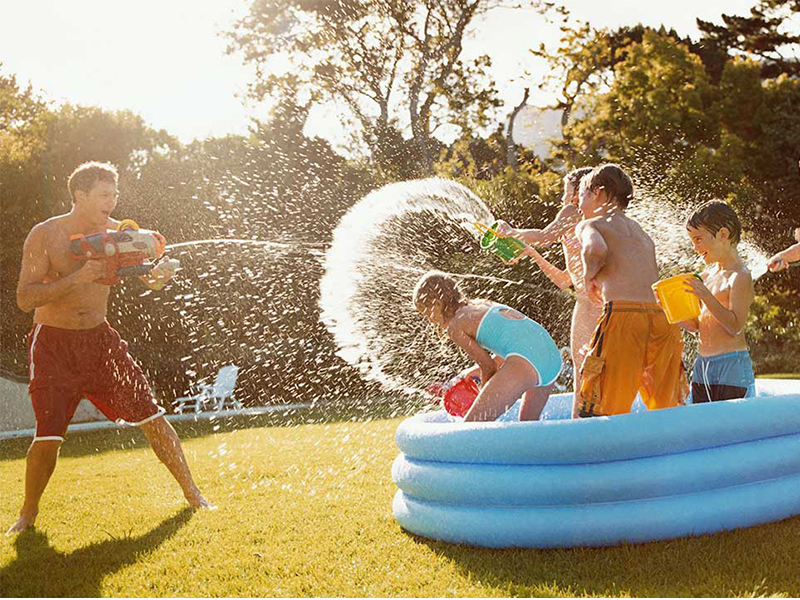
Yes, a paddling pool is generally safe for children and pets when used correctly. Safety depends on shallow water depth, constant supervision, stable placement, non-slip surfaces, and regular water changes. High-quality paddling pools made from certified non-toxic PVC further reduce health risks. While safer than swimming pools, paddling pools still require responsible use and adult oversight.
Why Are Paddling Pools Considered Safer Than Swimming Pools?
Paddling pools are inherently safer than traditional swimming pools because they are designed for ground-supported, shallow-water use rather than immersion.
Key safety advantages include:
- Shallow water depth (typically under 30 cm / 12 inches)
- Users remain seated or standing, not floating
- Lower drowning risk when properly supervised
- No diving, jumping, or swimming activity
Because users maintain constant contact with the pool floor, balance and control are significantly improved—especially for toddlers, pets, and non-swimmers. This design philosophy is central to why paddling pools are widely recommended for early water exposure and casual family use.
What Age Is a Paddling Pool Safe for Children?
With proper supervision, paddling pools can be suitable for children as young as 6 months old.
General age-related guidance:
- 6–12 months: Minimal water depth, adult within arm’s reach
- Toddlers (1–3 years): Shallow water, seated play, constant supervision
- Young children (3–6 years): Controlled splashing, clear rules, supervision
Unlike swimming pools, paddling pools allow children to interact with water gradually, which can help build comfort and confidence without overwhelming them. However, adult supervision is always required, regardless of age or water depth.
Are Paddling Pools Safe for Dogs and Other Pets?
Yes, paddling pools are widely used for pets—especially dogs—when designed appropriately.
Pet-safe paddling pools typically feature:
- Reinforced PVC or composite walls
- Non-slip bases to prevent slipping
- Stable, low-profile designs
They are commonly used for:
- Cooling during hot weather
- Bathing and grooming
- Light rehabilitation or joint relief
Pet owners should always monitor animals for signs of stress, overheating, or fatigue. Not all dogs enjoy water, and forcing use can increase risk rather than reduce it.
What Role Do Materials Play in Safety?
Material quality is a major factor in paddling pool safety.
High-quality paddling pools use:
- Non-toxic, odor-free PVC formulations
- Materials compliant with CPSIA, EN71, REACH, and ASTM standards
- Smooth seams and reinforced joints
Low-quality materials may degrade faster, release odors, or become brittle under sunlight. This can increase the risk of leaks, surface irritation, or unexpected failure during use—especially for children and pets with sensitive skin.
How Does Water Hygiene Affect Safety?
Water hygiene is often the most overlooked safety factor.
Because paddling pools usually lack filtration:
- Water should ideally be changed daily
- Standing water beyond 2–3 days increases bacterial risk
- Warm temperatures accelerate algae and insect growth
Chemical treatments like chlorine are generally not recommended due to dosing difficulty and exposure risk. Fresh water replacement and simple rinsing are safer and more effective for small paddling pools.
What Supervision Rules Should Always Be Followed?
Even shallow water requires supervision.
Essential rules include:
- Never leaving children unattended
- Staying within arm’s reach of toddlers
- Preventing rough play, pushing, or jumping
- Supervising pets at all times
Paddling pools reduce risk, but they do not eliminate it. Safety comes from design + behavior, not design alone.
What Are the Most Common Safety Mistakes to Avoid?
Common mistakes that reduce safety include:
- Overfilling the pool
- Leaving water standing for multiple days
- Using chlorine or harsh chemicals
- Placing the pool on uneven or sharp surfaces
- Storing the pool while wet
Avoiding these mistakes significantly improves both safety and product lifespan.
When Should You Avoid Using a Paddling Pool?
There are situations where paddling pool use should be limited or avoided:
- Extremely hot surfaces that can overheat pool materials
- Unsanitary water conditions
- Unstable placement areas
- Children or pets showing fear, fatigue, or distress
Responsible use means knowing when not to use the pool as much as knowing how to use it.
How Do You Choose the Right Paddling Pool?

To choose the right paddling pool, consider who will use it, where it will be placed, how often it will be used, and what level of durability and safety is required. Key factors include size, pool type, material quality, safety features, ease of storage, and compliance with safety standards. The best paddling pool is one that fits real living conditions, not just visual preference.
Who Will Use the Paddling Pool Most Often?
The first and most important question is who the primary user is. Different users have very different needs.
- Babies and toddlers need shallow depth, soft edges, and maximum stability
- Young children benefit from wider space and reinforced seams
- Families need larger size and multi-user stability
- Pets (especially dogs) require thicker walls, scratch resistance, and non-slip bases
- Adults may prefer deeper paddling pools with better structural support
Choosing a pool without clearly identifying the main user often leads to buying the wrong size or material.
How Much Space Do You Actually Have?
Many buyers underestimate how much space a paddling pool needs once filled.
Before choosing a pool, measure:
- Available ground space
- Clearance for splashing and movement
- Access for drainage
Balconies, patios, and small yards often require compact or foldable designs, while backyards can accommodate larger inflatable family pools. Remember that water adds weight and movement—tight spaces amplify instability.
Which Type of Paddling Pool Fits Your Lifestyle?
Different paddling pool types suit different lifestyles:
- Inflatable pools – best for families needing portability and comfort
- Foldable PVC pools – ideal for pets and frequent use
- Rigid plastic pools – suitable for permanent or semi-permanent setups
If you plan to use the pool frequently or year after year, durability should matter more than initial price. Occasional use favors lightweight and easy-storage designs.
Why Does Material Quality Matter So Much?
Material choice directly affects safety, lifespan, and comfort.
High-quality paddling pools typically use:
- Thick or reinforced PVC
- Composite structures for shape retention
- Non-toxic, odor-free formulations
Lower-quality materials may look similar but degrade faster, leak more easily, and become brittle under sunlight. This is especially important for households with children or pets who have direct skin contact with the pool.
What Safety Features Should You Look For?
Safety is not just about water depth.
Important features include:
- Non-slip or textured pool base
- Reinforced seams and edges
- Stable, wide base design
- Smooth interior surfaces
For pet use, claw-resistant walls and slip-resistant bottoms are essential. For children, soft edges and stable structure matter more than size alone.
How Important Is Drainage and Easy Cleaning?
Ease of maintenance strongly affects how often a paddling pool is actually used.
Look for:
- Built-in drain plugs
- Smooth surfaces that rinse easily
- Designs that fully dry before storage
Pools that are difficult to drain or clean tend to be used less and discarded sooner, regardless of initial quality.
Should You Check Safety Certifications and Standards?
Yes—especially for family and pet use.
Reliable paddling pools often comply with:
- CPSIA (United States)
- EN71 / REACH (European Union)
- ASTM safety standards
Certification indicates that materials and construction have been tested for chemical safety, durability, and physical risk. This is a strong indicator of long-term reliability.
Is a Cheaper Paddling Pool Always a Better Deal?
Not necessarily.
A very low-priced paddling pool may:
- Last only one season
- Require frequent patching
- Pose higher safety risks
A slightly higher upfront cost often results in:
- Multiple years of use
- Better comfort and stability
- Less waste and replacement
Value should be measured by cost per season, not purchase price alone.
Quick Decision Guide
| Question | What to Prioritize |
|---|---|
| Who will use it? | Depth, wall strength, safety |
| Where will it be placed? | Size, stability, weight |
| How often will it be used? | Material durability |
| Children or pets involved? | Certified non-toxic materials |
| Limited storage space? | Inflatable or foldable design |
Answering these questions honestly leads to a better purchase decision than choosing based on appearance alone.
Why Are Inflatable Paddling Pools So Popular Today?
Inflatable paddling pools are popular because they deliver a low-cost, low-commitment way to enjoy water at home. They’re lightweight, quick to set up, comfortable to sit in, and easy to store when not in use—making them ideal for modern families, renters, and pet owners. Improvements in PVC materials, valves, and seam welding have also made today’s inflatable pools more durable and safer than older designs.
How Do Modern Lifestyles Make Inflatable Pools More Attractive?
Inflatable paddling pools fit the way people live now—especially in cities and suburban neighborhoods where outdoor space is limited or shared. Many households don’t have the room (or permission) for a permanent pool, and they don’t want the ongoing maintenance of a large above-ground setup. An inflatable paddling pool solves that problem in a very “modern” way: you can set it up in minutes, enjoy it immediately, and pack it away when you’re done. This flexibility is especially appealing to renters, families who move frequently, and anyone who wants seasonal fun without long-term commitment.
Why Do Families Prefer Inflatable Pools for Kids?
For families, inflatable pools hit the sweet spot between fun and practicality. The soft, air-cushioned walls feel safer and more comfortable for children than hard plastic edges. Parents also like that inflatable pools can be sized to match different age groups—from small toddler pools to larger family paddling pools. Another big reason is convenience: an inflatable pool can turn an ordinary backyard or patio into a “summer activity zone” without planning, construction, or expensive accessories. When the season ends, it deflates and stores in a closet or garage, which is a major advantage for households with limited storage.
What Makes Inflatable Pools Useful for Pet Owners?
Pet owners—especially dog owners—have adopted inflatable and foldable water pools as practical cooling and care tools. During hot weather, a shallow pool can help dogs regulate body temperature quickly. Many pet owners also use paddling pools for bathing, rinsing, or even light rehab exercises for older dogs. While some pets need more claw-resistant foldable PVC designs, inflatable pools still remain popular for smaller dogs, short-term cooling, or owners who prioritize comfort and portability. In other words, the inflatable pool is no longer “just for kids”—it has become a multi-purpose household product.
How Have PVC Materials and Construction Improved Durability?
A big reason inflatable paddling pools are more popular today is simple: they’re better made than they used to be. Older inflatable pools were often thin, easy to puncture, and prone to slow leaks. Modern manufacturing has improved the key weak points:
- Thicker PVC options for better puncture resistance
- Reinforced seam designs to reduce stress cracking
- Higher-quality valves that hold air longer
- High-frequency welding that creates stronger, cleaner seals than basic gluing
As these upgrades became more common, consumers started trusting inflatable pools more. Better durability also means better reviews, more repeat purchases, and stronger word-of-mouth—especially on platforms like Amazon.
Why Are Inflatable Pools a Better Value Than Bigger Pool Options?
Many families compare inflatable paddling pools to larger alternatives and realize the value is hard to beat. Permanent pools require installation, permits, higher water volume, filtration, and ongoing chemical treatment. Even above-ground framed pools require time, tools, and space. Inflatable paddling pools provide a “good enough” water experience for most households at a fraction of the cost and effort. They’re also more water-efficient because they’re shallow—meaning less waste when you drain and refill. For families who mainly want cooling and play (not swimming laps), the inflatable option is simply the smarter purchase.
What Buying Behaviors and Search Trends Support This Popularity?
Inflatable paddling pools align well with how people shop today. Online buyers want products that are:
- Easy to understand
- Fast to ship
- Simple to set up
- Supported by real reviews and images
That’s exactly how inflatable pools are positioned in search results and e-commerce listings. They perform well in “impulse season” demand (heat waves, holiday weekends, summer breaks), when shoppers want quick solutions. This also explains why Google searches often spike around late spring and early summer, and why AI search tools tend to recommend inflatable pools as the default option for families seeking at-home water fun.
When Is an Inflatable Paddling Pool NOT the Best Choice?
To keep this truly helpful and balanced, it’s worth stating the limits. Inflatable paddling pools may not be the best choice when:
- You have large, high-energy dogs with sharp claws
- You need heavy-duty, daily commercial-level use
- Your placement surface is rough or full of sharp debris
- You plan to leave the pool outdoors constantly in strong sun
In those situations, foldable reinforced PVC pools or more rigid structures may provide better long-term durability. Understanding these trade-offs helps consumers choose confidently rather than buying based on popularity alone.
Are Paddling Pools Worth Buying?

Yes, paddling pools are worth buying for many households, especially families with children, pet owners, and people with limited outdoor space. They offer a low-cost, low-maintenance way to cool down, play, and relax without the expense or commitment of a permanent pool. Their value depends on realistic expectations, proper use, and choosing the right type for your needs.
What Problem Does a Paddling Pool Actually Solve?
To decide whether a paddling pool is worth buying, it helps to clarify what problem you want it to solve.
Paddling pools are not meant to replace full swimming pools. Instead, they address everyday needs such as:
- Cooling off during hot weather
- Giving children safe water play at home
- Helping pets manage heat or bathing
- Creating quick summer activities without planning or setup
For households that mainly want comfort, convenience, and occasional fun, a paddling pool often solves the problem more effectively than larger, more complex alternatives.
How Do Paddling Pools Compare in Cost and Value?
One of the strongest arguments in favor of paddling pools is value for money.
Compared to other water options:
- Permanent pools involve high installation and maintenance costs
- Above-ground framed pools require tools, space, and filtration
- Public pools require travel, time, and recurring fees
Paddling pools, by contrast, are affordable, quick to use, and inexpensive to maintain. Many families use them repeatedly throughout the summer, resulting in a very low cost per use. Even higher-quality paddling pools typically cost far less than larger pool systems while delivering sufficient enjoyment for their intended purpose.
Are Paddling Pools Practical for Daily or Repeated Use?
Yes—when chosen correctly.
High-quality paddling pools made from reinforced PVC or composite materials are designed for repeated filling, draining, and seasonal use. They are especially practical for:
- Daily cooling during heat waves
- Short play sessions for young children
- Regular pet use (cooling or bathing)
The key is matching the pool type to frequency of use. Inflatable pools are ideal for casual or seasonal use, while foldable reinforced pools are better for frequent or pet-heavy use.
Do Paddling Pools Make Sense for Small Spaces?
For many people, this is the deciding factor.
Paddling pools are particularly well-suited for:
- Small backyards
- Patios and terraces
- Balconies (with proper weight considerations)
- Temporary outdoor setups
Their compact footprint, shallow water volume, and easy storage make them one of the few water-play options available to urban households and renters. In these environments, paddling pools are often not just “worth buying”—they are the only practical option.
Are Paddling Pools Worth It for Children?
For children, especially those under six, paddling pools often provide more appropriate enjoyment than larger pools.
Benefits for kids include:
- Shallow water that reduces risk
- Easier supervision for parents
- Sensory play and confidence-building
- No pressure to swim or perform
Because children can interact with water safely and casually, paddling pools are frequently used more often than deeper pools that require constant preparation or safety measures.
Are Paddling Pools Worth It for Pets?
For pet owners—especially dog owners—paddling pools can be extremely worthwhile.
They are commonly used for:
- Heat relief during summer
- Easy outdoor bathing
- Gentle movement or rehab for older dogs
When designed with reinforced walls and non-slip bases, paddling pools become a simple, reusable tool that improves pet comfort and reduces stress during hot months.
What Are the Limitations You Should Be Aware Of?
To make a fair decision, it’s important to understand what paddling pools cannot do.
Limitations include:
- Not suitable for swimming or diving
- Limited capacity for many users at once
- Require regular water changes for hygiene
- Less durable than permanent pools if poorly made
If your goal is serious swimming, hosting large groups, or leaving a pool filled and unattended for long periods, a paddling pool may not meet your expectations.
When Is a Paddling Pool Not Worth Buying?
A paddling pool may not be the right choice if:
- You want a permanent, year-round pool
- You need deep water for swimming or training
- You plan heavy, unsupervised use
- You expect zero maintenance or water changes
In these cases, investing in a more robust pool system may make more sense.
Final Decision Guide — Is It Worth It for You?
| Your Situation | Is a Paddling Pool Worth It? |
|---|---|
| Family with young children | Yes |
| Pet owner in hot climate | Yes |
| Small yard, patio, or balcony | Yes |
| Occasional summer use | Yes |
| Need for swimming or exercise | No |
| Large group or permanent setup | No |
Why Many Households Ultimately Say “Yes”
For most people, paddling pools offer something that larger pool options don’t: immediate, everyday usability. They require minimal commitment, fit real living spaces, and deliver comfort and enjoyment exactly when it’s needed—on hot days, without hassle.
That combination is why so many families, pet owners, and modern households consider paddling pools not just worth buying, but surprisingly useful year after year.
Buy or Customize with Epsilon
Whether you are:
- A family looking to buy a safe, high-quality paddling pool today
- A pet owner seeking a durable dog paddling pool
- A brand or retailer searching for OEM/ODM manufacturing
Epsilon is ready to support you.
If you’re ready to bring safer, smarter water play into your life—or your brand—Epsilon is your trusted partner.