Skip to content
How to prevent UV damage on outdoor inflatables
# Your Trusted Inflatable Supplier In US

Outdoor inflatables have become a defining part of modern outdoor living. From backyard splash pads and inflatable pools to pet cooling stations and inflatable boats, these products promise easy fun, convenience, and flexibility. Yet one quiet enemy shortens their lifespan faster than rough play or heavy use: UV radiation.
Many users assume that fading color is the main sign of sun damage. In reality, UV exposure works silently beneath the surface—drying out PVC, weakening seams, and reducing flexibility long before cracks or leaks appear. By the time an inflatable fails, the damage has often been accumulating for months.
UV damage on outdoor inflatables can be prevented by limiting direct sun exposure, using UV-resistant materials, cleaning off residue that accelerates degradation, and storing inflatables properly when not in use. While modern PVC includes UV stabilizers, no inflatable is designed for constant sun exposure. Smart usage habits and proper care can extend inflatable lifespan by multiple seasons.
Understanding how UV damage works—and what actually prevents it—changes how users think about inflatable care. This guide goes beyond generic advice and explains why certain habits matter, which products are most at risk, and how manufacturers design inflatables to survive outdoors.
Imagine two identical inflatables bought on the same day. One is left in the sun every afternoon. The other is shaded, cleaned, and stored properly. A year later, one feels stiff and brittle, the other still looks and performs like new. The difference isn’t luck—it’s UV management. Let’s break it down.
What Is UV Damage and Why Does It Affect Outdoor Inflatables?
UV damage occurs when ultraviolet radiation breaks down the molecular structure of inflatable materials such as PVC. Prolonged sun exposure causes plasticizers to migrate, polymers to weaken, and stabilizers to degrade, leading to fading, stiffness, cracks, and seam failure. Outdoor inflatables are especially vulnerable because they experience continuous UV exposure combined with heat, air pressure, and reflected sunlight from water or hard surfaces.
The Science Behind UV Damage in Outdoor Inflatables
UV damage is not a cosmetic issue—it is a material degradation process that directly affects performance, safety, and lifespan. To understand why outdoor inflatables suffer from UV damage more than most consumer products, it helps to look at what UV radiation does at the molecular and structural levels.
1. What UV Radiation Actually Does to PVC Materials
Ultraviolet (UV) radiation is a high-energy component of sunlight. When UV rays strike PVC used in outdoor inflatables, they trigger photo-oxidation, a chemical reaction that breaks down polymer chains inside the material.
This process leads to:
- Shortened polymer chains (loss of strength)
- Migration and evaporation of plasticizers (loss of flexibility)
- Depletion of UV stabilizers over time
Unlike punctures or mechanical damage, UV degradation happens gradually and invisibly. The surface may still look intact while the internal structure is already compromised.
Material Changes in PVC Caused by UV Exposure
| Material Property | Before UV Exposure | After Prolonged UV Exposure |
|---|---|---|
| Flexibility | High, elastic | Reduced, stiff |
| Tensile strength | Stable | Decreased |
| Surface texture | Smooth | Dry, chalky |
| Color stability | Uniform | Faded or yellowed |
2. Why Outdoor Inflatables Are More Vulnerable Than Other PVC Products
Not all PVC products age the same way under sunlight. Outdoor inflatables are uniquely vulnerable because they combine thin flexible material, internal air pressure, and constant environmental exposure.
Key factors include:
- Continuous inflation stress stretching UV-weakened material
- Elevated surface temperatures under direct sunlight
- Repeated expansion and contraction from daily heat cycles
In contrast, rigid PVC items or shaded products experience far less mechanical stress during UV exposure.
UV Exposure Risk Comparison by Product Type
| Product Type | Typical UV Exposure | Mechanical Stress | Overall UV Risk |
|---|---|---|---|
| Outdoor inflatables | High, direct | High (air pressure) | Very high |
| Inflatable boats | High, reflected UV | High | Very high |
| Indoor inflatables | Low | Moderate | Low |
| Rigid PVC products | Moderate | Low | Low–moderate |
3. Why UV Damage Is Often Invisible Until Failure Occurs
One of the most dangerous aspects of UV damage is that it rarely shows immediate warning signs. Early-stage degradation happens at the molecular level, meaning:
- The material looks fine
- Seams appear intact
- Inflation still holds
However, lab testing shows that PVC can lose 20–40% of its elongation capacity before visible cracking appears. At that point, normal use—such as sitting, jumping, or pet movement—can push the material past its failure threshold.
This explains why inflatables often fail “suddenly” after months of sun exposure.
Common UV Damage Symptoms and Their Real Meaning
| Visible Sign | What It Indicates | Actual Risk Level |
|---|---|---|
| Color fading | UV stabilizer depletion | Medium |
| Surface stiffness | Plasticizer loss | High |
| Chalky residue | Advanced oxidation | High |
| Seam cracking | Structural failure | Critical |
4. The Role of Reflected and Indirect UV Exposure
Many users underestimate UV exposure because they focus only on direct sunlight. In reality, reflected UV can be just as damaging.
Surfaces that intensify UV exposure include:
- Water (pools, lakes, splash pads)
- Concrete and stone patios
- Light-colored decking or tiles
- Sand and gravel
This reflected radiation attacks the underside and sidewalls of inflatables, areas users often overlook when assessing sun exposure.
5. Why UV Damage Directly Impacts Safety, Not Just Appearance
As UV damage progresses, PVC loses its ability to flex and distribute stress evenly. This leads to:
- Increased risk of seam splitting
- Reduced load-bearing capacity
- Higher chance of sudden rupture
For products used by children and pets, this becomes a safety concern rather than a cosmetic one. A brittle inflatable can fail without warning under normal use conditions.
Key Takeaway for Users
UV damage affects outdoor inflatables because it attacks the chemical structure, flexibility, and stress tolerance of PVC materials. The damage is cumulative, often invisible at first, and accelerated by heat, pressure, and reflected sunlight.
Understanding this process is the foundation for preventing UV damage effectively—not through guesswork, but through informed use, proper care, and choosing products engineered for outdoor durability.
Which Outdoor Inflatables Are Most at Risk of UV Damage?
Outdoor inflatables most at risk of UV damage are those used under prolonged direct sunlight, high temperatures, and reflective environments. Splash pads, inflatable pools, pet pools, water slides, and inflatable boats experience the highest UV stress due to long outdoor exposure, thin flexible PVC, internal air pressure, and reflected UV from water or hard surfaces.
Why Some Inflatables Fail Faster Than Others in the Sun
Not all outdoor inflatables degrade at the same rate. UV damage is driven by a combination of product type, usage pattern, environment, and material thickness. Understanding these risk factors helps users prioritize protection where it matters most.
1. Product Type: Which Inflatables Face the Most Sun Exposure
Some inflatables are inherently more exposed to UV simply because of how and where they are used. Products designed for extended outdoor play or water environments accumulate UV exposure much faster than inflatables used intermittently.
High-risk categories include:
- Splash pads and spray mats (left out all day)
- Inflatable pools (often kept inflated for weeks)
- Pet pools (daily use, minimal shade)
- Water slides and play centers
- Inflatable boats and floating platforms
These products often remain fully inflated and stationary, receiving uninterrupted sunlight for hours or days.
UV Risk by Inflatable Product Type
| Inflatable Type | Typical Daily Sun Exposure | Internal Stress | UV Risk Level |
|---|---|---|---|
| Splash pads | 6–10 hours | Low–moderate | Very high |
| Inflatable pools | 5–9 hours | Moderate | Very high |
| Pet pools | 4–8 hours | Moderate | High |
| Water slides | 4–7 hours | High | High |
| Inflatable boats | 3–6 hours | High | Very high |
| Occasional inflatables | 1–3 hours | Low | Low–moderate |
2. Usage Pattern: Continuous Exposure vs. Intermittent Use
How long an inflatable stays outside matters more than how often it is used. UV damage is cumulative, meaning idle exposure is just as harmful as active use.
Common high-risk habits include:
- Leaving inflatables inflated all day “just in case”
- Keeping pools filled and exposed between uses
- Storing inflatables outdoors overnight
- Using inflatables as semi-permanent backyard fixtures
Even if an inflatable is only used for one hour, leaving it in the sun for the remaining six hours still causes UV degradation.
3. Environment: Where UV Damage Accelerates the Most
UV intensity varies significantly by environment. Certain locations and surfaces dramatically amplify exposure.
Key environmental risk factors:
- Strong direct sunlight (clear skies, summer months)
- High ambient temperatures
- Reflective surroundings such as water, concrete, tiles, or sand
- Low wind airflow, which increases surface heat buildup
Environmental Factors That Increase UV Damage
| Environment Factor | Effect on UV Exposure | Risk Impact |
|---|---|---|
| Direct midday sun | Maximum UV intensity | Very high |
| Water reflection | UV reflected upward | High |
| Concrete/patios | Heat and UV reflection | High |
| Hot, dry climate | Faster plasticizer loss | High |
| Shaded grassy areas | Reduced UV intensity | Low |
4. Material Thickness and Construction Matter More Than Color
A common misconception is that darker or brighter colors protect better against UV. In reality, material thickness, formulation, and stabilizers matter far more.
Inflatables at higher risk tend to have:
- Thinner PVC walls for portability
- Large flat surfaces fully exposed to sunlight
- High air pressure relative to material thickness
Heavier-duty inflatables with reinforced seams and thicker PVC degrade more slowly—but they are still not immune.
Construction Features and UV Vulnerability
| Feature | UV Resistance Impact | Explanation |
|---|---|---|
| Thin PVC material | Low resistance | Faster UV penetration |
| Thick PVC material | Moderate resistance | Slower degradation |
| Reinforced seams | Improves durability | Reduces failure points |
| UV stabilizers | High resistance | Slows chemical breakdown |
| Constant inflation | Increases stress | Accelerates UV damage |
5. Why Water-Based Inflatables Are at the Highest Risk

Inflatables used in or near water face a double UV effect:
- Direct sunlight from above
- Reflected UV from water surfaces below
Additionally, water keeps surfaces cool to the touch, misleading users into thinking UV exposure is minimal—when chemical degradation is still occurring.
This is why inflatable boats, floating mats, and splash pads often show UV damage faster than expected.
Key Takeaway for Users
Outdoor inflatables are most at risk of UV damage when they are:
- Used frequently in direct sunlight
- Left outside between uses
- Placed on reflective or heat-retaining surfaces
- Made with thin, highly flexible PVC under pressure
Understanding which inflatables face the highest UV stress allows users to apply protection strategically—extending product life, improving safety, and avoiding premature failure.
How Does UV Damage Affect the Safety and Lifespan of Inflatables?
UV damage affects inflatables by reducing PVC flexibility, weakening seams, and lowering load-bearing capacity. Over time, ultraviolet exposure causes materials to become brittle, increasing the risk of cracks, air leaks, and sudden failure. As UV degradation progresses, inflatables not only lose lifespan but also become less safe for children, pets, and adults during normal use.
Why UV Damage Is a Safety Issue, Not Just Wear and Tear
Many users associate UV damage with faded colors or a “sun-worn” look. In reality, UV exposure changes how inflatable materials behave under stress. The most serious effects happen below the surface, where users can’t see them—but where safety is determined.
1. UV Damage Reduces Material Flexibility and Shock Absorption
Inflatables rely on elastic deformation to remain safe. When a child jumps or a pet steps into a pool, the PVC surface stretches slightly to absorb force and redistribute pressure.
UV radiation breaks down polymer chains and accelerates plasticizer loss. As a result:
- PVC becomes stiffer and less elastic
- Stress is no longer evenly distributed
- Impact forces concentrate at folds and seams
A UV-aged inflatable may look intact but behaves more like rigid plastic, making it far more likely to crack under normal use.
2. UV Exposure Weakens Welded Seams and Bonded Areas
Seams are the most critical structural components of inflatables. They are designed to flex along with surrounding material. UV damage disrupts this balance.
As PVC around the seam stiffens:
- Seam edges experience higher localized stress
- Micro-fractures form along weld lines
- Air or water pressure pushes against weakened zones
This leads to slow leaks at first, followed by sudden seam separation in advanced cases. Seam failure is one of the most common UV-related end-of-life modes for inflatables.
3. Load-Bearing Capacity Drops as UV Damage Accumulates
Every inflatable is engineered for a specific load range. UV degradation reduces the material’s tensile strength and elongation capacity, meaning it can no longer support the same weight safely.
Practical consequences include:
- Lower tolerance for multiple users
- Reduced stability when weight shifts
- Higher failure risk during dynamic movement
For products used by children or pets, this reduction in load capacity introduces safety risks even when the inflatable is used “normally.”
4. Sudden Failure Becomes More Likely Over Time
One of the most dangerous aspects of UV damage is unpredictability. Unlike punctures, which fail gradually, UV-degraded inflatables often fail suddenly.
Common sudden-failure scenarios include:
- Rapid tearing at a fold line during inflation
- Seam splitting when someone sits or stands
- Surface cracking after temperature changes
These failures often surprise users because there were few visible warning signs beforehand.
5. Lifespan Shrinks Long Before Total Failure
Even before an inflatable becomes unsafe, UV damage shortens its usable life by:
- Increasing air loss rates
- Making cleaning and storage more difficult
- Causing recurring leaks that require repair
Laboratory aging tests consistently show that prolonged UV exposure can cut inflatable lifespan by 30–50% compared to shaded or well-maintained products.
For seasonal products, this often means losing an entire year of usable life.
6. Safety Risks Are Higher for Children and Pets
Children and pets interact with inflatables differently from adults:
- They apply uneven pressure
- They move unpredictably
- They are closer to the surface if failure occurs
A brittle or weakened inflatable increases the risk of falls, sudden collapses, or sharp tear edges—turning what should be a safe play environment into a hazard.
Key Takeaway for Users
UV damage directly affects both how long an inflatable lasts and how safe it is to use. By the time visible signs appear, structural integrity is often already compromised.
Preventing UV damage is not just about preserving appearance—it’s about:
- Maintaining flexibility
- Protecting seams
- Preserving load capacity
- Avoiding sudden failure
Inflatables that are protected from excessive UV exposure remain safer, more reliable, and usable for significantly longer periods.
How Can You Prevent UV Damage on Outdoor Inflatables?
You can prevent UV damage on outdoor inflatables by limiting direct sun exposure, avoiding peak UV hours, using shade or covers, cleaning off UV-accelerating residues, and storing inflatables properly when not in use. No inflatable is designed for constant sunlight, but consistent daily habits can significantly slow UV degradation and extend product lifespan by multiple seasons.
Practical, Proven Ways to Reduce UV Damage
Preventing UV damage is not about eliminating sunlight entirely—it’s about controlling exposure intensity, duration, and conditions. The most effective strategies combine smart usage habits with basic care, rather than relying on one-time solutions.
1. Limit Direct Sun Exposure During Peak UV Hours
The strongest UV radiation typically occurs between 10 a.m. and 4 p.m. During these hours, UV intensity can be two to three times higher than in early morning or late afternoon.
Effective habits include:
- Using inflatables earlier in the day or later in the afternoon
- Avoiding leaving inflatables fully inflated under midday sun
- Planning play sessions around lower UV windows
Even reducing peak exposure by one or two hours per day can dramatically slow long-term UV degradation.
2. Use Shade Strategically, Not Just Occasionally
Shade is one of the most effective forms of UV protection because it physically blocks radiation instead of chemically resisting it.
Practical shading options:
- Natural shade from trees or buildings
- Pop-up canopies or patio umbrellas
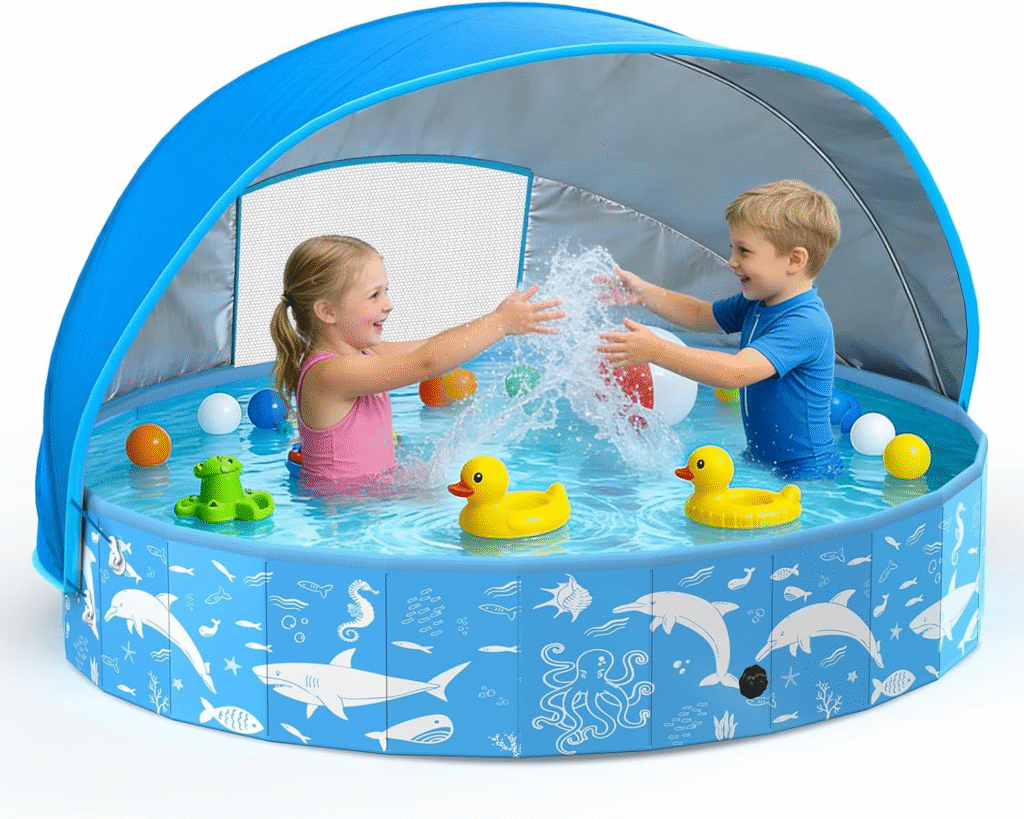
- Inflatable covers or integrated tent-style designs
Importantly, shade should cover the inflatable during idle time, not just while in use. Leaving an inflatable shaded when not actively used reduces cumulative UV exposure more than any spray or coating.
3. Avoid Leaving Inflatables Outside All the Time
One of the most damaging habits is treating inflatables as permanent outdoor fixtures. Even when not being used, inflatables continue to absorb UV radiation, heat, and environmental stress.
Best practice:
- Deflate and move inflatables to shade after use
- Drain water-based inflatables completely
- Never leave inflatables exposed overnight or for multiple days
Constant exposure—even without active use—accounts for a large percentage of UV-related failures.
4. Clean Off Residues That Accelerate UV Damage

Residues such as sunscreen, chlorine, salt, body oils, and pet oils act as UV accelerants. They absorb heat and intensify photo-oxidation on the PVC surface.
Preventive cleaning habits:
- Rinse inflatables with fresh water after use
- Use mild soap periodically to remove oily buildup
- Dry surfaces before storage or covering
Clean surfaces allow built-in UV stabilizers in PVC to function more effectively.
5. Reduce Heat Buildup Alongside UV Exposure
Heat and UV work together to accelerate PVC degradation. Dark surfaces, concrete patios, and low airflow environments increase surface temperature significantly.
Ways to reduce heat stress:
- Place inflatables on grass rather than concrete
- Ensure airflow around large inflatable surfaces
- Avoid inflating to maximum pressure under strong sunlight
Lower surface temperature slows chemical reactions that lead to UV aging.
6. Use Covers and Storage as Preventive Tools
Protective covers do more than block sunlight—they also reduce temperature swings and prevent debris accumulation.
Effective use includes:
- Covering inflatables during short breaks
- Using breathable covers rather than airtight wraps
- Storing inflatables indoors or in shaded storage areas
Covers are especially valuable for inflatables that must remain outdoors for part of the day, such as pools or pet cooling stations.
7. Adjust Inflation Practices to Reduce UV Stress
Overinflation increases internal pressure, which places additional stress on UV-weakened material. This combination accelerates cracking and seam failure.
Best practices:
- Inflate to recommended pressure only
- Allow slight flexibility during hot weather
- Check air pressure during temperature changes
Proper inflation works together with UV prevention to protect structural integrity.
8. Combine Multiple Small Habits for the Best Results
No single action fully prevents UV damage. The most effective protection comes from layered prevention:
- Shorter exposure times
- Strategic shade
- Regular cleaning
- Proper storage
Users who follow several of these habits consistently often see inflatables last 30–50% longer than those left exposed.
Key Takeaway for Users
Preventing UV damage is not complicated, but it does require consistency. Outdoor inflatables last longest when sun exposure is treated as a managed condition, not an unavoidable constant.
By controlling when, where, and how inflatables are exposed to sunlight—and by supporting those habits with proper cleaning and storage—users protect both safety and lifespan without sacrificing enjoyment.
Which Protective Methods and Products Actually Work Against UV?
The most effective UV protection for outdoor inflatables comes from UV-stabilized PVC materials, physical shade, breathable covers, and reduced sun exposure time. Structural design and material formulation matter far more than surface sprays or DIY coatings. While no method can completely block UV damage, combining UV-resistant materials with smart usage and storage habits delivers the best long-term protection.
Separating Real UV Protection From Common Myths
When it comes to protecting outdoor inflatables from UV damage, not all solutions are equal. Some methods reduce UV exposure at the source, while others only delay visible symptoms without protecting the material underneath. Understanding this distinction helps users invest time and money where it actually matters.
1. UV-Stabilized PVC Materials: The Most Important Line of Defense
The single most effective form of UV protection is built into the material itself. High-quality outdoor inflatables use PVC formulations that include UV stabilizers and weather-resistant additives.
These stabilizers work by:
- Absorbing UV radiation before it breaks polymer chains
- Slowing photo-oxidation reactions
- Reducing plasticizer loss over time
However, UV stabilizers are consumable—they degrade gradually with exposure. This means UV-resistant PVC slows damage but does not make an inflatable “sunproof.”
Key insight:
Material-level UV protection determines how forgiving a product is under sunlight, but it still relies on proper use.
2. Physical Shade: Blocking UV Beats Resisting It
Physical shade is often underestimated, yet it is one of the most reliable UV protection methods because it prevents radiation from reaching the surface at all.
Effective shading options include:
- Trees, buildings, and natural shade
- Pop-up canopies and patio umbrellas
- Integrated tent-style inflatable designs
Shade reduces both UV intensity and surface temperature, attacking two major drivers of material degradation at once.
Why this works so well:
Blocking UV radiation is always more effective than trying to chemically resist it after contact.
3. Protective Covers: Useful When Used Correctly
Covers can significantly reduce UV damage—but only when they are UV-opaque and breathable.
Effective covers:
- Block direct sunlight
- Reduce heat buildup
- Allow moisture to escape
Poorly designed covers, especially airtight plastic wraps, can trap heat and moisture, accelerating degradation instead of preventing it.
Best use cases for covers:
- Short breaks between uses
- Midday sun exposure when removal isn’t practical
- Temporary outdoor storage during peak UV hours
4. Timing and Exposure Control: The Most Overlooked Protection
One of the most powerful UV protection methods costs nothing: limiting exposure time.
Key strategies include:
- Avoiding peak UV hours (10 a.m.–4 p.m.)
- Deflating or shading inflatables when idle
- Rotating placement to avoid constant sun on one surface
UV damage is cumulative. Cutting daily exposure by even 30–40% can extend inflatable lifespan by multiple seasons.
5. What Material Can Block UV Light?

From a material perspective, UV blocking depends on density, pigmentation, and additives.
Materials that block UV more effectively include:
- Thick, UV-stabilized PVC
- Fabric-backed or laminated PVC composites
- Darker or UV-absorbing pigments (to a degree)
However, no flexible inflatable material completely blocks UV. Physical barriers like shade fabrics and covers remain more effective than relying on material thickness alone.
6. Inflatable Boat-Specific UV Protection
Inflatable boats face some of the harshest UV conditions due to water reflection and prolonged outdoor use.
Effective protection for inflatable boats includes:
- UV-stabilized marine-grade PVC
- Boat covers when docked
- Removing boats from water when not in use
- Rinsing off salt and sunscreen residue
Surface sprays marketed as “marine UV protectants” may improve appearance temporarily but offer limited structural protection unless combined with reduced exposure.
7. Methods That Sound Helpful—but Don’t Actually Work Well
Many popular UV “solutions” provide little real protection:
- UV spray coatings: Often wear off quickly and do not penetrate material
- DIY oils or conditioners: Can accelerate plasticizer migration
- Color-based assumptions: Bright or dark colors alone do not ensure UV resistance
These methods may improve short-term appearance but do not significantly slow material degradation.
8. The Best Strategy: Layered UV Protection
The most effective approach combines multiple methods:
- UV-resistant materials
- Reduced exposure time
- Physical shade
- Proper covers
- Good cleaning and storage habits
Each layer reduces stress on the material, creating a cumulative protective effect.
Key Takeaway for Users
The UV protection methods that actually work focus on preventing UV exposure, not masking its effects. Built-in UV-resistant materials, shade, covers, and smart usage habits consistently outperform sprays, coatings, and shortcuts.
Outdoor inflatables last longest when UV protection is treated as a system, not a single product or quick fix.
Do Cleaning, Storage, and Maintenance Affect UV Resistance?
Yes. Cleaning, storage, and maintenance directly affect UV resistance by controlling surface residues, moisture, heat buildup, and continued sun exposure. Dirt, sunscreen, and chlorine accelerate UV degradation, while improper storage exposes inflatables to unnecessary UV stress even when not in use. Consistent maintenance can significantly slow UV aging and extend inflatable lifespan well beyond material specifications alone.
Why UV Resistance Is Not Just About Materials
Many users assume UV resistance is “built in” and maintenance has little impact. In reality, UV resistance is a system, not a single feature. Even the best UV-stabilized PVC can degrade quickly if cleaning, storage, and maintenance habits work against it.
Think of UV stabilizers as a limited defense resource. Maintenance determines how fast that resource is consumed.
1. How Cleaning Directly Influences UV Degradation Speed
Surface residues play a critical role in UV aging. Substances commonly found on outdoor inflatables—such as sunscreen oils, chlorine, salt, body oils, and pet oils—act as UV accelerants.
These residues:
- Absorb and retain heat
- Increase surface temperature under sunlight
- Intensify photo-oxidation reactions
When residue is left on the surface, UV stabilizers in PVC are depleted faster, even under the same sunlight conditions.
Proper cleaning removes these accelerants, allowing the material’s built-in UV resistance to function as designed.
2. Why “Dirty” Inflatables Age Faster in the Sun
A clean inflatable reflects and dissipates energy more evenly. A dirty surface creates hot spots, where UV and heat concentrate.
This leads to:
- Uneven aging across the surface
- Early stiffness in high-contact zones
- Faster seam degradation where residues collect
Over time, this uneven aging increases the likelihood of localized cracking and seam failure, even if the rest of the inflatable appears fine.
3. How Storage Habits Can Cancel Out UV Protection
UV exposure does not stop when playtime ends—unless the inflatable is stored correctly.
High-risk storage habits include:
- Leaving inflatables outdoors overnight
- Storing them inflated in direct or indirect sunlight
- Covering them with non-breathable plastic
Even indirect UV exposure during idle hours contributes to cumulative damage. Heat buildup under covers or inside folded inflatables further accelerates chemical degradation.
Correct storage dramatically reduces total UV dose over a product’s lifetime.
4. The Relationship Between Moisture, Heat, and UV Damage
Moisture alone does not cause UV damage, but it amplifies its effects.
When inflatables are stored damp:
- Evaporation under sunlight increases surface temperature
- Heat accelerates UV-driven oxidation
- Mold growth can damage surface coatings, exposing PVC directly to UV
This creates a feedback loop where poor drying leads to faster UV aging, even in moderate sunlight.
5. Maintenance Timing Matters as Much as Maintenance Method
When maintenance is performed matters just as much as how it’s done.
Best timing practices include:
- Rinsing inflatables immediately after use
- Cleaning residues before they bake into the surface
- Drying fully before storage or covering
Delaying cleaning allows residues to interact with UV and heat, causing more damage than the same residue removed promptly.
6. How Small Maintenance Habits Add Up Over Time
Individually, each maintenance action may seem minor. Collectively, they can cut total UV exposure by 30–60% over a season.
Examples:
- Removing an inflatable from sun after use
- Rinsing sunscreen residue the same day
- Storing in shade instead of partial sun
These habits do not eliminate UV damage, but they slow it enough to add one or more usable seasons.
7. Why Maintenance Is Often More Effective Than Add-On Products
Many users look for UV sprays or coatings to “fix” sun damage. In practice:
- Add-on products wear off quickly
- They don’t address heat or exposure duration
- They can’t reverse chemical degradation
Maintenance, on the other hand, directly controls exposure conditions—the most important variable in UV aging.
Key Takeaway for Users
Cleaning, storage, and maintenance are not secondary to UV resistance—they are part of it.
The most UV-resistant inflatable can fail early if:
- Residues are left on the surface
- It’s stored outdoors or in sunlight
- Moisture and heat are trapped during storage
Conversely, consistent maintenance allows even heavily used outdoor inflatables to retain flexibility, safety, and appearance far longer than expected.
Why Do Manufacturers Design Inflatables for UV Resistance Differently?
Manufacturers design inflatables for UV resistance differently because they must balance material cost, flexibility, weight, safety standards, and intended usage scenarios. Higher UV resistance requires specialized PVC formulations, stabilizers, thicker material, and longer testing cycles. Not all products are meant for prolonged outdoor exposure, so UV protection levels are engineered based on realistic use cases rather than maximum resistance alone.
The Real Reasons Behind UV Resistance Differences
From the outside, inflatable products may look similar. Internally, however, UV resistance is the result of deliberate engineering trade-offs. Manufacturers do not simply choose “more UV protection” or “less UV protection”—they design for specific environments, users, and price points.
1. Material Formulation: UV Resistance Is Not a Free Upgrade
UV resistance in PVC comes from additives such as:
- UV stabilizers
- Heat stabilizers
- Antioxidants
- Specialized pigments
These additives slow down photo-oxidation but also:
- Increase raw material cost
- Add weight
- Potentially reduce softness or elasticity if overused
As a result, manufacturers must carefully tune formulations. A splash pad designed for backyard summer play does not need the same UV resistance as a marine inflatable left on open water for days.
How PVC Formulation Choices Affect UV Resistance
| Design Choice | Impact on UV Resistance | Trade-Off |
|---|---|---|
| Basic PVC | Low | Lowest cost |
| Added UV stabilizers | Moderate | Higher cost |
| High UV stabilizer load | High | Increased stiffness |
| Thicker PVC material | Moderate–high | Heavier, less portable |
| Composite PVC layers | High | Higher manufacturing complexity |
2. Intended Use Determines UV Design Targets
Manufacturers design inflatables around how long, how often, and where a product is expected to be used.
Typical design assumptions include:
- Duration of daily sun exposure
- Frequency of inflation/deflation
- Contact with water, chlorine, or salt
- User behavior (kids, pets, adults)
A product intended for occasional outdoor use may be optimized for softness and affordability, while one designed for frequent outdoor or water use prioritizes UV stability and structural reinforcement.
This is why two inflatables made of “PVC” can behave very differently under the same sunlight.
3. Testing Standards and Time-to-Market Matter
UV resistance is validated through accelerated aging tests, which simulate months or years of sunlight in controlled environments. These tests take time and money.
Manufacturers face trade-offs between:
- Extensive UV testing and faster product launches
- Higher durability and competitive pricing
- Overengineering vs. realistic consumer use
Some brands test only to minimum compliance standards, while others test beyond baseline requirements to support longer outdoor lifespan.
UV Testing Depth vs. Product Outcomes
| Testing Approach | Typical UV Exposure Simulated | Resulting Durability |
|---|---|---|
| Basic compliance testing | Short-term exposure | Meets minimum safety |
| Moderate accelerated aging | Seasonal exposure | Suitable for regular outdoor use |
| Extended UV aging tests | Multi-season exposure | High durability |
| Real-world simulation + lab testing | Mixed conditions | Predictable long-term performance |
4. Cost, Weight, and User Experience Must Stay Balanced
Higher UV resistance almost always comes with trade-offs:
- Thicker materials feel less flexible
- Added stabilizers increase cost
- Heavier inflatables reduce portability
Manufacturers must balance durability with:
- Ease of inflation
- Comfort and softness
- Shipping and storage efficiency
- Consumer price expectations
For many families, an inflatable that is comfortable, affordable, and lasts several seasons with proper care is preferable to a heavy, industrial-grade product designed for extreme exposure.
5. Regulatory and Safety Constraints Influence Design
UV-resistant additives must also meet:
- Children’s product safety standards
- Chemical migration limits
- Environmental and regional regulations
This limits which stabilizers can be used and in what quantities. Manufacturers selling globally must design formulations that comply across multiple regulatory frameworks, which further influences UV resistance strategies.
6. Why Manufacturer Care Guidelines Matter So Much
Because UV resistance is engineered around assumed usage patterns, care guidelines are part of the design.
When users:
- Leave inflatables exposed all day
- Ignore storage recommendations
- Skip cleaning and drying
They push the product outside its tested conditions—regardless of how UV-resistant the material is.
This is why manufacturer instructions often emphasize usage limits and storage rather than promising “UV-proof” performance.
7. A Practical Industry Perspective
At companies such as American Epsilon Inc., UV resistance is approached as a system, not a single feature. Material formulation, structural design, testing depth, and user guidance are aligned so products perform reliably in real outdoor environments—not just in lab conditions.
Key Takeaway for Readers
Manufacturers design inflatables for UV resistance differently because no single design fits all use cases.
UV resistance is shaped by:
- Intended environment
- Usage frequency
- Material formulation
- Testing depth
- Cost and comfort balance
Understanding these trade-offs helps users choose the right inflatable for their needs—and use it in a way that matches how it was engineered to last.
How Does Epsilon Prevent UV Damage in Its Outdoor Inflatable Products?
Epsilon prevents UV damage by engineering UV-stabilized PVC formulations, reinforcing high-stress structures, and validating performance through extensive UV aging and durability testing. Instead of relying on surface treatments, Epsilon integrates UV resistance into material science, product design, and real-world usage assumptions, ensuring outdoor inflatables remain flexible, safe, and durable when used and maintained as intended.
A Manufacturer-Level UV Protection System, Not a Single Feature
At American Epsilon Inc., UV protection is not treated as a marketing checkbox. It is approached as a full lifecycle engineering problem—from raw material formulation to how customers actually use inflatables outdoors.
Most UV failures do not happen because users “did something wrong,” but because products were not designed around real exposure patterns. Epsilon’s approach starts by acknowledging that outdoor inflatables will be exposed to sun, heat, water, and human behavior simultaneously.
1. UV-Stabilized PVC Formulations Designed for Outdoor Reality
Epsilon develops and selects PVC formulations specifically optimized for outdoor use. This includes:
- Carefully balanced UV stabilizers to slow photo-oxidation
- Heat stabilizers to reduce thermal degradation under sun exposure
- Plasticizers with lower migration rates to preserve flexibility
- Pigment systems selected for UV performance, not just appearance
Rather than maximizing UV additives indiscriminately, Epsilon engineers formulations that preserve softness, elasticity, and safety compliance while providing meaningful UV resistance over multiple seasons.
This balance is critical: overly rigid materials may resist UV longer but become uncomfortable, brittle, or unsafe for children and pets.
2. Structural Reinforcement Where UV Damage Actually Causes Failure
UV damage rarely destroys an inflatable evenly. Failures usually occur at stress concentration points.
Epsilon designs products with:
- Reinforced welded seams in high-load zones
- Optimized seam geometry to reduce UV-related stress buildup
- Controlled material thickness in flat, sun-exposed panels
- Anti-deformation structures that tolerate stiffness changes over time
By reinforcing areas most vulnerable to UV-induced stiffness and fatigue, Epsilon products retain structural integrity even as materials naturally age.
3. UV Aging Tests That Reflect Real Outdoor Use
Laboratory UV resistance claims are meaningless without context. Epsilon validates durability using a combination of:
- Accelerated UV aging tests simulating extended sunlight exposure
- Heat-UV interaction testing to replicate summer conditions
- Inflation and deflation cycles during and after UV exposure
- Load testing on UV-aged materials
This approach identifies not just when materials fade, but when flexibility loss begins to affect safety and performance—the point most users care about.
Importantly, testing is aligned with realistic usage scenarios, not worst-case laboratory extremes that don’t reflect consumer behavior.
4. Designing for “Forgiving Use,” Not Perfect Use
Epsilon acknowledges a key reality: most users will not perfectly manage UV exposure.
Products are therefore designed to be forgiving:
- Materials tolerate occasional overexposure without immediate failure
- Structures accommodate normal user mistakes (late storage, missed cleaning)
- UV resistance is combined with clear care guidelines, not assumed compliance
This philosophy reduces sudden failures and extends usable life even when conditions aren’t ideal.
5. Integration of Cleaning and Maintenance Into UV Strategy
Epsilon treats maintenance as part of UV protection—not a separate topic.
Design considerations include:
- Smooth surface finishes that shed sunscreen and oils more easily
- Reduced crevice geometry to limit residue buildup
- Material compatibility with mild cleaning agents
By making inflatables easier to clean and dry, Epsilon indirectly slows UV degradation caused by heat-absorbing residues and moisture retention.
6. Global Market Feedback Refines UV Performance Continuously
Because Epsilon sells across North America, Europe, and other UV-intense regions, real-world feedback plays a critical role.
Usage data from:
- Hot, dry climates
- High-UV coastal regions
- Temperate but high-reflection environments
feeds back into material selection, thickness adjustments, and design refinements. UV resistance is not static—it evolves with real customer environments.
7. Why Epsilon Does Not Claim “UV-Proof” Products
No responsible manufacturer claims inflatables are UV-proof. Epsilon avoids such language intentionally.
Instead, the company focuses on:
- Predictable aging behavior
- Gradual performance decline rather than sudden failure
- Clear expectations for outdoor use
This transparency builds long-term trust and aligns product performance with customer expectations.
What This Means for Customers
For C-end users (families, pet owners, outdoor enthusiasts):
- Products last longer with reasonable care
- Safety margins remain intact over time
- Maintenance feels manageable, not burdensome
For B-end customers (brands, retailers, distributors):
- UV performance is engineered, not guessed
- OEM/ODM customization can target specific climates or usage patterns
- Product claims are defensible and repeatable across markets
Key Takeaway
Epsilon prevents UV damage not by promising the impossible, but by engineering resilience into every layer of the product—materials, structure, testing, and real-world use assumptions.
The result is outdoor inflatables that:
- Age predictably
- Remain safer longer
- Deliver better long-term value
When UV resistance is treated as a system instead of a slogan, the difference shows—season after season.
Final Thoughts & How to Buy from Epsilon
Final Thoughts: UV Protection Is a Long-Term Strategy, Not a One-Time Fix
Preventing UV damage on outdoor inflatables is not about finding a miracle product or eliminating sunlight entirely. It is about understanding how UV exposure works, recognizing which products are most at risk, and managing exposure through informed habits and well-designed products.
Throughout this guide, one message remains clear:
UV damage is cumulative, predictable, and manageable.
When outdoor inflatables are:
- Made with properly engineered, UV-stabilized materials
- Designed with reinforced structures that tolerate aging
- Used in realistic outdoor conditions
- Cleaned, stored, and maintained with basic consistency
they do not fail suddenly or prematurely. Instead, they age gradually, remain safer for longer, and deliver far more value over their usable life.
This is especially important for products used by children and pets, where safety margins matter more than appearance. A well-maintained inflatable is not just more durable—it is more predictable, stable, and reliable during everyday use.
In other words, good UV protection is not about perfection. It is about alignment—between material science, product design, and how people actually live.
Why Epsilon Is a Trusted Choice for Outdoor Inflatables
At American Epsilon Inc., UV resistance is not treated as a marketing claim. It is built into:
- PVC material formulation
- Structural design and seam reinforcement
- Multi-stage UV and durability testing
- Clear, realistic usage and care guidance
Instead of promising “UV-proof” products, Epsilon focuses on predictable performance—products that behave the way users expect when exposed to real outdoor conditions.
This approach has made Epsilon a long-term partner for:
- Families and pet owners seeking safe, durable products
- Global e-commerce platforms with strict quality standards
- Retailers and brands requiring consistent, compliant supply
- OEM/ODM clients targeting specific climates or markets
How to Buy Epsilon Products (Retail Customers)
For individual consumers and families, Epsilon products are available through major, trusted retail platforms with ready-to-ship inventory.
You can purchase Epsilon outdoor inflatable products on:
- Amazon (United States, Canada, Germany, France, UK, Italy, Spain)
- Walmart online
- eBay
- Temu
- Etsy
These channels offer:
- Fast local or regional fulfillment
- Transparent customer reviews
- Clear specifications and safety information
- Reliable return and after-sales policies
For most users, these platforms provide the quickest and easiest way to access Epsilon products.
How to Work with Epsilon (OEM / ODM / Bulk Orders)
If you are a:
- Brand owner or private-label seller
- Retailer or distributor
- E-commerce operator
- Institutional buyer (schools, camps, facilities)
- Startup developing inflatable or water-play products
Epsilon offers OEM / ODM customization services, including:
- UV resistance tuning for specific climates
- Material thickness and formulation customization
- Product size, structure, and function optimization
- Color, pattern, and branding customization
- Custom packaging and multilingual instructions
With vertically integrated manufacturing, in-house R&D, and global compliance experience, Epsilon supports both rapid prototyping and scalable mass production.
A Practical Recommendation Before You Buy
Before choosing any outdoor inflatable, ask three simple questions:
- Is the product designed for outdoor UV exposure—or just indoor use?
- Does the manufacturer explain how UV resistance is achieved, not just claim it?
- Are care and usage guidelines realistic for everyday life?
When the answers align, you are not just buying an inflatable—you are buying predictability, safety, and longevity.
Closing Thought
Outdoor inflatables are meant to create joy, movement, and shared experiences—not frustration or premature replacement.
When UV resistance is engineered thoughtfully and supported by smart use, outdoor inflatables can perform reliably season after season. That is the difference between a product that simply looks good at purchase—and one that continues to deliver value long after.
Choose products designed for real sunlight.
Use them the way they were engineered to be used.
And enjoy outdoor fun with confidence.
Get A Fast quote
Here, bringing your inflatable concepts to life is no longer a challenge—it’s a collaborative journey where American Epsilon helps families, outdoor enthusiasts, and global brands transform creative ideas into safe, certified, and market-ready inflatable solutions.


Partner With Epsilon
Whether you are a family looking for safe backyard fun or a brand seeking large-scale OEM/ODM solutions, American Epsilon Inc. guarantees every inflatable is built with safety, durability, and excitement in mind. With flexible low MOQs, strategically placed warehouses in the U.S., Canada, U.K., and Germany, plus 24/7 professional support, we ensure smooth delivery and reliable service worldwide.
Ready to bring your inflatable ideas to life? Request free samples, fast prototypes, and customized designs today—your trusted inflatable journey starts here.