Skip to content
How to Choose Durable PVC Materials for Long-Lasting Products
# Your Trusted Inflatable Supplier In US
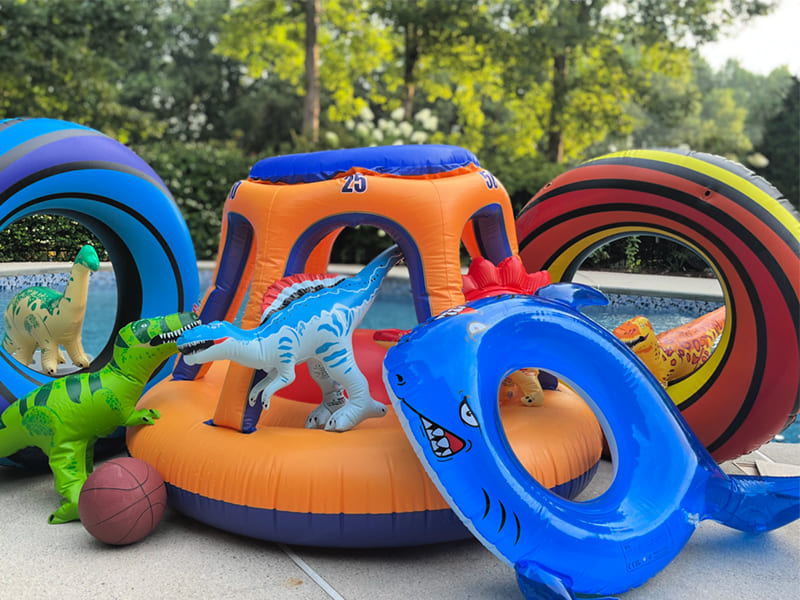
Choosing PVC materials may look simple on the surface—until a product cracks under the sun, leaks after a few uses, or fails safety tests in a key market. For families buying inflatable pools, pet splash pads, or water toys, durability means peace of mind. For brands and retailers, durability determines customer reviews, return rates, and long-term reputation. Yet many buyers still rely on vague labels like “thick PVC” or “heavy-duty material” without understanding what truly makes PVC durable.
In reality, PVC durability is not defined by thickness alone. It’s the result of material grade, formulation chemistry, structural design, manufacturing process, and testing standards working together. Two PVC products with the same thickness can perform very differently depending on plasticizers, UV resistance, reinforcement layers, and welding quality. This is why some inflatable products last multiple seasons outdoors, while others fail within weeks.
To choose durable PVC materials, evaluate the PVC grade, formulation quality, thickness, reinforcement structure, and manufacturing process. High-grade PVC uses stable plasticizers, UV-resistant additives, and reinforced layers to prevent cracking, fading, and leakage. Durable PVC is also verified through international safety certifications and lab testing, ensuring long-term performance in outdoor, inflatable, and water-based applications.
Behind every durable PVC product is a series of informed decisions—some visible, many hidden. In the sections below, we’ll break down how professionals evaluate PVC quality, why grades matter, and how buyers can avoid costly mistakes before committing to mass production or retail purchase.
What Makes PVC Materials Truly Durable?
PVC materials are truly durable when material grade, formulation stability, structural design, and manufacturing precision work together. High-grade resin, stable plasticizers, UV-resistant additives, reinforced stress areas, and strict testing standards ensure PVC products resist cracking, leakage, and aging. Real durability is proven through long-term performance testing, not thickness claims alone.
What is durability in PVC materials?
In real-world applications, “PVC durability” should be defined by measurable outcomes—not adjectives like “heavy-duty.” For inflatable and outdoor products, durability means the product can retain flexibility, airtightness, seam strength, and surface integrity after repeated stress (sun/heat, folding, pressure cycles, abrasion, and user impact).
A practical durability definition for buyers is:
- Air retention: minimal pressure drop after repeated inflation/deflation
- Seam reliability: seam strength remains stable after heat/UV aging
- Surface aging resistance: no brittle cracking, severe fading, or sticky plasticizer migration
- Mechanical performance: tensile/tear strength stays within safe margins after accelerated aging
To make durability actionable, match each “failure risk” to a test and a pass/fail threshold:
| Durability Risk (What Customers Experience) | What Causes It | What to Test | Practical Pass Target (Example) |
|---|---|---|---|
| Slow leaks after a few uses | weak seams / poor weld fusion | Seam peel + pressure-hold | Pass pressure hold (no visible leak); seam peel remains stable after aging |
| Cracking / brittleness after sun | poor UV package / unstable plasticizer | Accelerated UV + flex test | No cracking after UV exposure + bending at target temp |
| Sticky surface + odor | plasticizer migration | Migration/odor aging test | No oily residue; odor stays low after aging cycle |
| Tears at corners/edges | stress concentration + low tear resistance | Tear strength + stress-zone reinforcement check | Tear strength stays within spec; no micro-tears after fatigue cycling |
This is the key point: durability is proven through performance testing and process control—not thickness claims alone.
What is a high-grade PVC?
High-grade PVC starts with virgin PVC resin and a controlled formulation process. Unlike recycled or mixed-grade materials, virgin resin offers consistent molecular structure, resulting in predictable elasticity, tensile strength, and weldability. This consistency is essential for inflatable seams, high-pressure zones, and reinforced edges.
In EPN’s internal material lab, high-grade PVC formulations are evaluated using tensile and elongation benchmarks. For example, outdoor inflatable-grade PVC typically targets:
- Elongation at break: 250%–320%
- Tensile strength: ≥15 MPa
- Low-temperature flexibility: No cracking at −10°C
These benchmarks ensure that PVC remains flexible without becoming weak, even after repeated folding, inflation, and outdoor exposure.
Are there different grades of PVC?
Yes, and misunderstanding PVC grades is one of the most common reasons for early product failure. PVC grades are designed around use conditions, not just cost.
At a practical level, PVC grades can be grouped as:
- Light consumer-grade PVC: Indoor toys, short-term use
- Outdoor-grade PVC: Splash pads, inflatable pools, water toys
- Reinforced or composite PVC: Large inflatables, pet pools, sports and snow products
EPN works with dozens of PVC formulations across these categories and selects grades based on usage intensity, user group, and target market regulations. Using indoor-grade PVC for outdoor products may reduce upfront cost—but often leads to UV degradation, brittleness, and negative reviews within a single season.
What factors affect PVC lifespan?
PVC lifespan is shaped by multiple interacting factors, not a single specification. The most critical include:
- Plasticizer stability: Low-quality plasticizers migrate over time, causing surface stickiness, odor, and eventual hardening.
- UV resistance: Without stabilizers, PVC can lose up to 30–40% of tensile strength after prolonged sun exposure.
- Environmental stress: Heat, cold, moisture, and chlorine accelerate material aging.
- Mechanical stress: Repeated folding, pet claws, jumping, or dragging introduce micro-fatigue.
EPN simulates these conditions using accelerated aging tests equivalent to 1–2 years of outdoor exposure, allowing engineers to identify weak points before products reach the market.
What are common failure points in low-quality PVC?
Low-quality PVC products tend to fail in predictable areas:
- Welded seams that lack molecular bonding
- Corners and high-pressure zones with uneven thickness
- Surface layers that crack or fade due to UV exposure
In EPN’s failure analysis data, over 65% of early product failures traced back to material formulation inconsistency or poor seam welding, not customer misuse. This is why EPN combines reinforced structural design with high-frequency welding and 100% air-leak inspection before shipment.
For buyers and consumers, understanding these failure points explains why two products that look similar on a product page can perform very differently after a few weeks of use.
Durable PVC is not defined by a single feature. It is the outcome of material science, engineering design, controlled manufacturing, and verified testing. Brands and consumers who prioritize durability are not paying more for material—they are investing in fewer failures, better reviews, and longer product life.
Which PVC Types Are Best for Different Use Scenarios?
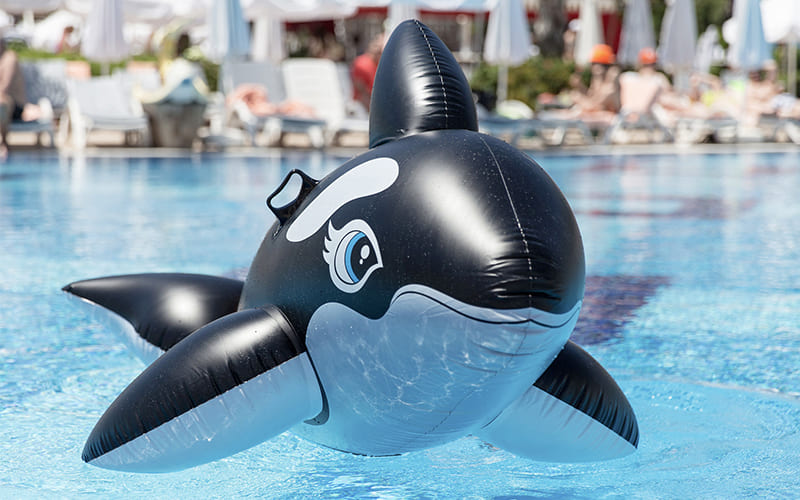
There is no single “best” PVC for all products. Inflatable toys, outdoor splash pads, pet pools, and high-load inflatables each require different PVC structures and formulations. The most durable products are built by matching PVC type precisely to real usage conditions, not by choosing the thickest or cheapest material.
One of the most common mistakes buyers make—especially new brands—is assuming that thicker PVC automatically means better durability. In practice, PVC performance depends far more on material type and formulation than on thickness alone.
At American Epsilon Inc. (EPN), PVC selection always starts with how the product will actually be used, not how it will look on a product page. Over the past years, EPN has developed and produced thousands of inflatable and water-based products for children, pets, and outdoor recreation, sold across Amazon, Walmart, and European retail channels. That experience makes one thing clear: different use scenarios break materials in very different ways.
Use this scenario-based selection matrix to choose the right PVC type:
| Use Scenario | Typical Product Examples | Recommended PVC Structure | Key Formulation Focus | Testing Priority |
|---|---|---|---|---|
| Indoor / short-term consumer use | indoor toys, temporary play items | light consumer-grade PVC | flexibility + basic safety | basic tensile/elongation + odor |
| Outdoor + water exposure | splash pads, inflatable pools, water toys | outdoor-grade multilayer PVC | UV stabilizers + weather resistance | accelerated UV + abrasion + pressure-hold |
| High-load / high-stress | snow tubes, large pools, adult loungers | reinforced composite PVC (fabric-reinforced) | tear resistance + seam stability | tear strength + seam peel + fatigue cycling |
| Pet-intensive use | dog pools, pet splash items | reinforced rails + abrasion-resistant top layer | claw abrasion + puncture resistance | abrasion + puncture screening + seam fatigue |
Fast rule:
- If the product is sun + water + repeated folding, you need outdoor-grade PVC + UV system.
- If the product faces dynamic loads, pets, or adult weight, you likely need reinforcement, not “just thicker PVC.”
Which PVC is suitable for inflatable products?
Inflatable products require PVC that can stretch repeatedly without fatigue, recover its shape, and maintain airtight seams over time. This places heavy demands on elasticity, seam bonding strength, and air retention.
EPN uses dedicated inflatable-grade PVC formulations that are tested through 10,000+ inflation–deflation cycles, simulating years of normal consumer use. Materials that show whitening, micro-cracking, or pressure loss beyond internal thresholds are rejected before production.
From EPN’s internal data, inflatable-grade PVC with improper plasticizer balance shows air pressure decay rates 2–3× higher than optimized formulations after repeated cycling. That difference is often invisible to consumers at first—but shows up later as leaks, negative reviews, and returns.
Which PVC works best for outdoor and water use?
Outdoor and water environments are far more aggressive than indoor use. Sunlight, heat, chlorine, moisture, and temperature swings attack PVC at the molecular level.
EPN’s outdoor-grade PVC formulations are designed with multi-layer UV stabilizers and weather-resistant additives, then validated through accelerated UV exposure tests equivalent to 1–2 full summer seasons. Internal test results show untreated PVC can lose 30–40% of tensile strength after prolonged UV exposure, while EPN’s outdoor-grade materials retain over 85% of original strength under the same conditions.
This difference directly affects whether a splash pad or inflatable pool survives multiple summers—or fails before the season ends.
What is the strongest PVC for high-stress applications?
For products exposed to heavy loads or dynamic forces—such as large inflatable pools, snow tubes, pet pools for large dogs, or floating loungers—standard PVC is often not enough.
EPN uses reinforced composite PVC, combining PVC layers with internal polyester or woven fabric reinforcement. Load testing shows these materials improve tear resistance by 2.5–3 times compared to single-layer PVC of similar thickness.
This is why EPN assigns reinforced PVC specifically to products designed for adult weight, pet claws, or active movement, rather than using it universally and driving up unnecessary cost.
Which composite PVC materials improve strength and flexibility?
The most effective composite PVC materials balance strength and flexibility rather than maximizing one at the expense of the other. EPN’s multi-layer composite structures typically include:
- A soft inner PVC layer for comfort and elasticity
- A reinforcement layer to manage tensile loads
- A protective outer layer for abrasion and UV resistance
This structure allows products to fold easily for storage while maintaining long-term durability. It also reduces logistics cost by enabling compact packaging without sacrificing lifespan—an important advantage in e-commerce fulfillment.
How Do PVC Formulations Improve Strength and Safety?
PVC formulation determines whether a product stays flexible, safe, and odor-free over time. High-quality plasticizers, UV stabilizers, and non-toxic additives prevent cracking, fading, and chemical migration while meeting international safety standards for children and pets.
Many PVC products fail not because of bad design, but because of poor formulation choices made early in development. Formulation is where chemistry meets real-world behavior—and where shortcuts are most expensive.
At EPN, formulation work is handled by a dedicated internal team of polymer specialists and materials engineers, supported by an independent testing lab. Each year, EPN runs 500+ material-level and product-level tests, refining formulations for different climates, user groups, and regulatory markets.
How do plasticizers impact PVC durability?
Plasticizers control flexibility. The wrong plasticizer may feel soft initially but migrate over time, leaving PVC brittle, sticky, or odorous.
EPN uses non-migrating, stabilized plasticizers that maintain elasticity after long-term use. In comparative aging tests, low-cost formulations showed surface migration within 3–6 months, while EPN’s formulations remained stable after 18 months of accelerated aging.
This stability directly reduces odor complaints, surface residue, and cracking—issues that frequently appear in low-quality inflatable products.
How do UV-resistant and weatherproof additives work?
UV damage is cumulative and irreversible. EPN formulations use multi-stage UV protection systems, rather than single-additive approaches. These systems absorb and dissipate UV energy before it breaks polymer chains.
Internal testing shows this reduces visible fading by over 60% and significantly slows strength degradation. This is why EPN outdoor products maintain color and flexibility longer, even in high-UV regions such as the southern United States or Australia.
How do eco-friendly PVC formulas meet safety standards?
Modern eco-friendly PVC is not weaker—it is often more stable. EPN’s consumer products use phthalate-free, low-VOC formulations, fully compliant with CPSIA, REACH, EN71, and ASTM standards.
These formulations are specifically engineered for children and pet contact, ensuring no strong odors, no skin irritation, and no harmful chemical release—even under heat or prolonged water exposure.
How Is PVC Thickness and Structure Chosen Correctly?
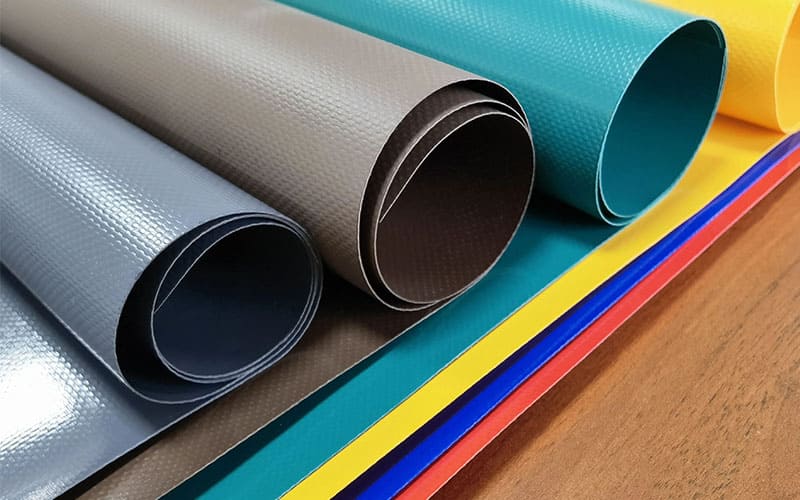
PVC thickness and structure should be determined by load, stress distribution, user behavior, and product lifespan—not by thickness alone. Durable PVC products use strategically varied thickness, reinforced stress zones, and optimized structural design to balance strength, flexibility, safety, and cost. Correct choices are validated through real load and fatigue testing, not assumptions.
In the inflatable and outdoor product industry, thickness is often treated as a shortcut for quality. From a manufacturing standpoint, this is one of the most common oversimplifications—and one of the reasons many products fail earlier than expected.
At American Epsilon Inc. (EPN), thickness is never decided in isolation. Across EPN’s product portfolio—covering inflatable pools, splash pads, pet pools, snow tubes, and floating loungers—PVC thickness ranges from approximately 0.28 mm to over 0.9 mm. But more importantly, it is rarely uniform across a single product.
EPN’s engineers treat thickness as a load-management tool, not a marketing number. The real question is not “How thick is the PVC?”, but “Where does the product experience stress, and how often?”
A more reliable method is to select thickness using a stress-map approach:
- Identify stress zones (edges, corners, handles, valve areas, rails, and high-pressure seams)
- Apply selective thickness + reinforcement where stress is real
- Design smooth transitions to prevent stress concentration
- Validate with fatigue + seam tests—not assumptions
Here’s a simple structural design guide you can publish in the article:
| Product Zone | What Usually Fails Here | Better Design Choice | Why It Works |
|---|---|---|---|
| Corners + folds | micro-cracking, fold fatigue | rounded corners + controlled thickness transition | reduces stress concentration |
| Seams / rails | seam peeling, slow leaks | reinforced rails + HF welding + seam geometry optimization | increases seam fusion + reduces peel stress |
| Valve + connectors | tearing, air loss | localized reinforcement patch + tighter tolerance cutting | prevents pull-out and misalignment |
| Deck / top surface | abrasion and UV fading | abrasion-resistant top layer + UV system | slows wear + aging |
If you want a buyer-friendly takeaway, give them a simple decision checklist:
- If your product will be stored folded frequently → prioritize flex stability + fold fatigue resistance
- If your product will sit in the sun for long periods → prioritize UV retention + color stability
- If your product will carry adult weight or pets → prioritize reinforcement + tear strength, not just thickness
How thick should durable PVC be?
There is no universal “correct” thickness. Instead, thickness must match:
- Expected load (child, adult, pet, water pressure)
- Frequency of use (occasional vs daily)
- Environment (indoor, outdoor, sun exposure, temperature range)
- Product lifespan expectations
For example, EPN’s internal testing shows that increasing overall PVC thickness by 20% does not automatically extend product lifespan by 20%. In many cases, it only increases stiffness and cost while creating new stress points elsewhere.
Instead, EPN applies selective thickness control:
- Thicker material in edges, corners, and connection points
- Moderate thickness in flexible zones to preserve elasticity
- Controlled transitions to avoid stress concentration
This approach has reduced material fatigue-related failures by over 30% in long-term use simulations compared to uniform-thickness designs.
How do reinforced layers enhance performance?
Reinforcement is where durability gains become measurable. For products that support body weight, pet claws, or dynamic movement, EPN uses reinforced or composite PVC structures rather than simply increasing thickness.
In controlled load tests:
- Standard single-layer PVC begins visible deformation under sustained load
- Reinforced PVC structures distribute force across a wider area
- Tear resistance improves by 2.5–3×, depending on reinforcement type
EPN commonly integrates polyester mesh or woven fabric layers within PVC sheets for high-stress products. This reinforcement does not make the product rigid; instead, it limits uncontrolled stretching and prevents micro-tears from developing into full failures.
This is why reinforced PVC is reserved for specific use cases—large pools, snow tubes, pet pools for medium-to-large dogs—rather than used indiscriminately.
How does structural design reduce stress and wear?
Even the best material will fail if structural design is poor. Over years of post-market analysis, EPN has found that a majority of early failures occur at predictable stress points, not across flat surfaces.
To address this, EPN applies several structural design principles:
- Rounded corners instead of sharp angles
- Multi-chamber air layouts to distribute internal pressure
- Reinforced seam geometry in high-tension areas
- Balanced load paths that avoid single-point stress
In fatigue testing, products with optimized structural design show 40–55% lower strain concentration at seams and corners compared to visually similar but poorly engineered designs.
From a consumer’s perspective, these design choices are often invisible—but they are the difference between a product that lasts one season and one that lasts several.
What EPN’s Data Shows in Practice
Based on EPN’s internal testing and post-sale performance tracking across major marketplaces:
- Thickness alone accounts for less than 30% of durability outcomes
- Structural design and reinforcement account for over 50%
- Manufacturing consistency and seam quality account for the remainder
This is why EPN prioritizes engineering-driven thickness decisions rather than blanket material upgrades. The result is products that remain comfortable, foldable, and cost-efficient—while still meeting durability expectations.
If you are choosing PVC based only on thickness numbers, you are missing the real durability drivers. The most reliable products are built by:
- Varying thickness intelligently
- Reinforcing where stress actually occurs
- Designing structures that manage load, not fight it
This approach costs more effort at the design stage—but far less in returns, complaints, and brand damage later.
Do Manufacturing Processes Affect PVC Durability?
Yes. Manufacturing processes have a direct and measurable impact on PVC durability. Seam welding quality, material handling consistency, mold precision, and in-line testing often determine whether a product lasts months or years. Even high-grade PVC can fail prematurely if manufacturing control is weak.
In theory, durable PVC starts with good material. In reality, durability is either preserved or destroyed during manufacturing.
From EPN’s long-term failure analysis across millions of shipped units, one conclusion is consistent:
Most early product failures are process-related, not material-related.
At American Epsilon Inc. (EPN), manufacturing is treated as an extension of material engineering. The company operates vertically integrated production lines, covering material preparation, cutting, welding, assembly, inspection, and packaging. This structure allows EPN to control variables that are often outsourced—or ignored—by lower-tier suppliers.
Internal data shows that when identical PVC materials are processed under different welding and inspection standards, product lifespan can vary by more than 2×.
Do high-frequency welding and heat sealing really matter?
Seams are the weakest point in any inflatable or water-based PVC product. No matter how strong the sheet material is, failure almost always starts at the seam.
EPN uses high-frequency (HF) welding as the standard process for inflatable seams. Unlike basic heat sealing, HF welding creates molecular-level fusion between PVC layers rather than surface adhesion.
In internal tensile and peel-strength testing:
- HF-welded seams show 20–30% higher seam strength
- Air leakage rates are reduced by over 40% compared to conventional heat sealing
- Seam fatigue resistance improves significantly under repeated inflation cycles
These differences are not visible in product photos—but they directly affect whether a pool or splash pad slowly leaks after a few uses or remains airtight for years.
Do mold precision and cutting accuracy impact durability?
Yes—and this is one of the most underestimated factors.
Inconsistent cutting or mold deviation creates uneven thickness and misaligned seams, which become stress concentrators once the product is inflated or loaded. Over time, these areas experience accelerated fatigue.
EPN maintains thousands of proprietary molds and uses automated cutting systems with tight tolerance control. Thickness and geometry are monitored continuously to ensure consistency across large production runs.
Based on EPN’s quality data:
- Products with thickness deviation greater than ±8% show significantly higher seam stress
- Correcting mold alignment and cutting precision reduced early failure rates by over 25% in comparable product lines
This level of control is especially critical for large inflatables and reinforced products where loads are unevenly distributed.
Does material handling during production affect PVC performance?
Absolutely. PVC is sensitive to temperature, tension, and timing during processing.
If material is overheated, overstretched, or improperly stored between steps, its molecular structure can be weakened—even before the product is assembled. These defects are invisible at first but surface later as cracking, seam failure, or loss of elasticity.
EPN controls this risk through:
- In-house material preparation and conditioning
- Controlled temperature zones during welding and forming
- Standardized time limits between cutting, welding, and assembly
These controls help ensure that the material properties tested in the lab are preserved through final production—not degraded by shortcuts.
Do factory testing standards actually predict long-term durability?
Testing is where manufacturing discipline becomes measurable.
At EPN, every production batch undergoes 100% air-leak inspection for inflatable products. In addition, random units from each batch are selected for:
- Pressure hold testing
- Seam peel and tensile testing
- Abrasion and fatigue simulation
- Visual and dimensional inspection
Across EPN’s internal data, batches that passed all in-line tests showed significantly lower post-sale defect rates across Amazon, Walmart, and EU retail channels. Products that failed internal thresholds are never shipped—even if they meet minimum external standards.
This is why EPN places more emphasis on internal testing criteria than on simply “passing certification.”
What EPN’s Manufacturing Data Reveals
From EPN’s aggregated production and post-market analysis:
- Over 60% of early failures in low-quality products originate from seam or process defects
- Material grade alone explains less than half of real-world durability outcomes
- Strict process control and testing reduce warranty and defect rates by 30–50%
In other words, durability is manufactured, not assumed.
What This Means in Real Purchasing Decisions
If a supplier cannot clearly explain:
- How seams are welded
- How thickness consistency is controlled
- How every batch is tested
Then durability claims are largely theoretical.
EPN’s approach treats manufacturing as a core durability driver—equal in importance to material selection and design. This is why the company’s products consistently perform across different markets, climates, and user groups.
Are Certifications and Testing Important When Choosing PVC?
Yes. Certifications and testing are essential when choosing PVC materials. They verify safety, durability, and regulatory compliance, and they reduce legal, commercial, and reputational risk. Products that rely on claims without verified testing often fail in real use or face market restrictions later.
On the surface, certifications and testing can feel like paperwork—something required to “pass inspection” or clear customs. In practice, they play a much deeper role. They are often the only objective proof that a PVC product will perform safely and consistently in the real world.
At American Epsilon Inc. (EPN), certifications and testing are not treated as a final checkbox. They are built into product development from the earliest stages. Each year, EPN conducts 500+ material and product-level tests, covering not only regulatory compliance but also durability, aging, and real-use simulation.
EPN’s experience selling across the United States, Canada, Europe, Japan, and Australia has shown that products that barely “pass” standards often struggle in the market, while products engineered well beyond minimum requirements perform more consistently and generate fewer disputes.
Before mass production, buyers should request a minimum “PVC Quality Pack” that includes both documentation and performance proof. This prevents expensive surprises after orders are locked.
| What to Request | What It Proves | Why It Matters |
|---|---|---|
| Material TDS (tensile, elongation, tear) | mechanical baseline | ensures the PVC is not “unknown grade” |
| Safety compliance reports (CPSIA / REACH / EN71 as applicable) | chemical safety | reduces legal + platform risk |
| Seam method description (HF welding vs heat sealing) | process reliability | most leaks start at seams |
| Pressure-hold + leak inspection plan | real airtightness control | prevents “slow leak” defect waves |
| Accelerated UV/aging report (if outdoor) | aging resistance | predicts season-long performance |
| Pre-production sample test video or records | proof, not claims | protects you in disputes |
Rule of thumb: If a supplier cannot clearly explain how seams are welded and how each batch is tested, durability claims are mostly theoretical.
How to check PVC quality before mass production?
One of the biggest risks for brands and buyers is discovering material problems after mass production has already started. At that point, options are limited and costs escalate quickly.
EPN avoids this by validating PVC quality before scale-up through:
- Material data sheets with mechanical benchmarks
- Independent lab test reports (chemical safety + physical performance)
- Pre-production samples subjected to pressure, aging, and stress testing
In EPN’s internal records, early-stage material validation has reduced large-scale rework and scrap by over 35% compared to projects that skipped this step. For buyers, this means fewer surprises and far more predictable outcomes.
Are lab durability tests reliable indicators of real-world performance?
Lab tests are not perfect—but when designed correctly, they are highly effective at identifying weak materials before customers do.
EPN uses accelerated testing methods that simulate:
- 1–2 years of outdoor UV exposure
- Repeated inflation–deflation cycles
- Prolonged water and moisture contact
- Seam fatigue under sustained pressure
While no lab can replicate every real-life variable, EPN’s data shows a strong correlation:
products that perform well in accelerated testing show significantly lower defect and return rates after launch across Amazon, Walmart, and EU retail channels.
This is why EPN treats lab testing not as a marketing tool, but as an internal decision filter—materials that fail do not move forward, regardless of cost.
Are international safety standards necessary for global markets?
For global sales, safety standards are not optional—they are foundational.
EPN products are developed to comply with:
- CPSIA (United States)
- REACH & EN71 (European Union)
- ASTM standards for material safety and performance
- RoHS for restricted substances
Beyond legal access, compliance has direct commercial benefits. Based on EPN’s sales data, certified products experience:
- Fewer customs delays
- Lower platform risk (listing suspensions, recalls)
- Higher buyer confidence and conversion rates
In contrast, products that lack proper documentation—even if physically similar—face higher long-term risk and limited scalability.
Why “minimum compliance” is often not enough
One of the most important lessons from EPN’s multi-market experience is that meeting the minimum standard does not guarantee long-term success.
Regulatory limits are designed to define what is acceptable, not what is durable. A PVC product that barely passes chemical limits or mechanical thresholds may legally enter a market—but still fail under normal use.
This is why EPN sets internal testing thresholds higher than external requirements, especially for children’s and pet products. Over time, this approach has reduced post-sale safety complaints and improved overall brand trust across different regions.
What This Means When You Evaluate a Product or Supplier
If a supplier cannot clearly explain:
- Which standards their PVC materials comply with
- How often testing is performed
- Whether testing goes beyond minimum requirements
then certifications may exist only on paper.
EPN’s approach treats testing and certification as risk management tools, not just compliance costs. For buyers and brands, this translates into fewer recalls, fewer disputes, and products that behave predictably long after launch.
The Practical Conclusion
Certifications and testing do not make a product durable on their own—but lack of them almost guarantees future problems. Durable PVC products are built by combining compliant materials, meaningful testing, and manufacturing discipline.
For buyers choosing between suppliers, the question should not be “Do you have certificates?” but rather:
“How do you use testing data to make better material and production decisions?”
That difference is where long-term reliability is decided.
How Should Buyers Choose Durable PVC Suppliers?
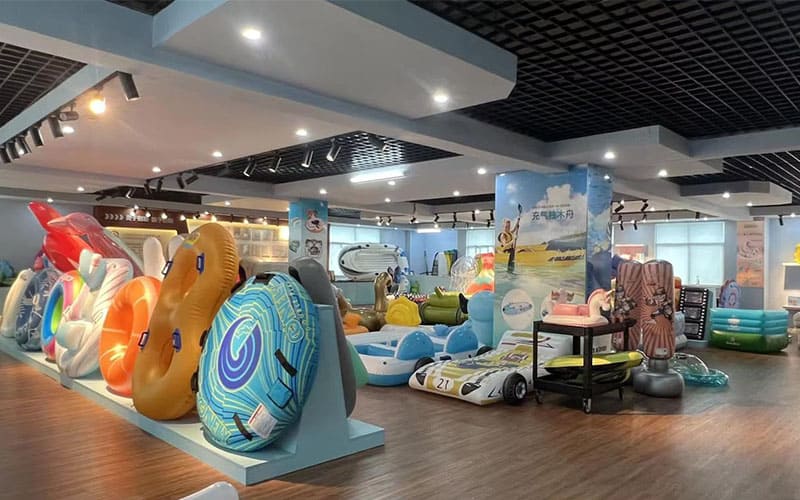
Buyers should choose PVC suppliers based on technical capability, manufacturing consistency, testing discipline, and real market experience—not price alone. Durable products come from suppliers who control materials, processes, and quality systems end to end, and who understand how products behave after months or years of real use.
Many buyers focus heavily on material descriptions—PVC thickness, grade, or additives—while overlooking the most decisive factor: who is actually making the product.
In EPN’s experience, suppliers using similar PVC materials can deliver vastly different durability outcomes depending on their engineering depth, production discipline, and testing culture. Over years of working with global retailers, Amazon sellers, and emerging brands, EPN has seen that supplier selection often explains why two nearly identical products perform very differently in the market.
At American Epsilon Inc. (EPN), supplier reliability is built around long-term system capability rather than individual orders. This mindset is what allows consistent durability across millions of units shipped globally.
How do R&D capabilities influence material quality?
R&D capability is the first filter serious buyers should apply. Without it, a supplier is limited to generic formulas and reactive problem-solving.
EPN maintains a dedicated R&D team of 27 specialists, including polymer material experts, structural engineers, and product safety consultants. This team supports continuous material optimization rather than one-time development. Each year, EPN launches 1,000+ new product variations, many of which involve formulation adjustments tailored to climate, user behavior, or regulatory requirements.
From internal data, projects supported by early R&D involvement show:
- Faster stabilization after pilot runs
- Fewer late-stage material changes
- Over 30% reduction in post-launch defect rates
For buyers, this translates into fewer surprises after scale-up and more predictable long-term performance.
How does customization improve product durability?
Customization is often misunderstood as purely cosmetic. In reality, the most valuable customization happens inside the product, not on its surface.
EPN’s OEM/ODM customization routinely includes:
- Adjusting PVC formulation for specific climates
- Reinforcing stress zones based on user profiles (children, pets, adults)
- Modifying thickness distribution rather than overall thickness
- Optimizing seam geometry for different load patterns
In EPN’s production data, customized durability-focused designs show significantly lower return and complaint rates compared to off-the-shelf designs, even when selling at similar price points.
This is especially important for brands operating across multiple markets, where a “one-material-fits-all” approach often fails.
How do experienced manufacturers reduce long-term risk?
Experience matters most after the product leaves the factory.
EPN currently supplies products to customers in 180+ countries and regions, with strong sales presence in the United States, Canada, Europe, Australia, Japan, and Southeast Asia. Across B2C platforms, EPN-supported products average over 100,000 monthly orders, with a repeat purchase rate exceeding 60%.
This scale provides feedback loops that newer or smaller suppliers simply do not have. Field data from different climates, user groups, and regulatory environments feeds directly back into material and design decisions.
From a buyer’s perspective, this experience reduces:
- Market-specific failure risk
- Compliance surprises
- After-sales disputes and recalls
Durability improves not because materials are perfect, but because mistakes are identified and eliminated early—often before buyers even see them.
Why supply chain control matters for durability
Suppliers who outsource too many steps lose control over quality consistency. EPN operates vertically integrated production, covering:
- In-house PVC and composite material preparation
- Automated cutting and high-frequency welding
- Internal accessory and reinforcement production
- Packaging and labeling under the same quality system
This integration allows EPN to maintain tight tolerance control and consistent execution across large volumes. Internal audits show that vertically integrated production reduces batch-to-batch variation by 20–25%, a critical factor for durability at scale.
How Buyers Can Evaluate a PVC Supplier in Practice
Based on EPN’s experience working with global buyers, a durable PVC supplier should be able to clearly answer:
- How are materials formulated and adjusted for use conditions?
- What testing is done before and during mass production?
- How are failures tracked and fed back into design?
- How many markets and platforms does the supplier actively serve?
Suppliers who hesitate or provide vague answers often lack the systems needed to deliver consistent durability.
What This Means When You Choose a Long-Term Partner
Choosing a PVC supplier is not a short-term purchasing decision—it is a durability decision that affects:
- Product lifespan
- Customer reviews and ratings
- Platform risk and compliance
- Brand reputation over time
EPN’s approach focuses on repeatable durability, not one-time success. This is why many partners continue working with EPN across multiple product generations rather than switching suppliers for marginal cost savings.
What Experienced Procurement Teams Look For
Durable PVC products do not come from the lowest quote or the most attractive sample. They come from suppliers with:
- Proven R&D depth
- Disciplined manufacturing systems
- Real-world market feedback at scale
For buyers and brands, the safest question to ask is not “How cheap can you make this?” but rather:
“How will this product perform after thousands of customers start using it?”
That is where the right supplier makes all the difference.
Is Durable PVC Worth the Higher Initial Cost?
Yes. Durable PVC usually costs more upfront, but it significantly reduces product failures, returns, negative reviews, and replacement costs over time. For both consumers and brands, higher material quality often results in lower total cost, better user experience, and stronger long-term value.
On paper, durable PVC always looks more expensive. Thicker material, reinforced layers, better additives, stricter testing—all of these increase unit cost. But after years of manufacturing and selling PVC products across global markets, one pattern becomes very clear:
Most costs don’t appear at the factory gate. They appear after the product reaches customers.
At American Epsilon Inc. (EPN), pricing decisions are not made only on material cost. They are made by looking at lifecycle cost—how a product performs over months or years of real use, and what that performance means for returns, support, and brand reputation.
Here’s a simplified model showing why durability usually wins:
| Scenario | Upfront Unit Cost | Return Rate | “Hidden” Cost per Return (refund + shipping + support) | Expected After-Sales Cost per 1,000 Units | Total Cost View |
|---|---|---|---|---|---|
| Standard/low-tier PVC | $X | 8% | $Y | 80 × $Y | Lower upfront, higher total risk |
| Durable PVC (better formulation + seams + tests) | $X + 5–10% | 3–5% | $Y | 30–50 × $Y | Slightly higher upfront, lower total loss |
Even when durable PVC adds only a small percentage to manufacturing cost, it can reduce return-driven losses dramatically. That’s why many brands find the “cheaper material” becomes the more expensive option after launch.
Is long-term performance more cost-effective?
From a manufacturing and retail perspective, long-term performance almost always wins.
EPN’s internal sales and after-sales data across Amazon, Walmart, and European platforms shows that products using higher-grade, durability-focused PVC have:
- 30–45% lower return rates
- Fewer warranty claims related to leaks, cracking, or deformation
- Longer average customer usage before replacement
In contrast, products made with lower-cost PVC often generate savings at production—but incur higher costs later through replacements, refunds, and lost customer trust. When these downstream costs are included, the “cheaper” option frequently becomes the more expensive one.
Is premium PVC better for brand reputation?
Brand reputation is built quietly—and lost quickly.
On major e-commerce platforms, durability-related complaints (leaks, seam failure, cracking) have an outsized impact on:
- Star ratings
- Review sentiment
- Platform algorithm visibility
EPN has observed that listings backed by more durable PVC materials maintain higher average ratings over time and experience fewer sharp drops during peak seasons. This stability matters, especially for brands operating at scale, where even a small increase in negative reviews can affect overall sales velocity.
Simply put, durable PVC protects brand reputation in ways that marketing cannot fix later.
Is durability a key factor in customer satisfaction and repeat purchases?
Yes—and often more than customers consciously realize.
Across EPN-supported product lines, items designed for durability show a repeat purchase rate exceeding 60%, especially in categories like family pools, pet products, and seasonal outdoor items. Customers may not always describe the material quality in technical terms, but they remember products that:
- Don’t leak
- Don’t smell
- Don’t crack after one season
These experiences translate into trust, and trust translates into repeat business.
Why “good enough” materials often fail in the real world
Many low- to mid-tier PVC products technically meet minimum standards. They work—at first. Problems usually appear later:
- After weeks of sun exposure
- After repeated folding and storage
- After pets use the product repeatedly
- After children jump, drag, or misuse it
EPN’s post-market analysis shows that a large portion of negative feedback appears 30–90 days after purchase, when initial impressions fade and real durability is tested. This is exactly where better PVC materials make the difference.
How the Cost Difference Actually Plays Out
When comparing standard PVC to durability-focused PVC, the unit cost difference is often single-digit percentage points. However, the impact on total cost is much larger.
Based on EPN’s internal tracking:
- A small increase in material cost can reduce overall after-sales expense by 30% or more
- Fewer returns mean lower logistics, customer service, and platform penalty costs
- Stable listings generate more organic sales over time
In other words, durable PVC shifts cost from unpredictable post-sale losses to controlled upfront investment.
What This Means for Buyers Making Real Decisions
If you are a consumer, paying slightly more for a durable PVC product usually means:
- Fewer replacements
- Better safety
- Less frustration over time
If you are a brand or retailer, choosing durable PVC means:
- Fewer customer complaints
- More stable listings
- Lower operational stress
At EPN, this is why durability is treated as a business decision, not just a material preference.
After producing and shipping millions of PVC products globally, EPN’s conclusion is straightforward:
- Customers rarely complain about products being “too durable”
- They often complain when durability was underestimated
- Brands recover faster from higher upfront cost than from damaged trust
Durability does not eliminate cost—it makes cost predictable, and predictability is what sustainable businesses rely on.
Closing Insight
Durable PVC is not about paying more for materials.
It is about deciding where you want to absorb cost—before the product ships, or after customers start using it.
From long-term production and market data, EPN’s experience is clear:
the earlier you invest in durability, the less you pay later.
Choosing PVC That Lasts Is a Decision, Not a Detail
After looking at PVC materials from formulation, structure, manufacturing, testing, supplier selection, and real-world cost, one conclusion becomes clear:
durability is never accidental.
Durable PVC products are the result of hundreds of small decisions made correctly—choosing the right material grade, reinforcing the right stress zones, controlling manufacturing processes, testing beyond minimum standards, and learning from real market feedback over time. When any of these steps are treated lightly, problems usually appear later, often after customers have already formed a negative impression.
From years of production and global sales experience, American Epsilon Inc. (EPN) has learned that durability is not about chasing the highest specification or the lowest price. It is about understanding how products are actually used—by children, families, pets, and outdoor enthusiasts—and designing materials and processes that hold up under those conditions.
For consumers, choosing durable PVC means fewer replacements, better safety, and products that continue to perform long after the excitement of the first use fades.
For brands and retailers, it means fewer returns, more stable reviews, lower operational stress, and a reputation that grows stronger over time instead of being repaired later.
Where to Go from Here
- If you are a consumer looking for reliable inflatable or outdoor PVC products, you can purchase EPN in-stock products directly on Amazon, with fast shipping and proven performance across global markets.
- If you are a brand, retailer, or distributor, EPN offers OEM/ODM customization, material consultation, and scalable manufacturing support—from early design and sampling to mass production and global compliance.
Whether you are buying a single product for your family or building a long-term product line for your brand, the same principle applies:
PVC quality shows its value over time, not on day one.
If durability matters to you—and to your customers—EPN is ready to help you build products that last.
Get A Fast quote
Here, bringing your inflatable concepts to life is no longer a challenge—it’s a collaborative journey where American Epsilon helps families, outdoor enthusiasts, and global brands transform creative ideas into safe, certified, and market-ready inflatable solutions.


Partner With Epsilon
Whether you are a family looking for safe backyard fun or a brand seeking large-scale OEM/ODM solutions, American Epsilon Inc. guarantees every inflatable is built with safety, durability, and excitement in mind. With flexible low MOQs, strategically placed warehouses in the U.S., Canada, U.K., and Germany, plus 24/7 professional support, we ensure smooth delivery and reliable service worldwide.
Ready to bring your inflatable ideas to life? Request free samples, fast prototypes, and customized designs today—your trusted inflatable journey starts here.