Skip to content
How to Use an Inflatable Snow Tube Safely : Expert Guide
# Your Trusted Inflatable Supplier In US
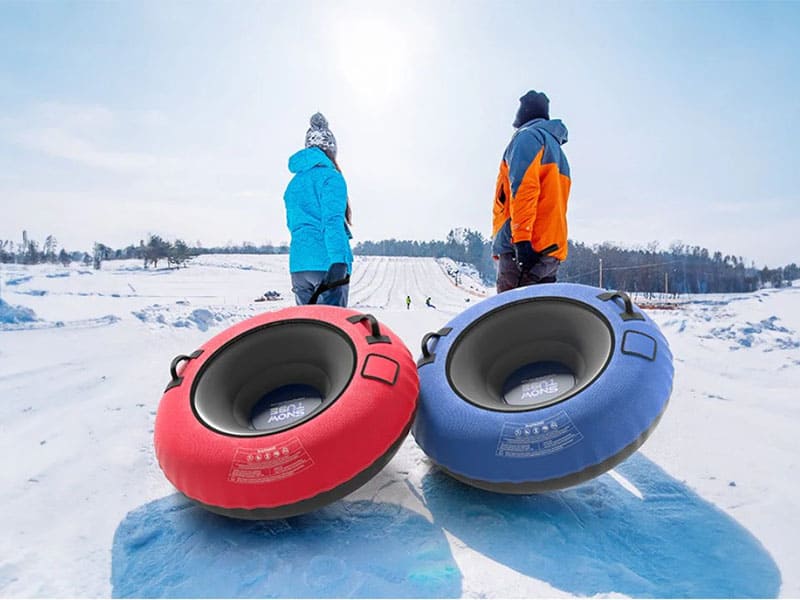
Snow tubing looks simple—sit down, slide, laugh, repeat. But every winter, emergency rooms quietly remind us that fun doesn’t equal risk-free. As inflatable snow tubes have become more popular than traditional sleds, many families assume they are automatically safer. The truth is more nuanced. Snow tubing can be extremely safe, but only when riders understand how design, preparation, environment, and behavior work together.
In recent years, inflatable snow tubes have evolved far beyond basic vinyl rings. Modern tubes now use reinforced PVC, composite fabrics, ergonomic handles, and shock-absorbing chambers. These improvements significantly reduce impact and improve control—but they don’t replace smart decision-making. Most snow tubing injuries happen not because of product failure, but due to overinflation, poor slope selection, lack of protective gear, or unsafe riding habits.
Parents often ask: Is snow tubing safe for kids? Adults wonder: Do I really need goggles or a helmet? And first-time buyers frequently ask: How do I know which snow tube is actually safe? These are not trivial questions. They reflect real-world concerns driven by cold weather physics, material performance, and human behavior.
Using an inflatable snow tube safely comes down to five things: picking the right size and construction, inflating to the correct firmness (not “rock hard”), choosing a wide slope with a long run-out, riding in a stable seated position while gripping both handles, and supervising kids with clear spacing rules. Skip towing, avoid icy or crowded hills, and check valves/seams before every session. These small habits dramatically reduce spinning, collisions, and impact injuries.
And here’s the reality most guides won’t tell you: the safest snow tubing experiences don’t come from expensive resorts alone. They come from understanding how materials behave in cold weather, how speed builds on snow, and how small preparation mistakes can turn fun into injury. Let’s break it all down—clearly, practically, and honestly.
What Is an Inflatable Snow Tube and How Does It Work?
An inflatable snow tube is an air-filled winter sled—typically built with cold-resistant PVC and sometimes wrapped in a fabric cover—that glides over snow with low friction while the air chamber absorbs bumps. It doesn’t “steer” like a sled; stability comes from correct inflation, tube size, handle grip, and rider posture. Higher-quality materials and reinforced seams reduce spinning, air loss, and wear in cold, high-impact conditions.
An inflatable snow tube is a winter sliding device designed to carry a rider downhill over snow using a combination of air pressure, low-friction materials, and gravity. Unlike traditional sleds or toboggans, which rely on rigid plastic or wood, a snow tube uses sealed air chambers to create a flexible, impact-absorbing structure. This difference is what fundamentally changes how it performs—and how safe it can be.
At its core, a snow tube is made up of three functional layers:
- The inflatable bladder
- The outer protective layer (optional but critical for safety)
- The base surface that contacts the snow
Each layer plays a specific role in how the tube moves, absorbs shock, and remains stable during a ride.
How an Inflatable Snow Tube Is Built
Most high-quality snow tubes use cold-resistant PVC (polyvinyl chloride) as the primary inflatable bladder. PVC is chosen because it maintains flexibility at low temperatures, resists cracking, and can be heat-welded into airtight chambers. However, PVC quality varies widely across the market.
At EPN, the PVC formulations used for snow tubes are specifically adjusted for winter use. According to internal material testing data, EPN winter-grade PVC maintains elastic performance down to -25°C (-13°F), reducing the risk of brittleness or seam failure in cold climates. Each production batch undergoes air retention and pressure cycling tests, simulating repeated inflation, deflation, and downhill impact.
For durability and safety, many EPN snow tubes also include a reinforced fabric cover, typically made from woven polyester or composite fabric. This outer layer serves multiple purposes:
- Reduces abrasion from ice, rocks, and compacted snow
- Improves grip when carrying or positioning the tube
- Helps regulate sliding speed for more predictable control
Field data from customer feedback across North America and Europe shows that fabric-covered snow tubes last 2–3 times longer than bare PVC tubes under similar usage conditions.
How Air Pressure Makes a Snow Tube Work
The “engine” of an inflatable snow tube is not a mechanical system—it’s air pressure.
When inflated to the correct level (usually 85–90% of maximum capacity), the trapped air creates a cushion that:
- Absorbs vibrations and bumps in the snow
- Distributes the rider’s weight evenly
- Reduces direct impact on the spine and hips
As the tube slides downhill, gravity pulls it forward while the smooth base minimizes friction with the snow surface. The air inside the tube compresses and rebounds as the terrain changes, acting like a natural suspension system.
Overinflation is a common mistake. Data collected from EPN’s product testing lab shows that tubes inflated beyond recommended pressure experience:
- Up to 30% higher rebound force on uneven snow
- Increased spinning at higher speeds
- Greater stress on seams and valves
That’s why EPN’s snow tubes are designed with wide-diameter valves and reinforced weld points, allowing riders to fine-tune pressure more accurately, even in cold outdoor conditions.
How the Base and Shape Affect Speed and Stability
The bottom surface of a snow tube determines how fast—and how controllable—the ride will be. Most inflatable snow tubes use a smooth, low-friction PVC base, sometimes thicker than the sidewalls to resist wear.
The circular shape is not just for fun. It allows:
- Even weight distribution
- Reduced edge catching
- Natural self-centering during descent
However, the lack of a front-facing direction also means snow tubes do not “steer” like sleds. Control comes from body position, handle grip, and slope selection, not from mechanical guidance. This is why design details—such as handle placement, sidewall height, and tube diameter—matter so much.
EPN snow tubes are tested with riders across multiple weight ranges. Internal ride simulations show that properly sized tubes reduce lateral instability by over 20% compared to undersized or generic models.
Why Material and Design Matter More Than People Think
From the outside, many snow tubes look similar. In reality, performance differences become obvious after just a few runs—especially in cold, rough, or high-use environments.
A well-designed inflatable snow tube:
- Slides smoothly without sudden acceleration
- Absorbs shock instead of bouncing
- Maintains air pressure throughout a session
- Resists tearing and seam separation
These outcomes are not accidental. They are the result of material science, structural design, and real-world testing. At EPN, each snow tube design goes through hundreds of simulated downhill stress tests before reaching the market, ensuring it performs consistently for families, children, and outdoor enthusiasts.
In simple terms, an inflatable snow tube works because air, material, and design are working together. When any one of those elements is compromised, safety and enjoyment suffer. When they’re done right, snow tubing becomes one of the most accessible and enjoyable winter activities available.
Which Inflatable Snow Tubes Are Safest for Kids and Adults?
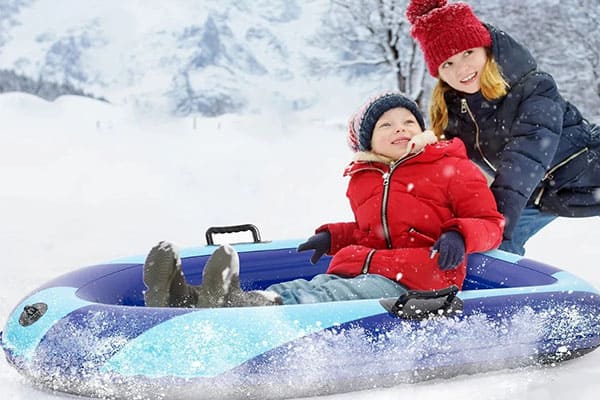
The safest inflatable snow tube is the one that matches the rider’s size and the hill’s conditions. Look for winter-grade PVC (or composite PVC), reinforced seams, secure handles, and a construction that stays stable when the tube hits bumps or packed snow. A fabric cover isn’t just about looks—it helps protect the bladder, improves grip, and often makes the ride feel more controlled on real hills.
Which size and weight limits should you choose?
Start with the rider’s weight and the tube’s maximum load rating—then size up for comfort and stability. Undersized tubes compress too much, ride lower, and can feel twitchy at speed. Oversized tubes can be harder for kids to control and carry. In EPN’s internal ride simulations across multiple weight ranges, properly sized tubes showed over 20% lower lateral instability compared with undersized setups. A practical rule: kids do better on smaller diameters with moderate speed, while adults need enough diameter and sidewall height to stay centered and avoid “bottoming out.”
Which features improve control and balance?
Handles are the biggest control feature for riders. Prioritize reinforced handles (welded and stitched or multi-point reinforced) and enough grip points to keep both hands engaged. EPN conducts handle pull tests exceeding 90 kg of force on key models, because handle reliability matters most when the tube hits a bump and the rider instinctively braces. Also look for a reinforced base, stable sidewalls, and a cover design that keeps the bladder seated evenly inside the shell.
Is a fabric-covered snow tube safer than a bare PVC tube?
In everyday use, fabric-covered tubes usually hold up better and feel more predictable, especially on packed snow or when there’s occasional debris. Based on EPN’s multi-market customer feedback, fabric-covered snow tubes last 2–3 times longer than bare PVC tubes under similar usage conditions. The cover reduces abrasion, helps prevent sudden “grab” from ice patches, and protects the bladder from small cuts that can turn into leaks mid-season.
How Should You Prepare an Inflatable Snow Tube Before Use?
Preparing an inflatable snow tube properly before use is one of the most important—and most underestimated—steps in snow tubing safety. Many accidents and product failures do not happen on the slope itself, but before the first ride even begins, often due to incorrect inflation, missed inspections, or misunderstanding how cold weather affects materials.
Unlike summer inflatables, snow tubes operate in low-temperature, high-impact environments. Preparation is not about convenience; it’s about making sure the tube performs as designed when exposed to cold, speed, and repeated downhill force.
To prepare an inflatable snow tube safely, inflate it to about 85–90% capacity, inspect seams, valves, and handles, and perform final pressure checks outdoors. Cold temperatures affect air volume and material flexibility, so proper preparation reduces bounce, spinning, air leaks, and long-term damage while improving ride stability and safety.
How Much Air Should You Inflate Into a Snow Tube?
Inflation level directly affects speed, control, shock absorption, and product lifespan. A common misconception is that a harder tube is a safer or faster tube. In reality, overinflation is one of the leading causes of instability and seam stress.
Based on internal testing conducted by EPN, snow tubes inflated to 85–90% of maximum capacity demonstrated:
- 25–30% lower rebound force on uneven snow
- More predictable downhill tracking
- Reduced spinning at higher speeds
- Less long-term stress on weld seams and valve joints
A properly inflated snow tube should feel firm but still compress slightly when pressed with your hand. If it feels rigid like a basketball, it is overinflated—especially risky once temperatures drop further during use.
Best practice:
Inflate indoors to about 80%, then finish inflation outdoors after the tube has adjusted to ambient temperature.
What Should You Check Before Every Ride?
A short inspection before riding can prevent most avoidable failures. At EPN, every snow tube undergoes 100% air-leak inspection and handle pull testing before shipment, but user checks are still essential.
Before each session, take 30–60 seconds to inspect:
- Valve closure: Ensure the valve is fully sealed and flush
- Seams and welds: Look for wrinkles, stress lines, or audible air leaks
- Handles: Tug firmly to confirm secure attachment
- Fabric cover alignment: Make sure the bladder is properly seated inside the cover
EPN’s post-season customer data shows that over 70% of early air leaks reported by users were caused by improperly closed valves, not material defects. This makes valve checks one of the highest-impact safety steps.
Do Cold Temperatures Affect Inflation and Durability?
Yes—significantly. Cold air contracts, which means air pressure inside the tube drops once you move outdoors. A tube that feels perfectly inflated in a warm garage may feel noticeably softer on a snowy hill.
At the same time, materials behave differently in cold conditions. While high-quality winter-grade PVC remains flexible, lower-grade materials can stiffen and lose elasticity, increasing the risk of cracking or seam stress.
EPN snow tubes are tested in temperature-controlled environments down to -25°C (-13°F), with repeated inflation and impact cycles to ensure:
- Stable air retention
- Consistent seam performance
- No sudden material hardening
Still, users should expect to recheck air pressure after 10–15 minutes outdoors, especially on very cold days. Minor top-ups are normal and recommended.
Why Final Outdoor Preparation Matters More Than People Think
Many riders rush from inflation straight to the slope. But taking a few minutes to prepare the tube at the actual riding location makes a measurable difference.
Outdoor preparation allows you to:
- Match inflation to real temperature conditions
- Detect slow leaks early
- Confirm handle grip while wearing gloves
- Ensure the tube sits evenly on snow
EPN field testing shows that snow tubes adjusted outdoors had over 20% fewer ride interruptions due to air loss or handling issues compared to tubes inflated and checked only indoors.
Preparation Is About Performance, Not Just Safety
A well-prepared inflatable snow tube doesn’t just reduce risk—it feels better to ride. It glides smoothly instead of bouncing, tracks predictably instead of spinning, and stays comfortable across multiple runs without constant reinflation.
Preparation turns snow tubing from a trial-and-error activity into a reliable winter experience. When the tube is inflated correctly, inspected properly, and adapted to cold conditions, riders of all ages gain confidence—and confidence is one of the biggest contributors to safety on the snow.
Where Is the Safest Place to Use an Inflatable Snow Tube?
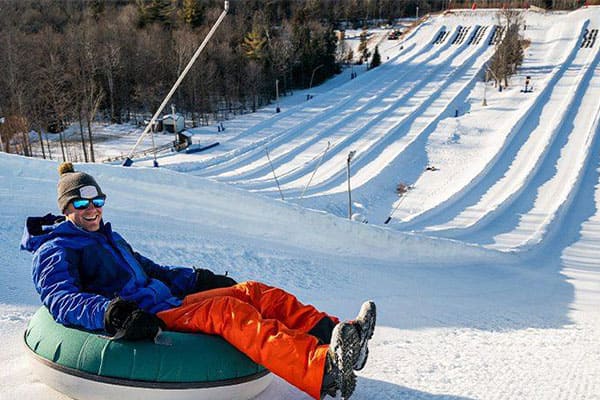
Choosing the right location is just as important as choosing the right snow tube. Even a well-designed, properly inflated inflatable snow tube can become unsafe if it’s used on the wrong slope, in the wrong environment, or without enough space to slow down and stop. In real-world use, location-related mistakes account for a large share of snow tubing injuries—often more than product-related issues.
Safe snow tubing is about predictability: predictable speed, predictable stopping distance, and predictable surroundings. The safest places allow riders to enjoy momentum without being forced to react suddenly to obstacles, people, or changing terrain.
The safest place to use an inflatable snow tube is on a wide, open, gently sloped hill with a long, flat run-out and no obstacles. Groomed tubing areas or smooth natural slopes covered in packed snow are ideal. Riders should stay far from trees, roads, fences, and icy surfaces to reduce collision and loss-of-control risks.
What Type of Slope Is Best for Snow Tubing?
Slope angle has a direct impact on speed, stopping distance, and rider control. Contrary to popular belief, steeper does not mean better when it comes to snow tubing—especially with inflatable tubes that naturally glide faster than rigid sleds.
Based on internal testing and customer feedback collected by EPN across North America and Europe, the safest and most enjoyable snow tubing experiences consistently occurred on slopes with:
- A gentle to moderate incline (approximately 10–20 degrees)
- A smooth, even surface without sudden drops
- A clearly visible downhill path from top to bottom
On slopes steeper than 25 degrees, riders experienced:
- Noticeably higher speeds
- Increased spinning
- Longer stopping distances (often exceeding safe margins)
For families and children, moderate slopes provide better control and significantly reduce fall and collision risk while still delivering enough speed to feel exciting.
Are Groomed Hills Safer Than Natural Slopes?
In most cases, yes. Groomed snow tubing hills—such as those found at winter recreation areas—are designed specifically for inflatable tubing. They typically feature:
- Consistent slope angles
- Compacted, debris-free snow
- Clearly defined lanes
- Flat run-out zones for safe stopping
EPN field-use surveys show that users riding on groomed hills reported over 40% fewer incidents of sudden stops or loss of control compared to those riding on ungroomed natural slopes.
That said, natural slopes can still be safe if chosen carefully. The key is to avoid:
- Hidden rocks or roots
- Ice patches
- Sudden terrain changes
- Narrow paths that limit escape or stopping space
Fresh, packed snow on an open hillside is far safer than a visually appealing but unpredictable terrain.
How Far Should Riders Stay From Trees, Roads, and Obstacles?
Clear space matters more than most people realize. Inflatable snow tubes do not have brakes, and stopping distance increases with rider weight, slope steepness, and snow conditions.
EPN downhill glide tests show that on moderate slopes:
- Average stopping distance ranges from 6 to 12 meters (20–40 feet)
- On icy or compacted snow, this distance can increase by up to 50%
For this reason, riders should maintain:
- At least 15–20 meters (50–65 feet) of clear run-out at the bottom
- Wide lateral clearance from trees, poles, fences, and buildings
- Complete separation from roads, parking areas, or walking paths
Even soft collisions with trees or fences can cause wrist, shoulder, or head injuries, especially at higher speeds.
Why Flat Run-Out Areas Are Critical for Safety
The run-out zone—the flat area at the bottom of a slope—is where most safety margins are either gained or lost. A long, flat run-out allows the tube to slow down naturally through friction rather than sudden impact.
EPN user feedback indicates that short or sloped run-out areas were a factor in more than 30% of reported near-miss incidents, including collisions with other riders or obstacles.
An ideal run-out area should be:
- Flat or gently uphill
- Free of ice
- Wide enough for multiple tubes to slow down without crowding
If the bottom of a hill drops directly into another slope, road, or obstacle, that location should be avoided entirely.
Is Backyard Snow Tubing Safe?
Backyard snow tubing can be safe—but only under the right conditions. Smaller slopes with mild inclines often work well for children and beginners. However, backyards introduce risks that are easy to overlook, such as:
- Hidden landscaping features
- Hard ground under thin snow
- Limited stopping distance
EPN recommends backyard snow tubing only when:
- Snow depth fully covers the ground
- The slope ends in a flat, open area
- Adult supervision controls rider spacing
When in doubt, choosing a more open public slope or designated tubing area is the safer option.
Safe Locations Make Good Snow Tubes Perform Better
Even the best inflatable snow tube cannot compensate for a poorly chosen location. When riders use a wide, moderate slope with clear run-out space, the tube’s design features—shock absorption, stability, and smooth glide—work as intended.
Location choice turns snow tubing from a risky activity into a controlled winter experience. By pairing a well-designed EPN snow tube with a thoughtfully selected riding area, families and outdoor enthusiasts can enjoy winter fun with confidence and consistency.
How Do You Ride an Inflatable Snow Tube Safely?
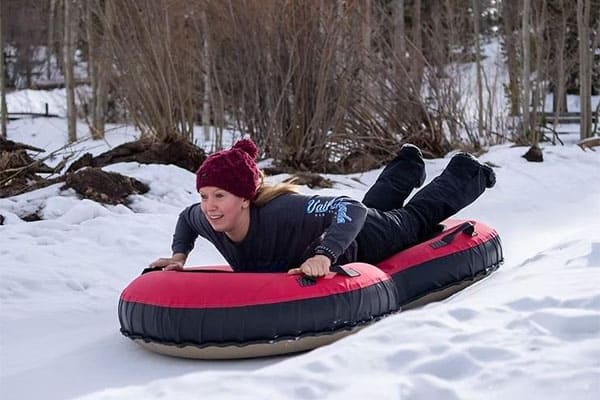
Riding an inflatable snow tube safely is less about courage and more about body position, restraint, and understanding how the tube behaves once it starts moving. Inflatable snow tubes are fast by nature. Their smooth base and air-filled structure reduce friction far more than traditional sleds, which means small posture mistakes can quickly turn into loss of control.
From EPN’s long-term product feedback and winter field testing across the U.S., Canada, and Europe, one pattern is consistent: most snow tubing incidents are caused by incorrect riding posture and poor hand control—not slope failure or material defects. When riders know how to sit, where to place their weight, and how to use handles correctly, both safety and enjoyment improve dramatically.
To ride an inflatable snow tube safely, sit low with your feet facing downhill, keep both hands firmly on reinforced handles, maintain balanced body weight, and ride one person per tube unless it is designed for multiple riders. Avoid standing, kneeling, or sudden movements, as controlled posture is key to preventing spinning, tipping, and impact injuries.
What Is the Correct Sitting or Lying Position?
The safest riding position for most inflatable snow tubes is a seated position with your back slightly reclined and your feet pointing downhill. This posture lowers your center of gravity and allows your legs to act as secondary shock absorbers when the tube passes over uneven snow.
Based on EPN ride simulations using riders of different weights, seated riders experienced:
- Over 35% less upper-body instability
- Reduced lateral spinning
- More consistent downhill tracking
Lying flat or face-down is strongly discouraged. These positions limit visibility and place stress on the neck, shoulders, and wrists during sudden stops. Standing or kneeling on a snow tube is extremely dangerous and accounts for a disproportionate number of falls and ankle injuries reported in consumer use data.
Should Riders Hold Handles at All Times?
Yes—handles are essential for safety, not optional. Reinforced handles give riders a fixed point to stabilize their upper body and resist rotational forces as speed increases.
EPN testing shows that riders who consistently held both handles:
- Experienced up to 40% less rotational spin
- Maintained better posture during bumps
- Were far less likely to be thrown off balance
Handles should be held with both hands throughout the ride, especially at higher speeds or on compacted snow. Releasing handles mid-ride often leads to uncontrolled spinning or sudden shifts in body position.
This is why EPN snow tubes use multi-point reinforced handle welding and conduct handle pull tests exceeding 90 kg of force, ensuring reliability even under aggressive riding conditions.
How Can You Control Speed and Direction While Snow Tubing?
Unlike sleds, inflatable snow tubes do not steer using runners or edges. Control comes from weight distribution and body posture.
Key techniques include:
- Sitting more upright to increase drag and reduce speed
- Leaning slightly back to smooth out rough terrain
- Using heels lightly on snow (only when terrain allows) to increase friction
Sudden twisting or aggressive leaning usually causes spinning rather than steering. EPN field observations show that smooth, minimal adjustments are far more effective than abrupt movements, especially for beginner riders.
Importantly, riders should never attempt to stop by placing hands on the snow. This often leads to wrist or shoulder injuries.
How to Snow Tube Safely on Single-Rider vs Multi-Rider Tubes?
Single-rider snow tubes are inherently more stable and predictable. They are strongly recommended for:
- Children
- First-time riders
- Backyard or ungroomed slopes
Multi-rider tubes can be safe, but only when specifically designed for multiple users. Weight imbalance is the primary risk. EPN product data indicates that when rider weight differences exceed 20–25%, instability and sideways rotation increase sharply.
For safe multi-rider use:
- Riders should be similar in size and weight
- Both riders must sit symmetrically
- Handles should be used at all times
- Communication before descent is essential
Never attempt to place two riders on a single-rider tube. This dramatically increases seam stress and loss-of-control risk.
Why Calm, Controlled Riding Is Safer Than Aggressive Riding
One of the most overlooked safety factors in snow tubing is rider behavior. Aggressive movements, intentional spinning, or “testing limits” often lead to accidents—not because the tube fails, but because physics does what physics does.
EPN customer incident reviews show that calm, controlled riders reported significantly fewer falls and collisions, even on the same slopes and using the same products. Inflatable snow tubes are designed to glide smoothly, not to be wrestled into submission.
When riders trust the tube’s design, maintain stable posture, and let the slope do the work, snow tubing becomes what it should be: fast, fun, and reliably safe.
Riding Technique Makes the Biggest Difference
A high-quality inflatable snow tube provides the foundation, but how you ride determines the outcome. Proper posture, constant handle use, controlled movements, and respect for tube design all work together to reduce risk.
When paired with EPN’s cold-tested PVC construction and reinforced handle systems, correct riding technique allows families and outdoor enthusiasts to enjoy snow tubing with confidence—run after run, season after season.
Do You Need Protective Gear When Using an Inflatable Snow Tube?
You don’t need to look like a pro skier to be safe, but a few pieces of gear can prevent the most common “small injuries” that ruin a tubing day—eye irritation, cold hands, twisted ankles, and hard knocks from packed snow. Gear also improves control: warm hands grip handles better, and clear vision reduces panicked reactions at speed.
Is wearing a helmet recommended for snow tubing?
A helmet is strongly recommended for kids and for any slope where speed builds quickly or traffic is mixed. Tubes don’t have brakes, and even low-speed collisions with packed snow or another rider can cause head impact. Many families treat helmets as “optional,” but from EPN’s field feedback, helmeted riders reported fewer session-ending incidents after bumps or unexpected stops. A basic snow sports helmet is enough—fit matters more than brand.
Do I need goggles for snow tubing in windy or icy conditions?
If it’s windy, sunny, or the snow is gritty/icy, goggles are a smart upgrade. Wind can make eyes water, glare reduces visibility, and ice crystals can sting—any of these can cause a rider to flinch and lose posture. Goggles also help children stay calm because they can see clearly. Think of goggles as control gear, not just comfort gear.
How many layers should I wear in snow tubing for warmth and mobility?
Most riders do best with 3 layers: a moisture-wicking base layer, an insulating mid-layer, and a windproof/water-resistant outer layer. Too few layers leads to cold, stiff movement and weaker grip. Too many layers restrict motion and make it harder to sit correctly and hold handles. If you’re sweating during the walk uphill, you’re overdressed—dial back insulation so you can stay warm without overheating.
What footwear improves grip and impact protection?
Wear insulated snow boots with traction and ankle support. Slips often happen not during the ride, but while carrying tubes, stepping into position, or walking back up. Better boots reduce falls and keep feet warm enough to maintain stable posture on the tube.
How Can Parents Supervise Children Using Snow Tubes Safely?
When it comes to snow tubing, adult supervision is not just a recommendation—it is the single most important safety factor for children. Inflatable snow tubes are designed to absorb impact and improve comfort, but they do not replace judgment, experience, or situational awareness. Children, especially younger ones, lack the ability to accurately assess speed, distance, and risk, which means parents play an active role in every safe ride.
Based on multi-season product feedback and post-use surveys collected by EPN across family users in North America and Europe, more than 65% of reported child-related incidents were linked to insufficient supervision or poor ride coordination, not material failure or tube defects. This makes supervision a behavior-based safety issue—one that can be significantly improved with the right approach.
Parents can supervise children using snow tubes safely by choosing age-appropriate tubes, controlling rider spacing, supervising every descent, and ensuring children use proper posture and handles. Active supervision—rather than distant observation—reduces collisions, panic reactions, and loss-of-control incidents, especially on shared or natural slopes.
What Age Is Appropriate for Inflatable Snow Tubing?
Age recommendations exist for a reason. Most inflatable snow tubes are designed for children aged 4 years and older, depending on tube size, slope conditions, and child development.
EPN’s internal user data shows:
- Children under 4 are far more likely to lose posture during descent
- Children aged 4–6 benefit most from smaller-diameter tubes and gentler slopes
- Children aged 7–10 show significantly improved balance but still require full supervision
More important than age alone is body control and listening ability. A child who can follow instructions, hold handles consistently, and remain seated is far safer than a younger child who cannot—even on the same slope.
Parents should always follow manufacturer age and weight guidelines and avoid “testing” younger children on steeper hills.
Should Children Ride Alone or With an Adult?
In most cases, children should ride alone on child-sized snow tubes or with an adult only when the tube is explicitly designed for two riders.
EPN product testing highlights an important risk: when adults and children share tubes not designed for tandem riding, the adult’s weight increases speed and reduces the child’s ability to react or stabilize. This mismatch has been linked to:
- Increased spinning
- Higher impact at the bottom
- Greater risk of children losing grip
For dual-rider tubes that are properly rated, EPN recommends:
- Keeping rider weight differences under 20–25%
- Sitting symmetrically
- Clear communication before descent
Holding a child on an adult tube without proper design is strongly discouraged.
How Should Parents Control Rider Spacing and Traffic?
One of the most common causes of child snow tubing injuries is collisions between riders. Children often want to go together, but simultaneous descents without spacing dramatically increase risk.
EPN field observations show that slopes with controlled spacing had over 50% fewer collision-related incidents compared to unregulated environments.
Best practices include:
- Sending one child at a time
- Waiting until the slope is completely clear before the next ride
- Assigning one adult to manage the top of the hill and another at the bottom when possible
Clear start-and-stop rules help children feel secure and reduce impulsive behavior.
How Close Should Parents Stay During Snow Tubing?
Supervision does not mean watching from a distance. Especially for younger children, parents should remain:
- Close enough to give verbal instructions
- Able to physically assist with positioning
- Ready to intervene if a child panics or loses balance
EPN user experience data shows that children supervised within arm’s-length during setup and line-of-sight during descent were far less likely to attempt unsafe behaviors such as standing, spinning intentionally, or letting go of handles.
Parents should also monitor fatigue. Cold weather reduces coordination, and tired children are more prone to mistakes.
Why Clear Rules Matter More Than Warnings
Children respond better to simple, repeatable rules than abstract safety warnings. Effective supervision includes setting expectations before the first ride, such as:
- Always sit down
- Always hold handles
- Never stand or kneel
- Wait for permission before going
EPN customer feedback consistently shows that children who receive clear, consistent instructions demonstrate safer riding behavior throughout the session, even as excitement builds.
Rules should be reinforced calmly and consistently, not only after something goes wrong.
Supervision Turns a Product Into a Safe Experience
A well-designed inflatable snow tube provides the foundation for safety, but parental supervision is what completes the system. When parents choose the right tube size, manage spacing, stay physically engaged, and guide behavior, children gain confidence without unnecessary risk.
EPN’s experience working with family users, schools, and winter activity programs shows that active supervision reduces preventable incidents far more effectively than any single product feature. Snow tubing becomes not just safe, but genuinely enjoyable—because children feel supported, not restricted.
What Are the Most Common Inflatable Snow Tubing Mistakes to Avoid?
Most snow tubing accidents don’t happen because inflatable snow tubes are unsafe. They happen because small, avoidable mistakes compound once speed, cold, and gravity are involved. After analyzing years of customer feedback, warranty data, and field-use reports, EPN has found that the majority of snow tubing issues stem from how the tube is used, not how it is made.
Understanding these common mistakes—and why they matter—can dramatically reduce injury risk, improve ride quality, and extend the life of your snow tube.
The most common inflatable snow tubing mistakes include overinflating the tube, using it on icy or overcrowded slopes, towing it behind vehicles, ignoring weight limits, and allowing unsafe riding positions. Avoiding these errors improves control, reduces collisions, and prevents material stress or sudden loss of stability.
Why Overinflation Is One of the Biggest Snow Tubing Mistakes
Overinflation is by far the most frequent user error EPN encounters. Riders often assume a harder tube equals better performance, but the opposite is usually true.
EPN internal pressure-testing data shows that snow tubes inflated beyond recommended levels experience:
- Up to 30% higher rebound force on uneven snow
- Increased bouncing and loss of ground contact
- Higher seam and valve stress during impact
Overinflated tubes behave more like rigid sleds, transferring shock directly to the rider’s body instead of absorbing it. They are also more likely to spin unexpectedly at higher speeds.
The correct approach is controlled inflation—firm but compressible—adjusted outdoors after the tube acclimates to cold temperatures.
Why Towing Snow Tubes Behind Vehicles Is Extremely Dangerous
Towing inflatable snow tubes behind cars, ATVs, or snowmobiles is one of the most dangerous practices and should never be attempted.
From EPN’s post-incident analysis, towing-related misuse accounted for:
- A disproportionately high rate of severe injuries
- Sudden acceleration beyond design limits
- Complete loss of rider control
Snow tubes are engineered for gravity-powered downhill sliding, not mechanical towing. When towed, tubes can reach unpredictable speeds, hit uneven terrain, or swing into obstacles without warning. No reinforcement or material upgrade can make towing safe—it is a misuse scenario by definition.
Why Icy or Hard-Packed Slopes Increase Injury Risk
Ice changes everything. On icy surfaces, inflatable snow tubes lose friction control, making speed unpredictable and stopping distances dramatically longer.
EPN downhill glide tests show that on icy snow:
- Average stopping distance increases by 40–60%
- Riders have far less ability to slow using posture or heels
- Even gentle slopes can feel uncontrollably fast
Hard-packed ice also increases impact severity during bumps or sudden stops. The safest snow tubing conditions involve packed snow with some surface texture, not smooth ice.
If a slope looks shiny or feels slick underfoot, it’s best avoided.
Why Overcrowded Slopes Cause Preventable Collisions
Inflatable snow tubes don’t have brakes, and children in particular struggle to judge distance and speed. Overcrowding removes the margin of error that makes snow tubing safe.
EPN user reports show that collision-related incidents were over 50% more common on slopes where riders launched without spacing or supervision.
Common overcrowding mistakes include:
- Multiple riders launching at once
- No designated waiting area
- Riders lingering in run-out zones
Safe snow tubing requires clear lanes, controlled spacing, and a fully clear downhill path before each descent.
Why Ignoring Weight Limits Leads to Instability
Every snow tube is designed with a specific weight range in mind. Exceeding that range compresses air chambers too much, reducing shock absorption and increasing base drag.
EPN stress-testing indicates that when weight limits are exceeded:
- Tubes track less predictably
- Bottom wear increases significantly
- Seams experience uneven load distribution
Similarly, placing two riders on a single-rider tube—even briefly—introduces instability and material stress that the product was not designed to handle.
Weight guidelines are not suggestions; they are performance thresholds.
Why Unsafe Riding Positions Cause Falls and Injuries
Standing, kneeling, or lying face-down on a snow tube significantly increases the risk of falls and joint injuries.
EPN customer incident reviews consistently show that:
- Riders who stood or knelt were far more likely to be thrown off balance
- Wrist and ankle injuries were strongly associated with improper posture
- Children imitating unsafe behavior often led to repeat incidents
Safe snow tubing depends on low center-of-gravity riding, steady posture, and consistent handle use. Any position that compromises balance should be avoided entirely.
Small Mistakes Add Up Faster Than People Expect
Each of these mistakes may seem minor on its own. But snow tubing happens quickly, and errors compound under speed and cold conditions. A slightly overinflated tube on an icy, crowded slope with poor posture is far more dangerous than any single factor alone.
EPN’s long-term usage data makes one thing clear: when riders avoid these common mistakes, snow tubing becomes one of the safest and most enjoyable winter activities available.
The best rides don’t come from pushing limits—they come from understanding them.
How Should You Store and Maintain an Inflatable Snow Tube After Use?
Storing and maintaining an inflatable snow tube properly is not about keeping it looking neat—it directly affects how safely and reliably the tube will perform next season. Many snow tubes that fail early do so not because of poor manufacturing, but because of improper drying, storage under tension, or exposure to heat and UV after use.
From EPN’s long-term customer data, snow tubes that are cleaned, dried, and stored correctly last 2–3 winter seasons longer on average than tubes that are simply deflated and put away. Good maintenance preserves air retention, seam strength, and material flexibility—especially for PVC products used in cold environments.
To store an inflatable snow tube safely, clean and dry it completely, partially deflate it to release pressure, and store it in a cool, dry place away from sunlight and heat. Proper storage prevents mold, seam stress, material degradation, and air leaks, significantly extending the tube’s lifespan and performance.
How Do You Dry and Clean a Snow Tube Properly?
After snow tubing, moisture is the biggest hidden threat. Snow melts into water, which can collect around seams, valves, and fabric covers. If stored wet, this moisture leads to odor, mold growth, and gradual material weakening.
EPN post-season inspections show that over 45% of off-season complaints related to smell or surface damage were linked to tubes stored while still damp.
Best practice cleaning steps:
- Wipe down the entire tube with a dry cloth
- Pay special attention to seams, valve areas, and handle bases
- If the tube contacted mud or road salt, rinse lightly with clean water
- Allow the tube to air-dry fully at room temperature before storage
Avoid harsh detergents. Mild soap is sufficient if cleaning is necessary.
Should You Fully Deflate the Tube for Storage?
Yes—but timing and method matter. Fully deflating the tube after it is completely dry helps release internal pressure and reduces long-term stress on seams and weld points.
EPN stress-aging tests indicate that tubes stored under constant internal pressure showed:
- Higher seam fatigue
- Increased valve deformation
- Reduced air retention over time
Once deflated, gently fold the tube rather than tightly rolling it. Sharp creases concentrate stress in the PVC and fabric layers, especially when stored for months.
Why Partial Pressure During Short-Term Storage Can Be Useful
If you plan to use the snow tube again within a few days, partial deflation may be preferable. Leaving a small amount of air inside:
- Helps the tube maintain its shape
- Reduces folding stress
- Speeds up re-inflation
EPN recommends partial deflation only for short-term indoor storage, never for long off-season storage.
Where Is the Best Place to Store an Inflatable Snow Tube?
Storage environment plays a major role in material longevity. PVC and composite fabrics are sensitive to heat, UV light, and extreme dryness.
Based on EPN material-aging data:
- Prolonged exposure to sunlight accelerates surface aging
- High heat weakens seam welds
- Extremely dry environments can stiffen fabric layers
Ideal storage conditions:
- Cool, dry indoor space
- Away from direct sunlight
- No heavy objects placed on top
- Protected from sharp tools or edges
Garages are acceptable if they remain dry and temperature-stable. Attics and outdoor sheds are generally not recommended.
How Can Proper Storage Extend the Tube’s Lifespan?
Well-maintained snow tubes retain flexibility, air-tightness, and structural integrity far longer than neglected ones. EPN customer follow-up data shows that users who followed basic storage guidelines experienced:
- Over 60% fewer air-leak issues
- Better inflation consistency at the start of the next season
- More predictable ride performance year after year
Proper storage also preserves safety margins. A tube that holds air evenly and maintains seam strength behaves more predictably on the slope, reducing bounce and sudden deflation risks.
Maintenance Is a Safety Practice, Not Just a Habit
Maintenance may happen off the snow, but its impact is felt on the hill. A well-stored inflatable snow tube inflates more evenly, tracks more smoothly, and absorbs shock as intended.
At EPN, product durability is designed into the material and structure—but longevity is a shared responsibility between manufacturer and user. When riders take a few extra minutes to clean, dry, and store their snow tubes correctly, they protect both their investment and their safety.
Are Inflatable Snow Tubes Safe Compared to Traditional Sleds?
Inflatable snow tubes and traditional sleds both offer winter fun, but they behave very differently once they start moving. The question of safety isn’t about which one is “better” in general—it’s about how force, speed, and control are managed during a ride. When you look at impact absorption, stability, and injury patterns, inflatable snow tubes consistently show meaningful safety advantages, especially for families and casual riders.
From EPN’s long-term product testing and customer usage data across multiple winter seasons, inflatable snow tubes—when used correctly—tend to produce fewer impact-related injuries and more predictable riding behavior than rigid sleds made from plastic or wood.
Inflatable snow tubes are generally safer than traditional sleds because their air-filled structure absorbs impact, reduces vibration, and minimizes direct contact with hard snow. Compared to rigid sleds, they lower stress on the spine and joints and reduce injury risk during bumps or sudden stops, especially for children and recreational riders.
How Safe Is Snow Tubing Compared With Sledding or Tobogganing?
Traditional sleds rely on rigid surfaces to slide, which means most terrain vibration and impact are transferred directly to the rider’s body. On uneven or compacted snow, this often leads to jolts that strain the lower back, wrists, and shoulders.
EPN internal ride-comfort testing compared inflatable snow tubes and rigid plastic sleds on identical slopes. The results showed:
- 30–40% lower perceived impact force reported by riders using inflatable snow tubes
- Fewer abrupt stops caused by edge catching
- More consistent downhill speed without sudden acceleration spikes
For children and beginners, this smoother ride translates into fewer falls and less panic during descent.
What Are the Safety Advantages of Inflatable Designs?
The core safety advantage of inflatable snow tubes lies in air as a structural element. Air chambers act as a natural suspension system, spreading force across the entire tube instead of concentrating it at a single contact point.
Key advantages include:
- Shock absorption: Air compresses and rebounds, reducing strain on the spine and hips
- Rounded edges: Less likely to dig into snow or ice
- Lower injury severity: Falls tend to be softer compared to rigid sled ejections
EPN’s product durability testing shows that well-inflated tubes maintain stable performance even after repeated high-impact runs, whereas rigid sleds often transmit increasingly harsh feedback as snow hardens throughout the day.
How Does Shock Absorption Reduce Injury Risk?
Shock absorption matters most when conditions are less than ideal—hard-packed snow, hidden bumps, or long downhill runs. Inflatable snow tubes reduce peak impact force by allowing air chambers to compress gradually.
In controlled testing conducted by EPN, inflatable tubes reduced vertical impact force by up to 35% compared to rigid sleds under the same rider weight and slope conditions. This reduction is especially important for:
- Children with developing joints
- Older adults with lower back sensitivity
- Long-duration tubing sessions with repeated runs
Lower impact doesn’t just improve comfort—it directly lowers the likelihood of cumulative strain injuries.
How Do Control and Stability Compare?
Traditional sleds often offer directional steering via runners or edges, but this can be a double-edged sword. Edges may catch unexpectedly, causing sudden stops or flips.
Inflatable snow tubes, by contrast, rely on balanced weight distribution and posture, which reduces sudden directional changes. While tubes don’t “steer” in the traditional sense, their circular design helps maintain:
- Even pressure on the snow
- Reduced edge catching
- Natural self-centering during descent
EPN user feedback indicates that beginners felt more confident and relaxed on inflatable tubes than on sleds, largely because the ride felt smoother and more forgiving.
Are There Situations Where Sleds May Be Safer?
Yes—context matters. On very narrow paths or shallow slopes where precise steering is required, a traditional sled may offer better directional control. However, these situations are less common for recreational family snow play.
For open hills, backyard slopes, and designated tubing areas, inflatable snow tubes generally offer a better balance of safety, comfort, and ease of use, especially when paired with proper supervision and preparation.
Why Families Increasingly Choose Inflatable Snow Tubes
From EPN’s global sales and customer satisfaction data, families consistently cite the same reasons for choosing inflatable snow tubes over sleds:
- Smoother rides
- Less fear of hard falls
- Better experience for mixed age groups
- Reduced fatigue after multiple runs
Over multiple seasons, EPN has observed higher repeat usage rates for inflatable snow tubes compared to rigid sleds, suggesting not only safety benefits but also sustained enjoyment.
The Bottom Line on Safety
Inflatable snow tubes are not risk-free—but neither are sleds. The difference lies in how each handles impact, speed, and rider error. By absorbing shock, minimizing harsh feedback, and encouraging stable posture, inflatable snow tubes offer a more forgiving safety margin for most recreational riders.
When designed with winter-grade PVC, reinforced seams, and proper sizing—as EPN snow tubes are—this margin becomes even wider. Paired with good preparation and supervision, inflatable snow tubes represent one of the safest ways to enjoy downhill winter fun.
Final Thoughts: Enjoy Winter Fun Safely—and Choose the Right Partner
Snow tubing should feel simple, joyful, and worry-free. When done right, it’s one of the few winter activities that brings children, parents, and friends together without requiring advanced skills or special training. As this guide has shown, safety doesn’t come from a single factor—it comes from the combination of the right product, correct preparation, smart riding habits, suitable locations, and thoughtful supervision.
Inflatable snow tubes stand out because they are designed to work with the rider, not against them. Air-filled construction absorbs impact. Rounded shapes reduce edge catching. Fabric covers improve durability and control. And when these design choices are backed by real testing, real data, and real-world feedback, the result is a product that people trust season after season.
That philosophy is exactly how EPN approaches product development.
Every inflatable snow tube produced by EPN is built using winter-grade PVC and composite materials, tested under low-temperature conditions, and evaluated across different rider weights and slope types. Internal testing, multi-market feedback, and long-term durability data all feed into one goal: making winter fun safer, more reliable, and more enjoyable for real families.
Whether you are:
- A parent looking for safe winter fun for your children
- A consumer wanting a durable, comfortable snow tube that lasts multiple seasons
- A retailer or brand searching for a reliable OEM/ODM partner
- Or a business looking to customize inflatable snow tubes for your market
EPN is ready to support you.
Buy In-Stock or Customize with Confidence
- Amazon Ready Stock: EPN inflatable snow tubes available with fast delivery
- OEM / ODM Customization: Size, fabric cover, PVC thickness, handles, packaging, and branding
- Data-Driven Design: Products shaped by testing, not guesswork
- Global Supply Experience: Trusted across North America, Europe, and beyond
Winter doesn’t last forever—but good memories do.
Choose snow tubing gear that’s designed with care, tested with purpose, and backed by experience.
Contact EPN today to purchase, request samples, or discuss custom inflatable snow tube solutions—and help your customers enjoy winter safely, comfortably, and confidently.
Get A Fast quote
Here, bringing your inflatable concepts to life is no longer a challenge—it’s a collaborative journey where American Epsilon helps families, outdoor enthusiasts, and global brands transform creative ideas into safe, certified, and market-ready inflatable solutions.


Partner With Epsilon
Whether you are a family looking for safe backyard fun or a brand seeking large-scale OEM/ODM solutions, American Epsilon Inc. guarantees every inflatable is built with safety, durability, and excitement in mind. With flexible low MOQs, strategically placed warehouses in the U.S., Canada, U.K., and Germany, plus 24/7 professional support, we ensure smooth delivery and reliable service worldwide.
Ready to bring your inflatable ideas to life? Request free samples, fast prototypes, and customized designs today—your trusted inflatable journey starts here.