Skip to content
What Is a Splash Pad Used For: Fun, Safety, and Benefits
# Your Trusted Inflatable Supplier In US
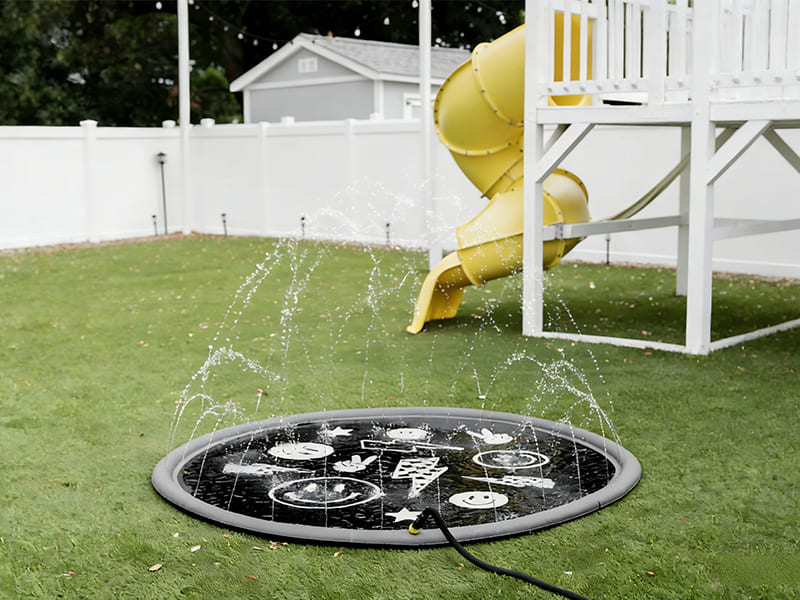
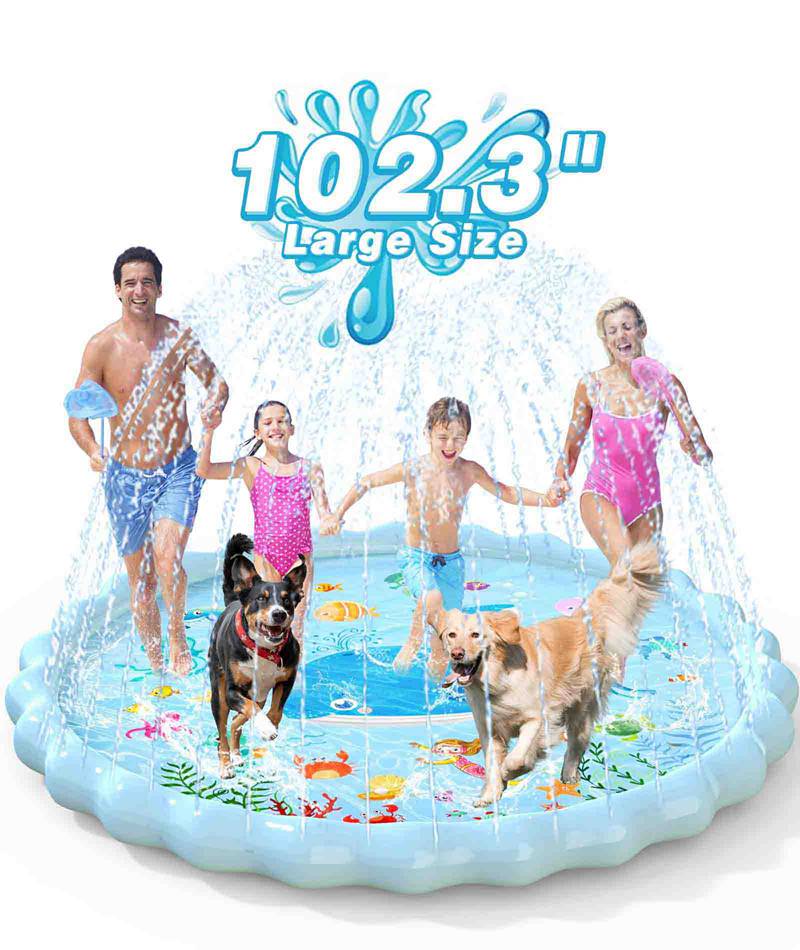
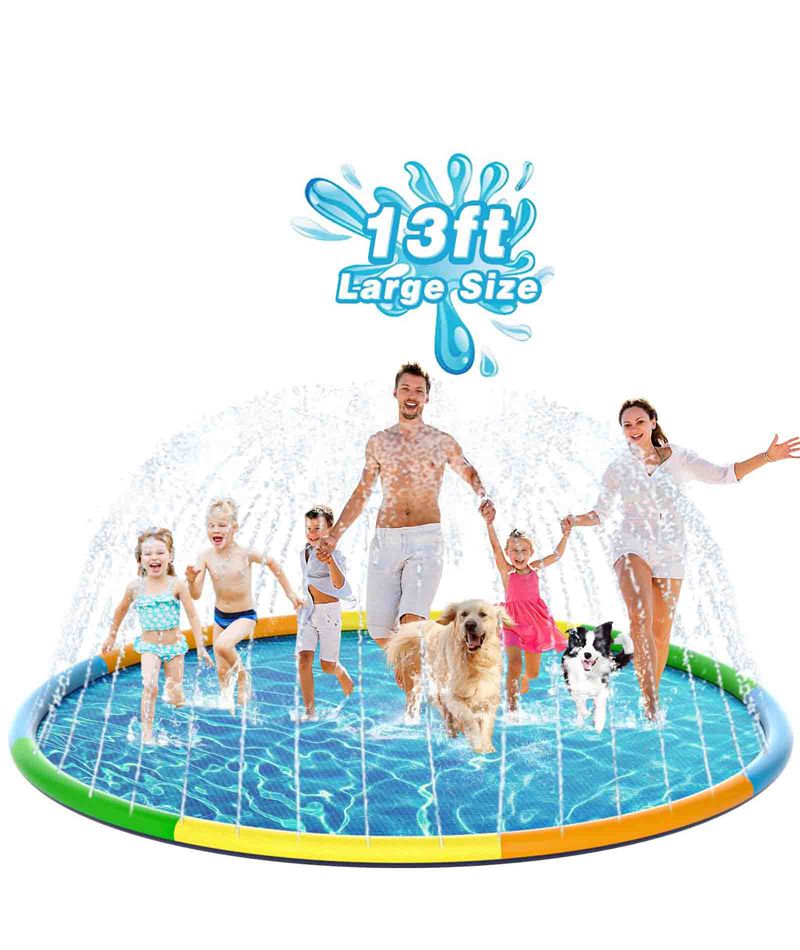
Splash pads are quickly becoming the go-to water play feature for homes, parks, and recreational spaces. But what exactly are they used for, and why are they such a popular choice for both children and adults? Whether you’re looking for a safe and interactive way for your kids to play in the summer or a fun way for your pets to cool off, splash pads serve multiple purposes. These water-based play areas offer a controlled, splash-filled environment without the risks of traditional swimming pools. They allow children, pets, and adults alike to enjoy the cool water and stay active, especially on hot days. Watch the splash pad in action below to see how water sprays, how it covers the surface, and how it works in a real backyard setup.
What is a splash pad used for? It is primarily used to provide a safe, fun, and engaging space for cooling off during hot weather. These outdoor water features are equipped with sprinklers, water jets, and fountains, offering endless entertainment for people of all ages. Splash pads are particularly valuable in areas where safety is a concern, as there is no standing water, reducing the risk of drowning, which is common in pools.
In the following sections, we will explore how splash pads work, who can use them, and how they benefit different users, including kids, pets, and families. Additionally, we’ll delve into the maintenance and safety aspects, ensuring you understand everything you need to know about this fun and practical outdoor feature.
What Is a Splash Pad?
A splash pad is a flat, shallow water-play surface that sprays water upward through built-in nozzles, jets, or sprinkler channels. Unlike swimming pools, splash pads do not hold standing water, which makes them safer, easier to maintain, and more flexible for different age groups and environments.
In everyday use, a splash pad connects directly to a standard garden hose or water line. When water flows in, pressure activates the spray features—arches, fountains, mist jets, or edge sprays—creating a playful cooling zone without the risks of deep water. Most modern splash pads are made from durable PVC or composite materials, designed to sit on grass, concrete, decks, or patios.
For families, splash pads are often used as a backyard alternative to kiddie pools. For pet owners, they double as a low-stress cooling area for dogs. In public spaces, splash pads replace traditional splash pools because they reduce drowning risk, simplify sanitation, and lower long-term operating costs.
In short, a splash pad is not just a toy—it’s a controlled water-play system built for safety, convenience, and repeat seasonal use.
What is the purpose of a splash pad?
The main purpose of a splash pad is to provide safe, accessible water play and cooling without the complexity of a pool.
From a practical standpoint, splash pads solve several common problems at once:
- Parents want kids to cool down without constant supervision
- Pet owners want water play without slippery tubs
- Communities want water features with lower liability and maintenance
A splash pad addresses these needs by keeping water moving instead of pooling. Because there’s no depth, splash pads dramatically reduce drowning risk while still delivering enough water interaction to keep users engaged.
Common real-world purposes include:
- Cooling kids during hot summer days
- Encouraging outdoor movement and physical play
- Providing sensory stimulation for toddlers
- Helping dogs regulate body temperature
- Creating low-maintenance water attractions in parks or schools
From a usage perspective, most families use splash pads 30–90 minutes per session, far longer than inflatable pools, because setup and cleanup are easier.
What activities are splash pads used for?
Splash pads are far more versatile than most people expect. They support free play, structured activities, and passive cooling across different age groups.
Typical activities on a splash pad include:
- Running and chasing water streams
- Jumping through spray arches
- Sitting or crawling for toddlers
- Pet splashing and paw play
- Light training or sensory play for dogs
- Group play during birthday parties or family gatherings
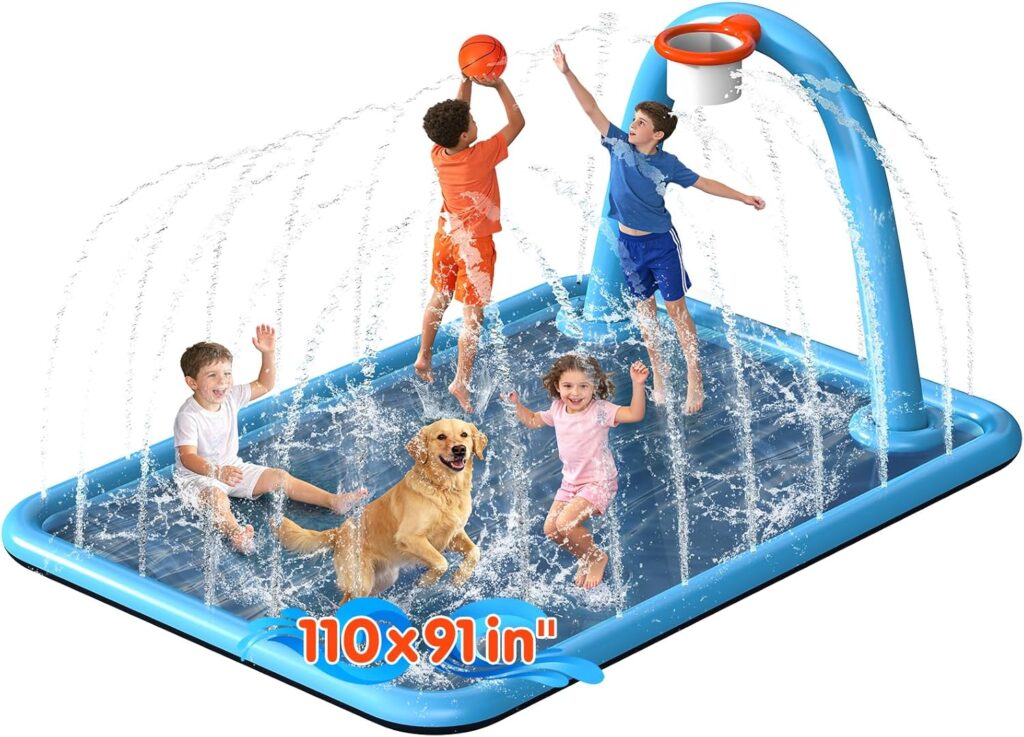
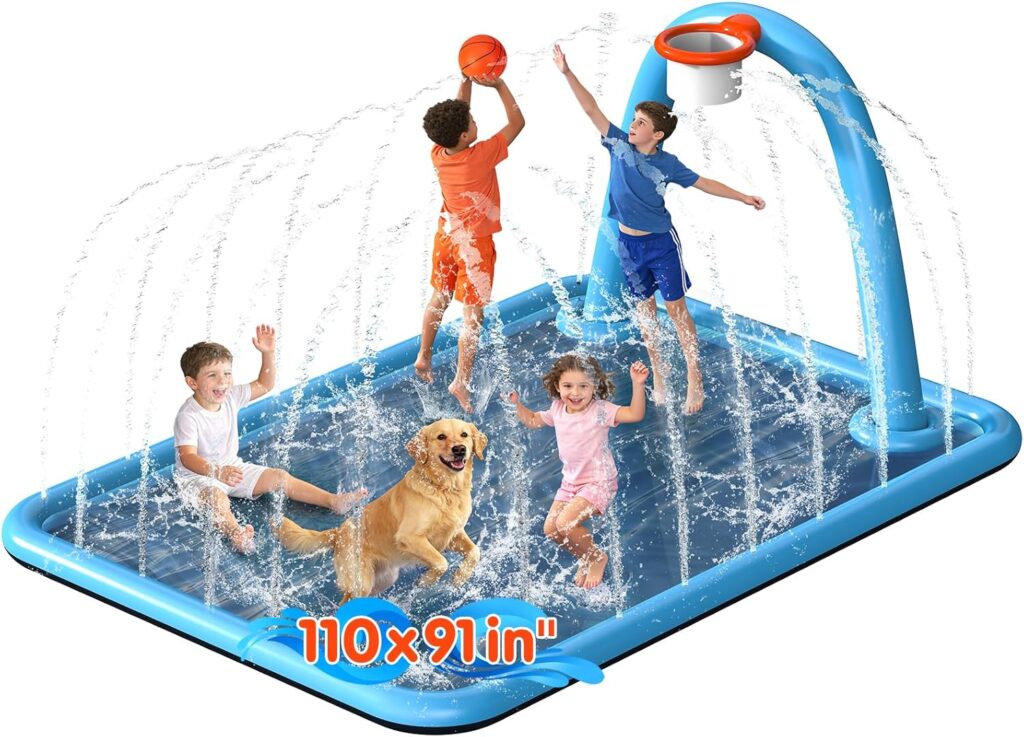
Unlike pools, splash pads don’t require swimming skills. That’s why they’re commonly used by children aged 1–8, but they’re also popular with older kids when paired with interactive features like basketball hoops or target sprays.
Usage comparison by age group:
| Age Group | How Splash Pads Are Used |
|---|---|
| 1–2 yrs | Sitting, crawling, sensory water touch |
| 3–5 yrs | Running, jumping, interactive play |
| 6–9 yrs | Games, group play, sports-style sprays |
| Dogs | Cooling, paw play, low-impact exercise |
This flexibility is a big reason splash pads outperform small pools in repeat usage.
How is a splash pad different from a pool?
The biggest difference is how water is handled.
A pool stores water.
A splash pad uses and releases water continuously.
That single difference changes everything—from safety to maintenance.
Key differences that matter to buyers:
| Feature | Splash Pad | Pool |
|---|---|---|
| Standing water | No | Yes |
| Drowning risk | Extremely low | Moderate to high |
| Setup time | 2–5 minutes | 15–30 minutes |
| Drain & dry | Automatic | Manual |
| Cleaning | Rinse & dry | Chemicals + scrubbing |
| Storage | Foldable | Bulky |
Because splash pads don’t retain water, they dry faster, smell less, and are far less likely to develop algae or mildew. For families in apartments or homes with limited outdoor space, that alone is a deciding factor.
What materials are splash pads usually made from?
Most quality splash pads are made from PVC or PVC-composite layered fabrics, not thin plastic sheets.
What customers should actually care about is material thickness and surface treatment, not marketing labels.
Typical construction includes:
- Multi-layer PVC (0.45–0.6 mm common for durable pads)
- Reinforced seams or welded edges
- Anti-slip textured top surface
- UV-resistant coatings for outdoor exposure
Material durability comparison:
| Material Type | Durability | Slip Resistance | Lifespan |
|---|---|---|---|
| Thin PE plastic | Low | Poor | 1 season |
| Single-layer PVC | Medium | Fair | 1–2 seasons |
| Reinforced PVC | High | Good | 2–4+ seasons |
For pet use, thicker PVC with reinforced edges is especially important, as claws create concentrated pressure points.
Where are splash pads commonly used?
Splash pads are used in far more places than just backyards.
Common locations include:
- Backyards and lawns
- Patios and decks
- Daycare centers and preschools
- Dog training facilities
- Community parks and playgrounds
- Resorts, camps, and event spaces
Because they’re flat and portable, splash pads don’t require permanent installation. Many families move them between grass and hard surfaces depending on the day.
Who Can Use a Splash Pad?
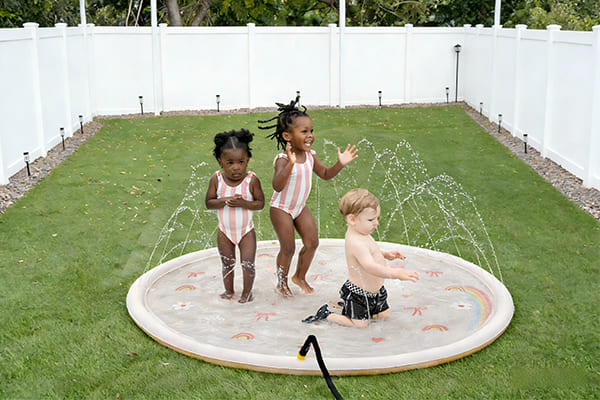
A splash pad is designed to be inclusive, low-risk, and flexible, which is why it’s used by far more people than just small children. In real-life use, splash pads are suitable for toddlers, kids, pets, families, and even institutional users like schools and daycare centers. The key reason is simple: no standing water, controlled spray, and minimal setup barriers.
Unlike pools that require swimming ability, constant supervision, or age limits, splash pads remove most of those constraints. As long as users can sit, crawl, stand, or walk, they can safely interact with a splash pad. That’s why splash pads often see multi-age, multi-user use in the same space—something traditional water toys rarely achieve.
Below is a practical, user-based breakdown of who actually uses splash pads, how they use them, and what matters most for each group.
Are splash pads suitable for babies and toddlers?
Yes—babies and toddlers are one of the primary user groups for splash pads, especially between 6 months and 3 years old. For this age range, splash pads work less like “water play” and more like sensory exploration.
Why splash pads work well for toddlers:
- No water depth → dramatically lower drowning risk
- Gentle edge sprays instead of forceful jets
- Flat surface allows crawling, sitting, and standing
- Parents can stay within arm’s reach at all times
In real usage, toddlers spend most of their time sitting in the center, touching streams with hands and feet, or crawling through low sprays. Because there’s no pool wall to climb over, toddlers enter and exit freely, which reduces frustration and panic.
Typical toddler use patterns:
| Age | Common Behavior | Design Features That Matter |
|---|---|---|
| 6–12 months | Sitting, splashing hands | Soft spray, non-slip surface |
| 1–2 years | Crawling, standing | Low spray height, wide pad |
| 2–3 years | Walking, chasing water | Even spray distribution |
For families, splash pads often replace inflatable pools entirely during these years.
Are splash pads good for kids and older children?
For kids aged 3–10, splash pads shift from sensory play to active movement and social play. This is where splash pads outperform small pools in both engagement time and safety.
How kids actually use splash pads:
- Running through spray arches
- Jumping over or dodging water jets
- Playing group games (tag, follow-the-water, ball games)
- Cooling down between active play sessions
Because there’s no standing water, kids don’t get cold as quickly and tend to stay engaged longer. In backyard testing and customer feedback, splash pads commonly stay in use 45–90 minutes per session, compared to 20–40 minutes for kiddie pools.
Why parents prefer splash pads for this age group:
- Less slipping compared to deep pools
- Easier supervision (faces always visible)
- Faster cleanup means more frequent use
Splash pads also scale better for siblings or playdates, since there’s no “waiting for turns” like with small pools.
Can adults use splash pads too?
While splash pads aren’t designed for adults, adults use them more than they expect, mainly in two ways: cooling and interaction.
Common adult use cases:
- Cooling feet and legs on hot days
- Playing with kids or pets
- Sitting or standing nearby without getting soaked
- Supervising without needing swimwear
In family settings, adults often stand at the edge or walk through briefly to cool down. Because the water pressure is typically lower than sprinklers, splash pads feel less aggressive and more comfortable for casual use.
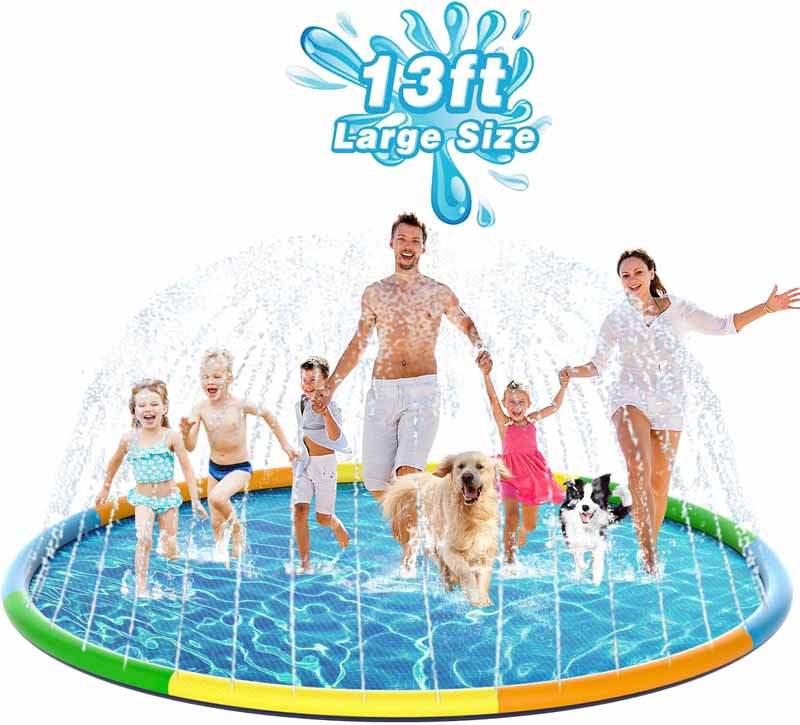
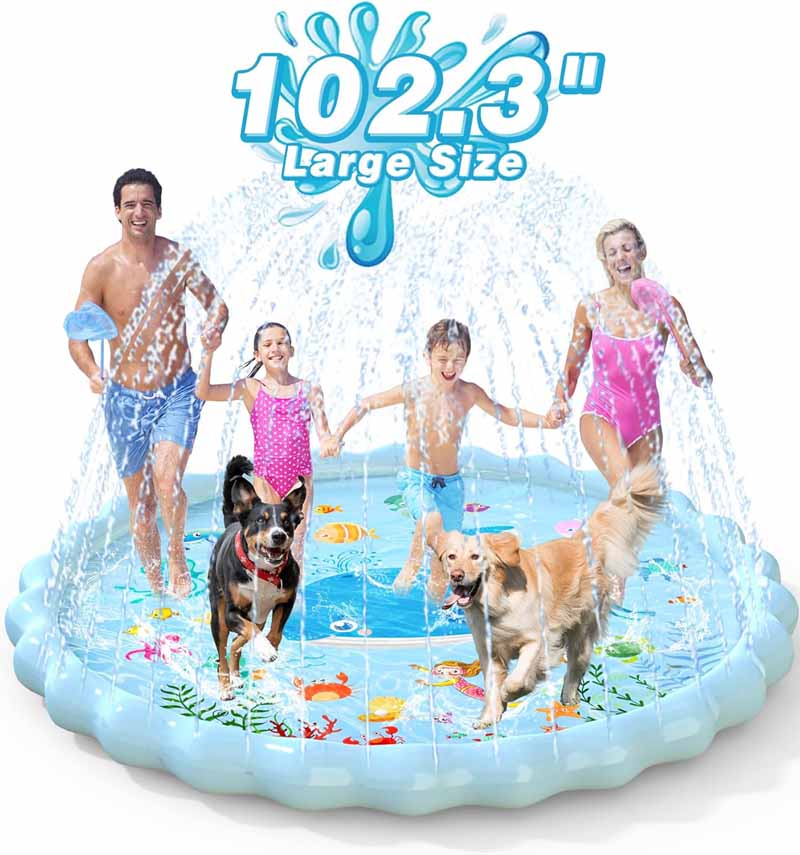
From a product design standpoint, this is why larger diameter splash pads (90–120inches) perform better: they allow adults and kids to share space without crowding.
Are splash pads safe and useful for dogs?
Yes—dogs are one of the fastest-growing user groups for splash pads.
Dogs don’t need to swim to cool down. In fact, many dogs dislike deep water but enjoy moving water on paws and belly. Splash pads offer exactly that.
Why dogs respond well to splash pads:
- Shallow, non-threatening water exposure
- Moving water triggers play instinct
- No forced entry like tubs or pools
- Easier temperature regulation
Typical dog behavior on splash pads:
| Dog Size | Common Interaction |
|---|---|
| Small dogs | Standing, paw play |
| Medium dogs | Lying down, splashing |
| Large dogs | Walking through, rolling |
For dogs, material thickness and surface texture matter more than spray height. Thicker PVC reduces damage from claws and improves stability.
Many households now buy splash pads specifically for dual use: kids + dogs, which increases overall product value.
Who uses splash pads beyond homes?
Splash pads aren’t limited to private backyards. They’re widely used in institutional and commercial environments where safety, hygiene, and durability matter.
Common non-home users include:
- Daycare centers and preschools
- Dog daycare and grooming facilities
- Community parks and playgrounds
- Summer camps and schools
- Resorts and event venues
For these users, splash pads replace small pools because they:
- Reduce liability risk
- Simplify sanitation routines
- Eliminate lifeguard requirements
- Support high user turnover
This is also why PVC splash pads with reinforced seams dominate institutional purchasing decisions.
A splash pad isn’t designed for “one type of user.” It works because it fits how people and pets actually interact with water:
- Toddlers explore
- Kids move
- Dogs cool down
- Adults supervise comfortably
That wide usability is why splash pads consistently rank as high-repeat-use water products across households, pet owners, and organizations.
How Do Splash Pads Work?
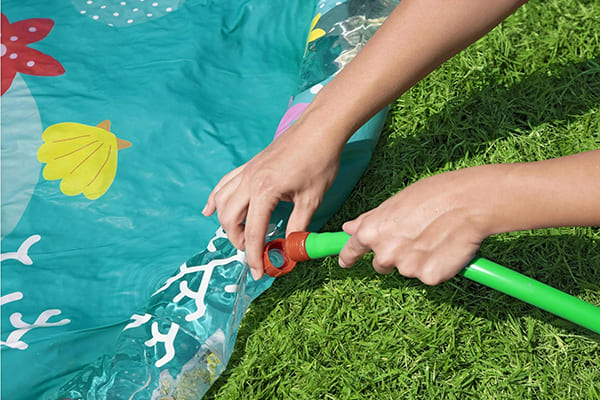
At its core, a splash pad works by connecting directly to a standard water source and redistributing that water through controlled spray points across a flat surface. There is no stored water, no pump-driven circulation system, and no filtration loop like a swimming pool. Water flows in, sprays out, and drains away continuously.
What makes splash pads effective in real life is not complexity, but flow control: how evenly water is distributed, how strong the spray feels on skin, how fast water drains, and how stable the surface remains when people or dogs move on it. When those factors are balanced, splash pads feel fun and refreshing instead of slippery or chaotic.
In practice, most consumer splash pads operate entirely on household water pressure, which is why design details—hole size, hole placement, edge height, and material stiffness—matter more than electronics or accessories.
Where does the water come from in a splash pad?
For home-use splash pads, water comes directly from a garden hose or outdoor faucet. There is no internal reservoir.
Typical water path:
- Tap / outdoor spigot
- Garden hose
- Splash pad inlet (usually a reinforced hose connector)
- Internal ring or channel
- Spray holes along edges or surface
- Drainage off the pad into the ground
Because splash pads rely on household pressure, water pressure consistency affects performance more than people expect.
Typical household pressure ranges:
| Water Pressure | What the splash pad feels like |
|---|---|
| Low (<40 PSI) | Gentle sprays, good for toddlers |
| Medium (40–60 PSI) | Balanced spray, ideal for families |
| High (>60 PSI) | Strong jets, may feel sharp |
This is why well-designed splash pads use multiple small holes instead of a few large jets—to soften the spray even under higher pressure.
How is water sprayed across a splash pad?
Splash pads spray water using pre-punched or laser-cut holes, most commonly placed along the outer ring, sometimes combined with inner patterns.
There are three common spray layouts used in real products:
| Spray Layout | How it behaves | Best use case |
|---|---|---|
| Edge-only ring | Water shoots inward | Toddlers, dogs, low chaos |
| Edge + inner dots | Mixed spray zones | Kids, family play |
| Edge arches (angled) | Creates run-through lanes | Active kids |
The angle of each hole matters as much as the hole size. Slight outward or inward angles prevent water from shooting straight up into faces, which is a common complaint with cheaper designs.
In quality splash pads, hole spacing is also intentional. Too close = weak spray. Too far apart = uneven coverage.
Do splash pads reuse water or recirculate it?
No. Home splash pads do not reuse or recirculate water.
Water flows in once and exits immediately. This is one of the main reasons splash pads are considered safer and more hygienic than small pools.
Why no recirculation matters:
- No shared standing water
- No need for filters or chemicals
- Lower bacterial growth risk
- Easier daily use without prep
However, this also means water usage depends on flow rate, not time alone.
Typical water usage estimates:
| Splash Pad Size | Average Flow Rate | Water Used (30 min) |
|---|---|---|
| Small (40–50 in) | 2–3 GPM | 60–90 gallons |
| Medium (60–70 in) | 3–4 GPM | 90–120 gallons |
| Large (80+ in) | 4–5 GPM | 120–150 gallons |
For comparison, filling a small kiddie pool often uses 150–300 gallons upfront, plus topping off.
How does a splash pad drain water safely?
Drainage is one of the most overlooked but important parts of how splash pads work.
Splash pads rely on gravity drainage, not valves. Water exits the pad edges and flows onto the ground surface below.
Good drainage design depends on:
- Flat installation surface
- Slightly raised edge walls
- Non-pooling pad material
- Ground that absorbs water
Drainage behavior by surface:
| Surface | Drainage Result | Risk Level |
|---|---|---|
| Grass | Absorbs water | Low |
| Concrete | Water runs off | Medium |
| Decking | May pool | Medium–High |
This is why splash pads perform best on lawns or textured outdoor mats, especially for kids and dogs.
What role does material play in how splash pads work?
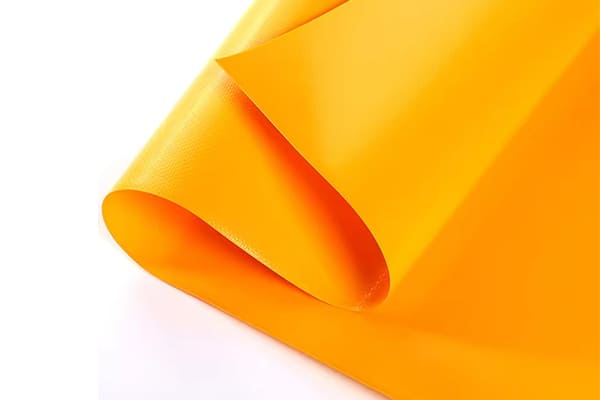
Material determines how stable the pad feels, how well holes hold shape, and how long the pad lasts.
Most quality splash pads use thick PVC or PVC-composite materials because they:
- Hold spray hole shape under pressure
- Resist folding fatigue
- Withstand UV exposure
- Reduce sliding compared to thin vinyl
Material thickness comparison (real-world impact):
| Thickness | Real use outcome |
|---|---|
| <0.3 mm | Floppy, slides, wears fast |
| 0.35–0.45 mm | Balanced for families |
| 0.5 mm+ | Heavy-duty, dog-friendly |
Thicker material also improves drain consistency, because the pad doesn’t warp or curl as water flows.
Why do some splash pads feel better than others?
When customers say “this splash pad feels better,” they usually mean:
- Spray doesn’t sting
- Surface doesn’t slide
- Water doesn’t pool
- Pad stays flat
These come down to four design balances:
- Hole size vs water pressure
- Spray angle vs face height
- Material stiffness vs flexibility
- Edge height vs drainage speed
A splash pad that gets these right works smoothly with normal home water systems—no adjustments, no frustration.
How to Care for Your Splash Pad?
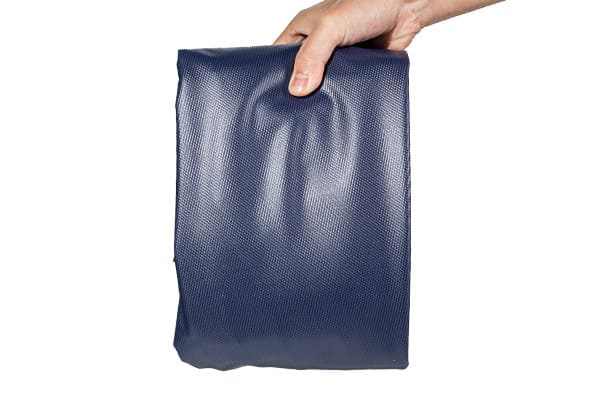
Caring for a splash pad is mentioned far less often than choosing one—but in real use, maintenance is what determines whether a splash pad lasts one summer or three. Most splash pads don’t fail because of design flaws; they fail because of water residue, poor drying, ground friction, and incorrect storage.
The good news is that splash pad care is simple. It doesn’t require chemicals, special tools, or much time. What it does require is consistency: rinsing after use, drying properly, and storing it in a way that protects the PVC material from mold, odor, and cracking.
How should you clean a splash pad after use?
Cleaning a splash pad after each use is the single most effective way to extend its lifespan.
What most families actually deal with after use:
- Grass clippings
- Sand or dirt
- Pet hair
- Sunscreen residue
- Muddy paw prints
If these stay on the surface while the pad dries, they create odor, surface staining, and material breakdown over time.
Simple cleaning routine (5 minutes):
- Turn off water and drain fully
- Let all standing water run off the pad.
- Rinse with clean tap water
- Use the hose to wash away debris from both sides.
- Spot clean if needed
- For visible dirt, use a soft cloth or sponge.
- Mild dish soap is enough—no harsh cleaners.
- Avoid pressure washers
- High pressure can stretch spray holes and weaken seams.
Cleaning frequency guide:
| Usage Pattern | Cleaning Needed |
|---|---|
| Kids play only | Rinse after every use |
| Dogs using pad | Rinse + light wipe |
| Muddy yard | Rinse + mild soap |
| Stored between uses | Clean before storage |
How do you dry a splash pad properly?
Improper drying is the number one cause of bad smell and surface mold, especially in humid climates.
Best drying method (recommended):
- Lay the splash pad flat or hang it over a fence or railing
- Ensure both sides are exposed to airflow
- Let it air dry completely (usually 30–90 minutes)
What not to do:
- Do not fold while damp
- Do not stack under other items
- Do not leave pooled water trapped in folds
Drying mistakes vs outcomes:
| Mistake | What happens |
|---|---|
| Folded while wet | Mildew smell |
| Stored damp | Black spots over time |
| Dried in full sun for hours | PVC hardening |
| One-side drying only | Trapped moisture |
Tip: Shade + airflow dries PVC better than direct hot sun.
How often should you deep clean a splash pad?
Even with regular rinsing, splash pads benefit from occasional deeper cleaning, especially if pets use them.
Recommended deep-clean schedule:
| User Type | Deep Clean Frequency |
|---|---|
| Kids only | Every 2–3 weeks |
| Kids + pets | Weekly |
| Dogs only | Weekly |
| Heavy outdoor use | Weekly |
Deep clean steps:
- Use mild soap + warm water
- Soft brush or cloth only
- Rinse thoroughly until no soap residue remains
- Dry completely before next use
Avoid bleach or alcohol-based cleaners—they dry out PVC and weaken seams over time.
How should you store a splash pad when not in use?
Storage is where most splash pads either survive or fail long-term.
Correct storage checklist:
- Fully dry (inside and outside)
- Fold loosely, not tightly rolled
- Store in a breathable bag or box
- Keep away from sharp edges or heavy objects
Best storage locations:
| Location | Rating | Why |
|---|---|---|
| Indoor closet | ⭐⭐⭐⭐ | Stable temp |
| Garage shelf | ⭐⭐⭐ | OK if dry |
| Shed (hot) | ⭐⭐ | Heat risk |
| Outdoor bin | ⭐ | Moisture risk |
Avoid:
- Hot attics
- Direct sunlight storage
- Plastic bags without ventilation
How do you prevent damage during use?
Most splash pad wear happens during play, not storage.
Common damage causes:
- Dragging across concrete
- Dogs with long nails
- Sharp toys underneath
- Overstretching hose connector
Prevention tips that work:
- Place splash pad on grass or foam mat
- Trim dog nails regularly
- Remove shoes before use
- Tighten hose gently—don’t overtighten
Surface risk comparison:
| Surface | Damage Risk |
|---|---|
| Grass | Low |
| Rubber mat | Low |
| Concrete | Medium |
| Gravel | High |
How long should a well-cared-for splash pad last?
With proper care, a quality PVC splash pad can last 2–4 summers, even with regular use.
Lifespan factors:
| Factor | Impact |
|---|---|
| Material thickness | Very high |
| Cleaning habits | High |
| Drying routine | Very high |
| Storage method | High |
| Ground surface | Medium |
Many early failures happen not because the product is “bad,” but because basic care steps were skipped.
Are Splash Pads Safe?
Splash pads are generally safe when they’re properly designed, used on the right surface, and cared for correctly. Most safety issues don’t come from the water itself, but from slipping, material quality, poor water control, or lack of supervision. For home-use splash pads made from quality PVC, the risk profile is closer to a wet play mat than a swimming pool—but only if basic safety details are done right.
In real households, splash pad safety depends on four practical factors: surface traction, water depth control, material safety, and how people (or dogs) actually use it.
What are the main safety risks of splash pads?
From real user feedback and product testing, splash pad risks are predictable and manageable.
Most common safety risks:
| Risk Type | How it happens | Who it affects |
|---|---|---|
| Slipping | Smooth surface + fast spray | Toddlers, dogs |
| Tripping | Wrinkled edges or loose hose | Kids running |
| Material irritation | Low-grade PVC or residue | Sensitive skin |
| Overheating | Hot weather + long play | Kids, pets |
| Hose pressure issues | Poor connectors | All users |
Importantly, drowning risk is extremely low because splash pads do not hold standing water like pools.
Is slipping the biggest safety concern?
Yes. Slipping is the #1 real-world safety issue, especially for toddlers and dogs.
What reduces slip risk in quality splash pads:
- Textured or embossed surface
- Thicker PVC that lies flat
- Even water distribution (not strong jets in one spot)
Surface comparison (real use):
| Surface Type | Slip Risk |
|---|---|
| Textured PVC | Low |
| Smooth thin vinyl | Medium |
| Grass under pad | Low |
| Concrete under pad | Medium–High |
What parents can do immediately:
- Place pad on grass or foam mat
- Remove shoes
- Keep spray pressure moderate
Are splash pads safe for babies and toddlers?
For supervised play, splash pads are considered one of the safest water play options.
Why they’re safer than pools for young kids:
- No water depth
- Continuous water movement
- Easy step-on / step-off access
- No climbing required
Recommended age guidance:
| Age | Safety Notes |
|---|---|
| Under 12 months | Touch play only |
| 1–3 years | Full supervision |
| 3–6 years | Safe with rules |
| 6+ years | Low risk |
Parents should still supervise—slip prevention matters more than water risk at this age.
Are splash pads safe for dogs?
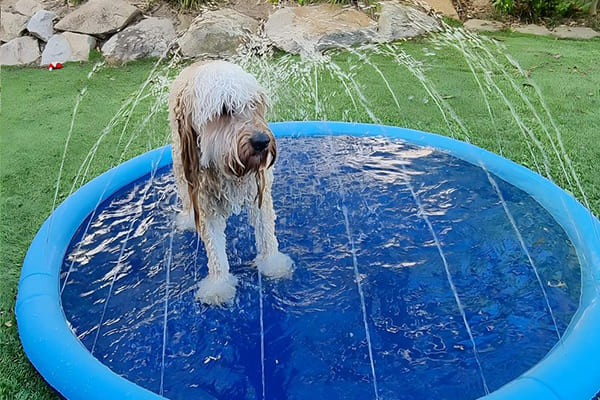
Yes, when designed for pets or used thoughtfully.
Common dog-related risks:
- Slipping when running
- Nail damage to thin PVC
- Chewing hose connectors
How pet-safe splash pads differ:
| Feature | Why it matters |
|---|---|
| Thicker PVC | Resists claws |
| Reinforced edges | Less tearing |
| Stable spray holes | No sharp streams |
Dog safety tips:
- Trim nails
- Avoid aggressive jumping
- Use on grass, not concrete
For heat relief, splash pads are safer than kiddie pools because dogs can step away easily.
Is the PVC material itself safe?
This depends heavily on material quality, not the idea of PVC itself.
What makes PVC splash pads safe:
- BPA-free formulations
- No strong plastic odor
- Smooth sealed seams
- Compliance with CPSIA / REACH standards
Material comparison:
| Material | Safety Level | Notes |
|---|---|---|
| Certified PVC | High | Most common |
| Thin vinyl | Medium | Tears easily |
| Foam mats | Medium | Less durable |
| Hard plastic | Low | Slips, cracks |
A simple user test:
If the pad smells strongly after unpacking, don’t use it yet—air it out fully.
Can splash pads overheat or cause discomfort?
They can—but this is weather-related, not product-related.
Realistic heat factors:
- Outdoor temperature above 90°F (32°C)
- Long play sessions (30–60 min)
- Dark-colored pads absorbing heat
Practical safety guidelines:
| Condition | Recommendation |
|---|---|
| Hot day | Limit sessions to 20–30 min |
| Dark surface | Use shade |
| Active dogs | Frequent breaks |
| Toddlers | Barefoot check |
Splash pads cool users overall, but ground heat still matters.
Are splash pads safer than kiddie pools?
In most home settings, yes.
| Factor | Splash Pad | Kiddie Pool |
|---|---|---|
| Drowning risk | Very low | Medium |
| Slipping | Medium | Medium |
| Supervision needed | Yes | Yes |
| Water hygiene | Better | Worse |
| Storage safety | High | Medium |
This is why splash pads are widely recommended for younger kids and pets.
Do Splash Pads Reuse Water?
Most home splash pads do not reuse water. They connect directly to a garden hose, spray fresh water upward, and let it drain away naturally into the ground or surrounding area. There is no pump, no filtration system, and no internal water storage in standard household splash pads.
That sounds wasteful at first—but in real life, splash pads often use less total water than kiddie pools, especially when used for short, supervised play sessions.
How does water flow in a home splash pad?
A home splash pad works on a single-pass water system:
- Tap water enters through a garden hose
- Water travels through the pad’s internal channels
- Spray holes push water upward and outward
- Water lands on the pad and drains away
There is no return line bringing water back into the system.
Why manufacturers design it this way:
- Keeps construction simple
- Reduces bacteria buildup
- No electrical components needed
- Lower failure rate for families
This design favors hygiene and safety over water reuse.
Do any splash pads reuse water at all?
Yes—but not the ones most families buy for home use.
There are two very different categories of splash pads:
| Type | Reuses Water? | Where You See It |
|---|---|---|
| Home splash pad | No | Backyards, patios |
| Public splash pad | Yes | Parks, schools |
Public splash pads often use:
- Underground holding tanks
- Filtration systems
- Chemical treatment (chlorine/UV)
- Pumps and sensors
These systems are expensive, regulated, and maintained by professionals—not practical for households.
Is a non-recycling splash pad more sanitary?
For home users, yes—usually much more sanitary.
Fresh-water splash pads reduce risks like:
- Bacteria growth
- Algae buildup
- Cloudy or smelly water
- Skin irritation from reused water
Sanitation comparison:
| Feature | Splash Pad (Fresh Flow) | Kiddie Pool |
|---|---|---|
| Standing water | No | Yes |
| Reused water | No | Yes |
| Daily draining needed | No | Yes |
| Risk of bacteria | Low | Medium–High |
This is why pediatricians and vets often prefer flow-through water play for kids and pets.
How much water does a splash pad actually use?
This is where many parents are surprised.
Average water usage (real-world estimates):
| Activity | Water Used (30 min) |
|---|---|
| Splash pad | 150–300 gallons |
| Kiddie pool fill | 300–500 gallons |
| Lawn sprinkler | 300+ gallons |
Why splash pads can be efficient:
- Used in shorter bursts
- Turned off instantly
- No “refill after dump” cycle
- No daily emptying waste
If a kiddie pool is dumped and refilled every day, it often uses more water over a week than a splash pad used responsibly.
Can you reduce water waste with a splash pad?
Absolutely. Most water savings come from how people use it, not the product itself.
Smart water-saving habits:
- Limit play sessions to 15–30 minutes
- Turn off water during breaks
- Use lower hose pressure
- Let water drain into grass or garden areas
- Avoid leaving it running unattended
Real household tip:
Many families treat splash pads like a cool-down activity, not an all-day feature—dramatically reducing water use.
Why don’t manufacturers add water recycling to home splash pads?
From a manufacturing and safety standpoint, recycling water adds significant downsides:
| Added Feature | Problem Created |
|---|---|
| Pump system | Electrical risk |
| Filter | Needs cleaning |
| Tank | Bacteria growth |
| Seals | Higher leak risk |
| Cost | 2–4× higher price |
For families, the tradeoff isn’t worth it. Simple flow-through designs are safer, cleaner, and more reliable.
What Are the Benefits of Splash Pads?
Splash pads offer a simple but powerful combination: active water play, low risk, easy setup, and broad usability. Unlike pools or complex water toys, a splash pad delivers cooling, movement, and sensory play without deep water, standing water, or complicated maintenance.
For families, that means less worry and more repeat use. For pets, it means safe cooling without forcing them to swim. And for buyers, it means a product that fits many scenarios with fewer complaints.
Why are splash pads better than pools for everyday use?
For most households, splash pads are used more often than pools—not because they’re more exciting, but because they’re easier and safer to say “yes” to.
Key everyday advantages:
- No filling or draining cycle
- No standing water left overnight
- No depth-related drowning risk
- Faster setup and teardown
Real-world comparison (typical home use):
| Feature | Splash Pad | Kiddie Pool |
|---|---|---|
| Setup time | 2–5 minutes | 10–20 minutes |
| Water depth | 0 cm | 20–40 cm |
| Daily draining needed | No | Yes |
| Adult supervision stress | Lower | Higher |
| Use frequency (weekly) | 3–5 times | 1–2 times |
Because splash pads feel “low commitment,” parents are more likely to let kids use them on regular weekdays, not just special occasions.
What physical and developmental benefits do splash pads offer kids?
Splash pads encourage movement-based play, not passive soaking.
Kids naturally:
- Run through spray zones
- Jump, spin, and dodge water jets
- Balance on wet surfaces
- React to changing water patterns
These movements support:
- Gross motor skills
- Balance and coordination
- Sensory processing
- Heat regulation during summer play
Why this matters:
Compared with sitting in a pool, splash pads promote short bursts of active play, which align better with how young children naturally move and focus.
How do splash pads help dogs cool down safely?
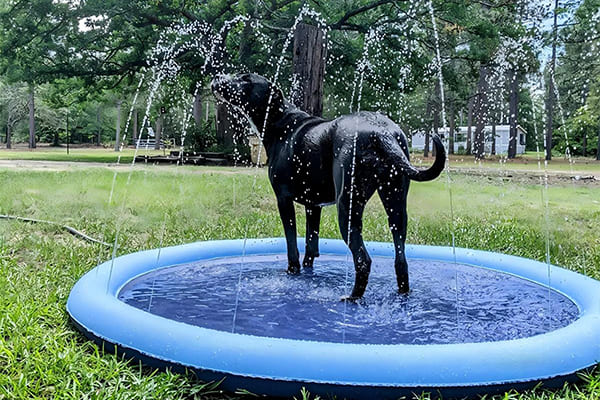
For dogs, splash pads solve a very specific problem: cooling without forcing swimming.
Many dogs:
- Dislike deep water
- Panic in pools
- Slip on hard surfaces
- Overheat quickly in summer
Splash pads allow dogs to:
- Step in and out freely
- Cool paws and belly (key heat zones)
- Interact with water at their own comfort level
Dog-friendly benefits:
| Benefit | Why it matters |
|---|---|
| Shallow water | No fear response |
| Continuous fresh flow | Less odor buildup |
| Textured PVC surface | Better traction |
| No climbing walls | Easy entry/exit |
This is why splash pads are increasingly popular for medium and large dogs that don’t enjoy swimming.
Are splash pads safer for mixed-age families?
Yes—and this is a major reason they’re chosen by families with toddlers, older kids, and pets together.
Safety advantages:
- No submersion risk
- No need for flotation devices
- Lower slip risk with textured PVC
- Easier adult monitoring (everyone stays visible)
In many homes, splash pads become a shared play zone instead of separating kids by age or ability.
How do splash pads save time and reduce cleanup?
Time cost is one of the most overlooked benefits.
With a splash pad:
- No skimming debris
- No chemical balancing
- No dumping heavy water
- No drying bulky pool walls
Typical post-play routine:
| Task | Splash Pad | Pool |
|---|---|---|
| Turn off water | ✅ | ✅ |
| Drain water | Automatic | Manual |
| Rinse | Optional | Often required |
| Storage | Fold & hang | Air-dry + fold |
| Total time | ~5 minutes | 15–30 minutes |
This convenience directly increases repeat usage, which is why splash pads perform well in reviews and reorders.
Why are splash pads cost-effective long term?
While splash pads and kiddie pools may look similar in price, splash pads often win over time.
Cost-related benefits:
- Fewer replacements (no cracking walls)
- Less water waste from refilling
- Lower storage damage risk
- Fewer accessory purchases
Because they’re used more often and require less effort, splash pads deliver higher “cost per hour of fun” value.
What Are the Benefits of Splash Pads?
Splash pads offer a simple but powerful combination: active water play, low risk, easy setup, and broad usability. Unlike pools or complex water toys, a splash pad delivers cooling, movement, and sensory play without deep water, standing water, or complicated maintenance.
For families, that means less worry and more repeat use. For pets, it means safe cooling without forcing them to swim. And for buyers, it means a product that fits many scenarios with fewer complaints.
Why are splash pads better than pools for everyday use?
For most households, splash pads are used more often than pools—not because they’re more exciting, but because they’re easier and safer to say “yes” to.
Key everyday advantages:
- No filling or draining cycle
- No standing water left overnight
- No depth-related drowning risk
- Faster setup and teardown
Real-world comparison (typical home use):
| Feature | Splash Pad | Kiddie Pool |
|---|---|---|
| Setup time | 2–5 minutes | 10–20 minutes |
| Water depth | 0 cm | 20–40 cm |
| Daily draining needed | No | Yes |
| Adult supervision stress | Lower | Higher |
| Use frequency (weekly) | 3–5 times | 1–2 times |
Because splash pads feel “low commitment,” parents are more likely to let kids use them on regular weekdays, not just special occasions.
What physical and developmental benefits do splash pads offer kids?
Splash pads encourage movement-based play, not passive soaking.
Kids naturally:
- Run through spray zones
- Jump, spin, and dodge water jets
- Balance on wet surfaces
- React to changing water patterns
These movements support:
- Gross motor skills
- Balance and coordination
- Sensory processing
- Heat regulation during summer play
Why this matters:
Compared with sitting in a pool, splash pads promote short bursts of active play, which align better with how young children naturally move and focus.
How do splash pads help dogs cool down safely?
For dogs, splash pads solve a very specific problem: cooling without forcing swimming.
Many dogs:
- Dislike deep water
- Panic in pools
- Slip on hard surfaces
- Overheat quickly in summer
Splash pads allow dogs to:
- Step in and out freely
- Cool paws and belly (key heat zones)
- Interact with water at their own comfort level
Dog-friendly benefits:
| Benefit | Why it matters |
|---|---|
| Shallow water | No fear response |
| Continuous fresh flow | Less odor buildup |
| Textured PVC surface | Better traction |
| No climbing walls | Easy entry/exit |
This is why splash pads are increasingly popular for medium and large dogs that don’t enjoy swimming.
Are splash pads safer for mixed-age families?
Yes—and this is a major reason they’re chosen by families with toddlers, older kids, and pets together.
Safety advantages:
- No submersion risk
- No need for flotation devices
- Lower slip risk with textured PVC
- Easier adult monitoring (everyone stays visible)
In many homes, splash pads become a shared play zone instead of separating kids by age or ability.
How do splash pads save time and reduce cleanup?
Time cost is one of the most overlooked benefits.
With a splash pad:
- No skimming debris
- No chemical balancing
- No dumping heavy water
- No drying bulky pool walls
Typical post-play routine:
| Task | Splash Pad | Pool |
|---|---|---|
| Turn off water | ✅ | ✅ |
| Drain water | Automatic | Manual |
| Rinse | Optional | Often required |
| Storage | Fold & hang | Air-dry + fold |
| Total time | ~5 minutes | 15–30 minutes |
This convenience directly increases repeat usage, which is why splash pads perform well in reviews and reorders.
Why are splash pads cost-effective long term?
While splash pads and kiddie pools may look similar in price, splash pads often win over time.
Cost-related benefits:
- Fewer replacements (no cracking walls)
- Less water waste from refilling
- Lower storage damage risk
- Fewer accessory purchases
Because they’re used more often and require less effort, splash pads deliver higher “cost per hour of fun” value.
Ready to Get Your Splash Pad?
If you’ve read this far, you’re not just curious about splash pads—you’re likely looking for a practical, safe, and reliable water play solution that works in real life. Whether it’s for cooling kids on hot summer days, giving dogs a low-stress way to play with water, or creating simple backyard fun without the maintenance of a pool, splash pads are one of the most flexible options available today.
At American Epsilon Inc. (EPN), we focus on splash pads made from durable, eco-friendly PVC, designed with real users in mind—stable water flow, reinforced seams, safe surface textures, and easy setup for everyday use. We support both home users and business buyers, with consistent quality standards across all products.
Buy Ready-to-Ship Splash Pads (In Stock)
If you’re looking for splash pads that are available now and ready to ship, you can explore our in-stock options on Amazon:
- Kids Splash Pad – Designed for toddlers and young children, with gentle spray height and easy hose connection
- Dog Splash Pads – Splash pads engineered specifically for pets
- Square Dog Splash Pad – Reinforced PVC and anti-slip surface for medium to large dogs
These models are ideal if you want a tested, ready-to-use splash pad without waiting for production.
Need Custom Splash Pads or Bulk Orders?
If you’re sourcing splash pads for a brand, retail channel, school, or promotional use, we also provide OEM/ODM customization. You can work with us on size, shape, spray layout, PVC thickness, packaging, and target pricing. Just let us know your use scenario and market—we’ll help you design a solution that fits.
Explore Related Water & Outdoor Products
If you’re planning a broader product lineup or want to explore related categories, you may also be interested in:
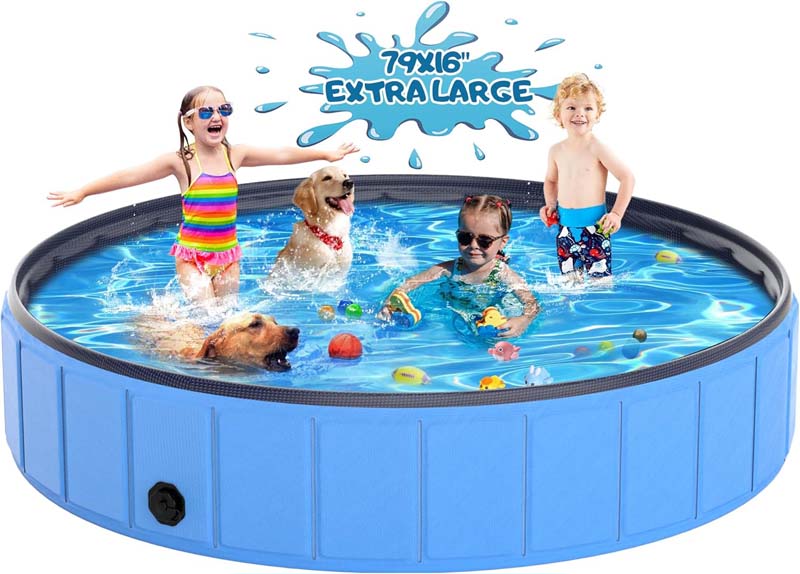
- Dog Pools – Foldable and rigid pools designed for cooling pets
- Kids Sprinklers – Simple water-play products for younger children
- Splash Pads with Basketball Hoop – Interactive splash pads for older kids and group play
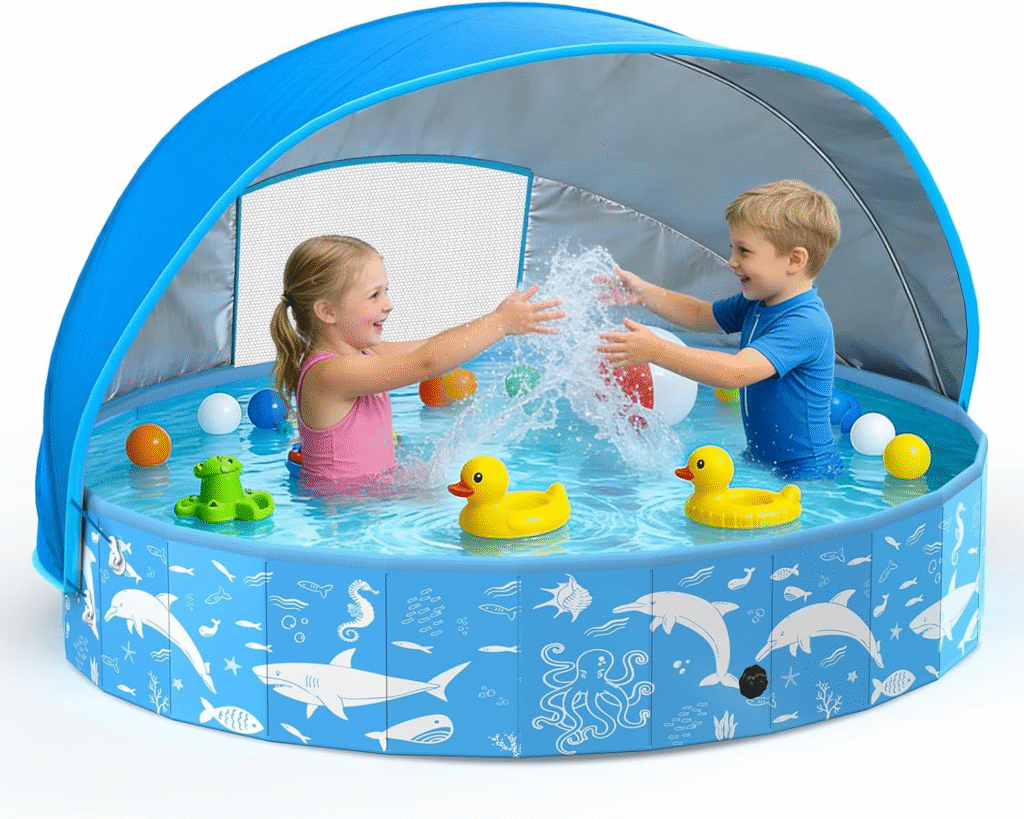
- Pet Splash Pool with Sprinkler – A hybrid design that combines shallow pooling with edge spray, ideal for dogs that enjoy both standing water and moving spray.
These products are often purchased together or seasonally paired with splash pads for summer sales.
Get A Fast quote
Here, bringing your inflatable concepts to life is no longer a challenge—it’s a collaborative journey where American Epsilon helps families, outdoor enthusiasts, and global brands transform creative ideas into safe, certified, and market-ready inflatable solutions.


Partner With Epsilon
Whether you are a family looking for safe backyard fun or a brand seeking large-scale OEM/ODM solutions, American Epsilon Inc. guarantees every inflatable is built with safety, durability, and excitement in mind. With flexible low MOQs, strategically placed warehouses in the U.S., Canada, U.K., and Germany, plus 24/7 professional support, we ensure smooth delivery and reliable service worldwide.
Ready to bring your inflatable ideas to life? Request free samples, fast prototypes, and customized designs today—your trusted inflatable journey starts here.