Skip to content
Best Sprinklers for Kids: Safe, Fun Backyard Picks
# Your Trusted Inflatable Supplier In US
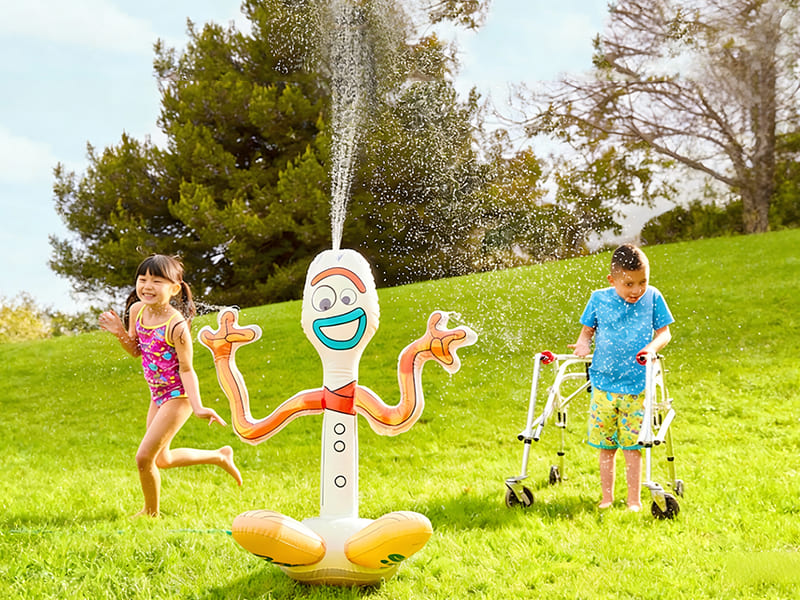
Buying sprinklers for kids sounds easy—until you realize you’re not just picking “a sprinkler,” you’re picking a mini backyard activity that has to work with your child’s age, your yard surface, and your water pressure. A spray that feels amazing to a 9-year-old can sting a toddler’s eyes. A toy that looks stable in photos can slide across a wet driveway in real life. And the one thing most parents don’t plan for? The setup you hate becomes the toy you barely use, even if it was “highly rated.”
Here’s the simple truth: the best sprinkler isn’t the biggest, the cutest, or the most “viral.” It’s the one that creates repeatable play (kids want to do it again tomorrow), while staying comfortable on skin, stable on the ground, and easy to drain and store when you’re done.
The best sprinklers for kids are the ones matched to age + space + pressure. Toddlers do best with low, gentle spray and a stable base. Ages 4–8 love arches, tunnels, and changing patterns that turn water into a game. Older kids want wider coverage and more “run-and-chase” space. Prioritize soft materials, secure hose connections, adjustable flow, and a setup that reduces slipping.
And if you’ve ever watched kids sprint into the spray like it’s a finish line—then immediately argue about turns—you already know why choosing the right one matters: a great sprinkler doesn’t just cool them down, it buys you a whole summer of “go play outside.”
What makes sprinklers for kids “best”?
When parents say they want the “best sprinklers for kids,” they usually mean three real-life outcomes:
- My kids actually keep playing with it (not just 5 minutes).
- It doesn’t turn my yard/patio into a slip-and-fight zone.
- It doesn’t leak, stink, or fall apart after a few weekends.
Want to see the real setup and spray effect? Watch this quick demo of sprinklers for kids.
So “best” isn’t one magic product. It’s a sprinkler that fits age + space + water pressure + surface, and then holds up through repeat use.
What are the best sprinklers for kids?
The most reliable “best” choice is the one that matches how kids actually play at their age. This table gives you a fast, realistic match:
| Child age | How they play in water | Best sprinklers for kids | “Good” spray feel | Biggest mistake |
|---|---|---|---|---|
| 1–2 | touch, stomp, sit, explore | low-profile ring/edge spray | gentle, low height | buying tall jets that hit face |
| 3–4 | run-through + repeat | small arch / short tunnel | soft streams, waist/chest | unstable designs that tip when grabbed |
| 5–7 | races + group games | arch/tunnel + multi-zone spray | adjustable, shoulder max | one tiny sprinkler everyone crowds |
| 8–12 | chase-play + challenge | wide coverage rotating spray | adjustable, avoid face-level | full-blast pressure that stings eyes |
A simple rule that works surprisingly well:
If kids can naturally invent 2–3 games in the first 2 minutes, the sprinkler is “best” for your house.
Games usually appear when the design creates a “lane” (arch/tunnel) or a large “zone” (wide coverage). That’s what keeps play going day after day.
What features make sprinklers for kids more fun?
“Fun” is not about the highest spray. It’s about repeatability and variety. The best sprinklers for kids quietly support these four things:
1) A clear play pattern (kids instantly understand it)
- Run-through lane (arch/tunnel) = racing, crawling, timed runs
- Wide spray zone = tag, dodge, dance, soccer dribbles
- Contained small-zone = toddler “water discovery” without chaos
2) Spray comfort (kids don’t avoid it)
Harsh spray ends play fast—especially for younger kids. Comfort is mostly controlled by spray style and flow.
- Multi-hole spray bars typically feel softer than single hard jets because water energy is spread out.
- Adjustable flow matters more than fancy shapes.
3) Group fairness (less fighting)
The more kids in one spot, the more pushing/slipping.
- A larger wet zone or multiple spray points reduces “everyone wants the best spot.”
4) Low-friction setup (you’ll actually use it)
Parents don’t reuse “amazing” products that take 15 minutes to set up and 30 minutes to dry.
Here’s a quick “fun feature scorecard” you can use before buying:
| Feature | Why it keeps sprinklers for kids fun | What to look for |
|---|---|---|
| Run-through lane | creates instant games | arch/tunnel shape, stable feet |
| Pattern change | prevents boredom | rotating/pulsing/multi-zone |
| Soft spray | kids stay longer | multi-hole spray, adjustable flow |
| Big enough zone | less crowding | wider coverage or multiple outlets |
| Quick on/off | easy daily use | simple connector + stable base |
What materials make sprinklers for kids last longer?
Most sprinklers for kids don’t fail because “the whole thing is bad.” They fail in predictable stress points:
The 3 most common failure zones
Hose connector area
This gets twisted, pulled, and pressure-pulsed. Weak connectors leak first.
Seams / weld lines (for inflatable or soft-body designs)
Dragging, folding while wet, and high pressure stress these areas.
Sun + heat exposure
Long sun exposure makes cheaper materials stiff and brittle over time.
What durability looks like in normal family use
If you’re using sprinklers for kids 2–4 times per week in summer, you want it to survive:
- being moved around the yard
- kids grabbing and leaning on it
- repeated wet/dry cycles
- storage in a bin without getting gross
A practical durability checklist:
| Durability factor | What it prevents | How to spot it (as a customer) |
|---|---|---|
| Reinforced connector | leaks + joint tearing | thickened connector base, good gasket fit |
| Strong seams/welds | seam splitting | clean seam lines, not wrinkly/uneven |
| Flexible material feel | cracking/brittle aging | stays pliable, not stiff “plastic-board” feel |
| Easy drain design | odor/mildew | drains quickly, doesn’t trap water pockets |
| Repair-friendly surface | wasted product | patchable surface, repair kit available |
Real-life storage affects lifespan more than people expect
A lot of “it broke” is actually “it was stored wet.” A wet fold creates odor, sticky residue, and can weaken seams. If you want a sprinkler to last, drying and storage are part of durability—not an afterthought.
What should you check before buying sprinklers for kids?
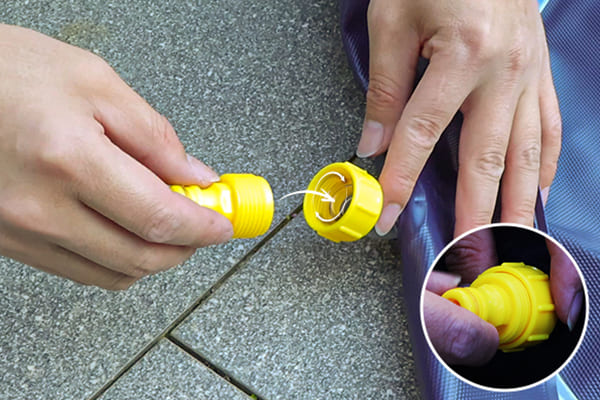
This is the part that saves money and headaches. Most “bad purchases” come from skipping 5 small checks.
1) Connector + washer reality check
The hose end needs a rubber washer to seal. Many leaks are just:
- missing washer
- cross-threading
- hose bending sharply at the joint
Quick buyer check: reviews that mention “no leaks at the connector” are more valuable than reviews that only say “so cute.”
2) Spray height
A sprinkler that sprays into faces becomes annoying fast.
Simple guide:
- Toddlers: keep spray mostly below waist level
- Ages 4–8: chest/shoulder is okay if soft
- Older kids: higher is fine if adjustable
3) Yard surface and runoff
If your surface is hard (driveway/patio/deck), your main risk is slipping.
Use this quick match:
| Surface | Best sprinklers for kids | Extra thing you must do |
|---|---|---|
| Grass | most styles work | remove rocks/sticks; manage hose routing |
| Concrete/driveway | low-profile + contained spray | traction footwear + avoid slope/runoff |
| Decking | very controlled spray | keep away from stairs/edges |
4) “Will I actually set this up often?”
If it’s a pain to inflate/dry/store, it becomes a “special occasion” toy.
A practical question:
Can I set this up in under 5 minutes and put it away without it smelling gross?
If not, it’s not “best,” even if it’s popular.
5) Play time value
Parents rarely calculate value this way, but it’s useful:
| If your sprinkler… | What happens | Better choice |
|---|---|---|
| is fun but hard to use | used 2–3 times then ignored | simpler setup or easier-to-dry design |
| leaks at connector | constant frustration + puddles | reinforced connector + good gasket |
| stings eyes | kids quit early | soft spray + flow control |
| makes slippery chaos | injuries and yelling | grass placement + boundaries + short rounds |
A “best sprinklers for kids” decision checklist you can screenshot
Before buying, make sure you can answer “yes” to most of these:
- Does this style match my child’s age (spray height + play type)?
- Can I control flow so the spray doesn’t sting?
- Will it stay stable when kids grab it?
- Is the connector likely to seal well (washer/gasket + reinforced base)?
- Will I realistically drain, dry, and store it without hassle?
- Will it work on my surface without becoming slippery chaos?
Which sprinklers for kids are most popular?
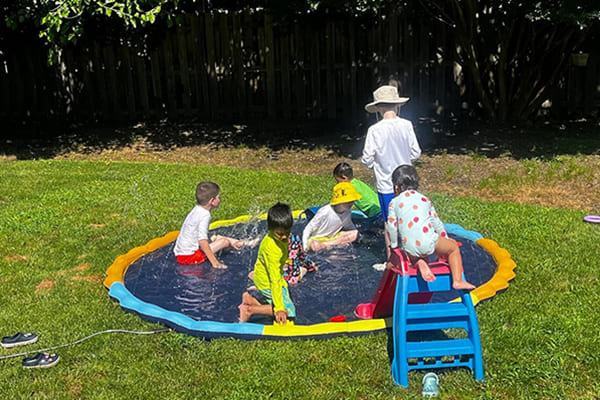
When people search “sprinklers for kids,” they usually aren’t looking for a gardening tool—they’re looking for a backyard activity that’s easy, safe, and genuinely fun. In the real world, the most popular sprinklers for kids fall into a few repeatable categories because those categories match how families actually live: different yard sizes, different ages, different budgets, and different tolerance for setup and cleanup.
Below is a more detailed, practical breakdown of the most popular types—what families like about them, what commonly goes wrong, and how to pick the right version of each.
The 4 most popular categories of sprinklers for kids (what you see everywhere)
| Popular type of sprinklers for kids | Why families keep buying it | Best for ages | Yard fit | Usual pain points |
|---|---|---|---|---|
| Classic lawn sprinklers used for kids (rotating, oscillating) | big coverage, no inflating, fast setup | 6–12 | medium–large lawns | spray can sting; can hit faces; hose trip risk |
| Arch / tunnel sprinklers for kids | instant “run-through” game, great for groups | 3–10 | small–medium | stability (kids grab it); pooling at ends |
| Character / themed sprinklers for kids (animals, shapes) | kids beg for it, “cute factor” sells | 2–8 | small–medium | sometimes small spray zone; durability varies |
| Splash pad + sprinkler edge (often grouped with sprinklers) | lower profile, less “running” chaos | 1–6 | small patios/grass | storage drying; surface can still get slick |
A key reason these four dominate: they map to the two most common parent goals—either “big zone for running” or “controlled zone for safe play.”
1) Which sprinklers for kids are most popular for big yards?
Classic lawn sprinklers (rotating / oscillating) used as sprinklers for kids
These are popular because they’re cheap, fast, and big. Most families already own one, and it covers a large area—perfect for tag and chase games.
What families love
- Big wet zone: kids can run without crowding one spot
- Zero storage drama: no inflating, no drying a big toy
- Works for older kids: ages 6–12 tend to enjoy high-energy running
What commonly goes wrong
- Spray comfort: lawn sprinklers were designed for grass, not faces
- Pressure issues: at higher flow, streams can sting eyes/ears
- Safety: hose and sprinkler base can become trip points when kids sprint
How to pick a “kid-friendly” version (simple rules)
- Prefer models with more holes / softer distribution over single strong jets
- Make sure you can angle or limit spray height
- Use flow control: most parents run them too strong
Practical comfort target:
If the spray makes you squint when you put your forearm into it for 10 seconds, it’s too harsh for younger kids. Turn it down until it feels like a soft shower.
2) Which sprinklers for kids are most popular for small yards and groups?
Arch / tunnel sprinklers for kids (run-through designs)
This category is extremely popular because it creates a game without instructions. Kids see it and instantly do the same thing: run through, run back, race again. It’s “self-starting fun.”
What families love
- Instant play: no explaining rules
- Great for siblings and playdates: “one lane” reduces chaos
- Works across ages: toddlers can walk through; older kids can race
What commonly goes wrong
- Stability: kids grab, lean, or pull → arch shifts or collapses
- Pooling: water collects at the ends, making slick spots
- Low pressure issues: if water pressure is weak, spray can be uneven
What makes a tunnel/arch actually “good”
- Wide base or anchoring points (so it doesn’t slide)
- Multi-hole spray along the sides (so spray feels soft and consistent)
- Spray direction that avoids eyes (best designs spray outward/sideways, not straight up)
Real-life tip:
Place the tunnel so the spray hits shoulders and backs more than faces. Kids stay happy longer, and you’ll stop hearing “my eyes!”
3) Which sprinklers for kids are most popular for toddlers and younger kids?
Character / themed sprinklers for kids (animals, playful shapes)
These are popular because they win the purchase decision in 3 seconds: kids see it and want it. For younger kids, the shape also acts like a “friendly object,” making them more willing to approach the water.
What families love
- Kid appeal: toddlers are drawn to friendly shapes
- Simple play: stand, touch, giggle, repeat
- Lower intensity: often less aggressive spray than lawn sprinklers
What commonly goes wrong
- Too small a spray zone: fun for 5–10 minutes, then kids move on
- Durability varies: some designs focus on looks more than build
- Unstable bases: light designs can shift on wet ground
How to choose a character sprinkler that lasts longer
- Choose one with a wider spray footprint (not a single little jet)
- Look for reinforced hose connection (leaks usually start there)
- Favor designs where spray comes from multiple points (more fun and softer feel)
A toddler reality check:
For ages 1–2, the best sprinklers for kids are often low and gentle, not dramatic. If water hits their face repeatedly, many toddlers stop playing.
4) Which sprinklers for kids are most popular for “controlled play” and safer surfaces?
Splash pad + sprinkler edge
Even though splash pads aren’t traditional sprinklers, they appear in the same searches because families want “water play without chaos.” They’re popular with toddlers and younger kids because play is more contained.
What families love
- Low profile: fewer falls into hard plastic parts
- Less sprinting: kids tend to sit, splash, and crawl
- Good for small spaces: patios and smaller lawns
What commonly goes wrong
- Drying and storage: if stored wet, odor and mildew happen
- Slippery surface: a wet pad can still be slick on hard ground
- Clogging: small spray holes can clog if water has sediment
What makes a splash-pad style “popular for the right reasons”
- Easy draining so you can store it without stink
- Textured surface or design that reduces slipping
- Spray holes that don’t sting and don’t clog easily
Popular doesn’t mean “best”—here’s how people choose in real life
Most families choose popular sprinklers for kids using one of these “real-world filters”:
1) Setup time tolerance
| If you want… | You’ll likely choose… |
|---|---|
| fastest setup | classic lawn sprinklers for kids |
| easiest “kid excitement” | tunnel/arch sprinklers for kids |
| lowest intensity for toddlers | character sprinklers for kids / splash pad edge |
2) Space reality
| Space | Most popular choice |
|---|---|
| big lawn | wide coverage rotating/oscillating sprinklers for kids |
| medium yard | arch/tunnel sprinklers for kids |
| small patio/driveway | contained low-profile sprinklers for kids / splash pad edge |
3) Age mix
If you have multiple ages, the most popular “works for everyone” solution is two zones:
- gentle, low spray area for younger kids
- bigger zone for older kids to run and chase
This reduces fighting, reduces collisions, and makes supervision easier.
| Type of sprinklers for kids | Fun score | Safety control | Setup ease | Storage hassle | Best use case |
|---|---|---|---|---|---|
| Lawn rotating/oscillating | High (older kids) | Medium | Very easy | Very low | big lawns, ages 6–12 |
| Arch/tunnel run-through | Very high | Medium–high | Easy | Medium | playdates, ages 3–10 |
| Character sprinkler | Medium–high | High (if gentle) | Easy | Low–medium | toddlers, ages 1–6 |
| Splash pad edge | Medium | High (lower intensity) | Medium | Higher | small spaces, ages 1–6 |
(“Fun score” here mostly reflects how long kids usually stay engaged without adult “entertainment.”)
How do you choose sprinklers for kids by age and yard?
Choose sprinklers for kids by matching spray height, play style, and surface safety to your child’s age and your yard. Toddlers need low, gentle spray and predictable water zones. Ages 4–8 do best with arches and patterns that create games. Older kids want bigger coverage and challenge. Your yard surface (grass vs concrete) and water pressure decide whether a sprinkler feels fun or uncomfortable.
What age are sprinklers for kids good for?
Sprinklers for kids can work from about 12 months+ (with the right low-spray setup) through pre-teens, but the “right choice” changes a lot by age. The biggest mistake is buying an older-kid sprinkler and hoping a toddler “grows into it.” Toddlers usually don’t—they avoid harsh spray and get upset when water hits the face.
Here’s a practical age map you can actually use:
| Age | What kids usually enjoy | Best sprinklers for kids | Spray comfort target | Parent focus |
|---|---|---|---|---|
| 1–2 | touching water, stomping puddles | low-profile ring/edge spray | below knee to waist | slip prevention + face/ear comfort |
| 3–4 | “run through” + simple games | small arch or soft tunnel | waist to chest | stability + predictable splash |
| 5–7 | races, tag, obstacle runs | arches + multi-pattern zones | chest to shoulder | space management + rules |
| 8–12 | high-energy, bigger challenges | wide coverage + rotating spray | adjustable (avoid face-level jets) | boundary setting + water breaks |
Small but important detail: kids under 4 often react strongly to water in ears/eyes. So even if the product is “age 3+,” your child might need a lower spray setup at first. Start gentle, then increase flow as they get comfortable.
How do you match sprinklers for kids to your yard?
Your yard decides whether sprinklers for kids feel like a fun “summer zone” or a slippery mess. Match the sprinkler to space + surface + drainage.
1) Space: how much room do kids actually have to run?
- Small space: choose contained splash radius, low profile, fewer moving parts.
- Medium yard: arches/tunnels are great because they organize play into a lane.
- Big yard: wide coverage encourages chase games without crowding.
2) Surface: grass is forgiving; hard ground is not.
- Grass reduces slip severity and usually handles runoff better.
- Concrete/driveway/decking increases slip risk fast, especially when kids sprint.
3) Drainage: water always finds the lowest point.
If your patio slopes, runoff forms a slick “stream.” Place sprinklers for kids where water doesn’t funnel into a hazard zone.
Use this yard-matching table to decide quickly:
| Yard reality | Best sprinklers for kids | Setup tip that matters most |
|---|---|---|
| Small patio/driveway | low-profile, contained spray | avoid slopes; add traction footwear |
| Narrow side yard | arch/tunnel aligned lengthwise | keep hose along one edge |
| Open lawn | wide coverage rotating | position away from concrete edges |
| Mixed grass + patio | two-zone setup | toddler zone near grass, older zone mid-lawn |
How do you set water pressure for sprinklers for kids?
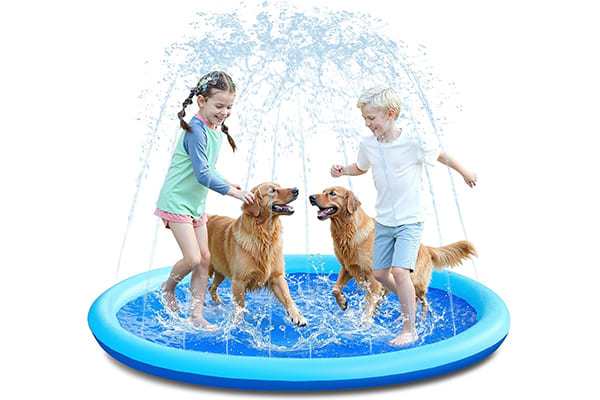
Water pressure is the hidden “make-or-break” factor. Too high and sprinklers for kids sting, hit faces, and cause chaos. Too low and the toy barely works.
A simple comfort method (no tools):
- Put your hand/forearm in the spray for 10 seconds.
- If you instinctively pull away or squint, it’s too strong for younger kids.
- Dial flow down until it feels like cool shower, not sharp jets.
Pressure-related problems and fixes:
| Problem | What it looks like | Fix |
|---|---|---|
| Spray stings eyes/ears | kids avoid the lane | reduce flow at spigot 20–40% |
| Sprinkler shoots too high | water hits faces constantly | angle/position; choose lower-profile design |
| Rotating parts don’t move | weak pattern, “dead zones” | shorten hose, remove kinks, choose low-pressure-friendly design |
| Uneven spray | one side strong, one side weak | clean spray holes; check for debris |
Practical tip: if you’re using a long hose, the pressure drops. For low pressure homes, pick sprinklers for kids with wide holes and shorter spray height, and focus on games (races, run-through lanes) instead of “high fountain” expectations.
What is the 3 times rule for sprinklers for kids?
Parents use “3 times rule” in different ways. For sprinklers for kids, the safest and most useful version is about rotation + breaks + exposure control—because kids get excited, forget thirst, and keep sprinting on wet ground.
A practical “3 times rule” you can apply:
Rule A: 3 short rounds instead of 1 long session
- Do 3 rounds of 10–15 minutes with breaks between.
- Breaks reduce slipping from fatigue, lower overheating risk, and give you time to check the ground.
Rule B: 3 safety checks during play
Check 3 times: at minute 2 (setup issues), minute 10 (slip zones forming), minute 20 (kid fatigue/hydration).
- Minute 2: leaks, unstable base, harsh spray.
- Minute 10: puddles, hose drift, crowding.
- Minute 20: kids rubbing eyes, coughing from accidental water intake, signs of tired sprinting.
Rule C: 3-position rotation to prevent puddle hazards
If the sprinkler creates pooling, move it 3 times (or rotate its position) to spread water and avoid one slick patch.
Here’s a simple schedule you can copy:
| Round | Play time | Break | What you do |
|---|---|---|---|
| 1 | 10–15 min | 5 min | adjust flow + confirm comfort |
| 2 | 10–15 min | 5 min | move/rotate if pooling starts |
| 3 | 10–15 min | finish | rinse feet, dry area, drain/store |
This keeps sprinklers for kids fun without turning your yard into a slip-and-slide on accident.
How do you prevent slips with sprinklers for kids?
Slip prevention is mostly environment design, not yelling “be careful.” Kids don’t slow down when they’re having fun.
Do these first (high impact, low effort):
- Choose placement: keep sprinklers for kids on grass when possible.
- Create boundaries: cones, chalk, or “no running near patio” rules.
- Control runoff: avoid slopes; don’t aim spray toward stairs or walkways.
- Manage the hose: route it along an edge and keep it flat.
Add-ons that help a lot:
- Traction footwear: water shoes with grip are often the simplest fix on hard surfaces.
- Textured play zone: if you must use a driveway, a textured outdoor mat can reduce slips (only if it lies flat and doesn’t become a trip hazard).
- Reduce sprinting intensity: for younger kids, switch to “walk-through games” (crawl under arch, freeze dance in spray) instead of full-speed racing.
Slip risk changes as play continues. The first 5 minutes may be fine—then puddles form and kids get tired and reckless. That’s why short rounds (the 3 times approach above) works so well.
Are sprinklers for kids safe for daily play?
Yes—sprinklers for kids can be safe for daily play, but only if you treat them like what they really are: a fast-moving, wet-play activity. The risk usually doesn’t come from “water play” itself. It comes from predictable real-life factors: kids running full speed, slippery surfaces, uneven lawns, strong spray hitting eyes/ears, and poor habits like swallowing water or sharing cups.
If you manage those, daily sprinkler play can be one of the safest and easiest summer routines: short bursts of active movement, cooling down, and outdoor time that doesn’t require screens.
Want a printable checklist to set up sprinklers for kids safely in 5 minutes? Download the PDF below.
What “daily safe” really means for sprinklers for kids
Daily play is “safe enough” when you can consistently control these four things:
- Surface safety (slip and trip prevention)
- Spray comfort (no stinging jets into eyes/ears)
- Time and fatigue (short rounds + breaks)
- Hygiene habits (kids don’t drink the water, and the toy doesn’t get gross)
If one of these is out of control (example: slippery driveway + full-speed running), daily play becomes “risk stacking.”
The 4 biggest daily risks
1) Slips and falls (the most common real-world issue)
Slipping is usually the #1 safety problem with sprinklers for kids because water changes traction fast.
Slip risk by surface
| Surface | Slip risk (daily play) | Why | What works best |
|---|---|---|---|
| Flat grass | Low–Medium | softer landing, better drainage | most sprinklers for kids |
| Uneven grass | Medium | hidden holes + wet footing | low-profile + clear play zone |
| Artificial turf | Medium | water can pool on top | rotate positions often |
| Concrete/driveway | High | slick + fast running | contained spray + traction footwear |
| Decking | Medium–High | wet boards get slick | keep away from stairs/edges |
Daily safety habit:
- Put “running games” on grass whenever possible.
- On hard surfaces, switch from sprinting to walk-through games (crawl, freeze dance, step-over, follow-the-leader).
A quick “safe zone” setup checklist (30 seconds)
- Remove rocks, sticks, and toys in the run path
- Keep hose routed along the edge (not across the middle)
- Keep water away from steps, pool edges, and sharp furniture corners
- Check for pooling after 2–3 minutes
2) Harsh spray to eyes and ears
A lot of “my kid hates it” is actually spray discomfort. Kids won’t always explain it—they just avoid the sprinkler.
Comfort problems and fixes
| Problem | What you’ll notice | Fix |
|---|---|---|
| Spray stings | blinking, rubbing eyes | reduce flow 20–40% |
| Face-level jets | kids turn away or cry | reposition; choose lower-profile design |
| Loud “pressure spray” | kids flinch near it | use multi-hole/softer spray type |
| Cold shock | kids run away at first | start with gentle flow, let them warm up |
Practical comfort test
Put your forearm in the spray for 10 seconds. If you feel the need to pull away, it’s too harsh—especially for ages 1–6. Turn it down until it feels like a soft shower.
3) Fatigue + overheating + poor judgment
Most small accidents happen after kids have been playing for a while, when:
- they’re tired but still hyped
- they slip more easily
- they stop watching where they’re going
- they forget to drink clean water
Daily play is safer when you use short rounds.
A daily play schedule that reduces injuries
| Round | Play time | Break | What you do during break |
|---|---|---|---|
| 1 | 10–15 min | 5 min | check spray comfort + pooling |
| 2 | 10–15 min | 5 min | water break + sunscreen re-check |
| 3 | 10–15 min | done | dry feet, drain area, quick rinse |
This keeps fun high and reduces the “tired sprinting on wet ground” problem.
Heat tip: even with sprinklers for kids, hot days can still cause overheating. Water play cools skin, but it doesn’t replace shade breaks and hydration.
4) Hygiene and “gross stuff”
Backyard sprinklers aren’t like public splash pads with recirculated water, but daily play still has hygiene issues because kids:
- put mouths near spray
- sometimes drink the water
- share cups
- sit on wet surfaces
- track dirt onto the toy
Daily hygiene habits that actually matter
- Provide a separate drinking bottle nearby (so kids don’t drink spray)
- Teach one simple rule: “Mouth closed in the spray.”
- If kids are diaper-age, do more frequent bathroom/diaper checks
- Rinse off mud, grass, and sunscreen residue from the sprinkler after use
- Drain and dry enough to prevent odor (especially for inflatable styles)
“Odor prevention” is part of daily safety
A smelly, damp toy isn’t just unpleasant—it’s a sign of trapped moisture and grime. Over time, it can irritate skin and shorten product life.
Is it safe for kids to run through sprinklers for kids every day?
It can be safe, but daily running-through should depend on surface and rules.
Daily running-through is usually safe when:
- the run-through lane is on grass
- the spray is gentle (not face-blasting)
- the play space is clear of trip hazards
- kids follow “no pushing” rules
Daily running-through is riskier when:
- it’s on concrete/driveway
- kids are doing full-speed turns or sliding
- the hose crosses the run path
- multiple kids crowd one narrow lane
Practical “running rules” that prevent most problems
- One direction only (reduces collisions)
- No pushing or tackling
- Walk on hard surfaces, run on grass
- Stop if you see puddles forming in a turning spot
Daily safety scoring: should you do sprinklers for kids today?
This is a quick decision tool parents love because it’s honest.
| Question | Yes / No |
|---|---|
| Do I have a safe surface (preferably grass)? | |
| Can I keep spray comfort gentle (adjustable flow)? | |
| Can I keep the hose out of the run path? | |
| Can I supervise enough to prevent pushing and reckless sliding? | |
| Can I do short rounds with water breaks? | |
| Can I drain/dry enough to avoid odor? |
If you answer “no” to 2–3 of these, daily play may still happen—but change the style:
- switch to contained low-profile sprinklers for kids
- do walk-through games instead of sprinting
- reduce flow and shorten sessions
How do you set up and store sprinklers for kids?
If you want sprinklers for kids to be something you use often—not just once—setup and storage have to feel easy. Most parents don’t quit because the sprinkler “isn’t fun.” They quit because it leaks, creates slippery chaos, or smells gross after being stored damp. The good news: nearly all of that is fixable with a simple routine.
Below is a detailed, practical approach with data-style checklists and tables that reflect what families actually run into.
How do you set up sprinklers for kids safely and quickly?
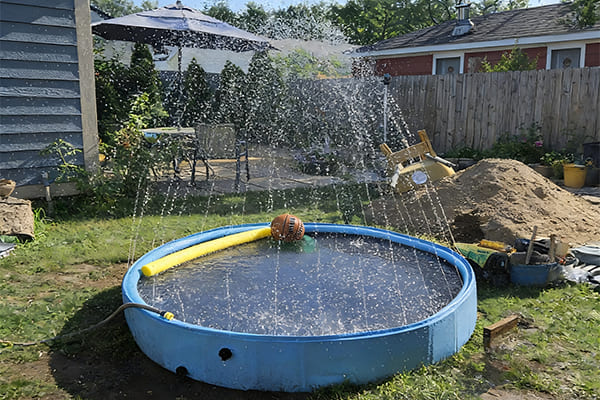
A realistic goal: 5 minutes or less
If you can’t set it up in 5 minutes, it becomes a “special occasion” toy. A fast routine makes sprinklers for kids a daily or weekly habit.
The 5-minute setup routine
Minute 1: Choose the “safe zone”
Pick a spot that avoids the most common injuries:
- Flat grass is best
- Stay 10+ feet away from steps, pool edges, grills, furniture corners, and garden tools
- Avoid slopes where water will run downhill into a slick stream
Minute 2: Clear and define the play area
- Remove sticks, rocks, toys, and uneven hazards
- If multiple kids: define a lane or boundary (cones/chalk/“this side only”)
Minute 3: Route the hose (trip prevention)
- Keep the hose along the edge of the zone, not across the middle
- Leave a small slack loop near the connector so tension doesn’t pull and leak
Minute 4: Connect and check the seal
- Confirm the hose end has a rubber washer
- Hand-tighten only (over-tightening can crush washers and cause leaks)
Minute 5: Turn on water slowly + comfort check
- Start at about 30–50% flow
- Put your forearm in the spray for 10 seconds
- If it stings or makes you squint, reduce flow until it feels like a soft shower
Setup checklist you can screenshot
- Flat surface (grass if possible)
- Hose routed along edge (no crossing the run path)
- Rubber washer present in hose end
- Moderate flow (not full blast)
- Check pooling after 2–3 minutes
How do you set up sprinklers for kids fast?
Speed comes from having “default settings” you repeat every time.
The fastest setup choices
| If you want… | Choose these sprinklers for kids | Why it’s fast |
|---|---|---|
| fastest overall | simple lawn sprinkler | no inflating, no drying |
| fastest kid excitement | arch/tunnel run-through | instant game, minimal positioning |
| fastest for toddlers | low-profile ring/edge | controlled splash, quick comfort adjustment |
Time-savers that make a big difference
- Keep a spare pack of hose washers (cheap and solves many leaks instantly)
- Use a hose splitter with a valve so you can adjust flow easily
- Store the sprinkler in a bin with a small towel—wiping it down before storage is faster than dealing with odor later
How do you stop leaks in sprinklers for kids?
Most leaks happen at the connector, not the body. The connector is where twisting, pulling, and pressure pulses hit.
The “leak-first” inspection (30 seconds)
- Check the hose washer (gasket).
- Make sure the connection is straight (not cross-threaded).
- Reduce hose tension so it’s not bending sharply at the joint.
Leak patterns and the most likely fix
| Leak pattern | Most likely cause | Fast fix |
|---|---|---|
| steady drip at joint | missing/flattened washer | replace washer, hand-tighten |
| spray mist at joint | cross-threading | reconnect straight, don’t force |
| leak starts when kids pull | hose tension on connector | add slack loop, reroute hose |
| leak at seam/body | puncture or seam stress | patch (small) / replace (seam split) |
A simple “no-leak” setup habit
After turning on water, watch the connector for 15 seconds.
If you see drips, fix it immediately—otherwise you’re creating extra puddles (and extra slip risk).
How do you fix small damage on sprinklers for kids?
Small punctures are normal if the sprinkler touches rough concrete, gravel, or thorns. What matters is repairing it correctly and knowing when not to rely on a patch.
What is usually easy to repair
- pinholes
- small punctures away from seams
- small leaks that don’t involve the connector base
What usually shouldn’t be patched for long-term daily play
- seam splits (stress repeats and reopens)
- connector-base tears (high-stress zone)
- large tears that create sharp edges or curling material
Repair success depends on surface prep (this is the part people skip)
A patch fails if the area has:
- water
- sunscreen residue
- dirt/grass film
Quick repair steps that work:
- Find the leak
- Clean and dry completely
- Apply patch with full contact (smooth edges)
- Let it bond before rough play
Repair decision table
| Damage | Patch worth it? | Why |
|---|---|---|
| tiny puncture | Yes | low stress, patch holds well |
| small tear away from seam | Usually | if cleaned and dried properly |
| seam split | Often no | repeated stress reopens |
| connector tear | Usually no | pulling/tension makes it fail |
How do you store sprinklers for kids so they last?
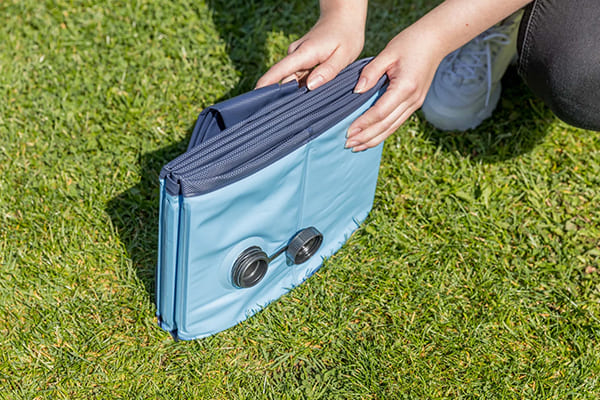
If sprinklers for kids are stored wet, two things happen:
- they start to smell (mildew/odor), and
- materials and seams wear faster.
Storage goal: fully dry + no sharp creases + not crushed
That’s what keeps them usable for multiple summers.
How do you store sprinklers for kids for next summer?
The “after play” routine (10–15 minutes total, mostly air-dry time)
Step 1: Drain completely
- Tilt and shake out trapped water
- Pay attention to corners and channels where water hides
Step 2: Rinse off grime
Especially if the sprinkler touched:
grass clippings
mud
sunscreen/oil residue
These residues are what cause odor and sticky surfaces.
Step 3: Dry fully
- Air-dry in shade
- If you can, flip it or rotate it so both sides dry
- Don’t fold while damp
Step 4: Fold gently or roll loosely
Sharp creases create long-term stress points.
Step 5: Store cool and dry
- Avoid extreme heat (hot garages can age materials faster)
- Avoid freezing storage if possible
Storage mistake table (what ruins sprinklers for kids)
| Storage mistake | What happens later | Easy prevention |
|---|---|---|
| folding while damp | odor + mildew | dry longer, wipe with towel |
| storing under heavy items | permanent creases | store on top or separate bin |
| leaving in direct sun for days | brittleness | shade drying, indoor storage |
| packing with sand/mud | sticky surfaces + wear | quick rinse before drying |
Data-style storage checklist
| Step | Target | “Good enough” test |
|---|---|---|
| Drain | no trapped water | shake and no sloshing sound |
| Rinse | remove residue | surface feels clean, not slimy |
| Dry | fully dry | no cool damp spots when touched |
| Fold | no sharp creases | loose roll or gentle folds |
| Store | cool + dry | bin not humid; not crushed |
Ready to choose the right sprinklers for kids?
If you’ve read this far, you’re not looking for “any sprinkler.” You’re looking for sprinklers for kids that work in real backyards: a comfortable spray, fewer slip surprises, fewer leak complaints, and materials that hold up through summer play.
That’s exactly what we build at EPN (American Epsilon Inc.). We focus on the details families and brands care about—spray comfort, connector reliability, stable structure, and clear instructions—so the product performs the way your listing promises.
Choose your next step:
- If you want ready-to-ship inventory, use the Amazon links below to buy our in-stock water-play products.
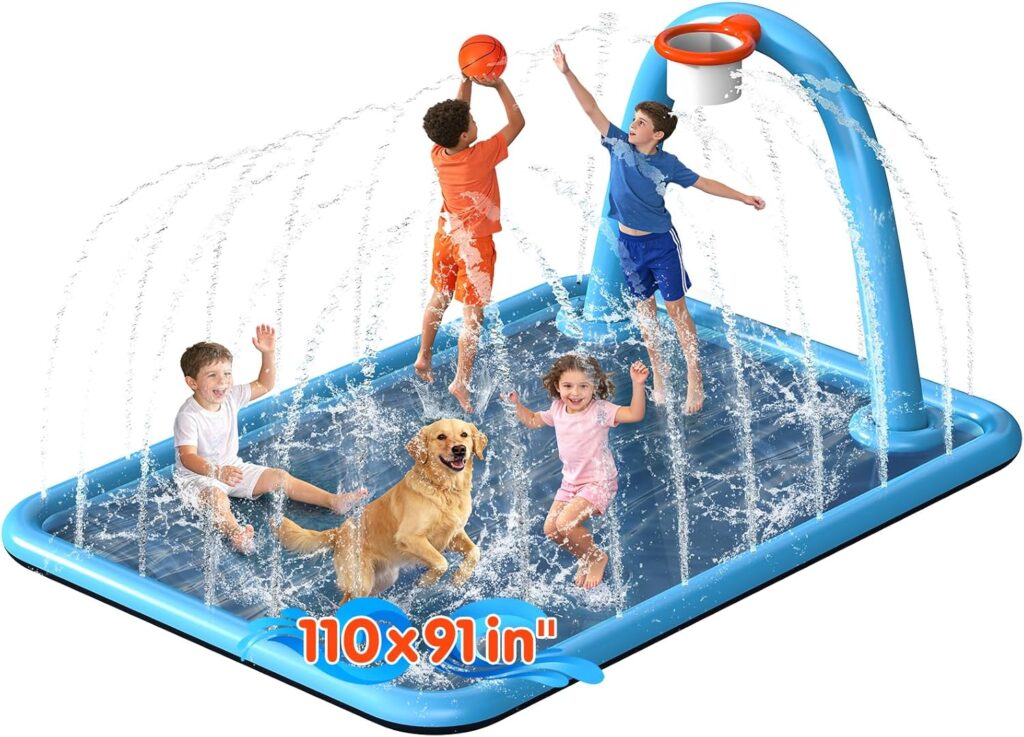
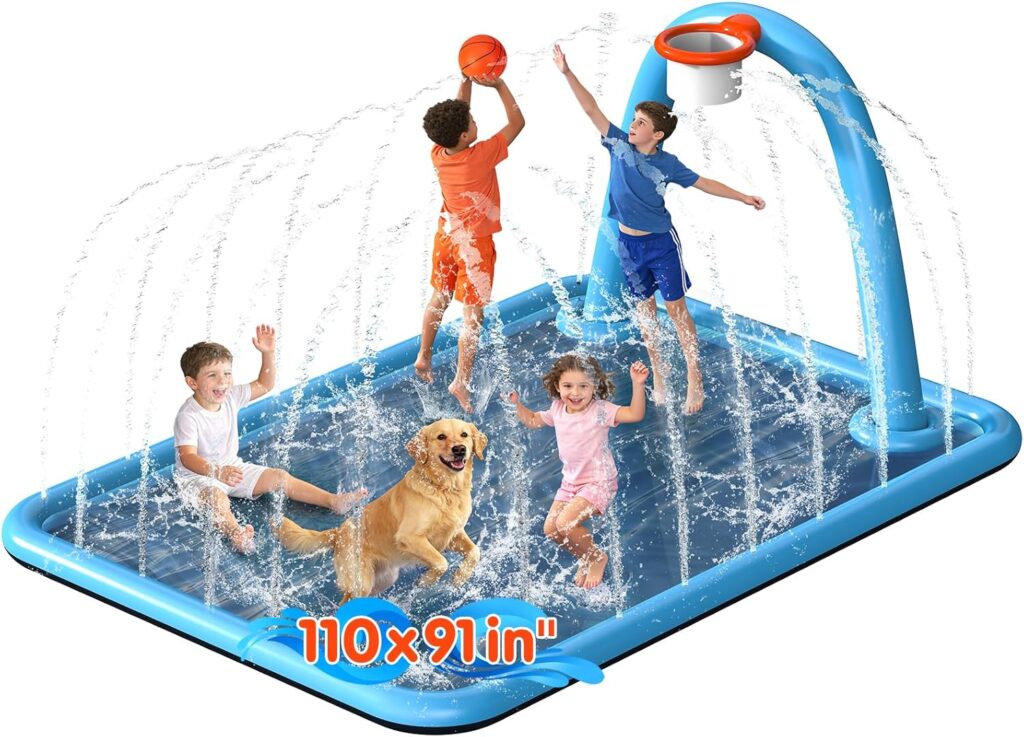
Sprinkler Splash Pad with Basketball Hoop
- If you’re building a private-label or wholesale program, we can quote quickly with just a few basics: preferred size, spray style (arch / tunnel / rotating / edge spray), target price point, and packaging requirements.
Request OEM/ODM Customization
Helpful Download (PDF):
Download the OEM/ODM Product Brief (PDF)
Keep reading: Related product guides on our site
If you want more options beyond this article, these pages map out our product categories in detail:
Get A Fast quote
Here, bringing your inflatable concepts to life is no longer a challenge—it’s a collaborative journey where American Epsilon helps families, outdoor enthusiasts, and global brands transform creative ideas into safe, certified, and market-ready inflatable solutions.


Partner With Epsilon
Whether you are a family looking for safe backyard fun or a brand seeking large-scale OEM/ODM solutions, American Epsilon Inc. guarantees every inflatable is built with safety, durability, and excitement in mind. With flexible low MOQs, strategically placed warehouses in the U.S., Canada, U.K., and Germany, plus 24/7 professional support, we ensure smooth delivery and reliable service worldwide.
Ready to bring your inflatable ideas to life? Request free samples, fast prototypes, and customized designs today—your trusted inflatable journey starts here.