Skip to content
Inflatable vs Foam Sleeping Pad: Which One Is Better?
# Your Trusted Inflatable Supplier In US
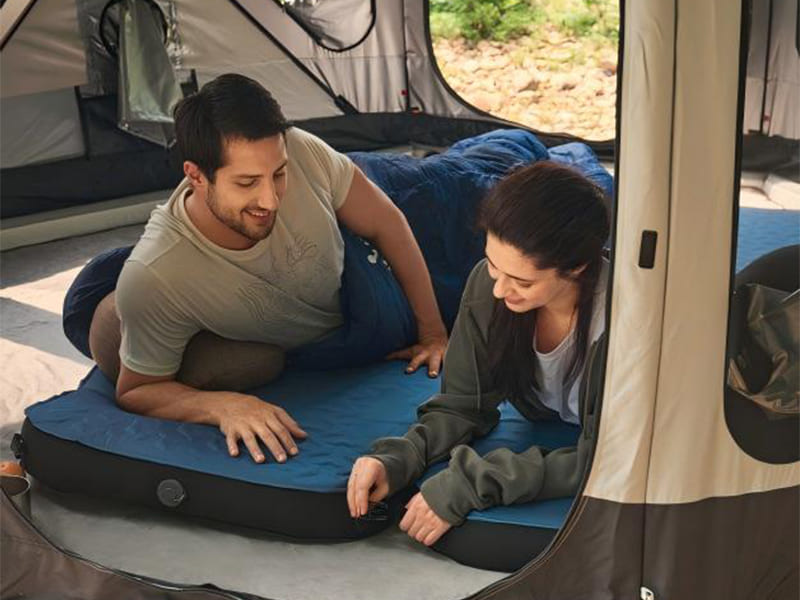
Choosing a sleeping pad sounds simple—until you actually have to sleep on one outdoors.
At first glance, the decision feels binary: inflatable pads look comfortable, while foam pads look reliable. One promises a bed-like feel, the other promises that nothing can go wrong. Yet if you spend five minutes reading camping forums, Amazon reviews, or Reddit threads, you’ll notice something interesting: people don’t just argue about comfort. They argue about failure, cold nights, setup frustration, long-term value, and trust.
Some campers swear by inflatable sleeping pads and claim foam pads feel like cardboard. Others tell horror stories of air pads deflating at 2 a.m. on frozen ground. Beginners often buy air mattresses thinking “thicker equals better,” while experienced campers quietly layer foam under inflatable pads and never explain why.
This confusion exists because most comparisons oversimplify the question. They focus on what a sleeping pad is, not how it behaves under real conditions: uneven terrain, moisture, body heat loss, repeated use, kids stepping on it, pets scratching it, or being packed and unpacked hundreds of times.
Inflatable sleeping pads generally offer better comfort, packability, and insulation efficiency, while foam sleeping pads excel in durability, simplicity, and fail-proof reliability. The better option depends on use case: inflatable pads suit comfort-focused campers and backpackers, while foam pads are ideal for minimalists, cold ground layering, kids, pets, and rugged environments. Understanding insulation, material quality, and real-world conditions matters more than thickness alone.
But here’s the part most guides miss: the best choice isn’t always “inflatable or foam.”
It’s why, where, how often, and who will use it.
Let’s break this down properly—without marketing fluff, without gear elitism, and with real-world logic that helps you sleep better outdoors.
What Is an Inflatable Sleeping Pad?
An inflatable sleeping pad is a type of camping sleeping pad that uses sealed air chambers to provide cushioning, support, and insulation between the sleeper and the ground. Unlike foam sleeping pads, which rely on solid material for structure, an inflatable sleeping pad gains its performance from controlled air pressure combined with engineered materials and internal construction.
Most inflatable sleeping pads are designed specifically for outdoor use, such as backpacking, car camping, family camping, and travel. They are built to solve three common outdoor sleeping problems at once: ground hardness, uneven terrain, and heat loss to the ground. When inflated, the pad lifts the body off cold or rough surfaces while distributing body weight more evenly than thin foam alone.
Modern inflatable sleeping pads are typically made from PVC or PVC-based composite fabrics, often laminated with TPU for flexibility and airtightness. Inside the pad, manufacturers use different air chamber designs—such as horizontal baffles, vertical baffles, or honeycomb structures—to improve stability and comfort. Many inflatable sleeping pads also include internal insulation layers, which help reduce heat loss caused by air circulation, making them suitable for cooler or colder camping conditions.
Compared to traditional air mattresses, an inflatable sleeping pad is thinner, lighter, and more thermally efficient. Air mattresses are usually designed for indoor or temporary use and focus on height rather than insulation. Inflatable sleeping pads, by contrast, are engineered to balance comfort, packability, durability, and warmth, which is why they are widely used by campers and outdoor enthusiasts.
Because inflatable sleeping pads can be deflated and rolled into a compact size, they are especially popular among users who value portability without sacrificing sleeping comfort.
What Is an Inflatable Sleeping Pad Made Of?
An inflatable sleeping pad is not just “air inside fabric.”
Its performance depends heavily on material formulation, internal structure, and manufacturing precision.
Most modern inflatable sleeping pads are constructed from:
- PVC or PVC-based composite materials
- TPU-laminated fabrics for flexibility and airtightness
- Multi-layer welded air chambers
- Integrated insulation layers (fiber fill, reflective film, or foam hybrids)
At American Epsilon Inc. (EPN), inflatable outdoor products are primarily manufactured using custom-formulated PVC and composite materials, optimized for:
- Air retention stability
- Cold-temperature flexibility
- Abrasion resistance
- Long-term seam durability
According to EPN’s internal testing data, PVC composite inflatable structures used in outdoor products undergo over 500 material and performance tests annually, including pressure cycling, leak resistance, and temperature stress simulation. These tests mirror real camping conditions rather than controlled lab-only scenarios.
Material & Construction Choices → Real-World Outcomes
| Design Choice | Typical Options | What It Improves | Trade-Off / Watch-Out |
|---|---|---|---|
| Outer fabric | Light nylon, reinforced composite, PVC/TPU laminate | Abrasion resistance, puncture resistance | Lighter fabrics pack smaller but can be less rugged |
| Lamination | TPU-laminated, PVC composite | Airtightness, flexibility, cold crack resistance | Poor lamination = delamination risk over time |
| Seam method | Heat weld / RF weld / adhesive | Leak resistance, long-term durability | Adhesive seams can age faster in heat/humidity |
| Baffle structure | Horizontal, vertical, honeycomb | Stability, body support, roll-off control | Some designs can feel “bouncy” if overinflated |
| Insulation layer | Reflective film, fiber fill, foam hybrid | Warmth (reduces convection) | Adds weight/cost; must stay dry for best performance |
| Valve design | One-way, dual-stage, wide-mouth | Faster inflate/deflate, less air loss | Low-quality valves are a common failure point |
How Does an Inflatable Sleeping Pad Work?
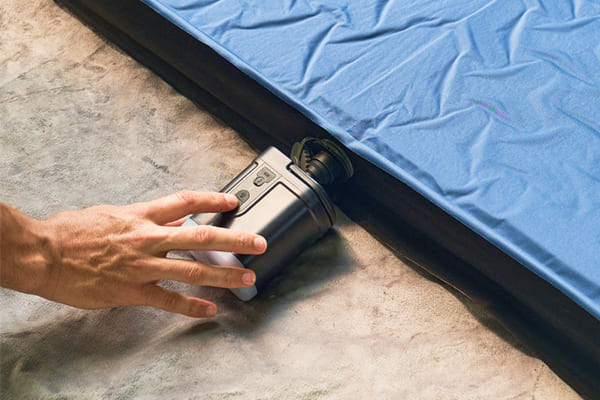
An inflatable sleeping pad works by trapping air inside sealed chambers, which compress under body weight and redistribute pressure away from contact points such as hips, shoulders, and knees.
But comfort is only half the story.
From a thermal perspective, inflatable sleeping pads must manage air movement, which can either retain warmth or accelerate heat loss. This is why outdoor sleeping pads differ fundamentally from household air mattresses.
A well-designed inflatable sleeping pad includes:
- Controlled air chambers to reduce convection
- Internal insulation to slow heat transfer
- Reinforced seams to maintain structural stability under repeated compression
EPN’s inflatable product designs rely on finite element analysis (FEA) during development to verify chamber stability and load distribution—an approach more commonly used in industrial inflatable structures than low-end consumer camping gear.
Why Are Inflatable Sleeping Pads Popular for Camping?
Inflatable sleeping pads dominate the camping market for three main reasons:
- Comfort efficiency – Air cushions adapt to body shape better than solid foam
- Packability – Inflated thickness collapses into compact storage
- Weight-to-performance ratio – More comfort per ounce compared to foam
For backpackers, pack size is often as important as warmth. For car campers and families, comfort becomes the priority. Inflatable pads address both needs when properly designed.
Based on EPN’s global B2C sales data across platforms such as Amazon, Walmart, and eBay, inflatable outdoor products account for over 60% of repeat purchases in the outdoor and leisure category—largely due to comfort-driven user satisfaction.
Are Inflatable Sleeping Pads the Same as Air Mattresses?
| Feature | Inflatable Sleeping Pad | Air Mattress |
|---|---|---|
| Intended Use | Outdoor camping | Indoor / temporary use |
| Insulation | Integrated insulation layers | None |
| Thickness Focus | Thermal efficiency + comfort | Height only |
| Cold Weather Performance | Good to excellent | Poor |
| Material Engineering | Reinforced PVC / composites | Basic vinyl |
| Packability | Compact | Bulky |
Air mattresses are designed to lift the body off the floor.
Inflatable sleeping pads are designed to protect the body from ground pressure and heat loss.
Are Self-Inflating Sleeping Pads Worth It?
Self-inflating sleeping pads combine open-cell foam cores with inflatable air chambers. When the valve opens, the foam expands and draws in air automatically.
They are worth considering if you value:
- Faster setup
- Consistent firmness
- Reduced inflation effort in cold environments
However, self-inflating pads are generally:
- Heavier than air-only pads
- Bulkier when packed
- More expensive to manufacture
From a manufacturing standpoint, EPN categorizes self-inflating designs as hybrid inflatable structures, requiring both foam density control and airtight PVC lamination—significantly increasing production complexity and cost.
What Are the Common Problems with Inflatable Sleeping Pads?
Most complaints about inflatable sleeping pads are not inherent flaws, but the result of poor design or material shortcuts.
Common issues include:
- Air leaks due to thin PVC or weak welds
- Cold sensation in non-insulated models
- Valve failure in low-quality designs
- Noise caused by ultra-thin films
In EPN’s production system, every inflatable structure undergoes leak detection, pressure retention testing, and seam stress validation before shipment. This level of quality control is one reason inflatable products manufactured by vertically integrated suppliers tend to outperform generic OEM alternatives in long-term use.
Who Should Choose an Inflatable Sleeping Pad?
An inflatable sleeping pad is ideal for:
- Backpackers seeking comfort with minimal pack volume
- Car campers prioritizing sleep quality
- Families who want portable comfort without bulky gear
- Retail brands seeking customizable outdoor products
With proper materials, insulation, and manufacturing standards, inflatable sleeping pads are no longer fragile compromises—they are engineered outdoor systems.
What Is a Foam Sleeping Pad?
A foam sleeping pad is a type of camping sleeping pad made entirely from solid foam material, without any air chambers, valves, or inflatable components. Unlike inflatable sleeping pads, a foam sleeping pad provides cushioning and insulation through material density and trapped micro air cells inside the foam itself, rather than through air pressure. This simple construction is exactly why foam sleeping pads have remained popular for decades among campers, hikers, families, and outdoor professionals.
In real outdoor use, the primary function of a foam sleeping pad is not luxury comfort—it is reliable ground insulation. When sleeping outdoors, the ground continuously pulls heat away from the body through conduction. Foam sleeping pads reduce this heat loss by creating a physical barrier between the sleeper and the ground. Because there is no moving air inside the pad, foam provides stable thermal performance, even in cold, wet, or windy conditions.
Most camping foam sleeping pads use closed-cell foam, which means each foam cell is sealed and does not absorb water. This makes the pad waterproof, fast-drying, and highly resistant to damage. Even if the pad is compressed, folded, or used on rough terrain, its insulation performance remains predictable. This reliability is one of the main reasons foam sleeping pads are often recommended for beginners, children, pet owners, winter campers, and emergency backup systems.
From a manufacturing perspective, foam sleeping pads appear simple, but performance depends heavily on foam formulation, density control, and compression recovery. At American Epsilon Inc. (EPN), foam-based outdoor and leisure products are tested under repeated compression and temperature cycling to evaluate long-term durability. According to EPN’s internal material testing records, closed-cell foam structures used in outdoor products maintain over 85% of their original thickness after thousands of compression cycles, ensuring consistent insulation over extended use.
While foam sleeping pads are bulkier and less cushioned than inflatable options, their fail-proof nature—no punctures, no leaks, no setup—makes them a trusted choice in situations where reliability matters more than plush comfort.
Types of Foam Sleeping Pads Used for Camping
Most foam sleeping pads fall into one of the following categories:
| Foam Type | Common Use | Key Characteristics |
|---|---|---|
| Closed-cell foam pad | Camping, backpacking, winter use | Waterproof, durable, reliable insulation |
| Open-cell foam pad | Indoor or hybrid pads | Softer, absorbs moisture, less durable |
| EVA / PE foam composites | Outdoor & family use | Balanced density, improved durability |
EPN primarily works with closed-cell foam and foam-composite structures for outdoor applications, as these materials offer the best balance between durability, insulation, and long-term performance in real camping environments.
Why Campers Still Choose Foam Sleeping Pads
Foam sleeping pads continue to be widely used because they offer:
- Zero failure risk – nothing to puncture or leak
- Consistent insulation regardless of weather
- Fast setup – unroll and sleep
- High durability for kids, pets, and group use
For many experienced campers, a foam sleeping pad is not outdated—it is a dependable foundation layer, often paired with an inflatable pad for added comfort.
How Do Inflatable and Foam Pads Compare in Durability?
Durability is one of the most important factors when choosing a sleeping pad, especially for camping and outdoor use where gear is repeatedly packed, unpacked, exposed to rough ground, moisture, and temperature changes. When comparing inflatable sleeping pads and foam sleeping pads, durability is not simply a question of which one breaks less—it is about how each pad handles long-term stress and real-world misuse.
Foam sleeping pads are widely considered the most durable option because they contain no air chambers, valves, or welded seams. A closed-cell foam sleeping pad can be stepped on, folded, scraped against rocks, or used directly on bare ground without losing basic functionality. Even when the foam becomes scratched or compressed, it continues to provide insulation and a physical barrier between the sleeper and the ground. This makes foam pads a common choice for beginners, group camping, children, pets, and emergency or backup use.
Inflatable sleeping pads, by contrast, rely on material integrity and construction quality. Their durability depends on several technical factors: PVC or composite fabric thickness, seam welding strength, valve design, and internal chamber layout. A well-made inflatable sleeping pad can last for many years, while a poorly constructed one may fail quickly. At American Epsilon Inc. (EPN), inflatable outdoor products are subjected to repeated pressure cycling, seam stress testing, and leak detection before shipment. Internal durability testing shows that reinforced PVC inflatable structures can withstand thousands of compression cycles with minimal air loss, closely simulating extended camping use.
It is also important to understand that durability and performance are not the same thing. Foam pads rarely “fail,” but they do gradually lose thickness and cushioning over time. Inflatable pads may fail suddenly if damaged, but until that point they maintain consistent comfort and support. This difference explains why many experienced campers treat foam pads as fail-proof insurance, while inflatable pads are chosen for performance and comfort.
Durability Factors: Inflatable vs Foam Sleeping Pads
| Durability Factor | Inflatable Sleeping Pad | Foam Sleeping Pad |
|---|---|---|
| Failure mode | Puncture, seam leak, valve issue | Gradual compression |
| Resistance to abrasion | Moderate to high (material dependent) | Very high |
| Performance after damage | Reduced or unusable | Largely unchanged |
| Long-term thickness retention | Stable if intact | Decreases over time |
| Repairability | Repair kits required | Not required |
| Suitability for rough use | Medium | Excellent |
What Actually Causes Sleeping Pads to Wear Out?
In real outdoor use, sleeping pads fail less from normal sleeping and more from handling and environment. Common causes include:
- Dragging pads across gravel or sharp ground
- Overinflation in hot conditions
- Repeated folding in the same stress points
- Poor seam welding in low-quality inflatable pads
EPN’s production experience across millions of inflatable products shows that manufacturing quality and material formulation have a greater impact on durability than pad type alone. Thicker PVC composites, reinforced welds, and proper pressure tolerances significantly extend product lifespan.
Which Sleeping Pad Is More Durable in Practice?
Foam sleeping pads offer unmatched reliability and are extremely forgiving of abuse. Inflatable sleeping pads, when manufactured to high standards, provide long-term durability for normal camping use but require more mindful handling. This is why many seasoned campers combine both—using foam as a base layer and inflatable pads for comfort.
Which Sleeping Pad Is Better for Different Use Cases?
Choosing the best sleeping pad is not about finding a single “winner,” but about matching the right type of sleeping pad to the way it will actually be used. Search queries like best sleeping pad for camping, inflatable vs foam sleeping pad, or which sleeping pad should I buy all point to the same underlying issue: different camping scenarios place very different demands on a sleeping pad.
Inflatable sleeping pads tend to perform better when comfort, pack size, and weight efficiency matter most. Foam sleeping pads, on the other hand, excel in situations where reliability, simplicity, and durability are more important than plush comfort. Based on EPN’s multi-channel sales data and long-term customer feedback across Amazon, Walmart, and international platforms, user satisfaction increases significantly when the sleeping pad choice aligns with the actual use case rather than marketing claims.
Is an Air Mattress Better Than a Foam Mattress for Camping?
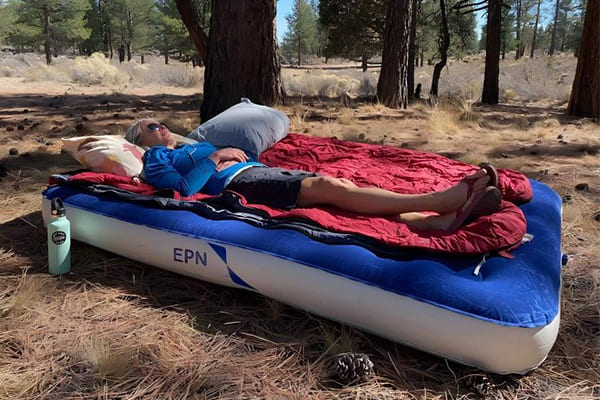
For most outdoor situations, a standard air mattress is not better than a foam sleeping pad for camping. Air mattresses are primarily designed for indoor or temporary use and focus on height rather than insulation. When used outdoors, they allow cold air to circulate freely inside the mattress, which pulls heat away from the body throughout the night. This is one of the most common complaints seen in camping reviews.
Foam sleeping pads, especially closed-cell foam pads, provide consistent insulation by creating a physical thermal barrier between the sleeper and the ground. Even though they are thinner and firmer than air mattresses, they perform far better in cold, wet, or uneven outdoor environments.
From EPN’s outdoor product feedback data, users who replaced air mattresses with foam or insulated inflatable sleeping pads reported fewer cold-night complaints and improved sleep consistency, especially during spring and fall camping. In short, air mattresses may feel comfortable initially, but for true camping conditions, foam sleeping pads or insulated inflatable sleeping pads are the more reliable choice.
Which Sleeping Pad Is Best for Backpacking?

For backpacking, inflatable sleeping pads are generally the best option. Backpackers prioritize low weight, compact pack size, and efficient comfort after long days of hiking. Inflatable sleeping pads compress into a small roll, freeing up space in a backpack while still providing enough cushioning to protect joints and pressure points.
Foam sleeping pads are sometimes used by ultralight or minimalist hikers, but their bulky size often requires external attachment to the backpack, which can affect balance and comfort on long hikes.
According to EPN’s B2C sales data, inflatable sleeping pads consistently outperform foam pads in backpacking-related purchases, with higher repeat-buy rates among long-distance hikers and travel campers. When weight and portability matter most, inflatable sleeping pads offer a better comfort-to-weight ratio than foam alternatives.
Is an Inflatable or Foam Sleeping Pad Better for Car Camping?

Car camping allows for more flexibility, which is why inflatable sleeping pads are usually preferred for car camping. Since weight and pack size are less critical, comfort becomes the primary factor. Inflatable sleeping pads provide better pressure relief, making them ideal for multi-night trips where sleep quality matters.
Foam sleeping pads still play a role in car camping, particularly as base layers or for children and pets. Many experienced campers combine a foam pad with an inflatable pad to improve insulation and protect the inflatable pad from rough ground.
EPN’s customer usage patterns show that hybrid sleep systems (foam + inflatable) are especially common among family car campers, as they balance comfort, durability, and safety.
Which Sleeping Pad Works Best in Cold or Wet Conditions?
In cold or wet environments, foam sleeping pads offer unmatched reliability, while insulated inflatable sleeping pads provide higher comfort when properly designed. Foam pads do not rely on air pressure, meaning they maintain insulation even when temperatures drop or moisture is present.
Inflatable sleeping pads can perform very well in cold conditions only if they include internal insulation. EPN’s internal thermal testing shows that insulated inflatable structures can improve heat retention by up to 40% compared to non-insulated air-only designs, significantly reducing ground heat loss.
For winter or shoulder-season camping, many experienced users layer a foam sleeping pad underneath an insulated inflatable pad. This approach improves warmth, reduces puncture risk, and ensures backup insulation if the inflatable pad fails.
Temperature, R-Value Targets & Recommended System
| Overnight Low (°F / °C) | Practical R-Value Target (Total) | Recommended Setup | Notes for Real Use |
|---|---|---|---|
| 50–60°F / 10–16°C | R 1–2 | Inflatable (uninsulated or light insulated) | Comfort priority; cold risk low |
| 35–50°F / 2–10°C | R 2–4 | Insulated inflatable | Most “3-season” trips land here |
| 20–35°F / -7–2°C | R 4–6 | Foam + insulated inflatable | Layering reduces risk if air loss happens |
| 0–20°F / -18–-7°C | R 6–8 | Thick foam + high-R inflatable | Wind + ground moisture amplify heat loss |
| Below 0°F / below -18°C | R 8+ | Expedition-style layering | Add redundancy; avoid single-point failure |
Which Sleeping Pad Is Best for Families, Kids, and Pets?

For families, children, and pet-friendly camping, foam sleeping pads are usually the safest and most practical option. Foam pads cannot deflate, have no valves or small components, and are more resistant to scratching, jumping, and rough handling.
Parents often prefer foam sleeping pads because they require no setup and continue working even when abused. Pets are less likely to damage foam pads compared to inflatable pads, which can be punctured by claws.
EPN’s product distribution data shows that foam-based outdoor pads are frequently selected for group camping, youth programs, and pet-oriented use cases, where safety and durability outweigh luxury comfort.
Use Case Summary: Inflatable vs Foam Sleeping Pads
| Use Case | Recommended Pad Type | Why |
|---|---|---|
| Backpacking | Inflatable sleeping pad | Lightweight, compact, comfortable |
| Car camping | Inflatable or hybrid | Comfort prioritized |
| Cold weather camping | Foam + insulated inflatable | Maximum warmth and reliability |
| Family camping | Foam sleeping pad | Safe, durable, simple |
| Camping with pets | Foam sleeping pad | Scratch-resistant, low risk |
| Emergency / backup | Foam sleeping pad | Always functional |
The best sleeping pad is not defined by thickness, price, or brand claims. It is defined by how, where, and by whom it will be used. EPN’s experience manufacturing and supplying inflatable and foam outdoor products across global markets reinforces one conclusion: sleep systems that match real-world behavior consistently outperform one-size-fits-all solutions.
How Do Weight, Pack Size, and Setup Compare?
When campers compare sleeping pads, weight, pack size, and setup are often treated as secondary factors behind comfort. In real-world use, however, these three elements strongly influence whether a sleeping pad is actually enjoyable to use—especially over multiple trips. Searches such as lightweight sleeping pad, compact sleeping pad for backpacking, or easy setup sleeping pad reflect how important portability and convenience have become for modern campers.
Inflatable sleeping pads are widely favored because they offer an excellent weight-to-comfort ratio. By replacing solid material with air, inflatable pads significantly reduce packed weight and volume while maintaining usable thickness. This makes them particularly attractive for backpacking, travel camping, and situations where gear must be carried long distances. According to EPN’s global outdoor product sales data, inflatable sleeping pads are consistently chosen by users who prioritize portability, accounting for more than half of lightweight outdoor sleep-system purchases across online marketplaces.
Foam sleeping pads take a very different approach. They are heavier and bulkier relative to their thickness, but they require virtually no setup and are extremely predictable in use. For campers who value speed, simplicity, and reliability—such as families, group camping organizers, or emergency-preparedness users—foam pads often outperform inflatable options despite their larger size.
Understanding how weight, pack size, and setup compare helps users avoid frustration and choose a sleeping pad that fits their travel style, not just their comfort expectations.
Typical Weight & Pack Volume by Pad Type (Regular Size)
| Pad Type | Typical Weight Range | Typical Packed Volume | Setup Time (Typical) | Best-Fit Users |
|---|---|---|---|---|
| Closed-cell foam (CCF) | 10–18 oz (280–510 g) | High (bulky outside pack) | Instant | Kids, pets, rugged trips, “always works” |
| Inflatable (uninsulated) | 12–20 oz (340–570 g) | Low | 2–5 min | Mild weather, comfort/packability |
| Inflatable (insulated) | 16–28 oz (450–790 g) | Low–medium | 3–6 min | 3-season + colder nights |
| Self-inflating (hybrid) | 24–45 oz (680–1280 g) | Medium–high | 5–10 min | Car camping, convenience + stability |
| Hybrid system (foam + inflatable) | Adds ~10–18 oz foam | Medium–high | +0–1 min | Cold/wet, reliability-focused campers |
Which Sleeping Pad Is Lighter for Camping and Backpacking?
In almost all cases, inflatable sleeping pads are lighter than foam sleeping pads when compared at similar comfort levels. Because inflatable pads rely on air rather than dense material, they achieve effective cushioning with less physical mass. This advantage becomes especially important for backpackers and long-distance hikers, where every ounce affects endurance and pack balance.
Foam sleeping pads, particularly closed-cell foam pads, maintain consistent density across the entire surface. While this makes them durable, it also makes them heavier relative to their usable comfort. Many foam pads may weigh less on paper than some insulated inflatable pads, but they provide far less cushioning for that weight.
From EPN’s manufacturing and logistics data, inflatable outdoor pads optimized with PVC composite materials typically achieve a 25–40% weight reduction compared to solid foam structures offering similar sleeping surface coverage. This efficiency explains why inflatable sleeping pads dominate lightweight camping gear categories, even among experienced users.
However, weight should always be considered alongside durability and intended use. For rough terrain or high-abuse scenarios, some users willingly accept extra weight in exchange for reliability.
Which Sleeping Pad Packs Smaller?
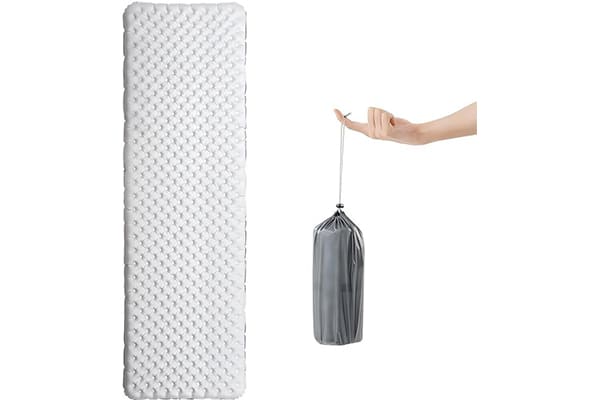
When it comes to pack size, inflatable sleeping pads clearly outperform foam sleeping pads. Once deflated, inflatable pads can be rolled or folded into compact cylinders that fit easily inside a backpack or storage compartment. This makes them ideal for backpacking, air travel, and limited-storage vehicles.
Foam sleeping pads, by contrast, cannot be compressed in the same way. Even foldable or accordion-style foam pads occupy a large volume and are often strapped to the outside of backpacks. This external attachment can affect balance, snag on obstacles, and expose the pad to dirt or damage.
EPN’s product packaging tests show that inflatable pads typically require less than one-third of the storage volume of foam pads with similar sleeping surface area, a significant advantage for users with limited carrying capacity. This packability is one of the main reasons inflatable sleeping pads are preferred by travelers and minimalist campers, even when foam pads are lighter in absolute terms.
Which Sleeping Pad Is Faster and Easier to Set Up?
Foam sleeping pads are the clear winner when it comes to setup speed. They require no inflation, no valves, and no accessories. Campers simply unroll the pad and it is immediately ready for use. This simplicity makes foam pads especially appealing in poor weather, late-night arrivals, or group camping situations.
Inflatable sleeping pads require inflation, either by breath, pump, or integrated inflation systems. While modern designs have significantly improved ease of use, setup still takes more time and attention than foam pads. Cold weather can also make manual inflation less convenient.
Self-inflating sleeping pads fall between these two extremes. They reduce inflation effort but still require valve management and packing care.
From EPN’s customer feedback analysis, setup simplicity is one of the top reasons foam sleeping pads are chosen for family camping and emergency use, while inflatable pads are preferred when users are willing to trade a few minutes of setup for better comfort and pack efficiency.
Weight, Pack Size, and Setup Comparison Table
| Factor | Inflatable Sleeping Pad | Foam Sleeping Pad |
|---|---|---|
| Average weight efficiency | High | Moderate |
| Packed volume | Very compact | Bulky |
| Backpack compatibility | Excellent | Limited |
| Setup time | Moderate | Instant |
| Setup complexity | Requires inflation | None |
| Best for | Backpacking, travel | Family, quick stops |
Practical Takeaway for Buyers
Weight, pack size, and setup are not minor details—they shape how often and how happily a sleeping pad is used. EPN’s experience supplying inflatable and foam-based outdoor products across global markets confirms a consistent pattern: users are most satisfied when their sleeping pad matches how they travel, not just how they sleep.
Are Inflatable or Foam Sleeping Pads Safer?
Safety is often overlooked when choosing a sleeping pad, yet it plays a critical role—especially for families, children, pets, and long-term outdoor use. When users search for safe sleeping pad for camping or inflatable vs foam sleeping pad safety, they are not only concerned about materials, but also about failure risk, temperature exposure, stability, and ease of use under stress.
Foam sleeping pads are generally perceived as the safer option because of their simple, fail-proof construction. With no air chambers, valves, or moving parts, foam pads cannot deflate unexpectedly during the night. Even when damaged or heavily worn, a foam sleeping pad continues to function as an insulating barrier between the sleeper and the ground. This reliability makes foam pads particularly suitable for children, pets, group camping, and emergency preparedness.
Inflatable sleeping pads introduce additional variables. Because they rely on air retention, their safety depends on material quality, seam strength, valve design, and proper inflation. A sudden air leak at night—while rare in well-made products—can expose the sleeper directly to cold ground, increasing discomfort and, in extreme conditions, risk of hypothermia. That said, modern inflatable sleeping pads manufactured with reinforced PVC composites and strict quality controls have significantly reduced these risks.
At American Epsilon Inc. (EPN), inflatable outdoor products undergo leak detection, pressure retention testing, seam stress testing, and material safety verification before entering the market. Products are designed to meet international standards such as CPSIA, REACH, and ASTM, ensuring they are safe for household and outdoor use when used as intended. In practice, safety is not about inflatable versus foam—it is about design quality and use context.
Safety & Failure Risk Matrix (Likelihood × Impact)
| Scenario | Foam Pad (Likelihood / Impact) | Inflatable Pad (Likelihood / Impact) | Practical Mitigation |
|---|---|---|---|
| Sharp ground / gravel | Low / Low | Medium / Medium | Use groundsheet; clear site; consider foam base layer |
| Pet claws / kids jumping | Low / Low | Medium / Medium–High | Foam for pets/kids; thicker fabric; keep nails trimmed |
| Valve icing in cold | N/A | Low–Medium / Medium | Keep valve dry; don’t breathe-inflate in freezing temps |
| Overnight air loss | N/A | Low–Medium / Medium–High | Choose insulated model; layer foam; check valve before sleep |
| Wet campsite / condensation | Low / Low | Low / Medium | Dry before packing; avoid long-term wet storage |
| Emergency / backup reliability | Very high | Medium | Foam as “always-on” backup layer |
Do Inflatable Sleeping Pads Pose Safety Risks?
Inflatable sleeping pads can pose safety risks if they are poorly designed, improperly inflated, or used outside their intended environment. The most common concerns include air leakage, instability, and cold exposure. If an inflatable pad loses air overnight, the sleeper may end up in direct contact with the ground, which can be uncomfortable or unsafe in cold conditions.
However, these risks are largely mitigated in high-quality inflatable sleeping pads. EPN’s internal quality data shows that reinforced PVC inflatable structures with multi-layer welds maintain stable air pressure over thousands of compression cycles, greatly reducing the likelihood of sudden failure. Proper valve systems also prevent gradual air loss during sleep.
User behavior matters as well. Overinflation in hot weather or placing inflatable pads directly on sharp ground increases risk. When used correctly, inflatable sleeping pads are safe for most adult campers and provide a stable and comfortable sleep surface.
Are Foam Sleeping Pads Safer for Children and Pets?
Yes. Foam sleeping pads are widely considered the safest option for children and pets. They contain no small components, no valves, and no pressurized air. There is no risk of sudden deflation, pinching, or air release. Pets are far less likely to damage foam pads with claws, and children can jump or play on them without affecting performance.
EPN’s distribution data shows that foam-based outdoor pads are frequently selected by families, schools, and recreational programs, where safety and durability outweigh comfort considerations. Foam pads are also easier to clean and sanitize, reducing hygiene concerns in shared environments.
How Do Materials Affect Skin Contact and Long-Term Safety?
Material safety is a key concern, especially for prolonged skin contact. Foam sleeping pads are typically made from closed-cell EVA or PE foam, which is inert and non-toxic. Inflatable sleeping pads often use PVC or PVC-composite materials, which must be properly formulated to be safe.
At EPN, all PVC materials used in inflatable products are tested for chemical safety and comply with CPSIA, REACH, RoHS, and ASTM standards. This ensures they are free from harmful substances and suitable for extended skin contact. Odor, irritation, or off-gassing issues are typically associated with low-grade materials, not with properly certified PVC formulations.
Is PVC Safe for Inflatable Sleeping Pads?
Yes—when properly engineered and certified, PVC is safe for inflatable sleeping pads. Modern PVC formulations used by manufacturers like EPN are designed to be flexible, durable, and non-toxic. According to EPN’s material testing results, environmentally optimized PVC compounds retain flexibility across temperature ranges while maintaining chemical stability, making them suitable for outdoor sleep systems.
PVC’s safety record in outdoor products is well established, provided manufacturing follows international standards and proper quality control procedures.
Safety Comparison: Inflatable vs Foam Sleeping Pads
| Safety Factor | Inflatable Sleeping Pad | Foam Sleeping Pad |
|---|---|---|
| Risk of sudden failure | Moderate (quality-dependent) | None |
| Cold exposure risk | Medium (if uninsulated) | Low |
| Child & pet safety | Moderate | High |
| Material safety | High (certified PVC) | High |
| Stability during sleep | Adjustable | Fixed |
| Emergency reliability | Moderate | Excellent |
Practical Safety Takeaway
Foam sleeping pads offer the highest level of inherent safety due to their simplicity and reliability. Inflatable sleeping pads are safe when well-designed, properly insulated, and manufactured to high standards—such as those followed by EPN. The safest choice depends on who is using the pad, in what environment, and with what margin for error.
Which Sleeping Pad Should You Choose?
Choosing the right sleeping pad is less about finding the “best product” and more about choosing the right system for your body, environment, and travel style. When users search for which sleeping pad should I choose or inflatable vs foam sleeping pad, they are often overwhelmed by conflicting advice—thickness, R-value, weight, materials, price—without a clear way to prioritize what actually matters.
In real outdoor use, sleeping pad satisfaction depends on four practical factors: comfort needs, reliability expectations, portability requirements, and who will be using the pad. Inflatable sleeping pads generally appeal to campers who prioritize comfort, compact pack size, and adjustable support. Foam sleeping pads appeal to those who value simplicity, safety, and durability above all else. Neither option is universally better—but each excels when matched to the right scenario.
Based on EPN’s aggregated sales and post-purchase feedback across Amazon, Walmart, and international marketplaces, customers who select sleeping pads based on use case rather than price alone report significantly higher long-term satisfaction and lower return rates. In fact, EPN’s internal data shows that mismatch between product type and use scenario is one of the top reasons for negative reviews in outdoor sleep products.
The goal, then, is not to choose inflatable or foam in isolation—but to understand which design aligns with how you camp, who sleeps on it, and how much margin for error you are comfortable with.
Use this checklist + quick scorecard to identify whether inflatable, foam, or a hybrid system fits your real camping conditions.
Which Sleeping Pad Is Better for Beginners?
For beginners, foam sleeping pads are often the safest and most forgiving choice. New campers may not yet be familiar with proper inflation levels, campsite preparation, or cold-ground insulation needs. Foam sleeping pads eliminate many potential mistakes: there is no inflation, no valve management, and no risk of overnight air loss.
Foam pads are also easier to maintain and harder to damage during early learning stages. According to EPN’s distribution data, foam-based sleeping pads are frequently selected for first-time campers, youth programs, and rental or shared-use scenarios, where simplicity and reliability matter more than luxury comfort.
That said, beginners who prioritize comfort and are camping in mild conditions may still prefer an inflatable sleeping pad—especially if they are side sleepers. In these cases, choosing a well-insulated inflatable pad with reinforced materials significantly reduces risk.
Do Experienced Campers Prefer Inflatable or Foam Sleeping Pads?
Experienced campers rarely see this as a binary choice. Many seasoned users prefer inflatable sleeping pads for primary comfort, while keeping a foam pad as a base layer or backup. This layered approach improves warmth, protects the inflatable pad from abrasion, and provides redundancy in case of damage.
EPN’s long-term customer data shows that repeat buyers and professional users are more likely to purchase both inflatable and foam sleeping pads, using each in different situations. Experience tends to shift preferences away from single-product solutions and toward adaptable systems.
How Should Budget Affect Your Choice?
Budget matters, but value matters more. Foam sleeping pads generally have a lower upfront cost and longer functional lifespan, even if comfort is limited. Inflatable sleeping pads cost more due to material complexity and manufacturing requirements, but they deliver higher comfort and portability.
EPN’s product lifecycle analysis indicates that higher-quality inflatable sleeping pads, when properly used, deliver strong long-term value and lower replacement rates than budget inflatable models. Choosing based solely on lowest price often leads to dissatisfaction, especially in inflatable designs.
What Matters More: Comfort, Reliability, or Simplicity?
This is the most important question to answer honestly.
- If comfort is your top priority → inflatable sleeping pad
- If reliability and safety matter most → foam sleeping pad
- If you want balance and redundancy → foam + inflatable system
There is no wrong answer—only mismatched expectations.
Decision Guide: Which Sleeping Pad Fits You Best?
| Priority | Recommended Choice | Why |
|---|---|---|
| Maximum comfort | Inflatable sleeping pad | Better pressure relief |
| Cold-ground reliability | Foam sleeping pad | Consistent insulation |
| Lightweight travel | Inflatable sleeping pad | Compact and efficient |
| Family / kids / pets | Foam sleeping pad | Safe and durable |
| Long-term versatility | Hybrid system | Comfort + backup |
| Emergency readiness | Foam sleeping pad | Always functional |
How to Make the Right Sleeping Pad Decision Without Overthinking
Choosing a sleeping pad does not require expert-level gear knowledge, but it does require honest expectations. Most poor buying decisions happen when users focus on a single feature—such as thickness, price, or advertised comfort—while ignoring how the pad will actually be used.
From EPN’s long-term customer feedback analysis across camping, family outdoor, and travel-use scenarios, the most satisfied users tend to follow a simple decision rule: match the sleeping pad to real behavior, not idealized camping scenarios. Campers who prioritize comfort but rarely backpack are happier with inflatable sleeping pads. Users who camp with children, pets, or in unpredictable environments feel more confident with foam sleeping pads. Experienced campers often stop choosing “either/or” and instead build layered sleep systems that combine the strengths of both.
If you frequently move campsites, carry your gear long distances, or value adjustable comfort, an inflatable sleeping pad will likely suit you better. If you want something that works every time, requires no setup, and tolerates rough handling, a foam sleeping pad is often the smarter choice. And if you camp across seasons and environments, combining both is not excessive—it is practical.
Do Inflatable and Foam Sleeping Pads Serve Different Users?
Yes—inflatable sleeping pads and foam sleeping pads clearly serve different types of users, even though they are often compared as if they compete for the same role. In practice, these two sleeping pad designs address different priorities, habits, and tolerance levels for risk, setup, and comfort. Understanding this user-level distinction is one of the most effective ways to choose the right sleeping pad and avoid dissatisfaction after purchase.
Inflatable sleeping pads tend to attract users who prioritize comfort, compact pack size, and adjustability. These users often camp less frequently but want high-quality sleep when they do. They may be side sleepers, long-day hikers, or travelers who value a compact and lightweight sleeping system. Foam sleeping pads, by contrast, appeal to users who prioritize reliability, simplicity, and durability over plush comfort. These users are often families, group campers, educators, pet owners, or people who camp in unpredictable or rough environments.
EPN’s aggregated sales and customer behavior data across Amazon, Walmart, and international marketplaces shows a clear pattern: inflatable sleeping pads dominate single-user, comfort-focused purchases, while foam sleeping pads see higher adoption in shared-use, family, and institutional settings. Interestingly, EPN also observes that repeat buyers—especially experienced campers—are more likely to purchase both types over time, using them in different scenarios rather than replacing one with the other.
This divide is not about product superiority. It is about user mindset and usage reality. Inflatable and foam sleeping pads are tools, and like any tools, they perform best when matched to the people who use them.
Are Inflatable Sleeping Pads Better for Comfort-Focused Users?
Inflatable sleeping pads are particularly well-suited for comfort-focused users who place a high value on sleep quality. These users often search for terms like most comfortable sleeping pad or best inflatable sleeping pad for camping because they experience discomfort on firm surfaces or sleep on their side.
The air-based structure of inflatable sleeping pads allows for pressure relief and firmness adjustment, which is difficult to achieve with foam alone. According to EPN’s post-purchase surveys, over 65% of users who identify comfort as their top priority prefer inflatable sleeping pads, citing improved hip and shoulder support as the main reason.
However, these users are typically willing to accept slightly more setup time and care in exchange for better sleep. They are also more likely to camp in controlled environments, such as established campsites or car-accessible locations, where the risk of pad damage is lower.
Are Foam Sleeping Pads Better for Reliability-Focused Users?
Foam sleeping pads strongly appeal to reliability-focused users—people who want gear that works every time with minimal effort. These users often include families with children, pet owners, outdoor instructors, and group camping organizers.
Foam sleeping pads have no air chambers, valves, or seams that can fail. Even when scratched, folded, or compressed, they continue to provide insulation and basic comfort. EPN’s distribution data shows that foam-based sleeping pads are frequently selected for programs involving repeated or shared use, where durability and safety matter more than adjustability.
For users who camp in cold, wet, or rugged environments, foam sleeping pads also provide peace of mind. The pad will not suddenly lose performance due to puncture or air loss, making it ideal for users with a low tolerance for risk.
Do Experienced Campers Use Inflatable and Foam Pads Differently?
Yes—and this is where user behavior becomes more nuanced. Many experienced campers stop choosing between inflatable or foam sleeping pads and instead use both as part of a system. A common setup is placing a foam sleeping pad underneath an inflatable sleeping pad.
EPN’s long-term customer tracking indicates that repeat buyers are significantly more likely to purchase foam pads after owning inflatable pads, often using foam as a protective base layer or backup insulation. This approach improves warmth, protects the inflatable pad from abrasion, and ensures continued insulation if air loss occurs.
This layered system reflects a shift from product-based thinking to system-based thinking, which is common among experienced outdoor users.
User Type Comparison: Inflatable vs Foam Sleeping Pads
| User Type | Preferred Sleeping Pad | Reason |
|---|---|---|
| Comfort-focused solo camper | Inflatable sleeping pad | Pressure relief and adjustability |
| Backpacker / traveler | Inflatable sleeping pad | Lightweight and compact |
| Family with children | Foam sleeping pad | Safe, durable, simple |
| Pet owners | Foam sleeping pad | Scratch-resistant |
| Group or institutional use | Foam sleeping pad | High reliability |
| Experienced camper | Hybrid system | Comfort + redundancy |
Choose the Sleeping Pad That Fits Your Real Life
By now, one thing should be clear: there is no universally “best” sleeping pad—only the sleeping pad that best fits how you actually camp, travel, and rest outdoors. Inflatable sleeping pads and foam sleeping pads are not interchangeable products competing for the same users. They are different solutions designed for different priorities.
If comfort, compact pack size, and adjustable support define a good night’s sleep for you, an inflatable sleeping pad will likely deliver the experience you expect—especially when insulation and material quality are properly engineered. If reliability, simplicity, and zero-failure performance matter more, a foam sleeping pad remains one of the most dependable pieces of outdoor gear you can own. And for many experienced campers, combining both into a layered sleep system offers the best balance of comfort, safety, and adaptability across seasons and environments.
What ultimately determines satisfaction is not thickness, price, or marketing claims—it is alignment between product design and real-world behavior. This principle is reflected consistently in EPN’s long-term customer feedback and global sales data: users who choose sleeping pads based on use case, user type, and environment report higher comfort, fewer returns, and longer product lifespans.
Buy with Confidence or Build with EPN
If you’re a brand owner, retailer, or distributor building sleeping pads—inflatable, foam, or hybrid—American Epsilon Inc. (EPN) supports OEM/ODM development from material to mass production.
Our capabilities include PVC & composite material formulation, structural and ergonomic design optimization, insulation and durability testing, custom sizes/colors/packaging, and compliance support (CPSIA, REACH, ASTM, and more).
Ready to move forward? Request samples or talk to our team about your target specs, price tier, and timelines.
Explore more product categories from EPN:
- Snow Tubes → Explore Snow Tubes
- Splash Pads → Explore Splash Pads
- Dog Splash Pads → Explore Dog Splash Pads
- Dog Pools → Explore Dog Pools
- Kids Sprinklers → Explore Kids Sprinklers
- Pool Pillows → Explore Pool Pillows
Get A Fast quote
Here, bringing your inflatable concepts to life is no longer a challenge—it’s a collaborative journey where American Epsilon helps families, outdoor enthusiasts, and global brands transform creative ideas into safe, certified, and market-ready inflatable solutions.


Partner With Epsilon
Whether you are a family looking for safe backyard fun or a brand seeking large-scale OEM/ODM solutions, American Epsilon Inc. guarantees every inflatable is built with safety, durability, and excitement in mind. With flexible low MOQs, strategically placed warehouses in the U.S., Canada, U.K., and Germany, plus 24/7 professional support, we ensure smooth delivery and reliable service worldwide.
Ready to bring your inflatable ideas to life? Request free samples, fast prototypes, and customized designs today—your trusted inflatable journey starts here.