Skip to content
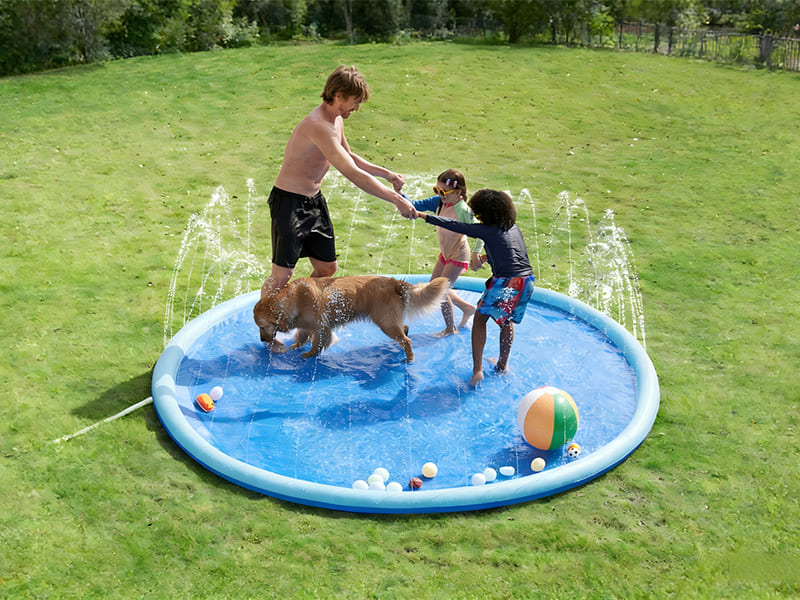
A splash pad can look perfect in a product photo and still disappoint in real life if the size is wrong. That is the problem many families run into. A pad that looks big online may feel cramped once two or three kids start running, turning, and chasing the water spray. A pad that looks extra large may seem exciting at first, but it can take up too much yard space, create weaker spray at low water pressure, and cost more than the family actually needs. Size is not a small detail in this category. It shapes how the product feels, how long children stay engaged, how safely they move, and whether parents feel the purchase was worth it.
The right splash pad size depends on three things: how many children will use it, how much clear ground space is available, and what kind of play experience the family wants. Smaller splash pads work well for toddlers or one child. Mid-size splash pads are usually the best fit for most homes because they balance play room, spray coverage, and yard use. Larger splash pads make more sense for bigger families, party use, or retail products designed for group play.
Think about a summer afternoon in a backyard. One child may be happy splashing in a smaller circle. Three children will not. The same product can feel delightful in one setting and frustrating in another. That is why splash pad diameter matters more than many people expect, and once you understand size properly, choosing becomes much easier.
What Is Splash Pad Size?
Splash pad size usually refers to the diameter of the water play surface, measured from one edge of the circular pad to the opposite edge when the product is fully laid flat on the ground. Because most splash pads are designed in a circular shape, the diameter becomes the easiest way for parents and retailers to compare different products.
If you are still comparing general splash pad designs, materials, or buyer options before choosing a diameter, you can also read our Splash Pad Manufacturer Guide for a broader overview of splash pad products.
However, splash pad size is more than just a number printed on the box. The diameter directly affects several practical aspects of real use: how many children can play comfortably, how evenly the water sprays across the pad, how much backyard space is required, and how easy the product is to store and maintain.
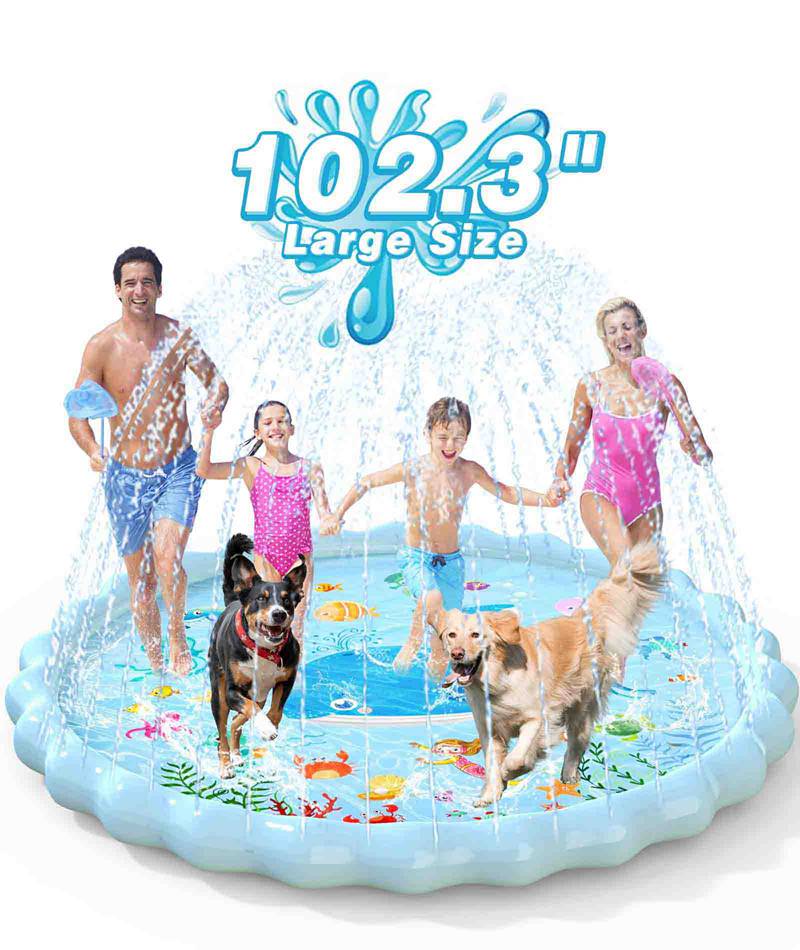
In the consumer market, splash pad diameters commonly range from 100 cm to 250 cm (39–98 inches). These sizes are designed to serve different situations. Smaller pads usually target toddlers or single-child households. Mid-size pads are typically chosen by families with two children. Larger pads are often designed for group play, backyard parties, or daycare use.
Understanding splash pad size correctly helps families avoid one of the most common buying mistakes: choosing a splash pad that looks large enough online but feels too small once children begin running through the water.
The video below shows how a splash pad sprays water during outdoor play. You can see the water pattern and how children enjoy running and playing on the splash mat.
What Does Splash Pad Size Mean?
Splash pad size refers to the full width of the play area, not just the inner section where water collects. The measurement includes the outer sprinkler ring where the water holes are located.
When water flows through the hose connector, it travels around the outer ring and sprays upward or inward through evenly spaced holes. Because of this design, the diameter determines both the play space and the spray coverage zone.
A small increase in diameter can produce a noticeable difference in play area. For example, a splash pad that increases from 150 cm to 200 cm in diameter adds more than 75% additional play surface. This means children can run more freely and avoid bumping into each other.
The following table shows how splash pad diameter changes the total play area.
| Splash Pad Diameter | Diameter (cm) | Play Area | Practical Use |
|---|---|---|---|
| 39 in | 100 cm | 0.79 m² | toddler play |
| 47 in | 120 cm | 1.13 m² | single child |
| 59 in | 150 cm | 1.77 m² | small family |
| 67 in | 170 cm | 2.27 m² | two children |
| 71 in | 180 cm | 2.54 m² | family size |
| 79 in | 200 cm | 3.14 m² | active play |
| 91 in | 230 cm | 4.15 m² | group play |
Because children rarely stay in one spot, extra space often makes the difference between a comfortable play session and a crowded one.
Many readers prefer a printable reference when comparing splash pad sizes. We created a detailed Splash Pad Size Guide PDF that summarizes all the key charts and practical selection tips in one place.
Download the Splash Pad Size Guide PDF

What Splash Pad Size Is a Splash Pool?
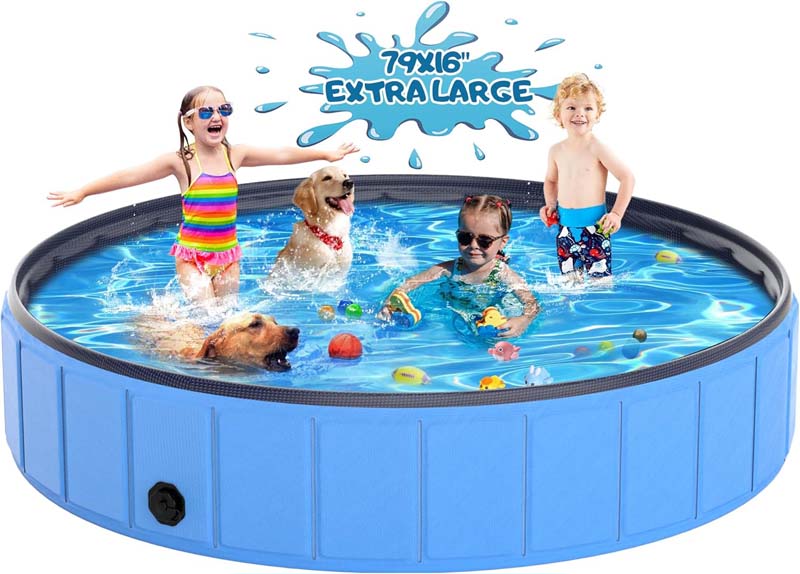
Parents sometimes confuse splash pads with small inflatable pools because both products are used in the backyard to help children cool off during warm weather. The two products can look similar at first glance, but they behave differently.
A splash pool holds water and creates a shallow basin where children sit or soak. A splash pad sprays water upward through small holes around the outer ring, creating a moving play environment where children run through the spray.
Because children move more actively on a splash pad, the same diameter can feel smaller compared to a pool of the same width. For example, a 150 cm inflatable pool may comfortably hold two children who are sitting, but a 150 cm splash pad may feel crowded once those same children begin running around the spray ring.
The comparison below illustrates the difference.
| Product Type | Water Behavior | Typical Activity |
|---|---|---|
| Splash pad | spraying water streams | running and jumping |
| Splash pool | shallow standing water | sitting and splashing |
This difference explains why many families prefer splash pads for active play. The flowing water keeps children moving and prevents the water from becoming stagnant.
Why Does Splash Pad Size Matter?
Splash pad size affects several practical aspects of everyday use.
First, it determines how many children can play comfortably. A small splash pad may be perfect for a toddler but quickly becomes crowded when siblings join the activity. When children begin running through the spray, they need open space to move safely.
Second, size influences the spray pattern. Larger splash pads allow manufacturers to distribute more water holes along the outer ring. This creates a more balanced spray effect and prevents all the water streams from meeting in the center too quickly.
Third, splash pad size affects backyard placement. A splash pad should not be installed tightly against walls, fences, or garden furniture. Children frequently step off the pad while playing, so extra ground space around the pad improves safety.
The following table shows a practical space planning guide.
| Splash Pad Diameter | Recommended Yard Space |
|---|---|
| 120 cm | about 2.4 m play area |
| 150 cm | about 2.7 m play area |
| 170 cm | about 3.0 m play area |
| 200 cm | about 3.4 m play area |
| 230 cm | about 3.8 m play area |
This additional clearance allows children to move naturally without constantly stepping onto surrounding obstacles.
Are Larger Splash Pad Sizes Better?
Larger splash pads provide more running space, but they are not automatically the best option for every household.
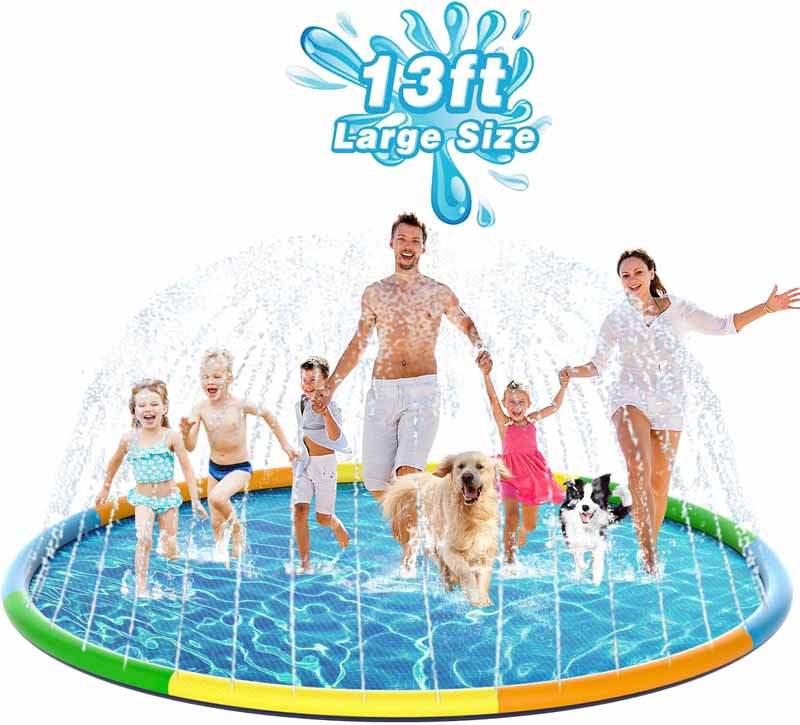
Large splash pads work well when several children play together or when families frequently host backyard gatherings. The extra diameter allows kids to move around freely and creates a more exciting visual effect as water sprays across a wider area.
However, larger splash pads also require more open ground and slightly stronger water flow to maintain consistent spray coverage.
For many households, splash pads in the 170–180 cm range offer the most balanced experience. They provide enough room for multiple children while still fitting comfortably in most backyard spaces.
When choosing splash pad size, the goal is not simply to buy the largest option. The better approach is to match the splash pad diameter with the available yard space and the number of children who will use it regularly.

What Splash Pad Sizes Exist?
Splash pads sold for home use are generally produced in several diameter ranges rather than one universal size. These ranges help families choose a product that fits their yard, their children’s age, and how actively the splash pad will be used. While designs and graphics vary widely between brands, most splash pads on the market fall into three main size groups: small, medium, and large.
Across major online retail platforms and backyard toy catalogs, splash pad diameters typically range from 100 cm to about 250 cm (39–98 inches). Products smaller than 100 cm are usually considered toddler water toys rather than splash pads, while products larger than 250 cm are often designed for group environments such as daycare centers or summer camps.
Understanding the differences between these size groups helps families choose a splash pad that feels comfortable in real use rather than just appealing in product photos.
| Splash Pad Category | Diameter Range | Play Area | Typical Use |
|---|---|---|---|
| Small | 100–130 cm (39–51 in) | 0.8–1.3 m² | toddlers or single child |
| Medium | 150–180 cm (59–71 in) | 1.7–2.5 m² | family backyard use |
| Large | 200–250 cm (79–98 in) | 3.1–4.9 m² | multiple children or parties |
Each category creates a different play experience because the diameter changes both the amount of movement space and the spray distribution.
What Is a Small Splash Pad Size?
Small splash pads usually measure 100–130 cm (39–51 inches) in diameter. These products are most often purchased for toddlers or for homes with limited outdoor space.
At this size, the splash pad creates a compact water play area where children remain close to the center while interacting with the spray streams. Because the outer ring is shorter, the water jets are usually spaced closer together, producing a concentrated spray pattern that younger children often enjoy.
Small splash pads also have practical advantages for parents. They are easier to set up, require less yard space, and use slightly less water during operation. After playtime, they can be rinsed, dried, and folded more quickly than larger pads.
However, the main limitation appears when more than one child begins to play. Once two children start running through the spray streams, the available space shrinks quickly. This is why small splash pads are often chosen for younger children or short play sessions, rather than long group activities.
Typical situations where small splash pads work well include:
- toddlers playing under supervision
- single-child households
- small patios or compact lawns
- travel or temporary backyard setups
What Is a Medium Splash Pad Size?
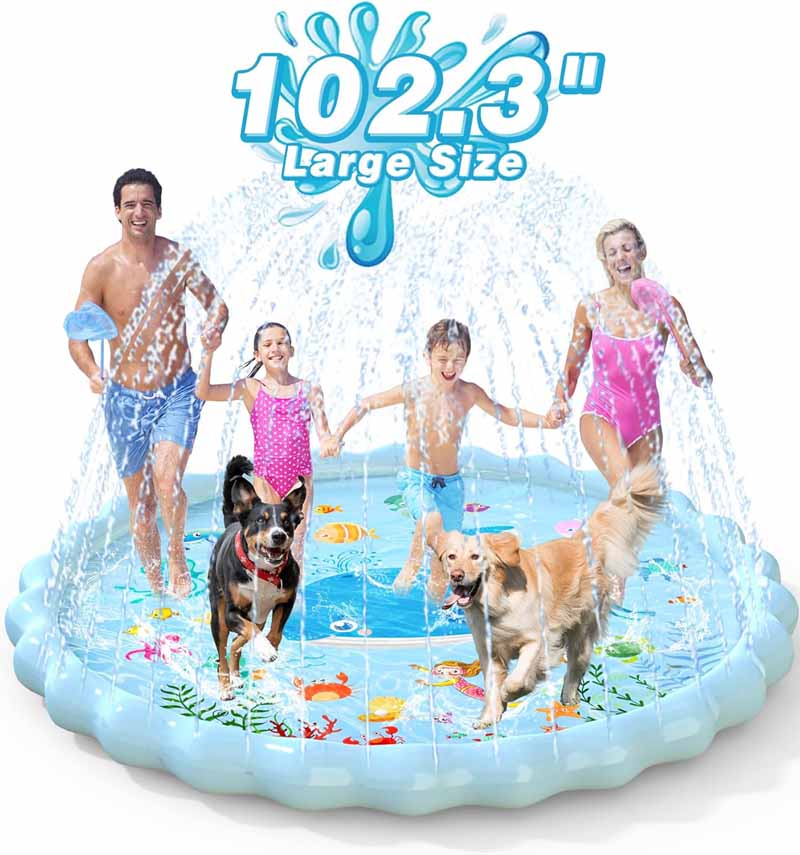
Medium splash pads are generally between 150 and 180 cm (59–71 inches) in diameter. This range is the most common size group for family use because it balances play space, water coverage, and backyard compatibility.
When the diameter increases into this range, the splash pad begins to feel noticeably more open. Children can move around the center of the pad without immediately stepping into the spray ring. The additional circumference also allows manufacturers to place more sprinkler holes around the edge, creating a wider curtain of water.
This size range is popular because it accommodates typical family play patterns. Two or three children can run across the pad, circle around the spray ring, and still have room to move freely.
Medium splash pads also work well for many suburban yards. They provide enough activity space to feel exciting without dominating the entire lawn.
The following table shows common medium splash pad sizes and their typical uses.
| Splash Pad Diameter | Play Area | Typical Number of Children |
|---|---|---|
| 150 cm (59 in) | 1.77 m² | 1–2 kids |
| 170 cm (67 in) | 2.27 m² | 2 kids |
| 180 cm (71 in) | 2.54 m² | 2–3 kids |
Because of this balance between size and usability, splash pads around 170–180 cm are frequently chosen by families looking for a product that will remain useful for several years as children grow.
What Is a Large Splash Pad Size?
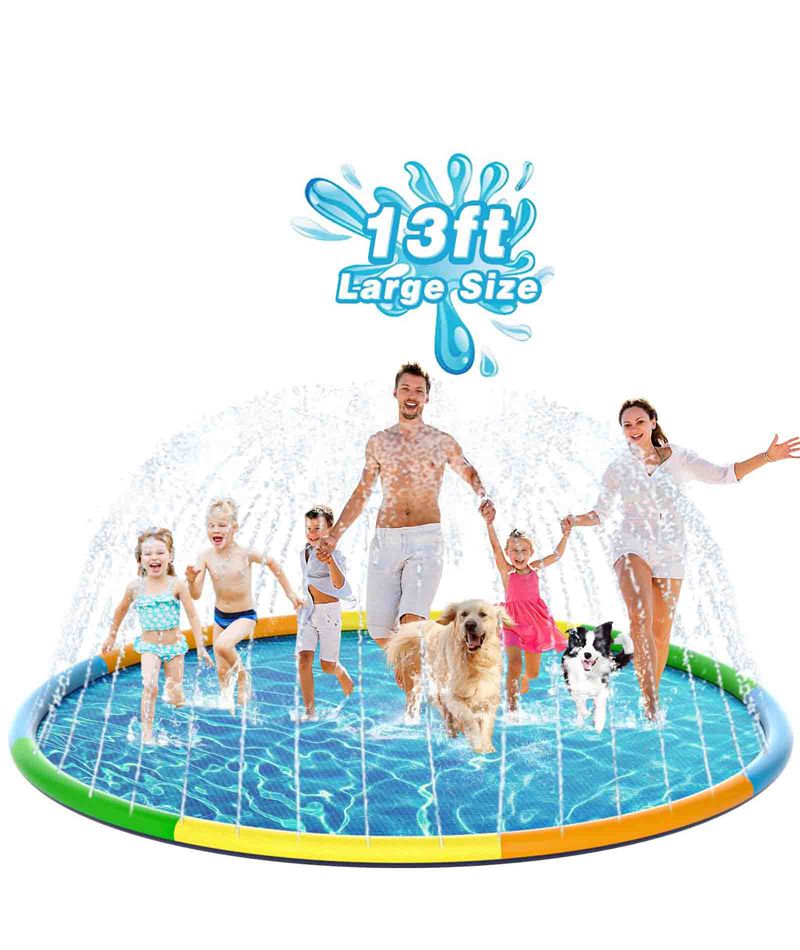
Large splash pads usually start at 200 cm (79 inches) and can extend to 250 cm (98 inches) or more in diameter. These sizes create a significantly larger play area, allowing several children to move around without crowding.
The increased diameter also spreads the spray streams farther apart, forming a wide water ring around the edge. Children often run through the spray streams repeatedly, creating a more energetic play style than smaller splash pads.
Large splash pads are often selected for situations such as:
- families with three or more children
- backyard parties or gatherings
- playdates where multiple children visit
- daycare centers or summer camps
Because of the wider spray ring, manufacturers must ensure that water flows evenly through all the sprinkler holes. Thicker PVC materials and reinforced hose connectors are often used to maintain consistent water pressure across the entire pad.
The difference in usable play space becomes clear when comparing larger diameters.
| Splash Pad Diameter | Play Area | Suitable Use |
|---|---|---|
| 200 cm (79 in) | 3.14 m² | active family play |
| 230 cm (91 in) | 4.15 m² | 3–5 children |
| 250 cm (98 in) | 4.91 m² | group activities |
Although large splash pads provide more room for movement, they also require more backyard space and slightly stronger water flow to maintain a lively spray effect.
What Splash Pad Size Is Most Popular?
Among the many sizes available, splash pads around 170–180 cm (67–71 inches) consistently remain the most widely chosen. This range offers a practical balance between play area and backyard compatibility.
Several factors explain why this size range appears so frequently in family purchases. First, it fits comfortably in many residential lawns while still leaving space around the pad for children to move safely. Second, the diameter allows two or three children to play without constant collisions.
Another reason is spray performance. At around 170–180 cm, manufacturers can distribute sprinkler holes evenly around the ring, producing a lively water pattern without requiring unusually strong water pressure.
In real backyard use, this size range often delivers the most balanced experience. It is large enough to feel exciting for children yet still manageable for parents when it comes to setup, storage, and yard placement.
| Diameter Range | Why Families Choose It |
|---|---|
| 150 cm | compact and affordable |
| 170 cm | balanced size for two children |
| 180 cm | comfortable family play |
| 200 cm+ | better for group use |
For many households, choosing a splash pad in the 170–180 cm range provides the best combination of play space, spray coverage, and everyday practicality.

Which Splash Pad Size Is Best?
The best splash pad size depends on how the product will actually be used. Families often focus on colorful graphics or price when choosing a splash pad, but the diameter of the pad has a much greater effect on daily use. A splash pad that is too small may feel crowded after only a few minutes of play, while one that is too large may take up unnecessary yard space or require stronger water pressure to perform well.
For most households, splash pads in the 170–180 cm (67–71 inch) range provide the most balanced experience. This size allows two or three children to move freely while still fitting comfortably in many backyard spaces. However, the ideal size still varies depending on the age of the children, the number of kids playing at once, and how active the play style is.
Understanding how different sizes perform in real situations helps families select a splash pad that stays enjoyable throughout the summer rather than becoming something that is used only a few times.
What Splash Pad Size Fits Toddlers?
Toddlers interact with splash pads very differently from older children. Instead of running quickly through the spray streams, toddlers tend to sit, step slowly, or explore the water with their hands and feet. Because of this, they do not require as much open play space as older kids.
For children aged 1–3 years, splash pads between 100 and 130 cm (39–51 inches) often work well. At this size, the spray ring is close enough for toddlers to easily reach the water streams, and parents can supervise the child without the child moving too far away.
Smaller splash pads also have practical benefits for parents. They are easier to set up, require less ground space, and can be cleaned and stored more quickly. Many families place these splash pads on patios, small lawns, or even large balconies.
However, toddlers grow quickly. Parents who expect the splash pad to be used for more than one summer sometimes choose a slightly larger size, such as 150 cm, to extend the product’s usefulness as the child becomes more active.
| Child Age | Recommended Diameter | Reason |
|---|---|---|
| 1–2 years | 100–120 cm | compact play area |
| 2–3 years | 120–130 cm | easy reach for spray streams |
| 3–4 years | 130–150 cm | more room for movement |
Choosing a size slightly larger than the immediate need can help ensure that the splash pad remains enjoyable as the child grows.
What Splash Pad Size Fits Families?
Families with more than one child typically benefit from a medium-size splash pad. When two or three children are playing together, the amount of open space becomes much more important.
Splash pads between 170 and 180 cm (67–71 inches) are often considered the most practical family size. They provide enough space for children to run across the center area while others play along the outer spray ring.
In this diameter range, the sprinkler holes can also be distributed more evenly around the edge. This creates a wider water curtain and prevents all the streams from concentrating in one small area.
Families often prefer this size because it fits most residential yards without taking up too much lawn space.
| Splash Pad Diameter | Play Area | Typical Family Use |
|---|---|---|
| 150 cm | 1.77 m² | 1–2 children |
| 170 cm | 2.27 m² | 2 children |
| 180 cm | 2.54 m² | 2–3 children |
Because of this balance between play space and practicality, splash pads around 170–180 cm are among the most commonly purchased sizes for backyard use.
How Many Kids Fit Each Splash Pad Size?
Another helpful way to determine the right splash pad size is to consider how many children will use it at the same time. While children can share a smaller pad temporarily, comfort decreases when the available space becomes too limited.
As children run through the water streams, they need space to change direction and avoid bumping into each other. When the diameter is too small, the center area fills quickly and the play experience becomes less enjoyable.
The following table shows how splash pad diameter usually relates to the number of children playing at once.
| Splash Pad Diameter | Comfortable Number of Children | Play Style |
|---|---|---|
| 100–120 cm | 1 toddler | gentle splashing |
| 130–150 cm | 1–2 kids | light movement |
| 170–180 cm | 2–3 kids | active play |
| 200–230 cm | 3–5 kids | energetic running |
| 250 cm+ | 5+ kids | group play |
These numbers are general guidelines. Younger children require less movement space, while older kids often run faster and need a larger area to play safely.
For families with multiple children or frequent playdates, choosing a splash pad slightly larger than the minimum recommended size often leads to a better long-term experience.
Are Large Splash Pad Sizes Safe?
Large splash pads can actually improve safety in some situations because they provide more open space for children to move around. When kids have enough room to run and change direction, they are less likely to collide with each other.
However, larger splash pads also require attention to a few additional details. The ground surface should be relatively flat and free of sharp objects such as stones or tree roots. A level surface helps the splash pad remain stable and prevents children from tripping while running across the wet surface.
Water pressure is another factor. Larger splash pads have longer spray rings, which means the water must travel farther before reaching each sprinkler hole. When water pressure is very low, the spray pattern may appear uneven.
Most residential outdoor faucets provide 40–60 PSI of water pressure, which is sufficient for most splash pads. Larger pads generally perform best when connected directly to the main outdoor faucet rather than through long hoses or splitters.
For many households, splash pads around 170–200 cm offer a good balance between safety, play space, and water spray performance.

How Do You Choose Splash Pad Size?
Choosing the right splash pad size becomes much easier when parents look at three practical factors: available yard space, number of children using the splash pad, and household water pressure. These three elements determine whether the splash pad will feel comfortable during everyday use.
Many families make the mistake of choosing a splash pad only by looking at the product photo or price. However, the real experience depends on how the splash pad fits into the environment where it will be used. A splash pad that is slightly larger than necessary may take up too much yard space, while one that is too small may feel crowded as children grow.
A good starting point is to estimate how many children will play on the splash pad regularly and how actively they will move. Younger toddlers often stay close to the center, while older children tend to run around the spray ring. Planning for this movement helps families choose a splash pad that stays enjoyable throughout multiple summers.
How Big Should Splash Pad Size Be?
A practical approach is to match splash pad size with both the child’s age and the expected number of users. While a small splash pad may work for a toddler today, children quickly become more active as they grow.
Parents who plan ahead often select a size that allows for future use rather than choosing the smallest option available. This helps ensure the splash pad remains enjoyable for several years instead of being replaced after one season.
The following guide provides a useful starting point.
| Splash Pad Diameter | Recommended For | Reason |
|---|---|---|
| 100–120 cm | toddlers | simple splash play |
| 130–150 cm | one child | moderate movement space |
| 170–180 cm | 2–3 children | balanced family size |
| 200–230 cm | 3–5 children | active group play |
| 250 cm+ | large gatherings | wide open play area |
Many households eventually discover that 170–180 cm splash pads offer the most flexibility. They provide enough space for multiple children without overwhelming the backyard.
How Much Space for Splash Pad Size?
Backyard space should always be considered before choosing a splash pad size. The pad itself only represents the central play area. Children often run slightly outside the spray ring while playing, so extra open space around the splash pad improves comfort and safety.
A common recommendation is to allow 60–90 cm (2–3 feet) of clear ground around the splash pad. This area acts as a buffer zone where children can step on and off the pad without slipping or colliding with nearby objects.
Here is a simple yard planning reference.
| Splash Pad Diameter | Suggested Total Play Space |
|---|---|
| 120 cm | about 2.4 m area |
| 150 cm | about 2.7 m area |
| 170 cm | about 3.0 m area |
| 200 cm | about 3.4 m area |
| 230 cm | about 3.8 m area |
This additional space allows children to move naturally while preventing muddy areas from forming around the pad.
Another important detail is ground surface. Splash pads perform best on flat grass, rubber play mats, or smooth outdoor flooring. Uneven surfaces may affect how evenly the water spreads across the pad.
Does Splash Pad Size Affect Water Spray?
Splash pad diameter directly influences how the water spray behaves. Water travels through the outer ring and exits through small sprinkler holes around the edge. The distance between these holes and the center determines how the spray streams interact.
On smaller splash pads, water jets reach the center quickly. This creates a concentrated spray pattern that younger children often enjoy because they can stand close to the middle and experience multiple streams at once.
Larger splash pads distribute the spray streams over a wider area. Instead of converging immediately, the streams form a circular curtain of water around the edge. Children often run through this ring repeatedly, which creates a more active play style.
Manufacturers usually adjust the number of spray holes depending on the splash pad diameter. Larger pads may include 30–50 evenly spaced holes to maintain consistent coverage.
The design of the spray ring is important because uneven spacing can cause water to spray strongly in one area while remaining weak in another.
Does Splash Pad Size Need More Pressure?
Water pressure is another factor that influences splash pad performance. Splash pads rely entirely on the water flow from a garden hose, so the strength of the household water supply affects how high and evenly the spray streams rise.
Most homes provide outdoor water pressure between 40 and 60 PSI, which is sufficient for the majority of splash pads.
Smaller splash pads usually perform well even with moderate water pressure because the spray ring is shorter and water travels a shorter distance around the pad.
Larger splash pads sometimes require slightly stronger flow to maintain even spray around the entire ring. When pressure is too low, water streams may appear weaker at certain points along the edge.
Families can often improve spray performance by:
- connecting the splash pad directly to the outdoor faucet
- using a shorter hose
- avoiding hose splitters that reduce pressure
Well-designed splash pads distribute water efficiently across the entire ring, allowing children to enjoy consistent spray patterns without requiring unusually high water pressure.

Are Custom Splash Pad Sizes Available?
Yes. Splash pad sizes can be customized, and many brands choose this option when they want a product that fits a specific market, customer group, or retail strategy. While standard splash pad diameters such as 150 cm, 170 cm, 180 cm, and 200 cm dominate the consumer market, manufacturers often produce custom sizes for retailers, brand owners, and commercial buyers.
Customization usually happens for three practical reasons. First, a brand may want a splash pad that is slightly larger or smaller than common retail sizes so the product looks different in online listings. Second, the splash pad may need to fit a particular environment, such as a daycare playground, school activity area, or backyard with limited space. Third, a company may want to optimize packaging and shipping dimensions so the product fits more efficiently into cartons or warehouse storage.
From a production standpoint, adjusting splash pad diameter is technically feasible because splash pads are made from flat PVC sheets with a circular spray ring structure. The diameter, spray hole spacing, and outer ring height can all be modified during the design stage. However, increasing or decreasing splash pad size requires careful planning so the water spray remains balanced and the structure stays durable during repeated use.
The table below shows how custom splash pad sizes are often positioned in the market.
| Splash Pad Diameter | Typical Purpose | Example Scenario |
|---|---|---|
| 120–130 cm | compact splash pad | toddlers or small patios |
| 150–160 cm | entry family size | single child households |
| 170–180 cm | core family size | most residential backyards |
| 200–220 cm | large play size | multiple children playing |
| 230–250 cm | extra large splash pad | parties, daycare, camps |
When splash pads exceed 230 cm, manufacturers must pay closer attention to water distribution and structural reinforcement to maintain stable performance.
What Splash Pad Sizes Do Manufacturers Offer?
Most splash pad manufacturers produce a series of standard sizes because these dimensions are already familiar to retailers and consumers. Using standard diameters also simplifies packaging and shipping logistics.
Common splash pad diameters available in the market include:
| Diameter | Diameter (cm) | Market Role |
|---|---|---|
| 39 in | 100 cm | toddler splash toy |
| 47 in | 120 cm | compact backyard splash pad |
| 59 in | 150 cm | entry family product |
| 67 in | 170 cm | widely used family size |
| 71 in | 180 cm | expanded play space |
| 79 in | 200 cm | larger backyard play |
| 91 in | 230 cm | group play splash pad |
| 98 in | 250 cm | extra large splash pad |
Retail brands often focus on the 150–180 cm range because it fits the largest number of households. These sizes provide enough space for two or three children while still fitting comfortably in typical suburban yards.
However, brands that want stronger visual impact in online listings sometimes introduce slightly different diameters such as 165 cm or 185 cm. Even small size differences can make a product appear unique compared with similar splash pads sold by competitors.
How Big Is the EPN Splash Pad?
EPN splash pads are produced in several sizes designed to match common family play scenarios. Many of the most popular products fall within the 150–180 cm diameter range, which offers enough play space for multiple children while remaining manageable for backyard placement.
For families with more active play patterns or frequent gatherings, EPN also develops larger splash pads around 200–230 cm. These products create significantly more running space and allow several children to play at the same time without crowding the center area.
Below is a simple comparison of how different EPN splash pad sizes are typically used.
| EPN Splash Pad Size | Typical Use |
|---|---|
| 150 cm | single child backyard play |
| 170 cm | two children playing |
| 180 cm | small family activity |
| 200 cm | active multi-child play |
| 230 cm | group play or backyard parties |
These size options allow families to choose a splash pad that fits both their available yard space and their children’s activity level.
Can Splash Pad Size Be Customized?
Yes. Splash pad size customization is common in private label production. Retailers and brand owners often request custom diameters to make their products stand out or to fit a specific customer segment.
Customization can involve several design adjustments, including:
- changing the overall splash pad diameter
- modifying spray hole spacing
- adjusting the height of the outer spray ring
- adding additional reinforcement layers
- modifying hose connectors or valves
A small change in diameter can noticeably change the play experience. For example, increasing a splash pad from 170 cm to 190 cm expands the play area by more than 25 percent, giving children more room to move.
Brands sometimes combine custom sizes with unique printed graphics or themed designs. This approach allows retailers to create products that look different from other splash pads available on the market.
How Does Epsilon Design Splash Pad Size?
When Epsilon develops splash pads, the design process focuses on balancing three factors: play comfort, structural durability, and manufacturing efficiency.
The engineering team evaluates how the splash pad diameter affects spray coverage and child movement. If the pad becomes larger, the spacing between spray holes must be adjusted to maintain even water distribution around the ring.
Material thickness is another important consideration. Larger splash pads require stronger PVC layers and reinforced welding along the outer ring to maintain durability. Without proper reinforcement, larger diameters could lead to uneven pressure along the spray ring.
Epsilon uses high-frequency welding machines and automated cutting equipment to produce splash pads with precise dimensions and strong seams. Each design is tested to ensure the spray pattern remains balanced and the structure can handle repeated use during outdoor play.
This development process allows Epsilon to support both standard splash pad products and customized splash pad sizes for retailers, distributors, and brands that want to develop unique backyard water toys.
Work With Epsilon for Splash Pads
If you are planning to launch splash pads for your brand, retail store, or e-commerce business, working with an experienced manufacturer can make the entire process much easier. American Epsilon Inc. focuses on the design and production of PVC and composite inflatable products, including splash pads, inflatable pools, water play toys, and outdoor recreational equipment.
With professional design teams, advanced production equipment, and strict quality control systems, Epsilon supports both ready-to-sell products and customized development projects for global clients.
Epsilon manufacturing capabilities include:
- splash pad size development and structural design
- OEM and private label manufacturing
- custom printed artwork and branding
- packaging design with multi-language labeling
- rapid prototype sampling and scalable production
- compliance with international product safety standards
Whether you are launching a new backyard water toy category, expanding your children’s outdoor play product line, or developing a unique splash pad design for your brand, partnering with a professional manufacturer helps transform product ideas into reliable retail products.
Buy Ready-Stock Splash Pads
If you want to purchase ready-to-ship splash pads, you can explore our current products here:
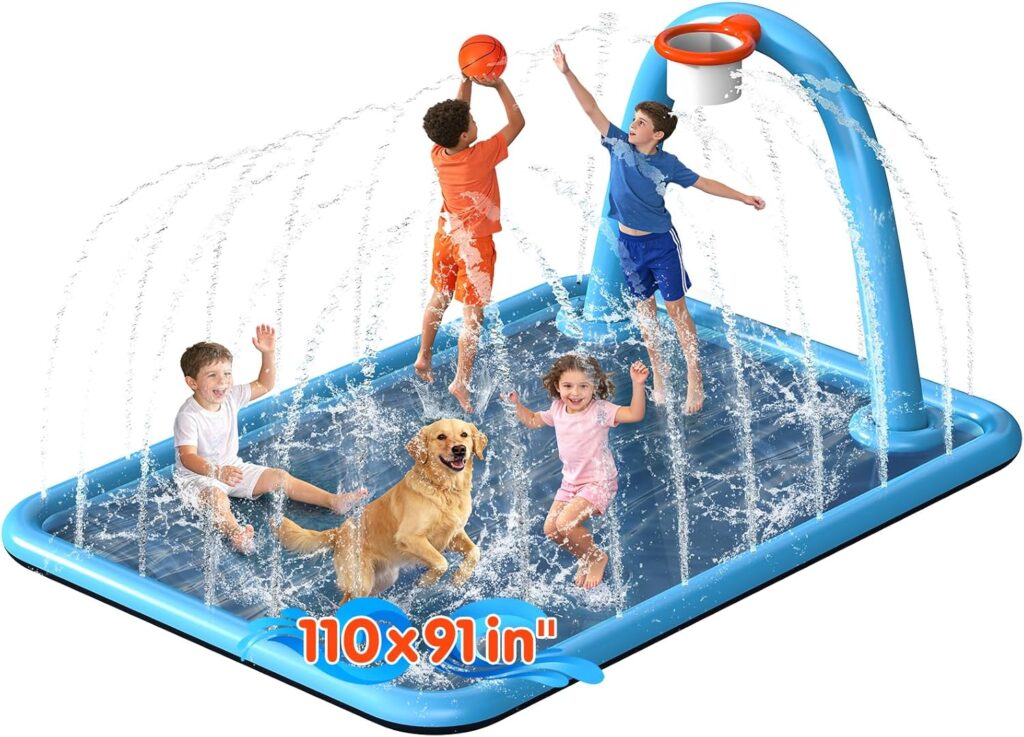
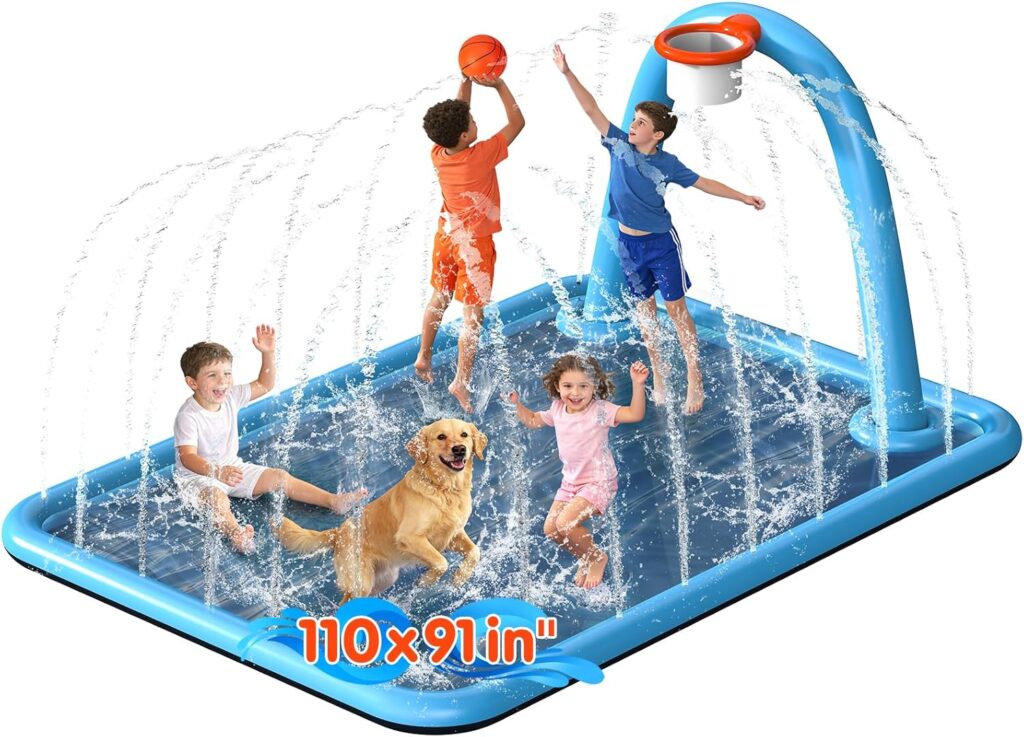
Splash Pad With Basketball Hoop
These splash pads are suitable for backyard play, summer outdoor activities, and children’s water games.
Request Custom Splash Pad Manufacturing
If you want to develop custom splash pads, private label water toys, or unique backyard sprinkler play products, our team can help design and manufacture products tailored to your market.
Contact Us for Custom Splash Pad Production
Request Product Samples
For retailers, distributors, and brand owners who want to evaluate product quality before placing bulk orders, we also provide sample support.
Request Splash Pad Samples
Explore More Inflatable Products by Epsilon
If you are sourcing inflatable outdoor recreation products, you may also be interested in these manufacturing solutions: