Skip to content
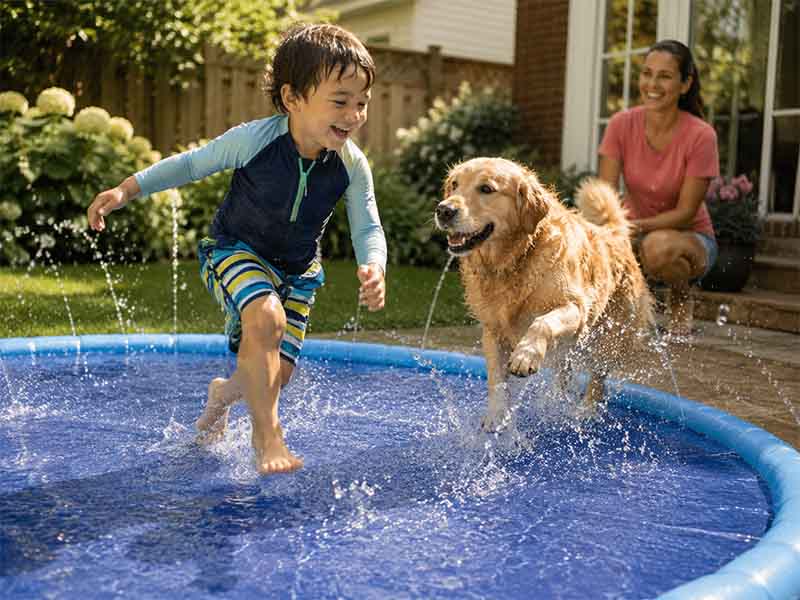
Active dogs can turn a simple backyard pool into a real durability test. A calm small dog may step in, stand still, and cool off for a few minutes. An active Labrador, German Shepherd, Border Collie, Australian Shepherd, Husky, Boxer, or energetic mixed breed often uses the pool very differently. They run toward it, step in hard, turn quickly, paw at the water, shake off, climb out, and repeat the same movement several times in one play session. That is why the best dog pools for active breeds need more than a cute design or a large product photo. They need the right size, stable side walls, a textured bottom, reliable drainage, and material that can handle repeated paw pressure.
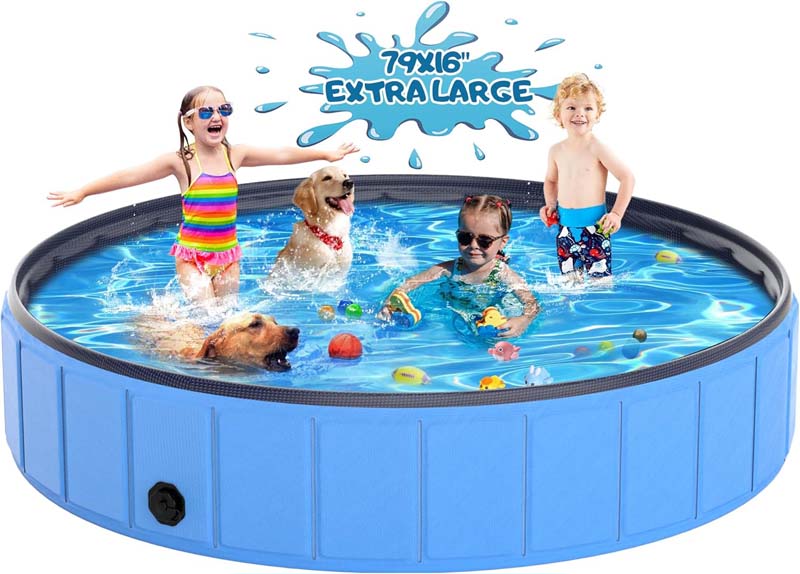
The best dog pools for active breeds are wide, shallow, non-slip, easy to drain, and made from reinforced PVC or strong composite structures. For many medium and large active dogs, a pool between 48 and 79 inches wide gives better turning space. A wall height around 8 to 12 inches is usually easier for daily backyard cooling because dogs can step in and out without climbing too hard.
For pet owners, the real question is not only “Can my dog fit inside?” A better question is “Can this pool handle the way my dog actually plays?” A dog that loves water may use the pool every hot afternoon from late spring through summer. If the pool is used 3 to 5 times per week, even small design details begin to matter. A thin floor can wear faster. A smooth bottom can feel slippery. A high wall can make large dogs push down on the rim. A weak drain can make cleaning annoying after only a few uses.
EPN, owned by American Epsilon Inc., develops PVC and composite outdoor products for family, pet, and seasonal use. For dog pools, the focus is practical: stable structure, pet-friendly materials, easy setup, repeat use, foldable storage, and backyard safety. A good dog pool should not feel like a one-week summer item. It should become part of a simple, repeatable cooling routine for active dogs and busy families.
What Are Dog Pools for Active Breeds?
Dog pools for active breeds are backyard water pools made for dogs that move, splash, turn, paw, and step harder than calm indoor pets. These pools are not just small tubs filled with water. They need enough floor space, stronger side support, a non-slip bottom, easy drainage, and pet-friendly material that can handle repeated summer use.
For active breeds, a dog pool should work as a cooling area, a play zone, and a simple backyard care tool. Dogs such as Labrador Retrievers, Golden Retrievers, German Shepherds, Border Collies, Australian Shepherds, Huskies, Boxers, Belgian Malinois, and many energetic mixed breeds often use water with more force. They may run into the pool after fetch, paw at the water, turn in tight circles, lean against the side wall, or step in and out several times during one play session.
A regular kiddie pool may work for occasional use, but it is not always built for this kind of movement. Active dogs create pressure in small contact points through their paws and nails. A 60 lb dog does not spread weight the same way a child sitting in a pool does. When that dog jumps, pivots, or pushes off the bottom, the material receives sharper stress. That is why dog pools for active breeds should be judged by real-use strength, not only by size or color.
| Feature | Why Active Breeds Need It | What Customers Should Check |
|---|---|---|
| Wide floor space | Gives dogs room to turn and stand | 48–79 inches for many medium and large dogs |
| Low side walls | Helps dogs step in and out safely | Around 8–12 inches for daily backyard cooling |
| Reinforced PVC | Handles paw pressure and outdoor use | Firm material that does not feel paper-thin |
| Non-slip bottom | Reduces sliding on wet surfaces | Textured floor instead of smooth glossy plastic |
| Easy drain valve | Makes water changes faster | Low-position drain that empties most water |
| Foldable structure | Saves storage space | Strong panels that fold without cracking easily |
The best dog pools for active breeds are usually wide rather than deep. Most dogs do not need deep water to cool down. Water around the paws, lower legs, and belly can already help them feel more comfortable on hot days. A shallow pool also makes it easier for owners to supervise play and clean the pool after use.
| Dog Type | Suggested Pool Width | Suggested Water Depth | Best Use |
|---|---|---|---|
| Small active dogs | 32–40 inches | 2–4 inches | Paw cooling and short play |
| Medium active dogs | 48–55 inches | 3–5 inches | Standing, splashing, turning |
| Large active dogs | 63–71 inches | 4–6 inches | Cooling after walks or fetch |
| Extra-large dogs | 71–79 inches or larger | 4–6 inches | More turning space |
| Two-dog homes | 71–79 inches or larger | 3–6 inches | Shared supervised cooling |
EPN dog pools are developed around this kind of real backyard use. As part of American Epsilon Inc., EPN works with PVC and composite materials for pet water products, children’s water toys, and outdoor leisure products. For pet pools, the focus is on wear resistance, side-wall support, foldable storage, and stable performance during repeated stepping and draining.
For active breeds, the pool should not feel like a fragile summer toy. It should feel like a simple cooling station that can be used after walks, training, fetch, or weekend backyard play. When the pool is wide enough, stable enough, and easy enough to clean, owners are more likely to use it regularly instead of storing it away after a few messy sessions.
Active Breeds
Active breeds need dog pools because they often build heat faster during outdoor play. A dog that keeps running after a ball, herds children around the yard, or plays with another dog may not stop on its own when the weather gets hot. A dog pool gives the owner a clear place to guide the dog for cooling breaks.
These dogs often have strong exercise drive, fast turning movement, higher paw pressure, dense coats, or a habit of staying active even when the weather is warm. A Labrador may use the pool after fetch. A Border Collie may step in and out quickly between running games. A Husky may prefer standing in shallow water to cool the paws and belly. A German Shepherd may need a wider pool because of body length and stronger movement.
This is why owners should think about behavior before breed size alone. A calm 75 lb senior dog may be easier on a pool than a 45 lb young Australian Shepherd that sprints, pivots, and scratches at water. The best choice depends on how the dog moves, not only how much the dog weighs.
Dog Pools
Dog pools are built for pet behavior, which makes them different from many basic plastic tubs or children’s splash pools. Dogs do not only sit in water. They enter with their nails, shift weight across four paws, push against the floor, lean on the walls, and often step out from the same side repeatedly.
For active breeds, the most important areas are the bottom, wall, drain, surface texture, and fold structure. The bottom must handle paw friction. The walls should stay upright when pushed. The drain should make cleaning easy. The surface should not become slick when wet. The size should allow natural turning rather than tight twisting.
A foldable PVC dog pool is often more practical than an inflatable pool for active dogs because it does not rely on air-filled rings. Inflatable walls can be comfortable for calm use, but nails and repeated climbing may create puncture risk. A foldable pool with supported side panels can offer better daily convenience because it sets up quickly, drains easily, and stores flat after drying.
Customers should also avoid judging dog pools by photo size alone. A large-looking pool with thin material may not perform well under repeated dog use. A better dog pool should feel stable when filled, firm under paw pressure, and easy to clean after dirty backyard play.
Energy Use
Active breeds put more stress on a dog pool because their movement creates repeated pressure in the same areas. When a dog steps into water, turns, and pushes off the bottom, the floor takes both weight and friction. When the dog climbs out, the wall and rim take side pressure. When the dog paws at the water, the surface takes scratch contact.
| Dog Action | Stress on Pool | Better Pool Design |
|---|---|---|
| Running into the pool | Sudden paw impact | Thicker bottom and flat setup |
| Turning in water | Surface friction | Textured non-slip floor |
| Pawing at water | Nail contact | Reinforced PVC surface |
| Leaning on side wall | Wall pressure | Firm foldable panels |
| Climbing out often | Rim stress | Low side walls |
| Daily draining | Valve use | Durable low drain valve |
| Folding after use | Crease stress | Flexible PVC and proper storage |
If a pool is used 3 to 5 times per week in summer, these movements repeat many times. That is why material, structure, and care habits all matter. A strong pool placed on gravel can still wear quickly. A good pool folded while wet can develop odor. A stable pool with untrimmed dog nails may still show faster surface wear.
For better results, owners should set up the pool on clean grass, start with shallow water, keep nails trimmed, watch for rough digging, drain after use, and let the pool dry before storage. These habits do not take much time, but they help active dogs enjoy the pool while reducing unnecessary damage.
A dog pool for active breeds should make summer care easier, not harder. When the pool fits the dog’s movement, owners get a safer cooling area, dogs get more comfortable outdoor play, and the backyard stays easier to manage.
Which Dog Pools Fit Active Breeds?
Dog pools that fit active breeds should give dogs enough room to step in, turn around, splash, and exit without pushing too hard against the side walls. For many active medium and large dogs, a pool between 48 and 79 inches wide works better than a small tub. The best fit depends on dog weight, body length, movement style, yard space, and how often the pool will be used.
For active breeds, pool size should not be chosen only by the dog’s weight. A 45 lb Border Collie that runs, pivots, and jumps may need more open floor space than a calm 70 lb senior dog. A 60 lb Labrador that loves water may need a wider pool than a 60 lb dog that only steps in to cool its paws. The right dog pool should match how the dog behaves in water, not just how large the dog looks.
A common mistake is choosing a pool that is deep but narrow. Deep water may look more useful, but most backyard dog pools are used for cooling, splashing, and supervised play rather than swimming. Active breeds usually benefit more from width than depth. A wider pool allows the dog to turn naturally, lower its body, and move without scraping the side wall every few seconds.
For daily backyard cooling, many dogs only need 3 to 6 inches of water. This is enough to wet the paws, lower legs, and belly area, which are key cooling points during hot weather. A shallow water level also makes the pool easier to drain, clean, and supervise.
| Dog Type | Suggested Pool Width | Suggested Water Depth | Best Fit |
|---|---|---|---|
| Small active dogs under 25 lb | 32–40 inches | 2–4 inches | Short cooling breaks and paw play |
| Medium active dogs 25–50 lb | 48–55 inches | 3–5 inches | Standing, splashing, turning |
| Large active dogs 50–80 lb | 63–71 inches | 4–6 inches | Cooling after walks, fetch, and play |
| Extra-large dogs 80 lb+ | 71–79 inches or larger | 4–6 inches | More turning space and better comfort |
| Two-dog homes | 71–79 inches or larger | 3–6 inches | Shared supervised cooling |
A practical dog pool should also fit the yard. The pool needs open space around it so the dog can enter and exit without running into furniture, fences, garden tools, or steps. For active breeds, leaving at least 2 to 3 feet of clear space around the pool is a smart setup habit. If the dog likes to run before jumping in, even more space may be needed.
EPN dog pools are designed with this kind of backyard use in mind. A larger foldable format gives active dogs more usable space, while the low side wall helps them step in and out more easily. For homes with large dogs, energetic breeds, or more than one pet, this type of structure is usually more practical than a small hard plastic tub or narrow inflatable pool.
Customers comparing dog pools may also find it helpful to read more about dog pool vs kiddie pool differences, especially if they are deciding between a pet-specific pool and a basic children’s tub.
Large Dogs
Large dogs need dog pools with enough width to support natural movement. A large active dog does not simply stand still in water. It may step in, turn, lower its chest, paw at the surface, shake off, and climb out several times. If the pool is too small, the dog has to twist tightly, which increases pressure on the floor and side walls.
For many large breeds, a pool around 63 inches wide is a useful starting point. Dogs with longer bodies or stronger movement may feel better in a 71 to 79-inch pool. This gives them room to turn without constantly pressing against the rim. It also reduces the chance of the dog stepping on the wall while trying to exit.
Large dogs also need a pool that is easy to enter. A wall height around 8 to 12 inches is usually more comfortable for daily backyard use than a tall wall. When the side is too high, dogs may climb instead of step. This puts more force on the rim and may make the dog nervous if it slips.
| Breed Type | Better Pool Choice | Why It Helps |
|---|---|---|
| Labrador Retriever | 63–79 inch wide pool | Space for water play and turning |
| German Shepherd | 63–79 inch wide pool | Supports longer body and strong movement |
| Golden Retriever | 63–71 inch wide pool | Good for cooling and standing play |
| Husky | 63–79 inch wide pool | Useful for cooling dense-coated dogs |
| Boxer | 55–71 inch wide pool | Handles energetic stepping and splashing |
| Large mixed breed | 63–79 inch wide pool | Depends on body length and activity level |
Before buying, owners should picture the dog stepping in, turning around, and leaving the pool. If the dog cannot turn comfortably without pressing on the wall, the pool may feel too small even if the listed size looks acceptable. A wider pool also helps owners use a lower water level more effectively. Instead of filling a narrow pool deeper, they can fill a wide pool shallow, which creates a safer cooling surface and makes draining easier after play.
Fast Movers
Fast-moving dogs need dog pools that feel stable under quick footwork. These dogs may not gently walk into the pool. They may run toward it, step in with speed, pivot inside, paw at the water, and jump out again. This kind of movement makes floor grip, pool shape, and surrounding space especially important.
A fast mover does better with a wide, open pool than a tight pool with high walls. The dog needs room to slow down and turn. If the pool is too small, the dog may hit the opposite wall, slip, or leap out suddenly. That can make the pool feel unsafe, even if the material is strong.
The bottom surface is also important. A smooth glossy floor may become slippery when wet. For active dogs that pivot or push off the floor, a textured non-slip bottom helps them stay balanced. This is especially useful for young dogs, powerful breeds, and dogs that get excited around water.
A safer first setup should feel calm rather than overly stimulating. Shallow water is enough for the first few uses. If the pool has a sprinkler, low spray pressure helps the dog get used to the sound and movement of water. High-energy toys can be added later, after the dog already understands how to step in, stand, turn, and exit without slipping.
| Fast Dog Behavior | Possible Problem | Better Pool Feature |
|---|---|---|
| Running into water | Hard paw impact | Thicker bottom and flat ground |
| Turning quickly | Sliding or wall pressure | Wider pool and non-slip floor |
| Jumping out | Rim stress | Lower side wall |
| Pawing at water | Surface wear | Reinforced PVC |
| Excited splashing | Water spill | Stable side panels |
| Repeated entry | Same-side wear | Stronger wall support |
Fast-moving dogs also need a safer setup area. The pool should not be placed near stairs, hard patio edges, sharp tools, barbecue equipment, garden stakes, or crowded furniture. A dog that exits the pool quickly may need extra landing space. A flat lawn with 2 to 3 feet of clear space around the pool is usually a safer choice.
A good dog pool should help fast dogs slow down safely. It should not encourage uncontrolled jumping or slipping. The best pool is one that gives the dog enough space to enjoy water while keeping the owner in control of the play area.
Multi-Dog Homes
Multi-dog homes need larger dog pools because shared use creates more movement, more dirt, and more side pressure. Two dogs rarely stand still in the same way. One may enter first and stay in the center. Another may step around the edge. One dog may splash while the other tries to drink, turn, or exit. If the pool is too small, crowding can create stress for both dogs and the pool.
For two medium active dogs, a 63-inch pool may work for short cooling breaks, but a 71 to 79-inch pool is usually more comfortable. For two large dogs, 79 inches or larger is a better direction when yard space allows. The goal is not to create deep water. The goal is to provide enough floor area so each dog has room to stand and move.
| Home Type | Recommended Pool Direction | Setup Tip |
|---|---|---|
| Two small active dogs | 48–55 inches | Keep water shallow and supervise |
| Two medium dogs | 63–71 inches | Allow room for turning |
| One large and one small dog | 71–79 inches | Watch for crowding near exit |
| Two large dogs | 79 inches or larger | Use low water depth |
| Dog playdate use | 79 inches or larger | Use only with close supervision |
Multi-dog homes should also use lower water levels. When two dogs play in the same pool, splashing and movement increase. Keeping water around 3 to 6 inches can make the pool easier to manage and reduce spillover. It also makes draining and refilling less difficult.
Owners should pay attention to dog relationships. A dog pool can become crowded if one dog guards the space or blocks the exit. Even friendly dogs can bump into each other when excited. Supervision matters, especially during the first few sessions.
A larger foldable EPN dog pool can be a strong choice for multi-dog families because it gives more space without requiring permanent backyard storage. After use, owners can drain, rinse, dry, fold, and store it until the next hot day.
What Materials Make Dog Pools Strong?
Strong dog pools are usually made with reinforced PVC, stable support panels, wide bonded seams, a textured floor, and a well-protected drain area. For active breeds, material strength should not be judged by product photos alone. A good dog pool needs to handle paw pressure, nail contact, repeated turning, outdoor heat, water weight, folding, draining, and seasonal storage.
Many customers only look at the pool diameter when comparing dog pools. Size matters, but material quality often decides whether the pool feels useful after several weeks of summer play. A large dog pool made with thin material may look impressive online but feel weak when a 60 lb dog steps inside. A smaller pool with thicker PVC, stable walls, and better floor grip may perform better for daily cooling.
Active dogs create more stress than calm pets because their movement is more concentrated. When a dog runs into the pool, its paw pressure lands on small areas. When it turns, the floor receives friction. When it paws at the water, the surface takes nail contact. When it climbs out, the side wall and rim take repeated force. Over one summer, these actions may happen dozens or even hundreds of times.
| Material Part | What It Does | What Customers Should Check |
|---|---|---|
| Reinforced PVC | Handles water, paw pressure, and outdoor use | Firm surface that does not feel thin or papery |
| Support panels | Help side walls stand upright | Walls should not collapse easily when filled |
| Bonded seams | Hold the pool shape and reduce weak points | Wider, even seams around the bottom and walls |
| Textured floor | Helps dogs stand and turn with grip | Matte or patterned surface instead of glossy slick plastic |
| Drain valve area | Controls water release and prevents rough tipping | Low-position drain with a secure cap |
| Fold lines | Allow seasonal storage | Flexible bends without sharp cracking |
For EPN dog pools, material choice is connected to real pet behavior. EPN belongs to American Epsilon Inc., a U.S.-registered company focused on PVC and composite products for pet, family, outdoor, and seasonal use. In pet pools, EPN pays more attention to wear resistance, wall support, foldable structure, and repeat-use stability because active dogs place different stress on the product than children or casual water users.
The strongest dog pool is not always the thickest-looking pool. It is the pool that balances thickness, flexibility, seam quality, floor grip, and wall support. If the material is too thin, it may wear quickly. If it is too stiff, it may fold poorly and develop stress marks. If the walls are soft, the pool may spill water whenever a dog leans on one side. If the floor is smooth, dogs may slip even if the material itself is strong.
For material concerns, the guide on what material is best for a dog splash pad can help customers understand PVC strength, surface grip, and outdoor durability in pet water products.
PVC Dog Pools
PVC dog pools are popular because PVC is waterproof, flexible, foldable, and suitable for backyard water products. For active breeds, PVC quality is especially important because the pool floor takes direct paw contact every time the dog moves. A good PVC dog pool should feel firm under the dog’s feet while still being flexible enough for folding and storage.
The main advantage of PVC is that it can be shaped into foldable pools, splash pads, pet water toys, and other outdoor products. This makes it practical for families that do not want a hard plastic tub taking up garage space all year. A foldable PVC dog pool can be opened during hot weather, drained after play, dried, and stored flat when not in use.
However, not all PVC dog pools are built for the same use. A low-cost thin pool may work for a small dog that only stands in water for a few minutes. It may not be suitable for a young Labrador, Boxer, or German Shepherd that steps hard, turns quickly, and uses the pool several times a week.
| Use Frequency | Material Need | Suggested Customer Focus |
|---|---|---|
| Occasional weekend use | Basic waterproof PVC may be enough | Size and easy setup |
| 2–3 times per week | Stronger PVC and stable walls | Floor grip and drain quality |
| Daily summer use | Reinforced PVC and good seam bonding | Durability, wall support, and storage |
| Multi-dog use | Stronger floor and larger structure | Width, bottom strength, and easy cleaning |
| Large active dog use | Firm PVC with non-slip surface | Paw pressure and side-wall stability |
Customers can do a simple hand-check when comparing PVC dog pools. The floor should not feel overly soft or flimsy when pressed. The material should not wrinkle heavily under light pressure. The inner surface should not feel glossy and slick. The drain area should feel supported rather than loose or thin. These small details often say more about real use than a product photo.
EPN uses PVC and composite material experience across multiple outdoor categories, including pet pools, splash pads, inflatables, snow tubes, and seasonal products. This wider material background matters because different products need different performance. A pet pool needs more resistance to paw friction. A children’s splash pad needs stable water distribution and softer contact. A winter snow tube needs low-temperature flexibility. Material matching is not one-size-fits-all.
For dog pools, reinforced PVC should support everyday handling. Owners may unfold the pool, move it onto the lawn, fill it, let the dog play, drain it, rinse it, dry it, and fold it again. A strong PVC pool should make that routine feel simple, not delicate.
Thick Dog Pool Walls
Thick dog pool walls help the pool stay upright when active dogs lean, step near the edge, or climb out. Wall strength is one of the biggest differences between a pool that feels stable and one that spills water every time a dog moves.
Dog pool walls need to handle two kinds of pressure. The first is water pressure from inside the pool. The second is dog pressure from the outside or top edge. Active dogs often put one or both front paws on the wall when leaving the pool. Some dogs lean their chest against the side. Others press down on the rim while turning. If the wall is weak, it may fold outward, spill water, or create extra stress near the seam.
| Wall Feature | Better Choice | Why It Matters |
|---|---|---|
| Height | Around 8–12 inches | Easier entry and exit for many dogs |
| Support | Firm foldable panels | Helps prevent wall collapse |
| Rim feel | Even and stable | Reduces one-side sagging |
| Seam area | Wide bonded connection | Helps reduce weak edge points |
| Flexibility | Bends without cracking | Better for folding and storage |
| Water level | Not filled to the top | Reduces side-wall pressure |
A stronger dog pool wall should not feel like a loose sheet of plastic. It should have enough structure to stand after filling. In foldable dog pools, this usually comes from internal support panels combined with PVC covering. The panel helps the wall hold shape, while the PVC provides waterproof protection and flexibility.
Wall height also matters. Customers sometimes think a taller wall is always better because it holds more water. For active breeds, that is not always true. A very tall wall may make entry and exit harder. Dogs may climb instead of step, which adds pressure to the rim. For many backyard dog pools, a wall height around 8 to 12 inches is more practical for cooling, splashing, and supervised play.
Customers with large or energetic dogs should also pay attention to repeated exit points. Many dogs leave the pool from the same side every time. That side receives more rim pressure and wall bending. A stable wall structure helps reduce early wear from this repeated habit.
For EPN, wall support is part of pet-use design. The goal is not only to make a pool that holds water when empty of movement. The pool should stay usable when a dog steps in, shifts weight, and exits many times across the season.
Non-Slip Dog Pool Floors
A non-slip dog pool floor is a key safety and durability feature for active breeds. Dogs do not stand in water the same way people do. Their paws spread, nails touch the surface, and body weight shifts quickly when they turn, splash, or climb out. If the pool floor is too smooth, the dog may slide, panic, or jump out suddenly.
A textured floor gives dogs more confidence. It helps them stand naturally, turn without losing balance, and stay in the water longer. This is especially important for puppies, older dogs, large breeds, and dogs that are excited around water. A confident dog is less likely to scratch hard, leap out suddenly, or push against the wall with panic.
| Setup Surface | Floor Risk | Recommendation |
|---|---|---|
| Flat grass | Low | Best everyday choice |
| Smooth patio | Medium | Use with care; watch slipping around pool |
| Concrete | Medium to high | Hard underside may increase wear |
| Wood deck | Medium | Check for splinters and heat |
| Gravel | High | Avoid for active dogs |
| Mulch | High | Avoid sharp pieces and uneven support |
Floor strength and floor grip should work together. A thick floor without grip may still feel unsafe. A grippy floor made from very thin material may still wear too fast. For active breeds, the best floor combines reinforced PVC, a stable surface, and gentle texture.
The setup surface underneath the pool also affects floor life. Even a strong floor can be damaged if placed over gravel or sharp debris. When a dog steps hard, the PVC can be pressed between the paw above and a stone below. This creates concentrated pressure from both directions.
For better results, owners should place the pool on clean grass, trim the dog’s nails, and avoid dragging the pool after water is added. Dragging a filled pool can stretch seams and scrape the bottom. It is better to drain the pool first, then move it.

Seam Strength
Seam strength is one of the most overlooked parts of a dog pool. Customers often notice the color, size, and shape first, but seams are where the floor, side walls, panels, and drain areas come together. If the seams are narrow, uneven, or poorly bonded, the pool may lose shape or leak faster under active use.
Active breeds place extra pressure on seam areas because they often move near the edges. When a dog steps close to the wall, the floor pulls against the side structure. When the dog leans on the wall, the seam takes bending pressure. When the pool is drained and folded, the seam also goes through handling stress.
A stronger seam should look even and clean. It should not have loose edges, thin bonding lines, or areas that look poorly sealed. Wider bonded areas usually give more support than narrow edge connections. The seam around the bottom is especially important because that is where water weight and paw movement meet.
Owners should also protect seams during daily care. Folding a wet pool too tightly, storing heavy items on top, or dragging the pool across rough ground can increase seam stress. Even a well-made seam performs better when the pool is handled properly.
EPN’s manufacturing experience includes heat bonding, structure testing, and air/water tightness checks across PVC and composite products. For pet pools, seam quality matters because active dogs create repeated movement in the same areas. A pool that feels strong in the material but weak at the seams will not give customers the durability they expect.
Drain Area
The drain area is small, but it has a large impact on daily use. A dog pool for active breeds should be easy to empty because active dogs bring in grass, dirt, hair, and mud quickly. If draining is inconvenient, customers may tip the pool roughly, drag it while full, or leave dirty water sitting too long.
A strong drain area should be low enough to release most of the water. It should also have a secure cap and a reinforced connection to the pool wall. If the drain sits too high, a lot of water remains inside. If the valve feels loose, customers may worry about leaks. If the drain area is weak, repeated opening and closing may cause wear.
| Drain Detail | Customer Benefit |
|---|---|
| Low-position valve | Removes more water without lifting |
| Secure cap | Helps reduce unwanted dripping |
| Reinforced valve area | Better support during repeated use |
| Easy hand operation | Faster daily cleaning |
| Good placement | Works better on flat ground |
For large dog pools, drainage becomes even more important because water weight adds up quickly. A 63 to 79-inch pool filled only a few inches can still be heavy. Tipping that much water by hand is inconvenient and may damage the wall or seam. A low drain valve makes cleaning much easier.
A strong dog pool is not made from one material feature alone. It comes from the full structure: reinforced PVC, supported walls, non-slip floor, strong seams, and a practical drain. For active breeds, these details work together to create a pool that feels safer, stronger, and easier to use across the whole summer.
How Do Dog Pools Stay Safe?
Dog pools stay safe when the pool is shallow, stable, non-slip, easy to enter, easy to drain, and placed on clean flat ground. For active breeds, safety is not only about the pool material. It also depends on water depth, side-wall height, floor grip, setup surface, supervision, water pressure, and how the dog behaves during play.
Active dogs can turn a simple pool session into fast movement very quickly. One dog may run into the pool after fetch. Another may jump out when the water splashes its face. A young Labrador may paw at the floor. A Border Collie may circle the pool and step in from different angles. A Husky may stand quietly at first, then suddenly shake off and exit at speed. These movements are normal, but they can create slipping, wall pressure, and crowding if the pool is not set up properly.
A safe dog pool should help the dog move naturally. It should not force the dog to climb over a high wall, stand on a slick floor, or turn in a tight space. Shallow water is usually better for active breeds because most backyard dog pools are used for cooling and splashing, not swimming. For many medium and large dogs, 3 to 6 inches of water is enough for daily cooling.
| Safety Factor | Better Choice | Why It Helps Active Breeds |
|---|---|---|
| Water depth | 3–6 inches for many medium and large dogs | Supports cooling without making exit difficult |
| Wall height | Around 8–12 inches | Helps dogs step in and out instead of climbing |
| Floor surface | Textured non-slip bottom | Reduces sliding during turning and pawing |
| Setup ground | Clean flat grass | Protects the pool bottom and gives softer footing |
| Clear space | 2–3 feet around the pool | Gives dogs room to enter and exit safely |
| Water pressure | Low pressure at first | Prevents nervous reactions to spray |
| Supervision | Adult nearby during use | Helps stop rough play, biting, or crowding |
Safety also comes from routine. Owners should check the ground before setup, start with low water depth, introduce the pool calmly, keep the surrounding area clear, and drain the pool after use. For dogs that are new to water, the first few sessions should be slow. A dog that feels safe in the pool is less likely to panic, scratch hard, or leap out suddenly.
EPN dog pools are developed for practical backyard use, where dogs may step in with wet paws, shake water everywhere, and use the pool repeatedly through summer. Safety should feel simple for the customer. The pool should be easy to place, easy to fill, easy to watch, easy to drain, and easy to store after drying.
Families shopping for summer cooling options can explore best cooling water toys for dogs in summer to compare dog pools, splash pads, sprinklers, and other backyard choices.
Low Sides
Low dog pool sides help active breeds enter and exit with less effort. This is one of the most important safety details for large dogs, older dogs, puppies, short-legged dogs, and dogs that are not fully confident around water. A dog pool does not need high walls to be useful for cooling. In many cases, a lower wall makes the pool safer and easier to use every day.
When the side wall is too high, dogs may climb instead of step. The dog may press its front paws hard onto the rim, drag its chest across the wall, or jump out instead of walking out. It may also hesitate before entering, especially if it is new to water play. These movements can increase stress on the pool wall and make the dog less relaxed.
| Dog Situation | Safer Wall Choice | Reason |
|---|---|---|
| Puppy or first-time water user | Lower wall | Easier introduction |
| Large active dog | Low to medium wall | Less climbing pressure |
| Senior dog | Lower wall | Easier on legs and joints |
| Multi-dog home | Stable low wall | Reduces crowding at entry |
| Daily summer use | Firm 8–12 inch wall | Easier routine and drainage |
For many active breeds, a wall height around 8 to 12 inches works well for backyard cooling. This height can hold enough water for paw, leg, and belly cooling while still letting most medium and large dogs step in without too much effort. Owners do not need to fill the pool to the top. A lower water level often works better because it reduces wall pressure and makes cleanup easier.
A good low-side dog pool should still have firm support. Low does not mean flimsy. The wall should stay upright when water is added and should not collapse easily when the dog steps near the edge.

Stable Bottoms
Stable dog pool bottoms help prevent slipping, uneven pressure, and early wear. The pool floor is where active dogs place the most force. Every step, turn, splash, and push-off happens on the bottom surface. If the bottom shifts, wrinkles, or sits on rough ground, the dog may feel unstable and the pool may wear faster.
A stable bottom begins with the right setup surface. Flat grass is usually the best choice for active dogs. Grass gives the pool a softer underside, helps reduce abrasion, and provides better footing around the pool when dogs enter and exit. Concrete, gravel, rough patios, and mulch are less ideal because they can be hard, uneven, slippery, or sharp.
| Setup Surface | Safety Level | Notes for Active Breeds |
|---|---|---|
| Flat lawn | Best | Soft support and better surrounding grip |
| Smooth patio | Use with care | May become slippery when wet |
| Wood deck | Use with care | Check for splinters, heat, and gaps |
| Concrete | Not ideal | Hard surface increases impact and slip risk |
| Gravel | Avoid | High abrasion and puncture risk |
| Sharp mulch | Avoid | Uneven support and sharp edges |
Before filling the pool, owners should clear the ground carefully. Small stones, sticks, pinecones, broken mulch, and sharp weeds may not look serious, but they can become pressure points when a dog steps on the pool floor. A strong PVC bottom can still be damaged if it is pressed between a dog’s paw above and a sharp object below.
The pool should be fully opened before water is added. A wrinkled bottom can catch paws or create uneven footing. Once the pool is filled, it should not be dragged to another spot. If the pool needs to move, drain it first.
Easy Drains
Easy drains make dog pools safer and easier to maintain because active dogs make water dirty quickly. Grass, mud, hair, saliva, and outdoor debris can collect after one play session. If the pool is hard to drain, owners may leave dirty water sitting too long, tip the pool roughly, or stop using it often.
A low-position drain valve is especially useful for larger dog pools. Water is heavy. A 63 to 79-inch dog pool filled with only a few inches of water can still be difficult to lift. Tipping the pool by hand may bend the wall, stress the seams, and spill water in the wrong area of the yard. A low drain lets water flow out with less lifting and less force on the pool structure.
| Drain Feature | Customer Benefit |
|---|---|
| Low valve placement | Removes more water without heavy lifting |
| Secure cap | Helps prevent unwanted dripping |
| Reinforced drain area | Better for repeated opening and closing |
| Easy operation | Saves time after daily play |
| Good drain direction | Helps control where water flows |
Drainage is also part of hygiene. In warm weather, standing water can collect dirt and odor quickly. For active dogs, it is better to empty the pool after use, rinse the surface, and let it dry before folding. This keeps the pool cleaner and more comfortable for the next session.
A dog pool that drains easily is more likely to be used often. When cleanup takes only a few minutes, owners are more willing to bring the pool out after walks, training, or weekend play.
Water Depth
Water depth is one of the simplest ways to improve dog pool safety. Many owners overfill the pool because they assume more water means more cooling. For active breeds, that is not always true. Most dogs cool well with shallow water because paws, lower legs, and the belly area can release heat effectively during rest and play.
| Dog Size | Practical Water Depth | Best Use |
|---|---|---|
| Small dogs | 2–4 inches | Paw cooling and short play |
| Medium dogs | 3–5 inches | Standing and light splashing |
| Large dogs | 4–6 inches | Cooling after walks or fetch |
| Extra-large dogs | 4–6 inches | Belly and leg cooling |
| Multi-dog use | 3–6 inches | Shared supervised cooling |
For many medium and large active dogs, 3 to 6 inches of water is enough for daily backyard use. Small dogs may only need 2 to 4 inches. Extra-large dogs may still only need 4 to 6 inches if the goal is cooling rather than swimming. Lower water depth makes entry easier, reduces wall pressure, limits splashing, and makes draining faster.
Deep water can create extra problems. Dogs may become nervous if they cannot stand comfortably. Active dogs may splash harder, increasing water spill and slip risk around the pool. Higher water levels also put more pressure on side walls and make draining more difficult.
Spray Control
Some dog pools include a sprinkler or water spray feature. This can make summer play more fun, but active breeds need controlled spray pressure. High spray may look exciting, but it can scare dogs, make the pool area slippery, or encourage too much jumping.
Spray should start low. A gentle spray lets dogs hear, see, and feel the water without being overwhelmed. Some dogs love running through spray right away. Others need several sessions before they feel comfortable. If the dog backs away, barks nervously, bites at the spray, or refuses to enter, the pressure may be too high.
Spray pressure should match the dog’s behavior. A confident water-loving Labrador may enjoy medium spray. A cautious Husky may prefer standing in shallow water with little or no spray. A young herding dog may become overstimulated by high spray and start running too fast.
For EPN dog pools with sprinkler-style play, adjustable water pressure is part of practical use. The garden hose controls the spray height, so owners can start gently and adjust based on the dog’s response. This makes the pool more flexible for different breeds, ages, and comfort levels.
Supervised Play
Dog pools should be used under supervision, especially with active breeds. Even shallow water can become unsafe if dogs play too roughly, crowd each other, bite the pool edge, or slip during fast movement. Supervision does not mean standing over the dog every second in panic. It means staying close enough to guide the dog, stop rough behavior, and notice problems early.
Active breeds can become excited around water. A dog may start digging at the floor, biting the rim, jumping in and out repeatedly, or pushing another dog away from the pool. These behaviors can damage the pool and increase safety risks. Early correction helps keep the pool a calm cooling space.
| Stage | What Owners Should Do |
|---|---|
| Before use | Check ground, water depth, and pool position |
| First 5 minutes | Watch entry, footing, and comfort level |
| During play | Stop biting, rough digging, and crowding |
| After play | Drain dirty water and rinse the pool |
| Before storage | Let the pool dry fully |
For multi-dog homes, supervision is even more important. One dog may block the exit. One may splash too hard. One may guard the pool. If dogs become too excited, it is better to pause play, lower the water level, or let them take turns.
The safest dog pool is the one that fits the dog’s size, movement, and confidence. EPN dog pools are designed to support real backyard use, but owner setup and supervision still matter. When the pool is placed well, filled properly, and used calmly, active breeds can enjoy a cooler, cleaner, and more comfortable summer routine.
How Do Dog Pools Last Longer?
Dog pools last longer when they are placed on clean flat ground, used with suitable water depth, protected from sharp nails and rough surfaces, drained after play, rinsed regularly, dried before folding, and stored away from heat, sunlight, and sharp objects. For active breeds, small care habits matter because the pool receives more paw pressure, more friction, and more repeated movement than it would with a calm dog.
A durable dog pool does not depend on material alone. Even reinforced PVC and stable side panels can wear faster if the pool is placed on gravel, dragged while full, folded while wet, or used with high water pressure every day. Active dogs add more stress because they may run into the pool, turn quickly, paw at the water, push off the bottom, lean on the wall, and exit from the same side again and again.
For active breeds, the difference between careful use and rough use can be clear after only a few weeks. A pool used 3 to 5 times per week through summer may go through 40 to 80 setup, drainage, and folding cycles in one season. That means the floor, seams, drain valve, wall panels, and fold lines all receive repeated handling.
| Care Area | Better Habit | Why It Helps |
|---|---|---|
| Ground setup | Use clean flat grass | Reduces underside abrasion and puncture risk |
| Dog nails | Trim nails regularly | Reduces sharp paw pressure |
| Water depth | Use 3–6 inches for many active dogs | Lowers wall pressure and makes drainage easier |
| Water pressure | Start low for sprinkler pools | Protects hose connection and reduces rough play |
| Cleaning | Rinse after each dirty session | Removes mud, hair, and debris |
| Drying | Dry before folding | Helps prevent odor and mildew |
| Storage | Fold along natural lines | Reduces crease stress |
| Handling | Do not drag when full | Protects bottom, seams, and side walls |
The best way to extend dog pool life is to treat it like reusable outdoor gear. It does not need complicated maintenance, but it does need a simple routine. Before use, check the ground. During use, keep water depth reasonable and stop rough biting or digging. After use, drain the water, rinse out grass and mud, let the pool dry, and fold it along its natural lines.
EPN dog pools are designed for real backyard use, including repeat filling, draining, folding, and pet movement. As part of American Epsilon Inc., EPN works with PVC and composite materials across pet water products, splash pads, inflatables, and seasonal outdoor items. For dog pools, product life depends on both construction and daily care.
For customers worried about scratches and paw pressure, scratch-resistant dog splash pads gives more detail on how pet nails, setup surfaces, and material thickness affect product life.
Set Up Right
The way a dog pool is set up has a direct effect on how long it lasts. Many early leaks, worn spots, and seam problems do not come from normal water play. They come from rough ground, sharp debris, overfilling, dragging, or placing the pool where dogs have to jump in and out awkwardly.
Flat grass is usually the best surface for active breeds. It gives the pool a softer underside and creates better footing around the pool when the dog enters or exits. Before opening the pool, owners should clear the area carefully. Small stones, sticks, pinecones, broken mulch, garden clips, and dry thorny weeds can press into the pool bottom once water and dog weight are added.
| Setup Choice | Longer-Life Result |
|---|---|
| Flat grass | Less underside wear |
| Shallow water | Less side-wall pressure |
| Low water pressure | Less stress on connection points |
| Clear space around pool | Fewer hard exits and collisions |
| Fully opened bottom | Less paw catching and uneven stress |
| No dragging while full | Less seam and floor damage |
A careful setup does not need to be slow. Most owners only need a minute to clear the ground, fully unfold the pool, smooth the bottom, and start with shallow water. If the pool has a sprinkler feature, low to medium pressure is usually enough for cooling play and puts less stress on the water connection area.
For active breeds, setup should make the dog’s movement smoother. A dog that can step in, turn naturally, and exit easily will put less unnecessary force on the pool.

Clean Often
Regular cleaning helps a dog pool last longer because dirt, grass, hair, and mud can make the surface slippery, unpleasant, and harder to rinse later. Active dogs usually bring more debris into the pool than calm dogs. They may run across grass, step into mud, dig near the yard, and then jump into the water. After 15 to 30 minutes of play, the water can collect a visible layer of hair, grass blades, and soil.
| Use Situation | What to Do After Use |
|---|---|
| Light paw cooling | Drain and rinse |
| 20–30 minutes of play | Drain, rinse, wipe dirty areas |
| Muddy yard use | Rinse immediately and wipe floor |
| Multi-dog use | Drain after each session |
| Daily summer use | Rinse daily and dry often |
| Before storage | Clean fully and dry completely |
A dog pool does not need harsh cleaning after every use. In most cases, simple rinsing is better for PVC than aggressive scrubbing. After play, drain the pool, rinse the inside surface with clean water, wipe muddy areas with a soft cloth, and let the pool dry. If the pool was used by multiple dogs or the water became dirty, clean it the same day instead of leaving the water overnight.
Owners should avoid metal brushes, stiff scraping tools, bleach-heavy cleaning, and strong chemical products unless the product instructions allow them. Rough tools can scratch the PVC surface. Harsh cleaners may leave residue that is not ideal for pets. A soft cloth, gentle rinsing, and pet-safe cleaning habits are usually enough for normal backyard use.
Cleaning also protects the drain valve. Hair, grass, and small debris can gather near the drain. Before closing the cap, check that the area is clear. A dirty drain cap may not close cleanly, which can lead to dripping or customer frustration.
Store Properly
Proper storage is one of the easiest ways to extend the life of a foldable dog pool. Many pools are damaged not during play, but after use. Folding the pool while wet, forcing sharp creases, crushing it under heavy items, or storing it near sharp tools can weaken the material over time.
Before storage, the pool should be fully drained, rinsed, and dried. This step matters because moisture trapped in folded PVC can lead to odor, mildew, or sticky surfaces. If the pool was used on a muddy day, it should be cleaned more carefully before folding. A quick dry in shade or indirect sunlight is usually enough. Long exposure to harsh sun when the pool is empty is not necessary and may age outdoor materials faster over time.
| Storage Mistake | Possible Result |
|---|---|
| Folding while wet | Odor, mildew, sticky surface |
| Forcing tight folds | Crease stress and weak fold lines |
| Heavy items on top | Panel bending or material marks |
| Storing near tools | Cuts or punctures |
| Leaving in direct sun for weeks | Faster material aging |
| Storing dirty | Harder cleaning next use |
When folding, follow the pool’s natural fold lines. Do not force it into an extremely tight shape. Strong pressure on the same fold point can create stress marks, especially after repeated seasonal use. The folded pool should be placed in a dry area where it will not be crushed.
For customers with limited garage or patio space, foldable dog pools are more convenient than rigid plastic tubs. This is one reason EPN focuses on foldable pet pool structures. But foldable does not mean careless storage. A few extra minutes of drying and folding can help the pool stay usable across more summer sessions.
Nail Care
Dog nail care is a major part of dog pool durability. Active breeds use their paws heavily. When they run, turn, paw at water, or climb out, their nails can create sharper contact points on the pool floor and side wall. Trimmed nails reduce the chance of scratch marks and concentrated pressure.
This does not mean owners need to keep nails extremely short. The goal is simply to avoid long, sharp, or broken nails that can catch the PVC surface. Dogs that play outdoors often may wear nails naturally, but many still need regular trimming. If owners hear loud clicking on hard floors, the nails may be long enough to add extra pressure inside a wet pool.
| Dog Behavior | Nail-Related Risk | Owner Action |
|---|---|---|
| Pawing at water | Scratch marks on floor | Redirect with calm play |
| Jumping out | Rim and wall pressure | Use lower water and guide exit |
| Turning quickly | Floor friction | Keep nails trimmed and floor clean |
| Digging motion | High surface wear | Stop behavior early |
| Multi-dog play | More repeated contact | Supervise and limit rough play |
Nail care protects both the pool and the dog. Trimmed nails can also improve traction because the paw pads contact the floor more naturally. This is useful on wet surfaces where grip matters.
Water Use
Water use affects both pool life and customer convenience. Overfilling is one of the most common mistakes. More water does not always mean better cooling. For many active breeds, a few inches of water is enough. Lower water depth reduces side-wall pressure, makes the pool easier to drain, and limits heavy splashing.
| Dog Size | Practical Water Depth | Why It Works |
|---|---|---|
| Small active dogs | 2–4 inches | Paw cooling and safe stepping |
| Medium active dogs | 3–5 inches | Good for standing and splashing |
| Large active dogs | 4–6 inches | Helps cool legs and belly |
| Extra-large dogs | 4–6 inches | Easier entry and lower wall pressure |
| Multi-dog use | 3–6 inches | Less spillover and easier cleanup |
Fresh water is also better for repeat use. Active dogs may drink from the pool, bring dirt into it, or splash debris into the water. Leaving dirty water in the pool for long periods can create odor and make cleaning harder. In warm weather, it is better to drain after use, especially if the pool was used by multiple dogs.
If the dog pool includes a sprinkler feature, control the hose pressure. High pressure may create more spray than needed and encourage rougher play. Low or medium spray is usually better for comfort, especially for puppies, senior dogs, nervous dogs, or dogs new to water play.
Seasonal Checks
Seasonal checks help owners catch small issues before they become bigger problems. Before the first summer use, open the pool fully and inspect the floor, walls, seams, fold lines, and drain valve. This only takes a few minutes but can prevent leaks or setup frustration on a hot day.
| Check Time | What to Inspect |
|---|---|
| Before first use | Floor, walls, drain, seams |
| Every few uses | Exit side, bottom surface, valve area |
| After rough play | Scratches, rim pressure, seam stress |
| Before long storage | Cleanliness, dryness, fold lines |
| Next season | Material condition and drain seal |
During the season, owners should inspect high-stress areas more often. The most common wear areas are the bottom where the dog turns, the side where the dog exits, the drain area, and fold lines. Multi-dog homes or daily users should check these areas every few uses.
End-of-season care is also important. Before storing the pool for months, clean it more thoroughly, dry it fully, and fold it gently. Do not store it with mud, grass, or moisture inside. A clean end-of-season routine makes the next summer easier.
For EPN dog pools, the goal is to support repeat use with practical materials and foldable design. Owners can make that performance last longer by building a simple care habit around setup, cleaning, drying, and storage.
Best Dog Pools for Active Breeds: Quick Buying Guide
Choosing a dog pool for an active breed is easier when customers look at real use instead of product photos. A strong pool should fit the dog’s body, movement style, backyard space, and cleaning routine. For active dogs, the safest choice is usually a wide, shallow, non-slip pool with reinforced PVC, stable walls, and a low drain valve.
A useful way to compare dog pools is to think through the full routine before buying. The dog should be able to turn without stepping on the wall. The side should be low enough for easy entry and exit. The owner should be able to drain, rinse, dry, and store the pool without struggling after every use. If any of these steps feel difficult, the pool may look good online but become frustrating after a few hot afternoons.
| Customer Need | Better Pool Choice | Why It Works |
|---|---|---|
| One medium active dog | 48–55 inch foldable dog pool | Enough room for standing and light turning |
| One large active dog | 63–71 inch dog pool | More space for body length and movement |
| Two dogs | 71–79 inch or larger pool | Reduces crowding and side-wall pressure |
| Fast-moving dog | Wide pool with non-slip bottom | Helps reduce sliding during turns |
| Daily summer use | Reinforced PVC with low drain | Easier cleaning and better repeat-use value |
| Small yard | Foldable pool with shallow fill | Easier setup, drainage, and storage |
| Nervous water user | Low wall and low water depth | Easier introduction and calmer use |
For many homes, a dog pool is used after walks, fetch, training, or weekend play. That means the product must do more than hold water. It needs to support repeated paw pressure, quick turning, muddy paws, water changes, and folding. EPN dog pools are developed around these practical backyard needs, using PVC and composite material experience from pet pools, splash pads, and outdoor water products.
Before You Choose
A dog pool for active breeds should pass a simple real-life check. Customers should not only ask whether the pool is large enough. They should also ask whether it is easy to use several times a week.
The floor should feel firm, not thin or papery. The bottom should have texture for better paw grip. The wall height should be easy for the dog to step over. The pool should give enough room for turning. The drain should sit low enough for easy emptying. The material should be suitable for repeated outdoor use, and the setup should work on flat grass with clear space around the pool.
For active breeds, a practical size is often better than the largest possible size. A 79-inch pool may be ideal for large dogs or two-dog homes, but a 48 to 63-inch pool may be easier for smaller yards and medium dogs. The right choice should balance dog comfort, owner convenience, and storage space.
Customer Use Scenarios
Different customers need different dog pool setups. A family with one calm Golden Retriever may not need the same pool as a household with two young herding dogs. A small backyard may need a foldable pool that drains quickly. A large lawn may allow a wider pool with a sprinkler feature.
| Use Scenario | What Customers Care About | Recommended Direction |
|---|---|---|
| After-walk cooling | Fast setup and shallow water | Wide low-wall dog pool |
| High-energy play | Paw grip and wall stability | Reinforced PVC with non-slip floor |
| Multi-dog use | More floor space and easy draining | 71–79 inch or larger pool |
| Nervous dog introduction | Low water level and easy entry | Low wall, no high spray at first |
| Summer daily use | Cleaning and storage convenience | Foldable pool with low drain |
| Large breed use | Turning room and stronger walls | 63–79 inch pool with stable panels |
| Pet retail selection | Clear size range and durable material | Branded or custom EPN dog pool line |
A useful rule is simple: active dogs need width first, depth second. Most dogs are not using backyard pools for swimming. They are cooling their paws, lowering their body, splashing, and resting between activities. A shallow pool with enough turning space is usually easier to manage than a deeper pool with narrow floor space.

Stronger Pool Checklist
Customers who want a dog pool that lasts longer should focus on the details that take the most stress. The floor, side walls, seams, drain valve, and fold lines are the areas that matter most after repeated use.
A stronger dog pool usually has reinforced PVC, a textured floor, stable foldable side panels, wide bonded seams, a low-position drain valve, flexible fold lines, low to medium wall height, and enough width for turning. These features work together. A strong floor without good seams is not enough. A wide pool without a stable wall can still spill water. A low drain without a reinforced valve area may become a weak point after repeated use.
For active dogs, durability also depends on owner habits. Even a well-made pool can wear faster if it is placed on gravel, dragged while full, folded while wet, or used with long sharp nails. Customers should place the pool on clean grass, keep nails trimmed, drain after use, rinse dirt away, and dry the pool before folding.
Helpful Internal Reading
Customers who want a more complete backyard setup can explore related EPN guides while choosing the right summer water product.
For families comparing pool types, dog pool vs kiddie pool differences explains why pet-specific pools are often better for dogs that paw, turn, and lean on the wall.
For customers focused on durability, what material is best for a dog splash pad covers PVC structure, surface texture, and outdoor use factors that also apply to many dog water products.
For pet owners planning a full summer cooling area, best cooling water toys for dogs in summer compares dog pools, splash pads, sprinklers, and other backyard options for different dog personalities.
For customers worried about scratches and paw pressure, scratch-resistant dog splash pads gives more detail on how pet nails, setup surfaces, and material thickness affect product life.
Final Thoughts: Best Dog Pools for Active Breeds
The best dog pools for active breeds are the ones that match how energetic dogs actually move. Active dogs do not use a pool like a simple water bowl or a quiet soaking tub. They step in with force, turn quickly, paw at the water, lean on the side wall, shake off, climb out, and come back again. For these dogs, a good pool needs more than a large diameter or a bright summer pattern. It needs the right balance of space, structure, grip, drainage, material strength, and easy care.
For many active breeds, a wide and shallow dog pool works better than a narrow deep pool. Most dogs do not need deep water for backyard cooling. Water around the paws, lower legs, and belly can already help them cool down after walks, fetch, training, or play. A wider pool gives the dog more room to turn, stand, splash, and relax without pressing against the side walls. A lower water level also makes the pool easier to drain, clean, and supervise.
For many medium and large active dogs, a pool between 48 and 79 inches wide is a practical range. Smaller active dogs may only need 32 to 40 inches, while large breeds, extra-large breeds, or multi-dog homes often benefit from 71 to 79 inches or larger. Wall height around 8 to 12 inches is usually easier for daily use because dogs can step in and out instead of climbing hard over the rim.
| Customer Question | Better Choice |
|---|---|
| Does my dog run, pivot, or jump into water? | Choose a wider pool with a non-slip bottom |
| Is my dog over 50 lb? | Look for stronger walls and 63 inches or larger |
| Do I have two dogs? | Choose 71–79 inches or larger if yard space allows |
| Will I use the pool several times per week? | Choose reinforced PVC and easy drainage |
| Do I need simple storage? | Choose a foldable dog pool |
| Is my yard rough or uneven? | Set up only on clean flat grass |
| Does my dog paw or dig at water? | Trim nails and supervise rough play |
| Do I want fast cleanup? | Choose a low-position drain valve |
A good dog pool should make summer care easier, not more complicated. Owners should be able to unfold it, place it on a flat lawn, fill it with a few inches of water, let the dog cool down under supervision, drain it, rinse it, dry it, and fold it away. If any step feels too difficult, the pool is less likely to become part of the regular routine.
The right dog pool should feel stable, easy to use, and suitable for repeat play. It should help dogs cool down without making owners worry about slipping, wall collapse, difficult draining, or messy storage. For active breeds, these practical details often matter more than decorative features.
EPN dog pools are developed with this kind of real backyard use in mind. As part of American Epsilon Inc., EPN works with PVC and composite materials for pet pools, children’s water toys, splash pads, inflatables, and seasonal outdoor products. For dog pools, EPN focuses on reinforced materials, stable foldable structure, non-slip use experience, easy drainage, and practical storage for families with active pets.
For pet owners, EPN branded dog pools can be a useful choice for summer cooling, backyard play, post-walk rest, and supervised water fun. They are designed for families that want a dog pool that is simple to set up, easy to clean, and more suitable for active pet use than a basic thin tub.
For retailers, distributors, online sellers, and pet product brands, Epsilon can also support custom dog pool development. Custom options may include pool size, PVC thickness, side-wall height, color, pattern, sprinkler design, drain position, retail packaging, instruction sheets, warning labels, barcode labels, and multilingual localization for different markets.
Epsilon also supports OEM and ODM cooperation for pet water products. For new product testing, customers can discuss low MOQ trial orders, sample development, packaging direction, and staged production planning. For seasonal pet lines, early planning is especially important because dog pools usually sell best before and during hot-weather months. Preparing samples, packaging, shipping, and inventory ahead of peak season can help brands avoid late launches and missed summer demand.
If you are choosing a dog pool for an active pet, EPN can provide practical branded options for backyard cooling and summer play. If you are building a pet product line or looking for a custom dog pool for your own brand, Epsilon can help develop, sample, package, and produce dog pools matched to your market needs. Contact Epsilon to request EPN dog pool details, compare available options, or start a custom dog pool project for active breeds.