Skip to content
Is a Dog Splash Pad Better Than a Dog Pool
# Your Trusted Inflatable Supplier In US

A dog racing through sprinkler jets and another dog lying quietly in a shallow pool may look like two versions of the same summer activity, but the experience is quite different from the dog’s point of view. A splash pad encourages chasing, pawing, turning, and repeated contact with moving water. A dog pool creates a contained area where the dog can stand, sit, wade, lie down, or simply stop moving while remaining wet. Choosing between them is therefore less about deciding which product category is “better” and more about matching the product to the way your dog naturally interacts with water.
A dog splash pad is usually the better choice for dogs that enjoy moving water, shallow access, energetic play, and quick backyard sessions. A dog pool is generally better for dogs that prefer wading, soaking, bathing, or resting in water. Neither product wins in every situation; dog size, age, mobility, water confidence, yard space, maintenance, and normal play behavior should guide the decision.
Consider two dogs living in the same home. One races toward the garden hose as soon as it is turned on and spends fifteen minutes trying to catch every stream. The other steps away from spray around its face but happily enters a shallow tub and lies there until it decides to leave. Neither dog is using water incorrectly. They simply need different kinds of water play, and that difference explains almost every practical comparison between a splash pad and a pool.
What Is the Difference Between a Dog Splash Pad and a Dog Pool?
A dog splash pad uses hose pressure to create shallow water and multiple sprinkler streams, while a dog pool holds standing water inside supported walls. Splash pads encourage running, chasing, and pawing at moving water. Pools allow dogs to wade, sit, soak, bathe, or rest. The biggest practical difference is therefore not appearance or size, but moving-water play versus contained-water use.
How Each Product Works
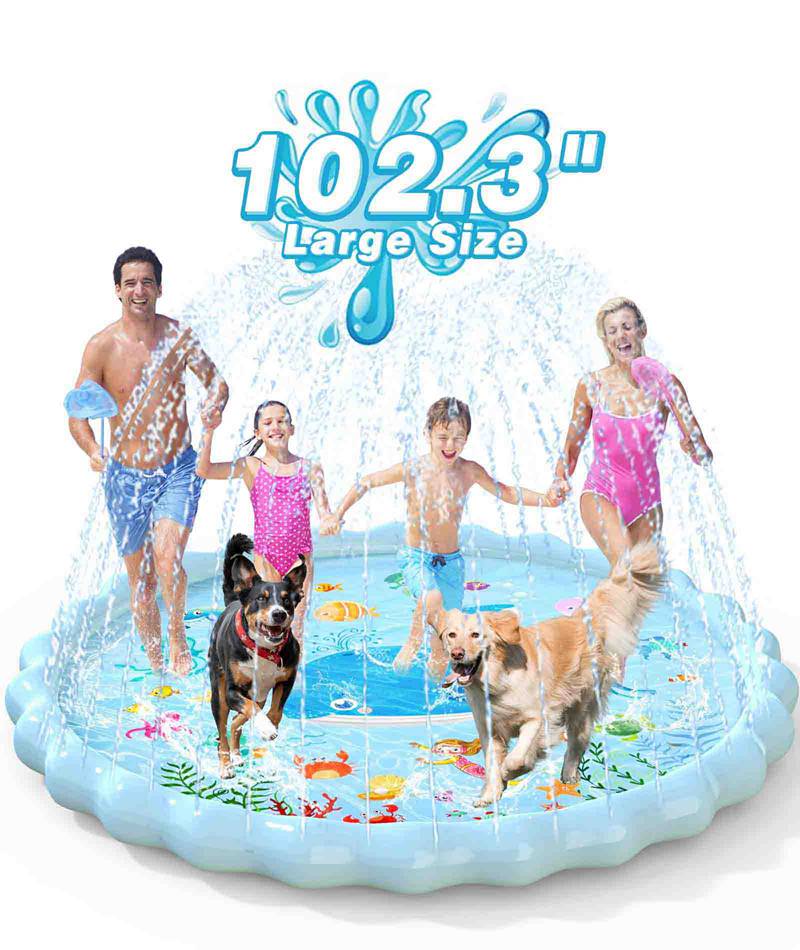
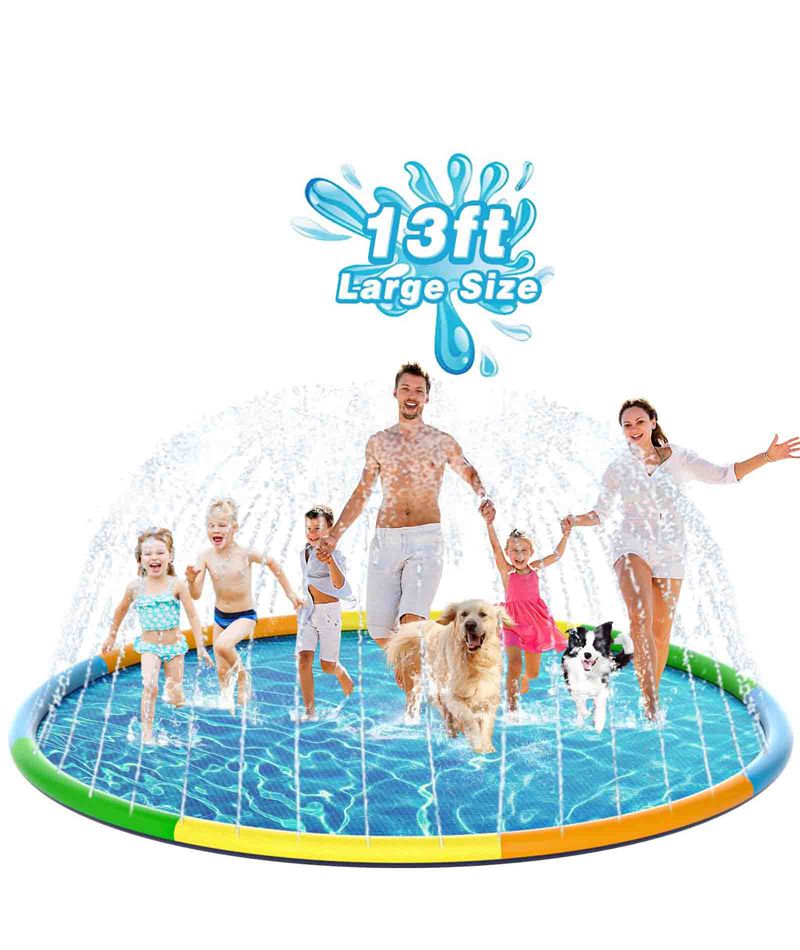
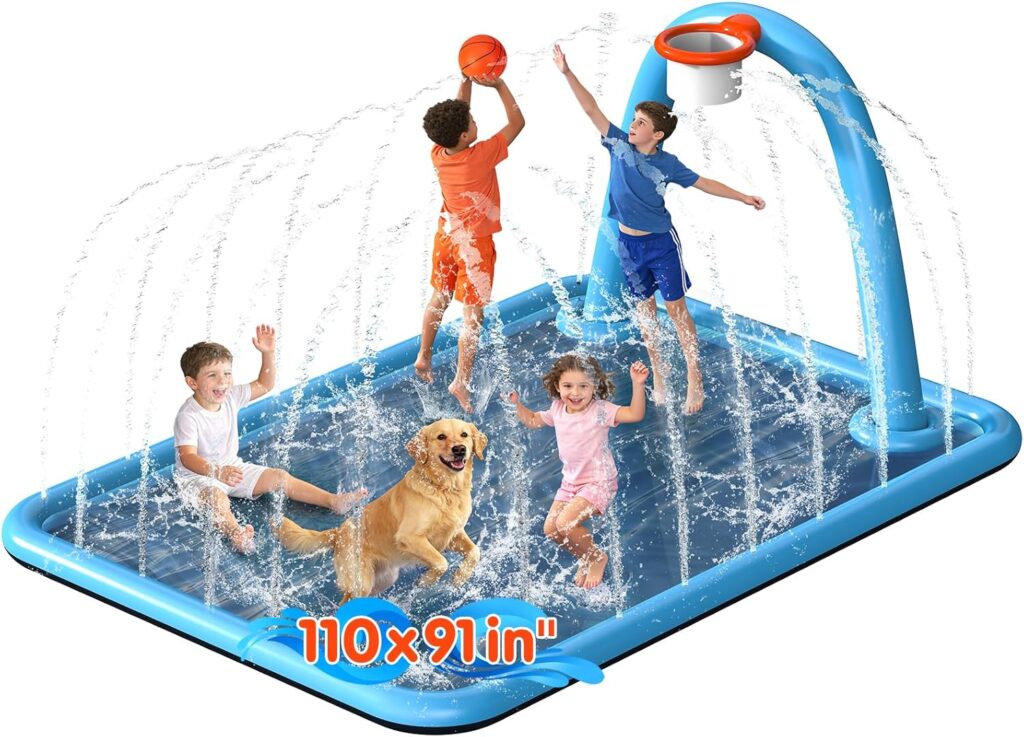
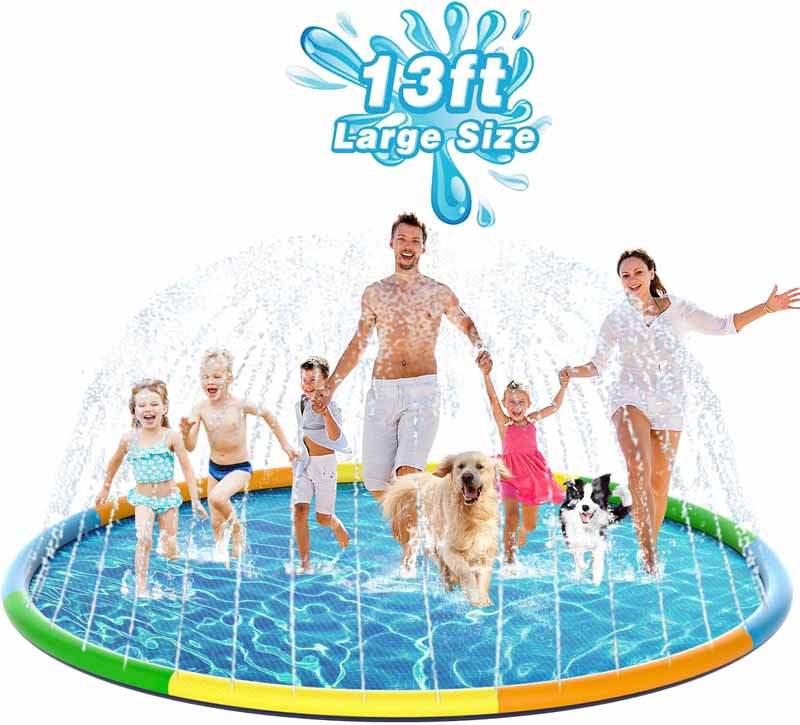
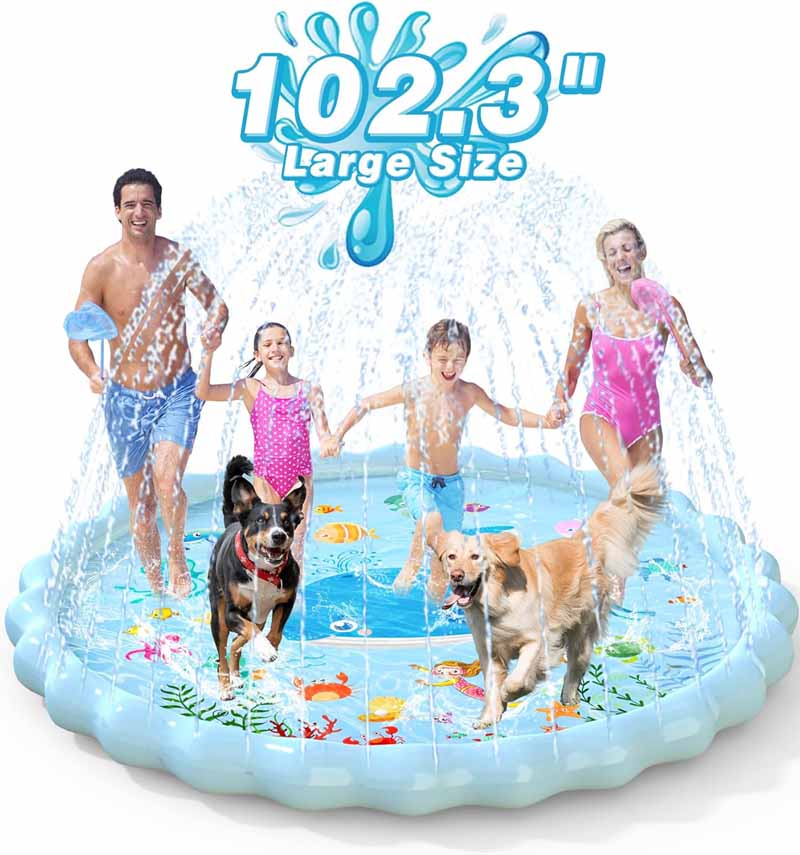
Most dog splash pads use a relatively simple hydraulic design. A garden hose connects to an inlet on the perimeter of the pad, water fills a hollow outer ring, and pressure forces water through a series of small openings directed toward the center. Spray height and direction depend on household water pressure, hole size, hole angle, the number of openings, and the internal shape of the water channel. The center stays comparatively shallow, so the dog spends most of its time interacting with spray and surface water rather than swimming.
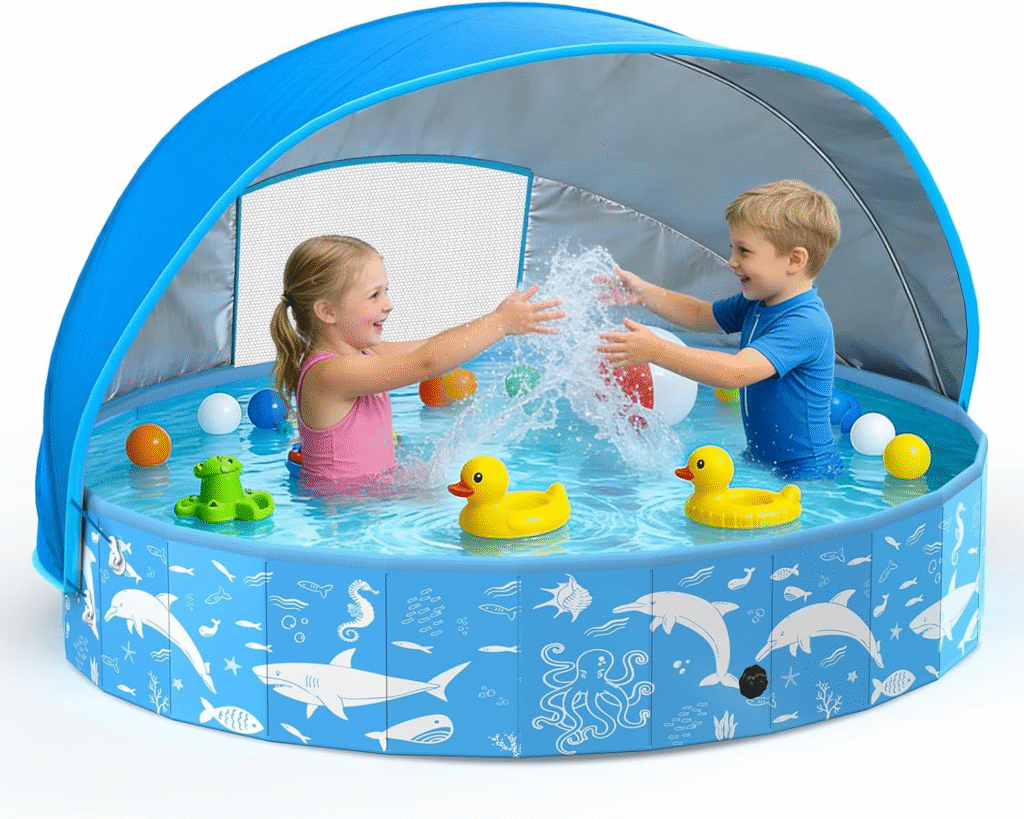
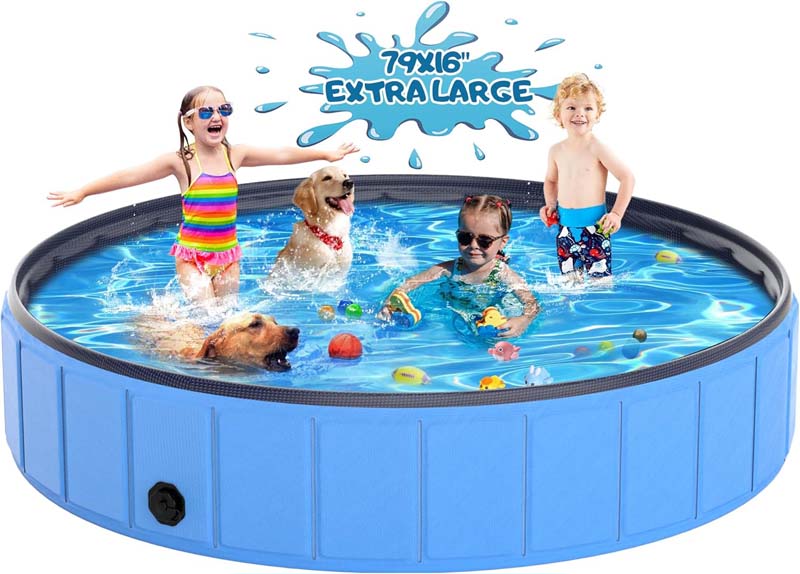
A foldable dog pool works through containment rather than pressure. Vertical wall sections support a basin that holds water at a depth chosen by the owner. Many foldable designs use PVC around structural panels so that the pool can remain upright when filled and still collapse for storage. Once the desired water level is reached, the hose can usually be disconnected, leaving a quiet basin for wading, bathing, resting, or toy retrieval.
That difference has a noticeable effect on everyday convenience. A splash pad can become entertaining almost immediately after the hose is opened, making it practical for a short ten- or fifteen-minute play session. A large pool can take longer to fill, but the same water remains available after the hose is shut off. Owners who use water play briefly and frequently may therefore prefer the splash-pad routine, while dogs that stay in water for longer periods often make better use of a pool.
| Feature | Dog Splash Pad | Dog Pool |
|---|---|---|
| Main water action | Moving spray and shallow runoff | Standing water |
| Typical depth | Minimal surface water | Owner-controlled depth |
| Hose use | Usually stays connected | Mainly used during filling |
| Typical activity | Running, chasing, pawing | Wading, soaking, resting |
| Entry barrier | Very low | Dog crosses a sidewall |
| Main structural stress | Claws, turning, water pressure | Stored water and dog movement |
| Drainage | Water leaves after shutoff | Drain valve or plug |
| Storage | Thin folded form | Thicker folded wall sections |
How Dogs Use Them Differently
A splash pad tends to suit dogs that treat water as something to chase. Moving streams give the dog changing targets, and each step changes the direction of the splash. An energetic dog may run through the center, circle the perimeter, bite at the streams, paw at individual holes, or move repeatedly between the wet area and surrounding lawn. Dogs that already follow hoses or lawn sprinklers often understand this kind of play quickly.
Pool behavior is usually slower and more deliberate. Some dogs stand with their paws submerged, others walk around the basin before sitting, and some immediately lie down with the chest and belly touching the water. Pools also make it easier to use floating toys, rinse muddy legs, or bathe a large dog without sending water across a wide section of the patio.
Breed can give owners a rough clue about possible water interest, but it shouldn’t be treated as a guarantee. Individual dogs within the same breed may have completely different water confidence and preferences. The American Kennel Club also advises introducing dogs to water gradually rather than assuming that every dog will naturally be a confident swimmer.
A useful question is therefore more specific than “Does my dog like water?” Ask whether your dog enjoys water moving toward it or prefers to enter water on its own terms. That distinction often predicts whether a splash pad or pool will actually get regular use.

What the Structure Changes
From a product-construction perspective, the two formats experience different loads. A splash pad receives repeated claw pressure across a broad flat area. When a dog accelerates, stops suddenly, or changes direction, its nails can concentrate force on a relatively small section of PVC. The perimeter chamber also remains under water pressure while the product is operating, making the inlet, seams, and spray-hole area important parts of the design.
A foldable pool has to manage the outward force created by stored water. As diameter and fill depth increase, the sidewalls must hold their shape while a dog walks, leans, or turns inside. Structural wall inserts spread that load, while the flexible waterproof layer keeps the basin sealed. A low-position drain also matters because tipping a large pool full of water can place unnecessary stress on walls, seams, and fittings.
PVC thickness is therefore useful information, but it should never be considered on its own. In EPN’s current pet water-play product specifications, for example, some foldable dog pools use approximately 0.55 mm PVC with 5 mm PP wall panels, while splash-pad designs can vary within roughly a 0.40–0.55 mm PVC range according to size and intended construction. These figures describe specific product-development choices rather than a universal industry requirement.
Seam width, inlet reinforcement, floor texture, drain attachment, folding points, and ground preparation can matter just as much as nominal material thickness. A thicker sheet combined with a weak fitting is not necessarily a more durable product than a carefully reinforced design using a slightly lighter material.
Where Hybrid Designs Fit
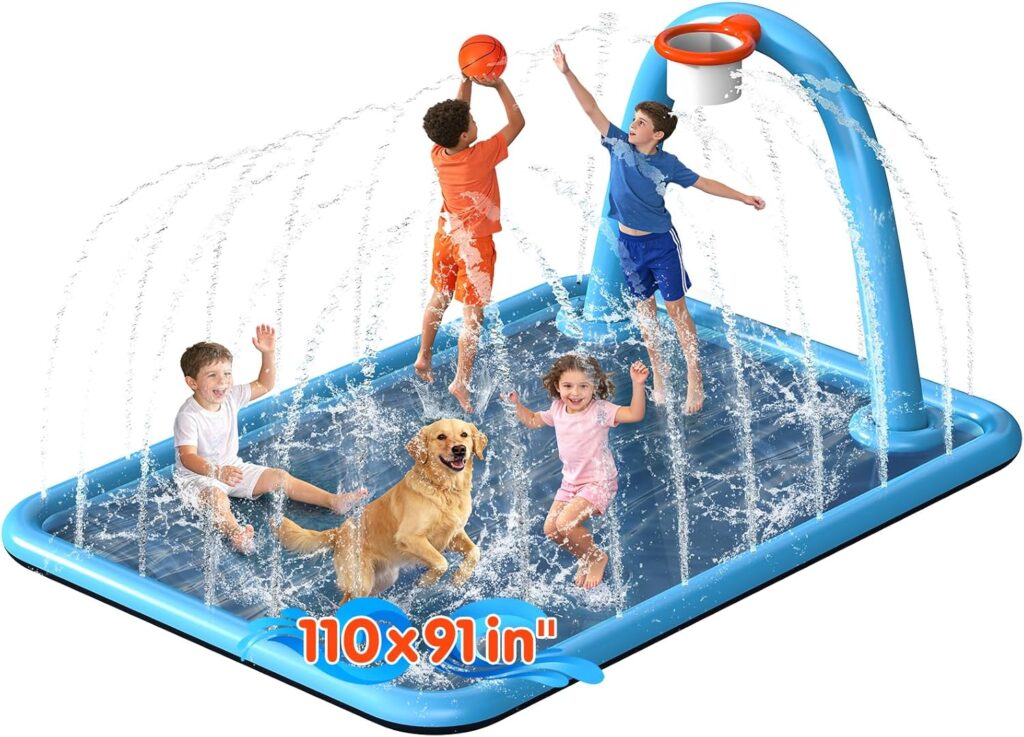
The choice is no longer limited to a completely flat sprinkler mat or a conventional pool. Dog pools with sprinkler rims combine standing water with moving spray, allowing the same product to support energetic play and calmer soaking. That can be particularly useful when two dogs in the household have different preferences or when an owner wants one product to cover several summer activities.
A hybrid can also be operated differently depending on the day. Low hose pressure and very shallow water create an experience closer to a splash pad. Reducing or turning off the spray while leaving water inside creates a more conventional wading pool. Used together, one dog can chase perimeter jets while another remains in the basin, giving owners more flexibility without setting up two separate products.
The additional features create more engineering challenges, however. A hybrid design may include supported walls, a pressurized water channel, multiple spray holes, one or more drains, hose fittings, floor seams, wall joints, and folding points. Each element needs to continue working after repeated setup, storage, water pressure, and dog movement.
For pet brands developing their own PVC water products, this is where thoughtful customization can create more value than simply adding features. Usable diameter, wall height, water-channel shape, spray direction, drainage position, floor texture, material selection, graphics, and packaging should be designed around how the target dog is expected to use the product.
Which Is Better for Cooling and Play?
A splash pad usually suits energetic dogs that enjoy chasing moving water, while a pool is generally better for dogs that prefer standing, lying, or resting in cool water. Both can help dogs stay comfortable during summer play, but neither should replace shade, fresh drinking water, breaks, or sensible activity limits. Cooling value depends partly on whether the dog stays calm or becomes more physically active.
Cooling Through Movement or Soaking
Water contact can feel refreshing to a dog, but two wet dogs may be having very different thermal experiences. A dog on a splash pad may repeatedly wet its paws, belly, legs, and coat while sprinting after the sprinkler. A dog in a pool may maintain longer contact with water while standing almost still. The first dog receives more stimulation; the second may generate less body heat through movement.
That distinction becomes increasingly important as the weather gets hotter. Dogs regulate heat differently from humans, and older, overweight, or otherwise vulnerable dogs may be more susceptible to overheating. Current AKC guidance also emphasizes controlling activity in hot conditions rather than relying on cooling tools alone.
Water depth doesn’t have to be large to create a useful recreational cooling area. For many dogs, several inches of shallow pool water are enough to cover the paws and lower legs, and a dog that lies down may bring the chest and belly into contact with the water. Filling a large foldable pool deeply can increase water use without adding much practical value when the dog isn’t using it for swimming.
Splash-pad owners should also remember that getting wet does not make unlimited exercise safe. A dog that becomes highly excited by sprinklers can keep running long after a calmer dog would have rested. Shade, clean drinking water, moderate sessions, and breaks remain important even when the dog appears enthusiastic. AKC heat-safety guidance similarly recommends close attention to temperature and signs of overheating.

Which Dogs Enjoy More Active Play?
A splash pad usually has the stronger advantage when the dog’s favorite water activity involves movement. Streams around the perimeter constantly change shape as water pressure, wind, impact, and the dog’s own movement affect them. That unpredictability can turn ordinary backyard water into a chase game without requiring toys or a deep basin.
Usable space matters more than many first-time buyers expect. A splash pad might technically be large enough for a dog to stand on, but active play requires room to turn, lower the head, accelerate, stop, and move around the inlet. For two dogs, the difference between overall diameter and actual center play area becomes even more important because both animals need enough room to pass one another safely.
Water pressure should usually begin on the lower side and be adjusted according to the dog’s reaction. A dog that happily chases low arcs may become uncomfortable when stronger streams strike its ears, eyes, or face. Owners also shouldn’t assume that maximum spray height equals maximum enjoyment; moderate spray can be easier for the dog to approach and often produces less uncontrolled runoff.
The surrounding surface matters too. Grass offers a relatively forgiving area for many dogs, but repeated water can soften the soil and create mud. Smooth patios are easier to rinse but may become slippery around the pad. Providing a level setup area with clear space around the product can improve the experience more than increasing the number or height of sprinkler jets.
When a Pool Provides Better Play
A dog pool can be highly engaging even though the water itself is relatively still. Some dogs spend long periods pawing at the surface, retrieving floating toys, walking around the perimeter, or lowering their chest into the water. For these dogs, the ability to stay partially immersed provides more value than streams that disappear as soon as the hose is turned off.
Pools are also more useful for several practical activities that splash pads don’t handle as well. A sufficiently large foldable pool can become a controlled area for bathing, rinsing muddy paws, washing a large dog outdoors, or providing a familiar water area during backyard gatherings. That versatility can make the product useful even on days when the dog isn’t interested in active play.
The dog’s posture around natural water can offer a useful clue. A dog that repeatedly lies in shallow lakes, puddles, or a bathtub is probably looking for sustained contact with water. A dog that keeps moving around sprinklers is usually looking for stimulation. Neither behavior is better; they simply point toward different product designs.
Owners should also consider how the dog behaves after exercise. If it naturally looks for a place to stop and cool down, standing water may be more useful than another activity that encourages running. A quiet pool can become part of a calmer backyard routine rather than simply another high-energy toy.
How Session Length Changes the Choice
Short water-play sessions tend to favor splash pads because setup can be almost immediate. The hose is connected, pressure is adjusted, and play begins without waiting for a large basin to fill. Afterward, turning off the tap removes the main water source and most surface water drains away quickly, leaving rinsing and drying as the main cleanup tasks.
A pool starts to become more convenient when dogs remain in the water for longer sessions. Filling takes additional time, but the hose does not need to run continuously once the desired depth is reached. The water can also remain available while the dog takes a break, which may be useful during longer supervised backyard activities.
| Typical Use | Splash Pad | Dog Pool |
|---|---|---|
| 10–15 minute play | Very convenient | Fill time may feel excessive |
| 20–30 minute active play | Good for spray-loving dogs | Good for mixed play and rest |
| Long calm soaking | Limited | Strong fit |
| Frequent short sessions | Easy to repeat | More draining and cleaning |
| Bathing or rinsing | Limited | Strong fit |
| Multi-dog chasing | Good with sufficient space | Depends on diameter |
| Quiet rest in water | Limited | Strong advantage |
The best option is usually the one that matches the household’s real routine. A product that is easy enough to set up three times per week is more valuable than a larger product that looks impressive but becomes inconvenient after the first few uses.
Which Is Safer for Different Dogs?
Neither product is automatically safer for every dog. Splash pads offer shallow water and almost no entry barrier, while pools provide calmer water and adjustable depth. Puppies, seniors, small breeds, large dogs, and water-shy dogs may need different setups. Stable footing, easy entry and exit, gentle introduction, appropriate water pressure, adequate space, and direct supervision remain important with both formats.
Puppies and Water-Shy Dogs
A splash pad can seem like the most obvious choice for a puppy because there is little water depth and no wall to cross. However, moving spray is not always less intimidating than standing water. Jets striking the paws, body, or face can surprise a puppy that has never encountered a sprinkler, while the sound of a hose and pressurized perimeter may make cautious dogs hesitate.
A very shallow pool can sometimes provide a gentler introduction. One or two inches of standing water allow the dog to investigate with one paw, step away, and return without moving streams entering its space. AKC guidance similarly recommends beginning gradually in shallow water and allowing dogs to build confidence instead of forcing them into deeper water.
For a puppy that already follows a hose or plays with lawn sprinklers, a splash pad can be a natural next step. Starting at low pressure keeps the water streams predictable, and the dog should remain free to enter and leave whenever it wants. Turning play into a voluntary activity is usually more productive than placing the puppy in the middle and expecting it to adjust.
Chewing is another practical issue. Puppies often investigate hoses, drains, connectors, perimeter rings, and seams with their mouth. No flexible PVC leisure product should be treated as chew-proof, so owners should interrupt persistent biting rather than depending on thickness alone to protect the product.

Small and Senior Dogs
Entry height can make a larger difference than pool diameter for a small or elderly dog. A wall that seems modest beside a Labrador can require a toy breed to climb or jump. A splash pad removes most of that transition because the dog can walk almost directly from the lawn or patio onto the play surface.
Older dogs may appreciate easy access but still prefer standing water to moving spray. A shallow, low-wall pool can provide a calmer environment for a dog that no longer wants to chase streams but enjoys getting its paws and underside wet. The goal should be to reduce unnecessary movement rather than assuming that one product is automatically more appropriate for age.
Footing becomes especially important for senior dogs. Textured PVC can improve traction, but a wet surface can still become slippery when hair, dirt, algae, soap residue, or wear reduces grip. Owners should also look at the area immediately outside the product. A dog that leaves a pool safely but steps directly onto wet smooth tile can still lose footing.
Senior dogs can also be more sensitive to temperature changes and physical exertion, so water play should fit the dog’s normal condition rather than encouraging it to keep up with younger animals. Current AKC advice for older dogs similarly recommends paying close attention to weather, pace, and the dog’s comfort during exercise.
Large and Heavy Dogs
A large dog creates more mechanical stress because each step transfers greater force to the product. When a 70–100 lb dog turns sharply, pushes off the floor, or brushes against a wall, the material experiences more than simple standing weight. Large-dog products therefore benefit from sufficient usable space, reinforced seams, stable inlets, reliable floor texture, and wall structures matched to the product diameter.
Advertised outside diameter can also be misleading when judging fit. A dog may physically stand inside a relatively small pool while still lacking room to turn or lie down comfortably. The perimeter wall or sprinkler ring reduces the usable interior area, so owners should think about the dog’s body length and movement rather than comparing diameter with weight labels alone.
Multi-dog use requires even more space. Two medium or large dogs may fit inside a basin when standing still but collide repeatedly once one begins chasing water or turning around. Leaving enough room for both dogs to move without being trapped against the side is more important than fitting the maximum possible number of animals into the product.
For larger products, material selection also needs to work with structure. EPN’s foldable dog-pool configuration, for example, pairs approximately 0.55 mm PVC with 5 mm PP wall panels in certain designs so that the flexible waterproof body receives additional lateral support. This kind of combined construction is more meaningful than judging durability from PVC thickness alone.
Supervision Still Matters
Shallow water reduces some risks but doesn’t make supervision optional. Dogs can slip, chew fittings, run into one another, damage PVC, become overexcited, or consume large amounts of water during repeated fetching and biting at streams. AKC water-safety guidance advises direct supervision and gradual introduction around pools, especially for dogs that are inexperienced or less confident in water.
Hose routing deserves attention with splash pads. The connection should sit outside the main running path so that dogs don’t repeatedly step across it. Pool owners should make sure drains remain secure during use and that the dog can leave the pool without relying on a flexible wall as a climbing step.
| Dog Profile | Good Starting Option | Main Issue to Check |
|---|---|---|
| Puppy | Very shallow pool or low-pressure pad | Confidence, chewing, footing |
| Small dog | Splash pad or low-wall pool | Entry and exit |
| Senior dog | Low-entry pad or shallow pool | Mobility and traction |
| Large active dog | Reinforced large pad or pool | Space and structural stress |
| Water-shy dog | Shallow still-water pool | Avoid forced exposure |
| Spray-loving dog | Splash pad | Excitement and slipping |
| Multiple dogs | Large pad, pool, or hybrid | Space and collisions |
Fresh drinking water should remain available separately from recreational water. A shaded dry area should also be easy to reach so that the dog can stop when it wants. Product design can reduce avoidable hazards, but it cannot replace a person watching how the dog is actually behaving.
How Do Durability, Cleaning, and Water Use Compare?
Splash pads are generally quicker to rinse, dry, and fold because they retain little standing water, while pools require more draining and interior cleaning. Durability depends on PVC construction, seams, fittings, floor design, dog behavior, and ground conditions rather than product type alone. Water use also works differently: a pool needs a fill volume, while a splash pad consumes water continuously according to flow rate and time.
What Makes PVC Durable
PVC thickness is easy to compare because it produces a clear number, but relying on that number alone can be misleading. A heavier sheet can still develop problems when a drain fitting is poorly supported, an inlet carries too much localized stress, or repeated folding occurs along a weak weld. A well-built product distributes loads so that the most vulnerable areas are not carrying more force than necessary.
For dog water products, the highest-stress areas often include the floor where paws turn and push off, transitions between floor and wall, water inlets, drains, perimeter chambers, folded wall joints, and corners. The more energetic the dog and the larger the product, the more important these details become.
EPN’s current product specifications provide a useful real-world example of how material choices vary by structure. Certain foldable dog pools use approximately 0.55 mm PVC combined with 5 mm PP wall panels, while several splash-pad constructions use PVC between roughly 0.40 and 0.55 mm depending on size and product design. These are product-specific engineering choices rather than claims that every pet water product should use the same specification.
Increasing thickness can improve puncture and abrasion resistance, but it also changes folding behavior, material weight, packing volume, manufacturing cost, and flexibility. The better development approach is to strengthen the places that actually receive stress rather than treating “thicker” as the only measure of quality.

Claws, Digging, and Ground Conditions
Dog claws usually damage flexible PVC when force becomes concentrated at a point. Standing quietly creates a very different load from digging, launching into a run, braking suddenly, or twisting while the paws remain planted. Nail length and behavior can therefore influence product life as much as the dog’s body weight.
The ground beneath the product can be equally important. Stones, dry branches, screws, gravel edges, damaged decking, and rough concrete can become hidden puncture points when the dog’s weight presses the material downward. Before placing a pad or pool on grass, owners should check the area by hand and remove anything sharp that might be concealed below the surface.
A protective ground sheet can help on less forgiving surfaces, but it should lie flat. Large wrinkles create pressure ridges underneath the PVC and can affect both floor wear and stability. Grass is comfortable for many dogs but may become muddy after repeated sprinkler use, while smooth hard surfaces are easier to rinse but can create more slippery runoff.
No flexible PVC product should be marketed or treated as genuinely claw-proof or chew-proof without specific supporting test evidence. A well-built design is intended to tolerate normal repeated dog use, but deliberate digging, biting, or contact with sharp ground debris can eventually damage flexible material regardless of nominal thickness.
Cleaning and Drying
Splash pads usually require the shorter cleanup routine. Once the hose is turned off, most of the water leaves the operating surface. Hair, mud, and grass can then be rinsed away before the pad is opened flat or hung to dry. This makes splash pads attractive for owners who want frequent short sessions without managing a large basin of dirty water afterward.
Dog pools collect more debris because every paw carries material into the same standing water. Hair, soil, grass, saliva, leaves, toys, and insects can accumulate during a session, particularly when several dogs are using the pool. A drain close to the bottom makes cleanup much easier because debris can be rinsed toward the outlet instead of requiring the entire product to be lifted.
A practical cleaning routine is to drain first, rinse loose debris away, clean visibly dirty sections with an appropriate mild product when needed, rinse again, and allow the PVC and all wall folds to dry completely. Owners should avoid folding a pool simply because the top surface feels dry; moisture can remain underneath the floor and between wall sections.
Drying convenience has a major effect on whether a product continues to be used throughout the season. A dog pool that takes time to clean may still be worthwhile for a dog that spends thirty minutes soaking, while the same routine can feel excessive for a dog that only plays for five minutes.
How Much Water Do They Use?
The fairest way to compare water consumption is to calculate the two products differently. A pool uses a stored volume determined mainly by diameter and fill depth. A splash pad uses continuous flow, meaning consumption is approximately the hose flow rate multiplied by the number of minutes the water remains on.
For illustration, a perfectly cylindrical 67-inch area filled to an average depth of four inches would contain approximately 61 gallons. A 79-inch area at the same theoretical depth would contain about 85 gallons, and a 97-inch area would approach 128 gallons. Real foldable pools aren’t perfect cylinders, so these figures are calculation examples rather than manufacturer fill-volume specifications.
Splash-pad use depends much more heavily on time. A hose supplying 4 gallons per minute uses about 60 gallons in 15 minutes and 120 gallons in 30 minutes. At 6 gallons per minute, a 30-minute session would use approximately 180 gallons. Owners can check their own flow with a bucket of known volume and a stopwatch rather than relying on a generic estimate.
| Example | Approximate Water Use |
|---|---|
| 67-in circular area at theoretical 4-in depth | 61 gal |
| 79-in circular area at theoretical 4-in depth | 85 gal |
| 97-in circular area at theoretical 4-in depth | 128 gal |
| Splash pad at 4 gpm for 15 min | 60 gal |
| Splash pad at 4 gpm for 30 min | 120 gal |
| Splash pad at 6 gpm for 30 min | 180 gal |
This is why neither category can honestly be labeled the water-saving choice in every situation. A ten-minute splash-pad session may use less water than filling a large pool, while an hour of continuous high-flow sprinkler play may use considerably more.
Which Should You Choose for Your Dog?
Choose a splash pad if your dog actively enjoys sprinklers, moving water, shallow access, and short energetic sessions. Choose a pool if the dog prefers wading, lying down, bathing, or spending longer periods in standing water. A sprinkler pool can bridge both uses. The best decision combines the dog’s behavior with usable size, mobility, drainage, water consumption, storage space, cleaning effort, and yard conditions.
Match the Product to Behavior
The easiest place to start is not a specification sheet but the dog you already know. A dog that rushes toward a hose, snaps at streams, or repeatedly runs through lawn sprinklers is already showing a preference for moving water. A splash pad extends that familiar activity and creates a wider, more controlled area where the dog can interact with several streams at once.
A dog that walks into a shallow lake and remains there, lies down in puddles, steps willingly into a bathtub, or seeks a wet shaded spot is signaling something different. That dog may prefer choosing its own depth and posture without moving water constantly reaching its face or body, which makes a pool a more natural match.
Dogs that avoid water shouldn’t be forced into either product. Water confidence can develop slowly through very shallow exposure, familiar toys, rewards, and short positive sessions. Current canine water-safety guidance likewise emphasizes gradual introduction rather than assuming every dog will immediately enjoy or understand swimming and pool environments.
This behavior-first approach is more reliable than shopping by breed, color, or feature count. A basic product that fits the dog’s existing habits often gets more use than an elaborate model designed around activities the dog has never enjoyed.

Consider Space and Drainage
A backyard product needs more space than the diameter printed on its package. Dogs enter and exit from different directions, owners need room to reach the hose or drain, and energetic play may extend several feet beyond the wet area. A nominal 67-inch pad can feel much more comfortable when placed within an open area around 8–9 feet across rather than squeezed between patio furniture or landscaping.
Splash pads release water continuously. On grass, repeated sessions may create soft soil or mud around the perimeter. On patios, runoff can travel toward doors, steps, flower beds, or drainage channels. Owners should check the natural slope of the surface before deciding where a pad will operate.
Pools release water differently. The owner can control when draining begins, but dozens of gallons may leave the outlet during a short period. A drain facing a flower bed, walkway, foundation, or poorly draining lawn may create problems even when the pool itself fits comfortably in the space.
Storage is the final part of the space equation. Flat splash pads generally fold into a thinner package. Foldable pools remain bulkier because the structural panels stay inside the walls. A product that is easy to dry and store is far more likely to become part of a regular summer routine.
When a Hybrid Makes Sense
A pool with an integrated sprinkler is a practical choice when one household has several water-play needs. The owner can run low perimeter spray during energetic play, allow a shallow layer of water to remain in the basin, or turn down the spray and use the same product primarily as a conventional pool.
This flexibility is particularly useful for two-dog households. One dog may chase the streams while the second remains inside the water. It can also help owners who want active play on some days and a controlled bathing or rinsing area on others without storing two large seasonal products.
Hybrid designs need careful engineering because adding functions creates more potential stress points. Water channels, holes, drains, walls, floor seams, inlets, folds, and fittings all have to work together. A sprinkler function that interferes with wall stability or creates difficult-to-dry cavities may add complexity without adding enough real-world value.
For retailers and private-label pet brands, these products can be customized around intended dog size and use. EPN’s PVC pet-product development can adjust dimensions, wall height, PVC construction, PP wall support, spray-hole distribution, inlet arrangement, drain position, floor texture, graphics, and packaging rather than relying on one configuration for every market.
Make the Final Decision
A dog splash pad is usually the stronger starting choice when most of these points describe your household:
- Your dog actively chases sprinklers or hose water
- Low entry is important
- Play sessions are usually short
- Fast setup and rinsing matter
- Compact seasonal storage is a priority
- The dog prefers movement to soaking
A dog pool is usually the stronger starting choice when most of these points apply:
- Your dog willingly stands or lies in water
- Adjustable water depth is useful
- Bathing or rinsing is part of the routine
- The dog prefers calm play
- Longer supervised sessions are common
- Your yard can handle controlled draining
A dog pool with a sprinkler makes more sense when the dog enjoys both behaviors, several dogs have different preferences, or the household wants one product to cover active play and standing-water use.
The best product is ultimately the one the dog willingly returns to and the owner can realistically maintain. A large pool has limited value if filling, draining, and drying it becomes frustrating. A premium sprinkler pad has limited value when the dog dislikes spray. Material, dimensions, and features matter, but they should support real behavior rather than compensate for a poor match.
Conclusion
A dog splash pad isn’t universally better than a dog pool, and a pool isn’t automatically the more practical or durable choice. Splash pads are strongest when the dog enjoys shallow, interactive moving-water play and the owner wants quick setup. Pools are strongest when the dog wants to wade, soak, lie down, bathe, or remain in water for a longer period. Hybrid sprinkler pools can be a useful middle ground when both kinds of behavior matter.
The most dependable decision comes from looking at the complete routine: how the dog approaches water, how much space it needs to move, whether it can enter and exit comfortably, how much water the household wants to use, where that water will drain, how the PVC product will be cleaned and dried, and how often it will realistically be set up.
For consumers, those questions help separate meaningful specifications from marketing language. For pet brands and retailers developing their own products, they also provide a practical basis for deciding usable diameter, wall height, PVC construction, reinforcement, spray layout, drainage, surface texture, and packaging. A water-play product succeeds when the dog willingly uses it and the owner doesn’t dread setting it up again.
Frequently Asked Questions
Is a splash pad good for dogs?
A splash pad can be an excellent option for dogs that enjoy sprinklers, shallow water, and interactive outdoor play. Low entry makes it easy to approach, and adjustable hose pressure lets owners introduce the spray gradually. It still requires supervision because dogs may slip during rapid turns, bite hoses or fittings, or become overexcited. Shade, fresh drinking water, and reasonable activity limits should remain part of warm-weather play.
Is a dog pool better for cooling than a splash pad?
A pool can provide more continuous water contact when a dog stands or lies in it, while a splash pad repeatedly wets the dog during movement. That doesn’t make one universally better for cooling. A dog resting quietly in shallow water may generate less body heat than a dog sprinting after sprinkler jets. Temperature, humidity, coat, age, health, drinking water, shade, and activity level should all be considered.
What size splash pad is best for a large dog?
A large dog needs more than enough space to stand. It should be able to lower its head, turn, move around the inlet, and change direction without spending most of the session on the perimeter ring. Overall diameter therefore needs to be interpreted alongside usable center diameter. Multi-dog households need even more room, because two large dogs may fit physically but still collide during active sprinkler play.
Can dog claws puncture a splash pad?
Yes. Flexible PVC can be damaged by sharp nails, deliberate digging, chewing, rough ground, or repeated high-force turns. A thicker floor, reliable seams, reinforced inlets, and suitable texture can improve resistance, but none makes flexible PVC truly claw-proof. Keeping nails maintained, checking the ground for stones and sharp debris, placing the pad on a suitable surface, and stopping deliberate digging can substantially reduce avoidable wear.
Do dog splash pads use more water than dog pools?
It depends on flow and session length. A pool requires a fixed fill volume, while a splash pad keeps consuming water as long as the hose is running. At 4 gallons per minute, a 20-minute splash-pad session uses about 80 gallons. A theoretical 79-inch circular basin filled four inches deep holds about 85 gallons. Short sprinkler sessions may therefore use less, while long high-flow sessions can use much more.
Are dog pools with sprinklers worth it?
They can be worthwhile when a dog enjoys both moving spray and standing water, or when different dogs in the household have different preferences. A hybrid can support chasing, splashing, wading, rinsing, and resting without requiring two separate products. The trade-off is construction complexity, so wall stability, water channels, spray holes, inlet reinforcement, drains, seams, folding, cleaning, and drying all deserve more attention than they would on a simpler design.
Which is easier to clean, a dog splash pad or a dog pool?
A splash pad is generally easier after short sessions because little standing water remains when the hose is turned off. Hair, grass, and dirt can usually be rinsed away before drying. A pool holds debris in standing water and normally needs draining, rinsing, and more careful drying around the walls and underside. For frequent short play, splash pads usually require less maintenance; for longer soaking, the extra pool cleanup may be worthwhile.
Get A Fast quote
Here, bringing your inflatable concepts to life is no longer a challenge—it’s a collaborative journey where American Epsilon helps families, outdoor enthusiasts, and global brands transform creative ideas into safe, certified, and market-ready inflatable solutions.


Partner With Epsilon
Whether you are a family looking for safe backyard fun or a brand seeking large-scale OEM/ODM solutions, American Epsilon Inc. guarantees every inflatable is built with safety, durability, and excitement in mind. With flexible low MOQs, strategically placed warehouses in the U.S., Canada, U.K., and Germany, plus 24/7 professional support, we ensure smooth delivery and reliable service worldwide.
Ready to bring your inflatable ideas to life? Request free samples, fast prototypes, and customized designs today—your trusted inflatable journey starts here.