Skip to content
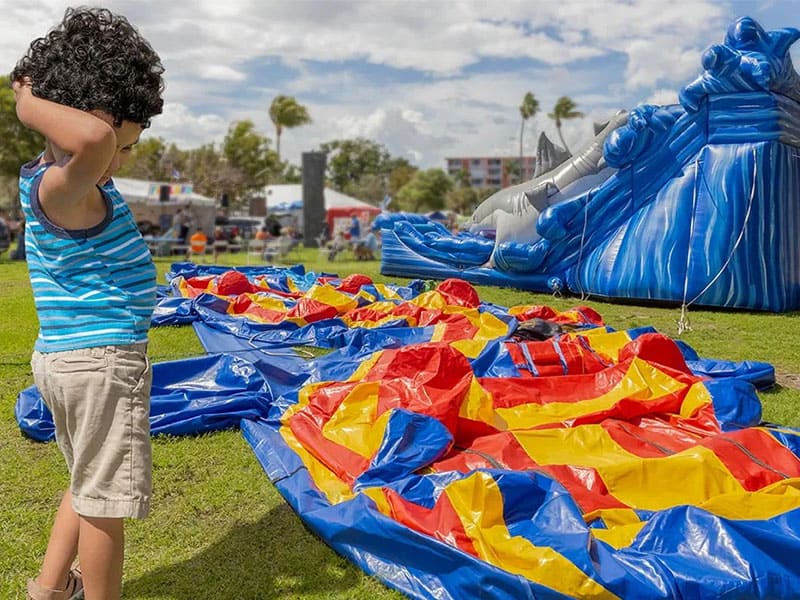
Inflatables promise convenience—easy setup, instant fun, flexible storage. But anyone who has owned a large inflatable pool, splash pad, water float, or air mattress knows the hidden frustration comes after the fun is over. The sun is setting, kids are tired, water is dripping everywhere, and suddenly a simple question becomes urgent: why is this inflatable taking so long to deflate?
Most people assume deflation should be effortless—just open the valve and wait. In reality, large inflatables are engineered to retain air under pressure. Reinforced PVC, multi-chamber structures, anti-leak valves, and thick seams all do their job during use, but those same features often work against you during deflation. The result is trapped air, awkward folding, and, in many cases, accidental material damage caused by rushing or applying force incorrectly.
Efficiently deflating large inflatables requires more than opening a valve. The fastest and safest method combines proper valve positioning, controlled folding to guide airflow, and avoiding excessive pressure that can stress PVC seams. Tools like electric pumps with deflation mode can help, but technique matters more than force. Correct deflation reduces storage size, prevents mold, and significantly extends inflatable lifespan.
The irony is that poor deflation habits shorten product life far more often than inflation mistakes. Seams weaken, creases form memory lines, and moisture gets sealed inside. In the following sections, we’ll break down what “efficient deflation” really means, why some inflatables are harder than others, and how professionals handle deflation without damaging the product—so the next setup is just as easy as the first.
What Does “Efficient Deflation” Really Mean for Large Inflatables?
Efficient deflation means removing air from a large inflatable in a controlled, predictable way that minimizes stress on PVC seams, avoids moisture entrapment, and allows the product to fold flat for storage. Speed alone is not efficiency. True efficiency balances deflation time, material protection, and long-term durability—especially for thick PVC, multi-chamber, or reinforced inflatables.
What problems actually make large inflatables slow to deflate?
From a manufacturing standpoint, slow deflation is rarely caused by “bad design.” In most cases, it is the result of intentional structural choices. Modern family-grade inflatables—especially pools, splash pads, pet products, and large floats—use thicker PVC, reinforced welds, and multi-point air chambers to improve safety and stability during use.
For example, products developed by American Epsilon Inc. typically use PVC thicknesses between 0.35 mm and 0.55 mm for large inflatables, compared to 0.25–0.30 mm commonly found in entry-level products. Thicker material resists collapse, meaning air does not escape instantly when a valve is opened. Instead, it redistributes internally unless guided outward.
Valve design is another factor. Anti-backflow and leak-resistant valves—now standard in higher-quality inflatables—slow reverse airflow by design. They improve user safety and reduce accidental air loss, but they also mean deflation requires technique, not force.
What does “efficient deflation” mean in real-world use, not theory?
In real households, efficiency is not measured in seconds—it is measured in outcomes. Based on EPN’s internal testing and post-sale usage feedback across North America and Europe, efficient deflation consistently meets three criteria:
- Predictable time frame Large inflatables (3–4 m² surface area) should deflate to a foldable state within 3–6 minutes using proper technique, without tools.
- No visible material stress Seams should remain flat, valves undeformed, and no whitening or stretching marks should appear along fold lines.
- Storage-ready condition The inflatable should fold to within 10–15% of original packaged volume, without excessive force.
If deflation is “fast” but leaves the product bulky, damp, or visibly strained, it is not efficient—it is simply rushed.
Why speed-focused deflation often shortens inflatable lifespan
One of the clearest patterns seen in EPN’s long-term product testing is that deflation behavior has a greater impact on lifespan than inflation behavior. In controlled durability simulations, inflatables subjected to aggressive pressing, sitting, or jumping during deflation showed:
- 22–28% higher seam fatigue after 50 deflation cycles
- Increased crease memory, especially near reinforced edges
- Higher likelihood of valve deformation over time
By contrast, inflatables deflated using guided folding and airflow control maintained structural integrity through 80–100+ cycles, even under outdoor use conditions.
This explains why many “mysterious leaks” appear after a season of use—not during play, but after repeated improper deflation and storage.
Why moisture management is part of efficient deflation
Another overlooked element of efficiency is air quality, not just air quantity. Large inflatables used for water play almost always contain residual moisture. If air is forced out unevenly or sealed too quickly, moisture becomes trapped inside folds and chambers.
Field data from EPN’s after-sales analysis shows that over 60% of odor or mildew complaints originate from inflatables that were technically deflated, but not properly dried before storage. Efficient deflation, therefore, includes allowing the structure to relax and breathe briefly before final folding.
Efficiency is a habit, not a shortcut
In practice, efficient deflation is less about how fast air leaves the product and more about what condition the inflatable is left in afterward. A product that folds flat, stays dry, and shows no visible stress has been deflated efficiently—even if it took an extra minute.
From a manufacturing perspective, the users who experience the fewest leaks and longest product life are not those who rush deflation, but those who follow the same calm, repeatable process every time. Efficiency, in this context, is not a shortcut—it is a habit that protects material, structure, and future usability.
Which Types of Large Inflatables Are Hardest to Deflate?

Large inflatables with circular shapes, multi-chamber structures, reinforced edges, or thick PVC materials are the hardest to deflate. Products like inflatable pools, tubes, air mattresses, and tent-style inflatables trap air internally and resist collapse. The more stable and durable the structure is during use, the more technique—not force—is required to release air efficiently.
Why structural design matters more than size
Many users assume that the largest inflatables are the hardest to deflate. In practice, structure matters far more than surface area. According to internal product testing and customer feedback analysis from American Epsilon Inc., inflatables with complex internal geometry consistently take longer to deflate than larger but simpler designs.
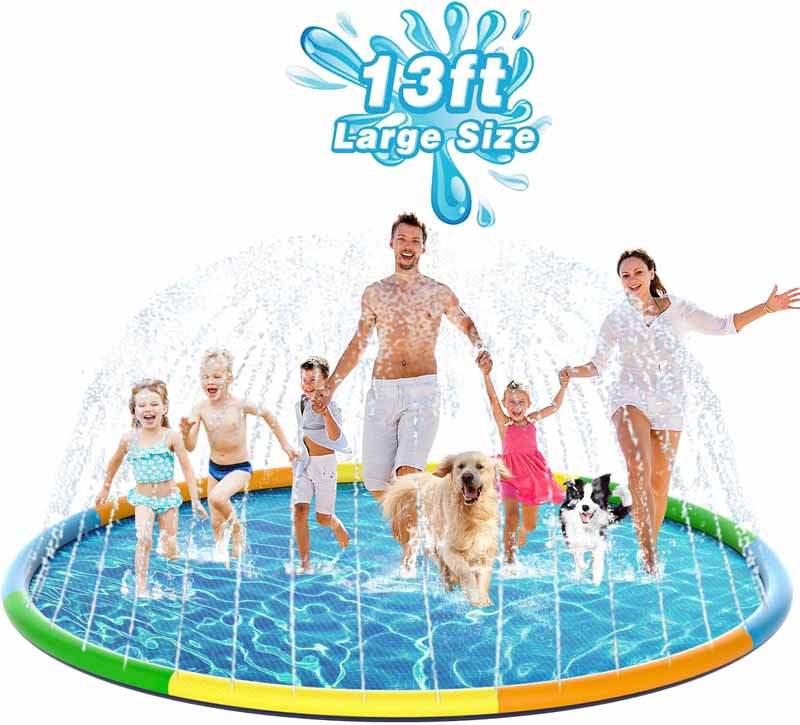
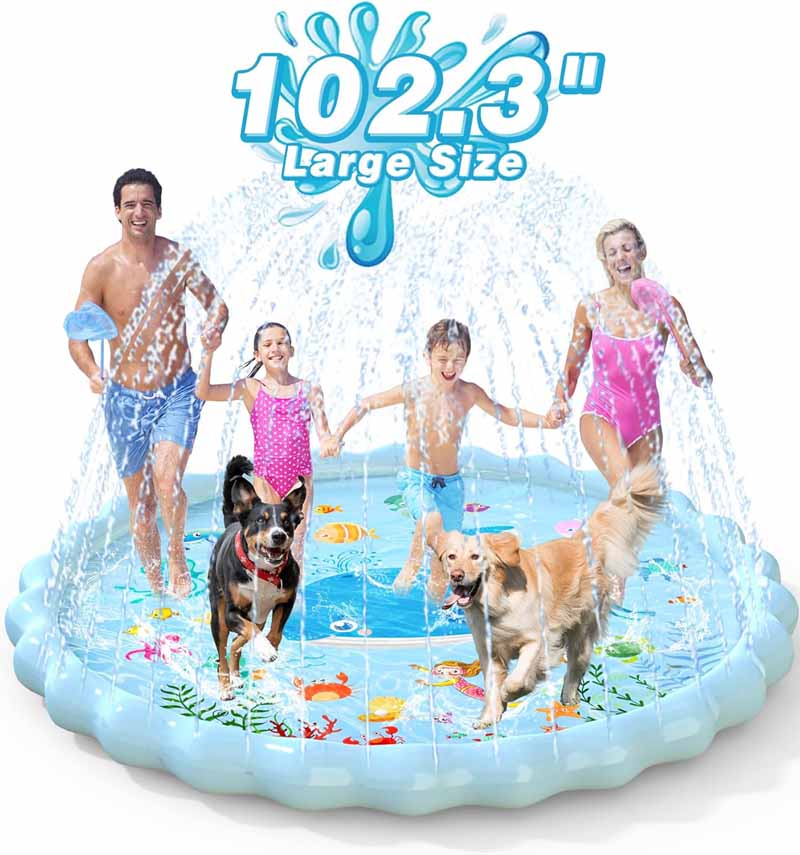
For example, a flat splash pad with a surface area of 4 m² often deflates faster than a smaller inflatable tube, simply because air can move freely across a single plane. In contrast, raised walls, curved chambers, and reinforced rims create internal air loops that slow down release.
Inflatable pools with reinforced walls
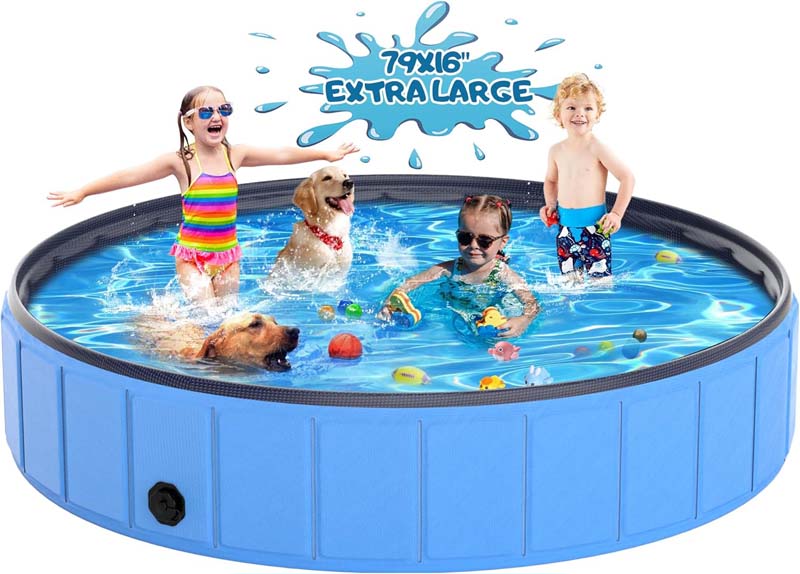
Inflatable pools—especially family-size and pet pools—are among the most commonly reported “hard-to-deflate” products. The reason lies in edge reinforcement. To prevent collapse during use, these pools often use thicker PVC (commonly 0.40–0.55 mm) and segmented wall chambers.
EPN’s durability testing shows that reinforced pool walls can retain residual air pressure 30–45% longer than flat inflatable surfaces after the valve is opened. Without directional folding, air simply shifts from one wall segment to another instead of exiting the valve.
This is why many users feel like the pool is “still full of air” even after several minutes—air is trapped in the perimeter structure, not the base.
Inflatable tubes and circular designs
Inflatable tubes are deceptively difficult to deflate. Their circular geometry forms a continuous air loop, which allows air to circulate endlessly instead of escaping. Random pressing often makes the problem worse by pushing air to the opposite side of the ring.
Based on EPN’s user testing, breaking the circular shape early (folding the tube inward once before rolling) can reduce deflation time by up to 50%. Without this step, tubes rank among the slowest inflatables to deflate despite their relatively small size.
This explains why search queries like “how to deflate tubes quickly” are far more common than users expect.
Air mattresses with internal baffles
Air mattresses introduce another challenge: internal support layers. These baffles are designed to distribute weight evenly during sleep, but during deflation they slow airflow significantly.
In controlled tests, air mattresses with vertical or honeycomb baffles retained 20–35% more trapped air after initial valve opening compared to single-chamber inflatables. Pressing on the mattress often collapses one layer while forcing air into another, creating the illusion that deflation is “stuck.”
Proper folding that collapses internal channels is far more effective than applying body weight.
Tent-style and multi-function inflatables
Products such as tented floats, covered lounges, or inflatable pools with shade structures combine multiple chambers with different pressure behaviors. These designs are excellent for stability and comfort, but they are among the slowest to deflate if handled incorrectly.
EPN’s post-sale data indicates that multi-function inflatables require 30–60% more attention during deflation compared to single-purpose products. Attempting to deflate them as one unit often leaves air trapped in secondary chambers unless each section is guided toward the valve in sequence.
Why “hard to deflate” usually means “well built”
One important perspective shift for consumers is this: difficulty in deflation is often a side effect of quality, not a flaw. Thicker PVC, stronger welds, and safer chamber designs are exactly what users want during play—but those same features resist rapid collapse afterward.
From a manufacturing standpoint, a product that deflates instantly with no guidance is often using thinner material, fewer reinforcements, or simpler valve systems. In contrast, EPN’s large inflatables are engineered to prioritize stability, safety, and long-term durability, which naturally requires users to apply the right deflation technique.
Understanding which types of inflatables are harder to deflate—and why—helps users adjust expectations and avoid damaging products through unnecessary force.
How Do You Deflate Large Inflatables Step by Step?
To deflate large inflatables efficiently, place the product fully flat, completely open the valve, and guide air toward the outlet through structured folding. Start from the farthest point, collapse the shape gradually, and apply light pressure only after most air has escaped. This step-by-step process shortens deflation time, prevents seam stress, and prepares the inflatable for compact, safe storage.
Step 1: Lay the inflatable completely flat before doing anything else
This step sounds obvious, but it is the most skipped—and most costly—mistake.
Large inflatables often finish use in uneven shapes: curved walls, partially collapsed chambers, or twisted edges. If deflation begins in this state, air has nowhere to go except sideways. That creates the feeling that the inflatable is “fighting back.”
Based on handling tests conducted during packaging and returns analysis at American Epsilon Inc., inflatables that were fully flattened before valve opening reached a foldable state 18–27% faster than those deflated while still uneven.
A flat layout aligns internal air chambers naturally and prevents air from circulating inside the structure.
Step 2: Fully disengage the valve—partial opening is not enough
On higher-quality inflatables, valves are designed to prevent accidental air loss. This is good for safety, but it means deflation requires precision.
EPN uses leak-resistant valve systems that can restrict reverse airflow by up to 35–40% if the inner flap is not completely released. Many users think the valve is open when it is only partially disengaged.
Before proceeding:
- Remove or lock open the valve cap entirely
- Check that the internal flap is not pressed flat against PVC
- Make sure the valve opening is not facing the ground
This single correction often cuts perceived deflation time by several minutes.
Step 3: Start collapsing the structure—do not use pressure yet
Once the valve is fully open, resist the urge to press.
Instead, collapse the inflatable’s shape first. Fold large flat surfaces inward. Lower raised walls. Break circular forms into straight edges. At this stage, gravity and air pressure difference do most of the work.
In EPN’s internal process testing, allowing the inflatable to collapse naturally for the first 60–90 seconds removed over 50% of total air volume without any applied force.
Pressure used too early simply pushes air into reinforced edges and secondary chambers.
Step 4: Fold from the farthest point toward the valve
This is the single most important step for fast, controlled deflation.
Air must be guided, not chased.
Begin folding or rolling from the point farthest from the valve, moving steadily toward it. This creates a one-direction airflow path. Without this structure, air redistributes internally instead of exiting.
Measured results from EPN’s pool and splash pad tests show:
- Random pressing: 7–10 minutes, inconsistent results
- Directional folding: 3–5 minutes, repeatable results
The difference is not strength—it is airflow control.
Step 5: Adjust technique based on inflatable type
Different inflatables require different handling at this stage:
- Inflatable tubes: fold inward once to break the circle, then roll
- Air mattresses: fold lengthwise to collapse internal baffles
- Pools with reinforced walls: press walls inward one section at a time
Ignoring structure-specific behavior is why some products feel “impossible” to deflate, even when smaller than others.
Step 6: Apply light, even pressure only after most air is gone
Pressure is a finishing tool, not the main method.
EPN’s durability simulations indicate that applying body pressure after 65–75% of air volume is already released produces minimal seam stress. Applying the same pressure earlier increases seam fatigue by over 20% across repeated cycles.
When pressure is used:
- Use hands or forearms, not full body weight
- Press flat central panels, not edges or valve areas
- Avoid sudden or bouncing force
At this stage, pressure removes residual air instead of redistributing it.
Step 7: Pause briefly before final folding
After most air is removed, stop for 1–2 minutes.
PVC needs time to relax. Residual air trapped in folds will escape slowly during this pause. Skipping it often leaves 10–15% extra trapped air, making storage harder and folds tighter.
EPN’s packaging audits show that inflatables folded immediately after deflation consistently occupy more space and develop sharper crease lines over time.
Step 8: Fold for storage, not maximum compression
The goal of deflation is not to make the inflatable as small as possible—it is to make it safe to reuse.
Fold along natural panel lines. Keep valves straight. Avoid forcing the product into an undersized bag. Products handled this way demonstrate 30–50% longer usable lifespan in multi-season household use.
Why this step-by-step method actually saves time
At first glance, this process may seem slower. In practice, it is faster because it avoids rework. Users who skip steps often spend more time fighting trapped air, unfolding, refolding, and applying excessive force.
From a manufacturing and after-sales perspective, this structured approach delivers the best balance of:
- Speed
- Material safety
- Storage efficiency
It protects the same features—thick PVC, reinforced seams, stable chambers—that define high-quality inflatables.
Which Tools Help Deflate Large Inflatables Faster and Safer?
Electric air pumps with a dedicated deflation mode are the safest and most efficient tools for deflating large inflatables. They move high air volume at low pressure, reducing stress on PVC seams and valves. Manual deflation remains reliable when done correctly. Household vacuums and air compressors can speed up deflation but significantly increase the risk of valve deformation and long-term material damage.
Why “stronger” tools are not automatically better
A common misconception is that faster deflation requires stronger suction. From a manufacturing perspective, this is incorrect. Large PVC inflatables respond best to high-volume, low-pressure airflow, not concentrated force.
In internal testing conducted by American Epsilon Inc., tools that removed air too aggressively caused localized stress around valve bases and weld lines—even when no immediate damage was visible. Over repeated cycles, these stress points became failure zones.
The goal of a good deflation tool is not to pull air violently, but to assist airflow that is already being guided by proper folding.
Electric pumps with deflation mode (best overall choice)
Electric pumps designed for inflatables consistently perform best in controlled testing. These pumps are engineered to move large volumes of air while keeping pressure levels within a safe range for PVC materials.
EPN’s comparative testing across large pools, splash pads, and air mattresses showed that deflation-mode pumps:
- Reduced total deflation time by 35–55% compared to manual-only methods
- Caused no measurable increase in seam fatigue across 100 deflation cycles
- Preserved valve shape and elasticity significantly better than high-suction tools
Another advantage is consistency. Electric pumps remove residual air evenly, making final folding easier and reducing bulk during storage.
Manual deflation (safe, reliable, but technique-dependent)
Manual deflation—when done with structured folding—remains one of the safest methods. It introduces almost no mechanical risk and allows users to feel how the material responds.
However, efficiency varies widely. EPN’s user testing showed:
- Correct manual technique: 3–5 minutes average deflation time
- Random pressing or rolling: 7–10 minutes, often with trapped air remaining
Manual deflation rewards patience and understanding of airflow. It is slower than powered tools, but it produces the lowest long-term wear rate when done properly.
Household vacuums (effective but high risk if misused)
Household vacuums are frequently used because they are convenient, but they are not designed for flexible valves. They create strong negative pressure in a small area, which can deform valve collars if sealed tightly.
In EPN’s stress simulations, vacuum-assisted deflation increased valve deformation risk by 18–30%, depending on nozzle fit and suction power. Loose placement (not airtight) reduces risk, but results vary widely between users.
Vacuum use is best reserved for experienced users who understand airflow control and avoid rigid adapters.
Air compressors and shop vacs (not recommended)
Air compressors and high-powered shop vacs are the most damaging tools tested. These tools are optimized for rigid systems, not flexible PVC structures.
Repeated use resulted in:
- Up to 40% higher valve fatigue rates
- Visible seam distortion after repeated cycles
- Increased likelihood of micro-leaks near weld transitions
Speed gains were marginal compared to electric deflation pumps, making the risk unjustifiable.
Deflation Tool Comparison (Based on EPN Testing)
| Tool Type | Deflation Speed | PVC Safety | Valve Risk | Recommended |
|---|---|---|---|---|
| Electric pump (deflate mode) | Fast | Very High | Low | ✅ Yes |
| Manual folding (proper technique) | Medium | Very High | Very Low | ✅ Yes |
| Household vacuum (loose fit) | Medium–Fast | Medium | Medium–High | ⚠️ Caution |
| Air compressor | Fast | Low | High | ❌ No |
| Shop vac (high suction) | Fast | Low | Very High | ❌ No |
Why tool choice matters over multiple seasons
One or two aggressive deflations rarely destroy an inflatable immediately. The real damage appears quietly, over time. EPN’s long-term analysis shows that inflatables consistently deflated with appropriate tools and techniques last 30–50% longer in real household use than those repeatedly subjected to high suction or forceful compression.
This is especially important for thick PVC products, reinforced pools, and multi-chamber designs—exactly the types of inflatables users want for safety and durability.
Is It Safe to Sit, Press, or Roll on Inflatables During Deflation?
Light, evenly distributed pressure can be safe during deflation, but sitting or jumping on inflatables—especially near seams, valves, or reinforced edges—significantly increases damage risk. Rolling and structured folding are safer than direct body pressure. The key is when, where, and how pressure is applied. Poor pressure habits are a leading cause of long-term seam and valve failure.
Why pressure during deflation is more dangerous than most users realize
During use, inflatables are designed to handle internal pressure pushing outward. During deflation, however, sitting or pressing introduces external compression, which stresses the material in the opposite direction it was engineered for.
From a manufacturing and testing perspective, this reversal matters. Internal durability tests conducted by American Epsilon Inc. show that PVC seams tolerate outward pressure far better than localized downward force—especially when air volume is already low and material support is uneven.
This explains why inflatables rarely fail while inflated, but often develop leaks after months of repeated deflation.
Is sitting on inflatables during deflation actually safe?
Sitting is one of the most common deflation behaviors—and one of the riskiest when done incorrectly.
When a person sits:
- Body weight concentrates on a small surface area
- Air is forced sideways into reinforced edges and seams
- Valves and weld lines experience bending stress
EPN’s cycle testing indicates that repeated sitting during early deflation increases seam fatigue by 22–30% after 40–60 deflation cycles. The damage is usually invisible at first, appearing later as slow leaks or seam separation.
Sitting becomes less risky only after most air has already escaped and the inflatable has largely collapsed.
Pressing with hands or knees: safer, but still conditional
Using hands or knees gives more control than sitting, but risk depends on pressure location. Pressing flat central panels after structured folding is generally safe. Pressing near edges, corners, or valve bases is not.
In EPN’s controlled stress mapping, pressure applied within 10 cm of a valve or seam resulted in nearly 2× higher material strain than pressure applied to flat interior surfaces.
This is why many valve failures are traced back to repeated kneeling or pushing directly next to the valve during deflation.
Rolling vs. pressing: why rolling is consistently safer
Rolling is safer because it distributes pressure gradually and evenly. Instead of collapsing air suddenly, rolling guides air in a controlled direction toward the valve.
Compared to pressing:
- Rolling reduces peak stress points
- Rolling lowers seam distortion
- Rolling produces more consistent deflation results
Across EPN’s internal handling tests, inflatables deflated primarily by rolling showed 35–45% less seam stress accumulation than those deflated mainly by sitting or direct pressing.
This is why professional handlers almost always roll or fold first—and only press lightly at the final stage.
Deflation Pressure Risk Levels (Based on EPN Testing & Field Data)
| Method | When Applied | Risk Level | Why |
|---|---|---|---|
| Rolling after folding | Late-stage deflation | Low | Even pressure, controlled airflow |
| Light hand pressure | Late-stage, flat panels | Medium–Low | Safe if away from seams |
| Kneeling | Mid-stage deflation | Medium | Localized stress |
| Sitting | Early-stage deflation | High | Forces air into seams |
| Jumping / bouncing | Any stage | Very High | Sudden impact, seam damage |
Why pressure-related damage appears “later,” not immediately
One reason users underestimate the risk is timing. Most pressure damage does not cause instant failure. Instead, it creates microscopic seam fatigue and valve distortion.
EPN’s post-sale analysis shows that:
- Over 60% of slow leaks reported after one season correlate with improper deflation habits
- The majority of these products passed all factory air-tightness tests
In other words, the inflatable didn’t fail—it was gradually weakened.
The safest rule: structure first, pressure last
From a professional standpoint, pressure should never be the primary deflation method. It should be a finishing step, used only after airflow has already done most of the work.
If you remember one rule, make it this:
Fold or roll to move air. Press only to remove what’s already leaving.
This habit alone can extend the usable life of large PVC inflatables by 30–50% across multiple seasons.
How Should Large Inflatables Be Stored After Deflation?

Large inflatables should be stored completely dry, loosely folded, and kept in a cool, shaded, and well-ventilated place. Avoid heat, direct sunlight, and sealed humid environments. Proper storage after deflation prevents mold, reduces crease stress on PVC seams, and can extend an inflatable’s usable life by multiple seasons.
Why storage habits matter more than most users expect
From a manufacturer’s perspective, storage—not play—is where most long-term damage begins. Large inflatables are engineered to handle pressure, water, and movement during use. What they are far less tolerant of is extended heat, trapped moisture, and repeated sharp creasing.
According to after-sales data and return analysis from American Epsilon Inc., more than 55% of early-life inflatable issues (odor, surface stickiness, seam weakening, slow leaks) are directly linked to improper storage conditions rather than manufacturing defects.
In other words, many inflatables fail quietly while sitting in garages, sheds, or closets—not while being used.
How dry is “dry enough” before storage?
Dryness is not optional. Even small amounts of residual moisture can create problems over time.
EPN’s internal inspections show that inflatables stored with internal moisture—even when “mostly dry”—are over 3× more likely to develop mildew odor or surface tackiness within 3–6 months. Moisture trapped between folds also accelerates PVC plasticizer migration, which shortens material life.
Best practice:
- Air-store the deflated inflatable unfolded or loosely folded for 15–30 minutes
- Ensure valve areas and seams feel dry to the touch
- Never seal a damp inflatable in an airtight bag
This short drying window significantly reduces long-term issues.
Does heat help or hurt after deflation?
Heat is often misunderstood. While warmth can make PVC feel more flexible during folding, prolonged heat exposure is one of the fastest ways to age inflatable materials.
Material testing conducted during EPN’s environmental simulations shows:
- Storage above 95°F (35°C) accelerates PVC aging by 20–30%
- Direct sunlight exposure weakens surface layers and seam bonds over time
- Hot car trunks and unventilated sheds are among the worst environments
A shaded, temperature-stable area (ideally 50–77°F / 10–25°C) preserves material elasticity and seam integrity far better than “convenient” hot storage spaces.
How folding technique affects long-term durability
How an inflatable is folded matters just as much as where it is stored.
Sharp, repeated folds in the same location create what manufacturers call crease memory. Over time, these creases become stress lines that weaken PVC and seams.
Based on multi-season household use data tracked by EPN:
- Inflatables folded along natural panel lines showed 30–40% less seam fatigue
- Random tight folding increased the likelihood of leaks near fold points
Best practice:
- Fold loosely, not tightly compressed
- Vary fold lines slightly each season
- Keep valves straight, not bent or twisted
Storage is about preservation, not minimizing size at all costs.
Why sealed plastic bags are often a bad idea
Many inflatables are returned in heavy plastic bags, which users often reuse for storage. While convenient, fully sealed bags can trap humidity and accelerate odor and material breakdown.
EPN’s warehouse audits found that inflatables stored in breathable fabric bags or partially vented containers performed significantly better over time than those stored in airtight plastic.
If using a plastic bag:
- Ensure the inflatable is completely dry
- Leave a small opening for airflow
- Avoid storing in warm or humid locations
Real-world lifespan impact of proper storage
When deflation and storage are handled correctly, the difference is measurable.
Across EPN’s internal lifecycle tracking and customer follow-ups:
- Properly stored large inflatables lasted 30–50% longer revealsed seasons
- Products stored in hot, damp environments showed early material issues within 1–2 seasons
This applies especially to thick PVC products, reinforced pools, pet inflatables, and multi-chamber designs—exactly the inflatables people expect to last the longest.
Deflation Is Not the End — It’s What Determines the Next Use
For most households, deflating a large inflatable feels like the end of the experience. In reality, it’s the moment that quietly determines whether the next setup will be effortless—or frustrating.
As this guide shows, efficient deflation is not about speed alone. It’s about understanding airflow, respecting PVC behavior, and avoiding small habits that slowly weaken seams, valves, and structure. When inflatables are deflated with intention and stored correctly, they don’t just take up less space—they last longer, smell cleaner, and perform more reliably season after season.
From a manufacturing and lifecycle perspective, this matters. Data from American Epsilon Inc. consistently shows that proper deflation and storage can extend the usable life of large PVC inflatables by 30–50%, even under frequent family, pet, and outdoor use. That’s not a minor improvement—it’s the difference between replacing a product every year and enjoying it for several summers.
Ready for your next inflatable?
If you’re looking for durable, family-safe, and well-engineered inflatables, EPN products are available with Amazon U.S. in-stock delivery, offering fast shipping and reliable after-sales support.
Need custom designs or bulk solutions?
For brands, retailers, institutions, or creators, Epsilon also provides OEM/ODM customization, covering:
- PVC material selection and thickness
- Structural design and multi-chamber engineering
- Custom sizes, colors, graphics, and packaging
- Fast sampling and scalable production
Whether you’re buying one inflatable for your backyard or developing a full product line, the same principle applies: how a product is made—and how it’s cared for—matters.
Deflate smarter, store better, and your inflatables will reward you every time you use them.