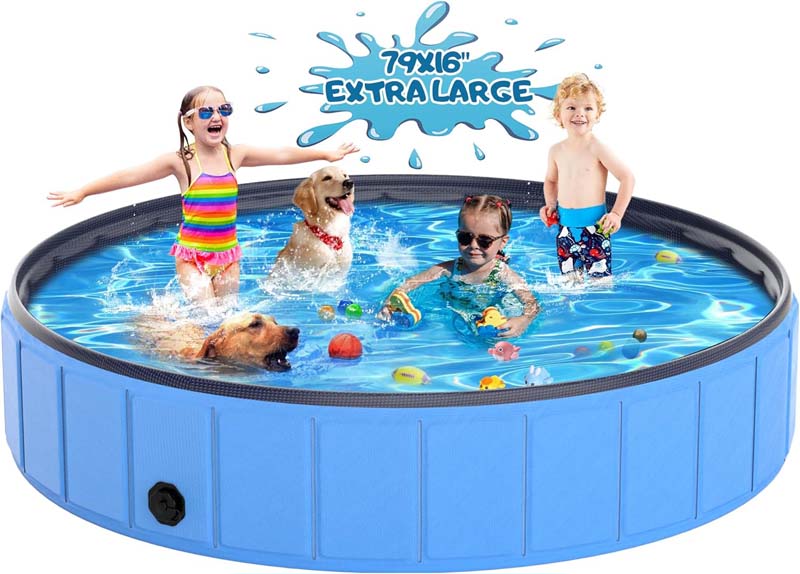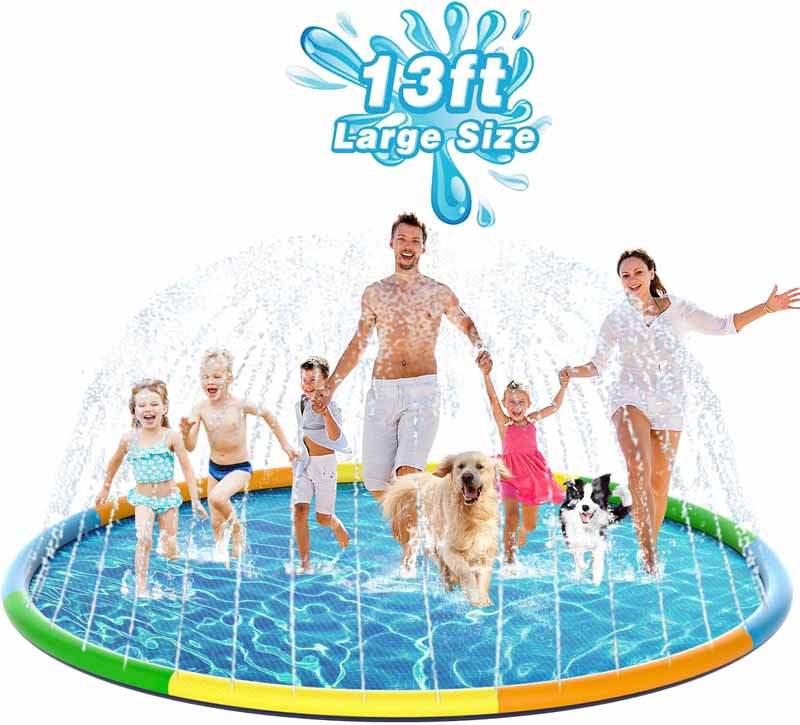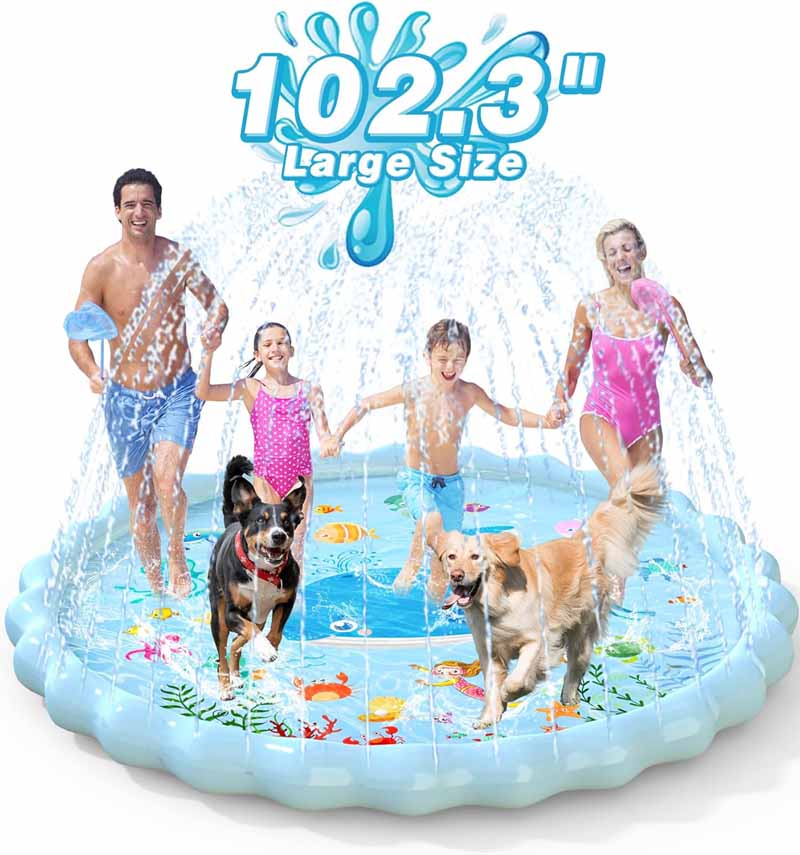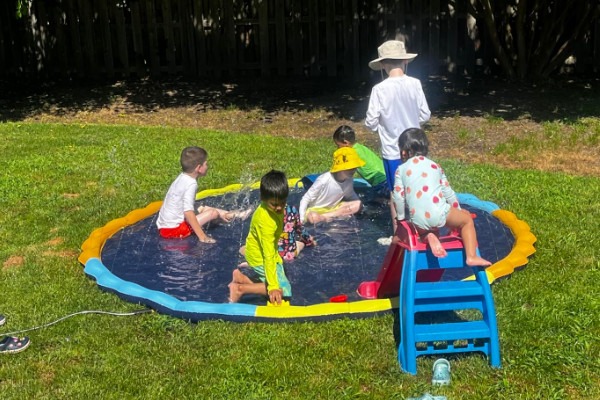
A splash pad is one of those products that feels easy to own right up until cleanup starts. During play, everything is simple: connect the hose, turn on the water, and let the backyard do the rest. The trouble usually begins after the fun is over. That is when many splash pads get folded too early, left on damp grass too long, or stored with hidden moisture still trapped in the edge and seams. The result is familiar to a lot of families: stale smell, sticky folds, extra cleanup next time, and the feeling that the product somehow aged faster than it should have. In real use, a splash pad is judged not only by how it sprays, but by how easy it is to drain, dry, fold, and store after use.
To dry a splash pad quickly, remove standing and trapped water first, wipe off surface moisture second, and let airflow finish the rest on a clean hard surface. The fastest method is not simply “leave it in the sun.” It is a short, repeatable sequence that prevents water from staying inside the slow-drying areas, especially the outer spray edge, seams, underside, and hose side.
That difference matters more than many owners expect. A splash pad that dries well stays lighter, fresher, and easier to use again. A splash pad that gets stored damp may still work, but it often stops feeling like a low-maintenance product. This guide covers how to dry it properly, how long it really takes, what slows the process down, how to fix common drying mistakes, and how better drying habits lead to better storage and longer useful life.
Why Dry a Splash Pad Fully?
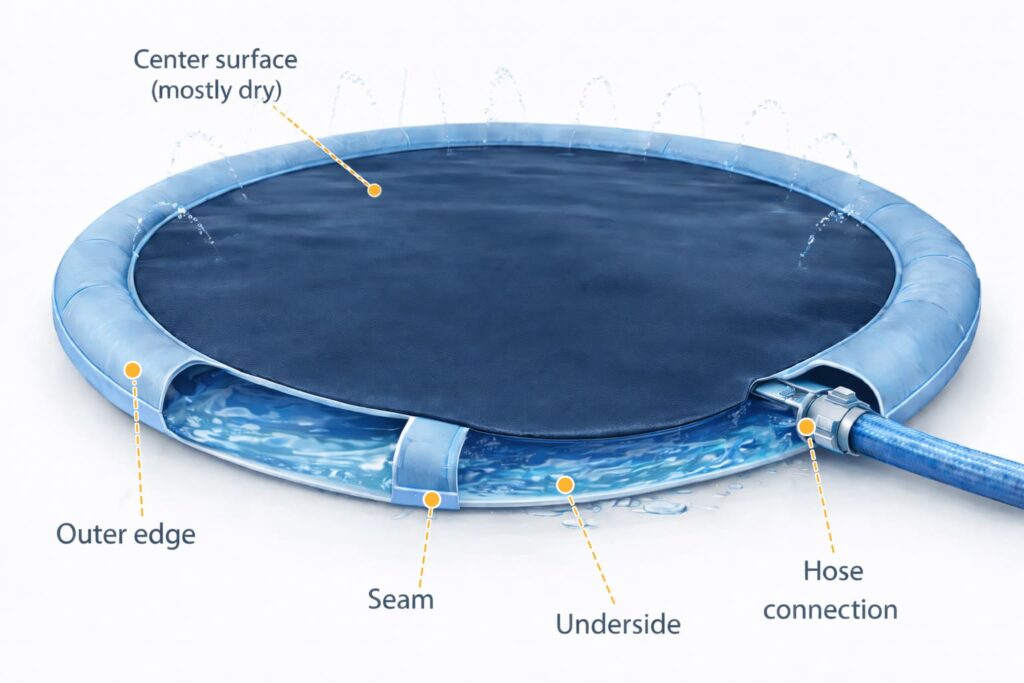
A splash pad should be dried fully because the parts that cause storage problems are often the last places most people check. The center may look dry, while the outer spray edge, seams, underside, and hose side are still holding moisture. If those areas stay damp during storage, odor, residue, and mildew risk rise quickly.
Why does a splash pad stay wet longer than it looks?
This is the first thing that causes early storage mistakes. A splash pad does not dry evenly. The flat center usually dries first because it gets the most airflow and sun exposure. The outer edge, seam lines, underside, and hose connection area usually dry last because they are thicker, less exposed, or pressed against the ground.
That is why a splash pad can look finished from above and still not be ready to store. Many people do a visual check only. The surface looks fine, so they fold it. The problem is that the remaining moisture is almost always in the exact places where folding traps it most easily.
| Area of the splash pad | Seems dry quickly | Actually dries quickly |
|---|---|---|
| Center surface | Yes | Yes |
| Outer spray edge | Often | No |
| Seams | Sometimes | No |
| Underside | Hard to judge | No |
| Hose side | Easy to miss | No |
What usually gets missed is not the obvious puddle. It is the thin moisture film inside the edge, near the seams, or on the underside after grass contact. That is the moisture that causes trouble later.
What happens if you store a splash pad damp?
Most splash pads do not feel ruined overnight. The decline is usually gradual. The next time you open the splash pad, it may feel cool around the folds, slightly stale, or not as clean as it should. After that, the problems become easier to notice. The folds may feel sticky. The surface may attract dirt more easily. The splash pad may need wiping before the next use, even though it was supposedly put away already.
That sounds small, but in real life it changes the ownership experience. A splash pad that needs extra cleanup every time stops feeling convenient. Families often describe this as the product getting old too quickly, when the real problem is often repeated damp storage rather than one big failure.
Damp storage commonly leads to:
- stale or musty odor
- sticky folds
- more visible residue
- extra cleanup before reuse
- faster loss of that clean, fresh feel
A product does not have to stop working to become disappointing. In practice, a splash pad usually feels worn out before it is actually unusable. That is why drying matters so much.
Can proper drying help prevent odor and mildew?
Yes, and this is one of the strongest reasons to take drying seriously. Odor and mildew usually begin with leftover moisture, not dramatic neglect. A splash pad folded while still damp creates a closed, low-airflow environment, especially around the outer ring and folded sections. Once that happens repeatedly, even a good product starts feeling less pleasant to own.
The most effective drying routine happens in three stages:
- remove bulk water
- remove surface water
- let the remaining moisture finish drying in open air
Each stage matters. If you skip the first stage, the splash pad stays heavy with water. If you skip the second, a thin film remains on the surface much longer than most people expect. If you skip the third, the slow-drying sections never fully catch up before folding.
This is where many families run into trouble. They rely on time alone. They leave the splash pad outside and assume it is drying. Sometimes it is. Sometimes it is just sitting there with water still trapped in the edge. A better routine removes the moisture load first and uses air to finish the job instead of asking air to do everything.
Does proper drying help a splash pad last longer?
Yes. Proper drying helps both the product’s structural life and its useful life. Structural life is whether it still functions. Useful life is whether it still feels good to own. That second part is what customers notice first.
A splash pad that is dried and stored well usually:
- opens more easily
- smells cleaner
- feels less sticky
- stays easier to fold
- creates less work next time
| Care level | Likely result |
|---|---|
| Frequently folded damp | Shorter enjoyable life |
| Basic care, uneven drying, mixed storage | Average performance |
| Fully drained, wiped, dried, and stored well | Better multi-season use |
| Better material + better care | Best long-term ownership experience |
Drying is not a side detail. It is part of durability. A splash pad that is easier to maintain almost always feels like a better product over time.
How to Dry a Splash Pad Fast
The fastest way to dry a splash pad is to reduce the water load before air-drying begins. Do not wait for evaporation to solve everything. Remove the heavy water first, wipe the surface second, and let airflow finish the last layer of moisture.
How do you dry a splash pad step by step?
A simple five-step routine works best for most homes.
First, turn off the water and disconnect the hose. This keeps extra water from staying around the inlet while you move the pad.
Second, lift one side slowly and guide the bulk water toward the lowest edge. Move steadily rather than dragging quickly. Fast movement often just shifts water into another low spot.
Third, check the perimeter. If one side feels thicker, cooler, or harder to lift, trapped water is still inside. Lift again from a different angle.
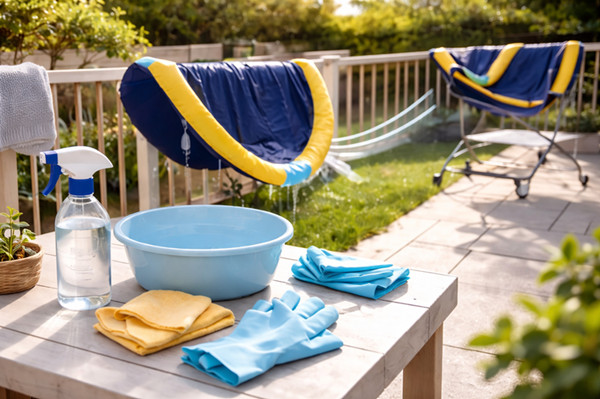
Fourth, spread the splash pad flat on a clean hard surface and wipe the surface with a dry towel or microfiber cloth. This is one of the biggest time-saving steps in the whole routine.
Fifth, let it air-dry fully before folding. Do a final touch check on the edge, seams, underside, and hose side.
| Step | Action | Why it matters |
|---|---|---|
| 1 | Disconnect the hose | Prevents extra water from lingering |
| 2 | Lift and drain | Removes bulk water first |
| 3 | Recheck heavier sections | Finds trapped edge water |
| 4 | Wipe the surface | Cuts drying time noticeably |
| 5 | Air-dry and inspect | Finishes the job before storage |
This routine feels faster because it is more efficient, not because it skips anything important.
How do you get all the water out of a splash pad?
This is where many people lose the most time. The visible water is easy to notice. The hidden water is what keeps the splash pad damp longer than expected.
The most reliable method is a three-check method:
- Visual check: look for glossy patches and shallow pools
- Touch check: feel the edge for cooler, heavier, or thicker sections
- Lift check: compare different sides and notice which area feels weighted
For larger splash pads, one drain pass is often not enough. Water moves while you lift the first side, then settles somewhere else. A second pass from another angle often solves that. This matters even more on grass, where the splash pad sits unevenly and low spots form easily.
A splash pad is not really drained when the center looks empty. It is drained when the heavier sections around the perimeter are gone too.
How do you dry a splash pad right after play?
Right after play is the easiest time to do it correctly. The splash pad is already open, the weather is usually still favorable, and the water has not had time to settle into awkward places. The later you wait, the more the job changes. Dirt dries onto the surface. Grass clings to the underside. Air gets cooler. Humidity may rise. What could have been a short, practical routine starts feeling like one more thing to deal with.
For many families, the most realistic same-day routine looks like this:
- turn off the water
- drain the splash pad
- wipe the surface
- leave it open while everyone goes inside
- fold it later the same afternoon once it passes a quick dry check
This works better than trying to do every step at once, and it works much better than leaving the splash pad until the next day. The difference is not just discipline. It is convenience. A splash pad that gets handled while it is still open and warm is almost always easier to finish properly.
Should you use sun or airflow to dry a splash pad?
Use both when possible, but airflow usually matters more for full drying. Sunlight helps the top surface look dry quickly. Airflow helps the slower sections actually finish. That includes the underside, seams, outer edge, and hose side.
This is why a splash pad on a sunny lawn may still stay damp underneath, while a splash pad on a clean patio with steady air movement may dry more evenly, even if the sun is weaker.
| Drying setup | Surface drying | Hidden moisture drying | Overall result |
|---|---|---|---|
| Sunny lawn, no wiping | Fair | Poor | Slow overall |
| Sunny patio, no wiping | Good | Moderate | Better, but uneven |
| Patio + wipe + airflow | Excellent | Good | Best overall |
| Cloudy day + wipe + airflow | Good | Good | Very reliable |
Sunshine makes the splash pad look dry. Airflow helps it truly finish drying.
How Long Does It Take to Dry a Splash Pad?
Drying time depends much more on the setup than on the clock. The biggest influences are how much water was removed first, what surface the splash pad is drying on, how much air is moving, and how humid the air is.
How long does it take to dry a splash pad in real use?
There is no single answer for every splash pad, but practical ranges are useful. Size matters because larger splash pads have more edge area, more underside contact, and more potential for trapped water. Surface matters because hard surfaces improve drainage and inspection. Weather matters because airflow and humidity can change the result more than people expect.
| Drying setup | Small splash pad | Medium splash pad | Large splash pad |
|---|---|---|---|
| Warm patio + wiped + breeze | 20–40 min | 30–60 min | 45–90 min |
| Warm patio + no wiping | 35–60 min | 50–90 min | 70–120 min |
| Grass + warm weather | 45–90 min | 60–120 min | 90–180 min |
| Cloudy + breezy + wiped | 30–60 min | 45–90 min | 60–120 min |
| Humid evening | 60–120 min | 90–150 min | 120–240 min |
These are real-use estimates, not promises. The important thing is what changes the outcome. Wiping and smart placement usually reduce drying time more than people expect.
What affects splash pad drying time the most?
Five things matter most:
- how much water you remove first
- airflow
- drying surface
- humidity
- splash pad size
| Factor | Effect on drying time |
|---|---|
| Water removed first | Very high |
| Airflow | Very high |
| Surface type | High |
| Humidity | High |
| Direct sun | Medium |
| Pad size | Medium to high |
This is why “it was sunny all afternoon” does not always mean the splash pad should be ready. The bigger issue is often trapped water plus weak airflow or damp ground underneath.
How do you know a splash pad is fully dry?
This is one of the most useful checks in the entire routine. Many owners fold too early because the center feels dry first. The slow-drying areas matter more than the obvious ones.
A splash pad is ready to store only when these areas are dry:
| Check point | Ready to store | Not ready yet |
|---|---|---|
| Center surface | Dry and smooth | Glossy or cool |
| Outer edge | Even and light | Damp or heavier in one section |
| Seams | Dry to the touch | Slightly cool or moist |
| Underside | Dry when lifted | Damp where it touched the ground |
| Hose side | Dry around inlet | Moist around connection |
| Smell | Neutral | Musty or stale |
| Towel test | Towel stays dry | Towel picks up moisture |
The towel test is especially useful. Press a dry towel on the edge and seam area. If it comes away damp, the splash pad still needs more time. This is a much better test than a quick glance from above.
How do you dry a splash pad on cloudy days?
Cloudy weather slows drying, but it does not stop it. What changes is how much the splash pad needs help from you. On cloudy days, manual steps matter more because the weather is doing less of the work.
A good cloudy-day routine is simple:
- drain more thoroughly
- wipe more carefully
- choose the breeziest location available
- use a hard surface instead of grass
- reposition the splash pad once if needed
A well-drained and well-wiped splash pad on a breezy cloudy day usually ends up in better shape than a half-dry splash pad left outside overnight.
Do splash pads waste a lot of water?
They can, but water use is more controllable than many people think. A splash pad itself does not decide the water use. Hose pressure and play time do.
| Hose flow rate | 15 min | 30 min | 45 min | 60 min |
|---|---|---|---|---|
| 2 gallons/minute | 30 gallons | 60 gallons | 90 gallons | 120 gallons |
| 4 gallons/minute | 60 gallons | 120 gallons | 180 gallons | 240 gallons |
| 6 gallons/minute | 90 gallons | 180 gallons | 270 gallons | 360 gallons |
That means families have more control than they assume. Lower pressure, shorter sessions, and turning the hose off during breaks can reduce water use meaningfully. There is also a maintenance benefit: lower-flow use often leaves less residual water behind, which makes drying easier later.
Can You Dry a Splash Pad Outside?
Yes, and for most homes that is the best option. But “outside” is not automatically the same as “good drying conditions.” The location matters.
Is grass a good place to dry a splash pad?
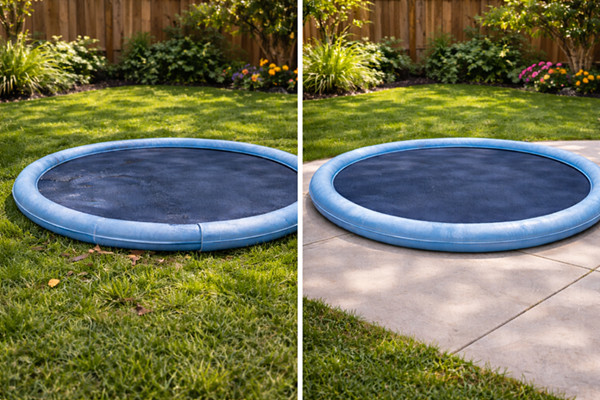
Grass is convenient, but it is usually not the best place for full drying. The biggest reason is uneven moisture. The underside stays in contact with something cool and often damp, while the top gets most of the air and light. Grass also tends to leave debris on the splash pad just when it should be getting cleaner for storage.
Common grass-related issues include:
- clippings sticking to the underside
- soil or leaf debris collecting near the edge
- slower underside drying
- water pooling in low spots
| Drying on grass | Result |
|---|---|
| Convenience right after play | High |
| Drainage | Uneven |
| Underside drying | Slow |
| Debris pickup | Higher |
| Best for final storage prep | No |
Grass is fine for short draining right after play. It is usually not ideal for final drying before storage.
Is concrete or patio better for drying a splash pad?
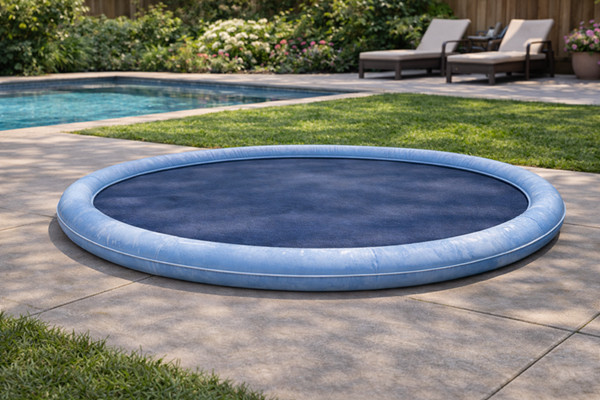
In most cases, yes. A hard, clean surface gives better drainage, better inspection, and better underside drying. It also makes the towel step more effective because the splash pad is supported from underneath.
Patios, decks, and paved areas usually make cleanup feel more controlled. That matters because if cleanup feels easier, people are more likely to do it properly every time. A splash pad that dries on a clean patio is also less likely to pick up dirt right before folding.
Can you leave a splash pad outside overnight?
You can, but it should be treated as a backup plan, not the main routine. Overnight drying sounds helpful because it adds time, but nighttime often brings cooler air, more humidity, dew, and extra yard debris. So extra time does not always mean better drying.
If the splash pad is already almost fully dry and the weather is stable, leaving it outside may be fine. If it is still damp around the edge or underside, overnight exposure often delays the result rather than improving it.
Does outside drying make a splash pad dirtier?
It can. That depends on where you place it.
| Outdoor drying location | Dirt risk | Good for final storage prep |
|---|---|---|
| Swept patio | Low | Yes |
| Clean deck | Low to medium | Yes |
| Lawn edge | Medium to high | Usually no |
| Under trees | High | No |
| Dusty driveway | Medium | Only if wiped again |
The final drying area is part of the storage routine. If the splash pad dries in a dirty place, it may still need one more wipe before folding.
How to Store a Splash Pad After Drying
Storage is what decides whether a good drying routine actually pays off. A splash pad that is dried well and stored badly can still come back out feeling stale, dusty, or awkward to use.
Should you clean a splash pad before storing it?
Yes, but keep it practical. If the splash pad only has clean water on it, draining, wiping, and drying may be enough. If it has grass, sunscreen residue, pet hair, or soil on it, it should get a light clean before final storage.
| Condition after use | Best action before storage |
|---|---|
| Clean water only | Drain, wipe, dry |
| Grass and debris | Shake off, wipe, dry |
| Sunscreen or sticky residue | Quick rinse, wipe, dry fully |
| Pet hair or muddy residue | Light clean, wipe, dry fully |
| Slight stale smell | Clean lightly, then dry thoroughly |
A splash pad that dries dirty usually stores dirty, and that makes the next use less pleasant.
What should you do if a splash pad already smells musty?
This is a very real customer problem, especially after the splash pad has been folded damp more than once. The first step is not to store it again and hope it gets better. Open it fully, rinse away any loose dirt, wipe the surface, and let it dry completely in moving air. Pay special attention to the outer edge, seams, underside, and hose side.
A simple musty-smell reset looks like this:
| Problem | Likely cause | What to do |
|---|---|---|
| Musty smell | Trapped moisture in edge or folds | Reopen fully, drain again, wipe, dry longer |
| Sour smell | Stored damp after heavy use | Light clean, rinse, dry completely |
| Sticky feel | Dirt, sunscreen, or residue | Wipe clean, rinse lightly, dry fully |
| Smell comes back after storage | Storage area too humid or too hot | Change storage location |
What usually makes the problem worse is refolding too soon. The splash pad has to be truly dry before it goes back into storage, or the same smell often returns.
How should you fold a splash pad after drying?
Fold it gently, not aggressively. The best folding methods are wide panel folds, loose rolls, and broad smooth sections. The methods to avoid are tight forced square folds, wet folding, and always using the exact same sharp fold lines.
| Folding method | Material stress | Opens easily next time |
|---|---|---|
| Tight square fold | Higher | Less easily |
| Wide panel fold | Low | Good |
| Loose roll | Low | Very good |
| Wet fold | Very high | Poor |
Folding style affects how flat the splash pad lies next time, how fresh it feels, and how quickly it starts looking worn.
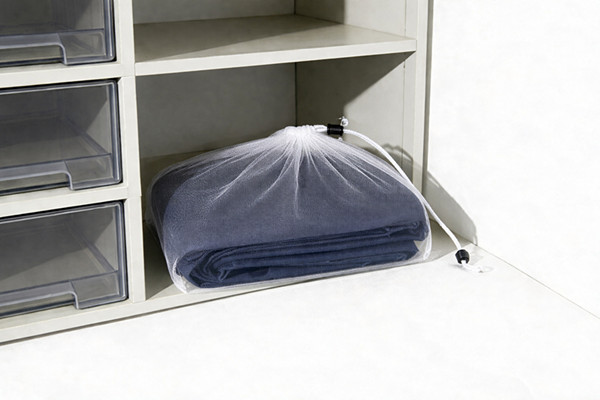
Where should you keep a splash pad after drying?
The best storage location is cool, dry, shaded, clean, and off the floor if possible.
| Storage location | Moisture risk | Heat risk | Good for long-term storage |
|---|---|---|---|
| Indoor closet shelf | Low | Low | Excellent |
| Clean dry garage shelf | Low to medium | Medium | Good |
| Garage floor | Medium | Medium | Weak |
| Humid shed | High | Medium | Poor |
| Hot car trunk | Low moisture, high heat | Very high | Poor |
| Outdoor patio box | Medium | High | Weak |
Shelf is usually better than floor. Shade is usually better than heat. Stable indoor storage is usually better than convenience-based storage.
What mistakes ruin a splash pad after drying?
These are the most common ones:
| Mistake | Later result |
|---|---|
| Folding while still damp | Odor, mildew risk, sticky folds |
| Storing on a dirty floor | More cleanup next use |
| Keeping it in a hot area | Faster aged feel |
| Using the same sharp fold every time | Hard crease memory |
| Storing with residue still on it | Dirt and oils sit in folds |
| Leaving it outside too often between uses | More sun stress and debris |
Many people assume the splash pad itself is the only problem when ownership starts feeling frustrating. In practice, poor storage habits are often part of the reason.
How long do splash pads usually last?
That depends on product quality, water pressure, sun exposure, and post-use care. In normal home use, the difference between one season and several seasons often comes down to how the product is dried and stored.
| Care level | Expected outcome |
|---|---|
| Frequent use + often stored wet | May feel old within one season |
| Regular use + average care | Often 1–2 seasons |
| Regular use + good drying + good storage | Often 2–4 seasons |
| Better reinforced PVC + careful maintenance | Best chance of strong long-term use |
Many customers judge a splash pad by how it feels in the second month, not on day one. That is why maintenance changes the real ownership result so much.
Which splash pads are easier to dry and store?
Not all splash pads are equally easy to maintain. The easier ones usually have:
- better edge drainage
- smoother water paths
- hose areas that do not trap as much water
- surfaces that wipe clean more easily
- seam areas that stay flatter after use
That matters because maintenance is part of product quality. A splash pad that creates fun for twenty minutes but cleanup frustration afterward does not feel like a good product.
A better splash pad should not only spray well. It should also be easier to drain, easier to dry, easier to fold, and easier to store.
Frequently Asked Questions
How do you dry a splash pad quickly?
Drain the water first, wipe the surface, and let it air-dry on a clean hard surface with good airflow.
How do you get all the water out of a splash pad?
Lift the splash pad from different sides and guide trapped water toward the lowest edge. Check the outer ring and hose side carefully.
Can you leave a splash pad outside overnight?
You can, but same-day drying is usually better because overnight humidity and dew can leave it damp again.
How long does it take to dry a splash pad?
It depends on size, weather, airflow, and surface. In good conditions, it may take around 20 to 90 minutes.
How do you know a splash pad is fully dry?
Check the center, edge, seams, underside, and hose side. If all areas feel dry and a towel stays dry, it is ready to store.
Related Articles
How to Clean and Store a Splash Pad Properly
Splash Pad Water Pressure Guide
Looking for a Better Splash Pad?
A better splash pad should be fun to use and easy to maintain. If you are looking for ready-to-buy splash pads or custom product solutions, Epsilon supports both Amazon retail orders and OEM/ODM development.
Shop on Amazon: