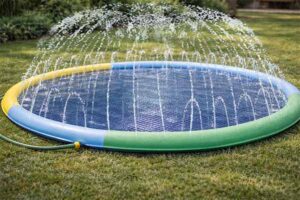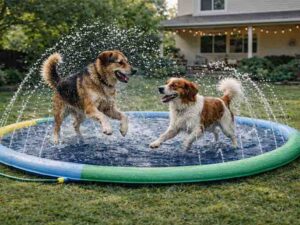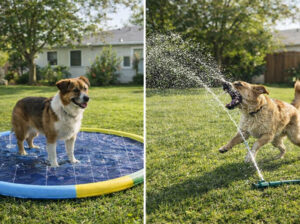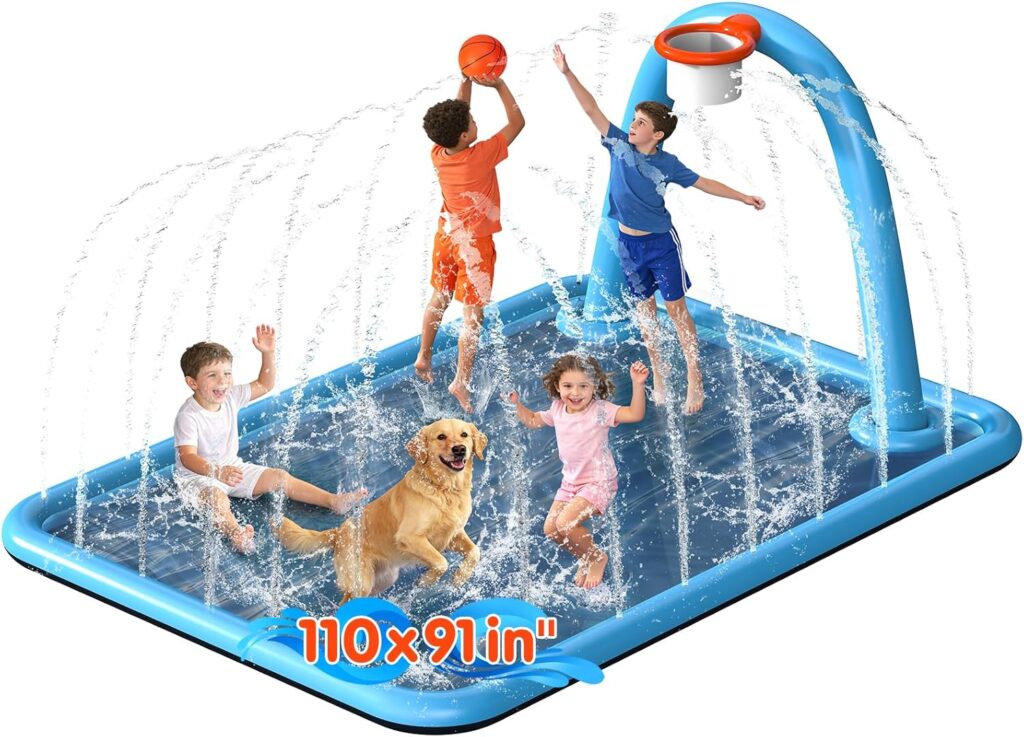
A splash pad should be one of the easiest summer products to use. You lay it down, connect the hose, turn on the water, and let the fun start. But when the pad begins to slide, wrinkle, or drift, the whole experience changes. What should feel simple starts feeling fussy. Parents keep stopping play to straighten the edge. Kids lose confidence in their footing. And a product that looked effortless online suddenly feels harder to manage in real life.
The reason is usually not just the product itself. In most backyards, sliding happens because several small conditions work together. The surface may be smoother than it looks. The ground may slope just enough to pull water to one side. The pressure may be stronger than the setup really needs. Or water may be building under the pad faster than the area can drain. Once those things combine, even a decent splash pad can feel unstable.
To keep splash pads from sliding, place them on flat ground with better grip, avoid slick wet surfaces, use moderate hose pressure instead of full flow, and stop water from pooling under or around the pad. In most home setups, those four adjustments solve the problem faster than random add-ons or constant repositioning.
The good news is that sliding is usually fixable. And once you understand what causes it, it becomes much easier to choose the right surface, set the pressure correctly, and pick a splash pad that feels better in everyday use.
Why Splash Pads Slide
Splash pads slide when the ground, water flow, and product movement stop working together. In simple terms, the pad starts moving when the surface underneath cannot hold it steady against water force, foot traffic, and repeated motion.
When a Splash Pad Starts to Feel Unstable
Most splash pads do not begin with dramatic movement. The first signs are subtle. One edge creeps a little. The center stops lying perfectly flat. One side looks wetter than the other. Children start adjusting their steps without even thinking about it. Parents often describe the pad as feeling loose, floaty, or not fully planted.
Those early signs matter because they appear before the problem becomes obvious. Once the pad starts losing steady contact with the surface underneath, the whole play area becomes less predictable. That affects how children run, stop, turn, and stand. It also affects how relaxed adults feel while supervising.
This is why sliding is more than a minor annoyance. It changes the way the product feels in use. A splash pad that stays put feels easy. A splash pad that keeps shifting feels like work. And that difference often decides whether the family uses it once in a while or keeps using it all summer.
In most cases, the first one to three minutes tell you almost everything. If the edge already starts creeping, if the center wrinkles early, or if one side gathers more water right away, the setup needs adjusting before play really gets going.
What Makes Splash Pads Move
A splash pad moves when the pushing force becomes stronger than the holding force.
The pushing force comes from water pressure, repeated stepping, jumping, turning, and water spreading across the surface. The holding force comes from the ground texture, how flat the area is, how evenly the splash pad is laid out, and how well the material stays planted when wet.
Once those forces stop balancing each other, movement begins.
That is why splash pad sliding is often misunderstood. Many people assume the pad moves only because the material is too thin or the product is poorly made. Sometimes that is true, but just as often the real problem is environmental. The same splash pad can behave very differently on level grass, smooth concrete, a textured patio, or a lawn with hidden low spots.
Water is the hidden variable in all of this. It is the fun part, but it is also what changes how the product interacts with the ground below. A splash pad may feel fine at first because the base is only lightly wet. A few minutes later, once the area is fully soaked, the grip can drop sharply. That is when the pad starts feeling slippery, loose, or harder to control.
Why Splash Pads Slide More on Hard Ground
Hard ground is not automatically bad, but it is less forgiving.
On level grass, the splash pad usually gets some natural friction from the surface. On smooth patios or sealed concrete, it gets much less. That means the same product, with the same children, using the same hose, can feel stable in one part of the yard and frustrating in another.
Hard surfaces also expose small setup mistakes more quickly. A slight slope that barely matters on grass can pull water clearly to one side on concrete. A smooth patio that feels fine when dry may become very slick once it is fully wet. And once that happens, the splash pad has much less margin to stay planted.
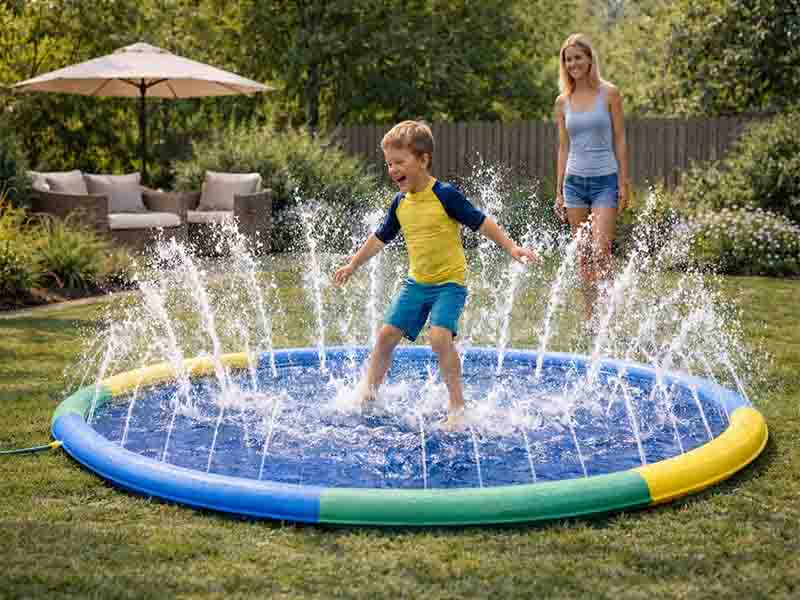
This does not mean hard ground should always be avoided. It means surface type matters more than many families expect. A textured patio usually performs better than polished sealed concrete. A flat slab is easier to manage than one designed to drain sharply in one direction. And moderate pressure almost always works better than full flow on hard ground.
| Surface Condition | Stability | Main Challenge | What Usually Happens |
|---|---|---|---|
| Level grass | High | Hidden dips or soft patches | Usually stable if the lawn is firm |
| Firm textured patio | Medium to high | Surface gets slick over time | Good if pressure is controlled |
| Smooth sealed concrete | Low to medium | Lower grip when fully wet | More shifting and more adjustments |
| Slightly sloped hard ground | Low | Water pulls to one side | Uneven spray, drift, and bunching |
| Lawn with muddy or soft spots | Medium to low | Base loses support as it gets wet | Center sagging or edge wrinkling |
Best Ground for Splash Pads
The best ground for splash pads is flat, supportive, and not too slick when wet. For most homes, level grass is the easiest option, while textured hard surfaces can also work well when water pressure and drainage are managed properly.
Are Splash Pads Better on Grass
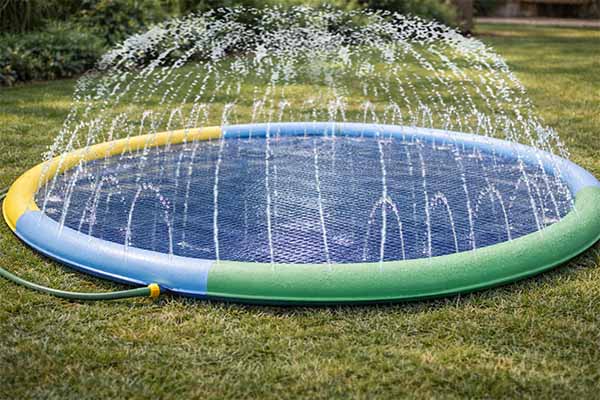
For everyday backyard use, grass is often the most forgiving surface. It usually offers better natural grip than smooth concrete, feels more comfortable under bare feet, and makes the whole setup feel more relaxed.
But grass only works well when it is actually suitable.
A lawn works best when it is level, firm enough to support the whole base, free of muddy spots, and clear of roots, stones, sprinkler heads, and shallow holes. It works poorly when it is soft, uneven, bowl-shaped, or already waterlogged before the splash pad even goes down.
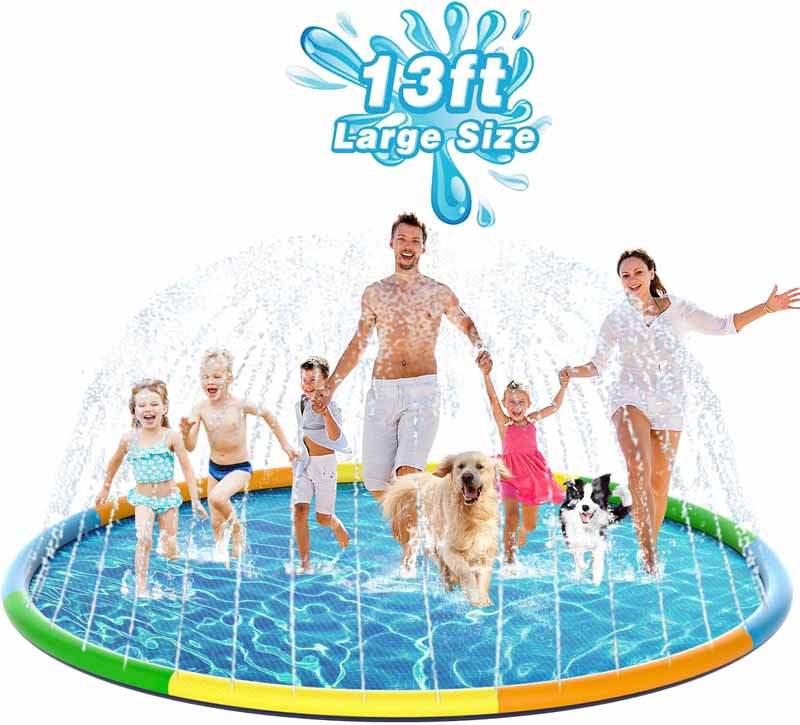
This matters more with larger splash pads. A 13-foot pad covers much more ground than a smaller one, so even small uneven spots become more noticeable during use. A lawn that looks mostly flat may still create center dipping, uneven spray, or bunching once the water has been running for several minutes.
Grass also changes during play. A lawn may feel firm at the start, then soften as water collects and the ground gets saturated. That is why some splash pads feel fine at first and gradually become less stable. The product did not suddenly change. The surface underneath it did.
Still, for many families, a good lawn remains the best everyday option because it balances comfort, grip, and ease of use better than most hard surfaces.
Are Splash Pads Safe on Concrete
Yes, splash pads can be used on concrete, but the setup needs more attention.
Concrete is appealing for good reason. It is usually close to the house, easier to rinse afterward, simpler to supervise from a nearby patio door, and faster to dry after play. For many homes, those are real advantages.
The challenge is traction. Once concrete becomes fully wet, especially if it is smooth or sealed, the splash pad has much less friction underneath it. That makes the entire setup more sensitive to pressure, slope, and foot traffic.
Concrete works better when it is flat, textured, clean, and used with moderate water flow. It works worse when it is glossy, slightly sloped, dusty, or run at full pressure from the start.
Families sometimes blame the splash pad too quickly when the real problem is the patio. A pad that feels frustrating on one smooth section may work much better a few feet away on a more textured area. If concrete is the main available surface, it can still work well. It just rewards careful positioning and pressure control much more than grass does.
Which Surface Helps Splash Pads Stay Put
The best surface is the one that gives the most stable contact between the product and the ground while still managing water well.
In practical home use, the strongest options are usually level grass, firm textured patio, or flat hard ground with a thin anti-slip support layer if needed. The weakest options are smooth sealed concrete, glossy patio stone, lawns with soft low spots, and any area where water immediately pools.
This is one reason surface choice should always be part of the buying decision. Families often compare splash pads by size, color, or spray pattern, but surface fit matters just as much. A splash pad can use thicker PVC and still disappoint if the actual installation area makes it difficult to control.
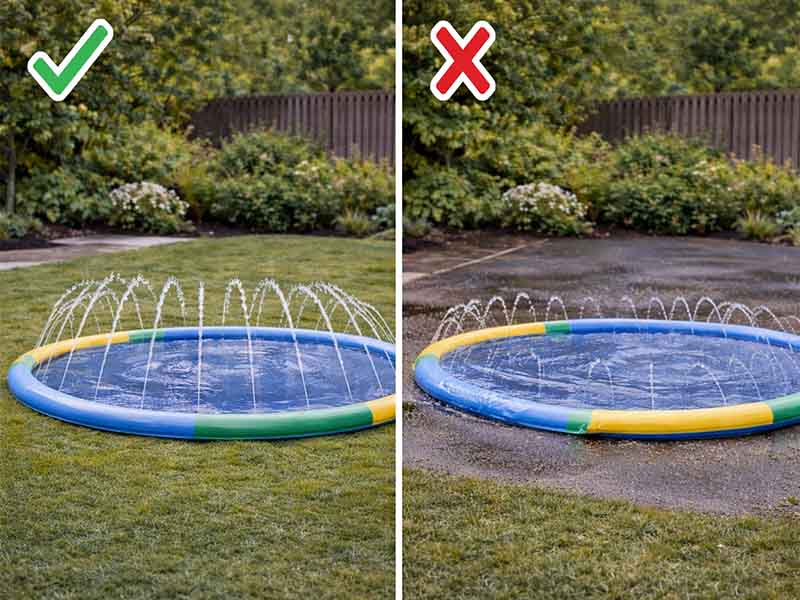
Product structure still matters, though. A flatter splash pad with balanced spray distribution and stronger lay-flat behavior gives families more margin across different ground conditions. It is easier to manage on imperfect lawns and easier to stabilize on patios. That makes a noticeable difference in daily use.
| Surface Type | Grip | Comfort | Cleanup | Best Use Case |
|---|---|---|---|---|
| Level grass | High | High | Medium | Everyday family backyard use |
| Firm lawn | Medium to high | High | Medium | Kids and pets, moderate activity |
| Textured patio | Medium | Medium | High | Cleaner setup near the house |
| Smooth concrete | Low | Low | High | Only with careful setup |
| Hard ground with anti-slip support | High | Medium | Medium | Homes with limited lawn space |
How to Stop Splash Pads Sliding
To stop splash pads from sliding, solve the setup in the right order: choose flatter ground, control the water flow, improve grip where needed, and prevent water from building under or around the pad.
How to Set a Splash Pad on Flat Ground
Flat ground sounds simple, but this is where many sliding problems begin.
A surface can look level from eye height and still have enough slope to affect the splash pad once water starts moving. Because the product spreads water over a wide area, even a small difference in ground level becomes much more noticeable during use.
A practical setup routine looks like this. First, check the area dry. Look for low spots, small bumps, stones, roots, drainage lines, or slope. Second, wet the area lightly or watch the first minute carefully once the hose is on. If water immediately travels toward one side, the ground has more pull than it first appeared. Third, spread the splash pad completely flat before increasing the flow. Do not let one edge stay curled or tucked underneath. Fourth, move the splash pad early if needed. Shifting it two or three feet before play begins is much easier than repeatedly resetting it once children are already on it.
This matters even more with larger splash pads because they cover more area and are more likely to span subtle changes in height, texture, and drainage.
How to Keep a Splash Pad From Bunching
Bunching usually means the splash pad is losing even support somewhere across the base. The center wrinkles, one side folds inward, or the edge stops lying smooth. These signs are easy to spot, but the real cause is usually underneath.
Most bunching comes from one of three problems: the ground is uneven, water is building more on one side than the other, or the pressure is too strong for the current setup.
Families often try to solve bunching by pulling the product flatter with their hands or pressing one side down for a moment. That may help briefly, but it rarely fixes the real issue. If the base condition is still wrong, the wrinkle usually comes back.
A better way to read bunching is to ask what kind of imbalance it is showing. A center wrinkle often points to a low spot or weak support underneath. A one-sided fold often points to slope or uneven water distribution. Edge curling often points to a slick surface or pressure that is too high.
This is also where product structure matters. A splash pad that lays flatter, uses stronger material, and holds its shape under movement is less likely to bunch during normal play. But even good structure cannot fully overcome poor ground or excessive pressure.
How to Help Splash Pads Grip Better
Grip matters, but better grip does not mean adding random layers under the splash pad and hoping one works.
Some common “fixes” actually make the problem worse. Smooth tarps can get slippery when wet. Thin plastic sheets reduce friction. Soft foam can shift under movement. Thick mats may trap water. Loose fabric layers may bunch with the splash pad itself.
A better approach is to improve grip without creating a second unstable surface.
What usually helps is choosing a more textured area, lowering water flow so the surface does not flood, keeping the underside clean before setup, and using a thin textured anti-slip support on hard ground if needed. What helps less than people expect is heavy makeshift weighting, glossy mats, thick layered padding, or setting up on surfaces that are already slick before the water even starts.
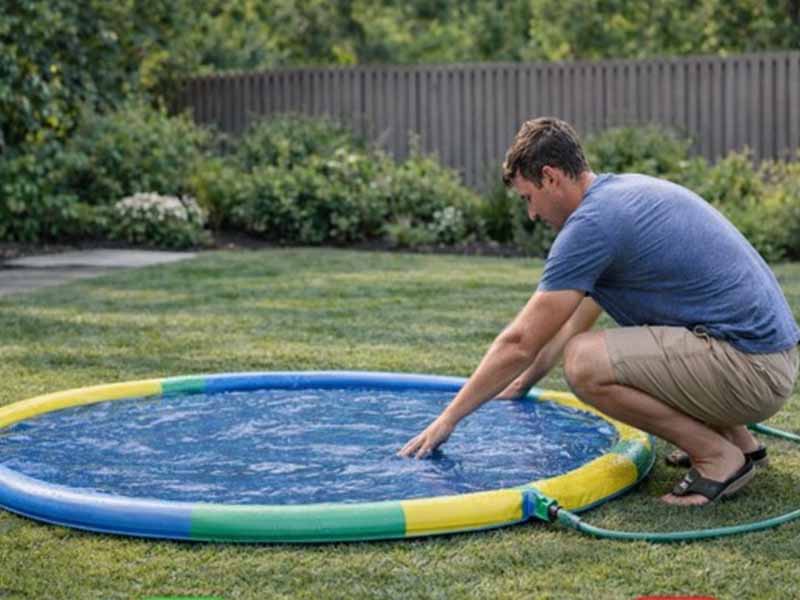
For most homes, the biggest improvement still comes from better setup, not more accessories. Once the ground, flow, and water pattern are corrected, many splash pads become much easier to manage without extra add-ons.
| Fix Priority | What to Adjust | Why It Helps |
|---|---|---|
| 1 | Ground position | Prevents directional pull and uneven support |
| 2 | Water pressure | Reduces excess force and surface flooding |
| 3 | Drainage awareness | Keeps the base from becoming too slick |
| 4 | Surface grip | Improves contact on hard ground |
| 5 | Lay-flat setup | Keeps the shape even from the start |
Does Water Pressure Affect Splash Pads
Yes, and in many backyards, water pressure is the hidden reason a splash pad feels harder to manage than expected. Families often focus on the surface first, but pressure changes the behavior of the entire setup.
Once the hose is opened too far, the splash pad does not just spray more. It also gets wetter faster, pushes harder at the ring, and becomes more sensitive to slope, surface texture, and foot traffic. That is why two households can use similar splash pads and have completely different experiences.
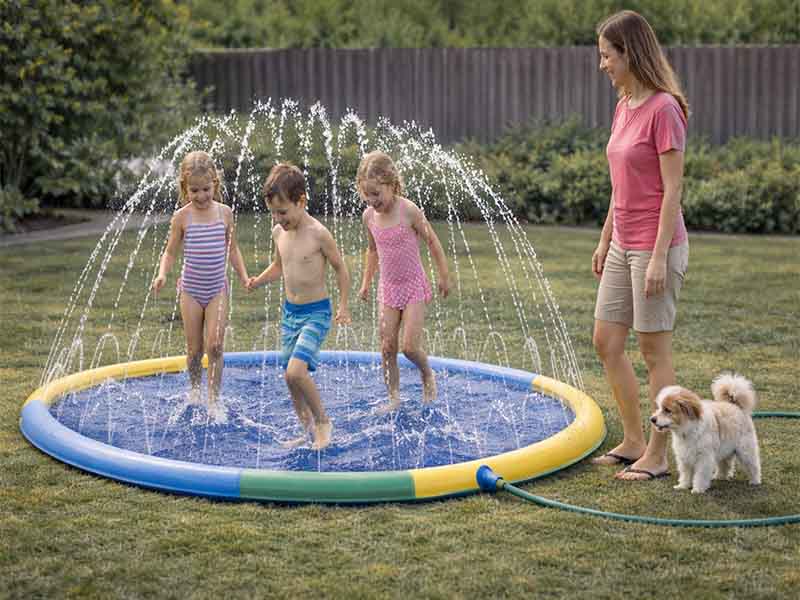
Can High Pressure Push Splash Pads Around
Yes. High pressure can make a splash pad move even when the product itself is not poorly made.
More pressure means more force moving through the ring and more water spreading across the surface. That creates two problems at once. The splash pad must resist stronger outward movement, and the base becomes wetter faster, which reduces traction on many common backyard surfaces.
This is especially noticeable on smooth concrete, sealed patios, slightly sloped hard ground, larger splash pads, and setups with multiple active children. A large splash pad already covers a wider area, so pressure imbalance is easier to see. One side may begin drifting first, the edge may creep outward, or the whole base may start feeling less planted.
What looks dramatic is not always what works well. Strong spray may look exciting for the first minute, but daily use is judged by comfort, control, and repeatability. Children usually enjoy a splash pad more when they can run, stop, and stand without the surface constantly changing under them.
How Much Water Do Splash Pads Really Need
Most splash pads need enough water to keep the spray ring active and even. They do not need enough water to flood the whole play surface.
Once the jets are active and the ring is spraying consistently, the product is already doing its job. Beyond that point, extra flow often adds more runoff, more surface wetness, more spray outside the play zone, more instability, and more water waste.
A splash pad usually has enough water when the spray is even, the ring feels balanced, the center stays usable for standing and walking, and the pad stays flat during the first minutes of play. It usually has too much water when the top starts looking like a moving film instead of a play surface, when one side floods faster than the other, or when the edge starts shifting outward.
For many families, moderate pressure gives the best result. That matters because a splash pad that works well at moderate flow feels simpler, steadier, and easier to use again tomorrow.
| Water Flow Level | What It Looks Like | What It Usually Feels Like | Best Use |
|---|---|---|---|
| Low | Uneven or weak spray | Underpowered | Too little for normal play |
| Moderate | Even spray, stable surface | Controlled and comfortable | Best for most families |
| High | Strong spray, heavier runoff | More exciting at first, less stable later | Only works on very good surfaces |
| Excessive | Flooding, drifting, uneven movement | Slippery and hard to manage | Usually too much for home use |
When Splash Pads Get Too Wet to Grip
This is the point where many setups start to fall apart.
At first, the splash pad may seem fine. The product is flat, the spray looks active, and children are enjoying it. Then after several minutes, the surface starts to feel different. It becomes looser underfoot. Water begins moving across the top instead of simply spraying around the edge. One side may look shinier or wetter than the rest. That is when grip starts dropping.
What is happening is not just “more water.” It is a change in how the splash pad interacts with the ground. Once the base and surrounding area become too wet, the product loses some of the stable contact it had in the beginning. On hard ground this can happen quickly. On grass, it may happen more gradually as the lawn softens.
The best response is usually simple: lower the pressure a little, smooth the base if needed, move the splash pad if one side is clearly weaker, and avoid restarting at full pressure again. A small pressure adjustment often solves more than people expect.
Are Splash Pads Safer When They Stay Flat
Yes. A splash pad that stays flat is usually safer, easier to supervise, and more comfortable for everyday family use. Stable footing changes the entire experience. Children move more naturally, parents intervene less often, and the play zone stays easier to understand at a glance.
Why Stable Splash Pads Feel Safer
Parents usually notice safety before they put it into words. They see it when children move confidently instead of testing every step. They feel it when the splash pad stays where it should instead of creeping out of place. They notice it when play flows naturally instead of stopping every few minutes for adjustments.
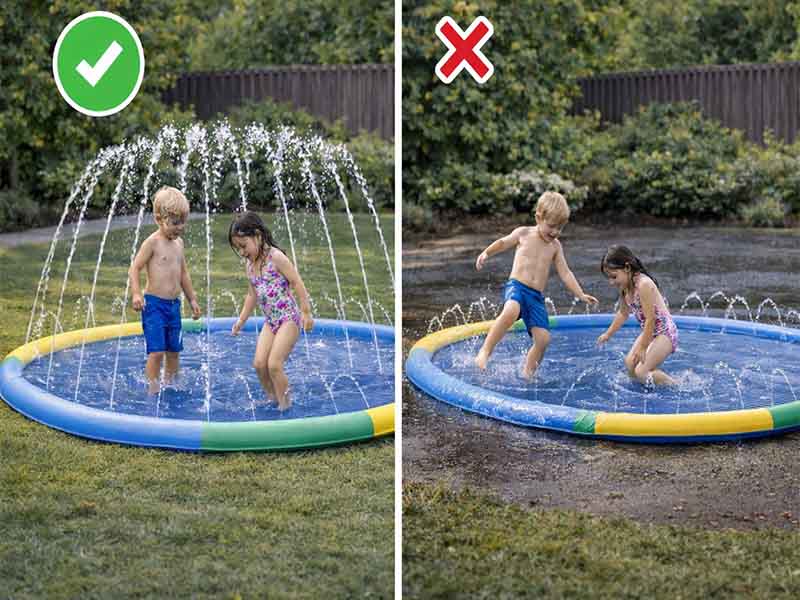
A stable splash pad creates a more readable play area. Children know where the edge is. The center behaves consistently. The spray feels balanced. The product does not surprise them with wrinkles, drifting corners, or a shifting base.
This matters even more for younger children, homes with multiple users, dog splash pad setups, and larger splash pads where more movement happens at once. Stable does not mean rigid. A splash pad is still a wet play product. But it should feel predictably wet, not unpredictably mobile.
When a Sliding Splash Pad Becomes a Risk
Not every slight movement is a serious problem, but repeated or increasing movement should not be ignored.
Sliding becomes a real risk when it changes how children step, run, or stop. In real backyard use, the issue is usually not dramatic. It is a child stepping on a wrinkle instead of a flat section, an edge shifting while someone turns, a center dip that catches a foot, or one side becoming much slicker than the other.
These are the moments that create awkward footing. And awkward footing is usually what makes a splash pad feel tiring to supervise.
Risk is higher when multiple children are playing at once, when the splash pad is on smooth hard ground, when the pressure is too high, or when the setup is allowed to keep worsening without adjustment. Parents do not need to panic over every small shift, but they should treat movement as useful feedback.
How to Check Splash Pads Before Play
A good pre-play check should be short enough to use every time. The best routine takes less than a minute and focuses on the few things that matter most.
Check the ground first. Make sure the area is flat, firm, and free of debris, low spots, mud, or obvious slope. Check the splash pad layout next. Spread it fully flat before turning on the hose, and make sure no section is tucked under itself. Start the water gradually instead of opening the hose all the way. Then watch the first minute carefully. Look for creeping edges, uneven wetness, center wrinkles, or one side taking on more water.
That first minute matters because many splash pad problems reveal themselves almost immediately. Families who build this small habit into their routine usually catch issues early, before play becomes frustrating or less safe.
| Pre-Play Check | What to Look For | Why It Matters |
|---|---|---|
| Ground | Flat, firm, clean base | Supports steady footing |
| Product position | Fully spread with no folds | Prevents early bunching |
| Water start | Gradual flow, balanced ring | Avoids instant overpressure |
| First-minute behavior | No creeping or sharp wrinkling | Confirms the setup is working |
| Active-use feel | Stable steps and even spray | Keeps play easier to control |
Which Splash Pads Slide Less
Some splash pads are simply easier to control than others. Product design plays a major role in how stable the splash pad feels once water starts running and children begin moving across it.
Why Some Splash Pads Stay Flatter
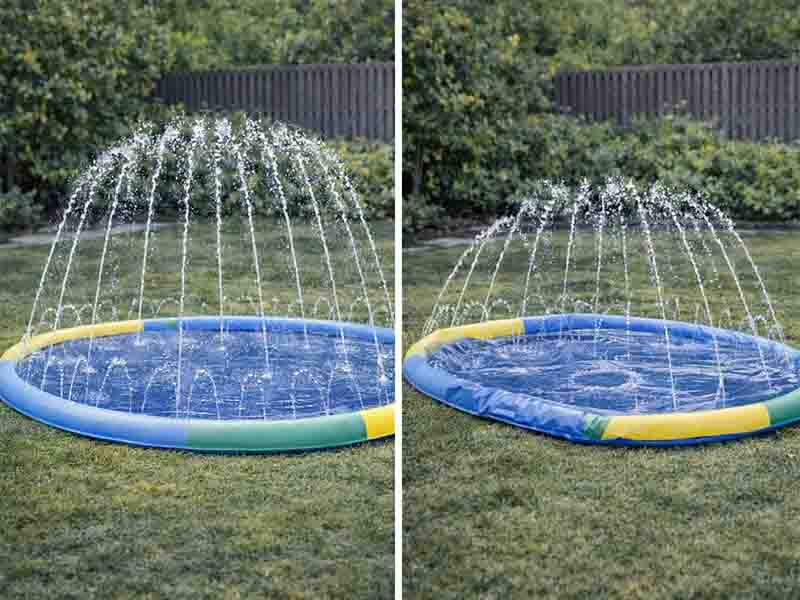
A splash pad that stays flatter usually has a better balance between structure, material behavior, and spray layout. Once the ring fills, the product should settle into a stable shape instead of fighting against itself. If one section reacts too strongly, if the spray is uneven, or if the material twists too easily, the splash pad becomes harder to manage under normal use.
Flatness matters because it affects everything else. A flatter splash pad is easier to place, easier to supervise, and easier to use on ordinary backyard surfaces. Children can move across it with fewer surprise wrinkles. Parents do not need to keep correcting the edge.
Larger splash pads benefit even more from this. A bigger footprint creates more play space, but it also increases the chance of spanning uneven ground. That means large splash pads need structure that lies cleanly and stays balanced under pressure.
What to Look for in Stable Splash Pads
The best signs of stability are usually practical rather than decorative.
Look for a flatter overall profile, evenly spaced spray holes, a balanced ring, material that does not twist too easily, strong lay-flat behavior during setup, and performance that feels good at moderate water flow. These details matter because the splash pad is not judged in a studio. It is judged on real grass, patios, and concrete, with running feet, changing hose pressure, and repeated wet use.
Families looking for daily backyard use often do better with a stable lay-flat splash pad than with a design that depends on aggressive spray for excitement. Stability supports repeat use. And repeat use is what makes the product feel worth buying.
Why Splash Pad Design Matters
Design matters because setup can only fix so much. Good placement and smart pressure control help a lot, but they cannot fully compensate for a splash pad that reacts poorly to normal use.
A stronger design reduces that burden. It gives families more flexibility on everyday surfaces. It makes the splash pad easier to use with normal household pressure. It improves the chances that the product will feel simple rather than fussy.
This matters even more for brands, retailers, and importers. Sliding is not only a user inconvenience. It affects review quality, return risk, and long-term product trust. A splash pad that looks good in photos but feels unstable in ordinary backyards usually creates problems later, even if it technically works.
For that reason, structure, material thickness, spray balance, and repeat-use performance deserve as much attention as print design and size. That is one reason EPN splash pads and Epsilon’s OEM/ODM development approach are relevant in this category: the conversation can include not only graphics and packaging, but also the product behavior that shapes real user experience.
| Product Feature | Why It Helps | What Families Usually Notice |
|---|---|---|
| Flat-profile design | Keeps the base more planted | Less shifting during play |
| Even spray distribution | Reduces force imbalance | More controlled water pattern |
| Stronger lay-flat behavior | Prevents twisting and bunching | Easier setup and smoother use |
| Moderate-flow performance | Works without full pressure | More stable everyday use |
| Better material consistency | Helps the shape stay even | Fewer wrinkles and less frustration |
Splash Pad Questions Parents Ask
Most families ask the same questions once they start using a splash pad at home. They want to know where it should go, why it keeps shifting, and how to get a more reliable setup without turning a simple summer product into a project.
Can Splash Pads Go on Grass
Yes, and for many families grass is still the easiest and most natural surface. A firm, level lawn usually offers a better balance of comfort and grip than smooth hard ground. It feels softer under bare feet and often makes the splash pad feel more stable from the start.
But not all grass works equally well. A lawn with hidden low spots, soft patches, exposed roots, or muddy areas can still make the splash pad bunch or shift. Large splash pads are especially sensitive to this because they cover more ground and expose more unevenness.
The best version of a lawn setup is flat, firm, and clean. If the grass already feels spongey before the water starts, it probably will not become more stable during play.
Can Splash Pads Go on Concrete
Yes, but concrete requires more attention. The biggest issue is not simply that concrete is hard. The bigger issue is that some concrete becomes slick very quickly once it is fully wet.
Concrete usually works better when it is textured, flat, and used with controlled spray. It works worse when it is smooth, sealed, glossy, or designed to drain sharply in one direction. If concrete is your main option, start with lower flow, watch the first minute carefully, and test the flattest section available.
Why Do Splash Pads Fold or Shift
Splash pads usually fold or shift because the support underneath is no longer even. That can come from slope, pooling, soft ground, too much pressure, or reduced grip on wet hard surfaces.
A center wrinkle often points to weak support underneath. A drifting edge often points to low friction plus repeated movement. One side taking on more water often points to slope or uneven drainage. Once you start looking at the pattern of movement instead of only the fact that movement exists, troubleshooting becomes much easier.
Do Splash Pads Need Full Water Pressure
No. In most home setups, full pressure adds more instability than value. Once the spray is active, balanced, and fun to use, extra force usually means more runoff, more surface wetness, and more shifting.
A splash pad should feel controlled, not overpowered. The best pressure level is the one that keeps the ring lively while still letting the surface stay usable for standing, running, and turning.
Final Splash Pad Tips
The best splash pad setups are not usually the most extreme. They are the most balanced. When the ground, water flow, product structure, and play style all work together, the splash pad feels easier, steadier, and more enjoyable to use.
The Best Way to Keep Splash Pads Steady
If there is one rule that solves most sliding problems, it is this: fix the basics first.
Choose the flattest area you can. Avoid overly slick wet surfaces. Use moderate pressure. Watch the first minute closely. Reduce the flow if the pad starts creeping or loosening. Reset early instead of waiting for the setup to get worse.
These are simple habits, but they make a large difference in daily use. The goal is not perfection. It is predictability.
What Splash Pads Need for Everyday Use
Everyday use is the real test of whether a splash pad is well designed. Many products can look fun in a listing. Fewer still feel easy after repeated setup, repeated wet use, and real family activity.
The splash pads that perform best over time usually do a few practical things very well. They lay flat quickly. They do not need full pressure to feel fun. They hold their shape during movement. They stay manageable on ordinary backyard surfaces. And they make the whole play session feel easier, not harder.
For families, that means looking beyond spray height or print design and paying more attention to how the product is likely to behave in the spaces they actually have. For brands and importers, it means choosing products built for repeat use, not only fast first impressions.
Conclusion
A splash pad usually slides for understandable reasons. The surface may be too smooth. The ground may not be as level as it looks. The water pressure may be too strong for the setup. Or the base may simply be getting too wet to hold stable traction.
For most families, the best results come from four habits: choose a flatter area, avoid slick wet surfaces, use moderate water flow, and correct early movement before it becomes a bigger problem. That combination solves far more sliding issues than most people expect.
It also explains why some splash pads feel easier to live with than others. A product that stays flatter, distributes spray more evenly, and works well at moderate pressure creates a much better everyday experience. That is what turns a splash pad from something used once into something used all summer.
If you are looking for ready-to-sell EPN splash pads, or want to develop a more stable custom splash pad for your brand, retail program, or seasonal line, Epsilon can support both branded purchasing and OEM/ODM development.