Skip to content
A dog pool with sprinkler can turn a hot backyard into a simple cooling space, but the setup decides whether the experience feels easy or frustrating. Many common problems do not start from the pool itself. They start from the ground under it, the way the hose is connected, the water pressure used during the first few minutes, or how the pool is cleaned and stored after play. A dog that slips, gets startled by strong spray, or steps on a rough surface may not want to use the pool again. A pool that is dragged while full, folded while wet, or placed over stones may also wear faster than expected.
To set up a dog pool with sprinkler, place it on flat clean grass or a smooth protected surface, unfold it fully, connect the garden hose straight, and start with low water pressure. Keep the first water depth around 1–2 inches, let the dog explore slowly, supervise all play, drain after use, rinse away dirt and fur, and dry the pool fully before folding.
A good setup should feel quick enough for weekday use and careful enough for repeat summer play. After the first few uses, many families can finish the basic setup in about 3–5 minutes. The most important part is not making the spray look dramatic. It is creating a shallow, stable, dog-friendly space where pets can cool their paws, walk through gentle water, and leave whenever they want. EPN designs PVC and composite pet water-play items around these real backyard details, including stable sprinkler edges, non-slip base feel, secure hose connection, easy drainage, and foldable storage.
What Is a Dog Pool Sprinkler?
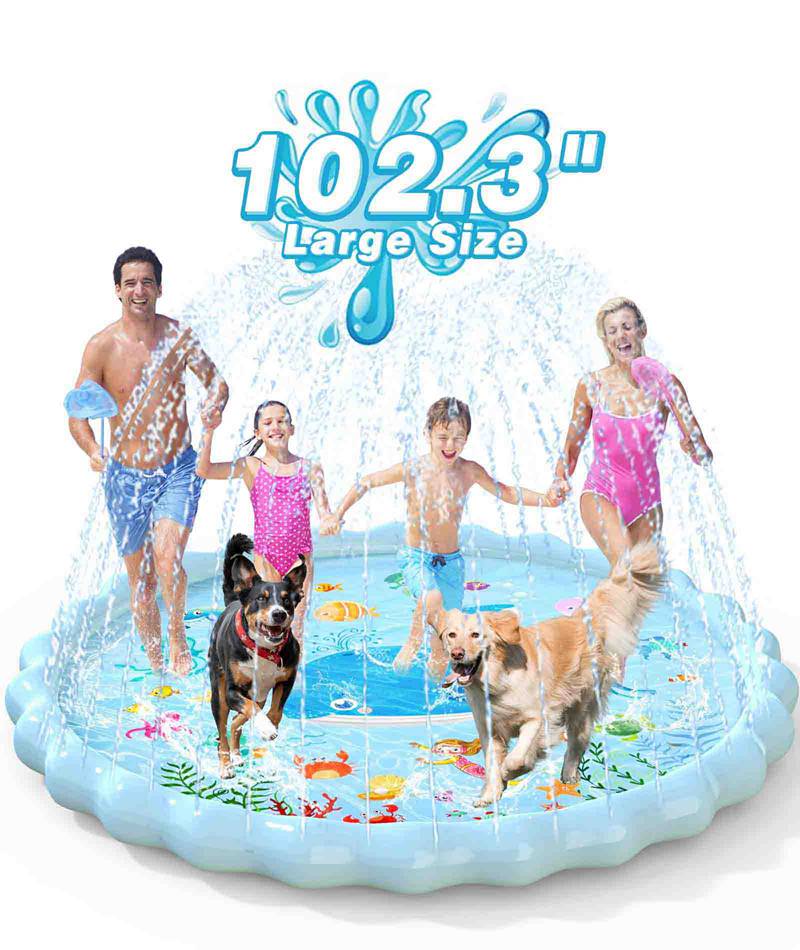
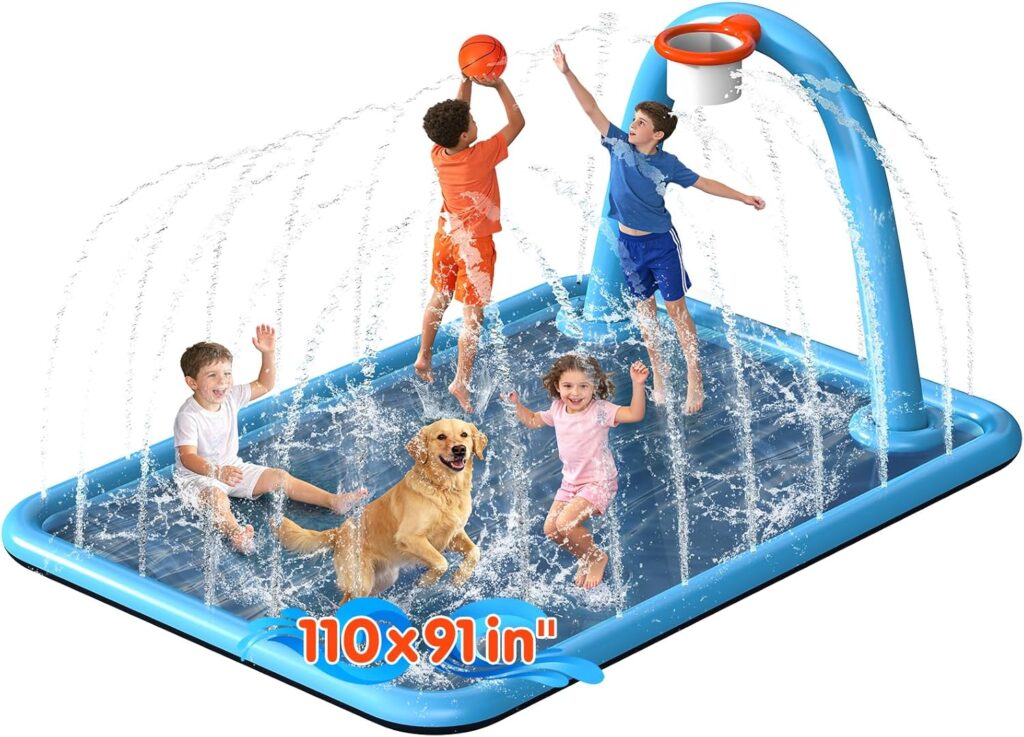
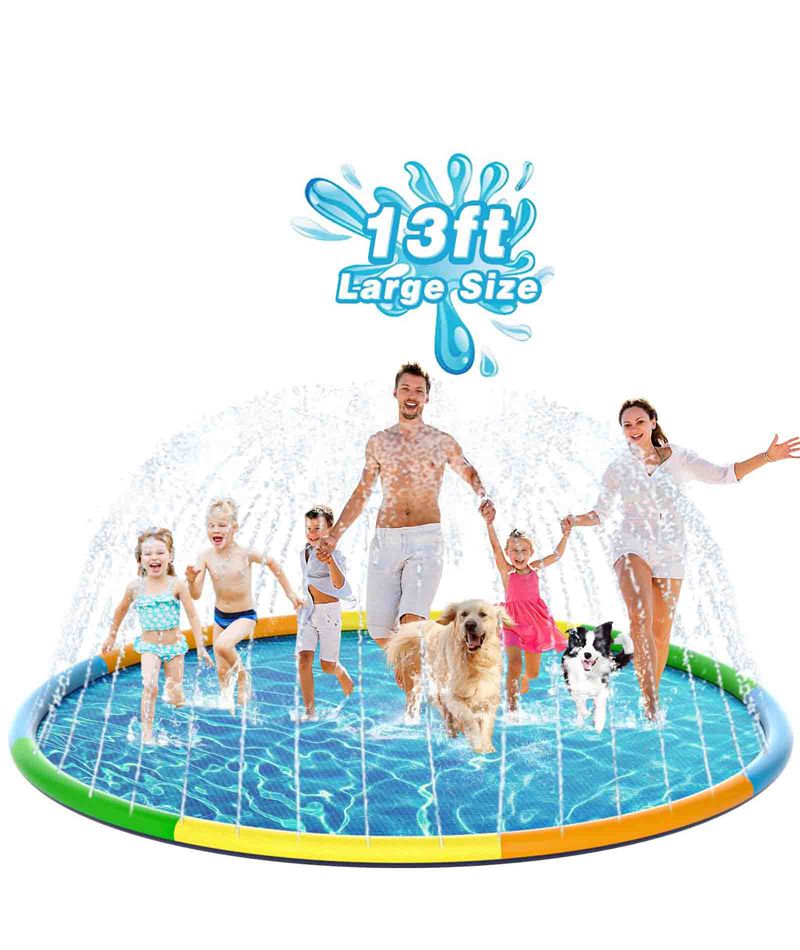
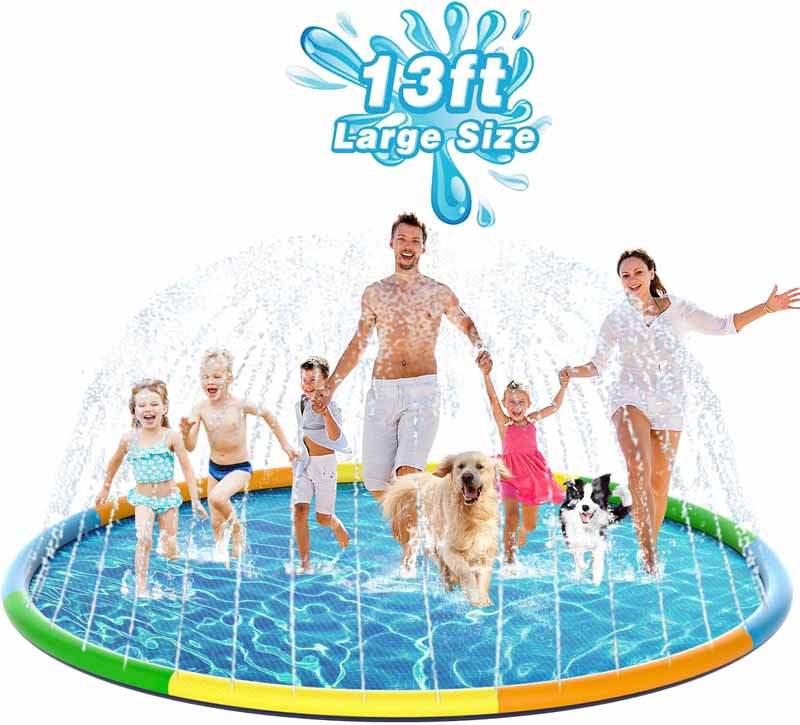
A dog pool sprinkler is a shallow outdoor water-play pool that connects to a garden hose and sprays water from the edge. It gives dogs a cooling place to stand, splash, and play without needing a deep swimming pool. The best setup uses low water depth, controlled spray height, a non-slip surface, and enough open space for the dog to enter and leave freely.
A dog pool sprinkler is different from a regular dog pool because it adds moving water. A regular dog pool usually works as a shallow basin that holds water. A sprinkler-style pool adds a water-spray edge, which makes the play area more engaging and helps cool the surface more evenly. Dogs can stand in the center, chase the spray, cool their paws, or lie down when they feel comfortable.
It is also different from a standard lawn sprinkler. A lawn sprinkler sprays across a wider area and may soak grass, patio furniture, walkways, and nearby toys. A dog pool sprinkler keeps most of the water activity inside a clearer play zone. That makes supervision easier and helps families control how much water is used.
For pet water play, the structure matters. Dogs do not move the same way children do. They may step with nails, turn suddenly on a wet surface, paw at moving water, cross the rim several times, or run in and out during one play session. Because of that, material strength, bottom grip, edge stability, hose connection, and spray balance all matter.
| Feature | Practical Value | Recommended Detail |
|---|---|---|
| Hose connection | Controls filling and spray | Standard garden hose fit |
| First water depth | Helps dogs feel safe | Around 1–2 inches |
| First spray height | Reduces fear for cautious dogs | Low ankle height or lower |
| First play time | Prevents overexcitement | 5–10 minutes |
| Bottom surface | Helps wet paws stay steadier | Textured non-slip base |
| Outer rim | Holds water and creates spray | Reinforced sprinkler edge |
| Setup time | Easier for regular use | About 3–5 minutes after practice |
| Storage condition | Keeps the pool fresh | Fully dry before folding |
Dog Pool Sprinkler Basics
A dog pool sprinkler works through water pressure. Once the hose is connected, water moves into the outer rim. As the rim fills, water pushes through small spray holes and creates a sprinkler effect around the play area. The center then collects shallow water for paw cooling, splashing, and light play.
For first use, gentle spray is better than high spray. A strong water stream may look exciting, but it can scare dogs that are new to water play. A low spray gives the dog time to sniff, step closer, hear the water, and understand the movement before entering.
Many dogs do not need deep water to cool down. For puppies, senior dogs, small breeds, and cautious pets, shallow water feels easier to accept. A dog can step in, step out, stand at the edge, or walk through the middle without feeling trapped. That freedom is one of the main reasons sprinkler pools work well for backyard pet cooling.
For owners comparing outdoor water-play materials, the guide on what material is best for a splash pad gives useful details on PVC thickness, surface feel, and seam structure.
Dog Pool Sprinkler Benefits
The biggest benefit of a dog pool sprinkler is simple summer cooling. After walks, fetch, or time in direct sun, dogs often need a quick way to cool their paws and body surface. A sprinkler pool gives them a controlled space to do that without requiring a full-size swimming pool.
It also keeps water play more organized. Instead of spraying the whole yard, the water stays close to one play area. This helps owners keep the dog in sight, reduces random muddy patches, and makes cleanup easier after play.
The value is also in flexibility. One dog may chase the spray. Another may only stand quietly in the center. A senior dog may use it as a calm cooling mat. A puppy may only touch the edge with one paw at first. A good dog pool sprinkler does not require every dog to play the same way.
Safe First Use
A dog pool sprinkler can be safe when it is introduced slowly and used with supervision. The first few minutes matter most. If the spray starts too high, the water is too deep, or the surface feels slippery, a dog may become nervous and refuse to use the pool again.
A calmer first setup usually works better. Start with low water pressure and shallow water, then let the dog approach from the edge. Do not lift the dog into the pool or pull it by a collar. If the dog only sniffs the edge during the first session, that can still be a good start.
Owners should also keep fresh drinking water nearby. Dogs may drink from the pool, but shallow play water can collect grass, fur, saliva, dust, and paw dirt quickly. A clean bowl nearby helps reduce the chance of the dog drinking too much dirty water.
Best Dogs for Sprinkler Pools
A dog pool sprinkler can work for many dogs, but the setup should match the dog’s size, age, confidence, and energy level. Small dogs usually need lower spray. Large active dogs need more open space. Senior dogs may benefit from shallow cooling rather than active chasing.
| Dog Type | Best Starting Setup | Use Note |
|---|---|---|
| Puppy | Very low spray, under 1 inch water | Keep sessions short and calm |
| Small dog | Low spray, around 1 inch water | Avoid strong water pressure |
| Medium dog | Low to medium spray, 1–2 inches water | Allow slow entry first |
| Large dog | Medium spray, 1–2 inches water | Use more open space around the pool |
| Senior dog | Low spray, shallow water | Focus on cooling, not running |
| Nervous dog | Barely spraying, edge access only | Let the dog explore without pressure |
| Active dog | Moderate spray, supervised play | Watch for digging, slipping, and chewing |
Which Dog Pool Sprinkler Surface Works?
The best surface for a dog pool sprinkler is flat, clean grass because it gives the pool a softer base, helps reduce bottom abrasion, and feels more natural under wet paws. A smooth lawn, short artificial turf, or a clean patio with a protective mat can also work. Avoid gravel, sharp mulch, rough concrete, hot asphalt, steep slopes, and any ground with stones, sticks, thorns, or hard debris.
Surface choice affects both comfort and durability. When the pool fills with water, the base is pressed downward. When a dog steps, turns, or paws at the spray, pressure increases in certain spots. A small stone or rough concrete edge under the pool can become a wear point after repeated use.
A good setup surface should feel flat, clean, and open. If the ground feels uncomfortable when pressed with your hand, it may not be ideal for the pool bottom. Short grass is usually the easiest choice because it gives a softer base than concrete and helps reduce slipping when dogs step out with wet paws.
Patio setups can work, but they need more preparation. Sand, grit, and dust can rub under the pool when a dog moves. Smooth tile or sealed concrete may also become slippery once wet. If a patio is used, a flat protective mat should sit under the entire pool, including the sprinkler rim.
Drainage should also be considered before turning on the hose. Water should not flow toward doors, garage entrances, outdoor steps, electrical outlets, or smooth walking paths. For frequent use, rotating the setup spot can help protect the lawn and keep the base cleaner.
| Surface Type | Works Well? | Best Use Advice | Risk Level |
|---|---|---|---|
| Short clean grass | Yes | Best everyday setup surface | Low |
| Smooth lawn | Yes | Remove hidden stones first | Low |
| Artificial turf | Yes, with checking | Watch for hard seams or sharp infill | Low to medium |
| Patio with mat | Yes, with care | Use a full-size protective layer | Medium |
| Smooth concrete | Sometimes | Can become slippery when wet | Medium |
| Rough concrete | Not recommended | May scrape the pool bottom | High |
| Gravel | No | Sharp pressure points can damage PVC | High |
| Wood deck | Use caution | Check splinters, gaps, and drainage | Medium to high |
| Hot asphalt | No | Too hot for paws and material | High |
| Sloped yard | No | Creates uneven water and unstable spray | High |

Grass Setup
Grass is the best everyday surface for most dog pool sprinkler setups. It gives the bottom a softer base and helps dogs feel more comfortable when entering and exiting. A nervous dog may also feel less unsure when approaching from grass instead of slick patio flooring.
The grass should be short, level, and free from hidden debris. Long grass can hide stones, dry branches, hard soil clumps, and small toys. Uneven ground can also make one side of the sprinkler rim sit lower, which may cause uneven spray.
For families using the pool several times a week, moving it to a nearby lawn spot every few sessions is a good habit. Repeated draining in the same area can soften the soil and create mud. Mud makes the pool harder to rinse and may increase friction under the base. More details on lawn use can be found in can you use a splash pad on grass.
Patio Setup
A patio can be useful when lawn space is limited, but the setup needs more care. Smooth surfaces can become slippery. Rough surfaces can scrape the pool bottom. Sun-heated concrete, tile, and pavers can also become uncomfortable for paws before water play begins.
Before placing the pool on a patio, sweep away sand and grit. If the patio is dusty, rinse it first and let loose particles wash away. A flat ground cloth or outdoor play mat can help protect the pool bottom. The mat should be large enough to cover the full pool area, not just the center.
Water direction matters on patios. The drainage path should stay away from doors, stairs, walkways, electrical outlets, and areas where people may slip. If the surface becomes too slick during play, lower the water level and slow the dog’s activity.
Areas to Avoid
Some surfaces should be avoided even if the pool feels strong. Gravel creates many small pressure points. Sharp mulch can press into the PVC. Rough concrete can scrape the base when dogs turn. Hot asphalt can be uncomfortable for paws and may expose the material to unnecessary heat.
Crowded corners are also poor choices. Dogs need space to enter, step out, shake, turn, and return. A pool placed between furniture, walls, planters, or garden tools may make the dog feel trapped or cause the hose to be pulled during play.
The safest area is open, flat, and easy to supervise. For large or active dogs, extra open space around the pool is especially important.
Ground Protection
A protective ground layer can help when the surface is not ideal. It is useful on patios, decks, artificial turf, or lawns with slightly uneven spots. The layer should be flat, clean, dry, and larger than the pool diameter.
A dirty tarp is not a good solution if it contains sand, stones, dry leaves, or hard folds. Those objects can still rub under the pool. A smooth ground cloth or outdoor mat works better because it creates a cleaner buffer between the pool and the surface below.
How Does Dog Pool Sprinkler Setup Work?
Dog pool sprinkler setup works by placing the pool on a prepared flat surface, unfolding it fully, connecting the garden hose, starting with low water pressure, and adjusting the spray until it feels comfortable for the dog. A good setup should create shallow water in the center, even spray around the rim, no strong leaking at the hose inlet, and enough space for the dog to walk in and out safely.
The setup should not begin with full water pressure. Many dogs are sensitive to sudden water movement, especially puppies, small dogs, senior dogs, and pets that have never used a sprinkler pool before. Starting slowly gives the dog time to understand the sound, spray direction, and wet surface.
After the first use, most families can set up a dog pool sprinkler in about 3–5 minutes. The first setup may take longer because the ground, hose direction, rim shape, and pressure setting all need to be checked. Once the best spot and hose setting are known, daily use becomes much faster.
| Setup Step | Suggested Time | What To Check | Good Result |
|---|---|---|---|
| Clear ground | 1–2 minutes | Stones, sticks, sharp debris | Smooth safe base |
| Unfold pool | 30–60 seconds | Rim shape and fold lines | Pool lies flat |
| Connect hose | 30–60 seconds | Straight inlet connection | No pulling or twisting |
| Start water | 30 seconds | Low pressure first | Rim begins filling evenly |
| Adjust spray | 1–2 minutes | Spray height and direction | Low even sprinkler effect |
| Add dog | 2–5 minutes | Dog body language | Calm entry and exit |
Unfolding
The pool should be opened fully before any water is added. If the sprinkler rim is twisted or folded underneath itself, the spray holes may point in the wrong direction and one side may spray higher than another.
Open the pool from the center outward and smooth the base with your hands. The hose inlet should face the side where the garden hose can reach without stretching. If the pool has been stored tightly, give the PVC a short moment to relax before filling.
Avoid moving the pool after water has entered. Water weight makes the material harder to control and can pull on the base, seams, and rim. If the position is wrong, turn off the water, drain most of the pool, then move it.
Hose Connection
The hose connection controls both water flow and spray performance. A good connection should be straight, snug, and relaxed. It should not leak heavily, but it also should not be tightened so hard that the inlet area is strained.
Before connecting, check the hose end for dirt, damaged threads, cracked washers, or loose fittings. A worn hose washer can cause dripping even when the pool inlet is fine. The hose should rest on the ground and enter the pool straight. It should not hang from the connector or cross the dog’s entry path.
| Hose Detail | Better Setup | Problem Setup |
|---|---|---|
| Hose angle | Straight into inlet | Pulled sideways |
| Hose position | Resting on ground | Hanging from connector |
| Hose path | Along pool side | Across dog entry area |
| Connection feel | Snug and smooth | Forced or over-tightened |
| Washer condition | Clean and flexible | Old, cracked, or missing |
| Water test | Light drip or none | Heavy leaking near inlet |
If the connector leaks strongly, turn off the water and reconnect the hose. If the hose pulls the inlet sideways, change the hose path before allowing the dog to play.

Water Pressure
Water pressure should start low. A dog pool sprinkler does not need high spray to work well. For most dogs, a soft spray is more comfortable and easier to approach than strong water jets.
As the rim begins to fill, wait before increasing pressure. The rim needs time to form its shape. Raising pressure too quickly may cause uneven spray or unnecessary stress near the hose inlet.
| Dog Type | First Pressure | Spray Height | Center Water Depth |
|---|---|---|---|
| Puppy | Very low | Barely spraying | 0.5–1 inch |
| Small dog | Low | Below ankle height | Around 1 inch |
| Senior dog | Low | Soft spray | 0.5–1 inch |
| Nervous dog | Very low | Edge mist or low spray | Less than 1 inch |
| Medium dog | Low to medium | Ankle height | 1–2 inches |
| Large active dog | Medium | Ankle to lower calf height | 1–2 inches |
High pressure can spray water outside the play area, scare small dogs, overstimulate active dogs, or create extra pulling near the connector. Low to medium pressure is usually enough for normal backyard cooling.
Spray Check
Before the dog enters, watch the spray from all sides. The spray does not need to look identical from every hole, but it should feel balanced enough that one side is not shooting much higher than the rest.
Uneven spray may come from a twisted rim, sloped ground, kinked hose, low pressure, or dirt near the spray holes. Adjust the rim only after lowering the water pressure. Do not poke spray holes with sharp tools. If dirt blocks a hole, rinse gently with clean water.
For owners who want to avoid weak seams and leak-prone setups, why some splash pads leak easily explains how water pressure, seam structure, and surface choice can affect long-term use.
How Can Dogs Use Dog Pool Sprinkler?
Dogs should use a dog pool sprinkler slowly, calmly, and under supervision. Start with low water pressure, shallow water, and a clear entry path. Let the dog sniff the pool, watch the spray, step in at its own pace, and leave whenever it wants. Keep the first water depth around 1–2 inches, trim sharp nails before use, limit early play to 5–10 minutes, and stop the session if the dog looks stressed, slips, digs hard, chews the rim, or drinks too much pool water.
A dog pool sprinkler is not meant to force dogs into water. Some dogs will run straight into the spray. Some will only stand near the edge. Some may need several short sessions before they feel comfortable. All of these reactions are normal.
The best introduction is quiet and gradual. Keep the spray low, keep the water shallow, and let the dog choose whether to enter. Do not use high hose pressure just because it looks more exciting. For a cautious dog, loud spray can feel sudden and confusing.
| Dog Type | First Water Depth | First Spray Level | First Play Time | Owner Focus |
|---|---|---|---|---|
| Puppy | 0.5–1 inch | Very low | 3–5 minutes | Calm introduction |
| Small dog | Around 1 inch | Low | 5–10 minutes | Avoid strong spray |
| Medium dog | 1–2 inches | Low to medium | 10–15 minutes | Watch turning and jumping |
| Large dog | 1–2 inches | Medium | 10–20 minutes | Give more open space |
| Senior dog | 0.5–1 inch | Low | 5–10 minutes | Reduce slipping and fatigue |
| Nervous dog | Less than 1 inch | Barely spraying | 2–5 minutes | Let the dog choose the pace |
| Active dog | 1–2 inches | Medium | 10–20 minutes | Stop digging or rough play |
First Try
The first try should feel easy. Place the pool on clean grass, connect the hose, and start with very low pressure. Let the dog watch the water move before inviting it closer. Some dogs need to hear the spray for a minute before approaching. Others may sniff the rim or touch the water with one paw.
A toy can help, but it should be placed near the edge rather than thrown into the center. The dog should be able to step out whenever it wants. A successful first try is not measured by how much the dog splashes. It is measured by whether the dog stays relaxed and wants to return later.
Comfort Signals
Comfort matters more than excitement. Dogs that feel safe will usually approach voluntarily, move with a loose body, sniff the water, step in and out, or return to the edge after leaving. Dogs that feel unsure may freeze, tuck the tail, bark sharply at the spray, back away repeatedly, or avoid looking at the pool.
When a dog seems unsure, the setup should be softened rather than pushed. Lowering the spray, reducing water depth, moving the toy closer to the edge, or simply giving the dog more time can make the experience easier. Nervous dogs may first use the pool almost like a shallow water mat, with very little spray. Once they accept the wet surface, the spray can be raised slowly.

Nail Safety
Dog nails are one of the most important details for sprinkler pool use. Even durable PVC can wear faster if a dog has long, sharp nails and repeatedly digs, pivots, or jumps on a wet surface.
Before water play, check the nails and smooth sharp tips if needed. This is especially important for large dogs, active breeds, and dogs that paw at moving water. Light pawing is normal curiosity, but repeated hard digging or rim scratching should be stopped.
| Behavior | What It Means | What To Do |
|---|---|---|
| Light pawing at water | Normal curiosity | Allow briefly |
| Repeated hard digging | Risk to pool surface | Redirect or pause play |
| Scratching at rim | Excitement or stress | Lower spray and guide away |
| Fast spinning | Slip risk | Reduce play speed |
| Jumping in and out | Higher edge stress | Create calmer entry |
| Chewing the rim | Damage risk | Stop play immediately |
A dog pool sprinkler is built for supervised splash play, not chewing or digging. If a dog repeatedly attacks the rim, spray holes, or base, the session should end.
Play Time
Play time should match the weather, dog size, and energy level. Longer is not always better. Short, relaxed sessions often work best, especially during the first few uses.
| Use Stage | Time Range | What To Watch |
|---|---|---|
| First introduction | 2–5 minutes | Curiosity without fear |
| Gentle first play | 5–10 minutes | Calm stepping and sniffing |
| Regular cooling break | 10–15 minutes | Relaxed movement |
| Active play | 10–20 minutes | No slipping or hard digging |
| Hot day use | Short sessions | Breaks in shade |
| Senior dog use | 5–10 minutes | Fatigue and balance |
Fresh drinking water should stay nearby. Pool water can quickly collect grass, dust, fur, saliva, and paw dirt. A separate clean bowl helps the dog stay hydrated without drinking too much play water.
How Do You Clean Dog Pool Sprinkler?
Clean a dog pool sprinkler by draining it after each use, rinsing away dirt, grass, fur, saliva, and paw marks, wiping the sprinkler rim and hose inlet, then drying both sides fully before folding. For regular summer use, a quick rinse after every session and a mild soap clean every few uses can help reduce odor, mildew, surface buildup, and storage problems.
Dog pool sprinklers get dirty faster than ordinary sprinklers because dogs bring more into the water. Paws carry soil, lawn clippings, dust, small leaves, and outdoor debris. Fur collects around the rim. Saliva may mix with shallow water if the dog drinks or bites at the spray.
Cleaning should be short and consistent. After play, turn off the hose, let the spray stop, drain the water, rinse the surface, wipe dirty areas, and leave the pool open until dry. Most light-use sessions only need 5–10 minutes of cleanup. Muddy sessions or heavy shedding may need 10–15 minutes.
The most important rule is not to fold the pool while it is wet or dirty. Trapped water can cause odor, mildew, sticking, and dark marks in fold areas. Dirt left on the bottom can also rub against the PVC during storage.
| Cleaning Task | Best Timing | Time Needed | Why It Matters |
|---|---|---|---|
| Drain water | After every use | 2–5 minutes | Prevents dirty standing water |
| Rinse surface | After every use | 3–5 minutes | Removes grass, fur, and saliva |
| Wipe hose inlet | Every 2–3 uses | 1 minute | Helps maintain clean connection |
| Mild soap wash | Every 3–5 uses or when dirty | 10–15 minutes | Reduces odor and buildup |
| Air dry both sides | Before folding | 30–60 minutes in warm airflow | Helps prevent mildew and sticking |
| Deep clean | End of season | 15–20 minutes | Prepares pool for longer storage |
Drain After Use
Drainage should begin only after the dog is out of the pool and the hose is turned off. If the pool has a drain outlet, open it and guide water toward grass, a safe drain area, or an open yard section. Water should not run toward doors, steps, electrical outlets, garage entrances, or smooth walkways.
Do not drag a filled pool across the yard. Water is heavy, even when the pool looks shallow. Dragging while full can stress the base, rim, and seams. Let most water drain first, then lift one side gently to remove the remaining water.
Rinse And Wipe
Rinsing after each use keeps dirt from drying onto the PVC. Start around the sprinkler rim, then rinse the center base and hose inlet. Textured areas may hold paw marks and grass, so they may need a soft cloth.
Spray holes should be rinsed gently. Sharp tools should not be used because they can change the spray pattern. If dirt is stuck near a hole, rub gently with a soft cloth and rinse again.
| Area To Rinse | What Builds Up There | Cleaning Tip |
|---|---|---|
| Sprinkler rim | Fur, saliva, grass | Rinse around the full edge |
| Spray holes | Tiny debris, lawn dust | Rinse gently |
| Center base | Paw marks, mud, grass | Wipe with soft cloth |
| Hose inlet | Dirt near connector | Rinse and wipe before storage |
| Fold lines | Trapped water and dirt | Open folds while rinsing |

Mild Soap Cleaning
A mild soap clean is useful when the pool smells, feels slippery, has visible dirt marks, or has been used several times in one week. A practical cleaning mix is about 1 teaspoon of mild dish soap in 1 gallon of clean water. This is enough to loosen dirt without leaving too much residue.
After using soap, rinse thoroughly. Leftover soap can make the surface slippery and may bother dogs with sensitive noses. Strong solvents, abrasive pads, stiff brushes, gasoline-based cleaners, and heavy bleach mixtures should be avoided because they may damage PVC texture, printed areas, or edge structure.
Dry Before Folding
Drying is just as important as washing. Even if the top looks dry, the underside and rim folds may still hold moisture. In warm outdoor airflow, a wiped pool may dry in about 30–60 minutes, but thicker rim areas can take longer.
The pool should feel dry on the top, bottom, rim, hose inlet, and fold lines before storage. If it must be packed quickly, wipe it with a towel first and reopen it later to finish drying. A clean, dry fold keeps the pool fresher and easier to use next time.
Do Dog Pool Sprinkler Features Matter?
Dog pool sprinkler features matter because dogs place more pressure on a water-play item than light backyard use. A good dog pool sprinkler should have durable PVC, a non-slip base, a reinforced sprinkler edge, balanced spray holes, a secure hose inlet, easy drainage, and foldable storage. These details affect how safe the pool feels, how easy it is to set up, how clean it stays, and how well it performs after repeated summer use.
Many sprinkler pools look similar at first glance. The real difference appears after several uses. A better pool keeps its edge shape more reliably, sprays more evenly, connects more easily, feels steadier under wet paws, drains faster, and folds more cleanly after drying.
Dogs may step in with wet paws, turn suddenly, paw at moving water, cross the rim, shake off water, or run in and out several times during one session. These movements create more stress than simple standing water use.
EPN uses PVC and composite material experience across dog pools, pet splash pads, children’s sprinkler mats, inflatable pools, and outdoor water toys. For dog pool sprinkler designs, the focus is not only on how the spray looks, but also on how the pool performs during repeated filling, paw movement, drainage, drying, and folding.
| Feature | What It Does | Why Owners Notice It |
|---|---|---|
| Durable PVC | Supports repeated water play | Helps the pool feel less flimsy |
| Non-slip base | Improves wet paw contact | Helps reduce sliding during movement |
| Reinforced edge | Supports sprinkler rim shape | Helps spray stay more stable |
| Balanced spray holes | Distributes water more evenly | Makes play less overwhelming |
| Secure hose inlet | Helps control water flow | Reduces leaking and pulling |
| Quick drain design | Releases water faster | Makes cleanup easier |
| Foldable structure | Supports storage after drying | Helps families reuse it often |
| Low-odor material | Improves first-use comfort | Better for indoor unpacking and backyard setup |
Durable PVC
PVC quality affects how a dog pool sprinkler feels from the first setup. Thin material may look fine when the pool is empty, but it can wrinkle, shift, or feel unstable once water and dog movement are added. Stronger PVC gives the pool better shape support for repeated summer use.
For dog use, material strength should still be balanced with flexibility. If the PVC is too soft, the rim may collapse more easily. If it is too stiff, folding and storage may become difficult. The goal is a material that feels supportive during play but manageable after drying.
PVC thickness becomes more important with larger or more active dogs. A 10 lb puppy and a 70 lb dog create very different pressure on the base. Stronger material does not make a pool scratch-proof, but it gives owners more confidence for normal supervised play. For more long-term selection tips, how to choose a splash pad that lasts more than one summer explains how thickness, edge structure, and folding habits affect durability.
Non-Slip Base
A non-slip base helps dogs feel more stable inside the pool. Wet paws can slide on smooth PVC, especially when dogs turn quickly or react to moving spray. A textured bottom gives paws better contact and helps reduce sudden slipping.
This feature is especially useful for puppies, senior dogs, and nervous dogs. Puppies may move clumsily. Older dogs may have weaker balance. Nervous dogs may shift weight suddenly when the spray starts. A better surface helps them stand with more confidence.
A non-slip base still needs proper use. Water depth should stay low at first, the pool should be on flat ground, and owners should slow the dog down if play becomes too rough.
Reinforced Edge
The sprinkler edge is one of the hardest-working parts of the pool. It holds water, supports spray holes, keeps the rim shape, and connects with the hose inlet area. If the edge is weak, the spray may become uneven or the rim may collapse in spots.
A reinforced edge helps the pool keep a more stable shape during filling and play. This matters because dogs often step over the edge, stand near the spray, or paw at the rim. Better edge support helps the spray feel more controlled and the setup feel more reliable.
Reinforcement improves normal use, but it does not make the rim suitable for chewing or destructive digging. If a dog bites the edge or scratches hard at the rim, play should stop.
Stable Spray
Stable spray makes the dog pool sprinkler more comfortable. Dogs respond differently to moving water. Some chase it. Some bark at it. Some avoid it until the spray is very low. A stable spray pattern lets owners adjust the experience without surprising the dog.
Spray stability depends on rim shape, hole spacing, hose pressure, ground level, and water flow. A good sprinkler pool should not need extreme water pressure. Low to medium pressure is usually enough for visible and comfortable spray.
| Dog Confidence Level | Spray Setting | What To Watch |
|---|---|---|
| Nervous dog | Barely spraying | Dog approaches without backing away |
| First-time dog | Low spray | Dog sniffs and steps near the edge |
| Comfortable dog | Low to medium | Dog enters and exits freely |
| Active dog | Medium spray | Dog plays without hard digging |
| Small dog | Low spray | Spray does not hit face too strongly |
| Large dog | Medium spray | Water stays mostly inside play zone |
EPN uses multi-point spray design in sprinkler-style water products to help water spread more evenly around the rim. This supports a more controlled play experience and helps reduce the chance of one harsh spray point overwhelming the dog.

Why Choose EPN Dog Pool Sprinkler?
EPN dog pool sprinkler options are designed for families, pet owners, retailers, and customized outdoor water-play programs that need practical summer items with stable material, useful structure, and repeat-use value. EPN focuses on PVC material experience, reinforced water-play structure, non-slip comfort, stable spray performance, easy drainage, foldable storage, and packaging support for different sales channels.
A reliable dog pool sprinkler depends on many small decisions: ground comfort, PVC strength, spray balance, hose connection, rim structure, drainage, cleaning, folding, and packaging. These are the details that affect repeat use. For families, they create better summer play. For business customers, they create stronger market value and fewer avoidable complaints.
EPN belongs to American Epsilon Inc., a U.S.-registered company focused on PVC and composite outdoor water-play categories. The wider product range includes pet pools, pet splash pads, children’s splash pads, inflatable pools, water toys, pool pillows, snow tubes, and other seasonal outdoor items. Epsilon has 27 R&D personnel, more than 18 designers, 500+ annual material and product performance tests, thousands of mature molds, and annual production capacity up to 12 million pieces.
| Project Need | EPN Support |
|---|---|
| Ready order | EPN branded dog pool sprinkler options |
| Size customization | Diameter, shape, rim height, play area |
| Material adjustment | PVC thickness, flexibility, surface feel |
| Spray design | Hole placement, spray direction, pressure balance |
| Packaging design | Retail box, gift box, labels, manuals |
| Market adaptation | Multilingual content and channel needs |
| Sample development | About 3–5 days for regular samples |
| Mass production | About 20–30 days for standard projects |
| Delivery planning | Support for multi-market shipment needs |
EPN Brand Options
EPN branded dog pool sprinkler options are suitable for families that want easy summer cooling, backyard dog play, and simple storage. The focus is practical use rather than complicated setup.
A good family-use sprinkler pool should connect easily to a garden hose, allow the dog to enter without fear, feel stable under wet paws, adjust water pressure smoothly, drain after play, and fold after drying. EPN designs pet water-play items around these everyday needs so the pool can fit into normal summer routines.
EPN Custom Projects
EPN custom dog pool sprinkler projects are suitable for brand owners, retail programs, online sellers, distributors, and seasonal product teams that need a more specific market position.
Custom development can include size options, stronger PVC for active dogs, softer spray for puppies or small breeds, printed patterns, private label packaging, multilingual instructions, platform-ready labels, hose connector preferences, and retail display needs.
A clear inquiry should include target market, expected quantity, preferred size, material direction, packaging type, launch date, and any reference sample or photo. These details help Epsilon evaluate cost, structure, sampling, and production schedule more accurately.
EPN Order Inquiry
To order EPN branded dog pool sprinkler options or request an OEM/ODM quote, contact Epsilon with the target size, market, quantity, packaging needs, and delivery schedule.
Epsilon can help review available options, recommend suitable specifications, develop custom designs, prepare packaging, arrange samples, and support production planning for seasonal outdoor water-play programs. For regular sample projects, sample development can often be arranged in about 3–5 days. For standard production, the usual project cycle is about 20–30 days, depending on size, structure, packaging, and order scale.
Final Thoughts
Setting up a dog pool with sprinkler is not difficult, but the small details make a real difference. A flat clean surface, low starting water pressure, shallow first water depth, secure hose connection, and full supervision can help dogs feel more comfortable from the first use. For most families, keeping the first water depth around 1–2 inches and starting with a gentle spray is enough to create a safe, cooling backyard play space.
The best dog pool sprinkler should also be easy to live with after play. Quick drainage, simple rinsing, full drying, and foldable storage all help keep the pool cleaner and ready for the next sunny day. For active dogs, material strength, a non-slip base, a reinforced sprinkler edge, and stable spray design are especially important because dogs step, turn, paw, and move differently from children.
EPN dog pool sprinkler options are designed around real backyard use, from PVC material selection and spray stability to cleaning, folding, and repeat summer play. For families, they offer a practical way to keep dogs cool and entertained. For brands, retailers, and seasonal product programs, Epsilon can also support OEM/ODM customization, including size, material, spray layout, pattern, packaging, labels, and market-ready product development.
To order EPN branded dog pool sprinkler products or request a custom quote, contact Epsilon with your target market, size, quantity, packaging needs, and delivery schedule.