Skip to content
How to Clean PVC Water Toys Safely:Family & Pet Guide
# Your Trusted Inflatable Supplier In US

PVC water toys—splash pads, inflatable pools, floating loungers, pet pools—have become a staple of modern family life. They’re affordable, colorful, easy to store, and incredibly versatile. Yet one simple question quietly worries many parents and pet owners: Are we cleaning them the right way—or slowly damaging them while trying to keep them safe?
The truth is, most PVC water toys aren’t ruined by rough play. They’re ruined by well-intentioned cleaning mistakes: harsh disinfectants, abrasive tools, or shortcuts that leave moisture trapped inside seams. These practices don’t just shorten product life; they can also create hidden hygiene risks over time.
To clean PVC water toys safely, use mild soap, warm water, and non-abrasive tools, followed by thorough air-drying. Avoid bleach, alcohol, and harsh disinfectants that can weaken PVC and cause discoloration. Disinfection should be occasional, not daily, and tailored to children or pet use. Proper cleaning preserves flexibility, prevents mold, and extends the toy’s lifespan.
Behind every inflatable toy is a complex balance of material science, seam engineering, and safety testing. Understanding why PVC reacts the way it does to cleaners helps families make smarter decisions—ones that protect both their loved ones and their investment.
Imagine this: a backyard splash pad that lasts summer after summer, stays odor-free, and remains safe for toddlers and pets alike—simply because it’s cleaned the right way. Let’s break down exactly how to do that.
What Makes PVC Water Toys Different to Clean?
PVC water toys require special cleaning because PVC is a flexible, plasticized material that reacts differently to chemicals, friction, and moisture than rigid plastics. Harsh cleaners can extract plasticizers, weaken welded seams, and accelerate aging. Proper cleaning focuses on gentle surfactants, controlled moisture removal, and material-safe disinfection to preserve flexibility, safety, and durability over time.
Why PVC Needs a Different Cleaning Approach
PVC water toys are not “just plastic.” They are engineered systems made of softened PVC sheets, welded seams, air chambers, valves, and sometimes composite layers. Their performance and safety depend on maintaining material flexibility, seam integrity, and surface stability—all of which are directly affected by how they are cleaned.
1. PVC Is a Plasticized, Flexible Material — Not Rigid Plastic
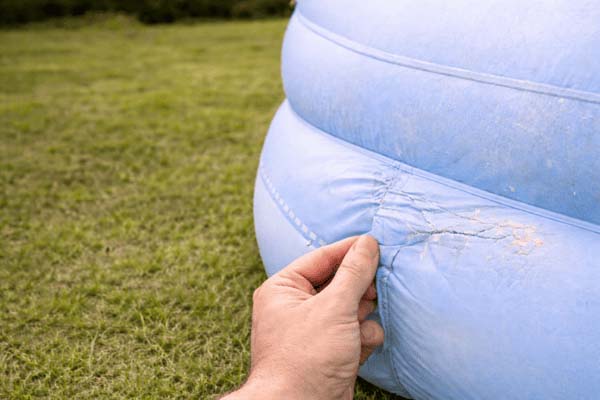
Unlike hard plastics such as polypropylene (PP) or polyethylene (PE), PVC used in water toys contains plasticizers. These additives allow the material to bend, inflate, and absorb stress without cracking. However, plasticizers are chemically mobile, meaning they can be pulled out of the material by solvents, alcohols, or strong oxidizers.
When plasticizers are lost, PVC becomes:
- Stiffer and less elastic
- More prone to cracking at folds and seams
- Less resistant to UV and heat
This is why cleaning methods that work for rigid toys or kitchen plastics often damage PVC silently, long before visible failure appears.
PVC vs. Common Plastics in Cleaning Sensitivity
| Material Type | Flexibility | Reaction to Harsh Cleaners | Typical Use |
|---|---|---|---|
| PVC (soft) | High | High sensitivity | Inflatable pools, splash pads |
| PP | Low | Low sensitivity | Hard toys, containers |
| PE | Medium | Low–moderate | Bottles, outdoor items |
| ABS | Low | Moderate | Rigid toy shells |
2. Welded Seams and Valves Are the Weakest Points
PVC water toys rely on high-frequency welding or heat sealing instead of glue. These seams are strong but depend on the surrounding material remaining flexible. Chemical stress from improper cleaning can cause:
- Micro-cracks along seam lines
- Gradual air or water leakage
- Delamination in layered structures
Aggressive scrubbing or soaking can also force water into seam edges and valve bases, where trapped moisture promotes mold growth and internal degradation.
How Cleaning Methods Affect PVC Seams
| Cleaning Method | Impact on Seam Integrity | Long-Term Risk |
|---|---|---|
| Mild soap + cloth | Minimal | Low |
| Vinegar (diluted) | Low if rinsed | Low–moderate |
| Bleach solution | High | Premature seam failure |
| Alcohol spray | High | Brittleness and leaks |
| Pressure washing | Very high | Immediate damage |
3. Moisture Retention Makes PVC More Mold-Prone
PVC itself does not “absorb” water, but its construction does. Inflatable chambers, textured surfaces, and folded storage areas easily trap moisture. If toys are cleaned but not fully dried, microbial growth can begin within 24–48 hours—especially in warm climates.
This is why drying strategy is as important as the cleaner used. Improper drying is the leading cause of:
- Musty odors
- Black or pink mildew spots
- User complaints about “smell” or “slimy feel”
Common PVC Water Toy Failures and Cleaning-Related Causes
| Issue Observed | Primary Cause | Cleaning-Related Factor |
|---|---|---|
| Discoloration | Chemical oxidation | Bleach, chlorine residue |
| Brittleness | Plasticizer loss | Alcohol, solvents |
| Mold spots | Trapped moisture | Incomplete drying |
| Air leaks | Seam fatigue | Harsh scrubbing |
| Odor buildup | Bacterial growth | Sealed damp storage |
Why This Matters for Families, Pets, and Product Lifespan
From a user perspective, improper cleaning doesn’t just reduce how long a PVC water toy lasts—it can compromise hygiene and safety, especially for:
- Young children who touch or mouth surfaces
- Pets with sensitive skin or paws
- Shared family or community-use toys
From a product-care standpoint, gentle, material-aware cleaning can extend usable life by 30–50%, reduce replacement costs, and maintain original appearance and performance.
In short, PVC water toys are different to clean because they are engineered for flexibility, not chemical resistance. Treat them like soft technical equipment—not hard plastic—and they will reward you with longer life, better safety, and consistent performance.
Which Cleaning Products Are Safe for PVC Water Toys?
The safest cleaners for PVC water toys are mild dish soap, diluted vinegar, and baking soda solutions. These remove dirt and organic residue without damaging PVC. Avoid bleach, alcohol, acetone, and strong disinfectants, which can weaken material and seams.
What Is the Best Thing to Clean PVC With?
The safest cleaning products for PVC water toys are mild, non-abrasive cleaners such as diluted dish soap, white vinegar solutions, and baking soda for spot cleaning. These products remove dirt, body oils, and organic residue without extracting plasticizers or weakening seams. Harsh disinfectants, solvents, and alcohol-based sprays should be avoided, as they accelerate PVC aging and cause brittleness, discoloration, and seam failure.
Choosing Cleaners That Protect PVC, Not Damage It
Selecting the right cleaning product for PVC water toys is less about killing every microbe and more about preserving material integrity while maintaining hygiene. PVC behaves very differently from rigid plastics, and cleaners that are “safe for plastic” are not automatically safe for soft, plasticized PVC.
1. Mild Surfactants Are the Foundation of Safe PVC Cleaning
For routine maintenance, mild surfactants—cleaning agents that lift dirt without aggressive chemical reactions—are ideal. Standard dish soaps designed for handwashing are particularly effective because they are formulated to remove oils while remaining gentle on skin and surfaces.
Mild soaps work by:
- Breaking the bond between oils and the PVC surface
- Suspending dirt particles for easy rinsing
- Leaving minimal residue when properly rinsed
They do not penetrate the PVC matrix or disrupt plasticizers, making them suitable for frequent use.
PVC-Safe Everyday Cleaning Products
| Cleaning Product | Typical Dilution | Best Use Case | PVC Compatibility |
|---|---|---|---|
| Mild dish soap | 1–2 teaspoons per gallon | Routine cleaning | High |
| Baby toy cleaner | Ready-to-use | Kids’ toys | High |
| Pet-safe cleaner | As labeled | Pet pools | High |
| Warm water only | N/A | Light dust | High |
2. Natural Acids and Bases: When and How to Use Them Safely
Some situations—such as odor buildup, light mineral deposits, or early-stage mildew—require more than soap. In these cases, weak natural acids or bases can be used sparingly.
White vinegar (acetic acid) is effective against bacteria and odor-causing residue when diluted. Baking soda acts as a gentle abrasive and deodorizer for spot cleaning, especially on textured surfaces.
However, these should be used occasionally, not as daily cleaners, and always followed by thorough rinsing.
Occasional-Use Cleaners for PVC Water Toys
| Product | Dilution Ratio | Primary Function | Frequency Recommendation |
|---|---|---|---|
| White vinegar | 1:3 with water | Odor, light bacteria | Monthly or as needed |
| Baking soda paste | Mixed with water | Spot stains | As needed |
| Hydrogen peroxide (3%) | 1:5 dilution | Light disinfection | Limited use |
3. Why “Strong” Cleaners Are Unsafe for PVC

Many common household cleaners are designed for hard, non-flexible surfaces. When applied to PVC water toys, they can cause chemical reactions that are not immediately visible but permanently reduce performance and safety.
Alcohol and bleach, for example, dissolve or oxidize plasticizers. Over time, this leads to:
- Loss of elasticity
- Increased surface cracking
- Fading or yellowing
- Higher risk of air or water leaks at seams
Even short-term exposure, repeated over weeks, can significantly shorten product lifespan.
Cleaning Products That Should Be Avoided on PVC
| Cleaner Type | Common Use | Effect on PVC | Risk Level |
|---|---|---|---|
| Bleach | Disinfection | Oxidizes material | Very high |
| Alcohol | Quick sanitizing | Dries PVC | High |
| Acetone | Stain removal | Dissolves PVC | Extreme |
| Ammonia | Floor/glass cleaner | Weakens seams | High |
| Degreasers | Kitchen cleaning | Extracts plasticizers | High |
Safe Cleaning Is About Balance, Not Aggression
From both a material-science and user-safety perspective, the goal is clean enough—not chemically aggressive. Over-cleaning with harsh products creates more long-term hygiene risks by degrading surfaces that later trap dirt and bacteria.
Families, pet owners, and commercial users benefit most from:
- Gentle, repeatable cleaning routines
- Product choices aligned with soft PVC chemistry
- Thorough rinsing and complete drying
By choosing cleaning products that respect PVC’s structure, users protect not only the toy’s appearance and lifespan, but also the safety and comfort of the people—and pets—who use it.
How Do You Clean PVC Water Toys Step by Step?
To clean PVC water toys safely, rinse off debris, wash with mild soap and warm water using a soft cloth, rinse thoroughly, and air-dry completely in a shaded, ventilated area. Avoid abrasive tools, harsh chemicals, and direct sunlight during drying. Proper step-by-step cleaning prevents mold, preserves flexibility, and extends the toy’s usable lifespan.
Step-by-Step Guide to Cleaning PVC Water Toys
Cleaning PVC water toys correctly is less about force and more about sequence, contact time, and drying discipline. Skipping or rushing any step can undermine the entire process, even if the right cleaner is used.
Step 1: Rinse Off Loose Dirt and Debris
Before applying any cleaner, always rinse the toy with clean tap water. This removes sand, grass, hair, and surface dust that could otherwise act as abrasives during wiping.
Key tips:
- Use moderate water pressure only
- Pay attention to seams, folds, and textured areas
- Do not use pressure washers
Rinsing first reduces friction damage and improves cleaning efficiency.
Step 2: Prepare a PVC-Safe Cleaning Solution
Mix a mild dish soap solution using warm (not hot) water. Hot water can soften PVC excessively and stress welded seams.
Recommended ratio:
- 1–2 teaspoons of mild dish soap per gallon of water
This concentration is strong enough to remove body oils, sunscreen residue, and pet-related grime without extracting plasticizers.
Step 3: Clean Gently Using Soft Tools
Dip a soft cloth, microfiber towel, or non-abrasive sponge into the solution and gently wipe the surface.
Focus areas include:
- High-contact zones (sitting or standing areas)
- Seams and weld lines
- Valve bases and edges
Avoid scrubbing motions. Let the cleaner do the work rather than applying pressure.
Step 4: Rinse Thoroughly to Remove Residue
Soap residue attracts dirt and can cause surface tackiness over time. Rinse until water runs clean and no bubbles remain.
Incomplete rinsing is one of the most common causes of:
- Sticky surfaces
- Rapid re-soiling
- Odor buildup
Take extra time during this step.
Step 5: Air-Dry Completely Before Storage
Drying is not optional—it is critical. Shake off excess water and place the toy in a shaded, well-ventilated area.
Best practices:
- Lay flat or hang loosely
- Rotate periodically for even drying
- Avoid direct sunlight
Never store PVC toys while damp, even if they appear “mostly dry.”
Recommended Cleaning Tools for PVC Water Toys
| Tool | Purpose | PVC Safety Level |
|---|---|---|
| Microfiber cloth | Surface cleaning | High |
| Soft sponge | Textured areas | High |
| Soft towel | Drying | High |
| Soft-bristle brush | Limited use on seams | Moderate |
| Scouring pad | Scrubbing | Not recommended |
Optional Step: Address Odors or Light Buildup (Occasional Use)
For mild odors or early residue:
- Use diluted white vinegar (1:3 vinegar to water)
- Apply with a cloth
- Rinse thoroughly afterward
This step should not replace routine soap cleaning.
Cleaning Frequency Based on Usage Scenario
| Usage Scenario | Cleaning Frequency | Notes |
|---|---|---|
| Kids’ daily backyard play | After every 1–2 uses | Focus on drying |
| Pet pools or splash pads | After each use | Remove hair and oils |
| Occasional weekend use | After each use | Prevent residue buildup |
| Long-term storage | Before storage | Ensure 100% dryness |
Why This Step-by-Step Process Matters
Following a structured cleaning process:
- Preserves PVC flexibility
- Protects seam integrity
- Prevents mold and odor
- Maintains appearance and safety
From an engineering perspective, most PVC water toys fail not because they are poorly made—but because cleaning shortcuts accumulate damage over time. Consistency and gentleness are what keep these products performing season after season.
Do You Need to Disinfect PVC Water Toys?
Disinfecting PVC water toys is not required after every use. In most cases, regular cleaning with mild soap and thorough drying is sufficient. Disinfection should only be used occasionally—such as after illness exposure, heavy pet use, or long-term storage. Over-disinfection with harsh chemicals can damage PVC, reduce flexibility, and increase long-term hygiene risks.
When Disinfection Helps—and When It Hurts
Disinfection sounds reassuring, especially for parents and pet owners. But with PVC water toys, more disinfectant does not equal more safety. In fact, excessive or improper disinfection is one of the fastest ways to shorten a product’s lifespan and create new hygiene problems.
The key is understanding risk-based hygiene, not blanket sterilization.
1. Cleaning vs. Disinfecting: They Are Not the Same Thing
Cleaning removes visible dirt, oils, and organic residue—the substances bacteria feed on. Disinfecting kills microorganisms on surfaces.
If a PVC toy is properly cleaned and completely dried, bacterial growth is already severely limited. Disinfecting a dirty surface is ineffective, and disinfecting a clean, dry PVC toy after every use is unnecessary and often harmful.
From a material-science perspective:
- Cleaning protects PVC structure
- Excess disinfection degrades PVC chemistry
This distinction is critical for long-term safety.
2. When Disinfecting PVC Water Toys Is Actually Necessary
Disinfection should be situational, not routine. It makes sense in the following scenarios:
- After a child has been sick and used the toy
- After heavy pet use, especially for dogs with skin or paw infections
- When toys have been stored damp or unused for long periods
- When multiple families or children share the same water toy
In these cases, controlled disinfection helps reduce microbial risk without frequent chemical exposure.
3. Safe Ways to Disinfect PVC Without Damaging It
When disinfection is needed, the method matters more than the product strength. PVC tolerates mild, low-residue disinfectants used briefly and rinsed thoroughly.
Best practices include:
- Diluted white vinegar (1:3 with water) for odor and light bacteria
- Diluted hydrogen peroxide (3%, mixed 1:5 with water) for occasional sanitizing
- Short contact time (2–5 minutes) followed by thorough rinsing
Never soak PVC toys in disinfectant solutions, and never allow disinfectants to dry on the surface.
4. Why Bleach and Alcohol Are Not Safe for PVC Toys
Bleach and alcohol are often recommended online, but they are chemically incompatible with soft PVC.
Repeated exposure causes:
- Oxidation and fading
- Loss of plasticizers
- Surface cracking and brittleness
- Increased porosity, which actually traps more bacteria later
Ironically, over-disinfection can make PVC toys harder to keep clean in the long run.
5. Special Considerations for Children vs. Pets
Children and pets interact with PVC toys differently, and hygiene priorities should reflect that.
For children:
- Focus on residue-free surfaces
- Avoid chemical smells or films
- Prioritize drying over disinfecting
For pets:
- Address odor-causing bacteria
- Remove hair, oils, and organic matter promptly
- Disinfect occasionally, not daily
In both cases, complete drying is more effective than frequent disinfection at preventing microbial growth.
6. The Hidden Risk of Over-Disinfection
From both user safety and product longevity perspectives, over-disinfection creates a false sense of security. Damaged PVC surfaces develop micro-textures that:
- Trap dirt and moisture
- Encourage faster bacterial regrowth
- Reduce cleanability over time
This leads users to disinfect even more aggressively, creating a damaging cycle.
The Smart Hygiene Rule for PVC Water Toys
If you remember one principle, make it this:
Clean regularly, disinfect occasionally, and dry completely every time.
This approach aligns with:
- Material engineering best practices
- Family and pet safety needs
- Long-term durability of PVC products
PVC water toys are designed for fun, flexibility, and repeated use—not for daily chemical sterilization. Treat them accordingly, and they will remain safer, cleaner, and more reliable season after season.
Are Mold and Mildew on PVC Water Toys Dangerous?
Yes, mold and mildew on PVC water toys can be harmful, especially for children and pets. While PVC itself does not support mold growth, trapped moisture and organic residue allow mold to develop on the surface. Early-stage mold can often be safely removed, but recurring or internal mold may pose health risks and indicate that replacement is safer than continued use.
Understanding the Real Risks Behind Mold on PVC Toys
Mold on PVC water toys is less about the material itself and more about environment, moisture, and usage habits. Understanding why mold appears—and when it becomes dangerous—helps families make informed decisions instead of reacting out of fear or ignoring early warning signs.
1. Why Mold and Mildew Appear on PVC Water Toys

PVC is non-porous and does not naturally absorb water, which means mold does not “grow inside” the plastic itself. However, PVC water toys are designed with:
- Welded seams
- Inflatable chambers
- Textured or printed surfaces
- Folded storage areas
These features create micro-environments where moisture, sunscreen residue, skin oils, pet hair, and organic debris can collect. When moisture remains for 24–48 hours—especially in warm conditions—mold spores in the air can begin to colonize these surface residues.
In other words, mold grows on what’s left behind, not on the PVC itself.
2. Health Risks: Why Mold on Toys Is More Concerning Than Mold on Surfaces
For adults, small amounts of surface mold may cause mild irritation or no symptoms at all. For children and pets, however, the risk profile is different.
Potential risks include:
- Skin irritation or rashes from direct contact
- Respiratory irritation when spores become airborne
- Allergic reactions in sensitive individuals
- Paw, nose, or mouth exposure for pets
Because water toys involve direct skin contact, splashing, and sometimes mouthing, mold exposure carries a higher risk than mold on non-contact household surfaces.
3. Mold vs. Mildew vs. Staining: Not All Dark Spots Are the Same
One of the biggest user mistakes is assuming every dark spot means dangerous mold. In reality, there are important differences:
- Mildew: Usually surface-level, gray or white, often removable with gentle cleaning
- Mold: Black, green, or pink spots that may spread or return quickly
- Staining: Discoloration caused by chlorine, minerals, or UV exposure—not biological
Misidentifying stains as mold can lead to unnecessary chemical overuse, which damages PVC and creates real problems later.
4. When Mold Can Be Safely Removed
Early-stage mold or mildew that is:
- Limited to surface areas
- Not embedded in seams or layers
- Does not return after proper cleaning and drying
can usually be removed safely using diluted vinegar or mild cleaners, followed by thorough rinsing and complete drying.
If the toy looks, smells, and feels normal after cleaning—and stays that way—it is generally safe to continue using.
5. When Mold Becomes a Serious Safety Concern
There are clear situations where cleaning is no longer enough and replacement is the safer choice:
- Mold reappears quickly after cleaning
- Mold is visible along seams or valve bases
- Musty odor persists even after drying
- Discoloration appears to be spreading internally
- The toy has layered or fabric-backed sections
At this stage, mold may be trapped in areas that cannot be cleaned effectively, increasing health risks and making continued use unsafe.
6. Why Mold Keeps Coming Back (and How to Stop the Cycle)
Recurring mold almost always points to moisture management failure, not poor cleaning products.
Common causes include:
- Storing toys while slightly damp
- Folding or stacking before full drying
- Sealing toys in airtight bags or bins
- Leaving water inside inflatable chambers
The most effective mold prevention strategy is not stronger cleaners—it is complete drying and breathable storage.
7. The Long-Term Impact of Ignoring Mold on PVC Toys
Beyond immediate health concerns, persistent mold indicates:
- Surface degradation
- Increased micro-texture that traps dirt
- Reduced cleanability over time
- Shortened product lifespan
This creates a cycle where toys become harder to clean, smellier, and less hygienic—even with more aggressive maintenance.
Practical Rule for Families and Pet Owners
A simple guideline helps most users decide what to do:
- If mold is light, removable, and does not return → Clean and continue use.
- If mold returns, smells persist, or seams are affected → Replace the toy.
PVC water toys are meant to support safe, enjoyable play—not to become a hygiene risk or ongoing maintenance burden.
How Can Proper Cleaning Extend the Life of PVC Water Toys?
Proper cleaning extends the life of PVC water toys by preserving material flexibility, protecting welded seams, preventing chemical degradation, and stopping mold growth caused by trapped moisture. Gentle cleaning removes residues that accelerate aging, while thorough drying prevents internal damage. Over time, correct cleaning routines can significantly reduce cracking, discoloration, and leaks, allowing PVC water toys to remain safe and functional for multiple seasons.
Why Cleaning Directly Affects PVC Durability
PVC water toys do not usually fail suddenly. Instead, they degrade gradually, often in ways that are invisible at first. Proper cleaning slows or stops these degradation processes at multiple levels—material, structure, and hygiene—working together to extend usable life.
1. Cleaning Preserves PVC Flexibility and Prevents Premature Aging
Soft PVC relies on plasticizers to remain flexible. When residues like sunscreen oils, chlorine, sweat, or pet oils stay on the surface, they accelerate:
- Oxidation under sunlight
- Heat-related material fatigue
- Plasticizer migration toward the surface
Gentle, regular cleaning removes these residues before they interact with UV exposure and heat. This helps PVC retain its original elasticity, reducing the risk of cracking when inflated, folded, or stored.
In practical terms, toys that are cleaned correctly remain:
- Softer to the touch
- Less prone to stress marks
- More resistant to seasonal temperature changes
2. Proper Cleaning Protects Welded Seams and Structural Integrity
Most PVC water toys are assembled using high-frequency welding or heat sealing. These seams are strong but sensitive to:
- Chemical exposure
- Mechanical abrasion
- Repeated stress when material stiffens
Residue buildup along seams creates friction points and micro-stress zones. Over time, this leads to:
- Slow air leaks
- Water seepage
- Delamination at edges
By cleaning seams gently and avoiding harsh chemicals, users reduce localized stress and significantly delay seam fatigue—one of the most common failure points in inflatable and water-filled PVC products.
3. Thorough Drying Prevents Internal Damage You Can’t See
One of the biggest life-shortening factors is trapped moisture. Even though PVC itself is non-porous, water easily becomes trapped:
- Inside folds and creases
- Around valve bases
- Between layered or reinforced sections
When toys are stored while damp, moisture creates conditions for:
- Mold and mildew growth
- Odor-causing bacteria
- Internal surface degradation
Proper cleaning always includes complete air-drying, which interrupts this process. Dry toys maintain smoother surfaces and are easier to clean next time, creating a positive maintenance cycle.
4. Reduced Mold Means Less Aggressive Cleaning Later
When mold appears, many users respond with stronger cleaners. Ironically, this often shortens the toy’s life more than the mold itself.
By cleaning regularly and drying thoroughly:
- Mold growth is minimized or avoided
- Strong disinfectants become unnecessary
- PVC surfaces remain smooth instead of chemically etched
Smooth, undamaged surfaces are naturally more hygienic because they do not trap dirt or moisture as easily. This means less effort, fewer chemicals, and longer lifespan over time.
5. Proper Cleaning Improves Storage Stability Between Seasons
Seasonal storage is a critical moment for PVC water toys. Toys stored dirty or damp often emerge months later with:
- Stiffened material
- Sticky or chalky surfaces
- Odors that are difficult to remove
Cleaning before storage removes residues that would otherwise continue reacting during storage. Fully dried, clean PVC remains more stable in cool, dry environments, allowing toys to return to use the next season without damage or intensive restoration.
6. Long-Term Impact: Fewer Replacements, Better Value
From a cost and sustainability perspective, proper cleaning has measurable benefits:
- Fewer leaks and repairs
- Longer usable life across multiple summers
- Reduced need for early replacement
- Lower overall maintenance costs
Many families find that well-maintained PVC water toys last one to two seasons longer than toys that are cleaned aggressively or stored improperly. For frequent-use items like splash pads or pet pools, this difference is significant.
Key Takeaway for Users
PVC water toys last longer not because they are cleaned more aggressively—but because they are cleaned correctly.
The most effective life-extension strategy is simple:
- Remove harmful residues early
- Avoid chemical and mechanical stress
- Dry completely every time
- Store clean and dry
When cleaning is treated as preventive care rather than damage control, PVC water toys remain safer, more reliable, and more enjoyable season after season
What Cleaning Mistakes Do Most People Make with PVC Toys?
The most common cleaning mistakes with PVC toys include using bleach or alcohol, scrubbing with abrasive tools, over-disinfecting, drying in direct sunlight, and storing toys while still damp. These practices damage PVC flexibility, weaken welded seams, and increase the risk of cracking, discoloration, and mold over time. Gentle cleaning and complete drying are far more effective for long-term safety and durability.
Why “Good Intentions” Often Shorten PVC Toy Lifespan
Most PVC toy damage does not come from neglect—it comes from over-cleaning or cleaning the wrong way. Many users apply household habits meant for hard plastics, bathrooms, or kitchens to PVC water toys, not realizing that soft PVC behaves very differently under chemical, mechanical, and thermal stress.
1. Using Bleach or Alcohol Because “They Kill Germs”
This is the single most damaging and widespread mistake.
Bleach and alcohol do kill bacteria quickly, but they also:
- Oxidize PVC surfaces
- Extract plasticizers that keep PVC flexible
- Cause fading, chalky residue, and stiffness
The damage is cumulative. A toy may look fine after the first few cleanings, but over weeks or months, users often notice cracking near folds, brittle edges, or weakened seams.
Why this backfires:
Damaged PVC develops microscopic surface roughness, which actually traps dirt and bacteria more easily, making the toy harder—not easier—to keep hygienic.
2. Scrubbing Hard or Using Abrasive Tools
Scouring pads, stiff brushes, and rough sponges are commonly used to remove stains or mildew. While they may remove visible marks, they also:
- Scratch the PVC surface
- Thin the protective outer layer
- Stress seam edges and weld lines
These micro-scratches are invisible at first but become long-term collection points for dirt, moisture, and microbes.
Why this backfires:
A smoother PVC surface is naturally more hygienic. Abrasion creates texture that defeats future cleaning efforts.
3. Over-Disinfecting After Every Use
Many parents and pet owners believe daily disinfection equals better safety. In reality, frequent chemical disinfection:
- Accelerates material aging
- Reduces elasticity
- Increases the risk of leaks and seam failure
Most everyday contamination can be handled through proper cleaning and drying alone. Disinfection should be occasional and situational, not routine.
Why this backfires:
Over-disinfection damages the material faster than microbes ever could, creating hygiene issues later.
4. Drying PVC Toys in Direct Sunlight
Sunlight feels like a natural drying solution, but prolonged UV exposure:
- Breaks down PVC polymers
- Speeds up plasticizer migration
- Causes fading and surface brittleness
This is especially harmful when toys are already warm and chemically stressed from cleaning.
Why this backfires:
PVC dries best in shade with airflow. UV drying trades short-term convenience for long-term damage.
5. Storing Toys That Are “Almost Dry”
This mistake is subtle—and extremely common.
A toy that feels dry on the surface may still hold moisture:
- Inside folds and creases
- Around valve bases
- Between layered or reinforced sections
When stored damp, this moisture leads to:
- Mold and mildew
- Persistent odors
- Internal surface degradation
Why this backfires:
Once mold establishes itself internally, even aggressive cleaning may not fully remove it.
6. Sealing Clean Toys in Airtight Bags or Bins
Airtight storage seems protective, but if any moisture remains, sealed environments trap humidity and accelerate microbial growth.
Breathable storage allows residual moisture to dissipate naturally, reducing long-term risk.
Why this backfires:
PVC needs airflow, not isolation, after cleaning.
7. Treating PVC Like Hard Plastic
Many users assume “plastic is plastic.” This leads to:
- Using multi-surface cleaners
- Applying degreasers
- Ignoring seam sensitivity
Soft, inflatable PVC is closer to technical fabric or rubberized material than rigid plastic containers.
Why this backfires:
Cleaning methods designed for rigid plastics ignore flexibility, seam mechanics, and chemical sensitivity.
The Pattern Behind Most Mistakes
When you step back, nearly all cleaning mistakes fall into one of three categories:
- Too aggressive (strong chemicals, heavy scrubbing)
- Too rushed (incomplete rinsing or drying)
- Poor storage habits (trapped moisture, UV exposure)
None of these make toys safer in the long run.
The Simple Rule That Prevents Most Damage
If there’s one mindset shift that prevents nearly all PVC cleaning mistakes, it’s this:
PVC toys don’t need to be sterilized—they need to be protected.
Gentle cleaning, occasional disinfection when truly necessary, complete drying, and thoughtful storage do far more to maintain hygiene, safety, and durability than any aggressive cleaning shortcut.
Why Do Manufacturers Recommend Specific Cleaning Methods?
Manufacturers recommend specific cleaning methods because PVC water toys are engineered materials whose flexibility, seam strength, and safety depend on controlled chemical exposure, friction, and moisture. These recommendations are based on lab testing, material science, and regulatory compliance. Using unapproved cleaners or methods can accelerate degradation, void warranties, and create long-term safety risks that are not immediately visible.
The Science and Responsibility Behind Cleaning Guidelines
Manufacturer cleaning instructions are not arbitrary. They exist at the intersection of material engineering, product testing, user safety, and legal compliance. Ignoring them often leads to damage patterns that engineers can predict—but users cannot see until it’s too late.
1. Material Engineering Dictates What PVC Can Tolerate
PVC used in water toys is a plasticized, flexible system, not a single inert substance. Its performance depends on maintaining a delicate balance between:
- Base polymer structure
- Plasticizers that provide flexibility
- Stabilizers that resist UV and heat
- Surface coatings or inks for color and grip
Strong solvents, oxidizers, or repeated abrasion disrupt this balance. Engineers know precisely which chemicals extract plasticizers, which temperatures soften welds, and which friction levels thin protective layers. Cleaning recommendations are written to stay safely below those thresholds.
From an engineering standpoint, “gentle” cleaning is not conservative—it is chemically correct.
2. Welded Seams and Valves Are Tested Under Controlled Conditions
Most PVC water toys rely on high-frequency welding or heat sealing. These joints are designed to withstand:
- Internal pressure
- Repeated inflation/deflation
- Flexing during use
However, they are not designed to withstand chemical attack. During product development, manufacturers test seams against specific cleaning scenarios. Results consistently show that harsh cleaners:
- Reduce seam elasticity
- Create micro-fractures along weld lines
- Accelerate leak formation
Cleaning methods recommended by manufacturers are the ones proven not to compromise seam performance over time.
3. Lab Testing Reveals Damage Users Can’t See
One of the biggest reasons manufacturers insist on specific methods is that most PVC damage is invisible at first.
In laboratory aging tests, engineers observe:
- Early plasticizer migration before cracking appears
- Microscopic surface roughening after repeated alcohol exposure
- Reduced tensile strength long before seams fail
Users often say, “It looks fine,” while test data shows the product has already lost a significant percentage of its mechanical resilience. Manufacturer guidance is based on these long-horizon failure patterns, not short-term appearance.
4. Safety and Compliance Standards Shape Cleaning Advice
Manufacturers selling globally must comply with regulations such as:
- CPSIA and ASTM (United States)
- REACH and EN71 (European Union)
- RoHS and chemical safety directives
These standards consider not only the product itself, but also how users interact with it after purchase. Cleaning methods that leave chemical residue, alter surfaces, or increase migration of additives can create compliance risks—especially for children’s and pet products.
Therefore, recommended cleaning methods are designed to:
- Minimize residue
- Preserve surface stability
- Maintain compliance throughout the product’s life
5. Warranty, Liability, and Predictable Use Conditions
From a manufacturer’s perspective, cleaning instructions also define expected use conditions. When users follow them:
- Product performance remains predictable
- Warranty claims reflect real defects, not misuse
- Safety risk remains within tested limits
When users deviate—using bleach, solvents, or aggressive tools—the product enters an untested state. At that point, neither durability nor safety outcomes are reliable.
This is why cleaning methods are often explicitly listed as do’s and don’ts, not suggestions.
6. Why Manufacturer Advice Often Differs from Online “Hacks”
Online cleaning hacks are usually:
- Designed for hard surfaces
- Focused on speed or visual results
- Unaware of material-specific chemistry
Manufacturers, by contrast, optimize for:
- Long-term material stability
- Repeated use across seasons
- Safety for children and pets
The difference in perspective explains why “stronger” is rarely better when it comes to PVC care.
7. A Practical Example from Industry Practice

At companies such as American Epsilon Inc., cleaning recommendations are informed by:
- Dedicated material testing labs
- Hundreds of durability and aging tests each year
- Real-world feedback from global markets
Instructions are refined not to limit users, but to ensure that products perform as designed throughout their intended lifespan.
The Key Takeaway for Users
When manufacturers recommend specific cleaning methods, they are not trying to complicate care—they are trying to protect the invisible engineering that makes PVC water toys safe, flexible, and durable.
Ignoring these guidelines often leads to:
- Shortened product life
- Increased hygiene problems
- Avoidable safety risks
Following them allows the product to behave the way it was tested, certified, and built to behave—season after season.
How Does Epsilon Approach PVC Safety and Care?
Epsilon approaches PVC safety and care through material science, extensive laboratory testing, and user-centered design. By optimizing PVC formulations, reinforcing structural integrity, and validating cleaning and aging performance under real-world conditions, Epsilon ensures its water toys remain safe, durable, and easy to maintain. Care recommendations are based on tested material limits rather than assumptions or short-term appearance.
A Lifecycle Approach to PVC Safety and Maintenance
Unlike generic manufacturers that treat cleaning and care as an afterthought, Epsilon treats PVC safety and maintenance as part of product design itself. This philosophy recognizes that a product’s real safety is determined not only at the factory, but throughout months or years of real-world use.
1. Material Formulation Designed for Real-World Cleaning
At the material level, Epsilon starts with PVC formulations engineered for stability, not just initial softness. This includes:
- Carefully selected plasticizers with lower migration rates
- UV and heat stabilizers that slow aging
- Surface characteristics that resist residue adhesion
These choices directly influence how the material reacts to water, mild detergents, and environmental exposure. When users clean Epsilon products with recommended methods, the material remains within tested chemical and mechanical tolerance ranges, preserving flexibility and surface integrity over time.
This is why Epsilon cleaning guidance emphasizes what the material is designed to handle, not arbitrary rules.
2. Testing That Simulates How People Actually Use Products
PVC safety cannot be validated through static testing alone. Epsilon conducts extensive testing that reflects real usage scenarios, including:
- Repeated cleaning and drying cycles
- Exposure to sunscreen oils, chlorine residue, and pet oils
- Accelerated aging under heat and UV conditions
- Inflation, deflation, and folding stress over time
By combining laboratory testing with usage modeling, Epsilon identifies failure patterns before they reach consumers. Cleaning and care recommendations are refined based on these results, ensuring they protect both hygiene and durability.
3. Structural Design That Reduces Cleaning-Related Risk
Care is not just about chemistry—it is also about structure. Epsilon designs products with:
- Reinforced welded seams
- Optimized valve placement to reduce water trapping
- Smooth transitions that minimize dirt accumulation
- Textures and patterns chosen for cleanability, not just aesthetics
These design choices reduce the likelihood that moisture or residue becomes trapped, making correct cleaning easier and more effective for users.
4. Safety Standards Shape Care Recommendations
As a global supplier, Epsilon aligns product design and care guidance with major international safety standards, including those governing children’s toys, pet products, and consumer materials.
This means cleaning recommendations are written to:
- Minimize chemical residue after cleaning
- Prevent surface degradation that could increase additive migration
- Maintain compliance throughout the product’s usable life
From a regulatory standpoint, proper care is part of ongoing product safety—not a separate concern.
5. User-Centered Guidance, Not Overly Aggressive Instructions
One common issue in the market is that vague or overly aggressive cleaning advice leads users to damage products unintentionally. Epsilon avoids this by focusing on:
- Clear, repeatable routines
- Gentle, widely available cleaning products
- Emphasis on drying and storage habits
The goal is not to push users toward constant disinfection, but to help them maintain consistent, sustainable hygiene that works for families, pets, and shared-use environments.
6. Continuous Feedback From Global Markets
Epsilon’s approach to PVC care continues well beyond product launch. Feedback from users across North America, Europe, and other markets informs:
- Adjustments in material formulation
- Improvements in seam and surface design
- Refinements to cleaning and storage recommendations
This feedback loop ensures that care guidance evolves alongside real-world use patterns, not just laboratory assumptions.
7. A Manufacturer Perspective You Can Trust
At American Epsilon Inc., PVC safety and care are treated as shared responsibility between manufacturer and user. Products are designed to be forgiving, but not indestructible. When users follow recommended cleaning and maintenance practices, products behave exactly as they were engineered to behave—safe, durable, and reliable.
Final Thoughts & How to Buy from Epsilon
Proper cleaning of PVC water toys is not just a maintenance habit—it’s a long-term safety and value decision. Throughout this guide, one principle remains consistent:
PVC products last longer and stay safer when they are cleaned gently, dried thoroughly, and cared for with material awareness.
From a user’s perspective, this means:
- Fewer mold issues and unpleasant odors
- Lower risk of material cracking or seam leaks
- Safer play environments for children and pets
- Better appearance and performance season after season
From a broader perspective, correct care also supports sustainability. Extending a product’s usable life reduces waste, replacement costs, and unnecessary resource consumption. In that sense, proper cleaning is not only good for your family—it’s good for the environment as well.
Manufacturers design PVC water toys with specific material limits in mind. When users align their cleaning habits with those limits, products behave exactly as intended: flexible, durable, hygienic, and reliable. When they don’t, even the best-designed products can fail prematurely.
That’s why choosing both the right product and the right care approach matters.
Why Many Families and Businesses Choose Epsilon
At American Epsilon Inc., PVC safety and care are not treated as afterthoughts. Products are engineered from the beginning to support:
- Safe, repeatable cleaning with mild household products
- Long-term durability under real-world use
- Compliance with international safety and material standards
- Practical maintenance for families, pet owners, and institutions
This integrated approach allows users to focus less on constant upkeep—and more on enjoying the product.
How to Buy Epsilon Products (Retail Customers)
If you’re looking to purchase ready-to-ship PVC water toys for home or personal use, Epsilon products are available through multiple trusted retail channels.
Available marketplaces include:
- Amazon (United States, Canada, Germany, France, UK, Italy, Spain)
- Walmart online
- eBay
- Temu
- Etsy
These platforms offer:
- Local or regional fulfillment
- Verified customer reviews
- Clear product specifications
- Fast delivery and reliable after-sales support
For most families and pet owners, this is the fastest and easiest way to get Epsilon products.
How to Request Custom or Bulk Orders (B2B / OEM / ODM)
If you are a:
- Brand owner
- Retailer or distributor
- E-commerce seller
- Educational institution or organization
- Promotional or private-label buyer
Epsilon also provides OEM / ODM customization services, including:
- Product size, shape, and structure customization
- Color, pattern, and material optimization
- Logo printing and private labeling
- Custom packaging and multilingual instructions
- Bulk pricing and stable long-term supply
With in-house R&D, testing labs, and vertically integrated production, Epsilon supports both rapid prototyping and scalable mass production.
A Practical Recommendation Before You Buy
Before choosing any PVC water toy—whether from Epsilon or elsewhere—ask yourself:
- Is the material designed for easy, safe cleaning?
- Are care instructions clear and realistic for daily life?
- Does the manufacturer demonstrate real expertise, not just marketing claims?
When the answers are yes, you’re not just buying a product—you’re investing in peace of mind, safety, and long-term value.
Closing Thought
PVC water toys are meant to create joy, comfort, and connection—between children, pets, families, and outdoor spaces. With thoughtful design and proper care, they can do exactly that for years, not just weeks.
Choose products designed to be cared for.
Clean them the way they were engineered to be cleaned.
And enjoy the difference that quality—and knowledge—makes.
Get A Fast quote
Here, bringing your inflatable concepts to life is no longer a challenge—it’s a collaborative journey where American Epsilon helps families, outdoor enthusiasts, and global brands transform creative ideas into safe, certified, and market-ready inflatable solutions.


Partner With Epsilon
Whether you are a family looking for safe backyard fun or a brand seeking large-scale OEM/ODM solutions, American Epsilon Inc. guarantees every inflatable is built with safety, durability, and excitement in mind. With flexible low MOQs, strategically placed warehouses in the U.S., Canada, U.K., and Germany, plus 24/7 professional support, we ensure smooth delivery and reliable service worldwide.
Ready to bring your inflatable ideas to life? Request free samples, fast prototypes, and customized designs today—your trusted inflatable journey starts here.