Skip to content
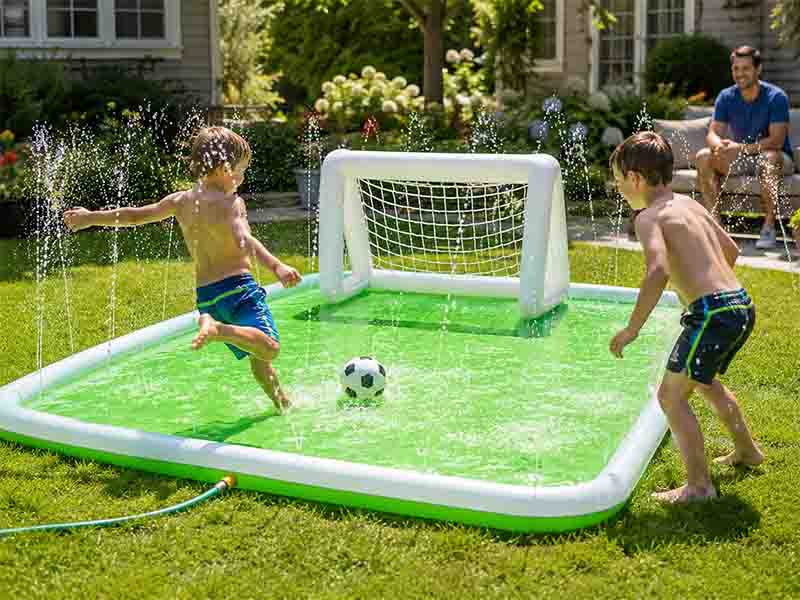
A PVC leisure product may look straightforward while it is folded inside a retail carton. Once it reaches a backyard, it must cope with moving children, wet paws, hose pressure, toys, sunlight, uneven activity, cleaning, drying, and repeated storage. A product that performs well for one quiet user may behave very differently when two children and a dog enter the same space.
EPN designs shared-use PVC products by studying how children, pets, and caregivers move, apply pressure, control water, and maintain the product afterward. Material thickness, surface texture, wall support, seam placement, drainage, cleaning, and storage are considered together. The aim is not to suggest that one design suits every family, but to match each structure with realistic users, activities, and limits.
Picture a normal summer afternoon. One child sits near the spray ring, another runs across the wet center, and the family dog enters from the side rather than the expected opening. A parent lowers the water pressure, removes a hard toy, and later needs to drain everything before dinner. Those ordinary moments reveal whether the product was designed for real family life or only for an attractive product photograph.
What Does Shared Family Use Mean?
Shared family use means designing around several users, activities, and responsibilities within one household. It includes how children play, how pets enter and move, how adults supervise, and how the product is cleaned and stored. It does not mean every child, dog, or activity is automatically suitable. Good design makes the intended use and practical limits clear.
More Than One User
Children, pets, and adults do not place the same demands on a PVC product. A preschool child may crawl, sit, or move cautiously through shallow water. An older child is more likely to run, jump, lean, or change direction suddenly. A dog may step over a wall, turn quickly on its paws, or place most of its body weight onto a small section of the product.
Adults also affect the structure. A caregiver may kneel on the edge, pull a hose connection sideways, or lift one section while water remains inside. These actions create concentrated loads that cannot be understood through a simple total weight rating. Product dimensions, usable area, wall height, connector position, and movement routes must all be considered together.
A product may appear large in a photograph yet offer limited usable room once the spray ring, raised border, toys, or decorative features are included. Shared use depends more on open movement space than on the largest external measurement printed on the carton.
One Space, Several Activities
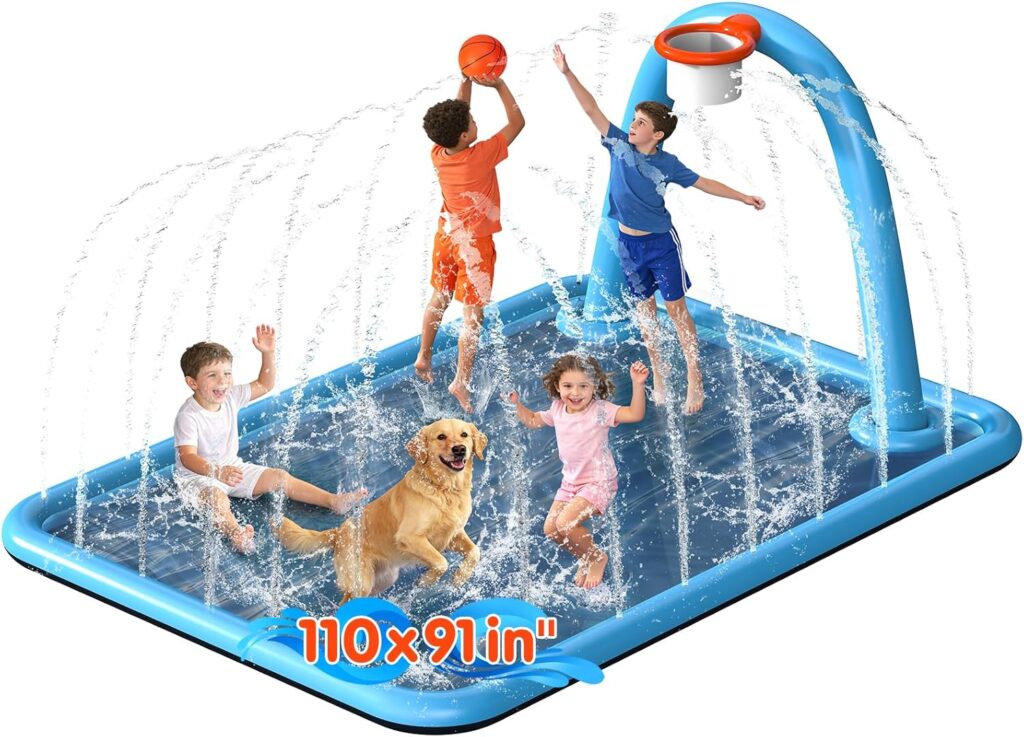
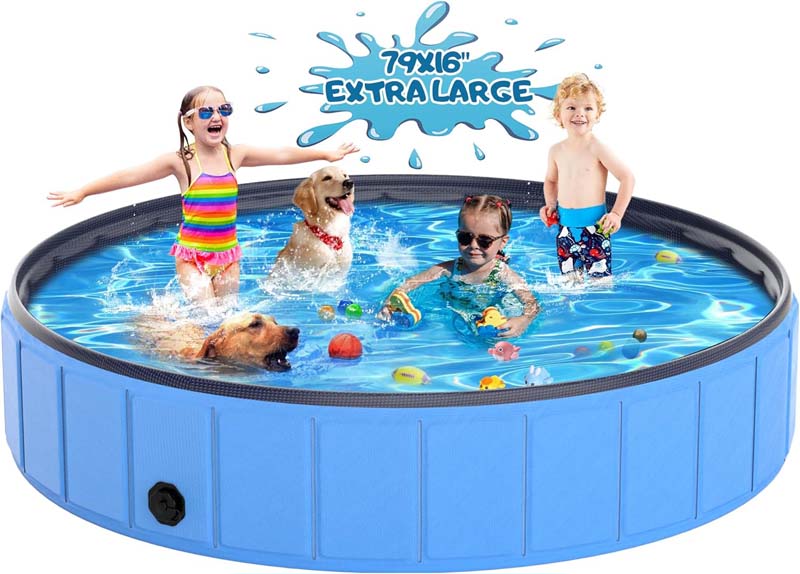
Family leisure products are rarely used for only one purpose. A splash pad may become a children’s play area, a cooling space for a dog, a sensory activity surface, or the center of a summer gathering. A folding dog pool may also be used for bathing, paw cleaning, gentle exercise, or supervised water play.
Each activity creates different stress. Running increases abrasion and slip risk. Pet bathing introduces hair, shampoo, and repeated rinsing. Group play increases crowding and side pressure. Hard toys can scratch the surface, while stones, sticks, and raised paving may damage the underside.
Experienced development begins with likely household behavior rather than the product name alone. Drain location, surface texture, seam width, wall support, entry height, and cleaning access should reflect the way the product will actually be used.
| Household Situation | Main Demand | Useful Design Response |
|---|---|---|
| One young child | Visibility and shallow activity | Open layout and clearly defined edges |
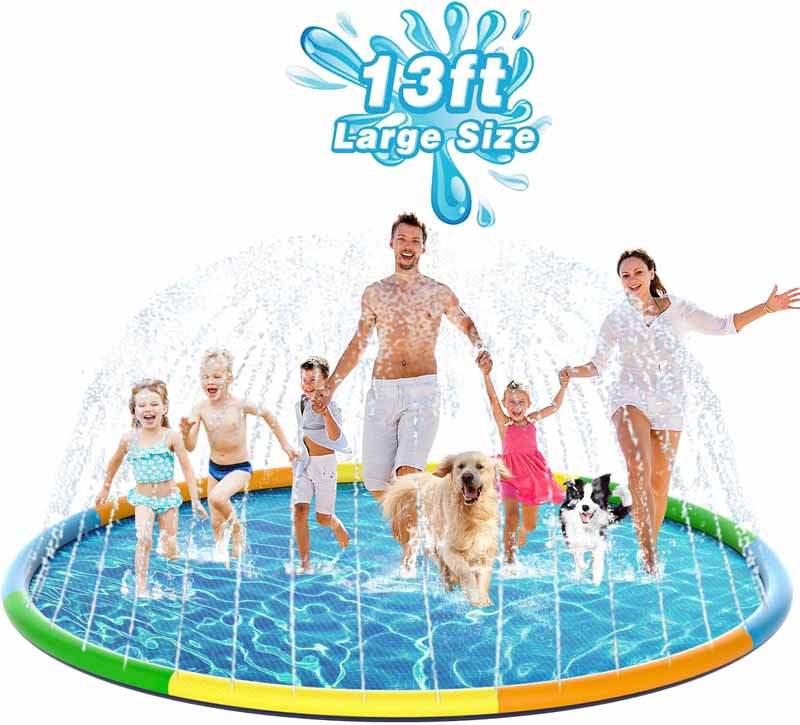
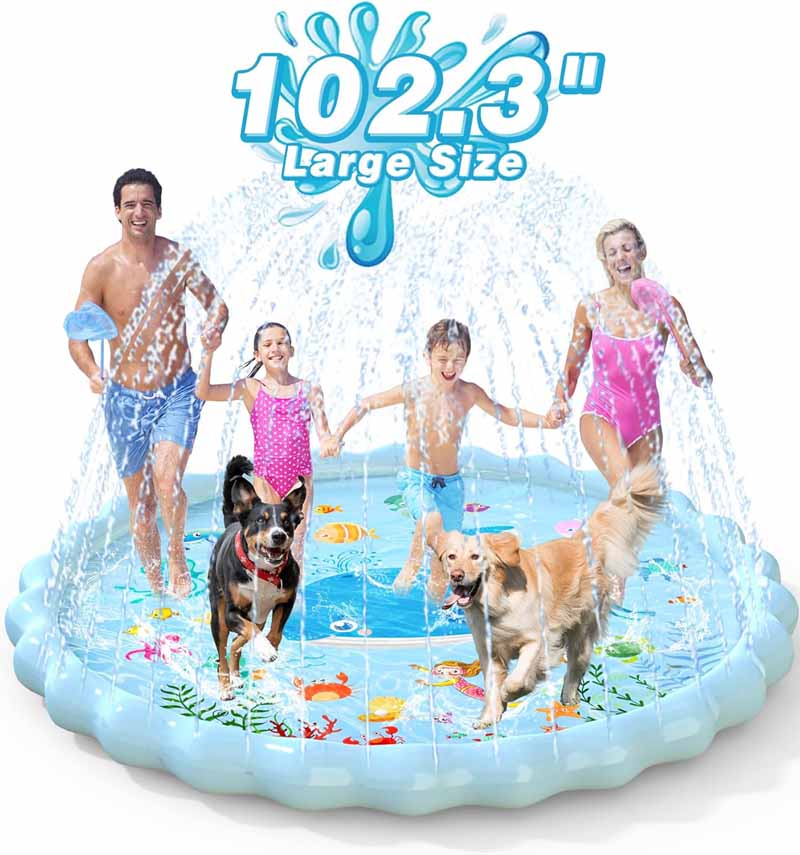
| Children with one dog | Mixed movement and paw contact | Wider usable area and controlled spray |
| Two large dogs | Wall loading and concentrated pressure | Strong internal support and larger diameter |
| Family gathering | Repeated entry and crowding | Clear movement zones and simple controls |
| Pet bathing | Hair, soap, rinsing, and drainage | Reachable surfaces and a low drain outlet |
Different Homes Need Different Products
A household with one toddler using a product several times each summer has different needs from a family with three older children and two dogs using it every weekend. Available space, climate, ground type, water pressure, storage conditions, and activity level all influence the right product choice.
A compact patio may place greater importance on controlled drainage and a smaller footprint. A large lawn may support a wider splash area with more distance between users. Senior dogs may benefit from lower entry walls, while energetic breeds generally need more internal turning space and stronger wall support.
Useful product selection starts with practical questions. How many users will enter at once? Will pets use it regularly? Will it sit on grass, concrete, decking, or artificial turf? How often will it be folded? These details are more meaningful than a broad statement that a product is “suitable for every family.”

Children and pets may enjoy the same product, but shared use should not be treated as unrestricted use. A calm dog standing beside older children creates a different situation from an excited large dog running near a toddler. In some homes, separate play sessions will be safer and easier to manage.
Adult supervision remains necessary around water and wet surfaces. Users should follow age guidance, product capacity, recommended water level, and pet-size considerations. Pet nails should be kept smooth, and the setup area should be cleared of stones, sticks, and sharp debris.
Good design can reduce avoidable problems, but it cannot remove every risk. Thick PVC, textured surfaces, and reinforced seams support normal use; they do not make a product suitable for uncontrolled running, digging, chewing, or rough play.
How Does EPN Balance Kids and Pets?
EPN balances children’s and pets’ needs by recognizing that they move and apply pressure differently. Children produce running, sitting, jumping, and group-play loads, while pets introduce paw pressure, nails, rapid turns, and stress at entry points. Surface grip, usable space, wall support, controllable water flow, and supervision must work together.
How Children Move
Children rarely follow a predictable path during outdoor play. They may run toward the spray, stop suddenly, sit near the perimeter, crawl through shallow water, or lean against a raised edge. Younger children often have limited balance and may not notice when grass, soap, sunscreen, or standing water changes the grip of the surface.
Open layouts help caregivers see the activity area clearly. Visible boundaries help children understand where the wet section begins. Drains, valves, and hose connectors should be positioned away from busy movement paths whenever the structure allows.
Water pressure also changes behavior. Lower spray is usually calmer and easier for hesitant children to approach. Higher flow increases spray height, excitement, noise, and movement speed. Adjustable hose-connected systems allow adults to begin with a gentle setting and increase the flow only after observing the users.
How Pets Apply Pressure
Dogs place pressure through four relatively small paw areas, so their body weight is more concentrated than a seated child’s weight. The load increases when a dog turns, jumps, braces itself, or climbs over an edge. Entry zones and turning areas therefore experience more stress than the center of a pool.
Size is not the only factor. A calm large dog may create less wear than a smaller dog that spins, scratches, or reacts strongly to water. Nail condition, age, breed tendencies, confidence, and previous water experience all affect product use.
Pet-oriented designs need particular attention around the floor, wall joints, upper edges, and drains. EPN folding dog pools, for example, can combine approximately 0.55 mm PVC with internal polypropylene panels. The PVC provides a waterproof, flexible surface, while the panels help the walls retain their shape without inflation.
No flexible PVC product should be described as fully claw-proof or chew-proof. Normal paw contact is very different from digging, biting, or repeated scratching.
Managing the Activity
Children and pets do not always need to use the product at the same moment. A dog can cool down first, followed by children’s play after the surface has been rinsed. In other situations, one calm pet may comfortably share the area with older children under close adult supervision.
Water flow provides a simple way to manage excitement. Starting with low pressure gives children and pets time to become familiar with the spray. The pressure can then be increased gradually. The same principle applies to pools: shallow water is usually a better starting point than filling to the maximum level immediately.
The activity should pause when users begin bumping into each other, rushing the entry area, or showing signs of overexcitement. The goal is not to place the highest possible number of users inside. It is to preserve open space for controlled movement and quick adult access.

Comfort strongly affects whether a product becomes part of a regular family routine. Children need a surface that is not excessively rough, sharp, or hot. Pets need stable footing, a manageable entry height, and enough space to stand or turn without repeatedly contacting the wall.
PVC exposed to direct sunlight can become warm before water is added, while the first water from a hose may be colder than expected. Caregivers should check both the surface and water temperature, particularly for young children, senior dogs, and smaller animals.
New PVC products may also retain temporary packaging odor after being sealed for a long period. Controlled formulation and production ventilation can reduce this issue, but unpacking and airing the product before first use remains a practical step. EPN pays attention to lower-odor formulations because first-use comfort is part of the overall product experience.
Which Materials Support Shared Use?
Materials for shared family use must balance flexibility, strength, weldability, surface comfort, odor control, outdoor resistance, and storage performance. Appropriate thickness depends on the product structure and expected load. A lightweight splash pad, folding dog pool, snow tube, and winter pool pillow should not use identical specifications simply because each product contains PVC.
Choosing PVC Thickness
PVC leisure products may use material from approximately 0.35 mm for lightweight applications to 0.90 mm or more for selected reinforced structures. Many family splash products fall near 0.40–0.55 mm, depending on size, water pressure, printing, and expected use. Folding pet pools may use about 0.55 mm PVC together with structural panels.
Thickness alone does not determine durability. A thick panel can still fail around a poorly supported connector or inconsistent seam. Excessive thickness also increases product weight, carton size, freight cost, and folding difficulty. It can create more stress around rigid valves when the product is folded incorrectly.
A useful specification considers thickness, formulation, seam width, reinforcement, joint position, temperature range, and user behavior together. Material choice should follow the intended activity rather than a simple desire to print a larger number on the packaging.
Surface and Formulation
PVC formulation affects softness, flexibility, odor, welding behavior, and resistance to aging. Plasticizer selection changes the way the surface feels and bends. Stabilizers help manage heat and light exposure, while pigments and printing systems influence color consistency.
For wet use, the surface needs a practical texture. A very smooth film may feel more slippery when wet, while a deep pattern can trap hair, soil, sunscreen, and soap. Light embossing often provides a better balance between grip and easy cleaning.
Odor is influenced by raw materials, ink, adhesives, heat processing, curing time, packaging, and storage. EPN’s internal material capabilities allow formulations to be adjusted for different product requirements. However, ventilation and suitable packing time remain important even with a lower-odor formula.
Reinforcing High-Stress Areas
Flexible products usually develop problems at concentrated stress points rather than in the center of a flat panel. Hose connectors, drains, valves, handles, corners, spray rings, fold lines, and pet entry areas experience pulling, twisting, pressure changes, or repeated bending.
Reinforcement should follow the actual load path. A hose connector may need a wider base and an additional PVC layer. A pool wall may require internal PP panels and stronger upper joints. Handles may need woven reinforcement that spreads force over a larger area.
Adding extra material everywhere can increase cost and weight without solving the real weakness. Targeted reinforcement is usually more effective because it strengthens the points where force is concentrated.
| Product Type | Common Material Approach | Main Design Priority |
|---|---|---|
| Kids splash pad | Approximately 0.40–0.55 mm flexible PVC | Even spray, comfort, and foldability |
| Pet splash pad | Reinforced paw-contact layout | Abrasion control and surface grip |
| Folding dog pool | Around 0.55 mm PVC with PP panels | Wall support and reliable drainage |
| Snow tube | PVC inner tube with optional fabric cover | Cold flexibility and bottom protection |
| Pool pillow | Around 0.50 mm cold-resistant PVC | Air retention and seasonal durability |

A splash pad faces hose pressure, sunlight, folding, grass contact, and repeated footsteps. A dog pool faces standing water, paw pressure, hair, shampoo, wall loading, and frequent drainage. A snow tube faces low temperatures, impact, and sliding abrasion. These environments require different material combinations.
Broad descriptions such as “heavy duty” provide little useful information without supporting details. Thickness, reinforcement method, wall structure, user size, temperature range, and expected activity offer a clearer picture.
For customized EPN projects, material selection normally begins with the intended users, target dimensions, destination market, price position, packaging limits, and expected frequency of use. A dependable product is created when the material, structure, manufacturing process, and care instructions support one another.
How Are Safety and Durability Evaluated?
Safety and durability are evaluated by examining materials, seams, valves, connectors, surfaces, and complete structures under realistic conditions. Relevant checks may include leakage, pressure, abrasion, folding, loading, ultraviolet exposure, and temperature performance. The purpose is not only to approve a finished sample but to find weaknesses early enough to improve the design.
Testing Real Loads
A static visual inspection cannot represent the way a family uses an outdoor product. Water creates constant outward pressure, while users create moving and localized loads. A dog stepping over a wall concentrates force on the upper edge. A child landing on a splash pad produces a short impact. A hose connector twists when the hose is pulled sideways.
Folding pools can be filled to observe panel movement, wall alignment, joint deformation, and drain sealing. Inflatable products can undergo pressure and air-retention checks. Splash pads can be connected at different water pressures to examine seam expansion, spray consistency, and inlet stability.
EPN’s development facilities conduct more than 500 material and product performance tests annually across several product categories. The tests vary according to structure and intended use rather than following one identical procedure for every item.
Leaks, Seams, and Wear
Slow leakage may come from a valve, contaminated welding area, uneven heat pressing, or stress around a connector. Water seepage may appear only after a product has remained filled for an extended period, so immediate visual inspection is not always enough.
Reliable heat-pressed seams depend on clean material, accurate alignment, temperature, pressure, dwell time, and joint width. A wide seam is not automatically strong if the production settings are inconsistent.
Wear tests should reflect the product’s actual environment. Pet products need attention around entry and turning zones. Snow tubes require low-temperature and bottom-surface evaluation. Foldable products benefit from repeated opening and folding to identify whitening, cracking, or stress around rigid components.
Slip and Stability
Surface texture is only one part of stability. Ground condition, standing water, soap, debris, movement speed, paw condition, and supervision all influence the risk of slipping. A textured product placed on a slope or sharp objects is still unsuitable for use.
Balanced geometry, visible edges, internal wall support, predictable spray distribution, and appropriate water levels can help create a more manageable environment. Users should place the product on level ground, remove debris, and increase water pressure gradually.
Credible product guidance does not promise that slipping is impossible. It explains how thoughtful construction, proper setup, and responsible behavior work together.
| Evaluation Area | Example Method | What It May Reveal |
|---|---|---|
| Air retention | Inflate and monitor over time | Valve or seam leakage |
| Water retention | Fill under sustained load | Seepage and wall deformation |
| Seam strength | Pull, peel, or pressure checks | Weak welding or poor joint support |
| Abrasion | Repeated controlled contact | Wear-prone surface areas |
| Folding cycles | Repeated opening and storage | Cracking or stress whitening |
| Weathering | UV and temperature exposure | Fading, brittleness, and aging |
| Load simulation | Static and moving pressure | Instability and concentrated stress |

Compliance requirements depend on product classification, age grading, destination market, materials, packaging, and product claims. EN71 may apply to relevant toys in Europe, while CPSIA and applicable ASTM requirements may guide certain children’s products in the United States. REACH addresses restricted substances in European markets.
No single certificate proves that every product from one factory complies with every market. A children’s splash pad, pet pool, snow tube, and pool accessory may require different testing and documentation.
A reliable evidence chain can include material declarations, applicable laboratory reports, batch inspection records, process controls, warning labels, packaging review, and traceable production documents. Each finished model should be reviewed against its exact design and destination.
How Does EPN Design for Real Families?
EPN designs for real families by considering the full ownership experience. Setup, supervision, water adjustment, entry, drainage, cleaning, drying, folding, and storage are treated as parts of the product. A useful leisure product should perform during play and remain manageable for the adult responsible for preparing and maintaining it.
Setup That Makes Sense
Caregivers want to know whether a pump is required, how the hose connects, how much water to add, where the drain is located, and whether one person can manage the setup. A product can use good materials and still disappoint when these basic steps are unclear.
Hose-connected splash pads use household water pressure to create and adjust the spray. Folding dog pools with internal panels can be opened and filled without inflation. Inflatable products may use larger valves to shorten inflation and deflation time.
Connectors should remain accessible without sitting directly in the busiest movement path. Drains should be reachable when the product is full. Clear diagrams and short instructions reduce errors such as overfilling, excessive water pressure, and incorrect placement.
Practical Cleaning
Outdoor products collect grass, leaves, sunscreen, hair, skin oil, and soap. If these materials remain on the surface, they may contribute to staining, odor, slippery patches, and poor storage conditions.
A low drain can remove most standing water without requiring the user to lift a heavy pool. Some larger pet pools use two drainage positions: one to manage the water level and another near the base for more complete emptying.
Cleaning surfaces should remain easy to reach. Deep decorative textures may look attractive but often trap debris. After use, the product should be rinsed, drained, wiped where necessary, and allowed to dry fully.
A product that takes ten minutes to use but an hour to clean is unlikely to become part of a regular family routine. Maintenance needs to be considered during development rather than added only to the instruction manual.
Drying and Storage
Moisture trapped inside folds, around valves, or between reinforced layers can lead to odor, staining, and microbial growth. The outside may feel dry even when water remains around a seam or panel pocket.
Users should open every drain, remove visible water, and allow both sides to receive airflow. Folding should follow natural panel lines whenever possible. Sharp creases across valves, drains, connectors, or reinforced areas can cause long-term stress.
PVC products should be stored away from sharp tools, rodents, direct heat, and prolonged sunlight. Products kept in very cold locations may become temporarily stiff and should return to a moderate temperature before being unfolded aggressively.

Families in different regions prefer different sizes, colors, fittings, warnings, and packaging formats. Larger backyard products may suit suburban North American homes, while compact cartons and easy storage may be more important in urban European or Asian markets.
EPN’s product work combines material engineering, structural design, packaging, and market localization. The development team includes 27 specialists, supported by more than 18 designers working across splash pads, folding pet pools, snow products, inflatable play products, and pool accessories.
For customized programs, dimensions, PVC thickness, prints, colors, valves, drains, fittings, instructions, and packaging can be adjusted after the user environment has been defined. The strongest customization projects begin with a clear household need rather than decorative changes alone.
Shared family use is not one feature printed on a carton. It is the result of connected decisions about people, pets, materials, movement, water, supervision, maintenance, and storage. A product may look attractive but still disappoint if the walls lose shape, the drain is hard to reach, or cleaning takes longer than the activity itself.
The most useful designs begin with ordinary moments. A child sits where the designer expected running. A dog enters from the side rather than the front. A parent needs to empty the pool before dinner. When these details are considered early, the result is a product that feels easier to use, easier to maintain, and better suited to real family routines.
Frequently Asked Questions
Can children and dogs use the same splash pad?
They can share a suitable splash pad when there is enough movement space and both remain calm. Begin with low water pressure, supervise continuously, and separate them whenever play becomes crowded or overly energetic.
What PVC thickness is suitable for a family splash pad?
Many family splash pads use PVC around 0.40–0.55 mm. Seam quality, reinforcement, connector design, surface formulation, water pressure, and expected use frequency are just as important as thickness.
Are pet splash pads different from kids’ splash pads?
Pet versions usually place greater emphasis on paw contact, abrasion, turning zones, and grip. Children’s products may focus more on visual play, spray interaction, and age-appropriate layouts.
How can dog owners reduce claw damage?
Keep nails trimmed and smooth, clear the ground, and stop digging or repeated scratching. No flexible PVC surface is fully resistant to every type of claw-related behavior.
How should a PVC water product be stored?
Rinse and drain the product, then dry both sides, seams, valves, and reinforced areas. Fold along natural lines and store it away from sharp objects, heat, rodents, and sunlight.
Which durability tests matter most?
Useful checks include water or air retention, seam strength, abrasion, folding cycles, load simulation, UV exposure, and temperature testing. The correct test plan depends on the product category.
Can shared-use PVC products be customized?
Dimensions, thickness, colors, prints, spray layouts, wall structure, drains, fittings, packaging, and instructions can be customized after the intended users, market, and use environment are clearly defined.