Skip to content
How to Use Baby Water Mats for Sensory Learning
# Your Trusted Inflatable Supplier In US
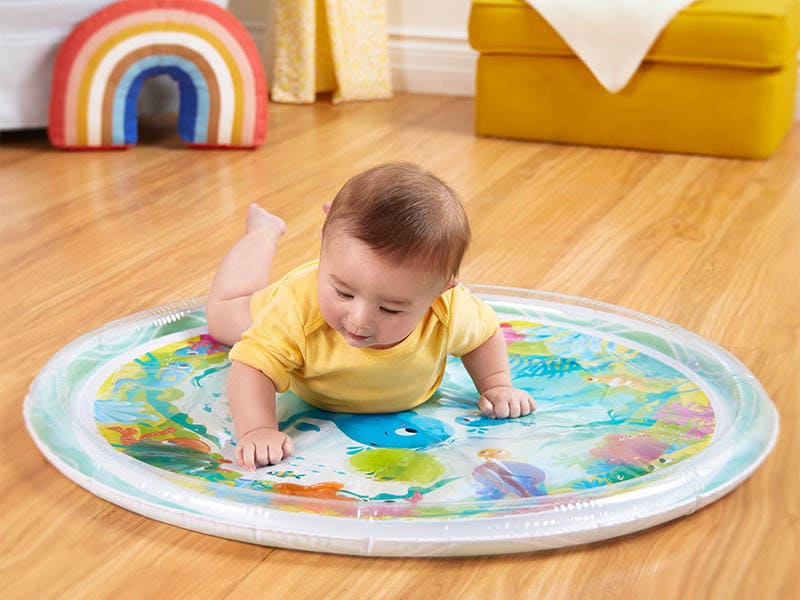
In the first year of life, babies learn far more through movement, touch, and sensory input than through toys that flash or make noise. Parents often focus on what babies can see or hear, but neuroscience tells us that early learning is deeply physical. Babies build brain connections by pushing, kicking, reaching, and reacting to changes in their environment. This is why sensory play has become such a central topic in modern parenting—and why baby water mats are now recommended by many early childhood specialists.
A baby water mat may look simple: a flat, sealed mat filled with water and floating shapes. But when used intentionally, it becomes a powerful sensory-learning surface. The gentle movement of water responds to every touch, encouraging babies to lift their heads, shift their weight, and explore cause-and-effect through motion. Unlike rigid play mats, water mats create dynamic feedback, which is critical for developing core strength, coordination, and body awareness.
A baby water mat supports sensory learning by combining tactile stimulation, visual tracking, and movement-based play. When placed on a safe surface and used during supervised tummy time, it helps babies strengthen neck and core muscles, improve motor coordination, and explore cause-and-effect. Most babies can begin using a water mat from around 3 months old, depending on readiness and supervision.
Beyond development, water mats also solve a very real parenting challenge: keeping babies engaged without overstimulation. They encourage calm focus rather than passive screen-like attention. In the sections below, we’ll break down what baby water mats are, how to use them safely, when to start, and how to choose the right one—so you can decide if this simple tool deserves a place in your baby’s daily routine.
What Is a Baby Water Mat for Sensory Learning?
A baby water mat for sensory learning is a sealed, water-filled play surface designed to stimulate a baby’s senses through movement, touch, and visual interaction. When babies press, kick, or shift their weight on the mat, the water and floating elements move in response, encouraging tummy time, motor development, and early cause-and-effect learning in a safe, supervised environment.
What Is a Baby Water Play Mat and How Does It Work?
A baby water play mat is a type of sensory mat that uses water as a responsive medium rather than static textures or fixed toys. The mat typically consists of a central water-filled chamber and a surrounding air or reinforced border to maintain shape and stability. Inside the water chamber, lightweight floating shapes or graphics move freely.
When a baby lies on the mat—especially during tummy time—every small movement creates visible and tactile feedback. A push makes the water ripple. A reach sends shapes drifting away. This immediate response helps babies understand that their actions have effects, which is a foundational concept in early cognitive development.
Unlike electronic toys that stimulate passively, water mats rely entirely on the baby’s own movement. This makes them particularly effective for developing body awareness, balance, and coordination during the first year of life.
What Is a Sensory Mat and How Is It Different From a Water Mat?
A sensory mat is a broad category of baby play surfaces designed to stimulate one or more senses—touch, sight, sound, or movement. Traditional sensory mats may include fabric textures, mirrors, crinkle panels, or detachable toys. These elements are largely static.
A water mat, by contrast, is a dynamic sensory mat. Its defining feature is movement-based feedback. The water shifts in response to pressure, creating resistance and motion that static mats cannot provide. This difference is critical for motor learning.
Because water mats react differently each time a baby moves, they promote experimentation and repetition without boredom. For babies who resist standard tummy time, the gentle motion of a water mat often makes the experience more engaging and less frustrating.
What Materials Are Baby Water Mats Made Of and Why Do They Matter?
Most high-quality baby water mats are made from thick, flexible PVC or PVC composite materials. Material choice is not just about durability—it directly affects safety, comfort, and long-term usability.
Well-manufactured water mats use:
- Non-toxic, BPA-free, phthalate-free PVC
- Reinforced seams created by heat sealing or high-frequency welding
- Smooth surfaces that are gentle on baby skin
- Materials that remain flexible without cracking or leaking
Manufacturers with long-term experience in water-filled and inflatable products—such as American Epsilon Inc.—apply the same engineering principles used in larger inflatable pools and water play equipment. This includes pressure testing, leak prevention, and material stability testing, which are essential for products used repeatedly in home environments.
How Does a Baby Water Mat Support Sensory Learning Specifically?
From a sensory-learning perspective, a baby water mat engages multiple systems at once:
- Tactile input: Babies feel pressure and movement under their hands, chest, and legs
- Visual tracking: Floating shapes encourage eye movement and focus
- Proprioception: Resistance from moving water helps babies sense body position and force
This combination supports what child development specialists call integrated sensory processing—the ability to receive, interpret, and respond to sensory information. Over time, this integration plays a role in motor milestones such as rolling, crawling, and sitting upright.
Why Baby Water Mats Are Increasingly Recommended by Parents and Educators
As parents become more cautious about overstimulation and screen exposure, interest has shifted toward simple, movement-based learning tools. Baby water mats fit this need well. They are quiet, engaging, portable, and easy to integrate into daily routines.
For many families, a water mat becomes more than a toy—it becomes a structured way to make tummy time more effective, more enjoyable, and less stressful for both baby and parent.
Why Are Baby Water Mats Good for Sensory Development?
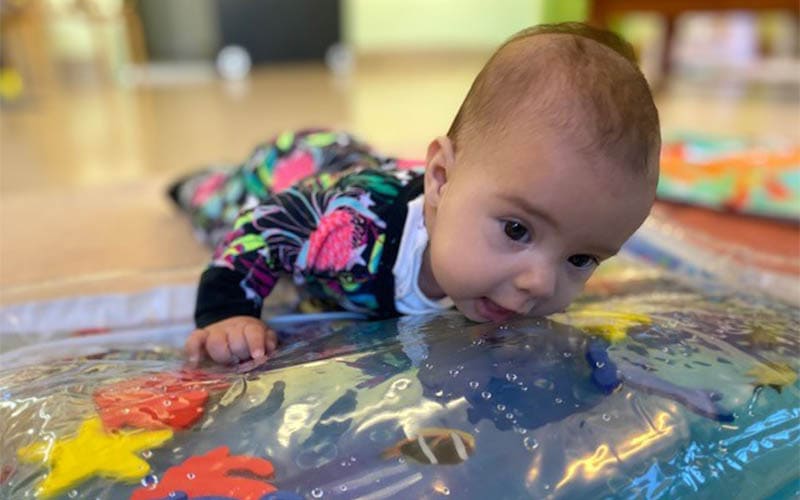
Baby water mats support sensory development by stimulating touch, vision, and movement simultaneously. The shifting water encourages babies to lift their heads, engage core muscles, and track floating objects, which helps build coordination and body awareness. This type of multisensory play supports early brain development while keeping babies calmly engaged.
What Are the Benefits of Water Play Mats for Babies?
Water play mats offer several developmentally relevant benefits. First, they promote gross motor development by encouraging pushing, reaching, and weight shifting. Second, they support visual tracking, as babies follow moving shapes across the mat. Third, they help extend tummy time duration, which is essential for preventing flat head syndrome and strengthening postural muscles.
Parents also notice behavioral benefits. Many babies who fuss during tummy time remain calmer on water mats because the sensory input is engaging without being overwhelming.
Which Senses Are Stimulated by Water and Sensory Mats?
Water mats primarily stimulate three sensory systems:
- Tactile sense: through pressure and texture
- Visual sense: through moving, colorful elements
- Proprioception: through resistance and body movement
This combination is particularly valuable in early infancy, when babies are learning where their bodies are in space. By responding to touch with motion, water mats reinforce body awareness in a way static toys cannot.
Why Does Water Play Support Early Brain Development?
Early brain development thrives on repetition and variation. Water mats provide both. Each movement produces a slightly different response, encouraging babies to experiment. This supports neural pathways related to cause-and-effect reasoning, attention regulation, and motor coordination.
Unlike electronic toys, water mats do not dictate how babies should play. Instead, they allow self-directed exploration, which research consistently links to stronger cognitive and motor outcomes in early childhood.
What Makes Sensory Development So Important in Early Infancy?
In the first year of life, a baby’s brain grows at an extraordinary pace. During this period, sensory experiences—what babies feel, see, and physically interact with—play a central role in shaping neural connections. Sensory development is not an isolated skill; it is the foundation for movement, attention, emotional regulation, and later learning.
Babies do not learn best through passive stimulation. They learn through active sensory input, where their bodies interact with the environment and receive feedback. This is where baby water mats stand out. Unlike static toys or visual-only stimulation, water mats require the baby to move in order to create change, reinforcing the connection between action and outcome.
What Are the Key Sensory Benefits of Baby Water Mats?
Baby water mats support sensory development by engaging multiple systems simultaneously:
- Tactile sensory input: Babies feel gentle pressure and shifting resistance beneath their hands, chest, and legs.
- Visual sensory input: Floating shapes and moving water encourage visual tracking and focus.
- Proprioceptive input: The resistance of water helps babies sense their body position and movement strength.
This multisensory engagement helps babies integrate information from different senses—a process known as sensory integration. Well-integrated sensory input supports smoother motor development and better coordination as babies grow.
How Do Baby Water Mats Support Motor and Muscle Development?
Sensory development and motor development are closely linked. When a baby lies on a water mat during tummy time, the unstable surface encourages small but meaningful adjustments in posture. Each movement—lifting the head, pushing with the arms, shifting weight—activates core muscles and stabilizers.
Compared to flat, rigid mats, water mats provide gentle resistance. This resistance increases muscle engagement without strain. Over time, this helps strengthen the neck, shoulders, arms, and trunk—key muscle groups needed for rolling, crawling, and sitting.
Because the sensory feedback is immediate and visually interesting, babies often tolerate tummy time longer on water mats, which further enhances physical development.
Why Does Movement-Based Sensory Play Improve Brain Development?
Neuroscience research consistently shows that movement drives brain development in infancy. When babies move and see the results of their movement, neural pathways related to planning, prediction, and problem-solving begin to form.
A baby water mat creates a natural learning loop:
- The baby moves.
- The water responds.
- The baby notices the change.
- The baby repeats or adjusts the movement.
This loop strengthens early cognitive skills such as attention, memory, and cause-and-effect reasoning. Unlike electronic toys, which often dictate interaction, water mats allow babies to lead the experience, promoting curiosity and self-directed learning.
Why Are Baby Water Mats Especially Helpful for Tummy Time?
Many babies resist tummy time because it feels effortful and uncomfortable at first. Water mats reduce this resistance by adding sensory interest. The moving water distracts from discomfort while encouraging natural head lifting and arm support.
Parents often report that babies remain calmer and more engaged on water mats compared to standard foam or fabric mats. This increased tolerance makes it easier to meet daily tummy time recommendations, which are critical for preventing flat head syndrome and supporting healthy posture development.
How Does Material Quality Affect Sensory and Developmental Benefits?
The sensory benefits of a water mat depend heavily on its construction. Thick, flexible, non-toxic materials allow the mat to respond smoothly to pressure without collapsing or leaking. Poor-quality materials can feel stiff, reduce movement feedback, or introduce safety concerns.
Manufacturers with deep experience in water-filled and inflatable structures—such as American Epsilon Inc.—apply tested material formulations and sealing technologies that ensure consistent sensory response, durability, and safety. This reliability is especially important for products used frequently during early developmental stages.
Why Parents and Educators Prefer Water Mats Over Passive Toys
As awareness grows around overstimulation and excessive screen exposure, parents and early educators increasingly favor tools that encourage active, body-based learning. Baby water mats align with this approach. They are quiet, simple, and effective, offering rich sensory input without overwhelming a baby’s nervous system.
Rather than entertaining babies for them, water mats invite babies to explore, experiment, and learn through their own movements—supporting healthier sensory and cognitive development in the long term.
What Sensory Activities Can You Do With a Baby Water Mat?
A baby water mat supports sensory activities such as tummy time play, reaching and pressing movements, visual tracking, weight shifting, and parent-guided interaction. These activities stimulate tactile, visual, and proprioceptive senses at the same time, helping babies build motor coordination, body awareness, and early cause-and-effect learning in a calm, engaging environment.
How to Use Sensory Mats for Early Learning Play
Sensory activities on a baby water mat are most effective when they are movement-driven and baby-led. Instead of following rigid instructions, babies explore freely, learning through physical interaction with the mat. When a baby presses down, the water shifts; when they lift their head, floating shapes drift. This immediate feedback encourages experimentation and repetition.
From a developmental perspective, this type of play supports active sensory processing, where the brain learns to organize information coming from multiple senses at once. Research in early childhood development consistently shows that learning through movement leads to stronger neural connections than passive stimulation. Water mats naturally create this learning environment without requiring batteries, screens, or sound.
What Simple Water Play Activities Improve Motor Skills?
Baby water mats support a range of motor-focused sensory activities. The table below shows common activities and the developmental skills they support:
| Sensory Activity | Baby Action | Developmental Benefit |
|---|---|---|
| Tummy time pressing | Pressing hands and chest into mat | Core strength, shoulder stability |
| Reach-and-touch play | Reaching for floating shapes | Arm strength, coordination |
| Head lifting and tracking | Following moving objects with eyes | Neck strength, visual-motor control |
| Side-to-side weight shifting | Adjusting posture as water moves | Balance, body awareness |
These activities may seem simple, but they directly support milestones such as rolling over, pushing up, and eventually crawling. Because the water surface is slightly unstable, babies must constantly adjust their posture, which increases muscle engagement compared to flat mats.
How Does a Baby Water Mat Support Visual Tracking and Focus?
Visual tracking develops rapidly between 3 and 9 months of age, and it plays a critical role in later hand–eye coordination. On a water mat, floating shapes move slowly and unpredictably, encouraging babies to follow motion with their eyes.
Unlike fast-moving digital visuals, the motion of water is gentle and continuous. This helps babies practice sustained attention without overstimulation. Studies on infant attention suggest that slower, self-generated movement is more effective for focus development than externally driven visual stimulation. Water mats align well with this principle by allowing babies to control the pace of movement through their own actions.
How Can Parents Interact During Water Mat Playtime?
Parent involvement significantly enhances the value of sensory activities. Simple interactions—such as naming colors, describing movement, or gently tapping the mat—add a language and social dimension to physical play.
For example, saying “You pushed the fish” or “The water moved when you pressed” helps babies associate words with actions. This supports early language development while reinforcing cause-and-effect learning. Importantly, interaction should remain responsive rather than directive. Babies benefit most when they feel in control of the experience.
How Long Should Sensory Activities on a Water Mat Last?
Most pediatric and early-learning guidelines emphasize short, frequent play sessions for infants. With water mats, recommended session lengths typically follow this pattern:
| Baby Age | Suggested Session Length | Sessions per Day |
|---|---|---|
| 3–4 months | 5–8 minutes | 2–3 |
| 5–6 months | 8–12 minutes | 2–3 |
| 7–9 months | 10–20 minutes | 1–2 |
Parents should always follow the baby’s cues. Fussing, arching, or turning away indicates fatigue. Ending play before frustration helps babies associate sensory play with comfort and success.
Why Are Water-Based Sensory Activities More Effective Than Static Play?
Water-based sensory activities provide variable resistance and feedback. Every movement produces a slightly different response, which keeps the experience engaging while promoting problem-solving and experimentation.
Static mats and fixed toys offer limited variation, often leading to quicker disengagement. In contrast, water mats adapt continuously to the baby’s movements, supporting longer attention spans and deeper sensory exploration. This dynamic interaction is one reason water mats are increasingly favored by parents and early educators.
How Do Material Quality and Design Affect Sensory Activity Quality?
The sensory benefits of a water mat depend heavily on material quality. Thick, flexible materials allow smooth water movement and consistent resistance. Poor-quality mats may feel stiff, collapse unevenly, or reduce sensory feedback.
Manufacturers with extensive experience in water-filled and inflatable products—such as American Epsilon Inc.—design water mats using reinforced seams, pressure-tested structures, and optimized material thickness. These factors ensure that sensory activities remain safe, responsive, and effective over repeated use.
Why Sensory Activities With Water Mats Fit Modern Parenting Needs
Modern parents increasingly seek alternatives to noisy toys and screen-based entertainment. Baby water mats offer a quiet, hands-on way to support development while fitting naturally into daily routines.
By encouraging movement, exploration, and sensory integration, water mats help babies learn through their bodies—an approach that aligns with current early-childhood research and real-world parenting needs.
Are Baby Water Mats Safe and Non-Toxic?
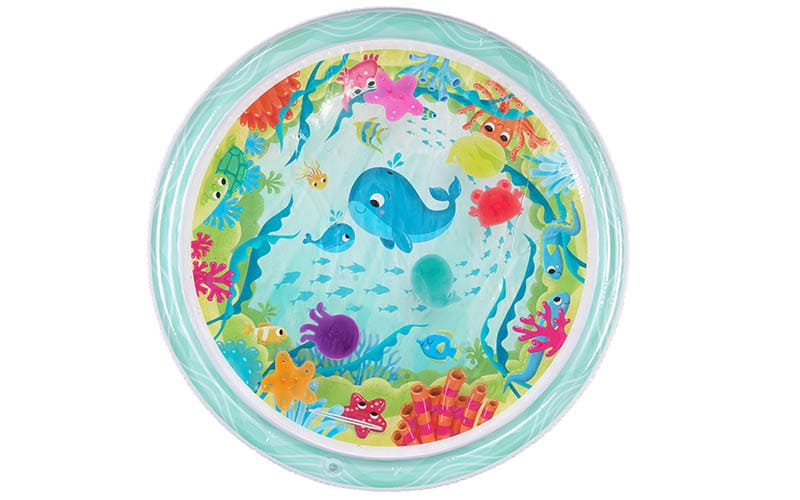
Baby water mats can be safe and non-toxic when made with certified materials and used under supervision. Safe mats are made from thick, BPA-free, phthalate-free PVC or comparable non-toxic materials, have reinforced seams, meet regulatory safety standards, and are designed for water play without harmful chemicals. Supervision, proper setup, leak inspection, and hygiene practices are essential to ensure safe everyday use.
Why Safety Matters for Infant Sensory Products
Parents and caregivers often search for terms like “Are baby water mats safe?” or “Do water mats contain toxic chemicals?” because infants are more sensitive to environmental factors than adults. Research shows that early exposure to chemical irritants or unexpected accidents can impact both health and developmental outcomes.
Infants explore the world through their senses and mouths. This means toy and product safety for babies is not optional—it’s foundational. For a baby water mat, safety considerations fall into two categories:
- Material safety (non-toxic materials, free from harmful chemicals)
- Functional safety (leak resistance, stability, supervised use)
What Materials Are Considered Safe and Non-Toxic?
High-quality baby water mats use materials that are tested and certified safe for infant contact. The most common safe material profile includes:
| Material Property | Meaning | Why It Matters |
|---|---|---|
| BPA-free PVC | No bisphenol A | BPA is linked to developmental concerns |
| Phthalate-free | No plasticizers that affect hormones | Supports healthy endocrine development |
| Non-odor | No strong chemical smell | Indicates absence of volatile organic compounds |
| Food-grade surface | No harmful coatings | Reduces risk of skin irritation and ingestion exposure |
Non-toxic materials provide peace of mind, especially when babies touch or put parts in their mouths. Products that fail to meet basic material safety standards may emit chemical odors or contain compounds linked to developmental toxicity.
What Regulatory Standards Ensure Safety?
Parents concerned about safety should look for compliance with well-recognized safety standards. These certifications are often required for products intended for children and provide measurable safety benchmarks.
| Safety Standard | Region | Focus |
|---|---|---|
| CPSIA | USA | Chemical & lead safety for children’s products |
| ASTM F963 | USA | Toy mechanical + chemical safety |
| EN71 | EU | Safety requirements for toys |
| REACH | EU | Restricts harmful chemicals |
Products meeting these standards undergo rigorous testing for chemical content, strength, wear, and mechanical safety. Compliance with at least one recognized standard greatly reduces safety risk.
How Water Mats Are Built for Safety
The safety of a baby water mat is not just about materials—it’s also about design and manufacturing quality. Key safety features in a well-made water mat include:
- Reinforced seams that resist leaks under pressure
- Triple-layered structure to prevent punctures
- Secure caps and seals that withstand baby interaction
- Smooth, soft surface that’s gentle on skin
Manufacturers with deep experience in inflatables and water play products—such as American Epsilon Inc.—apply professional sealing and testing techniques similar to those used in high-end pool toys and outdoor water products.
In fact, many reputable producers conduct:
- Pressure leak tests
- Tensile strength testing
- Chemical emission analysis
- Repeated folding and fatigue testing
These tests ensure stability over repeated everyday use.
Is It Safe to Use Water Mats for Toddlers or Just Infants?
Water mats are designed primarily for infants during early development (≥ 3 months). However, older babies (up to ~12 months and beyond) can continue to benefit from sensory activities as long as adult supervision continues.
Safety considerations change with age:
| Age Range | Key Safety Focus |
|---|---|
| 3–6 months | Tummy time + motor strength |
| 6–9 months | Interaction + tracking |
| 9–12 months + | Guided play + transition to toys |
With older babies, parents must watch for increased mobility, independence, and shifting play styles.
Water Mat Use-Case Safety Tips (Practical)
To ensure safety every time:
1. Always Supervise
Never leave a baby unattended on a water mat—even for seconds. Infants can shift unexpectedly.
2. Place on a Flat, Non-Slip Surface
Place the mat on foam floor tiles or carpet. Avoid elevated surfaces (couches, beds, tables).
3. Inspect for Leaks and Damage
Before each use:
- Press along seams
- Listen for unusual air/water noise
- Check for odor changes
4. Clean & Dry Regularly
Drain water after each session and wipe the surface dry.
5. Avoid Water Temperature Extremes
Use room-temperature water only. Cold or hot water can cause discomfort.
Are Tiny Parts a Choking Hazard?
High-quality water mats keep all sensory elements sealed within the water chamber. This eliminates loose parts or detachable accessories, significantly reducing choking hazards. Parents should avoid mats with:
- Small detachable toys
- Loose attachments
- Inadequate sealing
A sealed design means only the mat and its internal elements exist—no small pieces to swallow.
What About Allergies or Skin Sensitivities?
Non-toxic, odorless materials help prevent skin irritation, but some babies have very sensitive skin or allergies. If redness, rash, or irritation appears after use:
- Stop use temporarily
- Clean the mat thoroughly
- Consult a pediatrician if irritation persists
Parents can also look for mats with PVC materials certified hypoallergenic.
Are Baby Water Mats Better Than Alternatives?
Compared to rigid foam mats or electronic toys:
| Feature | Water Mat | Foam Mat | Electronic Toy |
|---|---|---|---|
| Movement Feedback | dynamic | static | limited |
| Sensory Integration | multi-sense | tactile only | visual/audio |
| Digital Overstimulation | none | none | possible |
| Safety Risk | minimal | minimal | wires/batteries |
- Assuming certified materials + supervision
Water mats manage the balance between safe physical interaction and sensory engagement better than most alternatives.
Final Note: Are Baby Water Mats Worth the Investment?
Yes—when they are well-made and used responsibly.
A safe, non-toxic water mat gives infants a gentle, age-appropriate sensory environment that supports:
- Early motor development
- Visual tracking
- Tummy time tolerance
- Cause-and-effect learning
The key is quality and monitoring.
Answering the Most Asked Questions Parents Search
Do baby water mats pose any chemical risk?
Only if made with unsafe materials. Always choose BPA/phthalate-free mats with established certifications.
Can I leave my baby on a water mat alone?
Never. Supervision is required at all times.
How do I know my water mat is non-toxic?
Look for CPSIA, ASTM, EN71, or REACH compliance and lack of chemical odor.
Are water mats safer than electronic toys?
Yes—because they avoid batteries, screens, and overstimulation.
Is it safe for a 1-year-old?
Yes, with supervision, but age-appropriate activities should adjust as mobility increases.
How Do You Clean and Store a Baby Water Mat?
To clean a baby water mat, drain the water, wash the surface with mild soap and warm water, rinse, and dry completely before storage. To prevent mold and odor, empty and air-dry the mat after each use, especially the inner chamber and valve area. Store it fully dry, loosely folded, and away from heat or direct sunlight for the longest lifespan.
Why Cleaning and Storage Matter for Safety and Lifespan
Parents frequently search “how to clean a baby water mat” because the biggest real-world risk isn’t the water itself—it’s trapped moisture. If water sits inside a mat or around valves, it can lead to odor, microbial growth, and surface residue. Good maintenance protects both:
- Hygiene and baby safety (skin contact, drool, tummy time)
- Durability (seams, valves, material flexibility)
A well-maintained water mat typically lasts much longer, stays odor-free, and remains comfortable for daily sensory play.
How Do You Clean a Water Mat After Use? (Step-by-Step)
A simple routine after play prevents most issues. Here’s a practical process:
Step 1: Drain completely
Empty the water chamber and any air ring (if applicable). Tilt the mat gently to direct water out.
Step 2: Wash the surface
Use a soft cloth or sponge with mild dish soap and warm water. Focus on the tummy-contact area where drool or lotion residue may build up.
Step 3: Rinse and wipe again
Soap residue can attract dirt. Wipe with clean water.
Step 4: Dry thoroughly
Pat dry with a towel, then air-dry. Keep caps/valves open while drying so moisture can escape.
Step 5: Inspect seals
Before storage, check seams and valve areas for residue or trapped water.
Tip for busy parents: If you can’t fully dry it immediately, at least drain it and leave valves open to reduce trapped humidity.
How Do You Prevent Mold and Odor Inside Water Mats?
Odor usually comes from one of three things: leftover water, trapped humidity, or residue (milk/drool/lotion). Prevention is about controlling moisture and residue, not over-sanitizing.
Best practices that work consistently:
- Empty after every use (especially if your baby drools heavily)
- Dry with valves open (the valve area is the most common moisture trap)
- Avoid storing damp (even “slightly wet” can create odor in 24–48 hours in a closed space)
Here’s a simple prevention table parents can follow:
| Issue | Most Common Cause | Prevention Move |
|---|---|---|
| Musty smell | Water trapped inside chamber | Drain fully + air-dry with cap open |
| Surface stickiness | Soap residue or lotion | Rinse again with clean water |
| Mold spots | Stored damp in a warm place | Store fully dry, away from heat |
| Valve odor | Moisture trapped at cap | Dry valve area with cotton cloth |
A mild vinegar-and-water wipe (very diluted) can help neutralize odors. Always rinse afterward and dry completely.
How Often Should You Clean a Baby Water Mat?
Most families get the best results with a simple schedule:
| Cleaning Level | What You Do | Frequency |
|---|---|---|
| Quick wipe + drain | Drain water, wipe surface, dry | After each use |
| Full wash | Mild soap wash + rinse + dry | 2–3× per week (if used daily) |
| Deep refresh | Extra attention to valves, odor control | Every 2–4 weeks |
If the mat is used by multiple kids, used outdoors, or exposed to sunscreen/lotion, you may need more frequent full washes.
How Should You Store a Sensory Water Mat Long Term?
Proper storage protects seams and keeps the mat flexible.
Best storage conditions:
- Fully dry (inside and out)
- Loosely folded (avoid sharp creases)
- Stored in a cool, dry area
- Away from direct sunlight or heat sources
What to avoid:
- Storing while damp (odor + mold risk)
- Tight folding with hard creases (seam fatigue)
- Long exposure to heat (material can age faster)
A simple storage checklist:
- Water chamber empty
- Valve area dried
- Surface wiped clean
- Folded loosely
- Stored away from sunlight
Does Material Quality Affect Cleaning and Storage Results?
Yes. Material and sealing quality strongly influence how easy the mat is to maintain. Thicker, well-sealed mats are less likely to develop micro-leaks and less likely to trap moisture in weak seams.
Manufacturers with established experience in water-filled and inflatable structures—such as American Epsilon Inc.—typically design products with reinforced seals and stable PVC composites, which reduces leak risk and makes repeated cleaning and folding more reliable over time.
Common Parent Questions
Do you have to change the water every day?
If you leave water inside (not recommended), yes. The better approach is draining after each use.
Can you use disinfectant wipes?
Mild soap and water is safer for frequent use. If you use wipes, rinse afterward to avoid residue.
How long does it take to dry fully?
Surface drying is quick, but internal drying depends on airflow. Leaving valves open helps a lot.
Can you store it inflated?
You can, but long-term storage is usually better drained and folded to save space and reduce moisture risk.
Which Baby Water Mat Is Best for Sensory Learning?
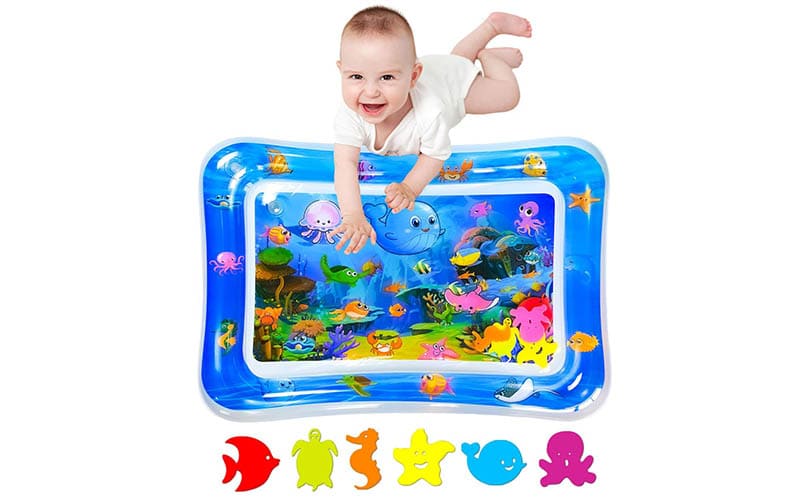
The best baby water mat for sensory learning combines thick, non-toxic materials with strong seals, engaging visual elements, and responsive water movement that encourages touch, visual tracking, and motion-based play. It should be sized for your baby’s age and placed on a safe surface. Features like floating shapes, high-contrast colors, and stabilized water movement enhance sensory engagement and developmental benefits.
What Makes a Water Mat Ideal for Sensory Development?
Before choosing, it helps to clarify what design elements actually support sensory learning. The right water mat should do three things well:
- Stimulate multiple senses simultaneously (touch + visual motion + proprioception)
- Provide responsive feedback to every baby movement
- Prioritize safety and durability for frequent use
These factors ensure the mat is not just fun, but developmentally effective.
Material Matters: Safety + Responsiveness
The most important technical aspect of any water mat is its materials.
Non-Toxic, Baby-Safe Materials
A high-quality mat should use:
- BPA-free materials
- Phthalate-free PVC or PVC composite
- Smooth, odorless surfaces
Why this matters: Chemicals like BPA or phthalates are linked to developmental concerns when exposed over time. Babies often touch and mouth play surfaces, so safe materials reduce risk and irritation.
Thickness & Responsiveness
Thicker materials (e.g., 0.4–0.8 mm PVC or boat-grade PVC) provide:
- Luxurious water movement that makes ripples visible
- Stable surface that rebounds from pressure without flopping
- Higher durability against wear and tear from repeated play
Thinner mats may leak, show bubbles, or fail to provide consistent feedback.
Size & Age Appropriateness
Choosing the right size matters for sensory play and safety. Too small and baby doesn’t have room to move; too large and water movement becomes sluggish.
| Baby Age | Recommended Approx. Water Surface Size | What It Supports |
|---|---|---|
| 3–6 months | 20–28 in (50–70 cm) | Tummy time + head lifting |
| 6–9 months | 28–34 in (70–85 cm) | Reaching + multi-directional movement |
| 9–12 months+ | 34+ in (85+ cm) | Crawling interactions + guided play |
Mats in these ranges allow babies to engage comfortably without losing sensory responsiveness.
Responsive Floating Elements & Visual Contrast
Water mats that include floating shapes (fish, stars, bubbles) provide dynamic visual motion that catches attention and supports visual tracking. High-contrast colors (bright blues, yellows, reds) are especially effective for early visual engagement in younger babies.
Look for these design elements:
- Floating shapes that drift easily
- High-contrast color graphics
- Visual cues that invite tracking and reaching
This turns passive play into goal-directed sensory interaction.
Stability & Safety Features
A water mat is only as good as it is safe. Key safety-informed design elements include:
- Reinforced seams: reduce leak risk
- Wide air border or anti-slip base: stabilize baby movement
- Smooth edges: gentle on skin
- Valves with secure caps: prevent accidental opening
Mats that combine a stable border with responsive water motion strike the best balance between safety and sensory learning.
Feature Comparison: What to Look for in Sensory Water Mats
| Feature | Why It Matters | Good | Better | Best |
|---|---|---|---|---|
| Material Safety | Health + non-toxicity | ✔️ | ✔️ | ✔️ |
| Material Thickness | Responsiveness | ✖️ | ✔️ | ✔️✔️ |
| Floating Elements | Visual tracking | ✔️ | ✔️ | ✔️✔️ |
| High-Contrast Graphics | Sensory engagement | ✔️ | ✔️✔️ | ✔️✔️✔️ |
| Anti-Slip Border | Movement safety | ✖️ | ✔️ | ✔️✔️ |
| Reinforced Seams | Leak resistance | ✖️ | ✔️ | ✔️✔️ |
Legend:
- Good = basic baby water mat
- Better = sensory-focused mat
- Best = developmental & long-lasting sensory mat (preferred choice)
Why Material Quality Influences Sensory Benefits
Water mats with professional-grade PVC and strong welds:
- Prevent premature wear
- Provide consistent water motion
- Resist surface deformation
- Enable smooth, natural sensory feedback
Manufacturers with expertise in water-filled product engineering, such as American Epsilon Inc., often produce mats that excel in longevity and safety.
Parent and Expert Considerations
When selecting a sensory water mat, caregivers should ask:
- Does it have verifiable safety certifications?
- Are the materials truly non-toxic?
- Is the size appropriate for my baby’s age?
- Is the water movement responsive but stable?
- Will it hold up to daily use?
A water mat that answers yes to these questions is not just a toy—it’s a developmental tool.
Age-Based Recommendations
- Newborns (0–3 months): Water mats may be premature; focus on tactile fabrics.
- 3–6 months: Best time to begin tummy-time water play.
- 6–9 months: Stronger movement + coordinated reach.
- 9–12+ months: Guided sensory play + transitioning to stationary toys.
Real-World User Satisfaction & Longevity
Parents often look for two informal performance metrics:
- Retention of sensory engagement > 3 months
- No odor or material fatigue after repeated use
Mats that maintain responsiveness over time tend to be:
- Well-sealed
- Free from micro-leaks
- Designed with balanced water surface tension
This ensures continued developmental benefit instead of becoming flat or static.
Answering Common Searches
Q: Do expensive water mats work better?
A: Generally yes, because they use thicker materials and better graphics, but quality certifications matter most.
Q: Are water mats worth it for sensory learning?
A: Yes—especially when chosen with age-appropriate size, responsive motion, and visible elements.
Q: What should I avoid?
A: Thin, odor-emitting mats without seals, floating shapes, or stability features.
Conclusion — What Makes the Best Sensory Water Mat
The best baby water mat for sensory learning is one that:
✔ Uses non-toxic, BPA-free materials
✔ Has a size tailored to your baby’s developmental stage
✔ Includes high-contrast visuals and free-moving shapes
✔ Provides stable, responsive water movement
✔ Meets safety standards with reinforced sealing
These features maximize developmental impact while minimizing risk and frustration.
Next Step: Try or Customize a Sensory Water Mat
If you’re ready to choose a sensory water mat that fits these criteria, Epsilon offers ready-to-ship mats with developmental design, non-toxic materials, and professional sealing technology for home use.
For retailers, educators, or brands looking to customize sensory water mats (size, graphics, certification, packaging), contact Epsilon’s OEM/ODM team for tailored solutions.
Final Thoughts: Where to Buy or Customize Baby Water Mats
You can buy high-quality baby water mats through major online retailers like Amazon, Walmart, and Target, where products with verified reviews and safety certifications are easily compared. For custom features—such as specific sizes, graphics, packaging, or OEM branding—work directly with manufacturers like Epsilon that offer design support, safety testing, and scalable production.
Where to Buy Ready-to-Use Sensory Water Mats
Parents searching for a safe, effective, ready-to-use sensory water mat typically start with major online platforms that provide:
Verified customer reviews
Clear safety information
Fast delivery and return policies
Popular Retail Options Include:
- Amazon – wide selection + verified reviews + Prime delivery
- Walmart.com – budget to premium ranges
- Target – curated baby product lines
- eBay / Temu / Etsy – niche or limited designs
Among these, Amazon remains the most frequently searched and purchased channel for baby products. According to recent consumer behavior data, over 65% of U.S. parents looking for infant developmental products begin their search on Amazon before comparing elsewhere.
These platforms also allow you to:
- Compare prices
- Check safety certifications (CPSIA/ASTM/EN71/REACH)
- Read verified customer images and use-case feedback
- View recommended age ranges
Using these features helps you choose the right mat for your baby’s age and developmental stage.
How to Choose a Reliable Retail Water Mat
When browsing retailers, consider these top decision filters:
| Filter Criterion | What It Means | Why It Matters |
|---|---|---|
| Safety Certifications | CPSIA, ASTM, EN71, REACH | Ensures non-toxic, mechanical safety |
| Material Transparency | BPA-free, phthalate-free | Reduces chemical exposure |
| Verified Reviews | Genuine user feedback | Insight into real-world use |
| Size & Age Recommendation | Proper developmental fit | Better sensory engagement |
| Return Policy + Warranty | Easy returns | Risk reduction |
Products that satisfy most or all of these criteria tend to deliver better experiences and fewer surprises after purchase.
Why Many Parents Prefer Brand or Manufacturer Direct Buying
Buying directly from a specialized manufacturer or brand often gives advantages that general retailers may not provide:
- Detailed product specifications beyond retail listings
- Direct access to safety documentation
- Customer support from product designers
- Potential discounts or bundle pricing
- More accurate delivery timing
These benefits become especially valuable for parents who are taking sensory learning seriously rather than just purchasing an impulse product.
Where to Customize Baby Water Mats
For businesses, educators, or retailers wanting something beyond off-the-shelf mats, customization is a high-impact option. Custom water mats can include:
✔ Custom Sizes
Tailored dimensions to match developmental focus or classroom space.
✔ Custom Graphics / Branding
Logo, fun characters, learning visuals, or color schemes that match your brand.
✔ Packaging Customization
Multi-language instructions, safety labeling, display boxes, or retail-ready packaging.
✔ Safety Certification Support
Manufacturers may assist with testing and compliance documentation.
Why Customization Matters for Educators and Retailers
For preschools, play centers, therapy clinics, or specialty retailers, a generic water mat may not fully align with audience needs.
Customizable water mats allow:
- Curriculum-specific visuals (colors, shapes, learning cues)
- Brand co-creation with retailers or therapists
- Group-play sizing for multi-child use
- Inclusion of educational text or prompts directly on the surface
This means products can do more than entertain—they can teach and guide.
What to Look for in a Water Mat Manufacturing Partner
If customization is your priority, evaluate manufacturers on these criteria:
| Evaluation Criteria | Why It Matters |
|---|---|
| In-house R&D capability | Ensures product science backing |
| Safety and quality certifications | Required for baby products |
| Material testing data available | Reduces risk |
| Fast sampling and tooling | Shortened product development cycle |
| OEM/ODM experience | Easier collaboration and fewer surprises |
Why Epsilon Is a Strong Partner for Custom Water Mats
Companies like American Epsilon Inc. combine manufacturing expertise with sensory play knowledge, offering:
- Non-toxic PVC & composite materials
- Pressure-tested seals for leak resistance
- Visual and sensory design support
- Custom branding, packaging, and compliance documentation
- Flexible OEM/ODM production runs
Whether you are a parent choosing a first water mat or a retailer planning a product line, these capabilities improve both product quality and market readiness.
Buying + Customizing: What Parents vs. Businesses Should Consider
Parents / Caregivers
- Start with ready-to-use products on Amazon or Walmart
- Focus on safety certifications and verified reviews
- Match product size to your baby’s age
Retailers / Educators / Brands
- Evaluate customized options from experienced manufacturers
- Request material and safety documentation upfront
- Consider packaging for retail and professional environments
Making an Informed Choice
To ensure the best sensory learning outcomes and safe daily use, place priority on:
- Safety-certified, non-toxic baby water mats
- Responsive sensory design
- Verified real-world feedback
- Age-appropriate size
- Reliable service and testing documentation
Following these principles gives you confidence in both purchase and performance.
Final Actionable Steps
Parents: Compare top-rated baby water mats on Amazon, Walmart, Target, and specialty baby retailers before making a choice.
Business/Brand Owners: Contact manufacturers like Epsilon for customized water mat solutions, with support for design, materials, and certification.
Educators & Therapists: Choose mats sized and designed for group or curriculum-focused sensory activities.
Get A Fast quote
Here, bringing your inflatable concepts to life is no longer a challenge—it’s a collaborative journey where American Epsilon helps families, outdoor enthusiasts, and global brands transform creative ideas into safe, certified, and market-ready inflatable solutions.


Partner With Epsilon
Whether you are a family looking for safe backyard fun or a brand seeking large-scale OEM/ODM solutions, American Epsilon Inc. guarantees every inflatable is built with safety, durability, and excitement in mind. With flexible low MOQs, strategically placed warehouses in the U.S., Canada, U.K., and Germany, plus 24/7 professional support, we ensure smooth delivery and reliable service worldwide.
Ready to bring your inflatable ideas to life? Request free samples, fast prototypes, and customized designs today—your trusted inflatable journey starts here.