Skip to content

Low-Pressure PVC Inflatable Manufacturer
Custom PVC Manufacturing for Water Play, Pet Products and Winter Recreation
Amepsilon develops low-pressure PVC products for brands, retailers, importers and distributors, supporting material selection, structural engineering, heat-press production, testing, packaging and bulk manufacturing.
- 27 Material and Development Specialists
- 18+ Design and Packaging Experts
- 500+ Annual Material and Product Tests
- 1,500+ Development Projects Each Year
- 0.35–0.80 mm Flexible PVC Options
- Private-Label and Custom Structures
Understanding Low-Pressure PVC Structures
Flexible PVC constructions may look similar when folded, but their chamber systems, water paths, supporting parts and operating conditions require different engineering methods.

Sealed Air Chambers
Snow tubes, pool pillows and selected rebound structures retain their shape after the pump is removed. Chamber volume, panel geometry, valve position, seam width and inflation level must work together. The finished construction also needs enough flexibility for folding and storage without placing excessive force on valves, corners or repeated crease areas.

Water Channels
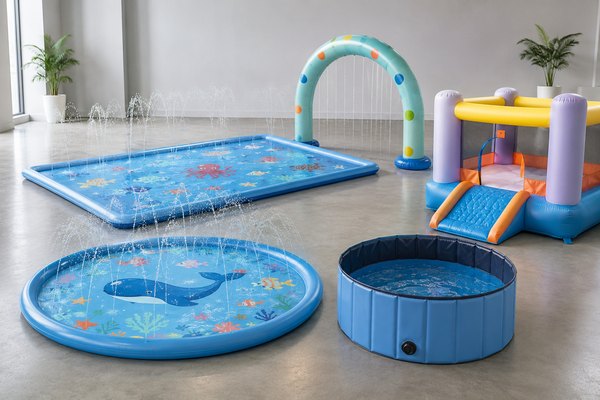
Splash pads and sprinkler mats use heat-pressed water channels rather than sealed air chambers. Water enters through a hose connection, travels around the planned path and exits through arranged spray holes. Channel width, inlet position, outlet spacing, overall size and household water pressure all influence spray height and distribution.

Supported Flexible Walls
Foldable dog pools use flexible PVC surfaces together with internal support boards, drains, handles and reinforced bases. Panel spacing, wall height, board thickness and folding direction determine whether the pool remains stable when filled. The same construction must also fold into a manageable carton without damaging rigid parts.
Similar PVC sheets can be used across several categories, but the tooling, panel layout, assembly method and inspection procedure may be completely different.
PVC Manufacturing Range
Amepsilon focuses on recreational designs that match our flexible materials, heat-press equipment, component experience and established air, water, cold-use and packaging tests.

01. Round Splash Pads
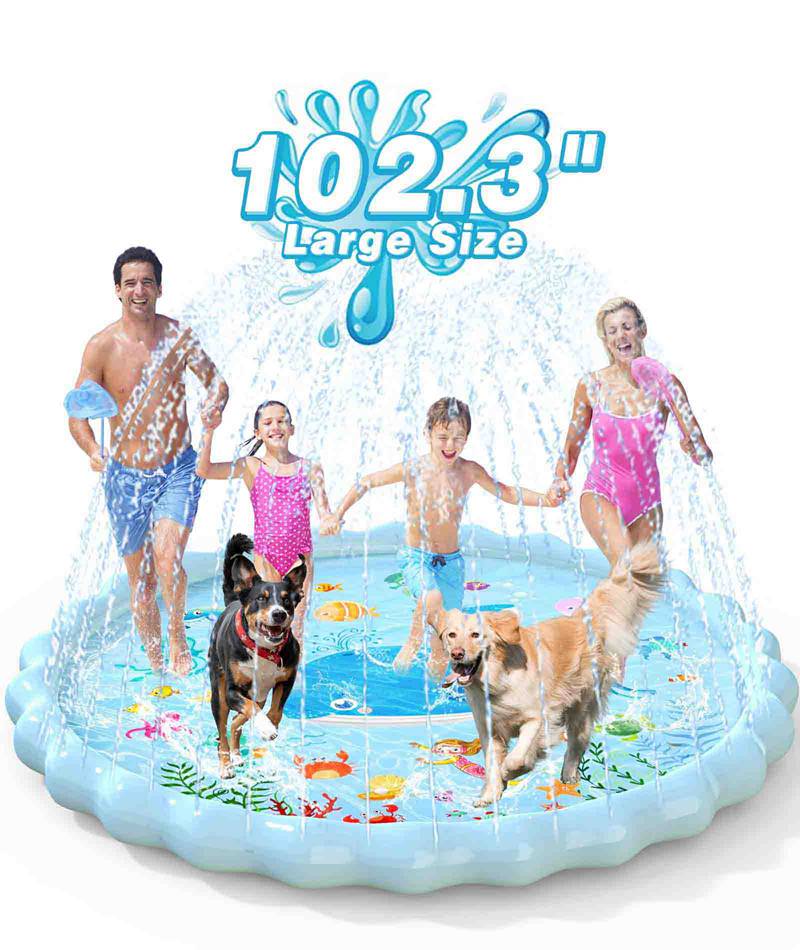
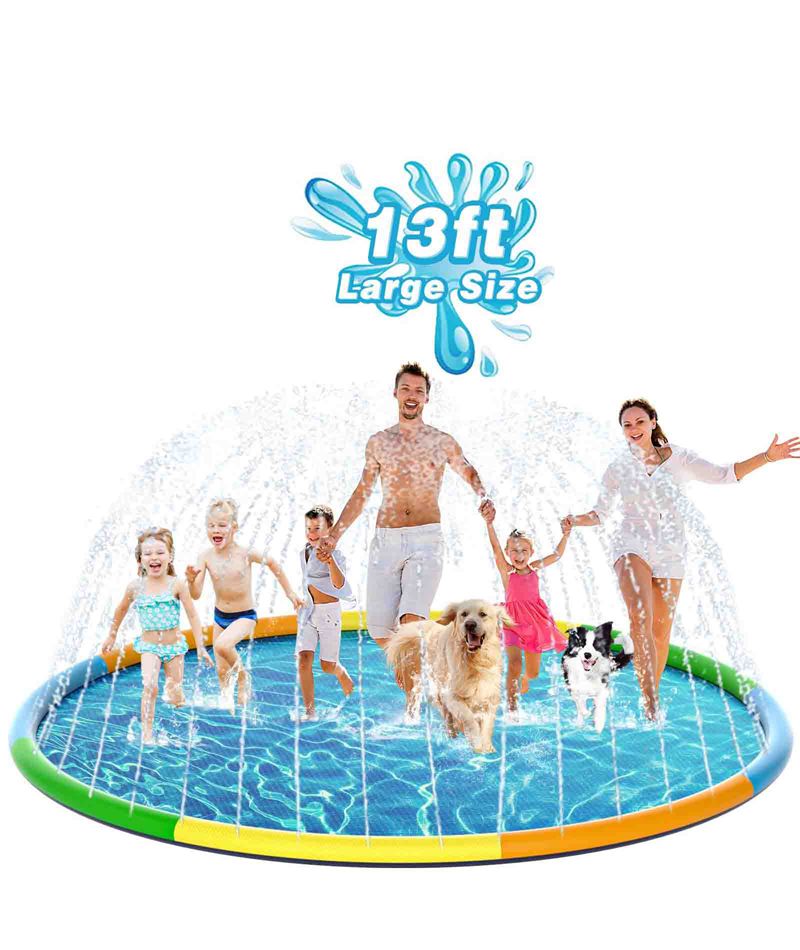
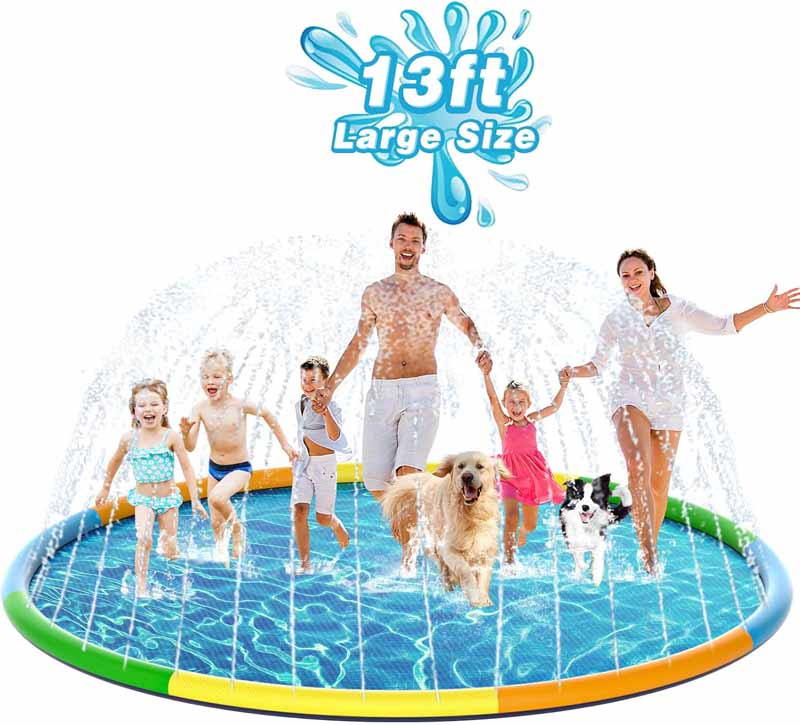
Round splash pads use a perimeter water channel surrounding an open central play area. Current programs commonly range from approximately 90.5 inches to 16.4 feet. Diameter, graphics, inlet position, spray-hole arrangement and surface texture can be adjusted according to the required play area and water distribution.

02. Rectangular Splash Pads
Rectangular splash pads provide a wider activity area for several children, sports themes or multi-zone artwork. Standard, oversized and 118 × 138 inch formats can be developed with different corner shapes and channel widths. Larger dimensions require balanced outlet spacing so distant areas remain active without excessive spray near the inlet.

03. Sports Splash Pads
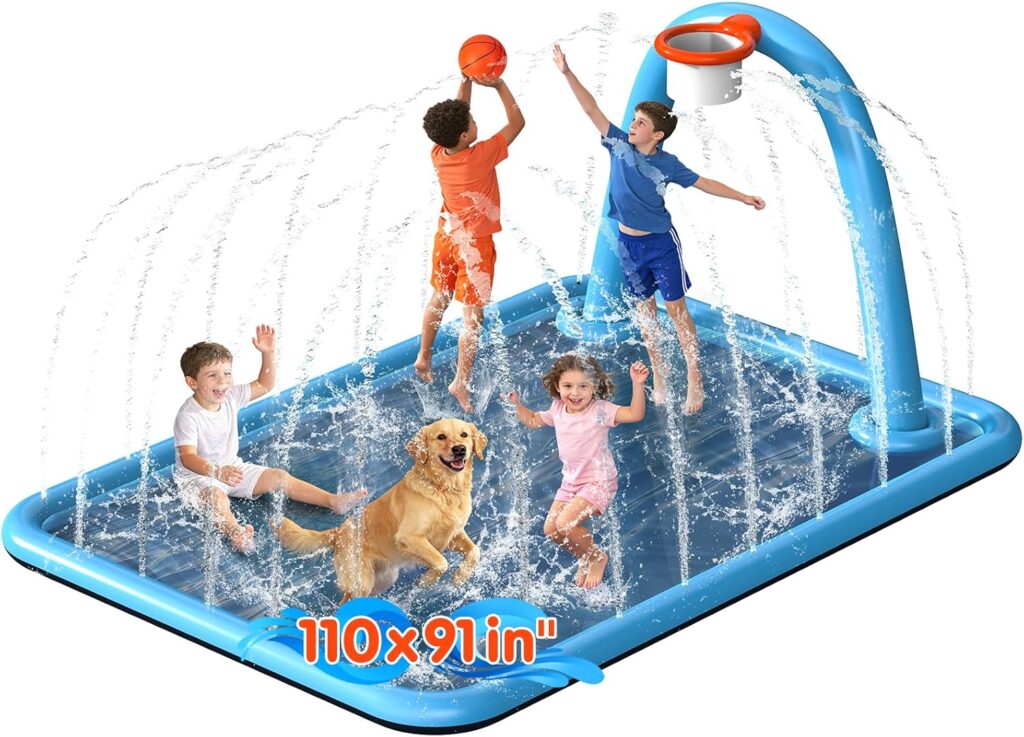
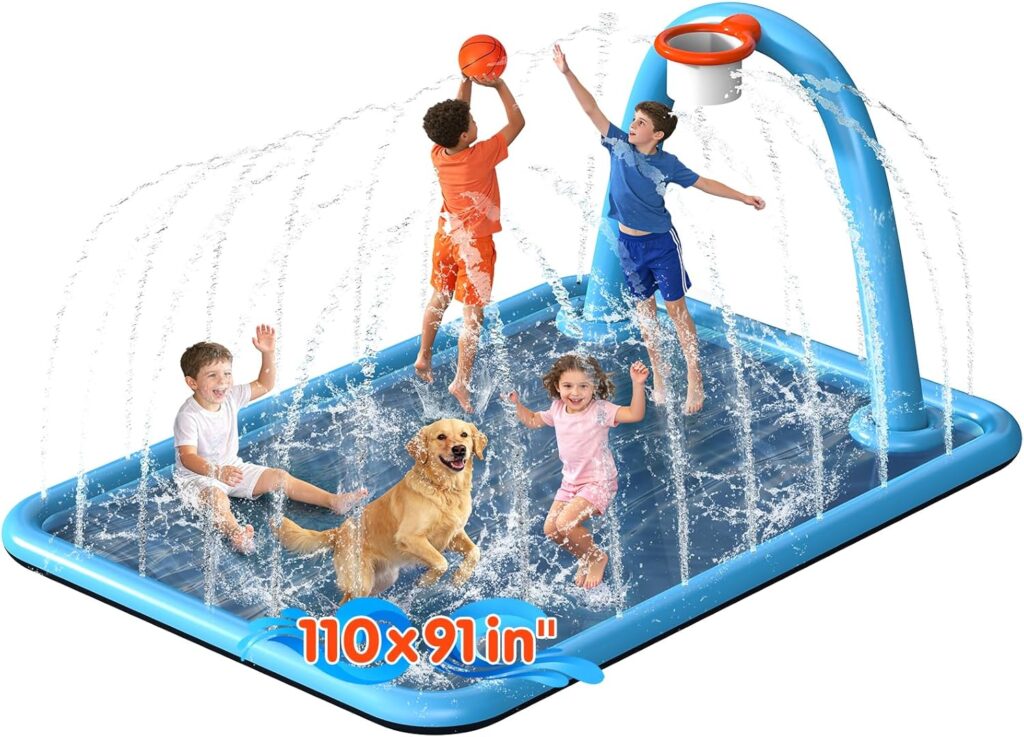
Sports splash pads combine a flat sprinkler surface with goals, hoops, targets or throwing activities. Soccer, basketball and competition-style layouts can use printed PVC with selected inflatable attachments. Target position, water direction, chamber support and accessory placement are developed together to preserve function and manageable folding.

04. Kids’ Sprinkler Mats
Compact sprinkler mats connect directly to a household garden hose and work well for lawns, patios and family play areas. Round, oval, square and custom outlines can include character graphics, educational patterns or seasonal themes. Spray performance is adjusted through channel design, outlet spacing and water-pressure guidance.

05. Sprinkler Arches
Sprinkler arches create elevated water play through inflatable chambers, water channels or a combination of both. Single arches, double arches, tunnels and themed gateways need stable bases and balanced upper sections. Height, artwork, attachment points and spray direction can be adapted within the limits of the selected construction.

06. Dog Splash Pads
Dog splash pads are developed for repeated movement on wet outdoor surfaces. They commonly use heavier PVC, reinforced hose connections and finishes selected for ground contact. Diameter, texture, water-channel width, drainage and storage accessories can be adjusted while keeping setup, cleaning, folding and storage manageable.

07. Sprinkler Dog Pools
Sprinkler dog pools combine a shallow supported pool with a perimeter water channel. Pool depth, floor texture, wall support, drain position, spray layout and handles must function as one construction. A sprinkler version requires separate engineering because the water channel changes the wall connection, inlet area and folding method.

08. Foldable Dog Pools
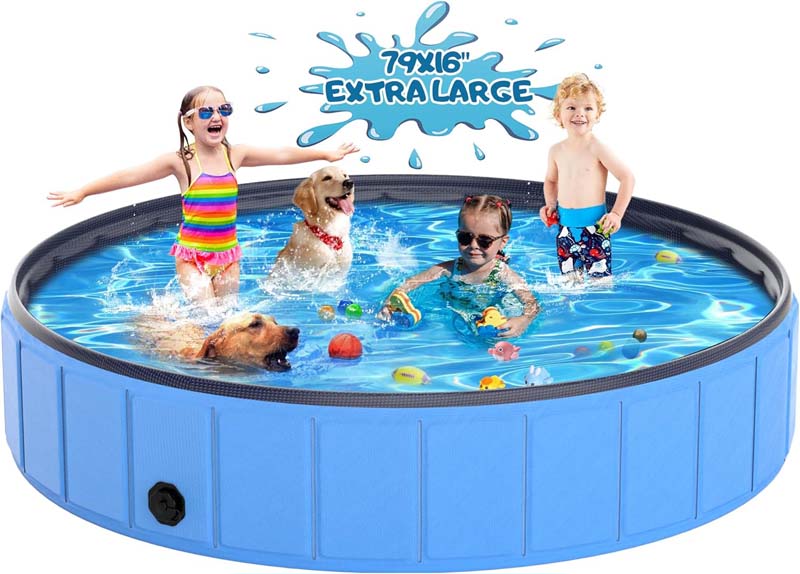
Foldable dog pools use repeated support panels inside flexible PVC sidewalls, allowing the pool to stand without inflation. Round, square and rectangular formats may use approximately 0.55–0.70 mm PVC with support boards around 5 mm thick. Diameter, wall height, drain position, floor texture and panel spacing can be customized.

09. Canopy Pet Pools
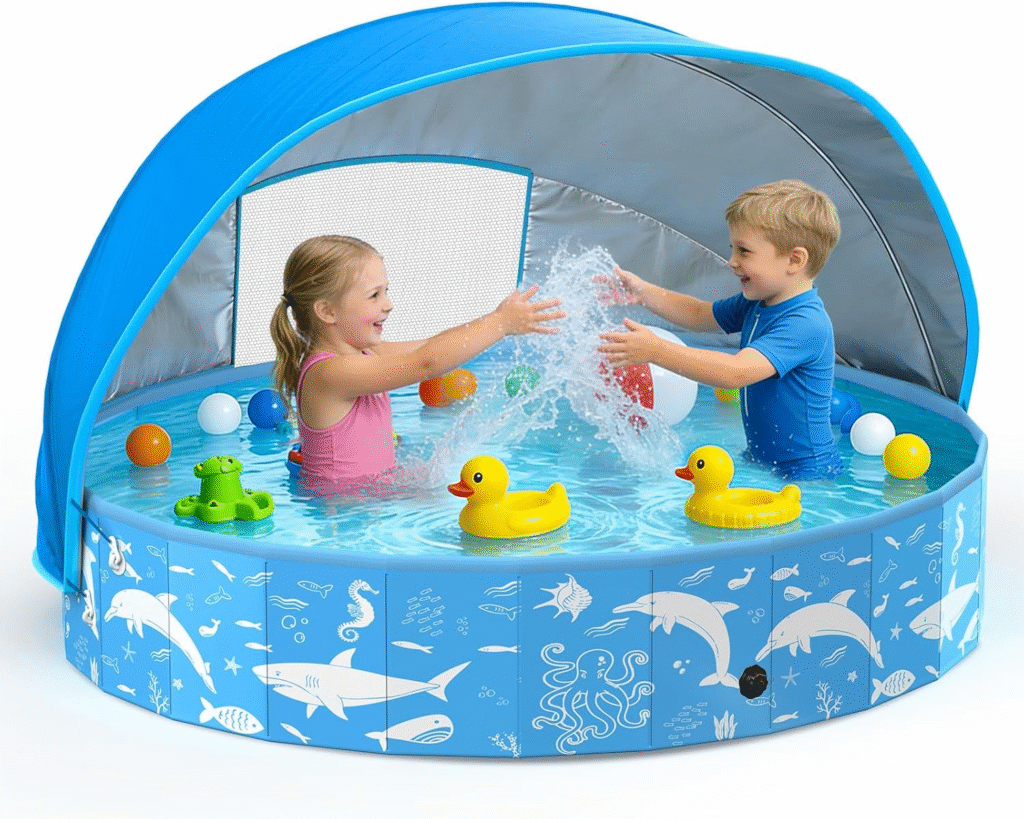
Canopy pet pools combine a supported pool body with a removable or integrated fabric shade. The canopy may use Oxford fabric, poles, straps or buckle attachments. Pool size, shade coverage, attachment strength, drain access and packing method are coordinated so the canopy does not reduce wall stability.

10. Snow Tubes
Snow tubes use sealed chambers developed for low-temperature recreational use. Single-rider, double-rider and family formats commonly use 0.60–0.80 mm cold-resistant PVC, sometimes with a fabric cover or reinforced bottom. Diameter, seat depth, handle layout, rope position and wear areas can be adjusted.

11. Pool Pillows
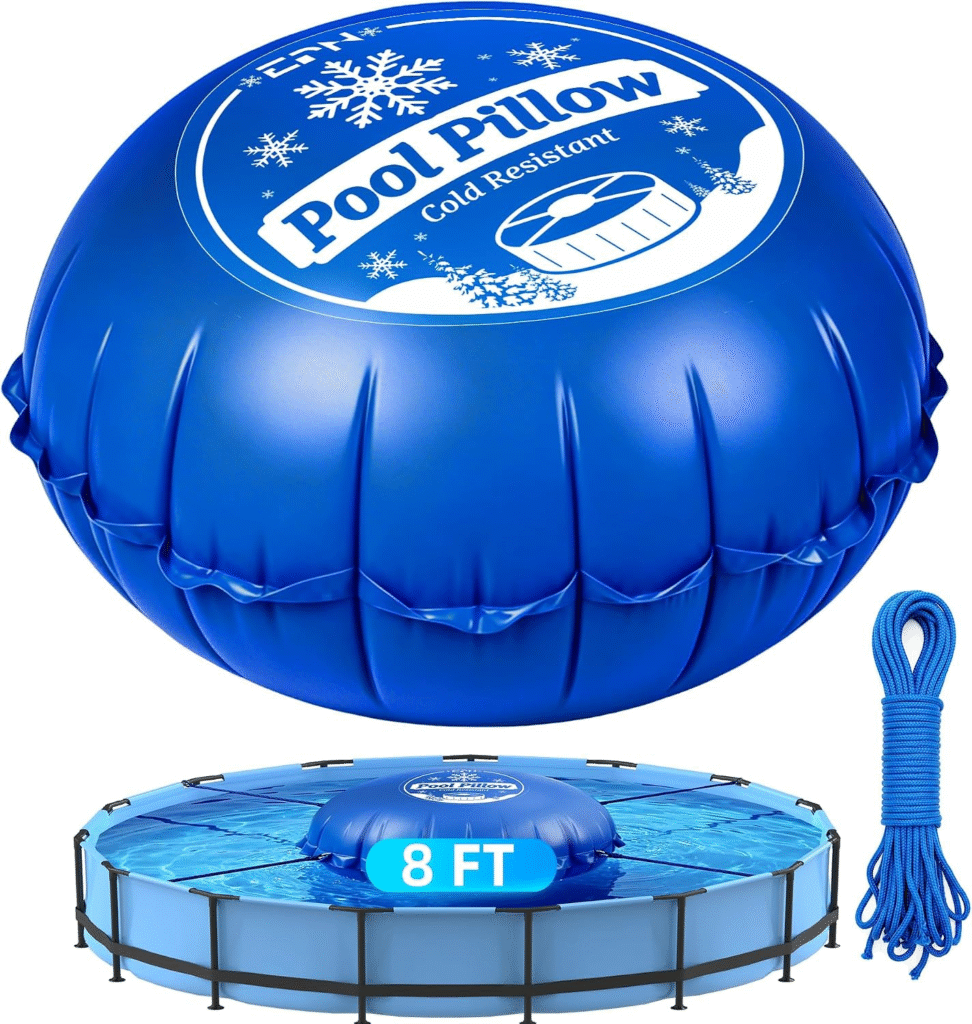
Pool pillows are seasonal air chambers positioned beneath winter pool covers. Common programs include 4, 6, 7 and 8 foot sizes with cold-resistant PVC, valves and corner tie points. Size, valve type, rope set, printed instructions and carton dimensions can be adapted for different retail programs.

12. Rebound Structures
Rebound structures use an inflatable upper chamber and a weighted base that returns upright after impact. Punching bags, animals, characters and sports shapes require balanced proportions between the upper body and lower chamber. Height, graphics, reinforcement and filling method are developed around the required movement and packing size.
Related low-pressure PVC concepts can also be assessed when the materials, operating pressure, construction and functional risks remain close to our existing manufacturing methods.
Manufacturing Scope and Limits
Clear boundaries at the beginning help avoid unsuitable tooling, repeated sampling and development work for constructions outside the factory’s equipment or liability range.

PVC alone does not determine factory suitability. Splash pads, rigid inflatable platforms and commercial bounce houses operate at different pressures and rely on different materials, machinery and testing systems.
| Project Type | Manufacturing Range | Factory Approach |
|---|---|---|
| Main Range | Splash pads, sprinkler mats, dog pools and snow tubes | Customization, sampling and bulk production available |
| Supporting Range | Pool pillows, rebound structures and simple air chambers | Assessed according to material, valve and testing needs |
| Related New Designs | Similar low-pressure PVC recreational structures | Engineering assessment required before quotation |
| Drop-Stitch Structures | SUPs, docks and rigid inflatable platforms | Outside the standard range |
| Continuous-Air Structures | Commercial bounce houses, slides and obstacle courses | Require a different manufacturing system |
| Life-Safety Equipment | Rescue, flotation and medical equipment | Not accepted as standard manufacturing projects |
| Industrial Applications | Lifting bags, fuel bladders and chemical tanks | Outside current equipment and liability scope |
Support for Different Buying Programs
Similar designs can require very different documentation, packaging, approval procedures and production controls depending on the company, sales channel and destination market.

Consumer Brands
Established brands often require distinctive graphics, controlled materials, approved samples and reliable repeat-order consistency. Programs may include modified structures, confidential drawings, packaging revisions and fixed launch schedules. Material changes, artwork updates and packing approvals are recorded so later orders follow the same confirmed specifications.
Retail Programs
Retail and club-store programs often involve several SKUs, fixed carton dimensions, barcode rules, display requirements and firm delivery windows. Construction, folding, retail box size and master carton quantity must be planned together. Late packaging changes can increase freight volume or place unnecessary pressure on valves, seams and rigid components.
Importers and Distributors
Importers may use one construction across several countries, languages or sales channels. Each version can require different manuals, warnings, barcodes, carton marks and responsible-party information. Separate file control helps prevent regional packaging components from being mixed during assembly, packing and shipment preparation.
Development Teams
Development work may begin with a sketch, physical sample, performance concern or new function that has not yet been converted into factory files. The process can include confidentiality agreements, material trials, structural changes, tooling decisions and prototype adjustments before the final construction is approved.
Customization Options
Customization can cover dimensions, structural features, components, surface treatments, branding and packaging rather than only changing colors or printed graphics.
Size and Shape
Diameter, length, width, wall height and overall outline can be adjusted within material, tooling and machine limits. Changing dimensions may also alter chamber volume, water-channel length, seam load, folding direction and carton size. These effects are calculated before drawings move into sample production.
Artwork and Surface
Printed graphics, Pantone-referenced colors, clear panels, matte finishes and textured surfaces are available for suitable constructions. Artwork is positioned around seams, cut lines, components and planned folds. Expected stretching after inflation or filling is also considered so logos and patterns remain visually balanced.
Functional Features
Water channels, spray zones, air chambers, drains, hose inlets, arches, targets and simple activity features can be added or adjusted. Every feature must remain accessible during manufacturing, measurable during inspection and easy to understand during normal use, cleaning and storage.
Components
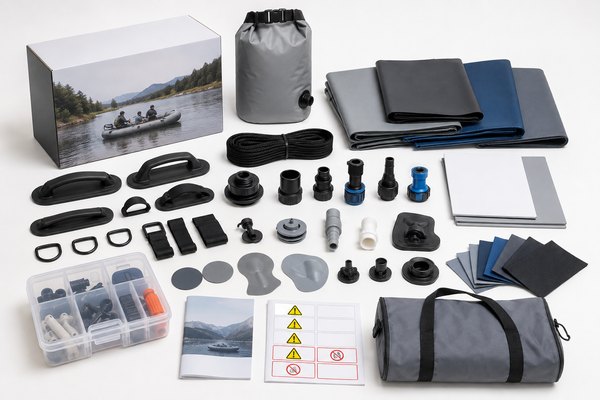
Handles, ropes, adapters, plugs, drains, valves and storage accessories can be selected or repositioned. Placement is determined by force direction, contact area, sealing method, user access and folding. Hard parts should not sit on sharp creases or press against printed surfaces inside the carton.
Material Combinations
Flexible PVC can be combined with Oxford fabric, PP support boards, webbing, reinforcement patches and selected molded parts. Connections between soft and rigid materials receive added attention because movement and stress often concentrate around these transition points during use and folding.
Retail Packaging
Color boxes, storage bags, manuals, warning labels and accessory kits can be prepared for retail, e-commerce and distributor programs. Final dimensions are confirmed after the sample establishes the actual folded size, helping avoid undersized cartons, compressed valves and unnecessary shipping volume.
Selecting the Right PVC
Thickness matters, but formulation, hardness, texture, temperature resistance, printing behavior and heat-press performance also determine how the finished construction performs.
A thicker sheet cannot correct unsuitable formulation, poor seam formation, weak component connections or reinforcement placed in the wrong direction.

Splash Pad Materials
Splash pads commonly use flexible PVC from approximately 0.40 mm to 0.55 mm. Selection depends on diameter, channel width, folding frequency, printed coverage and ground contact. Oversized layouts may need targeted reinforcement, while excessive thickness can increase folded volume and make long water channels harder to form evenly.
Pet Water Materials
Dog splash pads and foldable pools commonly use approximately 0.50–0.70 mm PVC in areas exposed to wet movement, ground contact and repeated cleaning. Floor texture, drain support and board compatibility must also be considered. Heavier material cannot compensate for weak panel spacing or poor reinforcement.
Snow Tube Materials
Snow tubes commonly use approximately 0.60–0.80 mm cold-resistant PVC, selected according to chamber size, rider format, bottom construction and expected temperature. The sheet must remain flexible during inflation and impact in cold conditions. Handle reinforcement and bottom protection are developed separately from the main chamber.
Pool Pillow Materials
Pool pillows commonly use cold-resistant flexible PVC around 0.50 mm, depending on size, valve construction and tie-point design. The material needs sufficient flexibility for seasonal folding and temperature changes while maintaining air retention. Valve bases and corner attachments require additional reinforcement.
Batch Consistency
Incoming batches are checked for color, thickness, surface condition, printing response and heat-press performance. Supplier specifications and material codes are matched with the approved sample. Any proposed substitution completes trial pressing and sample confirmation before entering normal production.
From Concept to Factory Files
A complete factory specification must explain dimensions, materials, chambers, water paths, components and folding requirements rather than only showing the final appearance.
Flexible PVC constructions are made from flat panels, and small differences in panel geometry or seam position can noticeably change the final shape after inflation, filling or assembly.

Project Brief
The first project record covers intended use, target user, dimensions, quantity, destination market, sales channel and required functions. Existing samples, drawings and performance concerns are considered at the same time. This information identifies missing details, likely risks and the suitable development route.
Structural Layout
Engineering converts the concept into chambers, water channels, wall panels, load areas and component positions. Valves, drains, handles and hose inlets are arranged with seam access and folding in mind. Reinforcement zones and internal panel connections are also marked before physical sampling begins.
Production Details
Approved dimensions and structures are converted into panel drawings, cutting files, heat-press paths, component specifications and assembly instructions. Material codes and artwork versions are linked to the same file package so cutting, printing, heat pressing and assembly teams follow one confirmed standard.
Production Release
Bulk manufacturing begins after the sample, artwork, materials, components, packaging and inspection points are confirmed. Current technical files, testing requirements, packing details and the Golden Sample reference are issued together. Later changes receive new version numbers so outdated files do not return to production.
Controlling High-Stress Areas
Leaks and structural damage often begin around curved seams, water channels, valves, drains, handles and repeated fold lines rather than across the main PVC surface.

Perimeter Seams
Perimeter seams need sufficient overlap, stable alignment and consistent heat-press contact. Panel movement, uneven tooling pressure or incorrect settings can create weak areas and shape variation. First-unit checks confirm seam width, bonding continuity and edge condition, especially around corners and tight curves.
Water Channels
A water channel should distribute flow across the entire layout instead of concentrating pressure near the inlet. Channel width, inlet location, spray-hole size and outlet spacing are developed as one system. Hose testing helps identify inactive areas, uneven spray and excessive local pressure before production files are released.
Valves and Drains
Valves and drains introduce rigid or semi-rigid parts into flexible PVC. Their bases require compatible materials, sufficient contact area and suitable reinforcement. Positioning is also important because components placed near seam intersections or fold lines may twist, press against nearby panels or become difficult to operate.
Handle Areas
Handles transfer concentrated pulling force into a flexible panel. Wider reinforcement and carefully shaped patches spread the load beyond one short seam. Pull tests follow the expected direction of use because vertical, horizontal and repeated forces can place different demands on the same connection.
Folding Areas
Repeated creasing can cause surface whitening, print wear and pressure against hard components. Fold lines are planned to avoid valves, drains, handles and major seam intersections. Packed samples are reopened after compression to check for permanent marks, trapped parts and difficulty returning to the intended shape.
Select a Development Route
The suitable route depends on whether the project changes only branding, modifies a proven platform or introduces new chambers, channels or material combinations.

| Development Level | Starting Point | Main Work | Sample Reference |
|---|---|---|---|
| D1 Branding | Existing approved construction | Logo, colors, labels, manuals and packaging | About 5–10 working days |
| D2 Modification | Existing platform with selected changes | Size, spray layout, handles, drains and accessories | About 7–15 working days |
| D3 Structural Development | New chambers, channels or reinforced areas | Drawings, tooling, prototypes and functional tests | About 15–25 working days |
| D4 New Engineering | New function or material combination | Multiple prototypes, material trials and outside testing | About 25–45 working days or longer |
Branding and modification programs usually move faster because the basic construction and manufacturing method are already established. New chamber systems and water paths require more physical testing before approval.
Sample Development Process
A production sample confirms material, dimensions, printing, component position, function, folding and packaging before the same requirements are applied to a bulk order.

Brief Confirmation
The project team confirms intended use, target dimensions, quantity, destination market, packaging needs and launch schedule. Drawings, physical samples and reference items are compared with the written requirements. Both sides then have a clear understanding of the scope, missing information and required development level.
Feasibility Assessment
Engineering checks panel access, material options, chamber behavior, water flow, component placement, testing and packing. Areas requiring tooling, reinforcement or structural changes are identified before pricing and timing are finalized. This step prevents unsuitable concepts from moving directly into physical sampling.
File Preparation
The confirmed concept is converted into panel drawings, cutting files, heat-press paths, artwork guides and component specifications. File names and revision numbers are controlled so engineering, printing and sample teams work from the same version. Functional dimensions are confirmed before cutting begins.
Prototype Production
The first physical sample confirms overall shape, size, seams, printing, component locations and assembly sequence. Early prototypes may focus on structure before the final retail finish is added. Observations are recorded against the drawing so every adjustment can be traced to a specific version.
Testing and Adjustment
The prototype completes the checks relevant to its use, including air retention, water flow, leakage, pulling, cold exposure, folding or packaging. Failed areas are examined to identify whether the cause comes from material, panel layout, reinforcement, components or machine settings.
Golden Sample
The final approved sample confirms material, dimensions, artwork, workmanship, components, function, accessories and packaging. It becomes the physical standard for first-unit approval and final inspection. Later changes may affect tooling, cost, testing, carton size and the planned production schedule.
Manufacturing Process
Approved materials, technical files and quality requirements follow each order through eight main stages, keeping construction, printing, components and packing aligned with the confirmed sample.

01. Material Inspection
PVC, fabric, support boards, valves, drains, handles, ropes and packaging materials are checked before production. Inspectors compare material type, thickness, color, dimensions and surface condition with the approved specification. Components are also checked for fit before they move to cutting, printing or assembly.
02. Artwork Setup
Print files are aligned with panel dimensions, cut lines, seam paths, folds and component positions. Artwork scale, color references, logo placement, warnings and required clearances are confirmed. This preparation reduces the risk of graphics being cut away, pressed into seams or covered by valves and reinforcement patches.
03. Panel Cutting
PVC panels, fabric sections and reinforcement pieces are cut according to the current approved files. Cut parts are counted, identified and separated by SKU, size and color. Organized production groups reduce mixing during printing, heat pressing and assembly when several designs are manufactured during the same period.
04. Printing
Color, registration, curing, ink adhesion and surface condition are checked throughout printing. Panels are examined for smudging, distortion, missing details and incorrect positioning before moving forward. The first approved pieces provide a visual standard for the remaining quantity and later production checks.
05. Heat Pressing
Panels are joined using tooling, temperature, pressure and cycle settings selected for the PVC thickness and seam shape. Operators check seam width, edge alignment, bonding continuity and surface condition. Curved areas, chamber connections and reinforced components receive additional attention during production.
06. Component Assembly
Valves, hose inlets, drains, handles, ropes, support boards and accessories are installed in the approved positions. Reinforcement patches and contact areas are checked for alignment and complete bonding. Assembly teams also confirm that each component remains accessible and does not interfere with planned folds.
07. Functional Inspection
Finished units are inflated, filled with water or connected to a hose according to their intended use. Inspectors check air retention, leakage, water flow, drainage, shape stability, seam performance and component operation. Unresolved issues are corrected before the units enter the accepted quantity.
08. Packing
Accepted units are cleaned, fully dried, folded and packed using the confirmed method. Manuals, labels, repair materials, ropes, connectors and other accessories are counted before sealing. Folded size and component position are checked to prevent pressure on valves, drains, handles and printed surfaces.
Finished Workmanship
Stable workmanship is shown through construction details that remain consistent across the order, not only through the appearance of one selected sample.

Seam Finish
A finished seam should follow the approved path with even width, stable panel alignment and continuous bonding. Inspectors look for incomplete pressing, burns, thinning, deep wrinkles and movement around curves. Artwork should remain correctly positioned, and excess material should not create rough or uneven edges.
Component Finish
Valves, hose inlets, drains and handles should remain secure, accessible and correctly oriented. Their bases need complete contact with the surrounding PVC and suitable reinforcement. Components are also checked after folding to make sure they do not twist, press against seams or become difficult to operate.
Surface Finish
Printed and unprinted surfaces are checked for marks, contamination, trapped debris, uneven ink and visible heat damage. Minor variation can occur with flexible materials, but repeated defects indicate a production issue. Cleaning must not leave moisture or residue between folded layers.
Packing Finish
The folding method should protect the construction while controlling carton size. Folded dimensions, accessory placement, manual version and label position are confirmed before sealing. Rigid components should not rest on sharp creases, and printed surfaces should not experience unnecessary rubbing during transportation.
Testing by Use Condition
Testing is selected according to structure, material, use environment and the failures most likely to occur during setup, operation, storage and transportation.

Selected winter materials may be tested at temperatures down to approximately −25°C. Final conditions, duration and acceptance standards depend on the confirmed specification and intended claims.
| Test | Applicable Range | Main Purpose |
|---|---|---|
| Air Retention | Snow tubes, pool pillows and rebound structures | Confirms valve sealing, chamber shape and pressure stability |
| Water Leakage | Pools, drains and water channels | Checks seams, corners and component connections |
| Spray Performance | Splash pads and sprinkler mats | Assesses water balance, direction and inactive areas |
| Pull Testing | Handles, ropes and carrying points | Measures reinforcement and force distribution |
| Cold Testing | Snow tubes and pool pillows | Checks material and seam flexibility at low temperatures |
| Abrasion Testing | Pet items and snow-tube bottoms | Measures wear in high-contact areas |
| Folding Testing | Pools, pads and seasonal chambers | Checks creasing, component pressure and recovery |
| Packaging Testing | Retail boxes and shipping cartons | Covers drops, compression, vibration and internal movement |
Quality Checks Before Shipment
Quality control follows every order from incoming materials to final carton release, using the approved sample, current files and confirmed packing requirements as the working standard.
Production records connect finished goods with material batches, artwork versions, manufacturing dates, inspection results and packing information, supporting final release and repeat-order consistency.

Material Inspection
PVC, fabric, support boards, valves, drains, handles, ropes and packaging materials are checked before production begins. Material type, thickness, color, dimensions and surface condition are compared with the confirmed specification. Components are also fitted against the planned construction to confirm compatibility with seams and folding areas.
Printing Approval
The first printed panels are compared with the approved artwork, color references and current file version. Color consistency, graphic position, registration, curing and ink adhesion are checked together with the distance from cut lines, folds and heat-pressed seams. Bulk printing begins only after the initial panels meet the confirmed standard.
First Production Unit
The first completed unit confirms whether the approved drawings, materials and machine settings can produce the required result under normal factory conditions. Dimensions, shape, seam width, component placement, reinforcement and basic function are compared with the Golden Sample before continuous production begins.
Production Inspection
Checks continue during cutting, printing, heat pressing, component installation and cleaning. Inspectors watch for panel movement, uneven seams, incomplete bonding, incorrect component direction, surface marks and early signs of leakage. Another first-unit check follows material changes, tooling adjustments or machine restarts.
Final Shipment Inspection
Finished goods are matched with the confirmed order, approved sample and packing instructions. Condition, function, accessories, manuals, labels, barcodes, carton quantities and shipping marks are checked as one complete packed unit. Unresolved manufacturing or packing issues remain outside the accepted shipment quantity.
Compliance Planning
Testing, labeling and documentation are arranged according to the destination market, intended user, construction and claims shown on packaging or sales materials.

United States
Children’s goods for the United States may require CPSIA assessment, applicable ASTM F963 testing, age grading, tracking labels and warning information. The final scope depends on materials, accessories, user age and function. Packaging claims are confirmed before laboratory submission because additional claims may change the required test plan.
European Union
EU programs may require EN 71 testing, REACH restricted-substance checks, technical documentation and traceability information. Warning languages, importer details and responsible-party information should be confirmed before packaging artwork is released. Reports must match the actual materials, structure and accessory set used in bulk production.
United Kingdom
UK programs may require local responsible-party information, English warnings and market-specific documentation. Files should be prepared separately instead of copying an EU version without adjustment. Addresses, markings and documentation responsibilities need to be resolved before labels, manuals and cartons are printed.
Laboratory Coordination
Amepsilon can prepare finished samples and communicate with qualified third-party laboratories selected for the program. Test scope, sample quantity, fees, delivery, retesting and report ownership are confirmed before submission. Laboratory samples should match the approved production specification and material version.
Packaging for Different Sales Channels
Packaging is developed after the construction, accessories and folding method are stable, allowing carton dimensions and protection requirements to reflect the actual packed unit.

Retail Packaging
Retail packaging must present the item clearly while protecting it through shipping, warehouse handling and store display. Box dimensions, artwork, specifications, opening method and accessory position are planned together. Large windows and complex internal trays are checked carefully because they may reduce carton strength or increase packing time.
E-Commerce Packaging
E-commerce programs need protection against repeated warehouse handling and parcel delivery. Outer packaging, compression allowance, shipping labels and carton data are confirmed around the packed unit. Loose packing can allow internal movement, while excessive compression can damage valves, seams, boards and printed surfaces.
Instructions and Labels
Manuals and labels explain setup, inflation, hose connection, cleaning, drying, folding, storage and warnings. Content, diagrams, languages, barcodes and label positions are approved before printing. Instructions follow the actual construction so users can locate valves, drains, connectors and fold directions easily.
Shipping Cartons
Master cartons are planned around unit quantity, gross weight, dimensions, warehouse handling and transport efficiency. Carton strength, pallet arrangement and shipping marks are confirmed with a packed sample. Smaller cartons are accepted only when the folding method does not create permanent creases or compress rigid components.
Teams Supporting Each Project
Consistent manufacturing depends on engineering, design, testing and production teams working from the same confirmed files throughout development and repeat orders.

Development Team
Twenty-seven specialists support polymer materials, structures, tooling, children’s recreation, pet use, color systems and ergonomics. Their work connects material behavior with panel layout, components, operating conditions and packaging, helping identify risks before they become expensive changes during bulk manufacturing.
Design Team
More than 18 designers support graphics, packaging, instructions and multilingual localization. Files are prepared around cut lines, seams, folds, valves and other production limits rather than only for visual presentation. Packaging artwork is linked to the correct dimensions, accessories and destination-market information.
Testing Team
More than 500 material and finished-unit evaluations are completed annually. Depending on the construction, testing may cover leakage, water distribution, air retention, cold flexibility, abrasion, pulling, folding and packaging. Test records help compare sample versions and confirm whether each adjustment improves the intended performance.
Management Systems
Operations are supported by systems aligned with ISO 9001, ISO 14001 and ISO 45001 requirements. Version control, inspection records, corrective actions and production documents support communication between departments. Repeat orders can follow earlier material codes, Golden Samples, packaging files and quality requirements.
Representative Project Examples
The following examples show how quantities, structures, testing, packaging and delivery planning may be combined within different commercial programs.

Multi-Size Splash Pads
A 1,200-piece program may include two sizes and three printed designs using approximately 0.45–0.55 mm PVC. Development can cover separate channel layouts, a shared hose inlet and multilingual retail boxes. Water distribution, leakage, folding and carton fit are checked independently for each size.
Sampling may require approximately 10–15 working days, followed by around 30–40 days for bulk manufacturing after all construction and packaging approvals are complete.

Reinforced Dog Pools
An 800-piece dog-pool program may include two diameters and two colors using approximately 0.55–0.65 mm PVC with 5 mm support boards. Development can cover drain reinforcement, panel spacing, floor texture and folding direction. Wall stability, leakage, bottom wear and carton compression are checked before packing is finalized.
Sampling may require approximately 12–20 working days, followed by around 30–45 days for bulk manufacturing after approval.

Cold-Weather Snow Tubes
A 1,500-piece snow-tube program may include three colorways using approximately 0.60–0.80 mm cold-resistant PVC with a fabric cover. Development can include a double-rider chamber, deeper seat, reinforced handles and a wear-resistant bottom. Cold flexibility, air retention, handle strength and base abrasion are checked before production release.
Sampling may require approximately 15–25 working days, followed by around 35–45 days for bulk manufacturing after approval.
Frequently Asked Questions
These answers cover common questions about manufacturing scope, development timing, PVC selection, order quantities, testing, confidentiality and packaging.
What Does Amepsilon Manufacture?
Our main range includes splash pads, sprinkler mats, dog pools, snow tubes, pool pillows and selected rebound structures. Similar low-pressure PVC concepts can also be assessed.
Does Amepsilon Manufacture Drop-Stitch Structures?
No. SUPs, inflatable docks and rigid high-pressure platforms require different materials, adhesives, machinery and pressure-testing systems.
Does Amepsilon Manufacture Bounce Houses?
Large continuous-air bounce houses, commercial slides and obstacle courses fall outside our standard manufacturing range.
Can Development Begin From a Sketch?
Yes. A sketch, drawing, physical sample or written concept can be used to begin structural and material assessment.
Which PVC Thickness Is Suitable?
Splash pads commonly use 0.40–0.55 mm, pet water items 0.50–0.70 mm and snow tubes 0.60–0.80 mm.
Is Thicker PVC Always Better?
No. Formulation, seam quality, reinforcement, flexibility, folding and operating temperature are equally important.
What Is the Usual MOQ?
Many customized programs begin at approximately 500 pieces per design or size, depending on printing, materials, components and packaging.
How Long Does Sampling Take?
Simple branding may take 5–10 working days, while new structural development may require 15–45 working days or longer.
Which Tests Can Be Arranged?
Available tests may cover air retention, leakage, spray performance, pulling, cold flexibility, abrasion, folding and packaging.
Can Third-Party Testing Be Coordinated?
Yes. Sample quantity, laboratory scope, fees, timing, retesting and report ownership are confirmed before submission.
Is Custom Packaging Available?
Yes. Options include color boxes, storage bags, manuals, warning labels, barcodes, accessory kits and master cartons.
Can Amepsilon Sign an NDA?
Yes. Drawings, artwork, samples, technical files and commercial information can be handled under an agreed confidentiality arrangement.
Start Your PVC Project
Amepsilon works with established brands, retailers, importers, distributors and development teams seeking structured support for low-pressure PVC recreational manufacturing.

Please provide:
- Category and intended use
- Target user and use environment
- Required dimensions or size range
- Expected quantity and SKU count
- Destination market and sales channel
- Preferred material, color and surface
- Required chambers, water channels or components
- Packaging and labeling requirements
- Testing or compliance needs
- Target sample and launch dates
- Known structural or quality concerns
Useful files may include dimensional drawings, physical samples, editable artwork, material requirements, inspection standards, packaging references, warning text, label files and planned delivery dates.
The first assessment confirms whether the concept matches Amepsilon’s materials, equipment, pressure range and testing experience. Our team then prepares the recommended development route, sample plan, testing requirements, packaging work, estimated timing and quotation details.
Clear dimensions, intended use and expected quantities help material, engineering, artwork and packing teams work from the same project conditions from the beginning.