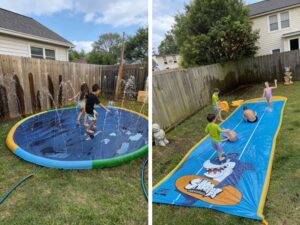
At first, a splash pad and a slip-n-slide can look like the same kind of summer purchase. Both connect to a hose. Both promise backyard fun. Both seem like an easy way to cool kids down without filling a full-size pool. But families usually realize very quickly that they do not create the same kind of day. One feels like an open water-play zone where kids can move at their own pace. The other feels more like a sliding lane that depends on running, landing, gliding, and stopping well. That difference sounds small at first, but in real backyard use it changes almost everything that matters after checkout: safety, age fit, yard compatibility, cleanup, and whether the product still feels worth using after the first few weekends.
For most families, a splash pad is the better overall choice because it is easier to supervise, easier to fit into a smaller backyard, and usually a better match for younger children and mixed-age play. A slip-n-slide can still be a great option for older kids who want more speed and more excitement, but it usually needs more space, more control, and more careful setup to work well.
That is why this comparison matters more than it first seems. The best backyard water toy is rarely the one that looks most dramatic in a photo. It is usually the one that fits the children, the yard, and the way a real family actually spends a hot summer afternoon.
| Comparison Point | Splash Pad | Slip-n-Slide |
|---|---|---|
| Best for | Younger kids, mixed-age families | Older kids who want speed |
| Yard size | Small to medium | Medium to large |
| Supervision | Easier | More active |
| Play style | Open splash play | Run-and-slide play |
| Everyday use | Strong | More occasional |
| Main concern | Hygiene and after-use care | Surface and landing conditions |
Splash Pad vs Slip-n-Slide Basics
A splash pad and a slip-n-slide both use water, but they are built around very different kinds of movement. A splash pad is usually better for flexible backyard play and quick cooling. A slip-n-slide is usually better for faster, more directional play. For most families, the difference is less about which one looks more fun and more about which one fits real backyard life better.
What Is a Splash Pad?
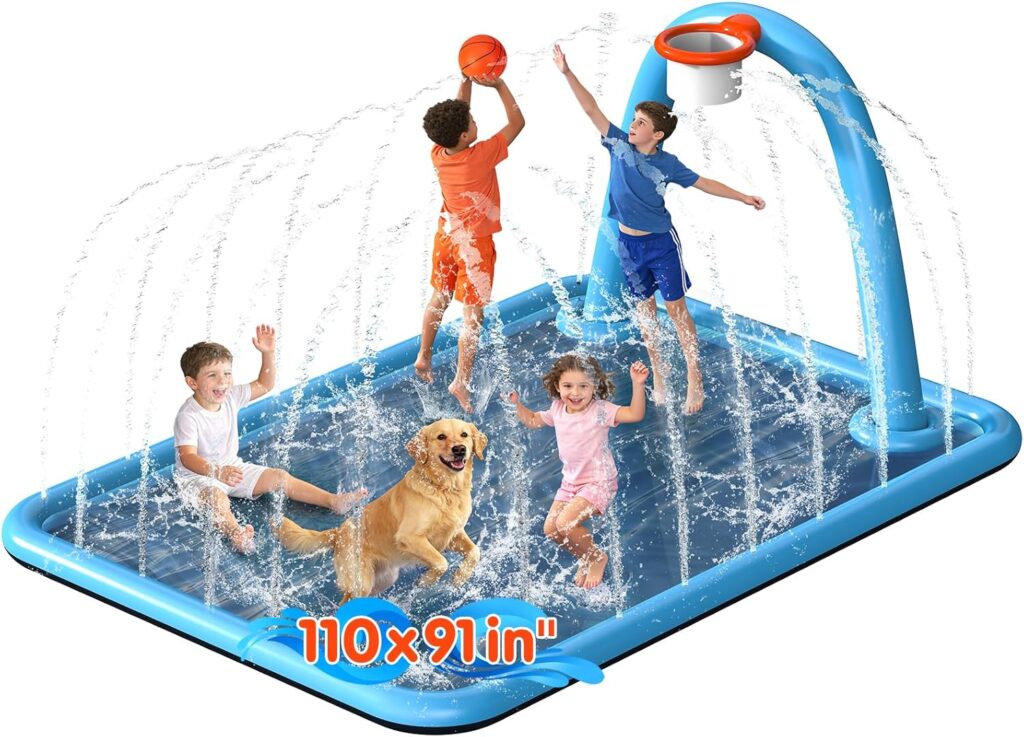
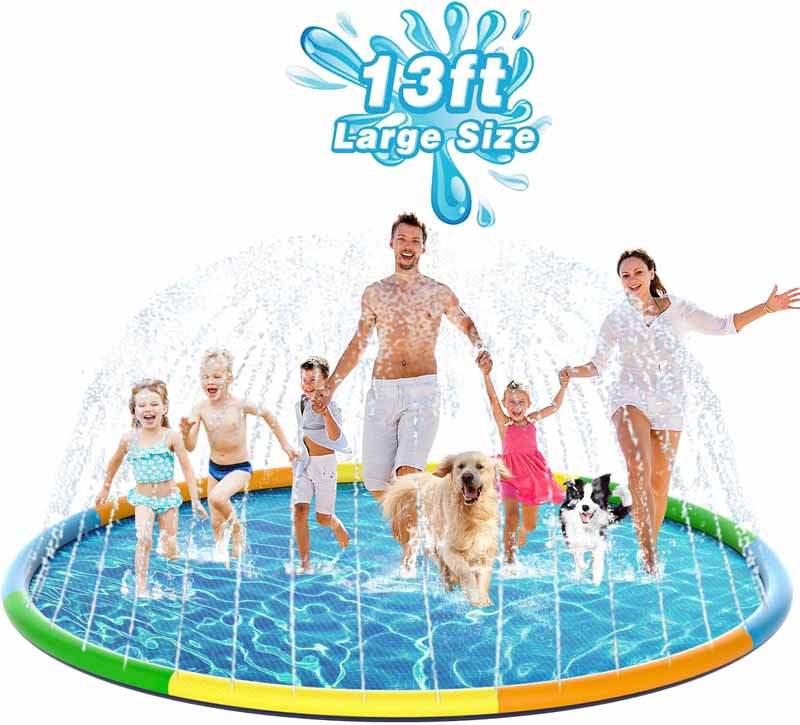
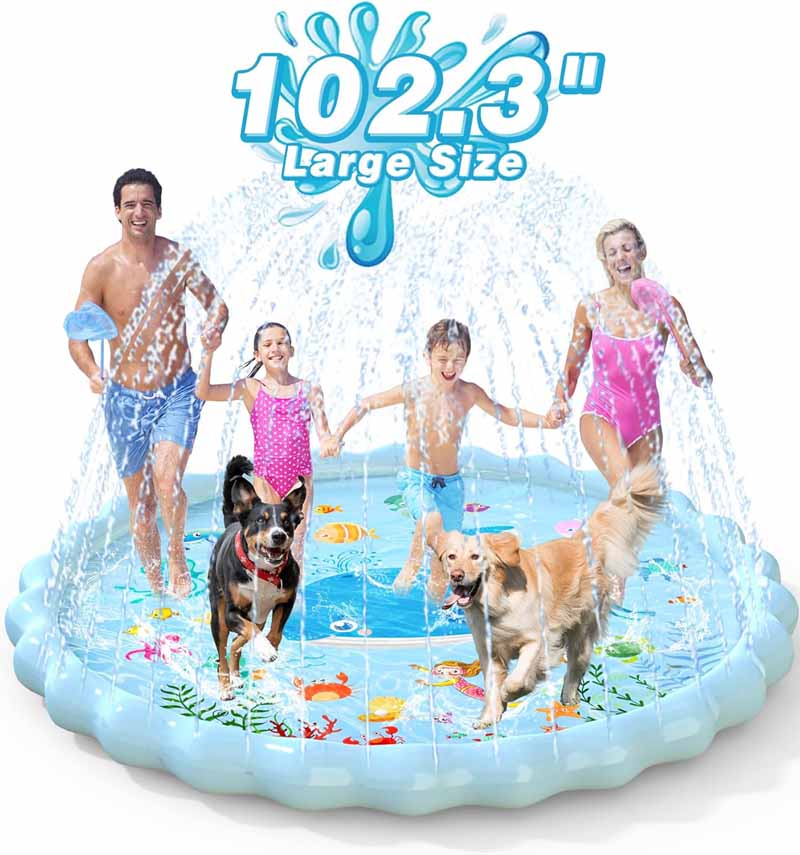
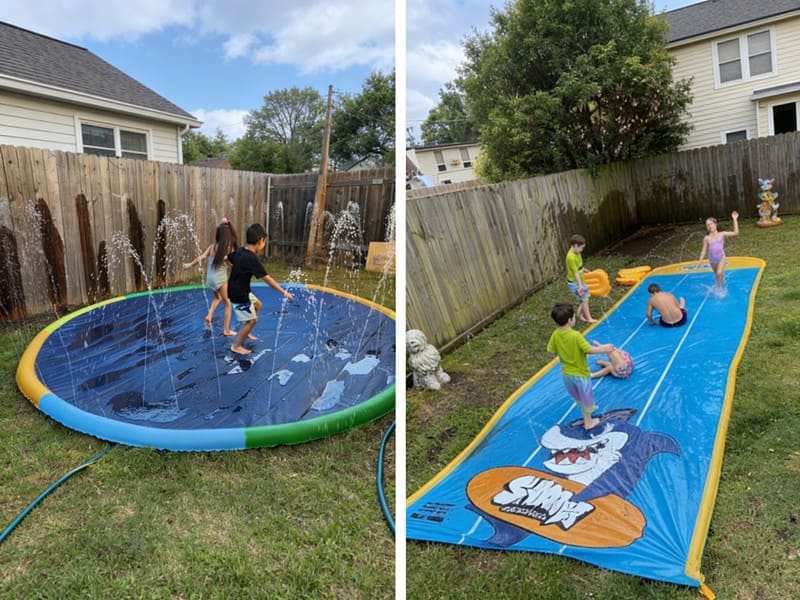
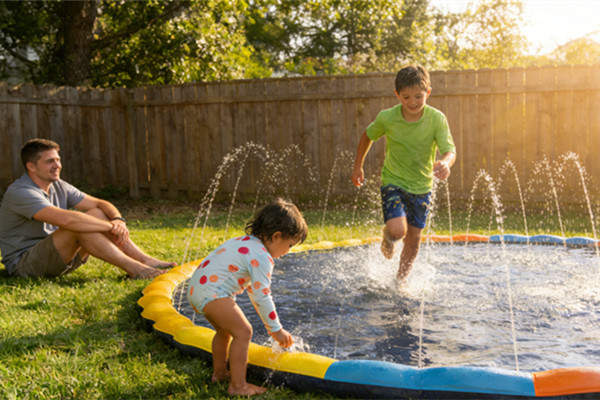
A splash pad is a flat or low-profile water-play surface that sprays water upward or inward through small holes around the edge or across the mat. Once connected to a standard garden hose, it creates a shallow play area where children can stomp, sit, walk, run, and cool off. There is no single “correct” way to use it, and that is exactly why it works so well for family backyards.
In real use, a splash pad supports more than one style of play at the same time. One child can run through the spray. Another can stand at the edge and test the water first. A younger sibling can stay close to a parent while an older child circles the outside. That flexibility matters because most families are not shopping for a product that only works in perfect conditions. They are shopping for something that still feels useful on an ordinary afternoon.
A good splash pad also fits everyday rhythm better than many parents expect. It can come out for a short weekday session. It can work when one adult is supervising alone. It can create a summer activity without turning the whole backyard into a big production. That practical ease is one of the biggest reasons splash pads tend to get repeated use.
What Is a Slip-n-Slide?
A slip-n-slide is a long water toy built around forward motion. Children take a running start, land on the wet surface, and slide toward the end. The thrill comes from speed, momentum, and distance. That makes it especially appealing to older kids who want a more active, more exciting backyard experience.
But that same design also makes it more demanding. A slip-n-slide depends much more on the yard, the setup, and the user. The lawn needs to be long enough, smooth enough, and soft enough for the child to run, glide, and stop comfortably. The user also needs a bit more coordination, because this is not just free water play. It is a moving activity with more force built into it.
That is why slip-n-slides often create stronger first impressions but more mixed long-term results. In the right yard, with the right age group, they can be great fun. In an average backyard with uneven grass, a short finish zone, or several children crowding the lane, they can feel much harder to manage.
Splash Pad vs Slip-n-Slide: Key Differences
The biggest difference is not shape. It is what each product asks from the child. A splash pad rewards flexible movement and lower-pressure play. A slip-n-slide rewards speed, timing, and commitment. A splash pad still works when a child is cautious. A slip-n-slide usually works best when the child wants to move fast and the yard supports that kind of play.
| Decision Point | Splash Pad | Slip-n-Slide | Why It Matters |
|---|---|---|---|
| Movement style | Free movement | Directional sliding | Affects age fit |
| Space demand | Lower | Higher | Impacts backyard suitability |
| Learning curve | Lower | Higher | Affects first-time use |
| Group play | Easier | More sequential | Matters for siblings |
| Casual use | Easier | More conditional | Affects repeat use |
That is usually the point where the buying decision starts to become clearer. Families who want something easy to bring out again and again often lean toward a splash pad. Families with older kids, bigger lawns, and a stronger preference for high-energy play may still prefer a slip-n-slide.
Splash Pad vs Slip-n-Slide Safety
For most younger children, a splash pad is usually safer because it does not depend on a running start, body launch, or a long stopping zone. A slip-n-slide can still work well for older kids, but it generally needs more space, more control, and more supervision to stay safe. Splash pads, however, bring a different safety question: not speed, but hygiene.
Is a Splash Pad Safer for Small Kids?
Usually, yes. A splash pad removes the part of backyard water play that often creates the biggest problem for younger children: force. Kids can enter slowly, step back out, return again, and play at their own comfort level. That matters a lot for toddlers and preschoolers, who often want to test water gradually rather than throw themselves into motion.
It also changes supervision. Parents are usually watching one contained play area instead of trying to manage a start zone, a slide lane, and a finish zone. In mixed-age families, that often makes the product feel much more manageable. The lower-pressure format is one reason splash pads usually feel easier to say yes to when the children are still small.
Is a Slip-n-Slide More Risky?
In many real backyards, yes. A slip-n-slide depends on forward force, which means it naturally magnifies mistakes. A child can trip during the run-up, land at the wrong angle, collide with another child, or stop too abruptly if the lawn is short or uneven.
This is not just a common-sense concern. U.S. product-safety warnings have long pointed out that backyard water slides become more dangerous when size, force, and abrupt stopping all increase. The Consumer Product Safety Commission warned that use by adults and teenagers on classic backyard water slides could result in neck injury and paralysis because greater weight and momentum could cause abrupt stopping and spinal cord compression.
So a slip-n-slide is not automatically a bad choice. It is simply a more conditional one. In the right setting, it can be exciting and fun. In the wrong setting, it can feel uncomfortable or harder to control very quickly.
How Sanitary Is a Splash Pad?
A splash pad can be sanitary, but it is not automatically sanitary just because the water looks fresh and shallow. The real question is not water depth. It is whether contaminated water can get into mouths, onto hands, or back onto the surface.
Public-health guidance makes that point very clearly. The CDC says splash pads can spread germs and make users sick if the water is not adequately disinfected, and notes that splash pads are not always regulated the same way as pools or always required to disinfect water with germ-killing chemicals.
Public-health reporting also shows this is not a theoretical issue. During 1997–2022, officials from 23 states and Puerto Rico reported 60 splash pad-associated waterborne disease outbreaks, resulting in 10,611 cases, 152 hospitalizations, and 99 emergency department visits. Forty outbreaks, or 67%, involved Cryptosporidium and accounted for 9,622 cases, or 91% of reported illnesses.
That does not mean families should avoid splash pads. It means they should treat hygiene as part of ownership. In home use, that usually comes down to practical habits:
- use clean water
- keep sick children out
- discourage swallowing the spray
- rinse the surface after play
- dry it completely before storage
These are simple steps, but they matter. A splash pad that is treated like real water play tends to stay much more pleasant and much lower-risk than one that is assumed to “clean itself” because the hose is on.
Can a Splash Pad Spread Norovirus?
Yes, it can. Public-health investigations have linked splash pad outbreaks to norovirus when contaminated water got into users’ mouths. In a Kansas wildlife park outbreak investigation, CDC researchers found one splash pad-associated outbreak caused by norovirus and another caused by Shigella; getting splash pad water in the mouth was associated with illness in both outbreaks.
That matters because it reflects the way children actually use splash pads. They do not simply stand near the water. They laugh into it, put their faces close to the jets, rub wet hands over their mouths, and sometimes swallow the spray without realizing it.
For families, the response should be practical rather than dramatic. Do not let children with diarrhea use the splash pad. Teach kids not to drink the water. Rinse and dry the product after use. Those steps will not make a splash pad sterile, but they do reduce avoidable hygiene problems.
Why Can a Splash Pad Get Gross?
A splash pad can get gross because it combines three things that do not stay clean by themselves: shared water, outdoor debris, and young children. At home, the problem usually appears more quietly than people expect. Families fold the mat while it is still damp. Grass sticks to the underside. Sunscreen, dust, and muddy feet leave residue. The product goes into a warm garage while moisture is still trapped in the folds. A few uses later, the surface smells off or feels slimy.
In other words, a splash pad usually gets gross because of poor after-use care, not because the category itself is doomed to be dirty. A splash pad that is rinsed, dried thoroughly, and stored properly usually feels completely different from one that gets rolled up wet and forgotten.
Safety and Hygiene Snapshot
| Data Point | What It Means |
|---|---|
| 60 reported splash pad outbreaks from 1997–2022 | Germ risk is real, not theoretical |
| 10,611 illness cases | Hygiene matters in splash environments |
| 152 hospitalizations | Poor water management can have serious consequences |
| 67% of outbreaks involved Cryptosporidium | Some pathogens are especially hard to control |
| Kansas norovirus outbreak linked to getting splash pad water in the mouth | Swallowing spray water is a real concern |
| CPSC warning on backyard water slides | Speed and abrupt stopping change injury risk |
Splash Pad vs Slip-n-Slide Setup
A splash pad is usually easier to set up and easier to use casually because it needs a defined play area, not a long slide lane. A slip-n-slide usually asks for more yard length, more surface checking, and more attention to the start and stop zones. For many households, that difference ends up deciding which product gets used more often.
How Much Space Does a Splash Pad Need?
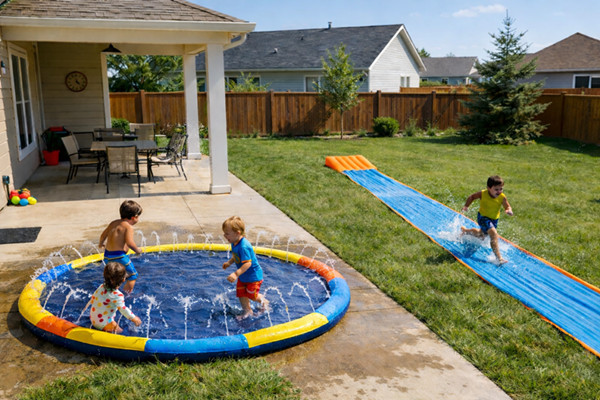
A splash pad usually needs a small to medium open area. But the useful footprint is not just the size of the mat itself. Families also need room around it for movement, hose routing, runoff, and safe visibility from wherever the supervising adult is likely to stand or sit.
That is one reason splash pads fit ordinary backyards so well. They adapt more easily to side lawns, patio-adjacent grass, and moderate spaces where children can still be watched from one position. They do not require a long approach or a dedicated stopping zone. They are also easier to bring out on short notice because they fit naturally into the yard instead of taking it over.
How Much Space Does a Slip-n-Slide Need?
A slip-n-slide needs more than its listed length. It needs a run-up, the slide lane, and enough stopping distance at the end. In practice, that makes the real play footprint noticeably longer than many buyers expect.
This is where families often get surprised. A yard can look big enough until children actually start running at full speed. Then the fence matters. The sprinkler head matters. The slight slope matters. The fact that a sibling keeps drifting into the finish zone matters. That is why slip-n-slides are usually more situational. They can work very well in a long, smooth, open lawn, but they are much less forgiving in average or crowded spaces.
What Surface Is Best for a Splash Pad?
The best surface for a splash pad is flat, stable, and clean. Grass is often a good choice when it is level and free of stones, sticks, sprinkler heads, and sharp landscaping edges. Some hard outdoor surfaces can also work, but families need to think carefully about slip risk and how rough the surface is on bare feet and on the product itself.
A good surface supports comfort, stable water distribution, and longer product life. If the ground slopes too much, one side may sag. If the surface is rough, the material may wear faster. If debris is left underneath, the product may feel uneven and less enjoyable.
This is also where product quality starts to show. A stronger PVC or composite splash pad usually lies flatter and handles repeated use better than a thin mat, especially when the yard is less than perfect.
What Surface Is Best for a Slip-n-Slide?
The best surface for a slip-n-slide is long, smooth grass. Unlike a splash pad, which mainly rests on top of the ground, a slip-n-slide uses the ground as part of the ride. If the lawn is patchy, bumpy, or too firm, the whole experience changes.
Too dry and the slide feels rough. Too uneven and the body bounces. Too short and the finish feels abrupt. That is why lawn quality matters much more here than many families expect. A disappointing slide is often a yard problem as much as a product problem.
How Do You Clean a Splash Pad?
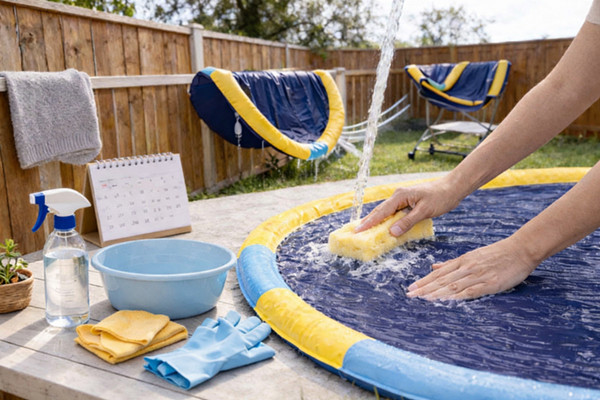
Cleaning a splash pad is simple, but the difference between “simple” and “ignored” is what determines whether the product still feels good a month later. A good routine usually means rinsing off dirt and grass after use, checking around the hose connection and spray holes, and letting the product dry fully before folding it.
Drying matters more than many people think. A splash pad can look dry from the top and still hold moisture in folds, around seams, or near reinforced edges. That trapped moisture is usually what causes odor and residue later. The product feels better, lasts longer, and stays cleaner when after-use care is treated as part of ownership rather than an optional extra.
For public splash facilities, CDC operating guidance recommends maintaining adequate disinfectant levels and a pH range of 7.0–7.8, underscoring how strongly water quality affects splash environments.
How Do You Store a Slip-n-Slide?
A slip-n-slide should be rinsed, dried, and stored without trapping moisture. Because it is longer and often picks up more grass and dirt across its full length, it can feel more awkward to put away than a splash pad.
That matters because cleanup affects repeat use. A product that is fun but annoying to store often starts coming out less often. Parents are tired, the kids are wet, and the easiest move is to roll it up too soon. That usually leads to the next problem: odor, stuck debris, stiff folds, and a product that feels less appealing next time.
| Setup Factor | Splash Pad | Slip-n-Slide |
|---|---|---|
| Yard demand | Lower | Higher |
| Surface sensitivity | Moderate | High |
| Setup speed | Faster | Slower |
| Supervision intensity | Lower | Higher |
| Casual weekday use | Strong | Moderate |
| Storage convenience | Easier | More awkward |
Splash Pad vs Slip-n-Slide for Families
For most families, a splash pad fits more situations because it works better for younger children, mixed-age siblings, and lower-pressure backyard play. A slip-n-slide is usually a better fit for older kids who want more speed and have enough space to use it properly.
Is a Splash Pad Better for Toddlers?
Usually, yes. Toddlers do better with products that allow hesitation. They want to step in slowly, watch first, repeat simple actions, and leave when they feel unsure. A splash pad works very well with that behavior because it does not require speed or a body-first landing.
That often makes it easier for the parent too. A toddler-friendly product should feel manageable, not just entertaining. With a splash pad, the adult is usually supervising exploration rather than managing higher-risk movement. That is one reason splash pads often become the easier choice for younger families.
Is a Slip-n-Slide Better for Older Kids?
Often, yes. Older kids usually want more movement, more challenge, and a stronger feeling of excitement. A slip-n-slide gives them a clear thrill: run, launch, slide, repeat.
But better for older kids does not automatically mean better for the whole household. Bigger kids bring more force, which means the yard, the stop zone, and the supervision all need to be better too. So while a slip-n-slide can absolutely be the more exciting option for older children, it is usually a narrower fit than a splash pad.
Is a Splash Pad Better for Group Play?
Usually, yes. A splash pad handles group play more naturally because several children can use it at once without strict sequencing. One child can stand in the middle, another can circle the edge, and another can come and go without disrupting the whole activity.
That makes it better suited to playdates, siblings, and casual backyard gatherings. Real children rarely line up neatly and take perfect turns. They crowd, hesitate, wander, and invent new games. A splash pad tolerates that much better than a slide lane does.
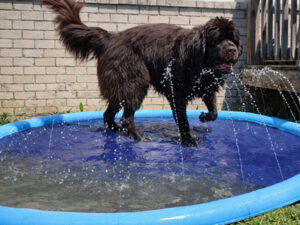
Can Pets Use a Splash Pad?
In many households, yes, especially when the splash pad is made from more durable material. Dogs often respond well to shallow water play because it feels approachable and does not ask them to launch themselves onto a surface.
The main question is construction. A pet-friendly splash pad needs decent material strength, stable seams, and a surface that can hold up against claws and repeated movement better than a very thin mat. That makes material quality especially important for families who want one summer product to serve more than one use case.
How Families Usually Decide in Real Life
Most families do not actually decide between a splash pad and a slip-n-slide in a vacuum. They decide based on the kind of backyard life they already have.
If the household has one older child and one younger child, the splash pad usually wins because both children can use it at the same time in different ways. If the backyard is long, open, and mostly used for active outdoor games, a slip-n-slide becomes much more realistic. If there is a dog in the yard and the family wants one product that may get used by both kids and pets, a durable splash pad usually makes more sense. If the family mainly wants something easy to bring out for twenty or thirty minutes without turning the whole afternoon into a big setup, the splash pad is usually the clearer choice.
That is also why two products with similar prices can create very different satisfaction levels. The better product is not always the one with the bigger visual payoff. It is the one that matches how the household already lives.
| Family Situation | Better Choice |
|---|---|
| Toddlers and preschoolers | Splash Pad |
| Mixed-age siblings | Splash Pad |
| Small backyard | Splash Pad |
| Big lawn and older kids | Slip-n-Slide |
| One adult supervising | Splash Pad |
| High-energy weekend play | Slip-n-Slide |
Splash Pad vs Slip-n-Slide Value
For most households, a splash pad offers better long-term value because it is easier to use, easier to supervise, and easier to fit into everyday life. A slip-n-slide can be exciting, but its value usually depends more heavily on yard conditions and user age.
Which Lasts Longer?
Durability depends first on product quality, then on use. A well-made splash pad can last very well because the stress is spread more broadly across the surface. A slip-n-slide can also last, but it usually takes more concentrated friction and impact in the same areas again and again.
That is why the quality basics matter so much: material thickness, seam stability, hose connection quality, and whether the product lies flat and feels stable during use. Durability is rarely about one dramatic failure. It is usually about whether the product still feels good after repeated summer use.
Which Is Easier to Maintain?
A splash pad is usually easier to maintain because it asks less from the household routine. Families can bring it out for a short play session, rinse it, dry it, and store it without feeling like they just hosted a full backyard event.
Maintenance is more than cleaning. It includes setup time, supervision effort, drying, folding, and whether the product feels worth using again tomorrow. On that measure, splash pads usually perform better for average households.
Which Gives Better Backyard Value?
For most homes, the splash pad does. Not because it is always cheaper or always more exciting, but because it fits more real-life situations. It works for younger kids, mixed-age play, shorter play windows, and more ordinary backyards.
A slip-n-slide can still deliver excellent value in the right household, especially one with older children and a long lawn. But its value is more dependent on the right user and the right setting. Splash pads usually win because they are easier to integrate into normal family life.
Why Do Many Families Choose a Splash Pad?
Because most families buy for the average day, not the ideal one. They imagine a hot afternoon after camp, a weekend with cousins, a parent supervising alone, or a quick setup before dinner. In those moments, the splash pad usually feels easier, more flexible, and more worth owning.
That is what long-term value really means: not just “was it fun once,” but “do we still want to use it again next week?” For many families, splash pads answer that question more consistently.
What Build Quality Changes in Real Life
This is where product construction starts to matter more than many shoppers expect. A splash pad that uses stronger PVC or composite material, cleaner seam welding, a flatter edge design, and a more stable hose connection usually feels better long before anything “breaks.” It sprays more evenly. It sits more cleanly on the ground. It resists twisting and bunching more effectively. It is easier to rinse and dry. Those details influence comfort and repeat use just as much as they influence lifespan.
The same is true for slip-n-slides. Better material quality does not remove the need for a good lawn, but it can affect how smooth the surface feels, how well water distributes, and how the product holds up after repeated sliding. In other words, construction quality shapes not only durability, but also whether the toy feels pleasant enough to keep using.
| Ownership Factor | Splash Pad | Slip-n-Slide |
|---|---|---|
| Ease of repeat use | High | Medium |
| Mixed-age usability | High | Lower |
| Yard flexibility | High | Lower |
| Maintenance burden | Medium | Medium to High |
| Everyday practicality | High | Medium |
| Long-term satisfaction potential | High | More conditional |
Which One Should You Choose?
If you want the simplest practical answer, a splash pad is usually the better choice for most families. It is easier for younger children, easier to supervise, easier to fit into smaller backyards, and easier to reuse throughout the summer. A slip-n-slide is still a strong option when the main users are older kids, the yard is right, and the family wants more speed and challenge.
Choose a splash pad when:
- the children are younger
- the family has mixed-age siblings
- the yard is small or medium
- easier supervision matters
- casual everyday use matters
Choose a slip-n-slide when:
- the children are older
- the yard is long and smooth
- the family wants more speed and excitement
- adults are ready for closer supervision
- the product is more for high-energy sessions than everyday cooling
The best choice is usually the one that matches real family use, not the one with the biggest action photo.
If there is one practical insight that ties the whole comparison together, it is this: splash pads usually win on flexibility, while slip-n-slides usually win on intensity. Most families end up using flexibility more often than intensity. That is why a splash pad so often becomes the more satisfying long-term choice, even when a slip-n-slide looks more exciting at first.
FAQ
Is a splash pad better than a slip-n-slide for toddlers?
Usually, yes. A splash pad is generally better for toddlers because it supports slower, lower-impact play and does not require running or sliding.
Is a slip-n-slide safer for older kids?
Not automatically. A slip-n-slide can be appropriate for older kids, but safety still depends heavily on yard conditions, supervision, and how the product is used.
Are splash pads sanitary?
They can be, but they still need proper cleaning and drying. Public-health guidance shows that splash pads can spread germs when water is not adequately managed or when users swallow contaminated water.
Can you get norovirus from a splash pad?
Yes. Outbreak investigations have linked splash pad-associated illness to getting splash pad water in the mouth, including norovirus-related cases.
About Epsilon
American Epsilon Inc. focuses on PVC and composite water-play and inflatable products for family, pet, and outdoor seasonal use. We work with retailers, importers, private-label brands, and sourcing teams that need products designed for real use, not just good photos.
Looking for High-Quality Splash Pads or Custom Water Toys?
If you are sourcing splash pads, slip-n-slide style products, or other seasonal PVC and composite water-play products, Epsilon can support both ready-to-sell products and custom development.
We support:
- ready-to-ship splash pads
- OEM and ODM manufacturing
- custom sizes and layouts
- private-label branding
- packaging design and seasonal product development
If you want to order EPN products or request a quotation for custom development, send Epsilon your target market, order quantity, product size needs, and packaging goals.
Related Articles
How to Clean and Store a Splash Pad Properly