Skip to content
Easy-to-Clean Kids Splash Pad Features Parents Should Want
# Your Trusted Inflatable Supplier In US

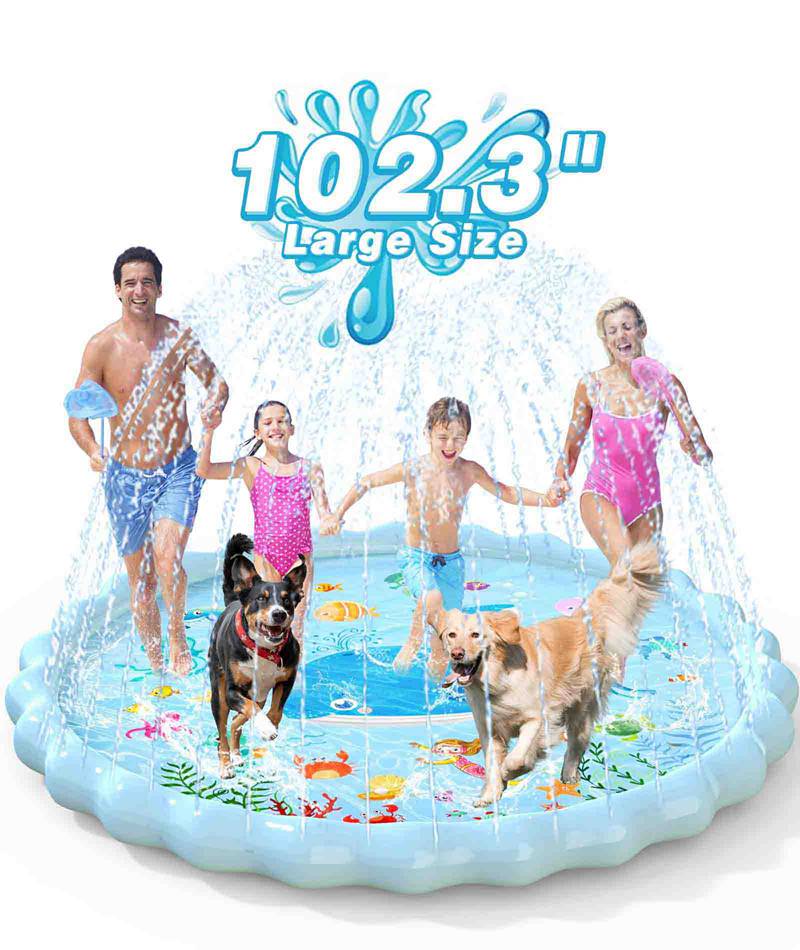
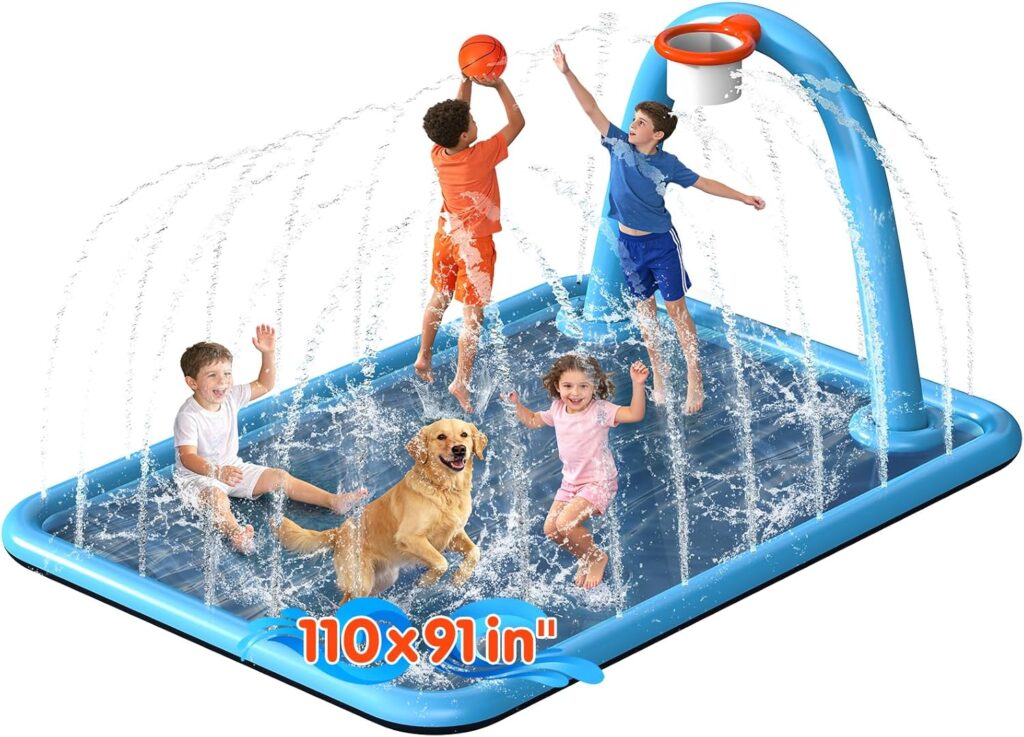
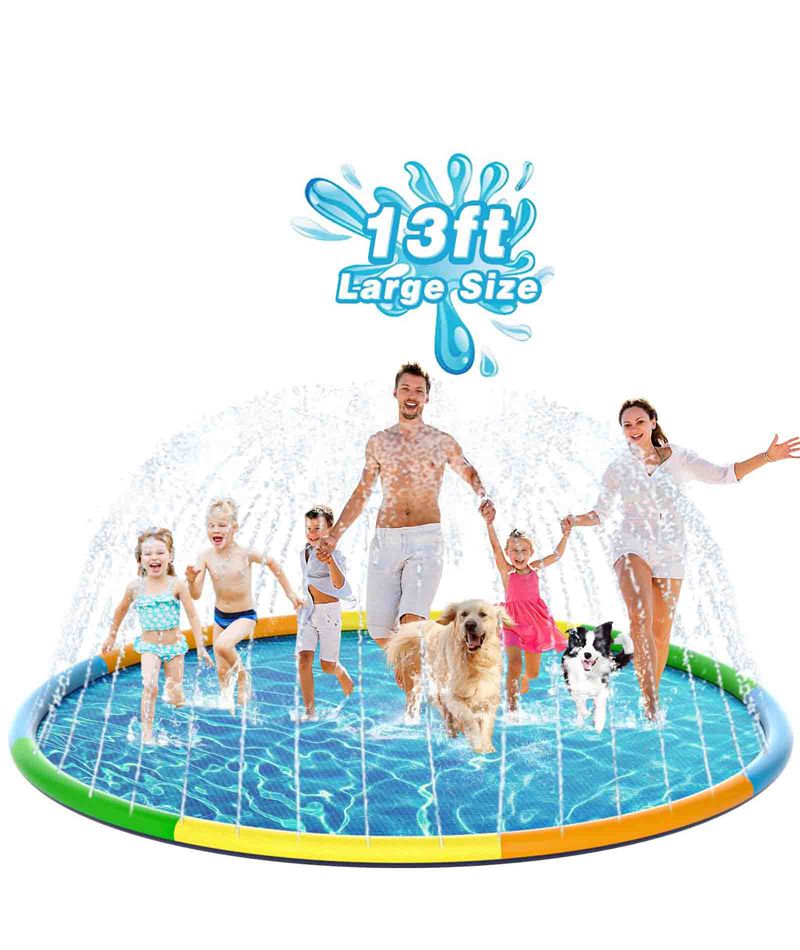
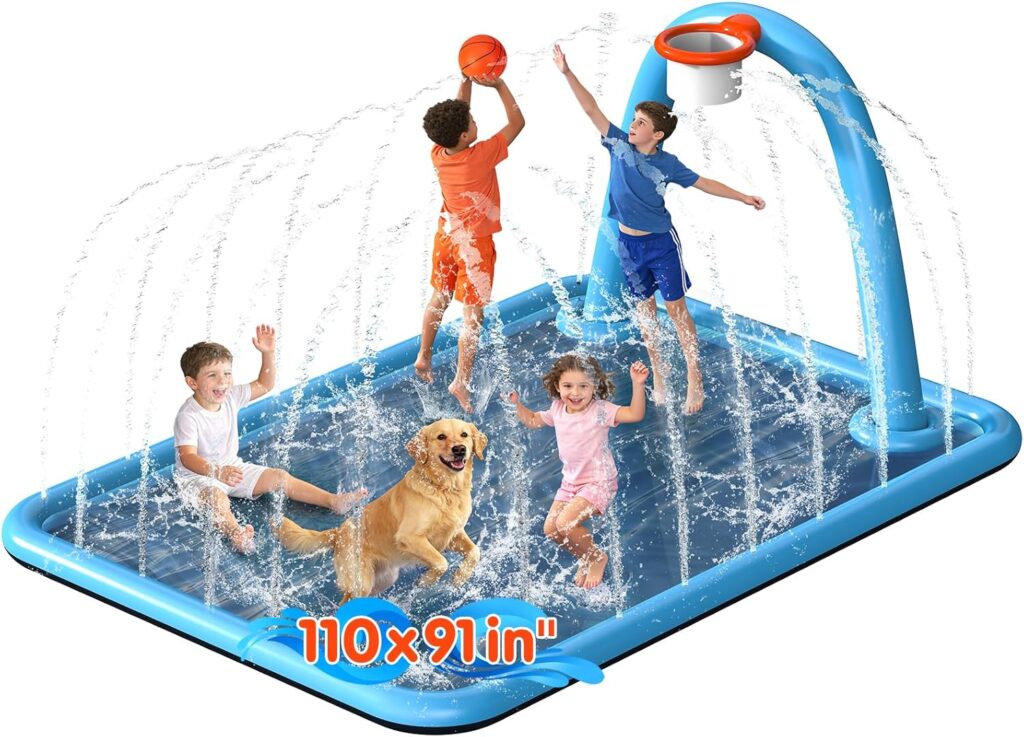
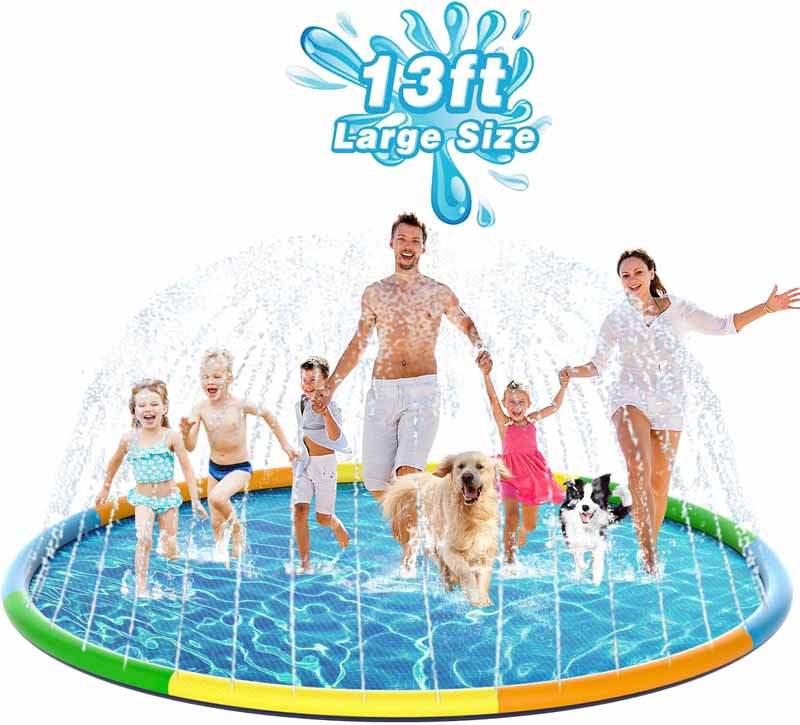
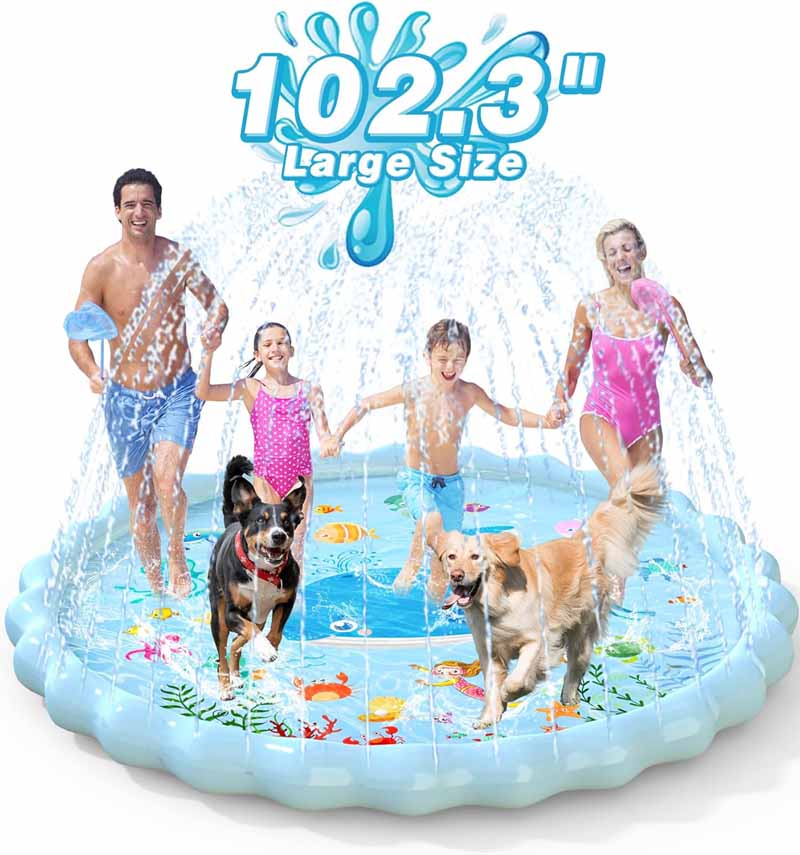
A kids splash pad can turn a hot backyard into the easiest kind of summer fun. Connect a garden hose, let the water rise from the edge, and children have a cooler place to move, sit, laugh, and splash. At first, most parents look at size, colors, spray height, and whether the pad feels fun enough for their child’s age. After several uses, another question becomes more important: how easy is it to clean?
Grass sticks to wet PVC. Sunscreen leaves a cloudy film. Muddy feet mark the center. Small leaves collect near the edge. Water can sit around seams or the hose connector if the design does not drain well. A splash pad that looks exciting on day one may become less appealing if parents need extra time to rinse, wipe, dry, and fold it after every play session.
An easy-to-clean kids splash pad should rinse quickly, drain without hidden puddles, dry fully before storage, and use stable PVC material that stands up to repeated outdoor play. Parents should look for a lightly textured surface, simple seams, a reliable hose connector, balanced spray holes, stable edges, and a foldable design that does not trap moisture.
The right splash pad does not make cleanup disappear, but it makes cleanup feel normal. After a summer afternoon, parents should be able to turn off the hose, rinse the surface, clear the underside, dry the pad, and put it away without turning playtime into another chore. That practical family experience is where EPN, part of American Epsilon Inc., puts much of its product focus.
What Makes a Kids Splash Pad Easy to Clean?
A kids splash pad is easy to clean when grass, dirt, sunscreen residue, and standing water can be removed with a quick rinse and simple wipe. The most useful features include rinse-friendly PVC, simple seam lines, visible dirt areas, stable edges, and a structure that dries fully before folding.
Parents usually notice cleaning problems after the first few backyard sessions. A splash pad may look fine when water is running, but the real test starts when the hose is turned off.
Easy-clean features matter most for:
- Parents who set up water play several times a week
- Toddlers who sit, crawl, and step through shallow water
- Families using the pad on grass, patio, or deck flooring
- Homes where sunscreen, snacks, muddy feet, and wet towels are part of summer
- Parents who want the pad dry before evening storage
- Families who do not want one outdoor toy to create a long cleaning routine
A splash pad that cleans easily is more likely to be used often. If cleanup feels annoying, even a fun water toy can end up staying in the garage.
Is the Kids Splash Pad Easy to Rinse?
Rinsing is the first cleaning test parents notice. Children rarely step onto a splash pad with perfectly clean feet. They move between grass, patio, towels, snacks, and the water area. Sunscreen gets on hands. Grass sticks to wet skin. Small dirt marks appear quickly around the center and edge.
A good kids splash pad should allow parents to use the same garden hose for play and cleanup. The surface should let water push dirt toward the edge without hard scrubbing. It should feel smooth enough to rinse well, but not so glossy that wet feet feel unstable.
The most practical surface is usually lightly textured PVC. Deep texture can trap soil and sunscreen film. A completely slick surface may rinse quickly but may feel less steady during water play. Parents need a balanced surface that supports both cleaning and movement.
| Cleaning Check | Good Sign | Warning Sign |
|---|---|---|
| Grass removal | Grass rinses away in 1–2 passes | Grass sticks inside grooves |
| Sunscreen marks | Marks wipe off with a soft cloth | Surface feels oily after rinsing |
| Muddy footprints | Dirt moves toward the edge | Dirt settles into texture |
| Water movement | Water flows off when one side is lifted | Puddles stay in several areas |
| Surface feel | Clean but not slippery | Sticky, slimy, or greasy feel |
EPN kids splash pad designs are made for real backyard use. The goal is not only a bright surface, but a water-play mat parents can clean without frustration.
Does the Kids Splash Pad Hide Dirt?
Bright graphics can make a splash pad more exciting for children, but parents also need to see when the surface needs cleaning. If the design hides dirt too well, the mat may look clean while holding sunscreen film, mud, grass dust, or cloudy water marks.
Overly busy artwork can make small stains harder to notice. Very pale zones may show marks too quickly. Very dark zones may hide residue until the surface feels slippery. A practical design uses color and graphics in a way that still lets parents check the play surface, edge ring, and hose area easily.
Dirt visibility matters most in these areas:
| Area | Why Dirt Collects There | What Parents Should Check |
|---|---|---|
| Center play zone | Kids sit, crawl, splash, and step there | Sunscreen, mud, snack crumbs |
| Outer spray ring | Water pressure and foot traffic meet there | Grass, soil, small debris |
| Hose connector | Hose, hands, and ground contact overlap | Wet dirt, trapped residue |
| Underside | Touches grass, patio, or outdoor mats | Grass stains, dust, moisture |
| Fold lines | Pressure points during storage | Damp marks or residue |
A practical kids splash pad does not need to look plain. It needs visual clarity. Parents should be able to look over the surface quickly and know where to rinse before folding it away.

Are Kids Splash Pad Seams Simple?
Seams affect cleaning, drainage, and product life. On a splash pad, seams are where PVC layers meet, where the edge ring carries water, and where folding stress often appears. If seam areas are too narrow, raised, or complicated, dirt and moisture can collect there.
Parents should look for seam lines that are flat, neat, and easy to wipe. A strong seam should support repeated water pressure without creating deep channels that hold dirt. Wider joining areas can help stability, but the surface around them should still be simple enough for rinsing.
Epsilon pays attention to structural details such as widened joining edges, local reinforcement, R-angle cushioning, and standardized water-inlet modules. For families, these details can make daily use easier in several ways.
| Seam Feature | Parent Benefit |
|---|---|
| Wider joining edge | Better support during repeated water pressure |
| Clean seam line | Easier wiping after muddy play |
| Rounded transition | Less hard creasing during folding |
| Reinforced water area | More reliable hose use |
| Balanced edge shape | More even spray and easier drainage |
The seam should not become the dirtiest part of the mat. If parents can rinse, wipe, and inspect seam areas quickly, the splash pad will be easier to keep fresh through summer.
What to Bring for Splash Pad Play?
Easy cleaning starts before the water turns on. Parents can reduce mess by preparing a small backyard play kit. The right items help keep grass, sunscreen, snacks, and wet clothes under control.
A useful splash pad kit can include:
- Two towels: one for children, one for wiping the pad
- A soft cloth for sunscreen marks and small dirt spots
- An outdoor mat near the entry point
- A change of clothes for each child
- A water bottle for rinsing hands or small messes
- A storage bag for the dry pad
- Sunscreen for outdoor play
- A shaded rest area for breaks
Parents should keep snacks outside the splash zone. Crumbs become sticky when wet and can create extra cleaning. Shoes should also stay off the pad unless product instructions allow them. Bare feet are easier to rinse, but children still need close supervision because wet surfaces can slip.
For families using EPN water toys often, a repeatable routine helps: same yard area, same towel spot, same cleaning steps, and same dry storage place. Less guessing means more play.
Which Kids Splash Pad Surface Works Best?
The best surface for a kids splash pad is flat, clean, soft enough for comfort, and free from sharp debris. Short grass usually gives better cushioning, while a smooth patio can make rinsing easier. Rough concrete, gravel, uneven soil, sharp roots, and muddy areas should be avoided.
Surface choice changes the whole cleaning experience. A kids splash pad is rarely used in a perfectly clean area. Most families place it on grass, patio, deck flooring, or an outdoor mat. Each surface affects dirt, drainage, traction, and underside wear.
Parents should pay attention to:
- Short grass for softer backyard play
- Smooth patio for faster rinsing
- Outdoor mats for extra bottom protection
- Flat ground to reduce standing water
- Open space around the edge for easier supervision
- Clean areas away from mulch, sand, and pet digging spots
- Safe hose placement to prevent tripping
The best surface is not always the cleanest-looking surface. It is the surface that keeps the pad stable, reduces dirt transfer, and allows parents to rinse and dry the mat without extra work.

What Surface Fits a Kids Splash Pad?
Ground choice affects cleaning more than many parents expect. A splash pad placed on a clean, flat area drains better, feels steadier, and collects less dirt. A pad placed on uneven or rough ground can develop low spots where dirty water settles.
Before setup, parents should walk the area and remove small objects. Stones, sticks, toy pieces, garden clips, mulch, thorns, and pet waste can damage the underside or create stains. Even durable PVC performs better when the ground is prepared.
| Surface | Cleaning Level | Comfort Level | Wear Risk | Best Use |
|---|---|---|---|---|
| Short grass | Medium | High | Low to medium | Family backyard play |
| Smooth patio | Easy | Medium | Medium | Quick rinse and dry |
| Outdoor mat under pad | Easy | High | Low | Extra bottom protection |
| Rough concrete | Medium | Low | High | Not preferred |
| Gravel | Hard | Low | Very high | Avoid |
| Muddy lawn | Hard | Medium | Medium | Avoid after rain |
| Sloped ground | Hard | Low | Medium | Avoid for water balance |
The ground below the pad affects how easy the top surface is to clean. If the setup area is clean before play, the splash pad will usually be cleaner after play.
Is Grass Good for Splash Pad Use?
Short grass is often the most comfortable surface for a kids splash pad. It gives children a softer feel underfoot and can reduce abrasion on the underside. Grass also makes the backyard play area feel cooler and more natural during hot afternoons.
The challenge is moisture. Wet grass can stick to the bottom. Freshly cut grass can cling to the edge. Muddy soil can stain the underside. Long grass can slow drying because air does not move well under the mat.
Parents can make grass setup easier with a few habits:
- Mow earlier in the day or the day before play
- Remove loose clippings when possible
- Avoid muddy patches and sprinkler-softened soil
- Keep the pad away from pet digging areas
- Place a towel or mat near the entry point
- Rinse both the top and underside after play
- Do not leave the pad on grass overnight
Grass can be a strong choice when parents control the mess before play begins. The surface is comfortable for children, but the cleanup works best when the lawn is short, dry, and clear.
Is Patio Safe for Kids Splash Pad?
A patio can be convenient because it is easier to rinse than grass. Parents can clean the pad, spray the patio, and let both dry in the sun. For families with smaller yards, a patio may be the most practical water-play area.
Safety depends on traction. Smooth tile, sealed concrete, painted flooring, and shaded patio areas can become slippery when wet. Soap residue, algae, dust, and sunscreen can make the area worse. Children should not run hard around a patio splash pad, especially near wet edges.
Parents can reduce patio risk by using a clean outdoor mat under the splash pad. The mat should be flat, large enough, and free from wrinkles. It should not slide under wet movement. A towel zone outside the water area can also help children step out safely.
| Checkpoint | Parent Action |
|---|---|
| Floor texture | Avoid glossy or slippery patio surfaces |
| Drain direction | Make sure water flows away from doors |
| Electrical safety | Keep water away from outlets and cords |
| Hose route | Keep the hose away from walking paths |
| Edge space | Leave room for adults to move around |
| Dry zone | Keep towels and clothes outside the spray |
A patio can work well, but supervision matters even more when the surrounding ground is hard.
Does the Splash Pad Stay Clean?
A splash pad stays cleaner when the setup area, water pressure, and cleanup routine work together. A well-made PVC pad can still become dirty quickly if it sits near a sandbox, under falling leaves, beside mulch, or on muddy grass.
The cleanest backyard setup usually has four conditions.
Flat ground helps water spread evenly and reduces low spots.
Short grass or a protected patio reduces dirt transfer and underside abrasion.
Open walking space lets parents supervise and rinse from different angles.
Distance from dirt sources keeps the mat away from sandboxes, garden beds, pet areas, loose mulch, and heavy tree drop.
EPN splash pads are designed for family water play, but placement still affects cleanliness. The same splash pad may feel easy to clean in one yard and difficult in another. The cleaner the setup area, the easier the end-of-day routine.
How Do Kids Splash Pad Features Help Drainage?
Drainage helps a kids splash pad stay cleaner, safer, and easier to store. A good design allows water to leave the surface without hidden puddles, heavy lifting, or trapped moisture around seams. Fast drainage reduces odor risk, shortens drying time, and prevents dirty water from settling after play.
Drainage becomes important when play ends. If water stays on the pad too long, dirt settles into low spots and drying takes longer. A parent-friendly splash pad should let most visible water move off the surface with a simple lift and rinse.
A practical cleanup target looks like this:
- 1–2 minutes to shut off and disconnect the hose
- 2–4 minutes to guide water off the surface
- 2–3 minutes to rinse the top side
- 2–3 minutes to rinse the underside after grass use
- 1 minute to wipe the connector area
- Full air drying before folding
Drying time depends on sunlight, humidity, wind, and material thickness. The important point is that the design should not trap water in hidden pockets.
Does the Splash Pad Drain Fast?
Fast drainage is one of the most useful features after play ends. When the hose turns off, parents should not need to fight the pad to empty it. Standing water collects dirt, grass, sunscreen, and small debris. The longer water sits, the more wiping parents need to do.
A good splash pad should let water move away with a simple lift from one side. The edge ring should also release water after the hose is disconnected. If several pockets hold water, the pad becomes harder to dry and less pleasant to store.
| Step | Estimated Time | Parent Action |
|---|---|---|
| Turn off hose | 1 minute | Let spray stop fully |
| Disconnect hose | 1–2 minutes | Release pressure gently |
| Drain surface | 2–4 minutes | Lift one side and guide water away |
| Rinse top | 2–3 minutes | Push dirt toward the edge |
| Rinse bottom | 2–3 minutes | Remove grass and soil |
| Wipe connector | 1 minute | Dry around hose area |
| Air-dry | Weather dependent | Wait before folding |
A drainage-friendly design reduces hands-on cleanup. Parents still need to rinse and dry the pad, but they should not need to squeeze water out of several hidden areas.
Are Splash Pad Low Spots Avoided?
Low spots are small areas where water remains after the rest of the pad drains. They may appear because the ground is uneven, the edge is unstable, the material folds deeply, or the pad has been stored tightly for a long time. Low spots matter because they collect the dirtiest water.
Parents can often identify low spots during play. If one area stays murky, holds grass, or feels slippery, water may be settling there. Moving the pad to flatter ground may solve the problem. If low spots remain on flat ground, the structure may not be stable enough.
| Problem | Why It Matters |
|---|---|
| Slower drying | Moisture remains after play |
| More residue | Sunscreen and dirt settle there |
| Slippery feel | Film can build in standing water |
| Harder storage | Damp folds create odor risk |
| Uneven play | Children may slip or sit in dirty water |
Parents should avoid squeezing a large splash pad into a small or uneven space. A properly opened pad on flat ground drains better and feels more stable. Size choice matters as much as material.

Is the Hose Area Easy to Clean?
The hose connector is handled every time the splash pad is used. It touches the garden hose, receives water pressure, and often sits close to grass or patio dust. If the connector area is bulky, hidden, or surrounded by deep folds, cleaning becomes harder.
A parent-friendly hose area should be visible and easy to wipe. It should not require fingers to reach into narrow wet pockets. The connector should attach securely, but the area around it should remain simple enough to rinse.
Epsilon uses standardized water-inlet modules across relevant PVC water products. For a kids splash pad, a more reliable inlet helps in several ways:
- Less dripping around the connector means less mud near the edge
- A stable inlet supports steadier water movement into the spray ring
- Parents can quickly check for dirt, loose connection, or trapped water
- Easier access makes setup and cleanup feel less annoying
- A cleaner connector area supports better storage after drying
Parents should wipe the hose area after every use. A small cloth around the connector can prevent damp dirt from staying in place during storage.
Can the Kids Splash Pad Dry Quickly?
Drying is part of cleaning. A splash pad that looks clean but stays damp can develop odor, sticky surfaces, or mildew-like spots during storage. Parents should never fold and store a splash pad while it is still wet.
Drying speed depends on airflow, sun, humidity, surface texture, material thickness, and how much water remains in the edge ring. A thicker PVC splash pad may feel stronger, but it still needs proper air exposure before folding.
Recommended drying method:
- Rinse both sides
- Drain water from the surface and edge
- Shake gently to remove extra water
- Lay flat on a clean dry area or hang over a smooth rounded surface
- Wipe the hose connector and seam areas
- Fold loosely only after the surface feels fully dry
Parents should avoid hanging the pad on sharp fences, rough metal rails, or splintered wood. A smooth drying rack, clean patio chair, or shaded clothesline area is better.
A fast-dry design makes parents more likely to use the splash pad often. If drying feels too difficult, families may leave the pad outside too long or store it damp, which shortens useful life.
How Clean Is a Kids Splash Pad?
A home kids splash pad can be kept clean when parents use fresh hose water, rinse the surface after play, dry it completely, and store it in a cool, dry place. It should not be treated like a permanent water feature. Clean use depends on fresh setup, visible cleaning, and responsible storage.
A home splash pad can stay clean when parents treat water play as a repeat-use routine, not a one-time setup. Fresh hose water helps, but cleaning still depends on what happens before and after play.
Parents should avoid:
- Letting children drink spray water
- Folding the pad while damp
- Leaving sunscreen residue on the surface
- Using harsh cleaners that may affect PVC
- Storing the pad under heavy or sharp objects
- Mixing pet play and toddler play on the same kids pad
- Leaving the pad outside overnight after use
Clean play is usually built from small habits. A quick rinse after every session and full drying before storage can prevent most odor and residue problems.
Is a Kids Splash Pad Sanitary?
A backyard kids splash pad is easier for parents to control than a public splash area because the family controls the water source, user group, setup surface, and cleaning routine. Fresh hose water, a clean surface, and full drying all help keep play more comfortable.
Sanitary use still requires common sense. Children should not drink spray water. Kids with stomach illness should skip water play. Toddlers in diapers need careful supervision. Pets should not use the same kids splash pad if the pad is intended for children only. Sunscreen, sweat, grass, and dirt should be rinsed away after each session.
A simple hygiene rule works well: if it touches children’s skin, wet feet, or outdoor dirt, rinse it before storage. If the surface feels slippery, smells unpleasant, or looks cloudy, clean it more carefully with mild soap and water, then rinse fully.
Home splash pad hygiene is less about complicated chemicals and more about routine. Fresh water, clean feet, no drinking spray, no sick play, full rinse, and full drying are the core habits.
How Often Should Parents Clean It?
Parents should rinse a kids splash pad after every use. A deeper clean is helpful after muddy play, heavy sunscreen use, multiple children, snack spills, pet contact, or long storage. End-of-season cleaning should include both the top and bottom surfaces.
| Situation | Cleaning Action |
|---|---|
| Light daily play | Rinse with hose and air-dry |
| Sunscreen marks | Wipe with soft cloth and mild soap |
| Mud or grass buildup | Rinse both sides, wipe dirty areas |
| Several children | Rinse carefully and dry in open air |
| Before storage | Clean, inspect, dry fully, fold loosely |
| Odor appears | Wash gently, rinse fully, dry longer |
| After rain exposure | Rinse, drain, and dry before folding |
Parents should avoid harsh cleaners, abrasive pads, hard brushes, and strong solvents unless the care label specifically allows them. Strong cleaners can damage PVC, affect printed areas, or leave residue that is not ideal for children’s skin.
Mild cleaning is usually enough when done often. Waiting too long makes cleaning harder.
Can Mold Grow on Splash Pads?
Mold and mildew problems usually start with trapped moisture. A splash pad folded while damp, stored in a sealed container, or left under wet towels may develop odor or visible spots. Warm garages, humid sheds, and dirty storage bins can make the problem worse.
The most important prevention step is full drying. Parents should check the center, underside, edge ring, hose connector, and seams before folding. The surface may feel dry in the middle while the connector area still holds moisture.
| Zone | Why It Needs Attention |
|---|---|
| Hose connector | Holds water around fittings |
| Outer ring | May keep water after hose shutoff |
| Seam lines | Can trap small moisture lines |
| Fold creases | Damp areas stay pressed together |
| Underside | Grass moisture dries slowly |
If odor appears, parents should open the pad fully, clean it with mild soap and water, rinse well, and dry in moving air. Do not store it again until the smell is gone and the material feels dry on both sides.
Good storage habits prevent most mold concerns before they start.

How Should the Splash Pad Be Stored?
Storage has a major effect on how clean the splash pad feels next time. A pad can be well rinsed but still become unpleasant if it is folded wet, pushed under heavy boxes, or stored beside garden tools.
Parents should store the splash pad only after both sides are dry. Fold it loosely along natural fold lines. Keep it in a clean bag, dry shelf, or storage bin with enough room. Avoid sharp hooks, rough edges, hot areas, and heavy pressure.
Better storage habits include:
- Clean the top surface
- Clean the bottom surface
- Drain the edge and connector
- Dry fully with airflow
- Fold loosely
- Store away from heat
- Keep away from sharp objects
- Do not place heavy items on top
EPN splash pads are made for repeat seasonal use, but no PVC water toy benefits from damp storage or rough handling. A clean, dry, shaded storage space helps preserve surface feel, printed appearance, and foldability.
Parents who want less cleanup next time should treat storage as the final step of cleaning.
Are Kids Splash Pad Features Safe?
Clean features and safety features work together. A kids splash pad with a rinse-friendly surface, quick drainage, stable edge, gentle spray, visible hose area, and light texture can help reduce slipping, trapped dirt, and messy play conditions. Adult supervision is still required during every water play session.
Safety is not only about age labels. It is also about the small details parents deal with during play: water pressure, slippery residue, hose placement, tired toddlers, and the ground around the pad.
Parents should check:
- Whether the surface feels steady under wet feet
- Whether spray height can start low
- Whether the hose is outside the walking path
- Whether the pad lies flat without curled edges
- Whether towels are placed outside the spray zone
- Whether children understand no running, pushing, or drinking water
- Whether an adult can reach toddlers quickly
A cleaner splash pad usually feels safer because residue, mud, and standing water are reduced.
Are Splash Pads Safe for Toddlers?
Splash pads can be a good backyard water-play option for toddlers when parents use gentle water pressure, flat ground, close supervision, and age-appropriate play rules. Shallow water makes splash pads appealing for young children, but shallow water does not remove risk.
Toddlers can slip, trip over a hose, drink spray water, sit on the connector, or become frightened by strong spray. Parents should start with low water pressure and let the child approach slowly. Some children like running through the spray right away. Others prefer to touch the water from the edge first.
| Safety Need | Parent Action |
|---|---|
| Gentle water | Start with low pressure |
| Stable ground | Use flat grass or protected patio |
| Clean surface | Rinse before and after play |
| Close supervision | Stay within arm’s reach for toddlers |
| Clear hose path | Keep hose outside walking area |
| Short sessions | Watch for tired or cold children |
| Dry exit area | Place towels outside spray zone |
Parents should always follow the age label and product instructions. EPN kids water-play products are designed for supervised family use, not unsupervised rough play.
Is the Splash Pad Surface Non-Slip?
A wet splash pad needs traction. Children step in from grass, sit in shallow water, turn quickly, and move unpredictably. A lightly textured surface can help reduce the overly slick feel that some smooth PVC mats have when wet.
No splash pad can make running completely risk-free. Parents should not rely on material alone. The surface must stay clean because sunscreen, soap residue, algae-like buildup, or mud can make even textured material feel slippery.
Good slip prevention combines design and routine:
- Use a lightly textured splash pad surface
- Place the pad on flat ground
- Keep soap away from play water
- Rinse sunscreen residue after use
- Avoid rough running and pushing
- Keep towels near the exit area
- Watch toddlers closely
A clean surface usually feels more stable than a dirty one. That is why easy cleaning is part of safety, not only convenience.
Are Spray Holes Gentle?
Spray holes shape the play experience. Balanced spray makes the splash pad more comfortable for children and easier for parents to control. Strong uneven spray can surprise toddlers, waste water, and create puddles outside the play area.
A good kids splash pad should allow spray height to change with faucet pressure. Low pressure works better for toddlers and cautious children. Higher pressure may be suitable for older kids who enjoy more active play. Parents should never start at full pressure before checking spray direction.
Epsilon often focuses on multi-point spray hole pressure balance in splash pad development. Even spray helps prevent one side from blasting water while another side barely works. It also helps distribute water more naturally across the pad.
Parents should check spray holes during setup:
- Are all sides spraying?
- Is one area too strong?
- Is water spraying outside the play zone?
- Are any holes blocked by dirt?
- Does lowering water pressure improve comfort?
- Does the edge stay stable while water runs?
Gentle spray keeps the play area calmer and easier to clean afterward.
Do Parents Need to Watch?
Yes. A kids splash pad needs adult supervision every time. It is a water toy, not a child-care substitute. Parents should stay close enough to help if a child slips, drinks water, pulls the hose, cries, or becomes tired.
Supervision also helps keep the splash pad clean. Parents can stop children from bringing food onto the pad, dragging muddy toys across the surface, folding the edge while water is running, or stepping on the hose connector. Small corrections during play reduce cleanup later.
A practical parent rule is simple: treat splash pad time like bath time with more movement. Stay near the water, keep the area clear, control pressure, and end play before children become exhausted.
For mixed-age play, younger children need extra space. Older children may run harder and splash more aggressively. Parents should set clear rules before turning on the hose: no pushing, no jumping onto others, no drinking water, no pulling the edge, and no stepping on the connector.
Good design helps. Active supervision finishes the job.
Which Easy-to-Clean Kids Splash Pad Should Parents Choose?
Parents should choose an easy-to-clean kids splash pad with rinse-friendly PVC, simple seams, fast drainage, stable edges, gentle spray, light texture, and clean storage. EPN is a strong option for families and product partners who want practical backyard water play supported by PVC development and manufacturing experience.
The right choice should feel easy in daily life. A parent should not need a complicated care routine after every play session. The pad should support the way families already use their backyard: hose connection, short setup time, supervised play, quick rinse, full drying, and simple storage.
Parents and product teams should value:
- Easy rinsing after grass and sunscreen contact
- Stable edge shape during water flow
- Low areas that do not trap dirty water
- Hose connection that is easy to reach and wipe
- Light texture for wet-foot stability
- PVC material that balances softness and structure
- Foldable storage after full drying
- Clear use and care instructions
A better splash pad is not just more fun. It is easier to keep in the family routine.
Choose Easy Rinse Features
The right splash pad should clean up quickly after normal outdoor play. Parents should expect grass, mud, sunscreen, and wet footprints. They should not expect to scrub for half an hour after every use.
Easy rinse features include:
- Smooth but not slippery PVC surface
- Simple seam lines
- Visible play area
- Reachable hose connector
- Balanced edge structure
- Few deep dirt-trapping grooves
- Bottom surface that can be rinsed after grass use
EPN focuses on family-friendly PVC water toys that fit real backyard habits. American Epsilon Inc. develops and manufactures many inflatable and water-filled categories, including kids splash pads, pet splash pads, inflatable pools, water slides, pet pools, floating mats, snow tubes, water arches, and pool pillows. That broad product base gives the team practical experience with water pressure, seams, folding, abrasion, and outdoor storage.
For parents, easy rinse means less work. For retailers and custom projects, the value is also clear: fewer cleaning complaints, easier product explanation, and stronger repeat-use appeal.
Choose Fast-Dry Design
Fast drying makes a splash pad easier to use again. If the pad stays wet for hours, parents may delay storage or fold it damp. Both habits can lead to odor and surface problems.
Parents should look for features that support drying:
- Water drains with a simple lift
- Edge ring releases water after hose removal
- Connector area can be wiped dry
- Surface does not hold water in deep texture
- Pad can lay flat or hang safely
- Material folds without creating tight wet pockets
- Underside can be rinsed and dried after grass use
Epsilon conducts 500+ material and product performance tests each year. For PVC water toys, testing may focus on pressure stability, folding behavior, outdoor use simulation, material aging, and user-style handling. That development mindset matters because a kids splash pad is not used once. Families may use it many times across summer.
A fast-dry pad is more likely to stay in the family routine. Parents use easy products more often.
Choose Stable PVC Material
PVC quality affects cleaning, comfort, odor, durability, and storage. A very thin splash pad may wrinkle easily and create more low spots. A stiff pad may be less comfortable for children. A good family splash pad needs a balanced material feel: flexible enough for folding, stable enough for water play, and smooth enough for rinsing.
Epsilon builds product development around PVC and composite materials. Material choices can be adjusted for thickness, flexibility, wear resistance, low odor, UV exposure, and temperature conditions. For children’s water toys, soft feel, lower odor, sun stability, and repeated handling are especially important.
Parents often judge material through everyday questions:
- Does it smell strong after opening?
- Does it feel too flimsy underfoot?
- Does the edge hold shape with water pressure?
- Does the surface clean without sticky residue?
- Does it dry before storage?
- Does it fold without deep damage?
- Does it survive repeated yard use?
Stable PVC is not only about strength. It affects the whole ownership experience.
Choose Simple Storage
A splash pad that stores easily is more likely to be used again. Parents should not need a complicated folding method or a large storage space. A good splash pad should dry fully, fold loosely, and stay protected until the next sunny day.
Simple storage features include:
- Foldable PVC structure
- Manageable weight
- Clean underside after rinsing
- No hidden water pockets
- Flexible material after drying
- Storage-friendly shape
- Clear care instructions
Parents should never store the splash pad damp. A few extra drying minutes can prevent odor and reduce cleaning before the next use.
EPN supports both ready-to-order branded products and custom development through American Epsilon Inc. Families can choose EPN backyard water-play products for practical summer use. Brand owners, retailers, distributors, online sellers, and custom project clients can request OEM / ODM support for size, shape, color, pattern, packaging, labels, and selected structural details.
Epsilon has 27 R&D team members, 18+ designers, independent testing capability, 500+ annual material and product performance tests, thousands of mature molds, multi-language packaging support, and annual production capacity up to 12 million units. Regular sample projects can often be completed in 3–5 days, while common production projects usually take about 20–30 days depending on design, packaging, and order scale.
For parents, an easy-to-clean kids splash pad means more summer play with less mess. For product partners, it means a more practical water toy with stronger customer appeal. That is where EPN fits well: practical PVC water-play design, easier daily care, and backyard products families can bring out again through the season.
Get A Fast quote
Here, bringing your inflatable concepts to life is no longer a challenge—it’s a collaborative journey where American Epsilon helps families, outdoor enthusiasts, and global brands transform creative ideas into safe, certified, and market-ready inflatable solutions.


Partner With Epsilon
Whether you are a family looking for safe backyard fun or a brand seeking large-scale OEM/ODM solutions, American Epsilon Inc. guarantees every inflatable is built with safety, durability, and excitement in mind. With flexible low MOQs, strategically placed warehouses in the U.S., Canada, U.K., and Germany, plus 24/7 professional support, we ensure smooth delivery and reliable service worldwide.
Ready to bring your inflatable ideas to life? Request free samples, fast prototypes, and customized designs today—your trusted inflatable journey starts here.