Skip to content
What Makes a Kids Splash Pad More Comfortable to Stand On?
# Your Trusted Inflatable Supplier In US

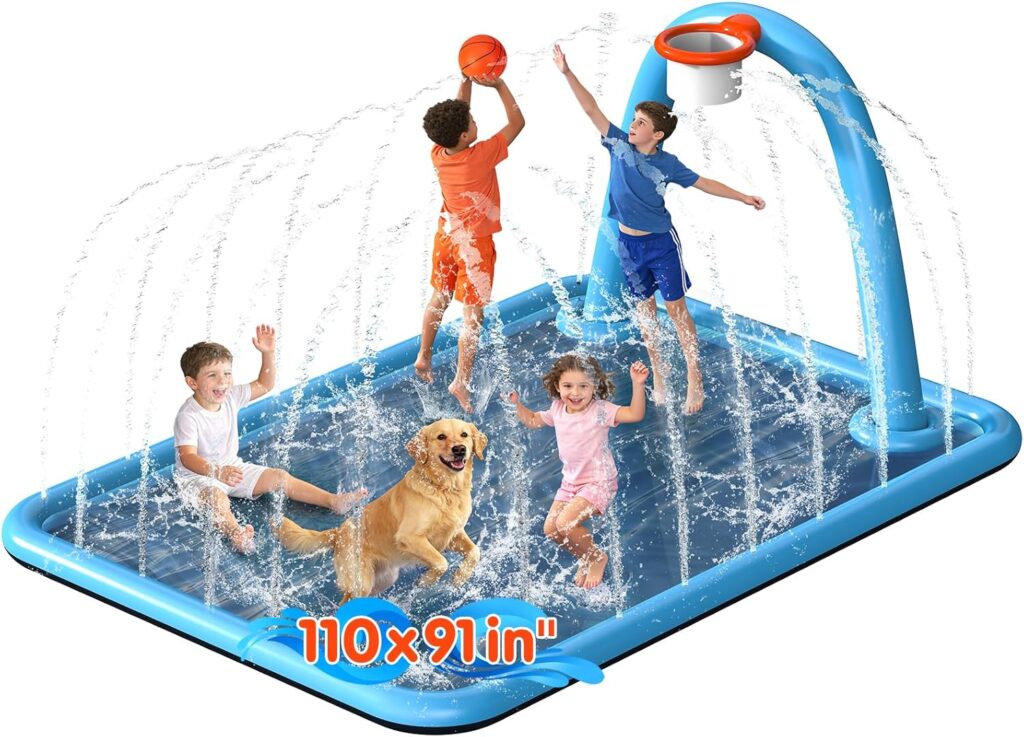
A kids splash pad can look fun before the hose is even connected. Bright colors, summer patterns, and water spraying from the edge all make it feel like an easy backyard win. But children judge a splash pad in a much simpler way. They step onto it with wet feet and decide whether it feels steady enough to trust. If the surface feels too slick, too wrinkled, too hard underneath, or too strong once the spray starts, they may step back before the fun really begins.
A comfortable kids splash pad usually has a lightly textured PVC surface, balanced material thickness, smooth sealed edges, flat ground placement, gentle water pressure, and enough room for children to stand, sit, and turn without crowding the spray edge. Water shoes can help on patio or warm ground, but comfort still depends on surface grip, setup, water flow, and close adult supervision.
For parents, comfort becomes more than a nice extra. A child who feels steady is more likely to walk in calmly, sit in the center, reach toward the spray, and stay engaged longer. The best kids splash pad does not only create water play. It helps children feel relaxed enough to enjoy it.
Kids Splash Pad Surface
The surface of a kids splash pad has a direct effect on how steady children feel. A lightly textured surface gives wet feet more contact, while a smooth glossy surface may feel slick once water spreads across it. A comfortable surface should feel gentle for bare feet but stable enough for standing, turning, sitting, and slow movement.
Kids Splash Pad Texture
Texture is one of the first details children notice, even if parents look at size and design first. A completely smooth splash pad may look clean in photos, but wet feet need grip. When water runs across the surface, a light texture gives children more contact points and helps reduce the sliding feeling that can happen on glossy PVC.
The best surface should not feel rough. Children do not only stand on a splash pad. They may sit, squat, crawl, kneel, or lean forward to touch the spray. If the surface is too abrasive, it can feel uncomfortable on knees and hands. A good kids splash pad surface should sit in the middle: textured enough to help with grip, but soft enough for barefoot summer play.
Parents can pay attention to surface close-ups when choosing a splash pad. Lifestyle photos are useful for size and scene, but a close view of the play surface tells more about real foot comfort. For EPN kids splash pads, surface feel is treated as part of daily use because children experience the product through touch before they care about product claims.
Surface comfort matters most when:
- A toddler steps in with wet feet for the first time
- A child sits or kneels in the center
- Siblings move around the spray edge together
- The splash pad is used on patio instead of grass
- Water pressure changes during play
Kids Splash Pad Grip
Grip is not only about the pattern on the surface. It also depends on water pressure, ground flatness, cleaning, and how children move. A textured kids splash pad can still feel slippery if it is placed on uneven ground, covered with soap residue, or used with too much water pressure.
Parents often ask how to make a splash pad less slippery. The most practical answer is to combine product choice with setup habits. Choose a light textured surface, place it on flat ground, remove stones and sticks, avoid soap, rinse after use, and start with lower water pressure before children step in.
Children also move differently by age. Toddlers often shuffle, squat, and sit without warning. Preschool children turn quickly and may step across the spray line. Older kids move faster and may need clear reminders to walk instead of run. A better surface helps, but wet play still needs simple rules and adult attention.
A comfortable kids splash pad should help children feel steady during normal movement. It should not rely only on parents saying “be careful” every few seconds.
Kids Splash Pad Water Shoes
Water shoes can be useful on a kids splash pad, especially when the pad is placed on patio, concrete, deck, or warm ground. Soft water shoes can add grip, protect feet from hot surfaces around the splash area, and help cautious children feel more confident when stepping into water.
The fit matters. Loose water shoes can twist around the foot and make movement harder. Very stiff shoes may feel awkward for toddlers who are still developing balance. The better choice is a flexible shoe with a secure fit and a soft sole.
Water shoes are helpful, but they should not be treated as the main safety feature. If the PVC surface is too glossy, the ground is uneven, or the spray pressure is too strong, shoes alone will not solve the problem. They work best together with a textured surface, flat setup, clean water, and adult supervision.
For families who use an EPN splash pad in different backyard areas, water shoes can be a useful backup. They are especially helpful when children step in and out often between grass, patio, towels, and the water play area.
Kids Splash Pad Material
Material affects how flat a kids splash pad lies, how stable it feels, and how well it handles repeated summer use. PVC thickness, flexibility, seam finish, and edge structure all influence comfort. A good material should feel soft enough for bare feet but stable enough to reduce wrinkles, shifting, and uneven lifting during play.

Kids Splash Pad PVC
PVC is widely used for splash pads because it is flexible, water-resistant, printable, and easy to fold for storage. But not all PVC feels the same under small feet. Thin PVC may be light and easy to pack, but it can wrinkle more easily, shift during movement, and feel less stable once water starts flowing.
A stronger PVC structure helps the splash pad feel more grounded. When the center lies flatter, children can step, sit, and turn with more confidence. This is especially important for families who want to use the splash pad repeatedly through summer, not just once for a weekend.
For EPN, PVC material selection is built around real use. Kids water toys need lower odor, softer touch, and sun-stable performance. Pet water products need stronger wear resistance. Winter products need cold-weather flexibility. That broader PVC experience helps EPN balance comfort, structure, and durability when developing kids splash pads.
Parents should look for PVC that feels:
- Flexible enough to unfold without stiff corners
- Stable enough to lie flat after setup
- Smooth around seams and edges
- Lightly textured on the play area
- Strong around the hose connector and outer ring
Kids Splash Pad Thickness
PVC thickness is one of the easiest specifications for parents to compare. For many family splash pads, a material range around 0.45–0.55 mm can offer a better balance of softness, stability, and foldability. This range gives the mat more weight, which helps the surface lie flatter and feel less flimsy underfoot.
Thickness alone does not decide comfort. A thick but stiff splash pad may feel less pleasant for sitting or kneeling. A thin but soft splash pad may fold easily but wrinkle too much during play. The real question is how the material behaves when the outer ring fills with water and children move across the center.
| Material Detail | What Parents May Notice | Comfort Impact |
|---|---|---|
| Thin PVC | Lighter and easier to fold | May wrinkle or shift more |
| 0.45–0.55 mm PVC | Flatter and more stable | Better for repeated standing |
| Very stiff PVC | Firm surface feel | May be less soft for sitting |
| Textured PVC | More foot contact | Helps reduce slickness |
| Reinforced edge | Better outer ring shape | Helps spray feel more balanced |
A kids splash pad should not feel like a thin sheet sitting loosely on the lawn. It should feel like a stable wet-play surface that can hold shape while children step, sit, and move.
Kids Splash Pad Wrinkles
Wrinkles can make a splash pad feel less comfortable even when the material looks fine. A raised fold under a child’s foot can feel awkward, especially when the surface is wet. Younger children often shuffle instead of lifting their feet high, so even small folds can affect movement.
Wrinkles usually come from thin material, uneven ground, tight storage, or turning on high water pressure too quickly. Parents can reduce wrinkles by spreading the splash pad fully before use, pulling the edges into shape, smoothing the center by hand, and starting with low water flow.
Storage also affects wrinkles. A wet splash pad folded tightly and left in heat may develop deeper creases and odor. After play, drain the water, rinse away grass or dirt, let the pad dry, and fold it loosely. This simple routine helps the next setup feel smoother and cleaner.
For families, fewer wrinkles mean fewer moments where children stop and look down at their feet. That small improvement can make water play feel more natural.
Kids Splash Pad Setup
Setup can make a good kids splash pad feel better or worse. The ground underneath affects softness, heat, grip, wrinkles, and balance. Flat grass usually feels more comfortable for young children, while patio use needs closer attention to heat, surface hardness, water spread, and slipping around the play area.
Kids Splash Pad on Grass
Grass is usually the most comfortable surface for a kids splash pad because it adds natural cushioning under the mat. When the lawn is flat and clean, children feel a softer base under their feet, knees, and hands. This is helpful for toddlers and preschool children who sit down often during water play.
Still, grass should be checked before setup. A green lawn can hide stones, roots, small toys, sprinkler heads, garden clips, and sharp sticks. These can create bumps under the splash pad and make the surface feel uneven.
Before turning on the hose, parents should check:
- Is the ground flat?
- Are there stones, sticks, roots, or toys underneath?
- Is the hose away from the walking path?
- Is there enough room for an adult to stand close?
- Are towels and shoes placed outside the wet area?
Space around the splash pad matters too. Children need room to enter and exit safely. Adults need space to supervise. A splash pad that barely fits between outdoor furniture, fences, or garden tools may not feel comfortable even if the product itself is well designed.
Kids Splash Pad on Patio
A kids splash pad can be used on patio, but patio setup needs more care. Concrete, stone, tile, and deck surfaces are harder than grass. They may also become hot under direct sun. Once water spreads outside the splash pad, the surrounding patio can become slippery.
Parents should avoid rough concrete, cracked stone, raised tile lines, splintered decking, or sharp patio edges. Hard points underneath the splash pad can affect comfort and may increase wear over time.
A clean, flat, shaded patio can work well when the setup is controlled. Start with low water pressure, keep children from running, and use flexible water shoes if the surface feels warm or hard. Patio play may be better for older children than very young toddlers because falls on hard ground can feel more serious.
Grass usually gives a softer first experience. Patio can still be practical, but it asks more from the setup.
Kids Splash Pad Less Slippery
A less slippery kids splash pad starts with the right surface and continues with daily habits. Many slipping problems come from things parents can control: uneven ground, soap, sunscreen residue, mud, too much water pressure, or children running across the wet surface.
| Step | What to Do | Why It Helps |
|---|---|---|
| Choose flat ground | Use flat grass when possible | Adds cushioning and balance |
| Clear the area | Remove stones, sticks, and toys | Reduces bumps and tripping |
| Smooth the pad | Flatten before adding water | Helps reduce wrinkles |
| Start low | Open the faucet slowly | Prevents sudden high spray |
| Avoid soap | Use clean water only | Soap makes PVC slick |
| Rinse after use | Remove grass, mud, and residue | Helps maintain surface grip |
| Dry before storage | Let both sides dry | Reduces odor and film |
Parents can also set a few simple play rules. Walk on the splash pad. Sit in the center if the spray feels strong. Do not pull the hose. Step out slowly. These rules are easy for children to understand and help the product feel more comfortable in daily use.
Kids Splash Pad Water Flow
Water flow changes how a kids splash pad feels underfoot. High pressure can make the spray exciting, but it may also make the outer ring too firm or the surface feel too active. Lower pressure helps younger children enter calmly. Even spray around the edge helps the play area feel more balanced.
Kids Splash Pad Pressure
Water pressure is one of the easiest comfort controls parents have. A faucet opened too far can make spray rise suddenly, which may surprise younger children. The outer ring may also become firmer, and more water can move across the center.
Starting with low water pressure is usually better. Parents can let the splash pad fill slowly, watch the spray height, and see how the child reacts. If the child steps in calmly, sits down, or reaches toward the water, the pressure is probably comfortable. If the child backs away or shields the face, lower pressure may help.
| Child Age | Better Starting Flow | Comfort Goal |
|---|---|---|
| Around 1 year old | Very low spray | Gentle water contact |
| Toddlers | Low spray | Easy stepping and sitting |
| Preschool children | Low to medium spray | Confident movement |
| Older kids | Medium spray with supervision | More active play |
Higher spray does not always mean better play. For many families, the most enjoyable splash pad session starts gently and builds only when children want more.
Kids Splash Pad Spray
Even spray makes a kids splash pad feel more predictable. If one side sprays much higher than another, children may avoid that area or feel unsure about stepping through the water. Uneven spray can also make the outer ring feel unbalanced.
Uneven spray may come from a loose hose connection, folded edge, blocked spray holes, uneven ground, or water pressure that is too low or too high. Before children step in, parents can look around the full ring and check whether the spray pattern looks balanced.
A well-designed kids splash pad should move water through the edge smoothly. The spray does not need to be very high. It needs to feel steady. When the water pattern is predictable, children can decide where to stand, where to sit, and when to move closer to the spray.
EPN splash pad design pays attention to edge stability and water distribution because water flow affects more than appearance. It changes how the product feels during real backyard use.
Kids Splash Pad Comfort
Comfort is the result of several small details working together. A thick splash pad can still feel uncomfortable on rough patio. A textured surface can still feel slippery if soap is used. A large splash pad can still feel unstable if the ground slopes to one side.
Parents can judge comfort by watching how children behave during the first few minutes. Do they step in calmly? Do they sit without sliding? Do they move naturally? Do they return after stepping out? Children often show comfort through body language before they explain it with words.
A comfortable kids splash pad should make play feel easy. Children should not have to fight the surface, dodge uneven spray, or step over raised folds. When the surface, material, setup, and water flow work together, the play experience feels more relaxed for both children and parents.
Kids Splash Pad Safety
A kids splash pad usually has much shallower water than a pool, but it is still a wet play area. Safety depends on age fit, surface grip, water pressure, ground setup, child behavior, and adult supervision. A comfortable splash pad can help children feel steadier, but adults still need to stay close during every session.
Kids Splash Pad vs Pool
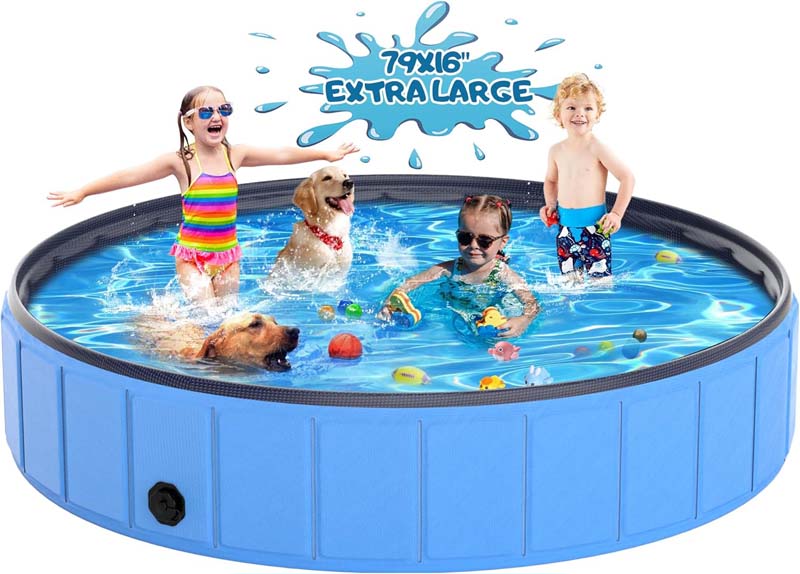
Parents often ask whether a kids splash pad is safer than a pool. In terms of water depth, a splash pad is usually much shallower and is designed for spray play instead of swimming. That can make it feel more approachable for younger children and easier for parents to set up in the backyard.
But shallow water does not remove all risk. Splash pads have different concerns, especially slipping, falling, strong spray, rough ground, and children running on wet surfaces. A pool requires swimming and water-depth supervision. A splash pad requires wet-surface and movement supervision.
| Factor | Kids Splash Pad | Pool |
|---|---|---|
| Water depth | Very shallow | Deeper water |
| Play style | Standing, sitting, spray play | Swimming, floating, wading |
| Main concern | Slipping or falling | Water depth and drowning risk |
| Setup | Hose and flat ground | Filling, draining, pool rules |
| Supervision | Always needed | Always needed |
| Best fit | Short backyard cooling | Longer water activity |
For many families, a splash pad is a lighter and easier way to cool down in summer. It can be a good alternative to deeper water play, but it still needs close supervision.
Kids Splash Pad for Toddlers
Toddlers need a gentler splash pad setup because their balance is still developing. They may sit suddenly, turn quickly, or react strongly when water hits the face. A toddler-friendly setup should use low spray, flat grass when possible, and enough center space for sitting.
Short play sessions usually work best at first. A 10- to 20-minute session can be enough for younger children, especially on hot days. Parents can pause, offer drinking water, check comfort, and decide whether to continue.
Comfort is different by age:
- 1-year-olds need very low spray and short sessions
- Toddlers need soft ground and close adult support
- Preschool children need space to turn and sit
- Older kids need clear walking rules because they move faster
A calm first experience matters. If the first few minutes feel too loud, too slippery, or too strong, a toddler may not want to try again. Starting slow helps children build trust in the play area.

Kids Splash Pad for 1 Year Olds
For 1-year-olds, parents should always check the recommended age range first. Some kids splash pads are not designed for very young children. Even when the age range allows use, the setup should be soft, slow, and closely supervised.
A 1-year-old may not want to stand in the middle right away. They may prefer sitting near the edge, touching the water with one hand, or watching the spray from a parent’s lap. That still counts as a good first water-play experience.
For very young children, low water pressure, shallow water, soft ground, and short play time are important. An adult should stay within reach at all times. If the child stiffens, cries, slips, or tries to crawl away quickly, the spray should be lowered or the session should stop.
A kids splash pad can be a gentle summer activity for very young children only when the product fit, setup, and supervision match the child’s age and movement ability.
Kids Splash Pad Buying Checks
Before choosing a kids splash pad, parents should check size, surface texture, PVC thickness, seam finish, age range, hose connection, spray control, and setup surface. The best option is not always the biggest or brightest design. It is the one that fits the child, yard, water pressure, and expected summer use.
Kids Splash Pad Size
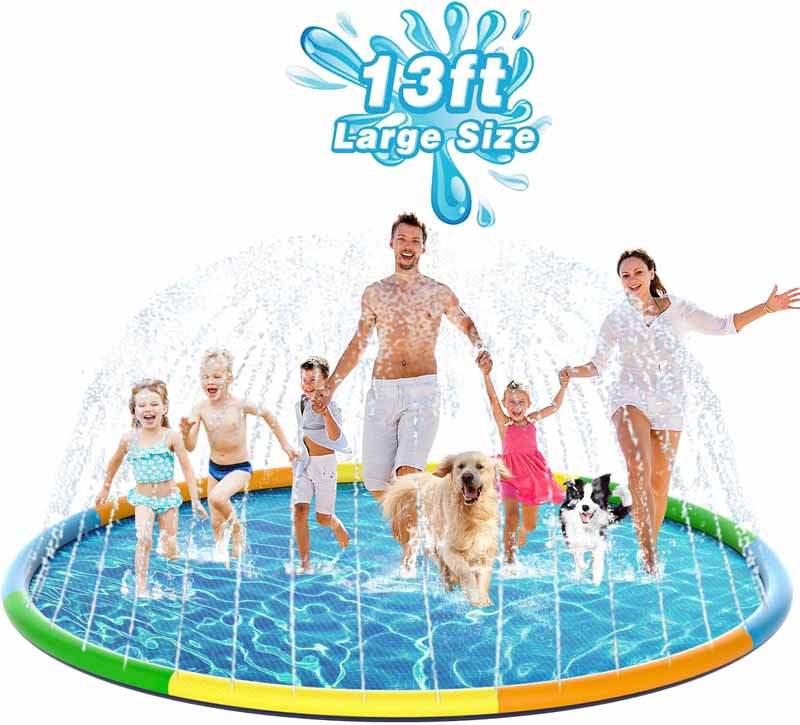
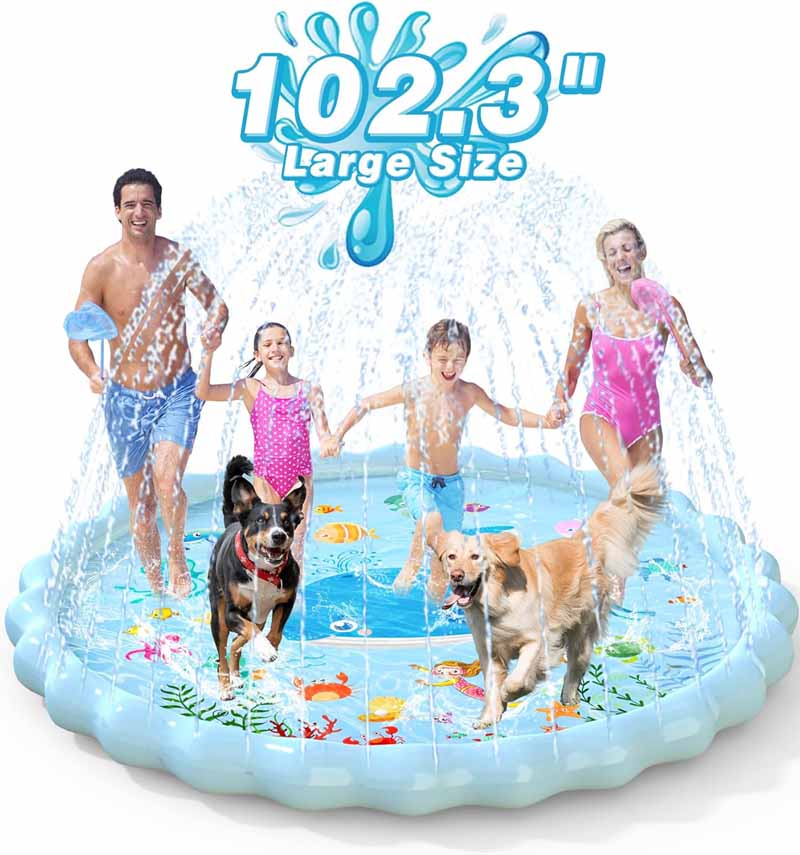
Size affects comfort because children need room to stand, sit, turn, and move away from the spray edge. A small splash pad may work for one toddler, but it can feel crowded when siblings join. A larger size gives children more usable center space and makes the play area feel less cramped.
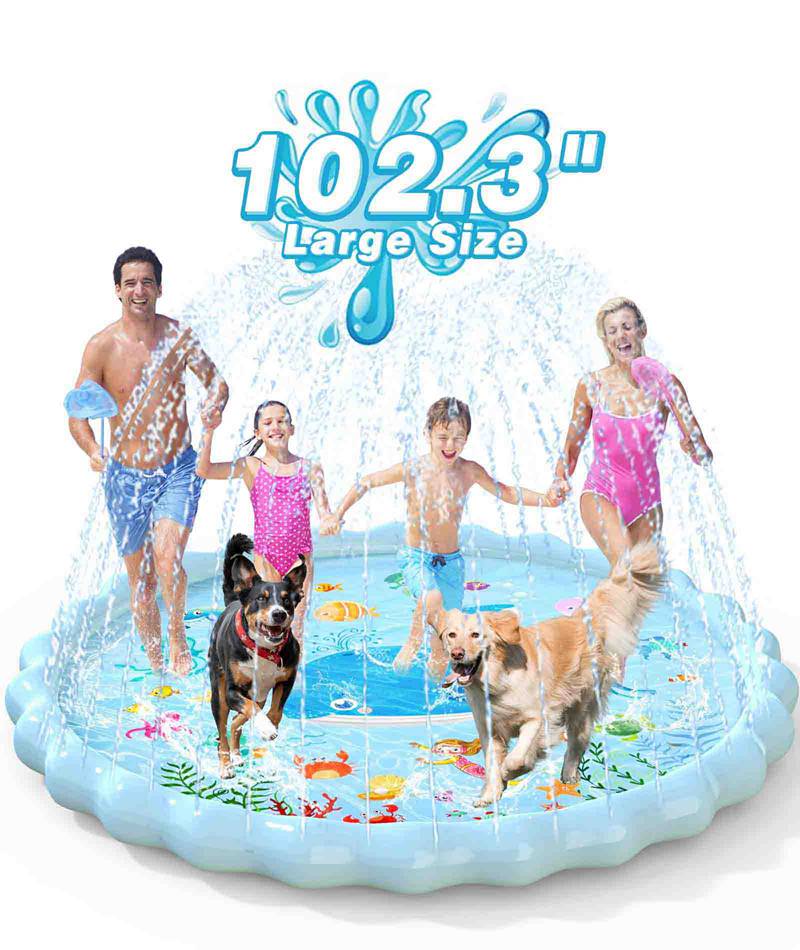
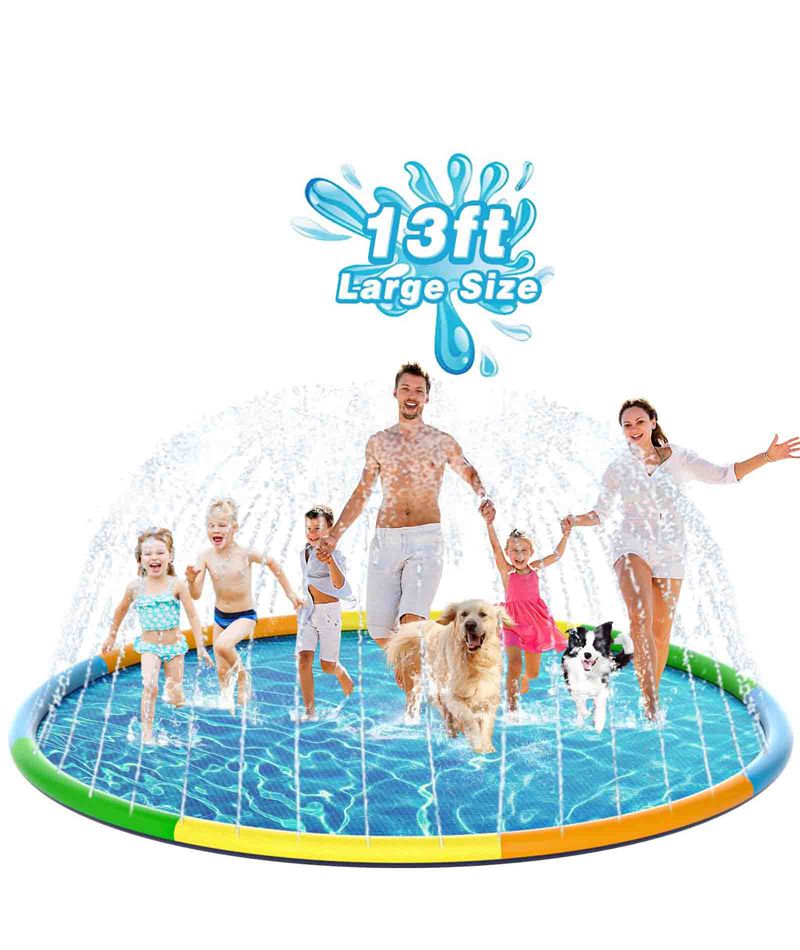
Many families prefer a kids splash pad around 90 inches or larger for shared backyard play. A larger diameter gives children more space to sit in the center and avoid stronger spray when needed. However, bigger also requires more flat ground and more setup space.
Parents should measure the yard before ordering. Leave room for the hose, towels, shoes, and an adult standing nearby. A splash pad that barely fits into a narrow corner will not feel as comfortable as one placed in an open, clear area.
Kids Splash Pad Seams
Seams affect both comfort and durability. Children may step on seams, sit near the edge, or brush against the outer ring during play. Smooth sealed seams reduce rough contact and help the splash pad feel more finished under bare feet.
The outer ring is especially important because it carries water and controls spray direction. If the ring twists, lifts, or fills unevenly, the play area can feel less stable. A stronger outer edge helps the spray stay balanced and helps the mat hold shape during use.
EPN focuses on details such as edge sealing, connector strength, water distribution, and repeated-use stability. These details may not be the first thing parents notice, but they often decide whether the splash pad still feels comfortable after repeated summer play.
Kids Splash Pad Specs
Clear product specifications help parents avoid disappointment. A good kids splash pad should make the important details easy to understand: material, thickness, diameter, surface texture, age range, hose connection, setup surface, and care instructions.
| Buying Check | Better Choice | Why It Matters |
|---|---|---|
| Surface | Light textured PVC | Helps wet feet feel steadier |
| Thickness | Around 0.45–0.55 mm | Supports flatter standing |
| Size | Around 90 inches or larger | Gives children more room |
| Ground fit | Works well on flat grass | Adds natural cushioning |
| Spray control | Adjustable through faucet | Helps children start gently |
| Seams | Smooth sealed edges | Reduces rough contact |
| Connector | Secure hose connection | Helps keep spray steady |
| Care | Drain, rinse, dry, fold loosely | Keeps the surface cleaner |
A well-made kids splash pad should make the key comfort details clear before parents place an order. It should show how the surface feels, where it can be used, how to reduce slipperiness, and what age range is suitable.
Kids Splash Pad Care
A kids splash pad can feel more comfortable for longer when it is cleaned, dried, and stored correctly. Poor care can lead to odor, residue, deeper creases, and a slicker surface. Simple habits after each use help the surface stay cleaner, smoother, and easier to set up next time.
Kids Splash Pad Cleaning
After play, parents should drain the splash pad and rinse away grass, dirt, sunscreen residue, and small debris. Clean water is usually enough for daily care. Soap should not be used during play because it can make the PVC surface slippery.
If the splash pad has been left outside, rinse it before children use it again. Dust, pollen, leaves, and yard debris can collect on the surface and affect grip. A clean surface feels better underfoot and helps children move with more confidence.
The underside also matters. Dirt trapped underneath can press into the mat during storage or transfer back onto the top surface later. A quick check before folding can help keep the next setup cleaner.

Kids Splash Pad Storage
Storage affects how the splash pad feels when opened again. Folding a wet splash pad tightly can create odor, surface film, and deeper creases. Leaving it in direct heat may make folds harder to flatten during the next use.
The best routine is simple. Drain fully, rinse the surface, let both sides dry, fold loosely, and store in a cool dry place. Keep the splash pad away from sharp tools, heavy boxes, and direct heat.
A dry splash pad usually opens more easily and feels fresher during the next session. For families using it several times a week, this small habit can make summer play smoother.
Kids Splash Pad Lifespan
Comfort should last beyond the first setup. A kids splash pad may wear faster if it is dragged while full, placed over sharp ground, stored wet, or used with very high water pressure. Product quality matters, but daily handling also affects lifespan.
Common causes of early wear include sharp stones under the mat, rough patio surfaces, strong water pressure, tight wet storage, and children jumping hard near the seams. Parents can reduce wear by clearing the ground, starting with low pressure, draining before moving, and drying before storage.
EPN develops PVC and composite outdoor products with repeated use in mind. For kids splash pads, that means attention to surface feel, seam strength, water flow, folding, and real backyard handling. A better splash pad should feel comfortable on day one and continue to feel reliable across many summer afternoons.
Kids Splash Pad FAQ
Kids Splash Pad Comfort
A kids splash pad feels comfortable when the surface has light texture, the PVC lies flat, the seams are smooth, the ground underneath is even, and the spray starts gently. Comfort is not only softness. It is the feeling that children can stand, sit, and move without the surface sliding under them.
Kids Splash Pad Water Shoes
Water shoes can be helpful on splash pads, especially on patio, concrete, deck, or warm ground. They can add grip and protect feet outside the water area. Choose flexible shoes that fit securely. Loose or stiff shoes may make movement harder for toddlers.
Kids Splash Pad Less Slippery
To make a kids splash pad less slippery, use flat ground, remove debris, smooth the surface before filling, avoid soap, start with low pressure, and rinse the pad after use. A textured PVC surface is also important. On hard ground, water shoes may help.
Kids Splash Pad vs Pool
A kids splash pad usually has much shallower water than a pool, which can reduce some water-depth concerns. However, it still needs adult supervision because children can slip or fall on wet surfaces. Splash pads and pools have different risks, so setup and supervision matter in both cases.
Kids Splash Pad for 1 Year Olds
Parents should check the recommended age range before using a splash pad with a 1-year-old. If suitable, keep water pressure very low, use soft flat ground, keep sessions short, and stay within reach. Very young children may prefer touching the water from the edge before sitting or standing inside.
Kids Splash Pad on Grass
Flat grass is usually one of the most comfortable surfaces for a kids splash pad because it adds cushioning under the mat. Parents should still remove stones, sticks, roots, toys, and sprinkler heads before setup. Uneven grass can create bumps and wrinkles.
Order EPN Kids Splash Pads or Request a Custom Quote
A comfortable kids splash pad should make summer water play easier for families. It should feel steady under wet feet, soft enough for barefoot standing, simple to set up, and strong enough for repeated backyard use. For parents, that means fewer surprises after delivery and more relaxed play at home.
EPN, under American Epsilon Inc., develops PVC and composite outdoor products for children, pets, family recreation, and seasonal use. The product range includes kids splash pads, pet splash pads, inflatable pools, dog pools, sprinkler toys, snow tubes, pool pillows, and other outdoor leisure items.
Families can choose EPN kids splash pads for backyard summer play. Customers who need a custom splash pad can contact Epsilon for support with size, PVC thickness, surface texture, spray layout, artwork, color, packaging, labels, and delivery planning.
A better splash pad starts with the details children notice first: how the surface feels, how the spray lands, and whether they have enough room to move. To order EPN kids splash pads or request a custom quotation, contact Epsilon with the target size, quantity, market, packaging preference, and expected delivery schedule.
Get A Fast quote
Here, bringing your inflatable concepts to life is no longer a challenge—it’s a collaborative journey where American Epsilon helps families, outdoor enthusiasts, and global brands transform creative ideas into safe, certified, and market-ready inflatable solutions.


Partner With Epsilon
Whether you are a family looking for safe backyard fun or a brand seeking large-scale OEM/ODM solutions, American Epsilon Inc. guarantees every inflatable is built with safety, durability, and excitement in mind. With flexible low MOQs, strategically placed warehouses in the U.S., Canada, U.K., and Germany, plus 24/7 professional support, we ensure smooth delivery and reliable service worldwide.
Ready to bring your inflatable ideas to life? Request free samples, fast prototypes, and customized designs today—your trusted inflatable journey starts here.