Skip to content
Kids Splash Pad vs Sprinkler Toy : Which Is Better for Backyard Water Play?
# Your Trusted Inflatable Supplier In US

A backyard water toy looks simple until parents actually have to use it. The hose has to fit. The spray has to feel gentle enough for younger children. The surface cannot feel too slippery. The material needs to survive more than one hot weekend. The toy also has to drain, dry, fold, and store without becoming a wet mess in the garage. That is why the choice between a kids splash pad and a sprinkler toy is not only about which one looks more exciting in photos. It is about how children play, how much space the yard has, how easy setup feels, and whether the item can handle repeated summer use.
For most younger children, a kids splash pad is usually the better all-around backyard water toy because it creates a clear shallow play area, supports sitting and stepping play, and allows parents to control spray height through hose pressure. A sprinkler toy is often better for older, more active children who enjoy running, chasing water, and playing fast lawn games.
The best choice depends on age, yard surface, water pressure, PVC thickness, seam quality, spray style, drying time, and storage space. A splash pad may feel calmer and more controlled. A sprinkler toy may feel faster and more energetic. Both can be fun, but the right one is the one parents will actually set up again next weekend.

What Is a Kids Splash Pad?
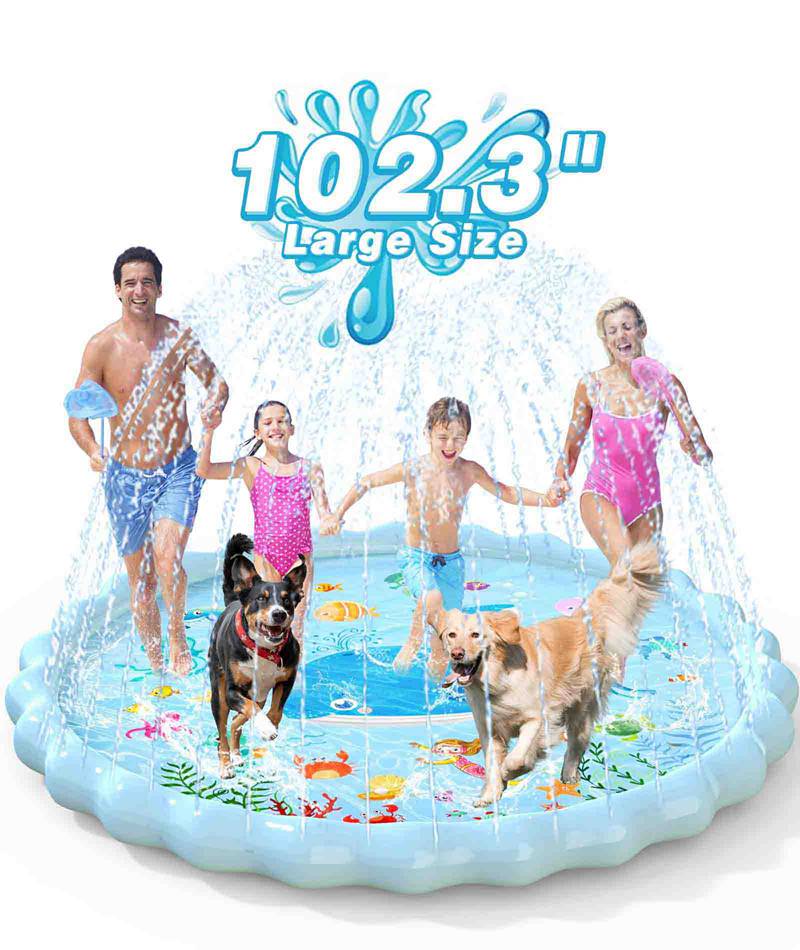
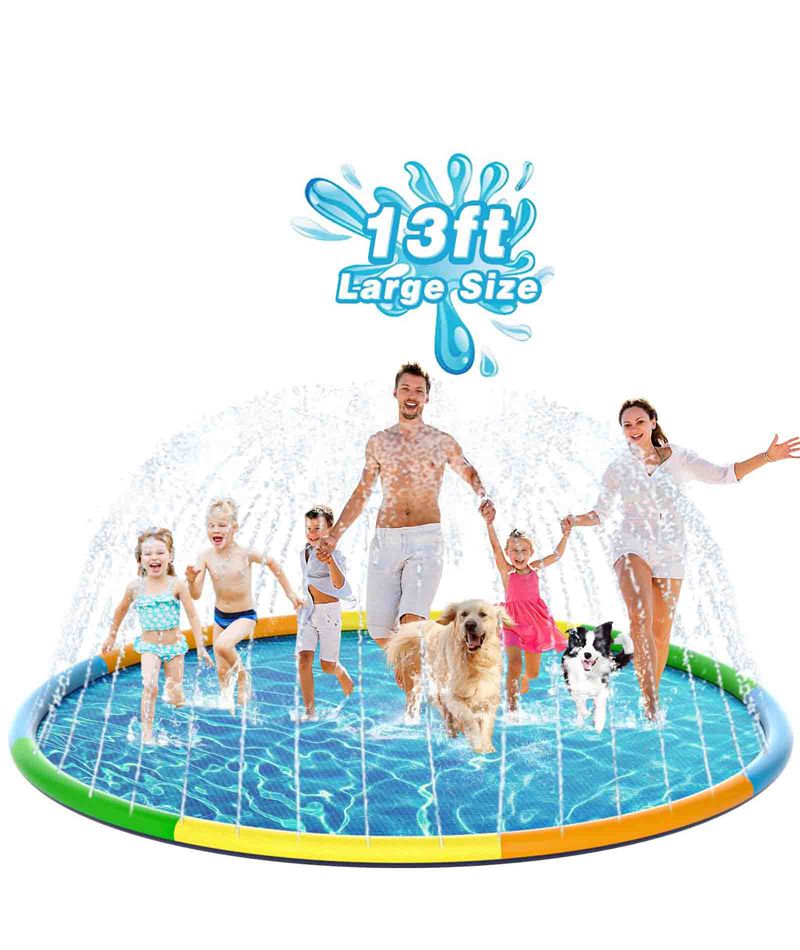
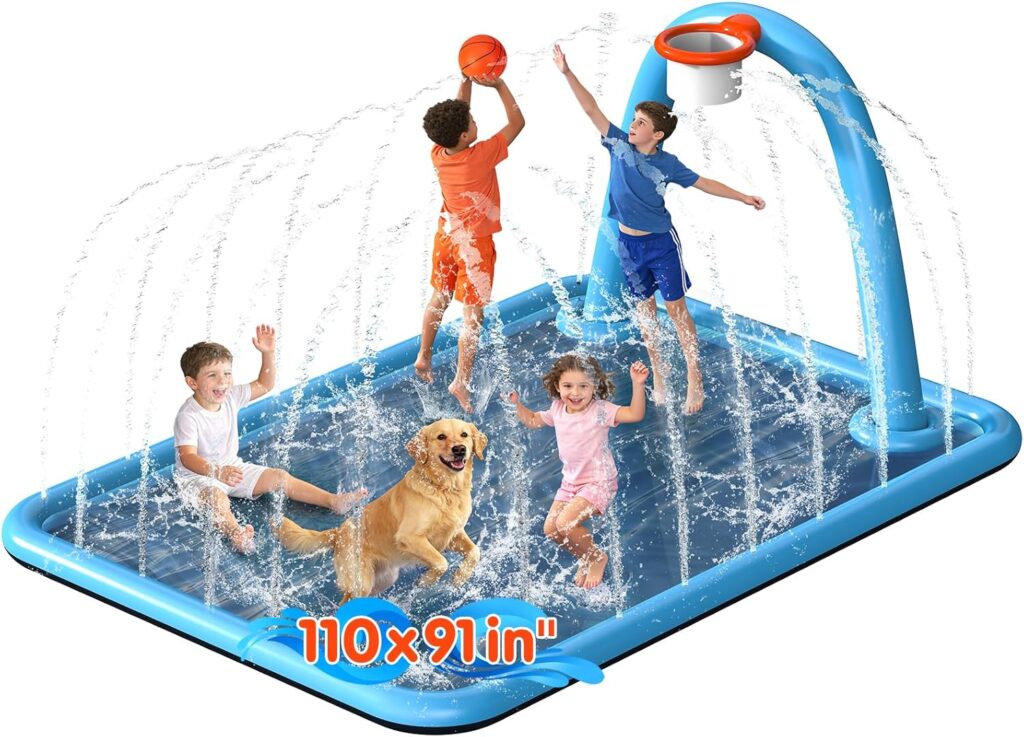
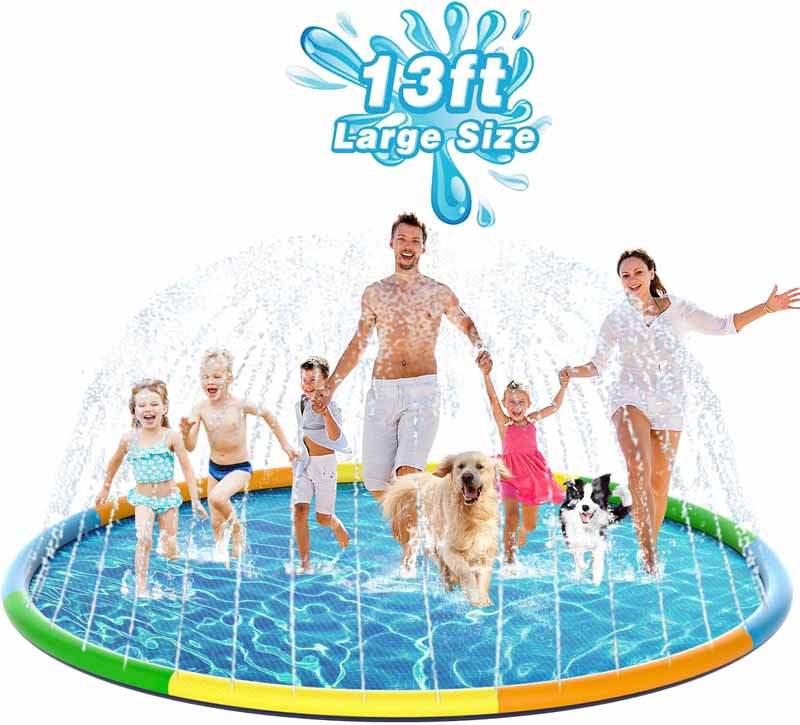
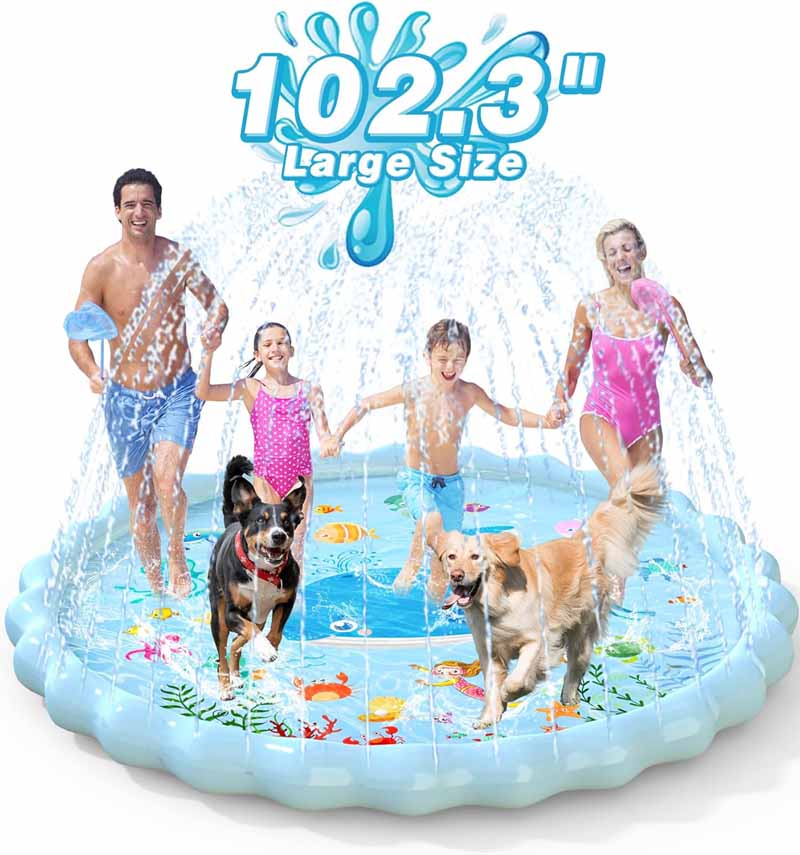
A kids splash pad is a flat water play mat that connects to a garden hose and sprays water from small holes around the outer rim. It usually holds only a shallow layer of water, so it works well for toddlers, preschool children, and family backyard cooling. Compared with a sprinkler toy, a kids splash pad gives children a more defined play zone.
Kids Splash Pad Basics
A kids splash pad usually includes a flat PVC play surface, an outer water-filled edge, a hose connector, and small spray holes placed around the rim. When water enters through the hose connector, the outer edge fills first. As pressure builds, water sprays through the small holes and creates a ring of water around the play area.
Most home splash pads can be set up in about 3 to 5 minutes after the ground is cleared. The process is simple enough for normal weekday use, not only for weekend parties.
A practical setup usually includes:
- Clear the grass or patio surface before unfolding.
- Remove stones, sticks, hard roots, and sharp toys.
- Unfold the splash pad fully so the rim lies flat.
- Connect the garden hose firmly.
- Start with low water pressure.
- Raise the pressure slowly until the spray height feels comfortable.
- Let children enter only after the surface is wet and stable.
The biggest advantage is control. Parents can make the spray low for toddlers or slightly higher for older children. A gentle spray of about 12 to 24 inches is usually enough for younger children. A higher spray of around 24 to 36 inches may feel more exciting for active children, depending on hose pressure and splash pad design.
A kids splash pad also creates a visible play boundary. Children can see where the water area begins and ends. That matters in smaller yards because it helps parents keep water play away from steps, sharp garden edges, patio furniture, or slippery walkways.
For EPN, a splash pad is not only a printed mat with water holes. It is a PVC water-play structure that needs stable water flow, strong edge sealing, reliable hose connection, low-odor material, and enough flexibility for folding after use.
Spray Pad vs Splash Pad
A spray pad and a splash pad are often used as similar names, but the play experience can be different. A spray pad usually focuses on water spraying upward. A splash pad usually gives children a surface where they can stand, sit, step, splash, and play with shallow water while spray rises around them.
At home, a kids splash pad is normally connected directly to a garden hose. Water enters the rim, sprays while the hose is on, and drains away after use. It does not need pool chemicals, pumps, deep filling, or long maintenance. That makes it practical for families who want shorter summer play sessions.
A sprinkler toy is different because it is mainly built around water movement. It may spin, wiggle, shoot, arch, or spray from one raised point. It can feel more exciting, but it does not always provide a comfortable play surface. Children usually run around it instead of staying inside one clear water zone.
The difference matters because children play differently by age.
| Play Type | Kids Splash Pad | Sprinkler Toy |
|---|---|---|
| Sitting play | Works very well | Not the main use |
| Toddler stepping | Easy to control | Depends on spray strength |
| Running games | Works for light movement | Better for active play |
| Clear play boundary | Easy to see | Less defined |
| Shallow water play | Main advantage | Not designed for this |
| High-energy play | Better in larger sizes | Usually more exciting |
A splash pad feels more like a small water play area. A sprinkler toy feels more like a moving water game. Parents should choose based on how their children actually play, not only on which toy looks more dramatic.
Kids Splash Pad Ages
A kids splash pad is often most useful for toddlers, preschool children, and younger elementary-age children. Children around 2 to 5 years old usually enjoy simple water actions: sitting, stepping, touching spray, filling a small cup, and watching water rise from the edge. Children around 5 to 8 may still enjoy a splash pad, especially if it is larger or has stronger spray.
For toddlers, low spray is important. Water hitting the face too suddenly can make a child nervous. Starting with soft hose pressure helps children enter the water at their own pace. Parents can increase the spray height after children feel comfortable.
For older children, a splash pad may need more space and better spray performance. A small 60-inch splash pad may feel too limited for two active children. A larger 80-inch to 100-inch size gives children more room to move, step, and play together.
A simple age guide can help:
| Child Age | Better Fit | Reason |
|---|---|---|
| 1–2 years | Gentle splash pad with close adult support | Shallow, slow, easy to approach |
| 3–5 years | Kids splash pad | Good for stepping, sitting, and soft spray |
| 6–8 years | Larger splash pad or sprinkler toy | More movement and shared play |
| 8+ years | Sprinkler toy or game-style water toy | More active running and chasing |
No water toy should be treated as hands-off play. Even shallow water needs adult attention. The safest setup is close supervision, low pressure at the start, clear ground, and a few simple rules before children begin playing.
Kids Splash Pad Uses
A kids splash pad can serve several backyard needs. It can be used for hot afternoon cooling, toddler water play, sibling play, weekend playdates, birthday activities, or light pet-and-family water fun when the design is suitable. It gives families a water activity without the filling time and maintenance of a pool.
A splash pad becomes more valuable when it is easy enough to use often. If setup takes 20 minutes or drying becomes frustrating, families may stop using it. A good splash pad should fit into normal family life.
Families usually care most about:
- Quick unfolding before play
- Easy garden hose connection
- Adjustable spray through water pressure
- Comfortable surface for wet feet
- Fast drainage after play
- Full drying before folding
- Compact storage in a garage, shelf, or closet
- Enough strength for repeated summer use
Repeat use is where better materials matter. Thin PVC may work for a few light sessions, but repeated folding, sun exposure, water pressure, and child movement can quickly reveal weak seams or poor connectors. EPN focuses on PVC and composite materials because family water toys need a balance of softness, flexibility, strength, and stable sealing.
A splash pad is best for families who want controlled water play, especially for younger children. It gives children a place to play rather than only a spray to chase.

What Is a Sprinkler Toy?
A sprinkler toy is a garden-hose water toy that sprays, spins, wiggles, arches, or shoots water into the air. It is usually built for movement and running games. Compared with a kids splash pad, a sprinkler toy can feel more exciting for older children, but it may offer less surface control, less shallow water play, and more slipping or tripping risk if children run too fast.
Sprinkler Toy Basics
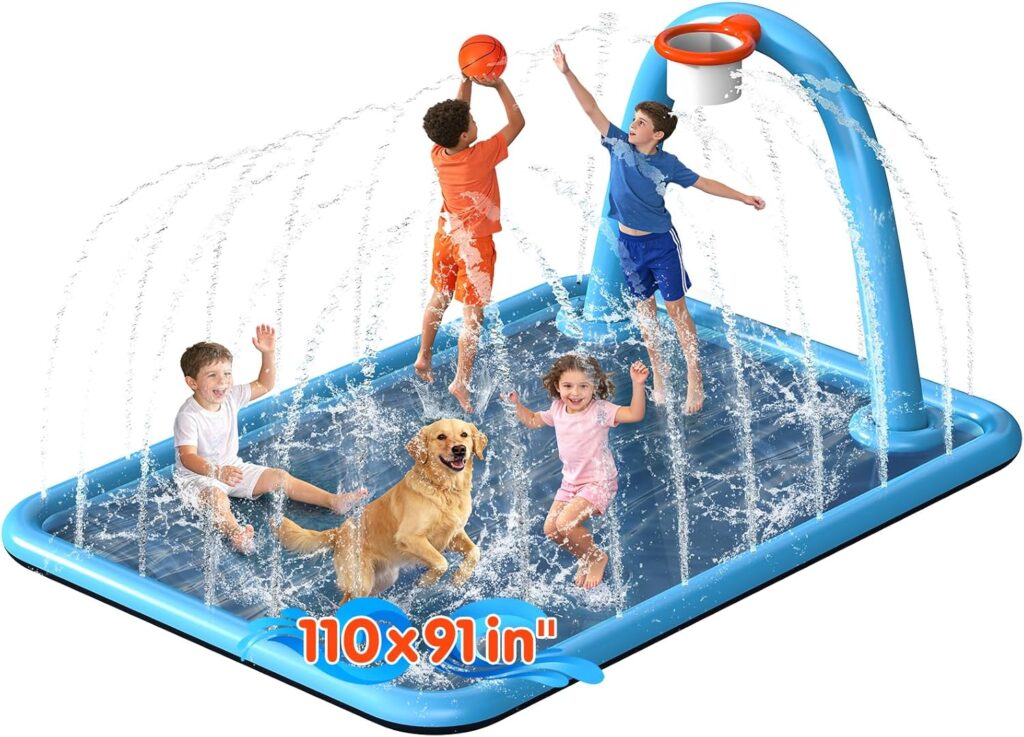
A sprinkler toy usually connects to a garden hose and uses water pressure to create spray movement. Some designs are simple, like a plastic sprinkler head shaped for children. Others use inflatable arches, flexible tubes, spinning parts, animal shapes, sports targets, or water tunnels.
The setup is often quick. Parents connect the hose, turn on the water, and adjust pressure. However, sprinkler toys can be more sensitive to water pressure than splash pads. If the pressure is too low, the spray may collapse. If the pressure is too high, the spray may hit children in the face or push lightweight parts out of position.
A sprinkler toy works best on open grass. Children need room to run through the spray, turn around, and slow down safely. The play area can become larger than expected because children rarely stay in one place. A toy that is only 2 feet wide can create a 10-foot or 15-foot running zone once children start playing.
Sprinkler toys are often fun, compact, and affordable. Their weak point is usually structure. Small tubes, thin connectors, spinning pieces, and raised plastic parts may wear out faster if children pull them, step on them, or drag them across the lawn.
Sprinkler Toy Spray Style
Sprinkler toys win attention through spray style. A toy may spray straight up, fan outward, spin in circles, wave flexible tubes, or create an arch children can run under. That movement makes the experience feel different from a splash pad.
The main spray styles include:
| Spray Style | Play Feel | Best For |
|---|---|---|
| Upward spray | Simple and predictable | Younger children with low pressure |
| Spinning spray | Fast and playful | Active children |
| Wiggling tubes | Silly and energetic | Children who like movement |
| Water arch | Run-through play | Older children and parties |
| Target spray | Game-style play | Sports-themed backyard games |
Spray style should match age. A toddler may enjoy a soft upward spray but dislike a fast spinning stream. An older child may find a gentle splash pad too quiet but enjoy racing through an arch or chasing a moving spray tube.
Water pressure control is important. A sprinkler toy should work at medium pressure, not only at full pressure. Full pressure can waste water, make the spray uncomfortable, and cause small parts to shift. Parents should test the spray before children start running through it.
A sprinkler toy also needs smart placement. If it sprays outward, water may hit windows, fences, patio furniture, or walkways. A splash pad usually keeps more water inside a defined zone, while a sprinkler toy may spread water farther across the yard.
Sprinkler Toy Fun Factor
A sprinkler toy can feel more exciting than a splash pad because it turns water into a chase game. Children run, jump, dodge, and laugh when the spray moves. For families with older children, that energy can be the main reason to choose a sprinkler toy.
It works especially well for:
- Backyard races
- Water obstacle courses
- Summer parties
- Kids who already enjoy lawn sprinklers
- Children who prefer running over sitting
- Larger grass areas with open space
- Sports-style outdoor play
- Short high-energy cooling breaks
A sprinkler toy can also be easier to combine with other outdoor games. Children can run through the spray before kicking a ball, chasing bubbles, or playing a simple relay game. That makes it a good choice for high-energy play.
The trade-off is control. More movement can mean more slipping, more hose pulling, and more sudden direction changes. Children may close their eyes while running through spray. They may also collide if several kids run through the same narrow spray path.
Parents should not judge fun only by spray height. A lower, wider spray can be better than a tall, sharp spray because children can move through it comfortably. The best sprinkler toy is not always the one with the highest water stream. It is the one children can enjoy safely for more than a few minutes.
Sprinkler Toy Limits
A sprinkler toy has limits that may not be obvious before use. First, it may not hold attention for younger children if there is no place to sit or explore. Some toddlers prefer touching water gently instead of running into moving spray.
Second, it can create a muddy play area if used too long in the same spot. Water sprays into the grass, children run through it, and the lawn becomes slippery. A splash pad can also wet the grass, but water is usually more concentrated around the play surface.
Third, sprinkler toys often have more stress points. A hose connector, rotating head, flexible tube, inflatable upright, or small plastic joint can fail if handled roughly. Children naturally grab water toys, especially moving parts. A design with more moving pieces needs stronger construction.
Sprinkler toy limits often show up in daily use:
- Less suitable for cautious toddlers
- More likely to encourage running
- Hose may become a trip point
- Moving parts may wear faster
- Spray may feel too strong at high pressure
- Water may spread outside the intended play area
- Smaller parts may be harder to dry completely
A sprinkler toy is a strong choice for active play. It is not always the best first water toy for toddlers, small patios, narrow yards, or children who prefer calm play.

Which One Is Safer?
A kids splash pad is often easier to manage for younger children because it creates a shallow and visible play area. A sprinkler toy can be safe when used correctly, but it often encourages faster running and wider movement. The safer choice depends on supervision, ground surface, spray height, hose placement, water hygiene, and how children behave around water.
Kids Splash Pad Safety
A kids splash pad can feel safer than a small pool because it does not hold deep water. Most home splash pads create only a shallow water layer, often less than 1 inch when placed on level ground. That shallow design is useful, but it does not remove risk. Wet surfaces, water spray, and excited children still need close adult attention.
The safest setup begins before turning on the water. Parents should check the ground, remove sharp objects, and make sure the splash pad lies flat. A folded corner or raised wrinkle can become a trip point. The hose should stay outside the main play path.
Safe setup checklist:
- Use flat grass when possible.
- Remove stones, sticks, sharp roots, and toys from the ground.
- Keep the splash pad away from steps, walls, furniture, and garden tools.
- Start with low water pressure.
- Keep spray below face height for younger children.
- Do not allow running across the mat.
- Do not let children pull the hose or bite spray holes.
- Drain the splash pad after play.
Parents should also check the material. A low-odor PVC surface is more comfortable for children who sit close to the mat. A textured surface can help wet feet feel more supported than a glossy surface. EPN gives attention to child-friendly material feel, edge stability, and spray balance because these details affect everyday use.
Splash Pad Slip Risk
Slip risk is one of the biggest concerns with any water toy. A splash pad reduces some risk by keeping children inside a smaller play area, but the surface is still wet. Running, jumping, twisting, and sudden turns can cause slips.
Three factors affect slip risk most:
| Factor | Better Choice | Why It Matters |
|---|---|---|
| Surface | Textured PVC | Helps wet feet feel more stable |
| Ground | Flat grass | Softer than concrete |
| Play style | Stepping and sitting | Lower risk than running |
| Water pressure | Low to medium | Reduces sudden spray reactions |
| Hose layout | Along the edge | Reduces tripping |
Grass is usually better than concrete because it is softer and less harsh if a child falls. However, grass must be clean and level. A splash pad placed over roots, stones, or uneven soil may wrinkle or lean. If water collects on one side, the spray may become uneven and the surface may feel less stable.
Concrete can be more risky because it is hard and abrasive. If families must use a splash pad on a patio, the play should be slower, the area should be clear, and the splash pad should not be dragged across the surface. A protective ground layer may help, but parents should still follow the instructions.
For sprinkler toys, slip risk comes from running on wet grass. Children may sprint through spray, turn quickly, or trip over the hose. The hose should always run along the edge of the play area, not through the center.
Splash Pad Water Hygiene
Water hygiene matters because children often touch, splash, and sometimes try to drink the water. Home splash pads usually use fresh garden hose water, which is simpler than public splash pads that may use more complex water systems. Even so, families should follow clean-use habits.
Good water habits include:
- Use fresh water for each play session.
- Flush the hose briefly if it has been sitting in the sun.
- Do not let children drink the spray.
- Keep children out of water play when they have stomach illness.
- Check swim diapers often.
- Drain water after play.
- Rinse visible dirt or grass from the surface.
- Dry fully before folding.
- Store in a cool, dry place.
The question “Can children get Legionnaires from a splash pad?” is usually connected to public or poorly maintained water systems where warm water and mist may create risk if the system is not properly managed. A simple home splash pad connected to fresh hose water is different, but basic hygiene is still important. Do not let water sit inside the pad for long periods. Do not store it wet. Do not use water that has been sitting in a hose under hot sun for a long time without flushing the hose first.
For home use, the more common practical concerns are swallowed water, dirt from the yard, damp storage odor, and mildew growth. These are easy to reduce with a simple routine: fresh water in, supervised play, full drainage, complete drying, and clean storage.
Sprinkler Toy Supervision
Sprinkler toys need active supervision because they often make children run. Fast movement around water increases the chance of slips, collisions, and trips. A sprinkler toy may also shift if the hose pulls it or if children grab the moving parts.
A safe sprinkler toy setup should include:
- Open grass space.
- Hose placed along the edge.
- No nearby steps, stones, driveways, tools, or hard furniture.
- Medium water pressure.
- Clear play direction if children are running through an arch or spray path.
- One adult watching closely.
For toddlers and younger children, parents should stay close enough to respond immediately. A child who gets water in the face may panic, turn suddenly, or run without looking. Keeping the spray low and predictable helps reduce that reaction.
Sprinkler toys can be safe and fun when the play area is simple. The risk increases when several children run in different directions, the hose crosses the path, or the toy is placed near hard surfaces. Parents should watch how children behave during the first few minutes. If they begin running too fast or slipping, lower the pressure or switch to calmer play.
Which One Lasts Longer?
A kids splash pad usually lasts longer when it uses thicker PVC, strong heat-sealed seams, a stable hose connector, balanced spray holes, and proper storage after drying. A sprinkler toy may wear faster if it has thin tubes, moving parts, weak joints, or raised pieces children can pull. Durability depends on material, structure, pressure control, sun exposure, and care habits.
Kids Splash Pad PVC
PVC thickness is one of the easiest durability details to compare. A very thin splash pad may feel light and cheap, but it may also crease, stretch, or puncture more easily. A stronger splash pad should feel flexible but not flimsy.
General PVC thickness reference:
| PVC Thickness | Common Feel | Better For | Durability Notes |
|---|---|---|---|
| 0.20–0.30 mm | Thin and light | Occasional light play | Easier to crease or puncture |
| 0.35–0.45 mm | Medium weight | Regular family use | Better for repeat folding |
| 0.45–0.55 mm | Stronger feel | Frequent summer use | Better surface and rim stability |
Thickness alone does not guarantee quality. A thick mat with poor sealing can still leak. A medium-thickness mat with clean welding and balanced pressure may perform better than a thicker but poorly made option. Families should compare the full structure: PVC feel, seam width, rim shape, hose connector, spray hole quality, and storage instructions.
EPN works with PVC and composite materials across children’s water toys, pet pools, splash pads, inflatable pools, snow tubes, and other outdoor products. For kids splash pads, the material needs to be soft enough for children, strong enough for water pressure, and flexible enough for folding. That balance is more important than making the mat simply thick or stiff.
Splash Pad Seam Strength
Many splash pad leaks start at stress points, not in the flat center. The outer rim, seam edge, hose connector, corner area, and spray holes all handle pressure. When water fills the rim, the edge expands. If the seam is narrow or uneven, it may weaken faster under repeated use.
A stronger splash pad should have:
- Clean bonded edges.
- Even rim shape.
- Stable spray hole placement.
- Reinforced hose connection.
- Smooth surface without sharp welded ridges.
- No obvious air or water gaps along seams.
- Rim stability under normal hose pressure.
- Spray holes that do not tear or stretch after repeated use.
Water pressure balance also matters. If one side sprays much higher than the other, pressure may not be moving evenly through the rim. Uneven pressure can make the pad twist or bulge, which puts more stress on the seams.
Parents can do a quick check during first use. The rim should fill evenly. The spray should rise in a fairly consistent pattern. The hose connector should not pull the mat out of shape. The surface should remain flat enough for children to step comfortably.
EPN designs splash pads with daily backyard use in mind, so details like edge stability, spray balance, hose connection, and repeated folding are considered from the start.
Sprinkler Toy Wear Points
Sprinkler toys have different weak points. The most common stress areas are connectors, raised spray parts, rotating joints, flexible tubes, and inflatable upright sections. These parts experience pulling, bending, twisting, and child handling.
Common sprinkler toy wear points:
| Wear Point | What Can Happen | How to Reduce Risk |
|---|---|---|
| Hose connector | Leaking or loosening | Avoid overtightening and pulling |
| Flexible tubes | Bending or tearing | Do not let children grab them |
| Spinning parts | Jamming or cracking | Keep dirt and grass away |
| Inflatable arches | Punctures or seam stress | Use on clean grass only |
| Lightweight base | Tipping or shifting | Place on level ground |
A sprinkler toy with many moving parts may be more exciting, but it also has more places to fail. That does not make it a poor choice. It means families should match the design to children’s behavior. Children who pull, wrestle, or step on toys need stronger, simpler water toys.
For active older children, a stable base and fewer fragile parts are usually better than a highly detailed design. For younger children, a low and simple spray toy may last longer than a tall inflatable sprinkler that gets pulled during play.
Splash Pad Sun Exposure
Sun exposure affects all outdoor PVC water toys. Heat can soften material. UV exposure can fade prints. Repeated drying in strong sun may speed up aging if the material is weak. A splash pad is made for outdoor use, but it should not be left outside for days after play.
A better care routine can add real life to the item:
| Care Step | Time Needed | Why It Helps |
|---|---|---|
| Turn off and disconnect hose | 1 minute | Reduces connector stress |
| Drain the rim | 2–5 minutes | Prevents standing water |
| Rinse dirt or grass | 1–2 minutes | Keeps surface cleaner |
| Air-dry both sides | 20–40 minutes | Reduces odor and mildew |
| Fold loosely | 1–2 minutes | Reduces crease damage |
| Store indoors | After drying | Limits heat and UV aging |
Many water toys are damaged during cleanup rather than during play. Dragging a wet splash pad across concrete, folding it with stones inside, or storing it wet in a hot shed can shorten its life. A stronger splash pad still needs basic care.
The best habit is simple: drain, dry, fold, and store. If families use the splash pad often, a clean storage bin or bag can keep it away from sharp tools and heavy objects.
How Do You Choose?
Choose a kids splash pad if the goal is shallow water play, toddler-friendly spray, a clear play area, and easy backyard cooling. Choose a sprinkler toy if children are older, more active, and want running games. The best decision depends on age, yard size, ground surface, spray comfort, material strength, setup time, and storage habits.
Splash Pad for Toddlers
For toddlers, a kids splash pad is usually the better first choice. It gives them a place to explore water slowly. They can sit, step, touch the spray, fill a cup, or play near the center without needing to run through moving water.
Toddler-friendly features include:
- Low adjustable spray.
- Soft PVC surface.
- Clear play boundary.
- Shallow water level.
- Stable rim.
- Low-odor material.
- Simple drainage.
- Easy cleaning after use.
Parents should start with very low pressure. A spray height of 12 to 18 inches may be enough for cautious toddlers. If children are comfortable, pressure can be raised slowly. A strong spray may look fun to adults but feel overwhelming to a small child.
Yard placement also matters. Use a flat grass area, preferably with some shade nearby. Avoid the hottest part of the day when the surface may heat quickly before water is turned on. Keep towels, drinking water, and dry clothes close.
EPN designs children’s water play products with daily family use in mind. The goal is not only bright graphics. The surface should feel comfortable, the spray should be manageable, and the splash pad should be easy for parents to use without a long setup process.
Sprinkler Toy for Active Play
A sprinkler toy is often better for children who want to run. If a child already enjoys racing through a lawn sprinkler, jumping over water streams, or playing outdoor games, a sprinkler toy may create more excitement than a flat splash pad.
Active-play sprinkler toys are good for:
- Children around 6 years and older.
- Open lawns.
- Summer parties.
- Backyard races.
- Water obstacle games.
- Sports-style play.
- Short cooling breaks after outdoor games.
- Kids who prefer action over sitting play.
The main requirement is space. A child running through spray needs room to slow down. A sprinkler toy should not be placed near steps, driveways, stone borders, patio tables, or garden tools. Even a small sprinkler can create a large wet zone once children start running.
For active play, medium pressure is often better than maximum pressure. Too much pressure can make the spray uncomfortable and push lightweight toys out of position. A good sprinkler toy should stay stable and keep spraying without needing constant adjustment.
Families with children of different ages may prefer using both at different times. A splash pad can serve younger children in the afternoon, while a sprinkler toy can be brought out for older children when they want more movement.
Splash Pad on Grass
Grass is usually the best place for a kids splash pad. It is softer than concrete and more comfortable for sitting, stepping, and light play. Still, the grass must be prepared before setup.
Before placing a splash pad, parents should check for:
- Sharp stones.
- Sticks.
- Hard roots.
- Broken sprinkler heads.
- Uneven soil.
- Lawn tools.
- Pet waste.
- Ant nests or insects.
A simple test is to walk across the area barefoot or press a hand along the surface. If the ground feels sharp or uneven, it is not the best place for a splash pad. The pad should lie flat without raised folds.
Grass also affects spray performance. On a slope, the water may gather on one side and the rim may spray unevenly. A level area helps the rim fill evenly and keeps the play surface more stable.
Concrete is less ideal because it is hard and abrasive. If a family uses a splash pad on a patio, the play should be gentle, the surface should be clean, and the splash pad should not be dragged. A protective layer may help, but the safest choice is still a flat, clean lawn.
Splash Pad Storage
Storage is one of the biggest reasons families either love or stop using a water toy. A good splash pad should drain, dry, fold, and store without much effort. If it stays wet inside the folds, odor and mildew can develop.
A practical storage method:
- Turn off the water.
- Disconnect the hose gently.
- Lift one edge to guide water out.
- Wipe away grass and dirt.
- Let the top side dry.
- Flip or hang carefully so the bottom dries.
- Fold along soft lines.
- Store in a dry bin, shelf, or bag.
Drying time depends on weather. On a warm day, a splash pad may dry in 20 to 40 minutes. In humid weather or shade, it may take longer. Parents should avoid folding it while the rim or underside is still wet.
Sprinkler toys may be smaller, but they can trap water in tubes, fabric areas, or inflatable shapes. A flat splash pad is often easier to inspect because both sides are visible.
Good storage protects the value of the toy. A splash pad that is dried and stored properly is much more likely to stay ready for the next hot day.
Are Splash Pads Worth It?
A kids splash pad is worth it for families who want easy backyard cooling, shallow water play, fast hose setup, and repeat summer use without pool maintenance. It offers better value when the size fits the yard, the PVC feels strong, the spray height is adjustable, the surface is comfortable, and the splash pad dries and stores easily.
Kids Splash Pad Value
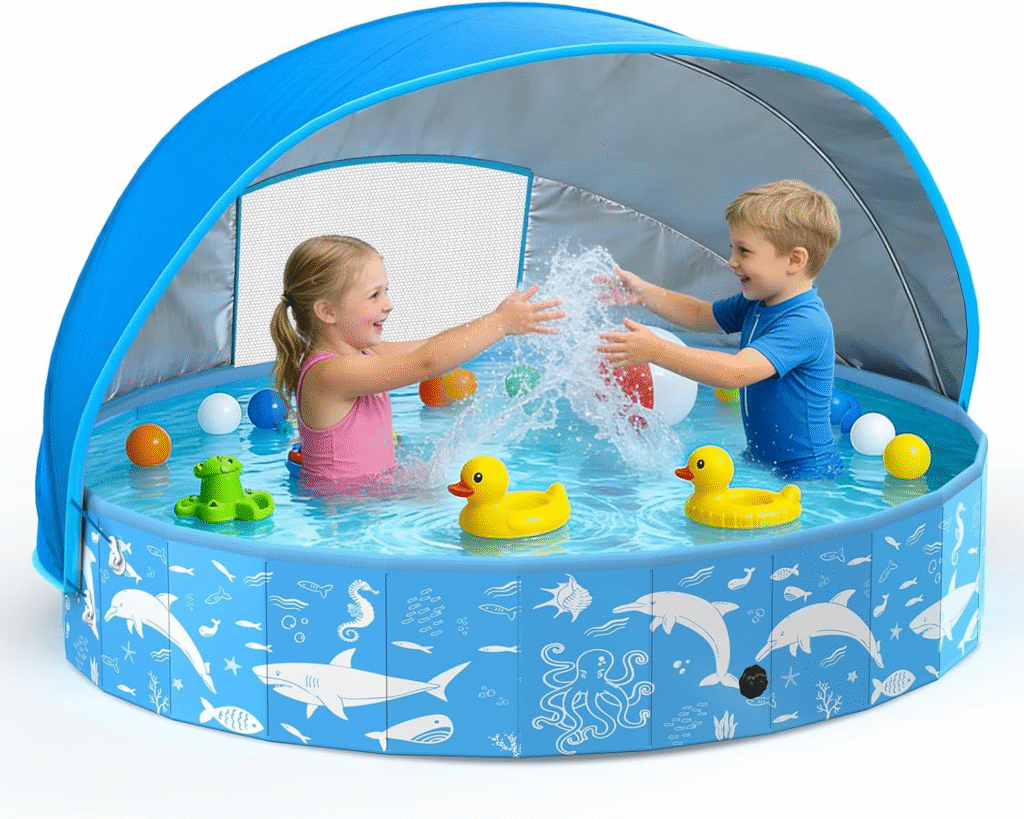
A splash pad is valuable because it solves a common summer problem: children want water play, but parents do not always want to set up a pool. A pool takes longer to fill, holds more water, needs more careful emptying, and may require more storage space. A splash pad gives families a lighter option.
The value is strongest when children use it often. For example, if a splash pad is used 20 times over a summer, the cost per play session becomes much lower than a cheaper toy used only twice. Durability and convenience matter more than the lowest first price.
A splash pad can also support different play styles:
- Quiet toddler water play.
- Sibling splash time.
- Backyard cooling after outdoor activities.
- Supervised pet-and-child play when suitable.
- Playdate water fun.
- Small summer party activity.
- Short cooling breaks between indoor and outdoor play.
- Repeated weekend use without pool-level maintenance.
For families with young children, a splash pad often feels more useful than a sprinkler toy because children can stay inside one zone. Parents can sit nearby and watch more easily. Children can play with cups, small floating toys, or simple water games.
EPN splash pads are designed around real use details such as PVC selection, edge strength, spray distribution, low-odor material feel, and folding convenience. These details help turn a splash pad from a one-day novelty into a repeat summer item.
Splash Pad Setup Time
Setup time affects how often families use a water toy. If a toy is hard to connect or annoying to drain, it may stay in storage. A well-designed kids splash pad should be easy enough for a parent to set up during a normal afternoon.
Expected setup time:
| Step | Estimated Time |
|---|---|
| Clear ground | 1–2 minutes |
| Unfold splash pad | 1 minute |
| Connect hose | 1 minute |
| Adjust water pressure | 1 minute |
| Ready for play | 3–5 minutes total |
The first setup may take longer because parents need to test spray direction and pressure. After that, setup should feel simple. A reliable connector makes a big difference. If the connection leaks or slips every time, parents may not want to use it often.
Sprinkler toys can be faster to place on the lawn, but they may need more adjustment during play. A lightweight toy may tip, twist, or spray in the wrong direction. A splash pad may need more space to unfold, but it often stays more predictable once filled.
A good water toy should not feel like a project. It should feel easy enough to bring out on a hot weekday afternoon, not only for a weekend party.
Splash Pad Space Needs
Space planning helps avoid disappointment. A splash pad needs more than its listed size. Families also need room for spray, the garden hose, children stepping in and out, and an adult nearby.
General space guide:
| Splash Pad Size | Best For | Recommended Clear Area |
|---|---|---|
| 60–70 inches | One toddler or small child | About 8 x 8 feet |
| 80–100 inches | One to two children | About 10 x 10 feet |
| 100+ inches | Two to three children | About 12 x 12 feet or more |
Round splash pads work well in the center of a lawn. Square splash pads can fit neatly in yard corners or patio layouts. The better shape depends on the yard and hose position.
Sprinkler toys may look smaller, but active play needs a bigger movement zone. Children running through spray may need 10 to 15 feet of open space. If the yard is narrow, a splash pad may be easier to control than a sprinkler toy that sends children running in every direction.
Parents should measure the available area before choosing. A water toy that is too small may feel crowded. A water toy that is too large may be difficult to place, dry, and store.

Splash Pad Repeat Use
The strongest sign of value is repeat use. Children ask for it again. Parents do not dread setup. The spray still works. The rim does not leak. The surface dries without odor. The toy folds without damage. These details decide whether a splash pad becomes part of summer or becomes clutter.
Repeat-use checklist:
| Detail | What to Look For | Why It Matters |
|---|---|---|
| PVC strength | Stable feel, not paper-thin | Helps resist wear |
| Seam quality | Clean and even edge sealing | Helps reduce leak risk |
| Spray control | Height changes with pressure | Fits different ages |
| Surface feel | Wet feet feel supported | Improves comfort |
| Connector quality | Hose fits securely | Reduces setup frustration |
| Drainage | Water empties easily | Makes cleanup faster |
| Storage | Folds without hard creases | Supports seasonal use |
Families who want long-term value should avoid choosing only by design or color. Graphics make the item attractive, but structure makes it usable. Stronger material, better sealing, and easier storage matter more after the first few uses.
EPN, under American Epsilon Inc., develops PVC and composite outdoor recreation products for families, pets, and seasonal use. The product range includes kids splash pads, pet splash pads, sports splash pads, inflatable pools, water slides, floating toys, snow tubes, pool pillows, and more.
For families, EPN offers ready-to-use kids splash pads and backyard water play products designed for simple setup, controlled spray, comfortable PVC surfaces, and repeat summer use. For retailers, distributors, and custom projects, Epsilon can also support OEM and ODM development, including custom size, shape, artwork, spray layout, packaging, labeling, and market-specific requirements.
Whether the goal is a toddler-friendly splash pad, a larger backyard sprinkler mat, a pet-and-kids water play design, or a full seasonal outdoor water toy line, Epsilon can help develop products that match real family use, retail presentation, and market demand.
Contact Epsilon o order EPN branded splash pad products or request a custom quote for your next outdoor water play project.
Get A Fast quote
Here, bringing your inflatable concepts to life is no longer a challenge—it’s a collaborative journey where American Epsilon helps families, outdoor enthusiasts, and global brands transform creative ideas into safe, certified, and market-ready inflatable solutions.


Partner With Epsilon
Whether you are a family looking for safe backyard fun or a brand seeking large-scale OEM/ODM solutions, American Epsilon Inc. guarantees every inflatable is built with safety, durability, and excitement in mind. With flexible low MOQs, strategically placed warehouses in the U.S., Canada, U.K., and Germany, plus 24/7 professional support, we ensure smooth delivery and reliable service worldwide.
Ready to bring your inflatable ideas to life? Request free samples, fast prototypes, and customized designs today—your trusted inflatable journey starts here.