Skip to content
Sports Splash Pads vs Simple Water Play Toys: Which Is Better for Backyard Play?
# Your Trusted Inflatable Supplier In US

Sports splash pads usually work better for families who want active play, group games, and stronger seasonal value. Simple water play toys work better for toddlers, small patios, quick cooling breaks, and calmer play. The right choice depends on the child’s age, yard size, play style, water pressure, storage habits, and whether pets will join the water play area.
Think about two common summer scenes. In one yard, a toddler stands beside a water table, pouring water from one cup to another while a parent sits nearby. In another yard, three kids run through spray, kick a soft ball toward a goal, switch turns, and ask to play again after dinner. Both moments are useful. The difference is that one setup supports quiet cooling, while the other turns water into a repeatable backyard game. That is why more families now compare sports splash pads with simple water toys before choosing summer outdoor play products.
For a quick decision, simple water play toys are better when the goal is short, low-effort cooling. Sports splash pads are better when the family wants a main backyard activity that can work for siblings, playdates, weekend gatherings, and supervised pet cooling.
| Family Need | Better Choice | Why It Fits |
|---|---|---|
| One toddler under 3 | Water table or gentle splash mat | Slower play and closer supervision |
| Kids ages 4–8 | Sports splash pad | Better for running, kicking, and simple games |
| Small patio | Simple water toy | Less movement space needed |
| Medium or large lawn | Sports splash pad | More room for active play |
| Quick after-school cooling | Sprinkler | Fast setup and short play |
| Weekend family play | Sports splash pad | Stronger repeat value |
| Birthday party | Sports splash pad | Can work as the main activity |
| Kid and dog water play | Durable splash pad | Better when PVC and edges are stronger |
Families comparing long-term durability may also want to read our guide on how to choose a splash pad that lasts more than one summer, especially if the splash pad will be used every weekend or shared by kids and pets.
What Are Sports Splash Pads?
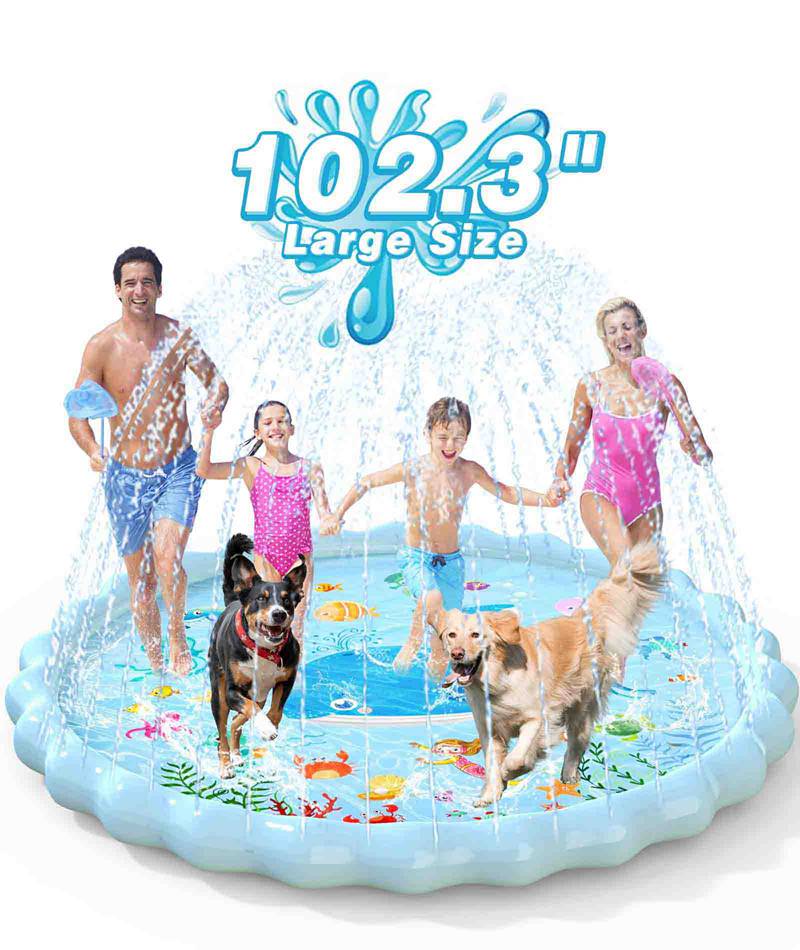
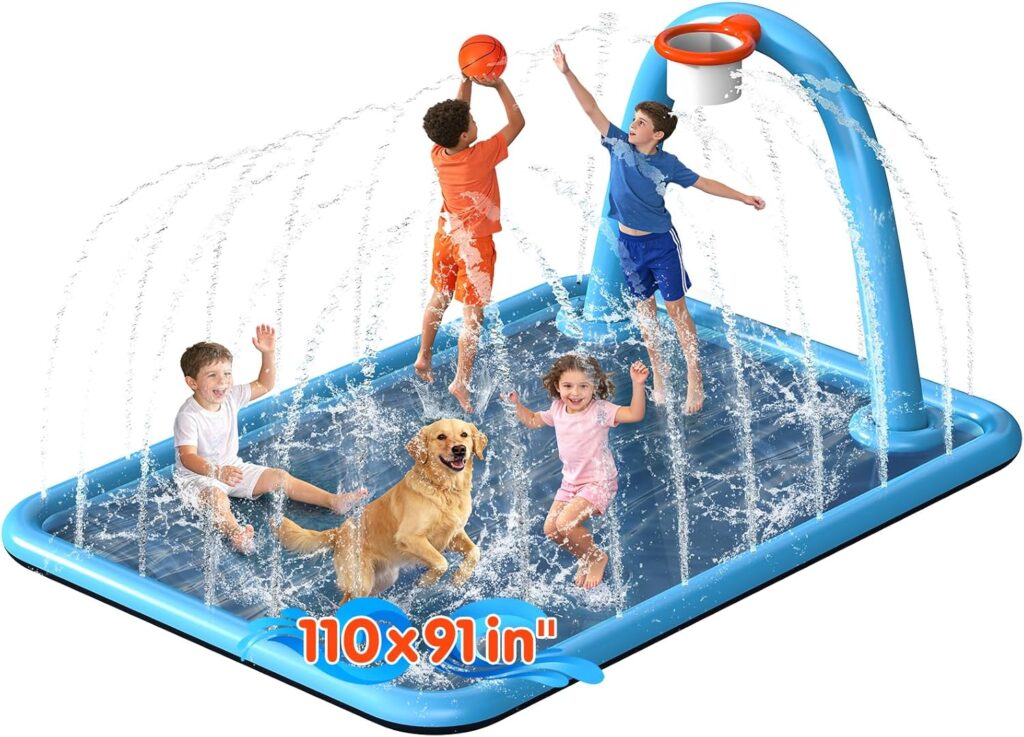
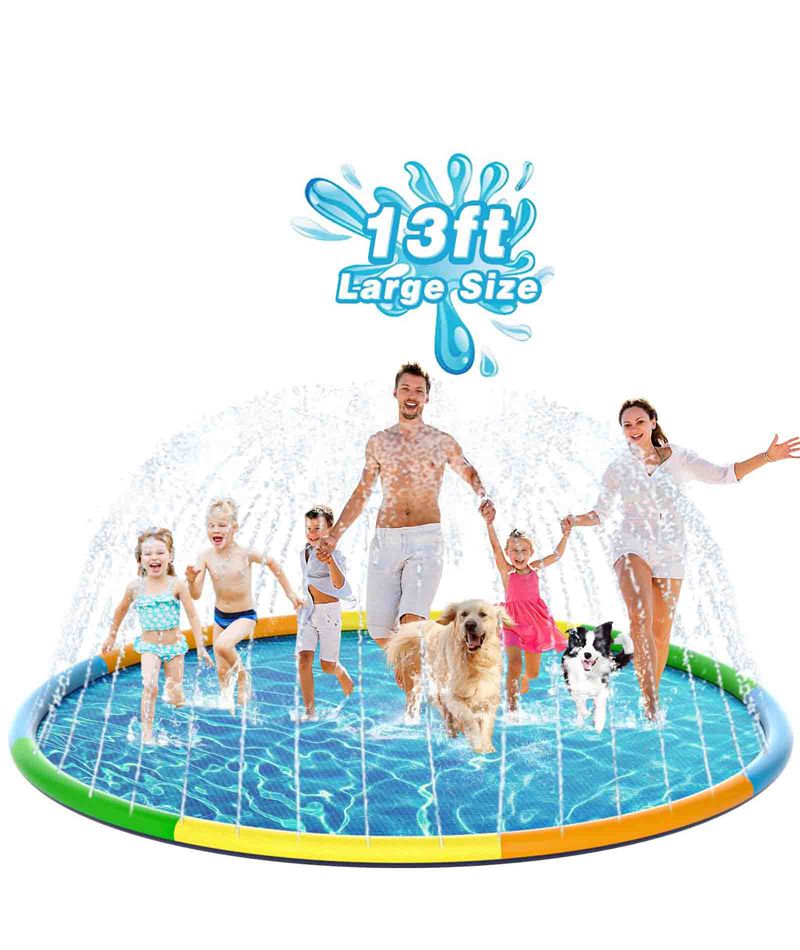
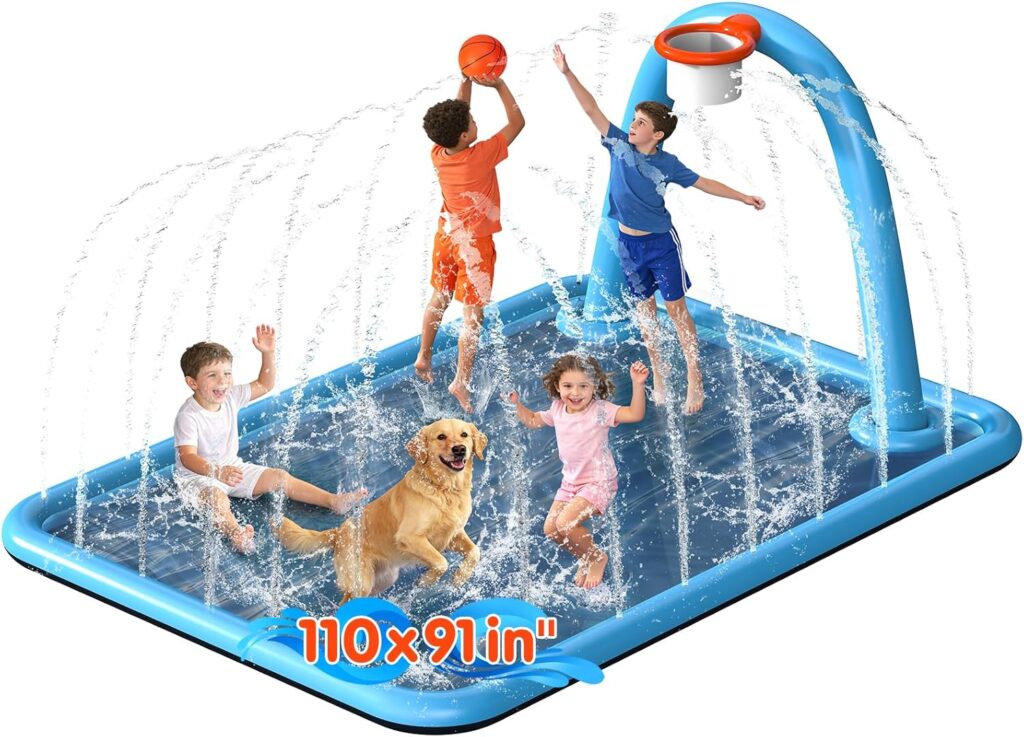
Sports splash pads are outdoor water play mats that combine sprinkler-style cooling with a sports activity, such as soccer, basketball, target play, or open-field movement. Instead of only letting kids stand in water spray, they give children a reason to run, kick, aim, chase, take turns, and play together.
For most families, a sports splash pad works best when children are old enough to enjoy simple rules and movement-based games. Many designs are more suitable for kids ages 4 and up, while younger toddlers need lower water pressure, slower movement, and closer adult help. Compared with simple sprinklers or water tables, sports splash pads need more open space, but they often create stronger repeat play for siblings, playdates, and summer backyard activities.
A sports splash pad usually connects to a standard garden hose. Water enters the outer ring, fills the spray channel, and comes out through small holes around the edge. The center area stays wet and shallow, creating a cool play surface. When a soccer goal, basketball hoop, printed field, or target zone is added, the splash pad becomes more than a cooling mat. It becomes a small backyard game area.
For EPN, the value of a sports splash pad is not only in the sports theme. The structure behind the theme matters. A good sports splash pad should use flexible but durable PVC, stable edge construction, reliable hose connection, balanced spray holes, and a surface that feels comfortable under bare feet. For family and pet-friendly splash pad designs, PVC thickness often falls around 0.40 mm to 0.55 mm depending on size, use scene, and product positioning.
A soccer goal, basketball hoop, or game layout can make a splash pad more exciting, but the real use experience depends on material strength, edge stability, spray balance, and how easy the setup feels after the first use. Parents often remember the practical details more than the printed design: whether the hose leaks, whether the spray is even, whether the edge stays stable, and whether the pad dries and folds without trouble.
| Feature | Recommended Detail | Why It Matters |
|---|---|---|
| Age fit | Often better for kids 4+ | Children can understand simple game rules |
| PVC thickness | Around 0.40–0.55 mm for stronger family use | Helps with wear resistance and repeat folding |
| Spray direction | Inward or controlled edge spray | Keeps water closer to the play zone |
| Water pressure | Start low, then adjust slowly | Makes play more comfortable for younger kids |
| Lawn space | Extra 3–5 ft around the pad | Kids need room to step off, run, and chase balls |
| Ball type | Soft, lightweight ball | Reduces impact during active play |
| Storage | Drain and dry before folding | Helps reduce odor and surface sticking |
A sports splash pad should not feel like a one-day novelty. It should be easy enough for parents to set up, interesting enough for kids to request again, and durable enough to handle repeated stepping, folding, water pressure, and outdoor storage. That is why EPN focuses on PVC material matching, heat-press bonding, balanced spray holes, and reinforced edge areas across its splash pad development.
For customers still comparing material choices, our article on what material is best for a splash pad explains why PVC thickness, flexibility, odor control, and seam quality matter more than appearance alone.
Sports Splash Pads Explained
A sports splash pad is different from a regular splash pad because it gives children a clear play goal. A regular splash pad may spray water and create a cooling area, but a sports splash pad adds movement and direction. Kids are not only splashing. They are trying to score, aim, defend, run, or beat their last round.
A soccer splash pad can turn a simple lawn into a small water soccer zone. One child can kick a soft ball toward the goal, another can guard the goal, and younger children can still enjoy the water spray around the edge. The activity is easy to understand, so parents do not need to prepare many extra toys or explain complicated rules.
The best sports splash pads should feel easy from the first setup. Parents should be able to unfold the mat, connect the hose, adjust the water pressure, and let the spray rise gradually. If the spray is too high, reducing water pressure can make the play area more comfortable and reduce stress on the edge.
A strong design also avoids common problems that make customers stop using a splash pad: uneven spray, edge swelling, weak hose connections, thin PVC, slippery printed surfaces, unstable sports attachments, and difficult drainage. These details decide whether the splash pad feels fun once or becomes a regular summer toy.
Backyard Sports Water Play
Backyard sports water play gives kids both cooling and activity. On hot days, regular sports can feel tiring fast. A sports splash pad makes movement more comfortable by adding water spray around the play zone. That makes it useful for families who want children to stay outside longer without relying only on screens or indoor play.
The same splash pad can shift between several play styles. One child can practice kicking or aiming alone. Two kids can take turns as shooter and goalie. A small group can create teams, timed challenges, or parent-child games. During a party, the splash pad can become the main backyard activity. After the game ends, kids can still use the wet area for free splashing.
For families with more than one child, that flexibility is important. A toy that only sprays water may lose attention quickly. A sports splash pad can change each time it is used. One day it becomes a soccer challenge. Another day it becomes a running game. During a weekend gathering, it becomes a shared activity for siblings, cousins, neighbors, and friends.
| Backyard Use Factor | Recommended Practice |
|---|---|
| Ground surface | Flat grass is usually more comfortable than concrete |
| Water pressure | Start low, then adjust slowly |
| Spray height | Keep moderate for younger children |
| Surrounding space | Leave open room around the pad |
| Ball choice | Use soft, lightweight balls |
| Pet use | Trim nails and supervise dogs |
| Storage | Drain, dry, and fold after use |
Active Kids Summer Play
Sports splash pads are especially helpful for active kids who need more than a short cooling break. Many children enjoy water for the first few minutes, but they stay interested longer when the toy gives them a challenge. Running toward a goal, taking turns, trying to score, or creating a team game gives kids more reasons to keep playing.
For children ages 4–8, sports splash pads can be a strong summer backyard option because the activity level is easy to adjust. Younger kids can run through the spray and kick softly. Older kids can add rules, score points, or compete with siblings. Parents can lower the water pressure for gentler play or raise it slightly when kids want a more exciting spray effect.
A sports splash pad also helps families get more use out of one backyard setup. Instead of buying a sprinkler, a ball game, and a separate splash mat, one sports splash pad can combine several play values. That does not mean every family needs one. A toddler who prefers quiet pouring play may still enjoy a water table more. But for active kids, siblings, and summer gatherings, a sports splash pad often gives better repeat use.
Active play also places more demand on the splash pad. Children move faster, step more often, and may run near the edge. That is why EPN pays attention to PVC material selection, heat-press bonding, reinforced edge areas, spray hole balance, and hose connection structure. These details help the splash pad handle real backyard play, not just look attractive in photos.
A good sports splash pad should make parents feel three things: it is easy to set up, safe enough for supervised play, and interesting enough for kids to ask for again. When a water toy can meet those three needs, it becomes part of the family’s outdoor routine.
What Are Water Play Toys?
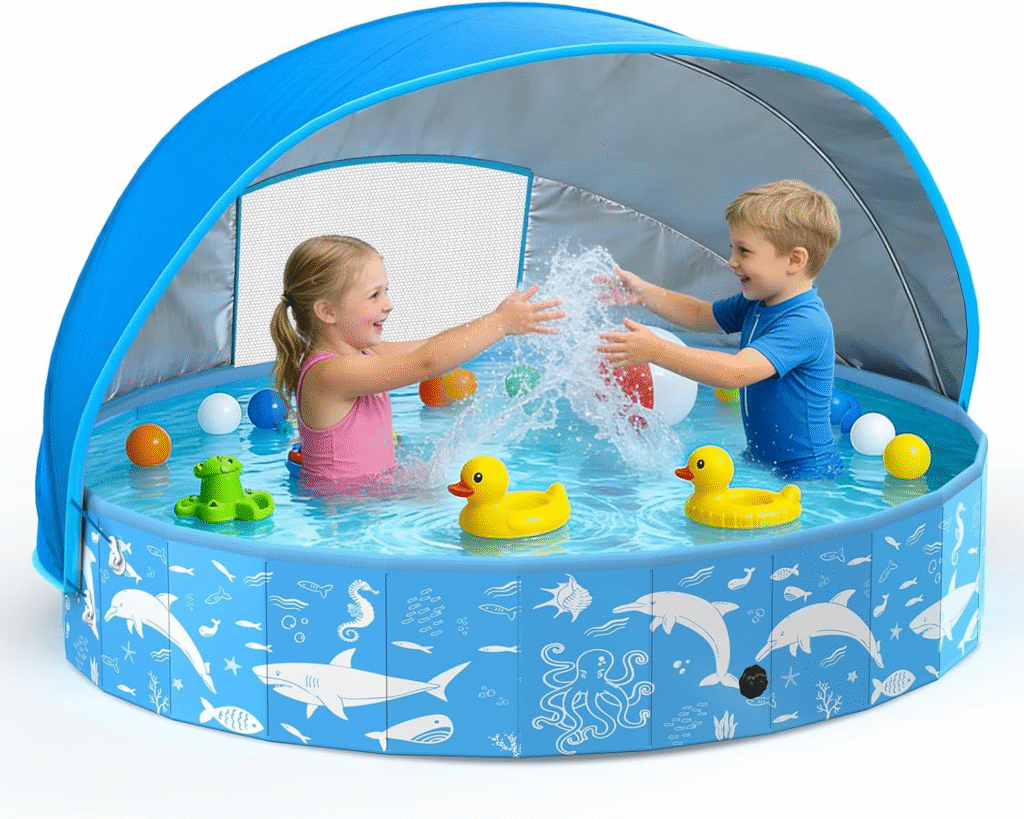
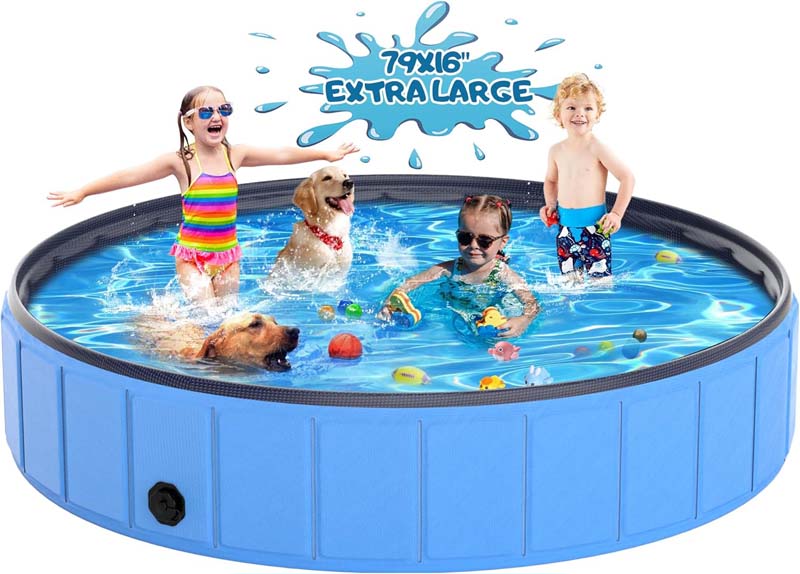
Water play toys are outdoor toys that use water for splashing, spraying, pouring, sliding, floating, or cooling down on hot days. They include sprinklers, water tables, water guns, splash mats, sponge balls, slip-and-slide toys, small pools, and inflatable water toys. Most simple water play toys are easy to set up and work well for short backyard play, especially for toddlers, preschoolers, and small outdoor spaces.
Families keep buying water play toys because they make summer easier. When the weather is hot and kids need something to do outside, a water toy can turn a quiet yard into an instant play area. Some toys connect to a hose. Some only need a few buckets of water. Some can be packed into a small box after use. For parents who want fast setup and low planning, simple water play toys are often the first choice.
But not all water toys solve the same problem. A water table is not used the same way as a sprinkler. A water gun is not suitable for the same age group as a toddler splash mat. A slip-and-slide may look exciting, but it needs a long, flat lawn and careful use. A small pool may offer cooling, but it also requires more draining, cleaning, and supervision than many families expect.
A practical choice starts with four questions: how old the child is, how much outdoor space is available, whether one child or several children will play together, and whether the goal is quick cooling or longer activity. For toddlers, calmer water toys usually work better. For older kids, simple water toys may feel too limited unless they involve movement or competition.
Simple water toys are useful because they solve smaller summer needs. A water table may be perfect for a toddler, a sprinkler may be enough for a 20-minute cooling break, and sponge balls may work well when parents want low-cost backyard fun. The problem starts when families expect one simple toy to do too much. A small sprinkler may not keep three active kids busy for an hour. A water table may not interest a seven-year-old. A water gun may create conflict if children are different ages.
| Toy Type | Better For | Less Suitable For |
|---|---|---|
| Water table | Toddlers, patios, calm play | Older kids who want running games |
| Sprinkler | Fast cooling, small lawns | Long group play without extra games |
| Water gun | Older kids, short active play | Toddlers or mixed-age groups |
| Sponge balls | Soft tossing games | Solo play without other toys |
| Slip-and-slide | Older kids with long grass space | Small yards or uneven ground |
| Small pool | Sitting and cooling | Families wanting fast drainage |
| Sports splash pad | Active kids and group games | Very small patios or no lawn space |
A family with toddlers may get more use from gentle toys first, then move into sports splash pads as children become more active. Families with older kids may find that simple water toys work better as add-ons around a larger splash pad.
For more setup guidance, our guide on can you use a splash pad on grass gives practical advice on ground choice, lawn preparation, water flow, and safer backyard placement.

Simple Water Play Toys
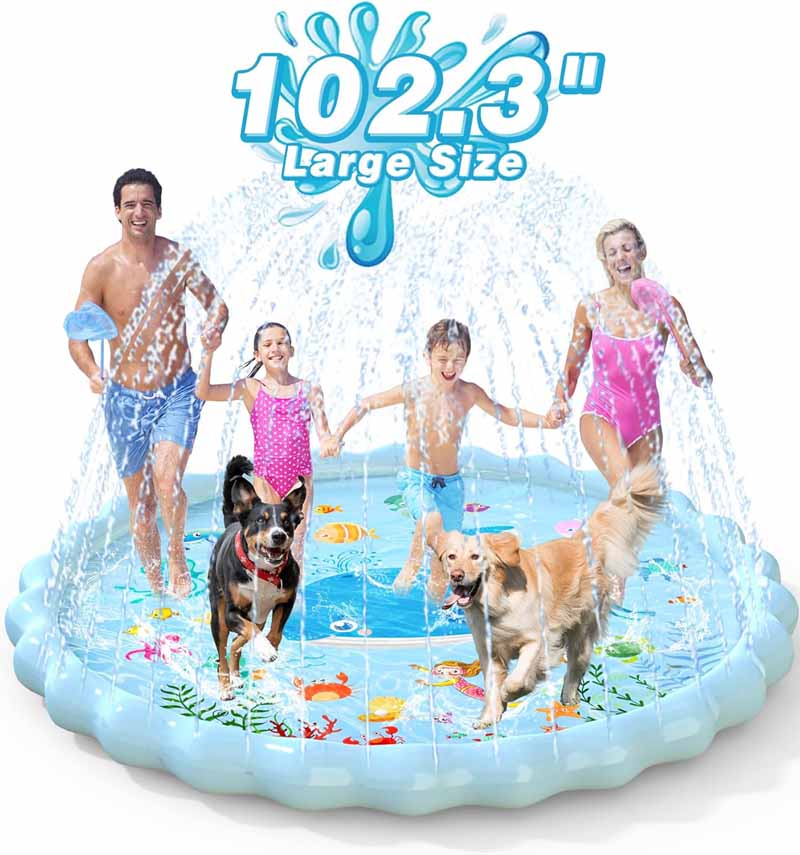
Simple water play toys usually focus on one main action. A sprinkler sprays. A water table holds water. A water gun shoots. A sponge ball soaks and tosses. A splash mat creates a wet surface for sitting, stepping, and light movement. These toys are easy to understand and usually do not need much setup.
This simplicity is their biggest strength. Parents can bring out a simple water toy for a short afternoon break without turning the yard into a full activity area. A water table can sit near the back door. A sprinkler can run on the lawn for 15–30 minutes. A few buckets and soft toys can keep younger children busy while staying close to adults.
Simple water toys also work well when children are at different comfort levels with water. Some kids love running through spray. Others prefer touching and pouring water slowly. A water table or small splash mat can feel less overwhelming than a larger water toy with strong spray.
The trade-off is play variety. Once the child understands what the toy does, there may be fewer reasons to keep playing. That does not make the toy weak. It simply means the toy is better for short, easy play rather than long group activity. Parents can extend the play by adding floating toys, cups, funnels, soft sponge balls, toy car washing games, or a gentle target activity beside the sprinkler.
For younger children, a simple setup can be more suitable than a large water play design. For older kids, simple water toys may work better as supporting activities around a sports splash pad or larger backyard splash zone.
Sprinklers, Tables, and Water Guns
Sprinklers, water tables, and water guns are three of the most common water play toys, but they create very different play experiences.
A sprinkler is one of the fastest ways to cool down a backyard. It connects to a hose and gives kids a place to run through water. Sprinklers are easy to use, but the spray pattern matters. Some spray too high for toddlers. Some spray only in one direction. Some make the ground muddy if they stay in the same spot too long. For younger children, a low and gentle spray is usually more comfortable.
A water table is better for calm play. It is especially useful for toddlers and preschoolers who enjoy pouring, scooping, floating small toys, and watching water move. It does not require much running space, so it works well for patios and smaller yards. The main thing parents need to manage is water cleanliness. Water should be changed often, especially when several children are playing.
Water guns and water blasters create faster play. They are usually more suitable for older kids who understand rules and personal space. They can be exciting, but they can also lead to rougher play if there are no limits. For mixed-age groups, adults may need to set clear rules before play starts, such as no face spraying, no chasing toddlers, no spraying pets unless they enjoy it, and stopping when someone says they do not want to be sprayed.
| Toy Type | Setup Time | Best Use Time | Good For | Watch Out For |
|---|---|---|---|---|
| Sprinkler | 2–5 minutes | Short cooling play | Running and quick fun | Spray height and muddy grass |
| Water table | 5–10 minutes | Calm outdoor play | Toddlers and preschoolers | Dirty standing water |
| Water gun | 1–3 minutes | Active group play | Older children | Rough spraying and conflict |
| Splash mat | 3–5 minutes | Gentle water play | Young kids | Slippery surface |
| Sports splash pad | 5–10 minutes | Longer activity play | Active kids and groups | Needs open space |
Easy Toys for Toddlers
Toddlers need water play that feels safe, gentle, and easy to control. At this age, the goal is not long running games. The goal is comfort, exploration, and simple outdoor fun. That is why many toddler-friendly water toys focus on shallow water, low spray, soft surfaces, and slow movement.
Good toddler water play usually includes low water depth, gentle spray, soft or rounded edges, small toys that are easy to hold, simple actions like pouring and scooping, close adult supervision, and a shaded or partly shaded play area when possible. A water table is often one of the easiest choices because children can stand or sit nearby while playing with water at a comfortable height.
For toddlers, play time is often shorter but more repeated. A young child may enjoy 10–20 minutes of water play, take a break, and return later. This is different from older children who may want a longer, more active game. A good toddler water toy should keep the child comfortable, curious, and safely engaged.
Sports splash pads can be used around toddlers only when the setup is gentle. Water pressure should stay low. Older kids should not run too fast nearby. Balls should be soft and lightweight. Adults should stay within close reach. In mixed-age families, it may help to give toddlers a calmer corner of the play area while older kids use the sports feature more actively.
For product development, toddler-friendly water toys need special attention to material feel and odor. EPN focuses on PVC material matching for different use scenes because young children often sit, crawl, touch, and play close to the surface. A softer feel, stable structure, and lower odor experience can make the water toy more acceptable for everyday family use.
For families choosing toddler water toys, the best option is not the one with the tallest spray or the most features. It is the one that feels easy to manage, comfortable for the child, and simple enough to use often.
Which Keeps Kids Playing Longer?
Sports splash pads usually keep kids playing longer because they turn water into a game. Simple water play toys are better for quick cooling, but many of them rely on one repeated action, such as spraying, pouring, or splashing. When children have a goal, a challenge, or other kids to play with, they are more likely to stay engaged and ask to play again.
For parents, “playing longer” does not only mean how many minutes a child stays outside in one afternoon. It also means how often the toy comes back out during the summer. A toy that creates 20 minutes of fun once and then sits in storage is not the same as a water play setup that children ask for every weekend.
Children usually stay interested when play has several layers. Water gives them cooling. A sports feature gives them purpose. Group play gives them social energy. A simple rule gives them something to repeat and improve. For example, kicking a ball toward a goal through water spray can become a game, a challenge, a race, or a team activity.
Simple water play toys often work best for shorter sessions. A toddler may pour water from one cup to another for 15–30 minutes. A child may run through a sprinkler for 10–20 minutes, then move on. A water gun game may be exciting for a short burst, but it can end quickly if kids run out of water, start arguing, or lose interest.
Sports splash pads can support longer play because the activity can change without changing the setup. One child can practice kicking. Two children can take turns. Three or more children can create teams. Parents can join for a quick challenge. A dog may enjoy supervised splashing nearby if the material is suitable for pet use. This kind of flexibility helps the toy feel fresh after more than one use.
A soccer splash pad can become several different games across a summer. One afternoon, the goal is to score five times. Another day, one child becomes the goalkeeper. During a playdate, kids can kick from different distances or create timed shooting rounds. Younger children can walk through the spray between turns, while older kids use the sports feature more actively.
| Summer Use Pattern | Simple Water Toy | Sports Splash Pad |
|---|---|---|
| Used 3–5 times | Better for low-cost short play | May feel underused |
| Used 8–12 times | Fair value | Stronger value if kids enjoy games |
| Used 15–25 times | Depends on durability | Very strong seasonal value |
| Used for parties | Often needs extra toys | Can become the main activity |
| Used by siblings | May feel limited | Better for shared play |
| Used with pets | Often not suitable | Better when material is stronger |
For parents, the best summer toy is not always the cheapest one. It is the one that comes out of storage again and again without creating stress. A sports splash pad with good material, balanced spray, and a clear game idea can become part of the family’s weekend routine.
Sports Splash Pads for Games
Sports splash pads keep children engaged because they give water play a clear purpose. Children are not only waiting for the spray to hit them. They are trying to kick the ball into a goal, aim at a target, guard an area, beat a score, or create a new rule with siblings.
A soccer-style splash pad is a good example. At first, a child may simply run through the water and kick the ball. After a few minutes, the game can change. One child becomes the goalkeeper. Another child tries to score from a certain distance. Parents may count points. During a playdate, kids may divide into small teams. The same setup supports several types of play without extra preparation.
This matters because children often lose interest when a toy has only one action. A sports splash pad can restart attention by changing the challenge. The water spray keeps the activity comfortable during hot weather, while the sports feature gives children a reason to keep moving.
Sports splash pads can also support different energy levels. A younger child may only want to walk through the spray and kick softly. An older child may want to run, aim, and compete. A mixed-age group can take turns so the play does not become too rough.
For better game play, families should use soft lightweight balls, keep turns fair, avoid hard kicking at close range, let younger children play from shorter distances, and lower water pressure when toddlers join. These small habits make the game easier to control and more comfortable for everyone.
For EPN, sports splash pads need to be designed for real movement. Running and turning place more stress on the surface than quiet splashing. Repeated kicking and stepping can affect seams, edges, and printed areas. That is why PVC thickness, heat-press bonding, edge support, and hose connection quality matter.

Water Play Toys for Quick Fun
Simple water play toys are excellent when families want fast, easy fun. A sprinkler can be connected in a few minutes. A water table can be filled with a bucket. A splash mat can be unfolded quickly for younger children. These toys are useful because they do not require planning, large space, or a full backyard setup.
For short sessions, simple water toys may be the better choice. A toddler may not need a sports activity to stay happy. Pouring water, floating small toys, or stepping in gentle spray may be enough. Parents may also prefer simple toys when they only want children outside for a short cooling break before dinner or after a nap.
The challenge is that many simple water toys have a shorter interest cycle for older kids. A sprinkler sprays in the same pattern. A water table stays in one place. A water gun needs refilling and may cause arguments if one child sprays too aggressively. These toys still work, but they often need small additions to keep play going.
| Simple Water Toy | Best Play Length | Best Use Scene | How to Make It Last Longer |
|---|---|---|---|
| Water table | 15–40 minutes | Toddlers and preschoolers | Add cups, funnels, floating toys |
| Low sprinkler | 10–30 minutes | Quick cooling | Add running games or soft targets |
| Water gun | 10–25 minutes | Older kids | Set fair rules and refill station |
| Sponge balls | 10–30 minutes | Small group play | Create toss-and-catch games |
| Splash mat | 15–35 minutes | Young kids | Add soft toys or low spray play |
| Small pool | 20–45 minutes | Cooling and sitting | Add floating toys and shade |
Simple water toys are not less valuable. They are simply better for lighter play. A water table does not need to compete with a sports splash pad. It serves a different child, mood, and space.
Group Play vs Solo Play
Group play and solo play need different designs. One child can often enjoy a simple toy without much structure. They can pour water, run through spray, or splash quietly. A group of children needs more space and clearer activity cues. Without those cues, water play can become crowded, repetitive, or too rough.
Sports splash pads usually work better for group play because they create roles. One child can shoot. One child can defend. One child can keep score. Others can wait for their turn or create a small team. This structure helps children play together instead of simply running through the same spray area at the same time.
Solo play still matters. A single child may enjoy a sports splash pad by practicing shots, running through water, or playing with a parent. However, simple toys can be stronger for calm solo play, especially for toddlers. A water table, bucket station, or splash mat may be enough when the child prefers slow activity.
| Age Gap | Play Challenge | Better Option |
|---|---|---|
| Toddler + older child | Different speed and comfort level | Separate simple toy for toddler plus sports splash pad for older child |
| Two preschoolers | Need gentle shared play | Splash mat, low sprinkler, or simple sports pad |
| Two kids ages 4–8 | Need movement and rules | Sports splash pad |
| Several children | Need turn-taking and space | Sports splash pad with clear rules |
| Child + dog | Need stronger material and supervision | Durable splash pad with trimmed pet nails |
For group play, parents should think about the full play zone, not just the splash pad size. Kids will move around the edges, chase balls, step off the mat, and run near the hose. A sports splash pad should be placed on open grass with enough room around it. If the yard is too small, a simple water toy may be more practical.
EPN designs sports splash pads and related water play products with different family scenes in mind. Some families need calm water play for one child. Others need active backyard play for siblings. Others want a pet-friendly cooling area. The stronger the match between product design and real family use, the longer children are likely to keep playing.
How Safe Are Sports Splash Pads?
Sports splash pads can be safe for supervised backyard play when they are used on flat ground, connected with controlled water pressure, and matched to the child’s age and activity level. The safest setup uses a clean lawn, moderate spray height, enough space around the mat, soft play rules, and adult supervision from start to finish.
For most families, safety is not only about whether the splash pad looks soft or colorful. It is about how the splash pad behaves during real play. Kids run, turn, kneel, chase balls, step on the edge, pull toys across the surface, and sometimes bring pets into the play area. A safe sports splash pad should be designed for this kind of movement, not only for still photos.
The biggest safety concerns usually come from five areas: slipping, uneven ground, high water pressure, rough group play, and weak structure. A splash pad placed on clean, flat grass with gentle spray is much easier to manage than one placed on concrete, sloped ground, gravel, or near patio furniture. Even when the surface has texture, any wet play area can become slippery if children run too fast or push each other.
Water pressure is another detail parents often overlook. High spray may look exciting, but it is not always better for children. Strong water pressure can raise the spray too high, make younger kids uncomfortable, stress the outer ring, and increase water use. For safer daily play, families should start with low water flow and increase gradually until the spray is fun but still easy to control.
Material and structure also affect safety. For splash pads and family water play products, PVC thickness is commonly selected based on size, use scene, and target users. Many durable family splash pads use PVC in the range of about 0.40 mm to 0.55 mm. A thicker material can help improve wear resistance and edge stability, but thickness alone is not enough. Seam quality, hose connection design, spray hole layout, surface feel, and edge support all matter.
EPN pays attention to these details because sports splash pads are more active than simple splash mats. When kids kick, run, stop, and turn, the splash pad needs to handle repeated pressure. For family and pet-friendly water play, EPN focuses on PVC material matching, heat-press bonding, balanced spray holes, reinforced edge areas, and practical foldable storage. These details help reduce common use problems such as uneven spray, weak edge support, hose leakage, and early wear.
| Step | What to Do Before Play |
|---|---|
| 1 | Place the splash pad on flat, clean grass |
| 2 | Remove stones, sticks, sharp toys, and garden tools |
| 3 | Keep furniture, grills, and steps away from the play zone |
| 4 | Connect the hose firmly before turning on water |
| 5 | Start with low water pressure |
| 6 | Check spray direction and edge shape |
| 7 | Use soft balls only |
| 8 | Set no-pushing and no-tackling rules |
| 9 | Trim pet nails if dogs will join |
| 10 | Drain and dry the pad after use |
Sports splash pads are active water toys, so families should leave more space around them than they would for a simple sprinkler. Children will move around the edge, chase balls, step off the wet area, and return to the game. A flat lawn with an open buffer makes the experience more comfortable.
For customers worried about leakage or weak seams, our article on why some splash pads leak easily explains common causes such as excess water pressure, weak hose connections, thin material, and poor edge bonding.
Splash Pad Surface Safety
Splash pad surface safety starts before the water turns on. The best place for a sports splash pad is usually a flat grass area because grass gives children a softer base than concrete, tile, or wood decking. It also provides more space for running, turning, and stepping off the mat.
Before setup, parents should walk over the area and remove anything that could press into the PVC or cause a child to trip. Small stones, broken branches, garden tools, toys, roots, and uneven patches can all create problems once the mat is wet. The ground does not need to be perfect, but it should be clean, level, and free from sharp objects.
The splash pad should lie as flat as possible after unfolding. Corners, wrinkles, or lifted sections can become trip points during active play. If the splash pad has a soccer goal, hoop, or raised sports feature, parents should check that it is positioned correctly before turning on the water.
A wet surface always needs play rules. Even a textured surface can become slippery when children run too fast or push each other. Sports splash pads are designed for active fun, but they should not be treated like a rough sports field. Younger children should walk, splash, kick lightly, and take turns. Older children can move more freely only when the play area is larger and clearer.
| Surface Choice | Safety Level | Notes |
|---|---|---|
| Flat grass | High | Best choice for most sports splash pads |
| Smooth patio | Medium | Use caution because it may feel harder and more slippery |
| Concrete | Low to medium | Not ideal for running or falling |
| Gravel | Not recommended | Can damage PVC and feel unsafe underfoot |
| Sloped ground | Not recommended | Water and movement become harder to control |
| Near furniture | Not recommended | Increases bumping and tripping risk |
A good sports splash pad should make the play area feel comfortable, not sharp, stiff, or unstable. Surface texture, PVC flexibility, and edge stability all affect how confident children feel when moving across the mat.
Water Pressure and Spray Height
Water pressure is one of the most important safety controls for sports splash pads. Many families think higher spray means more fun, but high pressure can make the experience less comfortable and harder to manage. For younger children, strong spray can hit the face, surprise them, or make them avoid the toy completely.
A better method is to start low. Parents can turn the faucet on slowly, let the edge fill, watch the spray pattern, and then increase water flow only if needed. The right spray height should feel playful, not forceful. For toddlers and preschoolers, low to medium spray is usually enough. For older kids, slightly higher spray can be used if the splash pad remains stable and the play area is clear.
High water pressure may also stress the structure. If the outer ring looks too swollen, if the spray becomes uneven, or if the hose connector begins leaking, the pressure should be reduced. A sports splash pad is not meant to operate like a high-pressure water attraction. It is a backyard toy that should work under normal household hose conditions.
| Child Group | Recommended Spray Feel | Setup Tip |
|---|---|---|
| Toddlers | Very gentle spray | Keep pressure low and stay close |
| Preschoolers | Low to medium spray | Let them test comfort first |
| Kids 4–8 | Medium spray | Adjust based on play speed |
| Mixed ages | Low to medium spray | Set for the youngest child |
| Pet use | Low to medium spray | Avoid startling pets |
| Party play | Medium spray | Check crowding and edge stability often |
Spray direction also matters. Many splash pads are designed to spray inward so the center becomes the main play area. If spray is directed too far outward, children may chase water outside the safer area or the surrounding ground may become muddy. Balanced spray holes help keep the water experience more controlled.
EPN designs sports splash pads with multi-point spray holes to support more even water distribution. This helps reduce the problem of one area spraying too strongly while another area barely sprays. Good spray balance makes the play experience more comfortable and can also improve how the splash pad performs in real backyard use.

Safe Setup on Grass
Grass is usually the most practical surface for a sports splash pad because it is softer, more forgiving, and better suited for active movement. A flat lawn gives children room to run, turn, and step off the mat without immediately hitting a hard surface.
However, not every grass area is ready for water play. Parents should check the lawn before setup. Hidden stones, dry branches, sharp roots, uneven ground, and small garden objects can damage the pad or create tripping risks. If the ground is already muddy, the pad may shift more easily and children may slip when stepping off.
A good grass setup should have flat ground under the full splash pad, open space around the edge, the hose placed outside the main running path, no sharp objects under or near the mat, and a clear adult view of the full play area.
For sports splash pads, the space around the mat is almost as important as the mat itself. Children playing soccer or basketball on a splash pad will not stay perfectly inside the printed area. They may chase a ball, step off the edge, or run around the outside. If the pad is too close to a wall, fence, table, or hard patio edge, the risk of bumping increases.
| Splash Pad Use Scene | Suggested Extra Space Around Pad |
|---|---|
| Toddler gentle play | 2–3 ft around the pad |
| One child active play | 3–4 ft around the pad |
| Two children playing | 4–5 ft around the pad |
| Group or party play | 5+ ft when possible |
| Pet and child play | More open space recommended |
After play, proper care also supports safety for the next use. The splash pad should be drained, rinsed if needed, and dried before folding. A wet splash pad left folded for a long time can develop odor, mildew marks, or sticky surfaces. Dry storage helps keep it more pleasant and reliable through the season.
Kids, Pets, and Supervision
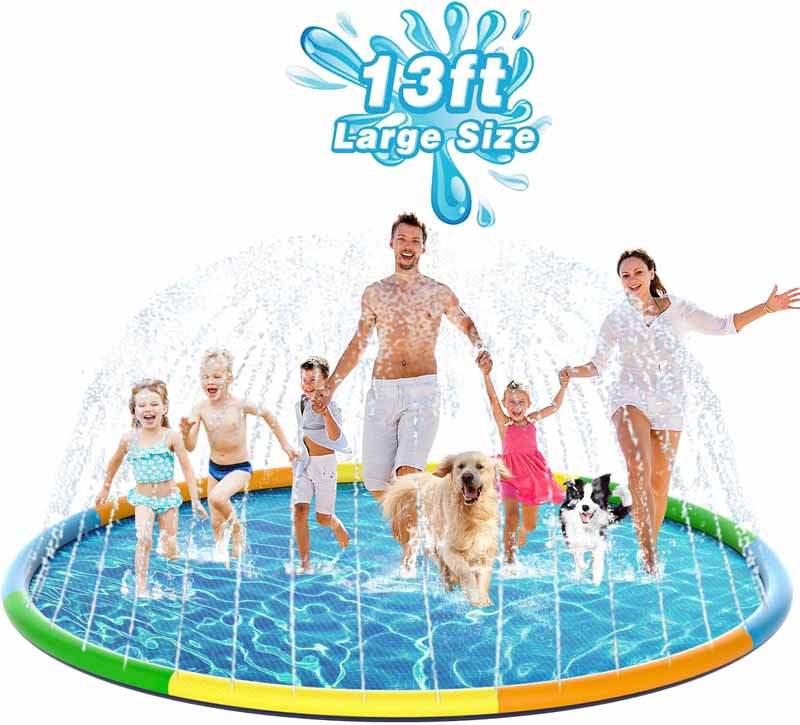
Many families want a splash pad that kids and dogs can enjoy together. This can work well when the splash pad is suitable and the play is supervised. Dogs often enjoy chasing water, stepping through spray, or lying near the cool surface. However, dogs also create different wear risks compared with children.
Pet nails, fast turns, digging, chewing, and rough scratching can damage a splash pad. Even thicker PVC is not chew-proof or claw-proof. If a dog joins the play, nails should be trimmed, chewing should be stopped quickly, and the splash pad should be inspected after use.
For pet-friendly use, customers should look for stronger PVC material, reinforced edge areas, a stable water-filled ring, reliable hose connection, moderate spray height, easy drainage, and clear care instructions. These details matter because dog use is usually more demanding than light toddler play.
Children and pets should not be left alone with any water play product. A dog may knock over a small child, chase a ball too aggressively, or bite the edge. A younger child may pull on the dog, fall, or become frightened by sudden movement. Adult supervision keeps the play calm and fair.
| Situation | What Adults Should Watch |
|---|---|
| Toddlers playing | Stay within close reach |
| Older kids playing sports games | Watch for pushing, hard kicking, and crowding |
| Dogs joining | Trim nails, stop chewing, and monitor running |
| Mixed-age group | Set rules based on the youngest child |
| High water pressure | Lower flow if spray becomes too strong |
| Longer sessions | Check surface, edge, and connector during breaks |
For EPN, designing splash pads for real family use means thinking about children, parents, pets, and repeated outdoor handling. A water toy that looks fun but is difficult to control will not create a good experience. A safer sports splash pad should feel simple to set up, comfortable to play on, stable under normal water pressure, and easy to inspect after use.
Which Is Better for Backyards?
Sports splash pads are better for medium to large lawns, active kids, siblings, playdates, and family gatherings. Simple water play toys are better for small patios, toddlers, short cooling breaks, and low-effort setup. The better backyard choice depends on space, child age, movement level, supervision, storage, water use, and whether pets will join the play.
A backyard water toy should fit the home first. A design can look exciting online, but if the yard is too small, too hard, too crowded, or too difficult to drain, families may not use it often. The better question is not only which toy looks more fun, but which toy fits the space, the children, and the family’s summer routine.
Sports splash pads need more open space because children do not stay still. They run toward the goal, chase balls, step off the mat, move around the hose, and take turns with other kids. A soccer-style splash pad or basketball splash pad works best when there is enough clear space around it. For many families, a flat grass lawn is the most comfortable setup because it provides a softer base and allows water to drain more naturally.
Simple water play toys can work better in tighter spaces. A water table can sit on a patio. A small sprinkler can fit in a side yard. A splash mat can be used on a smaller patch of grass. A bucket-and-sponge setup can work even when there is no large lawn. These toys are often easier for families who want short play sessions without turning the whole yard into a water area.
The number of children also changes the choice. One toddler may be happy with a water table or gentle sprinkler. Two active kids may need a larger activity space. Three or more children often do better with a toy that gives them roles, turns, and a shared game. A sports splash pad can become the center of play because children can kick, defend, score, run, and rotate roles.
For EPN, backyard fit is one of the most important parts of development. A toddler splash mat, a sports splash pad, a pet splash pad, and a large family splash pad should not be designed the same way. Each scene needs different material thickness, spray strength, surface feel, edge stability, and storage expectations.
| Outdoor Space | Recommended Toy | Setup Notes |
|---|---|---|
| Small patio | Water table or bucket play | Keep movement slow and controlled |
| Small grass patch | Low sprinkler or compact splash mat | Avoid strong running games |
| Medium lawn | Compact sports splash pad | Leave space around the edge |
| Large lawn | Sports splash pad | Better for kicking, chasing, and group play |
| Shared yard | Foldable water toy | Choose quick setup and storage |
| Pet-friendly yard | Durable splash pad | Watch nails, chewing, and rough turns |
| Party lawn | Sports splash pad | Use as the main activity zone |
A good rule is to leave at least 3–5 ft of open space around a sports splash pad when children will run or kick. For group play or pet play, more space is better. The hose should stay outside the main running path, and adults should be able to see the full play area.
Sports splash pads work best when the backyard can support movement. Simple water toys work best when the family wants closer, calmer play. Both options are useful, but they serve different summer routines.
Sports Splash Pads for Big Lawns
Sports splash pads are strongest on large, flat grass lawns because they need movement space. Kids do not only stand inside the spray. They run toward the goal, chase a ball, move around the edge, step off the mat, and come back for another turn. A larger lawn makes that movement feel natural and safer.
For a soccer splash pad, the extra lawn area is especially important. Children need room to kick softly, miss the goal, retrieve the ball, and change direction. If the pad is placed too close to a fence, patio table, wall, or garden border, the play may feel cramped and less comfortable.
A large lawn also helps when more than one child is playing. With enough space, children can take turns, form small teams, and move around without crowding the same spray area. This is one reason sports splash pads work well for birthdays, summer cookouts, family gatherings, and neighborhood playdates.
Families with big lawns should think about clear space around the splash pad, hose placement, soft balls, moderate water pressure, adult visibility, distance from furniture, and a drying area after play. These details make the splash pad easier to use repeatedly.
| Big Lawn Factor | Why It Matters |
|---|---|
| Open movement space | Kids can run and turn more comfortably |
| Better group play | Siblings and friends have room to rotate |
| Safer ball movement | Soft balls can be chased without crowding |
| Easier drainage | Grass handles water better than hard surfaces |
| Better party use | One splash pad can become the main activity |
| More flexible play | Soccer, relay, free splash, and pet play can rotate |
For EPN sports splash pads, big-lawn use is an important design scene. The splash pad needs balanced spray, stable edges, reliable hose connection, and flexible PVC that can handle repeated setup and folding. It is not only a printed mat. It has to perform while kids move, kick, and play around it.
Water Play Toys for Small Spaces
Simple water play toys are often better for small spaces because they do not require as much running room. A family with a patio, narrow yard, townhouse lawn, or small garden area may find a water table, compact sprinkler, or small splash mat easier to manage than a larger sports splash pad.
Small-space water play should be calm and easy to control. When children have limited room, fast running and ball games can become less safe. Toys that support sitting, standing, pouring, stepping, or gentle spraying usually work better.
A water table is especially useful for toddlers and preschoolers because it keeps play in one place. Children can scoop, pour, float small toys, and explore water without running across the yard. A compact sprinkler can also work well if the spray is low and the ground is not too slippery.
Small-space families should pay close attention to drainage. Patios and decks may collect water or become slippery. If the surface is hard, children should avoid fast running. Parents should also check that water does not flow toward doors, electrical items, outdoor furniture, or indoor areas.
| Small Space Concern | Better Choice |
|---|---|
| Limited running room | Water table or small splash mat |
| Hard patio surface | Calm pouring toys instead of running toys |
| Quick cleanup | Low sprinkler or bucket play |
| Toddler play | Water table or sensory tub |
| No large lawn | Compact water toy |
| Shared outdoor area | Easy-to-carry toy |
| Less storage room | Foldable splash mat or small sprinkler |
Sports splash pads can still work in smaller yards if the size is compact and the play is gentle. However, sports layouts need more caution in tight areas because children naturally want to move. If there is not enough room for kicking, turning, and stepping off the mat, a simple water toy may be a better fit.

Kids, Dogs, and Family Use
Many households want one backyard water toy that works for children, pets, and family weekends. This is where sports splash pads and durable splash pads can offer more value than very simple water toys, but the design has to match the use scene.
Kids and dogs use surfaces differently. Children usually step, run, sit, kneel, and splash. Dogs may scratch, turn quickly, chew, dig, or push into the edge. A toy that works well for toddlers may not be strong enough for regular dog play. A pet-friendly splash pad should focus more on wear resistance, seam strength, and edge support.
Family use also means different ages playing at the same time. A toddler may want gentle splashing. A seven-year-old may want a soccer game. A dog may want to chase the spray. Adults may want easy setup and quick cleanup. The best backyard design should make these needs easier to balance.
| Family Member | Better Play Zone |
|---|---|
| Toddler | Gentle splash corner or water table |
| Active child | Sports splash pad area |
| Dog | Supervised splash area with trimmed nails |
| Parent | Dry viewing spot near hose control |
| Guests | Clear waiting area outside the splash zone |
EPN develops family and pet water play products with mixed-use scenes in mind. For children, material comfort and low odor matter. For pets, stronger PVC and edge stability matter. For parents, setup, water control, drainage, drying, and storage matter. A design that works well across these needs is more likely to become part of a real summer routine.
For business customers, backyard fit also matters when choosing products for a seasonal line. A retailer or brand may need more than one water play option because toddler families, pet families, active kids, and party-use customers do not all buy for the same reason. Epsilon can support OEM/ODM development across different sizes, prints, packaging styles, structures, and local market requirements.
Backyard Choice Guide
Sports splash pads and simple water play toys are not direct replacements for each other. They answer different backyard needs.
A sports splash pad is usually the better choice when the yard has a medium or large grass area, children enjoy running or ball games, siblings or friends often play together, and the family wants one main summer water activity. It also makes sense for birthdays, gatherings, and supervised dog cooling when the material is suitable.
Simple water play toys are usually the better choice when the outdoor space is small, the child is a toddler, the family wants short cooling breaks, setup needs to be very quick, or the child prefers calm pouring and sensory play.
| Customer Need | Better Fit |
|---|---|
| “I only have a small patio.” | Water table or compact splash mat |
| “My kids are very active.” | Sports splash pad |
| “I need something for a toddler.” | Gentle water toy |
| “We host summer playdates.” | Sports splash pad |
| “My dog wants to cool down too.” | Durable splash pad with supervision |
| “I need fast setup after school.” | Simple sprinkler |
| “I want one main backyard toy.” | Sports splash pad |
| “I do not want much cleanup.” | Small water toy |
For many families, the most useful answer is a combination. A sports splash pad can serve as the main play area, while simple water toys support younger children or calmer moments. This setup works especially well for mixed-age households because no single child has to adapt completely to another child’s play style.
The better backyard option is the one that gets used again. A large sports splash pad that fits the lawn and keeps children active may deliver better seasonal value. A small water toy that fits a patio and makes toddler play easy may be the smarter choice for another home.
Are Sports Splash Pads Worth It?
Sports splash pads are worth it for families who want more than a quick cooling toy. They are a better choice when kids enjoy active games, when siblings or friends often play together, and when the family wants one outdoor water toy that can be reused across summer weekends. Simple water toys cost less at first, but sports splash pads can offer stronger value when they are used often.
The real value of a sports splash pad is not only the purchase price. A low-cost sprinkler may seem like the cheaper choice, but if children lose interest after a few short sessions, the cost per use becomes less attractive. A sports splash pad may cost more upfront, but it can support water play, sports games, group activity, pet cooling, birthday parties, and weekend family time in one setup.
For example, if a simple water toy is used 4 times in a summer, and a sports splash pad is used 20 times, the higher-priced option may still feel like the better purchase. Parents usually care less about the toy sitting in the box and more about whether children ask to use it again. Repeat use is where sports splash pads often perform better.
Sports splash pads also make more sense when families have more than one child. One child can still enjoy a sports splash pad, but the value becomes stronger with siblings, cousins, neighbors, or playdate groups. Children can take turns, make teams, create rules, and use the sports feature in different ways. A simple sprinkler may cool everyone down, but it may not organize play as well.
Another reason sports splash pads can be worth it is that they replace several smaller backyard toys. A soccer-style splash pad can work as a sprinkler, splash mat, soft ball game, group activity, and party toy. Families may still add buckets or water balls, but the main activity is already built into the setup.
Durability is the point customers should check before deciding. A sports splash pad is only worth buying if it can handle repeated setup, water pressure, foot traffic, folding, and storage. Customers should pay attention to PVC thickness, edge stability, hose connector quality, seam strength, spray hole balance, and whether the design is suitable for kids, pets, or both.
| Question | If Yes, Sports Splash Pads Make More Sense |
|---|---|
| Do the kids enjoy running or ball games? | Yes |
| Are there siblings or frequent playdates? | Yes |
| Is there a medium or large lawn? | Yes |
| Will the toy be used more than 10 times in summer? | Yes |
| Do parents want one main backyard activity? | Yes |
| Will the toy be used for parties? | Yes |
| Is pet cooling part of the use scene? | Yes, with stronger material and supervision |
| Is storage space available after drying? | Yes |
Sports splash pads are less about replacing every water toy and more about creating a central play area. Simple toys can still support younger children or short play sessions. A strong backyard setup may include one sports splash pad, one toddler-friendly water station, and a few soft accessories.
When Simple Toys Work
Simple water toys work well when the family needs fast, light, low-commitment play. A water table, small sprinkler, splash mat, sponge ball set, or bucket station can be enough for toddlers, small yards, or short afternoon cooling.
A family may not need a sports splash pad if the child is under 3 and prefers calm water play, the yard is too small for running or kicking, the family only wants occasional water play, storage space is very limited, or the child does not enjoy sports-style games.
Simple water toys can also work well as supporting toys. A toddler can play at a water table while older siblings use a sports splash pad. A bucket station can be placed near the main water play area. Sponge balls can turn a regular sprinkler into a small game. This combination is often better than expecting one toy to fit every child perfectly.
| Family Situation | Why Simple Toys May Be Better |
|---|---|
| One toddler | Calmer play and closer supervision |
| Small patio | Less running space needed |
| Short weekday play | Faster setup and cleanup |
| Limited storage | Smaller product size |
| Child dislikes spray | Water table or bucket play feels gentler |
| Low budget | Easier entry point |
| Grandparents’ home | Lightweight and simple to manage |
Simple water toys are not less useful. They are just designed for a different kind of play. The problem comes when families expect a simple toy to hold the attention of several active kids for a whole afternoon. In that case, the toy may feel limited.

When Sports Splash Pads Win
Sports splash pads win when the family wants water play to feel like a real backyard activity. They are especially useful for children who enjoy running, kicking, aiming, scoring, chasing, and playing with others. The water keeps the activity cool, while the sports feature gives kids a reason to continue.
A sports splash pad may be the better choice when children are usually active outdoors, siblings or neighborhood playmates often join, the yard has a medium or large grass area, the family hosts summer gatherings, and parents want one main water activity that can be used many times.
The strongest advantage is play variety. A soccer splash pad can support several games without extra equipment. Children can shoot at the goal, rotate goalkeepers, create timed rounds, or play parent-versus-child games. After the game, they can still use the mat for free splashing.
Sports splash pads also work well for mixed family scenes. During a weekend gathering, younger children can enjoy the spray while older children play the game. Parents can adjust water pressure based on the youngest child. If a dog joins, adults can keep the play calmer and check nails before use.
| Sports Splash Pad Advantage | Customer Benefit |
|---|---|
| Built-in game feature | Keeps children engaged longer |
| Water spray + movement | Makes outdoor play more comfortable in summer |
| Works for groups | Better for siblings, cousins, and playdates |
| Clear visual scene | Easier to understand online |
| Reusable play modes | Soccer, running, scoring, free splash |
| Outdoor family value | Works for weekends and gatherings |
| Pet-friendly potential | Can support supervised dog cooling if built for it |
| Stronger differentiation | Useful for brands and retailers |
For EPN, sports splash pads are not treated as ordinary printed mats. The splash pad needs to support movement, not just water flow. Edge strength, PVC flexibility, bonding quality, spray balance, hose connection, and storage performance all affect whether customers feel the purchase was worthwhile.
What Customers Should Check
Before choosing a sports splash pad, customers should check whether the design fits their space, their child’s age, and their expected use frequency. A sports splash pad is worth it only when the family has enough room and enough interest in active play.
Customers should check size, age fit, PVC thickness, edge stability, spray holes, hose connection, surface feel, pet use, drainage, and storage. Around 0.40 mm to 0.55 mm PVC is common for stronger family splash pad use, depending on size and design. The pad should also fit the lawn with enough extra space around it.
| Checkpoint | Why It Matters |
|---|---|
| Product size | Prevents overcrowding and unsafe setup |
| Lawn space | Gives kids room to run, step off, and take turns |
| Material thickness | Supports repeated outdoor use |
| Seam quality | Helps reduce leaks and early failure |
| Water pressure range | Keeps spray comfortable and structure stable |
| Spray direction | Keeps play inside the safer water zone |
| Sports feature | Adds replay value beyond basic splashing |
| Foldability | Makes storage easier after summer play |
| Cleaning needs | Affects how often parents want to use it |
| Pet suitability | Reduces wear concerns when dogs join |
Customers should also think about the number of play sessions they expect. If the splash pad will be used once for a party, a simple water toy may be enough. If the goal is regular weekend play, a sports splash pad can deliver better value. If the family has active kids and a suitable lawn, the splash pad is much less likely to sit unused.
| If You Want… | Better Choice |
|---|---|
| Quick cooling for a toddler | Simple water toy |
| Calm sensory play | Water table |
| Fast setup after school | Low sprinkler |
| Longer backyard games | Sports splash pad |
| Sibling play | Sports splash pad |
| Summer party activity | Sports splash pad |
| Small patio use | Compact water toy |
| Pet cooling with kids | Durable splash pad design |
| Stronger seasonal reuse | Sports splash pad |
EPN Sports Splash Pads for Brands and Retailers
For families, a sports splash pad is worth it when it creates more play value at home. For brands, retailers, distributors, and cross-border sellers, the value comes from differentiation. Plain water toys are common. A sports splash pad gives a summer product line a clearer play scene and a stronger reason to stand out.
A well-developed sports splash pad can sit naturally in backyard toy collections, family outdoor play ranges, pet cooling lines, and seasonal summer promotions. The sports angle makes product images easier to understand because customers can immediately see the scene: kids playing, water spraying, a ball moving, and a backyard being used.
EPN, under American Epsilon Inc., supports branded sports splash pads and OEM/ODM customization. Custom projects can include size changes, sports theme design, color planning, PVC material matching, spray structure adjustment, packaging localization, labels, instruction sheets, and market-specific retail presentation.
| Epsilon Capability | Project Value |
|---|---|
| 27 R&D staff | Supports material, structure, and use-scene development |
| 18+ designers | Helps with product graphics, packaging, and localization |
| 500+ annual tests | Supports performance improvement and product reliability |
| 1000+ new products yearly | Allows fast seasonal product development |
| 1500+ design projects yearly | Helps brands build wider product ranges |
| 3–5 day sample support | Faster project confirmation |
| 20–30 day regular production | Supports seasonal launch planning |
| OEM/ODM support | Allows private-label and custom market needs |
For retailers and brand owners, sports splash pads are worth considering when the goal is not just to add another summer toy, but to create a water play product with clearer use value. EPN can help customers choose ready-to-order designs or develop custom sports splash pads based on target age, market positioning, product size, material needs, package style, and sales channel.
Which Water Play Option Should You Choose?
Choose sports splash pads if your family wants active backyard games, longer play sessions, group fun, and better repeat value. Choose simple water play toys if your child is very young, your outdoor space is small, or you mainly need quick cooling. Both can work well when matched to the right child, yard, and play routine.
The best backyard water toy is not always the biggest or cheapest one. It is the one that fits real family life. A toddler needs gentle water and close comfort. An active six-year-old needs movement and challenge. Siblings need enough space and a shared activity. A dog needs stronger material and careful supervision. Parents need simple setup, easy storage, and a water toy that does not become annoying after the first use.
Sports splash pads are a strong choice when families want water play to feel like an event. They create a center point in the yard and help children play together. Simple water toys are still useful for calm play, short breaks, and smaller areas. Many families may benefit from using both: a sports splash pad as the main summer toy and simple water toys as supporting activities.
For EPN, a water toy should not only look fun on day one. It should also stay easy to use after repeated setup, water pressure, folding, drying, and storage. PVC thickness, low-odor material selection, edge stability, spray distribution, hose connection, surface comfort, folding performance, and packaging all affect the customer experience.
EPN, a brand under American Epsilon Inc., offers ready-to-order splash pads and OEM/ODM support for customers who need reliable summer water play products. Epsilon can support size planning, PVC material matching, sports-themed designs, spray structure development, packaging localization, label customization, and multi-market delivery.
For ready-to-order EPN products, customers can choose from existing splash pad and outdoor water play designs. For custom projects, Epsilon can help develop designs for different markets, age groups, play scenes, packaging styles, and sales channels. Standard samples can usually be prepared in 3–5 days, while regular production often takes about 20–30 days depending on design, packaging, order size, and project requirements.
Contact Epsilon to request a product list, compare ready-to-order EPN splash pads, or start a custom OEM/ODM sports splash pad project. Whether you need a backyard soccer splash pad, a dog-friendly splash pad, or a full summer water play line, EPN can help develop a practical product that fits your market, packaging needs, and sales channel.
Get A Fast quote
Here, bringing your inflatable concepts to life is no longer a challenge—it’s a collaborative journey where American Epsilon helps families, outdoor enthusiasts, and global brands transform creative ideas into safe, certified, and market-ready inflatable solutions.


Partner With Epsilon
Whether you are a family looking for safe backyard fun or a brand seeking large-scale OEM/ODM solutions, American Epsilon Inc. guarantees every inflatable is built with safety, durability, and excitement in mind. With flexible low MOQs, strategically placed warehouses in the U.S., Canada, U.K., and Germany, plus 24/7 professional support, we ensure smooth delivery and reliable service worldwide.
Ready to bring your inflatable ideas to life? Request free samples, fast prototypes, and customized designs today—your trusted inflatable journey starts here.