Skip to content
What Makes a Splash Pad Better for Siblings?
# Your Trusted Inflatable Supplier In US

A splash pad may look like a simple summer toy, but families with more than one child quickly notice the difference between a pad that only sprays water and one that truly works for shared play. Siblings do not always play the same way. One child may want to run through the spray. Another may prefer sitting in the shallow water. A younger child may need a gentler start before joining the fun. When the splash pad is too small, too thin, or too hard to control, backyard play can turn into crowding, slipping, arguing, or early cleanup.
A better splash pad for siblings gives children more usable space, adjustable spray, a stable edge, and stronger PVC construction. It should be large enough for shared movement, gentle enough for younger children, durable enough for repeated summer use, and simple enough for parents to set up, rinse, dry, and store. For families comparing backyard water toys, EPN splash pads are designed around this kind of real use: shared play, adjustable spray, durable PVC, and easy seasonal storage.
For many families, the best backyard water toys are not the ones with the loudest design or the highest spray. They are the ones that make a normal afternoon easier. A good splash pad lets an older child stay active, gives a younger sibling a calmer place to play, and allows parents to watch the whole area without constantly stepping in. That balance is what makes a splash pad feel better for siblings, not only for the first use, but across the whole summer.
What Makes a Splash Pad Work for Siblings?
A splash pad works better for siblings when it gives more than one child enough room to move, keeps the spray comfortable for different ages, and stays stable during repeated summer use. The strongest choice usually combines a larger play area, adjustable hose pressure, thicker PVC, reinforced seams, and an easy-to-clean layout.
Sibling play is rarely quiet or perfectly organized. One child may want to run through the spray. Another may want to sit in the shallow center. A younger sibling may stay near the edge until they feel comfortable. If a dog joins, the play pattern becomes even less predictable. A splash pad for siblings needs to handle movement from several directions, not just one child standing in the middle.
Parents often compare splash pads by design, price, or color first. Those details matter, but they do not decide whether the pad works well after 10 minutes of real backyard play. For families with two or more children, the practical details become more important:
- Enough surface area for shared movement
- Spray that can start low and increase gradually
- A flat center area for younger children
- A stable outer ring that does not shift easily
- PVC strong enough for repeated stepping
- Reinforced edges that hold water pressure better
- A hose connection that does not loosen quickly
- A layout parents can watch from one side of the yard
A better splash pad should make play feel easier for both children and parents. Children should not have to compete for one small wet area. Parents should not need to adjust the pad every few minutes. When size, spray, material, and structure work together, the splash pad becomes a shared backyard zone rather than a short-lived summer toy. This is also where EPN’s product direction fits naturally. EPN splash pads are developed for family-style outdoor play, with attention to low-odor PVC, reinforced outer edges, balanced spray holes, stable hose connection, and foldable storage for repeat summer use.
For EPN splash pads, the design focus is not only on water spray. Material thickness, low-odor PVC, spray-hole balance, edge stability, folding performance, and repeat-use durability all affect family experience. These details are especially important when siblings use the same splash pad many times across one summer.
What Are the Benefits of a Splash Pad?
A splash pad gives siblings a shared outdoor activity with less water depth than a pool. It supports movement, cooling, sensory play, and family interaction while staying easier to set up, drain, and store than many larger inflatable water products.
For families, the value is not only “kids can play with water.” A good splash pad solves several summer problems at once. It gives children something active to do at home, helps parents create a clear play zone, and works well for short sessions before dinner, after school, during weekend playdates, or on hot afternoons.
A splash pad is especially useful for:
- Families with two or more children who need one shared activity
- Younger children who are not ready for deeper water play
- Older kids who want more movement than a small kiddie pool allows
- Parents who want fast setup with a standard garden hose
- Backyards where a large pool is not practical
- Pet owners who want supervised cooling play for dogs
- Families who want a foldable summer item instead of a rigid pool
Compared with many inflatable pools, a splash pad usually requires less water depth and less waiting time before play begins. For many households, that means children are more likely to use it often. A 20–40 minute splash pad session can be enough for cooling, movement, and sibling play without turning the whole afternoon into pool maintenance. For EPN, this everyday-use value is important. A splash pad should not only work for one weekend; it should be easy enough for parents to bring out again after school, during playdates, or on hot summer afternoons.
What Makes a Splash Pad Feel Better?
A splash pad feels better when children have enough space, the spray feels comfortable, and the surface stays stable under their feet. For siblings, comfort comes from more than softness. It comes from fairness, control, and usable room.
A small splash pad can make children crowd into the same area. When that happens, one child may block the spray, another may get pushed toward the edge, and younger children may feel overwhelmed. A larger round splash pad creates more natural play zones. One child can sit near the center, another can move around the outer spray, and a parent can still see the whole area.
A comfortable sibling splash pad usually has:
- Inward spray from the outer ring
- A shallow center area for sitting or stepping
- Low-to-medium spray control for younger children
- Enough diameter for two or more children to move
- Smooth PVC that feels comfortable under bare feet
- A stable edge that does not twist under water pressure
- Easy drainage so the surface does not hold dirty water after play
The best play experience often comes from balance. Very high spray may look exciting in photos, but it can be too much for younger siblings. Very low spray may feel safe, but older children may lose interest quickly. Adjustable garden hose pressure gives parents the control they need to find the right level for the whole family. EPN splash pads are designed with this kind of family control in mind. The goal is not simply higher spray, but a more comfortable spray pattern that allows younger and older siblings to share the same water play space.
| Family Need | What to Check | Better Choice |
|---|---|---|
| Two children playing together | Diameter and open center space | 100 inches or larger |
| Mixed ages | Spray control | Start low, increase slowly |
| Repeated summer use | PVC thickness | Around 0.40–0.55 mm |
| Less crowding | Shape and layout | Round splash pad |
| Cleaner storage | Drainage and drying | Rinse, drain, air dry |
| Pet use | Surface and nail risk | Trim nails, supervise closely |
Which Splash Pad Size Fits Siblings?
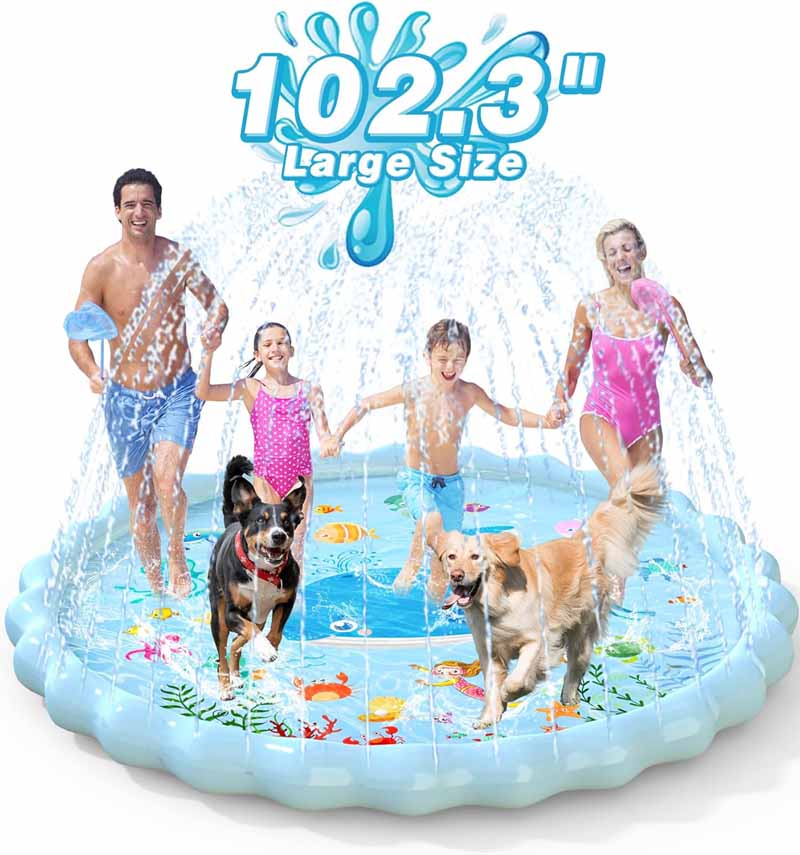
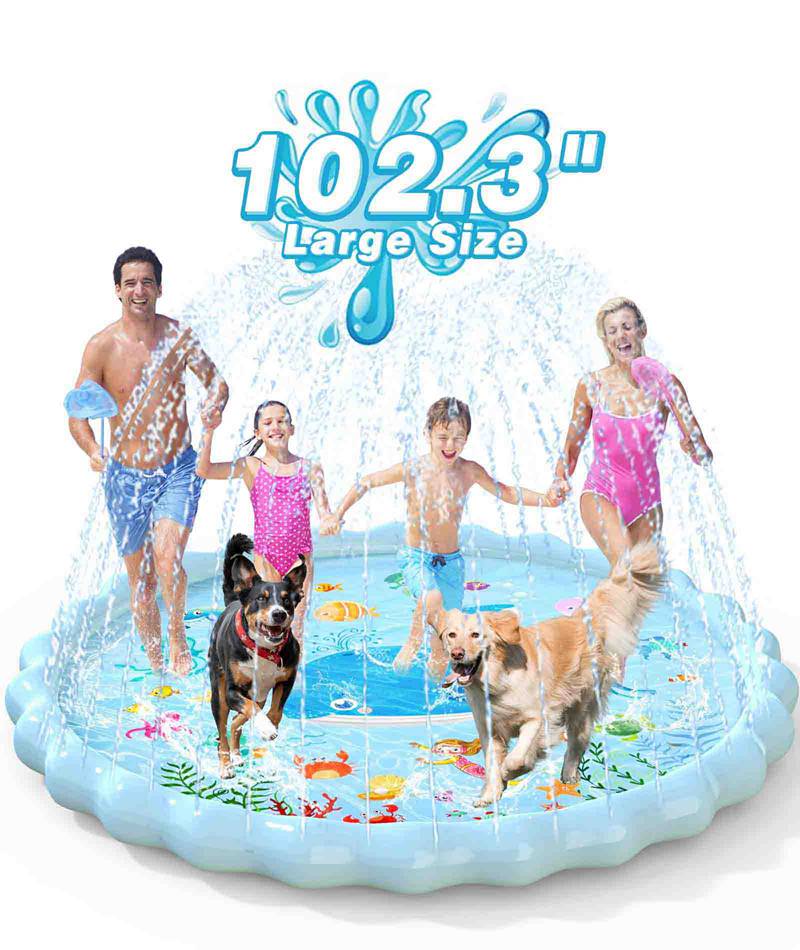
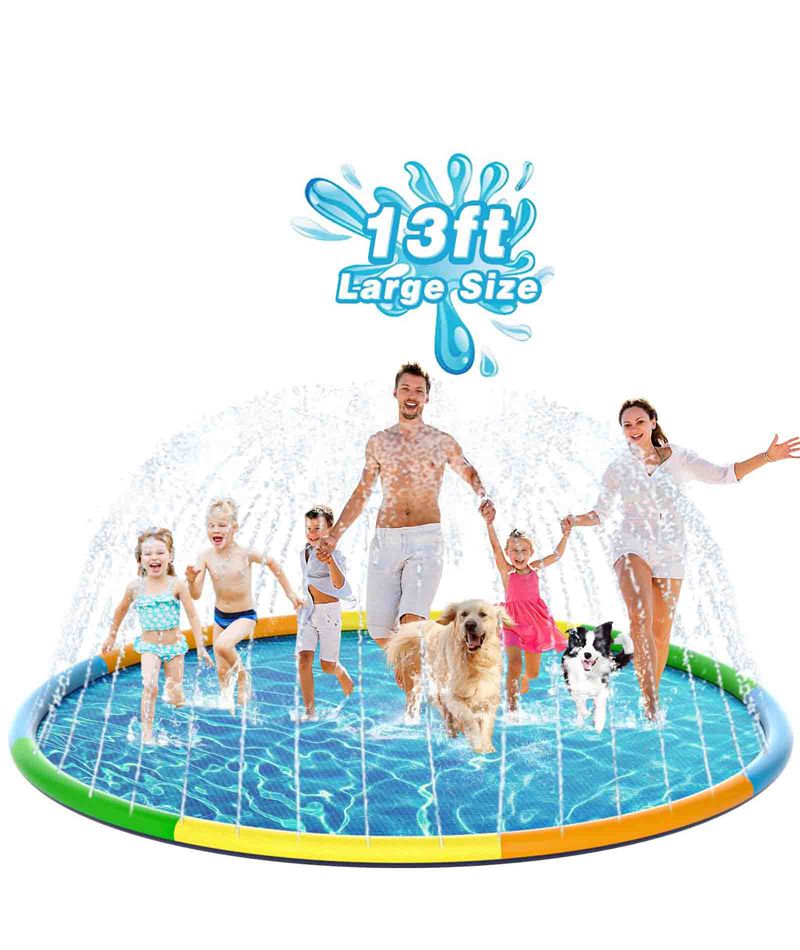
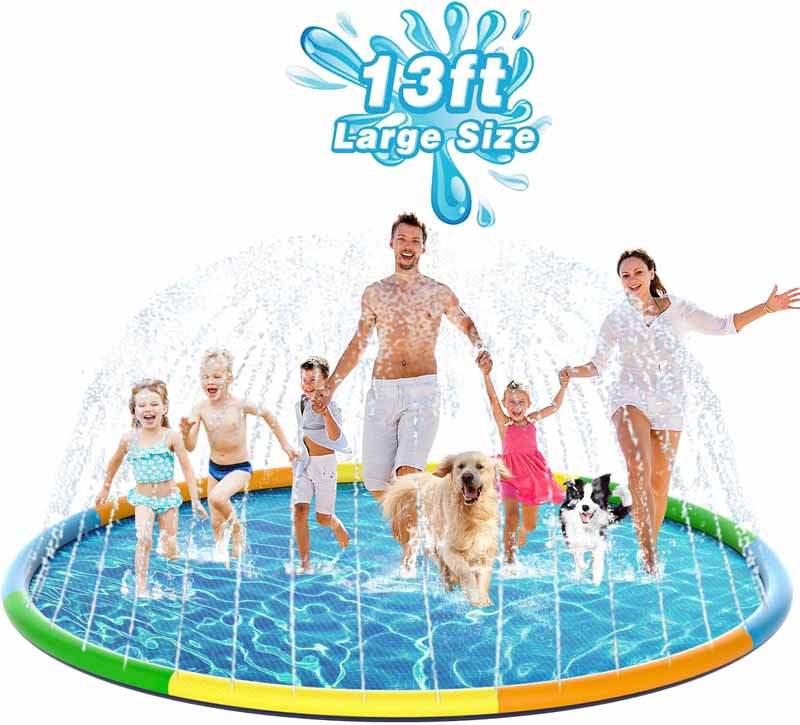
A splash pad above 100 inches is usually better for siblings because it gives children enough room to move, sit, turn, and share toys without feeling crowded. For multiple children, pets, or backyard playdates, a 13 ft splash pad or larger gives a more comfortable shared water play area.
Size is one of the easiest details to overlook. A splash pad may look large in a product image, but real use is different. Once two children step on it, bring a ball, sit near the center, or start chasing the spray, the usable space becomes smaller than expected. For siblings, the question is not only whether the pad fits in the yard. It is whether the children can use it without constantly entering each other’s space.
A smaller splash pad may be fine for one young child. Siblings need more room because they move in different ways. One child may want active water play. Another may want slower sensory play. A third may keep stepping on and off the pad. Larger diameter gives each child more freedom inside the same shared area.
Parents should also leave open space around the splash pad. A larger pad should not be placed close to patio furniture, fences, garden tools, barbecue equipment, rough concrete, or sharp landscaping. The safest setup is a flat, clean lawn area with enough dry space nearby for towels, shoes, and breaks. This is why EPN gives more attention to larger family splash pad formats. A bigger round splash pad is not only about looking impressive in the backyard; it gives siblings more personal space and makes the product more useful for playdates, pets, and summer gatherings.
Is a Bigger Splash Pad Better?
A bigger splash pad is usually better for siblings when the backyard has enough clean, flat space. More diameter helps reduce crowding, gives children room to enter from different sides, and makes shared play feel less competitive.
Bigger is not automatically better if the structure is weak. A large splash pad made from very thin PVC may wrinkle, shift, or wear faster. Size needs to be supported by stronger material, reinforced seams, balanced spray holes, and a stable hose inlet area.
For siblings with an age gap, a larger splash pad can make a major difference. The younger child can stay near the calmer center while the older child moves around the spray ring. This helps both children enjoy the same product without needing the same play style.
A larger splash pad also works better when pets join under supervision. Dogs often approach slowly, step in and out, or stay near the edge. Extra space helps children and pets avoid crowding the same area. For EPN family splash pads, larger sizing is considered together with edge stability and spray balance, so the play area feels spacious without becoming difficult for parents to manage.

What Splash Pad Size Works Best?
For siblings, 100 inches and above is a good starting point. For families with multiple children or pets, 13 ft or larger usually gives a more comfortable play experience.
| Splash Pad Size | Better For | Sibling Fit |
|---|---|---|
| Under 68 inches | One young child | Limited shared play |
| 68–100 inches | One to two children | Short sessions only |
| 100–120 inches | Two children | Good daily option |
| 13 ft or larger | Multiple kids, pets, playdates | Strongest family choice |
A practical way to choose size is to think about movement, not only age. Two calm children may be fine on a medium pad. Two active children may need a larger one. If children like running, circling, or bringing toys onto the pad, extra space becomes more important.
A 13 ft splash pad also gives parents more flexibility. It can be used for sibling play during the week, small playdates on weekends, supervised pet cooling, or summer family gatherings. That wider use makes the product feel more valuable across the season. This is the kind of multi-scenario use EPN focuses on when developing outdoor water play products: one item that can serve children, pets, and family gatherings instead of being limited to one narrow use case.
What Is the Best Splash Pad for Kids?
The best splash pad for kids is large enough for movement, made with durable PVC, easy to connect to a garden hose, and simple to clean after use. For siblings, adjustable spray, reinforced seams, and a stable round layout are especially important.
A strong kids splash pad should include:
- A surface large enough for shared movement
- PVC around 0.40–0.55 mm for repeat family use
- Inward spray from the outer edge
- Spray height controlled by hose pressure
- Reinforced outer seams
- A stable water inlet area
- Smooth surface for barefoot play
- Easy drainage after use
- Foldable storage
- Clear supervision guidance
The best splash pad is not always the one with the highest spray or the brightest print. Families usually care more about whether the pad feels safe, comfortable, and durable after repeated use. A product that sets up easily, holds pressure well, dries properly, and stores neatly is more likely to become a regular summer item.
EPN splash pads are designed around practical outdoor use, including PVC performance, edge support, spray-hole balance, and family-friendly setup. For siblings, those details help create a more reliable play experience.
How Does Splash Pad Spray Matter?
Splash pad spray matters because siblings often have different comfort levels with water. Adjustable spray allows parents to start low for younger children, move to medium for daily play, and use higher spray only when older kids have enough space and follow play rules.
Spray height can completely change the mood of water play. A younger child may enjoy gentle spray that feels soft and predictable. An older child may want stronger water movement. If the spray is too high too soon, younger siblings may step away. If it is too low for too long, older siblings may lose interest.
Most backyard splash pads rely on garden hose pressure, which gives parents simple control. The safest approach is to start low, let children get used to the spray, then increase gradually. This works especially well for families with mixed ages or pets.
Spray direction is just as important as spray height. Inward spray from the outer ring keeps water inside the play zone and helps parents supervise more easily. If water sprays outward too much, children may chase it outside the splash pad, making the area messier and harder to manage.
Balanced spray holes are also important. If one side sprays strongly while another barely sprays, children may crowd toward the stronger side. That creates arguments and uneven use. EPN product development pays attention to multi-point spray-hole layout and water pressure stability because even spray distribution improves shared play.
Is Adjustable Splash Pad Spray Helpful?
Adjustable splash pad spray is helpful because it lets parents match the water level to children of different ages, moods, and confidence levels. It gives the family more control instead of forcing every child to accept the same spray intensity.
A simple spray routine works well:
- Start with low water pressure for the first few minutes.
- Let younger children walk or sit before active play begins.
- Check whether the splash pad lies flat and the edge stays stable.
- Increase to medium pressure once everyone feels comfortable.
- Avoid very high pressure if children begin pushing, running too fast, or covering their faces.
- Lower the spray when pets or younger siblings join.
This routine helps avoid a common sibling problem: one child wants more water, while another wants less water. Adjustable spray lets parents choose the level that keeps everyone included.
What Splash Pad Spray Level Is Best?
Medium spray is usually the best level for sibling play because it creates enough water movement to feel fun while staying easier to supervise. Low spray is better for first-time use, younger children, and cautious pets. Higher spray should be saved for older children who can follow rules.
| Spray Level | Better For | Parent Tip |
|---|---|---|
| Low spray | Younger siblings, cautious kids, pets | Best starting point |
| Medium spray | Daily backyard play | Best balance for most families |
| Higher spray | Older kids, hot afternoons | Use only with clear rules |
| Too high | Overexcited play, unstable edge | Lower pressure immediately |
A splash pad does not need extreme spray to feel fun. Children often enjoy moving through the water, stepping in shallow puddles, and playing simple games more than standing under high spray. For siblings, comfort and shared use matter more than maximum height.

How Can Splash Pad Spray Reduce Fights?
Splash pad spray can reduce sibling fights when parents use water pressure as a shared-play tool. Instead of allowing the most active child to control the experience, parents can set the spray level based on the youngest or most cautious child first.
Many arguments happen around water intensity. One child blocks the strongest spray. Another complains about water in the face. One wants more pressure, while another wants less. Balanced spray and enough space help reduce these problems.
Parents can also set clear spray rules:
- Do not block spray holes.
- Do not stand on the hose connector.
- Do not aim water at faces.
- Take turns with water toys.
- Keep running under control.
- Lower the spray when younger siblings join.
A round splash pad with even spray distribution supports these rules better because children are not forced into one narrow area.
What Makes a Splash Pad Last?
A splash pad lasts longer when it uses thicker PVC, reinforced seams, a stable water inlet area, balanced spray holes, and proper after-use care. For siblings, durability is especially important because more children create more stepping, folding, dragging, and repeated pressure.
A splash pad should not be judged only by how it performs on the first day. Families notice quality after repeated use. Does the edge still hold pressure? Does the hose connection stay secure? Does the spray stay even? Does the PVC lie flat after several folds? These are the details that decide whether the product lasts through the season.
Sibling use increases stress on the material. Children step across the surface, sit near the edge, pull toys, turn quickly, and sometimes drag the pad slightly during setup. Pets can add nail pressure and scratching risk. That is why material thickness, seam strength, and surface care matter.
For family use, PVC around 0.40–0.55 mm is more practical than very thin seasonal material. It gives better support while still allowing the splash pad to fold for storage. The goal is not to make the product stiff. The goal is to keep it flexible without feeling weak.
EPN’s development approach includes material testing, water pressure stability, outdoor aging, UV exposure simulation, and repeated-use considerations. American Epsilon Inc. completes 500+ material and product performance tests each year across PVC and composite outdoor products. For families, that testing mindset matters because splash pads face sun, water, folding, pressure, and active movement.
Is Thick Splash Pad PVC Better?
Thick splash pad PVC is better for sibling use because it gives the surface more support during repeated movement. It helps the pad feel more stable and can reduce easy wear from normal stepping, folding, and outdoor use.
Very thin splash pads may feel light and easy to store, but they often crease, wrinkle, or stretch faster. For one short play session, that may not matter. For families using the same pad several times a week, material strength becomes more important.
A practical PVC range for repeat family use is around 0.40–0.55 mm. This range offers better support while still staying foldable. It is especially useful when the splash pad is used by two or more children, pets, or playdate groups.
What Splash Pad Details Matter?
The details that matter most are reinforced seams, stable hose connection, balanced spray holes, smooth PVC surface, and a foldable structure that is not overly thin. These features affect real use more than pattern design alone.
Parents should check:
- Outer edge: Does it look strong enough to hold water pressure?
- Hose inlet: Is the connection area stable and supported?
- Spray holes: Are they placed evenly around the ring?
- Surface: Does it feel smooth and comfortable?
- PVC: Does it feel flexible but not flimsy?
- Drainage: Can water leave the pad easily after play?
- Storage: Can it dry and fold without trapping dirty water?
A splash pad may look simple, but its structure has to manage water pressure, body movement, sun exposure, and repeated storage. Better construction makes the difference between a product families trust and one they avoid using again.

Why Do Splash Pads Wear Out?
Splash pads wear out faster when they are used on rough ground, folded while wet, exposed to sharp debris, or made from weak material. Most early damage comes from a mix of poor setup, thin PVC, excessive pressure, and improper storage.
Common causes include:
- Stones or sticks under the pad
- Rough concrete or gravel
- Dragging the pad instead of lifting it
- Pet nails scratching the surface
- Children jumping on the outer ring
- Excessive hose pressure
- Folding before the pad dries
- Storing near sharp tools or heavy items
- Leaving water trapped inside folds
Parents can extend product life with a simple routine: set up on clean grass, check the ground first, start with low pressure, rinse after play, drain fully, air dry, and store in a dry place.
How Can Splash Pad Play Stay Safe?
Splash pad play stays safer when parents use flat ground, start with low water pressure, set simple rules, and supervise actively. For siblings, safety also depends on space, behavior, spray level, footwear, pet control, and keeping the play area free from sharp debris.
A splash pad has less water depth than a pool, but children still need attention during water play. Water changes how children move. They run faster, turn suddenly, and may forget normal backyard rules. Siblings can also become competitive, especially when one child wants stronger spray or a certain play spot.
Setup is the first safety step. The pad should be placed on flat, clean grass or a smooth outdoor surface. Parents should remove stones, sticks, garden tools, sharp toys, and hard debris before turning on the water. A splash pad should not be placed on gravel, rough concrete, steep slopes, or areas close to sharp landscaping.
Water pressure should start low. This gives parents time to check the surface, edge, spray direction, and children’s reactions. If the spray is too high, children may cover their faces, run away from the water, or push toward the side. If the edge moves or twists, the pressure should be lowered.
Simple rules help siblings play better. Children should know not to push, not to jump on the edge, not to spray water into faces, and not to stand on the hose connector. Toys should be soft and suitable for water play. Hard toys, sharp objects, or bikes should stay away from the splash pad.
Pets need separate attention. Dogs can enjoy a splash pad, but nails should be trimmed and chewing should not be allowed. A dog that digs, scratches, or bites the PVC can damage the surface. When children and pets use the same pad, adult supervision becomes even more important.
Do Splash Pad Rules Help?
Splash pad rules help because siblings often get more excited around water. Simple rules reduce pushing, face spraying, slipping, and arguments over toys or space.
Rules should be short and easy to remember:
- No pushing.
- No jumping on the edge.
- No spraying faces.
- No standing on the hose connector.
- Take turns with toys.
- Keep pets from chewing or digging.
- Step off the pad for breaks.
- Listen when an adult lowers the water pressure.
Parents should explain rules before turning on the water. Once the spray starts, children are more excited and less likely to listen carefully. A quick splash pad check before play can make the whole session smoother.
For siblings, rules also help create fairness. Older children should understand that water pressure starts low for younger children. Younger children should know where to sit or step safely. Clear expectations reduce frustration for everyone.

Can Older Kids Watch a Splash Pad?
Older children can help with small tasks, but they should not be responsible for supervising a splash pad alone. Adult supervision is still needed during backyard water play.
An older sibling can help bring towels, move soft toys, or remind younger children to take turns. However, they should not be expected to manage safety, water pressure, pets, or emergencies. A child may not notice risk in the same way an adult does.
Parents should stay close enough to see the entire splash pad. A round design helps because the play area is open and visible from different angles. Parents can quickly see who is near the hose, who is sitting in the center, and whether the spray level is still comfortable.
Should Kids Wear Shoes on a Splash Pad?
Kids do not always need shoes on a clean backyard splash pad. Barefoot play often feels natural on smooth PVC placed over flat grass. Water shoes may be useful on hot, rough, or shared outdoor surfaces.
Hard-soled shoes should be avoided because they may scratch the PVC or put extra stress on the surface. If children wear water shoes, parents should check the soles first. Small stones stuck in the bottom of the shoe can damage the splash pad.
| Surface | Better Footwear Choice | Reason |
|---|---|---|
| Clean grass | Barefoot or soft water shoes | Comfortable and gentle on PVC |
| Hot patio nearby | Soft water shoes | Protects feet when stepping off |
| Rough deck | Soft non-slip water shoes | Adds foot protection |
| Gravel area | Avoid setup | Too rough for splash pad use |
| Public splash area | Water shoes | Better foot protection |
For sibling play, footwear should not create new risks. Children should avoid running too fast, even with water shoes. Shoes can help with ground comfort, but they do not replace careful setup and adult supervision.
Why Is a Round Splash Pad Good?
A round splash pad is good for siblings because it creates an open play zone with access from different sides. Children can move around the spray ring, sit in the center, and play at different speeds while parents watch the full area more easily.
Shape affects how children behave. A round splash pad naturally creates a shared center and an active outer ring. This works well for siblings because children do not need to play the same way at the same time. One child can sit in shallow water, another can walk through the spray, and an older sibling can circle around the outside.
A round layout also reduces crowding. Children can enter and exit from different sides instead of pushing through one narrow area. This makes the play feel more natural and less competitive.
For parents, the round shape improves visibility. The whole splash zone is easier to watch from a patio, lawn chair, or garden side. Parents can see the hose area, center area, outer edge, and children’s movement without walking around constantly.
Is a Round Splash Pad Easier to Watch?
A round splash pad is easier to watch because it creates one clear play area. Parents can see younger and older children from different angles without hidden corners or narrow entry points.
This is helpful when siblings have different play styles. One child may stay in the center, another may move through the spray, and another may step on and off the pad. A round shape keeps all of that movement easier to follow.
A clear layout also helps parents explain play rules. Children can understand where the spray ring is, where the center play area is, where the hose side is, and where towels should stay.
How Does a Round Splash Pad Help Play?
A round splash pad helps play because it supports several activities in one space. Children can sit, step, circle, splash, pass soft toys, or take turns moving through the water.
For siblings, this flexibility matters. They do not always want the same game. A round pad allows different play styles to happen together without forcing every child into the same spot.
It also works better for families with pets. A dog can approach from the edge and leave when needed, while children continue using the center and spray ring. This makes the experience calmer and more natural.
Why Do Splash Pads Get Gross?
Splash pads get dirty when grass, mud, sunscreen, pet hair, food crumbs, and standing water build up. Poor drying and storage can also create odor or residue.
Backyard splash pads are easier to keep clean than public water play areas because families control the ground, water source, use time, and storage. The key is not complicated cleaning. The key is consistency.
A clean-use routine should include:
- Set up on clean grass or smooth outdoor surface.
- Remove sticks, stones, and sharp debris before play.
- Keep food away from the splash pad.
- Rinse the surface after use.
- Drain all remaining water.
- Let the pad air dry fully.
- Fold loosely after drying.
- Store in a dry place away from sharp objects.
Parents should avoid folding the splash pad while it is still wet. Wet storage can trap odor and make the surface unpleasant next time. A few extra minutes of drying helps keep the pad fresher for repeated sibling play.
FAQ
What is the best splash pad for siblings?
The best splash pad for siblings is large enough for shared movement, made with durable PVC, and designed with adjustable spray. A round splash pad above 100 inches is usually better for two children, while 13 ft or larger gives more room for multiple kids, pets, and playdates.
What are the benefits of a splash pad?
A splash pad gives children outdoor movement, cooling water play, sensory fun, and a shared backyard activity. It is easier to set up than many inflatable pools and has less water depth, making it useful for short supervised play sessions.
What splash pad size is best for siblings?
A splash pad above 100 inches is usually better for siblings. For larger families, pets, or playdates, a 13 ft splash pad offers more usable space and helps reduce crowding.
Is adjustable splash pad spray important?
Yes. Adjustable spray helps parents match the water level to different ages and comfort levels. Low spray works well for younger siblings and first-time use. Medium spray is often best for daily backyard play.
Should kids wear shoes on a splash pad?
Barefoot play is usually comfortable on a clean backyard splash pad placed on grass. Soft water shoes may help on hot or rough surfaces. Hard-soled shoes should be avoided because they may scratch or stress the PVC.
Why do splash pads get dirty?
Splash pads get dirty when grass, mud, sunscreen, pet hair, and standing water build up. Rinse the pad after use, drain it fully, let it dry, and store it away from sharp or dirty objects.
Can kids and pets use the same splash pad?
Yes, kids and pets can use the same splash pad with adult supervision. Pet nails should be trimmed, and dogs should not chew, dig, or scratch the PVC surface.
Can a splash pad be used on grass?
Yes. Flat, clean grass is one of the best surfaces for backyard splash pad use. Remove stones, sticks, and sharp debris before setup.
How long should children play on a splash pad?
Many families use a splash pad for 20–40 minutes at a time, depending on age, weather, and energy level. Children should take breaks, drink water, and stop if play becomes too rough.
How should a splash pad be stored?
Drain all water, rinse the surface, let the splash pad dry fully, then fold it loosely. Store it in a dry place away from sharp objects, heavy items, direct heat, and pet chewing.
What PVC thickness is better for a family splash pad?
For repeated family use, PVC around 0.40–0.55 mm is a practical range. It gives better support than very thin material while still allowing the splash pad to fold for storage.
What makes a splash pad better for older and younger siblings?
A better splash pad for different ages should have enough space, adjustable spray, a smooth surface, stable edges, and simple rules for shared play. Parents should start with low water pressure and increase gradually.
Bring Better Backyard Water Play to Your Product Line
A better splash pad for siblings is not defined by one feature. Families care about how the product feels after setup, how children share the space, whether the spray is comfortable, whether the material feels strong, and whether cleanup is easy after play. The best backyard splash pads make summer play feel simple, safe, and repeatable.
For families, the best splash pad is the one children want to use again. For brands and retailers, the best splash pad is the one that earns repeat seasonal demand instead of one-time curiosity.
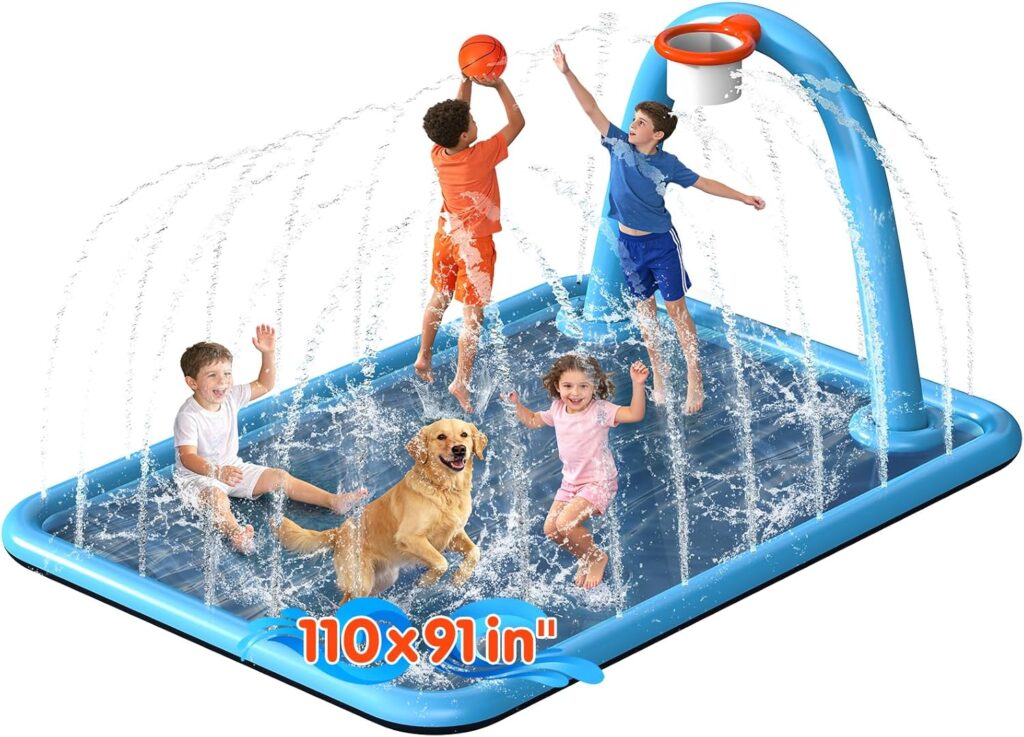
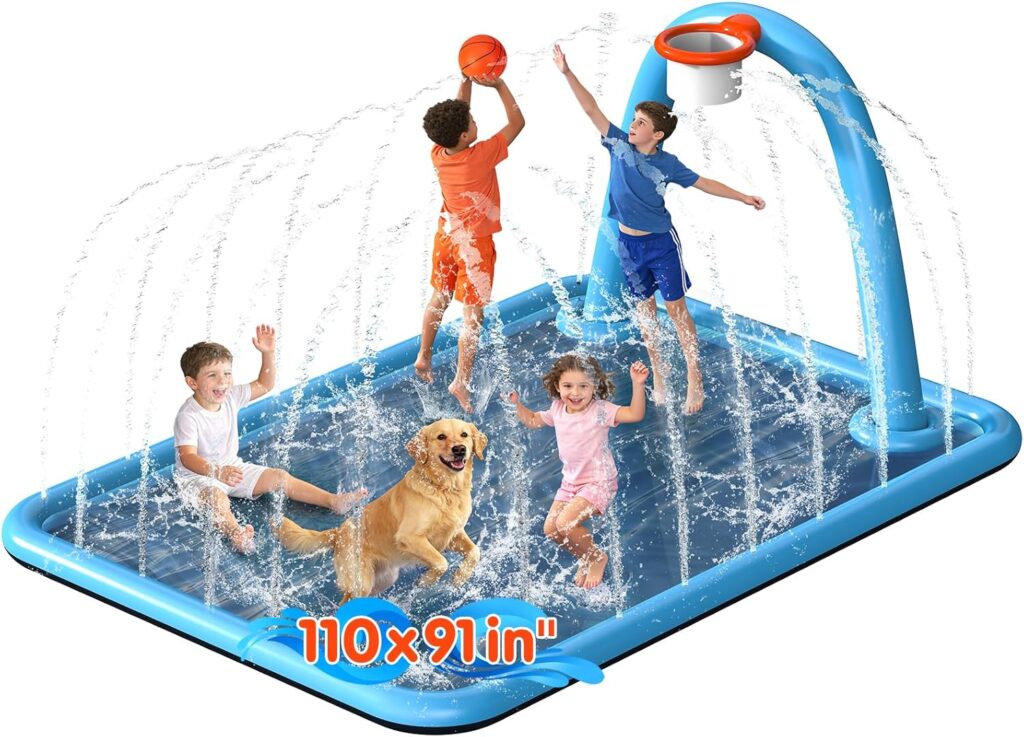
EPN, part of American Epsilon Inc., develops PVC and composite outdoor products for family entertainment, children’s water play, pet cooling, and seasonal recreation. The company supports a wide product range, including kids splash pads, pet splash pads, basketball splash pads, water slides, inflatable pools, pet pools, floating water toys, water hammocks, snow tubes, inflatable pool pillows, and other outdoor seasonal products.
For splash pad projects, Epsilon can support:
- Branded EPN product orders
- OEM and ODM customization
- Size and shape adjustment
- PVC thickness selection
- Spray-hole layout development
- Pattern and color customization
- Packaging and label design
- Multi-language instruction support
- Retail packaging and carton label options
- Amazon, retail, and distributor project support
Epsilon works with 27 R&D professionals and 18+ designers, with more than 500 material and product tests completed each year. Annual production capacity can reach up to 12 million units, supporting both seasonal product programs and customized development projects.
For qualified projects, sample development can often be completed in 3–5 days. Standard production usually takes around 20–30 days, depending on product type, packaging, order quantity, and customization requirements. Urgent projects may be supported when material, mold, and production conditions match.
Retailers, distributors, Amazon sellers, and outdoor toy brands can contact Epsilon to order EPN branded splash pads or request a custom splash pad quotation. Whether the goal is a family splash pad for siblings, a pet-friendly water play mat, a sports-themed splash pad, or a full summer water toy collection, Epsilon can provide product development, manufacturing, packaging, and delivery support for different market needs.
Get A Fast quote
Here, bringing your inflatable concepts to life is no longer a challenge—it’s a collaborative journey where American Epsilon helps families, outdoor enthusiasts, and global brands transform creative ideas into safe, certified, and market-ready inflatable solutions.


Partner With Epsilon
Whether you are a family looking for safe backyard fun or a brand seeking large-scale OEM/ODM solutions, American Epsilon Inc. guarantees every inflatable is built with safety, durability, and excitement in mind. With flexible low MOQs, strategically placed warehouses in the U.S., Canada, U.K., and Germany, plus 24/7 professional support, we ensure smooth delivery and reliable service worldwide.
Ready to bring your inflatable ideas to life? Request free samples, fast prototypes, and customized designs today—your trusted inflatable journey starts here.