Skip to content
Can Dogs Use a Kids Splash Pad: Safety and Durability Guide
# Your Trusted Inflatable Supplier In US

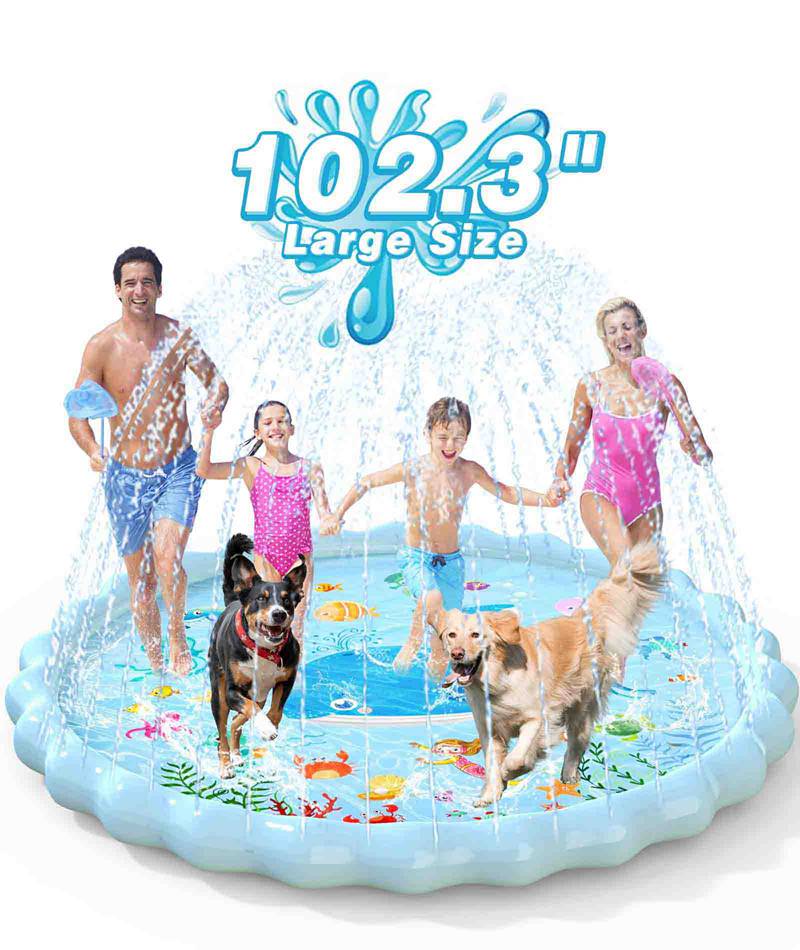
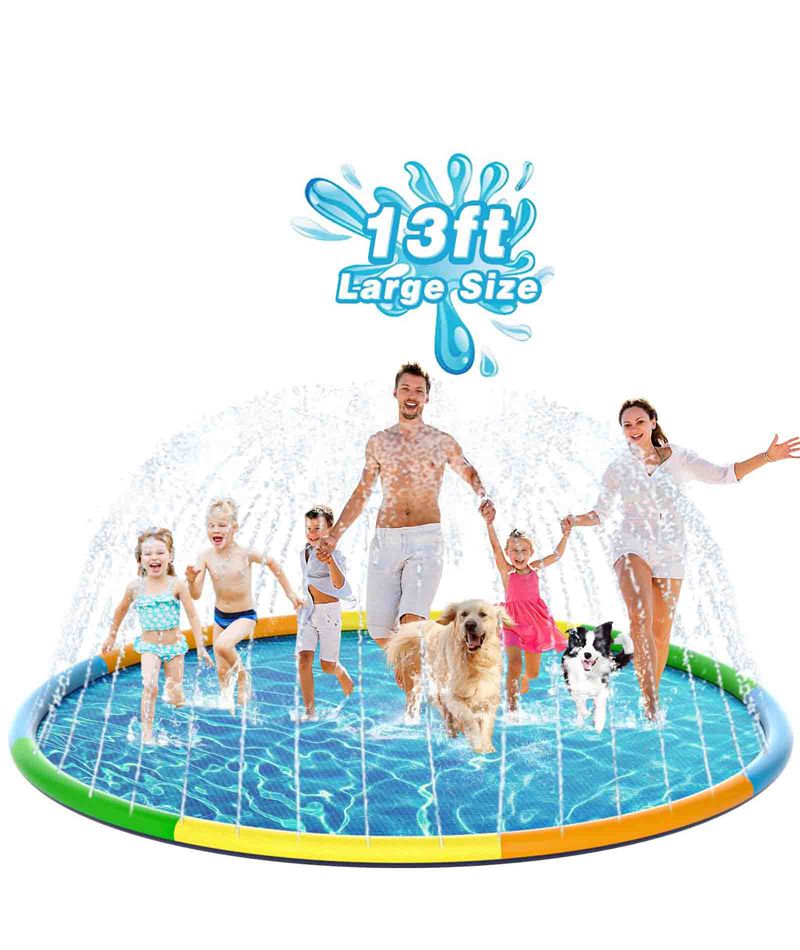
A kids splash pad and a dog splash pad can look almost the same at first glance. Both are flat water-play products. Both connect to a hose. Both spray water through the outer ring. That is exactly why so many families ask the same question: if I already have a kids splash pad in the backyard, can my dog use it too? It sounds simple, but the real answer depends on more than just whether the dog enjoys water. It depends on claw pressure, surface wear, hygiene, dog behavior, the age of the children, and how durable the splash pad really is.
The short answer is yes, many dogs can use a kids splash pad, but that does not automatically mean it is the best choice. A calm small dog may use a kids splash pad with very few problems. A large active dog may wear it much faster, scratch the surface, or make the whole setup harder to keep clean and safe for children. In real family use, the better question is not only “can a dog use it,” but “will the splash pad still hold up, and will this still feel like a good setup after repeated use?”
That is where this topic becomes much more useful. For some families, one splash pad works fine for both children and dogs. For others, the better answer is to separate the use, choose a tougher product, or move to a dog-specific splash pad. Once you understand how dogs actually change the wear, hygiene, and daily-use pattern, the decision becomes much easier and much smarter.
Can Dogs Use a Splash Pad?
Yes, many dogs can use a splash pad, and in a lot of real homes they already do. The more useful question is not simply can they use it, but whether the splash pad is right for the dog, right for the family, and strong enough for the way the dog actually plays. That is where many customers need more honest guidance.
A splash pad is usually designed around light barefoot play, children stepping across the surface, and normal backyard summer use. A dog changes that pattern immediately. Dogs do not move like children. They put pressure into the surface through nails, they may spin in one place, they may scratch at the water, and they may bite at the spray or pounce on the outer ring. Some dogs do this very lightly. Others turn a calm splash pad session into a much rougher use case.
That is why the right answer depends on several real-life factors:
- the size of the dog
- the dog’s nails
- the dog’s activity level
- whether the dog likes to paw or dig
- whether children will share the splash pad
- how durable the splash pad actually is
For many families, a dog can absolutely use a splash pad and enjoy it. But not every kids splash pad is a good long-term fit for regular dog use.
A practical decision table looks like this:
| Dog Situation | Is a Regular Splash Pad Likely to Work? |
|---|---|
| Small calm dog | Often yes |
| Medium dog with gentle play | Often yes, with supervision |
| Large calm dog | Sometimes, if the splash pad is strong enough |
| Large active dog | Less ideal for many kids splash pads |
| Dog that scratches or digs | Higher wear risk |
| Dog that bites at the spray ring | Poor fit for many standard splash pads |
This is why some families feel completely happy sharing one splash pad between children and dogs, while others quickly realize they need a tougher, more pet-focused option. The difference is not usually about whether dogs like water. It is about whether the splash pad can handle the dog’s real behavior and whether the family can manage the setup comfortably. A good rule for customers is this: if the dog will only join occasionally and is calm, a kids splash pad may work well. If the dog will use it often, or uses it roughly, the product choice should be more careful.
Can a Dog Use a Kids Splash Pad?
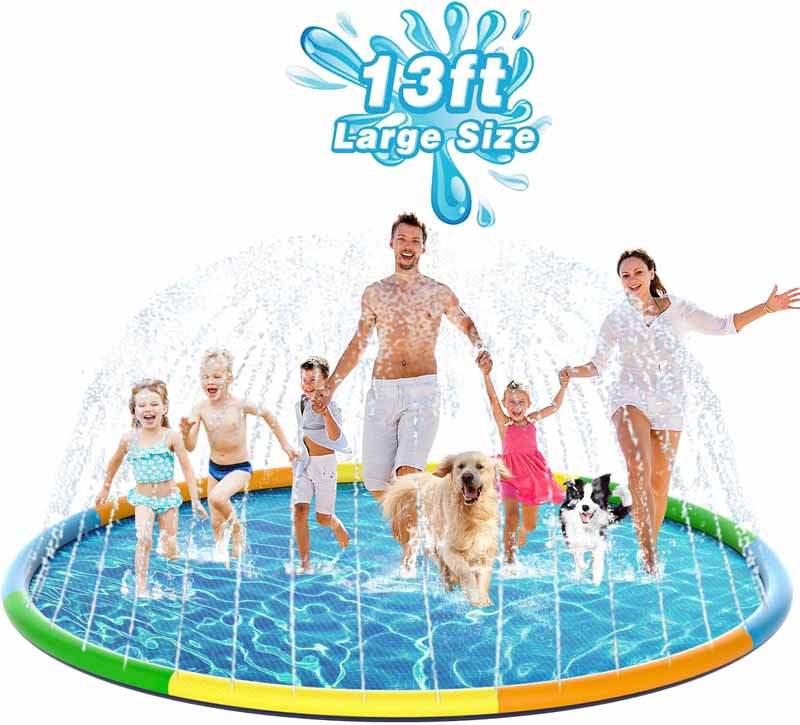
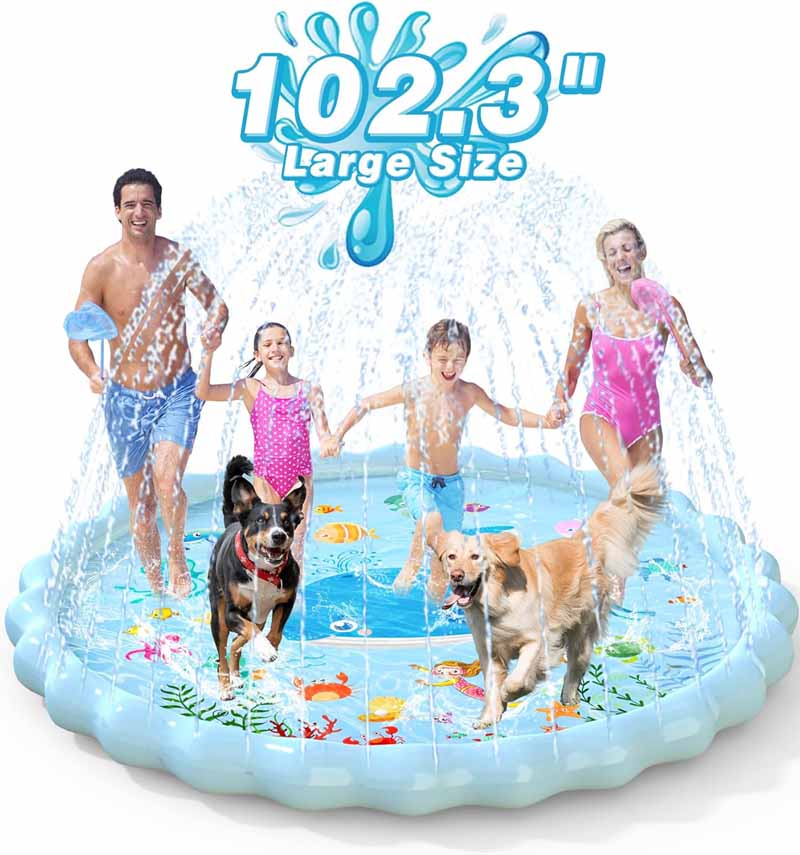
Yes, a dog can use a kids splash pad in many homes, and this is one of the most common real-life scenarios. A family buys a splash pad for the children, turns on the water, and the dog immediately wants to jump in. That is normal. Many dogs are curious about moving water, especially in hot weather. Some like to cool off by standing in the spray. Some chase the water. Some paw at the jets. Some stay near the edge and simply enjoy being part of the activity. But “can use” does not always mean “best long-term choice.”
A kids splash pad is usually made around child-use assumptions:
- lighter body pressure
- smoother movement across the surface
- softer contact from feet and hands
- less scratching and digging behavior
Dogs create a different kind of stress. Even when the dog is not trying to be rough, the pattern changes because:
- nails concentrate force into smaller contact points
- quick turns create more friction
- repeated pawing can target one area again and again
- dogs may chew or mouth the ring
That is why some dogs use a kids splash pad with very few problems, while others shorten the product’s life quickly.
A useful comparison:
| Use Pattern | Kids Splash Pad Result |
|---|---|
| One small dog, occasional cooling off | Often works well |
| Medium dog, calm use, short sessions | Often manageable |
| Large dog, active spinning and jumping | Usually harder on the splash pad |
| Dog that paws at spray holes | Faster wear likely |
| Dog that chews edge or ring | Poor fit |
So yes, a dog can use a kids splash pad, but the product should be judged by the dog’s real movement pattern, not only by whether the dog physically fits on it.
Can a Dog Go to a Splash Pad?
At home, often yes. In public settings, it depends on the place, the rules, and the hygiene expectations. For a home backyard splash pad, the answer is usually simple: if the environment is controlled, the dog is supervised, and the splash pad is suited to that use, then a dog can go onto the splash pad. In fact, for many families, home use is the easiest and safest way to let a dog enjoy water play because the owner controls:
- the spray level
- the surface under the pad
- whether children and dogs use it together or separately
- how the splash pad gets cleaned afterward
Public splash pads are a different question. Many public splash pads are designed for children, not pets. Even if a dog would enjoy the water, the space may not be intended for shared child-and-dog use. That creates concerns around:
- hygiene
- leash control
- unpredictable dog behavior around children
- local rules or restrictions
A simple home-versus-public guide:
| Splash Pad Setting | Better or Worse for Dogs |
|---|---|
| Backyard splash pad | Often workable |
| Private patio splash pad | Often workable |
| Family-controlled yard play zone | Usually best |
| Public kids splash pad | Often a poor fit |
| Pet-specific water area | Better fit |
So the better practical answer is this: dogs often do well at a home splash pad, but that does not automatically mean every splash pad space is a good dog space.
When Is a Dog Splash Pad Better?
A dog splash pad is usually the better choice when the dog is more than just an occasional extra user. This is the point many families discover after a few weeks. At first, they think, “Our dog can just use the kids splash pad too.” Sometimes that works. But once the dog becomes a regular user, the needs change fast.
A dog splash pad is often the better option when:
- the dog uses the splash pad often
- the dog is medium or large
- the dog has strong nails
- the dog scratches, paws, or spins
- the owner wants easier pet-focused cleaning
- the splash pad is being chosen primarily for pet cooling and play
In those situations, a dog-specific splash pad often makes more sense because the product can be selected or built with more pet-oriented priorities in mind, such as:
- better wear tolerance
- easier cleaning after dog use
- more suitable size for dog movement
- stronger material feel for rougher use
A practical comparison helps:
| Main Use Situation | Better Product Direction |
|---|---|
| Mostly children, dog joins sometimes | Kids splash pad may work |
| Mostly dog use | Dog splash pad is better |
| Large dog plus frequent use | Dog splash pad is better |
| Kids and dog every day | Stronger shared-use product matters more |
| Owner wants a pet-first cooling product | Dog splash pad is better |
So the smartest answer is not “dogs must always use dog splash pads” and not “a kids splash pad is always enough.” The smarter answer is that once pet use becomes regular, the family should stop thinking of the dog as a side case and start treating pet use as part of the main product decision.
What Kind of Dog Uses a Splash Pad Best?
Not every dog uses a splash pad the same way. Size matters, but behavior matters just as much. A calm dog with trimmed nails may be very easy on the product, even if the dog is not tiny. A smaller dog that scratches and spins constantly may still create noticeable wear.
The dogs that usually do best on a splash pad are:
- dogs that already like water
- dogs that cool off by standing or walking calmly
- dogs that do not scratch at the spray
- dogs that do not chew the ring
- dogs that respond well to owner cues
Dogs that are harder on splash pads usually include:
- dogs that paw at moving water
- dogs that bite at the spray or ring
- dogs that jump hard into the play zone
- dogs that turn fast in one spot
- dogs with long, sharp nails
A practical dog-behavior table:
| Dog Behavior | Fit for Splash Pad Use |
|---|---|
| Calm standing in spray | Strong fit |
| Gentle walking through water | Strong fit |
| Curious but controlled pawing | Sometimes manageable |
| Fast spinning and scratching | Harder on product |
| Biting the ring or jets | Poor fit |
| Overexcited rough movement | Poorer fit |
For customers, this matters because many product disappointments are not really size problems. They are behavior problems. A family often chooses better when they ask, “How does my dog actually play?” instead of only asking, “How big is my dog?”
What Should Families Think About Before Letting Dogs Use a Splash Pad?
Before letting dogs use a splash pad regularly, families usually do better when they think through a few practical questions first. This often prevents the most common regrets later.
Helpful questions include:
- Is the dog calm enough for this kind of water play?
- Are the nails trimmed?
- Will children and dogs use it together or in separate turns?
- Is the splash pad strong enough for the dog’s size and behavior?
- Is the ground under the splash pad smooth enough?
- Will the family rinse and dry the splash pad after dog use?
A useful pre-use checklist:
| Question | Why It Matters |
|---|---|
| Are the dog’s nails trimmed? | Reduces wear risk |
| Is the dog calm or rough? | Changes how much stress goes into the product |
| Is the splash pad being shared with kids? | Affects hygiene and management |
| Is the surface rough? | Increases bottom wear |
| Will the family clean it after dog use? | Affects comfort for later child use |
This is the real answer to whether dogs can use a splash pad. Yes, many can. But the best outcome depends on how honest the family is about the dog, the product, and the way both will actually be used together.

Will a Dog Damage a Splash Pad?
A dog can damage a splash pad faster than a child usually will, but the honest answer is it depends on the dog, the splash pad, and the way it is used. This is one of the most important points for families because many people ask the question in a very simple way: “Will my dog pop it?” Sometimes the answer is yes. But more often, the real story is slower wear, not instant destruction.
A splash pad used only by children usually deals with:
- bare feet
- lighter stepping pressure
- smoother movement
- less scratching
- less concentrated force in one small area
A splash pad used by dogs may also need to handle:
- nail pressure
- scratching or digging motions
- sudden jumping
- fast turns in one spot
- biting at the spray or ring
- heavier concentrated force near the edge
That is why dog-related damage does not always show up as one big puncture on day one. In many homes, it shows up more gradually. Families notice that the splash pad still works, but it feels less reliable than before. The ring may soften, the seams may feel weaker, the bottom may look more worn, or the connector area may start showing stress faster than expected.
A practical “will a dog damage it?” view looks like this:
| Dog Situation | Damage Risk to Splash Pad |
|---|---|
| Small calm dog, trimmed nails | Lower |
| Medium dog, moderate play | Medium |
| Large dog, calm use | Medium to higher |
| Large active dog | Higher |
| Dog that scratches or paws at spray | High |
| Dog that chews or bites the ring | Highest |
This is why a kids splash pad may work fine for some dogs and feel like a poor choice for others. The real issue is not only dog size. It is the dog’s movement style, nail condition, and repeat-use pattern.
A useful rule for customers is this:
- occasional calm dog use may be manageable on many kids splash pads
- frequent, active, rough dog use usually calls for a stronger product or a dog-specific splash pad
That is the real starting point for understanding damage risk.
Can Dog Nails Puncture a Splash Pad?
Yes, dog nails can puncture a splash pad, and this is the first concern most families have for a good reason. But puncture risk is not the same in every home. Some dogs barely leave a mark. Others create wear very quickly. The reason is simple: dogs apply force differently from children. A child’s weight is usually spread more broadly across feet, knees, or hands. A dog’s nails concentrate pressure into smaller points. That matters a lot when the dog:
- brakes suddenly
- jumps onto the splash pad
- scratches at the spray
- paws at one section again and again
- spins quickly while excited
A claw does not always have to “stab through” the material in one dramatic moment to create trouble. It can also weaken the surface gradually through repeated contact until the splash pad becomes more vulnerable later.
A useful claw-risk table:
| Dog Factor | Puncture Risk |
|---|---|
| Small dog with trimmed nails | Lower |
| Small dog with long sharp nails | Medium |
| Medium dog with normal activity | Medium |
| Large dog with strong nails | Higher |
| Dog that digs or scratches at water | Highest |
This is why nail condition matters so much. Many families focus only on the splash pad, but a dog with recently trimmed nails usually creates less risk than a dog with long sharp nails, even if the dog itself is not extremely large. So yes, dog nails can puncture a splash pad. But for many households, the bigger danger is not one dramatic nail puncture. It is repeated claw stress that slowly makes the surface weaker.
Which Splash Pad Parts Wear First?
A splash pad does not wear out evenly, and dog use makes that even more obvious. This is where many families get surprised. They expect the center to be the main wear zone because that is where the dog stands. But in many cases, the parts that wear first are the ones taking the most pressure and repeated movement.
With dogs, the most vulnerable areas are usually:
- the outer ring
- the edge seams
- the bottom surface
- repeated pawing zones
- the hose connector area if the dog steps or jumps near it
This happens because dogs often use the splash pad differently from children. They may circle the ring, brace against the edge, scratch at the jets, or jump in and out quickly. That kind of movement puts more stress into the structure.
A practical wear-point table:
| Splash Pad Part | Why Dog Use Wears It Faster |
|---|---|
| Outer ring | Dogs step, jump, and turn on it |
| Edge seams | Pressure plus movement builds stress |
| Bottom surface | Nails and friction increase wear |
| Repeated play zone | Spinning and scratching focus damage |
| Connector area | Movement plus hose stress can combine |
This is why a splash pad can still look colorful and “mostly fine” while already starting to fail in the places that matter most. The problem is not always the visible top print. The problem is usually where the dog changes the stress pattern.
Which Splash Pad Material Lasts Better?
For dog use, the better material is usually the one that balances flexibility, surface toughness, seam support, and repeat-use durability. Families often focus too much on thickness alone, but dog-related wear is not only about making the splash pad thicker. It is about whether the whole product can handle rougher use without aging too quickly.
A better material for dog use usually needs to do four things well:
- resist claw wear better
- support stronger seams
- stay flexible enough for repeated folding
- hold up better on real backyard surfaces
Families usually notice material performance in very practical ways:
- the bottom does not scuff too quickly
- the surface still feels solid later in the season
- the ring does not soften too fast
- the splash pad still feels worth using after repeated dog sessions
A simple material guide:
| Material Quality | Why It Matters for Dog Use |
|---|---|
| Better surface toughness | Helps resist claw and friction wear |
| Better flexibility | Helps avoid early stress cracks or stiff feel |
| Better seam support | Helps the ring hold up longer |
| Better outdoor tolerance | Helps with repeated summer use |
This is why two splash pads that both “look fine” for children may perform very differently once dogs become regular users. One may hold up fairly well. Another may feel worn too quickly. The difference usually comes from the material and build, not just from the print or size.
How Does Dog Size Change Splash Pad Damage?
Dog size matters, but it is not the only factor. Customers often ask whether their dog is “too big” for a kids splash pad, and that is a reasonable question, but size alone does not tell the whole story.
A larger dog often creates more risk because:
- body weight is higher
- jumping force is stronger
- turns create more stress
- nails are often stronger
- ring stepping is heavier
But a smaller dog can still create a lot of wear if it:
- scratches constantly
- bites the ring
- paws at the spray
- stays overexcited the whole time
A practical size-and-risk view looks like this:
| Dog Size | Damage Risk in Normal Use |
|---|---|
| Small | Lower, if calm |
| Medium | Medium |
| Large | Higher |
| Very large and active | Highest |
So the better question is not only: “Is my dog large?”
The better question is: “Is my dog large and rough with the splash pad?” That usually leads to a more honest answer.
What Kind of Dog Behavior Damages a Splash Pad Most?
Behavior often matters more than size. This is one of the most useful things families can learn, because it changes the whole product decision.
The dog behaviors that usually create the most splash pad wear are:
- scratching at the spray
- digging at one spot
- spinning in place
- jumping hard onto the ring
- biting or chewing the edge
- overexcited repeated pouncing
These behaviors are much harder on a splash pad than calm cooling-off behavior.
The dog behaviors that are usually easier on a splash pad are:
- standing in the water calmly
- slow walking through the spray
- sitting or resting near the edge
- short, controlled play sessions
A behavior-risk guide looks like this:
| Dog Behavior | Damage Risk |
|---|---|
| Calm standing in spray | Low |
| Gentle walking through water | Low to medium |
| Curious but controlled pawing | Medium |
| Fast spinning and scratching | High |
| Biting the ring or jets | Highest |
| Rough excited jumping | High |
This is why families should think honestly about their dog’s personality before assuming a kids splash pad will work long term.
How Do Children and Dogs Together Change the Damage Risk?
When children and dogs share one splash pad, the wear pattern usually becomes harder, faster, and less predictable. This is because the product is now dealing with two different kinds of movement at the same time:
- child stepping and sitting
- dog nails and sudden turns
That combination often means:
- more edge stress
- more total foot and paw traffic
- more chaos around the ring
- more pressure on the same small areas
- more cleaning and more handling between sessions
A practical shared-use table:
| Shared Use Pattern | Damage Risk |
|---|---|
| Child only | Lower |
| Dog only, calm use | Medium |
| Child + calm dog | Medium |
| Child + active dog | Higher |
| Multiple kids + active dog | Highest |
For many families, separate turns are often the smarter option. Children use the splash pad first, then the dog uses it later, or the family keeps one splash pad mainly for children and another product mainly for the dog. That often lowers both product wear and management stress.
What Should Families Do Before Letting Dogs Use a Splash Pad?
Before letting a dog use a splash pad regularly, families usually do better when they check a few practical things first. This often prevents the most common regrets later.
Helpful questions include:
- Are the dog’s nails trimmed?
- Is the dog calm or rough around moving water?
- Is the splash pad built strongly enough for the dog’s size and habits?
- Will children and dogs use it together or separately?
- Is the surface underneath smooth enough?
- Will the family clean the splash pad after dog use?
A useful pre-use checklist:
| Question | Why It Matters |
|---|---|
| Are the nails trimmed? | Helps reduce puncture and wear risk |
| Is the dog calm or rough? | Changes how much stress goes into the product |
| Will kids share it? | Affects both wear and hygiene |
| Is the ground rough? | Increases bottom wear |
| Will the family clean it after use? | Helps the splash pad stay usable for children too |
That is the real answer to whether a dog will damage a splash pad. Yes, a dog can damage it. But the risk depends on how the dog uses it, how often the dog uses it, how strong the splash pad is, and how realistically the family manages the setup.

Is a Splash Pad Clean Enough?
A splash pad can be clean enough for dogs and children, but only if the family treats cleaning as part of normal use instead of something optional. That is the real dividing line. Many families are comfortable with a dog stepping into a kids splash pad once or twice. The bigger question comes later: after repeated use, does the splash pad still feel clean enough for children, manageable enough for the adults, and worth setting up again tomorrow? Public health guidance for splash pads makes it clear that germs, poop, pee, dirt, and debris can be rinsed off bodies, shoes, and nearby surfaces into splash pad water and onto the play area.
What makes this topic more important is that splash pads are often used by younger children. CDC outbreak reporting notes that splash pads are generally designed for children under 5, and CDC also warns that swallowing even a small amount of contaminated splash pad water can cause illness. That means “clean enough” is not just about whether the surface looks clean. It is about whether the household is using and cleaning the splash pad in a way that keeps reuse comfortable and lower-risk.
For families with dogs, the cleanliness question becomes more practical and more specific. Dogs bring a different kind of mess than children do. They can track dirt and debris from the yard, leave saliva on the spray ring, and keep returning to the same zone with wet paws and fur. That does not automatically mean a shared splash pad is a bad idea. It does mean the family should expect higher cleanup needs and a lower “just turn it on and go” feeling than they would get with child-only use. CDC also advises rinsing off dirt and debris from small water-play products and letting them air dry, which fits especially well for home splash pad routines after dog use.
A practical cleanliness view looks like this:
| Shared-Use Factor | What Changes When Dogs Use It |
|---|---|
| Surface dirt | Usually builds faster |
| Saliva contact | Usually increases |
| Grass and yard debris | Usually increases |
| Need for rinsing after use | Becomes more important |
| Parent comfort level | Depends on cleaning habits |
| Child-and-dog sharing comfort | Depends on supervision and routine |
For many homes, the question is not “Can this ever be clean?” The real question is “Can we keep this clean enough, often enough, without turning every use into a chore?” The answer is often yes, but only when the family is realistic about what dog use adds to the cleaning routine.
Is a Splash Pad Dirtier with Dogs?
In most homes, yes, a splash pad usually gets dirtier faster when dogs use it. That does not mean the splash pad becomes unusable. It means the dirt pattern changes and the cleaning standard needs to go up. Children usually add foot dirt, grass, sunscreen residue, and general summer mess. Dogs add those things too, but they also add wet fur, saliva, repeated paw contact, and more dirt from outdoor movement in and out of the play zone. CDC specifically notes that splash pad water and surfaces can pick up germs and debris from bodies, shoes, and nearby surfaces, including animal waste and yard debris.
This matters because the “dirtier” feeling often shows up before the splash pad is physically damaged. Families may notice that the splash pad still sprays normally but feels less pleasant to set up for children unless it is rinsed and dried after dog use. That is one of the biggest real-life differences between a child-only splash pad and a shared child-and-dog splash pad.
A practical comparison looks like this:
| Splash Pad Use Style | Dirt Build-Up Speed |
|---|---|
| Children only | Lower to medium |
| One calm dog only | Medium |
| Children and one dog | Medium to higher |
| Multiple children and dog | Higher |
| Dog that paws or mouths the spray often | Highest |
So yes, a splash pad usually gets dirtier with dogs. The more useful question is whether the family is willing to match that with a better rinse-and-dry habit.
Should Kids and Dogs Share a Splash Pad?
Sometimes yes, sometimes no. The best answer depends on the child’s age, the dog’s size and behavior, and how the household wants to manage hygiene. A shared splash pad setup is usually easier when the dog is calm, the children are older and steadier, and the adults are comfortable rinsing the splash pad after dog use. It is usually harder when toddlers are involved, the dog is large or highly active, or the family wants a child-only cleanliness standard without adding more work. CDC advises extra hygiene care around splash pads because young children are more likely to swallow water, and diaper-aged children need bathroom breaks or diaper checks every hour.
This is why separate turns often work better than full mixed play. Children use the splash pad first, then the dog uses it later, or the dog uses it on its own session and the splash pad is rinsed before children return. That pattern usually feels cleaner and easier to manage.
A practical sharing guide looks like this:
| Shared Situation | Better or Worse |
|---|---|
| Calm small dog + older child | Often workable |
| Calm medium dog + supervised family use | Sometimes workable |
| Large active dog + toddler | Usually harder to manage |
| Dog that paws or mouths the spray + young kids | Poorer fit |
| Separate sessions for kids and dog | Often easiest |
So children and dogs can share a splash pad, but the cleanest and calmest setup is often not simultaneous use. It is organized use.
How Do You Clean a Splash Pad After Dog Use?
Cleaning after dog use does not have to be complicated, but it should be more deliberate than a quick spray-off and walk away. A good home routine usually looks like this:
- turn off the water
- disconnect the hose
- rinse away visible dirt and grass
- rinse the areas where the dog stood, pawed, or mouthed most
- check the ring and surface quickly for wear
- let the splash pad dry fully before folding or using it again for children
This routine lines up well with CDC advice for small water-play products: empty or drain as needed, remove debris, rinse off dirt with fresh water, and let the product air dry. CDC also advises not swallowing splash pad water, not getting in if sick with diarrhea, and checking diapers every hour for young children. Those steps matter even more in a mixed-use home where cleanliness expectations need to stay higher.
A practical cleaning table:
| Cleaning Step | Why It Matters After Dog Use |
|---|---|
| Full rinse | Removes dirt, saliva, and yard debris |
| Extra rinse in high-contact zones | Reduces build-up where the dog stood or scratched |
| Quick wear check | Finds damage early |
| Full drying | Keeps the splash pad more pleasant for child reuse |
| Clean storage | Prevents old dirt carrying into the next session |
For many families, the splash pad stays “clean enough” not because dogs are never allowed on it, but because the cleanup routine is realistic, repeatable, and done every time.

How to Pick a Splash Pad for Dogs
Picking a splash pad for dogs is not just about finding a product that sprays water. It is about choosing one that matches the way dogs actually move, play, cool off, and wear down materials over time. This is where many families make the wrong choice. They start by asking whether the dog likes water, but that is only the first question. The more important questions are:
- How does the dog use the splash pad?
- How big is the dog in motion, not just at rest?
- Will the dog paw, dig, spin, or bite at the spray?
- Will children use it too?
- Will it sit on grass, patio, or concrete?
- Does the family want quick occasional pet use, or regular daily use?
Those questions matter because a dog changes the product decision very quickly. A splash pad that feels perfectly fine for a toddler may not feel durable enough for a medium or large dog. A splash pad that works for a calm older dog may be a poor fit for a young, excited dog that treats spraying water like a target.
That is why the best splash pad for dogs is usually not the one with the most colorful print or the biggest diameter. It is the one that still makes sense once the dog’s real behavior becomes part of the product logic.
A practical dog-buying view looks like this:
| Buying Factor | Why It Matters for Dog Use |
|---|---|
| Dog size | Changes force, footprint, and ring stress |
| Activity level | Changes scratching, spinning, and jumping risk |
| Nail condition | Changes puncture and surface wear risk |
| Main surface | Changes bottom wear and traction |
| Shared use with kids | Changes size, cleaning, and supervision needs |
| Use frequency | Changes how strong the build should be |
For many households, the smartest splash pad choice starts when the family stops thinking, “Will my dog fit on it?” and starts thinking, “Will this splash pad still work well once my dog uses it the way my dog normally does?” That is the real product question.
Which Splash Pad Size Is Best?
The best splash pad size for dogs depends on movement, not just body length. This is one of the most common mistakes families make. They look at the dog standing still and think the decision is simple. But dogs do not use splash pads while standing still. They step, turn, brace, jump, circle, and sometimes race through the spray. That means usable play space matters much more than just “can the dog fit inside the circle?”
A smaller splash pad may work well for:
- a small calm dog
- a dog that mostly stands in the spray
- light occasional cooling-off use
- homes where the dog is not the main user
A medium splash pad often works best for:
- medium dogs
- shared use between one dog and children
- dogs that like to move but not wildly
- families that want a balanced all-purpose size
A larger splash pad is usually better when:
- the dog is large
- the dog moves fast and turns often
- two dogs may use it
- children and dogs both use it regularly
- the family wants more room around the ring to reduce edge stress
A practical size guide:
| Dog Situation | Better Size Direction |
|---|---|
| Small calm dog | Small to medium |
| Medium dog, moderate play | Medium |
| Large dog, calmer use | Medium to large |
| Large active dog | Large, stronger build preferred |
| Kids and dog sharing | Medium to large |
Size matters because when the splash pad is too small, several problems appear at once:
- the dog steps on the outer ring more often
- movement becomes more abrupt and cramped
- the same areas take repeated pressure
- children and dogs crowd each other more easily
- the product feels rougher on itself during play
So the best size is usually the one that gives the dog enough room to cool off and move naturally without turning every session into concentrated edge wear.
What Splash Pad Surface Is Best?
Surface matters a lot for dogs because dogs create more concentrated pressure and more friction than children usually do. A dog’s nails, turns, and braking movement make the ground under the splash pad much more important than many customers first expect.
For most dog-use situations, the better surfaces are:
- smooth grass
- level lawn
- smoother outdoor play areas
- smooth patios with a protective layer underneath
The more stressful surfaces are:
- rough concrete
- exposed stone
- gravel
- cracked hardscape
- gritty ground with small sharp debris
A simple surface guide:
| Surface Type | Dog Splash Pad Result |
|---|---|
| Smooth grass | Easier on the bottom surface |
| Level lawn | Better balance for comfort and wear |
| Smooth patio with protection | Sometimes workable |
| Rough concrete | Harder on the splash pad |
| Gravel or stone | Poor fit for regular use |
This matters because dogs often:
- push harder through their paws
- dig in while turning
- scratch at one spot
- land harder when jumping
That means the same splash pad may feel acceptable on grass and wear much faster on rough concrete. For many families, the surface underneath the splash pad is one of the biggest hidden reasons a dog-use setup feels either successful or disappointing.
So the best surface is usually the one that combines:
- lower abrasion
- better footing
- lower puncture risk
- easier product life over time
How Does the 7 7 7 Rule Fit a Splash Pad?
The 7 7 7 rule is often used by dog owners to describe adjustment time, especially for a newly adopted dog. Whether someone follows that exact framework or not, the idea behind it is useful here: dogs do not always adapt to new experiences immediately. A splash pad is a new sound, a new texture, moving water, and a new kind of backyard activity. Some dogs love that right away. Others need time.
This matters because families sometimes judge the product too quickly. They turn on the water, the dog seems confused or hesitant, and they think:
- my dog hates it
- the splash pad is a bad choice
- I should force the dog into it a little
That last reaction is usually the wrong one.
A dog who is new to water play may need:
- time to observe from a distance
- lower water pressure first
- shorter sessions
- calm encouragement instead of excitement
- repeated exposure before confidence builds
A readiness guide:
| Dog Readiness Situation | Better Splash Pad Approach |
|---|---|
| Newly adopted dog | Slow introduction |
| Nervous dog | Lower pressure and shorter sessions |
| Curious but cautious dog | Let the dog explore at its own pace |
| Confident playful dog | Easier adjustment |
| Overexcited dog | More structure and shorter sessions |
This is important for product choice too. A dog that needs a slow introduction often does better with a splash pad that feels manageable, not oversized, chaotic, or overly intense. So the 7 7 7 idea fits here because it reminds families that choosing the right splash pad is not only about durability. It is also about whether the dog is emotionally ready to use it well.
Which Splash Pad Is Better for Kids and Dogs?
This is one of the most practical household questions because many families do not want separate products if one splash pad can do both jobs well enough. Sometimes that works. Sometimes it creates too many compromises.
A shared-use splash pad usually needs to balance:
- enough room for both children and dogs
- material strong enough for pet wear
- a spray pattern that is still fun for kids
- cleaning needs after dog use
- supervision comfort for adults
A kids-and-dogs splash pad tends to work better when:
- the dog is calm
- the children are older or steady on their feet
- the splash pad is medium or large
- the family is comfortable rinsing it after dog use
- the splash pad has stronger material and seam quality
It tends to work worse when:
- the dog is large and rough
- the children are toddlers
- the splash pad is small
- the dog paws or bites at the spray
- the family wants very low-maintenance child-only cleanliness
A practical shared-use table:
| Shared Use Situation | Better Product Direction |
|---|---|
| Older kids + calm dog | Shared splash pad may work |
| Toddler + large active dog | Separate use is often better |
| One child + one small calm dog | Shared use often manageable |
| Multiple kids + rough dog | Stronger product or separate product preferred |
| Family wants easiest cleaning | Separate pet-focused product often better |
So the best splash pad for kids and dogs is usually not just a “kids splash pad” or just a “dog splash pad.” It is the one that matches the real balance of users in the home.
How Should Dog Behavior Change the Buying Decision?
Dog behavior should be one of the biggest buying filters, because behavior often matters more than size. Two dogs of the same breed and same weight can be completely different on a splash pad.
A lower-stress dog usually:
- stands in the spray
- walks calmly through water
- sniffs and explores slowly
- cools off without clawing at the ring
A higher-stress dog usually:
- scratches at jets
- bites the water stream
- spins in place
- leaps hard onto the outer ring
- treats the splash pad like a chase target
A behavior-based guide:
| Dog Behavior | Buying Meaning |
|---|---|
| Calm cooling-off behavior | Standard shared-use splash pad may work |
| Curious but gentle | Moderate durability is usually enough |
| Repeated pawing | Stronger material becomes more important |
| Fast spinning and rough jumping | Stronger pet-focused option is better |
| Biting or chewing the ring | Poor fit for many standard kids splash pads |
This is why families should think honestly about the dog they actually have, not the dog they hope will appear once the splash pad is turned on. The right product choice starts with real behavior, not ideal behavior.
What Should Customers Check Before Buying?
Before buying a splash pad for dog use, customers usually do better when they check a few practical things first instead of focusing only on looks.
A strong pre-buy checklist includes:
- Will the dog use this occasionally or regularly?
- Is the dog calm, rough, or unpredictable around water?
- Will children use it too?
- What surface will it sit on most of the time?
- Is the splash pad large enough for the dog’s movement style?
- Will the family actually rinse and dry it after dog use?
A final checklist:
| Checkpoint | Why It Helps |
|---|---|
| Use frequency | Helps decide how strong the build should be |
| Dog behavior | Helps predict real wear |
| Shared use with children | Affects size and cleaning needs |
| Main ground surface | Affects bottom wear |
| Cleanup habits | Affects whether the setup stays pleasant to use |
That is the real way to pick a splash pad for dogs well. The best choice is usually not the one that simply looks fun in a photo. It is the one that still makes sense once the dog’s real size, behavior, surface, and daily use pattern are part of the decision.
How to Use a Splash Pad with Dogs
Using a splash pad with dogs goes much better when the family treats it as a guided activity instead of just turning on the hose and hoping the dog figures it out. This is where a lot of homes either make the whole experience easy or accidentally make it chaotic. Some dogs step into the spray immediately. Some stay at the edge and study it. Some paw at the water, bark at it, jump in and out, or try to bite the spray ring. That means the way the splash pad is introduced and managed changes three things at the same time:
- how comfortable the dog feels
- how safe and manageable the session feels for the family
- how fast the splash pad wears out
For most households, the goal should not be “maximum excitement.” The goal should be calm, repeatable, low-stress use. A splash pad session works best when the dog can cool off, explore the water, and enjoy the surface without turning the product into a constant scratching, spinning, or jumping zone.
A good dog-use routine usually starts with these decisions:
- keep the water pressure moderate
- let the dog approach on its own
- start with shorter sessions
- supervise closely near the outer ring
- separate child turns and dog turns if needed
- rinse and dry the splash pad after use
A practical setup table looks like this:
| Setup Choice | Why It Helps |
|---|---|
| Lower starting pressure | Helps nervous dogs feel safer |
| Short first sessions | Prevents overstimulation |
| Smooth surface under the pad | Reduces bottom wear and slipping |
| Separate child and dog turns | Makes cleaning and supervision easier |
| Quick rinse after dog use | Keeps the splash pad more pleasant for next use |
Many families find that the splash pad becomes much easier to use once they stop thinking of it as a toy the dog must perform on and start thinking of it as a cooling and enrichment tool the dog needs to trust.
How Should a Splash Pad Be Used with Dogs?
A splash pad should be used with dogs in a way that matches the dog’s age, confidence, size, and energy level. A calm older dog that just wants to cool off usually needs a very different setup from a young energetic dog that treats moving water like a game target.
For most dogs, the easiest routine looks like this:
- Place the splash pad on a smooth, stable surface
- Turn the water on at a low level
- Let the dog watch first
- Encourage the dog to approach without forcing it
- Keep the first few sessions short
- End before the dog becomes too rough or overstimulated
This matters because the first few minutes often shape the whole experience. If the water pressure is too strong, the dog may start pawing defensively or jumping around too wildly. If the splash pad is introduced more calmly, the dog is more likely to sniff, step in gradually, and use it in a controlled way.
A practical dog-response guide:
| Dog Reaction | Better Owner Response |
|---|---|
| Curious but hesitant | Let the dog observe and step in slowly |
| Calm and interested | Keep the session gentle and positive |
| Barking at the spray | Lower pressure and reduce excitement |
| Pawing hard at the ring | Interrupt and redirect early |
| Overexcited jumping | End or shorten the session |
The best dog splash pad sessions usually look a little boring from the outside. That is a good sign. Calm use is usually safer, cleaner, and much easier on the product.
Can Dogs Hear You at a Splash Pad?
Yes, dogs can hear you at a splash pad, but whether they respond well depends more on attention and training than on hearing itself. Once the water is spraying, there are more distractions:
- water sound
- movement in the spray
- children’s voices
- yard noise
- excitement from running and splashing
So the real question is not just “Can my dog hear me?” It is “Can my dog still focus on me when the splash pad is running?” This is why familiar cues matter so much. A splash pad session usually goes much better when the dog already knows and responds to simple commands such as:
- come
- wait
- leave it
- easy
- off
A practical cue table:
| Situation | Helpful Cue |
|---|---|
| Dog getting too rough | Easy |
| Dog pawing or biting the ring | Leave it |
| Dog moving too far from control | Come |
| Dog crowding a child | Wait or off |
| Dog staying calm in the spray | Praise |
For many homes, this makes the difference between a fun shared activity and a stressful one. If the dog can still respond while excited, the splash pad stays easier to manage. If the dog stops listening completely once the water starts, the session often becomes rougher on both the product and the family. That is why it is smarter to use the splash pad with commands the dog already understands, instead of expecting the splash pad to be the place where those commands are learned for the first time.
How Do You Say “I Love You” at a Splash Pad?
For dogs, “I love you” is usually not about words. At a splash pad, dogs feel trust more through tone, timing, body language, and the way the owner manages the experience. A dog often feels safest when the owner does not rush, does not force the dog into the spray, and keeps the session calm enough that the dog can choose how to interact with the water.
The clearest ways owners communicate comfort and trust at a splash pad are:
- using a calm voice
- praising relaxed behavior
- letting the dog approach at its own pace
- ending the session before the dog becomes stressed
- keeping the experience predictable
A practical comfort guide:
| Owner Action | How the Dog Often Reads It |
|---|---|
| Calm tone | Safe and familiar |
| Gentle praise | Approval and reassurance |
| No forced entry | Respect and trust |
| Short positive session | Good memory of the activity |
| Predictable routine | Security and confidence |
This matters because many owners accidentally turn affection into pressure. They want the dog to “have fun,” so they encourage too much excitement too quickly. For some dogs, that feels stressful instead of loving. A better approach is to help the dog feel successful in small steps.
At a splash pad, “I love you” often looks like this:
- not making the dog rush
- not laughing off rough stress signs
- noticing when the dog has had enough
- making the session end on a good moment
That usually creates a better long-term relationship with the splash pad than trying to force instant enthusiasm.
How Long Should a Splash Pad Session Last for Dogs?
A dog splash pad session does not need to be long to be useful. In fact, shorter sessions are often better, especially in the beginning. Many families assume that if the dog likes the splash pad, longer must be better. But long sessions can create more wear, more overstimulation, and more mess without adding much benefit.
For many dogs, session length should depend on:
- the weather
- the dog’s age
- the dog’s energy level
- the dog’s comfort with water
- whether children are also waiting to use the splash pad
A practical session guide:
| Dog Type or Situation | Better Session Length Direction |
|---|---|
| First-time or nervous dog | Short |
| Calm adult dog cooling off | Short to medium |
| Excited young dog | Short and more structured |
| Dog sharing turns with children | Shorter separate turns |
| Very hot day, calm supervision | Short to medium with breaks |
The point is not to create a long performance. The point is to help the dog enjoy the water without turning the splash pad into a high-stress wear zone. Many families find that shorter sessions actually make the splash pad easier to reuse and keep cleaner later.
Should Kids and Dogs Use the Splash Pad at the Same Time?
Sometimes they can, but separate turns are often the easier and cleaner choice. Families often imagine a shared splash pad session as a fun picture: kids laughing, dog jumping in, everyone cooling off together. Sometimes that does happen. But in real life, shared use can create extra stress in several ways:
- the dog may crowd younger children
- children may step into the dog’s movement path
- the outer ring may take more total pressure
- the splash pad gets dirtier faster
- adults have more to supervise at once
A practical shared-use guide:
| Shared Use Setup | How It Usually Feels |
|---|---|
| Older kids + calm small dog | Sometimes manageable |
| Older kids + calm medium dog | Sometimes workable |
| Toddlers + large or active dog | Usually harder to manage |
| Dog that paws or mouths the spray + children | Poorer fit |
| Separate turns for kids and dog | Usually easiest |
For many households, separate turns are the best compromise. Children use the splash pad first, then the dog uses it after, or the dog gets a short cooling-off session that does not overlap with child play. This often reduces:
- wear
- mess
- stress
- supervision difficulty
So yes, some dogs can share a splash pad with kids at the same time. But for many real families, taking turns is what makes the setup work well over time.
What Habits Make Dog Splash Pad Use Easier Over Time?
For most homes, a few simple habits make the biggest difference. These habits help the dog enjoy the splash pad, help the family manage the session, and help the product last longer.
The most useful habits are:
- trim the dog’s nails regularly
- start the spray low
- keep sessions calm and shorter
- redirect scratching or biting early
- use the splash pad on smoother ground
- rinse the splash pad after dog use
- let it dry before folding or reusing for children
A final habit table:
| Habit | Main Benefit |
|---|---|
| Trimmed nails | Lower puncture and wear risk |
| Lower starting pressure | Better dog comfort and lower stress |
| Shorter sessions | Less overstimulation and less product wear |
| Early redirection | Prevents rough habits from becoming normal |
| Rinse after use | Better cleanliness for next session |
| Dry before storage | Better long-term product condition |
That is the real answer to how to use a splash pad with dogs well. It is not about making the biggest splash. It is about creating a setup that feels calm enough for the dog, easy enough for the family, and durable enough that the splash pad still feels worth using again.
Why Choose Epsilon Splash Pads?
When customers ask why they should choose Epsilon splash pads, they are usually asking a much more practical question underneath: Why should I trust this product more than the many splash pads already on the market? That is exactly the right question, especially for families who want one splash pad to work well in real life, not just look good in a product photo. A splash pad seems simple until it reaches an actual backyard. Then the real test begins. It has to handle:
- repeated hose connection
- water pressure through the outer ring
- children stepping, kneeling, and running
- dog paws, nails, and faster movement
- hot weather and direct sun
- folding, rinsing, drying, and storage
That is why the supplier matters so much. A splash pad can look bright and fun on the surface, but still disappoint later if the material feels weak, the seams soften too quickly, the connector becomes frustrating, or the product simply was not planned for real family use. This is where Epsilon becomes different. American Epsilon Inc. is not only offering seasonal water-play products. It is a U.S.-registered company built around PVC and composite material products, children’s water play, pet products, family entertainment, and outdoor seasonal use. That broader background matters because splash pads do not succeed through graphics alone. They succeed when material, structure, durability, and real user behavior are understood together. For customers, that means Epsilon is valuable in a much more practical way.
A strong splash pad supplier should understand:
- how PVC and composite materials behave over time
- how seams hold under repeated pressure
- how connectors and edge zones wear first
- how children and dogs use products differently
- how packaging and positioning affect the final market result
- how to support both ready-to-sell products and custom development
That is exactly where Epsilon’s strengths show up. From the company information you provided, Epsilon brings several advantages at once:
| Epsilon Capability | Why It Matters for Splash Pads |
|---|---|
| U.S.-registered company | Gives retail and B2B customers more confidence |
| Deep focus on PVC and composite materials | Helps improve real product durability |
| 27-person R&D team | Supports better material and structure decisions |
| 18+ designers | Helps improve function, appearance, and market fit |
| 500+ tests per year | Helps reduce weak points before products reach customers |
| 1,500+ design projects annually | Shows broad product-development experience |
| 1,000+ new products yearly | Shows active innovation and category depth |
| Up to 12 million units annual output | Supports both retail and wholesale scale |
| OEM/ODM capability | Helps brands build custom splash pad lines |
| Multi-platform sales experience | Helps products fit real market demand |
This matters because families, retailers, and brand owners are all trying to solve different versions of the same problem:
- Will this splash pad actually hold up?
- Will customers be happy with it after repeated use?
- Will it fit the market I want to sell to?
- Will it be easy enough to explain, package, and position?
Epsilon is a stronger answer to those questions because it is working with more than just appearance. It is working with product logic.
What Makes Epsilon Splash Pads Stronger?
Epsilon splash pads are stronger because the company is not treating splash pads as flat printed mats with water holes. It is treating them as real-use pressure products. That sounds simple, but it changes everything.
A stronger splash pad depends on several hidden areas working well together:
- the material has to stay flexible enough
- the seams have to stay sealed under water pressure
- the connector has to tolerate repeated hose use
- the outer ring has to hold shape evenly
- the bottom surface has to handle grass, patios, or mixed backyard use
- the product has to survive folding and storage without aging too fast
This is exactly the kind of product thinking Epsilon is set up for.
From your company details, Epsilon has strength in:
- polymer and material specialists
- structure and mold engineers
- child-use product understanding
- pet-use behavior understanding
- ergonomics knowledge
- durability and safety testing systems
That combination matters because a stronger splash pad is not created by one single upgrade. It comes from many correct choices being made at the same time.
A practical “stronger splash pad” table helps explain this:
| Strength Area | Why Families and Brands Notice It |
|---|---|
| Better material planning | Better wear resistance and better feel |
| Better seam planning | Fewer early leaks and weak ring sections |
| Better connector support | Less frustration during repeated setup |
| Better ring balance | More stable spray performance |
| Better bottom tolerance | Better fit for real backyard surfaces |
Families usually describe the result in simple language: “this one feels better made.” That feeling is usually not random. It is the result of better decisions in the parts that wear first.
How Does Epsilon Build Pet Splash Pads?
This is one of Epsilon’s biggest advantages for this article topic. A company that only understands children’s water play products is not always the best choice for homes where dogs are part of the real use case. Epsilon is more useful here because it also works in pet products and pet-use design thinking. That matters because dogs do not use splash pads the way children do.
Dogs often add:
- nail pressure
- scratching at the spray
- faster turning in one area
- more concentrated force on the ring
- more cleaning needs after use
So if a splash pad may be used by both children and dogs, the product should not be planned around child-only use.
A better pet-capable splash pad usually needs:
- stronger surface tolerance
- better seam confidence
- stronger bottom performance
- easier cleaning after use
- size and layout that makes sense for dog movement
A practical pet-product table:
| Pet Splash Pad Need | Why It Matters |
|---|---|
| Better nail tolerance | Helps reduce wear from claws |
| Better seam reliability | Helps with rougher repeated use |
| Better bottom durability | Helps on patios, grass, and mixed surfaces |
| Better cleaning logic | Helps shared-use households |
| Better size options | Helps match different dog sizes and energy levels |
This is why Epsilon matters more than a basic supplier in family-and-pet use situations. It is not just making a splash pad. It is in a better position to build a splash pad that makes sense once dog behavior becomes part of the product story.
Which Splash Pads Can Epsilon Customize?
Another reason to choose Epsilon is flexibility. Splash pads are not being treated as one single fixed category. Epsilon can support different splash pad types depending on the target user, market, and use case.
From the information you shared, Epsilon can support:
- round splash pads
- square splash pads
- dog splash pads
- soccer splash pads
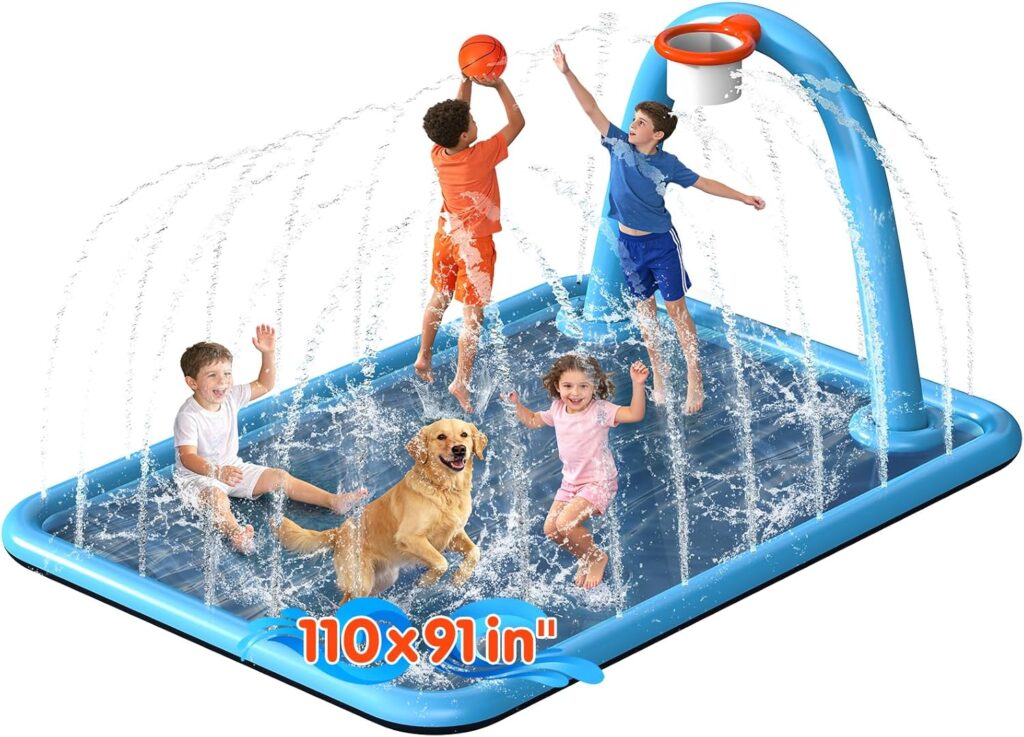
- splash pads with basketball hoops
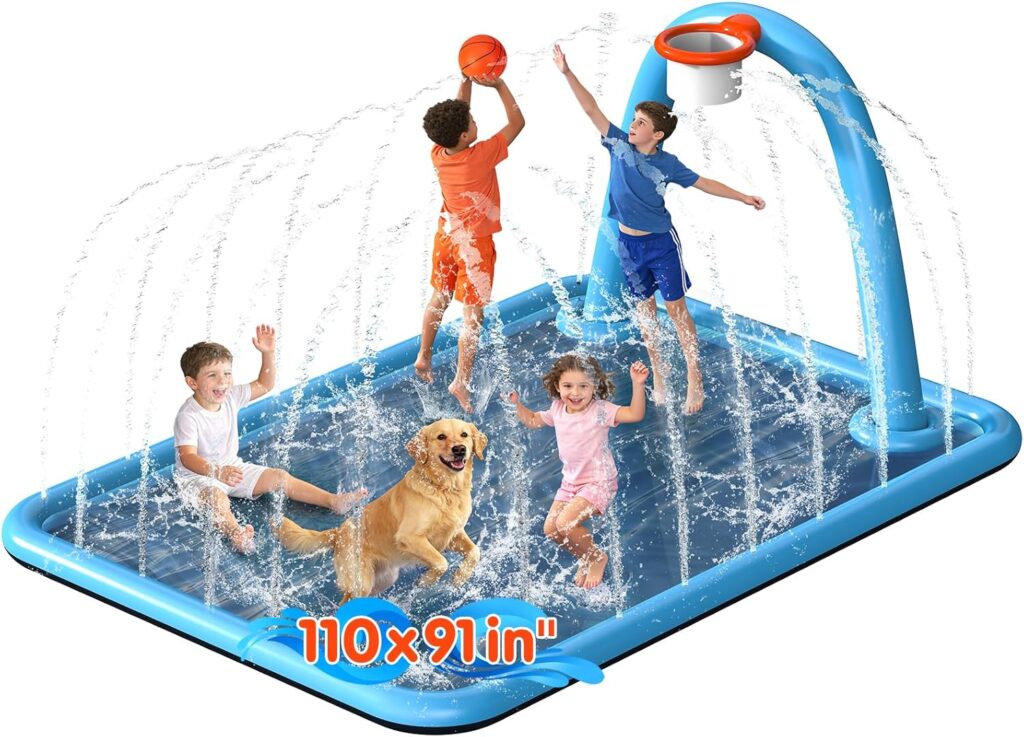
- toddler-oriented splash pads
- private-label splash pads
- custom OEM/ODM splash pads
This matters because different markets need different product logic.
For example:
- a toddler splash pad needs easier supervision and softer use logic
- a dog splash pad needs stronger wear tolerance
- a family shared-use splash pad needs better balance between fun and durability
- a sports splash pad often needs to handle more active movement
- a private-label product may need different size, print, packaging, or branding priorities
A practical customization table:
| Splash Pad Type | Main Product Focus |
|---|---|
| Kids splash pad | Child-friendly play and graphics |
| Dog splash pad | Better pet-use wear tolerance |
| Shared-use splash pad | Balance between child and dog needs |
| Sports splash pad | Active-play positioning |
| Private-label splash pad | Market-specific size, print, and packaging |
For B2B customers, this gives real commercial value. It means the product line can be built with more intention instead of choosing from a generic one-style-fits-all offer.
Why Is Epsilon a Better Choice for OEM and ODM Splash Pads?
For business customers, this is often the most important reason of all. A lot of suppliers can produce a product. Fewer can help shape it into something more competitive, more differentiated, and better matched to the target market. Epsilon’s OEM and ODM strength matters because the company can support much more than manufacturing. It can support:
- custom splash pad sizes
- custom print themes and colors
- logo printing
- packaging customization
- multilingual packaging support
- sample development
- mass production planning
- market-specific product positioning
From your company information, Epsilon can often support:
- fast sampling in around 3–5 days
- normal production in around 20 days
- rush production in around 14 days in some cases
That matters a lot for:
- Amazon sellers
- Shopify or independent-site brands
- distributors
- retail importers
- startup brands building a private-label product line
A practical OEM/ODM value view:
| Custom Need | Why Epsilon Helps |
|---|---|
| Faster product testing | Quick sample development |
| Better product differentiation | Size, print, and packaging support |
| Better retail fit | Market-specific design and presentation |
| Easier scaling | Strong production capacity |
| Better long-term cooperation | Factory plus development support |
This is why Epsilon is not only useful as a factory. It is also useful as a product-development partner.
Why Does Epsilon Matter for Real Family Use?
At the end of the day, real customers do not live inside a spec sheet. They live in homes with:
- children
- pets
- patios and lawns
- limited storage space
- real cleanup routines
- real summer habits
That is why the most important question is often not: “Can this supplier make a splash pad?” It is: “Can this company help provide a splash pad that still feels right once real use begins?” That is where Epsilon fits well. Because of its product range, material background, testing depth, and child-and-pet product understanding, Epsilon is in a better position to support splash pads that are:
- more durable
- more usable
- easier to position for the right customer
- better suited to shared family and pet use
- easier to develop into stronger custom product lines
A final practical value table:
| Real Customer Need | Why Epsilon Fits Better |
|---|---|
| A splash pad that holds up better | Better material and seam planning |
| A splash pad that feels worth the money | Better real-use performance |
| A pet-friendly or shared-use splash pad | Better child-and-pet product logic |
| A stronger private-label project | OEM/ODM and sampling support |
| A long-term manufacturing partner | Broader category and production strength |
That is the real answer to why choose Epsilon splash pads. Not because the company can simply make splash pads, but because it can help create splash pads that are more durable, more usable, and more market-ready from the beginning.
Ready to Buy Splash Pads or Start Your Custom Project?
If you are looking for a splash pad that is not only fun for children, but also more practical for real family-and-pet use, Epsilon is ready to help. American Epsilon Inc. is a U.S.-registered company specializing in PVC and composite material products for children’s water play, family entertainment, pet products, and seasonal outdoor categories. Under the EPN brand, we offer ready-to-ship splash pad products and also support OEM and ODM development for brands, retailers, distributors, and importers.
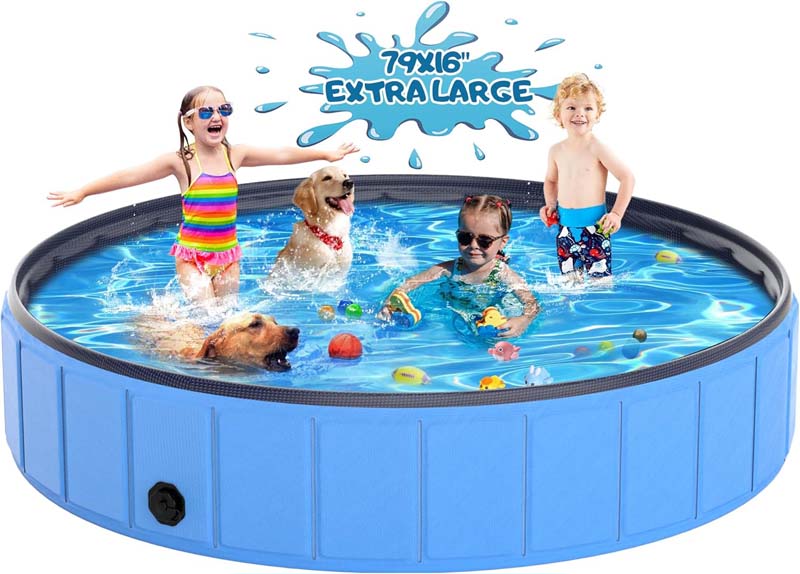
Our splash pad range includes round splash pads, square splash pads, dog splash pads, soccer splash pads, and splash pads with basketball hoops. Beyond splash pads, we also support related seasonal categories such as dog pools, dog pools with sprinklers, pool pillows, snow tubes, and punching bags.
What makes Epsilon valuable is not only production capacity. We combine material planning, structure design, pet-friendly and child-friendly product thinking, testing support, packaging capability, and multi-market experience, so customers can move more smoothly from product idea to finished goods. For retail customers, we offer in-stock splash pad products that are ready to buy now.
Shop In-Stock Splash Pad Products
- Buy Round Splash Pad
- Buy Square Splash Pad
- Buy Dog Splash Pad
- Buy Soccer Splash Pad
- Buy Splash Pad with Basketball Hoop
Start a Custom Splash Pad Project
- Contact Us for Custom Splash Pads
Request a Sample
- Request a Splash Pad Sample
Explore More Related Product Pages
If you want to explore more seasonal PVC and family-and-pet product categories, you can continue browsing these related pages:
Whether you want to buy ready-to-ship splash pad products, request samples, or develop a custom kids-and-dogs splash pad line, Epsilon is ready to discuss your project in detail.
Get A Fast quote
Here, bringing your inflatable concepts to life is no longer a challenge—it’s a collaborative journey where American Epsilon helps families, outdoor enthusiasts, and global brands transform creative ideas into safe, certified, and market-ready inflatable solutions.


Partner With Epsilon
Whether you are a family looking for safe backyard fun or a brand seeking large-scale OEM/ODM solutions, American Epsilon Inc. guarantees every inflatable is built with safety, durability, and excitement in mind. With flexible low MOQs, strategically placed warehouses in the U.S., Canada, U.K., and Germany, plus 24/7 professional support, we ensure smooth delivery and reliable service worldwide.
Ready to bring your inflatable ideas to life? Request free samples, fast prototypes, and customized designs today—your trusted inflatable journey starts here.