Skip to content
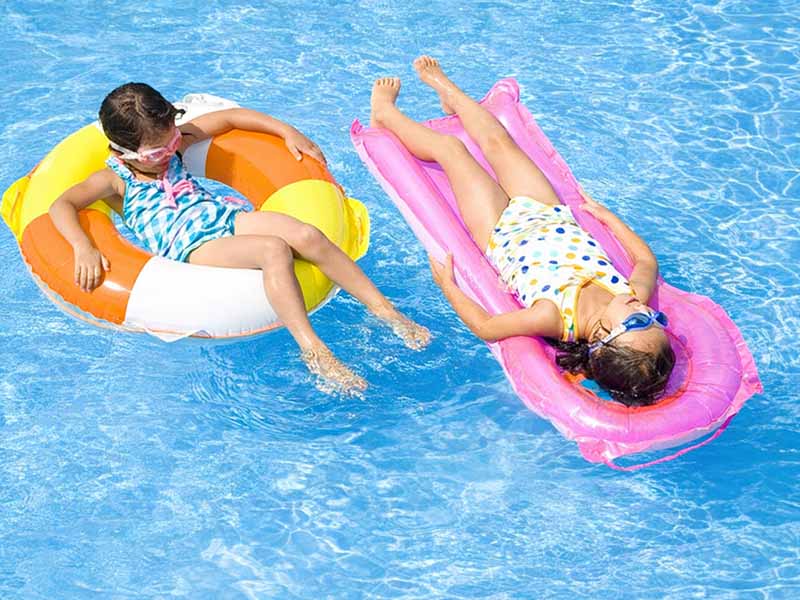
A pool float might look simple—just something you lie on, sit in, or hold onto in the water. But in reality, pool floats sit at the intersection of material science, safety engineering, leisure design, and lifestyle behavior. Over the last decade, they’ve evolved from basic inflatable rings into sophisticated water products designed for relaxation, play, fitness, pets, and even pool maintenance.
As families spend more time at home, as backyard pools replace public swimming spaces, and as consumers expect products to be safer, longer-lasting, and more versatile, the humble pool float has quietly become a core pool accessory, not an afterthought. Parents want floats that support children safely. Pet owners want floats that won’t collapse under claws. Adults want loungers that don’t tip, deflate, or degrade after one season in the sun.
Yet despite their popularity, many buyers still ask basic questions: What exactly makes a pool float? Is it just an inflatable toy? Are all pool floats the same? These questions matter—because the difference between a well-engineered pool float and a cheap novelty item can mean comfort, durability, and safety.
A pool float is a buoyant water accessory designed to support a person, pet, or object on the surface of water, typically in a swimming pool. Most pool floats are made from inflatable PVC or composite materials and are engineered for flotation, stability, and comfort. Modern pool floats range from simple rings to ergonomic loungers, water hammocks, and multi-use floating platforms for relaxation, play, or safety.
Hook to Continue
Understanding what a pool float truly is—and what separates quality designs from disposable ones—starts with looking beneath the surface. Once you understand the structure, materials, and intent behind modern pool floats, choosing the right one becomes far more intuitive.
What Is a Pool Float?
A pool float is a buoyant water accessory designed to keep a person, pet, or object comfortably supported on the surface of water, most commonly in swimming pools. Unlike simple inflatable toys, pool floats are engineered for stability, controlled buoyancy, and repeated use. They are typically made from PVC or composite materials and designed for relaxation, play, supervision, or functional support in water environments.
A Clear, Modern Definition
At its most basic level, a pool float is anything intentionally designed to float stably on water while supporting weight. But in modern usage, that definition is no longer sufficient.
Today, a pool float is best understood as a functional water product, not just a toy. It is designed with specific performance goals:
- staying level rather than tipping,
- distributing weight rather than collapsing,
- and maintaining buoyancy over time rather than deflating or degrading after limited use.
This distinction matters because many products that float are not true pool floats. A beach ball floats, but it cannot support a body. A novelty inflatable may look impressive, but it often lacks the structural integrity required for safe, repeated pool use. A genuine pool float is engineered with load-bearing intent, even when it is playful or decorative in appearance.
What Makes a Pool Float Different From Other Water Inflatables?
The key difference lies in engineering purpose.
Pool floats are designed to handle:
- Static load (lying, sitting, resting),
- Dynamic load (shifting weight, climbing on/off),
- Environmental stress (UV exposure, chlorine, heat),
- Time (repeated use over weeks or seasons).
To achieve this, pool floats rely on specific design elements such as:
- multi-chamber air structures or reinforced foam cores,
- controlled buoyancy zones to prevent sudden sinking,
- seam layouts that resist tearing under uneven pressure.
By contrast, many inflatable water toys prioritize visual appeal or short-term fun. They may float initially, but they are not designed to perform consistently once real-world conditions—movement, sun, chemicals—are introduced.
What Makes a Pool Float?
A true pool float is defined by structure, not shape.
Regardless of whether it looks like a lounger, ring, raft, hammock, or platform, every pool float shares three core components:
- Buoyant Medium This can be air (inflatable), foam (solid), or a hybrid design. The medium determines how weight is supported and how forgiving the float is to movement.
- Load Distribution Design The way buoyancy is spread across the float determines stability. Well-designed floats avoid single pressure points that cause tipping or sagging.
- Material System PVC or composite materials must balance flexibility, strength, and resistance to water, UV, and chemicals. Material choice directly affects safety and lifespan.
If one of these elements is weak, the product may still float—but it will not perform as a reliable pool float.
What Is Another Name for a Pool Float?
In everyday language and online shopping, pool floats are often referred to by several alternative names, including:
- inflatable pool float
- pool lounger
- water float
- floating raft
- inflatable lounger
These terms are frequently used interchangeably, but they can describe slightly different use intentions. For example, “pool lounger” often implies comfort and relaxation, while “floating raft” suggests larger size and shared use.
From a functional standpoint, however, all of these fall under the broader category of pool floats as long as they are designed for stable, intentional flotation in water.
Why Understanding This Definition Matters for Buyers
Many consumer frustrations—floats tipping over, deflating quickly, or failing under normal use—come from misunderstanding what a pool float is supposed to do.
When buyers assume all floating products are equivalent, they often choose based on appearance or price alone. Understanding the real definition of a pool float helps consumers:
- choose safer options for children and pets,
- avoid disposable, single-season products,
- and invest in designs that actually match how they plan to use the pool.
In short, a pool float is not just something that floats—it is something that is designed to float well, repeatedly, and safely.
What Types of Pool Floats Are Available?
Pool floats are available in several main types, including inflatable pool floats, foam or solid floats, and hybrid designs. Each type offers different benefits in terms of comfort, durability, portability, and safety. Some pool floats are designed specifically for adults, children, or pets, while others are built for lounging, playing, or multi-user use. Choosing the right type depends on how and where the float will be used.
Understanding Pool Float Types by Function, Not Just Shape
When consumers ask about types of pool floats, they often expect a list of shapes—rings, loungers, rafts. But from a performance and safety perspective, pool floats are best categorized by how they achieve buoyancy and how they are intended to be used.
A visually similar float can behave very differently in real water conditions depending on its internal structure, material system, and user load. Below is a functional breakdown that reflects how pool floats are actually designed and used today.
What Are Inflatable Pool Floats?
Inflatable pool floats are the most common and widely recognized type. They rely on air-filled chambers to create buoyancy and are typically made from PVC or reinforced composite materials.
Their main advantage is portability. When deflated, inflatable floats are lightweight, compact, and easy to store or travel with. This makes them ideal for home pools, vacations, and seasonal use. Inflatable designs also allow for a wide range of shapes—from simple rings to full-body loungers with headrests and arm support.
However, quality varies significantly. Entry-level inflatable floats often use thin, single-layer PVC and minimal seam reinforcement, which can lead to tipping, air loss, or punctures. Higher-quality inflatable pool floats use thicker materials, multi-air-chamber layouts, and reinforced welds, making them far more stable and durable over repeated use.
What Are Foam or Solid Pool Floats?
Foam or solid pool floats achieve buoyancy through closed-cell foam rather than air. Because they do not require inflation, they eliminate the risk of punctures or sudden deflation entirely.
These floats are commonly used in commercial pools, swim training environments, and long-term residential settings where durability matters more than portability. Foam floats provide very consistent buoyancy and are less affected by temperature changes or air pressure fluctuations.
The trade-off is convenience. Foam floats are bulkier, heavier, and require more storage space. They are not ideal for travel, but for users who want a “grab-and-go” option that works every time, foam floats are often the most reliable choice.
What Are Water-Filled or Hybrid Pool Floats?
Hybrid pool floats combine inflatable structures with mesh, fabric, or water-contact centers. Water hammocks are a well-known example, allowing the body to rest partially submerged while the head and legs remain supported.
These designs appeal to users who prefer cooling and light support rather than full flotation. They often feel more natural in hot weather and take up less visual space in the pool.
However, hybrid floats place more stress on connection points between materials. As a result, material quality and seam engineering are critical. Poorly designed hybrids may sag, stretch, or tear over time, while well-made versions can offer an excellent balance of comfort and compactness.
What Pool Floats Are Designed for Adults?
Adult pool floats are typically designed for relaxation, stability, and comfort. They often feature larger surface areas, higher weight capacities, and ergonomic contours that support the head, back, and legs.
Popular designs include inflatable loungers, floating mats, and oversized rafts. Stability is a key concern for adult users, especially when getting on or off the float. As a result, wide bases, balanced chamber layouts, and reinforced edges are common in higher-quality adult floats.
These floats are best suited for calm pool environments and are often chosen for leisure rather than active play.

What Pool Floats Are Designed for Kids?
Children’s pool floats are engineered with controlled buoyancy and safety positioning in mind. Unlike adult floats, they often prioritize containment, balance, and visibility over comfort.
Design features may include circular or enclosed shapes, lower centers of gravity, and bright colors for easy supervision. It’s important to note that kids’ pool floats are not life-saving devices and should always be used under adult supervision.
The key distinction is predictability—kids’ floats should behave consistently in the water and avoid sudden tipping or uneven support.

What Pool Floats Are Designed for Pets?
Pet pool floats are a specialized category that addresses challenges most human-oriented designs cannot handle. Pets, especially dogs, move unpredictably and apply concentrated pressure through claws and paws.
As a result, pet pool floats require:
- reinforced composite materials,
- thicker surfaces,
- anti-slip textures,
- and higher tear resistance.
Standard inflatable floats often fail quickly when used by pets, not because pets “damage” them intentionally, but because the floats were never designed for animal behavior. Purpose-built pet floats offer significantly better durability and safety.

Why Pool Float Type Matters More Than Appearance
Many buyers choose pool floats based on size, color, or novelty design. While aesthetics play a role, function and structure determine real-world satisfaction.
Two floats that look similar in photos may perform very differently once exposed to sun, water, weight, and movement. Understanding the main types of pool floats allows buyers to match the product to their actual needs—whether that’s relaxing alone, playing with kids, or cooling down a pet.
In short, the “best” pool float is not defined by trend or shape, but by how well its type aligns with its intended use.
Which Materials Are Pool Floats Made From?
Most pool floats are made from PVC or reinforced composite materials designed to balance flexibility, strength, and water resistance. Higher-quality pool floats use thicker or multi-layer PVC formulations with UV stabilizers and tear-resistant properties, while some solid pool floats rely on closed-cell foam. Material choice directly affects durability, safety, comfort, and how long a pool float performs reliably in real-world conditions.
Why Pool Float Material Matters More Than Appearance
When people ask what materials pool floats are made from, they are often really asking a deeper question:
How long will it last, and how safe will it be?
Material choice is the single most important factor influencing a pool float’s performance over time. Two floats with identical shapes can behave very differently after weeks of sun exposure, chlorine contact, and repeated use—simply because their materials were formulated differently.
Modern pool floats are no longer made from “generic plastic.” They are engineered products built around specific material systems, each with clear strengths and limitations.
Which Materials Are Most Common in Pool Floats?
The majority of pool floats on the market are made from PVC (polyvinyl chloride) or PVC-based composite materials. PVC is popular because it is flexible, sealable by heat welding, cost-efficient, and compatible with mass production.
However, not all PVC is the same. Differences in formulation—such as plasticizers, stabilizers, and layering—have a major impact on real-world performance.
Some pool floats also use closed-cell foam, especially in non-inflatable or commercial-grade designs. Foam floats do not rely on air, making them immune to punctures, but they are bulkier and less portable.
Common Pool Float Materials and Their Characteristics
| Material Type | How It Provides Buoyancy | Key Advantages | Main Limitations | Typical Use Cases |
|---|---|---|---|---|
| Standard PVC (Single-layer) | Air-filled inflatable | Lightweight, low cost, easy to store | Lower tear resistance, shorter lifespan | Entry-level pool floats, casual use |
| Reinforced PVC | Air-filled with thicker or layered PVC | Better durability, improved stability | Higher cost than standard PVC | Family pools, frequent use |
| Composite PVC (Fabric-backed or laminated) | Air-filled with reinforced structure | High tear resistance, strong seams | Slightly heavier, premium pricing | Pet floats, heavy-duty loungers |
| Closed-cell Foam | Foam displacement | No punctures, consistent buoyancy | Bulky, harder to store | Commercial pools, long-term use |
Which Pool Float Materials Are Safest for Families and Pets?
Safety depends on both chemical composition and mechanical behavior.
For families with children, materials should be:
- free from harmful plasticizers,
- odor-free,
- compliant with standards such as CPSIA and REACH,
- soft enough to avoid skin irritation.
For pets—especially dogs—mechanical strength becomes critical. Claws apply concentrated force that thin PVC cannot withstand. Composite PVC materials, often with fabric reinforcement or multi-layer construction, perform far better under these conditions.
A float that feels soft and flexible to the touch is not necessarily safe if it tears easily or loses air suddenly.
Which Materials Offer the Best Durability and UV Resistance?
Sunlight is one of the biggest enemies of pool float materials. UV exposure causes PVC to stiffen, fade, and eventually crack if it is not properly stabilized.
High-quality pool floats incorporate UV inhibitors directly into the PVC formulation. These additives slow material degradation and help maintain flexibility over time.
Thickness alone does not guarantee durability. A thinner, well-formulated composite PVC can outperform a thicker, poorly stabilized single-layer PVC after prolonged outdoor exposure.
Material Performance Comparison in Real-World Pool Conditions
| Performance Factor | Standard PVC | Reinforced PVC | Composite PVC | Closed-cell Foam |
|---|---|---|---|---|
| Tear Resistance | Low | Medium | High | Very High |
| UV Resistance | Low–Medium | Medium | High | High |
| Comfort & Flexibility | High | High | Medium–High | Medium |
| Puncture Risk | High | Medium | Low | None |
| Suitability for Pets | Poor | Limited | Excellent | Excellent |
| Storage & Portability | Excellent | Good | Good | Poor |
Are Eco-Friendly or Low-Odor Materials Available?
Yes—but with trade-offs. Some manufacturers offer low-odor PVC formulations or materials using alternative plasticizers to reduce smell and environmental impact. These options are particularly attractive for indoor pools or children’s products.
However, eco-friendly formulations must still meet performance requirements. A material that is safer but fails prematurely creates waste and reduces overall sustainability. The best material choices balance environmental considerations with durability and safety.
Why Material Choice Defines the “Best” Pool Float
When consumers ask, “What are the best pool floats?”, the answer almost always comes back to materials.
A well-designed shape cannot compensate for poor material quality. Conversely, a thoughtfully formulated PVC or composite system can extend a pool float’s usable life by multiple seasons, reduce safety risks, and provide a noticeably better user experience.
In practical terms, material quality determines whether a pool float is disposable or dependable.
How Are Pool Floats Designed for Comfort and Stability?
Pool floats are designed for comfort and stability through balanced buoyancy, ergonomic shaping, and reinforced structural layouts. High-quality pool floats distribute weight evenly, maintain a low center of gravity, and resist tipping or sagging during movement. Design features such as multi-air-chamber construction, contoured surfaces, and reinforced seams directly influence how secure, comfortable, and reliable a pool float feels during real-world use.
Why Comfort and Stability Are Engineering Problems, Not Style Choices
Comfort and stability are the two qualities most users notice immediately—and also the two most commonly misunderstood.
Many pool floats look comfortable in photos but feel unstable in water. Others appear simple yet perform exceptionally well. The difference is rarely about size or appearance; it is about how the float is engineered to interact with the human body and water physics at the same time.
A well-designed pool float must solve three challenges simultaneously:
- Support weight without collapsing,
- Stay level as weight shifts,
- Remain comfortable over extended periods.
Achieving all three requires deliberate structural and ergonomic design choices.
How does structural design affect balance and buoyancy?
Structural design determines where buoyant force is generated and how it is distributed across the float.
Low-quality pool floats often rely on a single large air chamber. While this can keep the float afloat, it creates instability when a user moves. Any shift in weight causes uneven pressure, leading to tipping or partial submersion.
Higher-quality pool floats use multiple air chambers or segmented buoyancy zones. This approach spreads support across the float, keeps the center of buoyancy aligned with the user’s center of mass, and significantly improves balance. If one area compresses, others continue to provide lift, creating a more forgiving and stable experience.
How does a low center of gravity improve stability?
A float’s center of gravity plays a critical role in whether it feels secure or unstable.
Designs with wide bases, flat profiles, or distributed buoyancy keep the user’s weight closer to the waterline. This lowers the center of gravity and reduces rotational force—the main cause of tipping.
By contrast, tall or narrow floats raise the user above the water, increasing leverage and instability. Even small movements can cause these designs to roll or flip. Stability-focused pool floats deliberately trade height for balance, especially in loungers and pet-friendly designs.
How do ergonomic shapes improve comfort?
Comfort is not just about softness; it is about supporting the body’s natural posture.
Ergonomic pool floats use contoured surfaces, gentle curves, and strategically placed support zones to reduce pressure points. Features such as raised headrests, knee supports, or curved lounging surfaces help the body relax instead of constantly adjusting to stay balanced.
For children and pets, ergonomic design focuses less on relaxation and more on secure positioning. Enclosed shapes, textured surfaces, and balanced proportions help keep users comfortably in place without constant correction.
How do reinforced seams and edges contribute to stability?
Seams and edges are the areas under the most stress, especially when users climb on or off the float.
High-quality pool floats use precision heat welding or high-frequency welding to create strong, uniform seams that resist stretching and air loss. Reinforced edges help maintain shape, preventing the float from folding or deforming under uneven load.
When seams stretch or weaken, the float’s geometry changes—and with it, stability. Strong seams are therefore not just a durability feature; they are a stability feature.
How does material stiffness affect comfort and control?
Material stiffness must be carefully balanced. Materials that are too soft may feel comfortable at first but allow excessive sagging, which reduces stability. Materials that are too stiff may feel secure but uncomfortable over time.
Well-engineered pool floats use controlled-flexibility materials—PVC or composites that flex slightly under load but resist permanent deformation. This balance allows the float to adapt to movement while maintaining its intended shape and support.
Why Comfort and Stability Should Be Considered Together
Comfort without stability leads to frustration. Stability without comfort leads to short use sessions.
The most successful pool floats treat these qualities as interconnected outcomes of good design. When buoyancy, structure, materials, and ergonomics are aligned, the float feels intuitive—users stop thinking about balance and simply enjoy the water.
That seamless experience is not accidental. It is the result of deliberate engineering choices made long before the product reaches the pool.
Are Pool Floats Safe for Kids, Pets, and Daily Use?
Pool floats can be safe for kids, pets, and daily use when they are designed for the specific user and used under proper supervision. Safety depends on material quality, structural stability, weight capacity, and intended use. Pool floats are not life-saving devices, but well-designed models with controlled buoyancy, reinforced materials, and compliance with safety standards can significantly reduce risks during everyday pool activities.
Why “Safe” Depends on Design, User, and Context
Safety is one of the most searched topics related to pool floats—and also one of the most misunderstood.
Many consumers assume that if a pool float floats, it must be safe. In reality, floating ability alone does not equal safety. A pool float’s safety is defined by how predictably it behaves under real-world conditions: movement, weight shifts, repeated use, sun exposure, and interaction with children or animals.
A float that works well for an adult may be unsafe for a child. A float that feels stable for a person may fail quickly when used by a pet. Understanding these differences is essential for making informed choices.
Are pool floats safe for children?
Pool floats can enhance a child’s water experience, but they must be chosen and used carefully.
Children’s pool floats are designed to provide controlled buoyancy, not flotation independence. This means they should help a child stay comfortably supported while remaining easy for an adult to monitor and assist. Features such as balanced shapes, lower centers of gravity, and bright, high-visibility colors improve predictability and supervision.
However, it is critical to understand that no pool float replaces active adult supervision. Pool floats are not certified flotation devices unless explicitly labeled as such. Parents should always stay within arm’s reach and ensure that the float matches the child’s age, size, and weight.
Are pool floats suitable for pets like dogs?
Pet safety introduces a completely different set of challenges.
Dogs move unpredictably, shift weight quickly, and apply concentrated pressure through claws. Standard pool floats—especially thin, single-layer inflatables—are often not designed to handle this kind of stress. This can lead to sudden air loss, tearing, or instability.
Pet-specific pool floats address these risks by using:
- reinforced or composite PVC materials,
- thicker surfaces with higher tear resistance,
- non-slip textures for traction,
- wider, flatter designs to improve balance.
When properly designed, pool floats can be a safe and enjoyable way for pets to cool down. When improperly matched, they can fail unexpectedly.
Are pool floats safe for daily and long-term use?
Daily use places cumulative stress on materials and seams. Sunlight, chlorine, salt, heat, and repeated inflation all contribute to material fatigue over time.
Pool floats intended for regular use should include:
- UV-stabilized materials to prevent cracking and stiffness,
- reinforced seams that resist stretching,
- clearly defined weight limits and usage guidelines.
Without these features, a float may appear safe initially but degrade quietly, increasing the risk of failure later. Durability, in this context, is a safety issue—not just a quality concern.
What safety standards and certifications matter?
While pool floats are not regulated in the same way as life jackets, reputable manufacturers design products to comply with material safety and consumer product standards, such as CPSIA, REACH, or ASTM guidelines.
These standards help ensure that materials are free from harmful substances and that products meet basic performance expectations. While certification alone does not guarantee perfect safety, it significantly reduces the likelihood of poor material choices or unsafe construction.
Common safety misconceptions about pool floats
Several widespread misconceptions contribute to unsafe use:
- “Thicker always means safer.” Thickness helps, but material formulation and structure matter more.
- “All pool floats are fine for kids.” Adult floats may tip easily or lack containment for children.
- “If it worked last summer, it’s still safe.” UV exposure and material aging can weaken floats over time.
Addressing these misconceptions helps users make smarter, safer decisions.
Why Matching the Float to the User Is the Key to Safety
The safest pool float is not the most expensive or the most popular—it is the one designed for the specific user and use scenario.
A child-safe float, a pet-friendly float, and a daily-use adult lounger solve different problems. When design intent aligns with real use, risks decrease naturally, and the pool experience becomes more enjoyable for everyone.
In short, pool floats are safe when they are chosen thoughtfully, used responsibly, and designed with the right user in mind.
How Do You Choose the Right Pool Float?
To choose the right pool float, you should consider who will use it, where it will be used, and how often it will be used. Key factors include user type (adult, child, or pet), weight capacity, material quality, stability design, and durability under sun and water exposure. The best pool float is not universal—it is the one engineered to match your specific use scenario.
Choosing a Pool Float Is a Matching Process, Not a Trend Choice
Most people choose pool floats based on appearance—size, color, or novelty design. But dissatisfaction usually comes later, when the float tips easily, loses air, or wears out faster than expected.
From a functional perspective, choosing the right pool float is about matching design intent to real-world use. A float designed for occasional lounging behaves very differently from one meant for daily family use or pets. Understanding this matching process helps buyers avoid common mistakes and invest in products that actually perform well over time.
How do you choose a pool float by user type?
The first and most important question is who will use the pool float.
Adults typically prioritize comfort and stability. Kids require controlled buoyancy and predictable behavior. Pets need reinforced materials and traction. Using a float outside its intended user group often leads to safety or durability issues.
Pool Float Selection by User Type
| User Type | Key Design Priorities | Recommended Float Features | What to Avoid |
|---|---|---|---|
| Adults | Comfort, balance, weight support | Ergonomic loungers, wide base, multi-chamber design | Narrow or tall designs that tip easily |
| Children | Safety, visibility, stability | Controlled buoyancy, bright colors, low center of gravity | Adult loungers with open or unstable shapes |
| Pets (Dogs) | Durability, traction, tear resistance | Reinforced composite PVC, non-slip surface | Thin single-layer inflatables |
How do you choose a pool float by use scenario?
Where and how a pool float is used matters as much as who uses it.
- Backyard or residential pools favor comfort and moderate durability.
- Daily use requires UV resistance and reinforced seams.
- Travel or vacations benefit from lightweight, easily deflatable designs.
- Multi-user or party use requires higher weight capacity and wide, stable platforms.
A float that works well for a weekend pool party may fail quickly if used every day under strong sun exposure.
How do size, weight capacity, and shape affect performance?
Size and weight capacity directly influence stability. Overloading a float—intentionally or not—stresses seams and causes uneven buoyancy, which leads to tipping or air loss.
Shape plays an equally important role. Wide, flat floats distribute weight more evenly and feel more stable. Narrow or elevated designs raise the center of gravity, making them more sensitive to movement.
How Design Factors Influence Pool Float Performance
| Design Factor | Impact on Stability | Impact on Comfort | Impact on Durability |
|---|---|---|---|
| Weight Capacity | Prevents sagging and tipping | Maintains proper support | Reduces seam stress |
| Base Width | Increases balance | Improves confidence | Reduces deformation |
| Shape Profile | Lowers center of gravity | Allows relaxed posture | Minimizes uneven load |
| Chamber Layout | Improves buoyancy control | Enhances consistency | Adds redundancy |
What materials should you prioritize when choosing a pool float?
Material quality determines whether a pool float is disposable or dependable.
Standard PVC may be sufficient for occasional use, but reinforced or composite PVC materials offer better tear resistance, seam strength, and UV durability. For pets or daily use, composite materials are strongly recommended.
Thickness alone is not enough. Material formulation, reinforcement, and welding quality are far more predictive of long-term performance.
How do quality testing and certifications influence your choice?
Reputable manufacturers conduct air retention tests, load-bearing tests, and UV exposure simulations. Certifications such as CPSIA or REACH indicate that materials meet basic safety requirements.
While certifications do not guarantee perfection, they significantly reduce the risk of unsafe materials or poorly engineered designs. A clear product specification—weight limits, material description, and usage guidance—is often a sign of responsible manufacturing.
What are the most common mistakes when choosing a pool float?
Several patterns appear repeatedly in customer complaints:
- Choosing based on looks rather than function
- Ignoring weight limits
- Using adult floats for kids or pets
- Assuming all PVC materials perform the same
- Reusing floats that have degraded from sun exposure
Avoiding these mistakes often matters more than finding the “most popular” model.
Why the “Right” Pool Float Is Context-Specific
There is no single pool float that works best for everyone. The right choice depends on user, environment, and frequency of use.
When these factors align with design intent, a pool float feels stable, comfortable, and reliable. When they don’t, even an attractive float can become a source of frustration.
In practical terms, choosing the right pool float is about understanding how you actually use your pool—and selecting a product designed to support that reality.
Do Pool Floats Work Only in Swimming Pools?
Pool floats do not work only in swimming pools. Many pool floats can also be used in calm lakes, shallow beaches, backyard water setups, and certain indoor environments. However, their performance and safety depend on water conditions, float design, and material durability. Pool floats are engineered primarily for controlled, still water and may not be suitable for waves, currents, or rough outdoor conditions.
The term pool float often leads people to assume these products are limited to swimming pools. In reality, modern pool floats are used across a wide range of environments—but not all environments are equal.
Pool floats are designed around predictable water behavior. When water movement, surface stability, and user control remain consistent, pool floats perform as intended. As conditions become less predictable, risks increase. Understanding this boundary helps users avoid misuse and disappointment.
Do pool floats work in backyard and residential pool environments?
Backyard and residential pools are the environment pool floats are most specifically designed for. These settings offer:
- still or gently moving water,
- controlled depth,
- predictable entry and exit points,
- and close supervision.
In this environment, most pool floats—whether inflatable, foam, or hybrid—perform reliably. Comfort, stability, and durability are maximized because design assumptions align closely with real conditions. This is why residential pools remain the primary and safest use case for pool floats.
In calm lakes or slow-moving water, many pool floats can be used safely under supervision. Wide, stable floats with reinforced materials tend to perform better in these environments, especially when water is shallow and entry points are controlled.
However, lakes introduce variables such as wind, uneven surfaces, and temperature changes. Pool floats are not designed to handle currents or drifting, so users should remain close to shore and avoid deeper or open sections. The key distinction is calm water versus moving water—not pool versus lake.
Do pool floats work at beaches or in the ocean?
Beaches and ocean environments pose the highest risk for pool float use.
Waves, tides, and currents can overpower even large, stable floats. Inflatable pool floats are particularly vulnerable to being pushed or pulled unexpectedly, increasing the risk of loss of control.
As a general rule, pool floats are not recommended for ocean use unless explicitly designed and labeled for that purpose. Even then, they should only be used in shallow, protected areas under close supervision.
Can pool floats be used indoors or outside the water?
Surprisingly, many pool floats are used outside of water, especially in backyard or indoor settings.
Examples include:
- lounging on lawns or decks,
- children’s play areas,
- pet cooling zones,
- temporary seating at poolside events.
In these cases, material durability and surface protection matter more than buoyancy. Reinforced PVC or composite materials handle ground contact better than thin inflatables, which may abrade or puncture more easily.
How does design affect multi-environment usability?
Not all pool floats are equally versatile.
Floats designed with:
- wider bases,
- lower profiles,
- reinforced seams,
- and durable materials
tend to adapt better to non-pool environments. Lightweight novelty floats may perform well in still pools but struggle elsewhere.
Design intent matters. If a float is engineered for lounging in calm water, it should not be expected to perform like a flotation device in open water.
Common misconceptions about using pool floats outside pools
Several misconceptions frequently lead to unsafe or disappointing experiences:
- “If it floats, it’s fine anywhere.” Buoyancy does not equal environmental suitability.
- “Big floats are safer in open water.” Size does not protect against currents or wind.
- “Pools and lakes are basically the same.” Pools are controlled; lakes are not.
Correcting these assumptions helps users apply pool floats more responsibly.
Why Pool Floats Are Best Seen as Controlled-Water Products
At their core, pool floats are designed for relaxation and play in predictable water environments. They excel where water behavior is stable and supervision is possible.
Using pool floats beyond swimming pools is often feasible—but only when users understand the limits of design and environment. Respecting those limits is what keeps pool floats enjoyable rather than risky.
What Makes a High-Quality Pool Float Different?
A high-quality pool float is defined by engineered stability, durable materials, reinforced construction, and consistent performance over time. Unlike low-cost or novelty floats, premium pool floats are designed to handle real-world use, including weight shifts, sun exposure, and repeated inflation. Quality differences may not be obvious at first glance, but they become clear through comfort, safety, and long-term reliability.
Quality Is Built In, Not Added Later
Many pool floats look similar when new. Bright colors, large shapes, and appealing designs often dominate buying decisions. However, true quality only reveals itself after repeated use—when the float is exposed to sun, water, weight, movement, and time.
High-quality pool floats are not the result of thicker plastic or higher prices alone. They are the outcome of intentional engineering decisions made at every stage of development, from material formulation to final testing.
How does material formulation separate high-quality pool floats?
Material quality goes far beyond thickness.
Low-end pool floats often use basic PVC formulations optimized for cost. These materials may feel soft initially but lose flexibility after UV exposure, becoming brittle or sticky over time. By contrast, high-quality pool floats use formulated PVC or composite materials with controlled plasticizers and UV stabilizers.
These formulations maintain flexibility, resist cracking, and retain color longer. For pets or frequent use, composite or reinforced PVC materials significantly outperform single-layer PVC, especially under concentrated stress.
Why does structural engineering matter more than appearance?
A visually impressive float can still be poorly engineered.
High-quality pool floats are designed with load distribution in mind. Multiple air chambers, reinforced edges, and balanced geometry help the float stay level when users move or climb on and off. This reduces tipping and sudden sinking—two of the most common complaints with low-quality floats.
In contrast, novelty floats often prioritize shape over structure. They may float initially but behave unpredictably once real movement is introduced.
How do seam construction and welding quality affect performance?
Seams are the most failure-prone areas of any inflatable product.
Premium pool floats use precision heat welding or high-frequency welding, creating strong, uniform seams that resist stretching and air loss. Reinforced seam zones are especially important at stress points such as edges, handles, and entry areas.
When seam quality is poor, even high-grade material cannot compensate. A single weak seam can compromise the entire float.
What role does testing play in defining quality?
High-quality pool floats are tested, not assumed.
Responsible manufacturers conduct:
- air retention tests to ensure slow, predictable pressure loss,
- load-bearing tests to verify weight capacity,
- UV exposure simulations to assess long-term material behavior,
- and repeated use cycles to identify fatigue points.
These tests help identify weaknesses before products reach consumers. Floats that skip testing may look fine initially but fail under normal use conditions.
How does consistency in manufacturing affect reliability?
Quality is not just about one good unit—it’s about every unit performing the same way.
Manufacturers with standardized processes, controlled material sourcing, and in-house quality control deliver more consistent products. This consistency reduces variation in seam strength, material thickness, and air chamber performance.
Inconsistent manufacturing often explains why some buyers have great experiences while others encounter early failures with the same-looking product.
What do regional expectations reveal about quality?
In different markets, pool floats may be called by different names—such as “lilos” in the UK—but expectations around safety and durability remain universal.
Markets with stricter consumer standards tend to demand better material safety, clearer usage guidelines, and longer product lifespans. High-quality manufacturers design to meet these expectations globally, rather than tailoring quality downward for specific regions.
Common Signs of a High-Quality Pool Float
While quality is best judged over time, there are early indicators buyers can look for:
- clearly stated weight limits and usage guidance
- material descriptions beyond “PVC”
- reinforced seams or multi-chamber designs
- compliance with recognized safety standards
- realistic claims rather than exaggerated marketing
These signals often reflect a manufacturer’s confidence in their product.
Why High-Quality Pool Floats Cost More
Higher-quality pool floats typically cost more upfront, but they last longer, perform more predictably, and reduce safety concerns. Over multiple seasons, they often cost less per use than cheaper alternatives that require frequent replacement.
In practical terms, quality determines whether a pool float is disposable or dependable.
A high-quality pool float doesn’t demand attention. It simply works—session after session, season after season.
Final Thoughts: What Should You Know Before Buying a Pool Float?
Before buying a pool float, consider who will use it, how often it will be used, and what conditions it will face. Look beyond appearance and price, and focus on materials, design, and testing. A well-made pool float enhances safety, comfort, and enjoyment—season after season.
Closing & Call to Action
A pool float may seem like a small purchase, but it plays a big role in how people experience water—at home, on vacation, or with family and pets. Choosing thoughtfully means fewer replacements, better safety, and more enjoyment.
Epsilon (EPN) specializes in professionally engineered pool floats made from high-quality PVC and composite materials, supported by in-house R&D, rigorous testing, and global compliance standards.
- For consumers: Explore Epsilon pool floats available now on Amazon across multiple regions for fast delivery and verified quality.
- For brands and retailers: Contact Epsilon to discuss OEM / ODM customization, private-label programs, or bulk purchasing solutions tailored to your market.
When pool floats are designed with real users in mind, the difference is felt—not just seen.