Skip to content
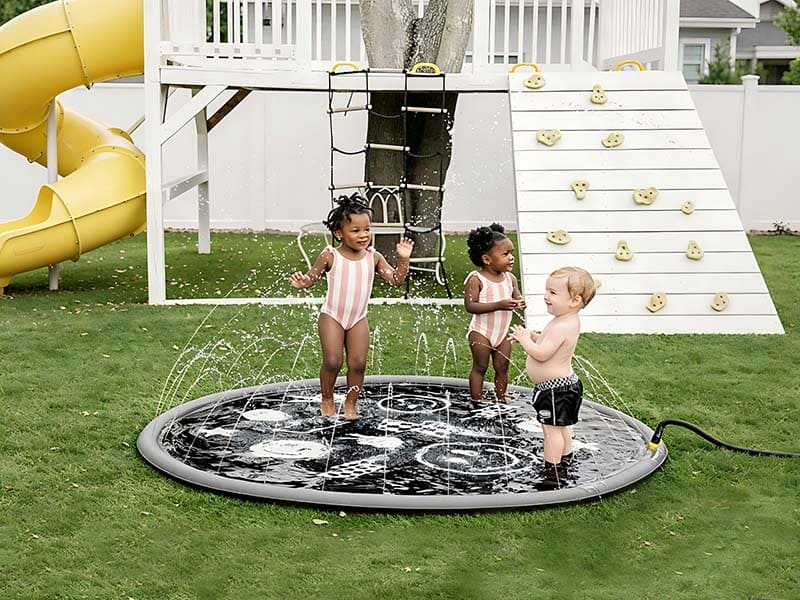
A lot of people think an inflatable splash pad is just a garden hose toy with a colorful surface. That idea sounds harmless, but it is exactly why many families end up disappointed after the first few uses. A splash pad may look simple, yet real use is demanding: children run, jump, sit, crawl, and stomp on it; dogs scratch, bite at water streams, and spin in circles; outdoor conditions add sun, dirt, uneven ground, and changing water pressure. A weak splash pad may spray unevenly, wrinkle badly, leak at the edge, or become slippery and annoying to use. A good one feels easy, stable, and fun every single time it comes out.
An inflatable splash pad is a shallow outdoor water-play product made from PVC or composite materials. It connects to a garden hose, fills its outer ring or edge structure with water, and sprays water through built-in holes to create a low-depth play area. It is used mainly for cooling, active play, and safe backyard water fun without the depth, filling time, or maintenance of a traditional pool.
That sounds straightforward, but small design differences make a huge difference in real life. One splash pad becomes a summer routine. Another gets used twice and stays folded in the garage. The reason is rarely the idea of the product. It is usually the structure, material, and water-flow design behind it.
What Is an Inflatable Splash Pad?
An inflatable splash pad is not just a flat water toy—it is a controlled, shallow water-play system designed for repeated outdoor use. It combines a water distribution structure, a reinforced play surface, and a spray system into one product that works with standard household water pressure.
Most people first see it as “a mat with water spraying out,” but in real use, it behaves more like a low-depth water playground. It is designed for movement, not just soaking. Children run across it, step on spray zones, and interact with the water flow. Pets move in and out, cooling their paws and body without needing to swim.
What makes an inflatable splash pad different from a pool is not just water depth—it is how water is used.
- A pool stores water
- A splash pad circulates water
That difference affects safety, maintenance, and daily usability.
Here is a simple comparison:
| Feature | Inflatable Splash Pad | Inflatable Pool |
|---|---|---|
| Water depth | Very shallow | Medium to deep |
| Water type | Continuous flow | Stored water |
| Setup time | 1–3 minutes | 10–20 minutes |
| Daily use | Easy | Less frequent |
| Cleaning effort | Low | Moderate to high |
Because there is little or no standing water, splash pads are often used more frequently than pools. Many families use them daily during summer instead of only on weekends.
Another key point is space efficiency. A splash pad works well in areas where a pool feels too large or impractical—small backyards, patios, or shared outdoor spaces.
From a product perspective, an inflatable splash pad is built around three main parts:
- a water inlet system (hose connector)
- a pressurized outer ring or channel
- a spray surface with distributed holes
How well these three parts work together determines the overall experience.
What Is an Inflatable Splash Pad Used For?
In real households, an inflatable splash pad is not used for just one purpose. It usually becomes a multi-use outdoor setup that supports cooling, play, and interaction.
The most common use is simple: cooling during hot weather. Instead of sitting in still water, users stay active while water continuously flows across the surface. This helps reduce heat buildup more naturally.
Typical usage patterns include:
- children running and stepping on spray areas
- toddlers sitting and playing with shallow water
- dogs cooling their paws and lower body
- families using it during outdoor gatherings
Here is how different users benefit:
| User Type | Main Benefit |
|---|---|
| Toddlers | Low-risk water exposure |
| Kids | Active play + cooling |
| Dogs | Safe cooling without deep water |
| Families | Shared outdoor activity |
Another important use is short-cycle play. Unlike pools, splash pads are often used in shorter sessions:
- 10–20 minutes play
- short break
- repeat
This makes them more practical for daily routines.
From a behavioral standpoint, splash pads encourage movement instead of sitting still. That is why many parents prefer them—they combine activity and cooling rather than passive soaking.
How Does an Inflatable Splash Pad Work?
An inflatable splash pad works by converting household water pressure into distributed spray across the surface. While the concept is simple, performance depends on how evenly and efficiently water is controlled inside the structure.
When connected to a hose, water flows into the outer ring or internal channel. As pressure builds, water exits through small holes placed around the pad. These holes are designed to direct water inward or upward.
The quality of this system depends on:
- how evenly water is distributed
- how stable the structure remains under pressure
- how consistent the spray pattern is
Here is a simplified breakdown:
| Component | Role in Performance |
|---|---|
| Hose connector | Controls water input and stability |
| Outer ring/channel | Maintains pressure distribution |
| Spray holes | Create water effect |
| Base surface | Supports movement and safety |
Water pressure is one of the most important real-world factors. Most homes operate within a moderate range, which creates a comfortable spray for both kids and pets.
| Pressure Condition | Real Experience |
|---|---|
| Low pressure | Weak spray, limited coverage |
| Medium pressure | Balanced and comfortable spray |
| High pressure | Strong spray, more dynamic play |
Another detail that affects performance is hole design. Smaller, evenly spaced holes create a softer and more consistent spray. Larger or uneven holes can lead to:
- uneven water distribution
- overly strong jets in certain areas
- dry zones in others
This is why two splash pads with similar size can feel completely different in use.
Is an Inflatable Splash Pad Safe and Clean?
Safety and cleanliness are two of the biggest concerns for buyers, especially for families with young children or pets.
From a safety perspective, inflatable splash pads reduce several risks associated with pools:
- no deep water
- easier entry and exit
- full visibility during use
- less chance of slipping if surface is textured
However, safety still depends on product design and usage conditions.
Important safety factors include:
- anti-slip surface texture
- stable edge structure
- soft but durable material
- appropriate spray strength
Surface stability is especially important. A splash pad that wrinkles or shifts underfoot can reduce user confidence, especially for younger children.
Cleanliness is often one of the main reasons people choose splash pads over pools.
Unlike pools, splash pads do not rely on storing water for long periods. Water flows in and out continuously, which helps reduce buildup.
Here is a practical comparison:
| Hygiene Factor | Splash Pad | Pool |
|---|---|---|
| Standing water | Minimal | High |
| Bacteria buildup | Lower | Higher |
| Cleaning frequency | Lower | Higher |
| Water replacement | Continuous | Periodic |
That said, real outdoor use still introduces dirt, grass, and debris. Basic care is still necessary.
A simple maintenance routine includes:
- draining after use
- rinsing if dirty
- drying before storage
- checking connectors regularly
For households with pets, cleaning becomes slightly more important due to:
- fur
- saliva
- mud
From a practical point of view, splash pads are considered easier to maintain than pools because they require less water management and less frequent deep cleaning.
Types of Inflatable Splash Pads
Inflatable splash pads may look similar at first glance, but once you start using them, the differences become very clear. Some feel stable and easy to use every day, while others are only suitable for occasional play. The biggest differences usually come from structure, water behavior, and how the product handles real movement—running, jumping, stepping, and repeated use.
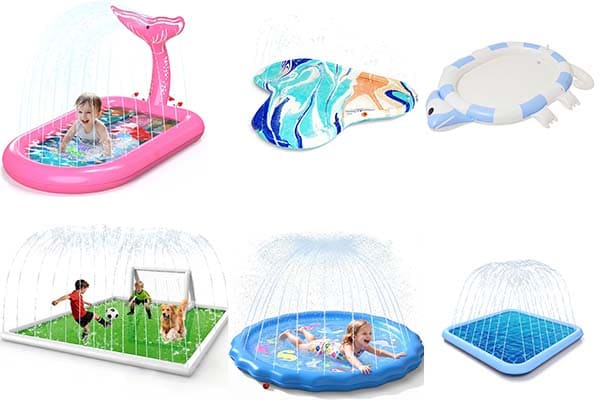
Instead of thinking in terms of “models” or “styles,” it is more useful to think about how the splash pad behaves in real life. Most inflatable splash pads fall into three practical types: flat spray pads, raised-edge splash pads, and interactive splash pads with added features.
What Types of Inflatable Splash Pads Exist?
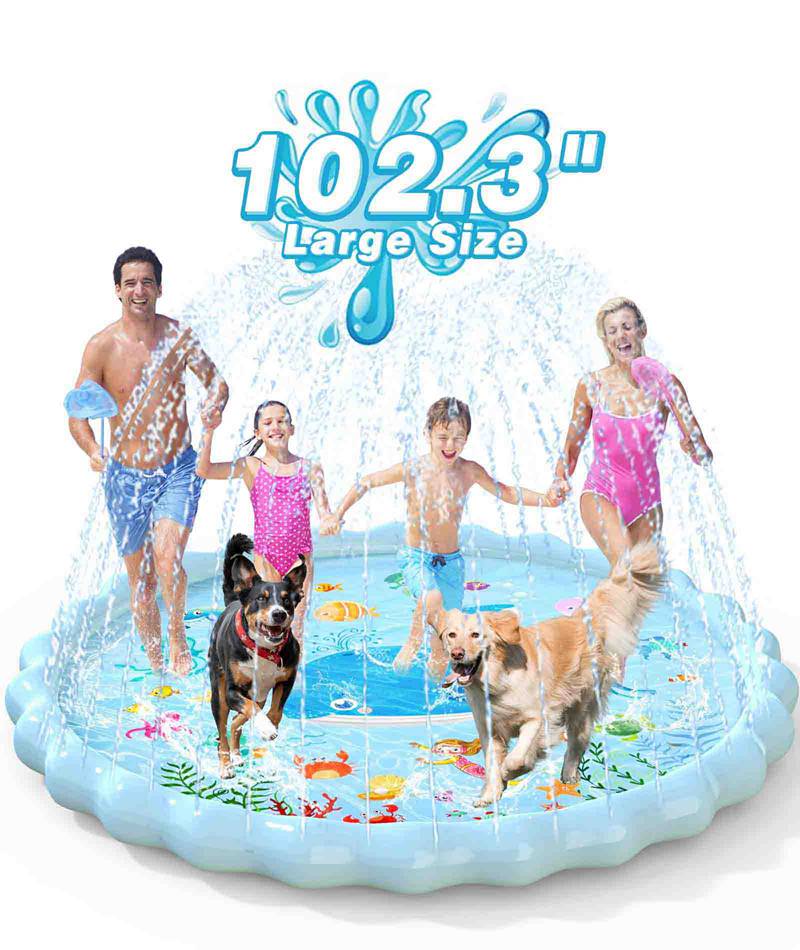
Flat inflatable splash pads are the most basic type. They sit directly on the ground with no raised structure, and water sprays from holes around the outer ring or across the surface. They are lightweight, easy to store, and quick to set up. However, because there is no edge to hold water, the cooling effect depends mainly on spray rather than water contact. After a few minutes of use, water spreads outward, and the surface may feel less “wet” than expected.
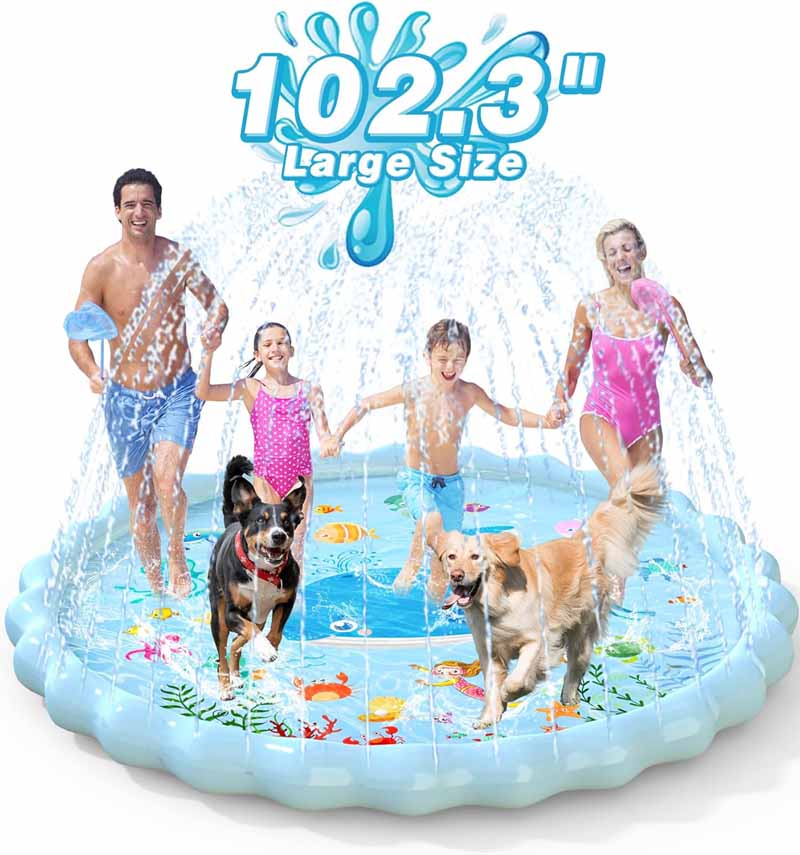
Raised-edge splash pads add an inflatable outer ring, which slightly lifts the perimeter. This small structural change makes a noticeable difference in use. A thin layer of water stays inside the play area, which improves cooling and keeps the surface consistently wet. It also helps prevent water from flowing too far across the yard, making the play area more defined and easier to manage.
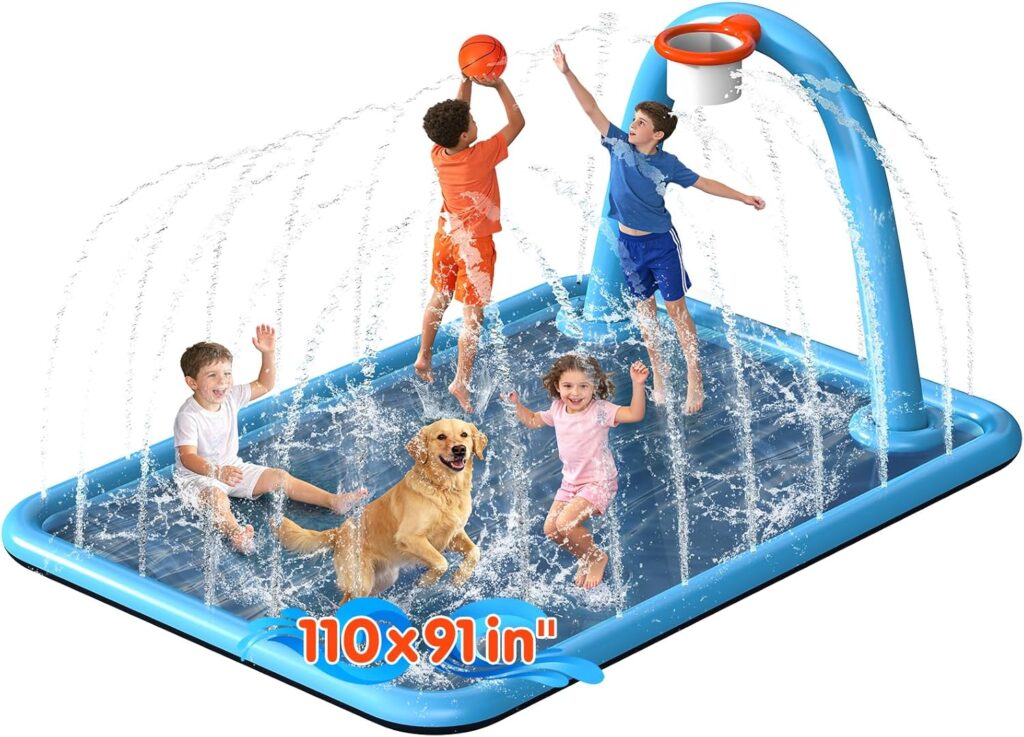
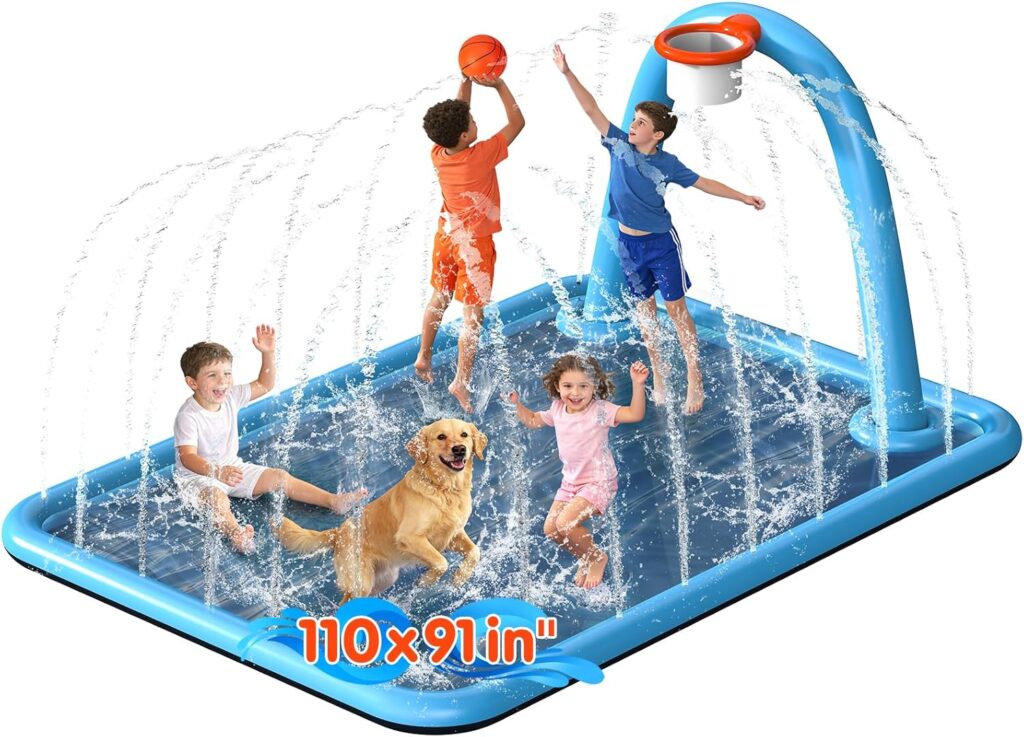
Interactive splash pads include additional features such as built-in arches, vertical sprinklers, or shaped play elements. These are designed for more active play and visual appeal. They create more movement and engagement, especially for children who like running through water streams or interacting with structures. However, they require more space and usually depend more on stable water pressure to perform well.
Here is how these types compare in real use:
| Type | Structure | Water Behavior | Best Use | Limitation |
|---|---|---|---|---|
| Flat splash pad | Fully flat | Water spreads quickly | Quick daily use | Less water retention |
| Raised-edge splash pad | Inflated outer ring | Holds shallow water | Balanced cooling + play | Slightly more setup |
| Interactive splash pad | Added features | Dynamic spray patterns | Active play | More space needed |
In practice, raised-edge designs are often the most versatile. They offer both spray and shallow water without adding too much complexity.
Which Inflatable Splash Pad Is Best?
The “best” inflatable splash pad depends less on features and more on how it fits into daily use. Many buyers initially choose based on appearance—colors, graphics, or added elements—but long-term satisfaction usually depends on stability, ease of use, and how often the product is actually used.
For families who plan to use a splash pad regularly, a balanced design tends to perform better than a complex one. A product that takes too long to set up or requires constant adjustment is less likely to be used frequently.
Here is how different types perform based on real usage patterns:
| Usage Scenario | Recommended Type | Reason |
|---|---|---|
| Daily backyard use | Raised-edge splash pad | Stable and consistent |
| Small outdoor space | Flat splash pad | Easy to manage and store |
| Multiple kids or pets | Large reinforced splash pad | Handles repeated movement |
| Occasional parties | Interactive splash pad | More visual and active |
Another factor that affects “best choice” is how users interact with water.
- Younger children tend to sit and play → need stable surface and gentle spray
- Older kids tend to run and jump → need stronger structure
- Dogs tend to scratch and step repeatedly → need thicker material
A product that matches behavior is more likely to be used consistently.
Are Inflatable Splash Pad Slides Worth It?
Splash pads with built-in slides or elevated play areas can look more exciting, but whether they are worth buying depends on how they will be used over time.
These products combine a splash pad with a small inflatable water structure. They are designed to create a more active play environment, especially for children who enjoy climbing and sliding. At first use, they often feel more engaging than a standard splash pad.
However, they also introduce additional considerations. Setup is usually more involved, storage requires more space, and the product may depend more heavily on water pressure to function properly.
Here is a realistic comparison:
| Factor | Standard Splash Pad | Splash Pad with Slide |
|---|---|---|
| Setup time | Short | Longer |
| Storage | Compact | Bulkier |
| Water usage | Moderate | Higher |
| Durability needs | Moderate | Higher |
| Daily use | Frequent | Less frequent |
From a long-term perspective, simpler splash pads are often used more often because they are easier to manage. Slide versions tend to be used less frequently, even though they provide a stronger first impression.
They make more sense when:
- the splash pad is used occasionally rather than daily
- there is enough outdoor space
- users prefer more active, structured play
They are less practical when:
- quick setup and repeat use are priorities
- storage space is limited
- the product will be used by pets as well
In many cases, buyers who want a product for regular summer use prefer simpler designs, while more complex versions are chosen for occasional entertainment.

Choose an Inflatable Splash Pad
Choosing an inflatable splash pad is less about picking the one that looks the most fun and more about choosing the one that fits how it will actually be used. Many people only realize this after a few days—when the pad feels too small, too thin, or harder to manage than expected.
A splash pad that works well usually matches three things:
- how many people (or pets) will use it
- how often it will be used
- how much wear it needs to handle
Small mismatches in these areas are the main reason people stop using a product after the first few tries.
What Size Inflatable Splash Pad Do You Need?
Size affects almost everything—comfort, usability, and how often the splash pad gets used. A pad that is too small limits movement and quickly feels crowded. A pad that is too large may take up too much space and be less convenient to set up regularly.
In real use, size should be based on how many users are on it at the same time, not just the yard size.
| Diameter | Suitable Users | Real Experience |
|---|---|---|
| 100–130 cm (40–50 in) | 1 child / small pet | Limited movement, short play time |
| 140–160 cm (55–63 in) | 1–2 kids | Comfortable for light use |
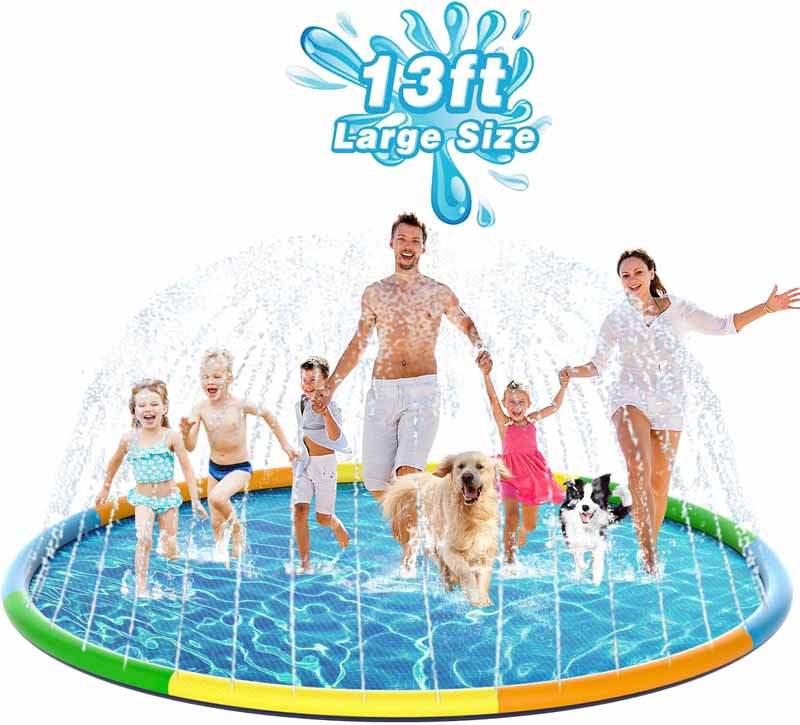
| 170–180 cm (67–71 in) | 2–3 kids / 1–2 dogs | Balanced daily use |
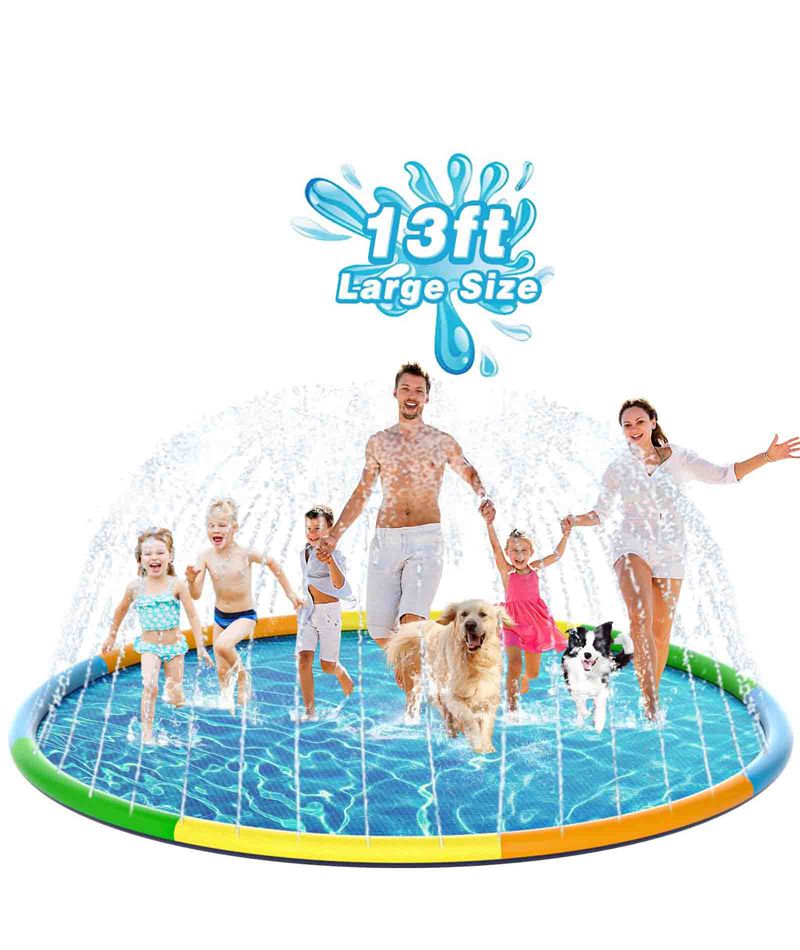
| 180–200 cm (71–79 in) | 3–5 users | Better for group play |
A practical observation from real use:
- below 140 cm → often feels too small after a few sessions
- around 170–180 cm → most commonly reused size
- above 180 cm → better for groups, needs more space and water
Another detail is usable space vs total size. The outer ring takes up part of the diameter, so the actual play area is slightly smaller than the listed size.
For families with pets, choosing a slightly larger size helps reduce crowding and improves durability because users are not constantly stepping on the same area.
What Material Is Best for an Inflatable Splash Pad?
Material is one of the biggest differences between splash pads that last a full season and those that wear out quickly. Most inflatable splash pads are made from PVC, but the thickness and quality vary more than many people expect.
A thicker or better-formulated material usually provides:
- stronger resistance to scratches and pressure
- better shape stability when filled with water
- lower chance of leaks over time
- a more solid feel underfoot
Here is how material thickness affects performance:
| Material Type | Thickness Range | Real Performance |
|---|---|---|
| Thin PVC | ~0.3–0.4 mm | Light use, easier to fold, less durable |
| Medium PVC | ~0.4–0.6 mm | Balanced durability and flexibility |
| Thick PVC | ~0.6–0.8 mm | More durable, better for heavy use |
Material also affects user comfort. Very thin material can wrinkle and shift when stepped on, which reduces stability. Thicker material feels more stable and predictable during movement.
For households with dogs, material becomes even more important. Dogs introduce:
- claw pressure
- repeated stepping in the same areas
- sudden movements and jumping
In these cases, reinforced or thicker material is usually the better choice, even if it costs slightly more.
Another factor is odor and surface feel. Higher-quality materials tend to have less noticeable odor and a smoother surface, which improves the overall experience, especially for younger children.
How Durable Is an Inflatable Splash Pad?
Durability is not just about how strong a splash pad looks when new. It is about how well it performs after repeated use—day after day, under water pressure, movement, and outdoor conditions.
A durable splash pad should maintain:
- consistent spray performance
- stable shape
- strong seams
- resistance to wear
The most common failure points are:
- edge seams (where pressure builds)
- connector area (hose attachment)
- high-traffic zones (center area)
Here is how durability levels affect real outcomes:
| Durability Level | What Happens Over Time |
|---|---|
| Low | Leaks, deformation, uneven spray |
| Medium | Works for occasional use |
| High | Handles frequent daily use |
One useful way to evaluate durability is to think about usage frequency:
| Usage Frequency | Recommended Build |
|---|---|
| Occasional (weekends) | Medium thickness |
| Regular (3–5 times/week) | Medium to thick |
| Daily use | Thick, reinforced |
Another important factor is how the splash pad behaves after multiple uses:
- does it lose shape when water pressure increases?
- do spray holes remain consistent or become uneven?
- does the surface stay flat or start folding?
These details matter more than initial appearance.
A durable splash pad is one that feels the same on day ten as it did on day one.
How Should You Match the Splash Pad to Your Use?
Many buying decisions go wrong not because the product is bad, but because it does not match the actual use environment.
Before choosing, it helps to think about a few real conditions:
- Is the ground flat or uneven?
- Will it be used on grass, concrete, or patio?
- Will pets use it regularly?
- Will it be stored and reused often?
Here is a simple matching guide:
| Condition | Better Choice |
|---|---|
| Small yard or patio | Compact or flat splash pad |
| Uneven ground | Thicker, more stable structure |
| Dogs included | Reinforced material |
| Frequent setup/storage | Lightweight but durable design |
| Family + kids + pets | Medium-large balanced design |
Another important factor is ease of use. Products that are difficult to set up or clean tend to be used less often.
A splash pad that gets used regularly is more valuable than one that looks impressive but is rarely taken out.

Use an Inflatable Splash Pad Safely
Using an inflatable splash pad safely is not complicated, but most issues happen because small details are ignored. In real use, safety is not just about preventing accidents—it is about making sure the splash pad feels stable, predictable, and comfortable every time it is used.
A well-used splash pad should:
- stay flat and stable under movement
- spray evenly without sudden pressure changes
- provide safe footing for both kids and pets
- remain easy to control throughout the session
When these conditions are not met, problems like slipping, uneven spray, or premature wear start to appear.
How Do You Set Up an Inflatable Splash Pad Safely?
A safe setup starts with the ground, not the product itself. The surface under the splash pad directly affects stability, water distribution, and long-term durability.
The best surfaces are:
- flat grass (absorbs pressure, reduces slipping)
- smooth outdoor flooring (patio, deck)
- level concrete with no sharp edges
Surfaces that often cause problems:
- uneven lawns (create water pooling and imbalance)
- gravel or rough ground (risk of puncture)
- sloped areas (water shifts to one side)
Here is how surface choice affects real use:
| Surface Type | Stability | Risk Level | Real Issue |
|---|---|---|---|
| Flat grass | High | Low | Best overall balance |
| Concrete (smooth) | Medium | Medium | Can feel slippery |
| Uneven ground | Low | High | Water pooling, imbalance |
| Gravel | Very low | Very high | Damage risk |
Another key detail is removing folds before turning on water. If the splash pad is not fully flattened, water pressure will not distribute evenly, which can lead to:
- uneven spray height
- unstable edges
- premature stress on seams
A simple but important habit:
Always spread the splash pad completely flat before connecting water.
How Should You Control Water Pressure?
Water pressure is one of the most overlooked factors. Many users assume higher pressure is better, but in reality, excessive pressure often reduces usability and safety.
A balanced spray is more important than a strong spray.
Here is how different pressure levels affect experience:
| Pressure Level | Spray Behavior | User Experience |
|---|---|---|
| Low | Weak, uneven | Less engaging |
| Medium | Even, controlled | Best for daily use |
| High | Strong, irregular | Can cause splashing and instability |
High pressure can cause:
- water jets shooting too high
- unstable edge inflation
- increased slipping risk
- faster wear on seams
For children and pets, moderate pressure is usually ideal because:
- water remains soft and comfortable
- spray stays consistent
- surface remains easier to stand on
Another practical tip:
Turn on water gradually instead of starting at full pressure.
This allows the outer ring to fill evenly and reduces sudden stress on the structure.
Is an Inflatable Splash Pad Slippery?
A splash pad can become slippery depending on the surface condition and how it is used.
Slipping usually happens when:
- water builds up unevenly
- the ground underneath is hard and smooth
- too many users concentrate in one area
- soap or dirt reduces friction
Here is a breakdown of slip risk:
| Condition | Slip Risk |
|---|---|
| Even water distribution | Low |
| Uneven pooling | Medium |
| Smooth wet concrete | High |
| Soap or mud present | Very high |
Ways to reduce slipping:
- place the splash pad on grass when possible
- avoid adding soap or cleaning chemicals during use
- keep the surface clean from mud buildup
- control the number of users in one area
For households with pets, claws can sometimes increase grip, but sudden movements can still create slipping, especially on smooth surfaces.
A stable splash pad should feel:
- slightly textured underfoot
- evenly wet, not flooded
- firm, not shifting
How Do You Keep Kids and Pets Safe During Use?
Safety during use is mostly about supervision and controlling activity levels.
Most accidents do not happen because of the product itself, but because of how people interact with it.
Common risky behaviors include:
- running at full speed on wet surfaces
- jumping on the outer ring
- multiple users pushing or colliding
- pets scratching or biting edges
Here is how activity affects safety:
| Activity Type | Risk Level | Recommendation |
|---|---|---|
| Walking / light play | Low | Safe |
| Running | Medium | Monitor closely |
| Jumping | High | Avoid |
| Rough play | Very high | Not recommended |
For pets:
- avoid letting dogs chew the edges
- trim nails regularly to reduce wear
- monitor interactions with children
Another important factor is session duration.
Long sessions without breaks can lead to:
- fatigue (increasing fall risk)
- overheating (especially for pets)
- loss of attention (especially for kids)
A practical approach:
Use shorter play sessions (15–30 minutes) with breaks in between.
How Do You Maintain and Store an Inflatable Splash Pad?
Maintenance is simple, but consistency is what makes the difference between a product that lasts one season and one that wears out early.
After each use:
- turn off water and drain completely
- rinse off dirt, grass, or debris
- let the surface dry before folding
If the splash pad is stored wet, it can lead to:
- odor buildup
- material weakening over time
- surface stickiness
Here is a simple maintenance comparison:
| Maintenance Habit | Long-Term Result |
|---|---|
| Regular cleaning and drying | Longer lifespan |
| Occasional cleaning | Moderate wear |
| No cleaning | Faster degradation |
Storage conditions also matter:
- store in a cool, dry place
- avoid direct sunlight during storage
- avoid folding too tightly when wet
Another practical tip:
Do not leave the splash pad exposed to sun for long periods when not in use.
Continuous UV exposure can gradually weaken the material, even if the product is not being used.
What Are the Most Common Mistakes?
Many issues reported by users come from a few repeated mistakes.
Here are the most common ones:
| Mistake | Result |
|---|---|
| Using on uneven ground | Water imbalance |
| Turning on full pressure instantly | Unstable spray |
| Leaving water running too long | Excess wear |
| Not drying before storage | Odor and material damage |
| Overcrowding | Reduced safety |
Most of these are easy to avoid once recognized.

Inflatable Splash Pad Manufacturer
Choosing an inflatable splash pad manufacturer is not just about comparing prices or designs. In real business situations, the biggest differences appear after the product reaches the customer—when it is used repeatedly, exposed to water pressure, sunlight, and movement.
A reliable manufacturer is one that can produce splash pads that:
- hold shape under continuous water pressure
- maintain consistent spray performance
- resist wear from daily use
- remain stable across multiple production batches
Most quality issues in the market—such as leaking edges, uneven spray, or material wear—can be traced back to how the product was designed and manufactured, not how it was used.
What Should You Look for in an Inflatable Splash Pad Manufacturer?
For both brands and retailers, selecting a manufacturer is about reducing long-term risk, not just lowering initial cost.
There are four areas that matter most:
- material consistency
- seam strength
- spray system design
- production stability
Here is how these factors affect real outcomes:
| Manufacturing Factor | What It Affects | What Happens If It Is Weak |
|---|---|---|
| Material thickness | Durability, stability | Surface wears out quickly |
| Seam welding | Leak resistance | Edges start leaking |
| Spray hole design | Water distribution | Uneven or weak spray |
| Batch consistency | Customer experience | Mixed reviews, returns |
For example, two splash pads may look identical when new, but after 10–15 uses:
- a well-made one maintains structure and spray
- a lower-quality one may start deforming or leaking
This difference is rarely visible at first glance, which is why manufacturing quality matters more than appearance.
How Are Inflatable Splash Pads Actually Manufactured?
Understanding how splash pads are made helps explain why some products perform better than others.
The production process typically includes:
- PVC material preparation
- cutting panels to shape
- high-frequency welding (sealing seams)
- assembling connectors and spray channels
- pressure and leak testing
Each step directly impacts performance:
| Production Step | Real Impact |
|---|---|
| Material preparation | Flexibility and durability |
| Cutting accuracy | Shape and fit |
| Welding quality | Leak resistance |
| Assembly | Spray consistency |
| Testing | Reliability before shipping |
One of the most critical steps is high-frequency welding. This process bonds the material at high temperature and pressure, creating sealed edges.
If welding is not consistent:
- seams may weaken over time
- water pressure may cause separation
- leakage appears at stress points
Another important step is spray hole positioning. Poor alignment leads to:
- uneven water height
- weak spray in certain areas
- imbalance in pressure distribution
Good manufacturing ensures that spray holes are:
- evenly spaced
- consistently sized
- aligned with internal water flow
What Materials Do Manufacturers Use?
Most inflatable splash pads are made from PVC, but not all PVC performs the same.
Material quality depends on:
- thickness
- formulation (additives and plasticizers)
- layering structure
Here is a practical comparison:
| Material Type | Thickness | Real Use Performance |
|---|---|---|
| Basic PVC | 0.3–0.4 mm | Light use, shorter lifespan |
| Standard PVC | 0.4–0.6 mm | Balanced durability |
| Reinforced PVC | 0.6–0.8 mm | Better for heavy use |
Material formulation also affects:
- resistance to UV exposure
- flexibility under pressure
- odor level
- surface feel
For example:
- lower-quality PVC may become stiff or brittle under sun exposure
- better-formulated PVC remains flexible and stable
For pet-related use, material must also handle:
- repeated claw pressure
- sudden movements
- localized stress
This is why many manufacturers offer thicker or reinforced options for pet-friendly products.
How Do Manufacturers Ensure Product Quality?
Quality control is not a single step—it is a process applied throughout production.
Reliable manufacturers usually include:
- raw material testing
- in-line inspection during welding
- pressure testing after assembly
- final inspection before packaging
Here is how testing affects product reliability:
| Test Type | Purpose |
|---|---|
| Pressure test | Check structural integrity |
| Leak test | Identify seam issues |
| Wear simulation | Evaluate durability |
| Spray test | Verify water distribution |
Without proper testing, issues may not appear until the product is already in use.
Another important factor is consistency across batches.
For businesses, inconsistent batches can lead to:
- different customer experiences
- increased return rates
- negative reviews
A manufacturer with stable processes ensures that:
- each production batch performs similarly
- design specifications are maintained
- quality does not fluctuate over time
Can Manufacturers Support Custom Splash Pad Development?
Customization is one of the main reasons businesses work directly with manufacturers.
Instead of selling the same product as competitors, brands can develop products tailored to their market.
Common customization options include:
- size and diameter adjustments
- material thickness upgrades
- custom spray patterns
- printed graphics and branding
- packaging design
Here is how customization creates value:
| Custom Feature | Business Benefit |
|---|---|
| Size variation | Targets different user groups |
| Material upgrade | Improves durability |
| Custom graphics | Builds brand identity |
| Packaging | Enhances retail appeal |
For example:
- a brand targeting families may choose larger sizes with colorful designs
- a pet-focused brand may prioritize reinforced materials and simpler patterns
Customization is not only about appearance—it is about aligning the product with how it will actually be used.
What Problems Can a Good Manufacturer Help You Avoid?
Many common market issues can be prevented at the manufacturing stage.
Here are some examples:
| Common Problem | Root Cause |
|---|---|
| Splash pad leaks early | Weak seam welding |
| Spray is uneven | Poor hole design |
| Surface wears out quickly | Thin or low-quality material |
| Product feels unstable | Inconsistent structure |
A reliable manufacturer focuses on preventing these issues before production, rather than reacting after they appear.
Work With Epsilon for Inflatable Splash Pads
For brands, retailers, and distributors, working with a reliable manufacturer helps reduce product development risks and improve long-term supply stability.
American Epsilon Inc. focuses on PVC and composite inflatable products, including splash pads designed for real-world use in family backyards, outdoor play areas, and recreational environments.
Instead of focusing only on appearance, our product development process emphasizes:
- material durability and long-term outdoor performance
- structural stability during water pressure use
- consistent production quality across large orders
Product Capabilities
Epsilon supports both ready-stock products and custom development projects.
Core capabilities include:
- splash pad size and structure customization
- reinforced PVC material options
- anti-slip surface design for safety
- custom graphics, branding, and packaging
- retail-ready packaging for global markets
Development Process
A typical project follows a clear and efficient process:
| Stage | Timeline | Description |
|---|---|---|
| Concept | 1–2 days | Define product requirements |
| Design | 2–3 days | Structure and material setup |
| Sampling | 3–5 days | Prototype production |
| Testing | 2–3 days | Performance verification |
| Production | 14–20 days | Mass production |
This process allows businesses to move from idea to market quickly and efficiently.
Buy Ready-Stock Splash Pads
If you want to enter the market quickly, you can purchase our tested and ready-to-ship products:
Splash Pad with Basketball Hoop
Get Custom Splash Pad Solutions
If you are building your own brand or product line, we can support full customization, including:
- product structure and spray design
- material selection and durability upgrades
- branding, colors, and packaging
- OEM and private label production
Contact Us for Custom Splash Pad Solutions
Request Samples
Before placing bulk orders, testing samples helps you evaluate:
- material quality
- structural stability
- real user experience
Request a Splash Pad Sample
Explore More Inflatable Products by Epsilon
If you are sourcing PVC inflatable outdoor products, you may also be interested in: