Skip to content
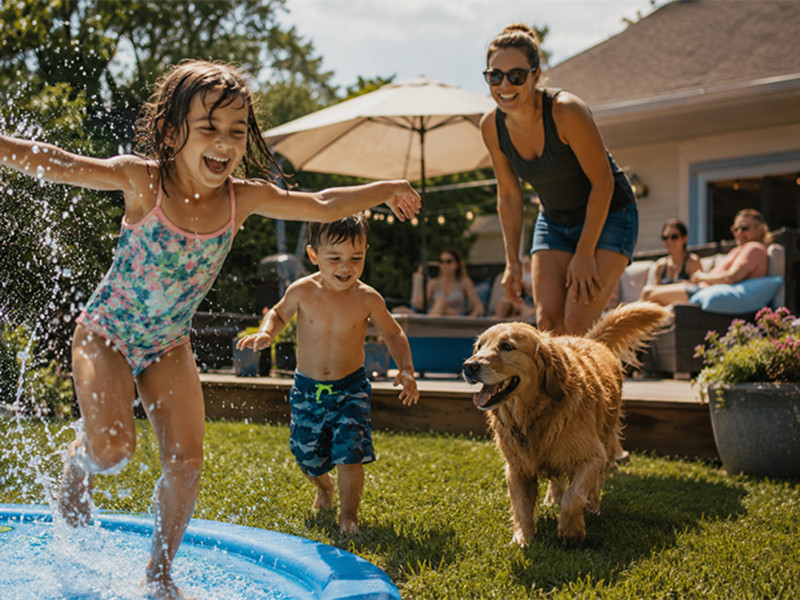
A splash pad looks simple at first glance. It is colorful, flat, easy to connect to a hose, and fun enough to make any backyard feel more like summer. But many families discover the real differences only after several uses. One pad may spray too far outside the play area. Another may wrinkle on grass. Some may smell too strong when opened. Others may leak around the edge, slide under active feet, or become difficult to dry and store. For pet owners, the questions become even more practical. Will dog nails damage the surface? Will the edge stay stable when a large dog steps across it? Can the material handle sun, water, folding, and repeated backyard use?
The best splash pad questions before buying focus on fit, PVC material, safety, spray control, cleaning, storage, pet use, and long-term summer value. A better splash pad should match the user’s age, yard size, water pressure, play style, and care routine.
A splash pad is not only a one-day outdoor toy. It may become part of after-school play, weekend BBQs, birthday parties, toddler cooling, or dog play on hot afternoons. Good product choice starts before the hose is connected. Families who ask better questions usually avoid the splash pads that only look exciting online but fail during real backyard use.
What Splash Pad Fit Questions Matter?
A splash pad needs to fit the people, the yard, the water pressure, and the way the product will actually be used. The largest size or brightest pattern is not always the best choice. A good fit depends on child age, number of users, pet activity, available flat ground, and storage routine.
Many customers start by asking, “Which splash pad is the biggest?” A better first question is, “Which splash pad fits my real use scene?” A toddler who plays for 20 minutes in the afternoon does not need the same design as four children running during a summer party. A dog cooling off on a lawn needs different material support than a child sitting in gentle spray. A narrow backyard may work better with a square or rectangular splash pad, while a round pad may suit open grass better.
A good splash pad should feel natural in the space. It should leave enough room around the mat for children to walk, for adults to supervise, and for water to drain without creating muddy edges. For frequent use, setup and storage matter as much as play size. A product that is too large for the yard may become inconvenient, even if it looks impressive in photos.
EPN splash pads are developed around family, pet, and outdoor water-play scenarios. Fit is considered through size, edge design, water direction, material strength, and repeat-use handling. The goal is not only to make the product look good on a lawn, but to make it easier for real households to use, clean, fold, and bring out again.
| Fit Question | Why It Matters |
|---|---|
| How many children will use it? | More users need more open play space. |
| Will pets use it too? | Pet use needs better wear resistance and stronger structure. |
| Is the yard flat enough? | Uneven ground can affect water pooling and spray balance. |
| Is the hose pressure strong enough? | Large splash pads need enough pressure for stable spray. |
| How often will it be stored? | Frequent use needs easier drying, folding, and storage. |
| Is the surrounding area safe? | Wet grass, patios, and decks can create slip risks. |
What Is a Splash Pad?
A splash pad is a flat outdoor water play mat that connects to a garden hose. Water flows into the outer edge and sprays through small holes to create a sprinkler-style play area. Most home splash pads are made from flexible PVC because it can hold water pressure, fold for storage, and lie flat on grass or other clean surfaces.
Unlike an inflatable pool, a splash pad is not mainly designed to hold deep water. It creates shallow spray play. That difference is important for families with young children because the activity feels lighter, faster, and easier to manage than filling a small pool. The water runs through the product during play, then drains away after use.
A simple customer-friendly description would be: a splash pad is a portable backyard sprinkler mat that creates shallow summer water play for children, pets, and family outdoor time.
What Can a Splash Pad Do?
A splash pad can turn an ordinary backyard into a simple summer activity zone. It can be used for toddler water play, sibling games, pet cooling, birthday parties, supervised daycare activities, and short outdoor sessions after school. The strongest value is convenience. Most splash pads do not need a frame, pump, ladder, or large storage area.
Parents can connect the hose, start with low water pressure, adjust the spray height, and let children play under supervision. After use, the pad can be drained, rinsed, dried, and folded. For families that do not want the maintenance of a pool, that routine feels easier.
Pet owners may also use a splash pad as a cooling surface for dogs in summer. A dog can stand, step, or lie in the shallow spray without needing a deeper pool. For custom product planning, splash pads can be designed around different markets, including toddler play, pet use, sports themes, and large family backyard scenes.
Which Splash Pad Size Fits?
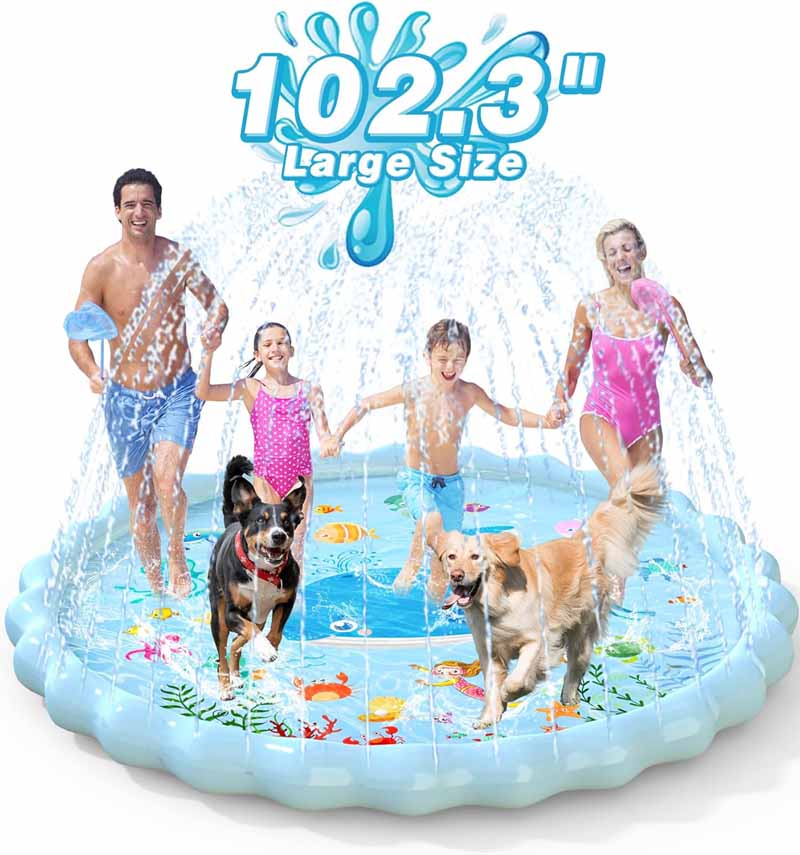
Splash pad size should be chosen by user count, yard space, and water pressure. A larger splash pad gives children more room to move, but it also needs a flatter setup area and stronger water flow. A smaller splash pad is easier to dry and store, but it may feel crowded when several children join.
A practical size guide helps reduce guesswork:
| Use Scene | Suggested Size Range | Best For |
|---|---|---|
| One toddler | 39–60 in | Short and gentle water play |
| One to two young children | 60–87 in | Small backyard play sessions |
| Two to four children | 87–118 in | Siblings, playdates, active movement |
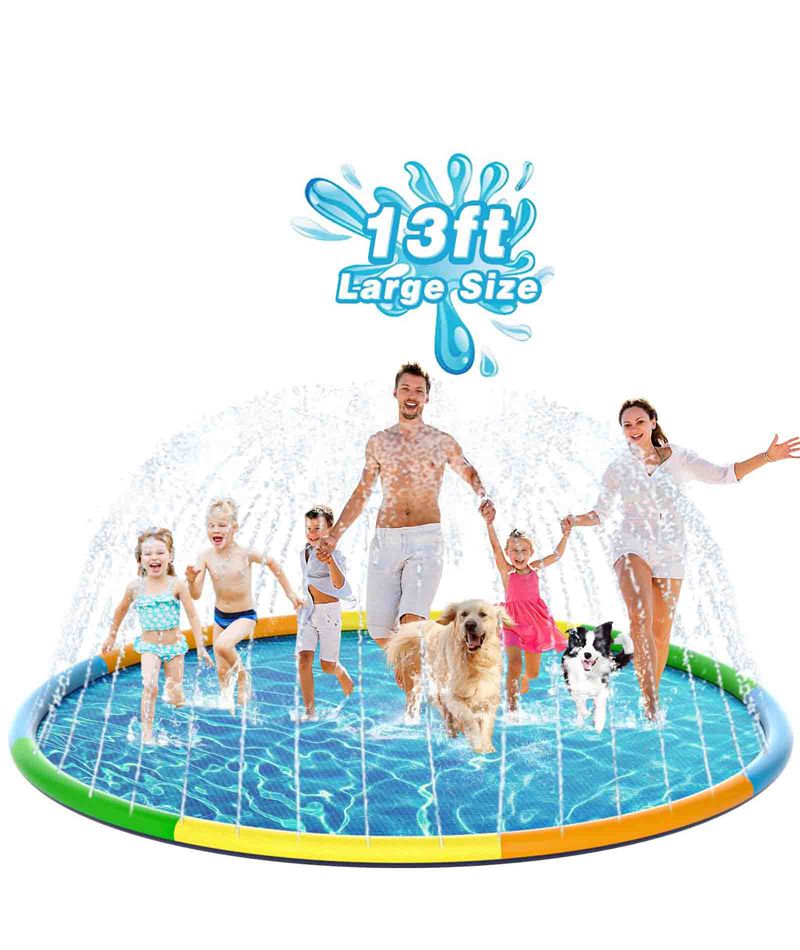
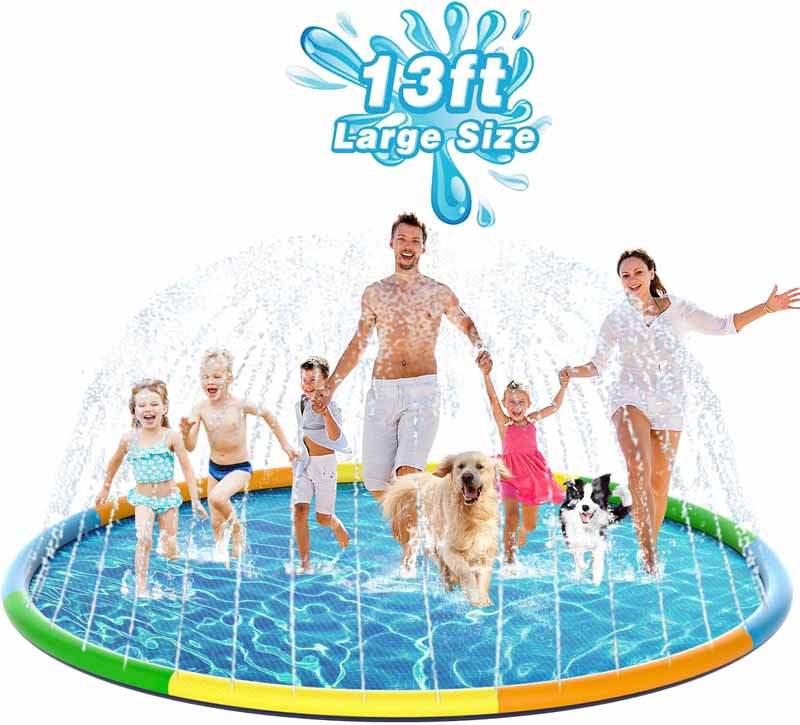
| Family gatherings | 10–13 ft | Larger open play areas |
| Kids and pets together | 87 in and above | More room for mixed movement |
| Pet cooling | 67–118 in | Depends on dog size and activity level |
A useful rule is to choose a splash pad that gives each child enough space to move without stepping constantly on the edge. For pets, allow extra room because dogs may circle, paw, or lie down. If the splash pad is placed in a small yard, leave a dry walking path around it.
Water pressure should also be considered. A large pad may not perform well if the water supply is weak. Uneven spray does not always mean product failure; sometimes the pad is too large for the available pressure.
Which Splash Pad Shape Works?
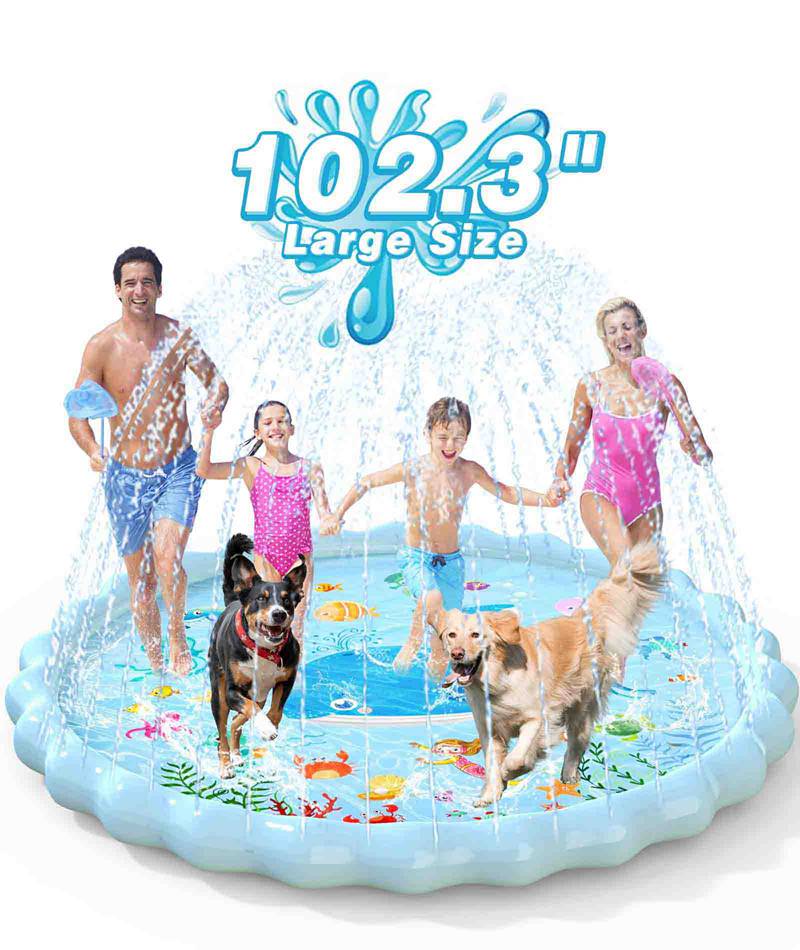
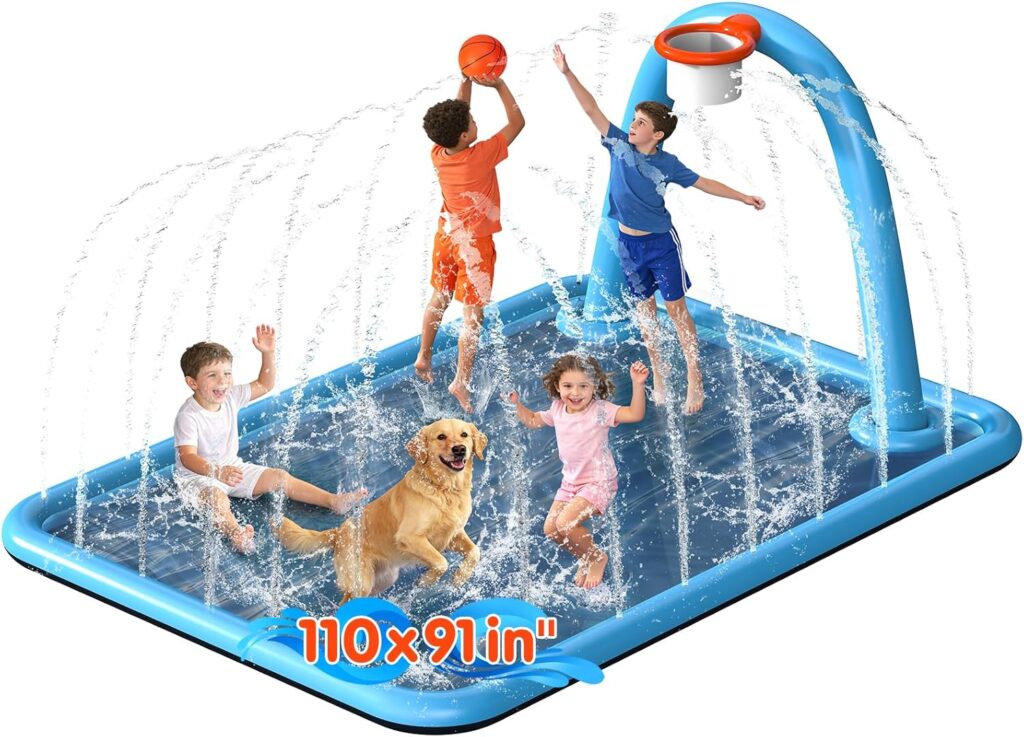
Splash pad shape affects both appearance and usability. Round splash pads are common because the outer ring can spray toward the center in a balanced way. Square splash pads create a clean layout and may fit patios, lawns, or modern backyard spaces better. Rectangular splash pads work well in narrow yards or activity-style scenes where children move across the surface.
| Shape | Strong Point | Best Use |
|---|---|---|
| Round | Balanced center play | General family use |
| Square | Clean layout and defined corners | Lawns, patios, modern backyard photos |
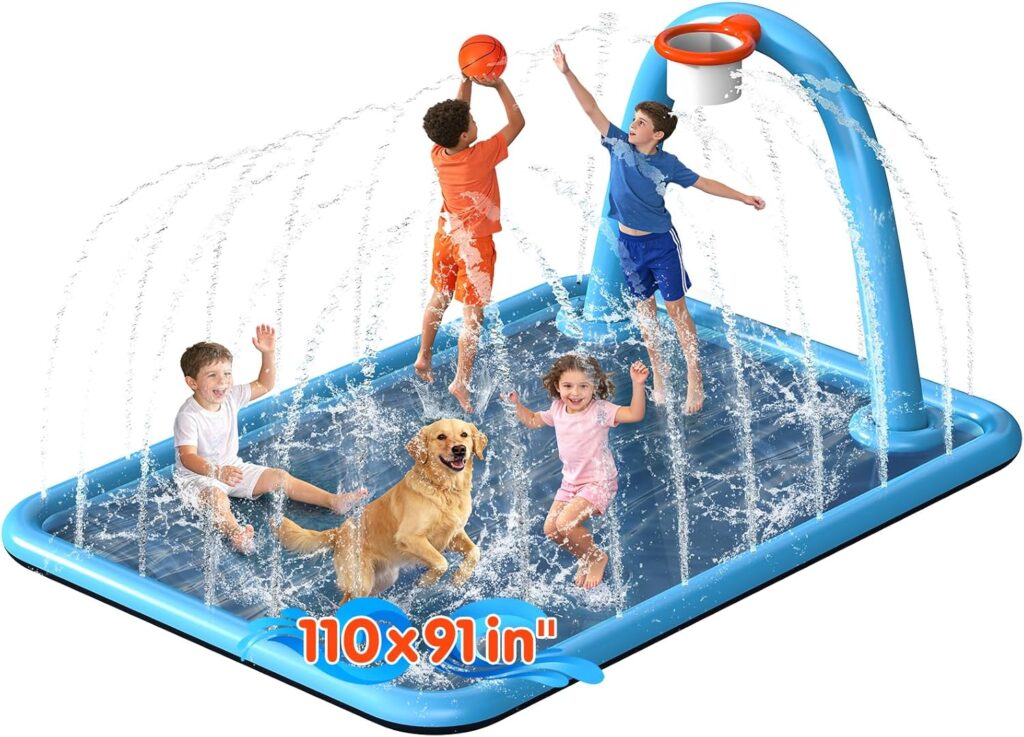
| Rectangular | Longer movement direction | Group play, narrow yards, sports themes |
| Themed | Strong visual appeal | Kids’ gifts, seasonal promotions |
| Pet-focused | More open paw movement | Dog cooling and pet play |
Shape should support the way the product will be used. A square splash pad may look more structured in a backyard product page or retail image. A round splash pad may feel more familiar for toddlers. A sports-themed splash pad may benefit from a longer or more open layout.
EPN can support different shape directions for branded or custom splash pad projects, including family, pet, and activity-focused designs.
Is Splash Pad Better Than Pool?
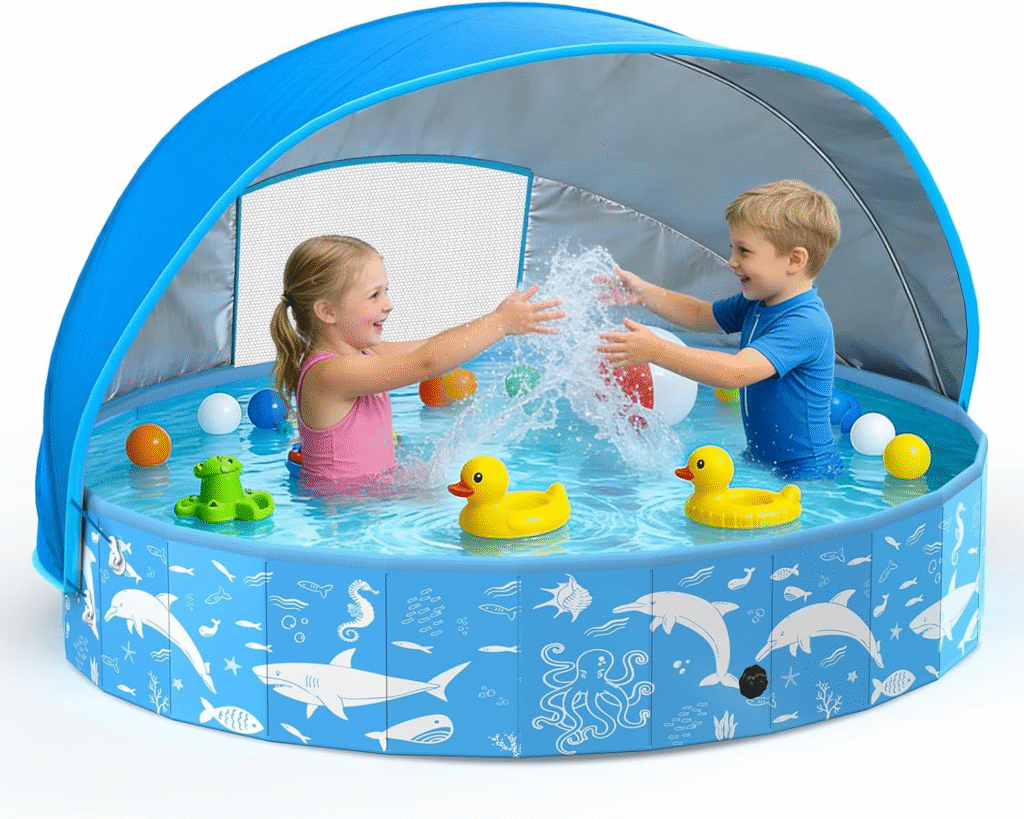
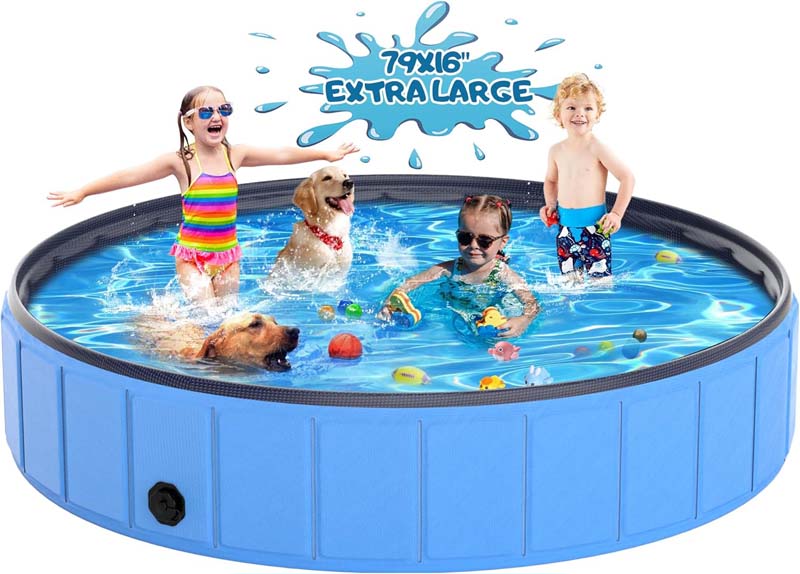
A splash pad may be better than a pool for families who want shallow water play, faster setup, easier cleaning, and simpler storage. A pool offers deeper soaking and sitting water, but it also needs more supervision, more water, more cleaning, and more storage space.
The better choice depends on the household routine.
| Factor | Splash Pad | Kiddie Pool / Inflatable Pool |
|---|---|---|
| Water depth | Very shallow spray play | Holds deeper standing water |
| Setup time | Usually faster | Often needs inflation or longer filling |
| Cleaning effort | Surface rinse and dry | More water residue to manage |
| Storage | Foldable and compact | Bulkier after use |
| Supervision | Always required | Always required, with deeper water concern |
| Best use | Active spray play | Sitting, soaking, floating play |
| Pet use | Good for cooling and stepping | Better for dogs that like sitting in water |
For toddlers and casual cooling, many families prefer splash pads because the play feels lighter and easier to manage. For children who want to sit in water, a kiddie pool may feel more satisfying. A household that wants fast summer play with less standing water often gets more practical value from a splash pad.

Which Splash Pad Material Questions Matter?
Splash pad material affects odor, softness, leak resistance, folding, edge strength, pet suitability, and outdoor durability. Customers should look beyond color and compare PVC thickness, seam quality, water inlet support, UV resistance, and surface feel.
Many splash pads look similar in product photos. Real differences appear after repeated use. Thin PVC may fold easily but become more vulnerable to punctures and seam stress. Very stiff material may feel strong but less comfortable for children. A weakly sealed edge can leak even when the material itself feels thick.
The best material choice balances comfort and structure. A family splash pad should feel soft enough for children’s feet but strong enough to handle water pressure and movement. A dog splash pad needs more attention to wear resistance and edge stability. A large splash pad needs material and seam design that can handle a wider water-filled perimeter.
EPN works with PVC and composite material products across outdoor water play, pet products, inflatable structures, and seasonal items. For splash pads, the material needs to handle skin contact, sun exposure, water pressure, folding, storage, and repeated use. Strong performance does not come from one material claim. It comes from matching PVC thickness, heat sealing, spray layout, inlet structure, and product size.
What Is PVC?
PVC, or polyvinyl chloride, is a flexible plastic material used in many outdoor water-play products. In a splash pad, PVC forms the flat body and the water-filled edge. It can be adjusted by thickness, softness, surface texture, color, and printing.
For children’s splash pads, PVC needs to feel smooth, flexible, and comfortable under bare feet. Low odor is also important because children and pets are close to the surface during play. For pet splash pads, PVC should offer better resistance to paw movement, scratching, and repeated stepping. For outdoor use, PVC also needs to handle sunlight, water pressure, heat, and folding.
A better PVC splash pad should not feel paper-thin, overly stiff, or strongly scented after airing out. Customers should pay attention to how the material is described, whether the pad is suitable for pets, and whether the brand explains seam and edge structure in addition to thickness.
How Thick Should a Splash Pad Be?
Splash pad PVC thickness varies by product level, size, and intended use. Many backyard splash pads fall around 0.30–0.50 mm, while premium or pet-focused designs often need stronger structure, reinforced edges, or thicker material zones. Thickness alone is not enough, but it is still an important starting point.
| Material Level | Common Use | What to Watch |
|---|---|---|
| Lightweight PVC | Occasional toddler play | Easier to fold, less durable under rough use |
| Medium PVC | General family use | Good balance of comfort and durability |
| Reinforced PVC design | Repeated summer use | Better edge and seam performance |
| Pet-focused structure | Dog cooling and paw traffic | Needs stronger wear resistance |
| Large-size design | Group play and parties | Needs pressure balance and seam stability |
A thicker splash pad may resist small scratches better, but leaks often start around seams, hose inlets, spray holes, or folded stress points. Stronger material must work together with better welding and edge design.
For everyday family use, customers should look for enough thickness to feel stable without making the pad difficult to fold. For pet use, a stronger structure is worth prioritizing.
Do Splash Pad Seams Matter?
Seams are one of the most important durability points on a splash pad. The outer edge holds water pressure. When children step near the border or the hose pressure increases, the seams carry much of the stress. Narrow or uneven seams can lead to slow leaks, bulging, or splitting.
A stronger seam design usually includes:
- Wider edge sealing
- Clean heat-welded lines
- Reinforced hose inlet area
- Smooth corner transitions
- Stable spray-hole placement
- Balanced water pressure around the edge
Customers often notice seam quality after a few uses rather than at first setup. A splash pad may look fine when dry but leak after the edge fills with water. For larger products, seam strength becomes even more important because the water-filled perimeter is longer.
EPN splash pad development gives attention to welded edges, inlet structure, and spray balance because those details directly affect backyard performance.
Is Low Odor Important?
Low odor is important for family water toys because children, pets, and adults interact closely with the material. A strong plastic smell can reduce trust immediately after unpacking. It may also make customers hesitate to let toddlers or dogs use the product.
Some odor can appear after sealed shipping, especially with PVC products stored in packaging. A reasonable first-use routine is to open the splash pad outdoors, rinse it, and let it air out before play. The smell should become lighter after airing and rinsing. A harsh or persistent odor is not a good sign.
Low-odor material matters most for:
- Toddler splash pads
- Pet splash pads
- Giftable summer products
- Indoor pre-season storage
- Premium backyard products
- Retail packaging where first impression matters
For branded and custom products, odor control supports a better customer experience. It also helps reduce complaints that are not about function but about confidence and comfort.
Does UV Resistance Help?
UV resistance helps a splash pad perform better during repeated outdoor use. Summer play often means direct sunlight, warm grass, water exposure, and repeated drying. Over time, sunlight can affect color, flexibility, surface feel, and seam strength.
UV resistance does not mean the product should be left outside for days. It means the material is better suited for normal summer use when customers follow care instructions. Storage still matters.
| Outdoor Condition | Possible Impact | Better Habit |
|---|---|---|
| Strong direct sun | Fading, aging, stiffness | Store after use |
| Hot patio or deck | Heat stress | Use grass or cooler surfaces when possible |
| Long water exposure | Residue, odor, mildew risk | Drain after play |
| Wet folding | Bad smell, trapped moisture | Dry both sides |
| Sharp lawn debris | Punctures | Clear the ground first |
| Heavy storage weight | Crease stress | Store without crushing |
Customers in sunny regions should pay more attention to UV resistance and storage guidance. A splash pad meant for repeated summer use needs material that can handle sun exposure better than a one-time novelty product.
Which Splash Pad Safety Questions Matter?
A splash pad may feel easier to manage than a pool because it uses shallow spray instead of deeper standing water, but adult supervision remains essential. Safe use depends on product design, setup surface, water pressure, child age, footwear, hygiene, and play rules.
Safety is not only about the product label. A splash pad placed on clean, flat grass performs differently from one placed on rough concrete. A toddler using low spray has a different risk profile than older children running at high pressure. A freshly rinsed and dried pad is more hygienic than one left wet in the yard.
Parents should look at splash pad safety in three layers:
| Safety Layer | What to Check |
|---|---|
| Product | Material feel, edge stability, seams, spray height |
| Setup | Flat ground, no sharp debris, controlled water pressure |
| Play routine | Supervision, footwear, sun care, hygiene, drainage |
A splash pad should make summer play easier, not careless. Children can slip, collide, swallow spray water, or run onto wet surrounding surfaces. Pets can become excited and knock into children. Good supervision and setup habits keep play fun without turning it into a risk.
Is a Splash Pad Safe for Toddlers?
A splash pad can be suitable for toddlers when used on a flat, clean surface with low water pressure and close adult supervision. The shallow spray style is one reason many families choose splash pads for young children.
Toddlers usually respond better to gentle water. High spray may hit the face and make play uncomfortable. Start with low faucet pressure, let the child explore, then adjust only if needed. Avoid rough ground, slopes, sharp debris, and hard surfaces near the play zone.
For toddler use, useful features include:
- Smooth PVC surface
- Low-profile edge
- Soft spray control
- Stable water-filled border
- Easy drainage
- Clear age and care instructions
- Enough open space for sitting or crawling
A toddler splash pad should feel simple and predictable. Adults should stay close enough to guide movement, adjust pressure, and stop unsafe play immediately.
Is a Splash Pad Safer Than Pool?
A splash pad can reduce some concerns linked to deeper water because it creates shallow spray play instead of a filled pool. That makes it appealing for families who want water fun without managing a deeper body of water. However, safer does not mean risk-free.
A splash pad still creates wet surfaces. Children may run, slip, fall, push each other, or swallow water. Pets may move unpredictably. Hard patios or decks near the splash pad may become slippery. Adult supervision is still required from start to finish.
| Safety Concern | Splash Pad | Pool |
|---|---|---|
| Deep water | Much lower | Higher |
| Slip risk | Present | Present |
| Water swallowing | Possible | Possible |
| Supervision need | Required | Required |
| Cleaning load | Lower water volume | More water management |
| Storage | Easier | Often bulkier |
| Access control | Drain after play | Needs stronger barriers and control |
For many households, a splash pad offers a more manageable water-play option than a pool. The safest choice depends on the child’s age, adult attention, ground surface, and water habits.
Does a Splash Pad Hold Water?
A splash pad usually holds only shallow surface water during play. Water fills the edge, sprays through the holes, and collects lightly in the center before draining or being spread by movement. It is not meant to work like a deep pool.
The amount of water on the surface depends on:
- Water pressure
- Ground level
- Pad size
- Edge height
- Drainage
- How children move during play
Standing water becomes a concern when the splash pad is placed in a low or uneven area. A dip in the lawn can create puddling. Too much pressure may also push more water into the center than needed. After play, the pad should be drained fully and dried before storage.
A well-used splash pad should feel like active spray play, not a water-filled basin.
Do Kids Need Water Shoes?
Water shoes are useful for many splash pad setups. They can improve grip and protect feet when children move between wet PVC, grass, patio, deck, or concrete. They are especially helpful for active children who run in and out of the water area.
Bare feet may feel comfortable on the splash pad surface, but the surrounding ground can be less predictable. Grass may hide small stones or sticks. Patio edges may become slippery. A child stepping from wet PVC onto a hard surface may lose balance.
Water shoes are worth considering when:
- Several children are playing together
- The splash pad is near a patio or deck
- The lawn is uneven
- Children run actively
- Play lasts more than 20–30 minutes
- The child is younger and less steady
Footwear does not replace supervision, but it adds one more layer of comfort and protection.
What Should Kids Wear?
Children should wear comfortable swimwear that dries quickly and allows easy movement. A rash guard adds sun coverage for shoulders and back. Water shoes can reduce slips. A sun hat can help protect the face. Sunscreen should be applied according to product directions before outdoor play.
For younger children, swim diapers may be needed. Diapers should be checked often and changed away from the splash pad area. Children who are sick, especially with stomach issues, should not use shared water-play products.
| Item | Why It Helps |
|---|---|
| Swimsuit | Allows easy movement |
| Rash guard | Adds sun coverage |
| Water shoes | Improves grip and foot protection |
| Sun hat | Helps protect head and face |
| Towel | Makes breaks and cleanup easier |
| Swim diaper | Needed for some younger children |
| Dry clothes nearby | Helps after play |
Avoid heavy cotton clothing because it stays wet and restricts movement. Remove sharp accessories, hard toys, or items that may scratch the PVC surface.
How Much Supervision Is Needed?
A splash pad needs active adult supervision whenever water is running. The water may be shallow, but children can still slip, fall, push, swallow water, or run onto wet surrounding surfaces. Pets can also become excited and knock into children.
For toddlers, adults should stay very close. For older children, an adult should still watch the play area. During parties, one adult should be assigned to the splash pad zone instead of assuming all adults are watching.
A practical rule works well: hose on, adult watching.
Good supervision includes more than looking at the product. It means adjusting spray height, checking the surface, guiding children to slow down, separating rough play, and stopping use if the ground becomes muddy or slippery.

Which Splash Pad Water Questions Matter?
Water performance depends on hose connection, pressure level, spray-hole layout, edge structure, and spray direction. A good splash pad should spray evenly, adjust easily, and keep most water inside the intended play area.
Water performance is one of the biggest differences between a fun splash pad and a frustrating one. If the spray is too weak, children lose interest. If the spray is too strong, toddlers may avoid it. If only one side sprays well, the product feels poorly made. If the connector leaks, edge pressure drops and spray becomes uneven.
EPN focuses on water direction, edge stability, and inlet reliability because those details shape real user experience. A good splash pad should work with normal household water pressure and common garden hose setups. It should not require constant adjustment during play.
Water control also affects safety and comfort. A lower spray height works better for toddlers and pets. Medium pressure often works well for everyday play. Higher pressure may be exciting for older children, but only when the edge remains stable and the water stays controlled.
How Does Spray Height Change?
Spray height usually changes with faucet pressure. Lower water pressure creates softer, shorter spray. Higher pressure creates taller, stronger streams. That makes pressure control useful for families with different ages and play styles.
A toddler may prefer gentle spray around the feet or knees. Older children may enjoy taller spray for running through. A small dog may need a lower spray to avoid fear. A larger dog may enjoy medium spray if the surface is stable.
| User | Good Starting Pressure | Adjustment Tip |
|---|---|---|
| Toddler | Low | Keep spray gentle and predictable |
| Young child | Low to medium | Increase only if comfortable |
| Older child | Medium | Allow more active play |
| Small dog | Low | Avoid startling the pet |
| Large dog | Medium | Watch paw movement and edge pressure |
| Group play | Medium | Keep spray balanced and controlled |
Start low every time. Let the edge fill gradually, check the hose connection, watch the spray pattern, then adjust. Maximum pressure is rarely the best setting.
Which Spray Pattern Works Best?
The best spray pattern depends on age group, yard size, and play style. Inward edge spray is often the most practical design for home use because it directs water toward the center play zone. It keeps the activity focused and reduces water waste outside the mat.
| Spray Style | Main Benefit | Possible Concern |
|---|---|---|
| Inward edge spray | Controlled center play | Needs accurate hole alignment |
| Upward edge spray | Fun sprinkler look | May overspray |
| Center spray | Strong visual effect | May hit young children’s faces |
| Mixed spray | More active play | Harder to control |
| Low gentle spray | Good for toddlers | Less exciting for older kids |
For family splash pads, inward spray usually offers the best balance of comfort, water control, and product presentation. For pet splash pads, lower and more predictable spray often works better. For sports or game-style splash pads, a more active spray pattern may add excitement, but pressure control becomes more important.
Does Inward Spray Help?
Inward spray helps keep water inside the main play area. Instead of sending streams outward toward grass, walkways, furniture, or adults, the water moves toward the center where children are expected to play.
Inward spray creates several practical benefits:
- More focused play zone
- Less overspray outside the pad
- Easier supervision
- Better use on smaller lawns
- Cleaner product photos and videos
- More predictable pet cooling area
Parents often care about water control more than they realize. A splash pad that sprays outward may waste water and create muddy areas around the edge. Inward spray helps the product feel more organized and less messy.
EPN often prioritizes inward spray for family splash pads because it matches how customers actually use the product in yards, patios, and supervised outdoor play areas.
Will Hose Connection Leak?
The hose connection can leak if the adapter is weak, loose, cross-threaded, pulled sideways, or exposed to too much pressure. The inlet area is one of the highest-stress points on a splash pad because it handles water flow, hose weight, and repeated setup.
A good hose connection should feel secure without needing excessive force. Customers should connect the hose before turning on water, keep the inlet flat, and avoid dragging the pad by the hose.
Practical connection tips:
- Connect the hose straight, not at an angle.
- Avoid overtightening.
- Start with low pressure.
- Check the inlet after the edge fills.
- Keep children from stepping directly on the connector.
- Do not pull the hose during play.
- Disconnect and drain after use.
For larger splash pads, inlet reinforcement becomes more important because more water is needed to fill the edge. EPN designs can be adjusted for hose connector position, inlet support, and spray layout in custom projects.
Can You Control the Spray?
Spray can usually be controlled by adjusting faucet pressure. That gives families one product that can work for toddlers, older children, pets, and group play. The goal is not always taller spray. The goal is even, comfortable, controlled spray.
A good pressure setting should meet three conditions:
| Condition | What It Means |
|---|---|
| Edge stays stable | The border does not over-bulge or twist. |
| Spray is even | Water comes from most spray holes consistently. |
| Users are comfortable | Children or pets are not startled or hit too hard. |
If spray height is too low, raise the faucet gradually. If spray shoots too far, lower the pressure. If one side sprays higher, check whether the pad is level and whether the hose connection is leaking.
Pressure control turns a splash pad from a fixed toy into a more flexible backyard product.
Which Splash Pad Care Questions Matter?
A splash pad lasts longer when it is placed on clean ground, used with controlled water pressure, drained after play, cleaned when needed, dried before folding, and stored away from sharp objects, heat, and direct sunlight.
Care does not need to be complicated. The most important part is consistency. Many splash pad problems come from avoidable habits: dragging the pad across rough ground, leaving it wet overnight, overpressurizing the edge, storing it under heavy items, or allowing pets to chew the border.
A strong care routine protects the material and keeps play more hygienic. Families who use a splash pad often should treat cleaning and drying as part of the play routine, not as an occasional task.
A simple routine works well:
- Clear the ground before setup.
- Connect the hose carefully.
- Start with low pressure.
- Supervise play.
- Drain fully after use.
- Rinse away grass, mud, and sunscreen residue.
- Dry both sides.
- Fold loosely and store in a cool, dry place.
For EPN-branded or custom splash pad projects, care instructions can be built into packaging, product pages, hang tags, and manuals. Clear instructions reduce misuse and help customers get better value from the product.
How Do Leaks Happen?
Leaks often happen at seams, corners, spray holes, hose inlets, or puncture points on the bottom surface. The most common causes are sharp ground debris, excessive pressure, dragging, pet claws, wet storage, and repeated hard folding.
Leak prevention starts before the first use. Customers should check the lawn or surface carefully. Stones, sticks, mulch, rough roots, and sharp toys should be removed. The pad should be placed flat, not stretched across uneven ground. Water pressure should be increased gradually.
| Leak Risk | Better Habit |
|---|---|
| Sharp ground | Clear the setup area first |
| High pressure | Start low and adjust slowly |
| Hose pulling | Keep connector straight and relaxed |
| Pet claws | Trim nails and supervise |
| Wet folding | Dry both sides before storage |
| Sun exposure | Store after use |
| Hard creases | Fold loosely along natural lines |
A well-made splash pad can still be damaged by poor use. Material strength and care habits work together.

Can Pets Use It?
Pets can use a splash pad when the material and structure are suitable for paw movement and the owner supervises play. Dogs may scratch, dig, bite at spray, run across the mat, or step repeatedly on the edge. Pet use can be more demanding than child use in some ways.
For dogs, customers should look for stronger PVC, wider seams, stable edges, and enough space for movement. A small splash pad may cause a dog to step on the edge too often. A larger pad gives the pet more room to stand, turn, or lie down.
Pet-use tips:
- Trim nails before play.
- Start with low spray.
- Use on clean, flat grass.
- Keep the hose connector away from paw traffic.
- Stop chewing or digging quickly.
- Rinse after pet use.
- Dry fully before storage.
EPN’s experience across children’s water-play and pet products supports splash pad designs that fit mixed family households, where children and dogs may share the same backyard play space.
Is a Splash Pad Hygienic?
A home splash pad can be hygienic when it uses fresh water, drains fully, and is cleaned and dried after play. Hygiene issues usually come from dirty feet, mud, pet use, diaper accidents, stagnant water, or folding the pad while damp.
Customers should avoid treating a splash pad like a product that can stay wet outside for days. Water, grass, sunscreen, and body contact can leave residue. Pet use adds fur, dirt, and paw marks. A quick rinse after each session helps keep the surface fresher.
| Situation | Recommended Action |
|---|---|
| After child play | Rinse and dry |
| After pet play | Rinse more carefully |
| After muddy use | Clean with mild soap |
| After sunscreen residue | Wipe gently |
| Before folding | Dry both sides |
| If odor appears | Wash, air dry, and store open until fresh |
Good hygiene comes from fresh water, quick drainage, and dry storage. Strong chemicals are usually not needed unless the product instructions allow them.
How Do You Clean It?
Clean a splash pad with fresh water, mild soap when needed, and a soft cloth. Avoid harsh cleaners that may affect printed patterns or leave residue on the play surface. After cleaning, rinse thoroughly before children or pets use it again.
A practical cleaning process:
- Drain all water from the pad.
- Lay it flat on clean grass or a clean outdoor surface.
- Rinse away loose dirt and grass.
- Use mild soap on sticky or muddy areas.
- Wipe gently with a soft cloth.
- Rinse until no soap remains.
- Dry the top surface.
- Flip or lift the pad to dry the bottom.
- Fold only after both sides are dry.
The bottom surface is often forgotten because it sits on grass. Moisture trapped under the pad can create odor if folded too soon. A few extra minutes of drying can prevent many storage problems.
How Do You Store It?
Store a splash pad only after it is fully dry. Fold it loosely instead of forcing sharp creases. Keep it in a cool, dry area away from garden tools, pet chewing, direct sunlight, heat sources, and heavy objects.
A good storage routine protects the PVC between uses and between seasons. Poor storage can damage the product before the next summer begins.
Better storage habits include:
- Drying both sides completely
- Folding along natural lines
- Using the original box or a storage bag
- Keeping away from sharp tools
- Avoiding heavy items on top
- Storing indoors when possible
- Avoiding hot sheds during extreme heat
- Checking for moisture before long-term storage
For seasonal products, packaging design also matters. Clear fold-and-store instructions help customers protect the product and reduce unnecessary complaints.
What Tests Show Durability?
Useful durability tests reflect real backyard use. A splash pad is not only a flat sheet of PVC. It is a water-pressure product, a play surface, a folded storage item, and sometimes a pet-use product.
Important durability checks include:
| Test Area | What It Shows |
|---|---|
| Water pressure stability | Edge and spray performance during use |
| Seam strength | Resistance to leakage and splitting |
| Hose inlet reliability | Connection strength under repeated setup |
| Spray balance | Even water distribution |
| UV exposure | Outdoor aging resistance |
| Folding cycles | Storage stress resistance |
| Surface wear | Movement and paw traffic resistance |
| Heat aging | Performance in warm summer conditions |
| Low-temperature flexibility | Material behavior in colder storage conditions |
For a family splash pad, durability means fewer leaks and easier reuse. For sellers and custom product clients, durability also means fewer returns, fewer complaints, and stronger seasonal performance.
EPN uses product development and testing processes to match materials with use scenes. A toddler splash pad may focus more on comfort and low odor. A pet splash pad may focus more on wear resistance. A large family splash pad may focus more on edge pressure and spray balance.
What Splash Pad Questions Should You Ask Before Buying?
Before choosing a splash pad, customers should check brand experience, material quality, seam strength, safety support, setup difficulty, cleaning routine, pet suitability, and repeated summer performance. A strong product should solve real backyard problems, not only look attractive online.
The final purchase decision should feel practical. A splash pad may have beautiful graphics, but it still needs to spray evenly, lie flat, connect easily, clean quickly, and fold without damage. Customers should look for details that connect directly to real use.
A strong pre-purchase checklist includes:
| Question | Good Sign |
|---|---|
| Is the PVC suitable for the use scene? | Material fits kids, pets, or both |
| Are seams reinforced? | Edge looks stable and well sealed |
| Is spray direction controlled? | Water moves toward the play area |
| Is hose connection simple? | Standard garden hose compatibility |
| Can pressure be adjusted? | Spray height changes through faucet control |
| Is cleaning easy? | Rinse, dry, and fold routine is clear |
| Is storage realistic? | Product folds without taking too much space |
| Does the company understand water-play products? | Product line and design details show experience |
For custom product projects, the questions become broader. Can the supplier adjust size, pattern, packaging, labels, material thickness, hose connector, and spray layout? Can the product be prepared for the target market and sales channel? Can production timing match the seasonal launch window?
Epsilon’s strength is not limited to one splash pad model. EPN is built around PVC and composite outdoor products, including family water play, pet products, inflatable items, pools, floats, snow products, and seasonal backyard solutions. That broader category experience helps support product planning, design, and delivery.
Is the Brand Experienced?
Brand experience matters because splash pads combine water pressure, PVC structure, child movement, outdoor exposure, storage, and sometimes pet use. A company that only focuses on surface printing may overlook problems that appear after repeated use.
An experienced splash pad company should understand:
- PVC thickness and softness
- Heat-welded seam performance
- Water-filled edge structure
- Hose inlet reliability
- Spray-hole placement
- Outdoor aging
- Pet movement and wear
- Child-friendly play surfaces
- Packaging instructions
- Seasonal production timing
- Multi-market label needs
EPN belongs to American Epsilon Inc., a U.S.-registered company focused on PVC and composite material products. The EPN product range includes children’s splash pads, pet splash pads, inflatable pools, pet pools, water slides, floats, snow tubes, pool pillows, and other seasonal outdoor products.
That wider product base helps EPN treat splash pads as part of a complete outdoor play system, not as a single short-term item.

Are the Materials Tested?
Splash pad materials should be tested for real use, not only for appearance. A product may look fine when flat and dry, but the real challenge begins when water pressure fills the edge, children step on the surface, pets move across it, and the pad is folded after use.
Material and product checks should focus on:
| Check | Customer Value |
|---|---|
| Leak resistance | Reduces early failure |
| Seam performance | Keeps water pressure stable |
| UV exposure | Supports outdoor summer use |
| Folding performance | Helps repeated storage |
| Surface wear | Supports child and pet movement |
| Odor control | Improves first-use experience |
| Water pressure stability | Keeps spray more even |
| Inlet strength | Reduces connector leaks |
Testing also supports better product matching. A toddler splash pad may prioritize comfort, low odor, and gentle spray. A dog splash pad may prioritize wear resistance, stronger material, and larger movement space. A large family splash pad may prioritize water distribution and seam strength.
For private-label or wholesale projects, material testing helps reduce quality variation between production runs and supports a more stable customer experience.
Are Safety Standards Supported?
Safety support depends on product type, age group, sales market, material, packaging, and retail channel. Children’s water-play products may need attention to toy safety, chemical requirements, warning labels, age guidance, and multilingual instructions.
For consumers, safety begins with reading and following the product instructions. For businesses, safety planning begins during product development.
Safety-related support may include:
- Material documentation
- Toy safety testing direction
- Age grading information
- Warning label planning
- Chemical compliance support
- Multi-language instruction design
- Retail packaging requirements
- Marketplace label and barcode support
- Outer carton and warehouse label needs
Epsilon can support market-related compliance directions such as CPSIA, ASTM, EN71, REACH, RoHS, and packaging options depending on the product and target market. Exact requirements should always be confirmed based on product classification, destination market, and sales channel.
For custom projects, early compliance planning can reduce delays and avoid costly redesigns after packaging or production has already started.
Is Setup Easy?
Setup should be easy because families reuse products that fit naturally into daily life. A splash pad that takes too long to connect, adjust, drain, or fold may be used once and forgotten.
A practical splash pad setup should be simple:
- Choose a flat, clean area.
- Remove stones, sticks, mulch, and sharp objects.
- Connect the garden hose securely.
- Start with low water pressure.
- Let the edge fill gradually.
- Adjust spray height.
- Supervise play.
- Drain after use.
- Rinse, dry, fold, and store.
Setup problems often come from unclear instructions or weak design. If the hose inlet is difficult to connect, customers may overtighten it. If the spray direction is not controlled, they may use too much pressure. If drying feels inconvenient, they may fold the pad wet.
EPN can support clear packaging, manuals, product page instructions, and visual setup guidance for branded and custom splash pad products. Good instructions improve user confidence and reduce avoidable complaints.

Will It Last All Summer?
A splash pad is more likely to last all summer when material quality, seam strength, inlet design, spray layout, care habits, and user behavior work together. No splash pad performs well when used on sharp ground, overpressurized, dragged across rough surfaces, left under strong sun for days, or folded wet after every use.
A strong summer-use checklist:
| Buying Point | What to Look For |
|---|---|
| PVC quality | Flexible, stable, not flimsy |
| Seam width | Clean and strong edge sealing |
| Inlet design | Supported hose connection area |
| Spray direction | Inward or controlled spray |
| Surface feel | Comfortable for child movement |
| Pet suitability | Stronger material for paw traffic |
| Cleaning routine | Easy rinse and dry process |
| Storage | Foldable without sharp stress |
| Instructions | Clear setup and care steps |
| Supplier support | Reliable product and packaging capability |
For families, lasting all summer means fewer repairs, fewer disappointments, and more use from one purchase. For retailers and distributors, it means stronger customer satisfaction, fewer returns, and better seasonal performance.
A good splash pad should not feel disposable after one party. It should be built and cared for as a repeated-use summer product.
How Can You Order EPN Splash Pads or Request Custom Products?
Customers looking for EPN splash pads can contact Epsilon for available branded products, product details, and order options. Business clients can request custom splash pad development for private-label, wholesale, retail, marketplace, or seasonal project needs.
A well-designed splash pad should be easy to understand, easy to set up, comfortable to use, and reliable through repeated summer play. It should fit the yard, match the age group, control water properly, clean without trouble, and store neatly after use. For pet owners, it should also handle paw movement and outdoor wear better than a thin one-time water toy.
EPN develops splash pads and other PVC water-play products for families, pet owners, outdoor recreation users, retailers, distributors, and custom product projects. Standard EPN splash pad options can support backyard play, toddler cooling, pet water play, family gatherings, and seasonal online sales.
For private-label and wholesale needs, Epsilon can support OEM and ODM splash pad projects, including:
- Custom splash pad size
- Round, square, rectangular, or themed shapes
- Children’s designs, pet designs, or sports themes
- Custom color and print layout
- PVC thickness and structure adjustment
- Hose connector and spray layout planning
- Edge, seam, and inlet structure optimization
- Retail packaging and label adaptation
- Multi-language instructions
- Marketplace and distribution packaging
- Small test orders and staged seasonal production
- Support for seasonal launch planning
To request a quote, customers can share the target market, product size, shape, user group, order quantity, packaging style, preferred launch date, and any special requirements for material, color, pattern, or compliance documentation.
A better splash pad starts with better questions. Epsilon helps turn those questions into practical product decisions, whether the goal is an EPN-branded splash pad, a dog-friendly water play mat, a sports-themed sprinkler pad, or a complete custom summer product line.