Skip to content
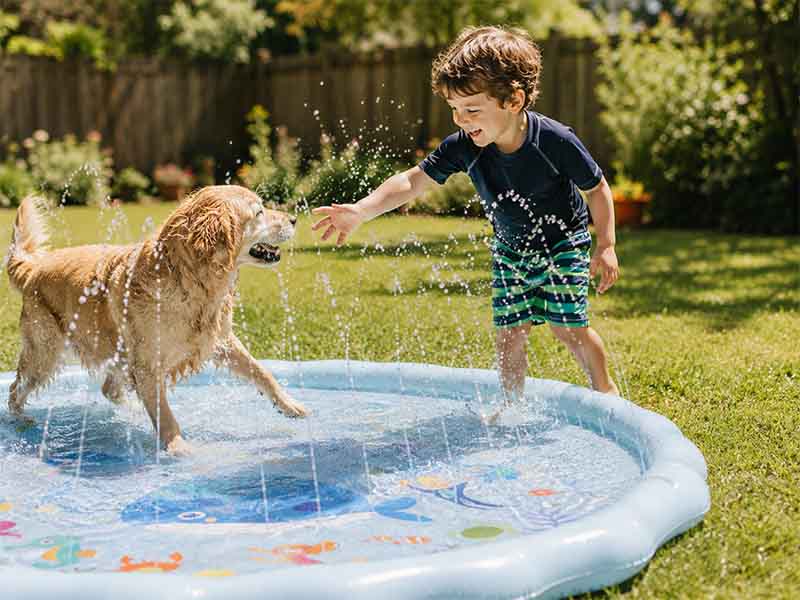
A dog splash pad may look like a simple summer toy, but the material decides how well it performs once real pets start using it. Dogs do not step onto a splash pad the same way children do. They turn quickly, scratch at moving water, push off with their paws, stand near the spray edge, shake water from their coat, and sometimes drag their nails across the surface without meaning to damage it. For families, that means the material has to handle more than water. It needs to deal with paw pressure, wet movement, outdoor ground contact, hose pressure, sunlight, folding, drying, and repeat use through the warm season.
The best material for a dog splash pad is usually thick, flexible PVC or reinforced composite PVC. A good dog splash pad material should be waterproof, low odor, easy to clean, lightly textured for wet paws, stable under water pressure, and strong enough to reduce daily wear from normal paw traffic. For regular backyard pet use, PVC around 0.50 mm to 0.58 mm is often a stronger range when combined with reinforced seams, a secure hose connector, and proper setup.
The mistake many families make is choosing only by size, color, or price. A larger splash pad may look more exciting in photos, but if the material is thin, slippery, stiff, or weak around the edge, it may leak earlier than expected. A better dog splash pad does not need to feel heavy or complicated. It should feel stable on grass, comfortable for supervised pet play, easy to connect to a hose, and strong enough to be used again next weekend. Think of the material as the foundation of the whole product. The spray pattern gets attention first, but the material decides whether the fun lasts.
What Dog Splash Pad Material Works Best?
Thick PVC or reinforced composite PVC works best for most dog splash pads because it can handle water, paw pressure, outdoor ground contact, and repeated folding better than thin vinyl or fabric-style materials. For regular backyard pet use, a good dog splash pad material should be waterproof, low odor, flexible, lightly textured, and strong enough to reduce everyday wear from wet paws and trimmed claws.
Is PVC a Good Dog Splash Pad Material?
PVC is one of the most suitable materials for a dog splash pad because it matches how this type of backyard water product is used. A dog splash pad needs to connect to a garden hose, hold water inside the outer spray ring, let water spray inward through small holes, stay flat on grass, and dry quickly after play. PVC handles these needs well because it is waterproof, flexible, foldable, and easy to rinse clean.
For dog use, however, not all PVC performs the same. A very thin PVC sheet may look fine when it is new, but it can wrinkle under paws, shift on grass, or wear faster when a dog turns quickly. Dogs do not always step gently. They may chase the water stream, scratch lightly at moving water, or push off from the edge with their paws. That means the material needs enough body to stay stable, but not so much stiffness that it becomes hard to fold or uncomfortable under paws.
A more reliable dog splash pad material should feel flexible but not flimsy. When laid flat, it should not curl heavily at the edges. When water runs through the outer ring, it should hold the spray shape without uneven bulging. When folded after drying, it should bend cleanly without creating sharp crease marks too quickly.
For everyday family use, PVC also has another advantage: cleaning is simple. After play, most dirt, grass, mud, and pet hair can be rinsed away with water. This matters because dog splash pads are often used on lawns, where the surface may collect grass clippings, soil, or paw marks. A fabric-based or absorbent material would be harder to clean and slower to dry, which is not ideal for seasonal pet water play.
| Material Need | Why PVC Works Well |
|---|---|
| Water play | Waterproof and suitable for hose-connected designs |
| Backyard use | Can lie flat on grass or smooth outdoor surfaces |
| Pet contact | Easy to rinse after paw marks, grass, and mud |
| Storage | Foldable after drying |
| Spray structure | Supports outer water ring and spray holes |
| Repeat use | Handles repeated summer setup better than very thin materials |
For EPN dog splash pad development, PVC and composite PVC are used because these materials can be adjusted for different outdoor products. A kids’ splash pad may focus more on softness and low odor, while a dog splash pad needs stronger attention to paw movement, surface grip, edge strength, and repeated stepping. This is why the material should be selected for pets, not only for general water play.
Which Dog Splash Pad Material Feels Durable?
A durable dog splash pad material should feel stable before the water is turned on and remain stable after the outer ring fills with water. In many pet splash pad products, PVC thickness around 0.50 mm to 0.58 mm is a stronger and more practical range for backyard dog use. This thickness range gives the pad more resistance against paw pressure and ground wear while still keeping the product foldable for home storage.
Thin vinyl or low-grade PVC may be easier to fold, but it usually gives up too much in durability. It can feel light, slippery, or easy to wrinkle. Once a dog starts moving across the surface, those wrinkles can create stress points. Over time, small scratches, folded lines, or edge pressure may turn into leaks.
A thicker PVC body gives the splash pad better surface stability, makes the pad feel less flimsy on grass, and helps the outer spray ring hold its shape when water pressure increases. It also gives families more confidence when kids and dogs use the same backyard water area. Still, thickness should not be the only selling point. A 0.58 mm material with weak seams may still leak earlier than a 0.55 mm material with better edge bonding. The center surface, outer ring, hose inlet, spray holes, and bonded seams all work together. Customers often notice the leak first, but the cause may come from weak construction rather than the flat surface itself.
| Material Type | Common Feel | Better For | Main Concern |
|---|---|---|---|
| Thin vinyl | Light, easy to fold, less stable | Very light play, short-term use | More likely to wrinkle, scratch, or leak |
| Standard PVC | Waterproof, flexible, easy to clean | Small dogs, occasional use | Needs good seam quality |
| Thick PVC | More stable, better surface body | Regular backyard dog play | Should still be folded and stored properly |
| Reinforced composite PVC | Stronger structure and wear resistance | Active dogs, larger sizes, repeat use | Higher cost than basic material |
Dog size also affects how durable the material needs to be. A small dog under 20 lb usually creates less pressure on the surface than a 60 lb dog turning quickly near the spray edge. Active dogs also create more material stress than calm dogs that simply stand in the water.
| Dog Use Scenario | Suggested Material Direction |
|---|---|
| Small dogs or puppies | Flexible PVC with non-slip texture |
| Medium dogs | Thicker PVC with reinforced edge |
| Large dogs | Thick PVC or reinforced composite PVC |
| Active dogs that chase water | Stronger surface, stable seams, moderate water pressure |
| Older or cautious dogs | Non-slip texture, low spray height, soft but stable surface |
| Kids and dogs sharing the pad | Low odor, smooth finish, textured surface, stronger seams |
For daily backyard use, the material should not feel like a thin plastic sheet when laid flat. It should have enough body to support paw movement, enough texture to help wet paws feel stable, and enough flexibility to fold after drying without cracking too quickly. The water-filled spray ring should also hold shape without uneven bulging, while the surface should rinse clean without heavy scrubbing after contact with grass, mud, or pet hair.
The key point is simple: do not choose a dog splash pad only because the listing says “heavy duty.” A more useful product page should explain what makes the material strong, such as thickness, non-slip surface, reinforced edge, hose connector design, and recommended use surface.
Is Composite PVC Better for Dog Splash Pads?
Composite PVC can be a better choice for dog splash pads that need stronger wear resistance, better edge stability, and more reliable performance during repeated outdoor use. The value of composite PVC is not just that it sounds more advanced. Its value is in how the material behaves when water pressure, paw movement, folding, sunlight, and ground contact happen again and again.
Dog splash pads face stress from several directions at the same time. Water pressure pushes outward inside the spray ring. Dog paws press downward on the center surface. Turning movement creates friction. Outdoor ground can rub against the bottom. Folding creates crease pressure after every use. A stronger composite structure can help the product manage these forces more evenly.
Composite PVC is especially useful when the splash pad is larger, used more often, or designed for dogs that are more active. Larger splash pads have longer edge seams and more spray holes, which means there are more areas where material and construction quality matter. If the material is too soft or weak, the spray ring may lose shape, the surface may wrinkle, or the hose area may become a weak point.
A well-built reinforced dog splash pad should keep the edge stable when water pressure rises, support the surface when dogs step and turn, reduce stress around the hose connector, and help the spray pattern stay more even around the ring. It should also recover better after repeated folding and drying, because seasonal water products are often stored between uses.
EPN uses PVC and composite material knowledge across splash pads, pet pools, inflatable toys, water floats, and other seasonal products. For dog splash pads, this experience is useful because the product has to be simple for families and strong enough for pet behavior. The goal is not to make the pad feel thick for marketing. The goal is to make it perform better when dogs actually use it.
A strong material choice should answer three real questions: will it leak easily, will the dog slip on it, and will it last through more than a few uses? If the material, texture, seams, and water inlet are designed around these concerns, the dog splash pad becomes more than a cute summer item. It becomes a practical cooling product that families can bring out again whenever the weather gets hot.
For customers who want a wider material comparison for backyard water products, our guide on what material is best for a splash pad offers more details on PVC, thickness, softness, and outdoor performance.
How Dog Splash Pad Material Handles Claws
Dog claws can scratch, weaken, or puncture splash pad material when the surface is too thin, the nails are sharp, or the pad is used on rough ground. A stronger dog splash pad material should reduce everyday claw wear, but it still needs help from proper setup, trimmed nails, controlled water pressure, and careful storage.
Do Claws Damage Dog Splash Pad Material?
Dog claws can damage dog splash pad material, especially when the dog is active, heavy, or has long nails. The risk does not only come from one sharp puncture. In many cases, damage starts as small surface scratches. After several uses, those scratches may become weak spots, especially if the splash pad is folded tightly, dragged across the ground, or filled with high water pressure.
A dog’s claws create concentrated pressure points. A human foot spreads weight across a larger area, but a dog’s paw places pressure through pads and nails. When the dog turns quickly, the nails can scrape the surface instead of simply pressing down. This is why a calm dog standing in the water creates far less wear than a dog chasing spray, digging at water, or pushing off from the outer ring.
Dog size also matters. A small dog may only place light pressure on the surface. A medium or large dog can create much more force when turning or jumping. The material does not only need to support the dog’s weight. It needs to handle movement, friction, and repeated paw contact.
| Dog Type | Material Stress Level | What to Watch |
|---|---|---|
| Small dogs under 20 lb | Lower surface pressure | Slipping, comfort, low spray height |
| Medium dogs 20–50 lb | Moderate paw pressure | Surface scratches, seam stability |
| Large dogs 50–80 lb | Higher pressure when turning | Thicker PVC, reinforced edge, flat ground |
| Very active dogs | High friction and twisting force | Nail length, water pressure, ground surface |
| Older dogs | Lower speed but more slip concern | Non-slip texture and stable surface |
| Puppies | Light weight but playful scratching | Supervision and gentle spray setting |
The surface underneath the splash pad changes the risk level. Flat grass helps absorb some paw pressure. Rough concrete, gravel, exposed roots, or small stones create hard points under the material. When a dog presses down, the material can be squeezed between the claw above and the rough surface below. That is when scratches and small punctures become more likely.
Pet owners should treat a dog splash pad as a water play surface, not a chew toy or digging mat. Trim nails before play, use the pad on clean flat ground, and stop the session if the dog starts biting or clawing at the spray holes.
What Dog Splash Pad Material Resists Tears?
A tear-resistant dog splash pad needs more than a thick center surface. The whole structure has to work together: the PVC body, edge bonding, spray holes, hose inlet, and fold lines. Many leaks do not start in the wide flat center. They often appear near the outer ring, where water pressure, paw movement, and seam stress meet.
A better material should be thick enough to resist normal paw contact, but still flexible enough to bend without cracking. PVC around 0.50 mm to 0.58 mm is often a strong range for dog splash pads because it gives the surface more body without making the product too stiff for folding. For active dogs or larger splash pads, reinforced composite PVC can add more stability around the edge and water inlet.
The outer spray ring is one of the most important areas. When the hose is turned on, water fills the ring and pushes outward. At the same time, dogs may stand near the edge because that is where the spray comes from. This means the edge must handle pressure from inside and paw contact from outside. If the bonding area is too narrow or uneven, the seam may become the weak point.
| Structure Detail | Why It Helps Against Claw Damage |
|---|---|
| Thicker PVC body | Gives more resistance against surface scratches |
| Reinforced edge | Reduces seam separation near water pressure areas |
| Non-slip texture | Helps reduce sudden sliding and claw scraping |
| Stable hose connector | Prevents stress from pulling or twisting |
| Balanced spray holes | Reduces uneven pressure around the ring |
| Flexible fold behavior | Helps prevent cracks along repeated crease lines |
A tear-resistant dog splash pad usually has strength in more than one place. The center surface handles paw pressure and normal stepping. The outer spray ring holds hose pressure and controls spray direction. The bonded edge reduces leakage where water pressure gathers. The hose connector handles twisting during setup and removal. The spray holes release water evenly without tearing around weak points, while the fold lines need to stay flexible after repeated drying and storage.
For dog splash pads, the edge is often more important than customers expect. Many leaks do not begin in the open center area. They start where water pressure, seams, and movement meet.
EPN pays attention to these stress points when developing dog splash pads and other PVC water products. For pet-use products, material strength has to be matched with real movement. Dogs do not apply pressure evenly. They step, turn, shake, and push off. A stronger material specification helps, but better structure is what allows that material to perform well through repeated summer use.
Customers who want to understand edge stress, pressure, and early leakage can also read why some splash pads leak easily for more practical leak-prevention details.
How Dog Splash Pad Material Lasts Longer
Dog splash pad material lasts longer when customers use it on the right ground, control the water pressure, and reduce avoidable claw damage. Material quality sets the starting point, but daily use habits decide how long the product keeps performing.
One of the easiest ways to protect the material is to trim the dog’s nails before use. Nails do not have to be extremely sharp to cause wear. If they are long enough to scrape when the dog turns, they can slowly mark the surface. This is especially important for active dogs that chase water or push off from the edge.
Ground setup is just as important. Grass is usually the best surface because it is softer and helps cushion pressure. A smooth patio may be acceptable for gentle use, but rough concrete can increase abrasion quickly. Gravel, stones, sticks, and exposed roots should be avoided because they can press into the underside of the pad.
Water pressure should also be managed carefully. High water pressure may look more exciting, but it puts more stress on the outer ring, seams, and spray holes. For dogs, low to medium spray is often enough. Many pets prefer a comfortable spray height instead of strong water jets.
| Use Step | Better Practice | Material Benefit |
|---|---|---|
| Before play | Trim dog nails | Reduces scratching and puncture risk |
| Ground check | Remove stones, sticks, and sharp debris | Protects the bottom surface |
| Setup | Place on flat grass or smooth ground | Reduces wrinkles and pressure points |
| Water pressure | Start low, then increase slowly | Protects seams and spray holes |
| During play | Stop biting, digging, or clawing | Prevents concentrated damage |
| After play | Rinse away dirt and grass | Keeps surface cleaner |
| Drying | Let both sides dry fully | Helps reduce odor and storage stress |
| Storage | Fold loosely in a cool dry place | Reduces crease fatigue |
The pad should also be moved carefully after use. Dragging a wet splash pad across rough ground can scrape the bottom surface and stress the edge. Lifting and carrying it after draining is safer. If the pad is stored wet, the material may develop odor, surface marks, or crease stress. Drying it fully before folding helps protect both the PVC surface and bonded areas.
These steps are not complicated. They are the difference between a splash pad that feels like a one-time toy and one that can be used through more summer weekends. For brands and retailers, clear care instructions also matter because they help customers get better results and reduce avoidable complaints.
A well-made dog splash pad should make care easy. It should rinse clean, dry reasonably fast, fold without fighting the user, and provide clear instructions. When strong material, reinforced structure, and correct use work together, the splash pad is much more likely to survive normal claw contact and repeated backyard play.
For more advice on seams, folding, storage, and long-term use, see our guide on how to choose a splash pad that lasts more than one summer.
What Dog Splash Pad Material Feels Safer?
A safer dog splash pad material should feel stable under wet paws, not slick, sticky, sharp, or overly soft. For most dogs, the safer choice is thick PVC or reinforced composite PVC with a light non-slip texture, smooth sealed edges, low odor, and enough surface support to stay flat during supervised backyard play.
Is Non-Slip Dog Splash Pad Material Needed?
A non-slip surface is one of the most important safety-related details on a dog splash pad. When water is running, the surface becomes more difficult for paws to grip. Dogs may step from dry grass onto a wet pad, turn toward the spray, shake their body, or push off quickly when they get excited. If the material is too smooth, paws can slide before the dog has time to adjust.
Non-slip material does not mean the pad can prevent every slip. Any wet surface still needs supervision, especially when dogs are running, jumping, or playing with children. What non-slip texture can do is improve paw contact and help the dog feel more stable compared with a slick PVC surface. This is especially helpful for puppies, senior dogs, small breeds, cautious dogs, and dogs that are new to water play.
A safer surface should not feel rough like sandpaper. It should have a light texture that gives wet paws more grip without irritating paw pads. Deep grooves may sound more secure, but they can trap mud, grass, and pet hair, making the surface harder to clean. A completely smooth surface may rinse easily, but it can feel slippery once water starts pooling.
| Dog Type | Surface Need | Why It Matters |
|---|---|---|
| Puppies | Gentle grip and low spray | Helps reduce fear and slipping during first use |
| Small dogs | Stable footing | Smaller paws may slide more easily on smooth PVC |
| Medium dogs | Balanced texture | Supports turning and casual play |
| Large dogs | Stronger surface support | More body weight creates higher slip force |
| Senior dogs | Better traction | Older dogs may have weaker balance |
| Cautious dogs | Low spray and stable feel | Helps them build confidence slowly |
| Active dogs | Textured surface and controlled pressure | Reduces sudden sliding when chasing spray |
For families using a dog splash pad with both pets and children, the texture should be comfortable for skin as well as paws. That is why the best surface is usually a moderate non-slip texture, not a harsh raised pattern. The goal is not to make the pad feel rough. The goal is to make wet play feel more controlled.

Which Dog Splash Pad Material Texture Works?
The best dog splash pad material texture is usually a fine, shallow surface pattern. It gives paws better contact with the pad while still allowing the surface to be rinsed clean after play. A good texture should help dogs stand, walk, and turn without making the material uncomfortable or hard to maintain.
Texture affects more than slip resistance. It also affects how clean the pad stays, how fast it dries, and how the dog reacts during first use. Dogs often test new surfaces carefully. Some will step onto the splash pad immediately, while others may sniff the edge, place one paw on the surface, and walk away if it feels unstable. A lightly textured surface can make that first contact feel more secure.
| Surface Texture | Paw Grip When Wet | Cleaning Ease | Best Use |
|---|---|---|---|
| Very smooth PVC | Lower grip | Easy to rinse | Not ideal for active dogs |
| Light texture | Good balanced grip | Easy to clean | Best for most family dog splash pads |
| Deep raised texture | Stronger grip | May trap dirt and hair | Better for special traction needs |
| Rough abrasive texture | Can feel harsh | Harder to maintain | Not recommended for normal pet play |
| Sticky soft surface | May feel unstable | Can hold dirt | Not ideal for outdoor use |
A safer-feeling surface should offer a balance of grip, comfort, and easy cleaning. A surface that is too smooth may rinse easily but can feel slippery when wet. A surface that is too rough may grip better but can feel uncomfortable on paws and harder to clean. A surface that is too soft may feel pleasant at first but can wrinkle or shift under movement. For most family yards, a light non-slip texture works better than a deep raised pattern because it gives dogs better footing without turning the splash pad into a dirt-trapping surface.
Material texture also works together with water pressure. If spray is too strong, dogs may move faster or become more excited, which increases slipping risk. A textured pad with low to medium spray is often more comfortable than a smooth pad with high spray. For dogs that are nervous around water, starting with lower pressure can help them feel safer before increasing the spray height.
EPN dog splash pad material development focuses on this balance: enough texture for wet paws, enough softness for comfortable contact, and enough surface stability for repeated outdoor use. A safer material should not only look good when dry. It should still feel reliable when water is running and pets are moving.
Should Dog Splash Pad Material Be Soft?
Dog splash pad material should feel flexible and comfortable, but it should not be too soft, thin, or loose. Very soft material may seem more pet-friendly at first, but if it wrinkles under paws or shifts when water flows through the edge, it can feel less safe during play. A dog splash pad needs both comfort and surface support.
The best material should lie flat before the hose is turned on and stay reasonably flat after the outer ring fills with water. If the center surface creates folds or ripples, dogs may trip, slide, or hesitate to step onto it. If the material is too stiff, it may feel hard under paws and create sharp crease lines after repeated folding. A good PVC or reinforced composite PVC material should sit between these two extremes.
A safer dog splash pad material should give dogs steady footing, smooth contact, and enough flexibility for storage. It should have a lightly textured surface, smooth sealed edges, a low-profile outer ring, low odor, and enough thickness to reduce wrinkling or surface stress. These details work together. A splash pad that is thick but slick may still feel unsafe. A pad that is soft but too loose may still shift under paws.
Softness also affects confidence. Many dogs are sensitive to unfamiliar surfaces. If the pad feels unstable, noisy, or slippery, they may avoid it. A material that feels firm enough to stand on but flexible enough for casual play can help dogs relax faster. This matters for dogs that are not natural water lovers.
The edge design should also feel safe. A bulky edge may look stronger, but it can become something dogs chew, climb over, or catch with their paws. A low-profile water-filled edge is often more practical because it keeps the surface open and easy to access. It also makes the pad less intimidating for smaller dogs and senior pets.
The safest-feeling dog splash pad is not always the thickest or softest one. It is the one that gives dogs steady footing, comfortable contact, smooth edges, and controlled spray. That is why material thickness, surface texture, edge height, and water pressure should be considered together, not as separate features.
For households where children and pets use the same backyard water area, it also helps to compare size, spray height, and surface comfort. Our guide on how to pick a kids splash pad that feels fun, not flimsy covers more shared-use details.
How Dog Splash Pad Material Performs Outside
Outdoor dog splash pad material needs to handle more than water. It has to deal with summer sun, hose pressure, wet paws, grass contact, repeated drying, folding, and storage. A stronger dog splash pad material should stay flexible, hold its edge shape, resist surface aging, and remain easy to clean after repeated backyard use.
Does Dog Splash Pad Material Need UV Resistance?
Dog splash pad material should have good outdoor stability because most families use it during warm, sunny months. Sunlight can slowly affect PVC color, surface feel, and flexibility. A splash pad that looks fine on the first weekend may start to feel stiff, faded, or easier to crease if the material is not suited for repeated outdoor exposure.
UV resistance matters most when the splash pad is used often or left outside after play. Summer use is not a single condition. The material goes through a repeated cycle: water fills the edge, dogs step on the surface, the pad sits under sunlight, then it dries and gets folded for storage. After this happens many times, weaker material may show changes faster.
Common outdoor material problems include fading printed patterns, a stiffer surface after sun exposure, white crease marks after folding, weaker areas around the outer spray ring, rougher surface feel, and small leaks near stressed seams. A dog splash pad used for 30 minutes once a week has a different workload from one used almost every afternoon in July. A pad left outside for a full day also ages faster than one that is rinsed, dried, and stored after play.
| Outdoor Use Habit | Material Impact | Better Practice |
|---|---|---|
| Used briefly and stored after drying | Lower aging risk | Good for regular family use |
| Left outside for several hours after play | Higher UV and heat exposure | Move to shade after drying |
| Stored wet in a garage or box | Odor and crease stress | Dry both sides before folding |
| Folded tightly in the same place | Faster crease fatigue | Fold loosely when possible |
| Used on rough ground | Bottom abrasion risk | Use flat grass or smooth ground |
| Exposed to full pressure often | More seam and edge stress | Start low and adjust slowly |
Epsilon pays attention to outdoor-use performance when developing PVC and seasonal water products. For selected splash pads and pet water products, material checks may include UV exposure, high-temperature aging, folding fatigue, water pressure stability, and leak testing. These checks are important because dog splash pads are not used in a clean indoor setting. They are used on lawns, under sun, with pets moving across the surface.
Care habits matter just as much as the material itself. UV-resistant material helps, but it does not mean the pad should be left outdoors for days. The best habit is simple: use it, rinse it, let it dry, and store it away from direct sun. That routine helps keep the PVC flexible and reduces stress on the bonded edge.
Is Low-Odor Dog Splash Pad Material Better?
Low-odor material is important for dog splash pads because pets interact closely with the surface. Dogs sniff the pad, step on it, drink near the spray, and sometimes stand in the shallow water for several minutes. Families also handle the pad during setup, cleaning, draining, folding, and storage. If the material has a strong plastic smell, the whole experience can feel less comfortable.
New PVC products may have a light packaging smell when first opened. That is normal for many folded water products. The concern is when the odor feels sharp, heavy, or does not improve after airing out and rinsing. A better dog splash pad material should feel suitable for backyard family use after basic first-use preparation.
Low odor matters when the splash pad is opened indoors before first use, stored in a garage or closet, used in hot weather, or shared by pets and children in the same backyard area. For a pet-focused product, low odor is not only about comfort. It also affects trust. Customers may not know the technical difference between PVC grades, but they quickly notice whether a product smells harsh, feels sticky, or seems unpleasant in heat.
| Material Feel | Customer Reaction | Product Concern |
|---|---|---|
| Mild smell after opening, improves after airing | Usually acceptable | Normal first-use preparation |
| Strong odor after rinsing | Lower confidence | Material or storage concern |
| Sticky surface in heat | Uncomfortable use | Poor surface feel |
| Smooth low-odor finish | Better family experience | More suitable for pet contact |
| Odor after wet storage | Often caused by care habits | Dry fully before folding |
EPN’s material approach separates product needs by use case. Children’s water toys need low odor and skin-friendly contact. Dog splash pads need those same qualities, plus better wear resistance, paw grip, and outdoor durability. A strong material is not enough if the product smells unpleasant or feels uncomfortable when a dog gets close to it.
A simple first-use routine can help customers get the best experience. Open the pad in a ventilated area, rinse it with clean water, let it air out briefly, then set it up on clean grass. After play, rinse off grass and paw marks, drain the water, and dry the surface before folding. These steps help reduce odor, moisture marks, and storage stress.
Can Dog Splash Pad Material Hold Water Pressure?
Dog splash pad material must hold water pressure because the product works through a hose-connected outer spray ring. When water enters the ring, pressure pushes outward through the edge and upward through the spray holes. At the same time, dogs may step near the ring because that is where the spray is most visible. This means the edge has to handle pressure from inside and paw contact from outside.
Water pressure affects the outer ring shape, spray height, spray direction, seam stress, hose connector stability, spray hole durability, surface wrinkling, and customer comfort. Full water pressure is not always the best setting. A very high spray may look exciting, but it can create unnecessary stress on the material and make some dogs nervous. Small dogs, puppies, and cautious pets often do better with low spray. Larger or more active dogs may enjoy medium spray, but the pad should still stay flat and stable.
| Water Pressure Level | Best Use Scenario | What to Check |
|---|---|---|
| Low pressure | Puppies, small dogs, first-time use | Gentle spray, lower seam stress |
| Medium pressure | Most backyard dog play | Stable edge and balanced spray |
| Medium-high pressure | Active dogs and larger yards | Watch edge shape and hose area |
| Excessive pressure | Not recommended | May stress seams and spray holes |
A good dog splash pad material should support controlled spray. The outer ring should fill evenly, not twist or bulge heavily on one side. The spray holes should send water inward in a reasonably balanced pattern. The hose connector should stay secure without leaking heavily at the inlet.
The material also needs to recover after pressure is released. After draining, the edge should not stay badly distorted or show obvious seam separation. This is where material flexibility and bonding quality work together. A thick PVC surface helps, but the edge structure, heat-press bonding, and connector design decide whether the product performs well under hose pressure.
EPN splash pad development looks at water pressure stability because spray performance is one of the first things customers notice. If the spray is uneven, too harsh, or leaking near the connector, the material may be blamed even when the issue comes from edge design or hole balance. For a better dog splash pad, material and structure need to be designed as one system.
Which Ground Surface Works Best Outside?
The ground under a dog splash pad has a direct effect on how the material performs. Many customers focus on the top surface, but the bottom side also faces wear. When a dog steps onto the pad, the material is pressed between the paw above and the ground below. If the ground is rough, sharp, or uneven, the bottom surface can wear faster.
Flat grass is usually the best surface for dog splash pads. It provides some cushioning, reduces bottom abrasion, and feels more natural for pets. A smooth patio can work for gentle use if the surface is clean and not rough. Rough concrete, gravel, dry roots, wood chips, and stones are much harder on the material.
| Ground Surface | Material Risk | Recommendation |
|---|---|---|
| Flat grass | Low to moderate | Best choice for most dog splash pads |
| Smooth patio | Moderate | Use only if clean and not abrasive |
| Rough concrete | High | May increase bottom wear |
| Gravel | Very high | Not recommended |
| Wooden deck | Moderate | Check for splinters or sharp edges |
| Uneven lawn with roots | High in pressure points | Clear and level area first |
| Artificial turf | Moderate | Check heat and surface roughness |
Ground temperature also matters. In hot weather, concrete and artificial turf can become much warmer than grass. Heat can make the play area uncomfortable for paws and may add stress to the material. Grass usually keeps the surface cooler and softer, which is one reason it is often the most practical setup area.
Before using a dog splash pad outside, customers should check the setup area with the same care they would use for a picnic blanket or baby play mat. Remove stones, sticks, and sharp debris. Make sure the surface is flat enough that the pad does not wrinkle heavily. If the only available area is a patio, placing a smooth protective mat underneath can help reduce abrasion.
For EPN dog splash pads, outdoor setup guidance is part of the customer experience. Better material helps the product last longer, but clear setup habits help prevent avoidable damage. A dog splash pad performs best when the surface below is as carefully chosen as the material above.
For families planning to place a pet water mat on the lawn, ground preparation matters as much as material choice. A clean, level lawn helps reduce bottom abrasion and makes the splash pad feel more stable. For more setup guidance, read our guide on how to use a splash pad on grass.

How Should Dog Splash Pad Material Be Stored After Use?
Storage affects material life more than many customers expect. Dog splash pads are often used for short bursts of summer play, then folded and stored until the next hot day. If the pad is stored wet, dirty, or tightly folded, the material may develop odor, crease stress, or surface marks. If it is dried and folded properly, it is more likely to stay flexible and ready for reuse.
After outdoor play, the splash pad should be drained, rinsed, and dried before storage. Both sides matter. The top surface may look dry, but moisture can remain underneath, especially if the pad was used on grass. Folding the pad while the underside is still wet can trap moisture and create unpleasant odor.
A better storage routine starts with turning off the hose and letting the spray ring drain. After that, rinse away grass, dirt, and pet hair, then let both the top surface and underside dry. Fold the pad loosely instead of forcing sharp creases, and store it in a cool, dry place away from direct sunlight, sharp tools, heavy objects, or strong heat sources.
| Storage Mistake | Possible Result | Better Habit |
|---|---|---|
| Folding while wet | Odor and surface marks | Dry both sides first |
| Tight repeated folding | Crease fatigue | Fold loosely when possible |
| Leaving in direct sun | Faster aging | Store in shade or indoors |
| Storing near sharp items | Puncture risk | Keep in a clean storage bag or box |
| Putting heavy items on top | Deep crease marks | Store flat or loosely folded |
Good storage does not need to be complicated. The most important step is drying. A dog splash pad that dries fully before folding will usually smell better, feel better, and last longer than one packed away wet after every use.
Clear storage instructions also help reduce avoidable complaints, especially for seasonal pet water products. Customers often blame material when the real problem is wet storage or rough handling. Clear care guidance helps give customers a better chance of getting repeat use from the product.
EPN supports packaging and instruction customization for different markets, including product care notes, safety reminders, and localized setup guidance. For dog splash pads, these small details matter because customers are not only buying a material. They are buying an easier backyard cooling routine for their pets.
Which Dog Splash Pad Material Should You Avoid?
Avoid dog splash pad material that is too thin, too slick, too stiff, too soft, strongly scented, poorly sealed, or unclear about thickness and pet-use details. A low price may look attractive at first, but weak material can lead to early leaks, slipping, edge failure, hard-to-clean surfaces, and poor repeat use after only a few backyard play sessions.
Is Thin Dog Splash Pad Material Risky?
Thin dog splash pad material is one of the biggest reasons customers feel disappointed after buying a splash pad for pets. A thin pad may look fine in product photos because the surface is flat and colorful when new. The problem usually appears after real use: the dog steps on it, the outer ring fills with water, the surface wrinkles, and the material starts taking pressure from both paws and the ground.
For dogs, thin material has less room to handle friction and pressure. When a dog turns quickly, the nails may scrape the surface. When the pad is placed on rough grass, concrete, or a small hidden stone, the bottom side can be pressed upward. Thin material is caught between these two forces. That is why a small scratch can become a weak point, especially after repeated folding and water pressure.
A dog splash pad does not need to be extremely thick, but it should not feel like a thin plastic sheet. For regular backyard pet play, PVC around 0.50 mm to 0.58 mm is often a stronger range than basic thin vinyl. This type of thickness gives the surface more body while still allowing the pad to fold after drying.
Thin material is more likely to wrinkle when water enters the outer ring, move under paws, scratch from trimmed but active claws, wear faster on rough ground, feel less stable when wet, and develop leaks around weak seams or stress points. Customers should be careful when a product page only says “durable,” “heavy duty,” or “premium” without giving any practical material details. Those words do not tell customers how thick the PVC is, whether the surface is textured, whether the edge is reinforced, or whether the pad is suitable for dogs that move actively.
| Material Claim | What It May Mean | What Customers Should Check |
|---|---|---|
| Heavy duty | Could be thick, or just a marketing word | Look for PVC thickness and seam details |
| Durable PVC | Too general on its own | Check surface texture and edge construction |
| Pet-friendly | May refer only to size or design | Check non-slip surface and claw-use guidance |
| Extra large | Larger play area | Needs stronger edge and better material support |
| Soft material | Comfortable feel | Make sure it does not wrinkle easily |
| Easy to fold | Good for storage | Make sure the material is not too thin |
The safest shopping habit is to look for material evidence, not only material adjectives. A product that clearly explains thickness, non-slip texture, reinforced edges, hose connector design, and care guidance is usually more trustworthy than one that only depends on broad claims.

Are Slick Dog Splash Pad Materials a Problem?
Slick dog splash pad material should be avoided for pets, especially if the pad will be used by active dogs, puppies, senior dogs, or dogs that are unsure around water. Smooth PVC can look clean and shiny when dry, but once water starts pooling on the surface, paws may slide more easily.
Dogs do not always move in straight lines. They turn suddenly, step backward, shake water off their coat, or chase the spray near the outer edge. These movements create sideways force. If the material has very little grip, the dog may feel unstable or slip. Even if the dog does not fall, one uncomfortable slide may make it less willing to use the pad again.
A safer dog splash pad should have a light non-slip texture. The surface does not need to feel rough. In fact, a harsh texture can be uncomfortable and harder to clean. The better choice is a shallow texture that improves paw contact while still allowing grass, mud, and pet hair to rinse away.
| Surface Type | Paw Grip When Wet | Cleaning Ease | Best Use |
|---|---|---|---|
| Slick glossy PVC | Low | Easy to rinse | Not ideal for dogs |
| Light non-slip texture | Good | Easy to clean | Best for most dog splash pads |
| Deep raised texture | Stronger grip | Can trap dirt and hair | Special traction needs |
| Rough abrasive texture | May irritate paws | Harder to clean | Not recommended for normal pet play |
| Sticky soft surface | Unstable feel | Holds dust and debris | Poor outdoor experience |
Customers should also be careful with pads that look too shiny in photos. A shiny surface does not always mean poor quality, but for dog use, grip matters more than gloss. A dog splash pad should feel secure when wet, not only attractive when dry.
For families using the pad with both kids and dogs, surface balance is important. A texture that helps paws should still be comfortable for children sitting or walking on the pad. This is why EPN dog splash pad material focuses on stable PVC surfaces with practical texture, not overly slick or overly rough finishes.
Are Bulky Dog Splash Pad Materials Better?
Bulky material is not always better for dog splash pads. Some customers assume that a thick-looking or raised edge means the product is stronger, but dogs use splash pads differently from kids. A bulky inflatable-style edge may look protective, but it can create new problems for pets.
A raised edge can attract chewing. Some dogs may bite it because it looks like a toy. Others may step on it, claw it, or push against it when chasing spray. If the edge is inflatable or too soft, it may become a weak point rather than a strength. Bulky edges can also make the splash pad harder to drain, dry, fold, and store.
A low-profile water-filled spray edge is often more practical for dog splash pads. It keeps the surface open, allows dogs to step on and off easily, and supports inward water spray without creating a large raised barrier. This is especially useful for small dogs, older dogs, and pets that are nervous around water.
The best dog splash pad structure should be easy for dogs to step onto, low enough to avoid chewing interest, strong enough to hold water pressure, smooth enough around the edges for paw contact, and simple enough to drain and fold after drying.
| Edge Style | Possible Advantage | Possible Problem |
|---|---|---|
| Low-profile spray edge | Easy stepping, simple drainage, better for dogs | Needs strong seam quality |
| Bulky inflatable edge | Looks cushioned and large | Can attract chewing or claw pressure |
| Very soft raised edge | Comfortable look | May deform under pressure |
| Stiff hard edge | Holds shape | Less comfortable and harder to store |
| Reinforced water-filled edge | Good balance of structure and usability | Requires good bonding and water inlet design |
For most backyard pet use, the better choice is not the largest or bulkiest material. The better choice is a stable PVC or composite PVC structure with a reinforced low-profile edge.
Should You Avoid Strong-Smelling Dog Splash Pad Material?
Strong-smelling material should be avoided, especially for products used by pets and children. Dogs interact with splash pads at close range. They sniff the surface, step on it, drink near the spray, and may stand in the shallow water for several minutes. If the material has a sharp plastic smell, the product may feel unpleasant even before the hose is connected.
Some light packaging odor can happen with folded PVC products, especially after storage in a sealed box. The concern is when the smell is harsh, sticky, or does not improve after airing out and rinsing. A good dog splash pad material should feel suitable for outdoor family use after basic first-use preparation.
Strong odor can make the product feel lower quality when opened. It may also make pets hesitate to step onto the pad, make families avoid storing it indoors, or become more noticeable in hot weather. Low-odor PVC is especially important for dog splash pads because the product is used in close pet contact. EPN focuses on low-odor material direction for family and pet water products, because comfort matters as much as strength. A splash pad can be thick and waterproof, but if it smells harsh, many customers will not feel confident using it around pets.
| Odor Situation | What It Suggests | Better Action |
|---|---|---|
| Mild smell after opening | Common with sealed PVC products | Air out and rinse before use |
| Strong smell after rinsing | Poorer comfort experience | Avoid close pet use until improved |
| Odor gets stronger in heat | Material or storage concern | Store in a cool dry place |
| Musty smell after storage | Often caused by wet folding | Dry fully before storage |
| Low odor after airing | Better family and pet experience | More suitable for repeat use |

What Dog Splash Pad Material Details Matter?
Customers should avoid dog splash pads that do not clearly explain the material, surface, edge, or use conditions. The most important details are not complicated. They are the same details that decide whether the pad feels stable, safe, and reusable after several hot days in the yard.
A strong dog splash pad listing should make the material type clear, preferably PVC or reinforced composite PVC, and should explain thickness, surface texture, edge structure, seam quality, hose connector design, spray direction, odor level, outdoor suitability, and care instructions. These details matter because they directly affect slipping, leakage, cleaning, drying, and repeat use.
| Avoid This | Choose This Instead |
|---|---|
| Thin vinyl with no thickness listed | Thick PVC or reinforced composite PVC |
| Slick glossy surface | Light non-slip texture |
| Vague “heavy duty” claim | Clear thickness and structure details |
| Bulky chew-attracting edge | Low-profile reinforced spray edge |
| Strong plastic smell | Low-odor PVC material |
| No care instructions | Clear setup, drying, and storage guidance |
| Weak hose inlet | Reinforced connector area |
| Unbalanced spray holes | Even inward spray pattern |
| Rough ground setup | Flat grass or smooth clean surface |
| Wet folded storage | Fully dried and loosely folded storage |
Customers often focus on the biggest number on the listing, such as diameter or spray height. Those numbers matter, but they do not tell the whole story. A dog splash pad that is slightly smaller but made with better material may outperform a larger pad with weak seams and a slick surface.
For retailers, distributors, and private-label brands, these material details also affect customer reviews, return rates, and seasonal repeat orders. A dog splash pad that leaks early or feels unsafe can create complaints quickly. Better material planning helps build trust before the next summer season.
EPN can support dog splash pad development with PVC and composite material selection, reinforced edge design, non-slip surface planning, packaging guidance, and OEM/ODM customization. For pet water products, avoiding weak material is not only about preventing leaks. It is about creating a more reliable backyard cooling experience for dogs and families.
Why Epsilon Chooses PVC Dog Splash Pad Material
Epsilon chooses PVC and reinforced composite PVC for dog splash pads because these materials match the way dogs actually use backyard water products. A dog splash pad needs to stay waterproof, flexible, stable under paw pressure, easy to clean, and strong enough for repeated hose-connected summer play. For EPN, PVC is not chosen only because it is common. It is chosen because it can be adjusted by thickness, texture, edge structure, and production process to fit pet-use conditions.
How Epsilon Tests Dog Splash Pad Material
A dog splash pad may look simple when it is folded in a box, but the material goes through a lot once it is used outdoors. Water pressure fills the outer ring. Dogs step, turn, and push against the surface. Grass, soil, and small outdoor debris rub against the bottom. Sunlight warms the material. After play, the pad is drained, dried, folded, and stored. Then the same process happens again on the next hot day.
Epsilon tests dog splash pad material around these real-use pressures instead of only checking how the product looks before shipment. For pet water products, the goal is to understand whether the material can stay usable after repeated backyard play, not just whether it passes a basic first-use inspection.
For dog splash pads, the main test points include surface wear from paw-like friction, water pressure stability around the edge, leakage near seams and connectors, spray hole balance, heat-press bonded seam strength, folding fatigue, UV exposure, high-temperature aging, surface texture feel, and first-use odor comfort. These checks matter because a dog splash pad has several weak zones. The center surface needs to resist paw movement. The outer ring needs to hold water pressure. The hose inlet needs to handle twisting during setup. The spray holes need to release water evenly without tearing. The seam area needs to stay bonded after pressure, folding, drying, and storage.
| Test Area | What Epsilon Looks At | Why It Matters for Dog Splash Pads |
|---|---|---|
| Claw wear | Surface resistance under paw-like friction | Helps reduce early scratches and weak spots |
| Water pressure | Edge shape, spray height, seam stress | Supports stable backyard spray performance |
| Hose inlet | Pulling, twisting, leakage risk | Reduces setup-related damage |
| UV exposure | Surface aging, fading, flexibility | Supports repeated summer outdoor use |
| Folding fatigue | Crease behavior after storage | Helps the pad stay reusable |
| Seam bonding | Edge strength and leak resistance | Protects the most stressed area of the pad |
| Surface texture | Paw grip and cleaning balance | Helps wet paws feel more stable |
| Odor check | First-use comfort after opening | Improves family and pet experience |
Behind EPN dog splash pads, Epsilon works with a 27-person R&D team covering polymer materials, product structure, molds, pet behavior, children’s play needs, and outdoor use conditions. The company also has 18+ designers supporting product design, packaging design, visual content, and multilingual localization. Across its product development work, Epsilon carries out 500+ material and product performance tests each year and completes 1500+ design projects annually.
For EPN dog splash pads, these capabilities help connect material selection with actual customer use. A thicker PVC surface is helpful, but it is not enough by itself. The surface texture, spray ring, seam width, water inlet, and storage instructions all affect whether the product feels reliable after repeated use. That is why Epsilon looks at the splash pad as a full water play system, not only as a sheet of PVC.
Why Epsilon Improves Dog Splash Pad Material
Epsilon improves dog splash pad material because pet use is harder on the product than many families expect. Dogs create concentrated paw pressure, claw contact, fast turning movement, outdoor friction, and repeated stepping around the spray edge. A material that works for a basic children’s water mat may not perform as well when a dog chases water across the surface every weekend.
Dog splash pads also need to stay easy for families. If the material is too thin, it may scratch or wrinkle. If it is too stiff, it may be hard to fold and store. If it is too soft, it may shift under paws. If the texture is too rough, it may be uncomfortable and hard to clean. If the edge is too bulky, dogs may chew or claw at it. Better material development is about finding the right balance for real backyard use.
EPN focuses on thicker PVC or reinforced composite PVC for pet-use stability, light non-slip texture for wet paws, low-odor material for family and pet contact, smooth surface finish for easier cleaning, reinforced low-profile spray edges, stable hose connector areas, balanced inward spray holes, flexible storage, UV and heat stability, and clear setup guidance. These details are small on their own, but together they decide whether a splash pad feels dependable after the first few uses.
| Use Scenario | Material Challenge | EPN Material Direction |
|---|---|---|
| Small dogs and puppies | Low confidence, slipping risk | Gentle texture and low spray compatibility |
| Medium dogs | Regular paw pressure and turning | Thicker PVC and stable surface support |
| Large dogs | Higher weight and stronger push-off force | Reinforced PVC and stronger edge structure |
| Active dogs | More claw scraping and water chasing | Better surface wear resistance |
| Kids and dogs together | Comfort plus paw grip | Smooth finish with light texture |
| Frequent summer use | UV, folding, and water pressure cycles | Outdoor-stable PVC and stronger seams |
| Private-label retail | Review and return pressure | Clear material specs and care guidance |
This approach is useful for both home customers and business customers. Families want a splash pad that feels safe, easy, and durable enough for repeat use. Retailers, Amazon sellers, distributors, and private-label brands need products that can support seasonal demand while reducing avoidable complaints about leaks, slipping, strong odor, or poor storage.
Epsilon also supports OEM and ODM development, so material choices can be adjusted for different product positions. A value-focused dog splash pad may use standard thick PVC with clear care instructions. A stronger premium line may use reinforced composite PVC, a larger size, improved hose connector, thicker edge bonding, and more detailed packaging. A family-use version may focus on low odor, bright design, and a balanced surface suitable for kids and pets.
Is PVC the Best Dog Splash Pad Material?
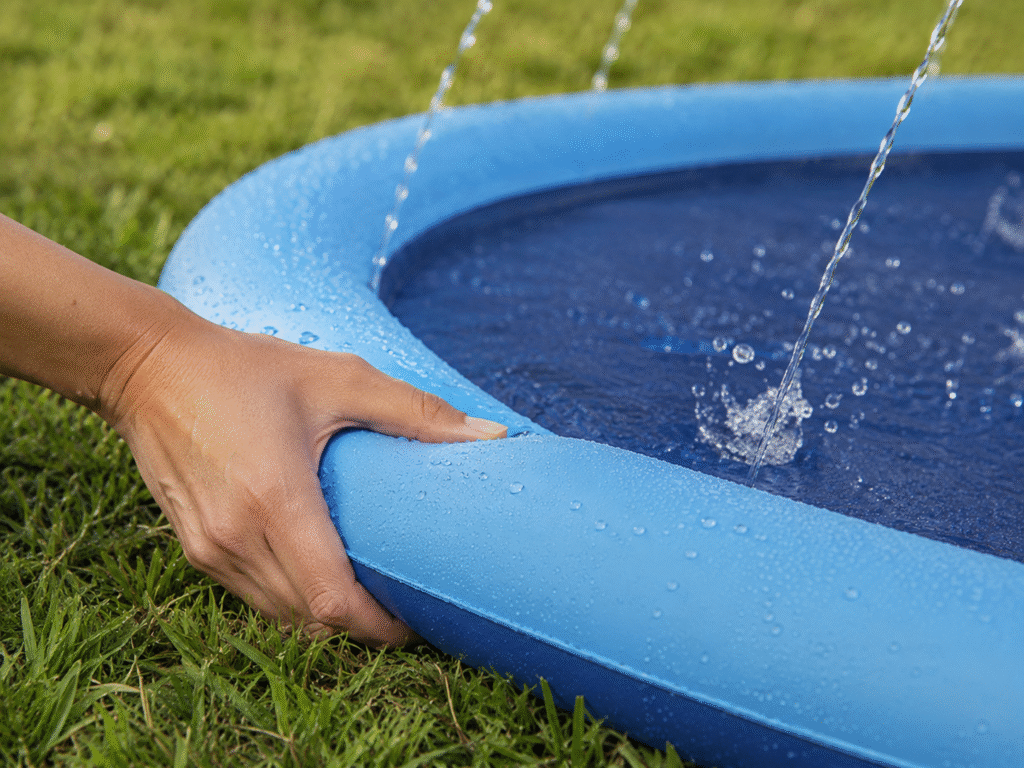
For most sprinkler-style dog splash pads, PVC or reinforced composite PVC is the most suitable material choice. It is waterproof, foldable, easy to clean, and flexible enough for backyard setup. More importantly, it can be engineered with different thickness levels, surface textures, seam structures, and edge designs to match pet-use needs.
Other materials may work for certain pet products, but they often have trade-offs. Fabric can feel soft, but it absorbs water and takes longer to dry. Foam can feel comfortable, but it is not ideal for hose-connected sprinkler structures. Hard plastic can be durable, but it is less comfortable, less foldable, and harder to store. Thin vinyl can reduce cost, but it usually gives up too much stability for active dog use.
| Material Option | Strength | Weakness for Dog Splash Pads |
|---|---|---|
| Thin vinyl | Lightweight and low cost | Easier to wrinkle, scratch, or leak |
| Standard PVC | Waterproof, flexible, easy to clean | Needs good thickness and seam quality |
| Thick PVC | Better surface stability and reuse | Should still be dried and stored properly |
| Reinforced composite PVC | Stronger structure and wear resistance | Higher production cost |
| Fabric-based material | Soft touch | Absorbs water and dries slowly |
| Foam-based material | Cushioned feel | Poor fit for sprinkler-style water flow |
| Hard plastic | Strong shape | Less comfortable and hard to store |
For dog splash pads, EPN usually looks for a material balance rather than a single extreme. The pad should not be too thin, too stiff, too soft, too rough, or too bulky. It should lie flat, hold water pressure, feel stable under paws, rinse clean, and fold after drying. That is why PVC and reinforced composite PVC remain practical choices for this type of product.
A strong PVC dog splash pad should have pet-use thickness, low odor, light non-slip texture, reinforced seams, a reliable hose connector, balanced inward spray, UV and heat stability, and a design that is easy to rinse, drain, dry, and store. These details are also important for product listings and packaging. Customers want to know whether the pad will slip, leak, smell strong, or break after a few uses. Retail partners want to know whether the product can support summer sales without avoidable quality complaints. By choosing and improving PVC material around these concerns, Epsilon helps turn a simple water toy into a more dependable seasonal pet product.
How Epsilon Supports Custom Dog Splash Pad Projects
Epsilon’s PVC dog splash pad material experience is also useful for brands, sellers, and distributors that want custom pet water products. Dog splash pads are seasonal, competitive, and review-sensitive. Small details in material, structure, and instructions can affect whether customers feel satisfied after the first few uses.
For custom dog splash pad projects, Epsilon can support product size, shape, PVC thickness, reinforced composite material options, surface texture, outer ring width, spray layout, hose connector structure, print pattern, color style, pet-use care instructions, retail packaging, carton labels, marketplace packaging needs, multilingual instructions, local-market labels, and OEM/ODM brand customization.
This is especially useful for businesses targeting different market levels. A budget-friendly product may need simple construction, clear care guidance, and reliable standard PVC. A mid-range product may need stronger thickness, better texture, and upgraded packaging. A premium product may need reinforced composite PVC, improved edge bonding, a more refined visual design, and stronger pet-use communication.
| Custom Project Goal | Possible Material Direction |
|---|---|
| Entry-level summer dog splash pad | Standard thick PVC with clear instructions |
| Mid-range Amazon product | Thicker PVC, non-slip texture, reinforced edge |
| Premium pet water play line | Reinforced composite PVC and upgraded connector |
| Large dog product | Stronger surface body and wider bonded edge |
| Kids and pets shared play | Low odor, smooth finish, balanced texture |
| Retail shelf product | Strong packaging, clear material claims, care guide |
| Private-label brand line | Custom graphics, size, packaging, and local labels |
Epsilon’s production and supply chain support also help bring these projects to market. The company can coordinate PVC and composite material processing, accessory production, packaging printing, finished product assembly, and shipment preparation. Regular projects can support fast sampling, usually around 3–5 days depending on product details, while standard mass production often takes about 20–30 days. For qualified urgent projects, faster production timelines may be discussed based on material, design, packaging, and order volume.
For summer pet product projects, this support helps reduce repeated sampling, unclear specifications, and avoidable quality complaints. Instead of starting only from a picture or a size idea, Epsilon can help develop the product around real customer concerns: Will dogs slip? Will the edge leak? Will the material smell strong? Will it fold easily? Will the packaging explain nail trimming, water pressure, and ground setup clearly?
A dog splash pad may be a seasonal product, but customers remember whether it worked when the weather was hot. EPN’s PVC material approach is built around that moment: a dog stepping onto the pad, water spraying gently inward, the surface staying stable, and the family feeling that the product was worth bringing out again.
Quick Material Checklist Before Choosing a Dog Splash Pad
Before choosing a dog splash pad, customers should check these details:
| Check Point | Better Choice | Why It Matters |
|---|---|---|
| Material | Thick PVC or reinforced composite PVC | Better for water, paws, folding, and cleaning |
| Thickness | Around 0.50 mm to 0.58 mm | Stronger than thin vinyl for pet use |
| Surface | Light non-slip texture | Helps wet paws feel more stable |
| Edge | Low-profile reinforced spray ring | Easier for dogs to step onto and less bulky |
| Hose area | Secure connector | Reduces setup leaks and twisting stress |
| Odor | Low-odor material | Better for close pet and family contact |
| Ground use | Flat grass or smooth clean surface | Reduces bottom abrasion |
| Storage | Dry fully before folding | Helps reduce odor and crease stress |
A good dog splash pad should not rely only on large size or colorful design. The material should make sense for real backyard use: wet paws, summer sun, hose pressure, cleaning, drying, and repeat play.
Final Thoughts
The best material for a dog splash pad is thick, flexible PVC or reinforced composite PVC. It should be waterproof, low odor, lightly textured, strong around the edge, stable under water pressure, and easy to clean after backyard use. For many families, a material thickness around 0.50 mm to 0.58 mm gives a stronger balance between durability and foldable storage.
A good dog splash pad should not feel like a one-weekend toy. It should be designed for real summer use: dogs stepping in and out, families adjusting the hose, pets chasing spray, grass sticking to the surface, and the pad being cleaned and stored after play. Material quality decides whether the product feels dependable after the first few uses.
For pet owners, the smartest choice is to check the material before choosing the pattern. Look at PVC thickness, non-slip texture, seam design, hose connector, odor level, UV performance, and care instructions. Trim dog nails, place the pad on flat clean grass, start with low water pressure, rinse after use, and dry fully before storage.
For retailers, distributors, Amazon sellers, and private-label brands, dog splash pad material is also a product strategy decision. Better material can support stronger reviews, fewer complaints, better repeat orders, and a more reliable summer product line. When customers feel that a dog splash pad is safer, stronger, and easier to reuse, they are more likely to trust the brand again.
EPN offers branded dog splash pads and supports OEM/ODM customization for pet water play products. For brands, sellers, distributors, and retail projects, Epsilon can help adjust PVC thickness, surface texture, spray layout, edge structure, packaging, labels, and local-market instructions based on the target market.
For a custom dog splash pad quotation, send Epsilon your preferred size, material thickness, design style, packaging requirements, destination market, and estimated order quantity. A better dog splash pad starts with the right material, but the right material also needs the right structure, testing, and production support.