Skip to content
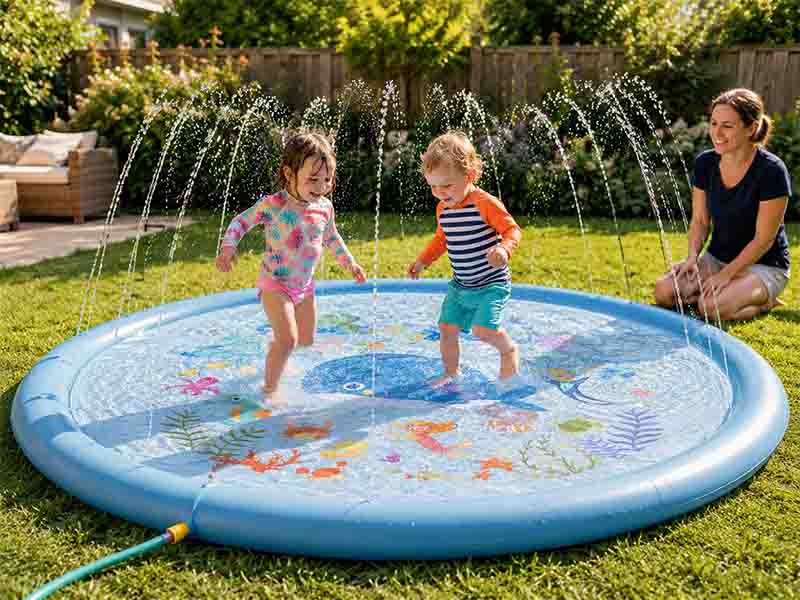
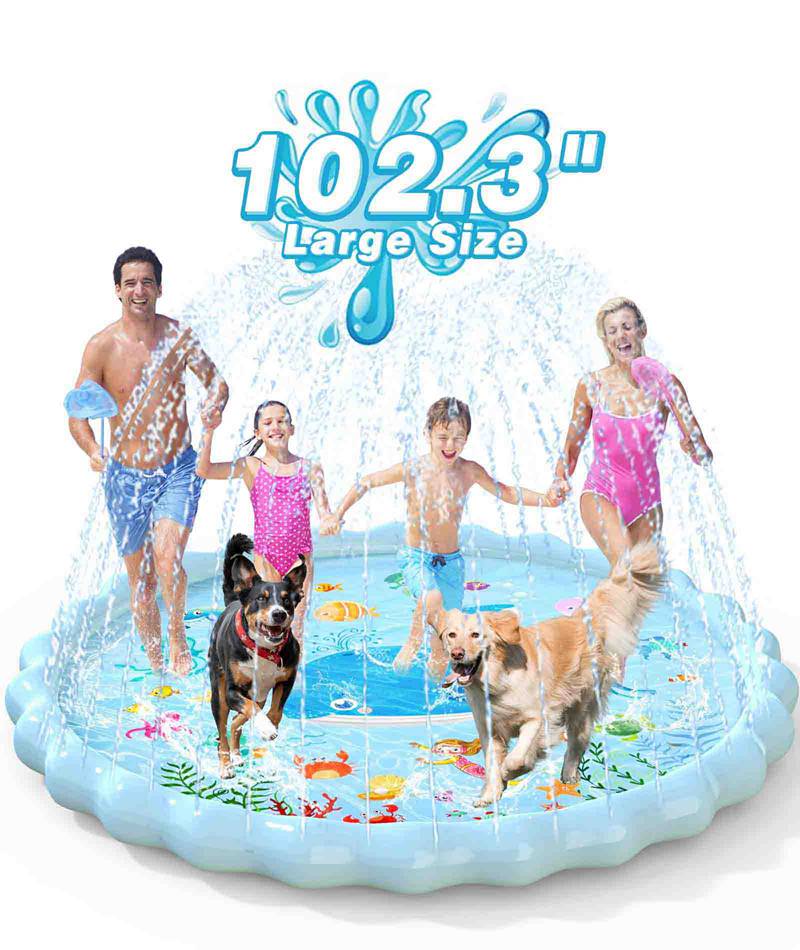
Water pressure is one of the first things people notice when they set up a splash pad for the first time. The box may show a cheerful backyard scene with water spraying around the edge, kids running through the center, and a clean summer setup that looks effortless. Then the product is unfolded at home, connected to the garden hose, and the real questions begin. Why is one side spraying higher than the other? Why does the water barely rise? Should the faucet be turned all the way up? Is the spray too strong for a toddler? Will high pressure damage the edge? Does a larger splash pad need more water?
A good splash pad water pressure setting should create steady inward spray, fill the outer ring evenly, and keep the play area comfortable. For most home splash pads, low to medium outdoor hose pressure works better than full pressure because it gives better control over spray height, water use, surface comfort, and edge stability.
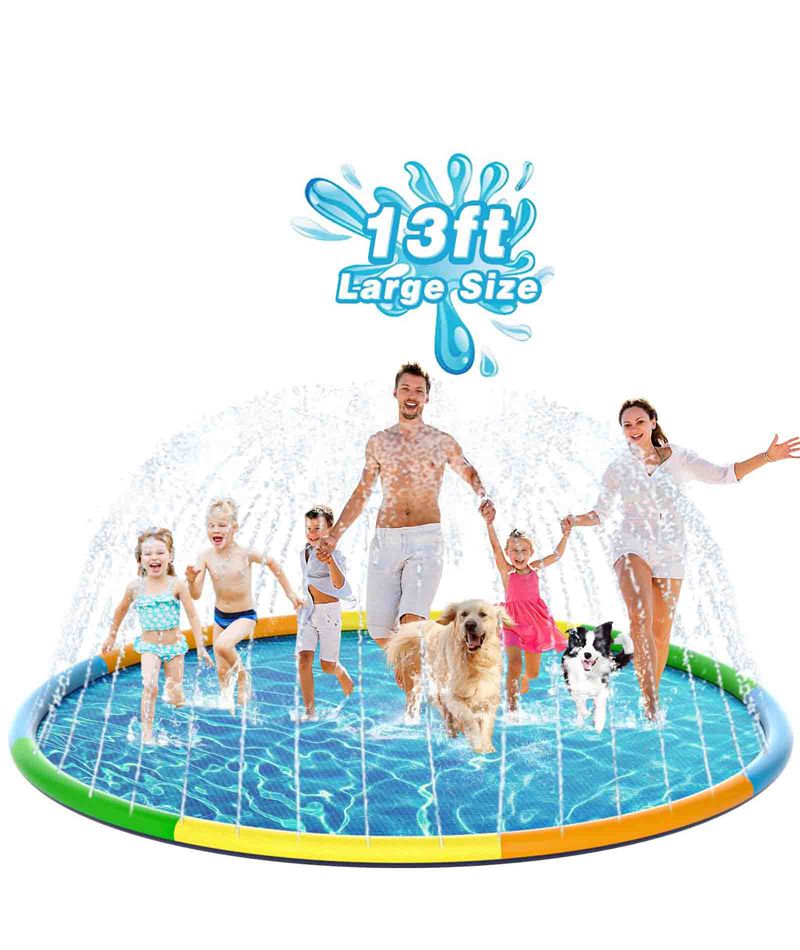
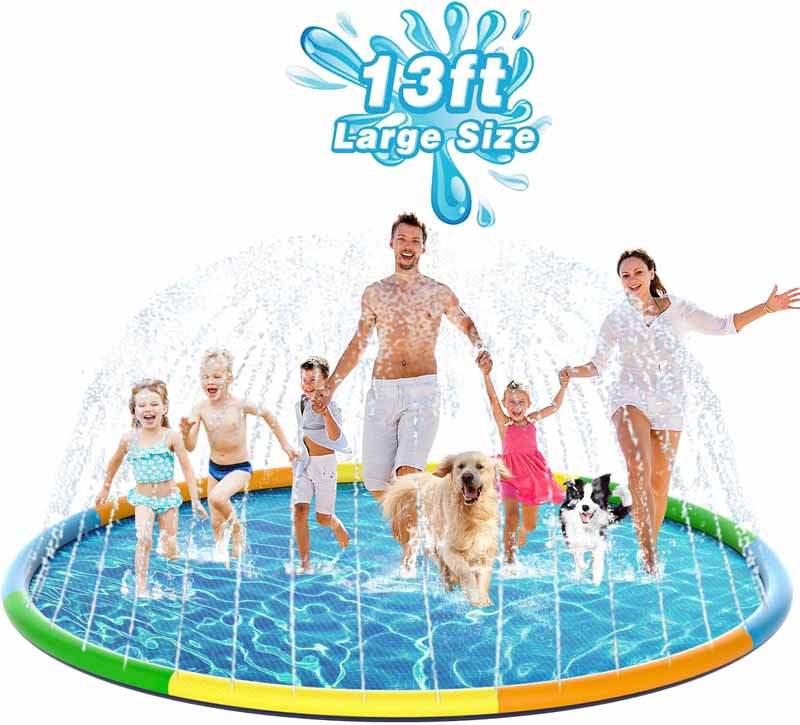
The important thing to understand is that splash pad water pressure is not controlled by the product alone. It depends on the outdoor faucet, hose length, hose diameter, connector fit, pad size, spray-hole layout, ground surface, and how slowly the water is turned on. A 13 ft splash pad on flat grass with a short hose may perform very differently from the same product placed on a slope with a long, twisted hose.
This guide walks through the real details that affect splash pad water pressure, from spray height and water use to safety, setup, product design, and long-term care. It is written for families, pet owners, and outdoor water-play users who want a splash pad that feels easy to use instead of frustrating on the first afternoon.
What Is Good Splash Pad Water Pressure?
Good splash pad water pressure means the spray rises evenly, curves toward the center, and feels comfortable for the people or pets using it. The edge ring should look filled, but not stretched or unstable. The best setting is not the highest setting. It is the lowest steady setting that gives balanced spray without wasting water.
What Spray Height Is Normal?
A normal splash pad spray height should feel playful, not forceful. For home backyard use, the spray does not need to shoot high into the air to work well. In many family settings, the best spray height is just enough for children to run through, step over, sit near, and enjoy without being hit hard in the face.
For toddlers, a lower spray height is often better. A gentle arc of water around the edge can feel exciting without being overwhelming. For older kids, a slightly higher spray may make games more active. For dogs, low to medium spray is usually easier to accept, especially if the pet is new to water play.
Spray height also depends on pad size. A smaller splash pad may show visible spray with less water because the ring is shorter and has fewer spray holes. A large family-size splash pad needs more stable flow to push water around the full edge. If the home faucet has weak flow, the largest pad may not always perform better.
A good spray pattern should have these signs:
- Most spray holes are active.
- Water curves inward toward the play area.
- The spray does not shoot too far outside the pad.
- The outer ring looks filled but not swollen.
- Children or pets can move comfortably in the center.
- Water does not leak heavily at the hose connector.
If the spray looks uneven but the faucet is turned high, more pressure may not solve the issue. The hose, connector, ground surface, or spray holes may need checking first.
Is More Water Pressure Better?
More water pressure can raise the spray, but it is not always better for a splash pad. Too much pressure may cause splash-out, edge shaking, connector leakage, higher water use, and extra stress on the seams. A splash pad is made to hold and direct water through a flexible PVC structure. It is not designed to be treated like a fixed plumbing system.
Many people turn the faucet all the way up because they think stronger pressure means better performance. Sometimes this creates the opposite result. Water sprays outward instead of inward. One side of the pad may lift more than the other. The edge may look too tight. Children may avoid the spray because it feels too strong.
A better method is to raise the pressure slowly. Turn the faucet on at a low setting first. Give the outer ring time to fill. Watch how the spray changes. Increase the water flow only until the spray looks even and comfortable.
| Water Setting | Spray Behavior | Best Use | Watch For |
|---|---|---|---|
| Low | Soft spray, gentle edge filling | Toddlers, first use, nervous pets | Spray may be too low on large pads |
| Medium | Balanced inward spray | Family play, regular backyard use | Usually the best starting point |
| High | Taller spray, faster water flow | Older kids, active play | Splash-out, edge stress, water waste |
| Too High | Unstable edge, outward spray | Not recommended | Leaks, runoff, uncomfortable spray |
The goal is not to find the most powerful setting. The goal is to find the setting that keeps the splash pad fun, safe, and easy to control.
Which Things Change Water Pressure?
Splash pad water pressure depends on more than the faucet. A strong outdoor faucet can still produce weak spray if the hose is long, narrow, twisted, or leaking. A well-designed splash pad can still spray unevenly if it is placed on sloped ground or folded at the edge.
The most common pressure factors include:
- Outdoor faucet flow
- Hose length
- Hose diameter
- Hose condition
- Connector tightness
- Pad size
- Spray-hole spacing
- Inlet design
- Ground flatness
- Blockage from grass, sand, or dirt
- How quickly the faucet is turned on
A long hose can reduce flow before water reaches the pad. A kink near the faucet can make one side of the pad spray low. A loose connector can leak enough water to weaken the whole spray ring. Uneven grass can make water gather more on one side than the other.
This is why the first setup matters. Before judging the splash pad, place it on a flat, clean surface, connect the hose tightly, straighten the hose, and turn the water on slowly. If spray improves after these changes, the issue was likely setup-related.
For EPN, these everyday setup problems are part of the design process, not afterthoughts. For family and pet water-play products, EPN focuses on multi-point spray-hole design, reinforced inlet areas, wider seam support, and long-time water pressure stability. These details help the splash pad handle daily backyard conditions more reliably.
How Can You Tell If the Pressure Is Right?
The easiest way to judge splash pad water pressure is to watch the spray pattern, not the faucet handle. A faucet may be half open, but the actual spray can still be too weak if the hose is long or the connector leaks. Another faucet may only need a small turn to create enough spray.
A good pressure setting usually has these signs:
| Pressure Sign | Good Setting | Needs Adjustment |
|---|---|---|
| Spray direction | Curves inward | Shoots outward |
| Edge ring | Full but stable | Swollen or shaking |
| Child reaction | Plays naturally | Avoids the spray |
| Water use | Mostly stays on pad | Runs across the yard |
| Connector | Minor drip or dry | Heavy leaking |
| Spray holes | Most holes active | Many holes weak |
Pressure may be too low if the outer ring stays soft, only a few spray holes work, or the spray barely reaches the center. Pressure may be too high if the water shoots far outside the pad, the edge ring looks overstretched, or children move away because the water feels too strong.
For most families, the best setting is found by small adjustments. Turn the faucet slightly, wait 10–20 seconds, then watch how the spray changes. Splash pads need a little time to fill and balance. Adjusting too quickly can make the setup look worse than it really is.
How Does Splash Pad Water Pressure Affect Spray?
Splash pad water pressure affects how high the water sprays, how evenly the ring fills, how far the water travels, and how comfortable the play area feels. Low pressure may cause weak spray, while too much pressure can cause splash-out or unstable edges. Good spray comes from balanced flow, correct setup, and suitable product size.

Why Is the Spray Too Low?
Low spray is one of the most common problems during first use. The splash pad may look fine when unfolded, but once connected, the water only rises a little. This does not always mean the splash pad is defective. In many cases, low spray comes from water flow problems before the water even enters the pad.
The hose may be kinked or twisted. The hose may be too long for the available faucet flow. The connector may not be tight enough. The inlet may have small debris inside. The pad may be too large for a low-flow outdoor faucet. The edge may also be folded in a way that blocks water from moving smoothly around the ring.
A simple test can help identify the cause:
| Problem Seen | Possible Cause | What to Try |
|---|---|---|
| Spray is low all around | Weak faucet flow or long hose | Use shorter hose, check faucet |
| One side sprays lower | Uneven ground or folded edge | Reposition pad, flatten edge |
| Spray improves when hose is moved | Hose kink or flow restriction | Straighten or replace hose |
| Water leaks at connector | Loose or angled connection | Reconnect hose carefully |
| A few holes do not spray | Dirt or residue blockage | Rinse holes and inlet |
If the spray is low across the whole pad, start with the hose and faucet. If only one section is weak, check the ground and spray holes. If water leaks at the inlet, tighten the connection before increasing faucet pressure.
Why Is the Spray Uneven?
Uneven spray usually happens when water does not move evenly through the outer ring. One side may spray high while another side barely sprays. This can happen if the splash pad is placed on a slope, the edge is folded, the hose is twisted, or some spray holes are blocked.
Ground surface makes a big difference. On uneven grass, water may collect on the lower side of the ring first. That side may spray higher, while the upper side stays weak. The same issue can happen if part of the pad is sitting on a small bump, stick, stone, or thick patch of grass.
Spray-hole direction also matters. A splash pad should usually spray inward toward the center. If the edge twists or folds, some holes may face outward. This makes the spray look messy and wastes water outside the play area.
To improve uneven spray:
- Move the splash pad to flatter ground.
- Remove stones, sticks, and sharp debris.
- Smooth out folded edges before turning on the water.
- Keep the hose straight.
- Clean visible spray holes.
- Turn the faucet on slowly instead of quickly.
- Let the outer ring fill before increasing pressure.
Good product design can also reduce uneven spray. A balanced spray-hole layout helps water release more consistently around the edge. A reinforced inlet area supports better water entry. Strong seams help the edge keep its shape during repeated filling and draining.
If the spray becomes uneven after several uses, it may also be worth checking whether small leaks or seam stress are affecting the edge ring. Families who want to understand this better can read more about why some splash pads leak easily before choosing a new one.
How Do You Raise the Spray?
To raise the spray, increase water flow slowly after the outer ring begins to fill. Do not start with the faucet fully open. Sudden pressure can make the edge ring fill unevenly and push water out of the intended spray path.
A practical setup method works like this:
- Lay the splash pad on flat, clean ground.
- Make sure the edge is not folded under itself.
- Connect the hose securely to the inlet.
- Straighten the hose from faucet to pad.
- Turn the faucet on at a low setting.
- Wait for the outer ring to fill.
- Increase pressure until the spray rises evenly.
- Stop increasing once the spray is comfortable.
This also answers a common setup question: how do I turn on water at a splash pad? For most backyard splash pads, the garden hose and outdoor faucet control the water. There is usually no separate switch or pump. The key is to open the water gradually.
If the spray still does not rise after these steps, do not keep increasing pressure blindly. Check for a loose connector, a blocked inlet, or a long hose. If the spray improves when the hose is shortened, the original hose setup may have been limiting the flow.
For children, the right spray height is not just about appearance. It should match the way they play. A toddler may enjoy ankle-to-knee-height spray. Older kids may prefer a stronger arc. Pets may need a low setting at first. Adjust pressure for the real user, not for the product photo.
Why Does the Same Splash Pad Spray Differently at Different Homes?
Two families can buy the same splash pad and see different spray height. This is normal because the splash pad is only one part of the water system. The home faucet, hose condition, water flow, ground surface, and setup method all affect the final result.
For example, a splash pad connected to a short hose on flat grass may spray evenly at medium faucet pressure. The same splash pad connected to a 75 ft hose on sloped ground may spray lower on one side, even if the faucet is turned higher.
Common home differences include:
- Older outdoor faucets may provide weaker flow.
- Long hoses can reduce water movement.
- Narrow hoses may limit volume.
- Hose reels can create hidden bends.
- Sloped lawns can make one side fill first.
- Hard-water residue can block small spray holes.
- Loose connectors can leak before water reaches the ring.
This is why product photos should not be the only expectation. A splash pad should be judged after correct setup: flat ground, straight hose, tight connector, clean inlet, and gradual pressure adjustment.
Is Splash Pad Water Pressure Safe?
Splash pad water pressure is safe when the spray is controlled, the surface stays stable, and the water level matches the age and comfort level of the user. Toddlers and pets usually need lower pressure. Older kids may enjoy stronger spray, but the edge should still remain steady and the surface should be easy to walk on.
Is Low Pressure Better for Toddlers?
Low pressure is usually better for toddlers because young children are more sensitive to sudden spray and slippery movement. A softer spray lets them explore the splash pad at their own pace. They can sit, walk, splash, or step through the water without feeling overwhelmed.
For toddlers, the spray does not need to be tall. It needs to be gentle, predictable, and easy for parents to supervise. A lower setting also reduces splash-out around the yard and helps keep the play zone calmer.
Parents should also check the setup surface. Grass is often more forgiving than rough concrete, but it should still be flat and clean. Remove sticks, stones, metal pieces, thorns, and garden debris before placing the splash pad. Even a well-made PVC splash pad can be affected by sharp ground objects.
A good toddler setup should include:
| Setup Detail | Why It Matters |
|---|---|
| Low to medium water pressure | Softer spray and calmer movement |
| Flat grass or smooth surface | Better stability and comfort |
| Clean ground | Helps prevent punctures and foot discomfort |
| Adult supervision | Needed for all water play |
| Short play sessions | Easier for younger children to enjoy |
| Gentle pressure adjustment | Reduces sudden spray changes |
Grass is often a softer setup surface for young children, but it still needs to be flat, clean, and free from sharp debris. Remove stones, sticks, thorns, or small garden tools before setting up the splash pad, and avoid areas with sharp roots or uneven bumps.
EPN designs children’s water-play products with comfort and repeated outdoor use in mind. For splash pads, that means attention to low-odor PVC, flexible structure, stable spray, and reinforced areas that support daily summer play.

Do Older Kids Need More Pressure?
Older children may enjoy more water movement than toddlers. They may want to run through the spray, kick a ball, play tag, or use the splash pad during a backyard party. In these situations, medium pressure may feel more exciting than a very low setting.
Still, more pressure should not mean uncontrolled spray. If water shoots outside the pad, the edge moves too much, or children start slipping because the area becomes overly wet, the pressure should be lowered. The best setting gives enough water for active play while keeping the center usable.
For older kids, a larger pad can be helpful because it gives them room to move. But size should match water flow. If the outdoor faucet cannot support a large ring, the spray may stay low even at a high faucet setting. A medium-size splash pad with steady spray may be more enjoyable than a larger one with weak spray.
For active play, look for:
- Even inward spray
- Stable outer ring
- Enough center space
- Non-slip surface texture
- Strong hose connection
- Reinforced edge structure
- Material thickness suitable for repeated stepping
A splash pad should feel like a controlled play zone, not a slippery water mess. This is especially important when several children use it at the same time.
Do Pets Like Strong Pressure?
Many dogs prefer low to medium pressure, especially during the first few uses. Strong spray can startle nervous pets. Some dogs love water right away, while others need a slow introduction. Starting with gentle spray helps the dog approach naturally.
Pet splash pads have different demands from kids’ splash pads. Dogs may step harder, turn quickly, scratch lightly, or jump in and out. Pressure should be controlled so the pet feels comfortable and the surface stays stable.
Before using a splash pad with dogs:
- Trim pet nails.
- Start with low pressure.
- Let the dog approach without forcing it.
- Avoid rough digging or chewing.
- Keep toys soft and safe.
- Use short sessions at first.
- Dry the pad before storage.
For pets, high spray height is rarely the most important feature. Wear support, stable footing, and easy cleaning often matter more. A good pet-friendly splash pad should be able to handle repeated stepping and outdoor use while keeping water movement comfortable.
EPN’s pet water products are developed with pet behavior in mind, including high-frequency stepping, wear support, and stable surface performance. This is important because a dog does not use a splash pad the same way a child does.
Do Water Shoes Help?
Water shoes can help in some splash pad situations, but they are not always necessary for a home PVC splash pad. They are most useful on hot patios, rough grass, public splash pad areas, or surfaces where small stones may hurt bare feet.
For children, soft water shoes with flexible, non-slip soles can add comfort and protection. They may help when the splash pad is used near a patio, pool area, campsite, or shared outdoor space. They can also make children feel more secure when running on wet surfaces.
However, hard shoes, cleats, sharp soles, and rough outdoor sneakers should not be used on PVC backyard splash pads. These can scratch the surface, stress the material, or damage the spray ring over time.
| Surface | Water Shoes? | Best Choice |
|---|---|---|
| Clean soft grass | Optional | Bare feet or soft water shoes |
| Hot patio | Recommended | Soft non-slip water shoes |
| Rough grass | Helpful | Flexible water shoes |
| Public splash pad | Often useful | Lightweight water shoes |
| PVC backyard splash pad | Use with care | Avoid hard or sharp soles |
The purpose of water shoes is to protect feet without damaging the splash pad. If the surface is clean and comfortable, bare feet may be fine. If the surface is hot, rough, or shared, soft water shoes can be a good choice.
What Should Parents Watch During the First 5 Minutes?
The first few minutes of use tell parents a lot about whether the water pressure is suitable. Children often react quickly to spray that feels too strong, too cold, or too sudden. Instead of setting the faucet and walking away, parents should watch how the child responds.
During the first 5 minutes, check:
- Does the child step into the spray willingly?
- Does the child turn away or cover their face?
- Is the spray hitting the face too directly?
- Is the child slipping or running too fast?
- Is water pooling outside the pad?
- Is the edge ring staying stable?
- Is the hose connector leaking?
- Are pets or siblings making the play area too crowded?
If a toddler keeps backing away, lower the pressure. If older kids are running hard and slipping, reduce the pressure or pause the game. If a dog is nervous, let the water run gently near the edge before encouraging play.
Water pressure should match the user’s comfort, not just the adult’s expectation of what looks fun. A lower setting often keeps play going longer because children and pets feel more in control.
How Much Water Does Splash Pad Pressure Use?
Splash pad water use depends on pressure, pad size, hose flow, spray-hole count, and play time. Higher pressure usually moves more water each minute. Small splash pads often use less water than large ones, but any size can waste water if the spray is too high, the surface is sloped, or the faucet is left running during breaks.
How Much Water Does a Small Splash Pad Use?
A small splash pad usually uses less water than a large one because the outer ring is shorter and there are fewer spray points. This makes it easier for a lower-flow faucet to create visible spray.
The exact amount of water depends on the home’s faucet flow and how far the faucet is opened. A garden hose can move very different amounts of water depending on hose diameter, length, household plumbing, and local water pressure. Instead of relying on one fixed number, it is more practical to compare use by size and pressure level.
| Splash Pad Size | Pressure Need | Water Use Level | Best For |
|---|---|---|---|
| Small | Low to medium | Lower | Toddlers, short play, small yards |
| Medium | Medium | Moderate | Family play, regular summer use |
| Large | Medium to high | Higher | Multiple kids, active games |
| Pet splash pad | Low to medium | Moderate | Dogs, cooling, controlled play |
A small splash pad works well for quick cooling sessions. For example, a family may use it for 15–30 minutes in the afternoon instead of running it for hours. Short sessions with moderate pressure can keep play fun while reducing runoff.
For families concerned about water use, size matters. A smaller pad that works well with low to medium pressure may be more practical than a large pad that needs high flow to spray properly.
How Much Water Can Different Play Sessions Use?
Water use changes based on pressure and play time. A splash pad running at low pressure for 15 minutes uses far less water than a large pad running at high pressure for an hour. Instead of thinking only about size, families should think about session length.
| Play Time | Pressure Level | Water Use Level | Best For |
|---|---|---|---|
| 10–15 minutes | Low | Lower | Toddlers, quick cooling, first-time use |
| 20–30 minutes | Low to medium | Moderate | Daily backyard play |
| 30–45 minutes | Medium | Moderate to higher | Family play, warmer afternoons |
| 45–60 minutes | Medium to high | Higher | Parties, older kids, active games |
| Over 60 minutes | High | Highest | Usually not needed for normal home use |
Most home splash pad play does not need to last all afternoon. Many families use splash pads in short cooling sessions during hot weather. A 20–30 minute session can be enough for children to cool down, move around, and enjoy outdoor play without leaving the faucet running for too long.
A simple rule works well: turn the water off whenever play pauses. If children stop to eat snacks, take a break, or move to another activity, the splash pad should not keep running. This habit reduces water waste and also helps parents control the yard area better.

Does High Pressure Waste Water?
High pressure can waste water when the spray goes beyond the play area. If water shoots over the edge, runs down the lawn, or sprays onto a patio or fence, that extra water is not improving play. It is simply leaving the splash zone.
Moderate pressure is often more efficient. It keeps the spray active while reducing splash-out. It also helps children stay comfortable and makes the edge ring easier to control.
Several habits can help reduce water waste:
- Use the lowest pressure that gives even spray.
- Turn off the faucet during snack or rest breaks.
- Use shorter play sessions.
- Place the pad on flat ground.
- Check for connector leaks.
- Do not oversize the pad for the faucet.
- Store the pad properly to prevent damage and leaks.
Water use is not only about the product. It is also about how it is used. A well-sized pad at medium pressure can be more efficient than an oversized pad running at high pressure.
Which Size Uses Pressure Better?
The size that uses pressure best is the size that matches the home’s water flow and the user’s play needs. Bigger is not always better. A large splash pad may look impressive, but it may need more water flow to spray evenly. If the outdoor faucet is weak, a large pad may spray lower than expected.
A medium-size splash pad often works well for families because it balances room and pressure needs. It gives children enough space to move while still being easier to fill than a very large model. For toddlers or one-child use, a smaller pad may be easier to control.
| User Scenario | Better Size Choice | Pressure Reason |
|---|---|---|
| One toddler | Small to medium | Easier to control spray |
| Two young kids | Medium | Good balance of space and flow |
| Several older kids | Medium to large | Needs stronger faucet flow |
| Dog cooling | Small to medium pet pad | Lower spray is usually enough |
| Small patio or narrow lawn | Small | Less splash-out |
| Summer party | Large if faucet supports it | Needs stable water supply |
The best splash pad is not the one with the largest diameter on the listing. It is the one that works well with the yard, hose, and real water flow.
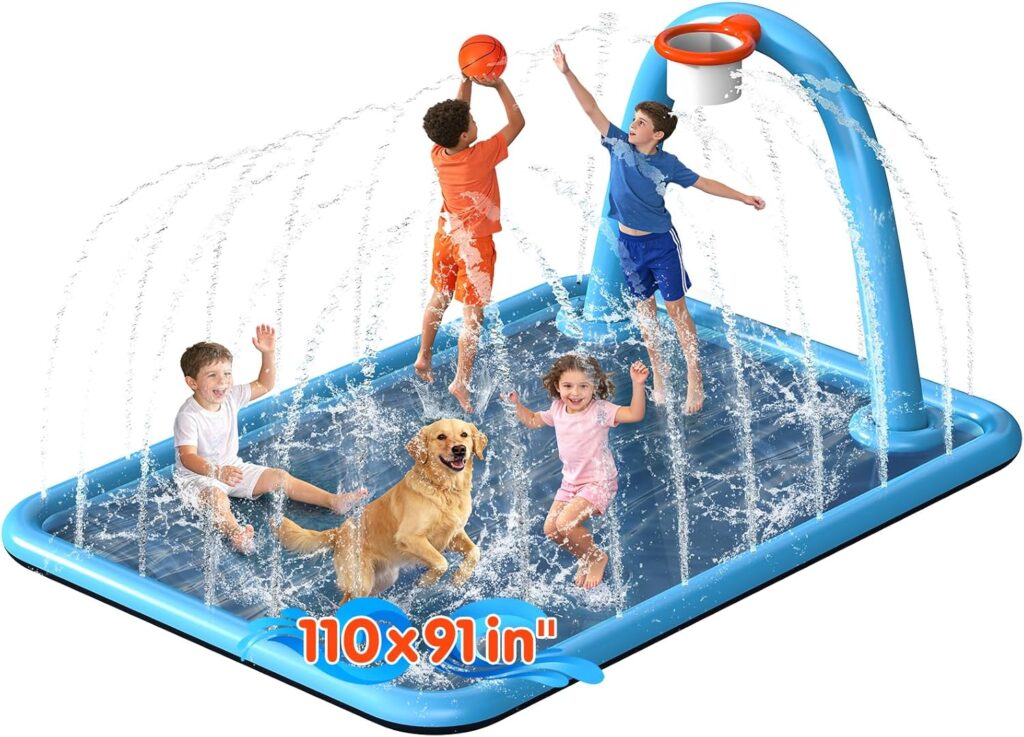
EPN offers different splash pad formats for kids, pets, sports play, and family use because one size does not fit every setup. A well-matched product can reduce frustration and improve repeat use.
How Do You Fix Splash Pad Water Pressure?
To fix splash pad water pressure, check the hose, faucet, connector, inlet, spray holes, ground surface, and pad position before increasing water flow. Many low-spray problems come from setup conditions. A clean, flat setup with a straight hose and tight connector often improves spray more than simply turning the faucet higher.
What Should You Check First?
Start with the easiest checks. Most first-use pressure problems are not complicated. The water is usually being blocked, leaked, slowed, or distributed unevenly.
| What You See | What It May Mean | What to Do |
|---|---|---|
| Spray is weak everywhere | Low flow or long hose | Shorten hose, check faucet |
| Spray is weak on one side | Uneven ground or folded edge | Move pad, flatten ring |
| Water leaks at connector | Loose connection | Reconnect and tighten |
| Spray shoots outward | Edge twisted or pressure too high | Lower pressure, adjust edge |
| Some holes do not spray | Dirt or residue | Rinse spray holes |
| Ring fills slowly | Hose restriction | Check for kinks |
| Spray starts strong then drops | Hose bend or faucet issue | Inspect full water path |
A good setup process can prevent many of these issues:
- Place the splash pad on flat ground.
- Clear the area of sharp debris.
- Unfold the pad fully.
- Keep the edge ring smooth.
- Connect the hose straight.
- Turn water on slowly.
- Watch the spray pattern before increasing pressure.
If the spray improves after flattening the pad or shortening the hose, the product was not the main problem. The setup was limiting the water flow.

Is the Hose Hurting Pressure?
Yes, the hose can reduce splash pad water pressure. A long hose gives water more distance to travel. A narrow hose may limit flow. A twisted or kinked hose can block water before it reaches the pad. A leaking hose can reduce pressure without being obvious at first.
If the splash pad spray is weak, test the hose setup:
- Move the pad closer to the faucet.
- Use a shorter hose if possible.
- Check the hose for kinks.
- Look for leaks along the hose.
- Make sure the connector is not cross-threaded.
- Avoid sharp bends near the inlet.
If the spray becomes stronger with a shorter or straighter hose, the pressure issue was likely caused by flow loss. This is common in larger yards where the hose travels around corners, furniture, or garden beds.
The hose connector also matters. If it is not aligned correctly, water may leak at the inlet. Even a small leak can weaken the spray ring. Tighten by hand and make sure the connection sits straight. Do not force the connector at an angle.
Are the Spray Holes Blocked?
Spray holes can become blocked by grass, sand, dirt, small debris, or mineral residue from water. Because splash pad spray holes are small, even minor blockage can change the spray pattern.
If a few holes are weak but others are working, blockage is likely. If all holes are weak, check the faucet and hose first.
To keep spray holes working:
- Rinse the pad after use.
- Remove visible grass or dirt.
- Drain water from the edge.
- Let the pad air dry completely.
- Fold gently without pressing dirt into the surface.
- Store in a cool, dry place.
- Avoid dragging across rough ground.
Hard-water areas may leave residue over time. A gentle rinse after use can help reduce buildup. Avoid harsh chemicals unless the product instructions allow them.
Proper storage also matters. Folding a wet splash pad and placing it in a warm garage or storage box can lead to odor, moisture marks, and harder cleaning later. A dry pad is easier to reuse and less likely to develop blocked spray points.
Material quality also affects how well a splash pad handles repeated water pressure, folding, sun exposure, and ground contact. A deeper look at what material is best for a splash pad can help families compare PVC thickness, flexibility, and long-term use more clearly.
How Do You Turn On the Water?
Turning on a splash pad should be done gradually. A slow start gives the ring time to fill evenly and helps prevent sudden splash-out.
Use this simple setup:
- Lay the splash pad flat on grass or a smooth outdoor surface.
- Check that the edge is not folded.
- Connect the garden hose securely.
- Keep the hose straight.
- Turn the faucet on slowly.
- Let the outer ring fill.
- Watch the spray direction.
- Increase water flow until the spray is even.
- Stop when the spray feels comfortable.
For toddlers and pets, start with a very soft spray. Let them get used to the sound and movement of the water. For older kids, raise the pressure only after the ring is fully filled and stable.
Do not let children stand on the outer edge while it is filling. The ring needs space to take shape. Once the spray is steady, children can play in the center area.
This slow-start habit also helps protect the product. Controlled filling reduces sudden stress at the seams and connector area. For a seasonal product that families may use many times during summer, small setup habits can make a real difference.
Which Splash Pad Handles Water Pressure Better?
A splash pad handles water pressure better when it has durable PVC, reinforced seams, a stable inlet, balanced spray holes, and a reliable hose connection. Strong pressure handling is not only about spray height. It is about even water movement, fewer leaks, stable edges, and better performance after repeated use.
What Design Handles Pressure?
The first design detail is material. A splash pad should use PVC that is flexible enough to unfold easily but strong enough to handle water filling, stepping, sun exposure, and repeated storage. Thin material may feel lighter, but it may not offer the same support during active backyard use.
The second detail is the edge seam. The outer ring carries water pressure during use. If the seam area is narrow or poorly supported, it may be more vulnerable to stress. Wider seams and stable heat-pressed construction can help distribute pressure more evenly.
The third detail is the inlet area. This is where water enters the pad, so it handles hose movement, pulling, twisting, and pressure changes. A weak inlet can lead to leaks or poor spray. A stronger connector area helps water flow into the ring more reliably.
The fourth detail is spray-hole balance. If spray holes are poorly placed, some sections may spray higher than others. A balanced hole layout helps water release evenly around the edge.
A better-designed splash pad should support:
- Even water distribution
- Controlled inward spray
- Stable outer ring
- Reduced connector leakage
- Comfortable surface contact
- Repeated folding and storage
- Use on normal backyard surfaces
Pressure performance is a combination of material, structure, and setup. A product that looks good but lacks these details may disappoint after a few uses.
Why Do Seams and Connectors Matter?
The outer ring and hose connector are two of the most important pressure areas on a splash pad. The ring holds and distributes water. The connector brings water into the system. If either area is weak, the spray may become unstable or the product may leak sooner than expected.
A good seam helps spread pressure around the edge. A weak seam may be more likely to show stress when the faucet is turned high or when children step near the ring. This is why seam width, heat-pressed bonding quality, and edge structure matter more than many first-time shoppers realize.
The connector area also needs attention. It handles twisting from the hose, pulling during setup, and pressure changes when the faucet is adjusted. A poor connector can leak, loosen, or reduce spray performance.
For EPN, these details are part of splash pad structure design. Reinforced inlet areas, widened seams, balanced spray holes, and pressure stability checks are used to make the product more practical for real backyard conditions. For families, that means easier setup and fewer surprises. For retailers and custom product clients, it means a stronger foundation for repeat summer sales.

How Does Epsilon Test Pressure?
EPN, part of American Epsilon Inc., develops PVC and composite outdoor recreation products for families, pets, and seasonal use. Splash pads are part of a wider product system that includes kids water toys, pet water products, inflatable pools, water floats, snow tubes, pool pillows, and other outdoor items.
For splash pads, EPN focuses on real backyard use. The product should spray evenly, connect easily, lie flat, handle repeated folding, and remain stable under normal outdoor hose pressure. This is why testing is not limited to appearance or first-time inflation.
Behind EPN splash pads, the testing focus is practical: can the product connect securely, spray evenly, handle repeated water pressure, and still be easy to fold and store after use?
Epsilon’s product development includes:
- Long-time water pressure stability testing
- Reinforced connection area evaluation
- Multi-point spray-hole layout checks
- Widened seam structure review
- UV exposure simulation
- High-temperature aging tests
- Repeated folding and storage evaluation
- Pet claw and wear simulation for pet products
- Child activity and dragging force simulation
- Material flexibility and surface contact checks
The company has 27 R&D personnel and more than 18 designers supporting product development, packaging, visual design, and localized materials. Its team works across polymer materials, structural design, molds, children’s entertainment, pet behavior, sports use, and ergonomic needs. Epsilon also carries out 500+ material and product performance tests each year and develops 1000+ new products annually.
For families, this means the product is developed around more than color and shape. For retailers and project customers, it means EPN can support product series, material adjustments, packaging needs, and market-specific requirements.
How Much to Start a Splash Pad?
For a home backyard splash pad, the starting setup is usually simple. Most families need the splash pad and a standard garden hose. There is usually no need for pumps, plumbing, electrical installation, or professional setup.
| Item | Needed? | Notes |
|---|---|---|
| Splash pad | Yes | Choose size based on age, yard, and water flow |
| Garden hose | Yes | Shorter and straighter is usually better |
| Outdoor faucet | Yes | Controls water flow and spray height |
| Flat surface | Yes | Grass or smooth outdoor area works best |
| Water shoes | Optional | Useful on hot or rough surfaces |
| Storage bag | Helpful | Keeps pad clean after drying |
| Pump | Usually no | Home splash pads normally use hose pressure |
| Plumbing work | No | Not needed for portable backyard use |
Commercial splash pad projects are very different. Public or fixed splash pads may involve plumbing, drainage, water treatment, surface construction, permits, and ongoing maintenance. That kind of project is not the same as a portable PVC backyard splash pad.
For home use, the smarter question is not only “How much does it cost?” It is “Will this product work well with my yard, hose, water pressure, and play needs?” A lower-priced product that sprays poorly or feels hard to control may not be a good value. A well-sized, well-built product that performs smoothly can be used more often.
Which Splash Pad Should You Choose?
Choose a splash pad based on water pressure, user age, yard size, material strength, and play style. Do not choose only by the largest size or brightest pattern.
For toddlers, choose a splash pad that works well at lower pressure. The spray should be soft and easy to control. For older kids, choose a larger play area only if the faucet can support it. For pets, look for stronger wear support and controlled spray rather than high spray height.
| Main User | Better Choice | Why It Works |
|---|---|---|
| Toddler | Small or medium splash pad | Softer pressure, easier supervision |
| Two or three children | Medium splash pad | Good balance of room and flow |
| Older active kids | Medium to large splash pad | More room for games if flow is strong |
| Dog | Pet-friendly splash pad | Better wear support and lower spray |
| Small yard | Small to medium pad | Less splash-out and easier control |
| Weak faucet | Smaller pad | Easier to create even spray |
| Party use | Larger pad | Needs stable water flow and flat space |
Material and structure should also be part of the decision. Look for thicker PVC, stable seams, balanced spray holes, and a reliable hose connector. If the splash pad will be used often, storage and cleaning should be easy too.
For families who want a splash pad they can reuse through the season, pressure control is only one part of the decision. It also helps to compare storage, seam strength, material thickness, and setup habits in a guide on how to choose a splash pad that lasts more than one summer.
EPN supports both ready-to-order splash pad products and OEM/ODM development. For branded projects, Epsilon can adjust size, color, pattern, packaging, label content, and local-market presentation. For retailers and cross-border sellers, this can help create products that match different markets, age groups, pet-use needs, and seasonal sales plans.
What Makes a Splash Pad Easier to Reuse?
A splash pad is more valuable when families want to use it again, not just once. Water pressure plays a role, but so do cleaning, drying, folding, and storage.
A reusable splash pad should be easy to:
- Connect without leaking
- Adjust without guessing
- Spray evenly at moderate pressure
- Drain after play
- Rinse clean
- Dry before folding
- Store without strong odor
- Reopen without stuck folds
- Use again without blocked spray holes
This is where material and structure become important. A splash pad that only looks fun but is hard to drain, hard to fold, or sensitive to pressure may not become a repeat-use summer item. Families usually prefer products that set up quickly, work predictably, and do not create extra cleanup.
EPN develops splash pads and other PVC outdoor products around repeated seasonal use. The goal is not only to create a colorful water toy, but to make a product that works across real family routines: quick afternoon play, weekend backyard use, pet cooling, summer parties, drying, folding, and storage.
FAQ
What Is Good Splash Pad Water Pressure?
Good splash pad water pressure creates steady inward spray without making the outer ring over-expand. The spray should feel comfortable, balanced, and easy to control.
Why Is My Splash Pad Spray Too Low?
Low spray may come from weak faucet flow, a kinked hose, a long hose, blocked spray holes, loose connectors, uneven ground, or a splash pad that is too large for the available water flow.
How Do I Turn On Water at a Splash Pad?
Lay the splash pad flat, connect the hose tightly, turn the faucet on slowly, let the outer ring fill, then adjust the faucet until the spray is even and comfortable.
How Much Water Does a Small Splash Pad Use?
A small splash pad usually uses less water than a large one because it has a smaller spray ring and fewer spray points. Actual use depends on faucet flow, pressure setting, hose size, and play time.
Do You Need Water Shoes for a Splash Pad?
Not always. Water shoes can help on hot patios, rough grass, or public splash pad areas. For PVC backyard splash pads, choose soft water shoes and avoid hard or sharp soles.
Can Too Much Water Pressure Damage a Splash Pad?
Yes. Too much pressure can increase seam stress, splash-out, water waste, connector leakage, and edge instability. Start low and raise the pressure gradually.
Does a Large Splash Pad Need More Pressure?
Usually yes. Larger splash pads need more stable water flow to fill the spray ring and activate spray holes evenly.
Do Dog Splash Pads Need Strong Pressure?
No. Many dogs prefer low to medium pressure because strong spray can feel uncomfortable or startling. Controlled water movement is usually better for pets.
How Can I Make Splash Pad Spray More Even?
Use flat ground, straighten the hose, tighten the connector, clean the inlet, check the spray holes, and adjust faucet pressure slowly.
Is a Splash Pad Better on Grass or Patio?
Grass is usually softer and more comfortable, but it should be clean and flat. A patio can work if it is smooth, not too hot, and free from sharp edges.
Choose a Splash Pad That Works With Real Water Pressure
The best splash pad is not always the biggest one or the one with the tallest spray in a photo. It is the one that works well with your outdoor faucet, your hose, your yard, and the people or pets who will use it.
For families, that means looking for stable spray, comfortable pressure, durable PVC, reinforced edges, and easy setup. For pet owners, it means choosing controlled water movement and stronger wear support. For retailers, distributors, and brand owners, it means sourcing splash pad products that can perform well in real customer homes, not only in product images.
EPN, part of American Epsilon Inc., supports both ready-to-order splash pad products and OEM/ODM customization. Product options can include size, PVC thickness, color, pattern, spray-hole layout, hose connector design, packaging, warning labels, instruction manuals, and local-market presentation.
For seasonal outdoor categories, small design choices can affect customer satisfaction. A stronger connector, better spray balance, clearer setup instructions, or more suitable size range can reduce complaints and improve repeat use. If you are planning a splash pad product line or looking for reliable PVC outdoor water products, EPN can help with product selection, sampling, packaging development, and customized project support.
A well-designed splash pad should not make families fight with the faucet. It should make summer play easier, cleaner, safer, and more enjoyable from the first setup.