Skip to content
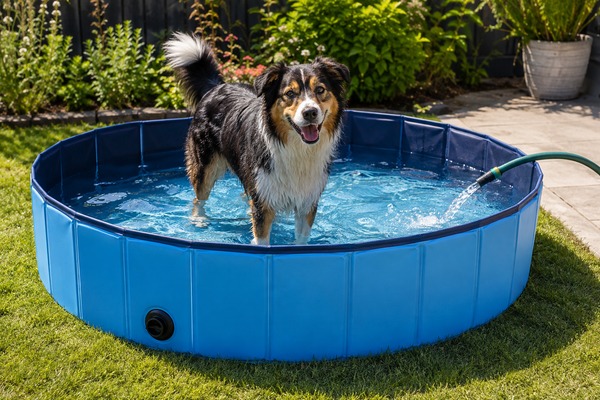
A dog pool may still look clear even after fur, saliva, paw dirt, grass, skin oils, insects, and outdoor debris have entered the water. This is why water clarity alone cannot tell you whether the pool is ready for another play session. Most foldable dog pools do not have circulation, filtration, or a controlled sanitation system, so their water should be managed more like a large outdoor pet bowl than a permanent swimming pool.
For an untreated and unfiltered dog pool, change the water after a dirty or active play session and no later than the end of the day. Drain it immediately if the water contains feces, vomit, urine, wildlife contamination, heavy debris, unusual foam, slime, odor, cloudiness, or discoloration. Multiple dogs, hot weather, muddy paws, and frequent drinking make earlier changes necessary.
The right schedule is not based only on time. A clean dog cooling its paws for ten minutes creates a very different situation from four dogs running across muddy grass before jumping into the same pool. Once you understand what enters the water and how quickly it changes, you can keep the pool cleaner without wasting more water than necessary.

How Often Should You Change Dog Pool Water?
Untreated dog pool water should be changed at least once a day and sooner after heavy, dirty, or shared use. For small foldable pools without filtration, draining after the final play session is usually the safest and easiest routine.
Is Daily Changing Necessary?
Daily changing provides a simple maximum limit for untreated water, but it does not mean every pool remains clean for a full day. Water condition and dog activity should always guide earlier replacement.
A small dog pool has no pump continuously removing hair, soil, and organic material. Once a dog enters, the water begins collecting loose fur, saliva, skin oils, paw debris, and particles from the surrounding yard. Even when the water still appears clear, these materials may remain suspended or settle along the floor and sidewalls.
Daily draining also reduces problems that develop while the pool is unattended. Leaves, insects, birds, rodents, rainwater, and dust can enter overnight. Warm standing water may also become attractive to mosquitoes and other animals. Emptying the pool after the last session removes these uncertainties and gives the dog fresh water the next time it plays.
However, daily changing is only the outer limit. If the dog enters after running through mud, if several dogs share the pool, or if the water becomes cloudy within an hour, the pool should be drained at that point rather than kept until evening.
Should Water Change After Every Use?
Changing dog pool water after every use is the safest routine when the pool is shallow, easy to drain, heavily used, or shared by more than one dog.
A short, calm cooling session by one recently brushed dog may not require a refill halfway through the same supervised period. However, the water should still be drained when the session ends, particularly when the dog has been walking through grass, soil, sand, or mulch.
Energetic play introduces more contamination. Dogs may jump in and out repeatedly, mouth toys, shake water from their coats, drink from the pool, and return with additional dirt on their paws. In this situation, changing the water after every active session is more practical than trying to remove contamination with a small net.
Owners who want to reduce water use can fill the pool only to the depth their dog actually needs. A dog using the pool mainly for cooling may only need shallow water around its paws and lower body. Lower fill levels make frequent replacement easier and reduce the temptation to keep used water for several days.
How Long Can Water Sit Outside?
Untreated dog pool water should not remain outside for several days. Even without active use, outdoor exposure continues to affect water quality through heat, insects, wildlife, dust, leaves, and rain.
A covered pool may stay visually cleaner, but a cover does not remove saliva, organic material, or dirt already present in the water. It may also trap heat, making the water warmer by the next session. Loose covers and tarps can create entanglement or trapping hazards if pets have access to the area.
Water left overnight may also receive contamination that is difficult to see. Birds may drink or bathe in it, rodents may approach the edge, and other wildlife may enter the yard while the household is asleep. Because there is no reliable way to confirm what contacted the water, draining after the final session is the safer choice.
If the pool cannot be drained immediately, prevent access by dogs and children, remove it from direct use, and empty it as soon as practical. Do not automatically assume the water is suitable the next morning simply because it remains clear.
Do Multiple Dogs Need More Changes?
Yes. Dog pool water becomes dirty faster when several dogs share it because every dog adds fur, saliva, paw residue, skin oils, and outdoor debris.
Group play also keeps settled dirt moving through the water. One dog may stir up hair and soil left by another, making it difficult to remove contamination with surface skimming alone. Dogs that share toys may also introduce more saliva as balls and chew toys move repeatedly between their mouths and the pool.
At multi-dog homes, kennels, daycares, rescue facilities, or pet events, changing water between groups is more reliable than keeping one fill for the entire day. Dogs showing diarrhea, vomiting, coughing, open wounds, skin infections, or unexplained illness should not participate in communal water play.
A simple cleaning record can help in commercial or shared environments. Staff can note when the pool was filled, which group used it, when it was drained, and whether any unusual contamination occurred.
| Pool use condition | Recommended water change |
|---|---|
| One clean dog, short session | After the session or by the end of the day |
| One dog with muddy paws | Immediately after use |
| Several dogs sharing the pool | After the group session |
| Kennel or daycare group rotation | Between groups |
| Waste or wildlife contamination | Immediately |
| Cloudy, foamy, slimy, or smelly water | Immediately |

What Makes Dog Pool Water Dirty?
Dog pool water becomes dirty through a combination of animal contact, outdoor debris, organic material, warm temperatures, and standing-water exposure. Fur and soil are visible, while saliva, oils, microorganisms, and chemical residues may be harder to notice.
How Do Fur and Dirt Affect Water?
Fur and dirt collect on the pool floor, become trapped in textured surfaces, block drain openings, and carry smaller organic particles that cannot always be removed by skimming.
Loose hair often floats at first and then sinks as it becomes wet. It may gather around seams, reinforced edges, drain fittings, and folded areas. Long hair can wrap around a drain opening and slow water removal, while fine undercoat may spread across the entire surface.
Dirt can contain more than ordinary soil. Paw debris may include grass clippings, plant material, fertilizer dust, fecal traces, road residue, mulch, and microorganisms from the yard. When dogs run in and out of the pool, settled dirt is repeatedly disturbed and returned to the water.
Brushing the coat before play and rinsing visibly dirty paws can reduce the amount entering the pool. A small paw-rinse container placed beside the main pool is useful when the surrounding yard becomes muddy. However, once a visible layer of debris develops, draining and rinsing is more effective than trying to keep the same water clean.
Does Hot Weather Dirty Water Faster?
Hot weather shortens the useful life of untreated dog pool water because shallow water warms quickly and active dogs introduce more saliva, dirt, and body residue.
During hot weather, dogs may enter the pool more often, pant heavily, drink more water, and return after running across dusty or dry ground. Increased activity places a greater organic load into the same amount of water.
Direct sunlight can also warm a shallow pool surprisingly quickly. Adding cold hose water may reduce the temperature, but it does not remove the dirt, saliva, or hair already present. A top-up should not be confused with a complete water change.
Place the pool in partial shade when possible, while making sure the area remains open, visible, and easy to supervise. Avoid placing it under trees that continuously drop leaves, seeds, insects, or bird waste. On very hot days, shorter sessions with fresh refills can be more comfortable than leaving one pool full for the entire afternoon.
Can Stagnant Water Grow Bacteria?
Stagnant water can support microbial growth, particularly when it contains saliva, soil, leaves, skin oils, food particles, waste residue, or other organic material.
The water does not need to turn green before conditions begin to change. A thin surface film may develop along the floor, wall panels, drain fitting, or folds while the main body of water still appears clear. This film can feel slightly slippery when touched.
Fresh water, physical cleaning, and complete drying interrupt the damp conditions that allow residue to remain on the pool. Simply adding more hose water does not remove film attached to the material.
Dogs with sensitive skin, allergies, open wounds, weak immune systems, or recurring skin and ear problems may need a stricter routine. Fresh water for every session, followed by rinsing and careful drying, is a more conservative approach for these dogs. Owners should also ask a veterinarian whether pool play is suitable when a dog has an active medical condition.
Do Mosquitoes Use Dog Pools?
Mosquitoes can use standing dog pool water as a breeding site, especially when the pool remains undisturbed between weekends or outdoor play sessions.
A dog pool is not the only possible water source in a yard. Buckets, toys, plant saucers, tarps, pool covers, wheelbarrows, and clogged drains can all hold small amounts of rainwater. Draining the dog pool while ignoring nearby containers may leave the larger mosquito problem unchanged.
After emptying the pool, check the drain area and folds for trapped water. Store the pool fully dry, upside down, or inside a protected storage area where rain cannot collect. A cover should not sag and create another pocket of standing water.
Mosquito prevention works best as part of regular yard care. Once a week, inspect all objects that may hold water, while continuing to drain the dog pool after daily use.

How Do You Know Dog Pool Water Is Unsafe?
Dog pool water should be replaced whenever it becomes cloudy, discolored, foamy, slimy, smelly, unusually warm, or contaminated by waste or wildlife. Clear water is not automatically clean, so recent use and outdoor exposure also matter.
Is Cloudy Water Safe?
Cloudy dog pool water should be drained rather than judged by how light or harmless the cloudiness appears. Suspended particles mean the water is no longer in a clean starting condition.
Cloudiness may come from soil, dust, saliva, skin oils, plant material, algae, or other organic contamination. Surface skimming removes floating debris but does not remove small particles distributed throughout the water.
In a small foldable pool, testing and treating cloudy water is rarely more practical than replacing it. Drain the water, rinse loose debris, wash any visible residue, and refill with fresh water.
Cloudiness may develop faster when several dogs share the pool, the ground is dusty, or the pool sits under direct sun. If the same problem returns quickly, inspect the surrounding area and the dogs’ entry path rather than treating the water alone.
What Does Smelly Water Mean?
An unusual odor indicates that the water, pool surface, toys, or trapped residue has changed enough to be detected. Fresh water in a clean pool should not smell sour, swampy, or strongly chemical.
Earthy or swamp-like odors may come from soil, leaves, algae, or organic material. Sour smells may result from residue building up on the surface. A strong chemical odor may indicate that cleaning products were not rinsed away thoroughly.
Do not cover the odor with fragrance, essential oils, detergent, or additional chemicals. Dogs may lick their coat, paws, or the pool surface after swimming, making low-residue cleaning important.
Drain the pool and smell the material again after washing and drying. If the odor remains, inspect the seams, folds, drain fitting, toys, and storage area. Water may not be the only source of the problem.
Are Slime and Foam Dangerous?
Slime and foam are signs that pool use should stop until the water is drained and the surface is cleaned. Persistent residue indicates that organic material or products remain in the pool.
Temporary bubbles can form when a dog splashes energetically. The more concerning sign is foam that remains after the water becomes still or gathers in a thick line around the edge.
Foam may come from saliva, grooming products, topical treatments, detergent residue, or body oils. A slippery floor or sidewall suggests that a film has attached to the pool material.
Remove the dog, drain the water, and clean the surface with a mild material-compatible product. Rinse until the pool no longer feels slippery. Toys should be cleaned separately, especially hollow toys that may trap old water inside.
Can Dirty Water Irritate Skin?
Dirty dog pool water can contribute to skin irritation by leaving soil, organic residue, microorganisms, algae, or cleaning chemicals on the coat and paws.
Dogs with skin folds, thin coats, allergies, healing scratches, hot spots, or recurring infections may react more easily. Dampness trapped between toes, beneath collars, around skin folds, or inside the ears can also extend contact with dirty water.
After pool use, rinse the dog with clean fresh water when the pool contains visible dirt or when treated swimming-pool water has been used. Dry the coat, paws, skin folds, and areas beneath wearable equipment.
Persistent redness, odor, discharge, head shaking, pain, scratching, or repeated paw licking should not be treated only as a pool-cleaning issue. A veterinarian can help determine whether infection, allergy, injury, or another condition is involved.
| Warning sign | Possible cause | Recommended action |
|---|---|---|
| Cloudy water | Suspended dirt or organic material | Drain and refill |
| Persistent foam | Saliva, oils, or product residue | Wash and rinse the pool |
| Slippery floor | Surface film | Stop use and scrub |
| Strong odor | Organic buildup or cleaner residue | Drain, clean, and inspect |
| Unusual color | Dirt, algae, or contamination | Replace immediately |
| Feces, vomit, or wildlife contact | Direct contamination | Empty and clean before reuse |
| Dog becomes unwell | Ingestion, heat, or contamination | Stop play and contact a veterinarian |
How Can You Keep Dog Pool Water Clean?
Keep dog pool water cleaner by controlling what enters it. Brush loose fur, rinse muddy paws, use clean toys, provide separate drinking water, supervise play, choose a clean setup area, and drain the pool after the session.
Should You Rinse Dogs First?
Rinsing visibly dirty paws and lower coats before pool play can remove soil, grass, fertilizer dust, sand, and other debris before it spreads through the water.
A full shampoo is not necessary before every swim. Frequent shampooing may dry the skin, depending on the dog and product used. Focus on loose dirt, mud, fecal contamination, and material attached to the paws or lower coat.
Brushing is useful for shedding dogs because loose undercoat can quickly collect in the water and around the drain. Dogs returning from walks, hiking trails, beaches, or freshly treated lawns may need a more careful rinse.
Also check instructions for topical flea and tick products. Some products have specific recommendations about swimming or bathing after application. When uncertain, follow the product label or ask a veterinarian.
Do Covers Keep Water Cleaner?
A fitted cover can reduce falling leaves and insects during a short break, but it cannot make dirty untreated water suitable for storage over several days.
The water under the cover still contains whatever the dog introduced during the previous session. Covers may also trap heat, especially when placed in direct sunlight.
Safety is another concern. Loose covers, tarps, or flexible sheets can create entanglement and trapping hazards. Dogs should not have access to a covered pool unless the system is specifically designed and secured for that purpose.
For most foldable pet pools, draining and drying is simpler than maintaining covered water. Use a cover only as temporary debris protection between closely spaced sessions, not as a substitute for cleaning.
Are Filters Useful?
Filters can reduce suspended debris in larger dog pools designed for water circulation, but they do not replace cleaning, testing, or controlled water maintenance.
Dog hair can block small filter cartridges quickly. Filters also require regular cleaning, inspection, replacement media, suitable water flow, and safe positioning of electrical equipment. Cords and pumps should remain inaccessible to chewing or rough play.
A filter may improve clarity while microorganisms, dissolved residue, or contamination remain in the water. Clear water should not be used as the only measure of safety.
For small foldable pools, fresh fills are usually easier than adding an improvised filtration system. Large pools intended to remain filled should be designed and managed as permanent water systems with circulation, testing, and an appropriate sanitation plan.
Is Chlorine Safe?
Properly maintained swimming pools can be suitable for supervised dog use, but concentrated chlorine products are hazardous and small foldable dog pools should not be treated through guesswork.
Owners may not know the exact water volume in a partially filled pet pool. Without accurate volume measurements and testing, adding bleach, chlorine tablets, shock treatment, or algaecide can create unpredictable concentrations.
A small untreated dog pool does not need chlorine when it is filled fresh and drained regularly. Full-size swimming pools operate differently because they use circulation, filtration, testing, and controlled sanitizer levels.
Dogs should not be encouraged to drink chlorinated pool water. Keep concentrated chemicals locked away, prevent access during treatment, and rinse the dog with fresh water after swimming when appropriate.
Which Cleaning Tools Help?
Simple, non-abrasive tools are usually enough for routine dog pool care. Soft brushes, microfiber cloths, a small skimmer, a hose, and absorbent towels can handle most everyday residue.
Useful cleaning supplies include:
- A soft brush for textured floors and corners
- A small net for floating fur and leaves
- A microfiber cloth for wall panels and seams
- A hose nozzle with gentle water pressure
- A clean towel for folds and drain fittings
Avoid wire brushes, sharp scrapers, abrasive pads, petroleum solvents, and strong degreasers. These may scratch coatings, weaken PVC surfaces, or damage printed patterns.
Store the cleaning tools together near the pool area. A routine becomes easier when the equipment is ready, rather than scattered between the garage, laundry room, and garden shed.

How Should You Change and Clean Dog Pool Water?
Remove the dog and toys, skim large debris, open the drain, rinse away loose dirt, wash the floor and walls with a mild compatible cleaner, rinse thoroughly, and allow the pool to dry before refilling or folding.
What Is the Best Cleaning Routine?
The best dog pool cleaning routine follows the same order after every session, making the process faster and reducing the chance that hair, dirt, or water remains trapped.
Start by removing all toys. Hollow toys should be drained and cleaned separately because they may hold old pool water. Use a small net or gloved hand to remove large clumps of hair, leaves, and grass before opening the drain.
Allow the water to leave through the drain rather than lifting one side of a full pool. Once mostly empty, rinse the interior from the top of the walls toward the drain. Clean visible film with a soft cloth or brush.
The basic routine is:
- Remove the dog and pool toys
- Collect floating hair and debris
- Open the drain and direct water safely
- Rinse the floor, walls, seams, and drain
- Wash areas with visible residue
- Rinse until no cleaner remains
- Air-dry before refilling or storage
How Do You Drain Water Safely?
Drain dog pool water gradually and direct it away from foundations, electrical equipment, walkways, neighboring property, play areas, and locations where mud could develop.
A large dog pool contains considerable weight. Lifting one wall while it is full can place unnecessary pressure on seams, wall panels, and drain fittings. It may also release a sudden flow that erodes soil or floods a patio.
Move dogs and children away before opening the drain. They may chase the stream, drink the outflow, or slip on wet grass and smooth surfaces.
If the drain accepts a hose connection, use a compatible hose to guide water toward an appropriate area. Do not force an incompatible fitting onto the drain. Wait until most water has left before moving or lifting the pool.
Can Water Be Reused?
Lightly used, untreated dog pool water may be reused on lawns or ornamental landscaping when it contains no cleaning chemicals, waste, algae, or questionable contamination.
Plan the reuse area before filling the pool. Spread the water over a broad section of lawn or around established ornamental plants rather than releasing the full volume beside one root system.
Do not reuse water on edible crops when it contains saliva, heavy dirt, topical treatment residue, fecal material, vomit, detergent, chlorine, or algaecide. Local water and drainage rules should also be followed.
Water reuse is easier when the pool is filled only to the depth needed. A shallow cooling session produces less wastewater and makes frequent changing more manageable.
How Do You Clean PVC?
Clean PVC dog pools with gentle tools and a mild, low-residue cleaner that is compatible with the material. Rinse thoroughly and avoid abrasive products that may damage the surface.
Rinse the pool before dirt dries. Dried mud requires more scrubbing and may cause owners to use more pressure than necessary. Pay attention to the floor-wall connection, drain area, seams, folds, and textured sections.
A small amount of mild soap may be enough for ordinary soil, but the pool care instructions should take priority. Test an unfamiliar cleaner on a small hidden area before applying it broadly.
After washing, touch the surface with clean fingers. If it still feels slippery or has a strong cleaning-product smell, rinse it again. Dogs stand directly on the surface and may lick their paws afterward, so removing residue is essential.
How Should the Pool Dry?
Allow the pool to dry fully before folding or storage. Remaining moisture can collect in seams and creases, causing odor, stains, stuck surfaces, or persistent residue.
Keep the drain open while the pool dries. Once most water has left, gently adjust the position so air can reach the floor, wall panels, and exterior base. Use a clean towel to remove droplets trapped near the drain or inside folds.
Dry the pool on a clean surface so grit does not stick to the bottom. Avoid leaving it against extremely hot metal or rough concrete for extended periods.
When fully dry, fold along the natural wall sections and store it away from sharp objects, rodents, direct heat, and heavy equipment. Keep the drain cap and accessories with the pool so nothing is missing at the next setup.
Conclusion
For most untreated foldable dog pools, water should be changed after active or dirty use and no later than the end of each day. Multiple dogs, hot weather, muddy paws, heavy shedding, outdoor debris, wildlife access, odor, cloudiness, foam, slime, or direct contamination all require earlier replacement.
The goal is not to keep one fill of water looking acceptable for as long as possible. The goal is to create a clean, comfortable cooling and play area that fits naturally into daily pet care. Shallow filling, supervised use, separate drinking water, paw rinsing, prompt drainage, gentle cleaning, and complete drying make the routine safer and easier.
EPN, a brand of American Epsilon Inc., develops PVC and composite products for pet, family, outdoor, and seasonal use. For dog pools, EPN focuses on practical factors such as wear resistance, stable wall support, non-slip surfaces, reinforced stress areas, efficient drainage, repeated folding, and convenient storage.
Brands, retailers, distributors, and e-commerce companies can work with EPN on OEM and ODM dog pool projects, including custom sizes, wall heights, colors, printed patterns, drainage structures, packaging, labels, multilingual instructions, and market-specific product positioning. A well-designed pool cannot eliminate routine water changes, but it can make cleaning, draining, drying, and repeated use much easier for dog owners.