Skip to content
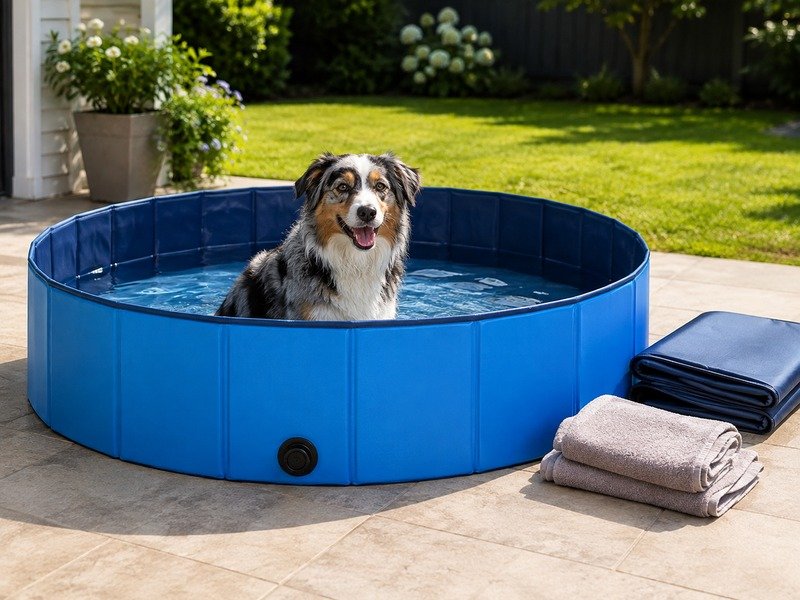
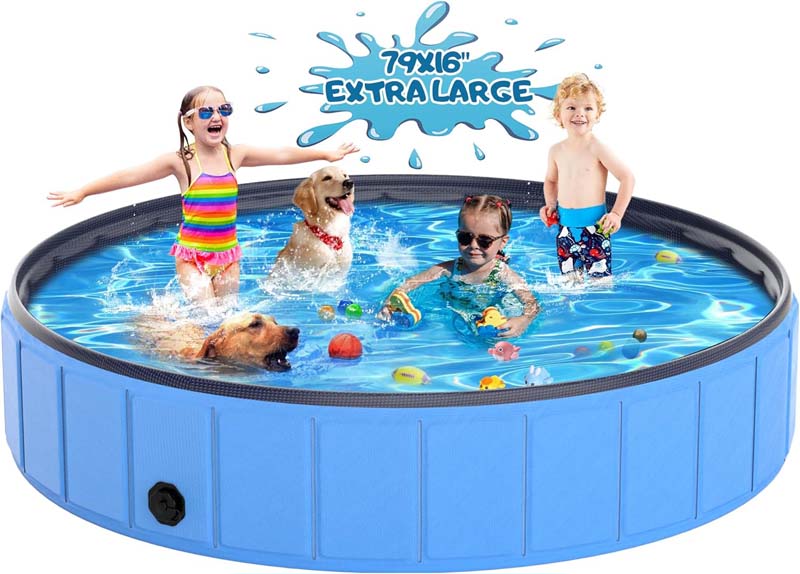
A foldable dog pool can look stable while it is empty, yet begin leaning, bowing, or spilling water only minutes after filling. That does not always mean the pool has suffered a sudden defect. In many cases, the structure was already too weak for its height, diameter, water level, or intended dog size. Thin wall cores, poorly supported seams, flexible rims, and unsuitable setup surfaces can all make a portable pool lose its shape more easily than expected.
The easiest way to prevent dog pool collapse is to choose a pool with semi-rigid wall panels, durable PVC or composite surfaces, reinforced joining areas, a stable floor, and a drain that does not weaken the surrounding panel. The pool must also be fully opened, placed on level ground, and filled to a water level suitable for the dog’s size and activity.
The important point is that collapse rarely begins with the entire pool suddenly falling flat. It usually starts with one low panel, one deep crease, or one rim section that no longer returns to position. A dog then turns, pushes against that weak area, and sends water over the edge. By learning to notice these early details, customers can avoid wasted water, damaged flooring, and a pool that lasts only one summer.

What Causes Dog Pool Collapse?
Dog pool collapse usually begins when the wall structure cannot distribute water pressure and dog movement evenly. Weak internal panels, thin surface materials, narrow seams, soft rims, and poorly positioned drains can each create a vulnerable area where leaning or folding starts.
Can Weak Panels Cause Dog Pool Collapse?
Weak wall panels often remain upright while the pool is empty but begin bending once water pushes outward. The risk becomes greater when the pool is tall, wide, or used by energetic dogs.
Most foldable dog pools depend on semi-rigid boards inside the walls. These boards provide shape without requiring a metal or plastic frame. To work well, they must be stiff enough to resist pressure while remaining flexible enough to fold for packaging and storage.
A panel that is too soft may curve outward near the bottom, where water pressure is strongest. It may also fold inward above the waterline when a dog touches the rim. Once one panel changes position, the neighboring panels have to carry more of the load, which can make the entire pool appear twisted.
Panel width also matters. Very wide panels create fewer folds, but the center of each panel may bow more easily. Narrower panels may distribute the round shape more evenly, although they require additional seams and more careful manufacturing control.
A simple empty-pool check can reveal early weakness. Press the middle of a wall panel gently with one hand. It should flex slightly and then recover. If it remains bent, creates a sharp hinge line, or feels similar to thin packaging board, it may struggle to support repeated filling and active use.
| Panel Condition | What Happens During Filling | Possible Result |
|---|---|---|
| Too soft | Panel bends outward | Rim becomes uneven |
| Too thin | Wall folds at an old crease | Local collapse |
| Too wide | Center develops a deep curve | Water shifts toward one side |
| Poorly protected | Moisture reaches the core | Permanent softening |
| Uneven stiffness | Some panels stand higher | Pool loses its intended shape |
Does Thin PVC Increase Dog Pool Collapse?
Thin PVC does not always cause collapse by itself, but it can stretch, wrinkle, or wear faster. When combined with weak internal boards, it may provide too little support for repeated outdoor use.
PVC serves several jobs in a dog pool. It keeps water inside, protects the internal wall core, forms the floor, supports the seams, and creates the surface that repeatedly contacts paws, grass, patios, dirt, and cleaning tools.
A lightweight material may be suitable for a small, shallow pool used occasionally by a calm dog. The same construction may perform poorly in a large pool designed for several dogs or frequent bathing. The material must match the pool size and use conditions rather than simply meeting a low target weight.
The floor and walls may also need different performance. The base experiences nail pressure, turning, stepping, and friction against the ground. The walls experience repeated folding, outward water pressure, and occasional leaning. A single material construction can work, but only when thickness, reinforcement, and bonding are matched carefully.
Customers should also look beyond a thickness number. A thick PVC layer does not automatically create a stable pool if the supporting board is weak. In the same way, a strong internal board can still fail early if the PVC coating separates, cracks around folds, or allows water to reach the core.
For pet-use products, good material selection should consider abrasion resistance, flexibility, odor, folding recovery, heat exposure, and long-term water contact together.
Can Poor Seams Lead to Dog Pool Collapse?
Poor seams can weaken the connection between panels, the floor, and the rim. A seam may remain watertight while still allowing the wall to twist, pull, or lose structural alignment.
The seams of a foldable pool do more than stop leaks. They connect flexible and semi-rigid parts so that pressure can travel around the pool instead of collecting in one narrow area. If the joining width is inconsistent, one panel may move more freely than the others.
A narrow seam can concentrate force near the edge of the PVC. An uneven seam can create wrinkles that become permanent fold lines. Excessive heat during joining may stiffen or distort the surrounding material, while insufficient heat or pressure may leave a weak bond.
The wall-to-floor seam is particularly important because it carries both outward water pressure and movement from the dog. When this joint begins pulling unevenly, the lower wall may move outward while the rim stays behind, creating a curved or twisted panel.
Before using a new pool, open it fully and inspect the joining areas. The seams should look straight, evenly pressed, and free from loose edges. Small cosmetic wrinkles do not always indicate failure, but severe puckering, narrow bonding zones, exposed layers, or irregular panel heights deserve closer attention.
For custom development, seam width, heat-pressing conditions, material compatibility, and corner structure should be confirmed during prototype testing rather than selected only from drawings.
Does a Weak Rim Cause Dog Pool Collapse?
A weak top rim allows wall panels to move independently. When one part dips under pressure, the surrounding panels may follow, creating an uneven waterline and increasing the chance of overflow.
The upper edge acts as a connecting ring around the pool. It helps maintain the intended round, oval, square, or rectangular shape. Without enough support at the top, each panel behaves more like a separate flap than part of one complete structure.
Dogs naturally make contact with the rim. A small dog may place its front paws over the edge. A large dog may lean against the wall while turning or stepping out. The rim does not need to be completely rigid, but it should resist normal contact without remaining permanently bent.
Soft spots near vertical seams are especially important. If the rim becomes thinner or less supported at each joining point, those areas may form repeated dips around the pool. Once water begins flowing over one dip, the added weight can pull that section farther downward.
A stable rim should feel reasonably consistent around the entire pool. It should also return close to its original position after light pressure. Owners should still prevent dogs from sitting on the wall or using it as a step, because portable pool walls are designed to contain water rather than hold full body weight.
Can a Bad Drain Weaken the Dog Pool?
A drain creates an opening in the wall or floor, so poor placement can interrupt structural support. The surrounding panel may bend, twist, or pull if the valve is too heavy or poorly reinforced.
A useful drain should sit low enough to release most of the water without requiring the owner to lift and tip a full pool. At the same time, it should not sit directly on the ground or interfere with the panel’s main fold line.
When a large valve is installed in a narrow wall section, it can reduce the available space for the internal board. This may create a softer area around the fitting. During filling, the surrounding PVC can bulge or pull, especially if the valve cap extends outward and presses against another object.
The drain connection should remain flat when the pool is full. If the panel bends around the valve, the wall may have insufficient reinforcement. Repeated opening, closing, and pulling on a hose can make the problem worse.
Drain location must also support practical use. A valve placed too high leaves a large amount of water inside. A valve placed underneath the pool may be difficult to access. For OEM and ODM projects, EPN evaluates drain height, panel spacing, hose connection, water flow, and folding direction together so the drainage system does not weaken the pool’s main structure.
What Are the Signs of Dog Pool Collapse?
Early collapse signs include leaning walls, bowed panels, uneven rim height, permanent folds, shape distortion, and water escaping from one side. These changes often appear gradually and should be checked while the pool is empty, filling, and in use.
Do Dog Pool Walls Lean?
A small inward angle may be part of a flexible pool design, but one panel should not lean much farther than the others. Uneven leaning often signals poor setup or structural weakness.
Start by examining the pool before adding water. Place it on the intended surface, open every panel, and look across the top edge from several directions. The rim should appear reasonably level, and the wall panels should form a balanced shape.
During filling, the lower part of each wall should receive support from the water. In a well-matched structure, the pool usually becomes more stable as the water rises. If one panel continues falling inward, the internal board may be too weak, deeply creased, or improperly positioned.
Ground conditions must be ruled out first. A small dip in soil or grass can make one wall appear lower. Move the pool to a confirmed level area and repeat the test. If the same panel leans again, the problem is more likely related to construction.
Customers should stop filling when a wall rolls inward or when the rim drops close to the waterline. Adding more water is not a reliable correction. Extra water may increase outward pressure and cause faster overflow if the panel suddenly gives way.
Do Dog Pool Panels Bow?
Bowing appears when the middle of a panel curves more than its edges. Mild curvature is normal in flexible structures, but a deep or growing bow can indicate insufficient wall stiffness.
Outward bowing is often most visible near the lower half of the pool because water pressure increases with depth. Inward bowing may appear above the waterline, especially where a panel has a strong storage crease.
A panel can also develop an S-shaped curve, with the lower section moving outward and the upper section bending inward. This shape reduces the effective wall height and makes it easier for a dog to push the rim down.
Watch how the curve changes while filling. If it remains shallow and similar across all panels, it may be part of the intended design. If one panel bows much farther than the rest, stop and inspect the ground, seam alignment, and internal support.
Pool diameter affects bowing as well. Increasing the size without upgrading the wall core can create wider unsupported areas and greater total water load. A large pool should not simply be an enlarged version of a smaller model. Wall stiffness, panel width, seam construction, and floor attachment may all need adjustment.
Does the Dog Pool Lose Shape?
A dog pool is losing shape when a round design becomes oval, a rectangle twists diagonally, or one corner pulls inward. This means pressure is no longer distributed evenly.
Shape loss may begin before filling if the pool cannot open completely in the available area. Fences, outdoor furniture, steps, and garden edges can prevent the wall from reaching its intended position. Once water is added, the restricted side may fold while the opposite side expands.
Storage can also change the shape. When a pool remains tightly compressed under heavy items, some folds may become deeper than others. The problem is often more noticeable after long storage in a hot garage, cold shed, or tightly packed shipping box.
After use, drain the pool completely and allow it to dry. When possible, leave it open briefly so the panels can return to a neutral position. Folding a wet pool can trap moisture and make the layers more difficult to separate later.
If the same corner or panel repeatedly pulls inward on level ground, inspect that location for core damage, seam distortion, or separation between the surface material and the internal support.
Does Water Spill Over the Rim?
Water escaping from one side usually means the pool is overfilled, placed on a slope, or losing wall height. The waterline offers one of the easiest ways to judge stability.
When the dog is not moving, compare the distance between the water surface and the rim around the pool. That gap should be relatively consistent. A noticeably smaller gap on one side shows that the pool or the surface is uneven.
Movement creates temporary waves, so owners should leave enough space below the rim for the dog’s body and activity. A pool that looks safely filled while empty may overflow as soon as a large dog steps inside and displaces water.
Overflow can quickly worsen a weak-wall problem. Water running over a low panel adds downward force and may make the material more slippery. On soft ground, the escaping water can also wash away soil, causing that side to sink even farther.
Do not pull the wall upward while the pool is full. The water weight can strain the base seam. Drain enough water to remove pressure, correct the surface or panel position, and then refill gradually while observing the rim.
Do Dog Pool Folds Stay Bent?
Fold lines should soften after the pool is opened. A sharp bend that remains during filling can behave like a hinge and make the wall collapse repeatedly in the same place.
Temperature can affect how quickly the material recovers. A pool opened immediately after cold storage may feel stiff, while one left tightly folded in high heat may have deeper compression marks. Allow the product to reach a moderate temperature before forcing the panels into position.
Gently open each fold and smooth the base outward. Do not place heavy objects on the wall to flatten it, because this may damage the internal board. Sharp tools and aggressive pulling should also be avoided.
A persistent bend is more concerning near the top rim, the floor seam, the drain, or a vertical joining line. These areas already carry structural stress. When the crease remains after careful setup and partial filling, the panel may have lost stiffness or suffered internal damage.
Long-term care matters. Clean and dry the pool before folding, avoid extremely tight rolling, and store it where heavy cartons cannot compress the walls for months.

How Can You Check Dog Pool Stability?
Dog pool stability can be checked by examining the internal wall support, PVC construction, reinforced edges, floor traction, pool dimensions, and drain placement. The strongest design is a balanced system rather than a product relying on one impressive specification.
What Supports the Dog Pool Walls?
The outer PVC is only part of the wall. Most foldable dog pools rely on internal boards or composite panels that provide the stiffness needed to remain upright.
Customers should ask what supports the wall rather than only asking how thick the PVC is. Internal cores may use plastic sheets, fiber-based boards, composite structures, or other semi-rigid materials. Their resistance to bending and moisture can vary.
The core should remain stable after repeated folding. If a small surface cut or seam opening allows water to reach a moisture-sensitive board, the panel may swell, soften, or permanently lose shape. A more moisture-resistant core provides additional protection when the outer layer is damaged.
Panel spacing is also part of wall support. Narrow panels can follow a round shape more smoothly, while wider panels create fewer seams. Neither arrangement is automatically superior. The correct choice depends on diameter, height, packaging size, material stiffness, and manufacturing quality.
For commercial or custom pools, the wall structure should reflect expected use. A small home cooling pool requires a different support level from a grooming pool, daycare product, or large multi-dog model.
Which PVC Is Best for Dog Pools?
The best PVC balances abrasion resistance, waterproofing, flexibility, low odor, folding recovery, and outdoor durability. The correct material depends on whether the pool is intended for occasional cooling, bathing, or frequent group use.
Floor material deserves special attention because dogs do not move like children sitting in a shallow play pool. They turn sharply, push off with their rear legs, scratch at water, and may suddenly scramble when entering or leaving.
A suitable floor should resist concentrated nail contact without becoming extremely hard or uncomfortable. It should also include enough texture to improve traction. Very smooth surfaces can become slippery, while extremely deep patterns may trap dirt, hair, and shampoo residue.
The wall material must perform differently. It should tolerate repeated folding and support clean, consistent seams. It also needs enough flexibility to wrap around the internal panel without cracking or separating.
When comparing materials, consider the entire construction rather than relying on one number.
| Material Factor | Why It Matters | What to Look For |
|---|---|---|
| Thickness | Supports wear resistance | Matched to pool size and use |
| Flexibility | Affects folding recovery | Bends without cracking |
| Bonding | Keeps layers together | No bubbles or separation |
| Texture | Improves paw control | Moderate, easy-clean pattern |
| Odor | Affects first-use comfort | Lower-odor formulation |
| Outdoor resistance | Supports repeated summer use | Heat and UV evaluation |
Are Dog Pool Edges Reinforced?
Reinforcement should be concentrated around the rim, vertical seams, floor connection, corners, and drain. These locations receive more pulling, bending, and pressure than flat surface areas.
A wider joining edge can spread stress across more material. However, reinforcement quality depends on more than visible width. Heat, pressure, timing, alignment, and material compatibility determine whether the connection remains stable after repeated use.
Square and rectangular pools require careful corner design. Sharp corners can collect force when water pushes outward. Rounded transitions can help distribute that pressure more smoothly and reduce harsh folding at one point.
The top rim should also remain continuous across panel seams. If the upper edge becomes noticeably softer or narrower at every vertical joint, the rim may develop repeated low spots.
Local reinforcement must not make folding impossible. A very stiff patch in one area can move stress to the edge of the reinforced zone. Good design creates gradual transitions between stronger and more flexible parts.
EPN uses widened joining areas, local reinforcement, rounded corner structures, and standardized accessory modules according to product needs. These features can be adjusted for private-label and OEM dog pool projects.
Is the Dog Pool Base Non-Slip?
A non-slip floor helps dogs maintain balance, reducing sudden pushes against the walls. The underside must also remain stable on a suitable surface without relying on texture to correct stones, slopes, or debris.
Interior traction affects both comfort and structural stability. A dog that feels secure is less likely to scramble, dig, or throw its body against the rim. This is especially important for older dogs, puppies, and animals unfamiliar with water.
The texture should be noticeable without being harsh. Raised patterns that are too aggressive may be uncomfortable and difficult to clean. A shallow, even pattern can provide grip while allowing hair, dirt, and soap to rinse away.
Exterior setup remains important. A non-slip base cannot safely protect the pool from sharp gravel, tree roots, broken toys, or rough concrete. A clean ground mat can reduce abrasion and make the pool easier to move after drying.
On patios, water around the pool may create a separate slipping risk for people and pets. Drainage should be directed away from walking paths. When shampoo is used, rinse the floor thoroughly because soap residue can reduce traction even on a textured surface.
Does the Dog Pool Match Your Dog?
A stable pool must match the dog’s body size, movement style, and intended activity. A pool that is too small or too tall often encourages more contact with the walls.
Measure the dog’s body length and standing height before choosing a size. The dog should be able to stand and turn without constantly rubbing against the panels. For simple cooling, shallow water and moderate wall height may be enough. Bathing may require more room for the owner’s hands and cleaning tools.
Weight is important, but behavior can matter more. A calm large dog may place less pressure on the walls than a smaller dog that jumps, digs, and repeatedly climbs over the rim.
Entry also affects stability. Dogs with short legs, limited mobility, or joint problems may need a lower wall or assisted entry. The wall should not be used as a step.
For several dogs, choose a pool based on combined movement, not only the number of animals. Dogs may gather near one toy or one person, placing most of the pressure on a single side.

How Does Setup Prevent Dog Pool Collapse?
Correct setup keeps water pressure balanced across the pool. The surface should be flat and clean, every panel should be opened, the water level should leave space for movement, and dogs should enter without climbing heavily on the rim.
Is the Ground Level Enough?
Even a strong dog pool can lean on uneven ground. Water moves toward the lowest side, increasing pressure there and reducing support along the higher side.
Grass may look flat while hiding shallow holes or soft soil. Begin with a small amount of water and observe the waterline. If one side becomes visibly deeper, drain or reposition the pool before adding more.
Remove sticks, stones, pinecones, tools, and broken toys. These objects can raise one part of the base while placing concentrated pressure on the PVC. Soft ground after rain may also sink under the water weight.
Concrete and patios often provide better level surfaces, but they can increase floor abrasion. Use a smooth protective mat that lies flat without folds. Avoid thick foam pieces that compress unevenly under the pool.
The surrounding area should also allow drainage. Water spilling repeatedly onto one side of a lawn can soften the soil and gradually create a slope during use. A location that begins level may become unstable after several wet sessions if drainage is poor.
Is the Dog Pool Fully Open?
Every wall panel and floor fold should be opened before filling. Water pressure does not always straighten a folded panel and may instead lock it into a weak position.
Place the empty pool where it will be used and pull the floor outward gently from the center. Walk around the perimeter and separate panels that remain pressed together. The intended shape should appear before water is added.
Do not force a cold pool open. Allow it to warm naturally to a moderate temperature. Avoid hair dryers, heaters, or very hot water because uneven heat may soften or distort the PVC.
Once water has been added, do not drag the pool to another location. Even a shallow amount creates significant weight. Dragging can stretch the floor, pull the lower seam, and scrape the underside.
A practical setup sequence is simple:
- Clean and check the ground.
- Open the floor and all wall panels.
- Confirm the drain is closed.
- Add a shallow layer of water.
- Check the waterline before continuing.
This limited checklist helps prevent most setup-related leaning without turning the process into a complicated installation.
Is the Water Level Correct?
The correct water level supports the lower walls while leaving enough room for the dog’s body and movement. Both overfilling and underfilling can reduce practical stability.
Too little water may leave tall wall sections unsupported when a dog leans against them. However, adding more water is not always better. Higher water levels create stronger outward pressure and make overflow more likely.
Start with the amount needed for the intended activity. Cooling usually requires less water than bathing. Puppies and small dogs may only need water around the lower legs. Large dogs may need greater depth, but the water should remain well below the rim.
Remember that a dog displaces water when entering. The heavier the dog, the more the water level may rise. Movement then creates waves that can reach the edge even when the pool looked safely filled while empty.
Observe the panels as the water rises. They should become more stable without developing severe curves. If one side begins dropping, stop filling. Correct the ground, fold, or structural issue before increasing the load.
Does Your Dog Lean on the Wall?
Occasional wall contact is normal, but repeated leaning, sitting, climbing, or jumping can bend a portable pool. Foldable walls are not designed to hold full body weight.
Introduce unfamiliar dogs slowly. Let the dog inspect the empty pool, then add a shallow amount of water. Place treats or toys closer to the center so the dog is encouraged to move away from the edge.
A dog that feels trapped may try to climb over the nearest wall. Make entry and exit predictable. For animals with limited mobility, use controlled assistance or a suitable ramp rather than allowing them to press down on the rim.
Nail condition also affects movement. Long or sharp nails can reduce stable footing and create greater concentrated pressure on the floor. Regular trimming can improve traction and protect the PVC.
Owners should supervise every pool session. Supervision is not only related to water safety. It allows people to interrupt digging, prevent rough climbing, and notice a wall beginning to bend before water spills or the structure becomes damaged.
Can Multiple Dogs Affect Stability?
Multiple dogs create changing loads that can shift quickly from one side to another. Pool capacity should consider movement, size, temperament, and available turning space rather than only total weight.
A large pool may appear suitable for many dogs, but a wider diameter also creates greater water volume and longer wall sections. The structure must be strengthened along with the size.
As a general planning reference, a pool around 200 centimeters in diameter may hold approximately six to eight small dogs, four to five medium dogs, or two to three large dogs under controlled, supervised conditions. These numbers should not be treated as fixed limits.
Active dogs may chase toys, crowd one side, or climb over each other. Calm dogs standing separately create much less stress. Water depth also changes how strongly their movement reaches the walls.
Introduce dogs gradually rather than placing the entire group inside at once. Watch the rim and the waterline. If one side repeatedly drops, reduce the number of dogs or the water level.
For daycare, grooming, rescue, or event use, a custom structure may be more suitable than a standard home pool. EPN can adjust diameter, wall height, panel support, drainage, colors, graphics, and packaging for different group-use requirements.
Which Tests Reduce Dog Pool Collapse?
Reliable testing should recreate more than an initial filling. Wall strength, paw abrasion, long-duration water pressure, repeated folding, seam fatigue, heat, sunlight, and temperature changes all influence whether a dog pool remains stable over time.
Is Dog Pool Wall Strength Tested?
Wall testing should measure how panels respond to both steady water pressure and temporary contact from a dog. A pool may hold water but still have walls that bend too easily.
The complete pool should be tested at the intended water level. Watching only a single material sample does not show how panels, seams, corners, the rim, and the base work together.
During testing, the pool can be checked for wall angle, panel deflection, rim height, and shape recovery after draining. Controlled pressure can also be applied to different wall areas to simulate leaning and turning.
Large pools require additional attention because water volume increases quickly with diameter and depth. A support structure that works in a small pool may not scale directly to a larger version.
EPN’s development process considers wall-board selection, PVC thickness, panel width, edge joining, and local reinforcement together. Custom customers can define target dimensions, intended dog sizes, water depth, packing requirements, and retail price level so structural testing reflects the actual product plan.
Is Dog Pool Paw Wear Tested?
Paw wear testing checks whether the floor and lower walls can tolerate scratching, turning, repeated stepping, and concentrated nail pressure under wet conditions.
Dry abrasion alone does not represent real use. PVC can behave differently after soaking, heat exposure, folding, or contact with cleaning products. Testing should combine these conditions when evaluating pet-use durability.
The surface texture should also be checked after wear. A pattern may look non-slip when new but become smoother after repeated use. Texture loss can increase scrambling, which places more force against the walls.
After abrasion testing, the material should be inspected for cuts, whitening, thinning, surface peeling, and exposure of underlying layers. The test should also include the lower wall area because dogs may scratch near the edge while playing or trying to exit.
EPN conducts pet claw abrasion simulations and material performance checks as part of its broader testing system. For specialized projects, the floor texture, PVC composition, thickness, color, and reinforcement can be adjusted according to expected use frequency.
Is Dog Pool Water Pressure Tested?
Long-duration water testing shows whether panels slowly bow, seams creep, or the pool loses shape after several hours. Some weaknesses are not visible immediately after filling.
The test should use a realistic operating level and continue long enough to reveal gradual material movement. Wall position, rim height, drain stability, and seam condition can be checked at regular intervals.
Temperature may influence the result. PVC can become more flexible in hot weather, while internal panels and seams may respond differently after long exposure. Testing under more than one environmental condition provides a more useful understanding of performance.
Repeated fill-and-drain cycles are also important. A dog pool is opened, filled, used, drained, cleaned, dried, folded, and stored many times. Each stage changes the stress on the structure.
After draining, the pool should return close to its intended shape. Panels that remain bowed or seams that stay pulled may indicate long-term creep. EPN performs long-duration water-pressure and use-condition simulations to evaluate performance beyond the product’s first filling.
Is Dog Pool Folding Tested?
Folding tests reveal whether repeated storage creates permanent wall hinges, damaged surfaces, or seam distortion. Portability should not come at the cost of rapid structural decline.
Testing should follow the intended packing pattern because the same creases often carry pressure every time the product is folded. Random folding may not identify the areas most likely to weaken during real storage.
After a planned number of cycles, the pool should be opened and filled again. Inspect the internal panel recovery, PVC surface, printed areas, top rim, and joining edges.
Packaging pressure also matters. A pool compressed too tightly into a small carton may already contain deep creases when first opened. Heavy cartons stacked during transport and storage can increase this effect.
Cold and heat conditions should be considered because they change material flexibility. A pool that folds well at room temperature may become stiff in winter storage or overly soft in a hot warehouse.
Good packaging design balances carton size, shipping efficiency, and product protection. EPN supports customized folding methods, retail packaging, outer cartons, labels, and storage testing for private-label projects.

Are Dog Pool Seams Fatigue Tested?
Seam fatigue testing evaluates how joining areas respond after repeated bending, pulling, filling, draining, and temperature changes. A seam can remain waterproof while gradually losing structural strength.
The wall-to-floor seam carries particularly complex loads. Water pushes the wall outward while dog movement pulls and twists the floor. Vertical seams also open and close during every folding cycle.
Testing can include repeated bending, controlled pulling, long water holding, and visual inspection. Warning signs include whitening, edge lifting, narrowing, deep wrinkles, and separation near the heat-pressed area.
Manufacturing consistency is essential. Heat-press temperature, pressure, contact time, cutting accuracy, and material alignment all affect the final connection. A strong prototype does not guarantee stable mass production unless these conditions are controlled.
EPN’s production capabilities include heat-pressing equipment, automated cutting, structural inspection, and air or water tightness testing. The company’s quality system supports repeatable production for low-volume trials, private-label launches, and larger retail orders.
Is Dog Pool UV Resistance Tested?
UV and heat testing help determine whether outdoor exposure may cause fading, stiffness, softness, cracking, or loss of structural recovery. Sunlight can affect both appearance and wall performance.
A dog pool may spend hours in direct summer sun while holding water. The exposed rim and upper wall can become much warmer than the submerged material. Different temperatures across the same panel may create uneven flexibility.
An empty pool can become even hotter, especially when dark-colored material is left on a patio. The wall may soften and take on a distorted shape if objects press against it.
UV resistance does not mean the pool should remain outdoors permanently. Cleaning, drying, and shaded storage still help extend service life. Testing provides confidence that normal outdoor use will not cause immediate material decline.
EPN conducts simulated UV exposure, high-temperature aging, low-temperature flexibility, and other material checks through its independent testing resources. Custom projects can also consider target climate, seasonal storage, color selection, print coverage, and intended years of use during material development.