Skip to content
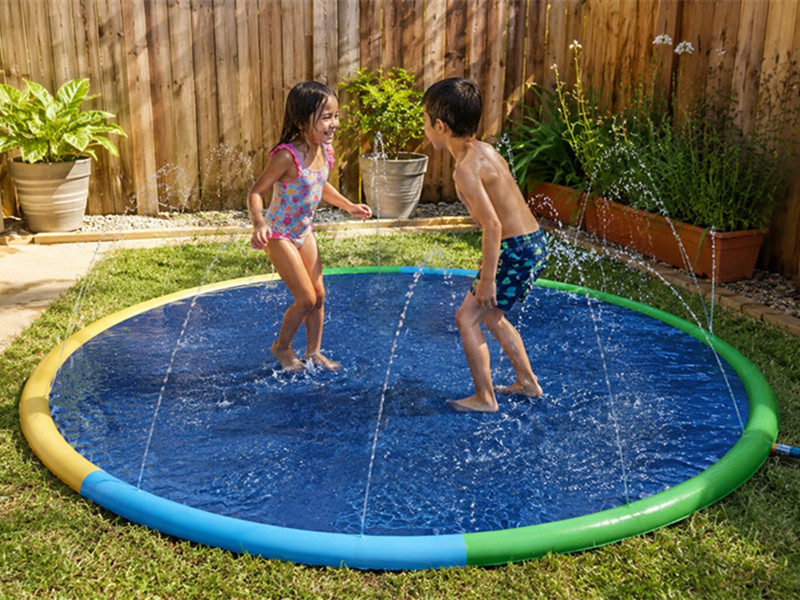
A small backyard can still feel like a real summer play area when the product fits the space instead of taking it over. Many families do not need a large pool, a heavy inflatable, or a backyard toy that takes half the afternoon to prepare. They need something lighter, cleaner, easier to control, and simple enough to use after school, before dinner, or during a weekend BBQ.
For small backyards, the most useful splash pad features are a space-saving size, inward spray direction, thick PVC material, stable edge structure, flat-surface compatibility, easy garden hose setup, controlled water pressure, fast drainage, simple cleaning, and foldable storage. These features help families reduce overspray, slipping risks, early wear, storage trouble, and messy cleanup after play.
Small-yard water play is different from open-lawn play. A spray ring that shoots outward may soak patio doors. A hose in the wrong place can become a trip hazard. A splash pad that is too large may leave no safe walking space around the edge. A thinner product may look fine at first but struggle after repeated folding, stepping, and sun exposure. The right splash pad should make the routine feel easy: open it, check the ground, connect the hose, let children play, drain it, dry it, and put it away without turning the backyard into a project.

Small Backyard Splash Pad Size
A small backyard splash pad should fit the open space while leaving enough room for children to enter, exit, and move safely around the edge. In compact yards, size is not only about diameter. It also affects supervision, drainage, hose placement, drying space, and how easily parents can move around the play area.
Product size can be misleading when families only look at the number on the box. A 7 ft splash pad does not only need 7 ft of ground. Parents also need space for the hose, towels, water runoff, and a clear path around the product. In a small backyard, those extra inches decide whether the splash pad feels convenient or crowded.
A practical rule is to leave around 18–24 inches of open space around the splash pad when possible. This gives children a safer transition area when they step on and off the wet surface. It also gives adults enough room to adjust the hose, guide a child away from the spray, or move around the pad without stepping over toys, furniture, or slippery patio edges.
| Clear Outdoor Area | Better Splash Pad Size | Best Fit | Practical Note |
|---|---|---|---|
| 5 ft × 5 ft | 3.5–4.5 ft | One toddler | Keep spray low and use shorter sessions |
| 6 ft × 8 ft | 5–6 ft | One child or two toddlers | Good for compact patios or small lawns |
| 8 ft × 10 ft | 6–8 ft | Siblings or daily play | Leave a dry walking path |
| 10 ft × 12 ft | 8–10 ft | Playdates or weekend use | Better with flat grass and open clearance |
| 12 ft+ open area | 10 ft+ | Several children | Check water runoff and drying space |
What Size Splash Pad Works Best?
For one toddler, a 4–5 ft splash pad can be enough for sitting, stepping, and light water play. For two children, 5–7 ft usually feels more comfortable. For siblings or playdates, 7–9 ft can work well if the yard still has open clearance around the product.
Age matters as much as size. Toddlers usually sit, crawl, stand, and step slowly. Older children may turn, chase the spray, or jump across the center. If the yard is narrow or surrounded by hard objects, choosing a slightly smaller splash pad can make supervision easier and reduce crowded movement.
A smaller pad can also be easier to use more often. Parents are more likely to bring it out for a 30-minute afternoon play session if it is light enough to move, easy to drain, and simple to fold.
Round or Square Splash Pad?
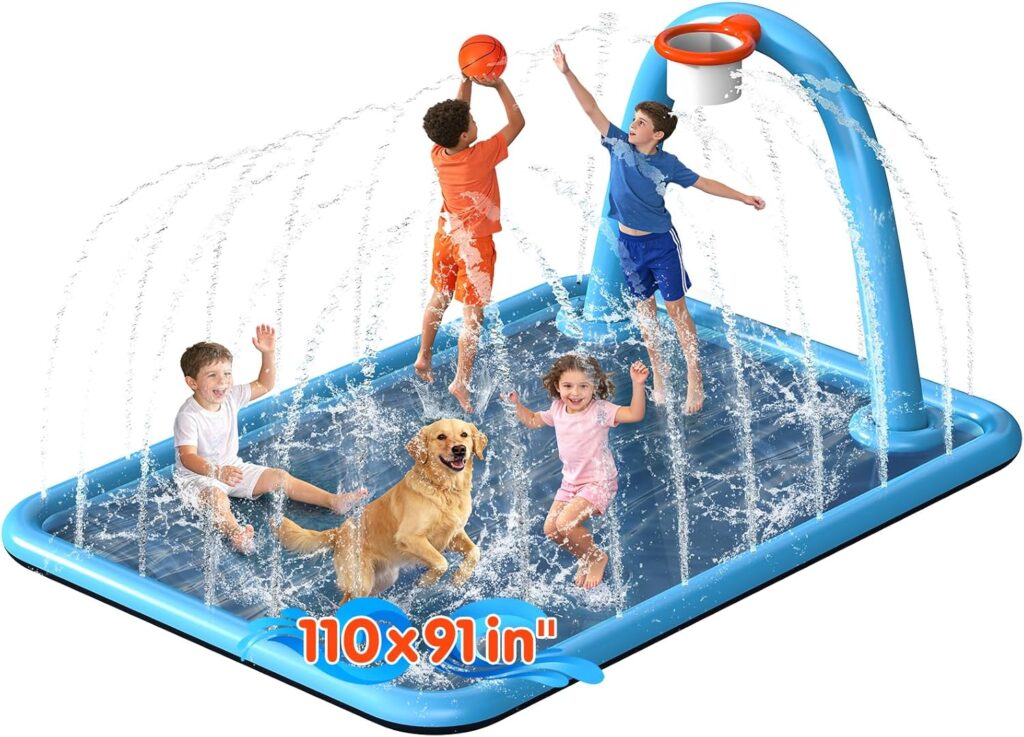
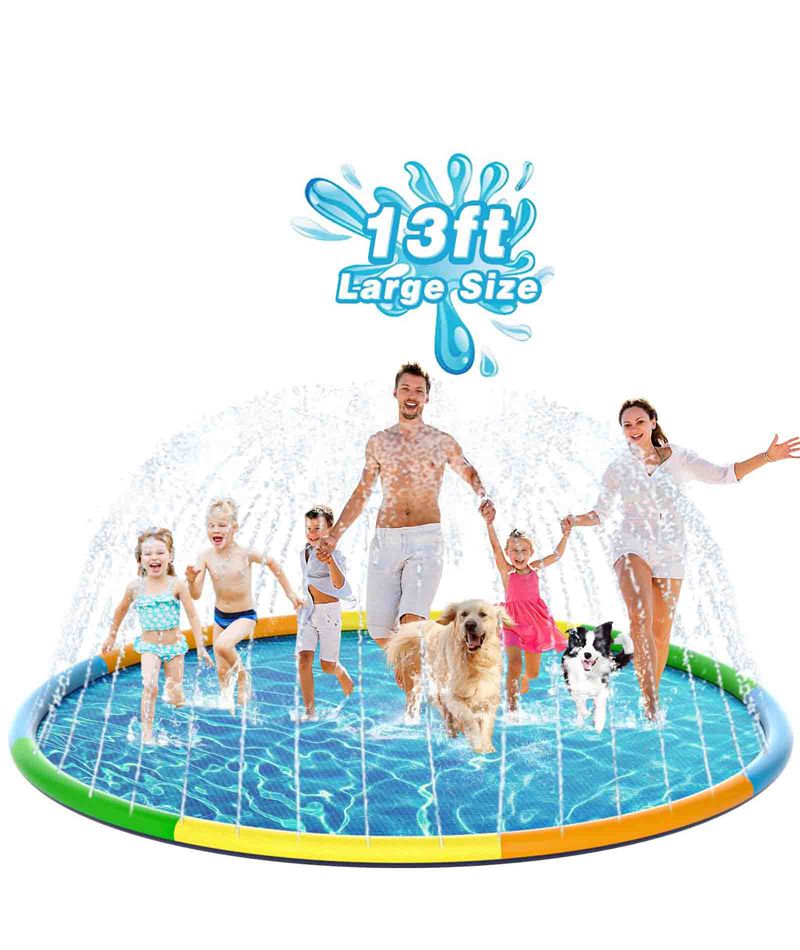
Round splash pads work well on open grass because the spray ring surrounds the center evenly. Square splash pads can be useful in rectangular patios, narrow side yards, or spaces where straight edges fit the layout better.
Shape affects how the product sits in the yard. A round pad may leave unused corners in a narrow patio. A square pad may use space more efficiently, but it still needs safe clearance around all sides. The better option is the shape that gives children a clear entry point and allows adults to reach the hose easily.
For small backyards, avoid placing the main entry side near stairs, grills, furniture legs, glass doors, or sharp planters. The splash pad should support a smooth play routine, not force children through a tight or risky path.
How Much Play Space Is Enough?
Enough play space includes more than the splash pad itself. Families need room for towels, sandals, the hose path, adult supervision, and water runoff. A splash pad that fits on paper may still feel too large once children start moving around it.
Before turning on the hose, parents can test the layout in three simple steps:
- Place the splash pad flat on the ground.
- Walk around all sides without stepping on the product.
- Check where children will enter, exit, and place towels.
If the dry setup already feels tight, the wet setup will feel harder. In small spaces, a little extra room around the pad is often more valuable than a few extra inches of water play area.
Can a Large Splash Pad Fit?
A large splash pad can fit a small backyard only when the yard has one clean, flat, open area. It should not touch fences, steps, patio furniture, rough landscaping, grills, or hard corners. Large pads can be fun for siblings, but they also use more water, take longer to drain, and need more drying space.
Before choosing a large size, families should ask:
- Can children walk around the pad safely?
- Can one adult reach the hose without crossing the wet area?
- Can the water drain away from doors and walkways?
- Can the pad dry fully before storage?
- Can the product fold without dragging across rough ground?
If several answers are no, a medium-size splash pad will usually be more practical for everyday use.
Small Backyard Splash Pad Surface
Surface choice affects comfort, safety, and product life. Flat, clean grass is usually the easiest option for young children because it feels softer underfoot and helps reduce hard impact. Smooth patios can also work, but they need closer supervision because wet hard surfaces can become slippery.
Since the pad lies directly on the ground, anything underneath can press into the PVC. Small stones, twigs, mulch pieces, pet waste, exposed roots, garden clips, or rough patio texture may not look serious at first, but they can become uncomfortable once children sit, kneel, or step on the same area repeatedly.
Grass is usually the most forgiving option for young children. It gives a softer base and can absorb some water around the edge. However, grass still needs preparation. Long grass may hide debris. Uneven soil can create low spots. Muddy areas can make the splash pad harder to clean after play.
Patios are easier to rinse and may work well for quick sessions, but they change the safety picture. Smooth concrete, sealed flooring, tile, or painted patio surfaces can become slick when wet. If the splash pad is used on a patio, water pressure should stay lower, and children should be reminded to walk instead of run.
What Surface Works Best for Splash Pads?
Short, flat grass works well for most small backyard splash pad setups. It gives children a softer place to step, sit, and play. It also makes the splash pad feel more like a backyard activity instead of a hard-surface water station.
Before setup, parents should clear the area carefully. The ground should be checked for:
- Small stones
- Sticks and sharp grass stems
- Mulch or bark pieces
- Garden clips or hooks
- Outdoor toy parts
- Pet waste
- Exposed roots
- Rough soil bumps
This surface check only takes a few minutes, but it helps protect both the child and the splash pad material. A clean base also helps the water spread more evenly across the product.
Is Grass or Patio Better?
Grass is usually better for toddlers and younger children because it is softer. It also feels more comfortable when children sit or kneel during play. The downside is that repeated use in one spot can flatten grass or create muddy patches, especially if water pressure is high or play sessions are long.
Patios can work for older children or shorter play sessions. They are easy to rinse before setup and can be convenient for homes without much lawn space. However, the pad should be kept away from stairs, grills, sharp corners, glass doors, outdoor outlets, and furniture legs.
If a patio is the only option, keep the spray low, watch the surrounding puddles, and consider water shoes with grip. Patio use can be practical, but it needs more active attention.
What Flooring Can Go Under a Splash Pad?
Flooring under a splash pad should be smooth, stable, and slightly forgiving. Short grass is often enough. On patios, a clean outdoor mat can help create a smoother base, but it must stay flat and should not slide, fold, or bunch underneath the splash pad.
| Surface Type | Good for Splash Pads? | Notes |
|---|---|---|
| Short flat grass | Yes | Best everyday choice for young children |
| Smooth patio | Sometimes | Use lower pressure and close supervision |
| Outdoor mat | Sometimes | Must stay flat and stable |
| Rough concrete | Not ideal | May increase bottom wear |
| Gravel or mulch | No | Too many sharp pressure points |
| Uneven pavers | Not ideal | Can create wobble and friction |
| Sloped ground | Not ideal | Water may pool or drain poorly |
The flooring does not need to be fancy. It needs to be clean, flat, and safe for wet movement.
How Flat Should the Ground Be?
Flat ground helps the splash pad fill evenly and keeps the spray more balanced. If one side of the yard slopes downward, water may collect on that side, spray may become uneven, and children may gather in one wet area.
A slight lawn slope can still work, but strong slopes should be avoided. Water may run toward patio doors, walkways, flower beds, or outdoor storage. The pad may also shift during play if the ground is too uneven.
Before turning on the water, place the splash pad flat and check the outer ring. If one side folds, lifts, twists, or wrinkles heavily, the ground is not ideal. Moving the splash pad a few feet can make the whole play session cleaner and safer.

Small Backyard Splash Pad Spray
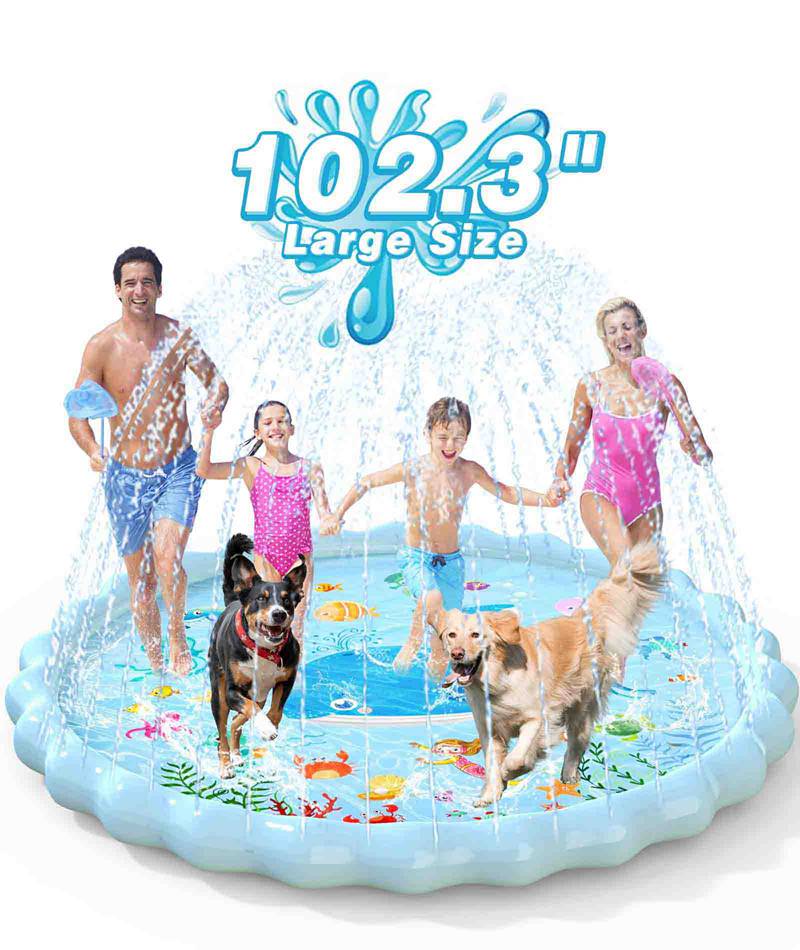
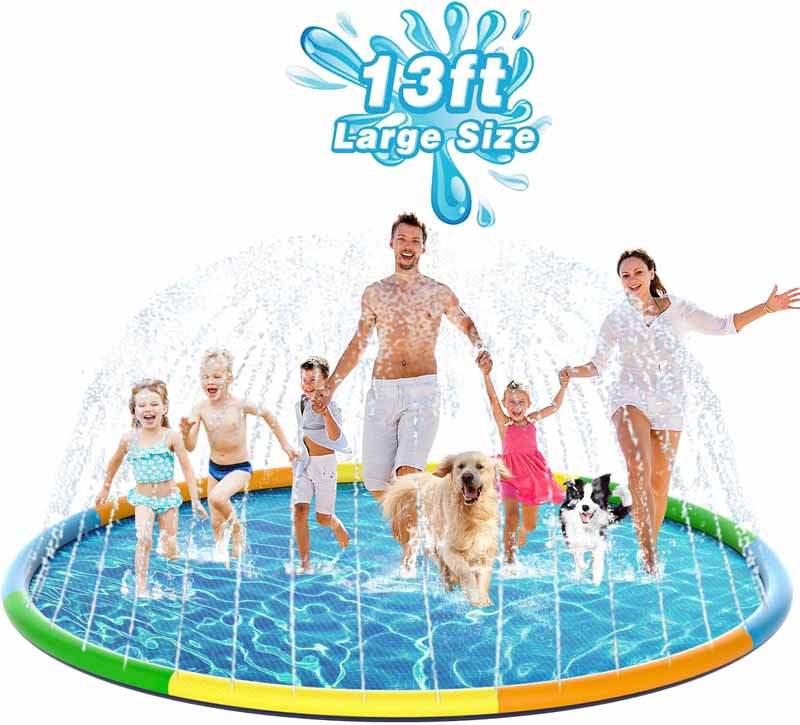
In compact yards, spray direction matters more than spray height. A small backyard splash pad should have inward, even spray that can be controlled with normal garden hose pressure. Low to medium spray height usually works better because it keeps water inside the play area, reduces overspray, and feels more comfortable for younger children.
Spray design matters more in small yards than many families expect. In a large lawn, overspray may not cause much trouble. In a compact yard, water can quickly reach patio doors, furniture, cushions, fences, windows, planters, or walkways. That means more cleanup and more slippery ground outside the play area.
Inward spray helps solve this problem. The spray holes sit on the outer ring and direct water toward the center. This gives children a clear play zone while helping parents control where the water goes.
Even spray also matters. If one side sprays too high while another side barely sprays, children may crowd the stronger side or keep stepping near weak spray areas. A stable spray ring makes the splash pad feel more balanced and more comfortable.
Why Inward Spray Works Better
Inward spray works better for small backyards because it keeps water closer to the play area. Children can enjoy the spray without soaking every nearby surface.
For compact yards, inward spray helps with:
- Less water hitting patio doors or fences
- A clearer play area for children
- Easier parent supervision
- Less water outside the pad
- Better control near furniture or walkways
- More comfortable play for younger children
The spray should look playful, not aggressive. A small-yard splash pad does not need strong outward jets to feel fun. It needs controlled water movement that fits the available space.
How High Should the Spray Be?
Water height should match the yard size, child age, and surface. Low spray is better for toddlers, patio use, first-time play, and very small yards. Medium spray works well for most backyard use. High spray should be used only when there is enough open space and the surrounding surface is safe.
| Spray Height | Best Use | Parent Check |
|---|---|---|
| Low | Toddlers, patios, small yards | Water stays close to the pad |
| Medium | Most daily backyard play | Spray reaches the center without overspray |
| High | Larger lawns only | Watch for slippery runoff |
Start with low water pressure, then increase slowly. If water reaches the door, furniture, fence, walkway, or storage area, the pressure is too high for that setup. A splash pad should feel fun without turning the whole yard into a wet zone.
For families who want more help controlling spray performance, Epsilon’s water play setup guide explains how placement, hose connection, and pressure adjustment can make daily splash pad use easier.
Do Spray Holes Matter?
Spray holes affect water direction, flow balance, and play comfort. Small, evenly placed holes around the outer ring usually create a smoother spray pattern than large or uneven holes.
In a small backyard, spray holes should not create sharp, aggressive jets. Children often sit close to the outer edge, step over the ring, or place toys near the spray. If the water feels too strong or shoots in the wrong direction, the splash pad becomes harder to enjoy.
Good spray hole design should support:
- Inward spray direction
- Balanced flow around the ring
- Comfortable water feel
- Stable spray at normal hose pressure
- Less overspray outside the play zone
On a well-designed splash pad, the spray holes are part of the outer ring structure. They should not look like large pipe outlets or raised hard parts.

How Easy Is Hose Setup?
A small backyard splash pad should connect easily to a standard garden hose. Families should not need a pump, tool kit, or complicated parts for a quick afternoon play session.
A good hose setup allows parents to connect quickly, adjust water pressure from the faucet, and disconnect without a messy struggle. The hose inlet should feel secure, and the hose should not twist the splash pad out of position.
In small yards, hose placement is part of safety. The hose should run along the side of the play area, not across the main path where children enter and exit. Parents should be able to reach the faucet or hose connection without rushing across a wet surface.
Small Backyard Splash Pad Material
Material quality becomes easier to notice after repeated summer use. A small backyard splash pad needs thick, flexible PVC, stable seams, a strong outer edge, and good resistance to water pressure, folding, ground friction, and summer sun. These details matter because the product is stepped on, dragged, dried, folded, and reused many times during one season.
Many splash pads look similar online. The difference becomes clearer after real use. Children step on the surface, sit near the edge, and move across the center. Parents pull the product across grass or patio, connect the hose, drain it, dry it, and fold it away. The outer ring fills with water pressure every time the faucet is turned on.
Thin PVC may feel light and easy to fold, but it can also feel flimsy under repeated use. Very stiff material may feel strong, but it may be harder to fold and store. A better splash pad needs balance: enough thickness to feel durable, enough flexibility to store easily, and enough softness for children to play comfortably.
Epsilon works with PVC and composite materials across family water play, pet products, outdoor leisure products, and seasonal items. For splash pads, this background matters because the product needs more than a bright printed pattern. It needs the right material feel, spray structure, edge stability, and storage performance.
Why Thick PVC Matters
Thick PVC matters because the splash pad sits directly on outdoor ground. It needs to handle friction from grass or patio, body weight from children, water pressure from the hose, and repeated folding after use.
A thicker PVC feel can make the product more stable underfoot. It can also reduce the thin, disposable feeling that many families dislike. However, thickness alone is not enough. The material should still bend, dry, and fold without becoming too stiff.
A good PVC splash pad should feel:
- Stable under children’s feet
- Flexible enough for storage
- Smooth enough for sitting and kneeling
- Strong enough for repeated setup
- Suitable for normal backyard surfaces
For families, the real question is simple: does the splash pad feel like it can be used many times, or does it feel like it may only survive a few weekends?
Why Edge Design Matters
The outer edge is one of the most important parts of a splash pad. It carries water, supports the spray holes, and handles pressure every time the faucet is turned on. Children also step over it again and again when entering and leaving the pad.
A strong edge helps the splash pad keep its shape during use. It also helps the spray stay more even around the ring. If the edge twists, folds, or collapses too easily, water flow can become uneven.
| Edge Detail | Why Families Notice It |
|---|---|
| Stable outer ring | Helps spray stay more even |
| Reinforced seam focus | Reduces weak points around pressure areas |
| Smooth edge feel | More comfortable when children step over it |
| Reliable hose area | Reduces twisting and leaking near the inlet |
| Foldable structure | Makes storage easier after play |
A good edge is not just a border. It is the part that helps the whole splash pad work properly.
How Sun and Heat Affect PVC
Splash pads are used during hot months, often in direct sunlight. Sun, heat, water, and drying cycles can affect PVC over time. That is why both material quality and storage habits matter.
Families can extend product life by drying the splash pad after use and storing it away from direct sun. Leaving the product outside for days can increase material aging, collect dirt, and create odor if moisture stays trapped.
Helpful care habits include:
- Dry the pad before folding.
- Store it in a cool, dry place.
- Avoid placing heavy boxes on top of it.
- Rinse off dirt before storage.
- Move the pad location instead of soaking the same grass spot every time.
Good material helps, but good daily habits also protect the product.
Do Fold Marks Cause Leaks?
Fold marks are normal for PVC splash pads. The issue is not whether lines appear after storage. The bigger concern is repeated hard folding in the same place, especially when the pad is still wet or dirty.
Hard creases can add stress over time. Dirt trapped in folds can rub against the surface. Moisture trapped inside storage can create odor. A better storage routine helps reduce these problems.
A practical after-use routine:
- Turn off the faucet.
- Disconnect the hose.
- Let water drain away from doors and walkways.
- Rinse off visible dirt if needed.
- Air-dry or wipe both sides.
- Fold loosely without forcing sharp corners.
- Store in a dry place.
This routine does not take much effort, but it helps the splash pad stay cleaner and more usable through the season.

Small Backyard Splash Pad Daily Use
A splash pad is more likely to become part of summer life when the full routine feels easy. For small backyards, daily use depends on quick setup, simple drainage, clean storage, and a design that one adult can manage without turning playtime into a long cleanup job.
Daily use is where many products succeed or fail. A splash pad may look exciting in a product image, but if it is awkward to connect, messy to drain, or difficult to fold, parents may stop using it. Small backyards make this even more important because the play area may also be used for outdoor dining, pets, laundry, gardening, or storage.
A smooth daily routine usually looks like this:
| Step | What Happens | Time Needed |
|---|---|---|
| Surface check | Remove stones, sticks, toys, and debris | 1–3 minutes |
| Setup | Lay flat and connect hose | 2–5 minutes |
| Water adjustment | Start low and increase slowly | Under 1 minute |
| Play | Supervised water play | 15–45 minutes |
| Drain | Turn off water and guide runoff | 3–10 minutes |
| Dry | Air-dry or wipe down | 10–30 minutes |
| Store | Fold and place in dry storage | 2–5 minutes |
When the routine stays simple, the splash pad becomes something parents can say yes to more often.
How Fast Is Setup?
Fast setup is one of the biggest reasons families choose a splash pad over a pool. There is no deep filling, no heavy frame, and no long preparation. The family can lay it flat, connect the hose, turn on the faucet, and begin play.
This matters for real family schedules. A child may want water play after school, before dinner, during a weekend BBQ, or after a hot walk outside. Parents are more likely to say yes when setup takes minutes instead of becoming a full project.
Fast setup depends on:
- A flat product shape that opens easily
- A standard garden hose connection
- A spray ring that fills at normal household pressure
- A size that one adult can move and adjust
- A layout that does not require special tools
For small backyards, convenience is not a small detail. It decides whether the product gets used once or all summer.
How Easy Is Drain and Dry?
Easy drainage keeps the backyard cleaner and makes storage more pleasant. A splash pad that holds water in corners or folds can become harder to dry. If it is folded while damp, odor can develop.
After play, water should drain away from patio doors, walkways, and garden beds. If the yard slopes toward the house, the pad should be moved or water pressure should be kept lower. Parents should also check where runoff collects before play begins.
Drying can be simple. On a sunny day, air-drying may be enough. On cloudy days or before indoor storage, wiping the surface with a towel helps. The product should feel dry enough before folding, especially along the edges and hose connection area.
How Sanitary Are Splash Pads?
Home splash pads can stay clean when families use fresh water, place the product on a clean surface, drain after play, and dry before storage. Hygiene issues usually come from dirty ground, standing water, pet waste, diaper accidents, or folding the pad while wet.
Children should not drink splash pad water. Parents should also avoid using the product when children are sick or when the yard surface is dirty. If pets use the same outdoor area, the ground should be checked carefully before setup.
| Situation | What to Do |
|---|---|
| Light grass or dust | Rinse with clean water |
| Mud or sticky dirt | Wipe with mild soap and water |
| After pet contact | Rinse and dry carefully |
| Before storage | Dry both sides fully |
| Odor appears | Wash, rinse, and air-dry completely |
For a more complete care routine, families can follow this mold-free cleaning and storage guide to keep the splash pad cleaner between summer play sessions.
Why Foldable Storage Matters
Foldable storage is essential for small backyards because space is limited. A splash pad should fit into a garage shelf, closet, patio bin, or storage cabinet after use. If the product is too difficult to fold, families are less likely to store it properly.
A foldable splash pad should feel flexible but not weak. It should fold without feeling like a thin disposable sheet. It should also reopen without heavy curling or stiff creases.
Good storage protects the product from sun exposure, rain, pets, insects, and accidental damage. It also keeps the backyard clear for other uses. For small-space families, that convenience is part of the product value.
Small Backyard Splash Pad Safety
A small backyard splash pad can be a lower-depth water play option than a pool, but it still needs adult supervision, careful placement, controlled water pressure, and a safe surface. The main risks are slipping, tripping over the hose, falling on hard ground, running too fast, and playing too close to outdoor objects.
Parents often choose splash pads because they want water play without the depth and maintenance of a pool. That makes sense, especially for younger children. But shallow water does not remove every risk. Children can still fall, swallow water, collide, or step onto a slippery patio.
A safe setup starts before the water turns on. The ground should be clean and flat. The hose should run along the side. Water pressure should begin low. Nearby furniture, planters, grills, and sharp objects should be moved away. Children should know where to enter and exit.
Are Splash Pads Safer Than Pools?
Splash pads are often easier to manage than pools because they do not hold deep standing water. For small backyards, that can make them a more practical choice for young children and short summer play sessions.
However, they still require close attention. The risk shifts from deep water to wet-surface behavior. Children may run, slide, trip over a hose, or fall on patio flooring. A splash pad is safer only when the setup is controlled and an adult stays nearby.
| Safety Point | Splash Pad | Pool |
|---|---|---|
| Water depth | Very shallow | Can hold deeper water |
| Setup time | Fast | Longer preparation |
| Drainage | Easier to remove water | More water to manage |
| Storage | Folds away | Often needs more space |
| Slip risk | Still present | Still present |
| Supervision | Required | Required |
For many families, a splash pad is the easier option. It still needs rules, especially in compact spaces.
Why Low Water Pressure Helps
Low to medium water pressure helps keep play controlled. High pressure can push spray outside the pad, make surrounding surfaces slippery, and surprise younger children.
Start with the faucet barely open, then increase slowly. The spray should rise toward the center without reaching doors, furniture, walkways, or nearby walls. If children rub their eyes, step away from the spray, or slip near the edge, the pressure should be lowered.
Controlled pressure also helps protect the product. A good splash pad should not need extreme pressure to feel fun. The spray design should work well at normal household water flow.
How to Reduce Slip Risk
Slip risk is one of the most common concerns with backyard splash pads. Grass usually offers better traction than smooth patio flooring, but even grass can become slippery when soaked. Patio surfaces can become especially slick when water spreads outside the pad.
Parents should watch the entry and exit area because this is where children often move fastest. The hose crossing point also needs attention. A wet hose across a walkway can become an easy trip hazard.
Common slip-risk spots include:
- Patio door thresholds
- Smooth concrete or tile
- Steps near the play area
- Puddles outside the pad
- Hose crossing points
- Wet toys left on the ground
- Furniture legs near the edge
Families who use splash pads on patios or smaller hard-surface yards can also review Epsilon’s practical anti-slip tips for safer placement, pressure control, and play habits.
What Safety Checks Matter?
Small backyard splash pad safety works best when the rules are simple. Children should walk instead of run. The hose should stay to the side. Water pressure should remain controlled. The product should sit away from hard corners and sharp objects.
Before each session, parents can check:
| Safety Check | What to Look For |
|---|---|
| Ground | Flat, clean, no sharp debris |
| Hose | Not across the main walking path |
| Spray | Low first, then adjusted |
| Surroundings | Away from stairs, grills, and hard corners |
| Children | No pushing or running |
| Product | No visible damage before use |
| Drainage | Water does not run toward doors or walkways |
Parents should be able to step around the pad, reach the hose, and guide children off the wet area without rushing across a slippery surface.
Epsilon Small Backyard Splash Pad Advantages
American Epsilon Inc. focuses on PVC and composite material products for family entertainment, children’s toys, pet products, outdoor leisure, and seasonal play. For small backyard splash pads, this material and product experience matters because the design has to balance several details at once: a soft play feel, stable water pressure, reinforced edge structure, inward spray, easy storage, and repeated summer use.
Families usually notice quality after several uses, not only on the first day. Does the edge still sit flat? Does the spray stay even? Does the PVC feel too thin underfoot? Does the hose connection stay reliable? Does the product fold cleanly after drying? These are the details that decide whether a splash pad becomes a real summer favorite or just another short-lived backyard toy.
Epsilon supports product development with material testing, structure design, packaging design, and seasonal product planning. The team works across children’s water play, pet cooling products, inflatable pools, splash arches, floating products, and other outdoor leisure categories. This wider product background helps EPN splash pads focus on practical family use instead of only visual design.
For home users, EPN splash pads are designed around everyday backyard needs: quick setup, controlled spray, foldable storage, and durable PVC feel. For retailers, Amazon sellers, distributors, and private-label partners, Epsilon can also support OEM and ODM splash pad projects, including size, pattern, color, packaging, label, and partial structure customization.
Choose or Customize a Splash Pad with Epsilon
The right splash pad for a small backyard is not simply the biggest or brightest option. It is the one that fits the yard, keeps water under control, feels comfortable under children’s feet, drains without trouble, and folds away after use. When those details work together, the splash pad becomes easy enough for weekday play and durable enough for repeated summer use.
Families looking for ready-to-use backyard water play can choose EPN splash pad options for small yards, patios, lawns, and family summer activities. The right product can help create a clean, fun, and manageable water play space without the work of a pool.
Business customers can also contact Epsilon for custom splash pad projects. Epsilon supports OEM and ODM development for size, shape, PVC material direction, pattern, color, packaging, labels, retail presentation, and seasonal product planning. Whether you are preparing a new summer product line, testing a private-label splash pad, or looking for a reliable PVC water-play supplier, Epsilon can help with product selection, sampling, and custom quotation.
A small backyard can still hold a big summer routine. The right splash pad makes that routine easier, safer, cleaner, and more enjoyable for everyone using the space.